Co-Ownership Homes in Marbella
2 luxury holiday homes in Marbella available as co-ownership shares, from €144,000 per share. Genuine ownership, fully managed, a fraction of the whole-home price.
The Marbella Collection
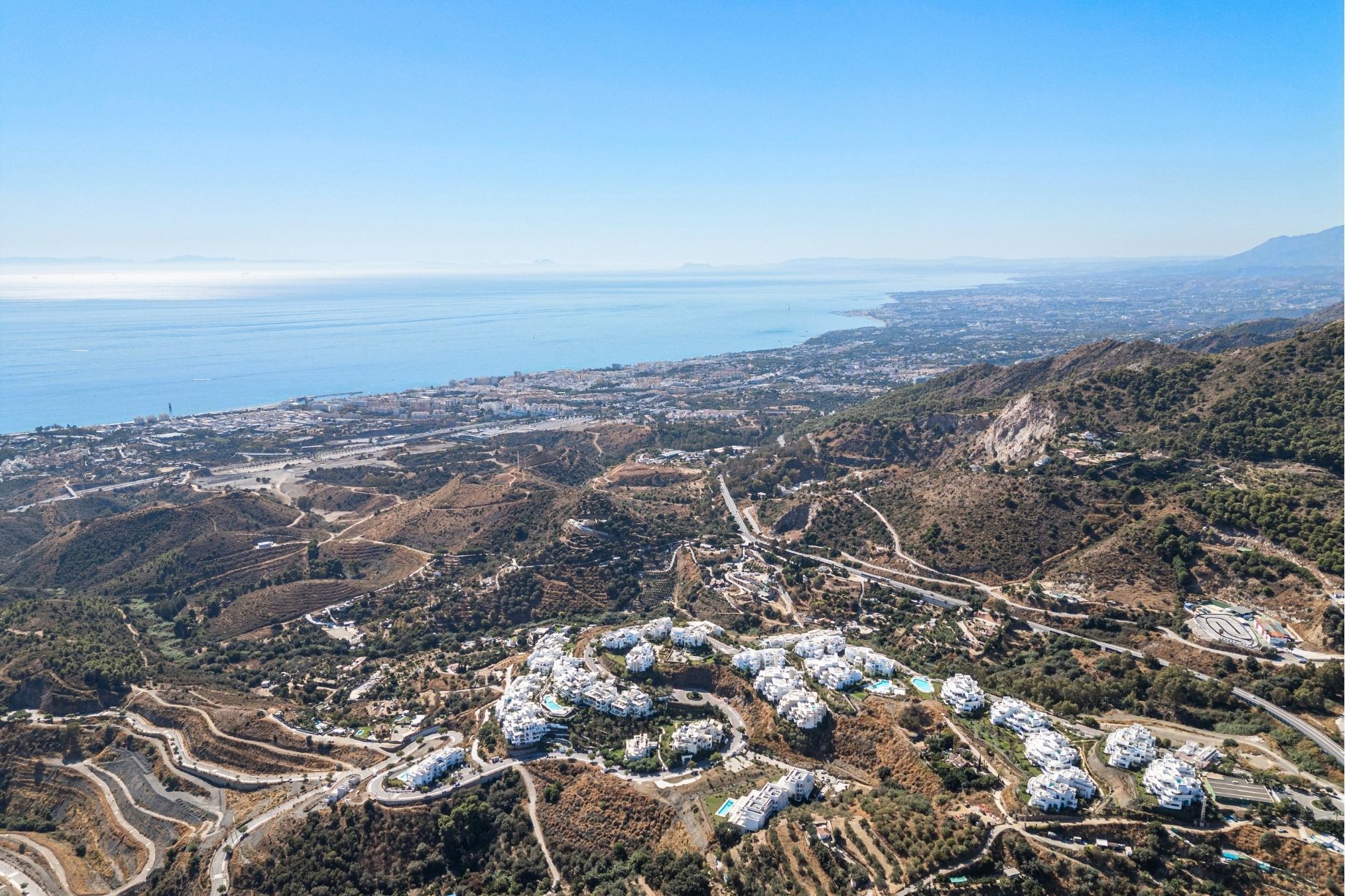
Marbella, Costa del Sol, Spain — 2-Bed Private Residence | Coastal Setting
€144,000
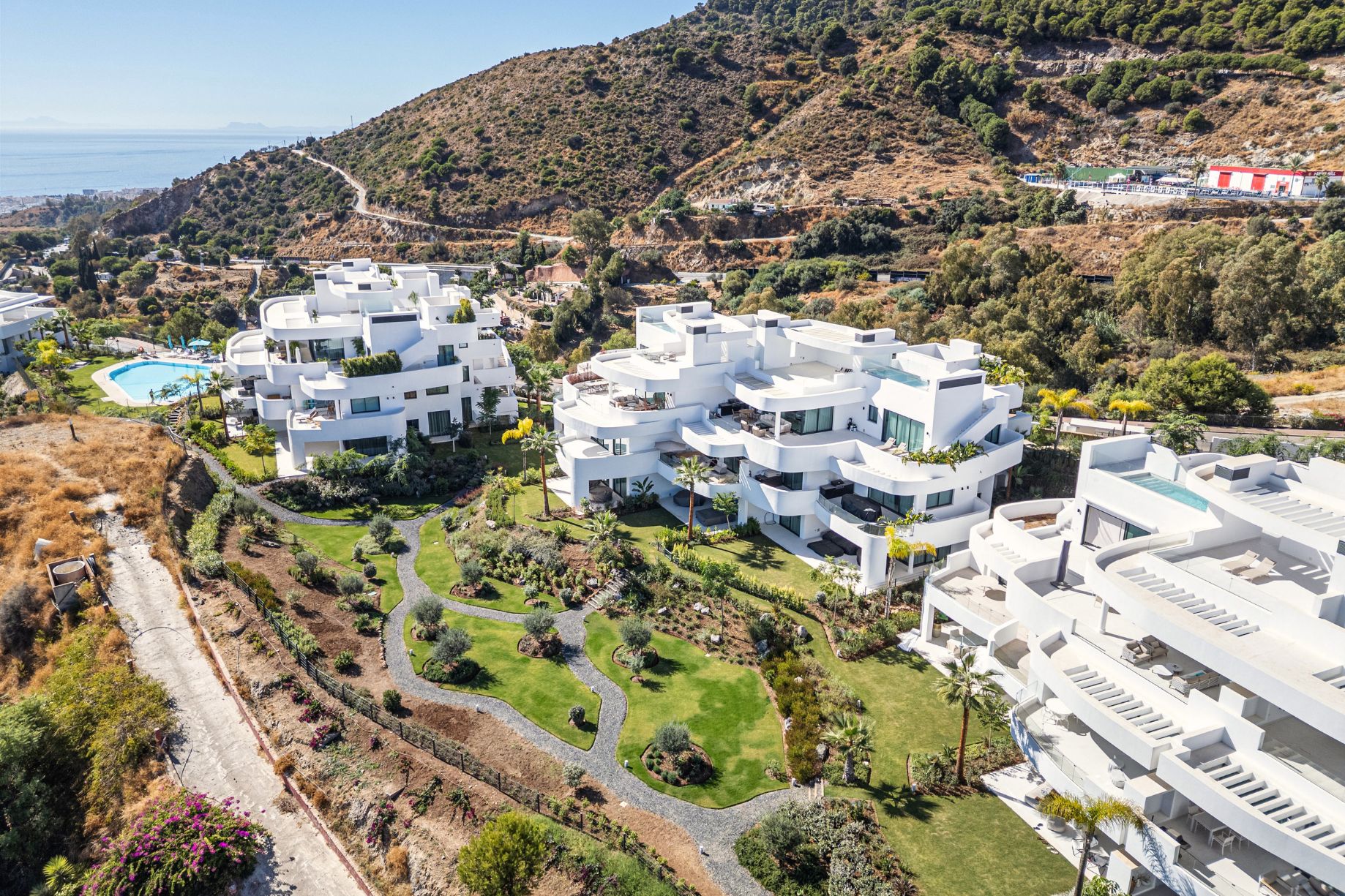
Marbella, Costa del Sol, Spain — 3-Bed Private Residence | Coastal Setting
€349,000
Why buy a co-ownership home in Marbella?
Buying a whole holiday home in Marbella means paying full price for a house that stands empty most of the year. Co-ownership takes the same home — professionally managed, beautifully furnished — and divides it into shares, usually eighths. You own a real share of the home — not a right to use it — with roughly six weeks of use a year, a share you can sell or pass on, and running costs shared between owners rather than shouldered alone. In Marbella, that ownership starts from €144,000.
Marbella, properly understood
Marbella has a reputation problem of the opposite kind to most places: people assume they know it, and what they think they know is Puerto Banús at two in the morning. That Marbella exists, occupies about a square kilometre of a municipality that runs for twenty-seven kilometres along the coast, and is busy for roughly ten weeks of the year. The rest of it is a Spanish town of ninety-odd thousand people with a whitewashed fifteenth-century old town built around an orange-tree square, a working fishing harbour, a five-kilometre seafront promenade, and a wall of mountains rising directly behind it.
That wall is the single most important fact about the place, and it is geological rather than promotional. The Sierra Blanca climbs to La Concha at just over twelve hundred metres less than five kilometres from the beach, and it shelters the coastal strip from the northerly weather that reaches the rest of Andalucía. The practical consequence is a winter that is measurably milder than anywhere else on mainland Spain — daytime temperatures in January and February that sit comfortably in the high teens, and a growing season that supports subtropical planting you will not see further up the coast.
For a buyer, that microclimate is the whole argument, because it converts Marbella from a summer destination into a twelve-month one. The restaurants stay open in February. The golf courses are at their best when northern Europe is frozen. The town's large resident international community keeps the everyday economy running through the winter in a way that purely seasonal resorts never manage. Marbella is one of very few Mediterranean addresses where a week in January is a genuinely good week, and that changes what a share here is worth.
A short history: watchtowers, a marina and the Golden Mile
Marbella is older than its reputation by some distance. The Romans were here — there are villa remains and a paleo-Christian basilica at Vega del Mar in San Pedro — but the town's shape is Moorish: the Alcazaba, whose walls still stand at the top of the old town, was built in the tenth century, and the street plan below it is the one the Nasrids left behind. The Christian conquest came in 1485, and the Plaza de los Naranjos — the orange-tree square that is still the centre of the old town — was laid out immediately afterwards as the new Castilian civic space, with the town hall on one side and a chapel on another.
Along the coast, the string of sixteenth-century watchtowers tells the next part of the story: the whole shoreline was a frontier, watched against Barbary raiders, and the towers were built within sight of one another as an early-warning chain. Several still stand between Marbella and Estepona, and the modern coastal path threads past them. Until the middle of the twentieth century this was a poor coast of fishing and sugar cane, and Marbella was a town of a few thousand people.
What changed it was a single decision in 1954, when Ricardo Soriano and his nephew Alfonso de Hohenlohe opened the Marbella Club as a private hotel for their own circle, and a stretch of empty coast west of the town became the address for European aristocracy. Puerto Banús followed in 1970, built by José Banús as a marina village and opened with a guest list that fixed Marbella's international image for the next fifty years. The Golden Mile — the coastal strip between the two — is the physical residue of that period, and it is why the town's most expensive real estate sits where it does rather than in the old centre.
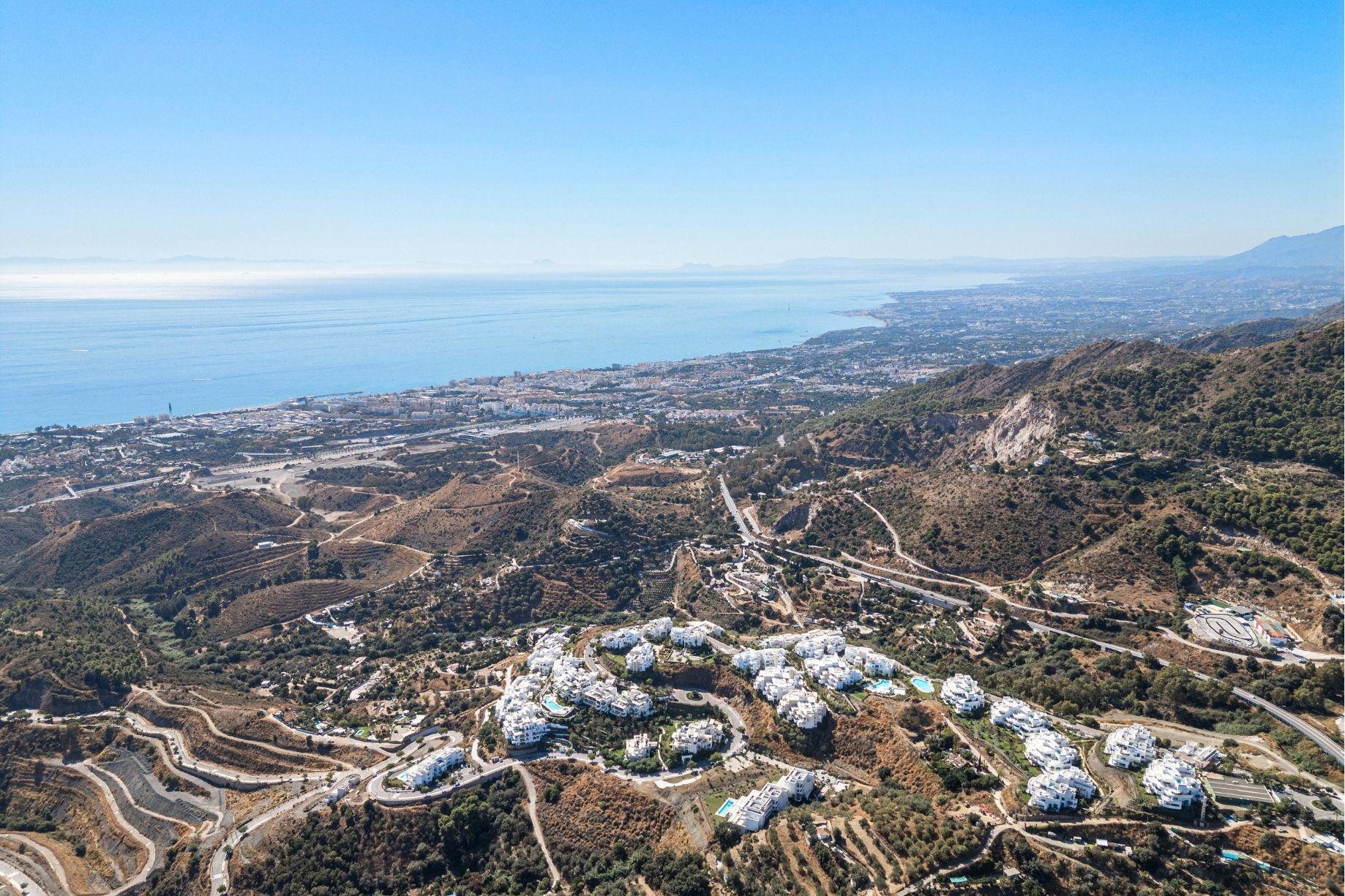
The coast, town by town
Marbella town itself is the practical heart: the old town and its orange square, the Alameda park and the Avenida del Mar with its Dalí sculptures, the fishing harbour, and a promenade that now runs for kilometres in both directions. It is a real Spanish town with a market, a bus station, hospitals and schools, and it is the part of the municipality that works best in winter.
The Golden Mile runs west from the town towards Puerto Banús: gated villa estates, the grandest hotels on the coast, and beach clubs on the sand below. Behind it, Sierra Blanca and Nagüeles climb the mountainside in terraces of large houses with the best views on the coast. Puerto Banús itself is the marina — the yachts, the boutiques, the nightlife, and a genuinely beautiful harbour if you see it at nine in the morning rather than at midnight.
Nueva Andalucía, immediately inland from Banús, is the Golf Valley: a bowl of residential development wrapped around several of the coast's best-known courses, with La Concha filling the skyline behind. It is quieter than the coast road, family-heavy, and the address a lot of long-term residents choose. San Pedro de Alcántara, further west, is the most ordinary and in many ways the most liveable of the town centres — a proper Spanish grid with a superb new boulevard built over the buried coast road, and prices below Marbella's.
Beyond the municipality, Estepona has spent the last decade turning its old town into one of the prettiest on the coast, with flower-hung lanes and painted murals, and it now has the seafront and the restaurants to match. Inland, Benahavís sits in a river gorge twenty minutes up and is the coast's dining village. East of Marbella, Elviria and Las Chapas hold the best sandy beaches in the municipality, and further on Fuengirola, Benalmádena and the Higuerón hillside above them are denser, cheaper and better served by the coastal train.
The old town, Puerto Banús and the Golden Mile, in depth
These three places are twenty minutes apart and are routinely spoken about as if they were one address, which is the source of most of the misconceptions about Marbella. The old town is the oldest and the least famous of them: a compact grid of whitewashed lanes climbing from the seafront to the remains of the tenth-century Alcazaba, with Plaza de los Naranjos at its heart — laid out immediately after the Christian conquest of 1485, planted with orange trees, and still the square where the town hall sits. Around it are tapas bars, small shops, the Church of the Incarnation and a density of restaurants that keeps the quarter alive on a Tuesday in January.
The Golden Mile is the four-kilometre coastal strip running west from the town, and it is a product of a single decision in the 1950s. It holds the grandest hotels on the coast, gated villa estates behind high hedges, and beach clubs on the sand below. Behind it the ground rises into Sierra Blanca and Nagüeles, terraces of large houses with the best views in the municipality — the whole bay laid out below and, on a clear winter day, the Rif mountains of Morocco across the Strait. It is green, quiet, extremely private, and entirely car-dependent: nobody walks to dinner from Sierra Blanca.
Puerto Banús is the third and the one everybody has heard of. Built in 1970 as a marina village, it is a genuinely handsome piece of low-rise Andalucían architecture wrapped around a harbour, and if you see it at nine in the morning — the boats still, the cafés opening, La Concha behind — you understand why it worked. In August at midnight it is a different place entirely: glamorous, packed and gloriously unapologetic. Both versions are real, they occupy the same square kilometre, and which one you experience is entirely a function of when you walk through it.
The practical point for a buyer is that these are three distinct products with three distinct calendars. The old town works twelve months a year and is the position we would steer most share buyers towards. The Golden Mile and Sierra Blanca are for owners who want space and a view and will drive to everything. Banús is a place to visit rather than to sleep next to, unless the nightlife is precisely what you came for — and if it is, you should buy inside it deliberately rather than a street away by accident.
Where exactly to own: micro-locations, rated
Marbella old town and the seafront. The most usable address for anyone who wants a town rather than an estate: you walk to the market, the square, the promenade and eighty restaurants, and the place is alive in February. Apartments rather than villas, and the strongest position by far for short winter breaks.
The Golden Mile and Sierra Blanca. The prestige address, and the one with the views — the terraces above the coast road look down the whole bay to Gibraltar and across to Africa on a clear day. Gated, quiet, green and entirely car-dependent. Best for owners who want space and privacy and do not intend to walk to dinner.
Nueva Andalucía and the Golf Valley. The answer for golfers and for families: several courses within a few minutes, a Saturday morning market, good schools' worth of infrastructure, and La Concha as the backdrop. Busy but not frantic in August, and materially better value than the Golden Mile.
San Pedro de Alcántara and Guadalmina. A real town with a real high street, a new seafront boulevard, and beach access without the Banús premium. This is where a given budget buys the most, and it is ten minutes from everything Marbella has.
Estepona and the New Golden Mile. Estepona's regenerated old town is genuinely lovely, the seafront has been rebuilt, and prices sit below Marbella's for a comparable property. The stretch of coast between the two towns has filled in with newer developments — convenient, well-built and lacking the old towns' character, which is a fair trade for some buyers.
Finding the quietest spot. Puerto Banús is lively at night in season and the coast road carries steady traffic, so a home set a few streets back from the N-340, or above it with terraces facing the sea, is the one to choose for peaceful evenings. We check position and aspect on every home we list.
The beaches, the promenade and the sea
Costa del Sol sand is golden-grey, washed down from the Sierras rather than ground from a reef, and the beaches here are excellent — wide, long, well-serviced, and backed by one of the best pieces of public infrastructure in southern Spain.
That infrastructure is the Senda Litoral, the coastal path being built along the whole province: boardwalks over dunes, bridges across river mouths, and paved promenade through the towns. Long continuous stretches are already open, and in Marbella you can walk from the old town to Puerto Banús along the sea, which takes about an hour and is the single best thing to do here on a winter morning. Estepona and Fuengirola have their own long finished sections.
The beaches themselves divide by character. East of town, Elviria, Las Chapas and Cabopino have the widest sand and the dunes at Artola behind them; Cabopino also has the coast's prettiest small marina. Between the town and Banús the beaches are narrower and busier and lined with beach clubs. West towards Estepona the coast opens out again and gets quieter. The sea is swimmable from about June to late October, warmest in August and September, and the water is calm by Atlantic standards but genuinely cold before May.
One practical note that owners learn in their first summer: the beaches here are almost entirely public, with chiringuitos and sunbed concessions operating on them rather than owning them, so there is no such thing as a private stretch you need to pay to reach. What varies is the servicing — the busier beaches have showers, lifeguards and parking, the quieter ones towards Cabopino and west of Estepona have very little. In winter the chiringuitos on the main beaches stay open and become the best places to have lunch on the coast, which is a habit worth acquiring early.
The eastern municipality: Elviria, Cabopino and the dunes
Marbella runs for twenty-seven kilometres and most descriptions of it stop at Puerto Banús, which means the eastern half — the half with the best sand — gets left out. From the town the coast runs east through Los Monteros and Río Real towards Elviria, Las Chapas and Cabopino, and the beaches get progressively wider and less built-up the further you go. Elviria is the one locals name first: a long stretch of open sand with pine behind it, well served by chiringuitos, and busy in August without ever feeling like the strip west of town.
Cabopino, at the eastern boundary, is the most distinctive place in the municipality. It has the coast's prettiest small marina — low, white, Andalucían in scale rather than a Banús in miniature — and behind the beach sit the Dunas de Artola, a protected system of shifting dunes with boardwalks through them and a sixteenth-century watchtower on the high point. It is the only genuinely wild piece of coast left inside Marbella, it is a natural monument, and it will stay that way.
Inland from this stretch the ground rises quickly into pine woods and low hills, with golf courses threaded through them and Ojén ten minutes up the road. The addresses here — Elviria, Hacienda las Chapas, the hillside above Cabopino — are quieter, greener and cheaper than the Golden Mile for comparable space, and they are what a lot of families choose once they have spent a summer on the coast and worked out what they actually use.
The trade is straightforward and worth stating: you are fifteen to twenty minutes from Marbella old town rather than walking distance, and you will drive to dinner. What you get is the best beach in the municipality at the end of your road, a good deal more space for the money, and an August that is noticeably calmer than the stretch between the town and Banús.
Golf, padel and the outdoor coast
The Costa del Sol calls itself the Costa del Golf and the claim is not marketing: there are around seventy courses in the province, the greatest concentration in continental Europe, and something like fifteen of them lie within twenty minutes of Marbella. The Golf Valley at Nueva Andalucía alone holds several of the best known. What matters for an owner is the season: the courses are at their peak from October to May, which is exactly when northern European golf is unplayable, and that inversion is a large part of why this coast has a winter economy at all.
Padel is the other sport, and Spain is its global centre. Courts are attached to most residential developments and clubs, lessons are cheap and easy to find, and it is the fastest way for a newcomer to meet people here — a fact worth knowing for anyone whose ownership group includes teenagers or a competitive parent.
Beyond the two: the mountain behind. La Concha is a serious half-day hike from Refugio de Juanar with a summit view that takes in the whole bay and, on a clear day, the Rif mountains across the Strait. The Sierra de las Nieves became a national park in 2021 — high limestone country with the rare Spanish fir, an hour inland. Closer in there is the Río Verde gorge walk at Istán, the Benahavís river pools, sea kayaking along the coast, and a cycling culture that brings professional teams to the coast road climbs each winter.
The practical texture matters as much as the course list. Green fees rise sharply from October as the season opens, and the Marbella and Banús clubs price well above the western coast for comparable quality, so owners with any flexibility book inland or towards Estepona. Tee times in the shoulder months want a few days' notice rather than weeks; buggies are standard and, on the hillier layouts behind the coast, close to necessary in summer. Most clubs take visitors without a member introduction, and several run winter leagues that are the quickest way for a new owner to meet people.
La Concha, the Sierra Blanca and the mountain behind
The mountain is the reason Marbella exists in the form it does, and it deserves more than a passing mention. The Sierra Blanca rises from near sea level to La Concha at just over twelve hundred metres within about five kilometres of the beach — an unusually steep gradient that creates a pocket of sheltered air along the coastal strip. The range blocks the cold northerlies that reach the rest of Andalucía, and the result is measurable rather than promotional: the mildest winter on mainland Spain, and a growing climate that supports subtropical planting you will not find further up the coast.
La Concha itself — the shell, named for its shape — is a serious half-day walk rather than a stroll. The usual route starts from the Refugio de Juanar above Ojén, climbs through pine and then onto open limestone ridge, and takes four to six hours there and back with a genuine scramble near the summit. The view from the top runs from Gibraltar to Málaga along the whole coast, with the Strait and the Moroccan Rif beyond. It is the single best thing to do in Marbella that costs nothing, and it is best attempted between October and May rather than in the summer heat.
Behind La Concha the country opens into the Sierra de las Nieves, which became Spain's newest national park in 2021 — high limestone country with deep gorges, one of the largest surviving populations of the relict Spanish fir, and Torrecilla at nearly nineteen hundred metres. It is under an hour from the seafront and it is a genuinely different landscape: cold in winter, occasionally snowbound, and almost entirely unvisited by the coast's summer population. Closer in, the Río Verde gorge above Istán and the river pools at Benahavís give you cold clear water on a hot day within twenty-five minutes of the beach.
For an owner the mountain matters in three practical ways. It gives the winter its mildness, which is the economic foundation of the whole coast. It gives the terraces above the coast road their views, which is why the same square metres cost so much more at three hundred metres than at thirty. And it gives the shoulder seasons something to do that is not golf — which, for an ownership group that includes people who do not play, turns October to May from a compromise into the best part of the year.
Eating and drinking
Málaga province eats better than the Costa del Sol's reputation suggests, and the local tradition is worth learning before the international restaurants. The emblem is the espeto: sardines threaded on a cane and grilled over an open fire in a sand-filled boat on the beach, served from May to September at chiringuitos along the whole coast. Around it sit fried fish done properly, ajoblanco — the cold almond and garlic soup that predates gazpacho — porra antequerana, and the sweet wines of Málaga that were famous across Europe before phylloxera.
Above that, the coast has quietly become one of Spain's serious dining regions, with a cluster of ambitious kitchens between Marbella and Estepona and several holding national recognition. Benahavís, twenty minutes inland, built its whole identity on restaurants and is worth the drive. And in the middle sits the everyday layer that owners actually use: the old town's tapas bars around Plaza de los Naranjos, the fish restaurants at the port, and the chiringuito you end up adopting.
Provisioning is easy and cheap by northern European standards. Marbella's municipal market, the weekly street markets in each town, excellent fish, and the produce of the Axarquía and the vega behind the coast — avocados, mangoes and custard apples grow here commercially, which tells you something about the winter. The practical shape of a good week is a market run, most lunches at home or on the beach, and dinner at nine-thirty.
Two habits separate owners from visitors here. The first is eating lunch as the main meal — the menú del día at a proper Spanish restaurant is served between one and four, costs a fraction of the same kitchen's evening prices, and is how the town actually eats. The second is learning which chiringuitos stay open in winter: the espeto season runs from May to September, but the best beach restaurants serve all year and a February lunch on the sand with the mountains behind is one of the genuine pleasures of owning on this coast.
A year on the coast, month by month
January and February are the coast's quiet secret: daytime temperatures in the high teens, the mountains often with snow on them, the golf at its best, the restaurants open and the promenade busy with residents rather than visitors. March and April warm up steadily and bring the almond and orange blossom, and Semana Santa fills the old towns with processions. May is close to perfect — everything open, the sea beginning to be tolerable, and none of the crowds.
June is warm and building, and Marbella's own fair, the Feria de San Bernabé, takes over the town in the middle of the month. July and August are the peak in every sense: hot, lively and full, with the beach clubs busy and Puerto Banús at full volume. It is glorious if that is what you came for, and owners who prefer a calmer rhythm have the rest of the year to choose from.
September is the month the regulars choose — the sea at its warmest, the heat easing, the crowds thinning sharply after the first week. October holds it, with swimming comfortable most of the month and the golf season opening properly. November and December are mild, green and quiet, with the coast turning back into a residential place; Málaga's Christmas lights on Calle Larios have become a genuine event. There is no month here that does not work, which is the point.
Two timing notes worth having. The rain here falls almost entirely between November and March, and when it comes it comes hard for a few days at a time rather than drizzling for weeks — a wet week in December is bad luck rather than the norm, and the same month routinely delivers a run of clear days in the low twenties. And the sea lags the air by about two months, which is why September swimming is better than June swimming despite June feeling warmer on land.
The year's fixtures
Marbella's calendar is a mix of the devoutly traditional and the frankly commercial, and both are worth knowing. Semana Santa is the serious one: the brotherhoods carry their thrones through the old town across Holy Week, and the same week is observed with far greater intensity in Málaga city an hour away, where the processions are among the most famous in Spain. The Feria de San Bernabé in the second week of June is Marbella's own fair — a daytime fair in the old town and a nighttime one at the fairground, with horses, sevillanas and a week of very little sleep.
The summer layer is the one the coast is known for. The Starlite festival runs through July and August in a former quarry at Nagüeles, with a genuinely international line-up in a natural amphitheatre. Around it sit the beach club season, the polo at Sotogrande in August, and the marina's own social calendar. San Juan on the twenty-third of June puts bonfires on every beach along the coast and is the best free night of the year.
Out of season the coast fills its calendar with sport and food. The golf season runs from autumn to spring with a steady stream of amateur and professional events; padel tournaments run year-round; and the Málaga Christmas lights, the winter food fairs and the Three Kings processions on the fifth of January carry the town through to spring. An owner who books around the fixtures rather than the school holidays gets a much better year here.
Marbella with children
Marbella is an easy place to bring children, and the reasons are practical rather than sentimental. The sea is calm and shelves gently along most of the municipality; the promenade runs flat and traffic-free for kilometres and is the best scooter and bicycle territory on the coast; and the beaches east of town at Elviria and Cabopino have the widest sand and the shallowest entries. Every chiringuito expects children at lunch and most have a play area behind the tables.
Beyond the beach there is a lot: the water parks at Torremolinos and Mijas, the Selwo animal reserve at Estepona and its aviary, the cable car at Benalmádena, the Bioparc at Fuengirola, horse riding in the hills, and the kind of padel and tennis clubs that will take a child for a week's course at short notice. Málaga city, an hour away, has a science museum and one of the best interactive museums in Spain at the Muelle Uno end of the port. And the mountain behind offers real walking as children get older.
For ownership groups the calendar arithmetic is unusually kind. Families want July and August and the Easter fortnight; golfers and couples want October through May, when the coast is at its best and the courses are playable. Those two groups barely compete, so a mixed ownership group here agrees far more easily than one in a single-season resort. For the quietest nights, choose a home set back from the coast road and away from Puerto Banús — we flag this on every listing.
Two more things worth knowing. The international school provision here is unusually deep for a coastal town — British, American, German, Scandinavian and Spanish-curriculum schools all operate within the municipality — which matters less for a holiday share than it does as a signal: it is why so many of the foreign families here are resident rather than visiting, and why the town works in term time. And the municipal sports facilities, including several public pools and a good athletics track, are genuinely usable and cheap.
Getting there and getting around
Málaga airport is the coast's decisive advantage and one of the best-connected airports in southern Europe: direct flights from essentially every major northern European city, at high frequency, and — critically — a winter schedule that stays substantial rather than collapsing to a handful of routes. That is unusual, it is a direct consequence of the coast's resident foreign population and its golf economy, and it is the single biggest practical difference between owning here and owning on an island.
The drive from the airport to Marbella takes about forty-five minutes on the AP-7 toll road and rather longer on the free N-340 coast road in summer. Málaga is also on the high-speed rail network, which puts Madrid at around two and a half hours, and the suburban Cercanías line runs from the airport along the coast as far as Fuengirola — useful for the eastern towns, though it does not reach Marbella. Gibraltar airport is about an hour west and is a genuine alternative for British owners.
On the ground a car is the honest answer for most addresses, because the municipality is long and thin and the good things are spread along it. The exceptions matter though: an apartment in Marbella old town, in San Pedro or in central Estepona genuinely works on foot, with buses along the coast and taxis in abundance. In August the coast road is slow between eleven and eight, and the local habit is simply to move early or late. Parking in the old town is underground and paid; assume you will use it.
Days out: Ronda, Málaga, Gibraltar and Africa
Marbella's position means the day trips are unusually good, and owners who treat the house as a base rather than a destination get considerably more out of it. Ronda is the unmissable one: about an hour and fifteen minutes inland, a town split in two by a gorge a hundred metres deep and spanned by an eighteenth-century bridge, with one of the oldest bullrings in Spain, a serious and improving wine region around it, and a set of viewpoints that justify the drive on their own. Go on a weekday and arrive early.
Málaga, an hour east, has been transformed over the last fifteen years and is now one of the more rewarding small cities in Spain: the Picasso Museum in the painter's birthplace, a Pompidou outpost on the regenerated port front, a Thyssen collection, a Roman theatre under a Moorish fortress, and the pedestrianised Calle Larios with its extraordinary Christmas lights. It is a genuine city day rather than a coastal excursion, and the high-speed rail station there puts Madrid at two and a half hours if anyone in the group wants a longer detour.
West, the coast runs quickly out of Spain. Sotogrande with its polo grounds, marina and the Valderrama course is about forty minutes; Gibraltar, with its rock, its apes, its airport and its improbable British high street, is under an hour. From Tarifa, an hour and a quarter away, the fast ferry reaches Tangier in under an hour — meaning Africa is a comfortable day trip from the front door, which almost no other European address can offer. The Strait crossing is also one of Europe's best whale and dolphin watching grounds.
Inland and closer, the white villages repay a morning: Ojén and Istán immediately behind Marbella, Casares stacked under its castle on the way to Estepona, Mijas Pueblo above Fuengirola, and Gaucín high in the sierra with a view over the Strait. Granada and the Alhambra are around two hours and are best done as an overnight; Seville and Córdoba are long but comfortable days. The point is that a week here does not have to be a week only on the coast, and the owners who work that out tend to use their weeks more and enjoy them more.
The property market, clearly explained
The Costa del Sol is the largest and most liquid international residential market in Spain, and Marbella sits at the top of it. That scale is the market's defining feature: unlike an island, supply here can and does grow, with new developments continuing along the coast between Marbella and Estepona and inland behind it. Buyers who assume Balearic-style scarcity are misreading the market — what is scarce here is not property in general but a good position, which is a different thing and behaves differently.
That distinction is the single most useful idea for a buyer on this coast. Frontline old town, walkable seafront, the established Golden Mile terraces, the Golf Valley bowl, and Estepona's regenerated centre are all effectively fixed in supply and hold their value accordingly. Generic new-build apartment blocks on the inland side of the coast road are not scarce at all, and they compete with whatever is built next year. The gap between those two categories is much wider here than the headline price-per-square-metre figures suggest.
Two local specifics are worth knowing. First, holiday letting in Andalucía runs through registration with the Junta de Andalucía, which gives each letting property a licence number, alongside each community of owners' own statutes; if letting unused weeks matters to you, we confirm the position for the specific home before you buy. Second, water: Andalucía manages its water carefully, and efficient irrigation and smart pool management are simply standard practice on well-run homes along this coast.
For a share buyer the logic here is strong and slightly different from an island's. A villa on this coast is a year-round operation — pool, garden, security, air conditioning, salt air — whether or not anybody is in it, and the running of one is precisely what people underestimate. Marbella also has an unusually long good season, which means a shared calendar is distributing genuinely desirable weeks across nine or ten months rather than fighting over August. A whole house used six weeks a year is an expensive way to maintain an empty garden; a share is not.
What underpins value here
Five supports, and they are unusually concrete. First, the microclimate: the Sierra Blanca shelter is a permanent geographical fact, it produces the mildest winter on mainland Spain, and it is why this coast has a twelve-month economy while most Mediterranean resorts have a five-month one. Second, the airport: Málaga's winter schedule is the thing that converts that climate into actual visits, and it is sustained by a resident population rather than by holiday charter demand.
Third, the golf infrastructure — around seventy courses in the province, playable exactly when northern Europe's are not. That is a durable, capital-intensive asset base that cannot be replicated quickly elsewhere, and it anchors the shoulder and winter seasons. Fourth, the resident international community: several hundred thousand foreign residents across the province, with schools, hospitals, professional services and businesses built around them, which gives the coast an everyday economy that survives the off-season.
Fifth, and most important for a buyer, the town's own centres. Marbella old town, San Pedro and Estepona are real Spanish towns with year-round populations, and property in and around them behaves quite differently from property in a development that empties in October. That is why, on this coast, the right position matters more than the square-metre count.
It is worth separating the two things buyers tend to merge. Marbella's climate and airport underwrite demand for the coast as a whole; what underwrites a particular property is its position within it — walkable to a real town centre, or above the road with a protected view, or beside a protected dune system that cannot be built on. Those attributes are fixed in supply in a market where the overall stock is not, and over a decade that distinction has mattered considerably more than the headline market direction.
Who owns here
The Costa del Sol has the largest foreign residential community in Spain and one of the largest in Europe, and its composition has broadened a great deal in twenty years. The long-established layers are British, Scandinavian, Dutch, Belgian and German — in the Nordic case going back to the 1960s, with Norwegian and Swedish schools, churches and clubs along the coast that are still going. Alongside them: Irish, French, Italian, and a substantial Moroccan and Latin American population, plus Spanish owners from Madrid and Seville for whom this has always been the summer coast.
What has changed more recently is the shift from holiday ownership to residence. Remote work, Spain's residence routes for non-EU nationals, and the coast's international schools have converted a meaningful share of second homes into first ones. That is why the winter economy holds up, and it is why services here — property management, maintenance, medical, legal — are of a standard you would not find in a purely seasonal resort.
For a co-owner the practical consequence is a coast entirely built around part-time and international ownership. Key-holding, pool and garden contracts, seasonal opening and closing, and multilingual professional management are mature industries here because most of the good housing stock needs them. A home used by several households in rotation is, from the Costa del Sol's point of view, completely unremarkable — and the depth of the local service economy makes the practical side of ownership easier here than almost anywhere in the Mediterranean.
The Scandinavian presence deserves specific mention because it is larger than most buyers expect and changes the practical texture of ownership. Norwegian and Swedish churches, schools, clubs and estate agents operate along this coast, several going back to the 1960s, and the winter months are when that community is most visible. For a Nordic owner it removes most of the friction that usually comes with owning abroad; for everyone else it is simply evidence of how genuinely year-round the foreign population here has become.
Marbella against the alternatives
Against the Balearics: Mallorca and Ibiza have better water, more beautiful coastline and a stronger sense of place, and they price accordingly. What they do not have is Marbella's winter — flight schedules on both islands thin out sharply from November, a good deal closes, and the practical season is shorter. If your use is concentrated in summer, the islands are lovely; if you want to use the home in February, this coast wins on the facts.
Against the Algarve: the closest comparison, and a fair fight. The Algarve has better beaches and a comparable golf economy, with a similar winter climate and a similar resident community. Marbella has the bigger airport, more inland depth behind it, a considerably better restaurant scene and a much larger town; the Algarve is quieter and generally cheaper. Many buyers who look at one look at the other, and the choice usually comes down to whether you want a town or a resort.
Against the Côte d'Azur and the Italian coasts: both are more beautiful and substantially more expensive, with shorter usable seasons and worse winter access. Against Alicante and the Costa Blanca: cheaper, flatter, more developed, without the mountain backdrop or the depth of services. And against the mountains or a Nordic cabin, the honest point is that this is a different product entirely — a coast you can use in every month of the year.
Marbella's own case, stated plainly: the mildest winter on mainland Spain, protected by a mountain range that is not going anywhere; an international airport forty-five minutes away that keeps flying all winter; seventy golf courses at their best from October to May; a genuine old town and two more along the coast; the best year-round service economy in southern Spain; and Málaga, Ronda, Gibraltar and Morocco all within reach for a day. Choose the right position and all of it is on your doorstep.
Co-ownership in Marbella, in practice
Here is how a share of a home here actually works. You own a real share of a specific, fully furnished, professionally managed home — an eighth, a quarter — not a right to use it. You can sell it, pass it on to your heirs, and it moves with the value of the house. A timeshare sells you a week. Co-ownership sells you the house: you own part of one home alongside a small group of owners, not time or points shared with thousands. The legal set-up is arranged by our partner for each home and walked through with you before you buy. The calendar allocates usage fairly across the owners and rotates the most contested dates — the August weeks, Easter, the San Bernabé fair — from year to year, with flexible booking for everything else.
Marbella suits the structure for a reason that is specific to this coast: the good weeks are spread across most of the year. October to May is the golf and walking season and the best weather for anything other than swimming; June and September are close to ideal; July and August are the peak. That means a shared calendar here is distributing desirable weeks across nine or ten months rather than rationing a single contested fortnight, and an ownership group whose members want different things can each get what they want without negotiation.
The management case is stronger here than in most places, and it is worth being concrete about why. A house on this coast runs all year whether or not anyone is in it: the pool needs weekly attention through a long hot season, the garden needs irrigation, salt air corrodes metalwork and outdoor kitchens, air conditioning needs servicing, and an empty property needs watching. That is precisely the work that a single owner visiting six weeks a year either pays for and never sees, or skips and pays for later.
Costs are shared in the same proportion as ownership: each owner carries their share of the home's running costs, billed transparently, covering local property taxes and community charges where they apply, insurance, utilities and water, pool and garden, cleaning, maintenance and the reserve that keeps the furnishings good. You see the full breakdown before you buy, not after.
Buying in Spain: how the process actually runs
Spanish property purchase is a well-trodden path for foreign buyers and follows a predictable sequence. You will need a Spanish tax identification number for foreigners — the NIE — which is a straightforward administrative step and the first thing to organise. How the purchase of your share is completed, including what is signed and where it is recorded, depends on the home's legal set-up, which our partner arranges and explains before you buy. Non-resident buyers face no restriction on owning Spanish property.
Independent legal representation is standard and strongly advisable: a Spanish lawyer acting for you, not for the seller or the agent, who checks the registry entry, any charges on the property, the community of owners' statutes and accounts, the building and occupancy licences, and the planning position of anything that has been built or extended. Purchase taxes and costs are published, Andalucía sets its own transfer tax treatment, and your lawyer will confirm the current position before you commit.
Two Costa del Sol specifics are worth knowing. First, planning: your lawyer checks the licence file for the property and for anything built or extended on it — the licence file, not the brochure, is the source of truth. Second, the tourist letting position: registration with the Junta de Andalucía and the community's own statutes both matter, and both are confirmed for the specific property. For a co-ownership share the legal set-up is arranged by our partner for each home. We walk every buyer through the specimen documents in plain language before any commitment, and we will always encourage independent legal and tax advice. Nothing in this guide is legal or tax advice.
Three owners' years: specimen calendars
Three specimen years. The family: a fortnight in August in the years the rotation grants it, a week at Easter for the processions and the first warm days, a long weekend in June, and a week in late September when the sea is at its warmest and the crowds have gone. Six-plus weeks in a house that already holds the beach kit, the paddleboards and the padel rackets.
The golfing couple: ten days in late October when the courses come into their own, a week in February with the mountains behind under snow and daytime temperatures in the high teens, a long weekend in April, and a fortnight in May before the heat. A calendar assembled almost entirely from weeks nobody in the group is competing for — and, most residents here would argue, the better weeks.
The friends' syndicate: two couples alternating long weekends across the winter and spring for golf, padel and long lunches, plus one shared week in high summer when the households and children combine, and unclaimed weeks placed into managed letting where the property is registered for it. Three shapes, one common property: on a coast whose good season runs from October to June and whose peak runs from July to September, six weeks a year is not a constraint to be managed. It is a budget to be spent well.
An owner's practical almanac
The small knowledge that makes ownership frictionless. The coast road is slow from late morning to early evening through July and August — move early, move late, or use the AP-7 toll road, which is almost always worth the few euros. Parking in Marbella old town and at Puerto Banús is underground and paid; assume it rather than circling. Restaurants: book in July and August, and book anywhere with a sea view at any time of year. Dinner starts at nine.
Seasons: October to May is the best of the year for everything except swimming, and it is the period to ask for in the rotation if you can. Málaga's winter flight schedule stays busy, so a February week here is planned as easily as a July one — which is not true of most Mediterranean addresses. Semana Santa and the June fair both fill the town; plan around them or plan for them.
The house: pools, gardens and irrigation need attention through a long hot season, salt air is hard on metal and outdoor kitchens, and air conditioning wants servicing before rather than during the first heatwave. Water is a real regional resource question, so efficient irrigation and sensible pool management are permanent good practice here rather than drought-year measures. The management team handles all of it, so the house is always in perfect order when you arrive.
And the golden rule: whatever week you cannot use, release it early. On a coast where February golf is as sought-after as August beach, someone in your ownership group will take it.
Sun, water and the quiet spots
Three things make a Marbella home work beautifully. The first is shade and cool air. July and August on this coast are properly hot, often in the mid-thirties away from the seafront, so every good home here has air conditioning, shaded terraces and the right orientation — and the local rhythm of early mornings, a long cool middle of the day and late evenings outside is one of the real pleasures of the place.
The second is water. Andalucía manages its water carefully, and well-run homes here use drip irrigation, pool covers and planting chosen for the climate as a matter of course. It is no hardship at all — simply how a good property operates — and we check it on every home with a garden and a pool.
The third is position. The N-340 coast road runs the length of the municipality, and homes a few streets back or set above it, with terraces facing the sea, are wonderfully peaceful. It is the first thing we look at on any home we list, and the price difference between a property alongside the road and one three streets back is usually smaller than the difference in how much you will enjoy the terrace.
Marbella: questions owners actually ask
Is it all Puerto Banús? No, and it is the most important thing to understand about the place. The marina is one square kilometre of a twenty-seven-kilometre municipality and it is busy for about ten weeks a year. Marbella old town, San Pedro, the Golf Valley and the whole eastern coast towards Elviria are entirely separate worlds — Spanish towns with markets, schools and a February that carries on as normal. Choose your position and Banús is somewhere you visit when you feel like it.
How good is the winter, really? It is the reason to buy here. Daytime temperatures in January and February sit in the high teens, the golf courses are at their best, the restaurants and shops stay open, and Málaga's flight schedule stays dense. There is rain — the winter is when it falls — and there are cool evenings that want a jumper and a fireplace. But this is the mildest winter on mainland Spain and the coast does not shut down.
Will we hear the coast road? Not if you choose well — and we help you do exactly that. The N-340 runs the length of the municipality; homes a few streets back or above it, with terraces facing the sea, are peaceful. We check the position and aspect of every home we list and tell you plainly.
Can we let our weeks? On many homes, yes — where the property is registered for tourist letting with the Junta de Andalucía and the community of owners' statutes allow it. Where letting is provided for, the management team handles everything, and we confirm the position for each home before you commit.
What about water? Andalucía manages its water carefully, and well-run homes here use efficient irrigation and smart pool management as standard — no hardship at all. It is one of the things we check on every home with a garden and a pool.
More questions, answered plainly
Which part should we choose? Marbella old town or San Pedro if you want a town you can walk, services and a working winter. The Golf Valley if you play golf or have children. The Golden Mile and Sierra Blanca if you want space, privacy and the views. Estepona if you want the prettiest old town on the coast and better value. Tell us how your year actually looks and we will point you at the right homes below.
Do we need a car? For most addresses, yes — the municipality is long and thin. But an apartment in Marbella old town, San Pedro or central Estepona genuinely works on foot, with buses and taxis for everything else, and that is worth weighing if your group is not made up of enthusiastic drivers.
Is it a good base for seeing Andalucía? Unusually good. Ronda and its gorge are about an hour inland, Málaga with its Picasso and Pompidou museums an hour east, Granada and the Alhambra around two, Seville and Córdoba comfortable long days. Gibraltar is an hour west, and Tangier is a fast ferry from Tarifa — Africa is genuinely a day trip from here, which is true of very few European addresses.
What are the running costs like? Each owner carries their share of the home's costs, billed transparently — local property taxes and community charges where they apply, insurance, utilities and water, pool and garden, cleaning, maintenance and the furnishing reserve. That is the beauty of the structure: a pool house on a sunny coast, professionally run, with the costs shared rather than carried alone for a home you visit six times a year.
What should we do on a viewing trip? Come for three days, and not in August. Walk the promenade from the old town towards Puerto Banús early in the morning. Have lunch at a chiringuito and dinner in Plaza de los Naranjos. Drive up into Sierra Blanca to see what the views actually are, and out to Benahavís to see the inland side. Drive from the property to the airport so you know the real time. And stand outside the property after dark to hear what it sounds like. Then let us open the doors. Three days answers more than three months of listings, and we will build the itinerary around the homes listed below.
Taxes, resale and how ownership works for your 1/8 share of the home are covered in depth in our complete country guide. Read the full Spain ownership guide →
Each listing shows the full price of its share — typically one-eighth of the home. It is a purchase price, not a deposit or membership fee: you become a co-owner of the home.
No. A timeshare sells you a week; co-ownership sells you the house. You own a real share of the Marbella home with a small group of owners, not a week at a resort shared with thousands. It moves with the value of the house, you sell it on the open market at your price, and you can leave it to your children.
A one-eighth share corresponds to about six weeks a year, scheduled fairly across seasons so every owner enjoys peak weeks over time. The home is professionally managed — you simply arrive.
Questions about a home in this collection? Our team typically replies within minutes.
Get in Touch
Speak to an expert
Tell us what you're looking for and we'll be in touch.