Lifestyle & Ownership Experience
The Menorca Ownership Experience: What a Week on the Quiet Balearic Island Actually Feels Like
Menorca made a choice its louder neighbours never did. The island that legislated for calm rewards the slow, returning presence that one-eighth ownership is built to deliver.
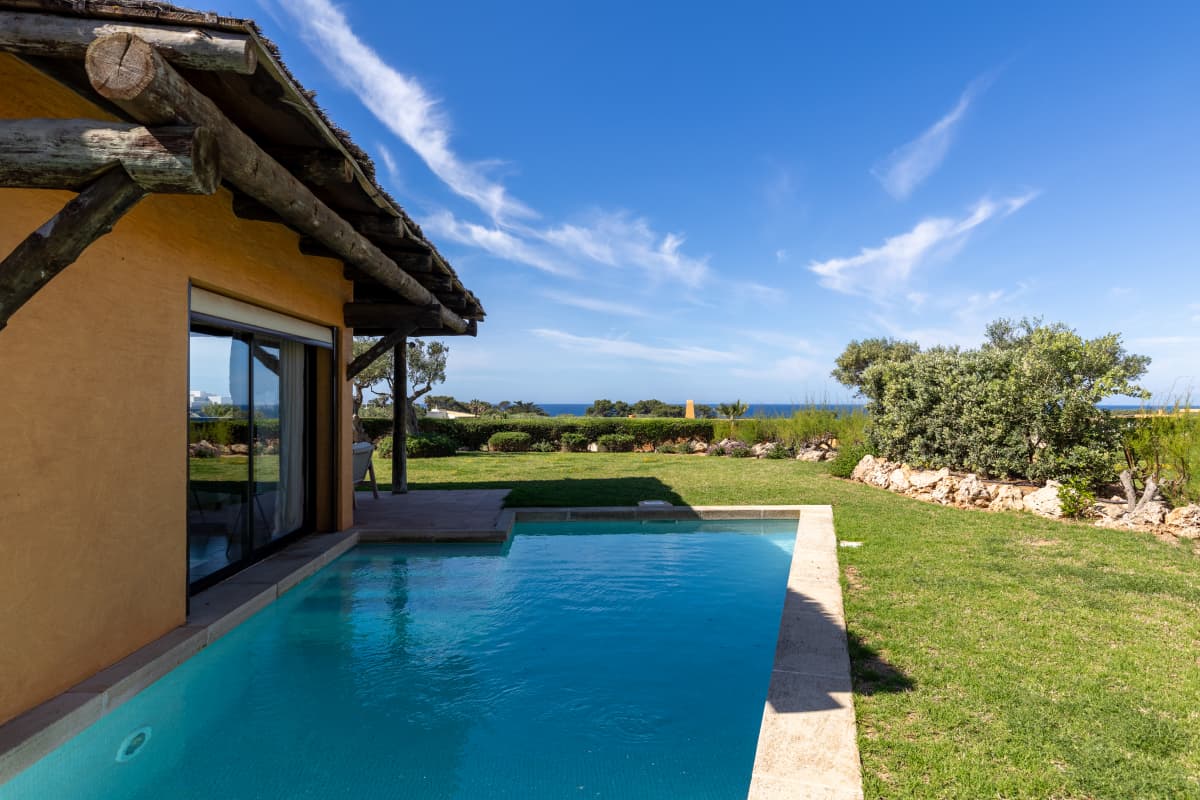
In 1993, while Mallorca was lining its bays with apartment blocks and Ibiza was building the reputation that would define it for a generation, Menorca did something quieter and, in hindsight, far more consequential. It asked UNESCO to declare the whole island a Biosphere Reserve — a binding commitment to keep development, resource use and landscape in balance — and in October of that year UNESCO agreed. That single decision, taken more than thirty years ago, is the reason a week on Menorca today feels nothing like a week on its louder Balearic siblings. The coastline is still mostly undeveloped. The interior is still church towers, dry-stone walls and whitewashed farms rather than cranes. The beaches at the end of the pine tracks have no hotels behind them. Menorca is the Balearic island that chose, deliberately and early, not to be in a hurry — and that choice is precisely what an owner feels, from the first afternoon. This is what ownership in Menorca actually feels like — not the turquoise cove in the brochure, but the ordinary, unhurried rhythm of an island that decided, long ago, to stay itself.
For most second-home owners, that rhythm is expensive to hold onto and rarely actually lived. The typical British, Northern European or American owner of a Menorcan villa spends only a few weeks a year on the island — the pool is serviced whether they are there or not, the tramuntana wind strips a few roof tiles every winter, and the annual IBI property-tax notice arrives in a language and a format that never quite explains itself. Co-ownership changes that arithmetic without changing the experience. Owning one-eighth of a quality villa or restored farmhouse through a properly structured LLC, alongside seven other vetted co-owners, gives each owner roughly 44 to 45 days a year of use — a month and a half on an island most full owners barely touch. You arrive. The house is ready. Someone else has managed the off-season. You leave, and the calendar resets for the next family. Our how it works guide walks through the structure end to end.
Menorca in the Shoulder Seasons: Why June and September Are the Real Prize
The charter flights sell July and August, when the south-coast calas fill by ten in the morning and the road to Cala Galdana moves at walking pace. The people who actually own property on Menorca use the shoulder seasons. June, when the island is still green from the spring rains, the wildflowers are out along the cliff paths and the sea has warmed enough to swim. And especially September and October, when the families have gone home and the island exhales. The sea off Menorca holds around 25 degrees Celsius through September and stays near 23 degrees into October — warmer, in other words, than the air over Northern Europe — while the daytime air settles into the mid-twenties, ideal for the long coastal walks that high summer makes unthinkable. This is the version of the island residents describe when they explain why they never leave, and it is exactly the version a co-ownership calendar is built to capture.
With 44 to 45 days of annual use per one-eighth share, the question for most co-owners is not whether to take shoulder-season time but which weeks to claim. A family with school-age children naturally weights its share toward late June and July. A retired couple takes the first half of June, the last two weeks of September and a long, quiet stretch in October. A buyer drawn to the island's particular calendar — the Festes de Sant Joan in Ciutadella in late June, when horses rear through the medieval streets in a centuries-old equestrian festival, or the autumn walking season on the Camí de Cavalls — can build an annual pattern around those moments specifically. The calendar is genuinely flexible, agreed among co-owners through the management company, and in practice most groups find they want different weeks anyway. The arithmetic of sharing only feels like a constraint until you notice how little of the year a sole owner ever actually uses.
What a Typical Week Looks Like
The arrival is categorically different from a rental. There is no key-safe combination to hunt for on a door frame, no laminated sheet about the WiFi and the bin days. The management company has prepared the house before you reach it — fresh linen, the pool brought to temperature, the fridge stocked with the basics you asked for in advance, perhaps a bottle of Xoriguer, the Menorcan gin distilled in Maó to a recipe that dates from the eighteenth-century British garrison. The house is yours for the week. Not yours in the hedged sense of a hotel room, or the provisional sense of an Airbnb, but yours in the deeded, your-name-is-on-the-company sense. That distinction is not abstract. It changes how you use the space from the first hour — you unpack properly, you leave a book on the shelf, you treat the kitchen as a kitchen rather than a place to be careful in.
Menorca rewards the owner who learns its two coasts. The south is the postcard: pale limestone, calm water, beaches like Cala Macarella and Cala Mitjana reached on foot through Aleppo pine, the sand the colour of bone. The north is wilder — red and black rock, the wind off the tramuntana, near-empty bays such as Cala Pregonda and the lighthouse cape at Cavalleria, where the landscape feels closer to the Atlantic than the Mediterranean. Between them runs the Camí de Cavalls, the 185-kilometre coastal path that circles the entire island in twenty stages, its name and its route inherited from a fourteenth-century order requiring Menorcan horsemen to patrol the shore. A co-owner with a week in hand might walk one stage before breakfast, drive inland to the Saturday market at Ferreries, and be back at a southern cove by mid-afternoon. None of this is aspirational copy. It is simply the ordinary rhythm of the island.
The two towns frame the week at either end. Maó, the capital, sits above one of the deepest natural harbours in the Mediterranean — a long, sheltered inlet the Royal Navy prized for much of the eighteenth century, and the British left their mark in the sash windows, panelled doors and ruby-painted facades of the old merchant houses. Ciutadella, the former capital at the western end, is the quieter beauty: a dense weave of shaded squares, Gothic churches and a small honey-coloured cathedral, best walked in the hour before dinner when the light goes amber. And underneath all of it is something far older — Menorca holds one of the highest densities of prehistoric monuments anywhere in the inhabited world, the talayots, taulas and burial navetas that earned Talayotic Menorca a place on the UNESCO World Heritage List in September 2023. An owner returning five or six times a year has the time most visitors never do — to drive out to a Bronze Age taula at dusk with nobody else there.
The Management Reality: What You Don't Have to Think About
The lifestyle argument for co-ownership in Menorca is strong on its own. The practical argument may be stronger. Full ownership of a Menorcan villa brings a management overhead that most buyers underestimate at purchase and find wearing within two years: the pool contractor, the gardener, the cleaner, the property manager, the insurance renewal, the IBI and the rubbish tax, the winter call about wind damage when nobody is on the island. Co-owners deal with none of this directly. The management company, appointed by the LLC that holds the property, handles all of it. Owners receive a single annual account, pay their proportional share, and use the house. The island's relative remoteness — there is no bridge, and every contractor and replacement part arrives by ferry or plane — makes genuinely hands-off management worth more on Menorca than it is in places you can simply drive to.
The cost structure is the most frequently misunderstood part of co-ownership. Because you own one-eighth of the property, you pay one-eighth of every running cost: property tax, insurance, maintenance, management, pool and garden, and any agreed capital improvement. For a quality Menorcan villa with a pool, running the full property might cost €16,000 to €26,000 a year depending on size, age and specification. An eighth-share owner therefore carries roughly €2,000 to €3,250 a year — less than many families spend on a single fortnight in a rented villa in August. Setting that figure beside what a sole owner pays, for a house that sits empty most of the year, is what tends to move the co-ownership conversation from "interesting idea" to "why have I not done this already." Our buying FAQs work through the cost structure in more depth.
Menorca's Property Market in 2026: Context for Buyers
Understanding the Menorcan market in 2026 matters because it sets the entry price for a share and the long-term capital position of co-owners. Menorca has long been the most affordable of the three large Balearics, and it is now also one of the steadier performers. Island-wide asking prices average around €4,000 per square metre in early 2026, but the two ends of the island diverge: Ciutadella and its western coast command roughly €3,750 per square metre, having risen sharply — by something close to 13 per cent over the preceding year — while Maó sits lower, near €2,730 per square metre, and has also climbed at a double-digit pace. The luxury segment — restored farmhouses with land, villas within walking distance of a south-coast cala — is structurally separate from these averages and continues to be driven by international buyers from the United Kingdom, Germany and France.
The mid-market — quality villas and restored farmhouses across the centre of the island and within reach of the better beaches — is the segment most relevant to co-ownership. Properties here typically trade between €600,000 and €2 million for good three-to-five bedroom homes with a pool and land. A one-eighth share in a property at the middle of that range — say a €1 million restored farmhouse near Es Mercadal — would currently be priced at roughly €130,000 to €155,000 per share, depending on the operator's structure and any rental offset. That is deeded ownership in a market with a long record of steady appreciation, none of the renovation risk that overruns so many full-ownership budgets, and a property already brought up to current technical standard. You can see live pricing across the destinations COP covers among our homes.
One regulatory point shapes the whole Balearic market, and Menorca with it. The islands have held a moratorium on new tourist-rental licences since 2022, extended indefinitely, and a 2025 decree went further, permanently barring new tourist lets in apartment buildings across the archipelago. In practice the only route to a lettable property is now to buy one that already holds a licence, and a transferable licence can add a meaningful premium to the price. For co-owners who intend to use their share personally — and most do — this has no direct effect; what it does is constrain the supply of quality property and tend to support values over the medium term. Co-ownership operators structure each home either inside the rental framework where a licence exists, or as a personal-use arrangement, and it is worth confirming which applies to any specific property before signing.
The Co-Ownership Case for Menorca
The case for co-ownership on Menorca is not, in the end, a financial one, although the financial case holds. It is a usage argument. Menorca rewards the unhurried, returning presence — the June swim before the crowds, the September walk along an empty stage of the Camí de Cavalls, the slow amber hour in a Ciutadella square, the drive to a Bronze Age taula with the island to yourself — that a few weeks of real ownership make possible and that a holiday rental, with its check-in anxiety and its always-slightly-different keys, almost never delivers. Co-owners arrive as owners. They know the house, they have their routines in it, they know which cala faces away from the day's wind. Over five or six visits a year, across different seasons, that accumulates into something that feels less like a holiday and more like a second life — which is, ultimately, what an owner is buying: not the building, but the island's particular, deliberate calm.
If the Menorcan version of this argument resonates, the Mallorca version reads with the same one-eighth arithmetic and a louder, larger cast. For buyers weighing the Balearics now, COP carries live inventory across our homes, spanning the price points and island characters described above. Browse the current listings, or speak with our team directly to understand which properties are available and what a specific share would cost in today's market.
See the homes behind this guide. Explore a current Menorca co-ownership share, browse the wider Spanish collection, or speak with our team about what is available now.
More from Co-Ownership Property
Kontakt aufnehmen
Sprechen Sie mit einem Experten
Sagen Sie uns, wonach Sie suchen, und einer unserer Miteigentums-Spezialisten meldet sich innerhalb von 24 Stunden bei Ihnen.