Lifestyle & Ownership Experience
The Tuscan Ownership Experience: What a Week in Your Chianti Share Actually Feels Like
From the Saturday morning market in Greve in Chianti to a slow October afternoon among the vineyards above Radda, co-ownership delivers Tuscany's full lifestyle in six weeks a year — at one-eighth of the cost, without the management overhead that turns full ownership of a Tuscan farmhouse into a second job.
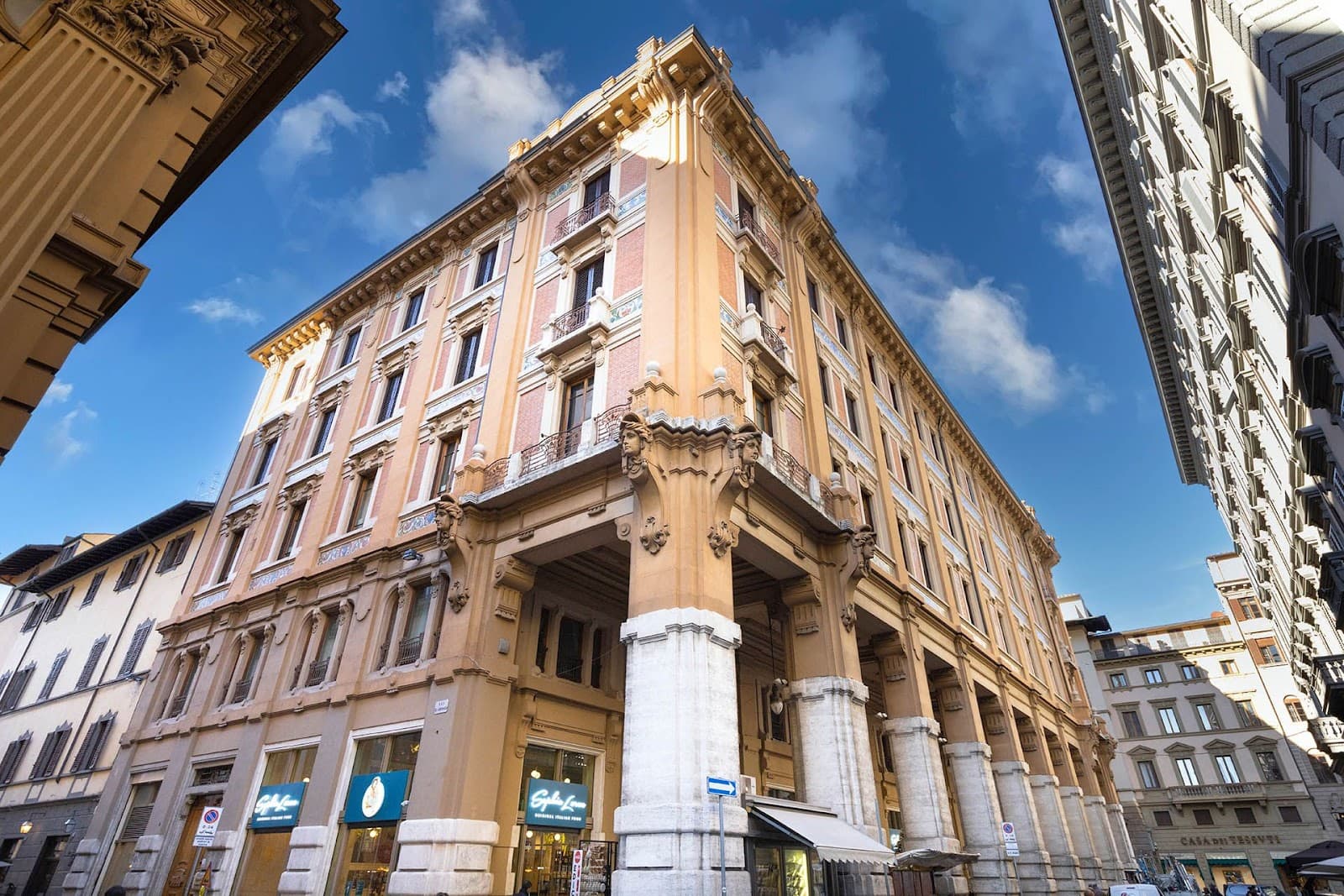
It is half past eight on a Saturday in late May, and Piazza Matteotti in Greve in Chianti is filling up. The flower seller goes first, then the man with the pecorino — wheels of young, mid-aged and aged cheese from a single farm twenty minutes south, sliced from the wedge for tasting on the back of a knife. Then the salumi stall, a porchetta van that has stood in the same corner for two generations, and a woman who sells nothing but tomatoes, eight different varieties laid out on linen. By nine the bars under the arcades have filled with newspaper-readers and the square smells of bread and coffee. This is not a curated experience for visitors. This is Saturday in Greve, the same as it has been every Saturday for as long as anyone there can remember, and the family in the rental car photographing it on their phones will be on a plane home by Tuesday. The couple sitting at the corner table with the cheese seller's son — the ones who ask after the porchetta man's shoulder — own property here. This is what ownership in Chianti actually feels like — not the postcard farmhouse on a cypress-lined drive, but the ordinary extraordinary rhythm of a place you keep coming back to.
For most second-home owners in Tuscany, that feeling is expensive to maintain and rarely experienced. The average British, American or Northern European owner of a Tuscan farmhouse spends fewer than thirty days a year on the property, according to surveys of secondary-home usage in central Italy. The olive grove gets pruned whether they are there or not. The roof contractor calls about a tile slipped after a winter storm and emails a quote in Italian. The annual IMU — Italy's municipal property tax for second homes — arrives in June and is paid without much thought about what it actually covers. Co-ownership of a Tuscan farmhouse — specifically, owning one-eighth of a quality restored property through a properly structured LLC, alongside seven other vetted co-owners — changes the arithmetic entirely without changing the experience. You arrive. The house is ready. Someone else has managed the off-season. You leave. The calendar resets for the next owner. This is what that week, and that month-and-a-half per year, actually looks like in Chianti and the wider Tuscan countryside. Our how it works guide walks through the structure end-to-end.
Tuscany in the Shoulder Seasons: Why May, September and October Are the Real Prize
The travel brochures sell July and August, when the Tuscan thermometer climbs past forty degrees and Florence is solid with cruise-ship day trips. The people who actually own property in Chianti use the shoulder seasons. Late May, when the cypresses have shaken off the winter and the iris fields above Florence are at their peak. September, when the vendemmia — the grape harvest — begins in the lower vineyards around Castellina and Panzano and the cellars open their doors to the village for the first pressings. October, when the leaves on the vines turn gold and red and the frantoi, the village olive presses, begin their three-week run. The Chianti hills are at their most photographed in October, but the photographs are taken by visitors; the residents are at the press, watching this year's oil come off the stones. A co-ownership calendar is particularly well-designed to capture these weeks.
With 44 to 45 days of annual usage per one-eighth share, the question for most co-owners is not whether to take shoulder-season time — it is which weeks to claim. A family with school-age children naturally weights their share toward late June and the first half of July. A retired couple takes the last two weeks of September, the harvest week in October and a long Easter visit when the wisteria is out. A buyer particularly interested in the wine and food year — the white truffle festivals around San Miniato in November, the Anteprime tastings in Florence in February, the Saturday market in Greve in May — can build an annual pattern that tracks those moments specifically. The calendar is genuinely flexible, agreed among co-owners through the management company, and in practice most groups discover that they naturally want different weeks. The detail is covered in our staying in your co-ownership property FAQs.
What a Typical Week Looks Like
The arrival experience for a co-owner is categorically different from a rental. You are not searching for a key-safe combination on a doorframe. You are not reading a laminated instruction sheet about the irrigation timer and the WiFi password. The property management company has prepared the house before you arrive — fresh linens, the pool at temperature for the season, the fridge stocked with the basics you requested in advance, a bottle of the local Chianti Classico from the producer whose vineyards are visible from the kitchen window. The property is yours for the week. Not yours in the hedged sense of a hotel suite, or the provisional sense of an Airbnb. Yours in the deeded, on-the-mortgage, your-name-is-on-the-company sense. That distinction is not abstract. It changes how you use the space from the first afternoon.
A Tuesday morning, say, in a co-ownership property near Castellina in Chianti. The village sits on a ridge at around 580 metres, with views east to the Monti del Chianti and west to the Val d'Elsa. The Via delle Volte, a vaulted medieval passage that runs along the old town walls, is empty before nine in the morning except for a man hosing down the cobbles. The bakery on the main street produces schiacciata — the flat, salt-and-olive-oil bread that is to Tuscany what focaccia is to Liguria — twice a day, and the second batch comes out at eleven. A couple who own a one-eighth share in a restored farmhouse five kilometres outside Castellina might spend the morning at the property — coffee, the slow circuit of the garden, the swim that takes about as long as the espresso — and the afternoon in the village or at one of the cellars on the surrounding ridge. This is not an unusual or aspirational description of how people use Chianti. It is the ordinary rhythm of ownership in one of Europe's most photographed and least altered landscapes.
By contrast, a week based further south in Radda in Chianti or Gaiole in Chianti reads slightly differently. Radda is the most contained and historic of the four core Chianti Classico towns — one of the original townships, alongside Castellina and Gaiole, that gave the wine zone its name in the eighteenth century. Gaiole sits at the heart of vineyard country, with the famous Eroica gravel-cycling route running through it each October. A morning's drive from a property near Radda can take in the Castello di Brolio for lunch and return through the vineyards of Castelnuovo Berardenga before sunset. Properties in this area — particularly restored case coloniche, the traditional sharecroppers' farmhouses, within a few kilometres of the village — have appreciated meaningfully over the past five years, with asking prices for quality resale property now running between €800,000 and €2.8 million for three-to-six bedroom homes with land and a pool.
The Management Reality: What You Don't Have to Think About
The lifestyle argument for co-ownership in Tuscany is compelling on its own terms. The practical argument may be more so. Full ownership of a Tuscan farmhouse above a certain value brings with it a management overhead that most buyers underestimate at the point of purchase and find exhausting within two years. The pool contractor, the gardener — who, if there is land, is a near-full-time post during the growing season — the cleaner, the property manager, the insurance renewal, the IMU and TARI (waste tax), the spese condominiali if the property is in a complex, and the maintenance backlog that only really makes itself felt the second time the heating fails in February when nobody is in the country. Co-owners deal with none of this directly. The management company — appointed by the LLC that holds the property — handles all of it. Owners receive a single annual account, pay their proportional share of costs, and use the property.
The cost structure is one of the most frequently misunderstood aspects of co-ownership. Because you own one-eighth of the property, you pay one-eighth of all running costs: property taxes, insurance, maintenance, management fees, pool and garden upkeep, and any agreed capital improvements. For a quality Tuscan farmhouse with a pool and a few hectares of land, running costs for the full property might run €20,000 to €32,000 per year depending on size, age, the state of the olive grove, and specification. An eighth-share owner pays €2,500 to €4,000 annually — less than many people spend on two weeks in a rented Tuscan villa during the high season. Understanding this is what changes the co-ownership conversation from "interesting idea" to "why haven't I done this already." Our buying FAQs walk through cost structure in more depth.
Tuscany's Property Market in 2026: Context for Buyers
Understanding the Tuscan market in 2026 matters because it shapes the entry price for co-ownership and the long-term capital position of co-owners. Italy's overall residential market has been one of the more reliable mid-decade performers in Western Europe, with national asking prices up around 8 per cent year-on-year in early 2026 and Tuscany trading slightly above that pace in the prime countryside segment. The province of Florence, which encompasses the northern half of Chianti Classico, averages above €4,500 per square metre on residential listings, while the broader Tuscan average sits around €2,650 per square metre as of March 2026. The luxury segment — restored farmhouses with land, a pool and a recognised Chianti or Val d'Orcia address — is structurally separate from these averages and continues to be driven by international buyers from the United States, Northern Europe and the United Kingdom.
The mid-market — the quality villas and farmhouses in the Chianti Classico hills, the Val d'Orcia and the Mugello — is the most relevant segment for co-ownership structures. Properties here now typically trade between €800,000 and €2.5 million for good-quality three-to-five bedroom restored homes with pools and land. A one-eighth share in a property at the mid-point of that range — say, a €1.4 million restored casa colonica near Castellina — would currently be priced at around €175,000 to €200,000 per share, depending on the operator's structure and any rental income offset. That entry point gives a co-owner deeded ownership in a market that has demonstrated consistent long-term appreciation, none of the renovation exposure that destroys the budgets of so many full-ownership buyers, and a property that has already been brought up to current technical standard. Browse our homes for live pricing across the destinations we cover.
One regulatory note that affects all Tuscan property buyers: in 2024 and 2025 Italy tightened the framework around short-term rental licensing, requiring a national identifier — the CIN, or Codice Identificativo Nazionale — for any property let on platforms like Airbnb or Booking, and giving regions and municipalities the power to cap or restrict licences in pressured tourist areas. Florence and parts of the Chianti Classico zone have signalled use of these powers. This has no effect on co-owners who intend to use their share personally — and the majority of co-ownership buyers do — but it constrains supply of new short-let inventory and tends to support capital values for properties already inside the framework. Co-ownership operators structure their properties either within the rental framework where licences exist, or as personal-use-only arrangements. It is worth confirming which structure applies to any specific property before signing.
The Co-Ownership Case for Tuscany
The case for co-ownership in Tuscany is not primarily a financial argument, though the financial argument is sound. It is fundamentally a usage argument. Tuscany rewards the kind of unhurried, returning presence — the May market in Greve, the September harvest in Castellina, the long autumn lunch under the pergola, the November truffle dinner in a town the rental crowd has already left — that a few weeks of real ownership enable and that a holiday rental, with its check-in anxiety and its always-slightly-different keys, rarely delivers. Co-owners arrive as owners. They know the property, have their own routines in it, know the gardener's name and the baker's hours, and engage with the surrounding landscape from a different starting point than a tourist. Over five or six visits a year, across different seasons, that builds into something that feels less like a holiday and more like a second life. That is, ultimately, what people are buying when they buy a share in a Tuscan farmhouse — not the building, but the Saturday in the square.
If the Tuscan version of this argument resonates, the Mallorca version reads identically with a different cast — Tuesday markets in Pollença, September coves near Deià, the same one-eighth arithmetic. For buyers currently evaluating central Italy, COP carries live inventory across our homes in the destinations described above. Browse the current listings or speak with our team directly to understand which properties are available and what a specific share would cost in today's market.
See the homes behind this guide. Explore a current Tuscan co-ownership share, browse the wider Italian collection, or speak with our team about what is available now.
More from Co-Ownership Property
Kontakt aufnehmen
Sprechen Sie mit einem Experten
Sagen Sie uns, wonach Sie suchen, und einer unserer Miteigentums-Spezialisten meldet sich innerhalb von 24 Stunden bei Ihnen.