The Cotswolds · Area of Outstanding Natural Beauty · England
Fractional Ownership & Co-Ownership in the Cotswolds
From a honey-stone manor near Bibury to a Painswick rectory in the southern hills — fractional ownership in the Cotswolds means a real share of England's most carefully protected rural landscape, around six weeks of personal use a year, and a fully managed home waiting whenever you arrive. Whether you call it fractional ownership or co-ownership, you own a real share of the home.
No properties currently listed for this destination. Browse all properties or contact us for upcoming listings.
The Cotswolds' most desirable addresses, accessible through co-ownership.
Fully managed manors, rectories, cottages and townhouses across the North Cotswolds, Central Cotswolds, South Cotswolds, the Cotswold-Dean western edge and the Oxford-Cotswolds gateway. Your 1/8 share of the home comes with around six weeks of personal use, a professional management team on call, and the long-term equity of England's most rigorously protected and consistently sought-after second-home region — under two hours by road or rail from central London.
What is fractional ownership in the Cotswolds?
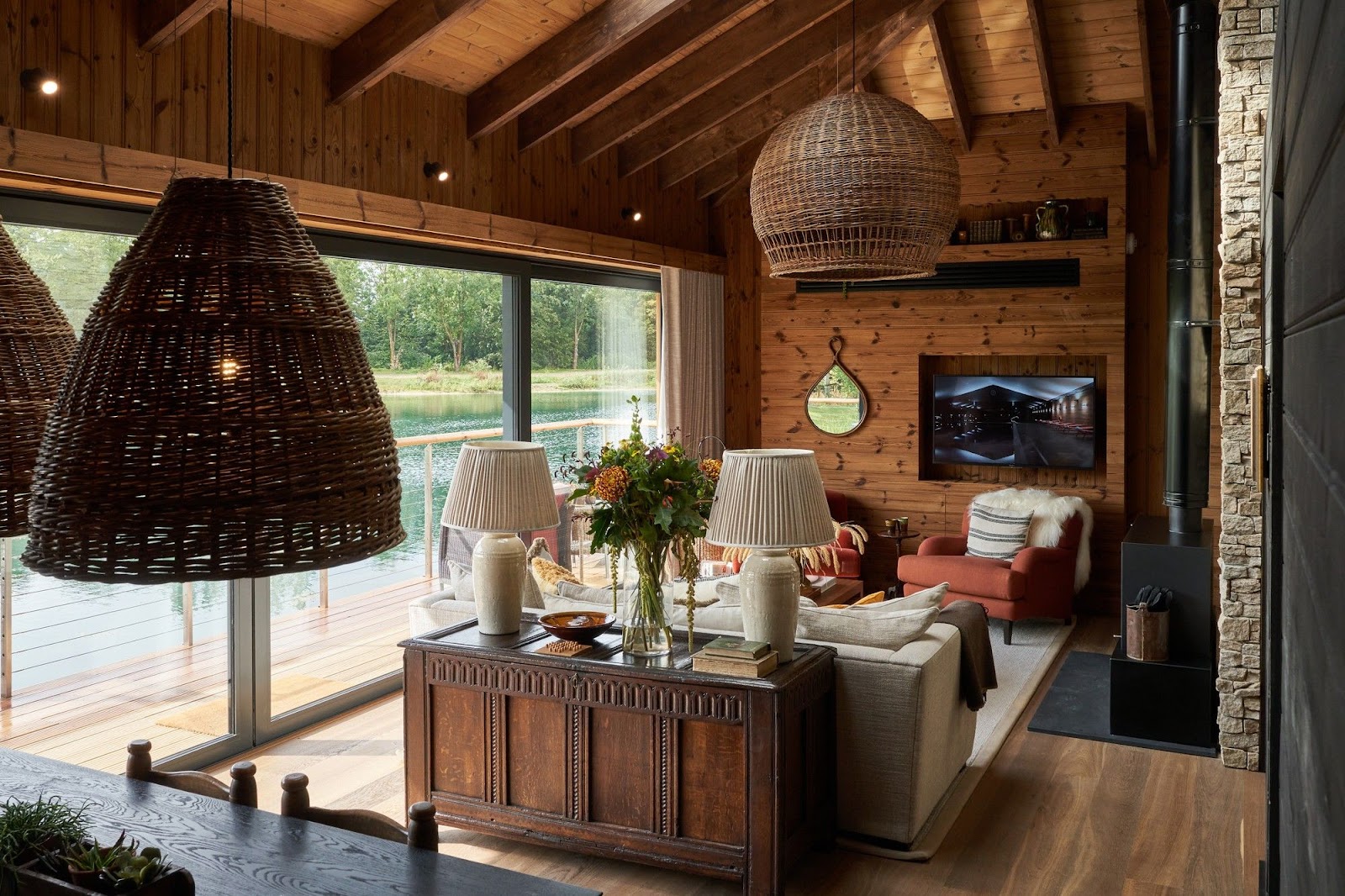
Fractional ownership in the Cotswolds means buying a real 1/8 share of a luxury honey-stone country second home, shared with up to seven other co-owners. Each owner receives around six weeks of personal use a year, depending on the home, through a fair-rotation calendar, with all property management, maintenance, taxes and operations handled by a professional team. It is real ownership of a share of the home — not a timeshare, not a holiday club.
Why the Cotswolds?
The Cotswolds are, by a long way, England's single most established rural second-home market — and have been continuously so for more than a century. Designated an Area of Outstanding Natural Beauty in 1966 and subsequently expanded to cover 2,038 square kilometres across five counties (Gloucestershire, Oxfordshire, Warwickshire, Wiltshire and Worcestershire), the Cotswolds AONB is the largest of England's 34 protected landscapes and the second-largest in the United Kingdom after the New Forest national park. The region's defining feature — and the reason its second-home market has the depth and stability it does — is the honey-coloured Jurassic limestone that runs in a near-continuous escarpment from Bath in the south to Chipping Campden in the north, weathering to a distinctive ochre-cream colour that has given the Cotswolds the unmistakable village vernacular international visitors recognise from Downton Abbey, Bridgerton and a century of English landscape painting.
Your Cotswold share is owned alongside up to seven other co-owners — a real share of the home, not a right to use it.
The Cotswolds' particular advantage inside rural Britain is the combination of architectural pedigree and planning protection that has kept the region's most desirable inventory genuinely scarce. The National Landscape Management Plan applies strict building-control regimes across the AONB, with the Cotswold District Council, West Oxfordshire, Stratford-on-Avon, Tewkesbury and the Stroud authorities each operating local development plans designed to preserve the honey-stone vernacular. The honey-stone villages of Bibury, Castle Combe, Lower and Upper Slaughter, Snowshill, Stanton, Painswick and Chipping Campden are essentially the same villages the eighteenth-century travelling diarists described, and the buildable land within the AONB — which broadly covers the central spine of the Cotswolds — is, in real terms, no longer growing in the most desirable zones. The existing inventory is held tighter than at any point in the modern era, and the village-house stock is one of the few categories of UK residential property whose long-run scarcity is genuinely structural rather than cyclical.
It is worth setting the Cotswolds in their European competitive context. The Lake District and the Yorkshire Dales, England's other premium rural second-home regions, have their own distinct landscape qualities but lie a further three to four hours north of London and lack the dense network of usable market towns and stone villages that gives the Cotswolds their characteristic rhythm. The Chilterns, closer to London, are smaller, less protected and less internationally established as a second-home destination. Devon and Cornwall offer comparable rural prestige at the top tier but with significantly longer travel times — the drive from London to North Cornwall is genuinely a full day, and the seasonal traffic pattern means that even a high-spec Cornwall second home is meaningfully harder to use through the working week than a Cotswold property an hour and a half from Paddington. The French Dordogne and Lot offer comparable village atmosphere on the continent but with the additional friction of cross-Channel travel and a less rigorously enforced rural-planning regime. Together, these comparisons help frame why the Cotswolds remain, by some distance, the highest-volume rural second-home market within practical commuter range of London.
The third structural argument for the Cotswolds is the diversity of usable lifestyles available inside a single region. A London weekender with a 1/8 share in the central Cotswolds — Bourton-on-the-Water, the Slaughters, Bibury — is twenty minutes' drive from the racing at Cheltenham, half an hour from the Sunday roast at the Wild Rabbit at Kingham, forty minutes from Blenheim Palace and the streets of Oxford, and a similar drive from the antique dealers at Tetbury; a Painswick buyer in the south is twenty minutes from the Georgian terraces of Cheltenham and forty from Bath; a Chipping Campden owner in the north is twenty minutes from the theatres of Stratford-upon-Avon and ninety minutes from central Birmingham. The region packs a remarkable amount of variety into a footprint roughly the size of Long Island or Mallorca — market towns, stone villages, working farmland, royal estates, gardens, historic houses, country pubs, fine-dining country-house hotels — and a Cotswolds share that combines proximity to several of these gives an owner a year-round country base rather than a single-season property. Few other UK rural destinations can match that combination of variety and proximity to London.
For a co-ownership buyer thinking strategically rather than just emotionally, the Cotswolds' combination of scale, protection and infrastructure depth matters more than the headline glamour. The manor house you buy a share of near Chipping Campden sits in a market where the buildable land inside the AONB is already capped by national-landscape rules and where the village inventory inside the protected zone is fundamentally finite. The Painswick rectory in the south is in a region whose planning ceilings have not moved in three decades. The Bibury cottage on the Coln is in a village whose listed-building stock — Norman parish churches, sixteenth-century weavers' cottages, Cotswold-baroque manor houses — pre-dates every present resident and will outlast them. These are not assets that depend on a particular interest-rate cycle to hold their value; they depend on the unchanging facts that the Cotswolds remain the Cotswolds, that the AONB remains protected, and that the honey-stone vernacular continues to be the legally enforced building standard. Add the professional management and resale infrastructure that makes shared ownership transparent and resaleable, and the case for co-ownership in the Cotswolds writes itself.
One under-discussed advantage that becomes obvious once you actually start using a Cotswold second home is the depth of the region's professional services infrastructure for non-resident owners. A century of London weekenders, two decades of American Anglophile buyers and a steady inflow of Continental European owners have built up an ecosystem of multilingual lawyers, property managers, tax advisers, architects, listed-building specialists and country-house surveyors across the region that smaller English rural alternatives simply cannot match. The local management firms in Cheltenham, Stow-on-the-Wold, Burford, Tetbury and Cirencester operate in English, French, German and the Scandinavian languages as a matter of routine, with decades of operating history; the region has its own quarterly magazines (Cotswold Life, Country & Town House, Condé Nast Traveller's Cotswolds pages); and the long-running relationships between local agencies, listed-building consents officers, and stone-restoration specialists make the practical realities of running a Cotswold property through the year materially more comfortable than running an equivalent rural property in a less developed market. None of this is glamorous, but it is the kind of infrastructure that determines whether owning a second home from another country is a pleasure or a chore.
The fourth structural advantage worth naming is the transport infrastructure that makes a Cotswold second home practically usable rather than just nominally owned. The Cotswolds sit roughly 100 miles (160 km) north-west of central London — close enough that a Friday-evening departure from Paddington puts an owner at their Cotswold front door by dinner. Great Western Railway runs frequent direct services from London Paddington to Kemble (90 minutes — for Tetbury, Cirencester and the southern Cotswolds), Charlbury and Kingham (90 minutes — for the central Cotswolds, the Slaughters, Stow-on-the-Wold and Burford), Moreton-in-Marsh (90 minutes — for the North Cotswolds, Chipping Campden and Broadway) and Cheltenham Spa (130 minutes — for the western edge and Painswick). A taxi from any of these stations to the major village destinations is rarely more than thirty minutes. For drivers, the M40 to Oxford and then the A40 serves the central and northern Cotswolds; the M4 to Swindon and then the A419 serves the southern Cotswolds; and the M5 north from Bristol serves the western edge. London is two hours away by road on a good day; Heathrow is ninety minutes; Birmingham International is an hour from the North Cotswolds. The combined road-and-rail accessibility is the practical precondition for the high-frequency, short-stay use pattern that fractional ownership rewards.
A fifth, less-discussed advantage of the Cotswolds is the cultural visibility the region has accumulated over the past two centuries. The honey-stone village vernacular has been a fixture of English landscape painting since the eighteenth-century picturesque movement (Turner, Constable and the watercolourists of the Norwich and Bristol schools all worked here); the Arts and Crafts movement made the region its spiritual home from the 1890s onwards (William Morris's restoration of Kelmscott Manor on the Thames, the Guild of Handicraft moving from London to Chipping Campden in 1902 under C.R. Ashbee, Ernest Gimson's furniture workshops at Sapperton); and the modern era of British country drama has filmed extensively in the region — Downton Abbey's exteriors at Bampton in West Oxfordshire, Bridgerton's use of Castle Howard and the broader Cotswold-Yorkshire landscape, and a continuous stream of period and contemporary productions filmed at locations including Sudeley Castle near Winchcombe, Broughton Castle near Banbury, and the Bibury and Castle Combe village centres. The corollary is that a Cotswold property has a kind of passive cultural identity — guests recognise the visual register the moment they arrive, which gives an owner's hospitality a built-in atmospheric advantage that more obscure regions cannot match.
The sixth and perhaps least appreciated argument is the educational infrastructure that surrounds the region. The Cotswolds and their immediate hinterland host an unusual concentration of England's most prestigious independent schools — the Cheltenham Ladies' College and Cheltenham College in Cheltenham; Dean Close and Pate's in the same town; St Edward's Oxford and the broader Oxford prep-and-college network; Radley College south-east of Oxford; Malvern College and Cheltenham Prep just across the Cotswold edge; The Beaudesert Park, Hatherop Castle and Westonbirt on the prep-school side. For buyers whose extended family includes school-age children at any of these institutions, a Cotswold property within reach of the school provides a Sunday-night and exeat-weekend base that no urban second home could match. This is not the primary driver for most buyers but it is a notable secondary driver for a particular demographic.
Where to own in the Cotswolds
The Cotswolds' second-home market is best understood through five distinct sub-zones, each with its own architecture, microclimate, social rhythm and buyer mix. There are, of course, Cotswold addresses outside these five — the working agricultural villages of the Vale of Evesham on the northern edge, the more workaday towns of Stroud and Dursley on the western escarpment, the Wiltshire-Cotswold villages south of Tetbury — and we are happy to discuss them with buyers whose interests run that direction. But the supply story for fractional ownership is concentrated in the five clusters below: the North Cotswolds around Chipping Campden, Broadway, Moreton-in-Marsh and Stow-on-the-Wold; the Central Cotswolds around Bourton-on-the-Water, the Slaughters and Bibury; the South Cotswolds around Painswick, Tetbury and Cirencester; the Cotswold-Dean western edge through the Stroud valleys and the Slad Valley; and the Oxford-Cotswolds gateway around Burford and Witney. Together they account for the overwhelming majority of international and London-weekender second-home demand in the region.
North Cotswolds — Chipping Campden, Broadway, Moreton-in-Marsh, Stow-on-the-Wold
Chipping Campden is, on most measures, the most architecturally complete market town in the Cotswolds — a long curving high street of honey-stone houses, the seventeenth-century Jacobean Market Hall (a National Trust property since 1944), the wool-merchant grand houses of the early Tudor period, and the perpendicular-Gothic parish church of St James', one of the great wool churches of England. The town's annual Cotswold Olimpicks — a country-sport gathering revived in 1612 by Robert Dover and continuously held since — give the place a distinctive sense of seasonal rhythm. Broadway, five miles east, is the larger and grander of the two — the so-called "Jewel of the Cotswolds" — with a wide tree-lined high street, the Lygon Arms coaching inn that has hosted travellers since the sixteenth century, and the dramatic Broadway Tower on the escarpment above the town. Moreton-in-Marsh, on the A429 Fosse Way, is the working market town of the North Cotswolds — the Tuesday market on the wide High Street draws traders from across three counties — and the main rail station for the area. Stow-on-the-Wold, perched at 800 feet (244 metres) on the escarpment, is the highest market town in the Cotswolds and one of the most genuinely atmospheric — a tight square of antique dealers, country-clothing shops and the famous yew-flanked north door of St Edward's church.

The international buyer mix in the North Cotswolds is heavily London-weekender and American, with a long-standing Continental European presence and an increasing share from buyers relocating from the South-East of England in search of better-protected rural surroundings. The architectural inheritance is the heaviest in the region — many of the prime houses are listed at Grade I or Grade II*, with the building stock running from Norman ecclesiastical fragments through Tudor wool-merchant houses to Georgian rebuilds and the rare twentieth-century additions by Arts and Crafts architects like Charles Wade at Snowshill Manor. The walking network is exceptional — the 102-mile Cotswold Way National Trail runs through the North Cotswolds on its way south from Chipping Campden to Bath, and the long Heart of England Way and Macmillan Way cross the area in different directions. The drive from Moreton-in-Marsh to Oxford is 45 minutes; to Stratford-upon-Avon for the Royal Shakespeare Company theatres, 25 minutes; to Cheltenham for the racing and the literature festival, 40 minutes; to Birmingham for the airport and city, 75 minutes. Climate runs 2–6°C (mid-30s°F to mid-40s°F) in mid-winter and 18–24°C (mid-60s°F to mid-70s°F) in the warmer summer months, with the escarpment-top villages running a degree or two cooler than the valleys and noticeably wetter than the average of the Thames Valley to the south-east. Best for: heritage-led buyers who want the most architecturally complete Cotswold market-town addresses, repeat short stays around Stratford-upon-Avon's theatres and the Cheltenham racing and literary festivals, and the easy combination of antique-dealer afternoons in Stow-on-the-Wold with long walks on the Cotswold Way.
Central Cotswolds — Bourton-on-the-Water, the Slaughters, Bibury
The central section of the Cotswolds — the cluster of villages along the rivers Eye, Dikler, Windrush and Coln — is, by some measures, the most internationally photographed part of the Cotswolds and the area whose addresses have the deepest tourism pedigree. Bourton-on-the-Water, on the Windrush, is the so-called "Venice of the Cotswolds" — a long stretch of honey-stone houses flanking the river, connected by a sequence of low stone bridges, and a permanent destination for the day-tripping coach trade that has photographed the village since the Edwardian era. Upper and Lower Slaughter — two miles north — are the quieter twin villages on the river Eye, with the Lower Slaughter Old Mill at the centre of the lower village a continuous working corn mill from the medieval period through the twentieth century. Bibury, on the Coln further south, was described by William Morris as "the most beautiful village in England" and the row of weavers' cottages at Arlington Row — built in 1380 as a wool store and converted to weavers' cottages in the seventeenth century — is the most photographed building in the entire Cotswolds.

The prime sub-zones around the Central Cotswolds divide between the river-valley villages themselves (the postcard cottages on the Windrush and the Coln, the village-greens of the Slaughters, the long curve of Lower Swell), the working agricultural land on the higher ground between them (the stone-walled fields and isolated longhouses on the road between Stow and Bourton), and the larger market town of Northleach on the Roman Fosse Way (one of the great wool-trade towns of the medieval period, with the perpendicular-Gothic church of St Peter and St Paul at its centre). The drive from the central Cotswolds to Kingham station for the London Paddington line is 15 minutes; to Cheltenham, 30 minutes; to Burford for the antique scene, 20 minutes; to Oxford, 40 minutes. Climate is broadly similar to the rest of the Cotswolds — 2–6°C (mid-30s°F to mid-40s°F) in mid-winter and 17–23°C (low to mid 70s°F) in summer — with the river-valley villages running a touch warmer than the escarpment, and the prime addresses set on the rising ground above the villages. Best for: heritage-led families and design-led couples who want the most photogenic stone-village addresses on the island of Great Britain, the quietest of the prime sub-zones, and the easy access to both Cheltenham's cultural calendar to the west and Oxford's restaurant and theatre scene to the east.
South Cotswolds — Painswick, Tetbury, Cirencester
The southern Cotswolds — anchored by Painswick in the western hills, Tetbury on the Wiltshire border and Cirencester on the Roman Fosse Way — is the working market-town Cotswolds that has emerged in the past three decades as the region's most cosmopolitan zone. The landscape here is fundamentally different from the central river valleys: a higher, more open agricultural plateau of stone-walled fields, mixed deciduous woodland and the long views west down the Severn escarpment toward the Forest of Dean and the Welsh borders. Painswick — sometimes called "Queen of the Cotswolds" — is built around the perpendicular-Gothic parish church of St Mary's, famous for the 99 yew trees in its churchyard, planted in the eighteenth century and clipped in continuous topiary since. Tetbury, on the southern edge of the AONB, is the antique-trade and royal-connection capital of the Cotswolds — King Charles's residence at Highgrove sits a mile from the town, the Highgrove gardens are open to the public by ticket through the summer, and the town's antique dealers along Long Street and the Royal Tetbury Wool Sale week in March anchor a serious working-trade calendar. Cirencester, on the Fosse Way, is the largest town of the southern Cotswolds and the historical capital of the Roman province of Britain — the Corinium Museum holds one of the finest Roman mosaic collections in the country, and the town's perpendicular-Gothic parish church of St John the Baptist is one of the largest in England.
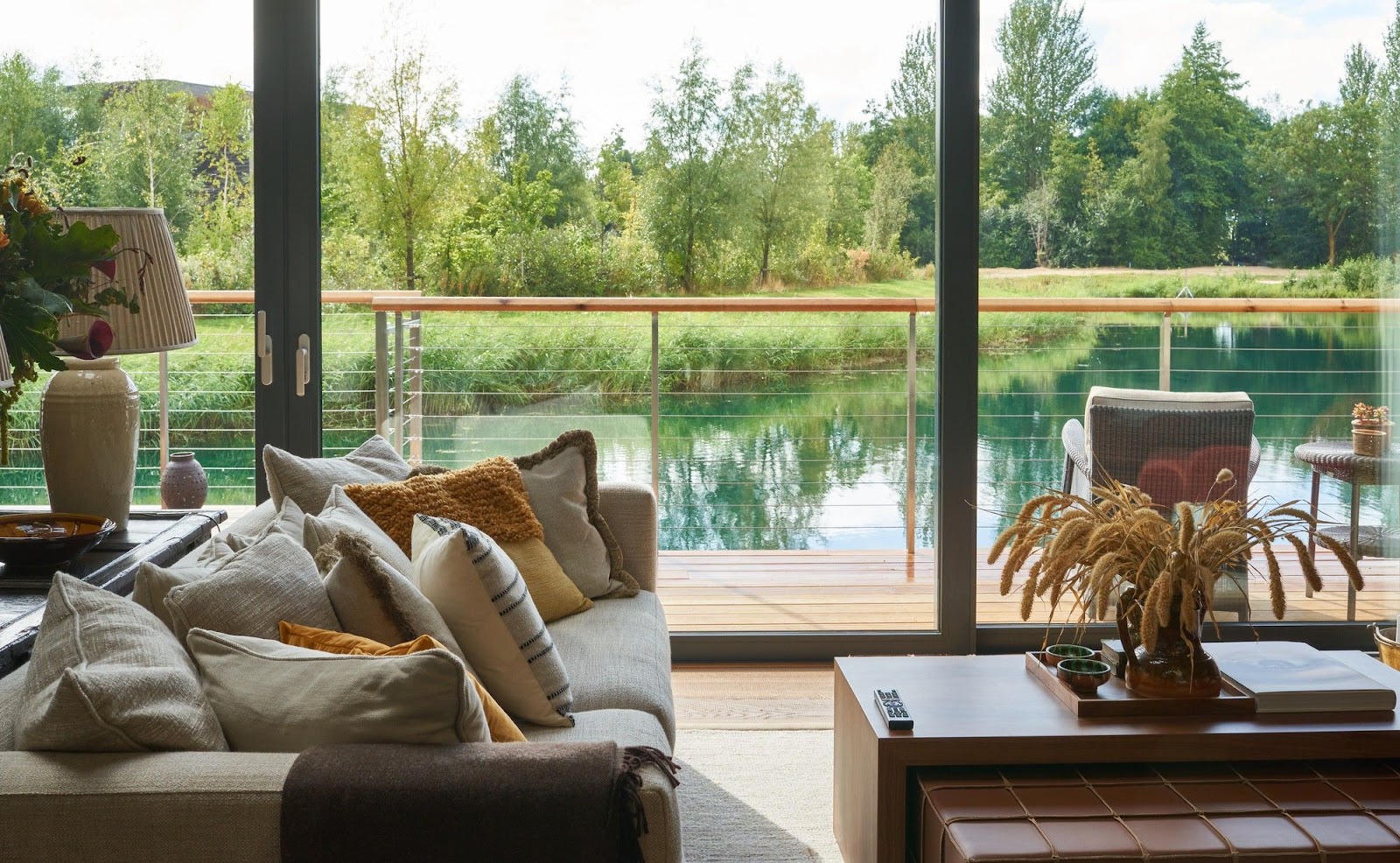
The property stock in the southern Cotswolds divides between the inland village rectories and longhouses (the larger detached country houses on substantial grounds around Painswick, Bisley and Sapperton), the town townhouses within Tetbury and Cirencester (Georgian and earlier rebuilds along Long Street, Castle Street, Cricklade Street and Park Street), and the market-town manor houses on the surrounding land (working country houses on five-to-twenty-acre estates, often with stables and outbuildings). The local cultural scene is unusually deep — the Cheltenham Festivals (jazz, science, music and the country's premier literature festival in October) all lie within forty minutes' drive; the National Arboretum at Westonbirt, ten minutes from Tetbury, is one of the most important tree collections in Europe and exceptional in October; the Royal Agricultural University at Cirencester is the country's leading institution for the working agricultural sector. Drive times from Tetbury to Kemble station for London Paddington are 10 minutes; to Bath, 40 minutes; to Cheltenham, 30 minutes; to Bristol, 45 minutes. Climate is the mildest in the Cotswolds — 3–7°C (high 30s°F to mid-40s°F) in winter to 18–24°C (mid-60s°F to mid-70s°F) in summer — and the southern exposure on the Severn escarpment gives the area the longest reliable gardening and outdoor-entertaining season in the region. Best for: heritage-led couples and families who value the royal-and-cultural connection of the Highgrove and Westonbirt belt, the working-market-town atmosphere of Tetbury and Cirencester, easy access to Bath and Bristol on the western edge, and the slightly milder microclimate of the southern hills.
Cotswold-Dean western edge — Stroud valleys and the Slad Valley
The western edge of the Cotswolds — where the limestone escarpment drops dramatically to the Severn Vale and the silhouette of the Forest of Dean appears on the horizon — is the most landscape-dramatic part of the region and arguably the most underrated by international buyers. The Slad Valley, immortalised by Laurie Lee's Cider with Rosie, is a steep wooded valley running north from Stroud, the village of Slad itself a tight cluster of cottages and the celebrated Woolpack pub where Lee himself drank for forty years. The five Stroud valleys (Slad, Painswick, Nailsworth, Toadsmoor and Frome) form a remarkable working landscape — the mill towns of Stroud, Nailsworth and Stonehouse anchored the British woollen industry through the eighteenth and nineteenth centuries and still bear the architectural signature of that period, with restored mill buildings, mill-workers' cottages climbing the steep valley sides, and the river-fed canal system at the Cotswold Canals currently being restored as a continuous waterway.
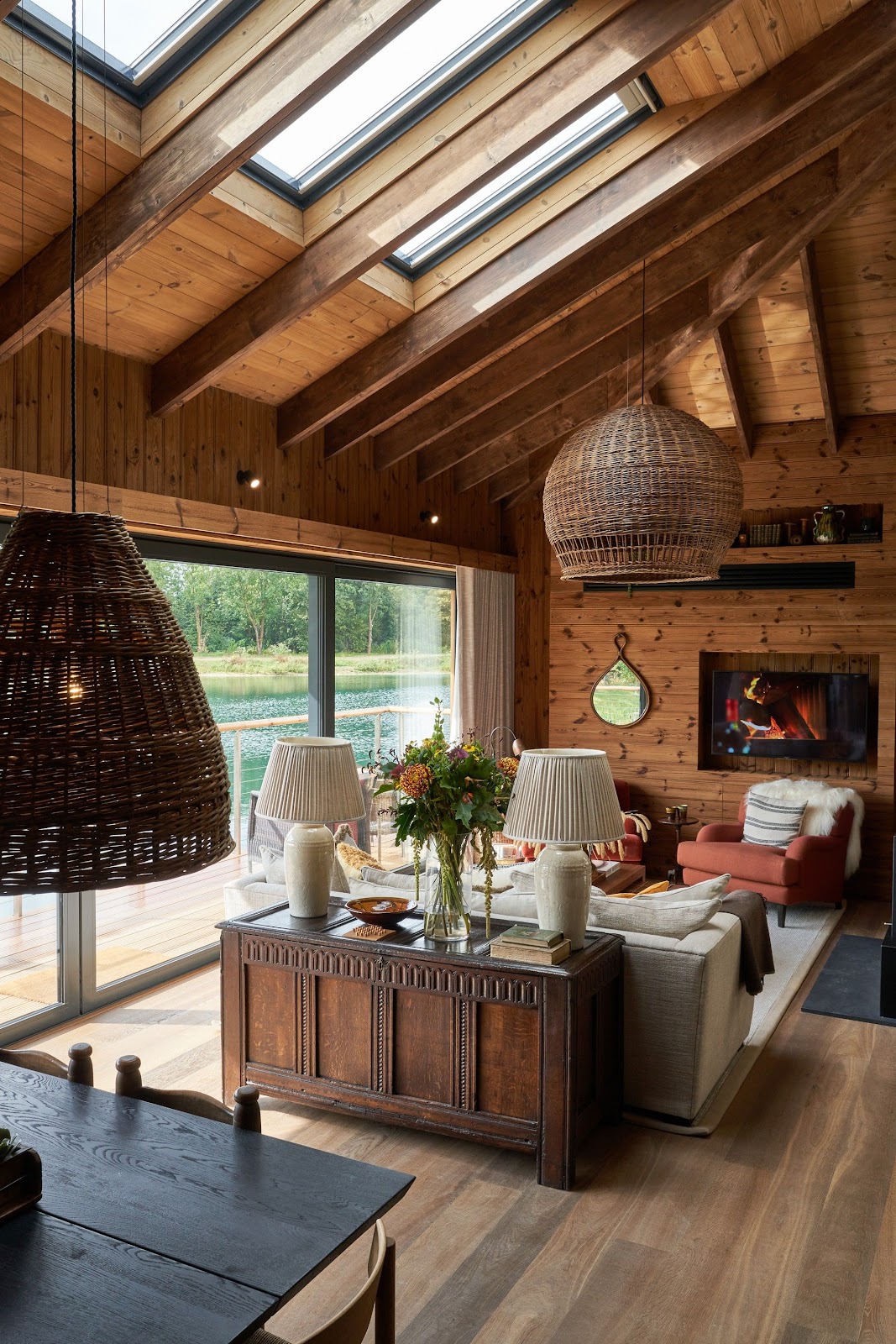
The property stock here is consciously different from the picture-book central Cotswolds — a higher proportion of converted mill buildings, larger Georgian merchant houses associated with the wool trade, and the dramatic clifftop houses on the escarpment edge looking out across the Severn vale. The architectural vernacular runs to the same honey-stone but in a heavier, more industrial register: thick mill walls, slate roofs in addition to the more typical Cotswold-stone tile, and the occasional ironwork detail from the Victorian rebuild. Painswick sits at the northern end of this zone and crosses the boundary between this cluster and the South Cotswolds proper; Minchinhampton and Rodborough Commons are National Trust commons of open grazing land that give the western edge a particular pastoral character (and free roaming cattle that wander into village pubs as a matter of routine). Drive times from Stroud to Kemble station are 20 minutes; to Bath, 50 minutes; to Cheltenham, 20 minutes; to Bristol, 45 minutes. Climate is slightly wetter and more variable than the central or northern Cotswolds — the western edge catches the Atlantic weather coming up the Severn Estuary — with 2–6°C (mid-30s°F to mid-40s°F) winters and 17–23°C (low to mid 70s°F) summers. Best for: design-led couples who value landscape drama and architectural variety over picture-book village postcard appeal, who use the property in genuinely year-round mode, and who treat the proximity to Bristol and Bath on the south-west as part of the property's lifestyle rather than the region's traditional London-and-Oxford axis.
Oxford-Cotswolds gateway — Burford, Witney, the Wychwoods
The eastern gateway to the Cotswolds — the stretch of villages between the Oxfordshire boundary and the central Cotswolds proper — is the most London-weekender-dominated part of the region and the closest of the major zones to the capital. Burford, sloping down from the high A40 to the Windrush crossing at the bottom of the High Street, is one of the most architecturally impressive small towns in England — the wide tree-lined high street running between rows of perpendicular-Gothic, Tudor and Georgian merchant houses, the parish church of St John the Baptist at the bottom of the hill, and an exceptional antique and country-clothing trade running along both sides of the High Street. Witney, on the eastern side of the AONB, is the larger market town — historically the centre of the English blanket-weaving trade and now the working centre of West Oxfordshire — with the wide market square, the seventeenth-century Buttercross at its centre, and the dignified parish church of St Mary's on the southern edge of the town. The Wychwoods — the three villages of Milton-under-Wychwood, Shipton-under-Wychwood and Ascott-under-Wychwood — sit between Burford and Charlbury on the western edge of the ancient royal forest of Wychwood, with the village rhythm dominated by the same Cotswold-stone vernacular as the central villages but with a noticeably stronger Oxfordshire-establishment social mix.
The eastern zone is increasingly known for the country-house hotel and restaurant scene that has gathered along the A40 over the past two decades — Daylesford Organic at Kingham, the Wild Rabbit at Kingham, the Feathered Nest at Nether Westcote, the Plough at Kelmscott, the Kingham Plough and a sequence of long-running establishments around Burford have made the cluster the most concentrated country-pub-and-restaurant area in England. The cultural infrastructure is reinforced by easy access to Oxford — 30 minutes by car or rail — and to the Blenheim Palace estate and Blenheim international horse trials. Drive times from Burford to London Paddington via Charlbury or Kingham are 90 minutes end-to-end; to Oxford, 30 minutes; to Heathrow, 75 minutes; to Cheltenham, 45 minutes. The climate runs broadly the same as the central Cotswolds — 2–6°C (mid-30s°F to mid-40s°F) in winter, 17–24°C (low to mid 70s°F) in summer — with the eastern villages running a touch drier and warmer than the western escarpment. Best for: London-weekenders who want the easiest practical access from the capital, country-pub-and-restaurant enthusiasts, owners who treat the proximity to Oxford as part of the property's cultural calendar, and buyers whose use pattern runs heavily to Friday-evening-to-Sunday-night short stays.
A year in the Cotswolds
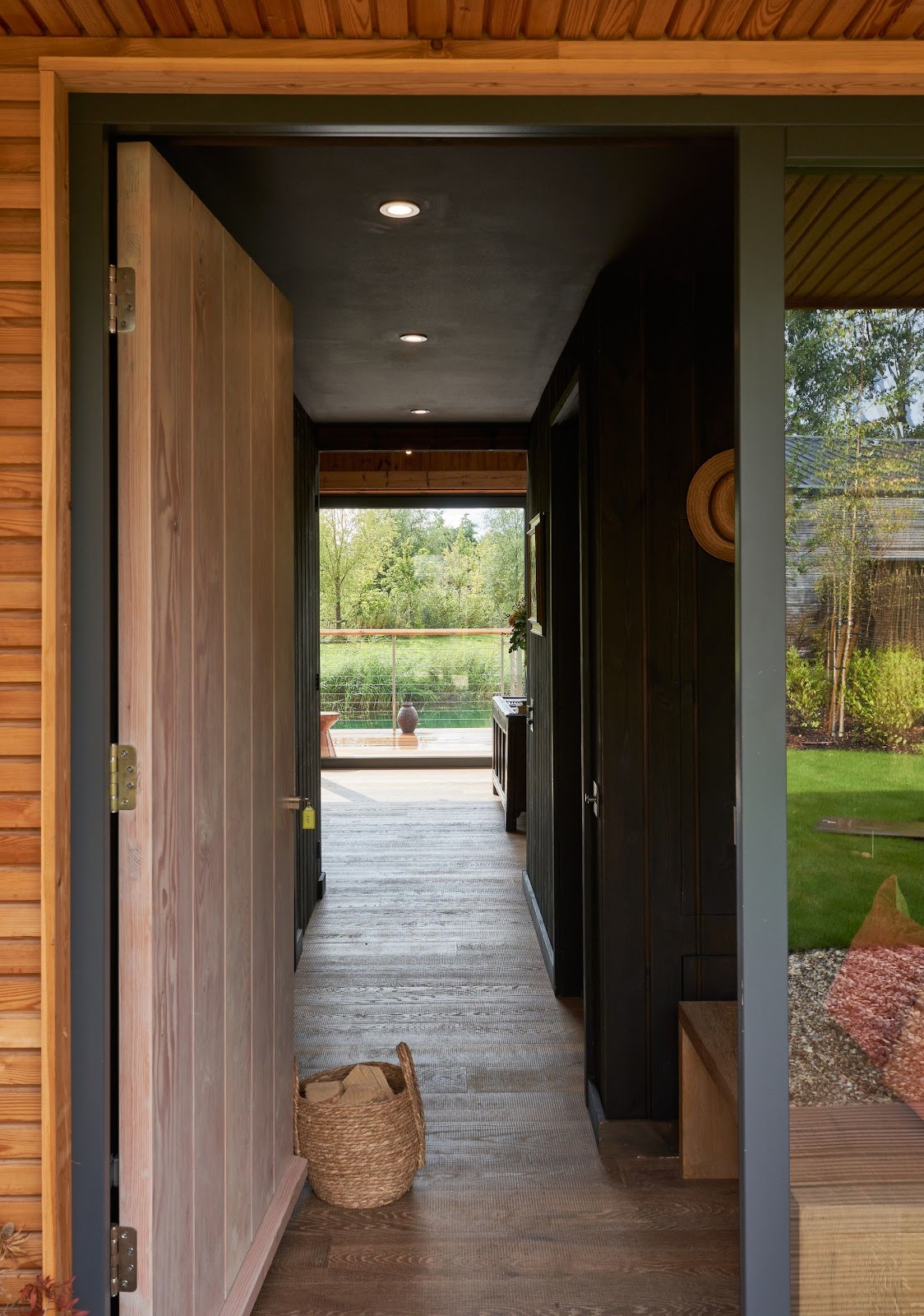
Spreading owner nights that carry no set cap across a calendar year is itself a skill — and one of the unsung benefits of the Cotswolds specifically is that the region's combination of long-stay-friendly winters, dramatic spring and autumn shoulder seasons and genuinely lovely summers gives an owner usable weeks across more of the year than almost any other UK rural destination. Below is a walk through the year with the particular weeks owners across the COP Cotswold portfolio return to most often. The pattern is broadly the same across all eight co-owners of a given property, with the calendar mechanics ensuring every owner gets a fair allocation of peak weeks across a multi-year cycle. Owners who are flexible enough to use shoulder weeks — rather than competing for the August school holidays — consistently report a higher use-quality from their share than those who insist on peak.
Spring (March–May)
Cotswolds spring is, by some measures, the most under-used of the four seasons by international buyers — and consequently one of the most rewarding for a fractional owner with calendar flexibility. March in the region is already pulling out of the proper winter cold — daytime temperatures climbing past 10°C (50°F) by mid-month, the lambing season running across the working farmland through late March and into early April, and the spring restaurant calendar reopening from the quiet February pause. The classic March week — long walks down the Slad Valley to Stroud, the lambs and the early daffodils in the village churchyards, lunches at the Wild Rabbit or Daylesford with the working farms back to full operation — is one of the secret pleasures of a Cotswold share.
April brings the Easter weekend (the region's first proper holiday peak of the year), the bluebells running through the Cotswold beech woods (Westonbirt, Witcombe and the Slad Valley are all exceptional through the last fortnight of April and the first of May), and the spring half-term holidays from the English and Scottish school calendars. The Cotswold Way walking network is at its peak — the long 102-mile trail from Chipping Campden to Bath is most usable in April before the summer heat closes in. May sees the region warming into proper outdoor-living weather — daytime temperatures reliably 15–20°C (high 50s°F to high 60s°F), the gardens at Hidcote Manor and Snowshill Manor at their high-spring peak, and the long Cotswold pub-garden afternoons returning in earnest. The Badminton Horse Trials in early May draw the country crowd to the Beaufort estate on the southern edge of the Cotswolds; the Cheltenham Jazz Festival runs through the first week. For owners who prefer the Cotswolds quiet, May is consistently named the favourite month.
Summer (June–August)
The Cotswolds' summer pattern is well-defined and worth understanding before allocating weeks. June is England's secret month in the region — long evenings (sunset is not until 9.30pm in the third week of June), warm enough for outdoor dining and country walks, the village calendars at their pre-peak best, the gardens at the major National Trust houses at their peak (Hidcote's borders are at their most exuberant in late June), and the high-summer crowds still a fortnight away. The classic June week sees the cottage gardens at their photogenic peak, the cricket on the village greens running through the long evenings, the harbour at Bourton-on-the-Water filling slowly as the English school summer starts to release.
July brings the high season proper — the English school holidays begin around 20 July and the Continental European summer holidays stack from mid-July onwards. The region reaches its highest-density visitor week in the seven days either side of the third weekend in July. Restaurant booking windows in the prime country-pubs stretch to three to four weeks ahead, owner-stay calendars are pre-allocated, and the A40 from London through Burford thickens noticeably on Friday evenings. August is the absolute peak — and the busiest month — with the region running at full capacity, particularly in the photogenic central villages (Bibury, Bourton, the Slaughters) which see the heaviest day-tripper trade. Restaurant reservations in the prime addresses can require four to six weeks notice; the gardens at Westonbirt and the National Trust houses fill from early morning; the A40 from Oxford traffics heavily through late morning and evening. Owners who book ahead enjoy August on the high street of Bourton-on-the-Water at its liveliest.
The market towns of Tetbury and Cirencester in August, by contrast, follow a quieter rhythm than the picture-book central villages — the working-town nature of these addresses means the August pattern is less intense, the restaurants take reservations at shorter notice, and the surrounding open agricultural land (Westonbirt, Cherington, Sapperton) is open and walkable through the day. The classic August week in a southern Cotswolds share — early-morning walks at Westonbirt before the visitors arrive, long lunches in the Tetbury and Cirencester town pubs, late evenings in the cottage garden — is one of the rewards of holding a market-town address rather than a central-village cottage. Climate-wise, the region runs 22–26°C (low to high 70s°F) by day through high summer, with the warmest weeks running into the high 20s; the night-time temperature drops to a comfortable 12–15°C (mid-50s°F) and the long evenings make the cottage-garden dinner the defining Cotswold summer pleasure. The western escarpment sits a degree cooler than the central river valleys — which is why Painswick and the Slad Valley fill with London visitors in August looking for the higher-ground breeze.
Autumn (September–November)
For many seasoned Cotswold-property owners, autumn is the favourite season. September is the locals' month — daytime air around 18–22°C (mid-60s°F to low 70s°F), the August crowds dispersed within ten days of the new school term starting, restaurants taking reservations again the same week you ask. The Westonbirt arboretum begins its autumn colour season in late September; the long-distance trail networks are at their late-summer photogenic best; and the regional cultural calendar starts up in earnest with the Cheltenham Literature Festival running through the first ten days of October. The agricultural calendar enters the harvest season with the apple and pear orchards across the Vale of Evesham producing through September and the village apple-pressing days running in October.
October and November divide cleanly. October brings the absolute peak of Cotswold autumn colour — Westonbirt's Japanese maples turning through their full spectrum, the beech woods of the Slad and Slaughters running from bright green through gold to deep russet, and the working agricultural land taking on the rolled hay-bale-and-stubble pattern that defines the region's photographic identity. The Cheltenham Literature Festival — the country's premier literature event — dominates the regional calendar through the first ten days. November begins to take on a quieter, more long-stay tone: the working country-pub fires in earnest from the first week, the National Trust houses opening their winter restaurant calendars, the woodland walks at their most atmospheric in the November mist, the November Stow Mop Fair a continuous October-November fixture since the medieval period. The game season opens — pheasant shoots run from October through February across the working estates of the region, and the country-pub menus take the autumn ingredients seriously (game from the Cotswold estates, mushrooms from the beech woods, the early apple varieties from the Vale of Evesham). By late November the region has visibly quietened; many of the seasonal coffee-shops in the picture-book villages reduce their hours, and the rhythm shifts toward the long-stay autumn community in the market towns, the rectory villages and the working agricultural estates.
Winter (December–February)
Cotswolds winter is its own argument. The region's winter daytime temperatures — reliably in the 2–7°C (mid-30s°F to mid-40s°F) band on the lower ground and a degree or two colder on the escarpment-top villages — give it a genuine four-season character that the warmer southern English second-home regions don't quite manage, with snow on the high ground a routine if not guaranteed feature through January and February. The Christmas and New Year fortnight is the highest-demand winter window — country houses in the North Cotswolds, manors in the central villages, townhouses in Tetbury and Cirencester all book heavily; the region's Christmas market calendar runs through December (Tetbury's December market, the Bath Christmas Market just south, the National Trust houses' Christmas decorations at Hidcote, Snowshill and Chedworth Roman Villa) and the Boxing Day country pubs are the defining winter Cotswold ritual.
January and February are the quietest months of the year in the region — and consequently the most rewarding for owners who want the Cotswolds without the crowds. The winter walking and hunting calendar runs through January and February (the Heythrop, Beaufort, North Cotswold and Vale of the White Horse hunts all meet through the season); the Cheltenham Festival horseracing meeting in mid-March is the closing event of the proper winter calendar, drawing a national crowd to the region for the four days. The country-pub fires are at their best through these months; the National Trust houses open their winter walking trails; the village restaurant scene quiet but open; the long winter shoot calendar at Highgrove, Badminton and the country estates running uninterrupted. Owners who use their share in genuinely year-round mode — three or four trips of seven to ten days across the calendar rather than two long holidays — increasingly name January and February as their favourite weeks of the year, particularly for the long evenings around the fire and the quiet midweek breakfasts at the country pubs. The snowdrop season across the region in February (Painswick Rococo Garden runs a famous snowdrop opening through the second half of February) closes out the winter calendar before the spring lambing season opens the next cycle.
One pattern worth flagging across the year is the village-fair and country-show calendar — a continuous sequence of working agricultural and seasonal-cultural events that anchor the Cotswolds' identity as a working rural region rather than a static heritage attraction. The Royal Three Counties Show at Malvern in June; the Moreton-in-Marsh Show in early September (one of the largest single-day agricultural shows in England); the Stroud Show at Stratford Park in July; the Tetbury Woolsack Races in late May; the Cotswold Olimpicks above Chipping Campden in early June; the Burford Levellers' Day in mid-May commemorating the seventeenth-century radicals shot at Burford church on Cromwell's order — these are the events that mark the working seasons of the region, draw the local community as well as visitors, and give an owner who uses the property in genuinely year-round mode a recurring sequence of fixed dates around which to schedule weeks. The village Christmas market calendar in December (Tetbury, Stow, Burford and Chipping Campden all run weekend Christmas markets through the first three weekends of the month) closes the year's outdoor calendar; the February snowdrop and March daffodil openings at the National Trust gardens open the next.
Who buys in the Cotswolds, and why
The buyer mix in the Cotswolds is the most diverse of any English rural second-home region — by a meaningful margin. London weekenders have anchored the Cotswold market since the inter-war period and remain the single largest cohort by absolute numbers; the rail-driven Friday-evening pattern from Paddington into Charlbury, Kingham, Moreton-in-Marsh and Kemble has been a feature of the region's social rhythm for a century. Birmingham and Midlands buyers are the next-largest domestic cohort — the M40 from Solihull and the south Birmingham postcodes puts the North Cotswolds within ninety minutes' drive of a working week in the West Midlands — and the gradual shift of the Birmingham professional class out of the central-city housing market has reinforced demand for the North Cotswolds in particular. American Anglophiles have grown sharply over the past decade — drawn by the cultural visibility of the region in Bridgerton, Downton Abbey, the Crown and a long lineage of British country-house drama, by the dollar's strength against sterling through much of the period, and by the architectural pedigree the region offers at substantially below comparable European prices. Continental European buyers — particularly German, French, Belgian, Dutch and Swiss — have been a steady undercurrent for decades, with a noticeable concentration of German buyers in the central Cotswolds and French buyers in the southern hills around Bath and Bristol. Hong Kong and Singapore buyers, historically a minority, have grown notably over the past five years — drawn to the proximity to the prestigious West Country and Oxford schools, the long-run scarcity story, and the legal and political stability that the AONB protection represents.
The age-and-life-stage profile is in some respects more relevant than the nationality breakdown. The largest single buyer cohort across the COP Cotswolds portfolio is in the 50–65 age band — owners whose own primary income is established, whose children are at university or beyond (which gives them more calendar flexibility than the working-family cohort), and whose long-run thinking on the second home runs to the next 20–25 years. The second-largest cohort is the 40–55 age band — typically dual-income professional couples with school-age children, often with one parent working in London or Birmingham, who use their share around school holidays and value the operational simplicity of a fully managed property. The third and fastest-growing cohort is the retiring professionals 60–75 age band — empty-nesters and recent retirees from London, Manchester, Birmingham and Edinburgh who want a country base within easy rail reach of their primary city home and for whom the operational simplicity of a managed property is the central appeal.
Within those nationalities, Cotswold co-ownership tends to suit a small number of well-defined buyer profiles:
- London weekenders with school-age children — typically using a Burford, Kingham or central-Cotswolds share around the school-term Friday-to-Monday pattern plus the full English half-terms, with the children coming back to the same cottage year after year so it becomes their second home rather than a holiday rental. The fully managed model removes the friction of running a country house remotely; the children return to familiar staff, familiar village shops, familiar walks down to the river.
- Birmingham and Midlands escape buyers — professional couples and families based in Solihull, Edgbaston and the prosperous Birmingham hinterlands who use a North Cotswolds or central-Cotswolds share as their primary leisure base, often combining short midweek stays with longer weekends, and for whom the practical drive time of under ninety minutes is the central appeal.
- American Anglophiles building a UK base — particularly East Coast US buyers from New York, Connecticut, Boston, Washington DC and Philadelphia who want a UK property foothold for repeat visits across the year, who treat the Cotswold cottage as the centrepiece of a longer UK trip combining London, Oxford and the country.
- Retiring city professionals from London, Edinburgh and Manchester — older buyers, often in the 60–75 age band, who maintain a primary city flat or townhouse and use the Cotswold share as their long-stay country base across the year, with use patterns running heavily in the May–September shoulder-and-summer period and the Christmas-to-Easter winter holiday weeks.
- Multi-generational families — four- and five-bedroom rectories, longhouses or manor houses in Painswick, Tetbury or the central villages that sleep grandparents, parents, children and partners in the same week. The fractional model deals with extended-family calendar coordination better than a whole-ownership model, particularly when the family spans multiple countries with different school calendars.
- Heritage-and-garden enthusiasts — a notable cohort who specifically choose the region for the cluster of historic houses and gardens (Hidcote, Snowshill, Westonbirt, Sezincote, Kiftsgate, Painswick Rococo), the National Trust properties, and the rich English Heritage calendar. This sub-cohort typically uses the property heavily in the April–June and September–October garden seasons rather than the high-summer peak.
- Wine-and-food sophisticates — owners drawn to the country-pub-and-restaurant cluster along the A40 (the Wild Rabbit, Daylesford, the Feathered Nest, the Kingham Plough), the Michelin Cheltenham scene, and the working agricultural landscape of the Vale of Evesham and the Severn Valley.
A pattern worth highlighting is the multi-region buyer — Cotswold owners who hold a second COP share elsewhere. The most common combination is Cotswolds plus Mediterranean (a manor house in the North Cotswolds for the spring, summer and autumn weeks, plus a Mallorca finca or a Côte d'Azur villa for the May-through-October sun-coast trips and the Christmas winter-sun escape). The second-most-common is Cotswolds plus alpine (a Cotswold country house for the long shoulder-season and summer weeks plus an Alps chalet for the ski weeks at Christmas, February half-term and Easter). Less common but increasingly observed is the Cotswolds-plus-city pattern (a Cotswold cottage for the longer holidays plus a London or Paris apartment for repeat short cultural stays through the year). The fractional model makes that portfolio strategy practical: two 1/8 shares cost less than a single whole property at either of the addresses individually, and the management relationship across the portfolio is unified, which removes the multi-jurisdiction friction.
What unites these otherwise quite different buyer profiles is the underlying calculation: the second-home weeks each of them actually uses in a year are within the around six weeks a 1/8 share delivers, the operational overhead of running a Cotswold listed-building property remotely is non-trivial in any of the major sub-zones (and notably higher in the AONB than in less protected English rural regions because of the listed-building consent regime and the local-stone-and-vernacular-detail rules that govern even minor maintenance), and the resale liquidity of a fractional share inside a managed portfolio is — in our experience across the COP network — markedly higher than the resale liquidity of a whole property at the same address. The Cotswolds are a market where the maths of fractional ownership lines up almost perfectly with the use pattern of the buyer.
A pattern worth naming separately is the "upgrade path" buyer — the owner who has previously held a whole second home in the Cotswolds, found themselves using it for only six or seven weeks a year against a year-round carry, and switched to a fractional structure to capture the same use pattern at materially lower carry. The arithmetic for this buyer is unusually clean: the second-home weeks they actually use don't change after the switch (because they were already using six or seven weeks before), but the annual taxes, insurance, management retainer and reserve-fund contributions drop to roughly 1/8 of what they were paying before. The released capital — the difference between the whole-property value and the 1/8 share price — typically goes either into a second COP share in another country (giving the same family more weeks across more destinations than the whole Cotswold property could ever have delivered) or into the family's primary financial planning. A meaningful minority of recent Cotswold owners have come through this exact route, and they are some of the most articulate advocates of the fractional model precisely because they have done the carry-cost arithmetic against the whole-property alternative they previously held.
Practicalities: getting there and what you own
London access, regional airports and ground transport
The Cotswolds sit roughly 100 miles (160 km) north-west of central London and are served by an unusually well-developed network of direct rail and motorway routes. Great Western Railway's Cotswold Line runs from London Paddington through Oxford and out to the Cotswold stations of Charlbury, Kingham, Moreton-in-Marsh and Honeybourne on the central-and-north route, and through Swindon and Stroud to Kemble on the southern route. Journey times from Paddington run 75 minutes to Kemble, 90 minutes to Kingham, 90 minutes to Moreton-in-Marsh and 130 minutes to Cheltenham Spa. Service frequencies are roughly hourly through the day with extra services through the Friday-evening and Sunday-evening peaks; first and standard class carriages run on most services, and a folding-bike permission is standard. From any of these stations to the major village destinations is a 15–30 minute taxi — most owners pre-arrange a private transfer rather than self-driving, particularly when arriving late or with multiple bags, and the local taxi firms are well established with advance-booking systems that handle the regular weekend pattern.
For drivers, the M40 motorway runs from London north-west through High Wycombe and Oxford and delivers the eastern Cotswolds and the North Cotswolds in two-to-two-and-a-half hours from central London; the M4 to Swindon and then the A419 serves the southern Cotswolds in roughly the same time; the M5 north from Bristol serves the western edge and the southern hills. London Heathrow is 75–100 minutes from the major Cotswold sub-zones by car; Birmingham International is 60–75 minutes from the North Cotswolds; Bristol Airport is 45–75 minutes from the southern and western Cotswolds; Gloucestershire Airport at Staverton handles light private aviation directly into the region. For international owners, Heathrow is the practical gateway — most American, European and Asian buyers travel in through Heathrow and pick up a car or pre-arranged transfer for the ninety-minute drive west; the rail-from-Paddington option works equally well for any owner happy to use public transport on the inbound leg.
Whole-property vs 1/8 share: the comparison
The case for a fractional structure in the Cotswolds is most clearly seen in the side-by-side comparison against both whole ownership and long-term rental — the three ways most international and London-weekender buyers actually consider holding a Cotswold second home.
| Whole second home | COP 1/8 fractional share | Long-term rental | |
|---|---|---|---|
| Upfront commitment | Full property value | ~1/8 of the property value | First/last/deposit only |
| Equity in the asset | Full appreciation | ~1/8 of appreciation | None |
| Personal use | Up to 52 weeks (most use 6–10) | Around six weeks a year, fairly rotated | Defined by lease |
| Operations burden | Owner-managed or hired staff | Fully included | Landlord-managed |
The comparison most buyers find most telling is what you actually get for your capital. Owning a whole home outright ties up the full purchase price in a property most owners use for a few weeks a year, and leaves you to organise everything yourself. A 1/8 share gives you the same calibre of home, around six weeks a year, real equity and a professional team that takes care of everything in between.
What you actually own — the legal share
The legal nature of a Cotswold co-ownership share is one of the questions buyers should understand fully before purchase. You own a real share of the home — an eighth, a quarter — not a right to use it. You can sell it, pass it on to your heirs, and it grows in value with the house.
The practical effect is that you hold a real share of the home — not a timeshare, not a points membership, not a usage right. You can sell it through our partner's resale process or to a qualifying outside buyer; you can leave it to your children under your home jurisdiction's inheritance rules; and it grows in value with the house.
How fractional ownership works in the United Kingdom
The mechanics of fractional ownership in the Cotswolds are framed by four things that work together: the legal set-up arranged by our partner for each home, the UK property-tax regime that applies to all secondary residences (including Council Tax with the Second Homes Premium, Stamp Duty Land Tax on the underlying acquisition, Capital Gains Tax on resale and Inheritance Tax planning where applicable), the well-developed HM Land Registry system that handles registration of the underlying property at the national land registry, and the listed-building consent regime that applies to many Cotswold properties under Historic England's oversight. That set-up is specific to each home; the UK taxes are the standard local taxes that any non-resident second-home owner pays; the Land Registry is the long-running record-of-record system that gives the underlying real estate its documentary clarity; and the listed-building regime ensures the architectural fabric of the Cotswold villages is maintained at the same exceptional standard for the long run. Together, these pieces make for a clear, predictable ownership experience.
What you own: a real share of the Cotswold home
You own a real share of the home — an eighth, a quarter — not a right to use it. You can sell it, pass it on to your heirs, and it grows in value with the house. Big decisions, such as selling the home or major works, are decided together by the co-owners.
UK property-tax basics: Council Tax, Stamp Duty, Capital Gains Tax
The United Kingdom operates a relatively predictable property-tax framework for non-resident owners in the Cotswolds, and almost all of the routine compliance is handled on the co-owners' behalf rather than by the individual owner. Council Tax is the annual municipal property tax paid by the owner of the property, calculated on the property's 1991 valuation band as set by the Valuation Office Agency, with the local authorities (Cotswold District, West Oxfordshire, Stroud, Tewkesbury, Stratford-on-Avon and the others) each setting their annual rate within the national framework. Following the Levelling Up and Regeneration Act 2023, many Cotswold local authorities now apply a Second Homes Premium of up to 100% on furnished second homes that are not the owner's primary residence — Council Tax in this category is handled by our partner, so individual owners never deal with the local council directly. Stamp Duty Land Tax applies to property acquisitions in England; our partner sets out the tax position for your country before you buy.
UK Capital Gains Tax on resale is an area international buyers should understand. A direct sale of UK real estate by a non-resident is subject to non-resident Capital Gains Tax (NRCGT) at 18% or 24% depending on the buyer's basic-or-higher-rate position, with reporting required within 60 days of completion through HMRC's online portal. Our partner sets out the tax position for your country before you buy. We recommend any international buyer review the specific position with their own tax counsel before purchase.
Listed-building consent, the AONB regime and what it means for owners
One of the distinctive features of Cotswold ownership is the listed-building consent regime that applies to many of the region's properties. Grade I, Grade II* and Grade II listings — administered by Historic England on behalf of the Department for Culture, Media and Sport — require any material alteration to the building's fabric to go through a formal consent process administered by the local authority. For a Cotswold owner, this means the kind of routine maintenance work that would be straightforward in an unlisted house — a window replacement, a roof retile, a chimney repair — needs to be specified using the appropriate traditional materials (Cotswold stone, oak, lime mortar, slate or stone tile rather than modern alternatives) and may require formal approval. This sounds onerous on paper but in practice is one of the reasons the Cotswold building stock has held its quality so consistently — and the management team handles the consent process at the property level, so individual owners don't deal directly with the consents process. The AONB's wider National Landscape rules govern broader landscape and external considerations and apply across the entire 2,038 square kilometres of the protected area.
Inheritance and UK succession planning
Directly held UK real estate is subject to UK Inheritance Tax at 40% above the £325,000 nil-rate band, regardless of the owner's domicile or residence — this is one of the more onerous aspects of UK property ownership for non-resident buyers. Your share passes to your heirs as part of your estate, and our partner sets out exactly how this works for your country before you buy.
The professional management model and how the calendar works
Once the purchase completes, a professional management company takes over all operational responsibility for the Cotswold property. Your personal weeks — with no set cap on total nights for a 1/8 share — are allocated through a fair-rotation calendar that mixes peak weeks (the Christmas/New Year fortnight, the Easter holidays, the long July and August weeks, the Cheltenham Festival week in March, the Cheltenham Literature Festival ten days in October) with shoulder-season and quieter weeks across the year. Owners pre-book several months ahead; the unused weeks are either held for the owner pool or, where the property's structure allows, rented to the broader market with the income flowing back to the co-owners. Service-charge collection, building maintenance, insurance, Council Tax and listed-building compliance payments, the linen-and-cleaning between stays, the welcome arrival, the on-call concierge — all sit with the management company. The deep multilingual operations ecosystem in the region — built up across a century of London-weekender, American and Continental European ownership — means that the routine practical realities of owning a property remotely in the Cotswolds are handled by professionals who have been catering to non-resident owners for decades.
Resale: how to exit, typical timelines, the professional process
When you decide to exit your Cotswold share, a professional resale process is in place, run by our partner, so you can sell your share without having to sell the whole house — whereas whole-property resales typically take 6–24 months on the Cotswold open market. Shares sell: hundreds of shares in homes like these have already been resold—in just over three months on average, and nearly three in four for more than the owner paid. After a typical first-12-months holding period you set the price, and your co-owners get the first chance to buy. The buyer pool is already aware of the property. For owners who want maximum control over the price and process, an open-market sale to any qualifying buyer remains an option — but most owners find the established process faster and cheaper.
The full mechanics of fractional ownership across all jurisdictions — usage calendars, exit procedures, rental income treatment, insurance, the transfer on death, the relationship with the management company — are covered in our co-ownership explained guide. For specific Cotswold property availability, browse the listings in the property grid above, or join our list for new-property alerts as they come to market.
Your ownership at a glance
- Real ownership of the home — a real 1/8 share of the home: transferable, inheritable, and it grows in value with the house. Not a timeshare, not a points membership, not a usage right.
- Professional management included throughout — pre-arrival preparation, linen and cleaning between every stay, year-round maintenance, gardening and grounds care, taxes, insurance, listed-building compliance and the on-call concierge are all handled for you.
- Clear, supported resale through our partner's resale process — the existing audience of co-ownership buyers means your share has an organised market from day one, with our partner's resale process letting you sell your share without selling the whole house, rather than facing the 12–18 months a comparable whole property might sit on the Cotswold open market.
Still deciding which Cotswold zone?
Many readers arrive on this page already half-decided — they want the Cotswolds, but not yet which Cotswolds. The choice between the North Cotswolds, the central river-valley villages, the South Cotswolds, the western escarpment and the Oxford gateway is rarely about budget alone; the major sub-zones sit in similar price bands once you compare like-for-like quality. The decisive question is usage pattern. How will you actually spend your weeks across a calendar year? The right answer for most buyers is one most have not previously articulated, because the question rarely arises until ownership becomes concrete. Our team has spent years inside the Cotswold second-home market and can walk you through the regional differences — climate, calendar, social rhythm, day-to-day character — before you commit to a zone. Below is the framework we walk through with buyers who reach the same fork, with deliberate over-simplification — most owners actually end up combining elements from more than one — but useful as a starting point.
Choose the North Cotswolds — Chipping Campden, Broadway, Moreton-in-Marsh, Stow-on-the-Wold — if you want the most architecturally complete market-town addresses on the island of Great Britain, repeat short stays around the Stratford-upon-Avon theatres and the Cheltenham racing-and-literature calendar, and the easy combination of country-walking and market-town antique afternoons. The North Cotswolds work hardest for heritage-led owners drawn to the Jacobean-and-Tudor architectural inheritance over the picture-book central villages, who value the proximity to Stratford and Birmingham, and who use the property in genuinely year-round mode rather than the high-summer peak alone.
Choose the Central Cotswolds — Bourton-on-the-Water, the Slaughters, Bibury — if you want the most photogenic stone-village addresses in the region, the quietest of the prime sub-zones outside the August day-tripper peak, and the easy access to both the Cheltenham cultural calendar to the west and the Oxford restaurant and theatre scene to the east. The central river valleys are the natural choice for heritage-led families and design-led couples who value the picture-postcard appeal of the medieval river-valley village over the working market-town atmosphere of the North or South Cotswolds.
Choose the South Cotswolds — Painswick, Tetbury, Cirencester — if you want the working market-town Cotswolds, the royal-and-cultural connection of the Highgrove and Westonbirt belt, the slightly milder microclimate of the southern hills, and the long views west down the Severn escarpment toward the Forest of Dean. The southern hills are the natural choice for heritage-led couples and families who value the working agricultural landscape, the antique-trade rhythm of Tetbury, and the easy access to Bath and Bristol on the western edge.
Choose the Cotswold-Dean western edge — Stroud valleys and the Slad Valley — if you want landscape drama and architectural variety over picture-book village postcard appeal, the converted-mill-and-Georgian-merchant-house architectural inheritance of the wool-trade towns, and the proximity to Bristol and Bath that the eastern Cotswolds can't quite match. The western edge works hardest for design-led couples who use the property in genuinely year-round mode and treat the proximity to Bristol, Bath and the Forest of Dean as part of the property's lifestyle.
Choose the Oxford-Cotswolds gateway — Burford, Witney, the Wychwoods — if you want the easiest practical access from London, the highest-density country-pub-and-restaurant cluster in the region (the Wild Rabbit at Kingham, Daylesford, the Feathered Nest, the Plough at Kelmscott), the cultural infrastructure of Oxford within a thirty-minute drive, and a use pattern that runs heavily to Friday-evening-to-Sunday-night short stays. The eastern gateway is the right answer for London-weekenders whose primary use pattern is the regular short-stay rhythm — and is also, unlike a traditional timeshare which locks you into one fixed week in one fixed property year after year, the easiest Cotswold address to combine with a second share elsewhere, since the eastern villages' year-round usability makes them pair naturally with a seasonal Mediterranean villa or alpine chalet.
The portfolio approach is worth at least mentioning. A meaningful proportion of Cotswold co-ownership owners hold more than one share — either elsewhere in England (a London townhouse or a Cornwall coastal villa) or further afield (an alpine chalet, a Mediterranean villa, a Côte d'Azur apartment). For owners building a multi-region portfolio with COP, you have one team across every destination — the same advisors, the same calendar mechanics, the same resale process across every property you own. (For a wider orientation across the region's villages, gardens and culture, the official Cotswolds.com tourism site and the Cotswolds National Landscape body's pages are useful starting references; the National Trust Gloucestershire pages cover the major heritage properties.) Two 1/8 shares — a Cotswold summer-and-shoulder home plus a Mediterranean winter-sun villa, say — give an owner roughly 90 days of use across a calendar year, drawn from genuinely different lifestyle modes, at a combined annual carry that is still a fraction of what a single whole property at either address would cost.
Whichever way the decision goes, the deeper exploration starts on the cluster and parent pages:
If you would like to talk through which Cotswold zone best fits your family's actual use pattern — rather than the brochure version of it — join our list and we will be in touch with relevant new-property alerts and an introduction to the team.
Get in Touch
Speak to an expert
Tell us what you're looking for and we'll be in touch.