Properties & Destinations
Der Luberon: eine Woche im provenzalischen Mas
Vom Freitagmorgen-Markt in Lourmarin bis zu einem langsamen Juni-Nachmittag zwischen dem Lavendel oberhalb von Sault liefert Miteigentum den vollen Provence-Lebensstil in sechs Wochen pro Jahr — zu einem Achtel der Kosten, ohne den Verwaltungsaufwand, der einen provenzalischen Mas in einen zweiten Beruf verwandelt.
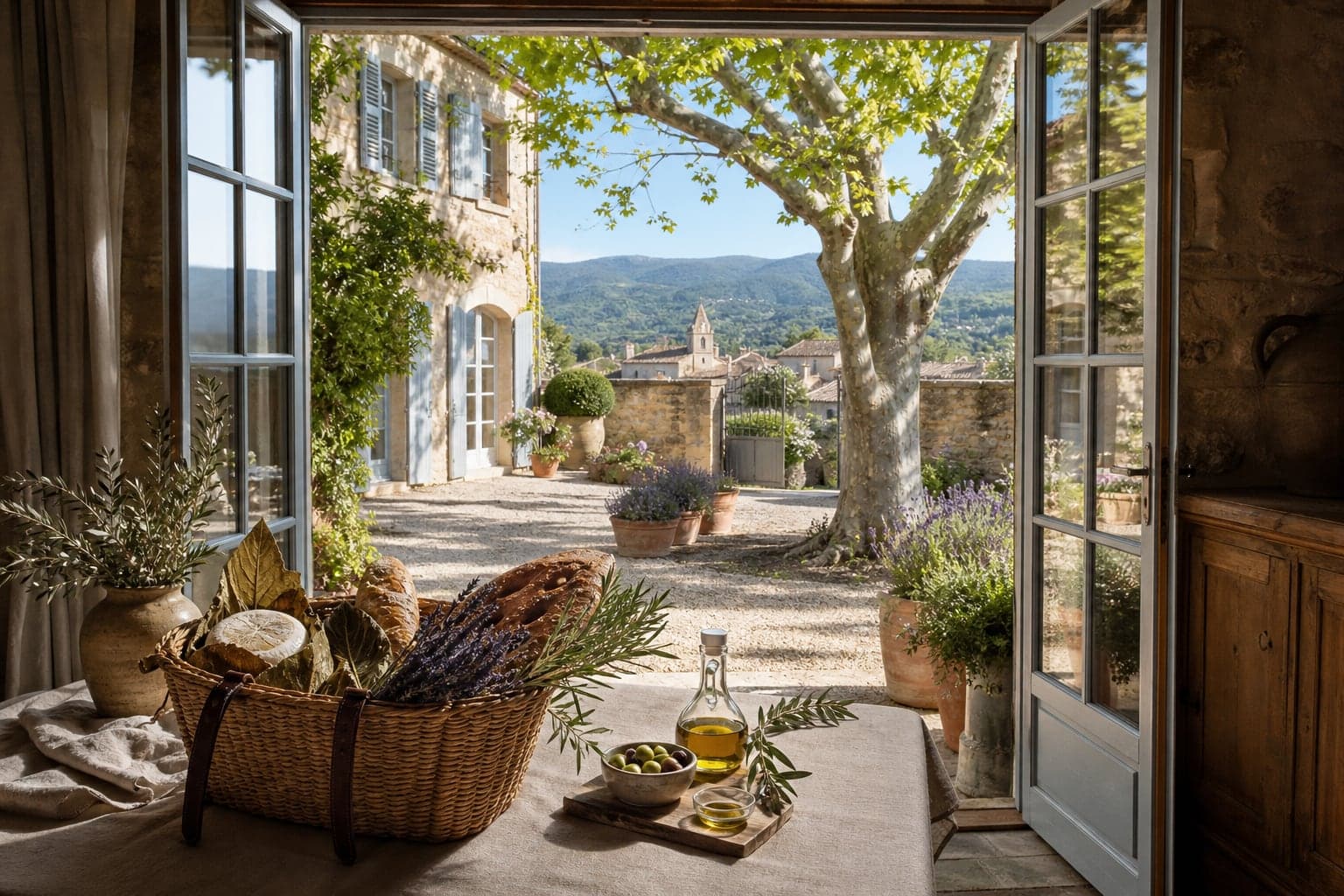
Es ist halb neun an einem Freitagmorgen Ende Mai, und die Allee aus Platanen, die ins Zentrum von Lourmarin führt, füllt sich bereits. Der Käsestand zuerst — Räder von Banon, eingewickelt in Kastanienblätter, frischer Brousse du Rove von einem einzelnen Ziegenhof nahe dem Étang de Berre und drei verschiedene Reifegrade pecorino-artigen Schafskäses von einem Hof oberhalb von Cucuron. Dann der Saucisson-Verkäufer, eine Frau mit zwölf verschiedenen Lavendeln und Kräutermischungen auf Leinen ausgebreitet, ein Olivenöl-Mann, der jedem, der fragt, ein Schnapsglas einschenkt, und ein Bäcker, dessen Fougasse aux Olives bis zehn Uhr ausverkauft ist. Um neun haben sich die Cafés rund um den zentralen Platz mit Zeitungslesern gefüllt, und das Dorf duftet nach Brot, Basilikum und warmem Stein. Dies ist kein kuratiertes Erlebnis für Besucher. Das ist Freitag in Lourmarin, derselbe wie jeder Freitag, so lange irgendjemand im Dorf sich erinnern kann, und die Familie im Mietwagen, die es auf ihren Handys fotografiert, wird bis Dienstag in einem Flugzeug nach Hause sitzen. Das Paar, das mit dem Sohn des Käseverkäufers am Ecktisch sitzt — diejenigen, die nach der Mutter des Olivenöl-Mannes fragen — besitzt hier Immobilien. So fühlt sich Eigentum im Luberon wirklich an — nicht der Postkarten-Mas am Ende einer Zypressenallee, sondern der gewöhnliche außergewöhnliche Rhythmus eines Ortes, an den Sie immer wieder zurückkehren.
Für die meisten Zweitwohnsitz-Eigentümer in der Provence ist dieses Gefühl teuer zu unterhalten und wird selten erlebt. Der durchschnittliche britische, amerikanische oder nordeuropäische Eigentümer eines Luberon-Bauernhauses verbringt weniger als dreißig Tage pro Jahr auf der Immobilie. Die Lavendelhecke wird beschnitten, ob sie da sind oder nicht. Der Dachdecker ruft wegen einer von einem Winter-Mistral angehobenen Fliese an und mailt einen Kostenvoranschlag auf Französisch. Die jährliche Taxe Foncière und die Zweitwohnsitz-Taxe d'Habitation kommen im Herbst und werden bezahlt, ohne dass man viel darüber nachdenkt, was sie tatsächlich abdecken. Miteigentum an einem provenzalischen Mas — genauer gesagt der Besitz eines echten Achtel-Anteils an einer hochwertigen restaurierten Immobilie, neben sieben anderen geprüften Miteigentümern — verändert die Arithmetik vollständig, ohne das Erlebnis zu verändern. Sie kommen an. Das Haus ist bereit. Jemand anderes hat die Nebensaison verwaltet. Sie reisen ab. Der Kalender setzt sich für den nächsten Eigentümer zurück. So sieht jene Woche und jener Anderthalbmonat pro Jahr im Luberon und im weiteren Vaucluse tatsächlich aus. Unser Funktionsweise-Leitfaden führt Sie von Anfang bis Ende durch die Struktur.
Der Luberon in der Nebensaison: Warum Mai, Juni und September die wahre Trumpfkarte sind
Die Reisebroschüren verkaufen Juli und August, wenn das provenzalische Thermometer über achtunddreißig Grad klettert, die Lavendelfelder von Sénanque von Reisegruppen verstopft sind und das Dorf Gordes zwischen elf und vier nicht begehbar ist. Die Menschen, die tatsächlich Immobilien im Luberon besitzen, nutzen die Nebensaisons. Spätmai, wenn die Kirschen rund um Apt hereinkommen und sich die Dorfplätze mit Kisten von Burlat und Summit zu drei Euro pro Kilo füllen. Spätjuni, wenn der erste Lavendel auf dem Plateau d'Albion oberhalb von Sault aufgeht und die Imker ihre Bienenstöcke den Hang hinaufbringen. September, wenn die Vendanges in den unteren Weinbergen der Côtes du Luberon und des Ventoux beginnen und die Dorfkeller ihre Türen für die ersten Pressungen öffnen. Die Hügel des Luberon werden Anfang Juli am meisten fotografiert, doch die Fotos werden von Besuchern gemacht; die Anwohner sind in der Destillerie in Coustellet und schauen zu, wie das diesjährige Huile Essentielle aus der Brennblase kommt. Ein Miteigentumskalender ist besonders gut darauf ausgelegt, diese Wochen zu erfassen.
Mit 44 bis 45 Tagen jährlicher Nutzung pro Achtel-Anteil ist die Frage für die meisten Miteigentümer nicht, ob sie Nebensaison-Zeit nehmen sollen — sondern welche Wochen sie beanspruchen. Eine Familie mit schulpflichtigen Kindern wird ihren Anteil naturgemäß auf die zweite Julihälfte konzentrieren. Ein Rentnerpaar nimmt die Kirschwoche Ende Mai, die Erntewoche im September und einen langen Osterbesuch, wenn der Glyzinie über den Türen blüht und die Tische wieder nach draußen rücken. Ein Käufer, der sich besonders für das provenzalische Jahr interessiert — das Festival d'Avignon im Juli, die Trüffelmärkte in Richerenches und Carpentras von November bis Februar, der Samstagsmarkt in Apt das ganze Jahr über — kann ein jährliches Muster aufbauen, das diese Momente spezifisch verfolgt. Der Kalender ist wahrhaft flexibel, unter den Miteigentümern über die Verwaltungsgesellschaft vereinbart, und in der Praxis entdecken die meisten Gruppen, dass sie natürlich verschiedene Wochen wollen. Das Detail wird in unseren FAQ zum Aufenthalt in Ihrer Ferienimmobilie behandelt.
Wie eine typische Woche aussieht
Die Ankunftserfahrung für einen Miteigentümer unterscheidet sich kategorisch von der einer Vermietung. Sie suchen nicht nach einer Schlüsselsafe-Kombination an einer Steinmauer. Sie lesen kein laminiertes Anleitungsblatt über die Poolpumpe und das WLAN-Passwort. Die Hausverwaltungsfirma hat das Haus vor Ihrer Ankunft vorbereitet — frische Bettwäsche, der Pool auf saisonale Temperatur eingestellt, der Kühlschrank mit den im Voraus angeforderten Grundlagen bestückt, eine Flasche des lokalen Rosés aus der Kooperative, deren Weinberge von der Terrasse aus sichtbar sind. Die Immobilie gehört Ihnen für die Woche. Nicht Ihnen im abgesicherten Sinne einer Hotelsuite oder im vorübergehenden Sinne eines Airbnb. Ihnen im Sinne echten Eigentums. Diese Unterscheidung ist nicht abstrakt. Sie verändert vom ersten Nachmittag an, wie Sie den Raum nutzen.
Ein Dienstagmorgen, sagen wir, in einer Miteigentumsimmobilie im sogenannten Petit Luberon, dem Dreieck, das von Gordes, Ménerbes und Bonnieux gebildet wird. Die Dörfer hier liegen auf drei- bis vierhundert Metern über dem Calavon-Tal, mit dem Kalksteinkamm des Luberon-Massivs, der sich dahinter erhebt. Die Abbaye Notre-Dame de Sénanque, zehn Autominuten unterhalb von Gordes durch eine Falte der Hügel, ist an einem Wochentagvormittag, bevor der erste Reisebus eintrifft, am besten — zisterziensisch, aus dem zwölften Jahrhundert, umgeben von einem kleinen Block kultivierten Lavendels, der in der letzten Juniwoche und den ersten drei Juliwochen blüht. Ein Paar, das einen Achtel-Anteil an einem restaurierten Mas aus dem achtzehnten Jahrhundert wenige Kilometer außerhalb von Ménerbes besitzt, könnte den Morgen auf der Immobilie verbringen — Kaffee auf der Terrasse, einen langsamen Spaziergang durch den Olivenhain, das Bad, das ungefähr so lange dauert wie der Espresso — und den Nachmittag im Dorf oder in einem der Keller am umliegenden Bergrücken. Dies ist keine ungewöhnliche oder aspirative Beschreibung, wie Menschen den Luberon nutzen. Es ist der gewöhnliche Rhythmus des Eigentums in einer der meistfotografierten und sorgfältigst erhaltenen Landschaften Europas.
Im Gegensatz dazu liest sich eine Woche, die weiter südlich in Lourmarin oder Cucuron verbracht wird, etwas anders. Lourmarin ist das architektonisch vollständigste der südlichen Luberon-Dörfer — ein Renaissance-Schloss am einen Ende, ein Brunnenplatz in der Mitte und die Platanenallee, an der sich der Freitagsmarkt einen halben Kilometer erstreckt. Cucuron, zehn Minuten östlich, ist um einen quadratischen, mit Platanen bepflanzten Teich gebaut, der als sozialer Raum des Dorfes dient; der Dienstagsmarkt dort ist klein, ernsthaft und fast vollständig erzeugergeführt. Eine Morgenfahrt von einer Immobilie nahe Lourmarin kann das Château de Lourmarin für einen frühen Besuch, ein Bad am Étang de la Bonde und ein langes Mittagessen in einem der Erzeugertisch-Restaurants in Ansouis oder Cadenet einschließen. Immobilien in diesem Gebiet — insbesondere restaurierte Mas und Bastides innerhalb weniger Kilometer vom Dorf — haben in den letzten fünf Jahren erheblich an Wert gewonnen, wobei Lourmarin zu einem Aufschlag von 10 bis 15 Prozent gegenüber dem Rest des südlichen Luberon gehandelt wird und hochwertige Wiederverkaufsimmobilien jetzt zwischen 800.000 und 2,5 Millionen Euro für Drei- bis Sechs-Schlafzimmer-Häuser mit Land und Pool laufen.
Die Verwaltungsrealität: Worüber Sie nicht nachdenken müssen
Das Lifestyle-Argument für Miteigentum im Luberon ist für sich genommen überzeugend. Das praktische Argument ist es vielleicht noch mehr. Volleigentum an einem provenzalischen Mas oberhalb eines bestimmten Wertes bringt einen Verwaltungsaufwand mit sich, den die meisten Käufer beim Kauf unterschätzen und innerhalb von zwei Jahren erschöpfend finden. Der Pool-Unternehmer, der Gärtner — der, wenn Land vorhanden ist, während der Wachstumssaison wegen der Bewässerung und des mistral-geformten Beschnitts nahezu eine Vollzeitstelle ist —, die Reinigungskraft, der Hausverwalter, die Versicherungserneuerung, die Taxe Foncière, die für Zweitwohnsitze nach der Hauptwohnsitz-Reform beibehaltene Zweitwohnsitz-Taxe d'Habitation, die Taxe d'Enlèvement des Ordures und der Instandhaltungsstau, der sich erst wirklich beim zweiten Mal bemerkbar macht, wenn die Heizung im Februar ausfällt, wenn niemand im Land ist. Miteigentümer befassen sich mit keinem davon direkt. Die Verwaltungsfirma übernimmt alles davon. Eigentümer erhalten eine einzige jährliche Abrechnung, zahlen ihren anteiligen Kostenanteil und nutzen die Immobilie.
Wie das Haus gepflegt wird, ist einer der am häufigsten missverstandenen Aspekte des Miteigentums. Da Sie ein Achtel der Immobilie besitzen, wird die Pflege von Haus, Pool und Garten mit den anderen Eigentümern geteilt und von unserem Partner übernommen, sodass das Haus bei Ihrer Ankunft bereit ist.
Der Luberon-Immobilienmarkt 2026: Kontext für Käufer
Das Verständnis des Luberon-Marktes 2026 ist wichtig, weil es den Einstiegspreis für Miteigentum und die langfristige Kapitalposition der Miteigentümer prägt. Frankreichs Gesamt-Wohnimmobilienmarkt hat sich nach der Nach-Pandemie-Korrektur stabilisiert und schleift nun bescheiden nach oben: Der nationale Benchmark lag am 1. Januar 2026 bei 3.005 Euro pro Quadratmeter, etwa 0,8 Prozent gegenüber dem Vorjahr, mit notariellen Erwartungen für das Jahr im Bereich von 1 bis 2 Prozent. Das Vaucluse, das Département, das das Herz des Luberon enthält, liegt im Durchschnitt bei etwa 2.980 Euro pro Quadratmeter bei Wohnimmobilienanzeigen — doch dieser Durchschnitt sagt Ihnen fast nichts über die Premium-Dörfer. Das Luxus-Land-Segment, definiert durch den restaurierten Mas mit Land, Pool und einer anerkannten Luberon-Adresse, ist strukturell separat von diesen Durchschnittswerten und wird weiterhin von internationalen Käufern aus Nordeuropa, den Vereinigten Staaten und Großbritannien neben gut kapitalisierten Pariser Zweitwohnsitz-Käufern angetrieben.
Das Mittelsegment — die hochwertigen Dorfhäuser und restaurierten Mas im goldenen Dreieck des Petit Luberon aus Gordes, Ménerbes und Bonnieux, und im südlichen Luberon rund um Lourmarin und Cucuron — ist das relevanteste Segment für Miteigentumsstrukturen. Immobilien hier werden typischerweise zwischen 800.000 und 2,5 Millionen Euro für hochwertige Drei- bis Fünf-Schlafzimmer-restaurierte Häuser mit Pool und Land gehandelt, wobei Lourmarin den zuvor erwähnten 10- bis 15-prozentigen Aufschlag gegenüber vergleichbarem südlichen Luberon-Bestand verlangt. Ein Achtel-Anteil an einer Immobilie im Mittelfeld dieser Spanne — sagen wir, ein 1,4-Millionen-Euro-restaurierter Mas aus dem achtzehnten Jahrhundert wenige Kilometer außerhalb von Ménerbes — würde derzeit mit etwa 175.000 bis 200.000 Euro pro Anteil bepreist, abhängig von der Struktur des Anbieters und etwaigen Mieteinnahmen-Ausgleichen. Dieser Einstiegspunkt gibt einem Miteigentümer echtes Eigentum in einem Markt, der konsistente langfristige Wertsteigerung gezeigt hat, keine der Renovierungsrisiken, die die Budgets so vieler Volleigentumskäufer zerstören, und eine Immobilie, die bereits auf den aktuellen technischen Stand gebracht wurde. Stöbern Sie in unseren Häusern für Live-Preise an den von uns abgedeckten Reisezielen.
Eine regulatorische Anmerkung, die alle Luberon-Immobilienkäufer betrifft: Frankreich verabschiedete im November 2024 das Loi Le Meur, das den Rahmen für Kurzzeitvermietungen verschärfte und Gemeinden bedeutende neue Werkzeuge gab, um Tourismusvermietungen zu deckeln oder einzuschränken. Bis zum 20. Mai 2026 müssen alle möblierten Tourismusvermietungen in ein nationales Anmelderegister eingetragen sein; Gemeinden können nun die jährliche Vermietungs-Obergrenze für einen Hauptwohnsitz von 120 auf 90 Tage reduzieren; und das vereinfachte Micro-BIC-Steuerregime für nicht klassifizierten möblierten Tourismus wurde stark verschärft. Mehrere Luberon-Gemeinden, insbesondere jene, die dem sommerlichen Übertourismus ausgesetzt sind, haben aktive Nutzung dieser Befugnisse signalisiert. Dies hat keine Auswirkung auf Miteigentümer, die ihren Anteil persönlich nutzen möchten — und die Mehrheit der Miteigentumskäufer tut das — aber es beschränkt das Angebot an neuem Kurzzeitvermietungs-Bestand und neigt dazu, die Kapitalwerte für Immobilien zu stützen, die bereits innerhalb des Rahmens liegen. Unsere Partner strukturieren ihre Immobilien entweder innerhalb des Vermietungsrahmens, wo Lizenzen existieren, oder als reine Eigennutzungs-Vereinbarungen, und die rechtliche Struktur richtet unser Partner für jede Immobilie ein und erklärt sie Ihnen vor dem Kauf im Detail.
Das Miteigentumsargument für den Luberon
Das Argument für Miteigentum im Luberon ist nicht in erster Linie ein finanzielles Argument, obwohl das finanzielle Argument solide ist. Es ist im Grunde ein Nutzungsargument. Die Provence belohnt die Art von unbeschwerter, wiederkehrender Präsenz — die Mai-Kirschwoche in Apt, den späten Juni-Lavendel auf dem Plateau d'Albion, das lange September-Mittagessen unter den Platanen in Cucuron, das Trüffel-Abendessen in Richerenches im Januar, wenn die Mietmenge längst nach Hause gefahren ist — die ein paar Wochen echtes Eigentum ermöglichen und die eine Ferienmiete mit ihrer Check-in-Sorge und ihren stets leicht unterschiedlichen Schlüsseln selten liefert. Miteigentümer kommen als Eigentümer an. Sie kennen die Immobilie, haben dort ihre eigenen Routinen, kennen den Namen des Gärtners und die Öffnungszeiten des Bäckers und gehen die umgebende Landschaft von einem anderen Ausgangspunkt aus an als ein Tourist. Über fünf oder sechs Besuche pro Jahr, über verschiedene Jahreszeiten, baut sich das zu etwas auf, das sich weniger wie ein Urlaub und mehr wie ein zweites Leben anfühlt. Das ist letztlich, was Menschen kaufen, wenn sie einen Anteil an einem Luberon-Mas erwerben — nicht das Gebäude, sondern den Freitag auf dem Platz.
Wenn die provenzalische Version dieses Arguments resoniert, liest sich die Chianti-Version identisch mit einer anderen Besetzung — Samstagmärkte in Greve, September-Ernten in Castellina, dieselbe Achtel-Arithmetik — ebenso wie die Mallorca-Version mit ihren Dienstagsmärkten in Pollença und September-Buchten in der Nähe von Deià. Für Käufer, die derzeit die Provence und Südfrankreich allgemeiner bewerten, führt COP Live-Bestand in unseren Häusern in den oben beschriebenen Reisezielen. Stöbern Sie in den aktuellen Listings oder sprechen Sie direkt mit unserem Team, um zu verstehen, welche Immobilien verfügbar sind und was ein bestimmter Anteil im heutigen Markt kosten würde.
More from Co-Ownership Property
Kontakt aufnehmen
Sprechen Sie mit einem Experten
Sagen Sie uns, wonach Sie suchen, und wir melden uns bei Ihnen.