Florida Keys · Florida · USA
Florida Keys Fractional Ownership & Co-Ownership Properties
From a canal-front villa in Islamorada's sport-fishing heart to a historic Conch cottage a block from Key West's Mallory Square — fractional ownership in the Florida Keys means a real share of America's only island-chain second-home market, around six weeks of Keys living each year, and a fully managed home waiting whenever you arrive. Whether you call it fractional ownership or co-ownership, you own a real share of the home.
1 property · from $425,000
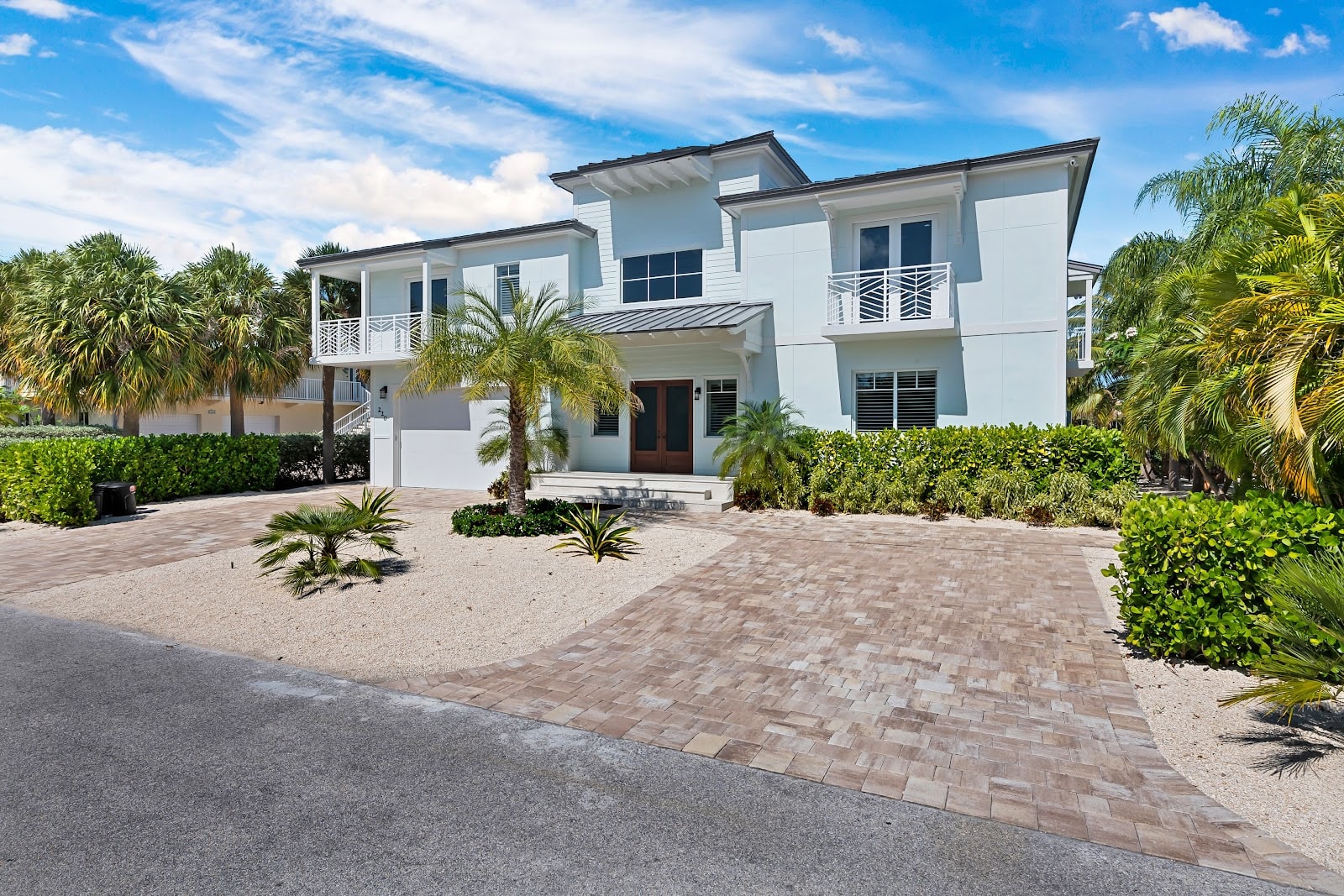
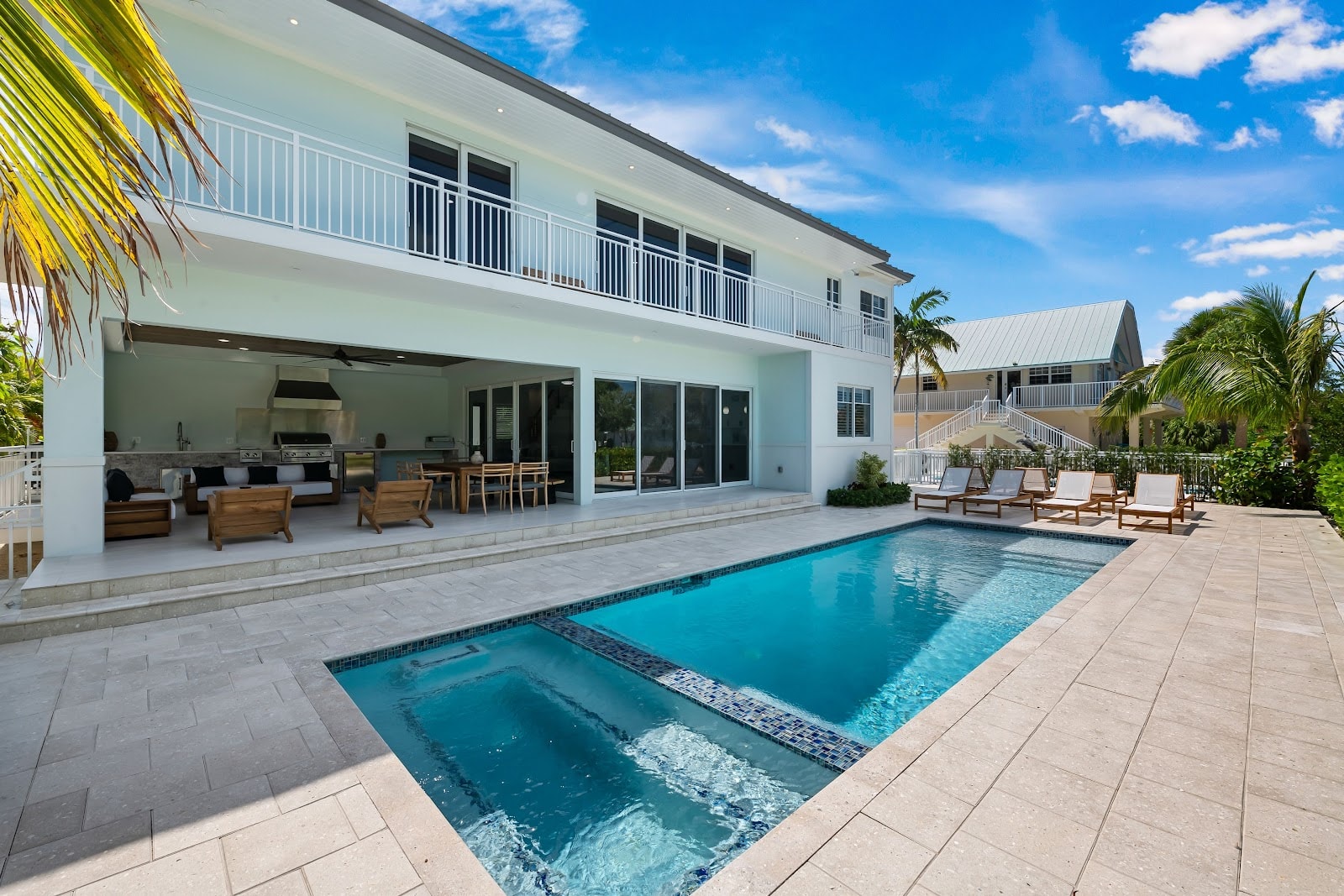
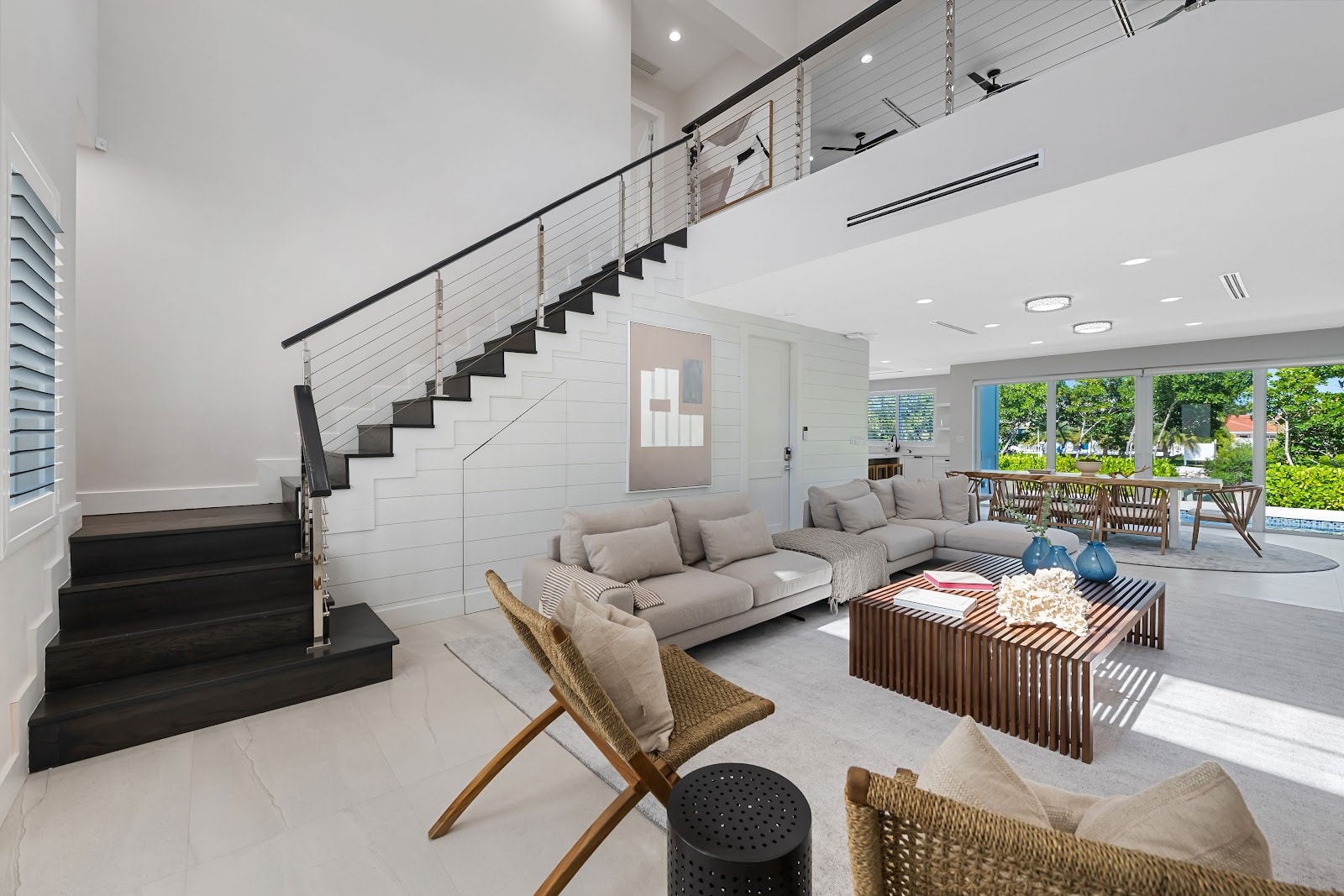
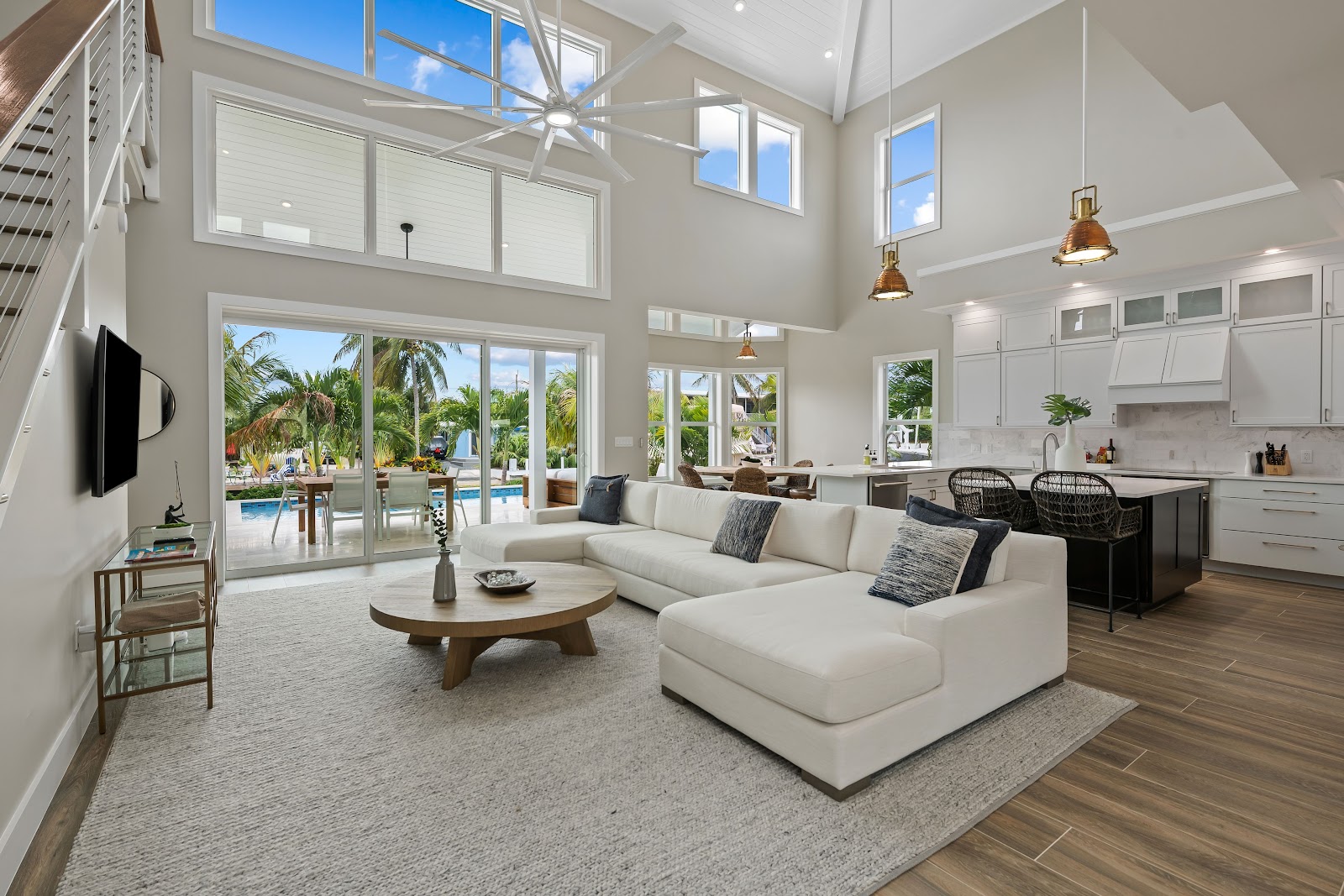
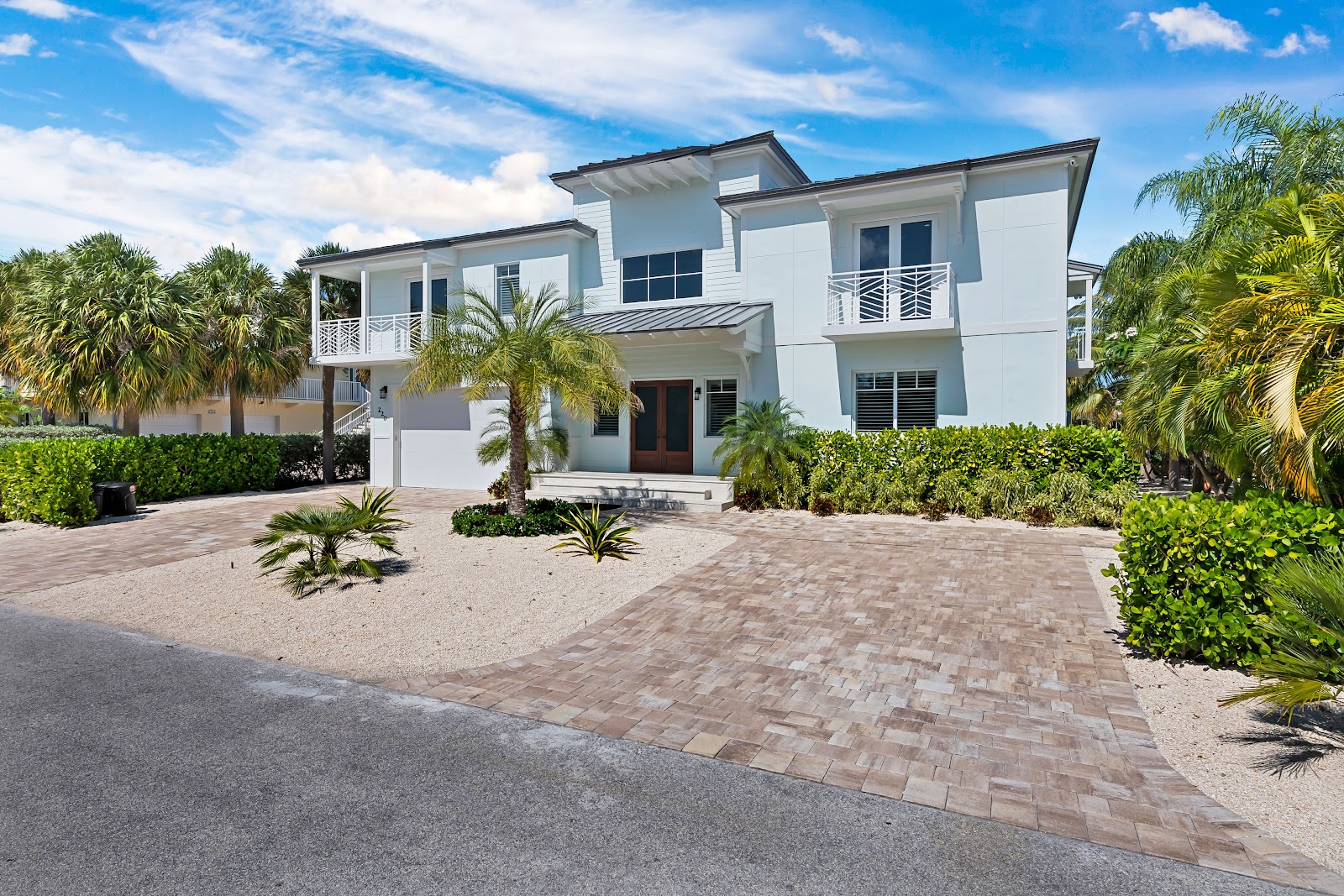
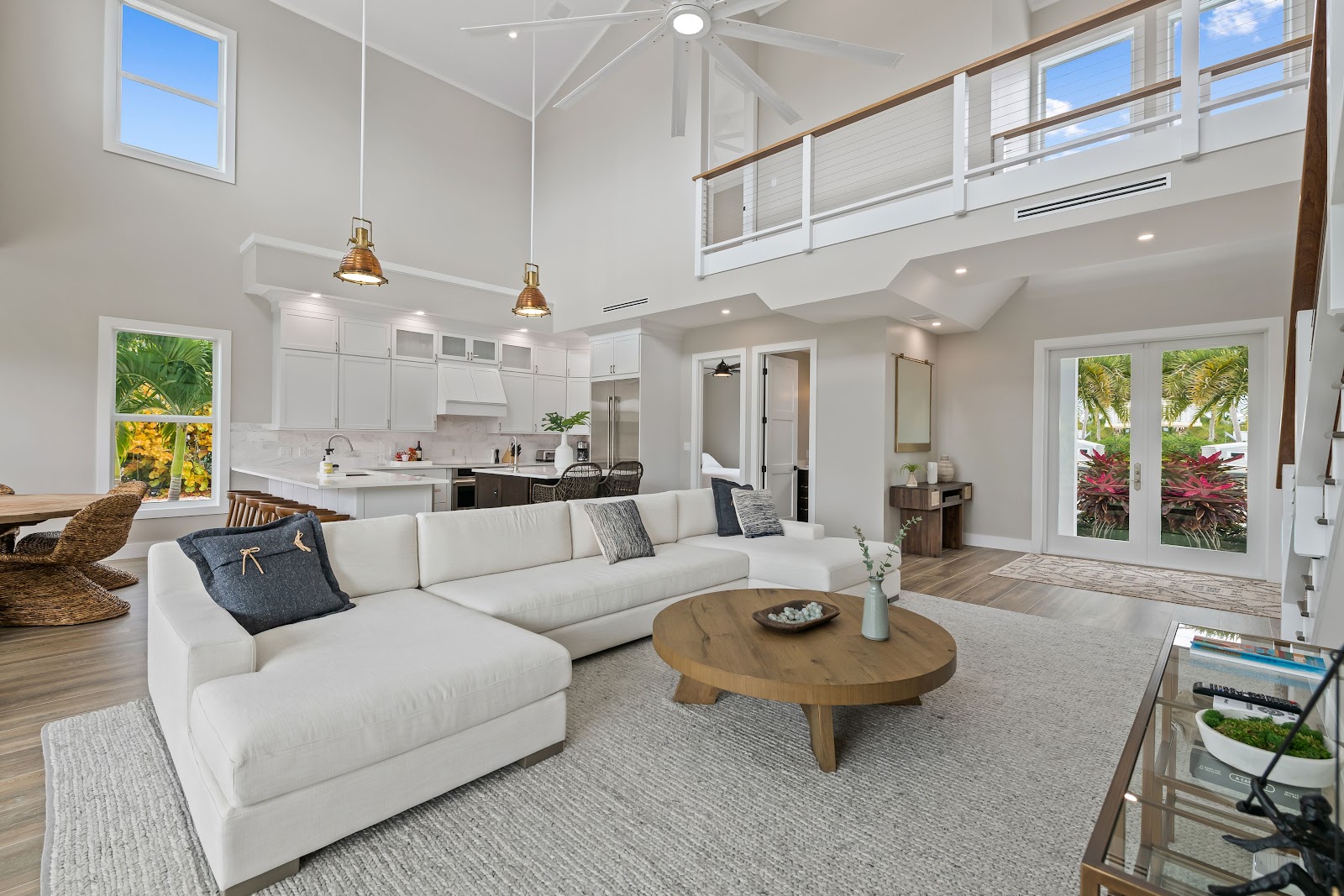
Key Colony Beach, Florida, USA — 5-Bed House With Beach Access
$425,000
The Florida Keys' most coveted island addresses, accessible through co-ownership.
Fully managed waterfront cottages, canal-front villas and island homes across Key Largo, Islamorada, Marathon and Key West. Your 1/8 share of the home comes with around six weeks of personal use, a professional management team on call, and the long-term equity of the most supply-constrained island-chain market in the continental United States.
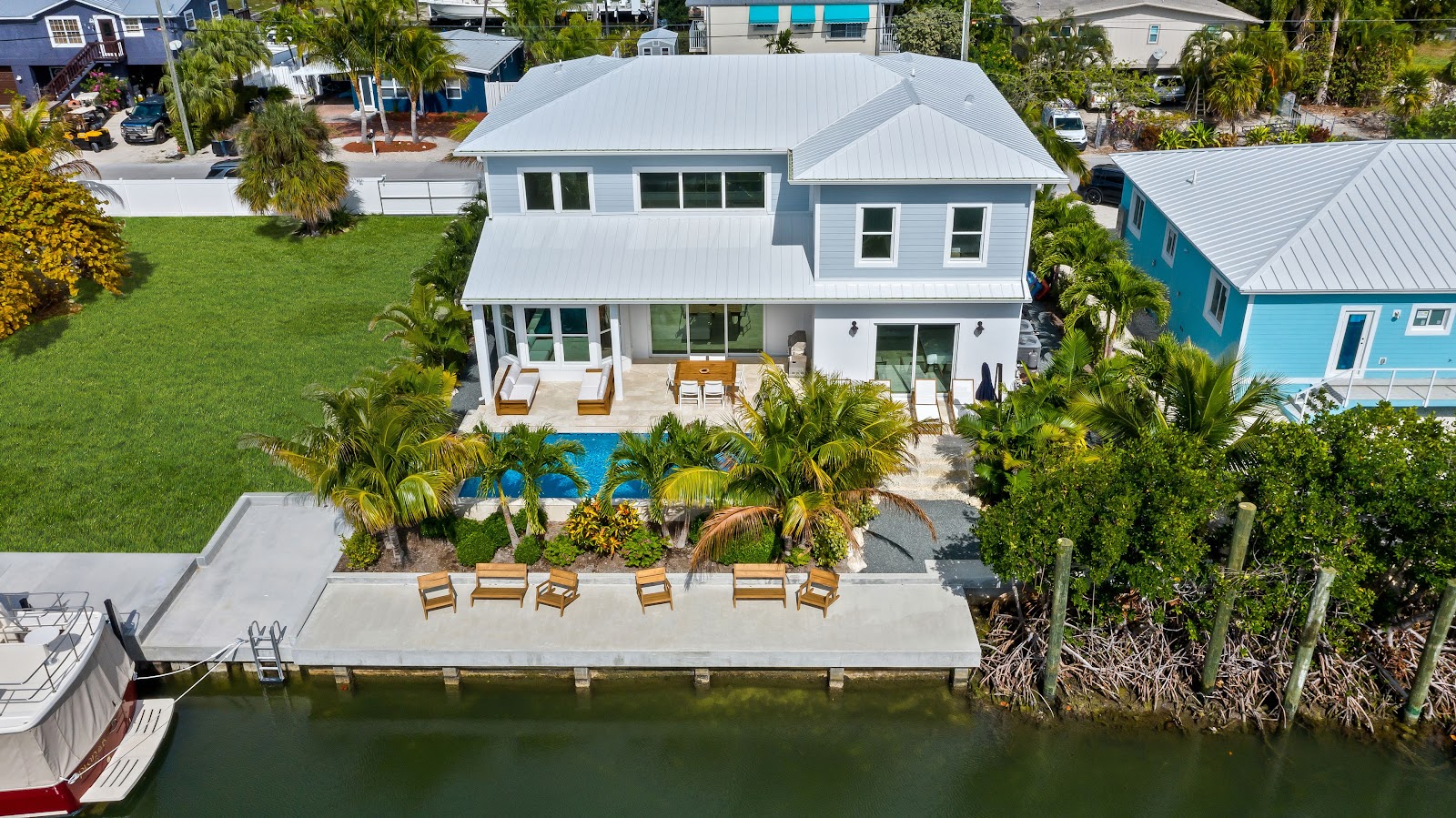
What is fractional ownership in the Florida Keys?
Fractional ownership in the Florida Keys means buying a real 1/8 share of a luxury island second home, shared with up to seven other co-owners. Each owner receives around six weeks of personal use a year, depending on the home, through a fair-rotation calendar, with all property management, maintenance, taxes and operations handled by a professional team. It is real ownership of a share of the home — not a timeshare, not a holiday club.
Why the Florida Keys?
The Florida Keys are, by any reckoning, the most singularly distinctive island-chain second-home market in the continental United States — and one of the most physically constrained real-estate environments on earth. The archipelago runs for approximately 180 kilometres (113 miles) south-west from the southern tip of the Florida peninsula, connected end-to-end by the Overseas Highway (US Route 1) and its forty-two bridges over open Gulf and Atlantic water — a drive that crosses what was, until Henry Flagler completed his Overseas Railroad in 1912, an unbridgeable chain of coral and mangrove islands in the Florida Straits. The northernmost island, Key Largo, sits roughly 60 kilometres (37 miles) south of Miami International Airport; the southernmost city, Key West, sits at latitude 24.5°N — the southernmost point in the continental United States, closer to Havana than to Miami. The market in between is defined by a single non-negotiable geographical fact: the Keys are islands, and islands do not grow.
Your Florida Keys share is owned alongside up to seven other co-owners — a real share of the home, not a right to use it.
The Keys' particular advantage inside the American second-home market is the combination of physical scarcity, natural protection and lifestyle depth that no other Florida destination replicates at the same scale. The Florida Keys National Marine Sanctuary, established in 1990, covers 9,600 square kilometres (3,700 square miles) of ocean surrounding the islands and protects the only living coral barrier reef in the continental United States — a chain of coral formations that run parallel to the Atlantic side of the Keys from Key Largo to Key West and that support the most biodiverse marine ecosystem north of the Caribbean. John Pennekamp Coral Reef State Park, the first underwater state park in the United States, established in 1963, sits immediately off the north-eastern tip of Key Largo and covers 78 nautical square miles of Atlantic coral reef, seagrass beds and mangrove swamps — an accessible diving and snorkelling destination within a forty-minute drive of the northern Keys. The reef is not an amenity that the Keys market can be replicated elsewhere in the continental US; it is a singular natural fact that has anchored the island chain's second-home demand for six decades and will continue to do so regardless of real-estate cycles.
The constraint on the supply side of the Keys market is structural rather than cyclical. Monroe County, the administrative unit covering the Keys, has operated under a highly restrictive Rate of Growth Ordinance (ROGO) since 1992, which limits the number of new residential building permits that can be issued in any single year. The ROGO system — with the associated hurricane-evacuation clearance-time calculations that govern it — has functionally capped the growth of the residential stock since the early 1990s. The county's incorporation of substantial federal and state protected land (the Dry Tortugas National Park to the west, the Biscayne National Park to the north, the Florida Fish and Wildlife Conservation Commission protected lands throughout the island chain, the National Marine Sanctuary waters on both ocean sides) means that the majority of the Keys' land area cannot be developed. What that leaves for the residential market is a genuinely finite supply of existing waterfront and island properties — the kind of supply constraint that holds values through cycles in a way that markets built on expandable supply cannot.
Florida's structural advantages add a further layer to the Keys investment case. Florida has no state personal income tax — confirmed in the state constitution since 1924, reaffirmed at every subsequent constitutional convention, and administered by the Florida Department of Revenue — with no state estate tax and no state inheritance tax overlay. The state generates its revenue through sales tax, property tax and tourism levies rather than income tax, which is the structural reason the past decade's migration of high-income individuals, finance firms and family offices from New York, California, Illinois and Massachusetts has been so consistent and so deep. The Keys benefit from that migration pattern — they are Florida's most aspirational island address, accessible from Miami International and from the Keys' own Key West International Airport (EYW) — and the long-run dynamic of Florida's tax advantage reinforcing demand for the state's most supply-constrained coastal properties is one of the most durable structural forces in the American second-home market.
The climate case for the Keys is, if anything, more compelling than the supply constraint. The island chain sits in a true subtropical climate zone — warmer in winter than anywhere else in the continental United States, moderated year-round by the surrounding ocean, and governed by the National Weather Service Key West forecast office. Average January highs run 24–25°C (mid-70s°F), lows above 18°C (64°F) — the mildest winter of any continental US address, comfortably warmer than Miami. High-summer peaks run 31–33°C (high 80s°F to low 90s°F), moderated by the surrounding ocean on both Atlantic and Gulf sides and by the prevailing south-easterly trade winds that move through the island chain without the mainland's humidity build-up. Sea-water temperatures run above 27°C (81°F) from May through October and above 22°C (72°F) year-round — warm enough for comfortable swimming and snorkelling in every month, which is not achievable at any other continental US beach address. The result is a destination that is genuinely usable across all twelve months, with a high-season window that runs from November through May and a summer season that is warm, water-focused and as rewarding for the right buyer as the high-season alternative. The Keys are not a summer-only beach destination; they are a year-round island home whose calendar suits the fractional 6–7 week ownership pattern better than almost any other US coastal address.
It is worth placing the Keys in their American second-home competitive context, because the comparisons buyers most commonly make reveal as much about the right buyer as they do about the destinations. Miami, the nearest major city, is the urban gateway to the Keys — internationally connected, cosmopolitan, culturally deep — but it is an urban destination rather than an island one; Miami Beach's Atlantic strand is a maintained resort beach rather than the raw Caribbean-quality water of the Keys' reef. 30A and the Florida Panhandle offer Gulf-coast sugar-sand beaches, New Urbanist beach towns and a family-resort calendar, but at a more northerly latitude that gives shorter winters and no coral reef within reach. The Florida Gulf Coast (Naples, Sanibel, Marco Island) offers quieter, more residential island addresses south of the Keys' latitude, but without the Overseas Highway experience, the sport-fishing depth, the reef access or the Key West cultural anchor. The Outer Banks of North Carolina are the Atlantic-seaboard alternative — long barrier-island strands with significant second-home markets — but at a materially more northerly latitude with a shorter usable season and a different architectural vernacular. Together, these comparisons frame the Keys' specific value proposition clearly: the only island chain in the continental US with year-round subtropical warmth, a living coral reef, a world-class sport-fishing heritage and the Key West cultural anchor at the south end.
For the co-ownership buyer thinking strategically rather than emotionally, the structural case for the Florida Keys ultimately rests on the same logic as the case for Aspen or Cap-Ferrat: a permanently supply-constrained luxury-residential market, held inside the most efficient ownership structure available for the international buyer, with professional management removing the operational burden that makes whole-property ownership in a remote island environment a genuine friction. The islands' building restrictions are not bureaucratic obstacles — they are the permanent scarcity that underpins the long-run case. And the reef is not a marketing line; it is a natural fact that distinguishes the Florida Keys from every other second-home market in the continental United States.
Where to own in the Florida Keys
The Florida Keys are, in the words of the official Keys tourism body, "five destinations in one" — and that description maps directly onto five distinct zones of second-home demand, each with its own character, architecture, natural environment and buyer mix. The Overseas Highway ties them together in a single long drive, but the difference between a canal-front villa in Key Colony Beach and a Victorian Conch cottage in Key West is as great as the difference between a Coral Gables Mediterranean villa and a Brickell high-rise. Understanding which zone fits the buyer's actual use pattern — reef diving or sport fishing, cultural depth or island quiet, Atlantic exposure or bay-side calm — is the starting point for any rational co-ownership decision in the Keys.
Key Largo and the Upper Keys
Key Largo, at Mile Marker 110 on the Overseas Highway, is the first and longest of the Keys islands — the gateway to the chain and the home of the world-famous John Pennekamp Coral Reef State Park, the first undersea state park in the United States. Established in 1963 and covering 78 nautical square miles of Atlantic reef, seagrass beds and mangrove swamps, John Pennekamp is the defining natural anchor of the Upper Keys and the reason the island became the co-ownership of choice for serious divers and snorkellers long before the rest of the archipelago caught up with the market. The park's dive sites — including the Christ of the Abyss underwater statue, the Molasses Reef wall dive with its moray eels and nurse sharks, the Benwood Wreck in just 10 metres (33 feet) of water — are accessible by private boat or charter directly from the marinas along the island's Atlantic-side canals, and the quality of the water visibility (routinely 20–30 metres (65–100 feet) in the dry-season months of November through May) is among the best in the continental United States.
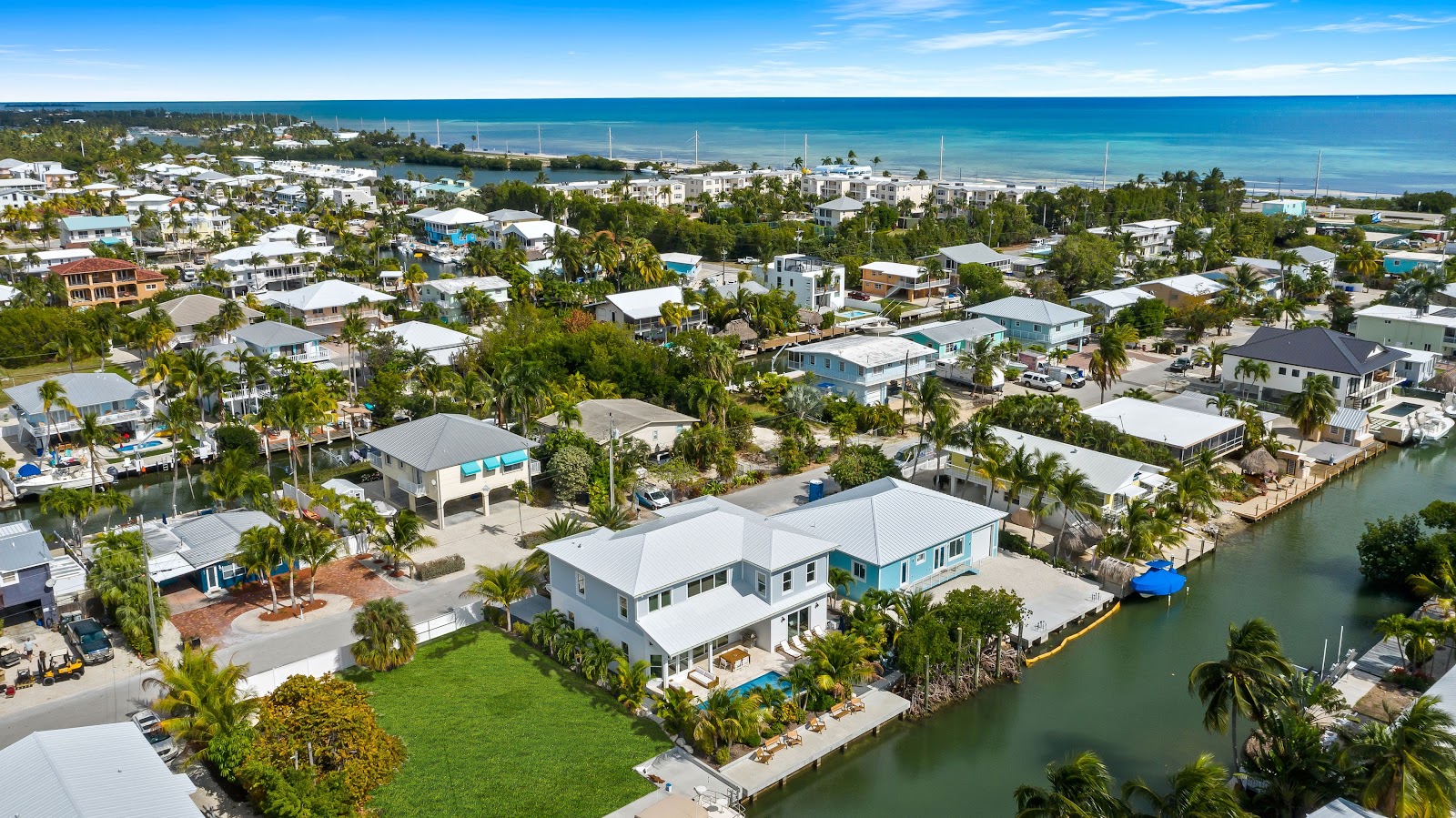
The residential fabric of Key Largo is a mix of canal-front homes with private docks (the dominant typology, allowing boat owners to keep their vessel behind the house and reach the open Atlantic in minutes), bay-side properties facing the protected Florida Bay to the north-west (calmer water, better for kayaking, paddleboarding and flat-water fishing), and a smaller stock of oceanfront and reef-side properties facing the Atlantic directly to the east. The canal systems that were dredged through Key Largo's interior in the 1950s and 1960s produced a dense network of navigable waterways — some of them running deep into the island's interior — that give a large share of the residential stock direct-access boating without any road bridge to cross. The Village of Key Largo and the surrounding community cover approximately 48 kilometres (30 miles) of the northern island chain, with the Key Largo Hammocks State Botanical Site protecting the largest tract of West Indian tropical hardwood hammock in the continental US immediately behind the residential areas. The drive from Key Largo to Miami International Airport is approximately 60 minutes in normal traffic via the Overseas Highway and Florida's Turnpike — the most accessible of the Keys islands from a major international hub, which is a meaningful practical advantage for buyers arriving from Europe, Latin America or the northern United States. Best for: serious divers and snorkellers who want the closest access to John Pennekamp and the northern reef, boating families who prioritise canal-front dock access and quick passage to the open Atlantic, and buyers who want the lowest drive-time from Miami International without sacrificing the genuine Keys island experience.
Islamorada — Sport Fishing Capital of the World
Islamorada — stretching across Mile Markers 90 to 73 and incorporating the islands of Plantation Key, Windley Key, Upper Matecumbe Key and Lower Matecumbe Key — is the self-proclaimed Sport Fishing Capital of the World, and the claim is, by the weight of the evidence, completely accurate. The Islamorada Chamber of Commerce estimates that the village hosts the highest concentration of professional fishing guides in the world, with more than five hundred licensed captains operating from Islamorada's marinas in peak season. The reason is the extraordinary confluence of fishing environments directly accessible from the village: the Atlantic Reef running a mile offshore on the ocean side; the Florida Bay flats, the vast shallow-water sea-grass ecosystem stretching north-west from the Islamorada bay side toward Everglades National Park, with its resident populations of bonefish, permit and tarpon — the "holy trinity" of flats fishing, pursued by fly-fishers from across the world; and the blue-water Gulf Stream, accessible in under an hour's run south of the Atlantic side, carrying sailfish, marlin, mahi-mahi and wahoo through the island chain's outer reef system from October through June.
Islamorada's residential stock is among the most concentrated in the Upper Keys — the village's four-island grouping gives it a genuine community infrastructure (the Cheeca Lodge and the Robbie's of Islamorada marina and wildlife feeding station are among the most photographed spots in the Florida Keys) alongside the canal-front and ocean-side residential fabric that the fishing community has built over the past seventy years. The IGFA (International Game Fish Association) World Record for more freshwater and saltwater species has been set in Islamorada waters than anywhere else on earth — a statistic that fishing buyers cite as a literal advertisement for the village's natural-resource quality. The residential character is quintessentially Keys: low-rise, concrete-block or frame construction on elevated concrete-pile foundations, most homes with private pool decks, most with covered boat-dock slips, the entire island less than one kilometre (half a mile) wide at most points with ocean visible from both sides in clear conditions. The drive from Islamorada to Miami International is approximately 80 minutes in normal traffic; to Key West approximately 90 minutes. Best for: dedicated anglers and flats-fishing enthusiasts who want the most established fishing-guide community in the world and direct access to the Atlantic reef, the Florida Bay flats and the Gulf Stream blue water; island-lifestyle buyers who want a genuine Keys village community with a culinary and cultural identity of its own; and buyers who value the combination of Atlantic and Bay-side water access on a single island.
Marathon and the Middle Keys
Marathon — centred on Vaca Key between Mile Markers 53 and 47 — is the geographic and commercial heart of the Florida Keys, the largest municipality in the archipelago outside Key West, and the only Keys island with its own commercial airport: Florida Keys Marathon Airport (MTH), served by seasonal and charter flights that offer direct access without the Miami drive. Marathon's central-Keys position means it is equidistant from Key Largo and Key West — roughly 50 miles (80 kilometres) in each direction — and it functions as the service centre for the Middle Keys, with the full range of boat yards, marine suppliers, grocery stores, hardware stores and the associated infrastructure that makes a second home in the islands practically manageable. The Florida Keys Marathon Visitor Center sits at the north end of Vaca Key at Mile Marker 53.5, and the Seven Mile Bridge — one of the longest bridges in the world when it was constructed, carrying the Overseas Highway for 10.9 kilometres (6.8 miles) over open water between Marathon and the Lower Keys — is the most dramatic single engineering feature of the entire island chain. A second, older Seven Mile Bridge runs parallel and is now a recreational trail, popular with cyclists and pedestrians crossing to Pigeon Key, the small island that served as the base camp for the construction of Flagler's original railroad bridge.
The natural anchors of the Marathon area extend well beyond the Seven Mile Bridge. The Bahia Honda State Park, just south of the Seven Mile Bridge at Mile Marker 37, is regularly cited by coastal geographers as one of the most beautiful beaches in Florida — its natural sand beach (one of the few genuinely natural beaches in the Keys, most of which are rocky or mangrove-fringed) running along a bay whose water is consistently described as the most vividly turquoise in the archipelago. The Dry Tortugas National Park, accessible by fast ferry from Key West (70 nautical miles to the south-west) or by seaplane, is the most remote and least visited unit in the National Park system east of the Mississippi — a cluster of coral islands built around the massive brick hexagon of Fort Jefferson, started in 1846 and never completed, set in waters whose clarity rivals the Bahamas. For Marathon-area owners with a boat capable of the offshore passage, the Dry Tortugas is a long-weekend destination of extraordinary natural quality. The Turtle Hospital in Marathon, the world's first fully equipped veterinary hospital for sea turtles, operates public tours that are consistently the highest-rated educational experience in the middle Keys for families with children. The residential character of Marathon and the Key Colony Beach area (a planned community with its own small canal network at Mile Marker 53.5) is more varied than the tighter-zoned Islamorada: larger lots are more common, the canal system offers deeper-draft boat access on the bay side, and the combination of ocean and bay-side properties gives buyers a broader range of water orientation. Best for: families who value the balance of ocean-side and bay-side access, buyers who want the Keys' best natural beach at Bahia Honda within easy reach, anglers who want blue-water offshore access and the flats in equal measure, and buyers who value the Middle Keys' practical infrastructure for managing a second home remotely.
Big Pine Key and the Lower Keys
The Lower Keys — stretching from Mile Marker 40 south of Bahia Honda through to Mile Marker 10 at Boca Chica Key — are the wildest and least developed section of the Florida Keys, dominated by the National Key Deer Refuge on Big Pine Key and the associated conservation lands that cover the majority of the Lower Keys' total land area. The Key deer, a subspecies of white-tailed deer endemic to the Lower Florida Keys, live at densities found nowhere else on earth in this island chain — the refuge supports the entire global population of approximately 700–800 animals, and the sight of them crossing the residential streets of Big Pine Key in the early morning and evening is one of the most distinctive everyday experiences of the lower island chain. The National Key Deer Refuge, administered by the U.S. Fish and Wildlife Service, permanently protects the majority of the Big Pine Key land area from development — which means the residential stock in the Lower Keys is smaller, more scattered and materially more private than the more urbanised upper and middle keys.

The diving and snorkelling in the Lower Keys is widely regarded by the Keys' professional dive community as the best in the entire island chain. The Looe Key Reef, a spur-and-groove coral formation running for approximately 5.6 kilometres (3.5 miles) parallel to the Lower Keys shoreline at an average depth of 5–9 metres (15–30 feet), is the most accessible high-quality coral reef in the continental United States — reachable by boat in under 30 minutes from the Big Pine Key marinas — and its water clarity, coral diversity and fish populations are consistently rated above those of the more heavily trafficked northern reef sites. The back-country flats behind Big Pine Key and the surrounding islands offer bonefishing and tarpon fishing in an environment that feels more remote than any other section of the Keys — a point appreciated both by anglers and by owners who want the sense of genuine wilderness separation from the mainland without the long drive. The Lower Keys are approximately 2.5 to 3 hours from Miami International Airport, and the combination of the drive distance, the conservation land coverage and the smaller residential stock gives this section of the Keys a privacy and natural integrity that the more accessible upper islands cannot replicate. Best for: buyers who prioritise natural environment quality and privacy above social infrastructure and convenience, serious divers who want the best reef access in the archipelago at Looe Key, anglers who value the Lower Keys' back-country flats, and owners who want the quietest, most island-distinct experience available in the continental United States.
Key West
Key West — at Mile Marker 0, the end of the Overseas Highway and the southern terminus of US Route 1 — is the cultural and historical capital of the Florida Keys, a city of approximately 25,000 permanent residents occupying an island just 6.5 kilometres (4 miles) long and 3 kilometres (1.9 miles) wide, with a depth and variety of character that routinely surprises visitors expecting a beach town. The Old Town Historic District, covering the western third of the island and listed on the National Register of Historic Places, contains the highest concentration of Conch architecture — the distinctive wood-frame vernacular of 19th-century Key West, characterised by wide porches, jalousie shutters, raised foundations, and the wood-framed craftsmanship that Key West's 19th-century wreckers and spongers brought from the Bahamas — in the United States. The Ernest Hemingway Home and Museum on Whitehead Street, where Hemingway lived from 1931 to 1939 and wrote A Farewell to Arms, Death in the Afternoon and To Have and Have Not, is the island's signature cultural anchor and one of the most visited literary destinations in North America. The Mallory Square sunset celebration — a daily gathering of street performers, artists, vendors and visitors that has been held at the western harbour pier every evening for decades — is among the most photographed sunset rituals in the United States, and Duval Street, the island's commercial spine running from the Gulf to the Atlantic, gives Key West its most photographed architectural streetscape.
Key West's cultural calendar operates at a depth that most island destinations of comparable size cannot match. The Key West Literary Seminar, held annually in January, is one of the most prestigious literary festivals in the United States — a seven-day programme of readings, panels and workshops drawing authors from across North America and Europe. The Key West Film Festival in November anchors the island's autumn cultural calendar; the Key West Art Fair in February and the open-studio tours of the active island arts community give Key West a visual-arts calendar that many cities of ten times its size could not sustain. The Key West Art and Historical Society, operating the Key West Museum of Art and History in the 1891 Custom House, is the island's principal civic museum; the Harry S. Truman Little White House on Caroline Street, where Truman spent 175 days of his presidency, is the island's most significant presidential historic site. The year-round culinary scene — anchored by the Michaels Restaurant tradition and a dense network of contemporary restaurants along Duval and Simonton Streets — gives Key West a genuinely year-round restaurant and bar calendar rather than the high-season-only rhythm of more seasonal island destinations. Key West International Airport (EYW) provides direct commercial service from Miami and other Florida hubs, meaning that owners travelling light can fly direct rather than driving the full length of the Overseas Highway. Best for: cultural and literary enthusiasts who value the Hemingway heritage, the island's active arts and literary calendar and the architectural depth of the Old Town Historic District; buyers who want a genuine year-round urban-island community rather than a quiet residential island; and owners who want the most historically and culturally distinct address in the continental Keys.
A year in your Florida Keys co-ownership home
The Keys' year-round subtropical climate means that a year of use with no set cap on total nights is a genuinely rich calendar — not a rationed one. Every month in the Keys is usable; the question is what each window delivers in terms of fishing conditions, water clarity, weather rhythm and social calendar. A fractional owner who understands the Keys' seasonal pattern can build stays around specific conditions — the peak flats-fishing months, the winter reef diving window, the Key West cultural calendar — rather than simply booking the weeks that remain available. Below is a walk through the Keys year.
Winter high season (December–February)
December, January and February are the Keys' high season by most measures — the months when the combination of mild temperatures, dry weather, and exceptional fishing conditions draws the broadest visitor base and delivers the most reliably comfortable island experience. January daytime highs run 24–25°C (mid-70s°F), with lows above 18°C (64°F) — the mildest winter on the continental US mainland, warmer than Miami in the same months, with the sea-water temperature holding above 22°C (72°F) across the reef. The Atlantic reef diving is at its clearest in winter, with the reduced summer-rain runoff giving the best water-visibility months of the year; the John Pennekamp and Looe Key dive sites run visibility of 20–30 metres (65–100 feet) on calm days, and the reduced summer-bloom algae that can cloud the reef from late spring is fully absent through the winter window. The sailfish run on the Atlantic side peaks from December through February, with the species moving north through the Keys' outer reef system and the blue water off Islamorada and Marathon producing the most active sailfishing of the year. Lobster season, which runs August through March under Florida regulations, is at its peak catch-rate in the winter months. For Key West owners, December brings the Holiday Fest boat parade and the island's Christmas season; January brings the Key West Literary Seminar and the sustained snowbird season. The high season's one practical consideration is booking pressure — peak-season weeks are the most sought-after in the rotation calendar, and the fair-rotation system ensures every owner receives their fair share of high-season weeks across the ownership cycle.
Spring shoulder season (March–May)
March, April and May represent the Keys' most celebrated shoulder window — the period that experienced Keys owners name most often as their personal favourite, and with good reason. Daytime temperatures climb from 25–26°C (high 70s°F) in March to 28–30°C (low-to-mid-80s°F) in May, sea-water temperatures climb past 25°C (77°F) by April, and the dry-season weather pattern holds through the first half of May before the summer rain begins. The flats fishing reaches its annual peak in spring: the tarpon migration through the Florida Keys arrives in April and reaches its peak run through May and into June, with the giant tarpon — fish of 50–80 kilograms (110–175 pounds) — moving through the Keys' famous migration channels in schools that have been described by serious fly-fishers as among the most extraordinary in-water wildlife spectacles on earth. The bonefish and permit are active year-round on the flats but peak in the warming spring waters; the cobia run off the bay bridges in April is one of the Keys' most productive light-tackle opportunities. The Easter and spring-break weeks are the final peak-season rush before the transition; the period from late April through mid-May is the secret best week of the Keys year — warm, water-clear, relatively uncrowded, fully operational, with the tarpon run providing one of the most dramatic fishing experiences available anywhere in the United States. The Dry Tortugas ferry and seaplane service operates year-round, and the spring window is the best season for the Tortugas overnight trip — the calm sea conditions between April and June giving the most comfortable crossing and the clearest water at the Tortugas reefs.
Summer (June–September)
The Keys summer is warm, occasionally stormy, and — for the right owner — among the most rewarding windows of the year. June and July run daytime highs of 31–33°C (high 80s°F to low 90s°F), sea-water temperatures above 29°C (84°F), and the afternoon-thunderstorm pattern that characterises the Florida subtropics from late May through September. The Keys' island geography moderates the summer heat relative to the mainland — the ocean on both sides of the narrow island chain moves air through more effectively than the enclosed urban environment of inland Florida cities — and the summer experience in the Keys is, in practice, less oppressively hot than comparable months in Miami or Orlando. The summer fishing calendar is one of the Keys' best-kept secrets: the mahi-mahi (dolphin fish) run in the Gulf Stream reaches its peak from June through August, with Islamorada and Marathon boats running offshore for the keyed-up summer schooling; the reef fishing produces year-round activity on the snapper, grouper and amberjack populations; and the tarpon migration, at its peak in June, continues into July for owners who miss the spring run. The summer is also the season when the Keys' water culture takes over: morning snorkelling trips before the afternoon weather builds, paddle-boarding on the calm bay-side shallows, sunset cruise out to the reef and back before dark. Atlantic hurricane season runs June through November, with the statistical peak in September. The Keys' modern building-code requirements — concrete-block or pile construction, impact-glass standards, the Monroe County ROGO system — ensure that the residential stock in the post-1992 period is built to a materially higher standard than pre-Andrew inventory. Hurricane preparation and any post-storm inspection are handled entirely by the professional management company, with no owner-side action required.
Autumn and the transition (October–November)
For many experienced Keys owners, October and November are the genuinely undervalued months — the point in the calendar when the high-summer heat and rain begin to ease and the first dry-season conditions return. October daytime temperatures drop toward 27–29°C (low-to-mid-80s°F), the afternoon thunderstorm pattern begins to wind down through the month, and the sea-water temperature remains above 27°C (80°F) on the reef — still warm enough for comfortable diving and snorkelling without a full wetsuit. The October tarpon run, a smaller re-migration of the giant tarpon moving south for winter, gives anglers a second seasonal window on the flats. The lobster season extends through March, with October and November delivering some of the most productive recreational lobster diving months. Key West's Fantasy Fest, a ten-day arts, culture and performance festival in late October that draws approximately 75,000 visitors, is the island's most internationally recognised autumn event — a concentrated cultural and social programme that transforms the Old Town for a week and a half around the last weekend of October. The Key West Film Festival in mid-November anchors the month's cultural calendar. By the end of November the Keys are moving into the winter high-season rhythm, with the dry conditions firming up, the snowbird season beginning and the annual cycle of reef diving, flats fishing and island living starting again from the beginning.
Who buys in the Florida Keys, and why
The Florida Keys attract a buyer mix that is, in some ways, more sharply defined than most American second-home markets — and more specific in its motivations. The dominant cohort is the serious outdoor-lifestyle buyer: anglers, divers, boaters, kayakers and marine naturalists for whom the Keys' natural environment is not a backdrop to a beach holiday but the primary attraction. These buyers are typically well-informed about the distinctions between key sub-zones — they know the difference between the Islamorada flats and the Looe Key reef, between the Key Colony Beach canal system and the Big Pine back-country — and they choose their location within the archipelago the way a ski buyer chooses between Aspen's Ajax and Snowmass's vertical. The second-largest cohort is the cultural and literary buyer drawn specifically to Key West's Old Town, the Hemingway heritage, the island arts and music scene and the year-round Duval Street character. The third is the genuine tropical-escape buyer — the Northern American, European or Latin-American second-home buyer who wants the feel of the Caribbean without leaving the United States, and who values the combination of US legal and banking infrastructure with a genuinely subtropical island environment.
The nationality mix is heavily North American by origin but increasingly international. North-Eastern US buyers — from New York, New Jersey, Connecticut, Massachusetts, Pennsylvania and the Great Lakes states — are the historic core of the Keys market and remain the single largest cohort, with the November-through-April snowbird pattern deeply embedded in the Upper Keys and Key West real-estate communities. Mid-Western buyers from Chicago, Cleveland, Detroit and Indianapolis are the second-largest domestic cohort, following the same winter-sun migration path to the Keys that their grandparents followed to Miami Beach. Floridian buyers from Miami, Fort Lauderdale, Orlando and Tampa form the largest in-state segment, using the Keys as the nearby island-escape alternative to the Atlantic beach strip; many are repeat weekend and week-long visitors who eventually buy a share rather than continuing to pay peak-season accommodation rates. European buyers — British, German, Scandinavian and French in particular — are drawn to the Keys for the combination of subtropical warmth and the very American character of the island community: the English-language culture, the US legal framework, the Key West literary and arts heritage. Latin-American buyers from Colombia, Brazil, Mexico, Venezuela and Argentina are a growing segment, drawn both by the Miami gateway proximity and by the Keys' Caribbean-adjacent feel that provides a cultural comfort level not always available in the more Anglo-American beach resort communities further north.
Fractional ownership in the Florida Keys typically suits:
- Dedicated anglers and fishing families — buyers for whom Islamorada's sport-fishing infrastructure, the flats of Florida Bay, and the blue-water Gulf Stream access are the primary draw; owners who want a dock behind the house and a fishing guide on call, rather than hotel marina logistics, as the basis for a week on the water. The Keys' concentration of professional guides and charter captains is unmatched anywhere in the United States, and a fractional share with canal-front dock access makes the full fishing calendar practically achievable across a 6–7 week ownership year.
- Serious divers and snorkellers — buyers drawn to the John Pennekamp reef, the Looe Key coral formations, the Molasses Reef wall and the wreck diving of the Upper Keys; owners who want to schedule stays around the winter and spring high-visibility window and who value the ability to step from the dock onto a dive boat rather than booking a commercial charter from a resort marina every time. The continental US has no other reef of this quality within driving distance of a major international airport.
- Cultural enthusiasts choosing Key West — buyers drawn to the Old Town Historic District's Conch architecture, the Hemingway heritage, the island's literary and arts calendar, and the year-round Mallory Square sunset tradition; owners who value the Key West community's distinct character — more culturally layered, more historically rooted, more artistically active than any other Florida coastal town of comparable size.
- Tropical-escape buyers building multi-destination portfolios — buyers who want the nearest thing to a Caribbean island experience available in the continental United States, combined with the US legal and management infrastructure of a COP-structure ownership; owners who typically pair a Keys share with a ski share (Colorado, the French Alps) for a year-round warm-and-cold portfolio, or with a Mediterranean share for two warm-weather seasons on different continents.
- Multi-generational families — families who want the natural-history richness of the Keys — the reef snorkelling, the turtle encounters, the Key deer at Big Pine, the dolphin-research centre at Marathon — as the setting for extended family stays across generations; properties with deep-water dock access, large pool decks and open-plan island living that accommodates the full range of ages. The fractional model suits multi-generational family calendar coordination better than whole ownership, particularly across families spanning multiple countries with different school calendars.
What unites the otherwise quite different buyer profiles is the underlying use-pattern calculation: the second-home weeks each of these buyers actually uses in a year fits comfortably within the around six weeks a 1/8 share delivers, the operational overhead of running a Keys property remotely — salt-air corrosion maintenance, marine dock management, hurricane preparation, year-round air-conditioning load, tropical landscaping, boat-lift servicing — is materially higher than in cooler-climate markets and makes the professionally managed fractional structure more valuable relative to direct ownership than in most other American second-home markets, and the resale liquidity of a Keys fractional share inside a managed portfolio is, in our experience across the COP network, meaningfully higher than the resale liquidity of a whole Keys property in the same price range. The Keys are a market where the maths of fractional ownership lines up almost perfectly with the actual use pattern of the buyer.
Practicalities: getting there and what you own
Getting to the Florida Keys
The primary gateway to the Florida Keys is Miami International Airport (MIA), which connects directly to every significant international hub — year-round nonstop service from London (Heathrow), Paris (CDG), Madrid, Frankfurt, Amsterdam, Rome, Milan, Lisbon, São Paulo, Buenos Aires, Bogotá, Mexico City, Toronto and a dense domestic network from every major US city. Most Northern European hubs are under nine hours' flight time; East-Coast US cities are two to three hours; Latin-American capitals are three to six hours. Fort Lauderdale–Hollywood International Airport (FLL), forty-five minutes north of Miami on I-95, adds significant low-cost capacity, particularly for European and US domestic budget carriers, and is the natural alternative for buyers using Ryanair-adjacent transatlantic or JetBlue/Southwest domestic services.
From Miami International, the drive south along the Overseas Highway (US Route 1) is itself a significant part of the Keys experience — arguably the most dramatic coastal drive in the United States, crossing forty-two bridges over open water and mangrove channels as the mainland recedes and the island chain unfolds. Drive times depend on traffic and the specific destination: Key Largo (Mile Marker 106) is approximately 60 minutes from MIA in normal traffic; Islamorada (Mile Marker 80) is approximately 80–90 minutes; Marathon (Mile Marker 50) is approximately 100–110 minutes; Key West (Mile Marker 0) is approximately 3–3.5 hours. Traffic on the Overseas Highway on Friday evenings and Monday mornings can add significantly to drive times, particularly through the Upper Keys stretch between Key Largo and Islamorada; the savvy Keys owner schedules arrivals for Saturday morning or Sunday afternoon rather than Friday evening to avoid the worst of the weekend migration. For Key West owners, Key West International Airport (EYW) provides commercial service via Miami, Tampa and Fort Lauderdale, with flight times of under 45 minutes from MIA — a practical alternative for the long Keys journey that works well for owners travelling without large luggage or sports equipment. The Key West Express high-speed ferry service from Fort Myers Beach on the Gulf coast offers a three-hour Gulf-crossing alternative for visitors based on Florida's south-west coast, and from Key West the same service can be used for a day or overnight trip to Fort Myers. Most Keys owners with a canal-front property pre-arrange a private transfer from MIA rather than self-driving with luggage, particularly when arriving on the weekend peak travel schedule; the Keys' established transfer companies are well-organised and accept advance booking.
Whole property vs 1/8 share: the comparison
The case for a fractional structure in the Florida Keys is most clearly made by the side-by-side comparison against whole ownership and long-term rental — the three ways most serious buyers actually consider holding a Keys second home. The Keys' specific characteristics — remote island environment, salt-air maintenance intensity, canal-dock management, hurricane preparation, year-round air-conditioning and tropical landscaping — make the operational overhead of whole ownership materially higher than in cooler-climate or lower-humidity markets, which sharpens the relative value of the fully managed fractional model.
| Whole second home | COP 1/8 fractional share | Long-term rental | |
|---|---|---|---|
| Upfront commitment | Full property value | ~1/8 of the property value | First/last/deposit only |
| Equity in the asset | Full appreciation | ~1/8 of appreciation | None |
| Personal use | Up to 52 weeks (most use 4–8) | Around six weeks a year, fairly rotated | Defined by lease |
| Operations burden | Owner-managed or hired staff | Fully included | Landlord-managed |
| Hurricane preparation | Owner-coordinated every season | Fully handled by management | Landlord's obligation |
What you actually own — the legal share
Every Florida Keys property in the COP portfolio is shared by you and up to seven other co-owners, each owning a real share of the home.
How fractional ownership works in Florida
The mechanics of fractional ownership in the Florida Keys rest on three things that work together: the legal set-up arranged by our partner for each home, the Florida property-tax and no-state-income-tax framework that applies to all secondary residences, and the well-established Monroe County Clerk of the Circuit Court recording system that handles registration of the underlying property in the Florida public land records. That set-up is specific to each home; the Florida taxes are the standard local taxes that any non-resident Keys second-home owner pays; and the county records are the long-running system of record that gives the underlying real estate its documentary clarity. Together, these three pieces make for a clear, predictable ownership experience.
What you own: a real share of the Florida Keys home
You own a real share of the home — an eighth, a quarter — not a right to use it. You can sell it, pass it on to your heirs, and it grows in value with the house. Big decisions, such as selling the home or major works, are decided together by the co-owners.
Florida property tax: no state income tax, Monroe County property tax, flood insurance requirements
Florida operates a distinctively favourable property-tax framework for second-home owners relative to almost any other US state. The headline structural advantage is that Florida has no state personal income tax — confirmed in the state constitution since 1924 with no state estate tax and no state inheritance tax overlay, under the Florida Department of Revenue framework. The state generates its revenue through sales tax, property tax and tourism levies, which is the structural reason the past decade's migration of high-income individuals and family offices from New York, California and Illinois to Florida has been so deep and so consistent.
Monroe County property tax is the principal annual cost on the Keys property and is administered by the Monroe County Property Appraiser. Property tax is calculated on the assessed value (effectively market value for second homes, with the Save Our Homes cap applying only to Florida primary residences) and falls within a typical millage rate across the county's incorporated and unincorporated areas. Property tax is handled by our partner, so individual owners never deal with the county directly. The Homestead Exemption — which reduces taxable value and caps annual increases — is available only to Florida primary residences and does not apply to a fractional second home; this is the standard treatment for any Florida second-home property regardless of ownership structure. Beyond county property tax, the other specific cost structure in the Keys is wind insurance (mandatory Florida coastal coverage, administered by the Citizens Property Insurance Corporation or private market equivalents, and more expensive than equivalent coverage in non-hurricane-zone states) and flood insurance through the National Flood Insurance Program, mandatory for most Keys residential properties in the designated Special Flood Hazard Area. All of these insurance costs are handled by the professional management team, with the individual owner seeing only the consolidated annual service-charge figure.
Inheritance and Florida probate
Directly held Florida real estate is subject to Florida probate jurisdiction on the death of the owner, regardless of where the owner is domiciled — which means a non-US-resident buyer holding a Keys property in their personal name would typically face a separate Florida ancillary probate process on death, in addition to the home-jurisdiction succession, with the associated delay, cost and disclosure. Your share passes to your heirs as part of your estate, and our partner sets out exactly how this works for your country before you buy.
Hurricane season, building codes and the Monroe County ROGO regime
Two structural features of the Florida Keys property market deserve explicit mention because they materially shape the carry on any Keys property and are areas where the professional management model adds the most operational value relative to direct ownership. The first is hurricane and windstorm insurance, which in Florida is split from the standard homeowners' policy and which is materially more expensive than general homeowners' insurance in cooler-climate states, with the Keys' coastal exposure placing it at the top of the Florida premium range. The professional management running each COP Keys property handles the annual insurance renewal, the storm-shutter and impact-glass compliance, the hurricane-preparation protocol from the National Hurricane Center warning issue through post-storm inspection — all without any owner-side action required. The second is the Monroe County Rate of Growth Ordinance (ROGO), the building-permit restriction system operating since 1992 that permanently limits new residential construction in the Keys. ROGO is the structural reason the Keys' residential market is supply-constrained: it caps the rate at which new properties can be added to the stock, ensures that the best-located waterfront properties remain in finite supply, and prevents the kind of development that has gradually diluted the scarcity value of other popular Florida coastal areas. For co-owners of existing Keys properties, ROGO is not a complication — it is the structural scarcity that underpins the long-run case for the islands' best homes.
The professional management model and how the calendar works
Once the purchase completes, a professional management company takes over all operational responsibility for the Keys property. Your personal weeks — with no set cap on total nights for a 1/8 share — are allocated through a fair-rotation calendar that distributes peak season weeks (the winter high season from December through February, the spring tarpon and flats-fishing peak from April through May, the Easter and school-holiday windows) alongside shoulder and summer weeks across the full year. Owners pre-book several months ahead; the unused weeks are either held for the owner pool or, where the property's structure allows, rented to the broader market with the income flowing back to co-owners. The full operational stack — service-charge collection, building and marine-dock maintenance, insurance renewals, Monroe County property tax, linen-and-cleaning between stays, the welcome arrival, the on-call concierge, the seasonal storm-preparation protocol — sits with the management company. Individual owners arrive at the property with it ready: stocked refrigerator if pre-ordered, boat lift checked, pool clean, shutters inspected, ice in the cooler. The full mechanics of fractional ownership — usage calendars, exit procedures, rental income treatment, insurance, transfer on death, the relationship with the management company — are covered in our co-ownership explained guide.
Resale: how to exit, typical timelines
When you decide to exit your Keys share, a professional resale process is in place, run by our partner, so you can sell your share without having to sell the whole house — whereas whole-property resales typically take 6–24 months on the Keys open market. Shares sell: hundreds of shares in homes like these have already been resold—in just over three months on average, and nearly three in four for more than the owner paid. After a typical first-12-months holding period you set the price, and your co-owners get the first chance to buy. The buyer pool is already aware of the property. For owners who want maximum control over price and timeline, an open-market sale to any qualifying buyer remains an option — but most owners find the established process faster and cheaper than open-market marketing. The carrying costs of holding a whole Keys property through a slow open-market sale — the wind insurance, flood insurance, dock maintenance, management and property tax continuing to accrue every month — can add up to a meaningful fraction of the sale price if the property sits on the market for a year or more; the fractional exit avoids that cost entirely.
For specific Florida Keys property availability, browse the listings in the property grid above, or join our list for new-property alerts as they come to market.
Your ownership at a glance
- Real ownership of the home — a real 1/8 share of the home: transferable, inheritable, and it grows in value with the house. Not a timeshare, not a points membership, not a usage right.
- Professional management included throughout — Monroe County property tax, wind and flood insurance, marine dock and boat-lift maintenance, tropical landscaping, pool care, hurricane preparation, linen and cleaning between stays, and the on-call concierge are all handled for you.
- Clear, supported resale through the COP owner network — the existing audience of co-ownership buyers means your share has an organised market from day one, with our partner's resale process letting you sell your share without selling the whole house, rather than facing the extended open-market cycle that whole Keys properties often require.
- Designed for international portfolios — many owners combine shares across several COP destinations.
Questions & Answers
Florida Keys Fractional Ownership — Frequently Asked Questions
Fractional co-ownership in the Florida Keys gives you a real 1/8 share of a luxury Keys property — a waterfront villa in Islamorada, a stilted oceanfront home in Marathon, or a craftsman cottage in Key West's historic district. The legal set-up is arranged by our partner for each home and walked through with you before you buy. Your 1/8 share is genuine property equity — around six weeks in America's island paradise per year, at 1/8 the full purchase cost.
The Florida Keys are a 113-mile arc of coral islands connected by the legendary Overseas Highway — one of the world's most dramatic drives, crossing 42 bridges over turquoise water. The Keys are the only place in the continental USA with a tropical reef ecosystem (the Florida Reef, the world's third largest), warm clear water year-round, and a laid-back island culture that is completely distinct from mainland Florida. Key West, the archipelago's southernmost city, has a rich literary and creative history (Hemingway, Tennessee Williams, Robert Frost all lived here) and a vibrant nightlife and dining scene.
Crucially: the Keys' unique ecology and geography make new development essentially impossible in the most desirable waterfront locations, permanently constraining supply.
Your 1/8 share gives you around six weeks per year. The Keys are year-round — winter (December–April) is most popular for the mild weather and excellent fishing, while summer brings warm water and lower visitor numbers. A structured calendar manages peak winter and holiday allocations through a fair rotating priority system.
Yes — many of our Keys properties welcome short-term rental of unused weeks, and it is an easy way to earn from the weeks you are not using. Your unused weeks can be listed on short-term rental platforms, with income paid directly to you after the platform fee — particularly rewarding in high-demand locations.
Each Keys property listing shows whether short-term rental is available for that home, in line with local rules.
The Keys' constrained development rights (a maximum of ~1,000 new residential permits per year for the entire county, managed by the Rate of Growth Ordinance), combined with consistent domestic demand from boaters, divers, and anglers, creates one of the most supply-constrained markets in Florida. Prime waterfront Keys property — particularly in Islamorada, considered the 'Sport Fishing Capital of the World' — has appreciated reliably and is increasingly attracting a luxury buyer profile.
Selling is simple. When you decide to move on, your Keys fractional share is marketed to buyers already looking for fractional co-ownership.
Our partner's resale process handles the sale for you, so you sell your share without the whole house having to be sold. After a typical first-12-months holding period you can sell whenever you choose, at the price you set — your co-owners get the first chance to buy. Hundreds of shares in homes like these have already been resold — in just over three months on average, and nearly three in four for more than the owner paid.
Browse COP's Florida Keys listings, review the 1/8 share price and submit an enquiry.
Also Explore
Get in Touch
Speak to an expert
Tell us what you're looking for and we'll be in touch.