Lake Garda · Veneto & Lombardy · Italy
Fractional Ownership & Co-Ownership on Lake Garda
From an olive-grove villa above Torri del Benaco on the Veronese Riviera degli Ulivi to a marina-side apartment among the Bardolino vineyards at Lazise, fractional ownership on Lake Garda means a real share of Italy's largest and most-visited lake — around six weeks of personal use a year, and a fully managed Mediterranean-microclimate second home that is ready the day the spring lakefront season opens. Whether you call it fractional ownership or co-ownership, you own a real share of the home.
11 properties · from €129,000
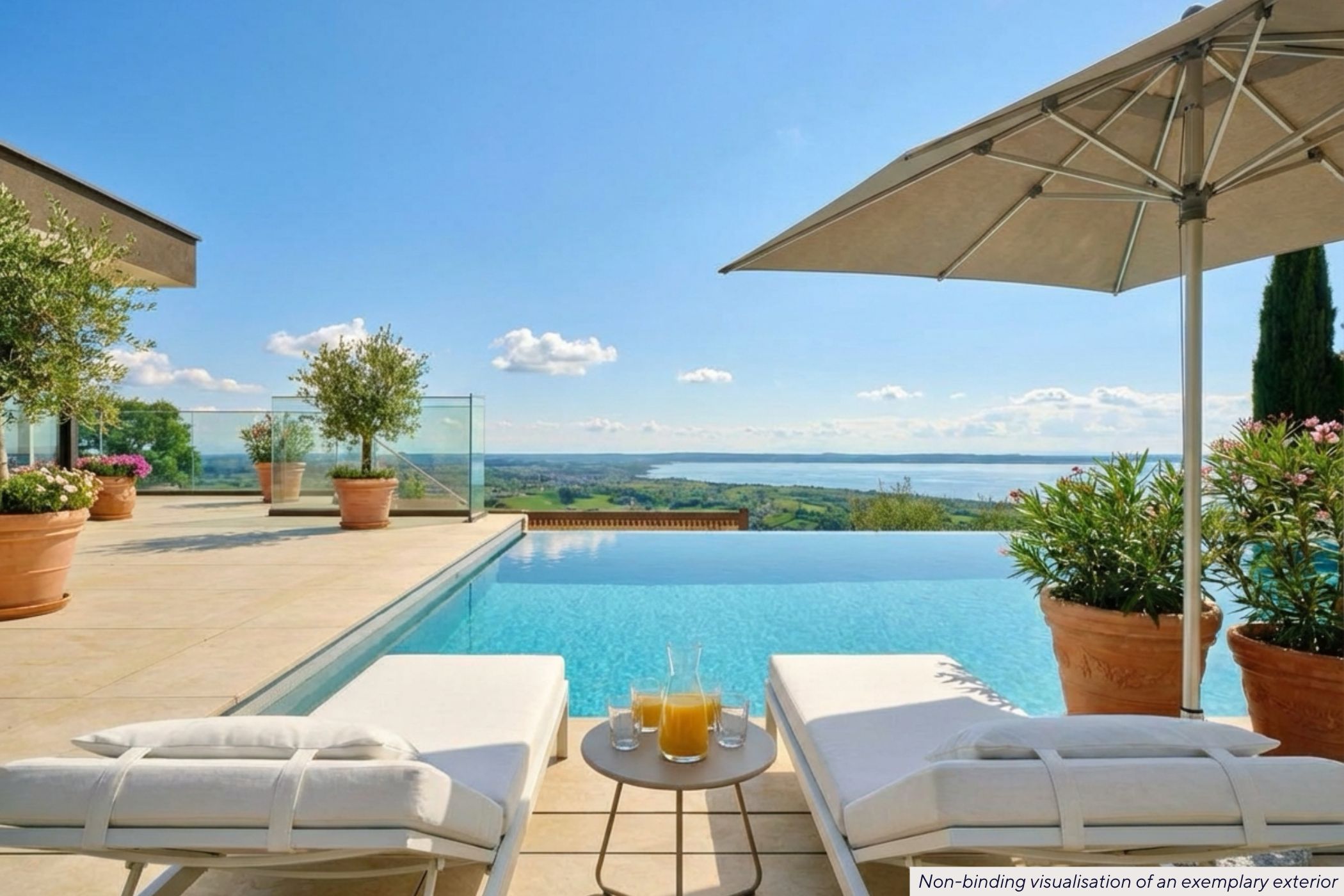
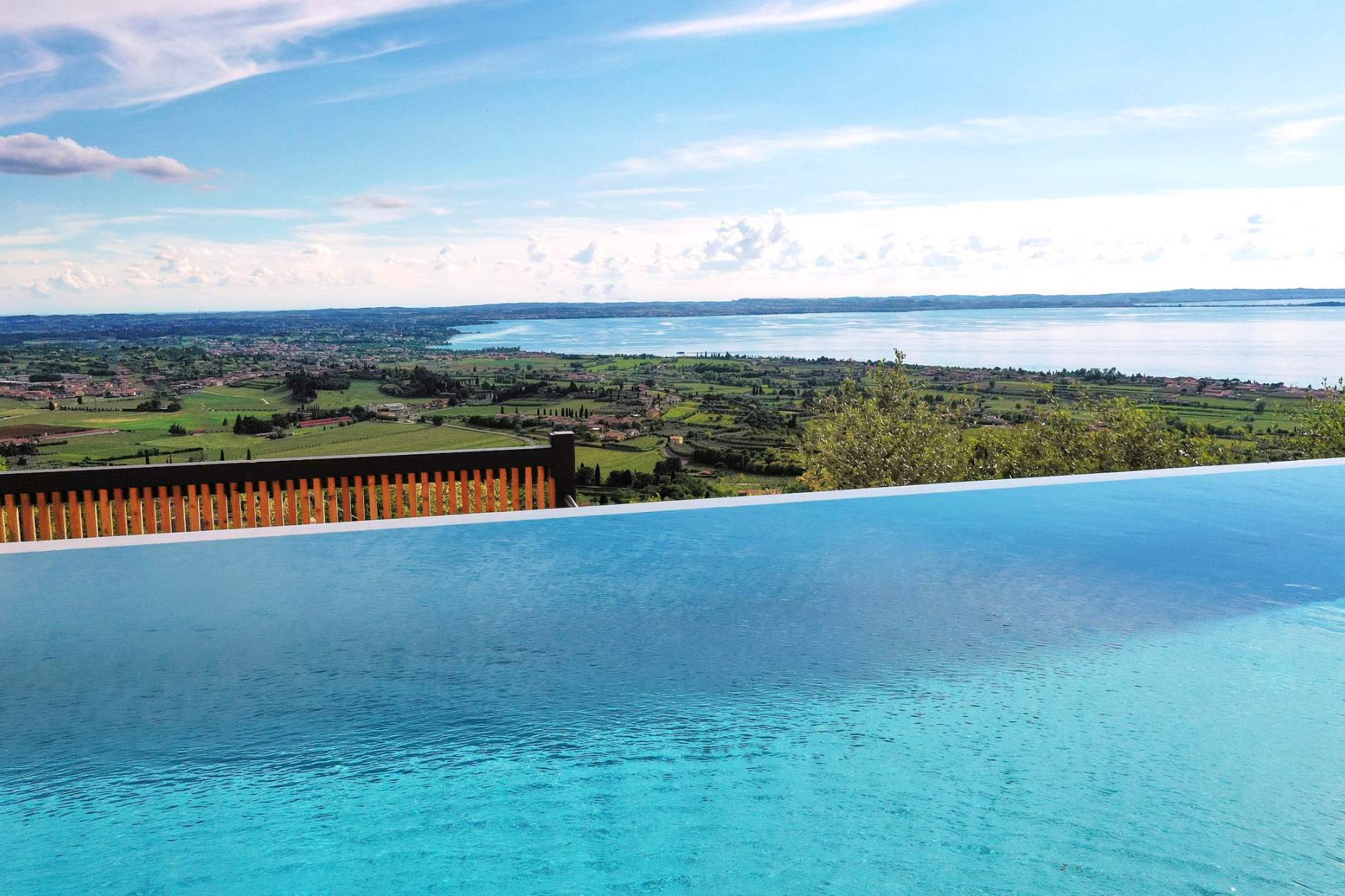
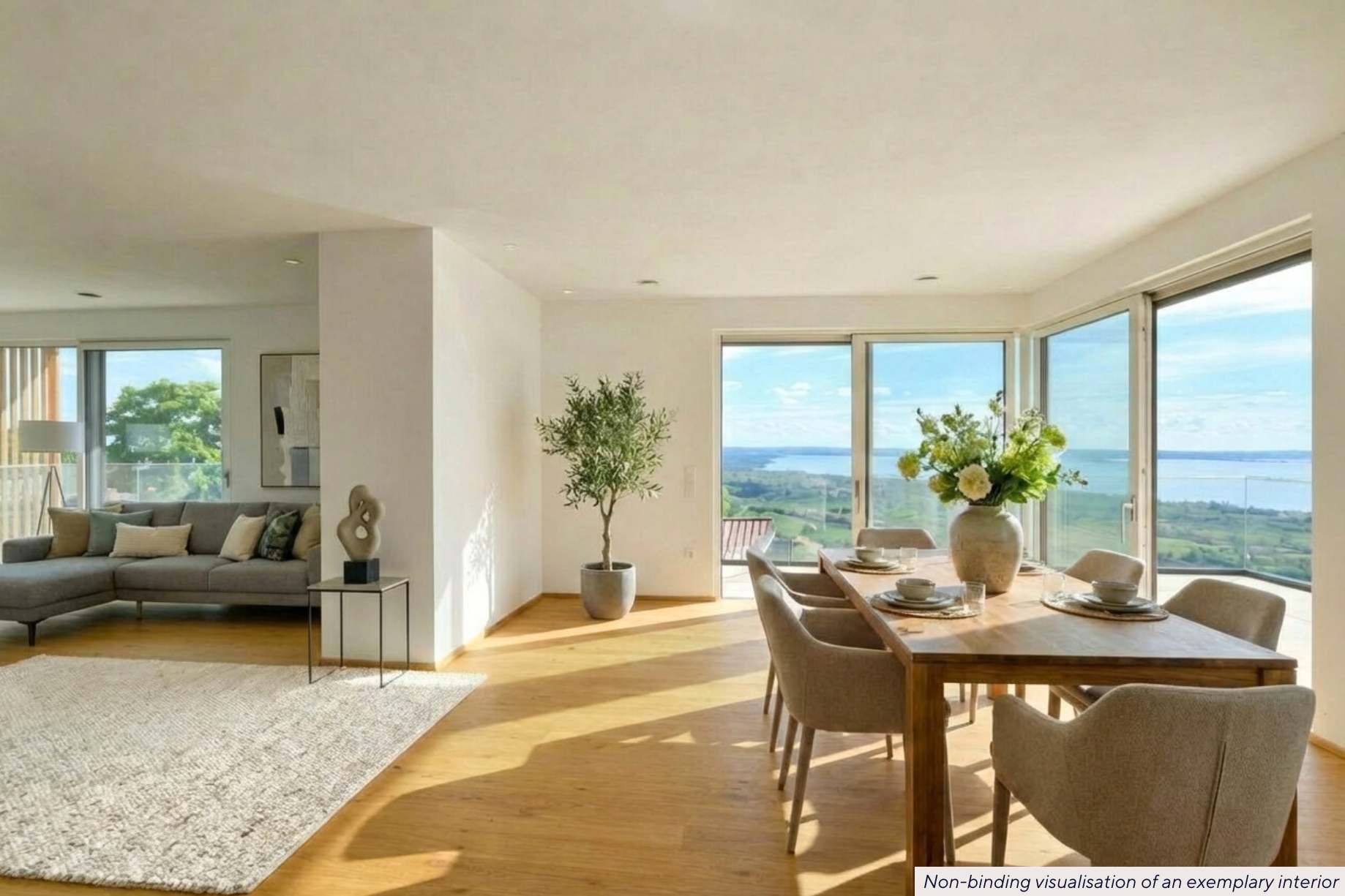
Cavaion Veronese, Lake Garda, Italy — 3-Bed Apartment With Infinity Pool
€369,000
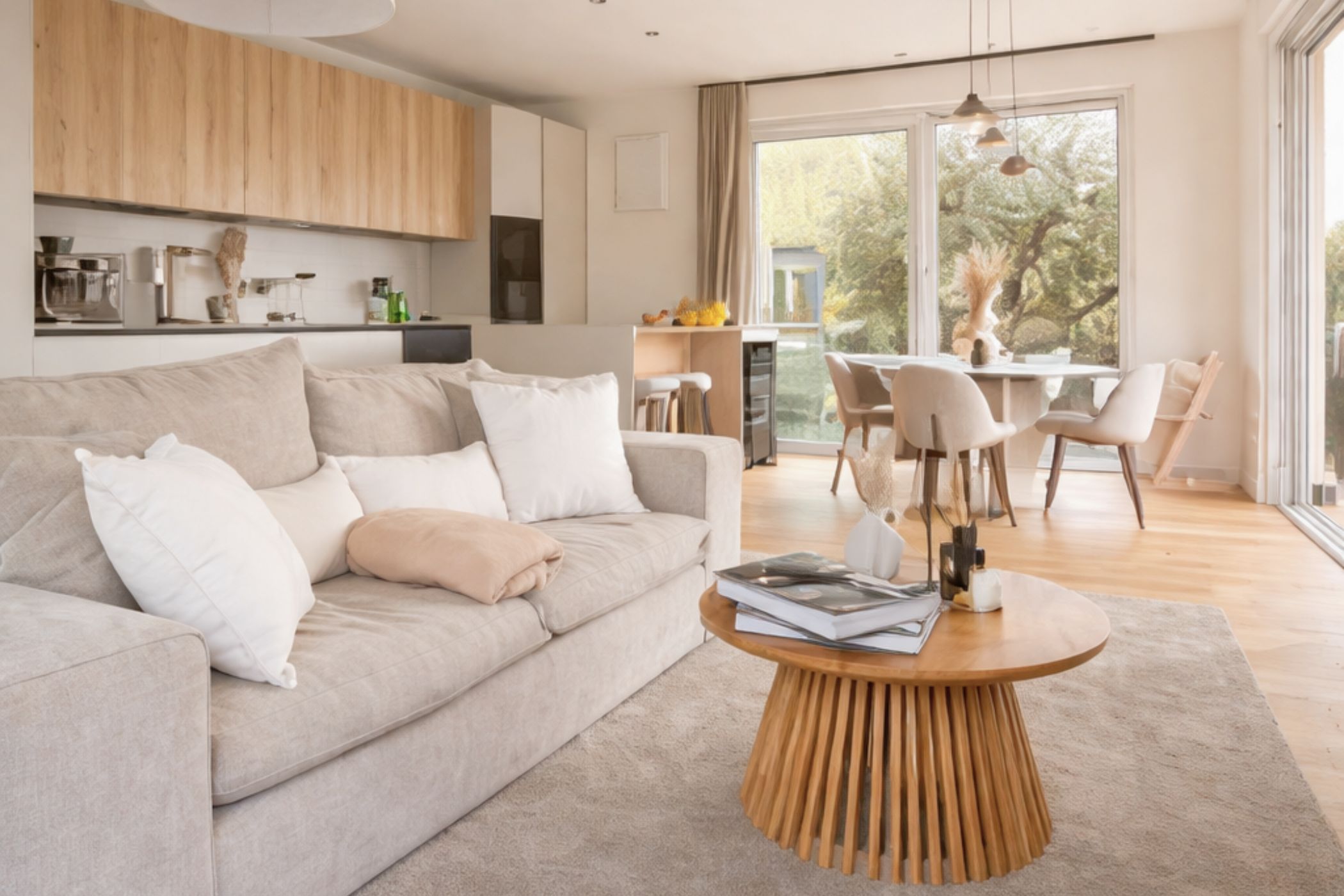
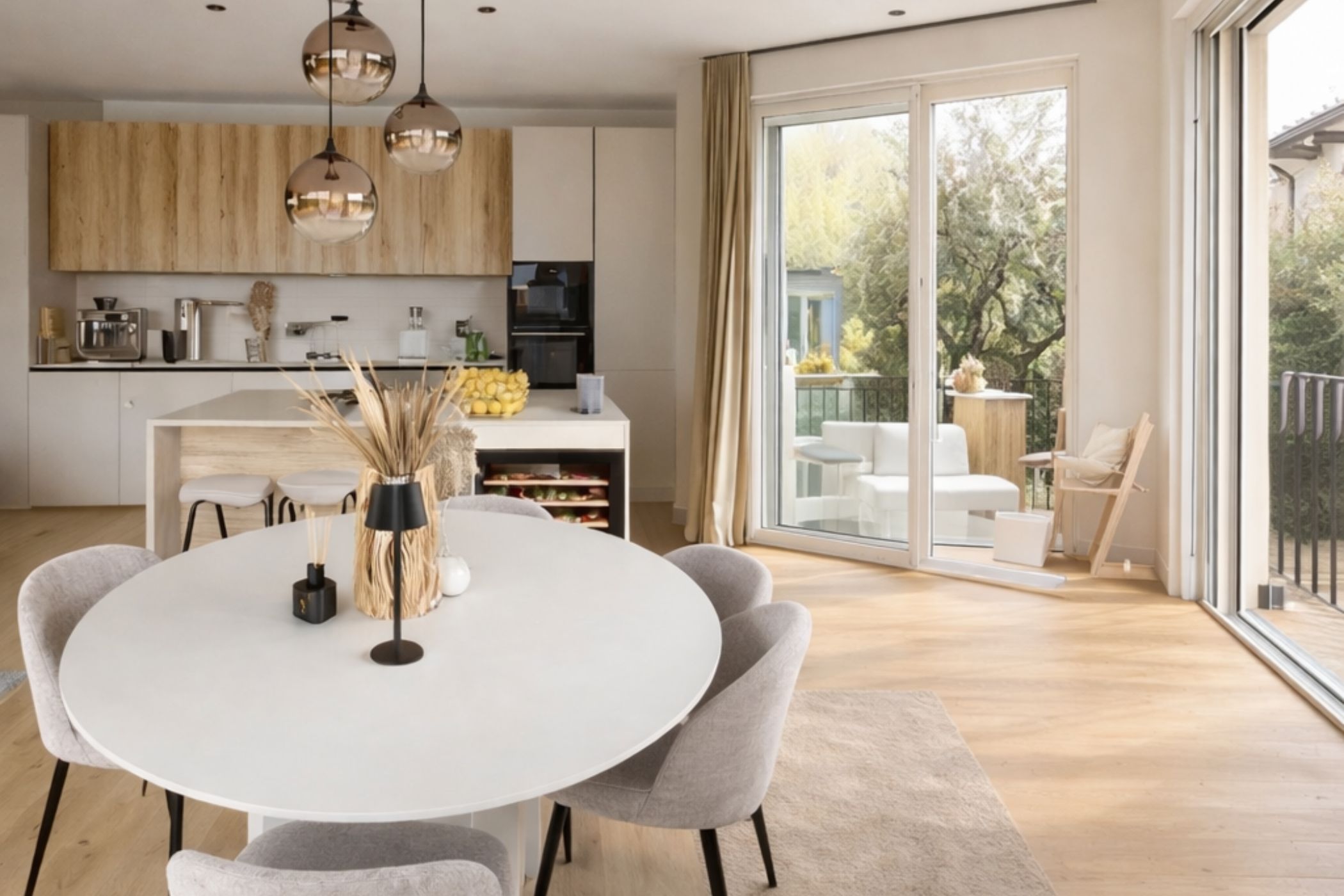
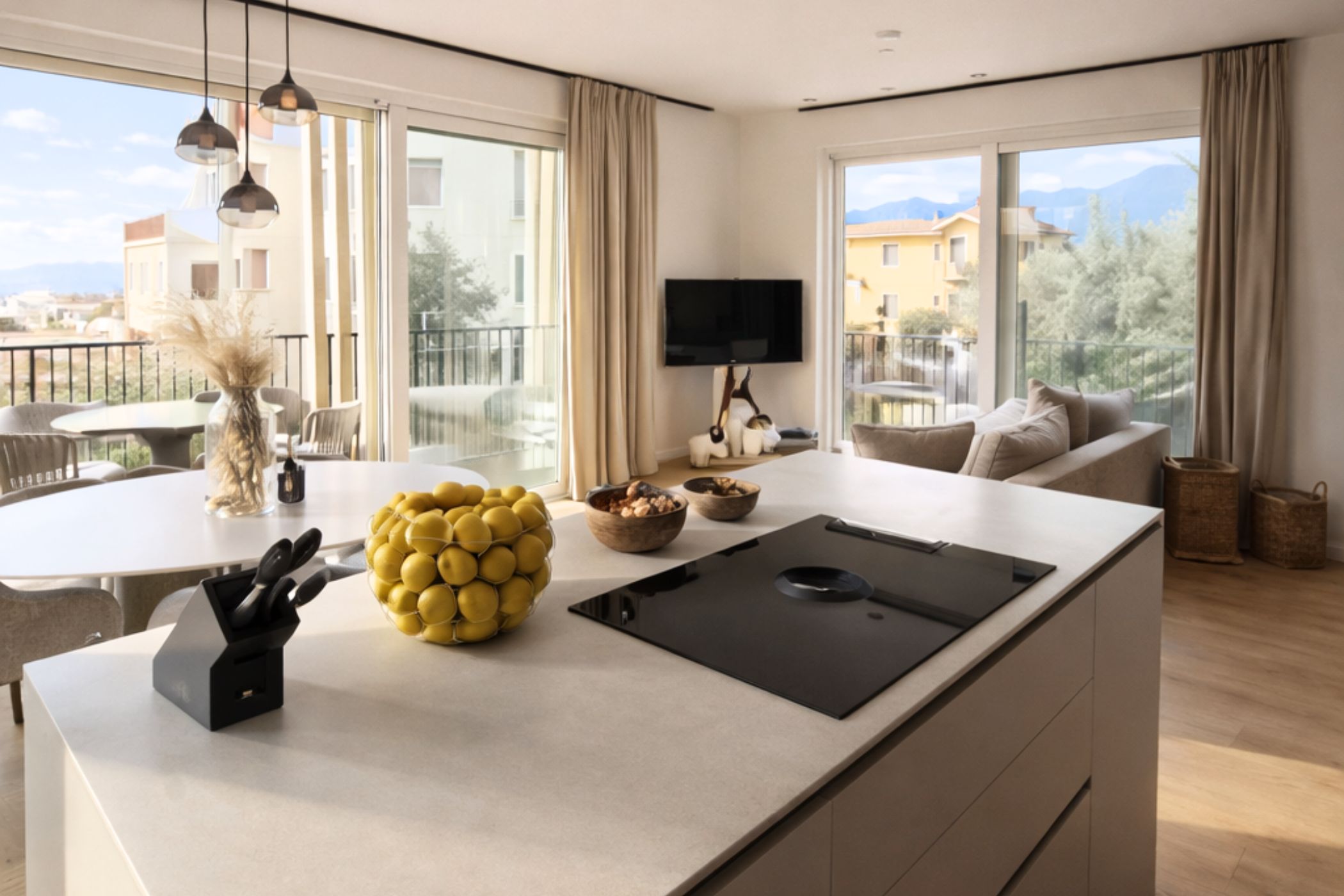
Torri del Benaco, Lake Garda, Italy — 2-Bed Apartment With Pool
€159,000
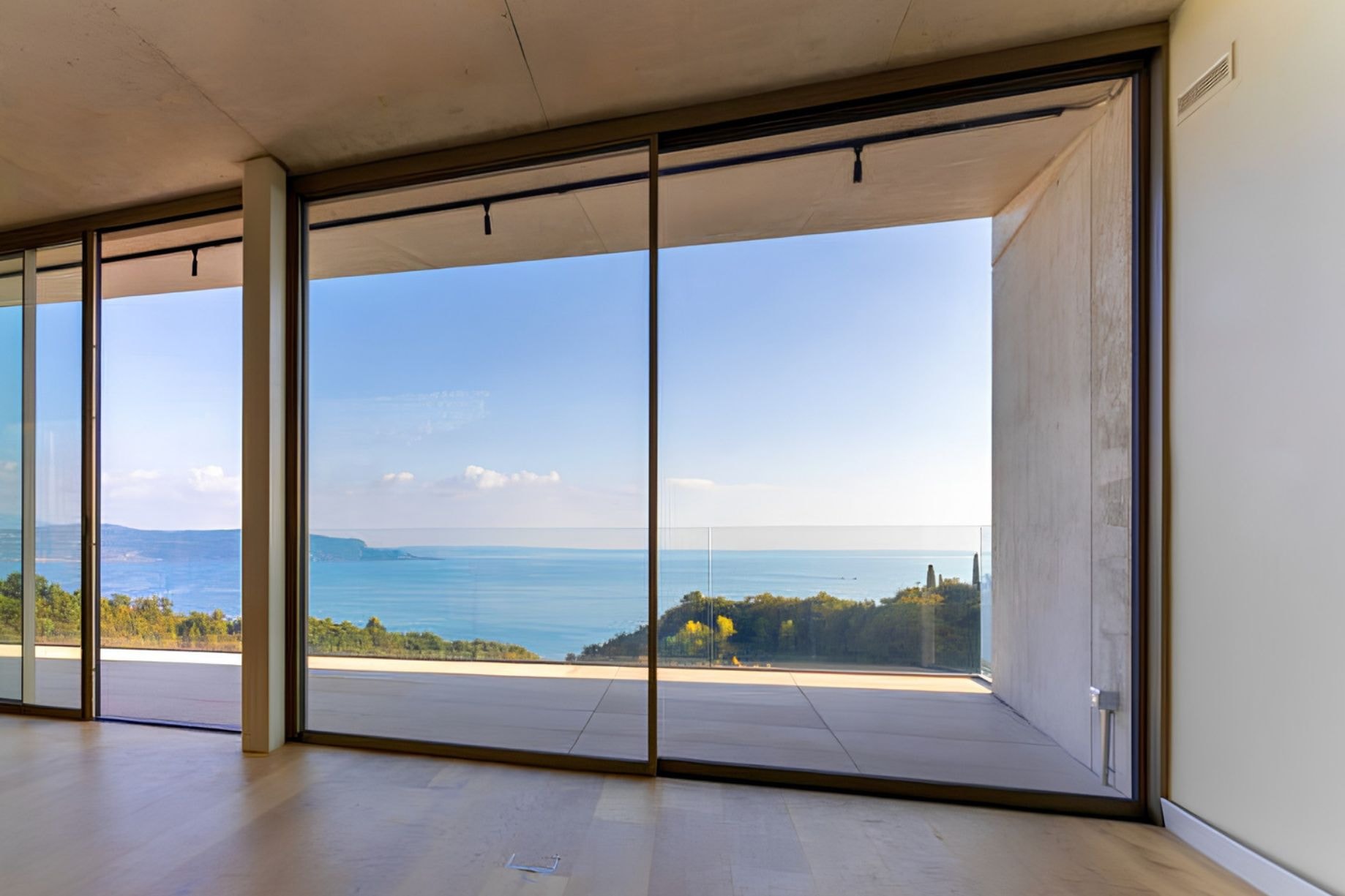
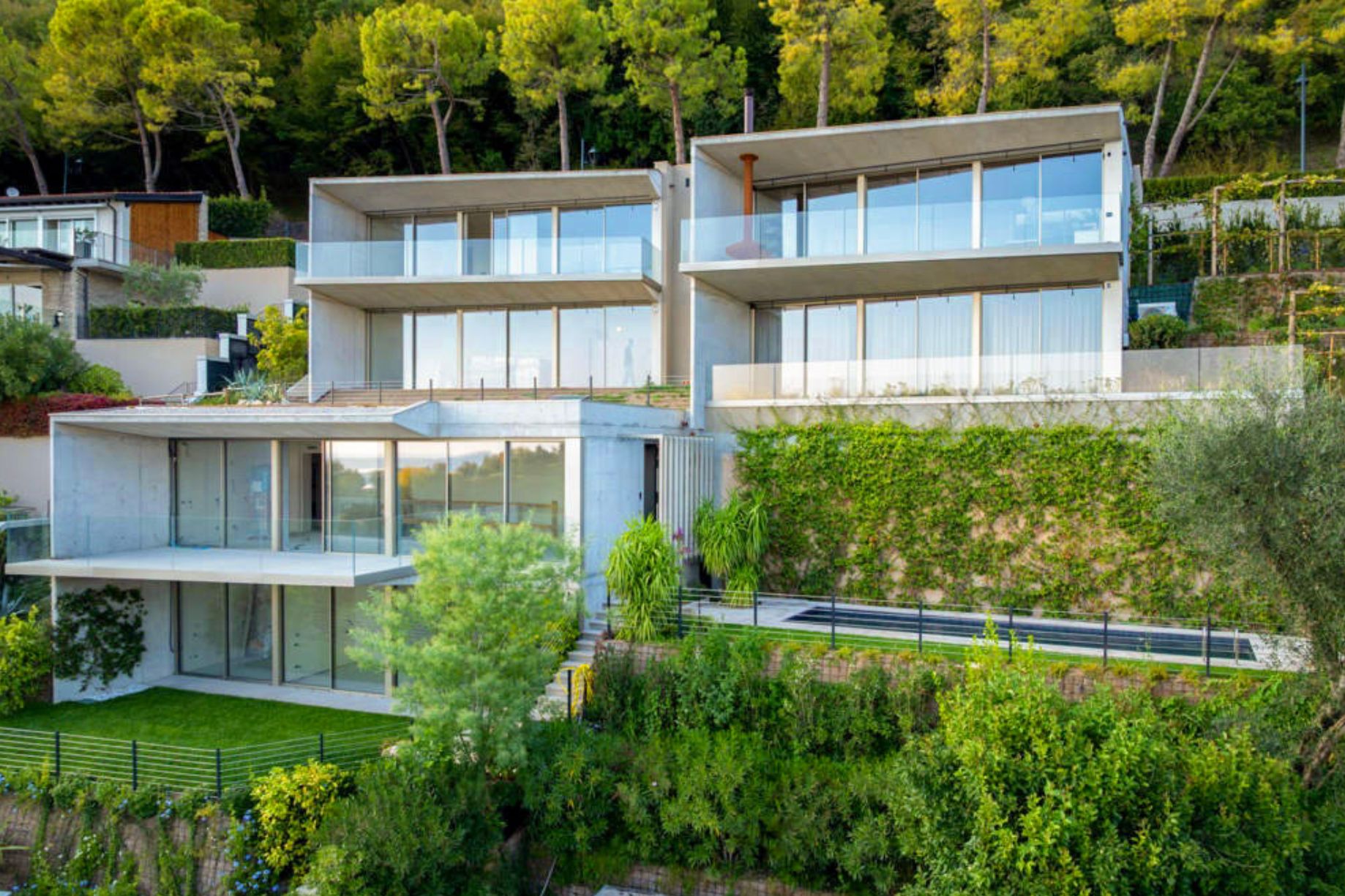
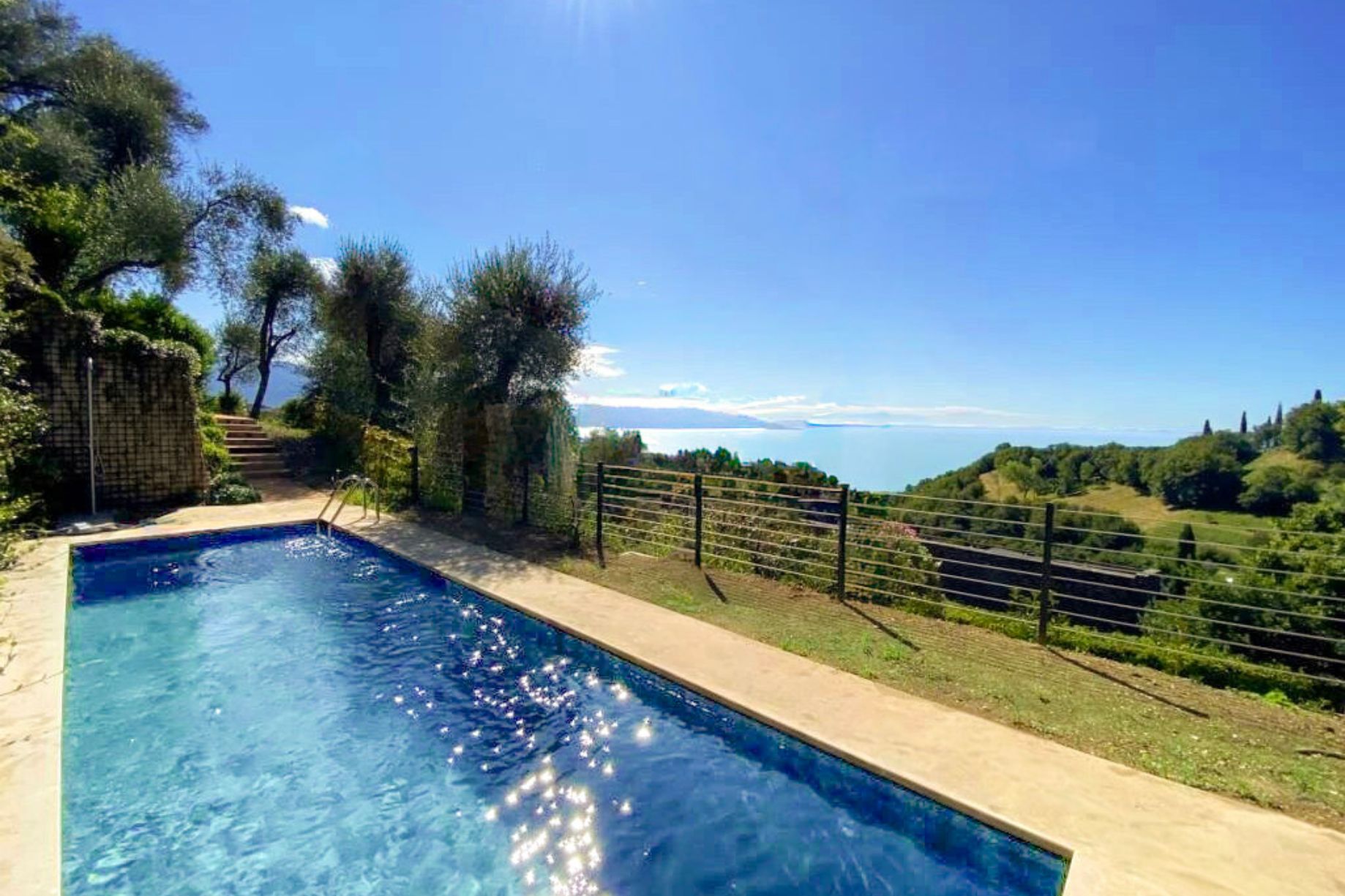
Toscolano-Maderno, Lake Garda, Italy — 3-Bed Maisonette With Panoramic Lake Views
€299,000
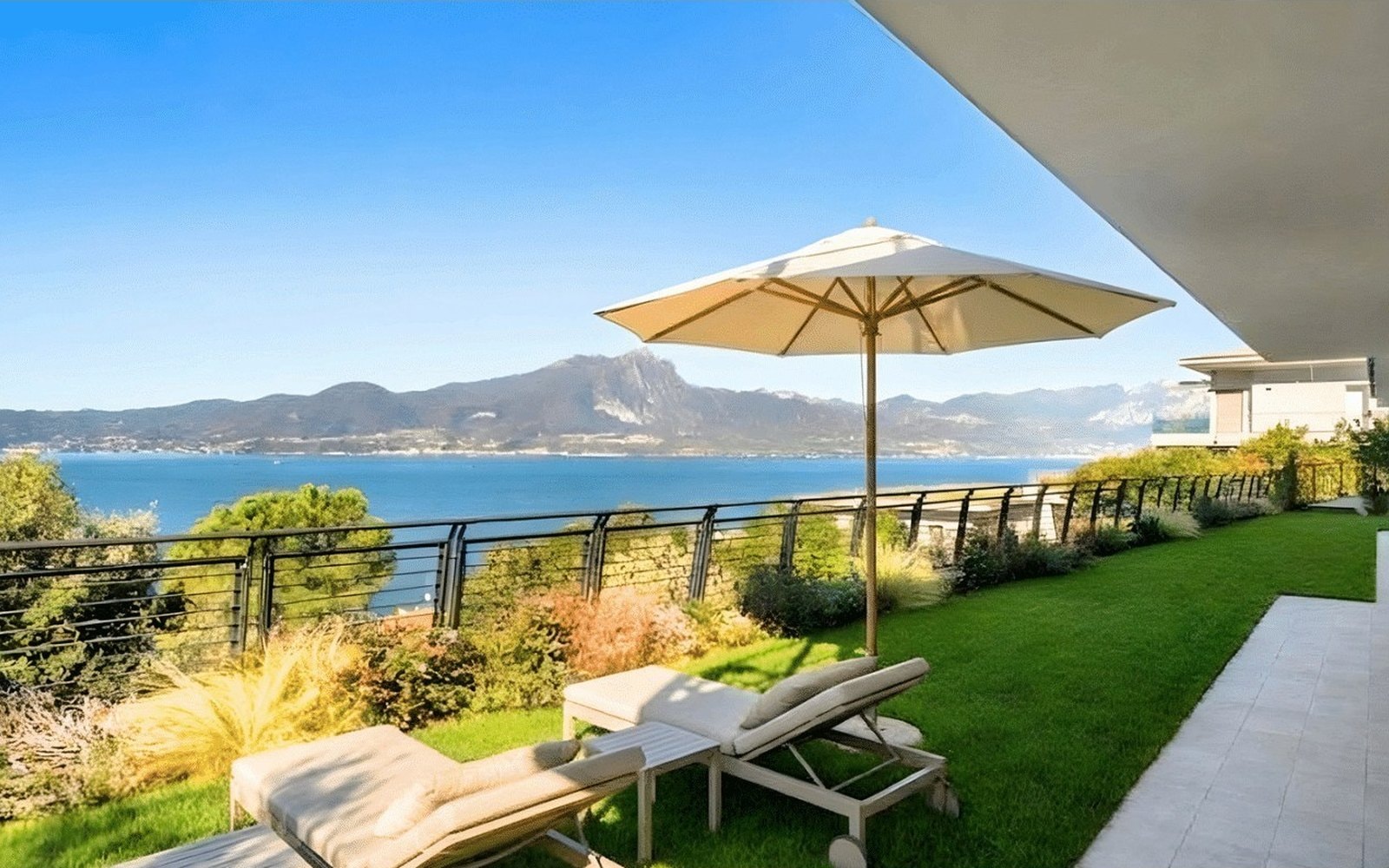
Torri del Benaco, Lake Garda, Italy — 2-Bed Private Residence
€259,000
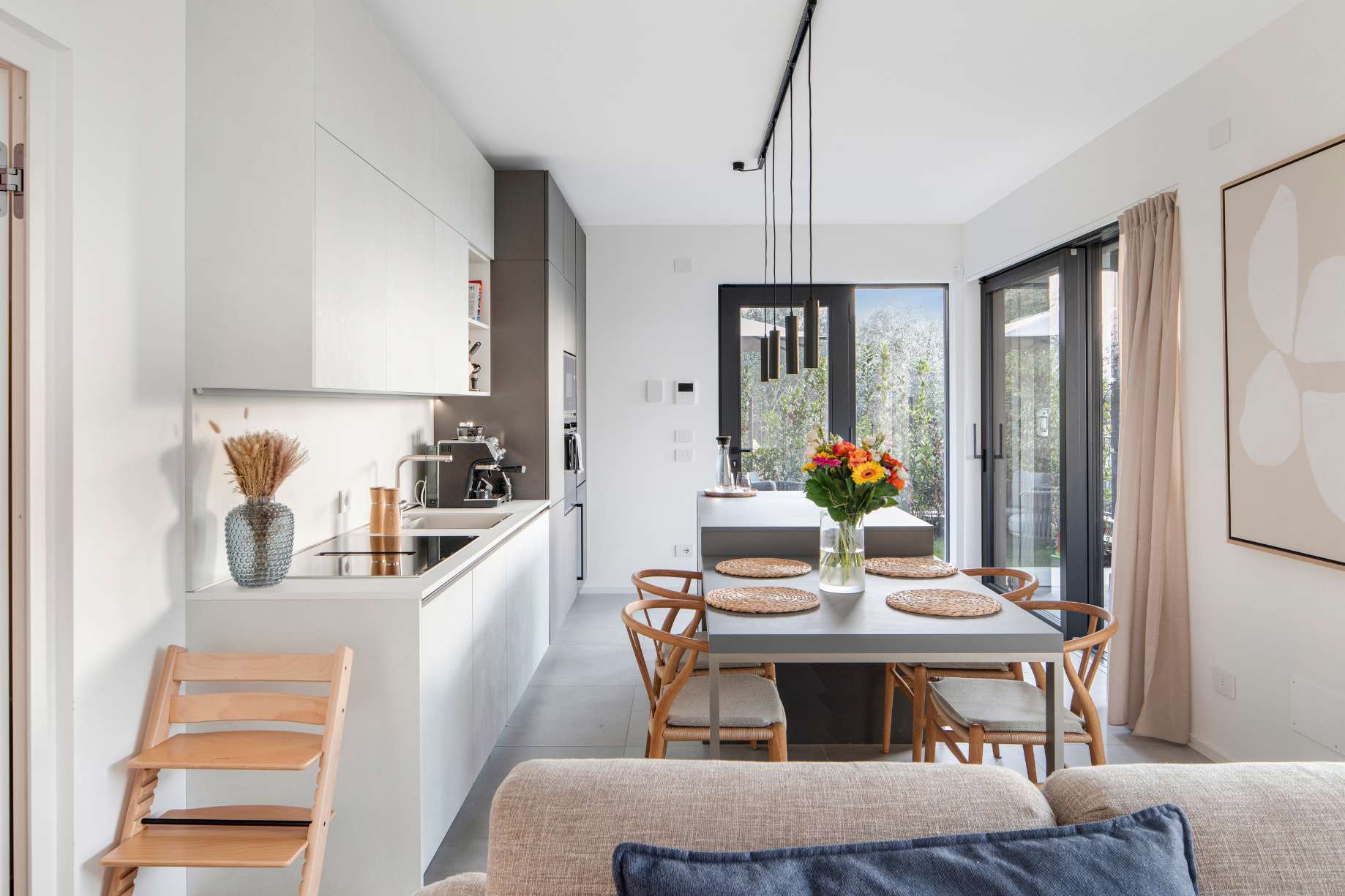
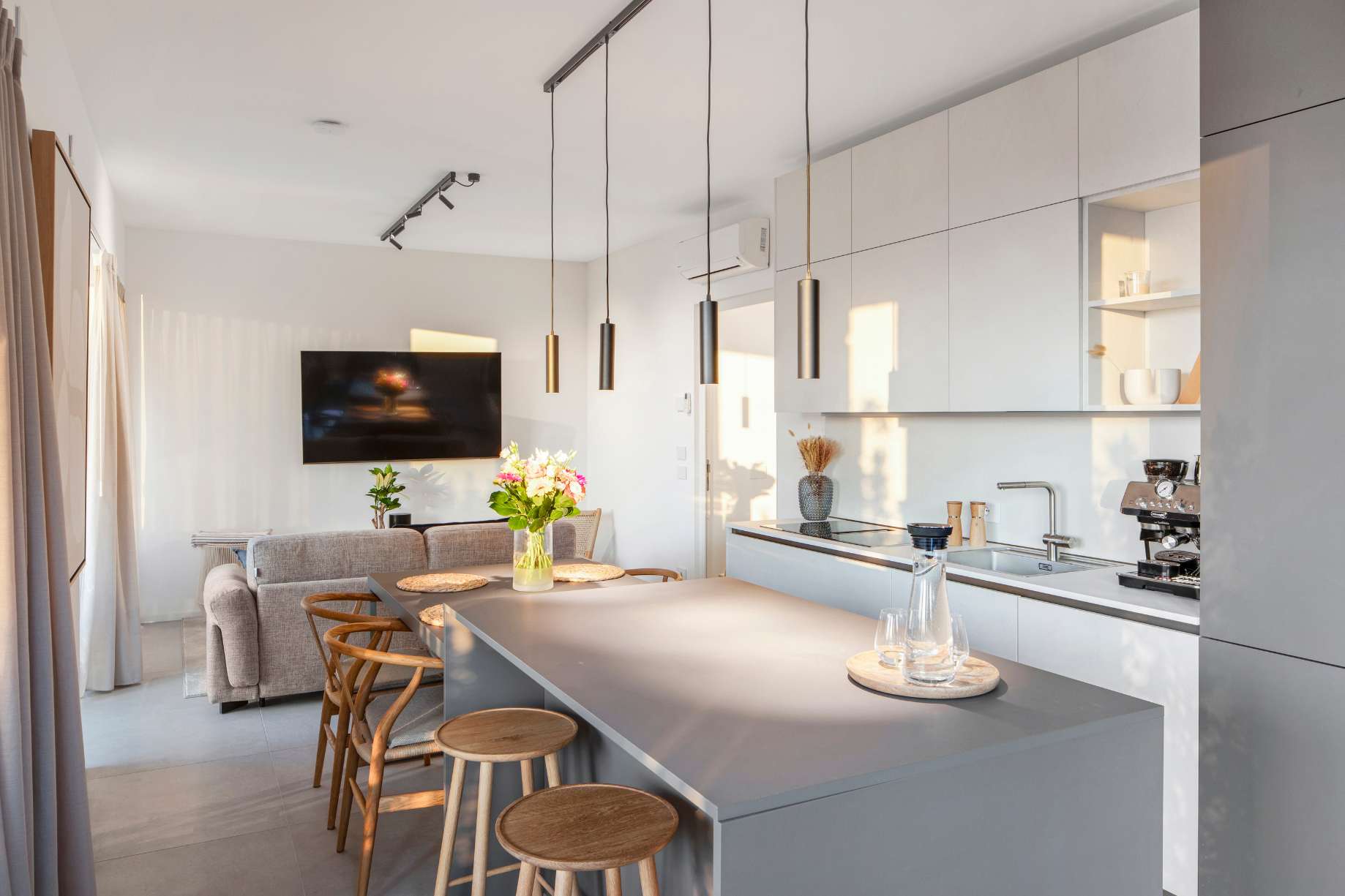
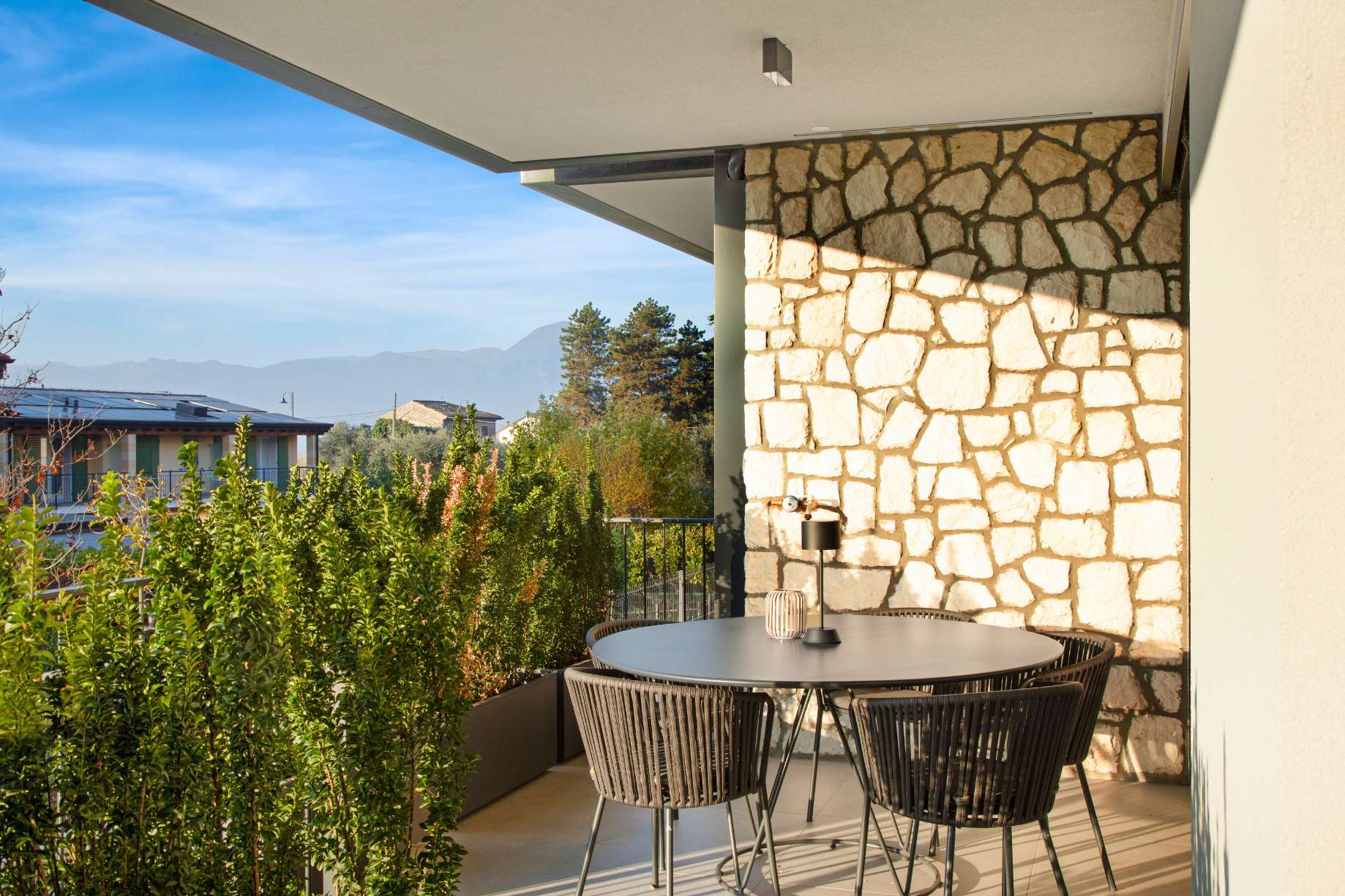
Torri del Benaco, Lake Garda, Italy — 2-Bed Apartment With Pool
€139,000
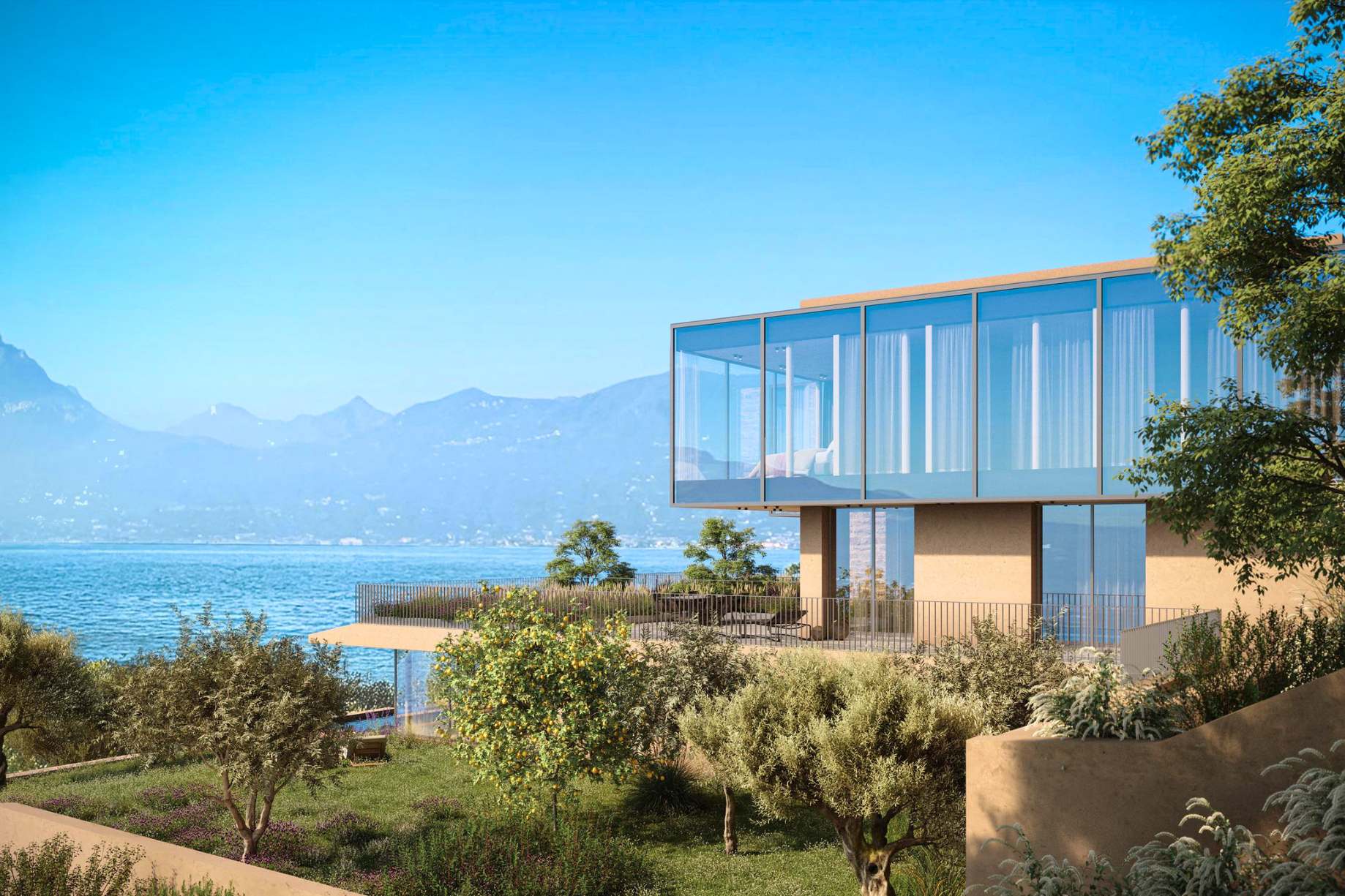
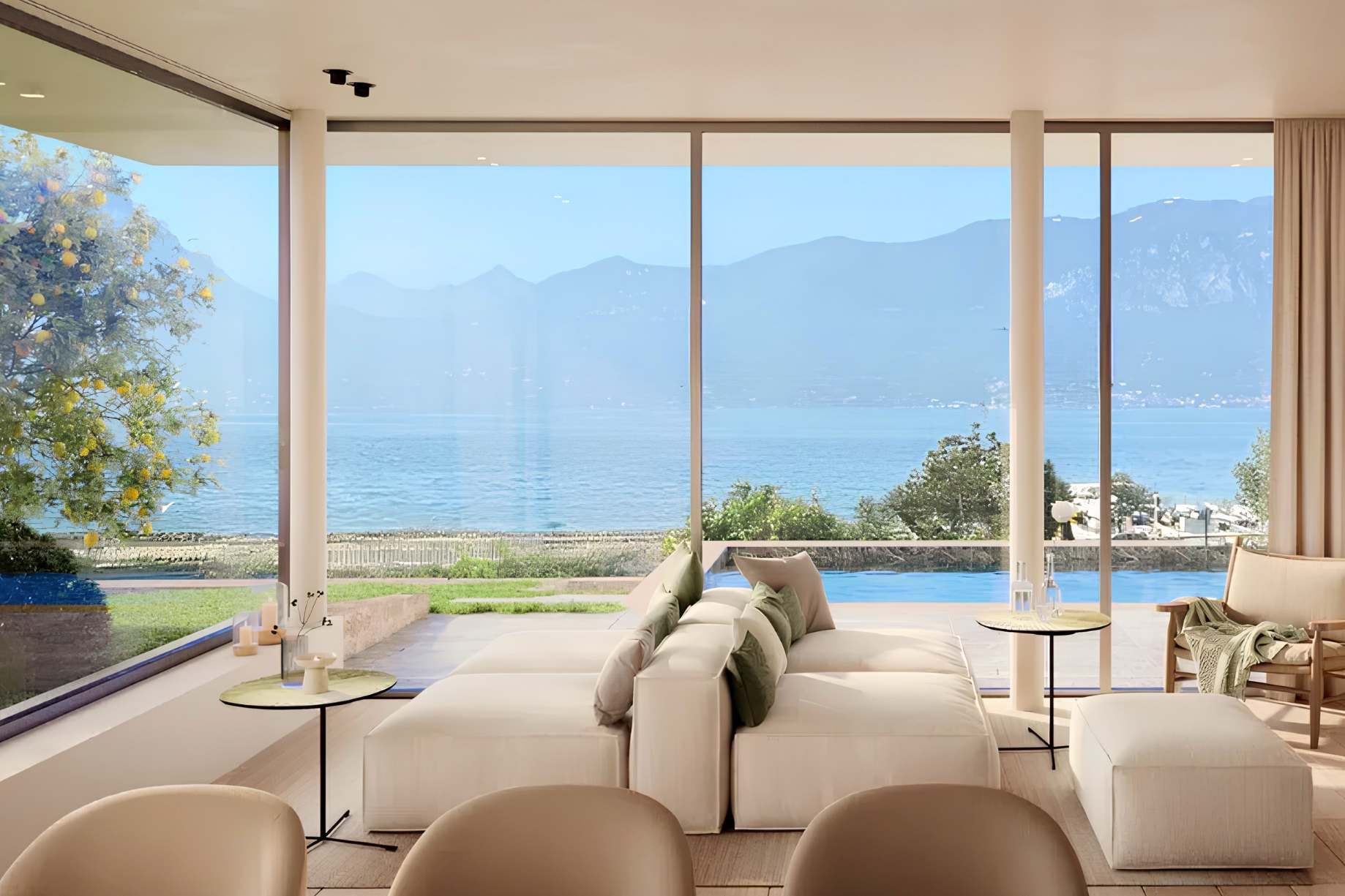
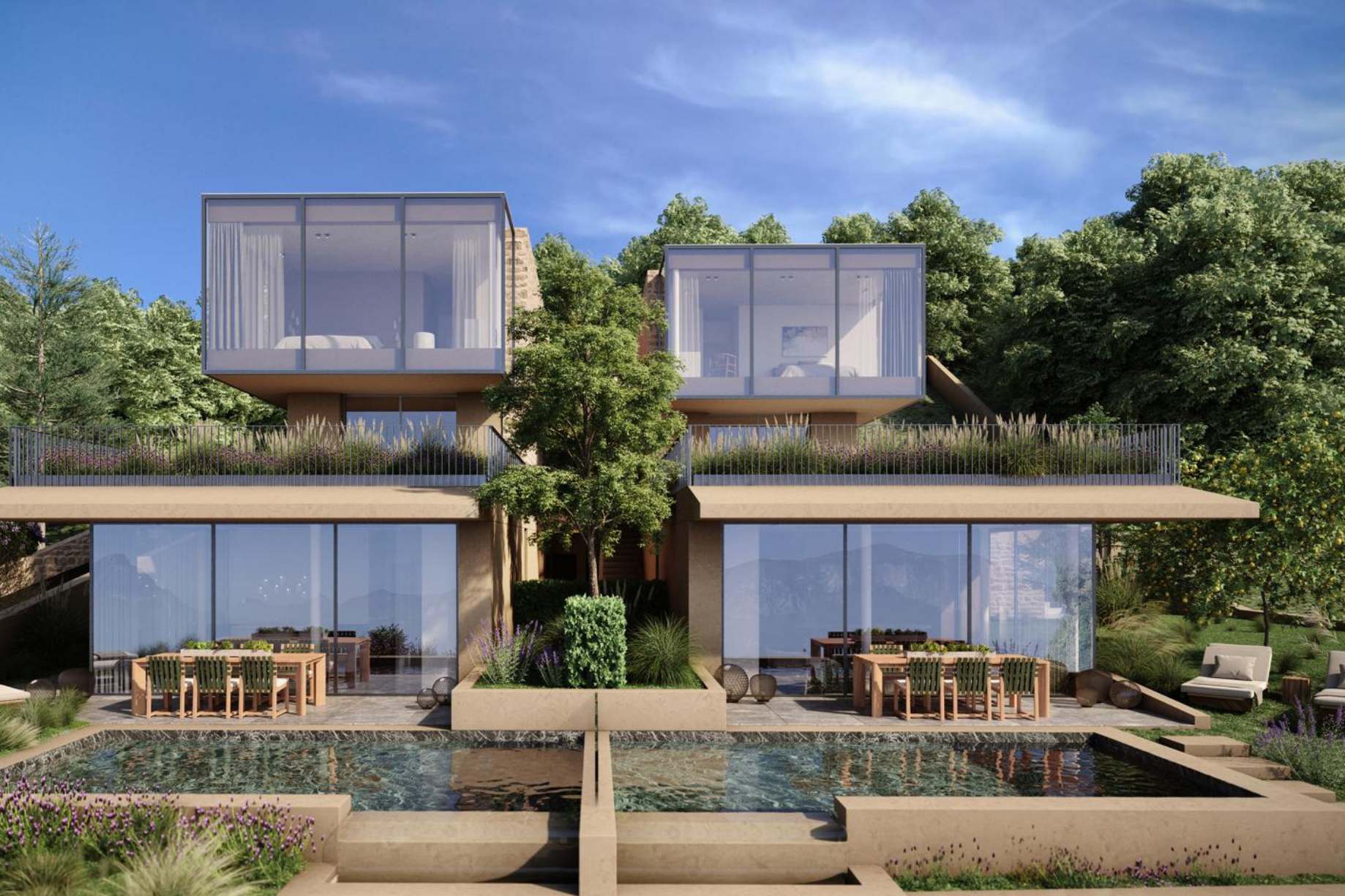
Torri del Benaco, Lake Garda, Italy — 3-Bed Garden Apartment With Lake View & Heated Pool
€289,000
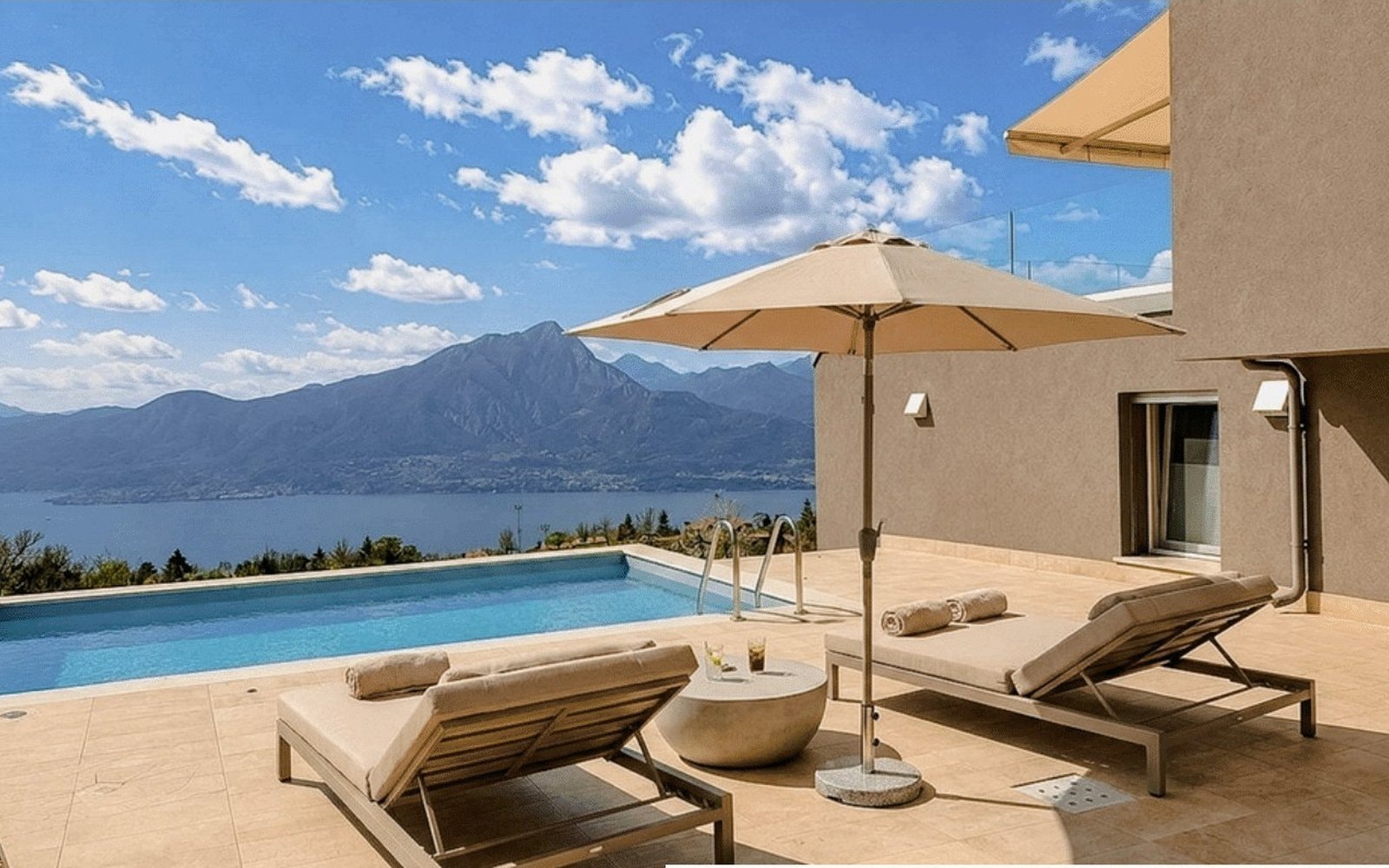
San Zeno di Montagna, Lake Garda, Italy — 3-Bed Private Residence
€249,000
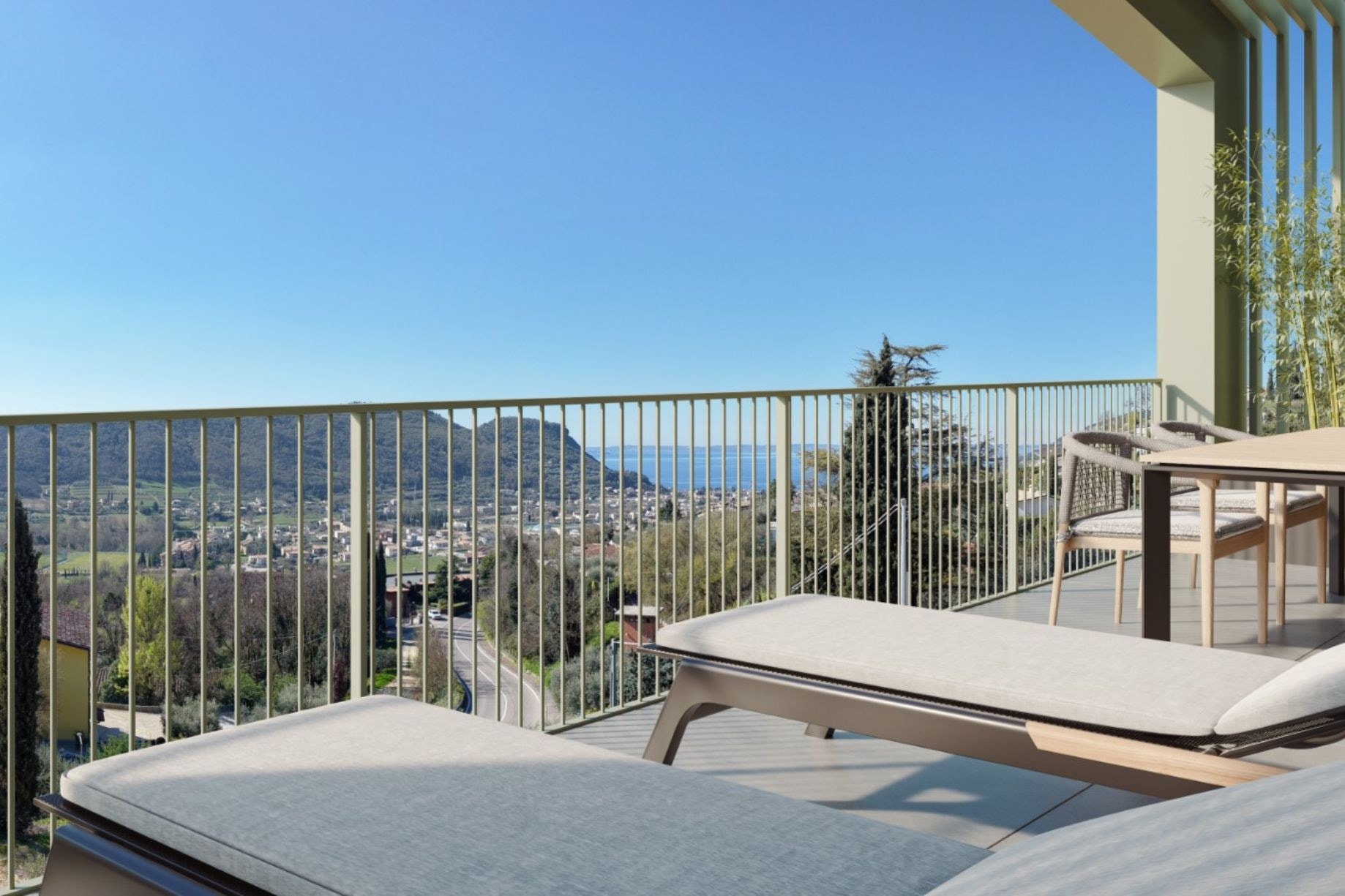
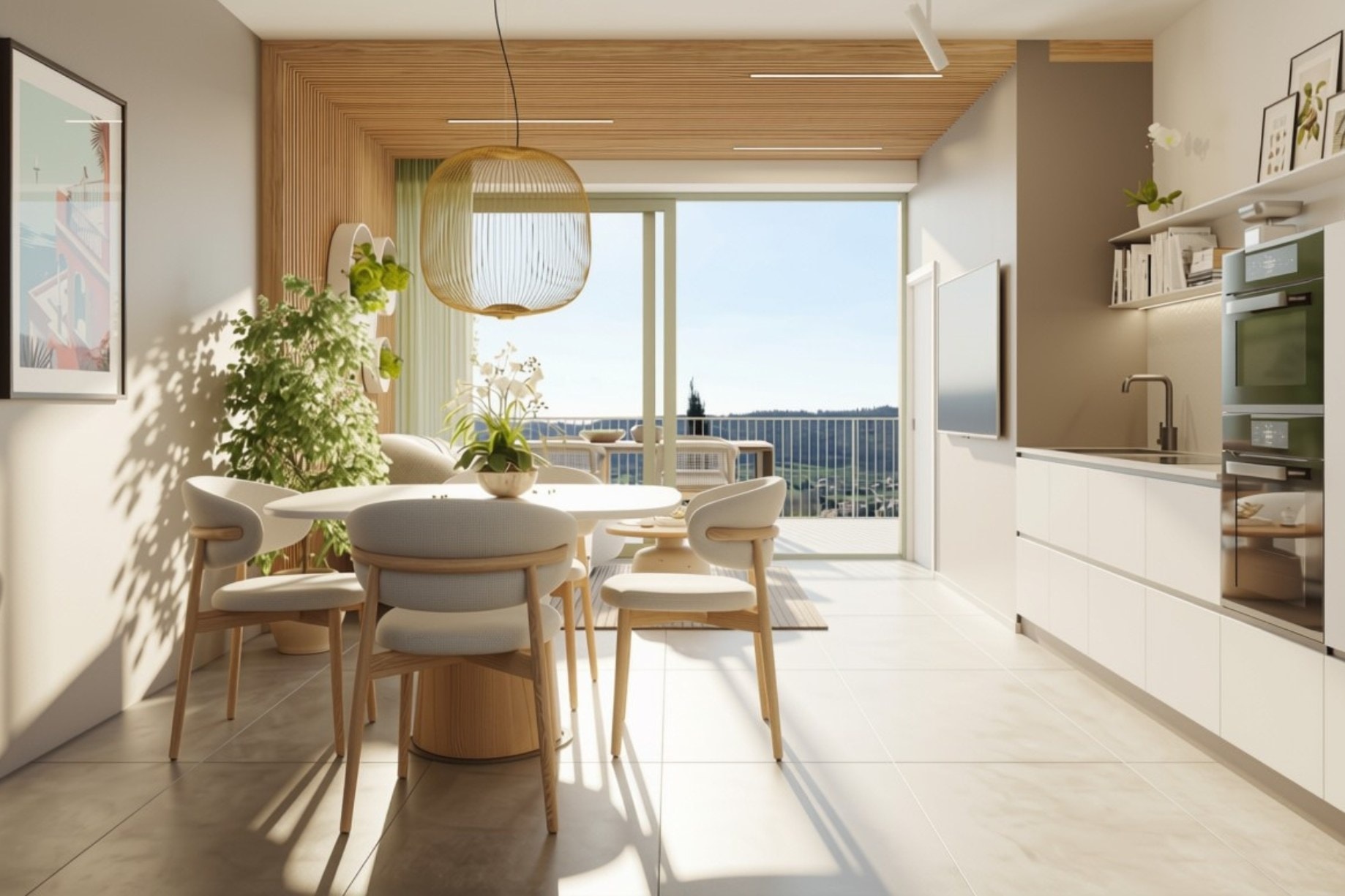
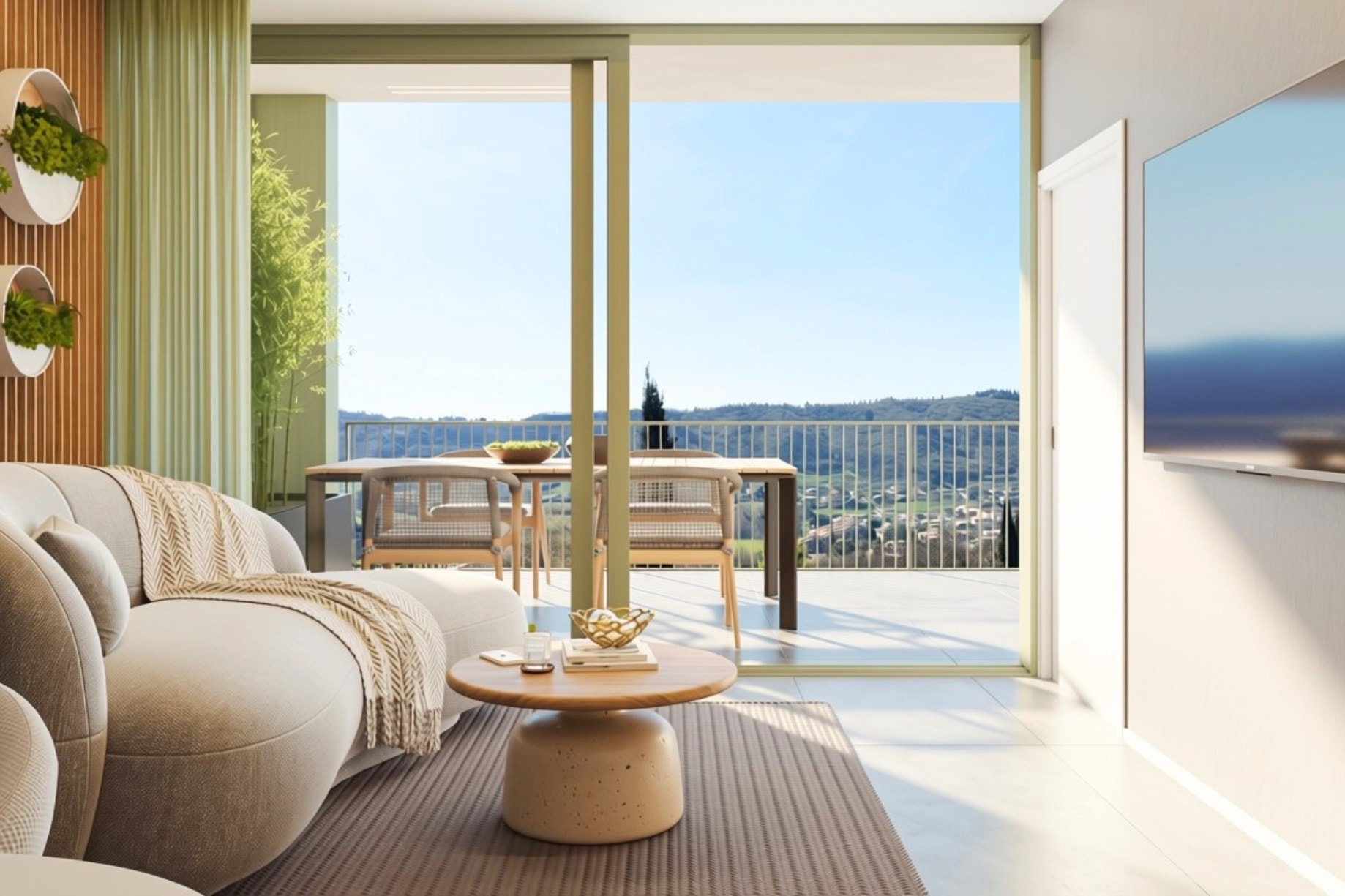
Costermano sul Garda, Lake Garda, Italy — 2-Bed Terrace Apartment With Lake Views
€129,000
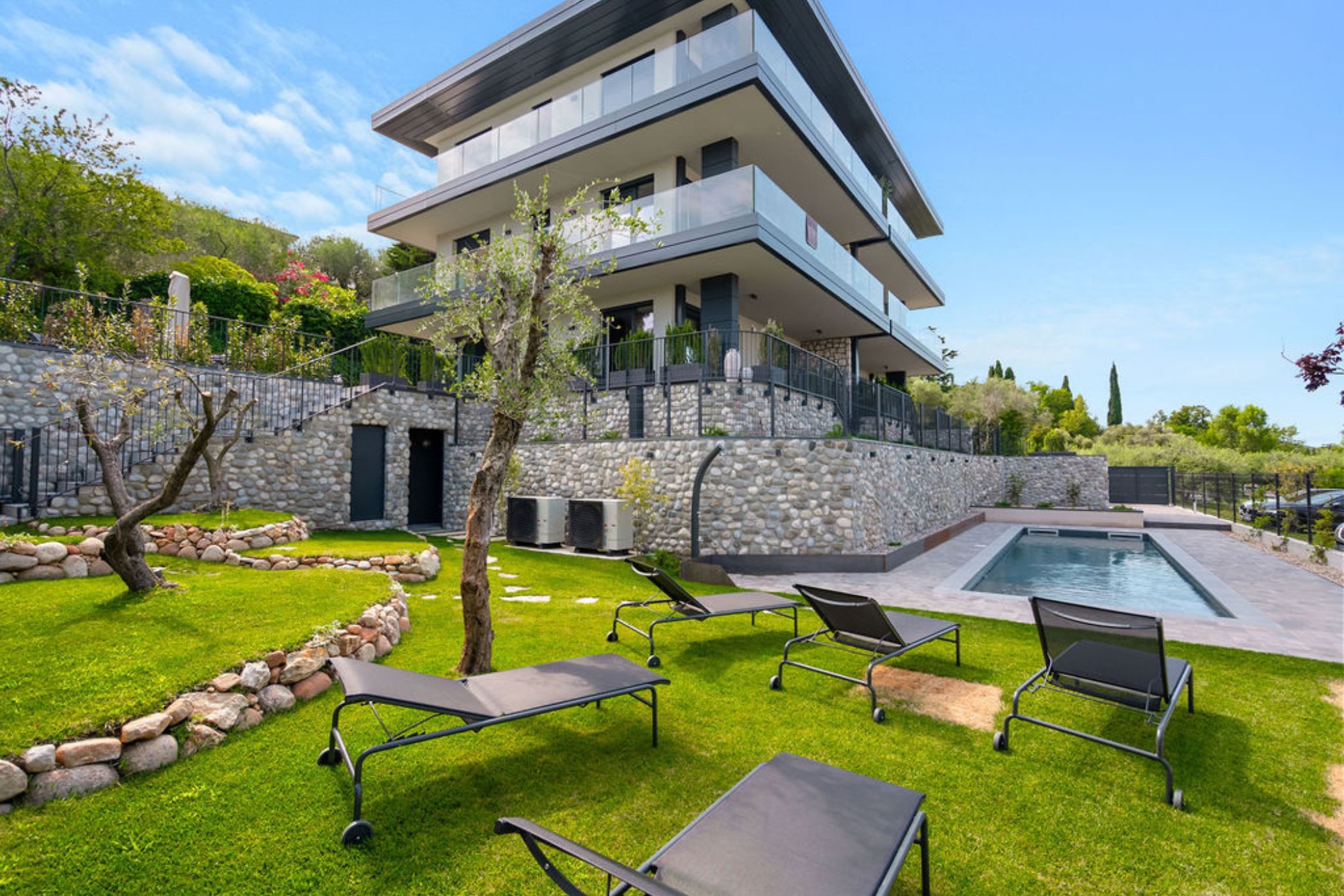
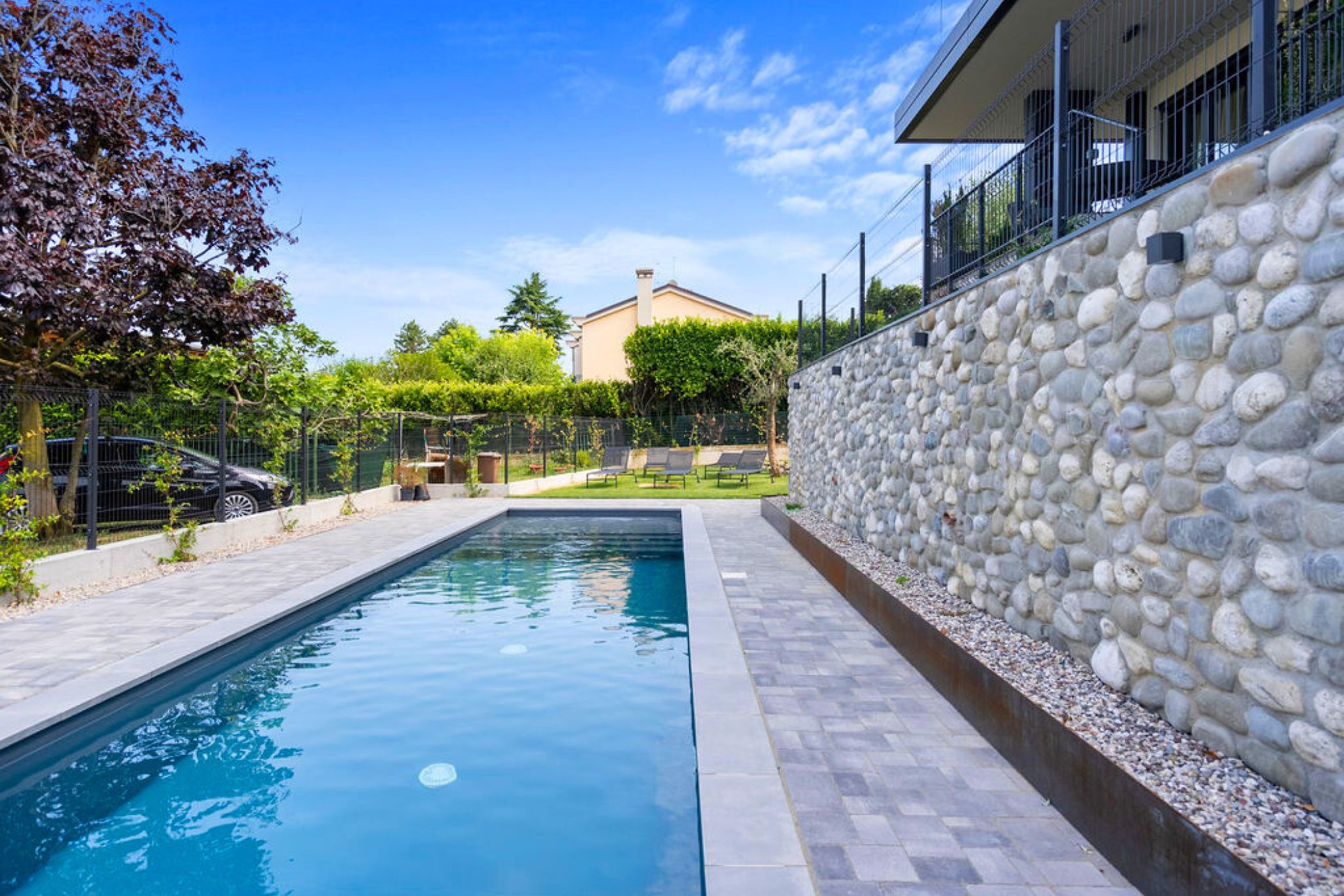
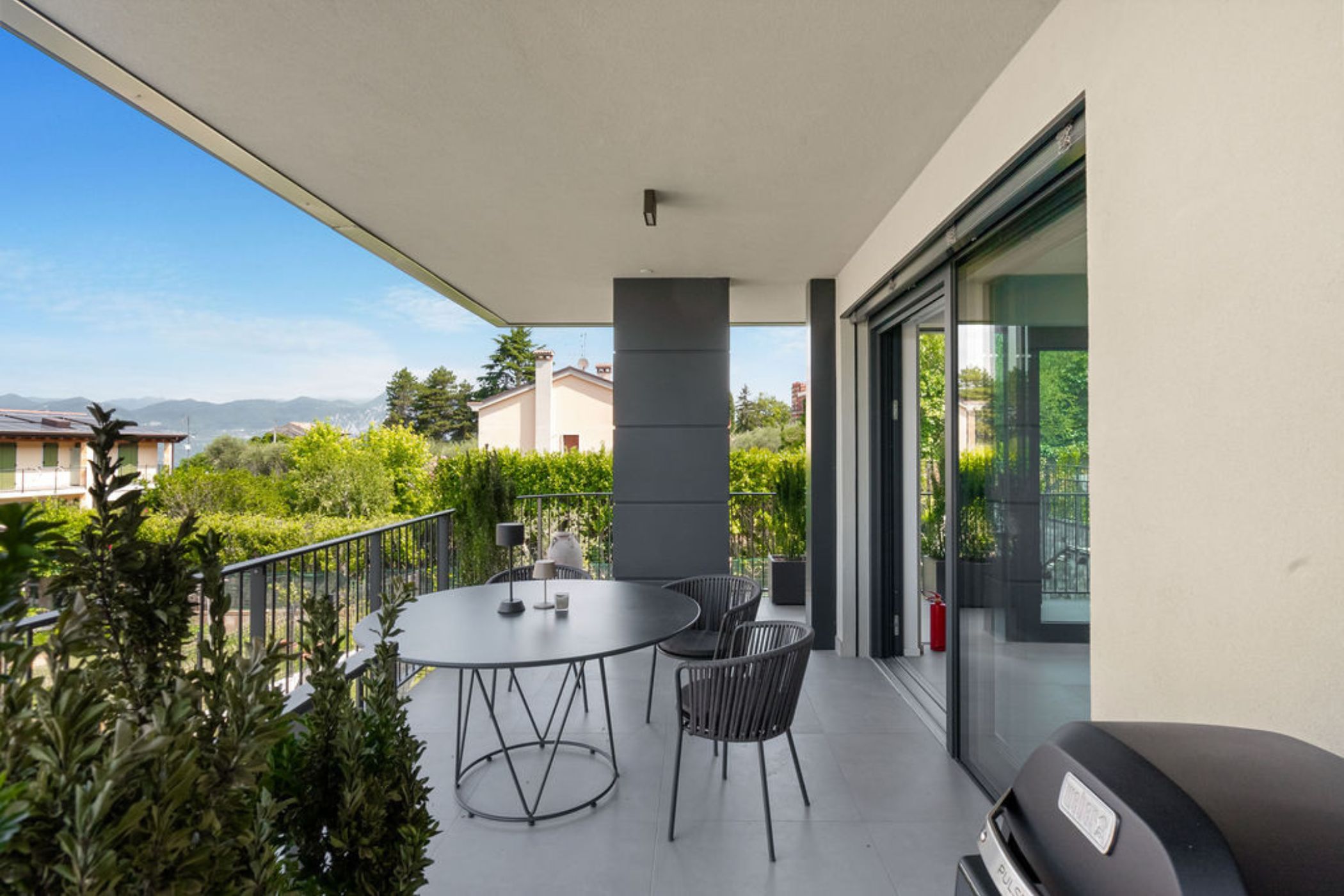
Torri del Benaco, Lake Garda, Italy — 2-Bed Apartment With Pool
€155,000
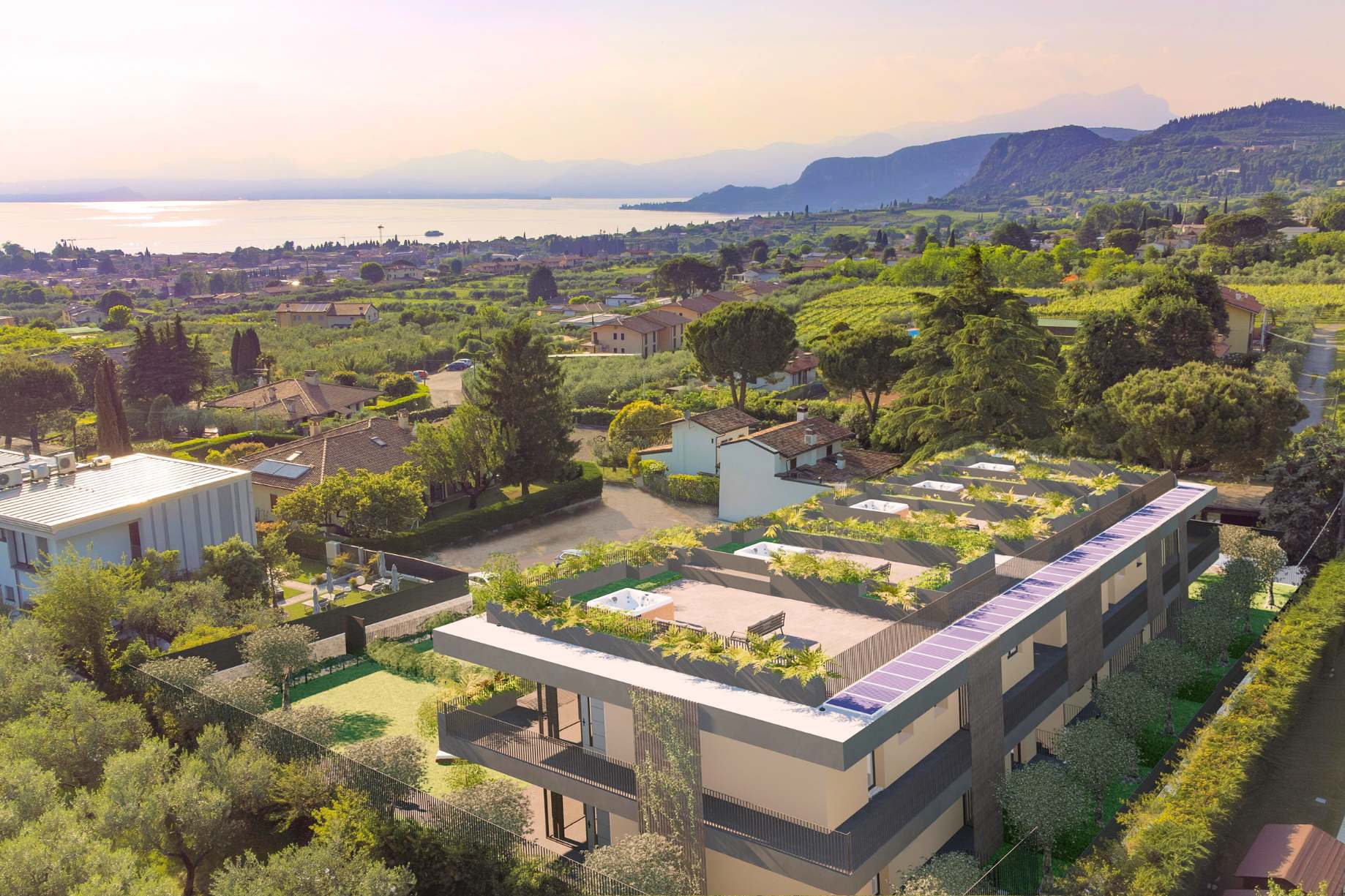
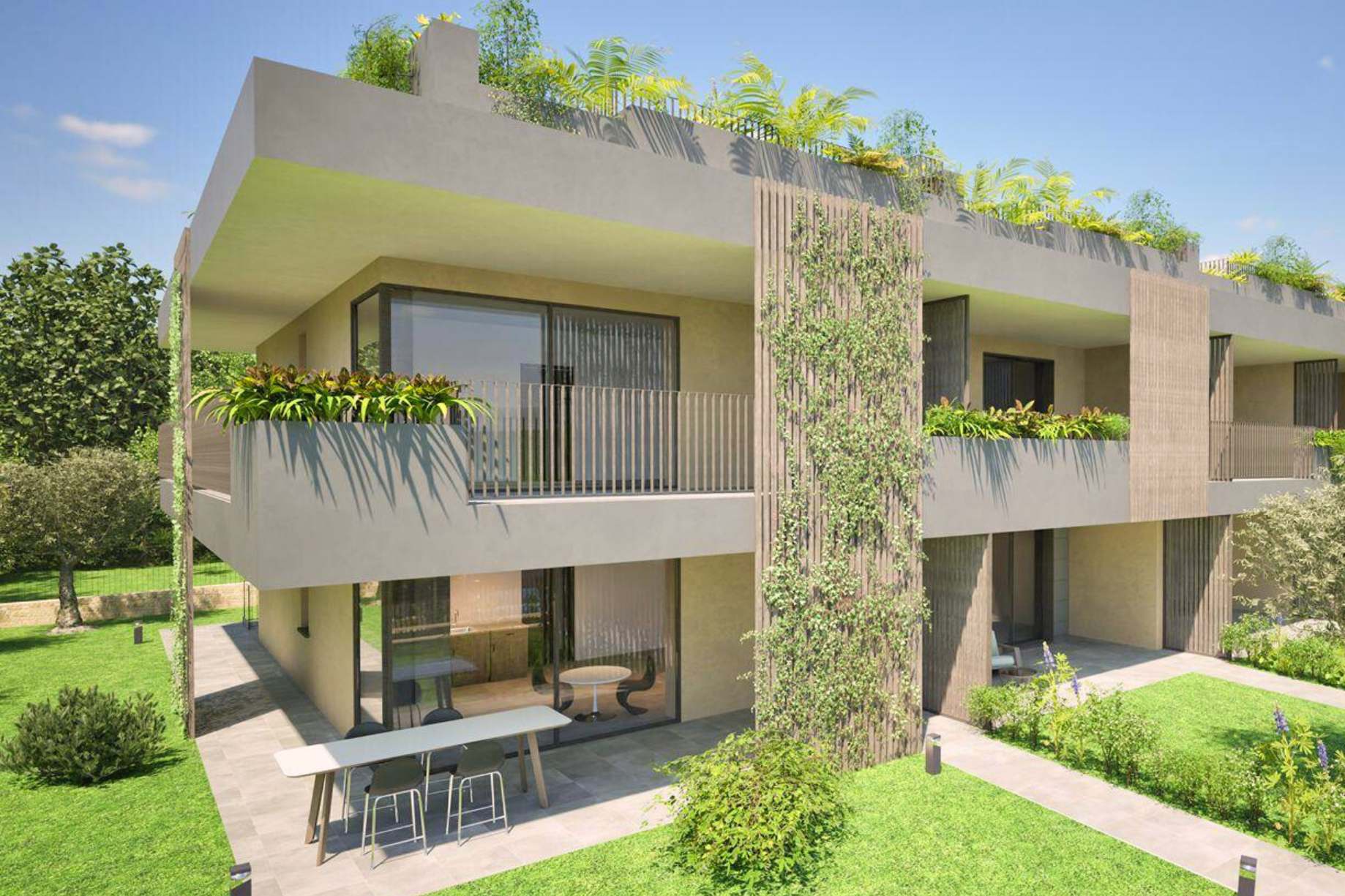
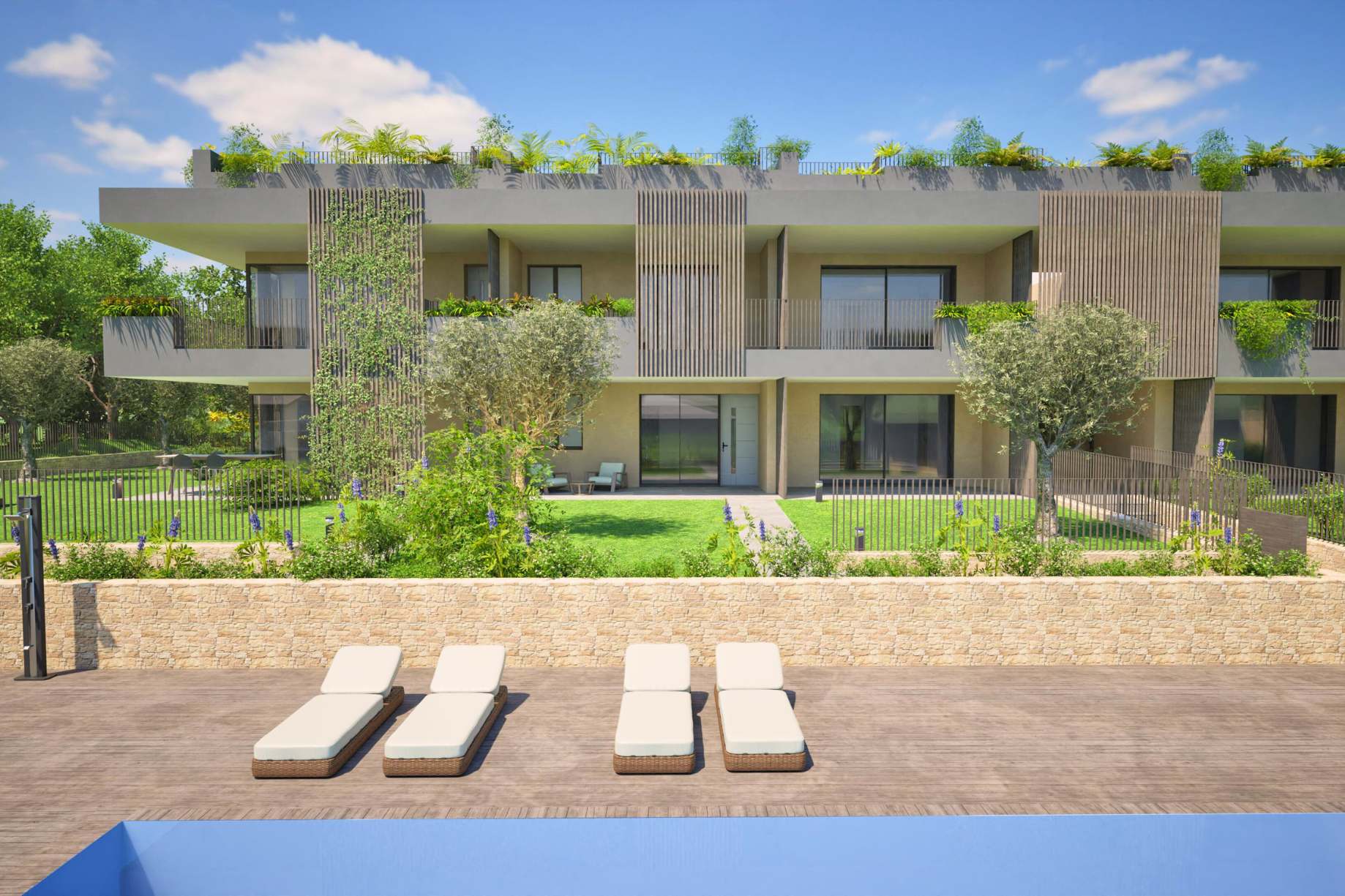
Bardolino, Lake Garda, Italy — 1-Bed Penthouse With Panoramic Lake View & Roof Terrace
€179,000
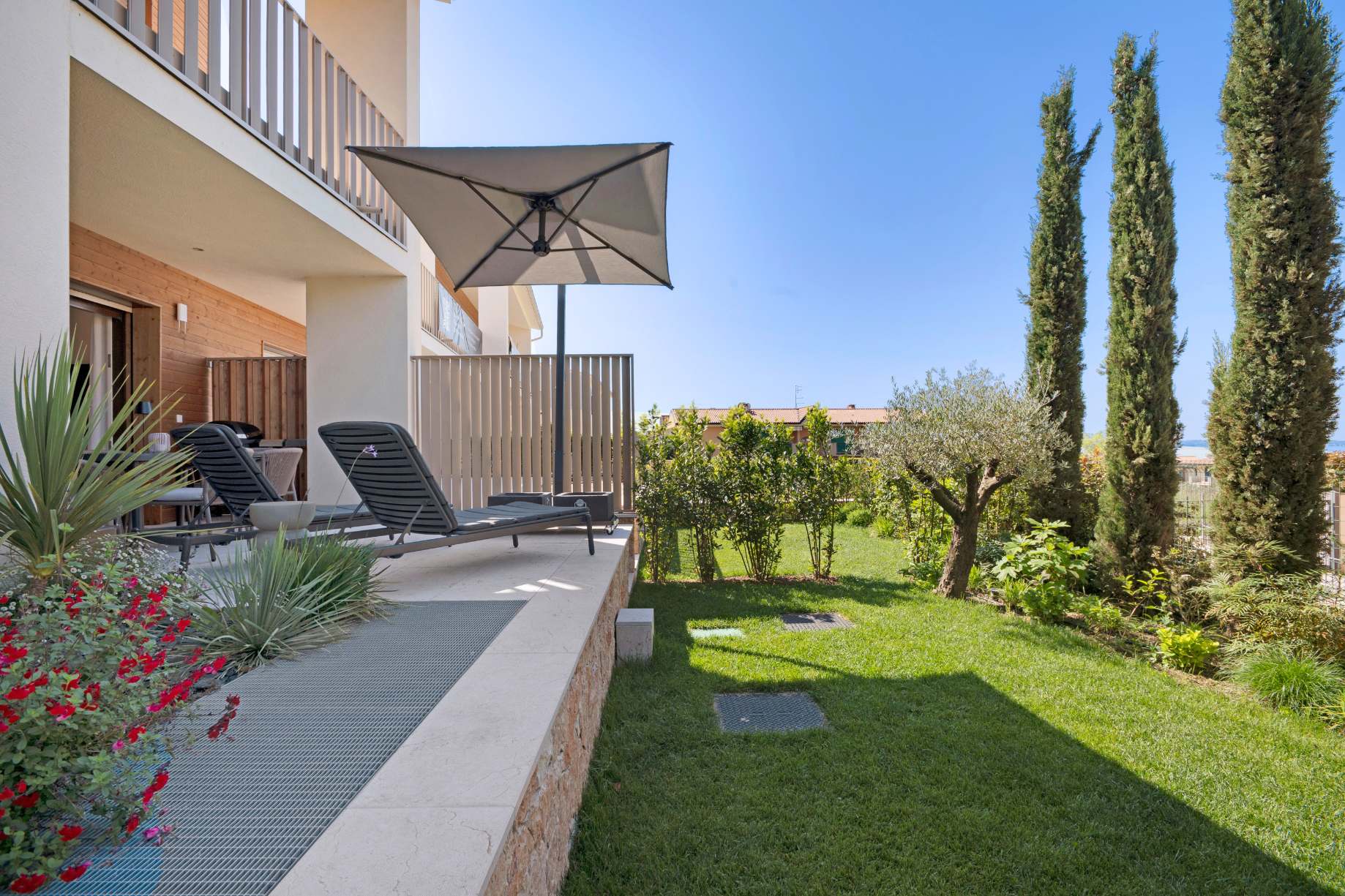
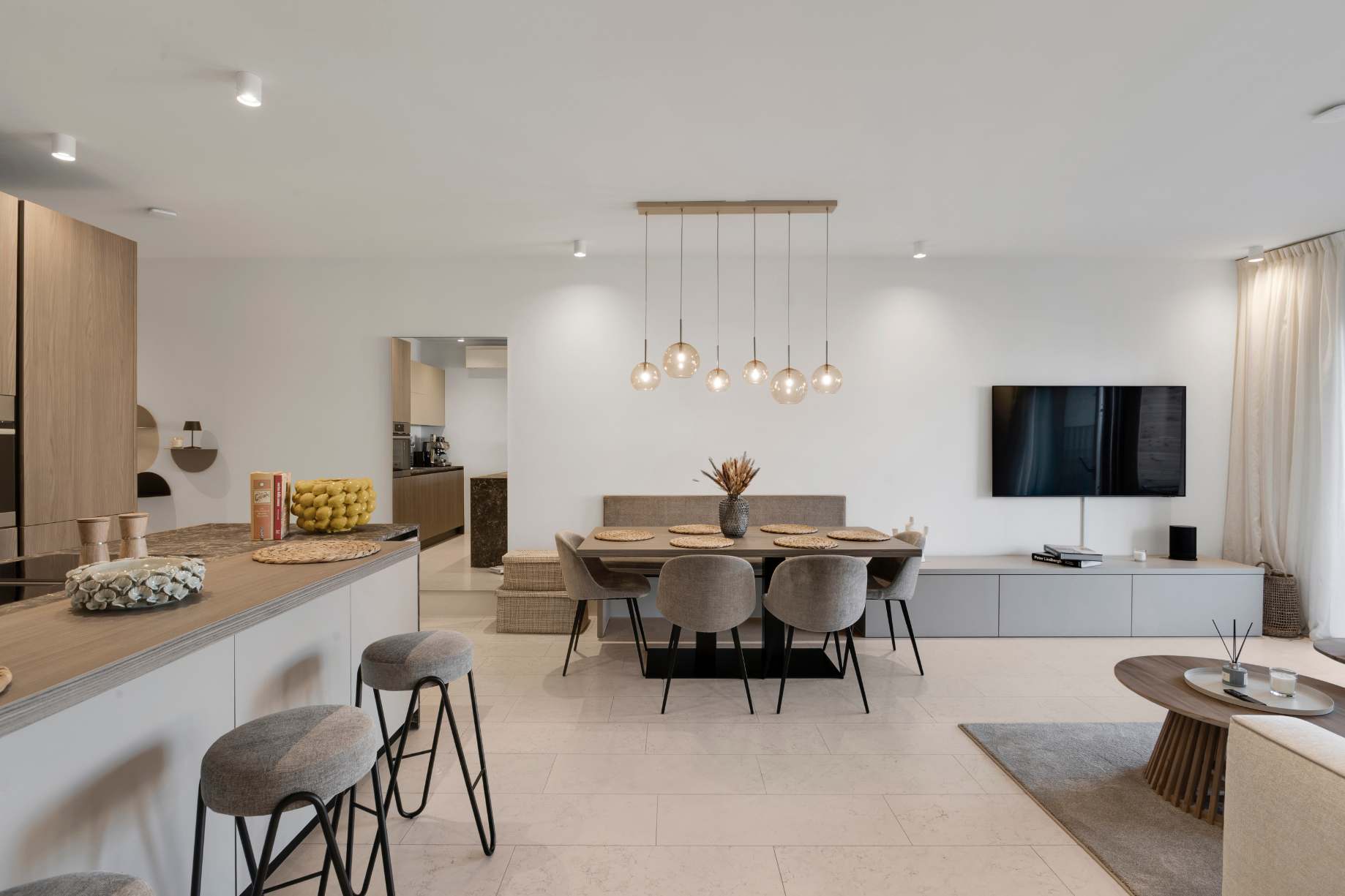
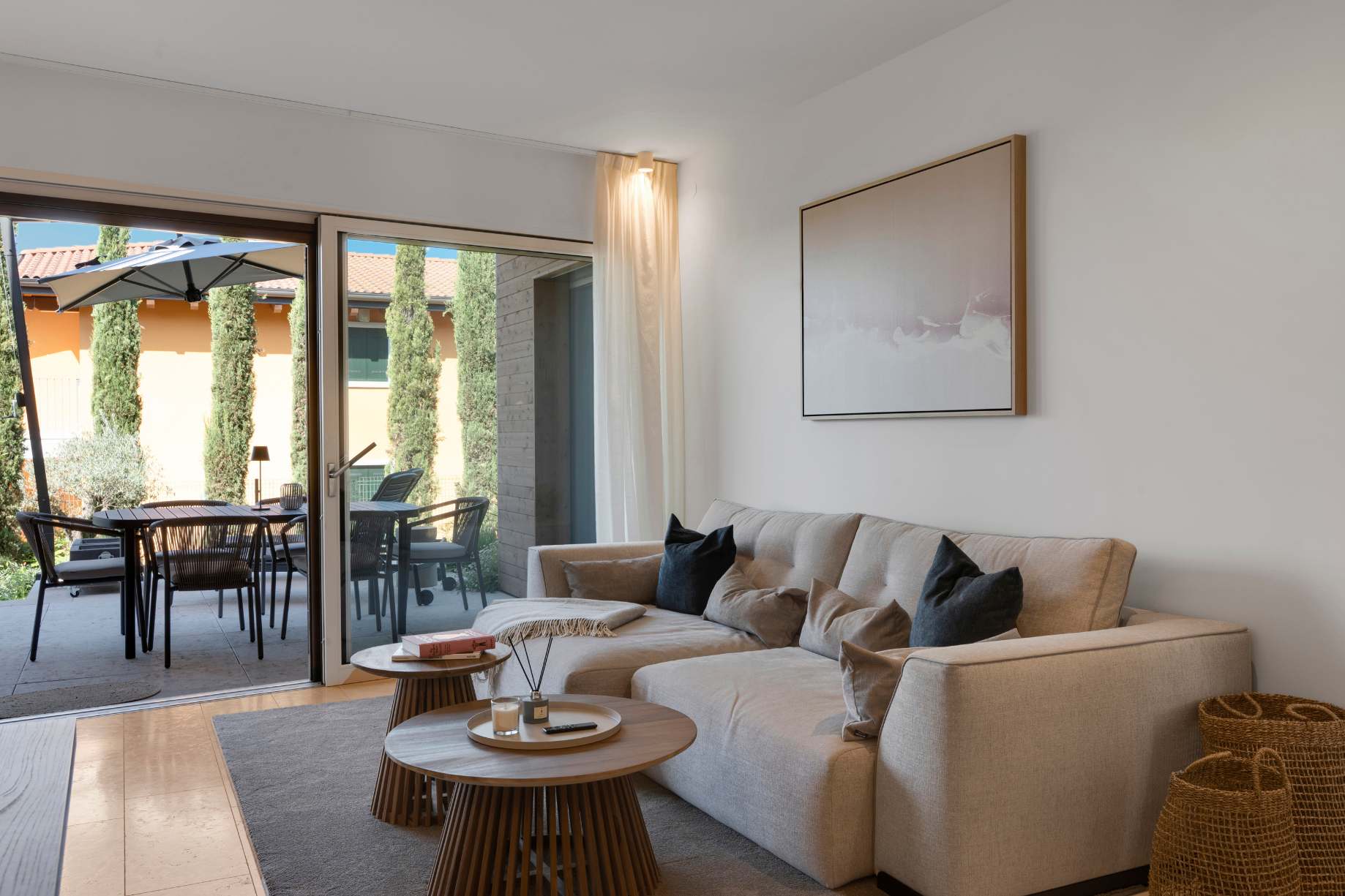
Lazise, Lake Garda, Italy — 2-Bed Apartment With Pool
€159,000
Italy's largest lake, a true Mediterranean microclimate, accessible through co-ownership.
Fully managed villas, apartments and penthouses across the eastern Riviera degli Ulivi (Torri del Benaco, Garda, Bardolino, Malcesine), the southern morainic shore (Lazise, Cavaion Veronese, Peschiera, Sirmione, Desenzano), the western Riviera dei Limoni (Salò, Gardone, Gargnano, Limone) and the northern Trentino reach (Riva del Garda, Torbole). Your 1/8 share of the home comes with around six weeks of personal use, a professional management team on call, and the long-term equity of the most internationally visited lake in Italy.
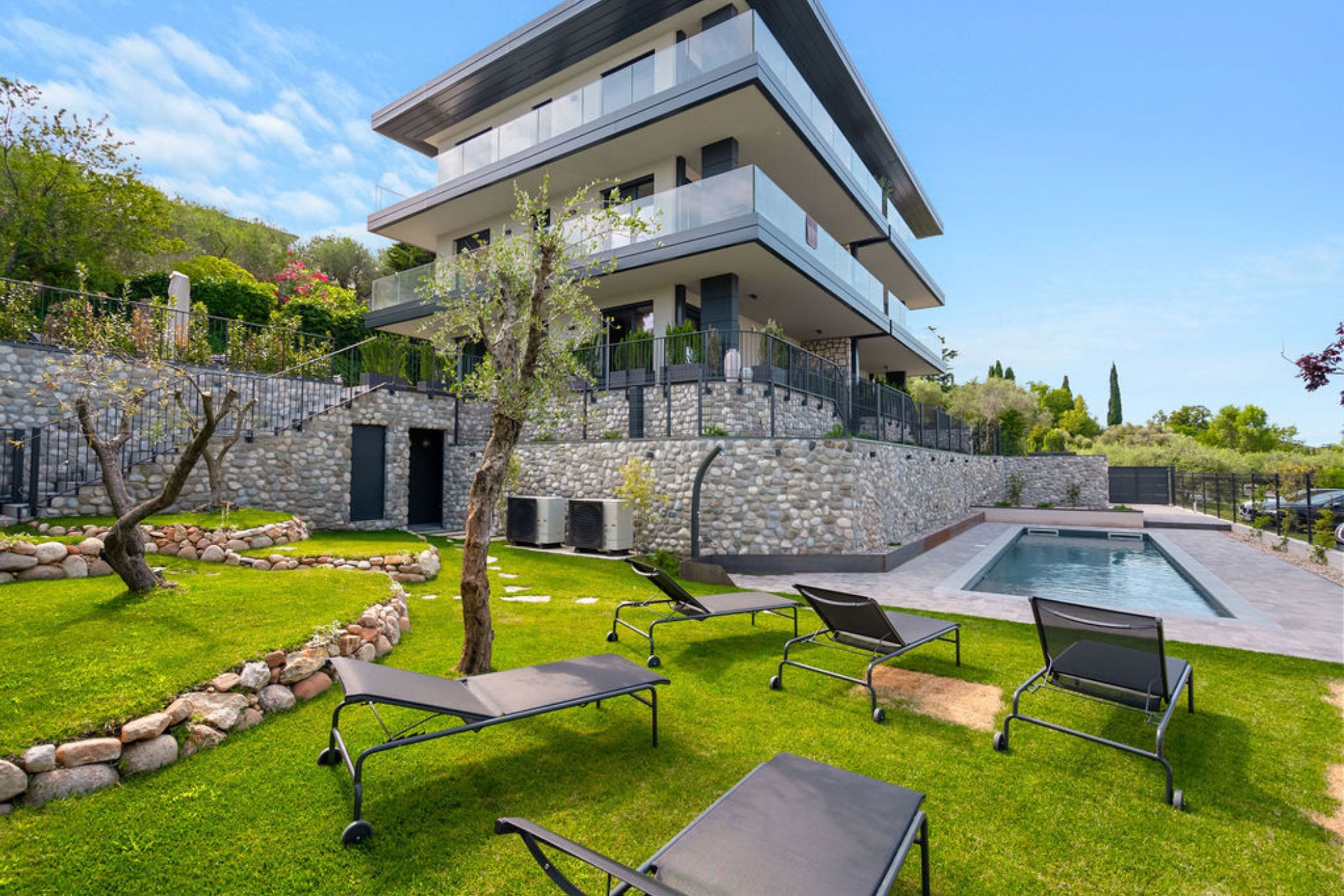
What is fractional ownership on Lake Garda?
Fractional ownership on Lake Garda means buying a real 1/8 share of a luxury lakeside second home, shared with up to seven other co-owners. Each owner receives around six weeks of personal use a year, depending on the home, through a fair-rotation calendar, with all property management, maintenance, taxes and operations handled by a professional team. It is real ownership of a share of the home — not a timeshare, not a holiday club.
Why Lake Garda?
Lake Garda is, by most measures that matter to an internationally minded second-home buyer, the largest, most varied and most-visited lake in Italy — and the single most accessible of the great Italian Lakes for the Northern European drive-and-fly buyer. The lake stretches 52 kilometres north–south, covers 370 square kilometres (making it Italy's largest lake by surface area), reaches a maximum depth of 346 metres, and spans three regions and three provinces — Veneto (Verona) on the eastern shore, Lombardy (Brescia) on the western shore, and Trentino-Alto Adige at the northern tip. The result is a body of water that contains, within a single lake, a genuine range of climates and landscapes: a flat, warm, Mediterranean morainic-hill south where olives, vines, palms and lemons grow in the open; a steep, dramatic, fjord-like north pinned between cliffs that rise to over 2,000 metres; and two long shores — the Veronese Riviera degli Ulivi (olive riviera) on the east and the Brescian Riviera dei Limoni (lemon riviera) on the west — each with its own architectural inheritance, buyer mix and seasonal rhythm. Few European lakes pack that range of usable lakeside lifestyles into a single shoreline.
Your Lake Garda share is owned alongside up to seven other co-owners — a real share of the home, not a right to use it.
Lake Garda's defining structural advantage is its genuinely Mediterranean microclimate, which sits surprisingly far north on the map. The lake's enormous thermal mass — 370 square kilometres of deep water — moderates the surrounding air to a degree no other Italian lake matches, holding the southern basin warm enough for olives, citrus, oleander, cypress and palm to grow in the open ground despite the pre-Alpine latitude. The lemon houses (limonaie) of the western Brescian shore around Limone sul Garda and Gargnano — the terraced stone-pillar structures built from the seventeenth century to overwinter citrus at the northern edge of its viable range — are the most visible monument to this microclimate, and the reason Garda has been a winter-mild resort destination since the German and Austrian aristocracy began wintering on the lake in the nineteenth century. The southern shore around Sirmione, Bardolino and Lazise runs warm and sheltered through a long season; the northern reach at Riva del Garda and Torbole, by contrast, channels the lake's two famous thermal winds — the northerly Pelèr at dawn and the southerly Ora in the afternoon — into the most reliable inland sailing and windsurfing conditions in Europe.
It is worth setting Lake Garda in its competitive context — both inside the Italian Lakes catalogue and against the wider European lake-house tier. Lake Como, two hours west, carries higher single-address prestige and the deepest Belle Époque villa inheritance, but at materially higher entry prices and with a narrower range of landscapes inside a smaller lake. Lago Maggiore, further west again, has the Borromean-island and Stresa hotel inheritance but a quieter international profile and a shorter season. The Swiss Lakes (Geneva, Lucerne, the upper Maggiore around Ascona) offer comparable scenery at much higher entry prices and under restrictive Lex Weber second-home permit caps. Garda's particular advantage is the combination of scale, variety, the Mediterranean microclimate, the lowest entry prices of the three great Italian Lakes, and unmatched accessibility — Verona's airport sits 20 to 40 minutes from the southern and eastern shores, and the lake is the single most-visited in Italy, with a tourism and services infrastructure built to match. Together, these comparisons frame why the lake remains the highest-volume international second-home market of the Italian Lakes. The regional tourism authority for the Veronese shore is Visit Lake Garda.
One under-discussed advantage of Garda specifically is the depth and continuity of its international resident community, which is older and broader than first-time buyers expect. Two centuries of German, Austrian, Swiss, Dutch, Belgian, Scandinavian and British buyers — the lake has been the closest "south" for the German-speaking world since the Grand Tour era, an hour and a half from the Brenner Pass — have built up an ecosystem of multilingual lawyers, property managers, notai, commercialisti (tax advisers), boat-charter agencies and concierge services across the major Garda towns that smaller Italian lake alternatives cannot match. The local management companies operate in German, English, Italian and the Scandinavian languages as a matter of routine, with decades of operating history catering specifically to non-resident owners. The Italian notarial system gives ownership documentary clarity through the Conservatoria dei Registri Immobiliari (the Italian land registry, administered by the Agenzia delle Entrate), and the cadastral records — held by the Catasto — are a long-running, reliable record-of-record system. None of this is glamorous, but it is the kind of infrastructure that determines whether owning a lake house from another country is a pleasure or a chore.
For a co-ownership buyer thinking strategically rather than just emotionally, Garda's combination of scale, Mediterranean climate, value relative to Como, and accessibility matters more than headline prestige. The olive-grove villa you buy a share of above Torri del Benaco sits on the protected Veronese Riviera degli Ulivi, where the lakefront building footprint is constrained by regional planning and the existing villa stock is finite. The Bardolino-vineyard apartment at Lazise sits within the morainic-hill wine country that produces the Bardolino and Custoza DOC wines and runs into planning ceilings of its own. The Sirmione peninsula — the lake's most famous southern address, with the Roman Grotte di Catullo and the Scaliger castle — is essentially fully built out. These are not assets that depend on a single interest-rate cycle to hold value; they depend on the unchanging facts that Garda remains the warmest, largest and most-visited lake in Italy, and that the European appetite for established lakefront second homes is steady across generations. Add the professional management and resale infrastructure that makes shared ownership transparent and resaleable, and the case for co-ownership on Lake Garda writes itself.
The fourth structural advantage worth naming is the transport infrastructure that makes a Garda second home practically usable rather than just nominally owned — and on this measure Garda outperforms every other Italian lake. Verona Villafranca (VRN) is the principal gateway, just 20 to 40 minutes from the southern and eastern shores, with direct service from London, Manchester, Dublin, Amsterdam, Brussels, Frankfurt, Munich, Berlin, Hamburg, Vienna, Zurich, Copenhagen and the Scandinavian capitals. Bergamo (BGY), an hour west, adds the dense low-cost European point-to-point network; Venice (VCE) and Brescia airports round out the options, and Milan's Malpensa and Linate are within reach for the western shore. From Verona Porta Nuova, direct Trenitalia and high-speed Frecciarossa services connect the lake to Milan in under an hour and to Venice, Bologna, Florence and Rome on the main north–south corridor; the lake-edge stations at Peschiera del Garda and Desenzano sit directly on the Milan–Venice high-speed line. An owner can leave London on a Friday morning and be on the terrace at Torri del Benaco by mid-afternoon.
Where to own on Lake Garda
Lake Garda's second-home market is best understood through four distinct geographies, each with its own architecture, climate band, season and buyer profile. COP's current inventory concentrates on the eastern Veronese shore and the southern morainic hills — the Riviera degli Ulivi and the Bardolino wine country — but the lake-level orientation below covers all four corners, because the choice between them is one of the more meaningful sub-decisions a Garda buyer will make.
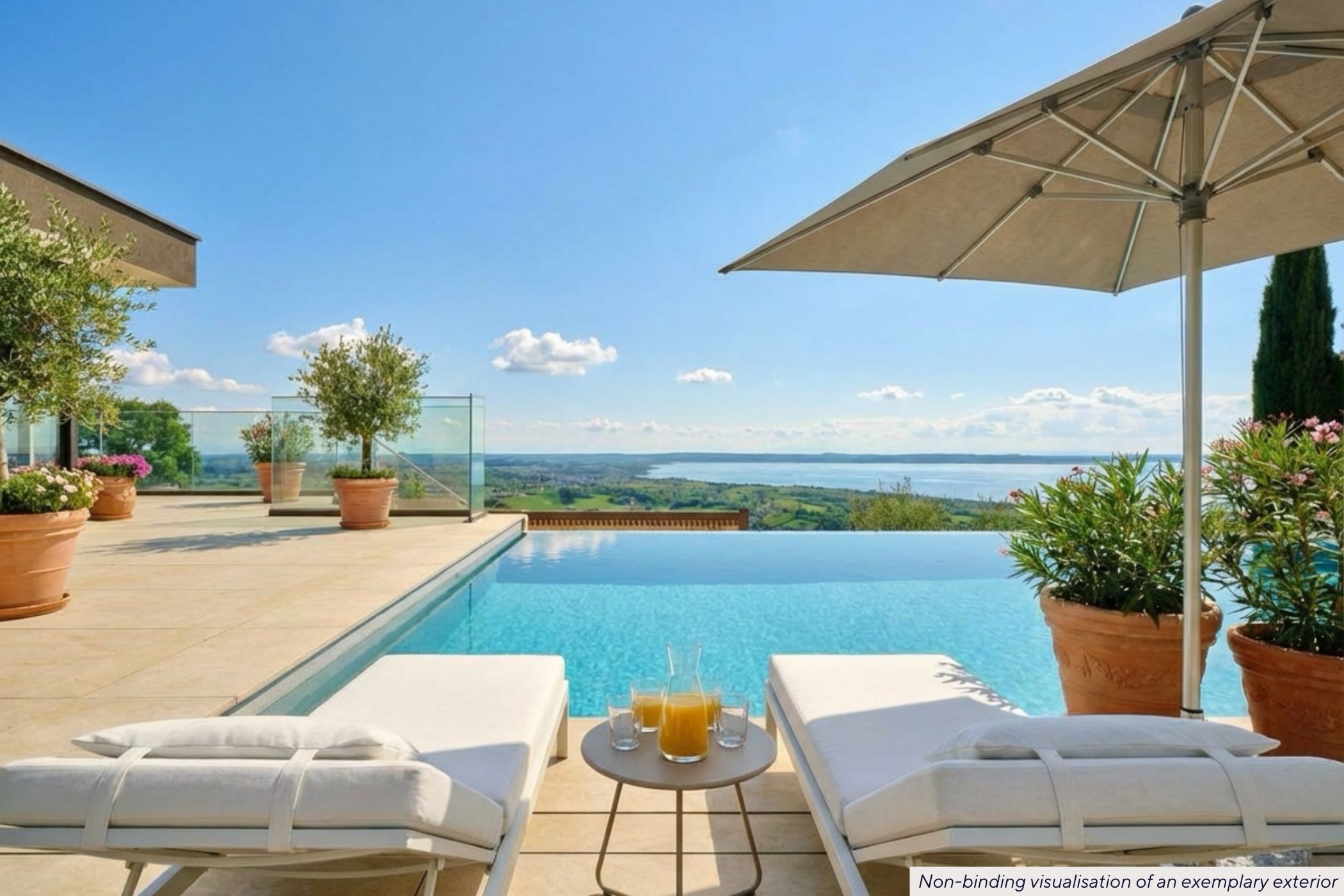
The eastern shore — the Riviera degli Ulivi (Torri del Benaco, Garda, Bardolino, Malcesine)
The eastern Veronese shore — the Riviera degli Ulivi, the olive riviera — is the heart of COP's Garda inventory and, for many international buyers, the lake's most balanced sub-zone. Running north from Lazise and Bardolino through Garda town and Torri del Benaco to Malcesine beneath Monte Baldo, it combines a warm, sunny, olive-and-vine landscape with a string of historic harbour villages and direct, fast access from Verona airport. Torri del Benaco — anchored by its fourteenth-century Scaliger castle on the harbour — is the classic Riviera degli Ulivi address: a working lakefront village with a ferry link directly across to Toscolano-Maderno on the western shore, olive terraces rising behind the town, and the kind of stone-and-stucco villa stock that does not get rebuilt because the originals already are the standard. Bardolino and Garda town to the south sit at the centre of the Bardolino DOC wine country; Malcesine to the north, beneath the cable car to the 1,760-metre summit of Monte Baldo, gives the eastern shore its most dramatic mountain backdrop. The architectural vernacular along this shore is specific — terracotta-roofed villas, olive-terrace gardens, lakefront stone harbour houses — and the buyer base skews German, Austrian, Dutch and British.
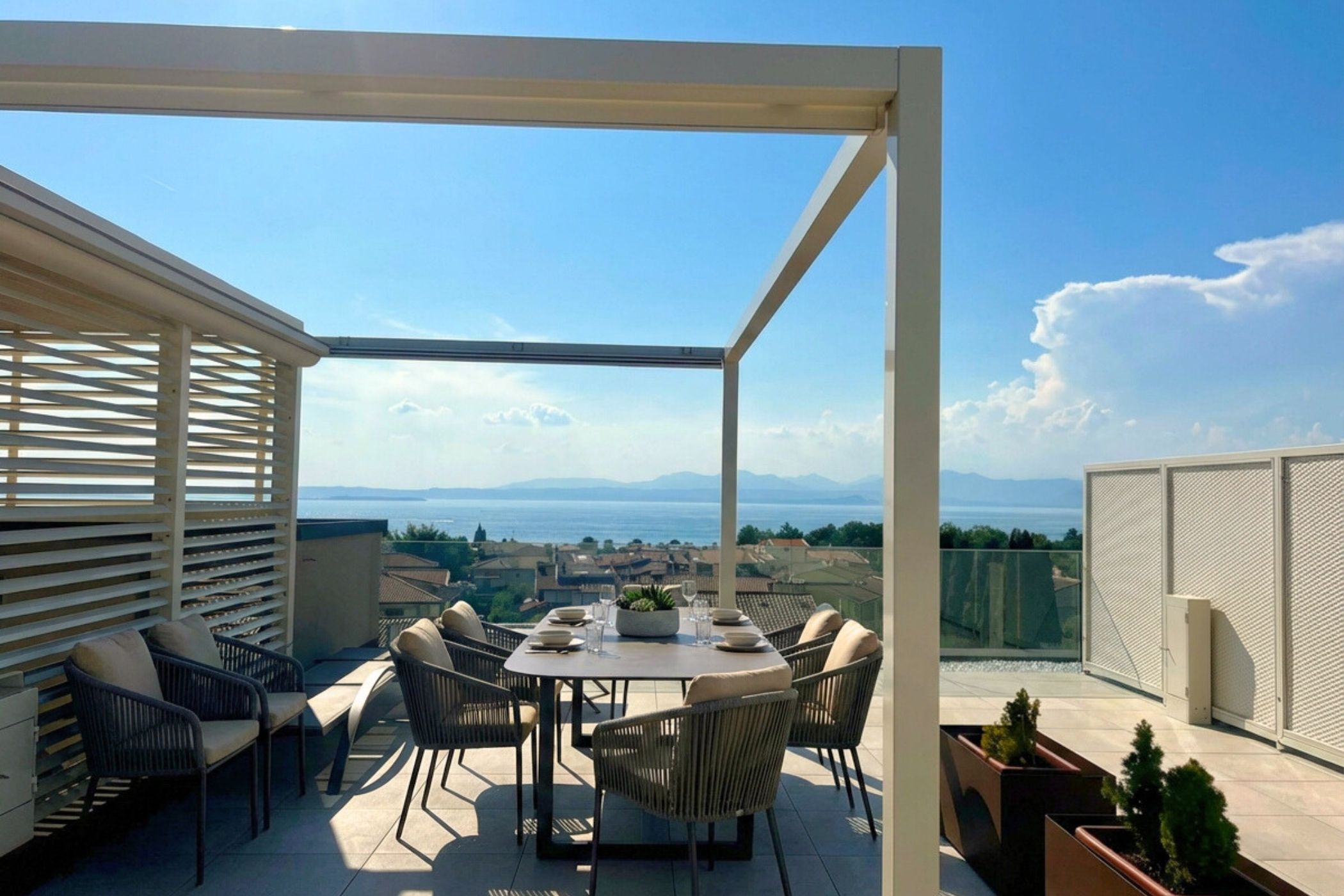
The southern shore — the morainic hills (Lazise, Cavaion Veronese, Peschiera, Sirmione, Desenzano)
The southern shore is the lake's warmest, flattest and most accessible sub-zone — a landscape of low morainic hills left by the retreating glacier, planted with the vineyards of the Bardolino and Custoza DOC zones, and dotted with the lake's most famous resort towns. Lazise — a walled medieval harbour town with a Scaliger castle and a working marina — is a centre of COP inventory, paired with the wine-country villages just inland at Cavaion Veronese and Bardolino. Further west around the southern tip, Sirmione occupies the lake's most celebrated peninsula — the Roman Grotte di Catullo, the thermal spa, the Scaliger water-castle — while Peschiera del Garda (a UNESCO-listed Venetian fortress town) and Desenzano sit directly on the Milan–Venice high-speed rail line, making them the most rail-accessible addresses on the lake. The southern shore is the natural choice for buyers who prioritise the longest warm season, the easiest airport and rail access, and the morainic wine-country setting; the buyer mix is the most internationally diverse on the lake.
The western shore — the Riviera dei Limoni (Salò, Gardone, Gargnano, Limone)
The Brescian western shore — the Riviera dei Limoni, the lemon riviera — is the lake's Belle Époque and aristocratic-villa shore, steeper and more dramatic than the east, with the historic limonaie lemon-house terraces that gave the riviera its name. Salò and Gardone Riviera — the latter home to the Vittoriale degli Italiani, Gabriele D'Annunzio's extraordinary hillside estate, and to the Hruska botanical garden — form the cultured heart of the western shore, with a Belle Époque hotel and villa inheritance that drew the European aristocracy from the 1880s. Gargnano further north is the quieter, more exclusive sailing village (home to the historic Centomiglia regatta); Limone sul Garda, pinned beneath the cliffs near the Trentino border, is the most photographed of the lemon-terrace villages. The western shore suits buyers drawn to the architectural pedigree, the lemon-and-olive terraced gardens, and the steeper, more cinematic geography.
The northern shore — the Trentino reach (Riva del Garda, Torbole, Nago)
The northern tip — in Trentino, where the lake narrows into a dramatic fjord-like channel between cliffs — is Garda's alpine, sport-oriented sub-zone, and the most distinct in feel from the soft Mediterranean south. Riva del Garda, a handsome former Austro-Hungarian lakehead town with a medieval core and an Habsburg-era promenade, and neighbouring Torbole and Nago, sit at the centre of one of Europe's premier wind-sport destinations — the reliable Pelèr and Ora thermal winds make this the inland windsurfing, kitesurfing and sailing capital of the continent, while the surrounding Sarca valley offers world-class rock climbing, road cycling and via ferrata. The northern shore is the choice for active, sport-oriented owners whose use pattern centres on the long alpine-summer season and who value the cooler air and the mountain context over the warm southern beaches.
A year on Lake Garda
Spreading around six weeks of use across a calendar year is itself a skill — and Garda's range of climates means there is almost always a reason to be on the lake. Below is a season-by-season walk through the year, with the particular weeks owners across the COP network return to most often. Owners who are flexible enough to use shoulder weeks — rather than competing for Ferragosto in mid-August — consistently report a higher use-quality from their share than those who insist on peak.
Spring (March–May) is, for many seasoned Garda owners, the lake's secret season. The Mediterranean south warms early — daytime temperatures on the southern and eastern shores reach the high teens and low twenties Celsius by April, the olive and citrus terraces come into leaf, and the wisteria and oleander flower along the lakefront promenades. The hotels and lake-edge restaurants reopen from the quiet winter pause through March; the cycling and hiking calendars on Monte Baldo and the western-shore trails open from April; and the lake is at its most usable for short trips before the high-summer crowds arrive. Easter is the first significant peak of the year, particularly with German and Austrian families.
Summer (June–August) is the high season, and Garda — the most-visited lake in Italy — runs at full capacity through July and August, with the Ferragosto fortnight around 15 August the single busiest period of the year. June is the connoisseur's month: warm enough for swimming, the village calendars at their pre-peak best, the crowds still a fortnight away. The southern and eastern shores run hot and busy through high summer; the northern reach at Riva and Torbole stays a few degrees cooler and is at its windsurfing-season peak. Owners who plan ahead book the prime summer weeks many months in advance; those who prefer space lean toward June and early September.
Autumn (September–November) is, for many owners, the favourite. September on the southern and eastern shores is the locals' month — water still warm from the summer, daytime air in the mid-twenties, the August crowds dispersed within ten days of the new school term, restaurants taking reservations again the same week you ask. The Bardolino and Custoza grape harvest runs through September and October, with the wine-country villages at their working best; the olive harvest on the Riviera degli Ulivi follows in late autumn. October stays mild and golden; by November the lake quietens into its winter rhythm, though the southern shore remains usable and the Christmas markets at Riva del Garda and the lake towns open from late November.
Winter (December–February) is the quietest season, but Garda's Mediterranean microclimate keeps the southern shore milder than the surrounding Po plain, and the lake never fully closes the way the high-alpine resorts do. The Christmas markets at Riva del Garda, the lit lake-town promenades, and the thermal spa at Sirmione give the cold months their own appeal; the western-shore lemon houses and the olive terraces hold their green through the winter. For owners who pair a Garda share with an Alpine winter chalet, the Dolomites ski resorts of Trentino sit within 90 minutes of the northern shore — making a two-share portfolio that spans lake-summer and mountain-winter genuinely practical from a single base region.
Who buys on Lake Garda, and why
The international buyer mix on Lake Garda is the most German-Austrian-Swiss-weighted of the great Italian Lakes, a reflection of the lake's two-century history as the closest "south" for the German-speaking world, an hour and a half from the Brenner Pass. German and Austrian buyers anchor the market across all four shores; Dutch, Belgian and Scandinavian buyers are a deep and growing presence, particularly on the eastern Riviera degli Ulivi and the southern morainic shore; British buyers are well established across the lake; and a steadily rising American and Swiss cohort rounds out the mix. The age-and-life-stage profile skews toward the 45–70 band — established professional and post-professional couples and families whose children are at or beyond university age, who value the operational simplicity of a fully managed property, and whose actual second-home usage sits comfortably within the six or so weeks a 1/8 share delivers.
Within those nationalities, Garda co-ownership tends to suit a small number of well-defined buyer profiles:
Active families and couples — drawn to the lake's range of summer activity (sailing, windsurfing, cycling on Monte Baldo and the western trails, the via ferrata and climbing of the northern Sarca valley) and the easy combination of beach-and-mountain in a single trip. The eastern and northern shores suit this profile best.
Wine-and-food sophisticates — owners drawn to the Bardolino, Custoza, Lugana and Valpolicella wine country that wraps the southern and eastern shores, for whom the working agricultural landscape and the proximity to Verona's restaurant scene is as important as the lake itself.
Cultural and Belle Époque enthusiasts — buyers drawn to the western Riviera dei Limoni, the Vittoriale, the Sirmione Roman and Scaliger heritage, and the proximity to Verona (the Arena opera festival, the Romeo-and-Juliet old town) and Venice, both within easy reach.
German-speaking second-home buyers — the lake's traditional core: Munich, Stuttgart, Vienna and Zurich families for whom Garda is the natural, drivable Mediterranean lake, reachable in a few hours over the Brenner, with a deep German-language services infrastructure already in place.
What unites these otherwise different buyer profiles is the underlying calculation: the second-home weeks each of them actually uses in a year sit within the six or so weeks a 1/8 share delivers; the operational overhead of running a Garda villa remotely is non-trivial; and the resale liquidity of a fractional share inside a managed portfolio is — in our experience across the COP network — markedly higher than the resale liquidity of a whole property at the same address. Garda is a market where the maths of fractional ownership lines up almost perfectly with the use pattern of the buyer.
Practicalities: getting there and what you own
Verona, Bergamo, Venice — and the lake transfers
Verona Villafranca (VRN) is the principal gateway for Lake Garda and one of the closest airport-to-lake transfers of any major European second-home destination. VRN sits on the southern edge of the lake's catchment, with year-round direct service from London, Manchester, Dublin, Amsterdam, Brussels, Frankfurt, Munich, Berlin, Hamburg, Vienna, Zurich, Copenhagen, Stockholm, Oslo and dozens of further European cities. Drive times from Verona to the major Garda sub-zones are short: Lazise and Bardolino in 20–25 minutes, Peschiera and Sirmione in 25 minutes, Garda town and Torri del Benaco in 35–40 minutes, Malcesine on the upper eastern shore in 60 minutes, Salò and Gardone on the western shore in 50 minutes, and Riva del Garda at the northern tip in 80 minutes. Bergamo (BGY), an hour west, is the low-cost European hub and the most convenient gateway for the western shore; Venice (VCE) and Brescia round out the options. Most owners pre-arrange a private transfer rather than renting at the airport, particularly through the high-summer months when the lake-edge roads run close to capacity.
Garda is also exceptionally well served by rail. The lake-edge stations at Peschiera del Garda and Desenzano sit directly on the high-speed Milan–Venice line, with direct Trenitalia Frecciarossa and Frecciabianca services reaching Milan in under an hour and Venice in roughly an hour; Verona Porta Nuova, a 20-minute drive from the southern shore, is a major hub on the national high-speed network with direct connections to Bologna, Florence, Rome and the Brenner corridor to Innsbruck and Munich. For German and Austrian owners, the drive over the Brenner Pass from Munich or Innsbruck reaches the northern shore at Riva in two to three hours.
Whole-property vs 1/8 share: the comparison
The case for a fractional structure on Lake Garda is most clearly seen in the side-by-side comparison against both whole ownership and long-term rental — the three ways most international buyers actually consider holding a Garda second home. The table below sets the basics out; a fuller comparison against alternative European lake destinations follows.
| Whole second home | COP 1/8 fractional share | Long-term rental | |
|---|---|---|---|
| Upfront commitment | Full property value | ~1/8 of the property value | First/last/deposit only |
| Equity in the asset | Full appreciation | ~1/8 of appreciation | None |
| Personal use | Up to 52 weeks (most use 4–8) | Around six weeks a year, fairly rotated | Defined by lease |
| Operations burden | Owner-managed or hired staff | Fully included | Landlord-managed |
A second comparison most buyers find useful is the broader European lake-house competitive map. Lake Garda is rarely the only address a serious buyer is considering — the choice typically narrows to a small set of European lake destinations, and the structural differences between them are worth understanding before committing.
| Lake Garda | Lake Como | Lago Maggiore | Lake Geneva (Swiss-side) | |
|---|---|---|---|---|
| International prestige | High; broadest buyer base | Highest in category | High; quieter profile | Highest in Swiss-French segment |
| Climate | Mediterranean south; alpine north — widest range | Pre-Alpine; cooler northern reach | Pre-Alpine, mild | Continental; mild summers |
| Entry prices | Lowest of the great Italian Lakes | Highest of the Italian Lakes | Mid | Highest in segment |
| Owner mix | Heavily German-Austrian-Swiss-Dutch | Globally distributed | German-Swiss + British | Swiss + French + finance |
| Airport gateway | Verona (20–40 mins) — closest of any | Malpensa (40–90 mins) | Malpensa (40–60 mins) | Geneva (20–45 mins) |
| Co-ownership friendliness | High — well-established co-ownership infrastructure | High | High | Constrained by Lex Weber rules |
The comparison most buyers find most telling is what you actually get for your capital. Owning a whole home outright ties up the full purchase price in a property most owners use for a few weeks a year, and leaves you to organise everything yourself. A 1/8 share gives you the same calibre of home, around six weeks a year, real equity and a professional team that takes care of everything in between.
What you actually own — the legal share
The legal nature of a Lake Garda co-ownership share is one of the questions buyers should understand fully before purchase. You own a real share of the home — an eighth, a quarter — not a right to use it. You can sell it, pass it on to your heirs, and it grows in value with the house.
The practical effect is that you hold a real share of the home — not a timeshare, not a points membership, not a usage right. You can sell it through our partner's resale process or to a qualifying outside buyer; you can leave it to your children under your home jurisdiction's inheritance rules; and it grows in value with the house.
How fractional ownership works on Lake Garda
The mechanics of fractional ownership on Lake Garda are framed by three things that work together: the legal set-up arranged by our partner for each home, the Italian property-tax regime that applies to all secondary residences (including the IMU municipal property tax and the TARI household waste tax), and the well-developed Conservatoria dei Registri Immobiliari system that handles registration of the underlying property at the Italian land registry. That set-up is specific to each home; the Italian taxes are the standard local taxes any non-resident second-home owner pays; and the Conservatoria — together with the local Catasto cadastral records — is the long-running record-of-record system that gives the underlying real estate its documentary clarity. Together, these three pieces make for a clear, predictable ownership experience.
What you own: a real share of the Garda home
You own a real share of the home — an eighth, a quarter — not a right to use it. You can sell it, pass it on to your heirs, and it grows in value with the house. Big decisions, such as selling the home or major works, are decided together by the co-owners.
Tax basics: IMU, TARI, capital gains
Italy operates a relatively straightforward property-tax framework for non-resident owners on Lake Garda, and almost all of the routine compliance is handled on the co-owners' behalf rather than by the individual owner. IMU (the Imposta Municipale Unica, the municipal property tax) is the annual property tax paid by the owner of the property, calculated on the cadastral rental value (the rendita catastale) recorded at the Catasto, with rates set by each comune within the national framework (typical IMU rates on second residences run from roughly 0.76% to 1.06% of the cadastral value depending on the municipality). The lake-town communes — Lazise, Bardolino, Garda, Torri del Benaco, Sirmione, Peschiera, Salò, Gardone, Riva del Garda — each set their own rate. IMU is handled by our partner, so individual owners never deal with the local Comune directly. TARI (the household waste tax) is the second municipal tax, also handled by our partner.
Italian capital-gains tax on resale is an area international buyers should understand. Direct property sales by non-residents (administered through Italy's Agenzia delle Entrate) are typically exempt from Italian capital-gains tax after five years of ownership, with the broader tax position depending on the buyer's home jurisdiction. Our partner sets out the tax position for your country before you buy. We recommend any international buyer review the specific position with their own tax counsel before purchase.
Inheritance and Italian succession law (legittima)
Directly held Italian real estate on Lake Garda is subject to Italian succession and gift tax, with rates structured around the relationship between the deceased and the heir — direct-line heirs (children, surviving spouse) benefit from substantial allowances (one million euros per direct heir at the time of writing) and a comparatively low 4% rate above the threshold. Italy's legittima regime reserves a fixed minimum share of the estate for direct-line heirs and has historically been one of the more complex aspects of holding Italian property for international buyers whose home-jurisdiction arrangements differ from the Italian model. The 2015 EU Succession Regulation (Brussels IV) allows EU residents to elect their home-country succession law; non-EU residents (US, UK, Canadian, Australian buyers) can also elect under the same regulation, with some limitations. Your share passes to your heirs as part of your estate, and our partner sets out exactly how this works for your country before you buy.
The professional management calendar and how scheduling works
Once the purchase completes, a professional management company takes over all operational responsibility for the Lake Garda property. Your personal weeks — around six weeks for a 1/8 share — are allocated through a fair-rotation calendar that mixes peak weeks (Easter, the Ferragosto fortnight in mid-August, the September wine-harvest weeks, the Christmas markets) with shoulder-season and quieter weeks across the year. Owners pre-book several months ahead; unused weeks are either held for the owner pool or, where the property's structure allows, rented to the broader market with the income flowing back to the co-owners. Service-charge collection, building maintenance, insurance, IMU and TARI payments, the linen-and-cleaning between stays, the pre-arrival garden and pool preparation, the welcome arrival, the on-call concierge — all sit with the management company. The deep German- and English-language operations ecosystem across the major Garda towns means that the routine practical realities of owning a villa remotely on the lake are handled by professionals who have catered to non-resident owners for generations.
Resale: how to exit, typical timelines, the professional process
When you decide to exit your Lake Garda share, a professional resale process is in place, run by our partner, so you can sell your share without having to sell the whole house — whereas whole-property resales typically take 12–24 months on Garda's open market at the prime tier. Shares sell: hundreds of shares in homes like these have already been resold—in just over three months on average, and nearly three in four for more than the owner paid. After a typical first-12-months holding period you set the price. The buyer pool is already aware of the property. For owners who want maximum control over price and process, an open-market sale to any qualifying buyer remains an option — but most owners find the established process faster and cheaper.
The full mechanics of fractional ownership across all jurisdictions — usage calendars, exit procedures, rental income treatment, insurance, the transfer on death, the relationship with the management company — are covered in our co-ownership explained guide. For specific Lake Garda property availability, browse the listings in the property grid above, or join our list for new-property alerts as they come to market.
Your ownership at a glance
- Real ownership of the home — a real 1/8 share of the home: transferable, inheritable, and it grows in value with the house. Not a timeshare, not a points membership, not a usage right.
- Professional management included throughout — pre-arrival preparation, linen and cleaning between every stay, year-round garden and pool maintenance, IMU and TARI tax compliance, insurance and the on-call concierge are all handled for you.
- Clear, supported resale through our partner's resale process — the existing audience of co-ownership buyers means your share has an organised market from day one, with our partner's resale process letting you sell your share without selling the whole house, rather than facing the 12–24 months a comparable whole Garda villa might sit on the open market.
Still deciding which shore of Lake Garda?
Many readers arrive on this page already half-decided — they want Lake Garda, but not yet which shore. The choice between the eastern Riviera degli Ulivi, the southern morainic wine country, the western Riviera dei Limoni and the northern Trentino reach is rarely about budget alone; the shores sit in overlapping price bands once you compare like-for-like quality. The decisive question is usage pattern — how will you actually spend your weeks across a calendar year, and how does that map onto the climate, the airport transfer time, the buyer mix and the day-to-day rhythm of each shore? Our team has spent years inside the Garda second-home market and can walk you through the differences before you commit. Below is the framework we use with buyers who reach the same fork — deliberately over-simplified, since most owners end up combining elements from more than one.
Choose the eastern shore — Torri del Benaco, Garda, Bardolino or Malcesine — if you want the lake's most balanced sub-zone: a warm, sunny olive-and-vine landscape, historic harbour villages, the Monte Baldo backdrop, and fast 35-to-40-minute access from Verona airport. The Riviera degli Ulivi is the heart of COP's Garda inventory and the natural choice for owners who value the combination of Mediterranean warmth, working-village life and quick airport access.
Choose the southern shore — Lazise, Cavaion Veronese, Bardolino, Sirmione or Peschiera — if your priorities are the longest warm season, the easiest airport and high-speed rail access, and the morainic wine-country setting. The southern shore suits owners who want maximum accessibility and the Bardolino-Custoza-Lugana vineyard landscape, with the lake's most internationally diverse buyer mix.
Choose the western shore — Salò, Gardone Riviera, Gargnano or Limone — if you are drawn to the Belle Époque and aristocratic-villa inheritance, the lemon-terrace gardens, the Vittoriale and the steeper, more cinematic geography. The Riviera dei Limoni is the lake's cultured, architecturally pedigreed shore.
Choose the northern shore — Riva del Garda, Torbole or Nago — if winter and summer sport are central to your family's identity: world-class windsurfing, kitesurfing, sailing, climbing and cycling, with the Dolomites ski resorts within 90 minutes. The Trentino reach is Garda's alpine, sport-oriented corner.
The portfolio approach is worth mentioning. A meaningful proportion of Garda owners hold more than one share — either elsewhere on the Italian Lakes (a Lake Como villa for the prestige weeks, a Lago Maggiore apartment for the Belle Époque inheritance) or further afield (a Dolomites or French Alps winter chalet, a Mallorcan summer finca, a Paris apartment for repeat short cultural stays). For owners building a multi-region portfolio with COP, you have one team across every destination — the same advisors, the same calendar mechanics, the same resale process. Two 1/8 shares — a Lake Garda summer apartment plus an Alpine winter chalet, say — give an owner roughly 90 days of use across a calendar year, drawn from genuinely different lifestyle modes, at a combined annual carry that is still a fraction of what a single whole property at either address would cost.
Whichever way the decision goes, the deeper exploration starts on the cluster and parent pages:
If you would like to talk through which shore of Lake Garda best fits your family's actual use pattern — rather than the brochure version of it — join our list and we will be in touch with relevant new-property alerts and an introduction to the team.
Questions & Answers
Lake Garda Fractional Ownership — Frequently Asked Questions
Fractional co-ownership on Lake Garda gives you a real 1/8 share of a luxury Garda property — an olive-grove villa above Torri del Benaco on the Veronese Riviera degli Ulivi, a marina-side apartment among the Bardolino vineyards at Lazise, or a villa in the southern morainic wine hills. The legal set-up is arranged by our partner for each home and walked through with you before you buy. Your share is genuine property equity — around six weeks a year on Italy’s largest and most-visited lake, at 1/8 the full purchase cost.
A timeshare sells you a week. Co-ownership sells you the house. A timeshare sells a use-right — a fixed week at a resort, shared with thousands of others, and typically worth a fraction of what was paid once you try to sell. A COP fractional share is a real share of the home itself, owned with a small group of co-owners. It moves with the value of the villa, sells on the open market at the price you set, and passes to your children. You own real Garda real estate, not a holiday contract.
COP’s current Garda inventory concentrates on the eastern Veronese shore (the Riviera degli Ulivi around Torri del Benaco and Garda town) and the southern morainic wine country (Lazise, Cavaion Veronese, Bardolino). The wider lake also spans the western Brescian Riviera dei Limoni (Salò, Gardone, Limone) and the northern Trentino reach (Riva del Garda, Torbole). New listings are added regularly — join our list for alerts.
You own a real share of the home — an eighth, a quarter — not a right to use it. You can sell it, pass it on to your heirs, and it moves with the value of the house.
A 1/8 share gives you around six weeks a year, allocated through a fair-rotation calendar that mixes peak weeks (Easter, the Ferragosto fortnight in August, the September wine-harvest weeks) with shoulder and quieter weeks. The rotation ensures every owner gets a fair share of peak dates over a multi-year cycle. A professional manager administers the schedule.
A professional management company handles everything — maintenance, IMU and TARI tax payments, insurance, cleaning and linen between stays, pre-arrival garden and pool preparation, and the on-call concierge. Lake Garda has a deep, two-century-old multilingual services ecosystem (German, English, Italian) built specifically for non-resident owners. You arrive to a ready home; everything else is taken care of.
The Italian property taxes — IMU (municipal property tax) and TARI (waste tax) — are handled by our partner, so you never deal with the local Comune directly. Your own adviser can confirm how tax on resale applies to you.
Simply. After a typical first-12-months holding period you can sell at the price you set, through our partner's professional resale process or on the open market — so you sell your share without the whole house having to be sold. Hundreds of shares in homes like these have already been resold — in just over three months on average, and nearly three in four for more than the owner paid.
Garda offers the widest range of climates of the Italian Lakes (Mediterranean south, alpine north), the lowest entry prices of the three great lakes, and the closest airport transfer — Verona is 20–40 minutes from the southern and eastern shores. Como carries higher single-address prestige; Garda wins on scale, value, accessibility and its genuine Mediterranean microclimate. Many owners ultimately hold shares on both.
Browse the listings in the property grid above, or speak to one of our co-ownership specialists. We’ll walk you through the available Garda homes, how ownership works, the costs and the usage calendar, and guide you through the purchase from start to finish — with full legal and financial transparency. Talking to us is free and carries no obligation.
Also Explore
Get in Touch
Speak to an expert
Tell us what you're looking for and we'll be in touch.