Legal & Finance
Balearic Rental Law 2026: Tourist Licence Rules
Balearic Islands rental law changes in 2026 explained — tourist licence moratoriums, fines up to €400,000, and how co-ownership offers a smarter alternative for buyers.
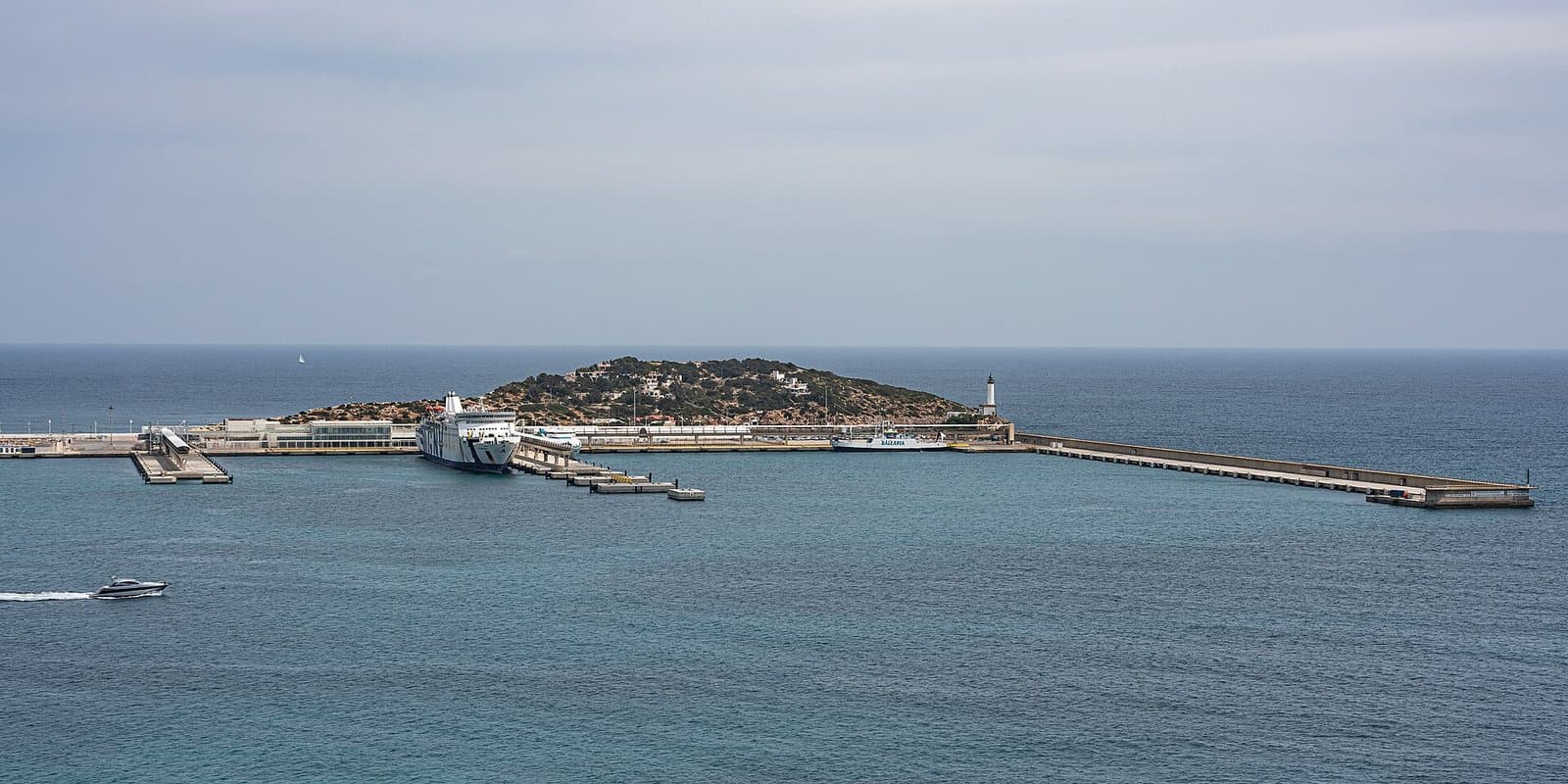
The Balearic Islands have long been one of Europe’s most coveted property destinations — sun-drenched coastlines, UNESCO-listed old towns, and a lifestyle that blends Mediterranean calm with cosmopolitan energy. But behind the Instagram-worthy coves of Ibiza, Mallorca, and Menorca lies a regulatory earthquake that is fundamentally changing what it means to own — and rent — property on these islands. In 2026, Spain’s toughest rental crackdown is in full effect, and the consequences for unprepared buyers are severe.
Since 2022, the Balearic government has imposed a moratorium on new tourist rental licences (ETV permits), effectively freezing the supply of legal holiday lets. In Palma, apartment holiday rentals are banned entirely. Across Spain, the government has fined Airbnb €65 million for listing unlicensed properties, and over 20,000 holiday flats have been removed from platforms across the archipelago. For buyers dreaming of a Balearic holiday home that pays for itself through rentals, the rules have changed dramatically. This guide explains exactly what’s happening — and why co-ownership properties offer a compelling route through the regulatory maze.
Regulatory Overview
The ETV Licence Moratorium: Why New Tourist Rentals Are Frozen
At the heart of the Balearic rental revolution is the ETV (Estancia Turística en Vivienda) licence system. An ETV is the legal permit required to operate a holiday rental in the Balearic Islands — without one, advertising your property on platforms like Airbnb or Booking.com is illegal and carries fines of up to €400,000. Since 2022, the regional government has refused to issue any new ETV licences, creating a de facto ban on new holiday rental operations.
The moratorium was originally expected to lift in 2026, but successive policy signals suggest it will be extended indefinitely in many municipalities. Palma’s city council has capped registered holiday homes at just 639 properties and banned all new short-stay licences outright. In Ibiza Town, the situation is even more restrictive — apartment-based tourist lets are prohibited entirely, regardless of whether a licence existed previously.
For property buyers, the implication is stark: unless you purchase a property that already holds a valid ETV licence, you cannot legally rent it to tourists. These licence-holding properties now command a significant premium — often 20-30% above comparable unlicensed homes — because the supply is permanently capped while demand continues to grow. According to data from the Balearic Tourism Ministry, the total number of legal tourist rental beds fell by 19.8% in 2025 alone.
€65M
Fine imposed on Airbnb by Spain for listing over 65,000 unlicensed properties nationwide
20,000+
Holiday rental listings removed from platforms across the Balearic Islands in 2025
32.6%
Share of Balearic property transactions involving foreign buyers — the highest in Spain
€400K
Maximum fine for operating an unlicensed tourist rental in the Balearic Islands
Enforcement
Spain’s €65 Million Airbnb Fine and the End of Grey-Market Rentals
The days of quietly renting out your Balearic apartment without a licence are definitively over. In December 2025, Spain’s Ministry of Consumer Affairs imposed a €65 million fine on Airbnb for continuing to advertise over 65,000 unlicensed properties across the country. In March 2026, Madrid’s High Court rejected Airbnb’s attempt to suspend the payment, ordering the platform to pay in full while its legal challenge proceeds.
This landmark enforcement action sent shockwaves through the short-term rental industry. Booking platforms are now required to verify licence numbers before accepting property listings, and Spain removed over 53,000 illegal rental listings nationwide in 2025. The Balearic Islands were disproportionately affected — the region saw the sharpest decline in holiday rental stock of any Spanish autonomous community, according to data from the National Statistics Institute (INE).
For individual property owners caught operating without a licence, the consequences are equally severe. Municipal inspectors in Palma, Ibiza, and Menorca have been given expanded powers to issue on-the-spot fines and order immediate cessation of rental activity. The message from the Balearic authorities is unambiguous: if you buy property in these islands expecting to offset costs through tourist rentals, you need a legal licence — and those are no longer available.
Average Property Price Per Square Metre Across the Balearic Islands (2025)
Ibiza — Prime Coastal
Mallorca — Southwest Coast
Mallorca — Palma City
Menorca — South Coast
Mallorca — Interior/East
Balearic Average
Market Impact
How the Rental Crackdown Is Reshaping Balearic Property Prices
The rental restrictions are creating a two-tier property market across the Balearic Islands. Properties with existing ETV licences have become scarce, premium assets, while unlicensed homes — even in prime locations — are seeing more cautious buyer interest. According to Tinsa, Spain’s leading property valuation firm, average property prices across the archipelago reached €5,090 per square metre in late 2025, up 11.6% year-on-year.
Yet within this headline figure lies a growing divide. In Ibiza, prime waterfront properties with rental licences are appreciating at 15-18% annually, driven by scarcity. Meanwhile, apartments in Palma’s historic centre that lost their rental licences under the 2022 moratorium have seen price growth slow to 3-5%. The licence itself has become a tradeable asset — some owners report that the ETV permit adds €50,000 to €150,000 to their property’s value, depending on location and capacity.
For international buyers, there’s an additional complication. The Spanish government has proposed a 100% tax on property purchases by non-EU buyers — a measure that, if enacted, would effectively double the purchase price for American, British, and other non-EU nationals. While legal experts consider the full 100% rate unlikely to pass, even a reduced surcharge would significantly impact the Balearic market, where foreign buyers account for 32.6% of all transactions — the highest proportion in Spain, according to the College of Property Registrars.
“The Balearic rental crackdown solves a housing crisis. Co-ownership solves a lifestyle crisis. Together, they’re creating a new model of Mediterranean property ownership that works for buyers and communities alike.”
Island Breakdown
Ibiza, Mallorca, and Menorca: A Three-Island Comparison of Rental Rules
While the ETV moratorium applies across the Balearic archipelago, each island enforces it differently — and the local micro-markets vary significantly. Ibiza has the strictest rules: apartment holiday lets are completely banned in Ibiza Town and Sant Antoni, and even rural finca rentals face intense scrutiny. The island’s year-round occupancy rate of 78% for licensed properties means that the few legal rentals left are extraordinarily profitable, but the barrier to entry is now virtually insurmountable for new buyers.
Mallorca operates a more nuanced system. Palma has its own blanket ban on new apartment lets, but rural and semi-rural areas in the Tramuntana mountains and the eastern coast still have some flexibility — provided the property meets strict zoning, noise, and capacity requirements. Holiday villas with pools in areas like Pollença, Sóller, and Artà can still hold valid ETVs, though no new licences are being issued. Properties in these areas with existing licences now represent some of the most sought-after co-ownership villas and chalets in Europe.
Menorca, designated a UNESCO Biosphere Reserve, takes an even more conservation-oriented approach. The island caps total tourist accommodation capacity and has some of the lowest ETV densities in the archipelago. This makes Menorca co-ownership properties particularly attractive — the island’s natural beauty and regulatory protection create a stable, appreciating market that benefits from scarcity without the speculative volatility seen in Ibiza.
| Factor | Full Ownership (No Licence) | Full Ownership (With ETV) | Co-Ownership Share |
|---|---|---|---|
| Entry price (luxury villa) | From €800,000 | From €1,000,000+ | From under €200,000 |
| Tourist rental income | Not permitted | Permitted (managed) | Managed where applicable |
| Annual running costs | €15,000-€30,000 | €18,000-€35,000 | €2,000-€5,000 (1/8 share) |
| Licence risk | Cannot obtain new ETV | Must maintain compliance | Not required |
| Non-EU buyer surcharge risk | Full exposure | Full exposure | Proportional to share |
| Personal usage | 365 days (mostly empty) | Limited by rental bookings | ~45 days (fully managed) |
Smart Alternative
Why Co-Ownership Sidesteps the Balearic Rental Headache Entirely
Here’s where the calculus changes fundamentally. The entire Balearic rental crackdown is designed to solve one problem: properties sitting empty most of the year while locals can’t find housing. Co-ownership solves exactly the same problem — but from the buyer’s side. When eight owners share a luxury villa, each getting around 45 days of personal use per year, the property is occupied year-round. There is no need for a tourist rental licence because it isn’t a rental — it’s a shared private residence.
This is not a legal loophole; it’s a fundamentally different ownership structure. With fractional ownership explained, you own a real share of the home. You are a real estate owner, not a tenant or a timeshare holder. Your share can be sold on the open market, bequeathed to family, or held as a long-term asset that appreciates with the broader Balearic property market — all without ever needing to navigate the ETV system.
The financial case is equally compelling. A luxury Ibiza co-ownership properties share starts from under €200,000 — giving you access to a property that might be worth €1.5 million or more if purchased outright. All running costs — maintenance, taxes, insurance, management — are split proportionately among co-owners. You arrive to a professionally managed, fully furnished home with your personal belongings already in place. No rental management headaches, no licence applications, no €400,000 fine risk.
2022
ETV Moratorium Begins
The Balearic government freezes all new tourist rental licence applications across Ibiza, Mallorca, Menorca, and Formentera.
2023
Palma Bans Apartment Lets
Palma de Mallorca becomes the first Balearic city to ban all new apartment-based holiday rentals within its municipal boundaries.
2024-2025
Mass Platform Purge
Spain orders the removal of 53,000+ unlicensed listings from Airbnb and Booking.com. Balearic holiday rental stock falls by nearly 20%.
Dec 2025
Airbnb Fined €65 Million
Spain’s Consumer Ministry imposes a record fine on Airbnb for advertising unlicensed properties. The court upholds the fine in March 2026.
2026
Non-EU Buyer Tax Proposed
The Spanish government proposes a 100% surcharge on property purchases by non-EU nationals, targeting resale properties in tourist hotspots.
2027+
EU Short-Term Rental Regulation
The European Union’s new framework will require standardised registration and data sharing for all short-term rental platforms across member states.
Buyer Education
What the Proposed Non-EU Buyer Tax Means for International Investors
Prime Minister Pedro Sánchez’s proposed 100% tax on non-EU property purchases has generated significant anxiety among British, American, and other international buyers looking at the Balearic Islands. The proposal, announced in January 2025, would apply to resale properties only — new-build purchases would be exempt. However, legal experts from firms including Garrigues and Bufete Frau broadly agree that the full 100% rate is unlikely to survive parliamentary scrutiny.
What is more likely is a graduated surcharge of 10-30% on existing property transfer taxes for non-EU buyers, which would add meaningfully to acquisition costs without completely closing the market. For the Balearic Islands, where the standard ITP (Impuesto de Transmisiones Patrimoniales) already ranges from 8% to 13% depending on property value, any additional surcharge would make the cost of full ownership significantly higher.
Co-ownership offers a natural hedge against this risk. Because you’re purchasing a share rather than the entire property, your total capital exposure is a fraction of full ownership — making any surcharge proportionally smaller in absolute terms. How tax works depends on the country and the home’s legal set-up, which our partner explains before you buy as part of the co-ownership buying process; as always, we recommend independent advice.
Lifestyle Advantage
The Balearic Lifestyle Without the Bureaucratic Burden
Beyond the legal and financial advantages, co-ownership delivers something that full ownership in the Balearic Islands increasingly cannot: a hassle-free holiday home experience. Full property owners in Ibiza and Mallorca report spending an average of 15-20 hours per month on admin — managing cleaners, handling maintenance, filing tax returns, dealing with community of owners meetings, and navigating the ever-changing regulatory landscape.
With co-ownership, all of this is handled by a professional management company. Booking windows depend on the home and our partner. Your personal belongings are taken out of storage and placed exactly where you left them. When you leave, the process reverses seamlessly. It’s luxury living in the Balearic Islands without any of the administrative weight that makes full ownership increasingly burdensome.
For buyers who previously owned second homes and switched to co-ownership vs full ownership, the relief is palpable. No more emergency calls about burst pipes. No more scrambling to find reliable cleaners in August. No more properties sitting empty for ten months of the year while you pay full running costs. Co-ownership means your Balearic home works as hard as you do — and the regulatory crackdown simply doesn’t affect you.
Future Outlook
What to Expect From Balearic Rental Regulation in 2027 and Beyond
The trajectory of Balearic rental regulation points in one direction: stricter, not looser. The regional government’s 2025-2030 housing strategy explicitly targets a 40% reduction in tourist rental beds to free up housing stock for residents. Upcoming legislation will likely introduce mandatory energy efficiency standards for all rental properties, further reducing the pool of eligible homes.
The EU’s proposed Short-Term Rental Regulation, expected to be finalised by late 2026, will add another layer of compliance — requiring all member states to implement registration systems and data-sharing agreements with platforms. For the Balearic Islands, which already have one of Europe’s most restrictive frameworks, this will reinforce rather than relax existing rules.
In this environment, best fractional ownership properties in the Balearic Islands represent a rare convergence of lifestyle appeal, regulatory safety, and investment fundamentals. The islands aren’t getting less desirable — Knight Frank’s 2026 Wealth Report ranks Mallorca and Ibiza among Europe’s top five luxury property markets for the third consecutive year. What’s changing is the ownership model that makes sense. For growing numbers of discerning buyers, co-ownership is that model.
Common Questions
Frequently Asked Questions
Can I still get a tourist rental licence in the Balearic Islands?
No. Since 2022, a moratorium has frozen all new ETV (tourist rental) licence applications across the Balearic Islands. The only way to legally operate a holiday rental is to purchase a property that already holds a valid ETV licence. These properties command a significant premium due to their scarcity.
What happens if I rent my Balearic property without a licence?
Operating an unlicensed tourist rental in the Balearic Islands carries fines of up to €400,000. Municipal authorities have expanded inspection powers and can order immediate cessation of rental activity. Platforms like Airbnb are also now required to verify licence numbers before accepting listings.
Does co-ownership require a tourist rental licence?
No. Co-ownership is a shared private residence, not a rental operation. Each co-owner owns a real share of the home. Because it’s owner-occupied rather than rented to tourists, ETV licensing requirements don’t apply.
Will the proposed 100% non-EU buyer tax affect co-ownership?
The proposed tax applies to resale property purchases by non-EU nationals. While the full 100% rate is considered unlikely to pass, any surcharge would apply proportionally to co-ownership shares — meaning your absolute exposure is a fraction of what it would be with full ownership. Always consult a tax advisor for your specific situation.
How does co-ownership work in the Balearic Islands?
You own a real share (typically 1/8th) of a luxury property. This gives you approximately 45 days of personal use per year, booked flexibly through an app. All management, maintenance, and running costs are handled professionally and split proportionally among co-owners. Your share is real ownership that can be sold or bequeathed.
Are Balearic property prices still rising despite the rental restrictions?
Yes. Average prices reached €5,090 per square metre in late 2025, up 11.6% year-on-year. However, properties with existing ETV licences are appreciating faster (15-18% in prime Ibiza) than unlicensed properties, creating a two-tier market.
Explore Co-Ownership Properties in the Balearic Islands
Whether you’re looking at Ibiza, Mallorca, or Menorca, co-ownership gives you luxury Balearic living without the rental licence headaches. Browse our current properties or speak with a specialist today.
Browse Balearic PropertiesMore from Co-Ownership Property

Get in Touch
Speak to an expert
Tell us what you're looking for and we'll be in touch.