Co-Ownership Basics
From Second-Home Stress to Co-Ownership: Robin's Story
How Robin traded the hidden costs and headaches of full second home ownership for hassle-free luxury through co-ownership. A real buyer's story.
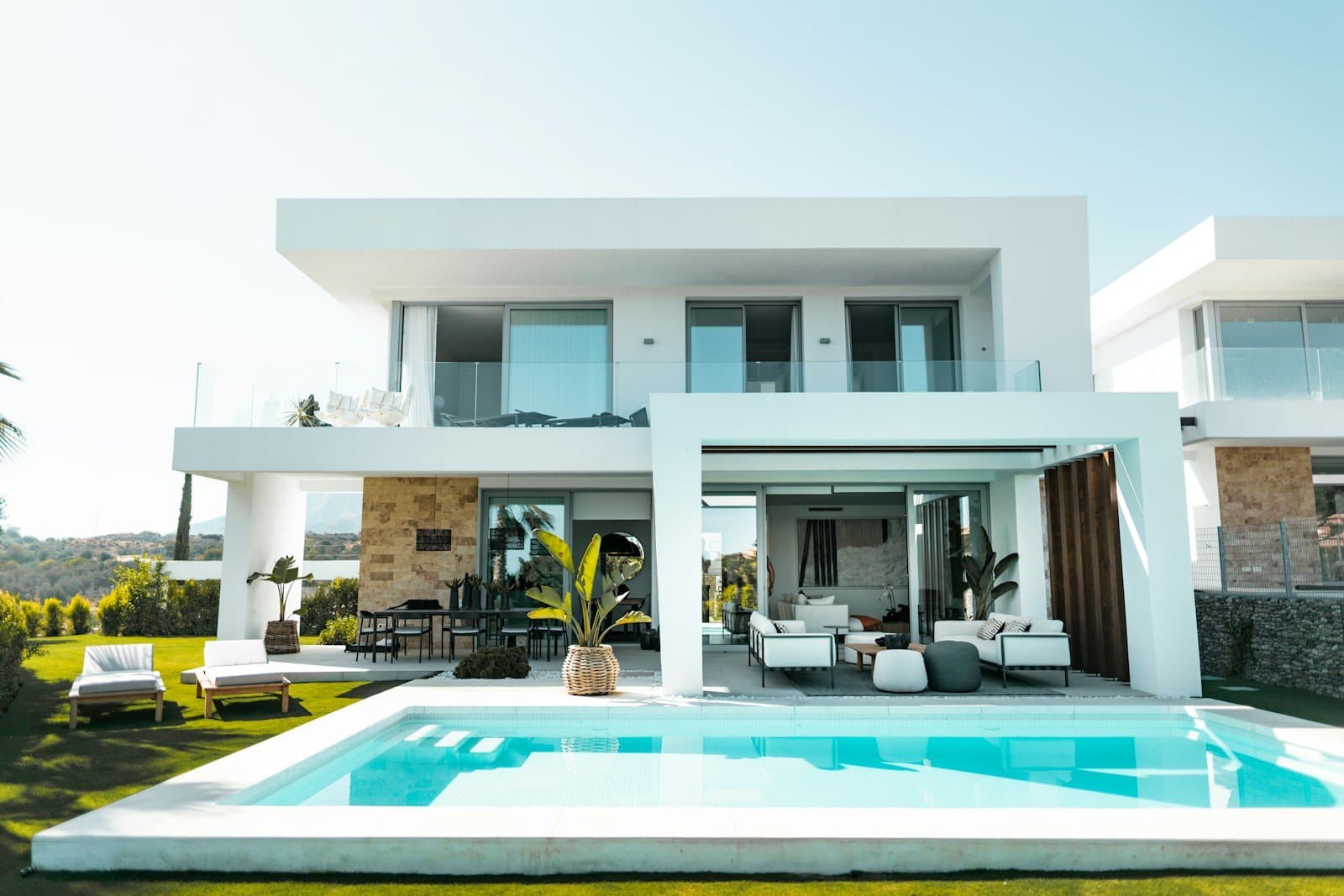
Robin was, by most measures, a success story. A senior partner at a UK consultancy firm, he had worked hard for two decades, built a comfortable life, and made what seemed like the natural next step for someone of his means: he bought a second home in southern Spain. A three-bedroom villa with a private pool and mountain views, purchased for just over £500,000. For the first few months, it was everything he had imagined. Then reality arrived — quietly at first, then all at once.
Today, Robin owns a co-ownership share in a beautifully managed luxury villa through Co-Ownership Property, spends around 45 days a year there with zero management responsibilities, and has freed up the capital that was previously locked away in a barely-used property. His story is not unique — it is, in fact, becoming increasingly common among affluent second home buyers who discover that full ownership is not the lifestyle upgrade they expected. This is his journey, and what it reveals about the smarter alternative.
The Reality Behind the Dream
When the Second Home Dream Turns Into a Second Job
Robin’s villa sat empty for roughly ten months of the year. Between work commitments, family obligations, and the sheer logistical effort of travelling to and from Spain, he and his wife managed three or four visits annually — totalling perhaps five or six weeks of actual use. The remaining 46 weeks? The property sat idle, accumulating costs, weathering the elements, and demanding constant attention from afar.
The financial reality hit hard in the second year. Property maintenance, pool servicing, gardening, insurance, annual community fees, Spanish property taxes (IBI), and the retainer for a local management company consumed over £18,000 annually — before a single flight was booked or a meal was eaten. Research from Bankrate confirms this experience is far from exceptional: hidden homeownership costs average $21,000 per year, with maintenance alone accounting for nearly $11,000. For luxury properties in prime European locations, those figures climb considerably higher.
Then came the rental experiment. Hoping to offset costs, Robin listed the villa on a holiday rental platform. The income helped — but managing bookings, turnovers, maintenance requests from guests, and the inevitable disputes consumed weekends and evenings. More than two-thirds of second home owners attempt exactly this approach, according to Savills research. Most discover, as Robin did, that being a reluctant landlord is not the same as generating passive income.
£47,500
Typical annual all-in cost of a £500,000 second home in Europe when maintenance, taxes, management, and opportunity cost of capital are included
90%
Proportion of the year the average private second home sits empty, underlining the fundamental inefficiency of full second home ownership
13.7%
Projected annual growth rate of the global fractional ownership market through 2033, as affluent buyers shift to smarter models
Share resale
Your share is sold on its own through our partner’s resale process — no need to sell the whole property.
The Hidden Maths
What Second Home Ownership Actually Costs Per Day of Use
Here is the calculation Robin eventually did, sitting with a spreadsheet on a rainy November evening in London. Annual running costs: £18,000. Mortgage interest on a partial borrowing: £9,500. Opportunity cost of capital tied up (at a conservative 4% return): £20,000. Total annual cost of ownership: approximately £47,500 per year. Days used: 38. Cost per day of actual use: £1,250 — before food, travel, or activities.
This is the number that changes everything. Most second home buyers never calculate it, because the purchase feels like a one-time decision rather than an ongoing commitment. But amortised across actual usage, the per-day cost of a privately owned luxury second home frequently exceeds £1,000 — more than a five-star hotel suite in the same location. The property industry rarely advertises this reality, but once seen, it cannot be unseen.
Robin also sat on roughly £500,000 of capital that was doing nothing except maintaining a property he barely visited. In a period of rising interest rates and volatile equity markets, the opportunity cost of that lock-up was substantial. co-ownership vs full ownership comparison data shows that co-ownership consistently delivers a lower effective cost-per-day of use for buyers who want access to luxury property without the carrying costs of full ownership.
Annual Costs Compared: Full Ownership vs Co-Ownership (1/8th Share) on a €500,000 Villa
Full ownership: maintenance, taxes, insurance, management
Full ownership: opportunity cost of capital (4%)
Co-ownership 1/8th: proportionate running costs
Co-ownership 1/8th: opportunity cost of capital
Full ownership: total annual cost (all-in)
Co-ownership: total annual cost (all-in)
Market Context
Why Thousands of Affluent Buyers Are Making the Same Switch
Robin’s decision to explore co-ownership put him in increasingly well-populated company. The global fractional ownership market reached USD $9.4 billion in 2024, according to Growth Market Reports, and is projected to expand at a 13.7% compound annual growth rate through 2033 — driven primarily by affluent professionals who have done the same maths Robin did. The model is not new, but the platforms, legal structures, and quality of properties available have matured significantly.
The typical profile of a co-ownership buyer mirrors Robin almost exactly: 45–55 years old, high household income, previously owned or seriously considered a full second home, and motivated primarily by lifestyle rather than investment return. Many, like Robin, have already experienced the reality of full second-home ownership and are actively looking for an exit. Others are first-time second home buyers who have done their research and decided to skip the expensive learning curve altogether.
What is shifting the market most decisively is the combination of rising luxury property prices and rising operating costs. Property taxes for single-family residences rose an average of 27% from 2019 to 2024 in the United States, according to Bankrate, and similar trends are playing out across European resort markets. When the maintenance and tax burden of a property you use for 38 days a year approaches £50,000 annually, the case for an alternative becomes compelling. Read more in our overview of the benefits of co-ownership for second home buyers.
“I spent three years owning a luxury villa I could barely enjoy. In twelve months of co-ownership, I’ve used my property more, stressed about it less, and freed up capital I didn’t know was sitting idle.”
The Discovery
How Robin Found Co-Ownership Property — and What Changed
Robin’s introduction to co-ownership came through a colleague who had recently sold a ski chalet in the French Alps and reinvested in a co-ownership share in a French Alps chalet. The conversation lasted three hours. What struck Robin most was not the financial logic — though that was compelling — but the description of the experience. His colleague described arriving at the property to find it immaculately prepared: personal items retrieved from storage, the fridge stocked, the pool at temperature. No checklist, no cleaning rota, no messages to contractors. Just a luxury home ready to use.
Through Co-Ownership Property, Robin began exploring properties available for co-ownership across Spain, France, and Italy. He found the model straightforward: buyers own a real 1/8 share of a specific home — real ownership, not a timeshare, with a genuine stake in a physical asset. Booking windows depend on the home and our partner. Running costs are split proportionately — so a 1/8th owner pays 1/8th of everything.
The legal and financial clarity mattered to Robin. He had spent months navigating the complexities of Spanish property law for his original purchase; the legal set-up behind co-ownership properties is arranged by our partner for each home and walked through with buyers before they commit. He instructed his own lawyer to review the documentation. They confirmed what Co-Ownership Property had told him: this was genuine real estate ownership with full resale rights on the open market. Our detailed buying process guide explains every step from initial enquiry to completion.
| Comparison Factor | Full Second Home Ownership | Co-Ownership (1/8th Share) |
|---|---|---|
| Purchase price (luxury villa) | €500,000+ | A fraction of the whole price |
| Annual running costs (all-in) | €28,000–€50,000+ | €2,500–€6,000 |
| Days of use per year | Typically 30–50 | ~45 days |
| Management required | Significant (ongoing) | Zero — fully managed |
| Resale | 6–18 months typical | Partner resale process — no need to sell the whole house |
| Capital efficiency | Low (100% tied up) | High (majority freed) |
| Property quality for budget | Limited by total cost | Premium tier accessible |
The Numbers
Robin’s Financial Comparison: Before and After
Robin’s full ownership scenario involved £500,000 of capital, approximately £47,500 in annual costs, and 38 days of use. His co-ownership scenario involved a share purchase of under £180,000, annual running costs of under £4,000 for his 1/8th portion, and 45 days of use in a property that, by virtually every measure, exceeded the quality of his original villa. The capital released — roughly £320,000 — he reinvested. Our guide to the running costs of a co-ownership property breaks down exactly what owners should expect to pay.
There is also the resale consideration. Robin’s original villa had proven difficult to price for resale; the market for specific luxury properties in niche locations is illiquid, and estate agent fees alone would consume tens of thousands of pounds. Co-ownership shares, by contrast, are offered first to existing co-owners in the same property — a ready-made pool of motivated buyers who already know and love the home. There is no need to sell the whole house — the outright sale of a comparable luxury villa takes six to twelve months on average. Read more about selling a co-ownership share.
Robin is also quick to note what the comparison does not capture: the value of time. Managing his Spanish villa had consumed an estimated four to six hours per week of his attention — fielding calls from the management company, reviewing invoices, arranging maintenance, monitoring rentals. Co-ownership eliminated that entirely. For someone billing at consultancy rates, reclaiming that time has a very real financial value.
Year 1
The Dream Purchase
Robin purchases a three-bedroom villa in southern Spain for £500,000. First visits are wonderful. Running costs begin mounting quietly in the background.
Year 2
The Hidden Costs Emerge
Annual running costs exceed £18,000. Robin attempts short-term rental to offset expenses, adding management workload without solving the underlying problem.
Year 3
The Calculation Moment
Robin does the full maths: £47,500 per year, 38 days of use, £1,250 per day — more than a five-star hotel in the same location. The search for an alternative begins.
Year 4
Discovery and Research
A colleague’s recommendation leads Robin to Co-Ownership Property. He researches how co-ownership works, consults his own solicitor, and explores available properties.
Year 4 (Q3)
The Switch
Robin sells his Spanish villa and acquires a 1/8th co-ownership share. Purchase: under £180,000. Days available: 45. Capital released: ~£320,000.
Year 5 (present)
The Transformation
Robin completes four stays totalling 41 days in his first year. Zero management calls. Rental income earned without involvement. His words: ‘I got my weekends back.’
A Year In
What Robin’s Life Looks Like Now
Robin made his first co-ownership booking three days after completing the purchase — a ten-day stay in late September, a period he could never have used the old property due to peak rental season restrictions. He arrived to find the villa prepared exactly as described. His golf clubs were out of storage in the garage. His preferred brand of coffee was in the kitchen. The pool was clean and heated. There was no checklist, no walk-through, no handover.
Over the past year, Robin has made four separate bookings: the ten-day autumn stay, a long weekend with his adult children over Easter, a solo working trip of five days, and a two-week summer holiday with his wife. Total days used: 41. He has not received a single maintenance call, invoice query, or management email. His co-ownership property produces a small rental income from the periods he is not using it — managed entirely without his involvement.
Perhaps most tellingly, Robin describes a shift in how he relates to the property. With his original villa, he felt a constant background anxiety — about the pool pump, the terrace tiles, the latest estimate from the gardener. With his co-ownership share, he experiences it simply as a home he visits and enjoys. The management layer that separates ownership from occupation has transformed the psychological experience of having a luxury second property. It has become, in his words, what he always thought a second home would be. Browse more co-ownership case studies to see how other buyers have made the same journey.
What This Model Solves
The Six Problems Co-Ownership Eliminates
Robin’s experience illustrates a cluster of problems that co-ownership is structurally designed to solve. The capital lock-up problem: rather than tying up £500,000 in a single asset used for 38 days a year, co-ownership distributes that capital across a more efficient ownership structure. The management burden problem: full management — cleaning, maintenance, admin, rental, co-owner coordination — is handled by the management company, leaving owners with nothing to do except book and enjoy.
Then there is the usage efficiency problem. A 1/8th share is sized almost precisely to the actual usage pattern of a typical affluent second home owner. Research consistently shows that second homes sit empty for around 90% of the year. Rather than paying for 100% of a home you use 10% of the time, co-ownership aligns the cost of ownership with actual usage. There is the liquidity problem too: whole properties are slow and expensive to sell; a co-ownership share can be sold on its own, without selling the whole house.
The quality problem is perhaps the most counterintuitive benefit. Because properties on offer through Co-Ownership Property are fully funded by eight owners rather than one, the per-owner entry cost for a given quality of property is dramatically lower than full ownership. Robin’s co-ownership property is objectively better specified than his original villa — larger, better located, more recently renovated, and more professionally managed — at less than a third of the purchase price. Browse our full range of co-ownership properties to see what is currently available.
Getting Started
How to Follow Robin’s Path
For buyers considering the move Robin made, the process begins with a consultation with Co-Ownership Property specialists to explore available properties and find a match for your lifestyle, location preferences, and budget. Shares are available at a fraction of the whole-home price for well-positioned European properties, up to around €2 million for ultra-prime destinations. Most buyers in Robin’s profile — established professionals seeking European sun or mountain access — find compelling options in the €150,000–€400,000 range.
The legal and financial due diligence is straightforward. Buyers receive full documentation on the home’s legal set-up, the management agreement, and the resale mechanism. Buyers are encouraged — as Robin was — to involve their own solicitor. Completion typically takes four to eight weeks from reservation. Read our detailed buying process guide for a full step-by-step overview.
For buyers who currently own a second home and are considering converting to co-ownership, Co-Ownership Property’s team regularly advises on the transition — including the timing and mechanics of selling an existing property and reinvesting in a share. The conversion from full ownership to co-ownership is, for many buyers, both financially and emotionally liberating. Robin describes it simply: he got his weekends back, released his capital, and still has a luxury villa in the sun. The only thing he lost was the stress.
Common Questions
Frequently Asked Questions
Is co-ownership the same as a timeshare?
No — and the distinction matters enormously. In a co-ownership arrangement, you own a real share of the home — an eighth, a quarter — not a right to use it. You own real estate that can appreciate in value, can be sold at market price, and gives you a legal stake in a physical asset. Timeshares involve no property ownership, no equity, and typically no resale value. Co-ownership is real ownership; a timeshare is a paid right to use.
What happens if I want to sell my co-ownership share?
You set the price. Your co-owners get the first chance to buy at that price; if they pass, it goes on the open market. There is no need to sell the whole property.
How do I book time at the property?
Booking windows depend on the home and our partner. Each 1/8th owner has access to approximately 45 days per year, which can be taken in any combination of lengths and seasons.
What are the typical running costs for a co-ownership share?
As a 1/8th owner, you pay 1/8th of all property costs — maintenance, insurance, local taxes, management fees, and any refurbishment reserves. For most properties, this amounts to between €2,500 and €6,000 per year, depending on location, property size, and the services included. Full transparency on costs is provided before purchase.
Can I earn rental income from my co-ownership share?
For many properties, yes. Where local regulations permit short-term letting, the management company handles all rental activity on behalf of all co-owners. Any rental income is distributed proportionate to ownership stake, and owners never need to be involved. Rental income from periods you are not using the property can meaningfully offset annual running costs.
What is the minimum investment for a co-ownership share?
Shares are available for a fraction of the whole-home price for well-positioned European holiday properties, with most properties in the €150,000–€500,000 range for a 1/8th share. Ultra-prime destinations may reach higher. Co-Ownership Property’s team can match your budget to the best available properties when you get in touch.
How long does it take to complete a co-ownership purchase?
Typically four to eight weeks from reservation to completion, depending on the complexity of the buyer’s legal due diligence. Co-Ownership Property provides all documentation needed for your solicitor to review the home’s legal set-up, management agreement, and resale terms. The process is considerably faster and simpler than a conventional property purchase.
Ready to Make the Switch?
Speak with our co-ownership specialists about properties that match your lifestyle and budget. Like Robin, you may discover that the smarter path to luxury second home ownership has been there all along.
Ask David or DylanMore from Co-Ownership Property

Get in Touch
Speak to an expert
Tell us what you're looking for and we'll be in touch.