Legal & Finance
Foreign Buyer Property Restrictions and Co-Ownership
Foreign buyers face growing property restrictions in 2026. See how co-ownership sidesteps legal barriers, cuts costs, and simplifies buying abroad.

The global property landscape for foreign buyers is shifting beneath their feet. In 2026, governments from Florida to Athens are tightening ownership restrictions, closing golden visa programmes, and making it harder — not easier — for non-residents to purchase real estate abroad. The National Association of Realtors (NAR) reports that foreign buyers spent $56 billion on US homes in the year to March 2025, a 33% jump year-on-year. Demand is surging, but access is shrinking. The question every international buyer should be asking is: how do I get in before the doors close further?
The answer, increasingly, is co-ownership. Rather than navigating the legal minefield of full foreign property ownership — with its visa requirements, financing hurdles, and management headaches — a growing number of international buyers are choosing to purchase a real share of a professionally managed luxury property. It is real ownership, with real appreciation potential, at a fraction of the capital commitment. And crucially, buying a share through Co-Ownership Property is designed to work smoothly for foreign nationals, with the legal set-up for each home arranged by our partner and walked through with you before you buy.
The Landscape
Why 2026 Is the Toughest Year Yet for Foreign Property Buyers
The regulatory environment for international property buyers has never been more complex. In the United States, 36 states have now enacted some form of restriction on foreign property ownership, according to research by the Committee of 100. Florida — historically the most popular destination for overseas buyers — has imposed near-total bans on purchases by nationals from designated countries, while other states restrict ownership near military installations and critical infrastructure.
Across the Atlantic, the picture is equally turbulent. Spain eliminated its golden visa programme in April 2025, cutting off a route that had funnelled billions of euros into coastal property. Portugal removed direct real estate purchases from its golden visa in 2023, redirecting applicants to investment funds. Greece, one of the last holdouts, now bans short-term rentals on golden visa properties and has raised minimum investment thresholds to €800,000 in Athens and popular islands. Even Hungary scrapped its €500,000 direct property route in January 2025.
Canada’s outright ban on foreign residential purchases, extended until January 2027, represents the bluntest instrument of all. Japan is conducting its first comprehensive review of foreign ownership rules, with policy recommendations expected imminently. The message from governments worldwide is clear: unrestricted foreign property ownership is a policy of the past.
$56B
Foreign buyer spending on US homes in the year to March 2025, up 33% year-on-year (NAR 2025 Report)
36
US states that have enacted restrictions on foreign property ownership as of 2026 (Committee of 100)
47%
Foreign property buyers in the US who paid all cash, vs. 28% of domestic buyers (NAR 2025)
Your price
You set the price. Your co-owners get the first chance to buy at that price; if they pass, it goes on the open market.
Financial Barriers
The Hidden Costs That Catch Foreign Buyers Off Guard
Even where foreign ownership remains legal, the financial barriers are formidable. Non-resident buyers in the US typically face mortgage down payments of 30–50%, compared to 10–20% for domestic purchasers. Interest rates run significantly higher, and lenders require 12–24 months of liquid reserves. For a $1 million holiday home, a foreign buyer may need $500,000 in cash upfront plus $100,000 sitting in a bank account — simply to qualify.
Then there is the ongoing cost burden. A luxury property sitting empty for 300+ days per year still demands property taxes, insurance, maintenance, security, and management. The true cost of a luxury second home often surprises first-time buyers once the annual upkeep is added up. For a holiday home used six weeks a year, the effective cost per night can exceed what a five-star hotel charges.
Tax compliance adds another layer. Foreign sellers of US property face FIRPTA withholding of 15% on gross sale proceeds. Cross-border inheritance tax, capital gains liability in two jurisdictions, and annual tax filing obligations in the property’s country all create a web of complexity that requires expensive specialist advice. Many foreign buyers discover these costs only after committing to a purchase — when it is too late to walk away without losing their deposit.
Foreign Buyer Spending on US Real Estate by Country of Origin (2024–2025)
China
Canada
Mexico
India
United Kingdom
The Solution
How Co-Ownership Cuts Through the Complexity
Co-ownership restructures the entire proposition. Instead of one buyer shouldering the full purchase price, legal complexity, and running costs of a foreign property, eight co-owners share everything equally. Each owns a real share of the home — real ownership with none of the characteristics of a timeshare. The legal set-up is arranged by our partner for each home and walked through with you before you buy.
For a foreign buyer, this changes the maths dramatically. A luxury villa on the Costa del Sol or a ski chalet in the French Alps that would cost €800,000 outright becomes accessible from around €100,000 for a one-eighth share. Running costs — maintenance, taxes, insurance, management — are split eight ways. And because the property is fully managed by professionals, the owner never needs to coordinate with contractors, cleaners, or local agencies from thousands of miles away.
Foreign nationals should still check the rules in each country. Whether any restrictions, surcharges or local taxes apply depends on the country and the home’s legal set-up, which our partner explains before you buy; international property lawyers can give you independent advice on your own position.
“The smartest foreign buyers in 2026 are not asking ‘Can I still buy property abroad?’ — they are asking ‘What is the most intelligent way to own it?'”
Market Data
The Numbers Behind the Shift to Shared Ownership
The shift toward shared and fractional ownership is not a niche trend — it is a structural change in how international buyers approach luxury property. Knight Frank’s 2025 Wealth Report identified fractional ownership as one of the fastest-growing segments in the global luxury real estate market, driven by buyers seeking diversification, flexibility, and lower capital intensity.
According to NAR data, the median purchase price for foreign buyers in the US hit a record $494,400 in 2025, with 47% paying all cash. These are affluent, sophisticated buyers who understand property — and who are increasingly choosing co-ownership not because they cannot afford full ownership, but because it makes better financial sense. Why tie up $500,000 in one property when you could own shares in three different destinations for the same outlay, each professionally managed and generating potential rental income?
The demographics tell the story too. The core co-ownership buyer is aged 40–55, typically a senior professional or business owner with a portfolio that already includes a primary residence. Many have previously owned second homes and switched to co-ownership specifically to escape the maintenance burden, the capital inefficiency, and the guilt of a luxury property sitting empty 90% of the year.
| Ownership Model | Capital Required (€1M Property) | Annual Running Costs | Days of Use | Management Burden | Resale Timeline |
|---|---|---|---|---|---|
| Full Foreign Ownership | €1,000,000+ | €15,000–€25,000 | ~40 days typical | Owner-managed | 6–18 months |
| Co-Ownership (1/8 Share) | From ~€125,000 | €2,000–€3,000 | ~45 days | Fully managed | Via our partner’s resale process |
| Holiday Rental | €0 (no equity) | €200–€500/night | Unlimited (at cost) | N/A | N/A |
| Timeshare | €10,000–€50,000 | €1,000–€3,000 fees | 1–2 fixed weeks | Resort-managed | Difficult/loss-making |
| Golden Visa Purchase | €250,000–€800,000 | €8,000–€20,000 | Varies | Owner-managed | 3–12 months |
Practical Guide
What Foreign Buyers Actually Get With a Co-Ownership Share
Understanding exactly what co-ownership delivers is essential for any international buyer weighing their options. A one-eighth share provides approximately 45 days of personal use per year — more than most second-home owners actually spend at their property. Booking windows depend on the home and our partner.
When you arrive, your personal belongings are taken out of storage and the property is prepared specifically for you. When you leave, everything is handled. Cleaning, maintenance, administration — all managed. You never need to contact or coordinate with other co-owners. This fully managed model is transformative for foreign owners who may be thousands of miles away and in a completely different time zone.
Properties available through Co-Ownership Property span luxury villas, chalets, and apartments across the most desirable destinations in Europe and the USA — from Colorado ski properties and California coastal homes to Balearic island villas and Italian lakeside retreats. Each property is fully renovated and furnished to a designer standard. This is turnkey luxury — you buy a share and start using it.
2022–2023
Golden Visa Closures Begin
UK, Ireland, and Portugal remove direct real estate routes from their investor visa programmes, signalling a Europe-wide shift.
April 2025
Spain Ends Golden Visa
Spain officially closes its golden visa programme, removing one of Europe’s most popular property-for-residency pathways.
January 2025
Hungary Scraps Direct Property Route
Hungary abolishes its €500,000 direct real estate investment route, redirecting applicants to government-accredited funds.
2025–2026
US State Restrictions Accelerate
36 US states now restrict some form of foreign property ownership, with Florida imposing near-total bans on certain nationalities.
2026
Greece Tightens Golden Visa Rules
Greece raises investment thresholds to €800,000 in hotspots and bans short-term rentals on golden visa properties, with €50,000 fines for violations.
2026 Onwards
Co-Ownership Emerges as the Smart Alternative
Co-ownership gains traction among international buyers seeking real property ownership at a lower entry point.
Versus Full Ownership
Co-Ownership vs. Full Foreign Ownership: A Direct Comparison
The comparison becomes stark when you lay the numbers side by side. A foreign buyer purchasing a €1 million villa outright in Spain faces the purchase price, 10–13% in transaction taxes and fees, annual running costs of €15,000–€25,000, the management burden of finding reliable local support, and a property that sits empty for the vast majority of the year. Total five-year cost of ownership, including opportunity cost on capital, can easily exceed €1.3 million — for a property used perhaps 40 days annually.
A one-eighth co-ownership share in the same property costs from around €125,000. Annual running costs are split eight ways. The property is professionally managed year-round. You still get your 45 days of use, but your capital exposure is dramatically lower — freeing up funds for other investments or, indeed, for purchasing shares in additional properties across different destinations. If you want a ski week in the Alps and a summer month on the Mediterranean, co-ownership makes both possible without the seven-figure commitment.
Resale is another advantage foreign owners rarely consider until they need it. Selling a full property abroad as a non-resident can take 6–18 months, involves complex cross-border tax filings, and often requires price reductions to attract buyers in a market you cannot easily monitor from afar. Co-ownership shares, by contrast, are first offered to existing co-owners in the property and then listed for sale through our partner’s resale process — without anyone having to sell the whole house.
Golden Visa Alternative
Beyond Golden Visas: Why Co-Ownership Outlasts Policy Changes
The collapse of European golden visa programmes has left many international buyers scrambling for alternatives. But co-ownership was never dependent on visa incentives — it stands on its own merits as a property ownership model. Whether or not a country offers residency in exchange for property investment, the fundamentals of co-ownership remain compelling: lower capital outlay, shared costs, professional management, and genuine ownership.
In fact, the tightening regulatory environment may accelerate the shift toward co-ownership. As full foreign ownership becomes more restricted and more expensive, the co-ownership model — with its lower capital threshold and its built-in management — becomes relatively more attractive. Buyers who previously would have purchased outright are discovering that co-ownership delivers a better lifestyle outcome at a fraction of the cost, without the regulatory headaches that now plague direct foreign purchases.
For American buyers looking at European properties, or European buyers eyeing US luxury markets, co-ownership also provides natural currency diversification. Owning shares in properties denominated in both euros and dollars hedges against exchange rate movements — a concern that has become increasingly relevant as currency volatility has intensified in recent years.
Getting Started
How to Begin Your Co-Ownership Journey as a Foreign Buyer
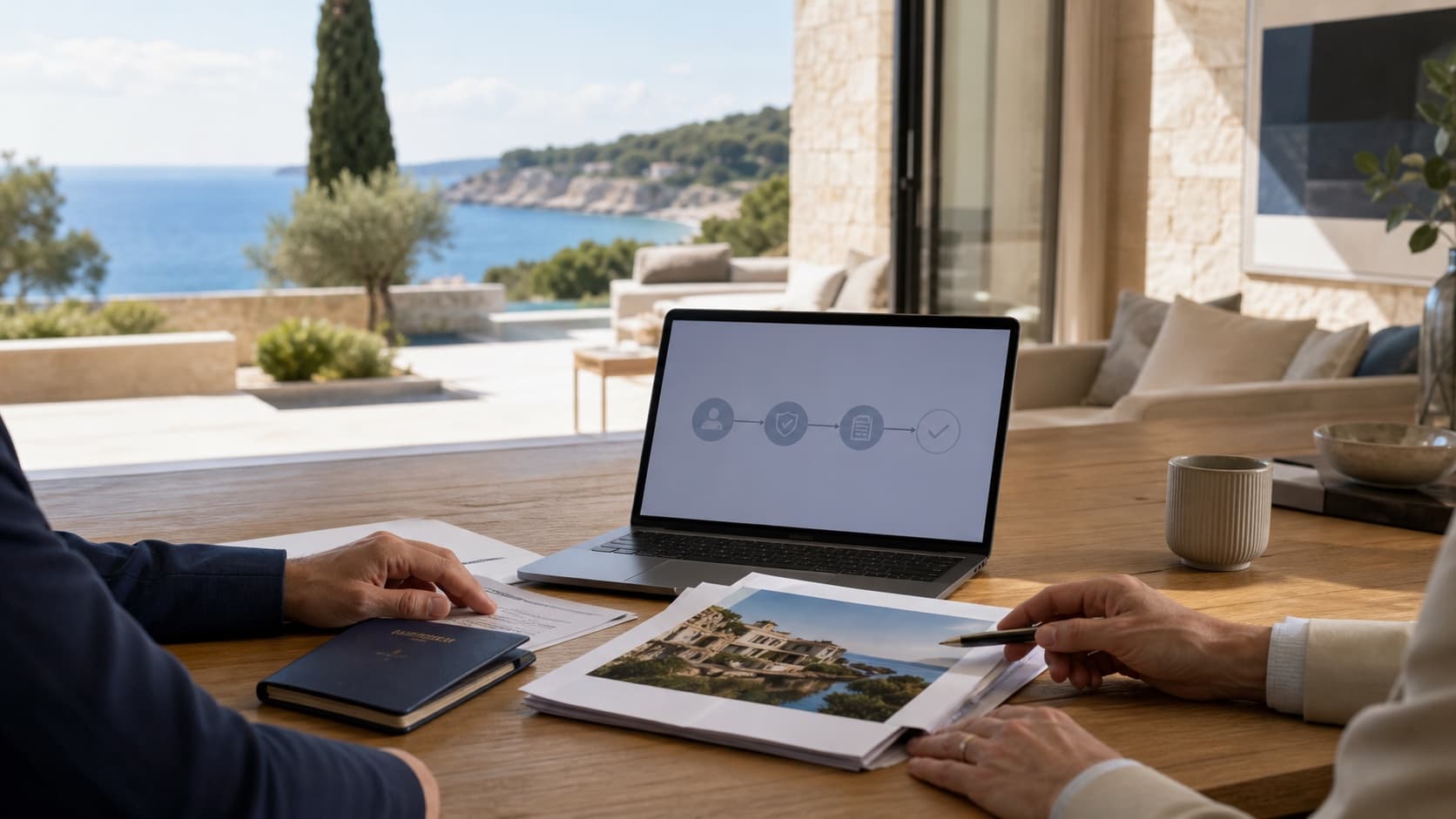
The buying process for co-ownership is deliberately streamlined for international purchasers. It begins with a consultation to understand your lifestyle preferences, budget, and usage patterns — do you want beach, mountain, or city? Europe, USA, or both? From there, the team at Co-Ownership Property presents curated properties that match your criteria, complete with full financial breakdowns and legal documentation.
Due diligence is handled transparently. Every property comes with a comprehensive checklist covering legal structure, management arrangements, running costs, usage rights, and resale provisions. For foreign buyers, this removes the single biggest source of anxiety: the fear of navigating an unfamiliar legal system in a language you may not speak. The management framework and the booking system are clearly documented, and the legal set-up for each home — which differs by country — is explained by our partner before you buy, whether the property is in Marbella or Montana.
The final step is straightforward. Once you have selected your property and completed due diligence, the purchase of your share is completed with the support of our partner, who arranges the legal set-up for each home and walks you through it before you buy. There is no need to obtain a local mortgage or manage the property yourself — you are simply acquiring your share of a home that is already bought, furnished and managed. For many foreign buyers, this simplicity is the single most compelling reason to choose co-ownership over the traditional route.
Common Questions
Frequently Asked Questions
Can foreign nationals legally purchase a co-ownership share?
Yes. Foreign buyers can purchase a real share of the home — an eighth, a quarter — not a right to use it. The legal set-up is arranged by our partner for each home and walked through with you before you buy, including any rules that apply to foreign buyers in that country.
How does co-ownership differ from a timeshare?
Co-ownership is real property ownership. You own a real share of a specific luxury property. Booking windows depend on the home and our partner. You can sell your share on the open market — something timeshare owners typically cannot do without significant losses.
What happens if I want to sell my co-ownership share?
Your share is first offered to the other co-owners in the property. If none wish to purchase it, the share is listed for sale through Co-Ownership Property. You never have to sell the whole house — a real advantage for a non-resident owner managing a sale from abroad.
Do I need a local mortgage to buy a co-ownership share?
No. Because the capital required for a co-ownership share is substantially lower than a full property purchase — typically for a fraction of the whole-home price, for a one-eighth share — most buyers purchase without a mortgage. This eliminates the financing barriers that foreign buyers commonly face, including higher down payments, elevated interest rates, and extensive documentation requirements.
How are running costs handled for foreign co-owners?
All running costs — maintenance, property taxes, insurance, management fees, and any applicable rental management — are split proportionately among co-owners. A one-eighth owner pays one-eighth of everything. Costs are transparent, predictable, and dramatically lower than maintaining a full property as a sole foreign owner.
Can my co-ownership property generate rental income?
Depending on the property’s location and local regulations, your property may be rented out as a holiday home during periods when no owner is in residence. Rental management is handled entirely by the management company — owners do not need to arrange anything. Income is shared proportionate to ownership stake.
Explore Properties With Co-Ownership Property
Whether you are a foreign buyer navigating new restrictions or simply looking for a smarter way to own luxury property internationally, our team can guide you through every step. Browse available properties across Europe and the USA, or ask David or Dylan to discuss your options.
Browse PropertiesMore from Co-Ownership Property

Get in Touch
Speak to an expert
Tell us what you're looking for and we'll be in touch.