Properties & Destinations
Languedoc Coast: France's Best-Value Mediterranean
Discover why the Languedoc coast offers the best-value co-ownership property in France. Half the price of the Riviera, with stunning beaches and UNESCO heritage.
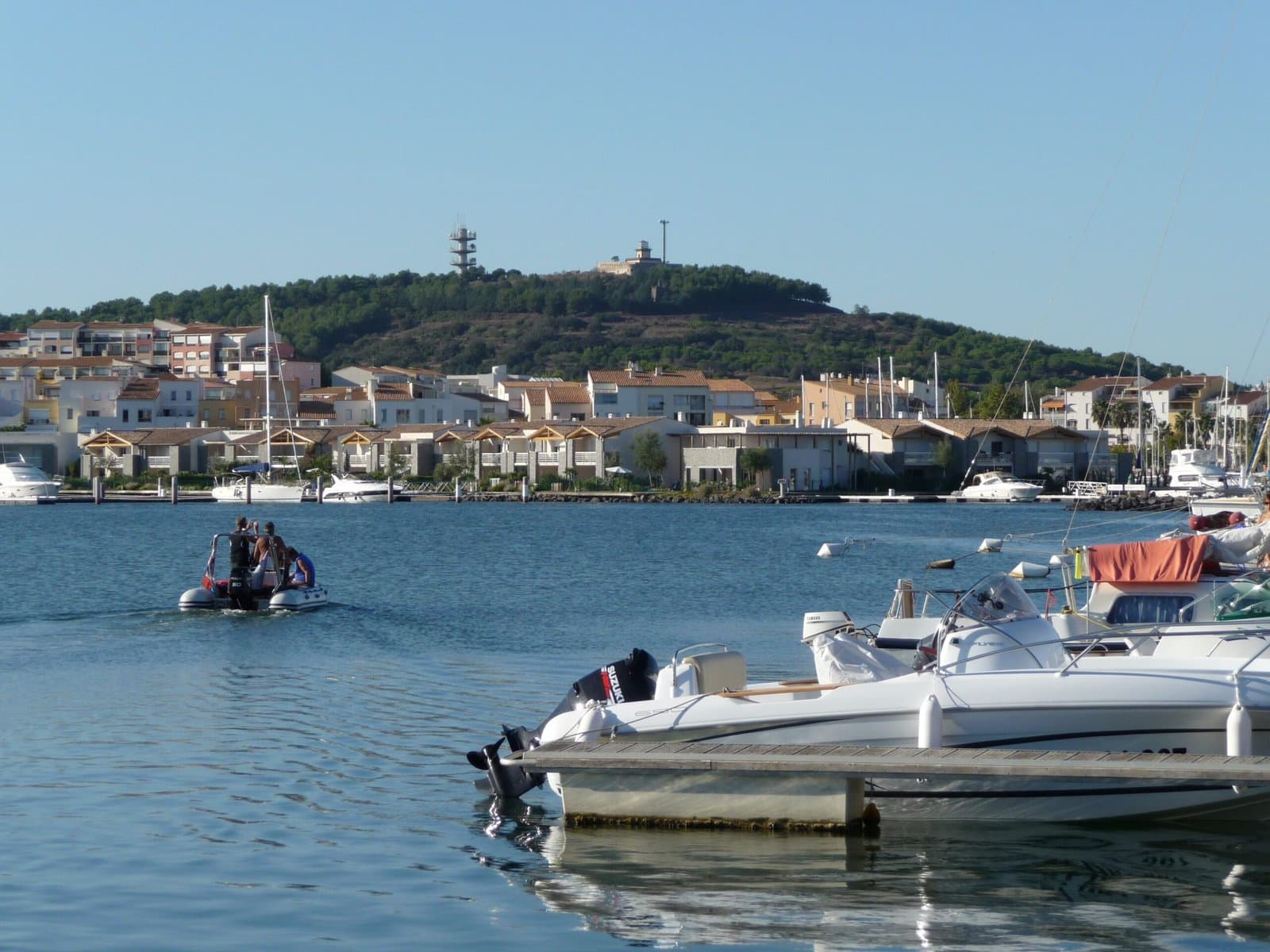
For decades, international property buyers have fixated on the Côte d’Azur — Cannes, Nice, Saint-Tropez — paying €5,000 to €10,000 per square metre for the privilege of owning a slice of the French Mediterranean. But a growing wave of informed buyers is looking further west along the coast and discovering something remarkable: the Languedoc coast delivers the same sun-drenched lifestyle, the same crystalline Mediterranean waters, and the same world-class gastronomy — at roughly half the price. Through co-ownership properties, this value gap becomes even more dramatic, allowing buyers to secure a luxury share in France’s most underrated coastal region for a fraction of what a comparable Riviera property would cost.
Stretching from the Camargue wetlands to the Spanish border, the Languedoc coast offers over 200 kilometres of sandy beaches, the UNESCO World Heritage Canal du Midi, volcanic headlands at Cap d’Agde, and vibrant port towns like Sète — France’s largest Mediterranean fishing port. According to Investropa’s 2025 market analysis, the Occitanie region (which encompasses the Languedoc) is growing at a compound annual rate of 6.36% through 2030, making it France’s fastest-growing property market. For co-ownership buyers, the message is clear: act now while prices remain accessible.
Price Comparison
The Languedoc Value Proposition: Half the Price, Full the Lifestyle
The numbers tell a compelling story. Average property prices in the Languedoc sit at approximately €2,800 per square metre, compared to €5,032 per square metre in Nice and €5,822 in Cannes, according to residences-immobilier.com data. In prestige pockets of the Côte d’Azur — Cap d’Antibes, Saint-Jean-Cap-Ferrat — prices routinely exceed €15,000 per square metre. That means a luxury two-bedroom apartment that costs €600,000 on the Riviera can be matched, in quality and lifestyle, for under €300,000 in Languedoc.
For fractional ownership buyers, this arithmetic is transformative. A one-eighth share of a beautifully renovated villa near Cap d’Agde or Sète could start at a fraction of the whole-home price — the price of a modest family car. Compare that to co-ownership shares in Nice or Cannes, where entry points are typically double or triple. And the lifestyle dividend? Essentially identical: warm Mediterranean waters, 300 days of sunshine per year, outstanding local cuisine, and direct international transport links via Montpellier and Béziers airports.
Rental yields in the Languedoc are also competitive. According to property analysts, holiday rental returns in Cap d’Agde and Sète match or exceed those on the Riviera, largely because the lower purchase price creates a better yield-to-capital ratio. For owners who choose to rent out unused weeks, this means their running costs are significantly offset.
€2,800/m²
Average property price per square metre on the Languedoc coast — roughly half of Nice (€5,032) and Cannes (€5,822).
6.36%
Compound annual growth rate for property in Occitanie through 2030 — the fastest of any French region.
102M
International visitors to France in 2025, generating €77.5 billion in tourism revenue — a record year.
45 days
Approximate annual personal use per 1/8 co-ownership share — comparable to typical full second-home usage.
Growth Story
Occitanie: France’s Fastest-Growing Property Region
The Occitanie region, which encompasses the entire Languedoc coast plus Toulouse and the Pyrenees, is experiencing a property renaissance. Data from France’s national property agency network shows Occitanie growing at 6.36% CAGR through 2030, outpacing every other French region including Île-de-France and Provence-Alpes-Côte d’Azur.
Several powerful forces are driving this growth. First, remote work migration from Paris and northern France: an estimated 770,000 residents relocated from dense cities to lifestyle regions between 2019 and 2021, according to INSEE, and Occitanie was one of the top three beneficiaries. Second, the Toulouse aerospace economy — anchored by Airbus — provides regional employment stability that insulates property values from cyclical downturns. Third, Montpellier’s university and tech ecosystem attracts a steady stream of young professionals, keeping housing demand buoyant.
For international buyers — particularly British and American purchasers considering south of France properties — the Languedoc coast represents that rare sweet spot: a market still early enough in its growth curve to offer genuine value, yet mature enough to provide robust infrastructure, reliable rental demand, and proven capital appreciation.
Average Property Prices per m² — French Mediterranean Coast (2025)
Saint-Jean-Cap-Ferrat
Cannes
Nice
Montpellier
Languedoc Coast Avg
Inland Languedoc
Destination Guide
Cap d’Agde, Sète, and the Languedoc’s Star Destinations
Cap d’Agde is France’s largest Mediterranean resort by accommodation capacity, welcoming millions of visitors annually across 14 kilometres of sandy beaches. Built around a striking volcanic headland — Mont Saint-Loup — the resort offers a bustling marina, an 18-hole golf course, an aquarium, and the extraordinary Plage de la Grande Conque, a black volcanic sand beach unique in mainland France. The town of Agde itself, founded by the Greeks in the 6th century BC, is nicknamed the ‘Black Pearl of the Mediterranean’ for its dark basalt architecture.
Sète, just 25 minutes along the coast, is one of France’s most characterful towns — a working fishing port threaded with canals, earning it the nickname ‘Venice of Languedoc’. As France’s largest Mediterranean fishing port, Sète offers extraordinary seafood, a thriving arts scene, and the famous jousting festivals on the Canal Royal. Property here blends historic charm with waterfront accessibility, making it ideal for co-ownership buyers who want authentic French life rather than resort-style living.
Beyond these star destinations, the Languedoc coast offers Narbonne Plage, Gruissan (made famous by the film ‘Betty Blue’), Palavas-les-Flots near Montpellier, and the wild Camargue wetlands where white horses and pink flamingos roam. For those considering France properties, the diversity of lifestyle options along this single coast is unmatched anywhere in the Mediterranean.
“The Languedoc delivers the same Mediterranean lifestyle as the Côte d’Azur — the same turquoise water, the same 300 days of sun — but at roughly half the price. For co-ownership buyers, that value gap is transformative.”
Heritage & Culture
UNESCO Heritage and 2,700 Years of History
The Languedoc coast is anchored by one of Europe’s most remarkable engineering achievements: the Canal du Midi, a UNESCO World Heritage Site since 1996. Built between 1667 and 1694 under the vision of Pierre-Paul Riquet, this 240-kilometre waterway connects the Atlantic to the Mediterranean and features 328 original structures — locks, aqueducts, bridges, and tunnels. Over 300,000 visitors and 10,000 boats pass through the locks at Béziers each year, and the tree-lined towpaths are among France’s most beloved cycling routes.
Agde itself was founded by Phocaean Greeks in approximately 525 BC, making it one of the oldest towns in France. The Cathédrale Saint-Étienne d’Agde, built from black basalt volcanic stone, doubles as a fortified church — a reminder of the region’s turbulent medieval history. Béziers, just 25 kilometres north, hosted the infamous Albigensian Crusade in 1209 and today sits dramatically above the Canal du Midi, its cathedral visible for miles.
This depth of history matters for property buyers because it creates the kind of cultural infrastructure — museums, festivals, wine routes, archaeological sites — that sustains year-round interest rather than seasonal tourism. Properties in historically rich areas tend to hold their value better through economic cycles, which is why co-ownership explained options in heritage destinations are increasingly popular.
| Destination | Avg Price/m² | Airport Access | Co-Ownership Entry |
|---|---|---|---|
| Cap d’Agde | €2,600–€3,200 | Béziers (15 min) | From ~€65,000 |
| Sète | €2,800–€3,500 | Montpellier (25 min) | From ~€70,000 |
| Nice (Riviera) | €5,000–€6,000 | Nice (20 min) | From ~€150,000 |
| Cannes (Riviera) | €5,500–€7,000 | Nice (30 min) | From ~€170,000 |
| Mallorca | €3,500–€5,000 | Palma (20 min) | From ~€100,000 |
Investment Data
Co-Ownership Economics: What the Numbers Actually Look Like
Let’s examine the real-world economics of co-owning on the Languedoc coast. A typical co-ownership villa or apartment in the Cap d’Agde to Sète corridor, fully renovated and furnished to luxury standards, might have a total property value of around €500,000 to €800,000. A one-eighth share would therefore sit in the €65,000 to €100,000 range — with all furniture, equipment, and professional management included.
As a co-owner, you receive approximately 45 days of personal use per year. If that sounds like a lot, consider this: research consistently shows that full second-home owners use their properties for an average of just 35 to 44 days annually. The co-ownership model actually delivers comparable usage to full ownership — but at one-eighth of the capital outlay and with none of the management headache. All running costs — maintenance, insurance, taxes, cleaning — are split proportionately.
France recorded 102 million international visitors in 2025, generating €77.5 billion in tourism revenue — a 9% increase year-on-year, according to the French government. The Occitanie region (including the Languedoc coast) accounted for a significant share of domestic overnight stays. For co-owners who opt to rent their unused weeks, this robust tourism demand translates into a meaningful income stream that helps offset holding costs. The buying process is designed to be straightforward, with all legal and tax structures handled by specialist advisors.
525 BC
Greeks Found Agde
Phocaean Greeks establish Agde as a trading port, making it one of the oldest settlements in France.
1667–1694
Canal du Midi Built
Pierre-Paul Riquet’s masterpiece connects the Atlantic to the Mediterranean — now a UNESCO World Heritage Site.
1970s
Cap d’Agde Resort Created
French government develops the Languedoc coast under Mission Racine, creating Europe’s largest Mediterranean resort.
1996
UNESCO Recognition
The Canal du Midi receives UNESCO World Heritage status, cementing the region’s cultural significance.
2020–2025
Remote Work Migration Boom
770,000 French residents relocate from cities to lifestyle regions, with Occitanie among the top three beneficiaries.
2026+
Co-Ownership Growth Wave
Occitanie projected to grow at 6.36% CAGR, with fractional ownership making luxury coastal living accessible.
Lifestyle
Wine, Oysters, and the Art de Vivre
The Languedoc is France’s largest wine-producing region, responsible for over one-third of all French wine. Once dismissed as a source of cheap table wine, the region has undergone a quality revolution: appellations like Pic Saint-Loup, Faugères, Saint-Chinian, and La Clape now produce reds and rosés that rival much more expensive Provence and Rhône bottles. Many domaines offer tastings and vineyard tours, and the annual wine harvest in September transforms the countryside.
The Étang de Thau — a vast saltwater lagoon between Sète and Agde — is one of Europe’s most important oyster and mussel cultivation sites, producing some 13,000 tonnes of shellfish annually. Waterside restaurants along the étang serve platters of huîtres de Bouzigues for a fraction of Parisian prices. Combined with the region’s abundant markets, Michelin-recognised restaurants, and the Mediterranean diet, the Languedoc offers a beach lifestyle that centres food and wine as daily pleasures rather than special occasions.
For families considering co-ownership apartments or villas, the region delivers outstanding value on day-to-day living costs too. Restaurant meals, local produce, and leisure activities are significantly cheaper than equivalent experiences on the Côte d’Azur or in the Balearics.
Practical Guide
Getting There: Transport Links and Accessibility
Montpellier–Méditerranée Airport serves over 2 million passengers annually with direct flights from London, Dublin, Amsterdam, Brussels, and multiple German and Scandinavian cities, primarily via Ryanair and easyJet. Béziers Cap d’Agde Airport — just 15 minutes from the resort — offers seasonal connections from the UK and Northern Europe. Both airports provide affordable access that the Riviera’s Nice airport cannot match on price.
France’s TGV high-speed rail network connects Montpellier to Paris in just 3 hours 20 minutes, to Barcelona in under 3 hours, and to Lyon in under 2 hours. The A9 motorway — the Autoroute du Soleil — runs the entire length of the Languedoc coast, connecting Narbonne, Béziers, Agde, and Montpellier to the wider European road network.
This connectivity is a crucial factor for co-ownership buyers who plan to visit multiple times per year. The ability to reach your co-ownership property via a two-hour budget flight or a three-hour train journey transforms usage patterns: instead of one long annual holiday, many owners take four or five shorter breaks throughout the year, maximising their 45 days of allocated use.
Buyer Education
Why Co-Ownership Makes Particular Sense in the Languedoc
The Languedoc is fundamentally a seasonal destination: June through September sees peak demand, while winter months are quieter (though still mild, with average January temperatures of 10°C). This seasonality is precisely why co-ownership is such a smart model here. Full ownership of a holiday home means paying 100% of the costs for a property you might use 12 weeks per year at best. Co-ownership means paying one-eighth of the costs for a property you use 6-7 weeks per year — a dramatically better ratio of cost to enjoyment.
The co-ownership vs full ownership comparison is stark in seasonal markets. Full owners face the constant temptation to rent their property out during peak summer weeks — the very weeks they bought it to enjoy. Co-owners never face this dilemma: your weeks are your weeks, and any rental of unused periods is handled seamlessly by the management team. The FAQs on staying provide full details on how booking and scheduling works.
For buyers considering their first best fractional ownership properties, the Languedoc offers an ideal entry point: luxury quality at accessible prices, strong growth fundamentals, proven tourism demand, and the kind of lifestyle richness — wine, food, history, beaches — that makes every visit feel like a reward rather than a chore.
Common Questions
Frequently Asked Questions
How much does co-ownership property cost on the Languedoc coast?
A one-eighth share in a luxury co-ownership property on the Languedoc coast typically starts at a fraction of the whole-home price, depending on the property’s size, location, and specification. This includes your proportionate share of all furnishings and professional management setup.
How does the Languedoc compare to the Côte d’Azur for property buyers?
The Languedoc coast offers average property prices of around €2,800 per square metre — roughly half the €5,000–€6,000 per square metre typical in Nice and Cannes. Lifestyle amenities, climate, and Mediterranean access are comparable, but the Languedoc offers significantly better value for money and stronger growth forecasts.
How many days per year can I use my co-ownership property?
Each one-eighth share provides approximately 45 days of personal use per year. Booking windows depend on the home and our partner.
Can I earn rental income from my Languedoc co-ownership share?
Yes, depending on the property and local regulations. When you’re not using your allocated time, your share can be rented as a holiday let. All rental management is handled professionally — you don’t need to do anything. Income is distributed proportionate to your ownership stake.
Is co-ownership the same as timeshare?
No. Co-ownership means you own a real share of the property itself. You own actual real estate that appreciates in value and can be sold on the open market at market price. There are no points systems. Timeshares typically grant usage rights only, not property ownership.
How easy is it to reach the Languedoc coast from the UK or other European cities?
Very easy. Montpellier airport has direct flights from London, Dublin, Amsterdam, and Brussels, mostly via low-cost carriers. Béziers airport is just 15 minutes from Cap d’Agde with seasonal UK connections. The TGV connects Montpellier to Paris in 3 hours 20 minutes and to Barcelona in under 3 hours.
Explore Co-Ownership Properties on the French Coast
Whether you’re drawn to the volcanic beaches of Cap d’Agde, the canal-side charm of Sète, or the vineyard-draped hinterland, our co-ownership specialists can match you with the right property at the right price.
Browse PropertiesSee the homes nearest this destination. Explore the COP French collection for the co-ownership homes closest to this region, or speak with our team about what is available now.
More from Co-Ownership Property
Get in Touch
Speak to an expert
Tell us what you're looking for and we'll be in touch.