Properties & Destinations
Marbella and the Costa del Sol: The Coast That Never Closes
While the rest of the Mediterranean shutters for winter, southern Spain's sunshine coast stays open every month of the year — and co-ownership is the structure that finally makes a year-round home on it add up.
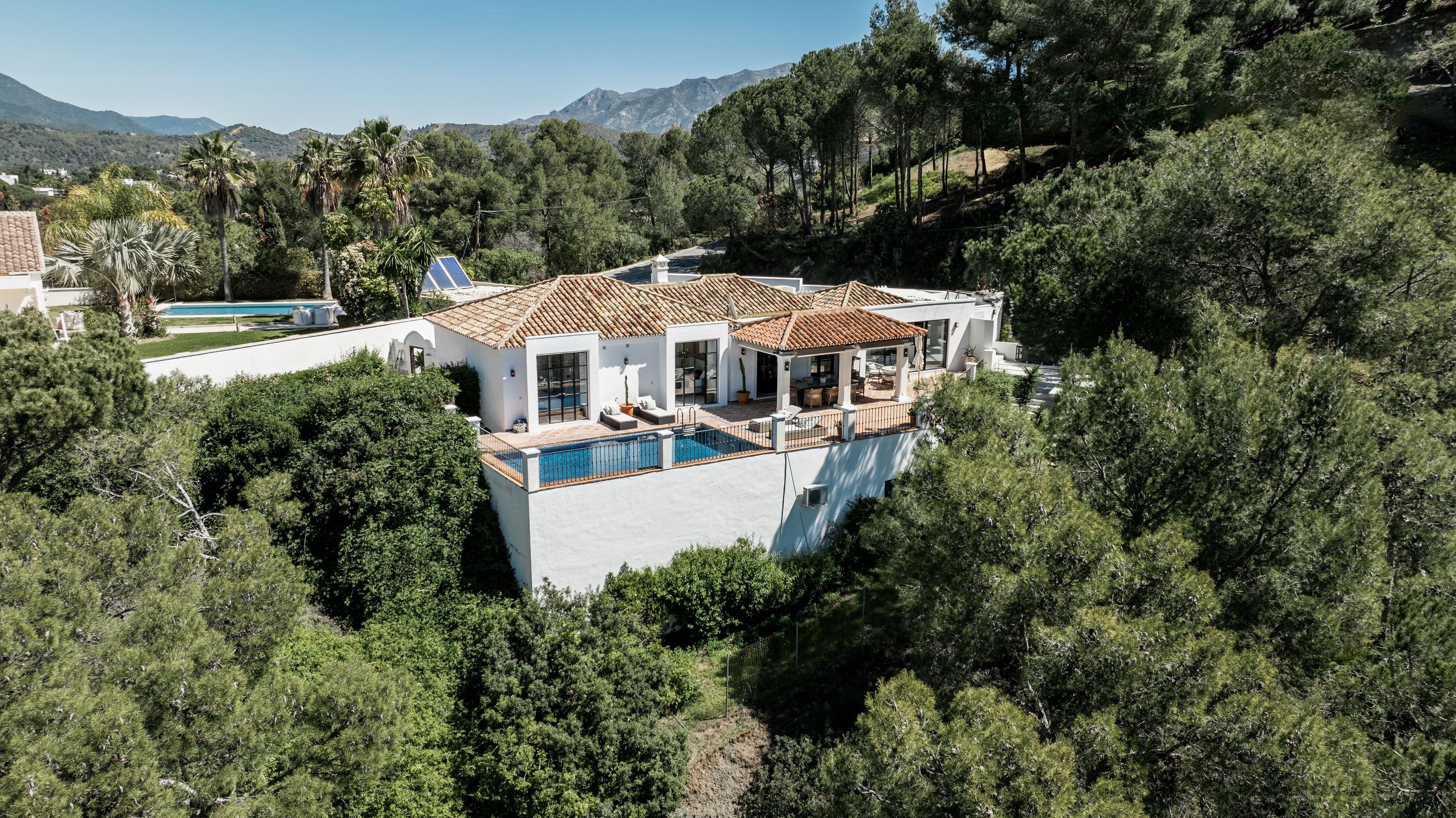
There is one month that separates the Costa del Sol from almost every other coastline in the Mediterranean, and it is not August. It is January. While the shutters come down on the Italian lakes and the stone villages of Provence settle into a long grey hibernation, the stretch of southern Spanish coast running from Málaga down to Estepona records daytime highs of 17 to 18 degrees, the orange trees in Marbella's old town hang heavy with fruit, and the first tee times on seventy-odd golf courses are gone by nine in the morning. The Costa del Sol does not have a low season in the way the rest of southern Europe understands the term. It has a quieter season — and for someone who actually owns property here, the quieter season is rather the point.
This is the fact that quietly reframes the whole second-home question on this coast. Most owners of a Mediterranean holiday home are buying a summer asset: a place that earns its keep for eight or ten weeks and then sits dark and shuttered until the following June. The Costa del Sol — with its roughly 325 days of sunshine a year and an average annual temperature of about 20 degrees — is one of the very few places in Europe where a holiday home is genuinely usable in February. That changes both what it makes sense to own and how. Co-ownership of a Costa del Sol property — specifically, owning one-eighth of a quality villa or apartment, alongside seven other vetted co-owners, with around 44 to 45 days of personal use a year — turns a year-round coast into a year-round home, without the cost or the caretaking of owning the whole thing. You arrive. The property is ready. Someone else has managed the months you were not there. This is what that looks like in practice, from the front-line apartments of Marbella to a four-bedroom villa with sea views in the hills above the town.
The Coast That Doesn't Close: Winter, Golf and the Real Calendar
The travel brochures sell July and August, when the beaches at Fuengirola and Torremolinos fill and the coast road slows to a crawl. The people who own here use the rest of the year. From October to May the Costa del Sol becomes a different and arguably better place: the light turns long and gold, the restaurants in Marbella's Casco Antiguo take reservations again, and the golf — the industry that built the modern coast — comes into its own. This is, after all, the Costa del Golf, home to more than 70 courses, the densest concentration in continental Europe and roughly seven in ten of all the courses in Andalusia. The fairways around Benahavís and the storied links of the Sotogrande hinterland are at their best in the mild, dry months when northern Europe is frozen and unplayable.
Geography is what makes this possible. The coast faces almost due south, and along much of its western half the Sierra Blanca and the Sierra Bermeja rise steeply behind it, sheltering the shore from the cold northern air and trapping a mild, almost subtropical microclimate against the sea. Marbella is measurably warmer in winter than towns only an hour inland. It is why mangoes and avocados grow in the Axarquía valleys to the east, why the bougainvillea never quite stops flowering, and why a coast that markets itself on summer is, in truth, at its most comfortable in the long shoulder months on either side of it.
For a co-owner, this year-round usability is exactly what makes the co-ownership calendar work so well here. With 44 to 45 days of annual use per one-eighth share, the question is not whether to take off-peak time but which off-peak weeks to claim. A family with school-age children weights its share toward the summer and Easter. A retired couple takes a fortnight in October, a week of winter golf in January, and a long stretch in May when the jacaranda comes into flower along the Marbella seafront. A serious golfer can build an entire year around the dry season. Because the coast is genuinely desirable in months when a Tuscan farmhouse or an Alpine chalet is effectively closed, co-owners here tend to find their preferred weeks overlap far less than they feared — the calendar is flexible, agreed among co-owners through the management company.
What a Typical Week Looks Like
The arrival experience for a co-owner is categorically different from a rental. There is no key-safe on a gatepost, no laminated sheet about the air-conditioning remote and the recycling days. The management company has prepared the property before you arrive — fresh linens, the pool warmed for the season, the fridge stocked with the basics you asked for in advance. The home is yours for the week: not yours in the hedged sense of a hotel suite, or the provisional sense of an Airbnb, but in the real-ownership sense — a genuine share of the house, not a right to use it. That distinction is not abstract. It changes how you use the place from the first afternoon.
A morning in a co-ownership villa in the hills above Marbella — Nueva Andalucía behind Puerto Banús, say, or the pine-shaded slopes below Sierra Blanca — begins with the sea laid out flat and silver below and, on a clear day, the mountains of Morocco standing across the strait. The Milla de Oro, the historic four-kilometre Golden Mile between Marbella town and Puerto Banús, is a ten-minute drive; the old town, built around the orange-tree square of the Plaza de los Naranjos, is the place to be at lunch, long after the day-trippers have filed back to their coaches. An afternoon might mean nothing more strenuous than the beach club at the foot of the hill, or a chiringuito grilling espetos de sardinas on a spit over driftwood embers at the water's edge — the single most Malagueño thing it is possible to eat.
A week based further along the coast reads differently again. Estepona, to the west, has quietly become the most charming town on the Costa del Sol — its old quarter a prize-winning tangle of whitewashed lanes, flower-hung balconies and small squares, with the so-called New Golden Mile running east from it toward Marbella past some of the most ambitious new building in southern Spain. Inland, Benahavís — a mountain village of only a few thousand people with a wildly disproportionate number of good kitchens — is the gastronomic heart of the western coast. East of Málaga, around Higuerón and Rincón de la Victoria, the coast is lower-key and noticeably more Spanish: the prices ease, the high-rises give way to fishing-town promenades, and the views run back along the shore toward the city.
The Management Reality: What You Don't Have to Think About
The lifestyle case for co-ownership on the Costa del Sol is strong on its own terms. The practical case may be stronger. Full ownership of a coastal Spanish property carries a management overhead that most buyers underestimate at purchase and find wearing within two years: the pool contractor, the gardener, the cleaner, the property manager, the annual insurance, the IBI (the municipal property tax), the comunidad fees if the home sits within an urbanisation, and the non-resident income-tax return that catches out almost every foreign owner in their first year. Co-owners deal with none of this directly. The management company handles all of it; owners receive a single annual account, pay their proportional share, and use the home.
The cost structure is the most misunderstood part of co-ownership. Because you own one-eighth of the property, you carry one-eighth of every running cost — taxes, insurance, maintenance, management, pool and garden, and any improvements the owners agree. For a quality villa with a pool on the Costa del Sol, full running costs might fall somewhere in the region of €14,000 to €22,000 a year, depending on size, age and specification; an eighth-share owner's portion is a fraction of that — typically less than a single high-season week in a comparable rented villa. Understanding this is what moves the conversation from "interesting idea" to "why have I not done this already." Our how it works guide sets out the structure end to end.
The Costa del Sol Market in 2026: Context for Buyers
Understanding the market matters, because it sets both the entry price for a share and the long-term position of a co-owner. The Costa del Sol has been one of the most consistently appreciating property markets in Western Europe, and 2026 has done nothing to slow it. Across Málaga province, average values reached a record of about €3,842 per square metre in 2025, up close to 14 per cent on the year; prices are forecast to rise a further 7 to 8 per cent in 2026 — slower than 2025's frantic pace, but still comfortably ahead of the Spanish average. Marbella sits well above the provincial line, with asking prices now averaging around €6,000 per square metre and the prime Golden Mile beyond €7,000; front-line-beach apartments in the best complexes change hands well past €15,000 per square metre. Idealista's research now describes the coast as a European safe-haven market, and the buyer base bears that out — foreign purchasers account for roughly 38 to 39 per cent of all sales across the province.
Two forces sit behind the numbers. The first is that the Costa del Sol is no longer only a holiday economy. Málaga has reinvented itself as one of southern Europe's serious technology centres — Google chose the city for its largest cybersecurity hub in Europe, and Vodafone, TDK and others have followed — while Málaga–Costa del Sol airport handled a record 26.7 million passengers in 2025, keeping the coast within a short, year-round flight of most of northern Europe. The second force is supply. Spain closed its Golden Visa residency-by-investment route in April 2025, and along the coast local authorities have begun freezing new tourist-rental licences in saturated zones, while communities of owners can now approve or block short-term letting by a three-fifths majority. None of this touches a co-owner using a share personally — and most do — but it constrains the supply of lettable stock and tends to support values for well-located homes already inside the framework. It is worth confirming the rental status of any specific property before signing, a point our buying FAQs address directly. An eighth-share in a two-bedroom Marbella apartment currently opens at €149,000 — real ownership in one of Europe's most resilient coastal markets, at a fraction of the cost of buying outright.
The Co-Ownership Case for the Costa del Sol
The case for co-ownership here is, in the end, a usage argument. The Costa del Sol rewards precisely the kind of unhurried, returning presence that a few weeks of real ownership enable and that a rental — with its check-in anxiety and its always-slightly-different keys — never quite delivers: the October golf, the January lunch in shirtsleeves in the Plaza de los Naranjos, the May evening when the whole coast smells of jasmine and the season has not yet arrived. Just down the coast, the same logic has already remade Sotogrande; on the Costa del Sol it applies across a far wider range of towns and price points. Co-owners arrive as owners. They know the property, have their routines in it, know the golf pro and the chiringuito owner by name, and meet the coast from a different starting point than a visitor ever can. Over five or six stays a year, across every season, that accretes into something that feels less like a holiday and more like a second life. That, in the end, is what people are buying when they buy a share on this coast — not the bricks, but the ordinary fact of a place that is warm and open and waiting in the middle of a northern winter.
See the homes behind this guide. Explore a current Marbella co-ownership share, browse the wider Spanish collection, or speak with our team about what is available on the Costa del Sol right now.
More from Co-Ownership Property
Get in Touch
Speak to an expert
Tell us what you're looking for and we'll be in touch.