Properties & Destinations
Ses Salines: What a Share Reveals About Mallorca's South
The deep south of Mallorca belongs to flamingos, Roman salt harvests and a seven-kilometre beach the government has permanently blocked from development — and a brand-new three-bed townhouse with a private courtyard pool now opens it to co-ownership at €139,000.
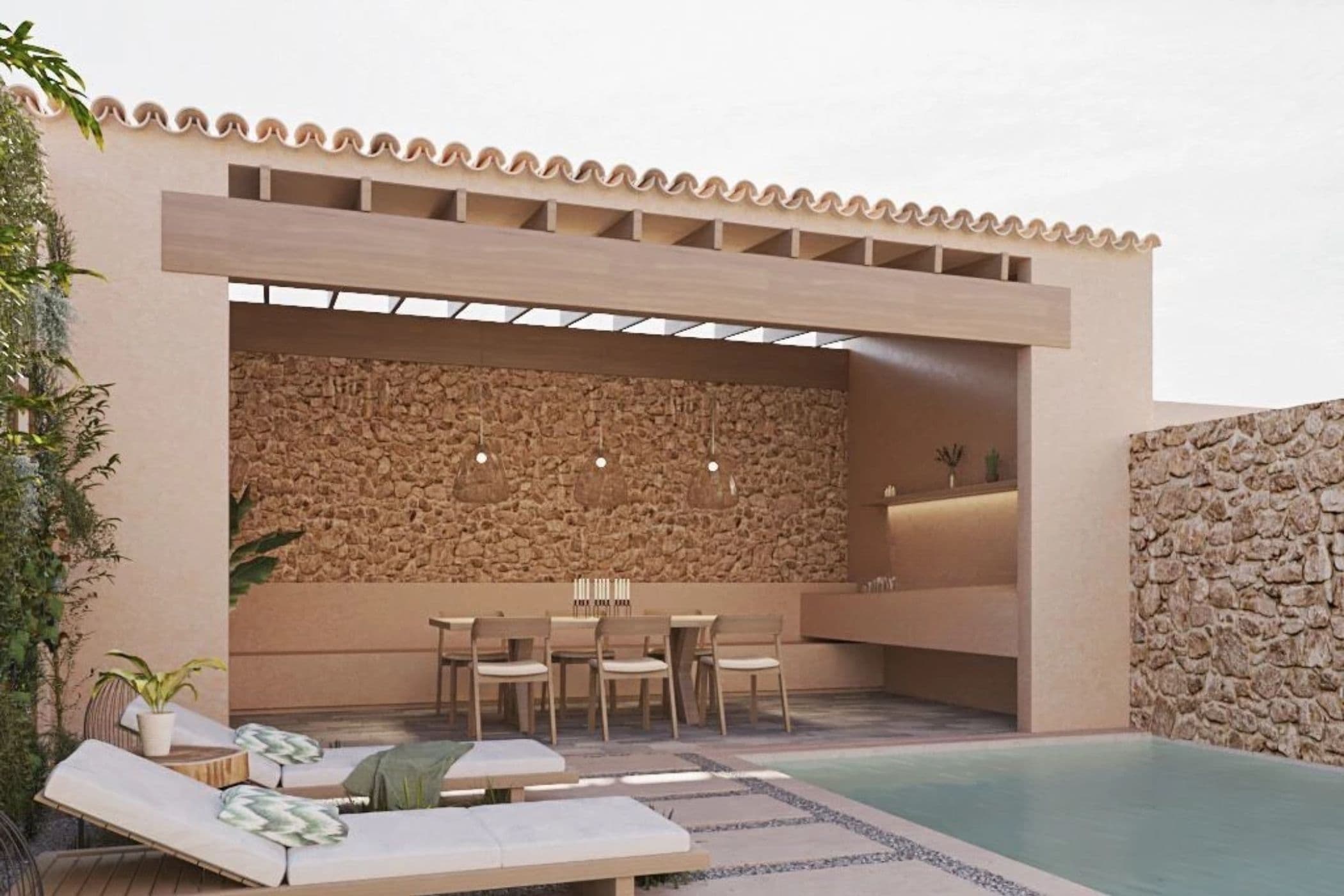
The Mallorca that most buyers imagine is northern — the Serra de Tramuntana, the olive-silvered hillsides above Deià, the baroque harbours of Pollença and Sóller. The Mallorca that commands the highest prices is south-western — Puerto Andratx, the so-called Golden Mile, the yacht-lined moorings where the conversation moves quickly into the tens of millions. The deep south of the island, by contrast, rarely comes up in conversations about where to buy. It has no celebrity-restaurant strip, no Formula One yacht scene, and almost no hotel development along its coastline. What it has instead is one of the most strictly protected natural environments in Spain, a Roman-era salt harvest still in production, flamingos nesting in the evaporation pans, and a seven-kilometre beach that the Balearic government has committed by law never to build beside. That is the coast a new-build three-bedroom townhouse in Ses Salines now opens to co-ownership at €139,000 per one-eighth share.
The property — a brand-new three-bedroom, three-bathroom townhouse with a private courtyard and heated pool, set within the village itself rather than on a development outside its boundary — is structured as a standard COP co-ownership: a real one-eighth share of the home, with the legal set-up arranged by our partner and explained before you buy, shared among eight vetted co-owners, with approximately 44 to 45 days of personal use per year. At €139,000 it sits at one of the more accessible entry points in COP's current Spanish inventory, and it opens a part of Mallorca that a full-ownership buyer would need considerably more capital to reach at equivalent specification. The structure is identical to every other property on the platform — professional management, a single annual cost statement, no individual owner dealing with tradespeople or utility accounts — but the location is singular.
Ses Salines — The Village That Kept Its Character
Ses Salines is a municipality, not a resort, and the distinction is felt within ten minutes of walking around its centre. The village square has a bench, a pharmacy, a supermarket the same families have used for two generations, and a bar where the coffee comes in small cups with a glass of water on the side, offered without prompting. The architecture is the sandstone vernacular of rural Mallorca: thick walls, small windows, flat roof lines, ochre and ivory facades and the occasional splash of bougainvillea spilling over an otherwise bare gable end. There is no strip, no cocktail-bar cluster, no gift-shop quarter assembled near a scenic viewpoint. The mercat sets up on Thursday mornings and sells whatever is in season — strawberries and broad beans in May, almonds and figs and the dried pepper that goes into sobrassada in October, the cured-pork sausage that Mallorca produces better than anywhere else on the island. The people at the stalls are from the village. So are most of the people doing the shopping.
The name comes from the salt, which comes from the Romans. The first salt fields on this stretch of coast were laid in the Roman period — the flat coastal plain, the intense summer evaporation rate, the shallow lagoons that concentrate brine close to saturation before the harvest were recognised as exceptional conditions two thousand years ago and have been worked continuously since. The Salines d'Es Trenc produce approximately 15,000 tonnes of salt per year, including the prized flor de sal — surface-harvested crystals that form only when temperature and wind align just so, and which is the only flor de sal produced anywhere on Mallorca. The operation is not a heritage attraction: it is an ongoing industrial process inside a natural park, with flamingos nesting in the margins of the evaporation pans and egrets picking through the shallows of the channels. Walking the perimeter track in late afternoon, when the water turns the deep pink that gives these landscapes their particular reputation, is one of those island experiences that sits entirely outside the tourism infrastructure.
The Property — New Build at the Village Heart
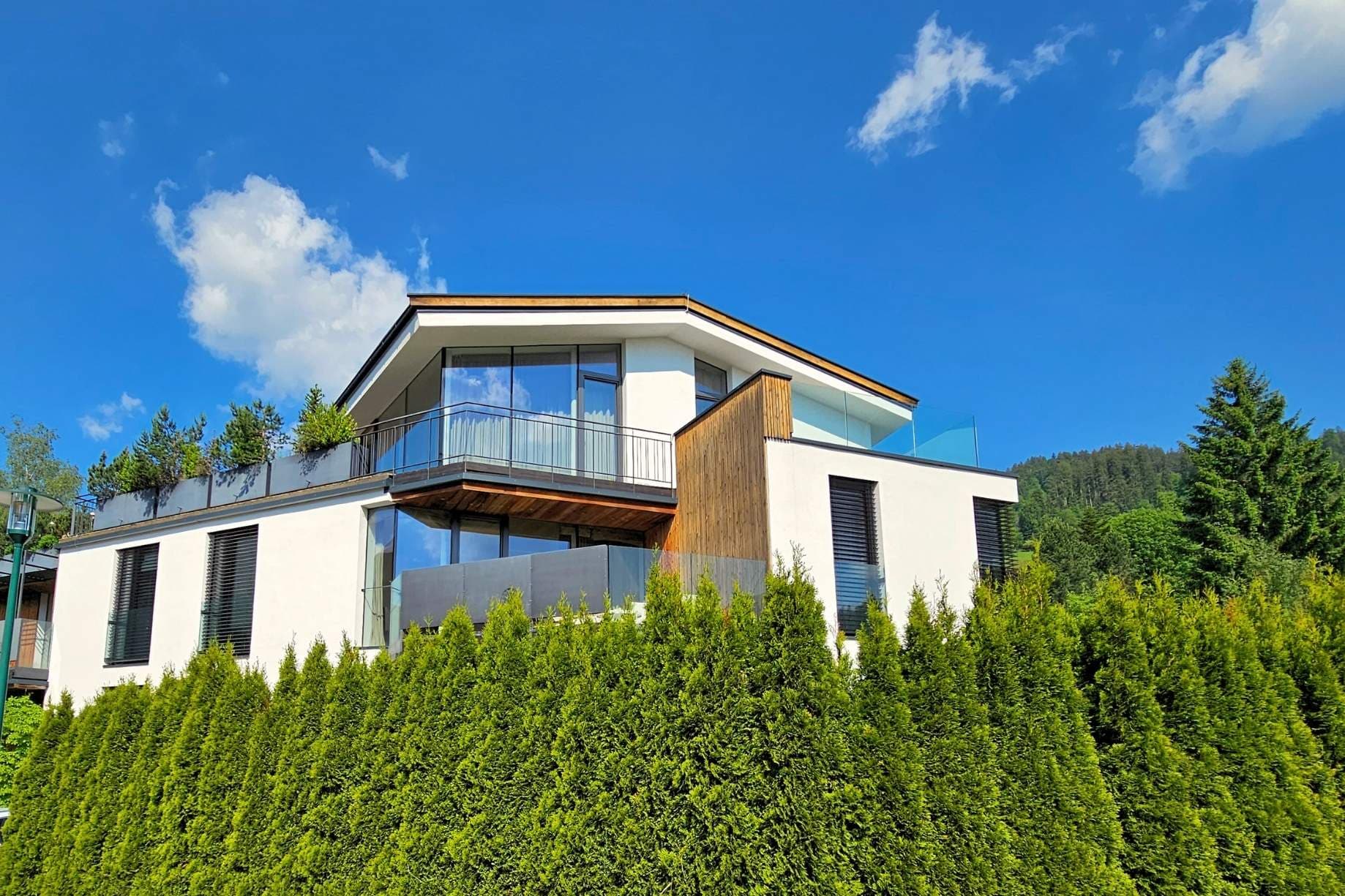
The listing sits within the built village rather than at a remove from it on a development plot outside the boundary — a distinction that matters in a place where the authentic village character is part of what a buyer is purchasing access to. Brand-new construction delivers the structural reliability and energy performance of current Spanish building standards; the exterior palette and materials stay in sympathy with the vernacular — stone facings, natural tones, restrained design that works with its setting rather than against it. Three bedrooms, three bathrooms, and an interior that the listing description renders as contemporary without being superfluous: stone, natural light, clean lines, nothing unnecessary. The townhouse fits into its street rather than imposing itself on a plot. The scale is right for the village.
At the centre of the property is the element that transforms a village townhouse into a holiday home capable of carrying a Mediterranean summer: a private courtyard with a heated pool, fully enclosed and screened from the street. South-facing and sheltered, it catches full sun across the day and functions as an outdoor room — the kind of space where breakfast extends naturally to two hours and where the afternoon hours between two and five, when the temperature is at its peak and the village is at its quietest, are best spent horizontal. The pool is heated, extending its usable season meaningfully beyond what an unheated pool at this latitude could manage. Late October water temperature in a heated pool in Ses Salines can be held at 26 or 27 degrees while the air outside runs at a genuinely pleasant 20 to 22 — a combination that has no equivalent in a Northern European autumn, and that makes the co-owner's autumn weeks here qualitatively different from anything available at home.
Arrival as a co-owner is consistently different from arrival at a rental, and the difference is worth stating plainly because it changes the texture of the time that follows. There is no lockbox combination, no laminated house manual, no QR code pointing to a seventeen-page PDF about the irrigation timer. The property management company has prepared the home before you get there — fresh linens, the pool at temperature, the basics you requested in advance already in the fridge. The house is yours for the duration: a real share of the home, not a right to use it. That fact, which reads as a procedural detail on paper, makes the first afternoon feel entirely different in practice. The full mechanics of arrival, management and changeover are at the staying in your co-ownership property FAQs.
Homes for sale now
46 homes in Spain, shares from €124,000
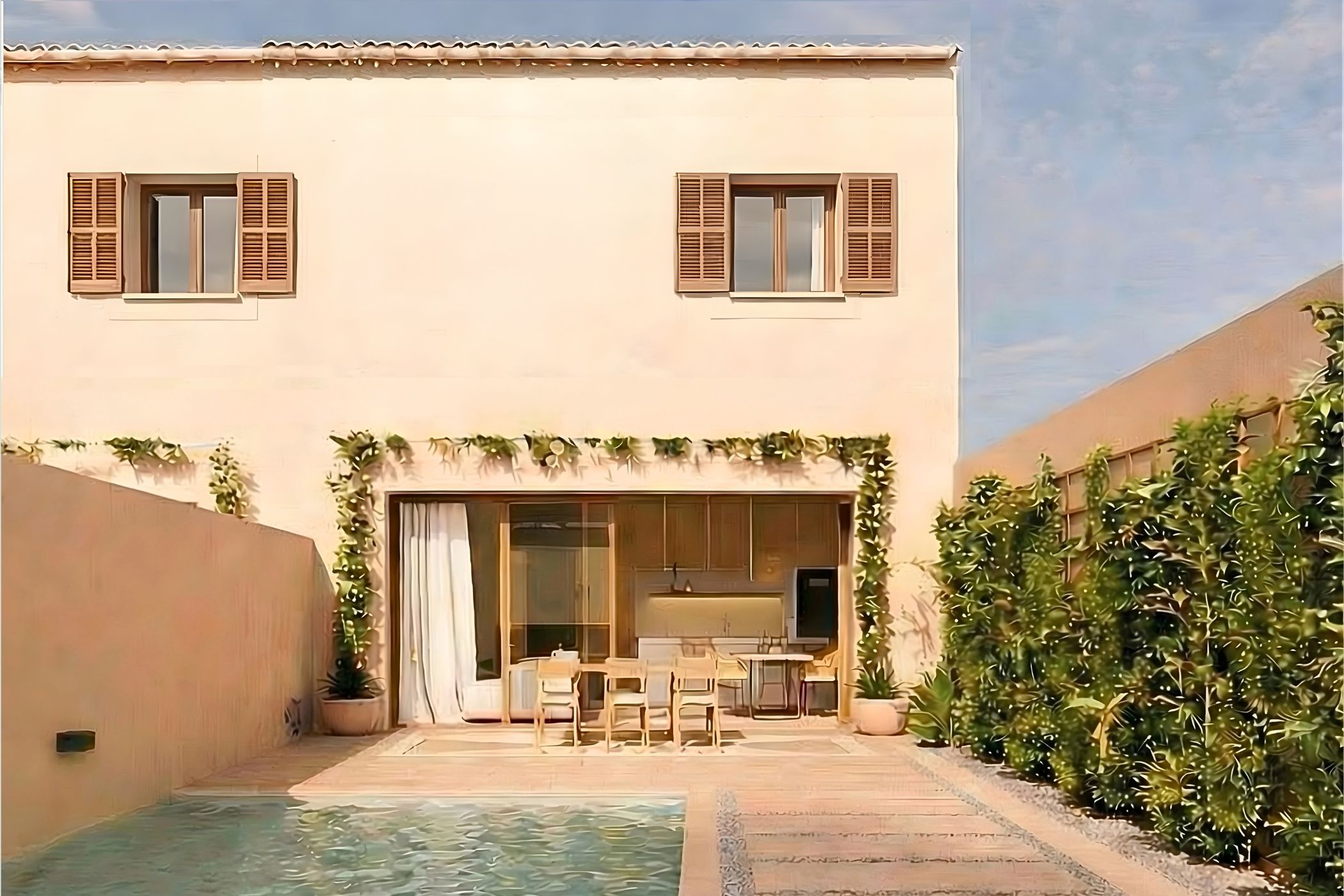
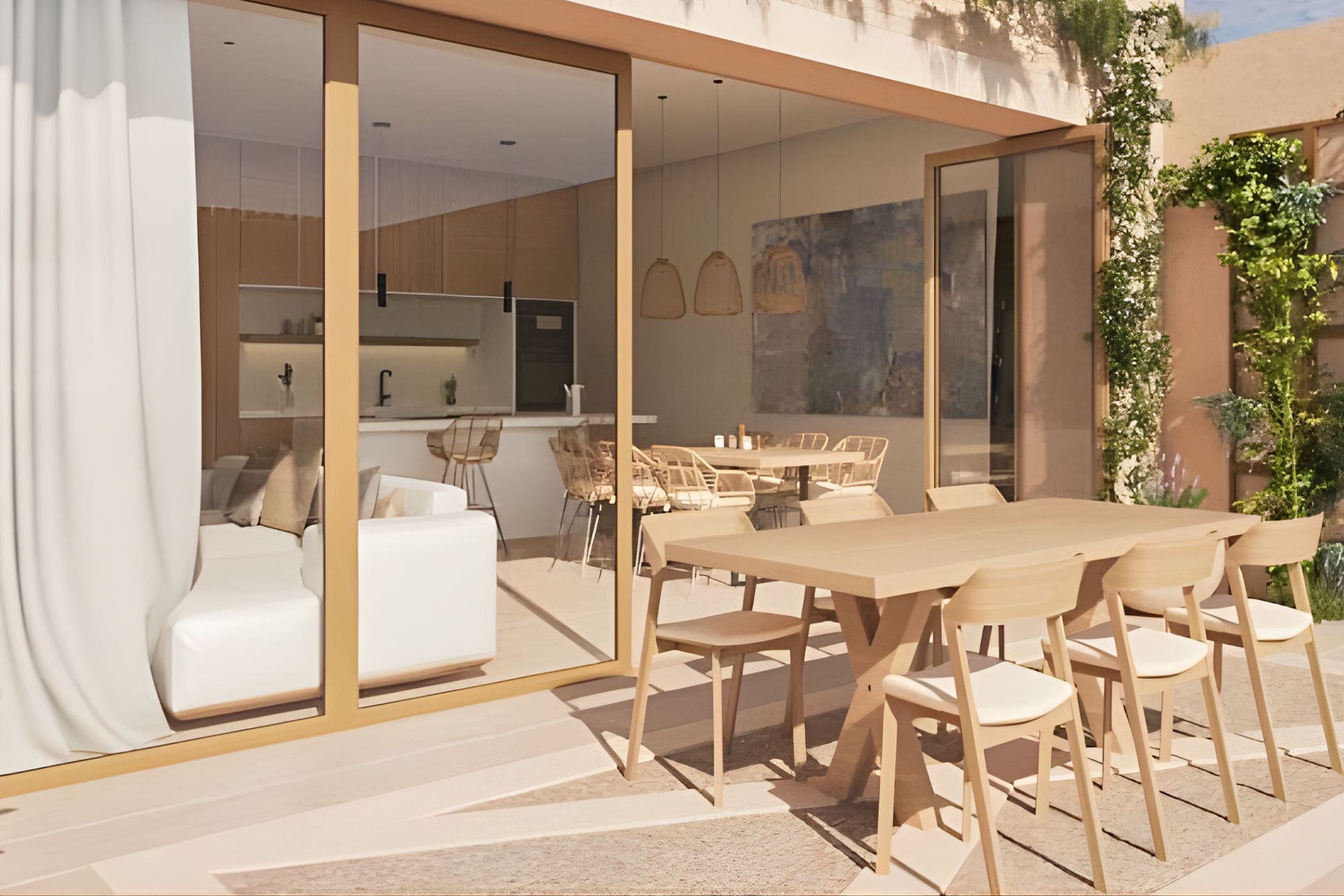
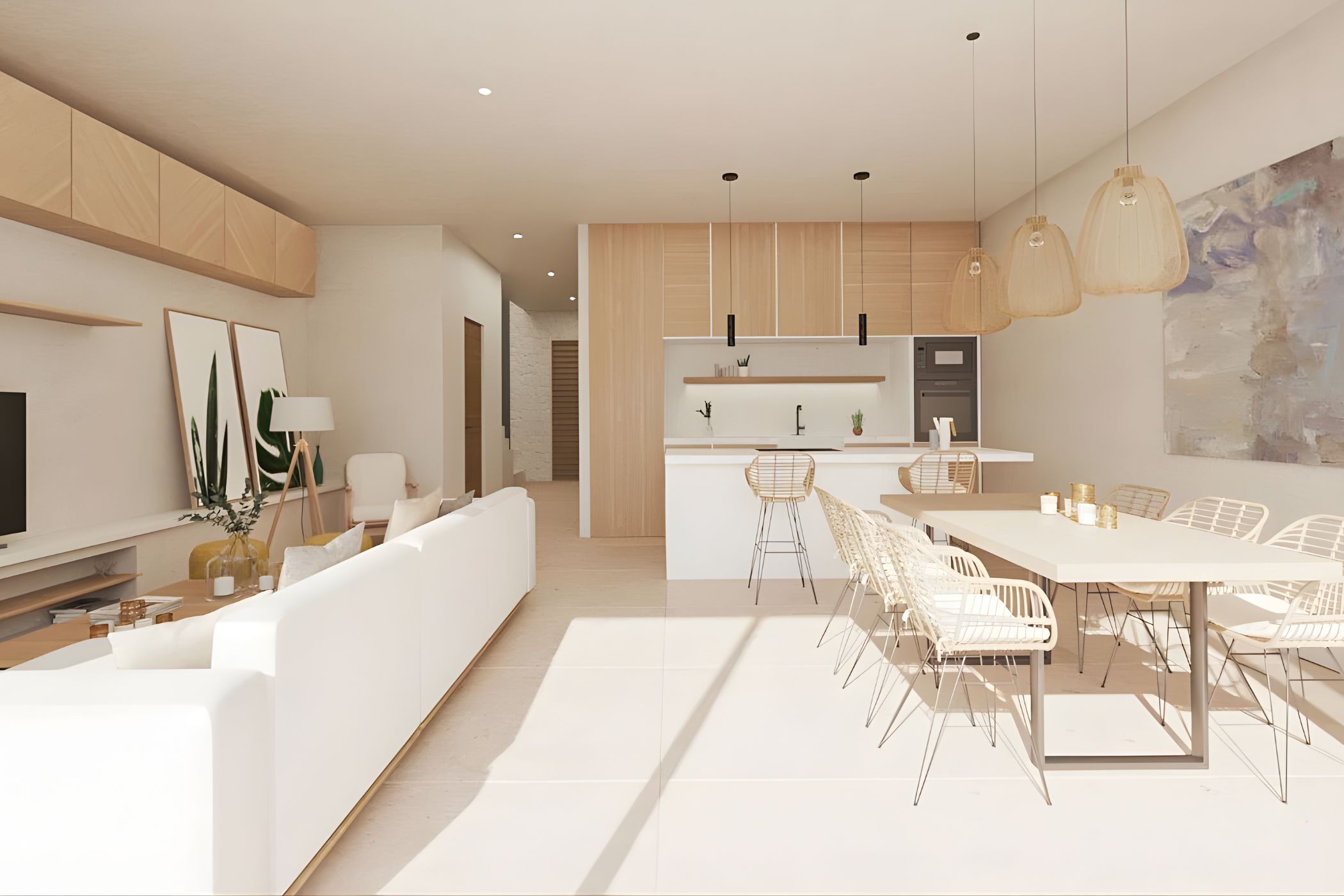
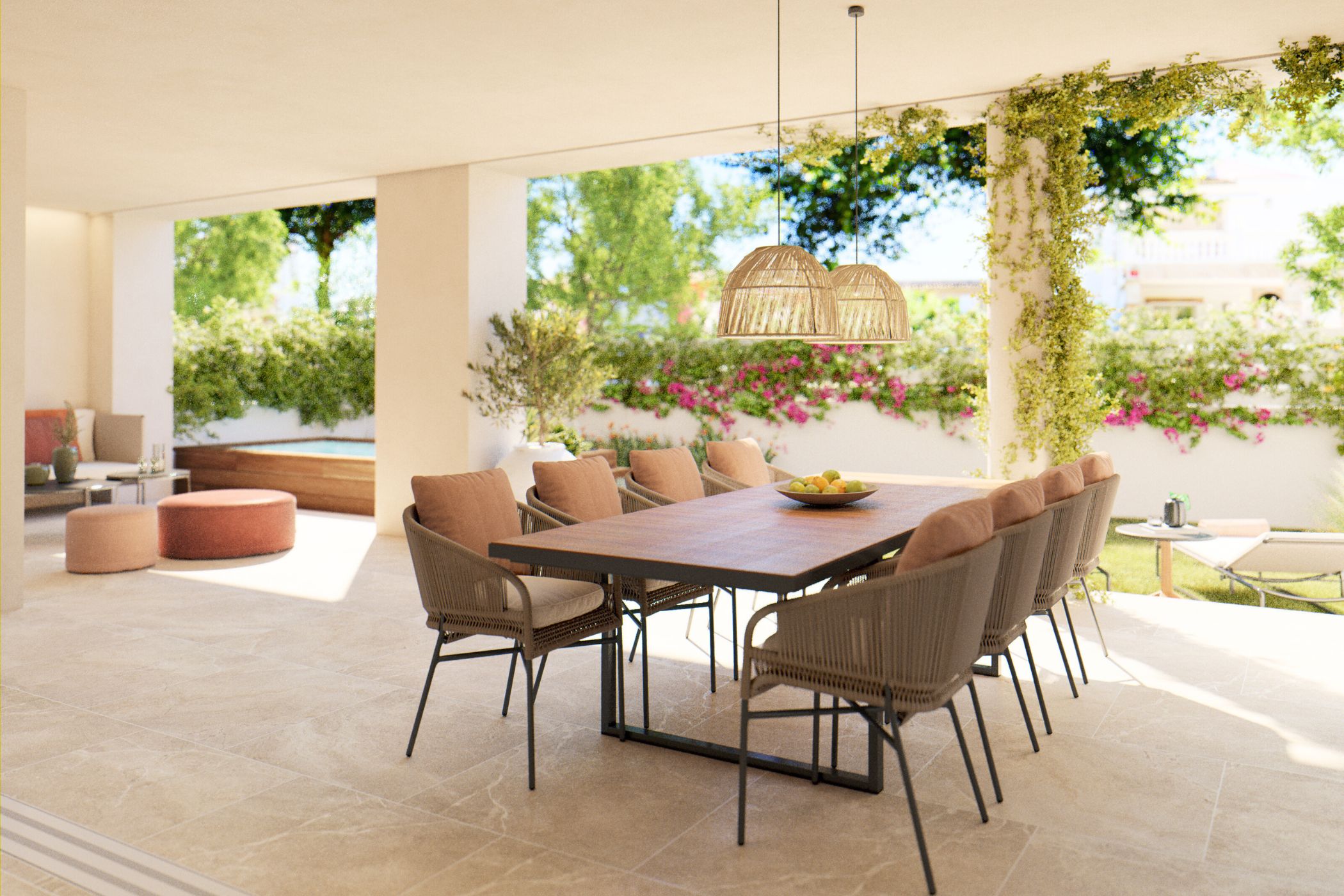
Ses Salines, Mallorca, Spain — 3-Bed Townhouse With Pool
€139,000
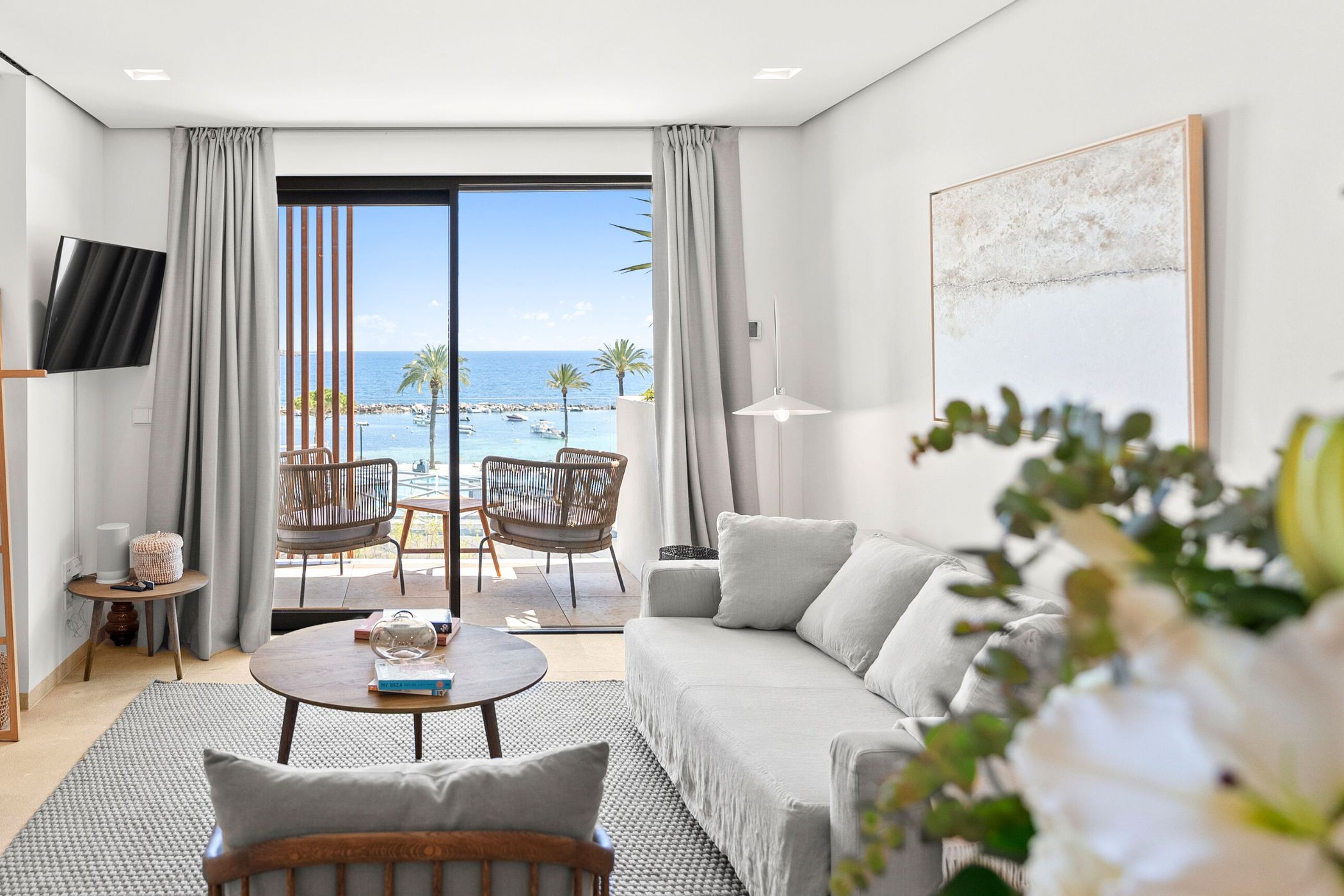
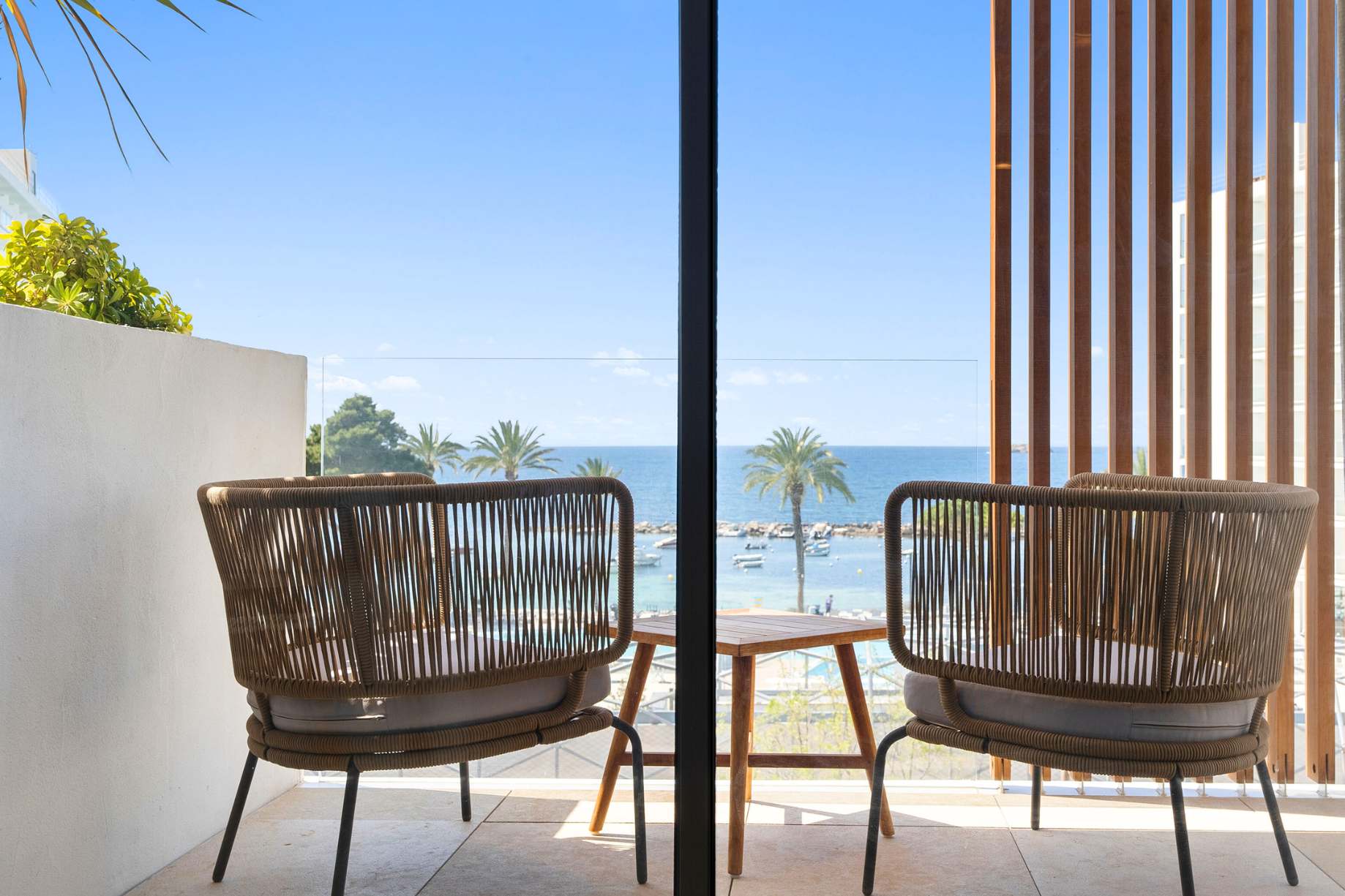
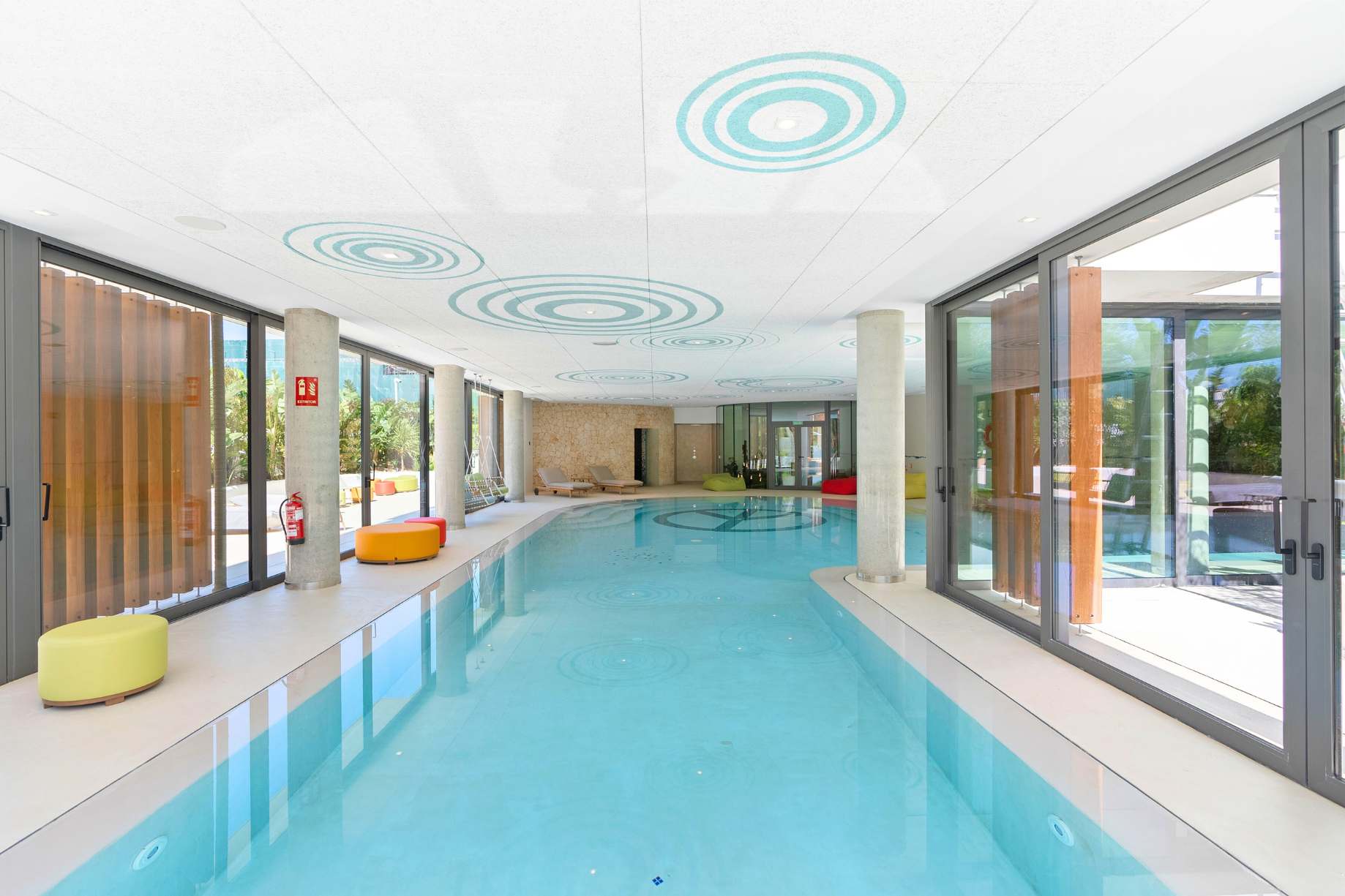
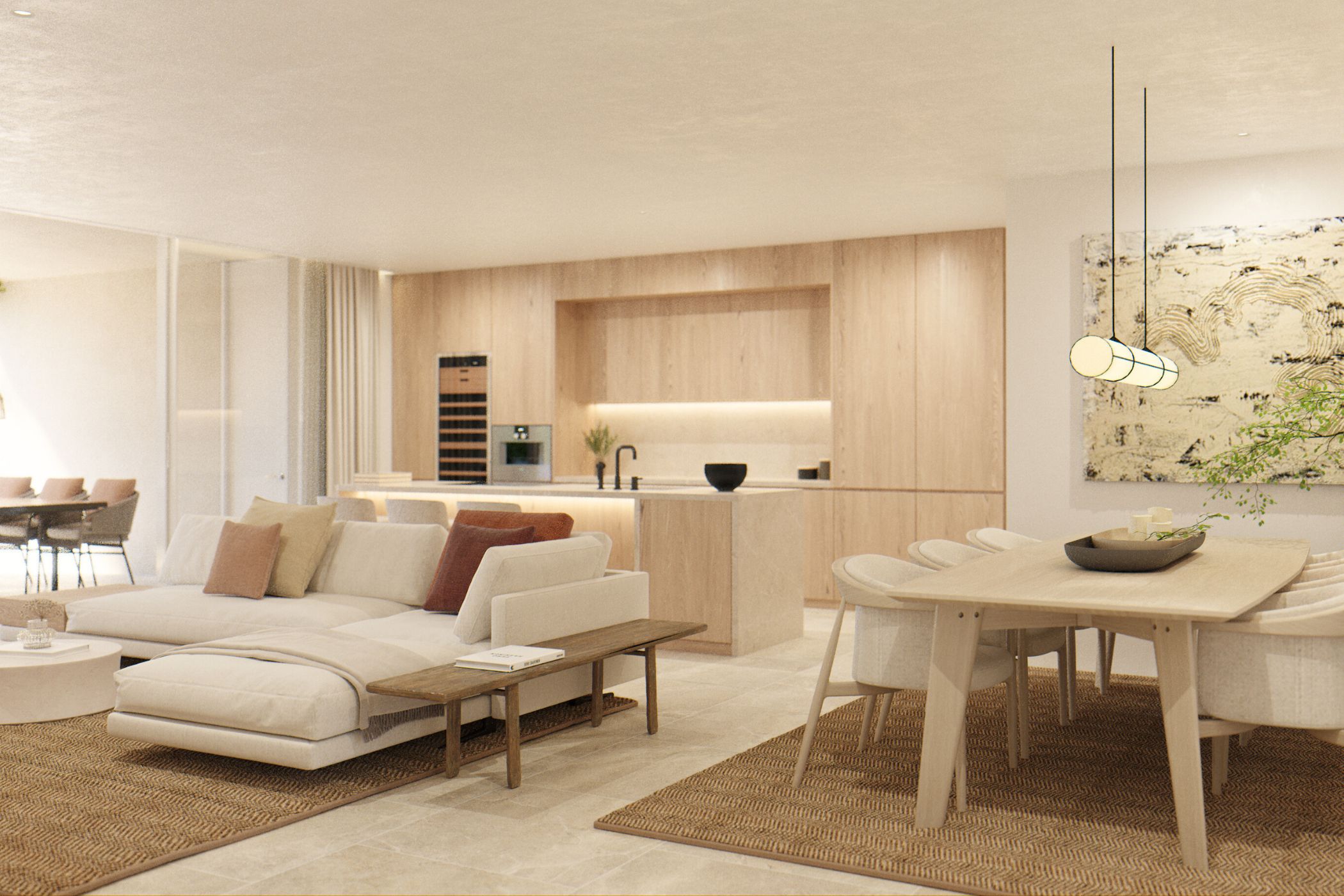
Playa d'en Bossa, Ibiza, Spain — 1-Bed Apartment With Sea Views
€159,000
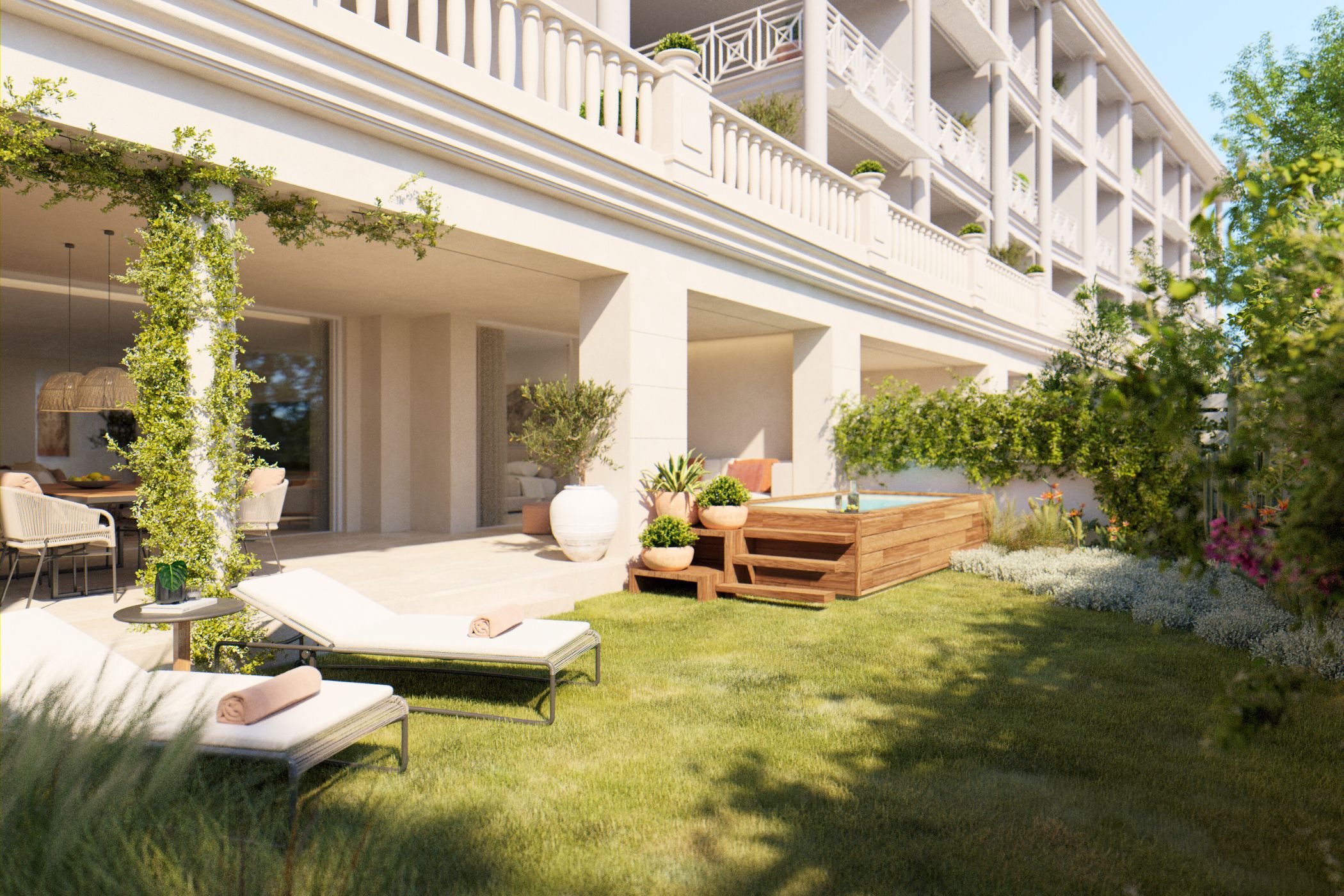
Ciudad Jardin, Mallorca, Spain — 2-Bed Apartment With Pool
€189,000
Es Trenc and the Protected Coast
The nearest beach from this townhouse is Ses Salines beach itself, a short drive away. Beyond it, along the coast to the south-west, lies Es Trenc — seven kilometres of white sand that has been described, with remarkable consistency across decades of travel writing and property reporting, as the finest natural beach on the island. The description holds because of what the beach does not have: no hotel frontage along its length, no pedalo concession, no concrete kiosk, no development of any kind beyond a seasonal bar at each end and the dunes behind. The Balearic government designated the surrounding territory as the Parc Natural Marítimoterrestre d'Es Trenc – Salobrar de Campos, a protected zone covering more than 3,780 hectares of beach, dune, wetland, salt flat and marine territory, and the management plan explicitly prohibits beachside construction. This is the legal mechanism that ensures Es Trenc in 2026 looks essentially as it did in 1986. No other instrument — planning permission, local conservation pressure, goodwill — has proved as durable in Mediterranean coastal management as a formal natural park designation, and this one is among the most comprehensive in the Balearics.
The clarity of the water at Es Trenc is directly connected to the Posidonia oceanica meadows offshore — an endemic Mediterranean seagrass that filters the water column, produces oxygen, and is the reason the sea along this stretch shifts through shades of turquoise and jade that more developed coastlines cannot replicate. The park supports more than 400 botanical species and a varied marine fauna; the salt flats within it attract flamingos, herons, egrets and a significant population of migratory waders whose arrival and departure tracks the north-south rhythms of European bird migration. For the co-owner with an interest in this kind of natural landscape, the Ses Salines townhouse is not simply near a beautiful beach. It sits ten minutes from a coastal environment of genuine ecological distinction — one that is legally protected from the development pressures that have altered so much of the Mediterranean coast over the past fifty years.
The wider coast offers further character. Sa Ràpita, a small fishing village a few kilometres west along the bay, has a cluster of seafood restaurants operating on the simplest possible basis — what came in this morning, grilled with oil and salt and lemon — and the kind of unhurried lunch that only works in a place that does not feel the need to turn the table quickly. Colònia de Sant Jordi, the area's main coastal settlement, is the departure point for the ferry to the island of Cabrera and its national park — a day trip involving some of the most transparent water in the Balearics, and an archipelago that has been uninhabited since its garrison was withdrawn in 1920. The town itself is in a period of careful evolution: boutique and design hotels have been moving into the old fishing quarter without destroying its character. Palma, with the cathedral, the old town, the airport, and all the urban infrastructure of a serious European city, is approximately forty-five minutes north-west.
The Calendar — Why the South's Seasons Work in a Co-Owner's Favour
Southern Mallorca is warmer in spring and autumn than the north and west of the island, and more sheltered through the winter months. The flat coastal plain around Ses Salines and the adjacent Campos municipality lacks the Tramuntana's capacity to generate its own weather patterns — which removes the occasional sharp cold snap and the mountain mist that the northwest coast experiences, and adds instead a micro-climate that is genuinely usable across a wider band of months. April in Ses Salines runs at 19 to 22 degrees Celsius — warm enough for the courtyard pool with the heater on, warm enough for lunch outdoors in shirtsleeves — while the sea at Es Trenc in October still holds at around 22 degrees. A co-owner prepared to distribute their visits across the year will find the south of Mallorca workable from late March through to November without meaningful compromise. The island's shoulder seasons here are not a fallback position. They are the destination.
With 44 to 45 days of personal use per one-eighth share, there is real scope to build an annual pattern across different seasons rather than concentrating everything in August. The booking calendar is agreed among co-owners through the management company, and in practice most groups find the process straightforward because they want different periods. A family with school-age children takes the last two weeks of July and the first week of September. A couple with flexible schedules takes late April, a week in June before the peak, and two weeks in October when Es Trenc — all seven kilometres of it — is occupied by a few dozen people rather than the high-season crowds. The shoulder season is not a compromise in the south. It is, for most owners who have experienced both, the version they prefer. The full mechanics of how the calendar works, including priority booking and the annual allocation process, are at the staying in your property FAQs.
The Management Reality
Full ownership of a Mallorcan property at any meaningful specification brings a management overhead that most buyers discover gradually and find exhausting by the second or third year. The pool maintenance contractor — essential in a climate that keeps the pool viable for nine months of the year. The gardener. The cleaner. The property manager who calls with questions during the months when nobody is in the country. The IBI — Spain's annual local property tax — arriving in Spanish with figures that need decoding before they can be paid. The insurance renewal. The community fee if the property sits in a complex. Co-owners deal with none of this directly. The management company handles everything: taxes, maintenance, cleaning, pool operation, insurance, repairs. Owners receive a single annual account and pay their proportional share of costs. That is the full extent of the administrative relationship with the property.
The cost arithmetic is one of the more persuasive numbers in co-ownership. Full annual running costs for a quality three-bedroom townhouse in Mallorca with a pool — property tax, insurance, maintenance, pool operation and heating, cleaning between stays, management fee — typically run in the range of €14,000 to €20,000 per year. Each co-owner shares the running costs equally, and our partner handles everything. That figure is, for most co-owners, less than they would spend on two weeks in a comparable Mallorca rental in summer — and the entry share price of €139,000 delivers real fractional ownership in a new-build property in one of the island's most protected and scarcest markets, rather than a booking that leaves nothing behind. The full cost structure is covered at our buying FAQs.
Ses Salines in the Mallorca Property Market
The Mallorca property market in 2026 is shaped by a supply constraint that is structural rather than cyclical: the island has limited capacity to expand its built footprint. Environmental protections, natural park designations, and the Balearic government's progressively tighter planning framework have, over the past two decades, sharply curtailed new supply in the locations that matter. Ses Salines benefits from this dynamic in a specific way: a substantial share of the surrounding municipality is inside the natural park, leaving the village itself with relatively little developable land and making new supply within the built boundary genuinely scarce. Houses in Ses Salines average €5,576 per square metre at current market rates, with quality villas in the municipality and surrounding countryside trading between €800,000 and €2.5 million. A one-eighth share in a brand-new townhouse at €139,000 represents an entry point into this market that outright ownership cannot approach at the same specification level.
Broad Mallorca residential forecasts for 2026 point to continued appreciation of 3 to 5 per cent in average values, with prime properties and best-in-class villages — including those with natural park adjacency and restricted supply — toward the upper end of that range. The same development restrictions that protect Es Trenc and the salt flats are the forces that constrain land supply in Ses Salines and underpin its property values over time. For the co-ownership buyer, the long-term capital position mirrors that of any property owner: the co-owner's one-eighth share participates proportionally in any appreciation in the full asset value. The exit mechanism — selling a fractional share on the open market — is covered in the co-ownership exit guide. For buyers new to owning property in Spain, the Spain property tax guide for co-owners covers ITP, IBI, wealth tax and what co-ownership means for foreign purchasers.
The Case for the Deep South
There are many versions of Mallorca, and most buyers arrive having already settled on which one they want. The south-west for prestige and nautical infrastructure. The north-west for landscape drama and cultural credibility. The north-east for shallow-water family beaches and old-town character. The deep south, which delivers none of those particular attractions, offers instead something harder to market and easier to value once you have experienced it: permanence. The salt flats have been in production since the Roman period. The beach cannot be built upon. The village has not been refitted for visitors. The flamingos arrive in the lagoons because the ecological conditions suit them — not because any amenity has been installed for tourism. Ownership in Ses Salines is access to the version of Mallorca that preceded the tourism industry and will outlast it. That is what the most durable second-home decisions tend to have in common — the place was something before you arrived, and will remain something after you leave.
Explore the Ses Salines townhouse listing in full — photographs, floor plan, share pricing and availability — or browse the wider Spanish co-ownership collection across Mallorca, Ibiza, the Costa del Sol and the Costa Blanca. For a broader sense of what a week in Mallorca as a co-owner actually looks like day-to-day, the Mallorca ownership experience guide covers the rhythms of the island across its seasons. To speak directly with someone about availability, share terms, or how to proceed, the COP team is the direct route.
More from Co-Ownership Property
Get in Touch
Speak to an expert
Tell us what you're looking for and we'll be in touch.