Co-Ownership Basics
What 'Turnkey' Really Means in a Co-Owned Home
The single most underrated feature of co-ownership is the one nobody puts in the brochure: you arrive with a carry-on and the house is already a home. Here is what turnkey really means, and why it is harder to deliver than it looks.
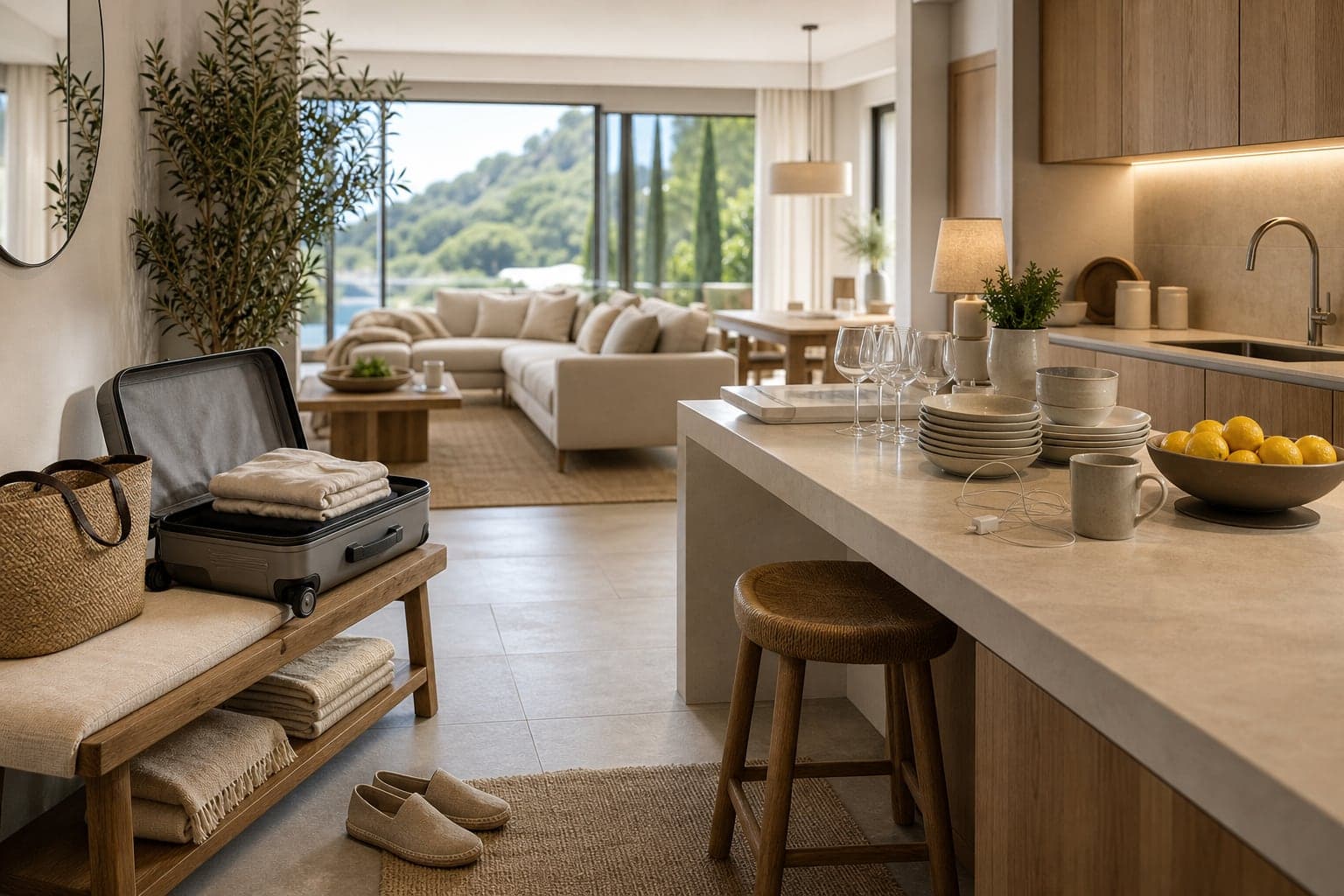
Everything a new co-owner needs to bring to their first stay fits in a cabin bag. Not because the house is sparse, but because it is finished — designed, furnished, equipped down to the corkscrew and the spare phone charger, and prepared by someone else before the key ever turns. "Turnkey" is the word the industry uses for this, and it is so quietly central to the co-ownership proposition that most buyers only understand its value after their second or third visit, when the novelty wears off and the sheer absence of friction becomes the point.
It is worth dwelling on, because the alternative is so familiar that people have stopped noticing how much it costs them. Anyone who has bought a holiday home outright knows the first eighteen months are not a holiday at all. They are a procurement project conducted at distance and at expense: the sofa that arrives in the wrong fabric, the kitchen with no pans, the bed that needs a mattress, the lamp, the second lamp, the hunt for an electrician who will answer the phone in August. By the time the house is genuinely usable, the owner has spent a small second budget and a great deal of patience. Co-ownership removes that entire phase. You buy into a property that is already complete — and understanding exactly what "complete" contains, who pays for it, and how it stays that way is one of the most practical things a prospective buyer can learn.
What "Turnkey" Actually Includes
A properly delivered co-ownership home is handed over in the condition a five-star residence would be: furnished throughout, professionally designed, and equipped for living rather than merely for viewing. The furniture is in place and chosen as a scheme rather than a collection of survivors. The beds are made up with quality linen, and there are spares in the cupboard. The kitchen is not just fitted but stocked — matched crockery and glassware in usable quantities, sharp knives, decent pans, a coffee machine that works and that someone has thought to leave instructions for. The bathrooms have towels graded by size, a hairdryer, the small inventory of things that turn a building into a place you can simply walk into and inhabit.
The standard extends past the obvious. Wi-Fi is installed, tested and fast, with the password waiting rather than hunted for. The television and sound system are connected and the remotes accounted for. Outdoor furniture, sun loungers and parasols are part of the package wherever the property has a terrace, a pool or a garden. In an alpine home there will be a boot room organised for ski gear; on the coast, beach towels and a stack of folding chairs. The governing principle is simple and it is the opposite of a rental's: a co-owner should never have to buy, assemble or source anything to use their own home. If it is needed for ordinary life in that house, it is already there.
This is the difference, in practice, between owning a share of a managed home and owning a holiday let. A rental is furnished to a price; a turnkey co-ownership home is furnished to a standard. The distinction shows up in the details a guest would never notice on a single visit but an owner relies on across a year — the spare set of everything, the quality of the mattress, the fact that the second drawer in the kitchen contains what a second drawer in a kitchen should. For a fuller picture of what is and is not included in the model, COP's how it works page sets out the structure in detail.
Designed for Sharing, Not for a Showroom
Furnishing a home that eight households will use across the year is a genuinely different discipline from decorating one a single family will occupy occasionally. The brief is not to win a photograph; it is to look beautiful in May and still look beautiful in its fortieth week of use, having hosted children, dinner parties, wet swimsuits and muddy boots in between. That changes almost every material decision. Sofas and armchairs are upholstered in performance fabrics — the high-durability, stain-resistant textiles such as Sunbrella, Crypton or Revolution that the hospitality industry has relied on for years — rather than the delicate linens that photograph well and surrender on contact with red wine.
The same logic runs through the house. Dining tables, bed frames and other high-use pieces are specified in solid timber rather than veneered board, because solid wood can be repaired and refinished where particle board simply fails. Floors are increasingly engineered or luxury vinyl plank in the rooms that take water and traffic, chosen for resilience that reads as warmth. Worktops are quartz or sealed stone. Rugs are flat-weave and washable, not deep-pile. Soft furnishings are picked to survive a laundry cycle. None of this announces itself; done well, the durability is invisible and the room simply feels considered. But it is the reason a well-run co-ownership home still looks like a luxury property after five years of genuine use, while a privately furnished holiday house often looks tired after two. Furniture in a shared home is an operating decision as much as an aesthetic one, and it is made by people who do it for a living.
There is a neutrality to the design, too, and it is deliberate. A shared home is decorated to be welcoming to eight different tastes rather than to express one — calm palettes, quality over personality, the restraint of a very good hotel. Some buyers worry this means blandness. In practice it means the opposite of the chaos most people's actual holiday homes accumulate: no one owner's holiday souvenirs, no inherited sofa nobody likes, just a coherent, grown-up scheme that everyone can live in comfortably and no one has to apologise for.
The Owner's Closet: Where the House Becomes Yours
The most common objection to a beautifully neutral shared home is also the most human one: if everything resets between stays, is it really mine, or am I just a very frequent guest? The answer the model has settled on is the owner's closet — a locked, private cupboard or storage space allocated to each co-owner, left untouched by housekeeping and invisible to the others. It is a small feature with a large effect, because it solves the one thing a hotel can never offer: continuity.
Into that closet goes whatever makes the place feel like a return rather than an arrival. The family's beach kit and the children's armbands. A favourite pillow. The good olive oil and the coffee you actually like. Hiking poles, ski helmets, the board games, a few photographs to set out on the first evening and pack away on the last. You leave with an empty bag and arrive to find your own things waiting, exactly where you left them six weeks earlier. This is the quiet mechanism by which a one-eighth share stops being a financial arrangement and starts being a home — the part of the experience that the spreadsheet comparisons never quite capture but every returning owner mentions first.
The Handover Standard: Why the House Is Always Ready
Turnkey is not only a condition at purchase; it is a standard maintained every single week of the year. The thing that makes co-ownership feel effortless is the handover discipline between stays, run by the management company on the owners' behalf and modelled directly on hotel housekeeping. After each owner leaves, the home is fully cleaned, the linen and towels laundered or replaced, consumables restocked, and the property inspected against an inventory so that anything broken or missing is dealt with before the next owner walks in rather than discovered by them. No co-owner ever inherits the previous owner's mess, and no co-owner has to leave their stay scrubbing floors to spare the next family. You arrive to a reset house; you leave, and the reset happens again.
In the better-run arrangements the preparation is anticipatory rather than merely reactive. Heating or air-conditioning is brought to temperature before arrival, the pool is ready, and the basics a household needs on its first night — coffee, milk, a few staples, often to a short list the owner sends ahead — are in the fridge. This is the operational heart of the whole proposition, and it is the reason the experience resembles a private residence with staff far more than it resembles a self-catering let. For the practical detail of how arrivals, departures and requests are handled, COP's staying in your co-ownership property FAQs walk through what an owner can expect each visit, and the current homes show the standard the model is held to.
Who Pays for It, and How It Stays That Way
Because the home is sold finished, the cost of furnishing and equipping it is not a separate bill that lands after completion — it is built into the share price. When you buy one-eighth of a property, alongside seven other vetted co-owners, the furniture, design, kitchen equipment and outdoor kit are part of what your share buys, just as they are part of what the property is worth. There is no post-purchase scramble and no surprise: the move-in-ready house is the asset, and you own a real slice of all of it. Buyers thinking through the full purchase picture will find the mechanics laid out in COP's buying FAQs.
Keeping the home to standard is funded the same way everything in co-ownership is — proportionally. The weekly housekeeping and handovers sit within the shared running costs, and the eventual renewal of sofas, mattresses and worn pieces is planned for rather than improvised, drawn from the property's reserve so that no single owner is ever hit with a furnishing bill out of nowhere. This is the unglamorous accounting that makes the glamorous arrival possible: the house stays move-in ready for a decade not by accident but because its upkeep and its eventual refresh are budgeted, shared eight ways, and managed by people whose job it is. With usage of roughly 44 to 45 days a year per one-eighth share, the per-visit cost of all this care is a fraction of what the same standard would cost a sole owner — who, after all, would be paying for a full year of readiness to use a handful of weeks of it.
The Real Luxury Is the Absence of Logistics
Ask people what they want from a second home and they describe scenery, light, a particular coast or mountain. Ask them, a few years in, what they actually value, and the answer is almost always the same: that they can go. That the decision to spend a long weekend in their own house is a decision about whether to pack a bag, not a project requiring a fortnight's notice, a cleaner, a shop and a list of things that broke since last time. Turnkey co-ownership is, in the end, the engineering behind that freedom. The furniture, the owner's closet, the handover, the reserve that quietly replaces the mattress in year seven — all of it exists so that ownership feels like arrival and nothing else. Over enough visits, across enough seasons, that absence of logistics is what turns a property into a second life: a place you simply step into, already yours, already ready.
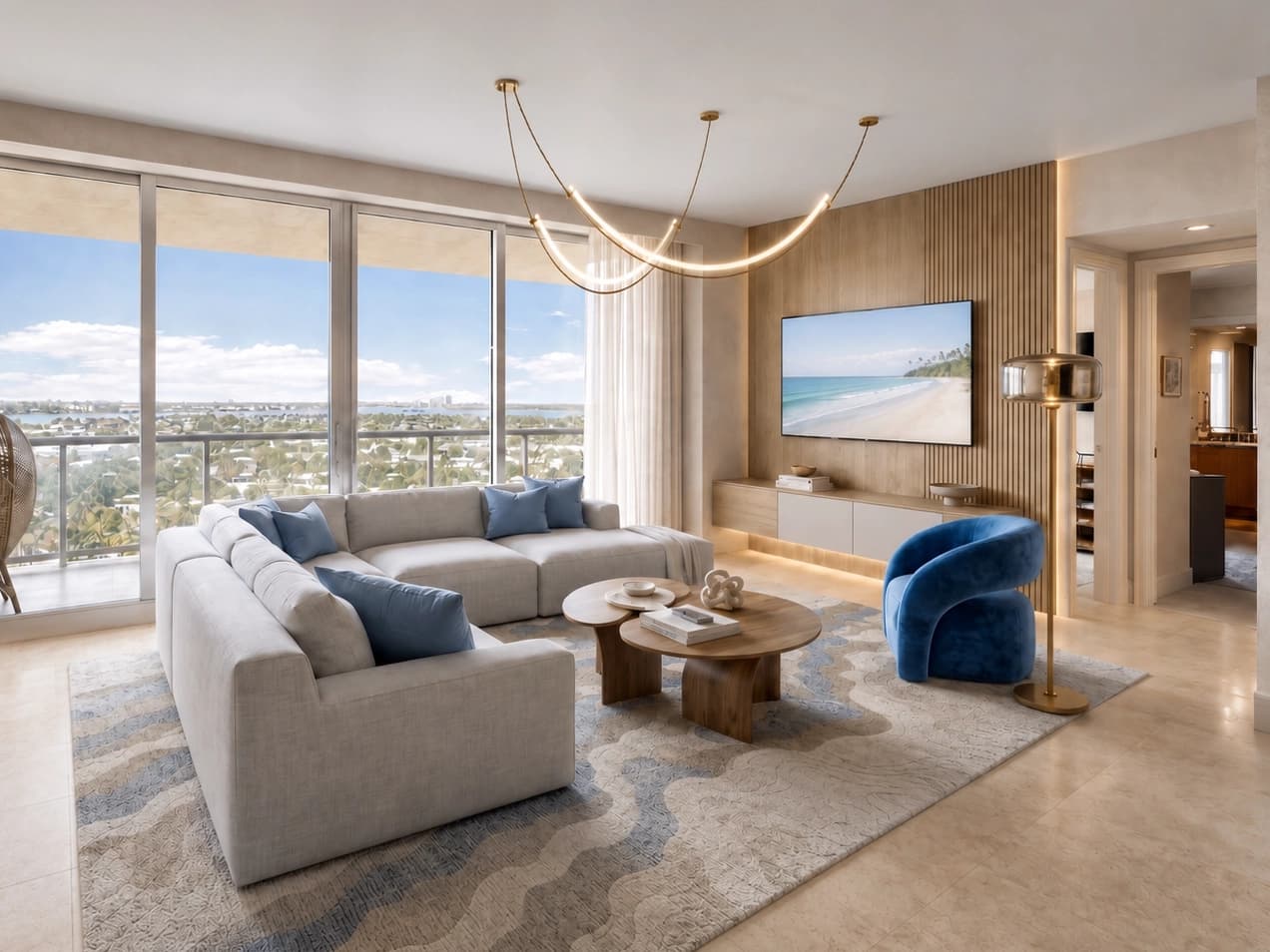
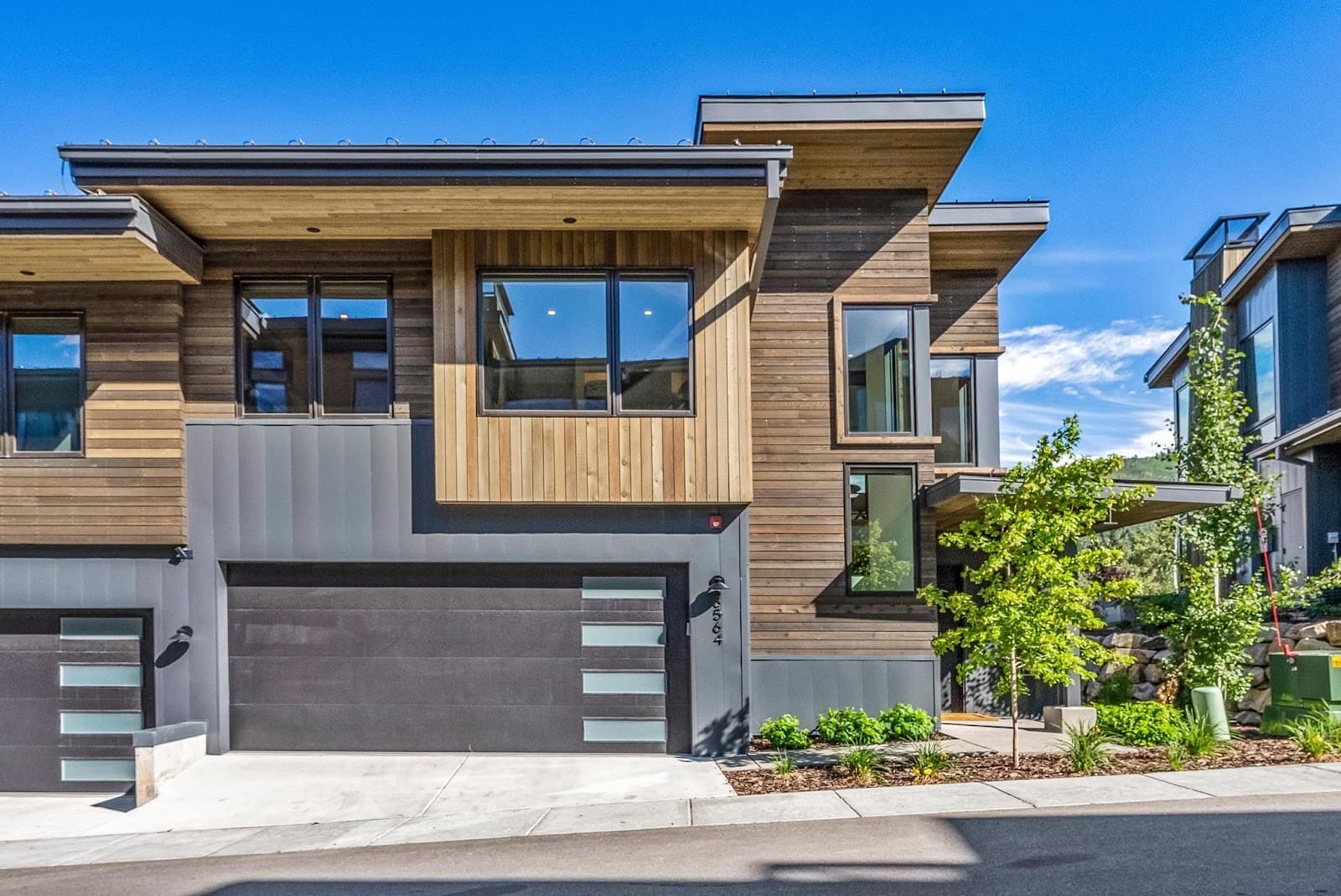
See what move-in ready actually looks like. Browse the full range of co-ownership homes, explore a finished, fully furnished share such as this five-bedroom house in Aspen within the wider US collection, or speak with our team about exactly what a specific home includes and what your share would cost.
More from Co-Ownership Property
Get in Touch
Speak to an expert
Tell us what you're looking for and we'll be in touch.