Co-Ownership Basics
What Happens If a Co-Owner Stops Paying? The Structure That Protects the Other Seven
It is the quiet fear behind almost every co-ownership enquiry: what if one of the eight simply stops paying? The answer lives in the structure — and it is far more reassuring than most buyers expect.
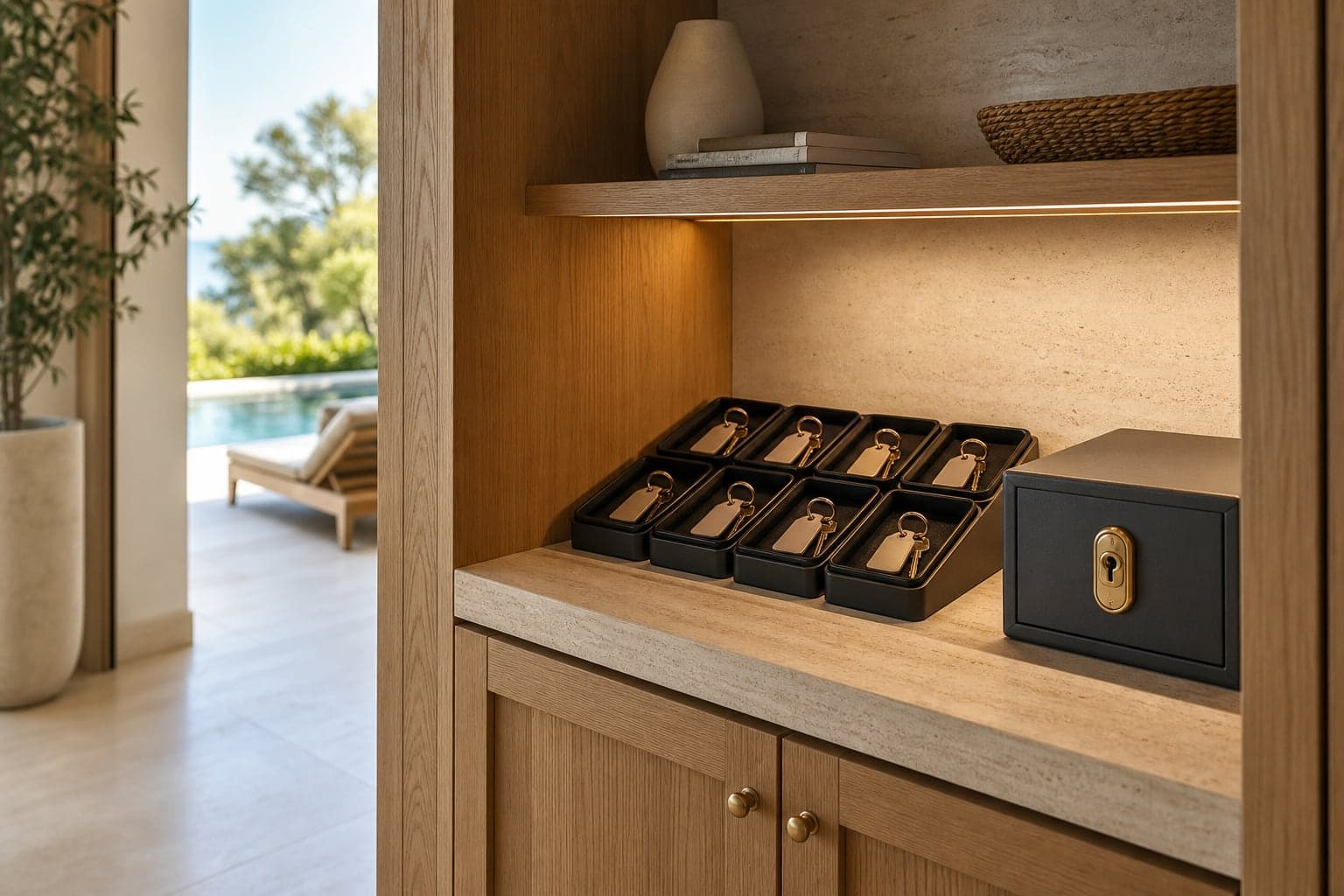
The objection almost never arrives as a question about the house. It arrives as a hypothetical, offered with a slightly apologetic shrug, usually somewhere near the end of an otherwise enthusiastic conversation. The buyer has understood the arithmetic — that owning one-eighth of an excellent home beats owning all of a home they will barely use. They have accepted the legal structure. They like the property. And then, pen almost on the page, they ask the thing they have been holding back the whole time: but what if one of the others just stops paying?
It is a fair question, and it deserves a real answer rather than a reassuring one. The instinct behind it is sound: in any shared financial arrangement, the person who fails to meet their obligations can drag everyone else down with them. A jointly held mortgage on which one party defaults becomes, in the crudest cases, a problem for all the co-signers. What most buyers do not yet understand is that a professionally structured co-ownership is engineered, from the first clause of its operating agreement onward, precisely to ring-fence that risk. The co-owner who stops paying is not a shared catastrophe waiting to happen. In a well-built structure, they are the one problem the other seven have to think least about.
The Fear Beneath the Question
Strip the hypothetical back and what remains is rarely a fear about money in the abstract. It is a fear of contamination — that one person's financial trouble will leak across the shared thing and stain it. People have watched it happen. A holiday house left to four siblings, one of whom loses a job and can no longer contribute to the roof repair, so the repair does not happen and the house slowly deteriorates while nobody wants to be the one to force the issue. A boat owned with two friends, where one stops paying the marina fees and the others quietly cover the gap for a year until resentment does what the water never could. The dread is not of co-ownership as a concept. It is of a specific, familiar failure: the moment shared money meets an unwilling or unable partner, and there is no clean mechanism to resolve it.
The reason those informal arrangements curdle is almost never the missed payment itself. It is the absence of a rule for what happens next. Nobody signed anything that says who covers the shortfall, how long a co-owner has to make good, or what the consequence is if they cannot. So the shortfall becomes a negotiation, the negotiation becomes a grievance, and the grievance outlives the friendship. A packaged co-ownership removes that vacuum entirely. Every one of these questions has already been answered in writing, before you arrive, in a document that is identical for all eight owners and does not bend to whoever argues hardest.
Why the Problem Rarely Starts
The first line of defence is the one that operates before anyone signs anything: the vetting. A co-owner does not simply choose a share and pay for it. They are assessed for the means to meet both the purchase and the recurring annual costs that follow — because the single most genuine way co-ownership can sour is a member who cannot sustain their obligations. This is not a formality. It is the structural reason default is rare rather than routine. When every member of the group has been checked for solvency before admission, the population of owners who suddenly cannot pay is very small to begin with. We have written elsewhere about who the other seven owners are and how they are chosen; the short version is that solvency is the first filter, applied deliberately, precisely so that the question this article answers almost never needs answering in practice.
It helps, too, that the sums involved are proportional rather than crushing. A one-eighth owner is responsible for one-eighth of the running costs — typically a low four-figure annual amount for a European home, covering their share of insurance, local taxes, maintenance and management. This is not a mortgage-scale obligation that a single bad year renders impossible; it is a manageable line item that solvent owners meet routinely. The combination of careful selection at the front door and modest, predictable dues thereafter means the arrangement rarely encounters the stress it is nonetheless built to withstand.
What the Operating Agreement Actually Does
Because the property is held inside a limited liability company, your relationship with the other seven owners is governed not by goodwill but by that company's operating agreement — the document that sets out, in advance, the financial terms and individual responsibilities of every member. This matters enormously in a default scenario. A late or missing contribution does not become a conversation you are forced to have with someone you would rather not confront. It becomes a process, triggered automatically, run by the management company rather than by the owners themselves. The delinquent member is notified, given a defined window to make good, and charged in the manner the agreement specifies. At no point are the paying owners asked to chase the non-paying one across a kitchen table.
This is the same emotional neutrality that makes the whole model work day to day. A missed payment is not a betrayal; it is a clause. The management company sits between the owners and the property — and, crucially, between the owners and each other — absorbing exactly the friction that destroys informal arrangements. The LLC governance structure that decides ordinary questions of the house is the same structure that handles the extraordinary one of a member falling behind, and it does so without requiring the other seven to become debt collectors.
The Buffer That Absorbs the Shock
Between a missed payment and any dramatic remedy sits a piece of quiet financial engineering that most buyers never think about until it is explained: the home's operating float and its reserve fund. A well-run co-ownership does not operate hand-to-mouth, meeting each bill only as the eight contributions arrive. It holds a buffer — money set aside for both foreseeable maintenance and the unforeseeable — which means the pool contractor, the insurer and the gardener continue to be paid on schedule regardless of whether all eight owners have paid on time. The house does not deteriorate the moment one member is late. The lights stay on, the maintenance continues, and the shortfall is managed as an accounting matter rather than a crisis.
This is precisely the mechanism that is absent from the failed sibling-cottage and shared-boat stories. There, a missed contribution is felt immediately, because there is no float and no manager — the shortfall lands directly on whoever is willing to cover it, and the resentment begins at once. Inside a professional structure, the buffer buys time, and time is what turns a potential emergency into an orderly resolution. The paying owners are insulated from the consequences of another owner's difficulty for long enough that the formal process can run its course without the property, or the group, suffering in the interim.
When a Share Must Change Hands
Suppose a member genuinely cannot recover — not merely late, but unable to resume paying. The agreement provides for this, and the resolution is designed to protect the seven paying owners rather than to punish anyone. In the mature operators that pioneered this model, the operating company effectively guarantees continuity: it steps in to keep the delinquent share's obligations current, then works to resell that one share to a new, vetted owner. The critical point for the other seven is what does not happen. Their own shares are untouched. Their use of the home continues. Their costs do not rise to cover the gap. What changes is that, in time, a different name appears on the eighth share — and because a share in a quality home is a genuine, deeded, resaleable asset, there is a real market to sell it into.
This is the deepest difference between fractional ownership and the informal versions people fear. In a sibling cottage, a defaulting owner is a permanent structural problem, because there is no clean way to remove them and no market to sell their portion into. In a properly structured co-ownership, the defaulting owner is a temporary vacancy in a company that is built to be reconstituted. The share is not welded to the person; it is a transferable interest that can move to a solvent buyer while the home carries on exactly as before.
The Remedy That Almost Never Fires
There is, at the far end of the spectrum, a provision to sell the whole property — but it is worth understanding how remote a scenario it addresses. This lever is reserved for a genuinely extreme case: several shares in default at once, over an extended period, in a market where those shares cannot be resold. It is the equivalent of an aircraft's emergency exit — required to exist, mapped out precisely in the documentation, and almost never used. The reason it stays dormant is the entire preceding chain: solvency vetting that keeps defaults rare, modest proportional dues that keep them manageable, a reserve buffer that keeps the home running, and a resale market that clears a single failed share long before it can compound into several. For the whole-property remedy to be reached, every earlier safeguard would have to fail simultaneously — which is exactly why the layered design exists.
And even that worst case is not the ruin the word "forced sale" conjures. Because owners hold real equity in a real property, a sale of the home returns each owner their proportional share of the proceeds. It is an unwanted outcome, but it is not the loss of your capital — it is the conversion of your share back into cash at market value. The structure protects the downside as carefully as it manages the everyday.
Why This Is Safer Than Owning With Friends
Here is the conclusion buyers rarely anticipate. The scenario that worries them most about co-ownership — a partner who stops paying — is the scenario in which a professional structure most decisively outperforms the alternatives. Co-owning with friends or family feels safer because the people are known, but it is far more fragile, because the arrangement rests on affection rather than architecture. There is no vetting, no float, no neutral manager, no clause, and no market to sell a failed portion into. When money goes wrong, everything goes wrong at once. A vetted group of eight strangers, bound by an identical agreement inside a company built to absorb exactly this stress, carries none of that fragility. The absence of friendship is not the risk; it is the protection. The agreement is allowed to do the work that affection would be too awkward to do.
This is why the honest answer to the pen-hovering buyer is not a soothing "it won't happen." It is better than that. It might, very rarely, happen — and the structure already knows what to do, at every stage, in a way that keeps your share, your use of the home, and your costs entirely insulated. The question that feels like the strongest objection to co-ownership turns out, on inspection, to be one of the clearest arguments for doing it properly rather than privately.
What You Are Really Buying
Return to that moment at the table, pen in hand. What the buyer is really asking is not "will someone default?" but "have the people who built this thought about the ways it could go wrong?" The answer, in a properly structured co-ownership, is that they have thought about little else — that the calm surface of an easy arrival and a well-kept home rests on layers of protection most owners never have to see. What you are buying is not merely a share of a house. It is a second life in a place you love, held inside a framework designed so that another person's bad year never becomes your problem. That security is not a footnote to the offer. It is the offer.
If the "what if someone stops paying" question is the one holding you back, it may be the best reason to look closely at how the structure actually works. Explore the current collection of homes — from a five-bedroom house in Aspen to the wider US collection — or speak with our team to walk through exactly what the agreement says, clause by clause, before you ever put pen to page.
More from Co-Ownership Property



Get in Touch
Speak to an expert
Tell us what you're looking for and one of our co-ownership specialists will be in touch within 24 hours.