Paris · Île-de-France · France
Fractional Ownership in Paris
From a Haussmann apartment on the Île Saint-Louis overlooking the Seine to a Montmartre artist's atelier with the lead roofs of Paris spreading below the Sacré-Cœur — fractional ownership in Paris means a real share of a central-Paris second home, around six weeks of personal use a year, and a fully managed apartment that is ready the day you step off the Eurostar at Gare du Nord.
3 properties · from $210,000
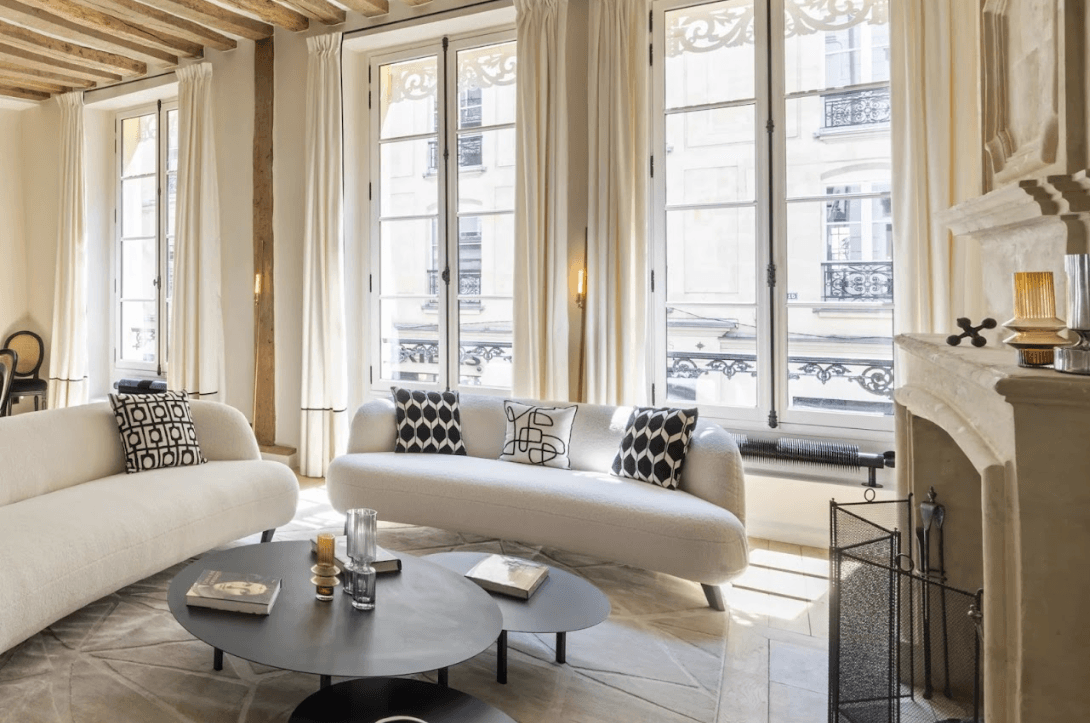
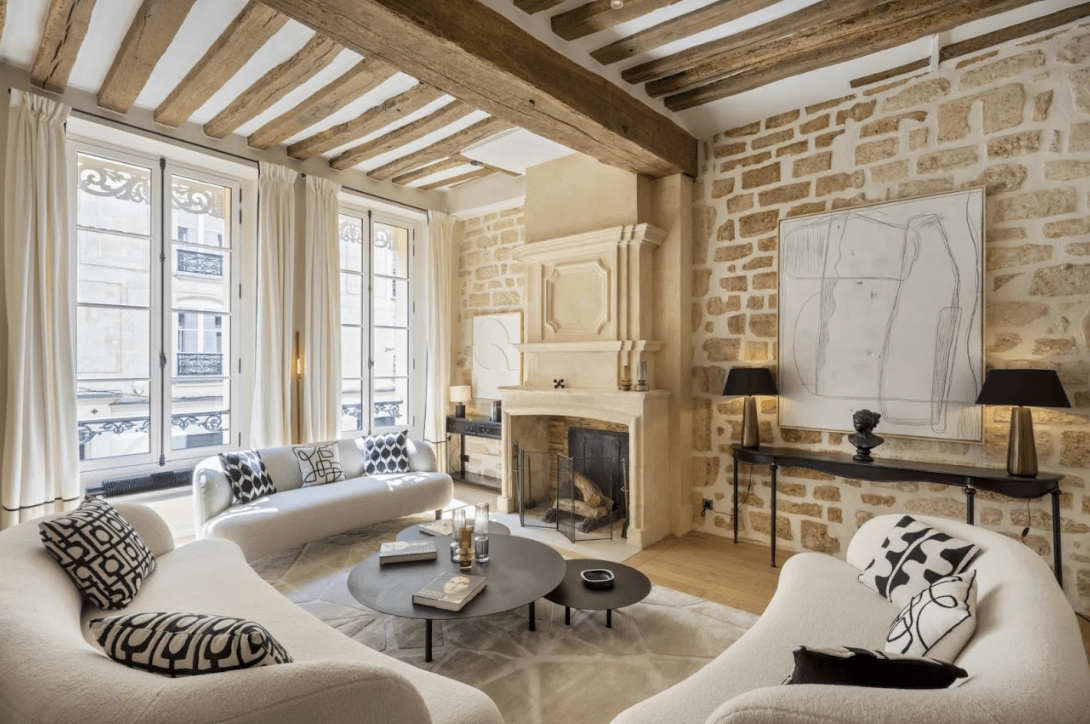
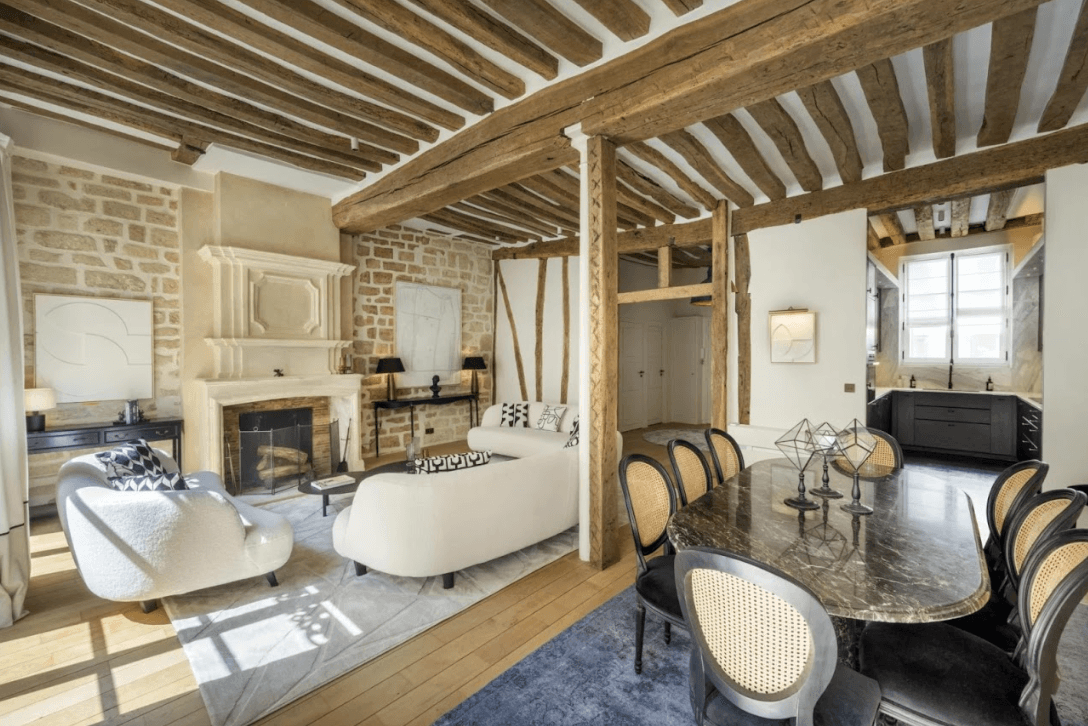
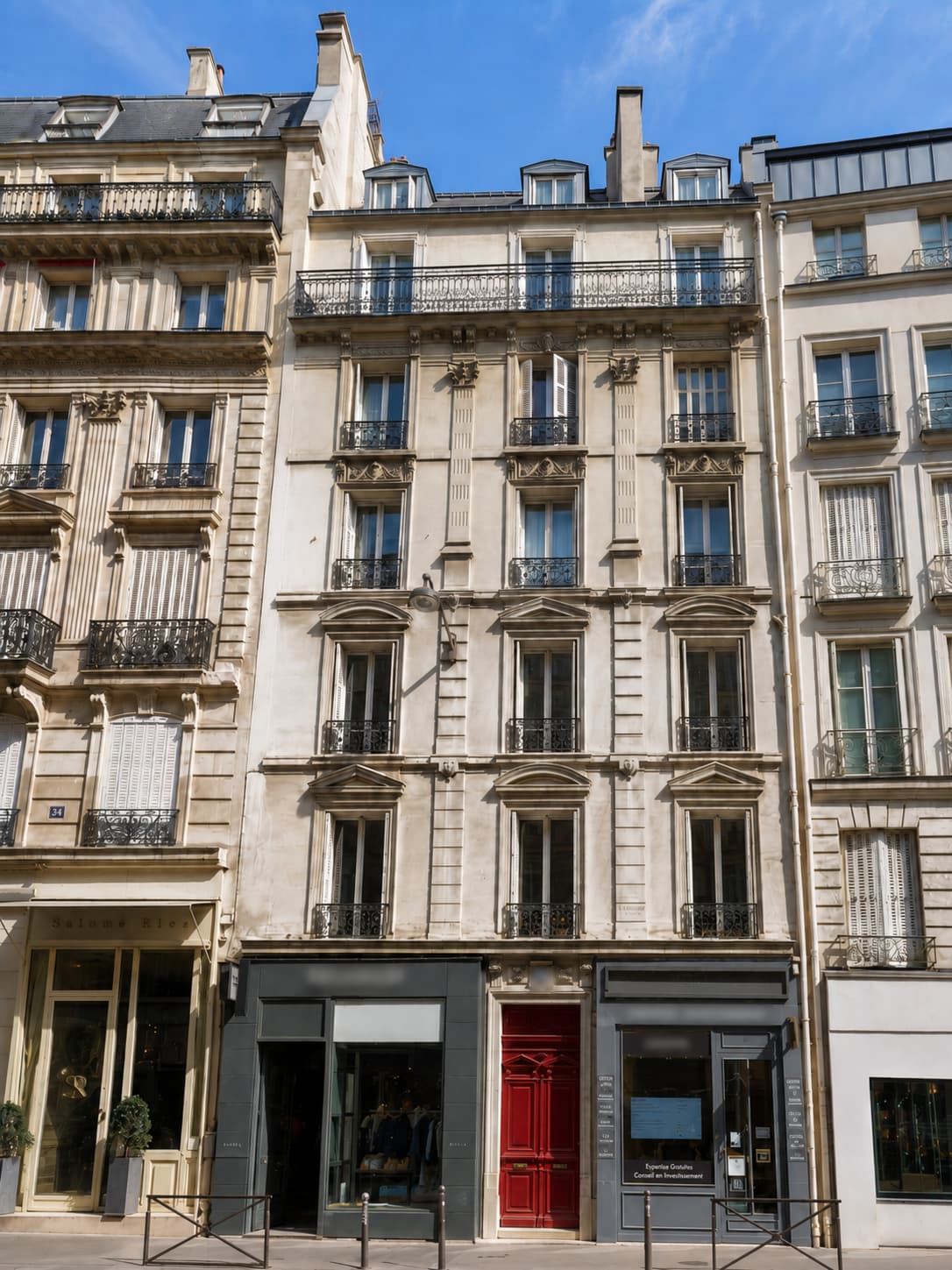
7th Arrondissement, Paris, France — 2-Bed Apartment
$699,000
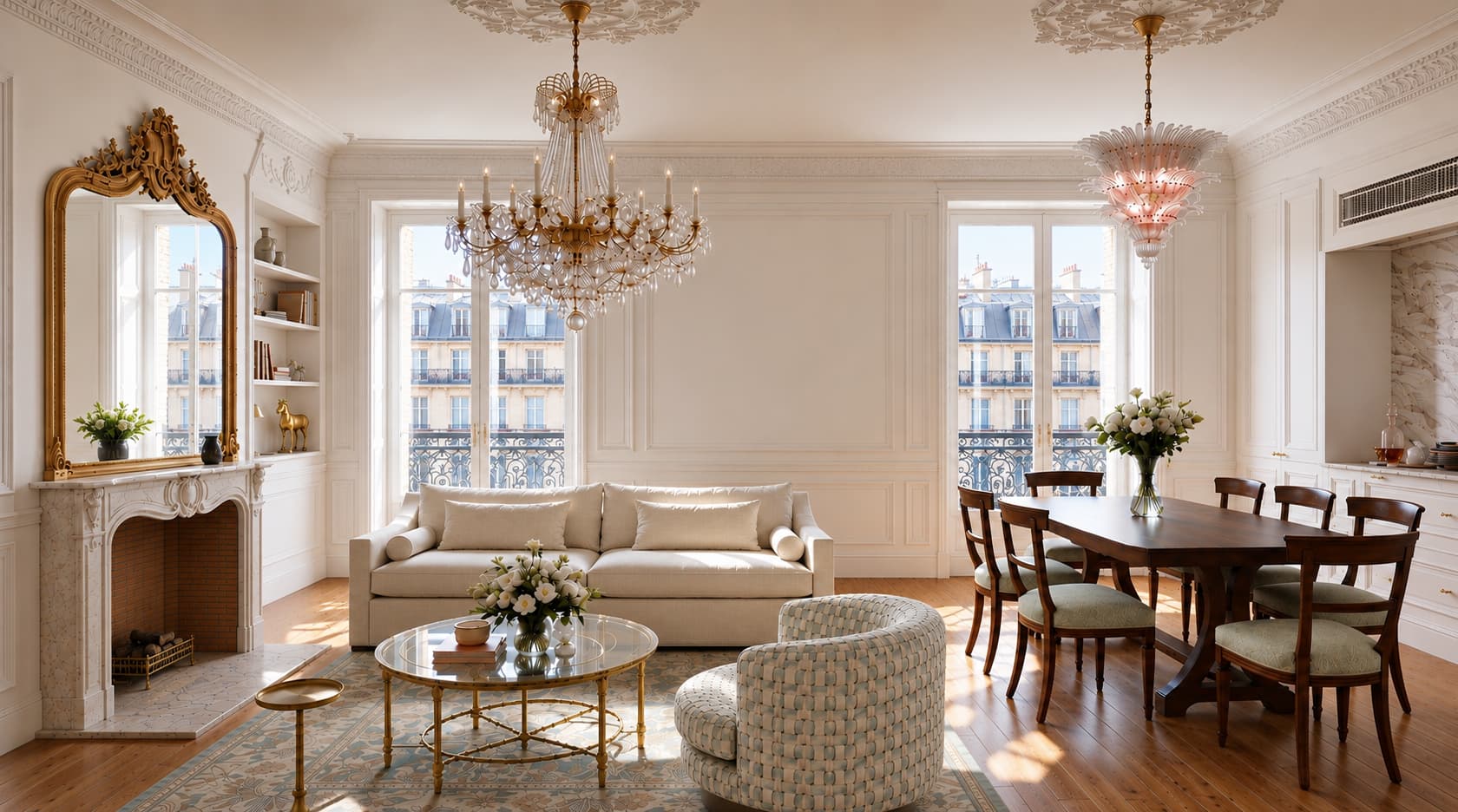
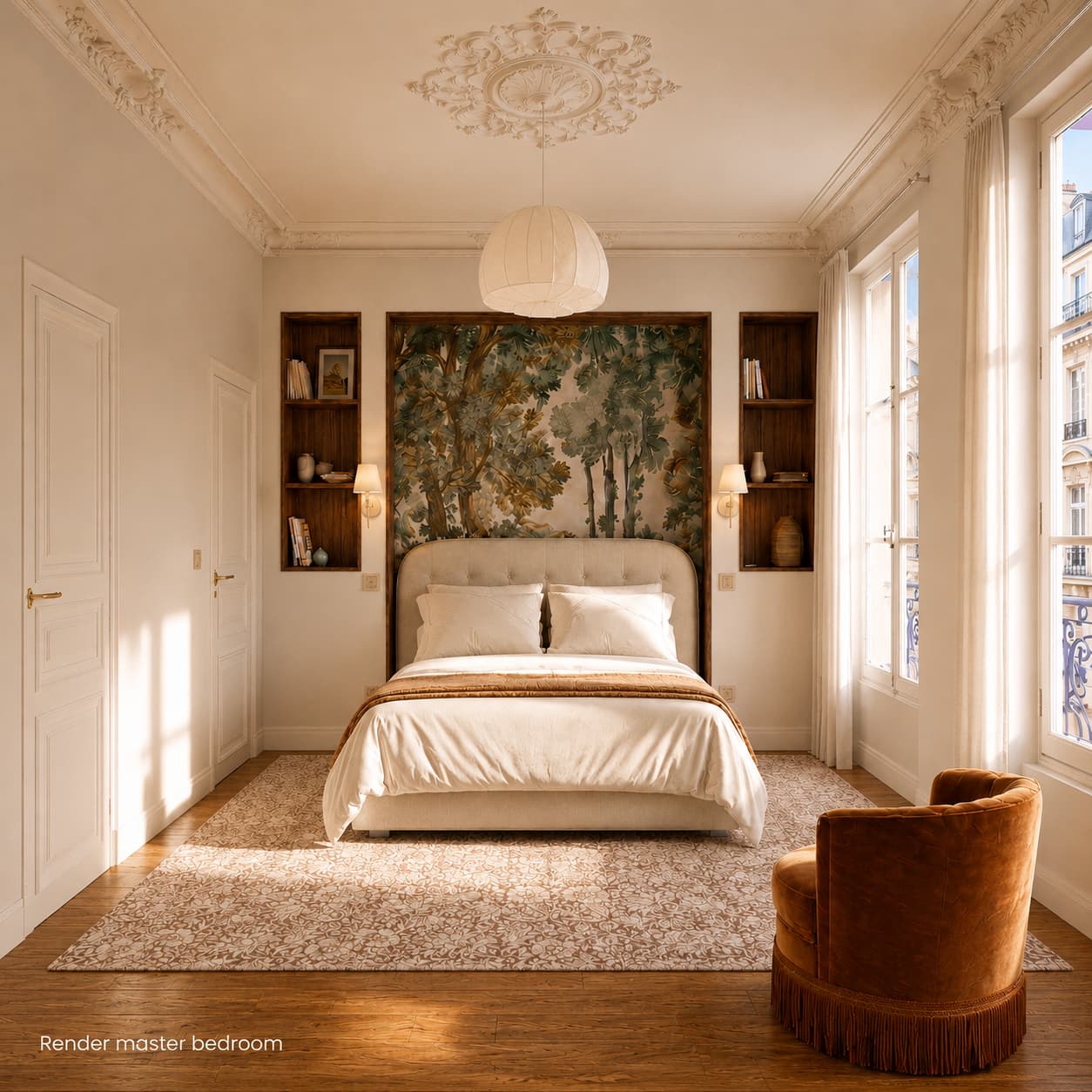
Paris 6th, France — 3-Bed Apartment in Saint-Germain-des-Prés
€299,000
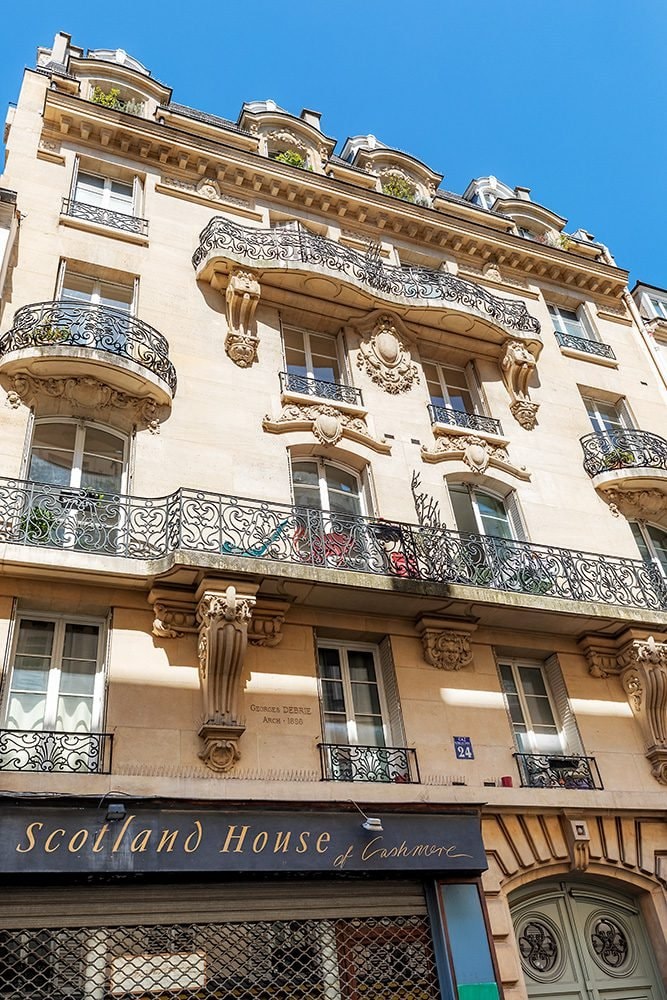
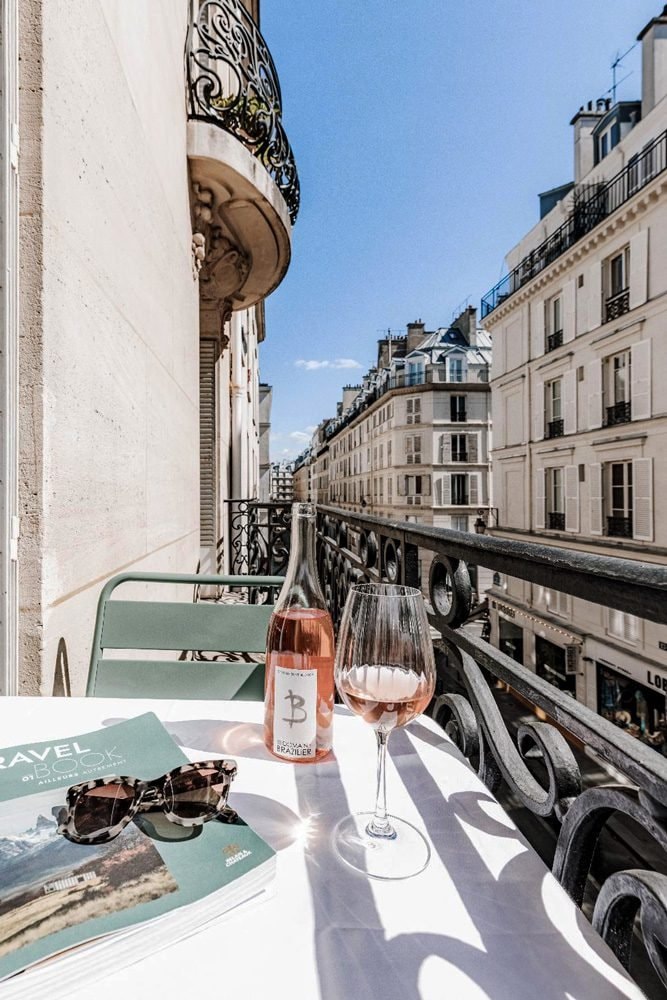
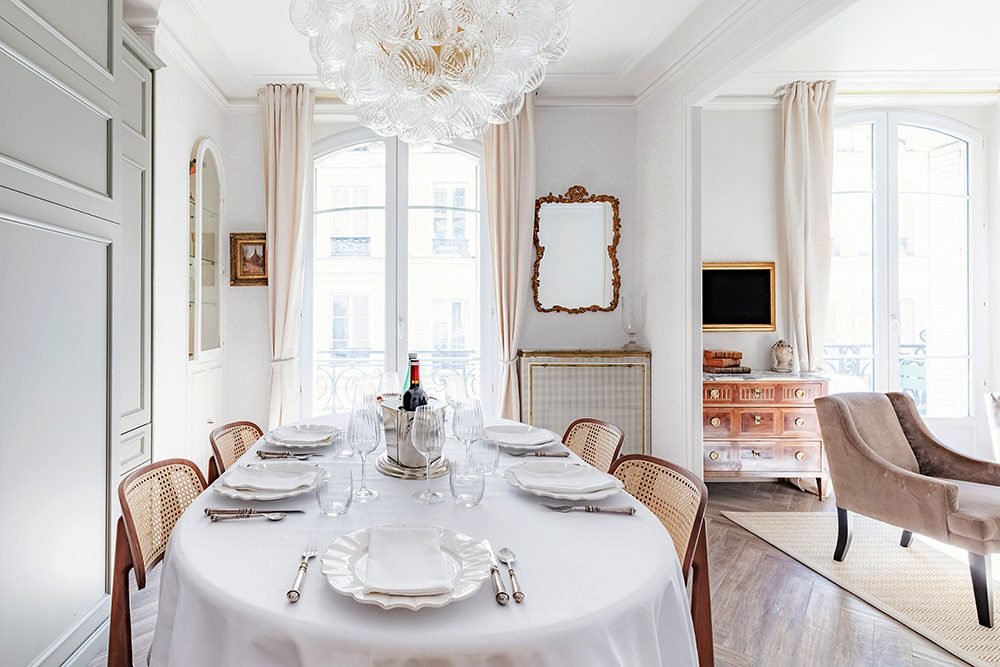
Paris 4th, France — 1-Bed Apartment Sleeping 4, With Balcony in the Marais
$210,000
Central Paris addresses, accessible through co-ownership.
Fully managed apartments and townhouses across the Marais and the Île Saint-Louis, Saint-Germain and the Latin Quarter, the 7th around the Invalides and the Eiffel Tower, the 8th and 16th around the Champs-Élysées and Trocadéro, and Montmartre. Your 1/8 share of the home comes with around six weeks of personal use, a professional management team on call, and the long-term equity of one of Europe's most structurally supply-constrained residential markets.

What is fractional ownership in Paris?
Fractional ownership in Paris means buying a real 1/8 share of a luxury Parisian second home, shared with up to seven other co-owners. Each owner receives personal use set by the partner that manages the home — a minimum of 44 or 45 nights a year with most of our partners, and no set cap with some others — through a fair-rotation calendar, with all property management, maintenance, taxes and operations handled by a professional team. You can sell it, pass it on to your heirs, and it grows in value with the home — it is not a timeshare, not a holiday club. The legal set-up is arranged by our partner for each home and walked through with you before you buy.
Why Paris?
Paris is, by almost every measurable indicator that matters for a serious second-home buyer, the single most structurally supply-constrained prime city in Europe — and one of the deepest and most internationally exposed residential property markets in the world. The twenty arrondissements of Paris intra-muros sit inside a fixed ring of 105 square kilometres — smaller than the New York borough of Manhattan, smaller than the City of London plus Westminster combined — and the city's architectural heritage has been comprehensively protected since the Loi Malraux of 1962 and the subsequent listing of the historic centre on the UNESCO World Heritage register in 1991. The defining Haussmann rebuilding of the 1850s and 1860s — Baron Haussmann's grands travaux under Napoleon III, which drove the boulevards through the medieval centre and fixed the cut-stone street wall that still defines Paris today — set the city's prime residential stock at a finite figure that has not meaningfully grown in more than 150 years. The major arrondissements where international second-home buyers concentrate — the 1st, 4th, 5th, 6th, 7th, 8th, 16th — added almost no new prime residential supply across the entire twentieth century. The result is one of the most genuinely scarce residential markets on the planet: a city where the existing high-specification apartment stock at the prime addresses is, in real terms, no longer growing, and where the depth of international demand — French, American, Middle-Eastern, Asian, British, and pan-European — never meaningfully diminishes across cycles.
Your Paris share is owned alongside up to seven other co-owners. You own a real share of the home — an eighth, a quarter — not a right to use it. You can sell it, pass it on to your heirs, and it grows in value with the home. Resale is handled through our partner's resale process, without you having to sell the whole house.
Paris's particular advantage inside European second-home markets is the combination of cultural depth, transit access and structural scarcity that no other capital on the continent can match in the same configuration. The city's cultural institutions are simply unrivalled in density: the Louvre, the Musée d'Orsay, the Centre Pompidou, the Musée Picasso, the Musée Rodin, the Musée de l'Orangerie, the Musée Marmottan Monet, the Musée de Cluny — each of which would anchor a smaller capital — sit inside walking distance of each other in central Paris, with the entire Fondation Louis Vuitton and Bois de Boulogne axis a fifteen-minute Métro ride west. The restaurant scene is the densest concentration of Michelin-starred and bistronomique addresses in any European city, with the Michelin Guide Paris listing more than a hundred starred restaurants across the twenty arrondissements. Add the Paris Aéroport hub network — Charles de Gaulle and Orly together connecting Paris to virtually every European capital and every major North American, Asian, Middle-Eastern and African city — plus the Eurostar direct St-Pancras-to-Gare du Nord service in two hours fifteen minutes, the TGV INOUI network connecting Paris to Lyon in two hours, Marseille in three, and Brussels and Amsterdam in under three and a half, and the RATP Métro running every two to three minutes through the centre — and Paris emerges as one of the most operationally easy capital cities in Europe to fly into, drop bags in and walk out into.
It is worth setting Paris in its European competitive context. London offers comparable cultural depth and a larger financial centre but at a higher price point at the prime tier and without the same continental rail integration — and, for British buyers specifically, without the Schengen overlay that gives a Paris fractional share its specific UK-buyer use-case relevance. Rome offers extraordinary historical layering and a warmer climate, with a more intimate second-home scene centred on the Centro Storico. Madrid and Barcelona offer Mediterranean warmth, a lower entry price and cultural calendars of their own. Berlin, Amsterdam and Vienna are each strong on specific cultural verticals, while Paris combines museum, gastronomy, fashion and arts every week of the year. Each has its admirers, and the comparisons help frame why Paris remains, by some distance, the most internationally recognised single-city second-home address in continental Europe. The Paris Convention and Visitors Bureau, the City of Paris official tourism portal, and the France.fr Paris destination guide all treat Paris as the single most valuable inbound tourism and second-home asset in France.
The third structural argument for Paris is the diversity of usable lifestyles available inside a single 105-square-kilometre footprint. A Northern European buyer with a 1/8 share in the Marais is ten minutes' walk from the Musée Picasso, fifteen minutes' walk from Notre-Dame and the Île de la Cité, and a single Métro ride from the Centre Pompidou, the Bastille opera and the Opéra Garnier. A 7th-arrondissement owner is five minutes' walk from the Musée d'Orsay and the Esplanade des Invalides, ten minutes from the Eiffel Tower, and fifteen from the Rodin and the Quai Branly. A 6th-arrondissement Saint-Germain owner is ten minutes' walk from the Luxembourg Gardens, the Café de Flore and the Les Deux Magots literary heritage, and fifteen from the Latin Quarter and the Panthéon. A 16th-arrondissement Trocadéro owner has the Marmottan, the Palais de Tokyo and the Bois de Boulogne walking-distance west, plus the Champs-Élysées and the Arc de Triomphe ten minutes east. The city packs a remarkable amount of difference into a compact footprint — bourgeois old quarters, working-class quartiers populaires, contemporary design districts, river-edge promenades, planted boulevards, formal gardens — and a Paris share that lands well-positioned gives an owner access to the full city without the multi-hour drive times that define a regional second home. Few other capitals can match that density of usable lifestyle on foot or by Métro inside fifteen minutes.
For a co-ownership buyer thinking strategically rather than just emotionally, Paris's combination of cultural depth, transit access and structural supply scarcity matters more than the headline glamour. The apartment you buy a share of in a Haussmann building on the Rue de Varenne sits in a market where the buildable supply in the prime arrondissements is already effectively saturated and where the existing residential stock is fundamentally finite. The Île Saint-Louis townhouse sits on an island whose seventeenth-century townhouse stock is unchangeable. The Marais hôtel particulier sits inside one of the most comprehensively heritage-protected city centres in Europe. The Montmartre artist's atelier sits on a hillside whose Haussmann-era northern fringe has retained the village rhythm against the rest of the rebuilt city. These are not assets that depend on a particular interest-rate cycle to hold their long-run value; they depend on the unchanging facts that Haussmann's Paris remains Haussmann's Paris, that the Marais remains the Marais, and that the global appetite for an apartment in central Paris is steady across generations. Add professionally managed co-ownership that makes a shared home transparent and resaleable, and the case for fractional co-ownership in Paris writes itself.
One under-discussed advantage that becomes obvious once you actually start using a Paris second home is the depth of the city's professional services infrastructure for non-resident owners. A century and a half of international second-home and pied-à-terre ownership has built up an ecosystem of multilingual notaires, fiscalistes, building-managers, syndics, conciergerie services, art-handling specialists and English-speaking medical clinics across the central arrondissements that smaller European capital alternatives cannot match. The Notaires de France network gives ownership documentary clarity through the long-standing French notarial system — a record-of-record system whose modern form dates from the Ventôse Law of 1803 and which has provided continuous title precedent for over two centuries — and the fichier immobilier (the national property registry, maintained through the Service-Public.fr framework administered by the Direction Générale des Finances Publiques) is one of the most reliable land-registration systems anywhere. The American, British, Anglo-French and international resident communities are large enough to run their own bilingual schools (the École Active Bilingue Jeannine Manuel, the British School of Paris, the International School of Paris), their own English-language hospitals (the American Hospital of Paris at Neuilly, the Hertford British Hospital), English-language weekly publications (The Local France, FUSAC), and English-language cultural societies. None of this is glamorous, but it is the infrastructure that determines whether owning an apartment in another country is a pleasure or a chore.
The fourth structural advantage worth naming is the transport infrastructure that makes a Paris second home practically usable rather than just nominally owned. Paris-Charles de Gaulle (CDG), sitting 25 kilometres north-east of central Paris, is the principal long-haul and international gateway, with direct year-round service from virtually every major European, North American, Middle-Eastern, Asian, African and South-American city — and the most extensive transatlantic service of any European hub. Paris-Orly (ORY), 14 kilometres south of the centre, handles a substantial portion of the short-haul European and domestic service, plus connecting flights to the French overseas territories. Paris-Beauvais (BVA), 80 kilometres north, handles low-cost European service and is the principal Ryanair and Wizz Air gateway. Eurostar direct St-Pancras-to-Gare du Nord service runs 2 hours 15 minutes city-centre to city-centre, with up to sixteen trains a day at peak season; the TGV INOUI high-speed network connects Paris to Lyon in 1 hour 55 minutes, Marseille in 3 hours 5 minutes, Bordeaux in 2 hours 5 minutes, Brussels in 1 hour 22 minutes, Amsterdam in 3 hours 20 minutes, Geneva in 3 hours 5 minutes and Frankfurt in 3 hours 50 minutes. Inside Paris itself, the RATP Métro runs sixteen lines and over 300 stations with trains every two to three minutes through the centre, the RER suburban network connects the centre to Versailles, Disneyland and the major airports, and the city's bike-hire and electric-scooter network (the Vélib' and the rental-scooter franchises) covers every arrondissement. An owner can leave London on a Friday morning and be on the Pont des Arts by Friday lunchtime; an owner flying in from New York Newark can be at the apartment by mid-afternoon.
Where to own in Paris
The Paris second-home market is best understood through several principal arrondissement clusters rather than as a single uniform city — each with its own character, architecture, buyer mix and day-to-day rhythm. There are, of course, Paris addresses outside the clusters below — the 9th around the Opéra and the Boulevard Haussmann grands magasins, the 5th Latin Quarter deeper into the student and university quarter, the 11th around the Bastille and the Canal Saint-Martin, the 17th around the Parc Monceau, the 14th around Montparnasse — and we are happy to discuss them with buyers whose interests run that direction. But the supply story for fractional ownership concentrates in the clusters below: the Right Bank Marais and the Île Saint-Louis (3rd and 4th arrondissements), Saint-Germain-des-Prés and the Latin Quarter (5th and 6th arrondissements), the 7th around the Invalides and the Eiffel Tower, the 8th and 16th around the Champs-Élysées, Trocadéro and Passy, and Montmartre and the 9th on the northern slope. Together they account for the overwhelming majority of international second-home demand in Paris.
The Marais and the Île Saint-Louis — the Right Bank historic quarter (3rd and 4th)
The Marais — the historic Right Bank quarter spanning the 3rd and 4th arrondissements, between the Place de la République to the north, the Rue Saint-Antoine and the Place de la Bastille to the east, the Seine and the Pont Marie to the south, and the Centre Pompidou to the west — is one of the most architecturally complete and culturally active quarters in Paris. The neighbourhood took its modern form when the seventeenth-century French aristocracy built their hôtels particuliers here under Henri IV, who anchored the quarter with the Place des Vosges in 1605 — the oldest planned square in Paris, still ringed today by the identical red-brick and stone arcaded pavilions that have been residential addresses for over four hundred years. The quarter survived the Haussmann demolition almost intact (the boulevards bend around it rather than through it), giving the Marais a density of pre-eighteenth-century buildings that no other central Paris arrondissement can match. The Musée Carnavalet on the Rue de Sévigné, the Musée Picasso in the Hôtel Salé, the Musée des Archives Nationales in the Hôtel de Soubise, and the Hôtel de Sully on the Rue Saint-Antoine give the quarter four of the most beautifully sited museums in central Paris.
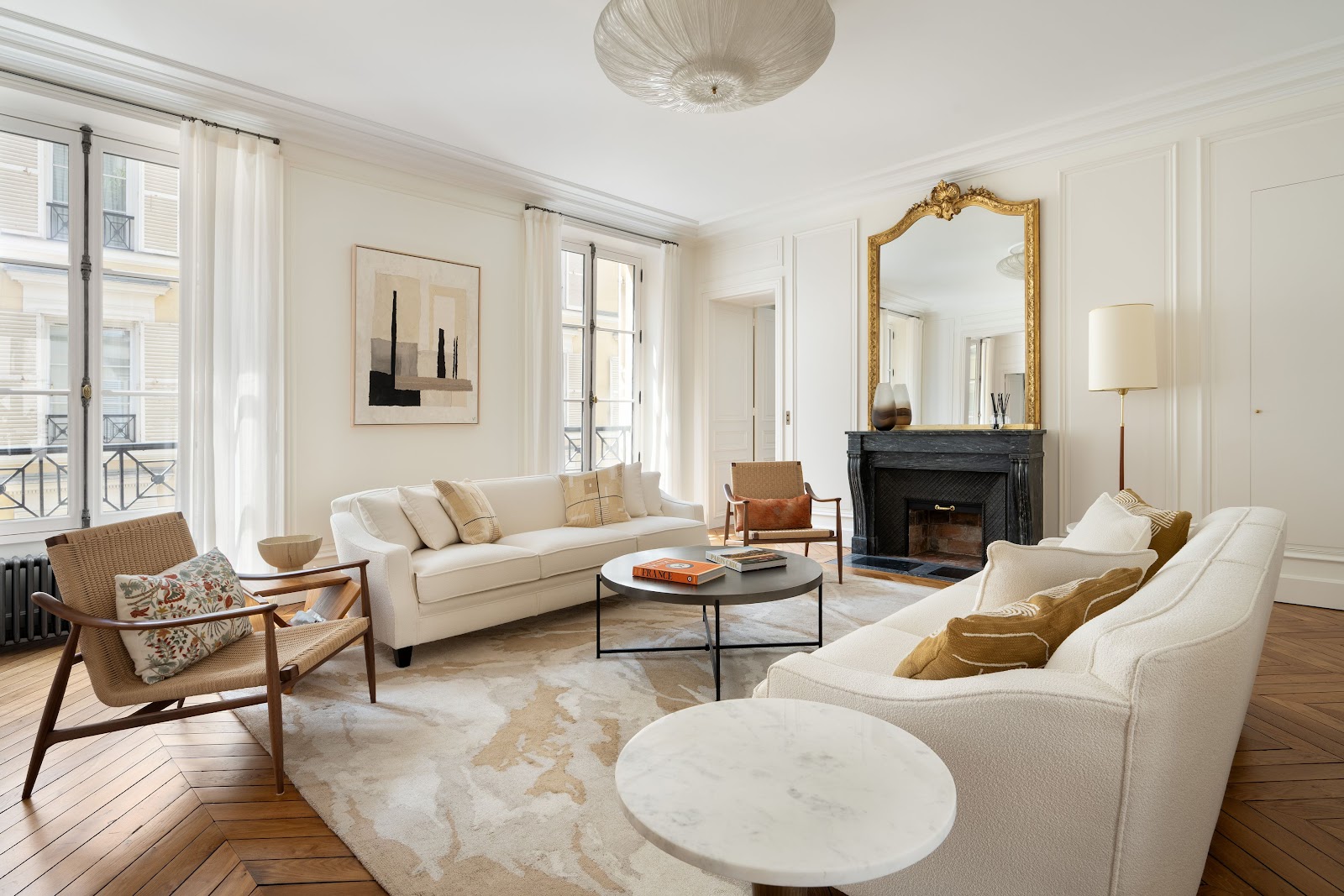
The Marais's residential character runs across three distinct sub-zones. The Haut Marais (the northern 3rd, around the Rue de Bretagne and the Marché des Enfants Rouges — the oldest covered market in Paris, opened in 1628) is the contemporary-design and gallery flank, with the densest concentration of independent fashion, contemporary-art galleries, concept stores and bistronomique restaurants in central Paris. The central Marais around the Rue des Francs-Bourgeois, the Rue Vieille-du-Temple and the Place des Vosges is the historic core, with the hôtels particuliers, the Sunday brunches and the heritage architecture. The southern Marais around the Rue Saint-Antoine and the Pletzl (the historic Jewish quarter around the Rue des Rosiers) is the working quarter, with the bakeries, the long-running falafel addresses, and the Saint-Paul church anchoring the lower 4th. The Île Saint-Louis, the smaller of the two Seine islands, sits directly south of the Marais and is connected by the Pont Marie — an island of seventeenth-century townhouses, the maison Berthillon ice-cream institution, and some of the most expensive residential per-square-metre prices anywhere in Paris. Winters are crisp — 3–7°C (high 30s°F to mid-40s°F) daytime highs through January and February — and pleasantly warm through summer — 22–27°C (low to high 70s°F) daytime highs through July and August, with occasional heatwave days reaching 32–35°C (high 80s°F to mid-90s°F). The Marais's international buyer mix is the youngest and most design-led of the central Paris quarters — heavily American, British, Belgian, Dutch, Swiss, Italian and Brazilian, with a significant Asian buyer share concentrated on the prime hôtel-particulier tier. Walking times from the Marais to central Paris landmarks run five minutes to Notre-Dame, ten minutes to the Centre Pompidou, fifteen minutes to the Île de la Cité, and twenty minutes to the Louvre; Métro stations (Saint-Paul, Hôtel de Ville, Filles du Calvaire, République, Bastille) put every central Paris address within fifteen minutes door-to-door. Best for: design-led couples and young families drawn to the contemporary art-and-gallery rhythm of the Haut Marais, owners who treat the architectural density of the central Marais and the Place des Vosges as the destination itself, buyers seeking the most operationally lively central-Paris arrondissement for repeat short stays through the year, and the multi-generational family that values the Île Saint-Louis's island rhythm and the genuine seventeenth-century townhouse stock.
Saint-Germain-des-Prés and the Latin Quarter — the Left Bank intellectual core (5th and 6th)
Saint-Germain-des-Prés, in the 6th arrondissement on the Left Bank between the Seine to the north, the Boulevard Saint-Germain to the south, the Rue de Seine and the Pont des Arts to the west, and the Boulevard Saint-Michel to the east, is the spiritual and intellectual heart of literary Paris — and for many buyers it remains the defining answer to where a Paris second home should be. The quarter's modern character was set in the post-war decades when Jean-Paul Sartre, Simone de Beauvoir, Albert Camus and the existentialist circle made the Café de Flore and Les Deux Magots their daily working address; the publishing houses lining the Rue Jacob, the Rue de l'Université and the Boulevard Saint-Germain have anchored French literary publishing for more than a century. The residential building stock is the most consistently elegant in central Paris — the wide cut-stone Haussmann boulevards (the Boulevard Saint-Germain, the Boulevard Raspail), the eighteenth-century apartment buildings around the Rue Jacob and the Rue de Seine with their original stairwells and the wrought-iron Louis-XV balconies, the early-nineteenth-century building stock around the Carrefour de l'Odéon — together they support some of the highest per-square-metre prices anywhere in France.
The Luxembourg Gardens — the formal seventeenth-century park laid out for Marie de Médicis, today administered by the French Senate and arguably the finest public garden in any European capital — anchors the southern flank of the 6th, with the Panthéon to the east and the Carrefour de l'Odéon to the north. The Latin Quarter — the 5th arrondissement, named for the Latin spoken at the medieval Sorbonne — sits east of the Luxembourg, anchored by the Sorbonne on the Place de la Sorbonne, the Panthéon on the Place du Panthéon, and the long pedestrianised Rue Mouffetard market street running south toward the Place d'Italie. The 5th is the working-student and book-and-cinema quarter — denser, more bohemian, less aristocratic than the 6th, with the long-running independent bookshops (Shakespeare and Company, the Librairie Compagnie), the small repertory cinemas (Le Champo, the Filmothèque du Quartier Latin), and the dense restaurant rhythm around the Rue Mouffetard. The international buyer mix on the 6th is the most multi-generational and culturally anchored of the central arrondissements — heavily American (the long-established American expat community on the Left Bank has been resident since the 1920s), British, Italian, Spanish, Belgian, Swiss and Australian, with a growing Latin-American and Asian share at the prime tier. Walking times from Saint-Germain to central Paris landmarks run five minutes to the Pont des Arts and the Louvre, ten minutes to the Île de la Cité and Notre-Dame, fifteen minutes to the Musée d'Orsay, and twenty minutes to the Tour Eiffel. Best for: design-led couples and writers drawn to the literary heritage and the wide Haussmann boulevards, multi-generational families with the Luxembourg Gardens for the children, returning-American owners who value the long-standing American community on the Left Bank, and buyers for whom the depth of the publishing-and-bookshop-and-gallery rhythm is the destination itself.

The 7th around the Invalides and the Eiffel Tower — the diplomatic quarter
The 7th arrondissement is the most aristocratic and serene of the central Paris quarters — the diplomatic and ministerial flank, the long-standing French establishment address, and home to some of the quietest residential streets in the central city. The arrondissement is bounded by the Seine to the north, the Boulevard des Invalides and the Avenue de Saxe to the east, the Rue de Sèvres and the Boulevard du Montparnasse to the south, and the Avenue de Suffren and the Champ-de-Mars to the west. The Hôtel National des Invalides — Louis XIV's seventeenth-century military hospital, today housing the Musée de l'Armée, the tomb of Napoleon under the gilded Église du Dôme, and the largest single Baroque architectural complex in central Paris — dominates the heart of the quarter, with the long Esplanade des Invalides running north toward the Seine and the Alexandre-III bridge. The Eiffel Tower anchors the western end of the arrondissement, visible from countless windows and rooftops across the 7th, with the formal Champ-de-Mars garden stretching south from the tower toward the École Militaire.
The 7th's residential streets — the Rue du Bac running north-south through the heart of the arrondissement, the Rue de Grenelle, the Rue de Varenne with its long row of nineteenth-century ministerial hôtels particuliers, the Boulevard des Invalides itself, the Rue de l'Université, the Quai d'Orsay and the Quai Anatole-France along the Seine — are lined with some of the most consistently grand Haussmann and pre-Haussmann residential buildings in central Paris. Apartments here frequently offer the ceiling heights, the double reception rooms, the stone fireplaces, the herringbone parquet and the wrought-iron balconies that define the highest tier of grand Parisian residential living. The Musée d'Orsay sits on the riverbank at the eastern edge of the arrondissement (in the converted 1900 Beaux-Arts Gare d'Orsay railway station, today holding the world's deepest collection of Impressionist painting), the Musée Rodin occupies the Hôtel Biron on the Rue de Varenne, and the Musée du Quai Branly Jean-Nouvel-designed Indigenous-arts museum sits on the Seine west of the Pont de l'Alma. The Bon Marché on the Rue de Sèvres — the world's first department store, opened in 1852 — anchors the southern flank with the adjacent Grande Épicerie grocery hall, one of the best food halls in any European capital. The international buyer mix on the 7th is the most establishment and discreet of the central arrondissements — heavily French (long-resident Parisian families holding family addresses for two and three generations), American (the long-running East-Coast American community on the Rue du Bac), British (the historic British embassy and residence on the Rue du Faubourg Saint-Honoré crosses the river but the British community spreads through the 7th), Belgian, Swiss, Italian and Spanish, with a meaningful diplomatic and ministerial resident base across the quarter. Walking times from the heart of the 7th run five minutes to the Esplanade des Invalides, ten minutes to the Musée d'Orsay, fifteen minutes to the Eiffel Tower, and twenty minutes to the Pont des Arts and the Louvre. Best for: buyers drawn to the most refined and genuinely Parisian aristocratic-quarter character, multi-generational families who value the quieter residential rhythm and the proximity to the Musée d'Orsay and the Rodin, owners whose use pattern centres on long quiet stays and culture rather than nightlife, and design-led couples drawn to the highest tier of pre-Haussmann and Haussmann residential architecture in central Paris.
The 8th and 16th — the Champs-Élysées, the Trocadéro and Passy
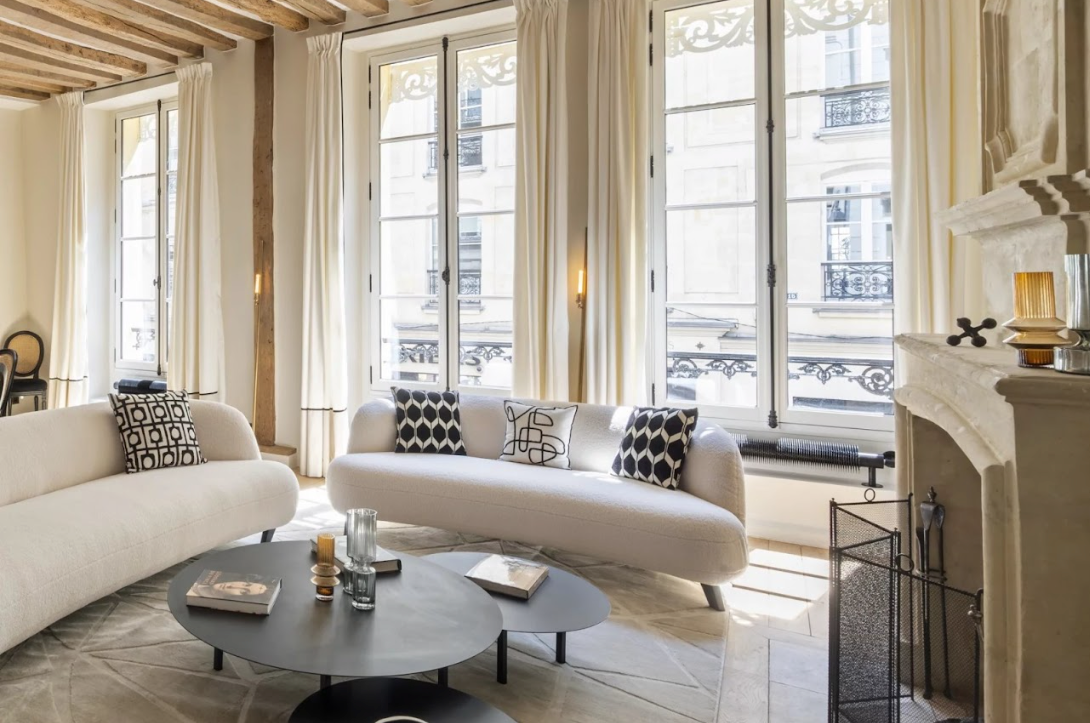
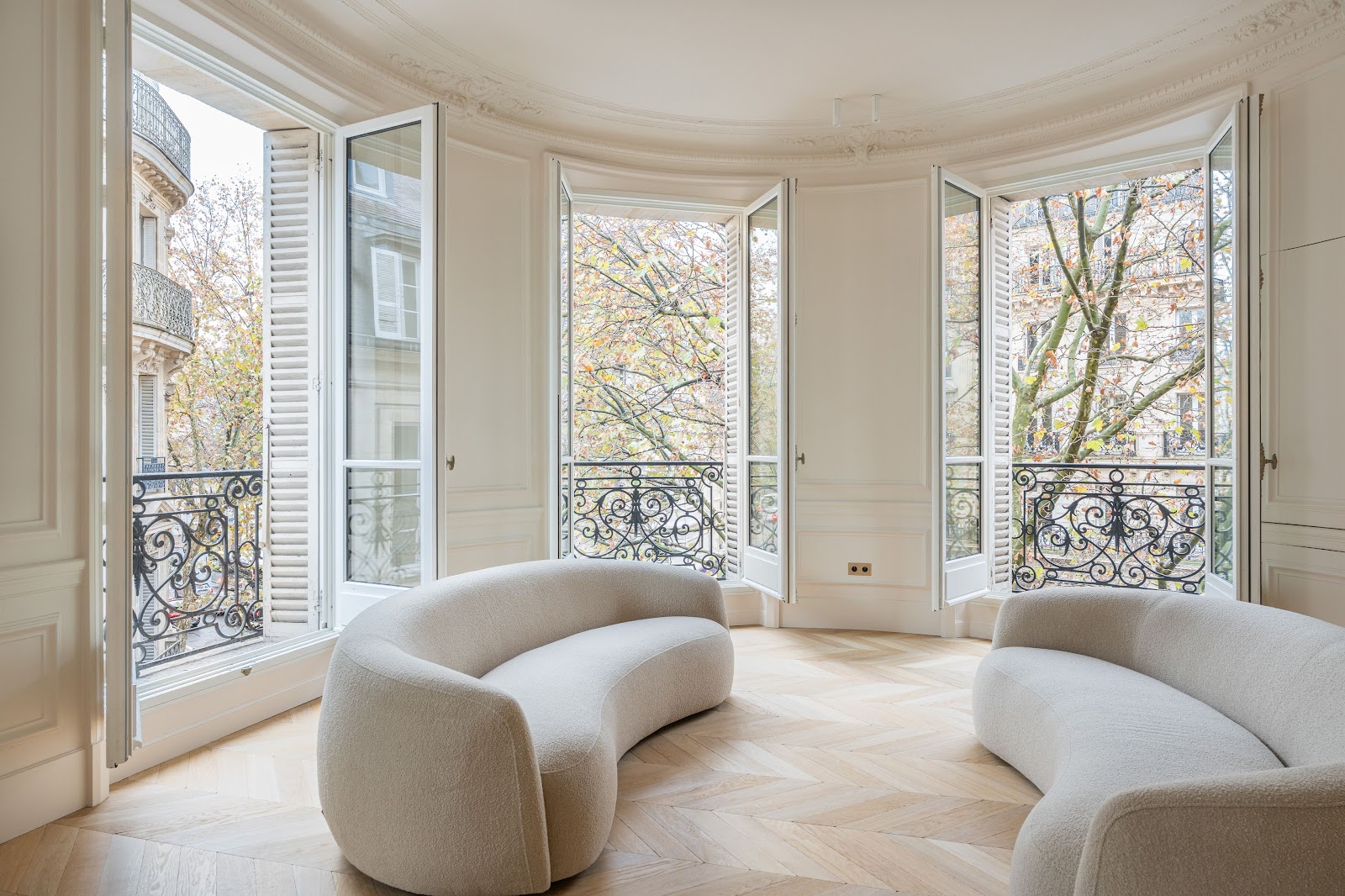
The 8th arrondissement represents Paris at its most internationally prominent and commercially grand. The Champs-Élysées — three kilometres of grand boulevard running from the Arc de Triomphe at the Place Charles-de-Gaulle (the western terminus of the Axe historique) to the Place de la Concorde at the eastern end (with the Egyptian Obélisque de Louxor at the centre, the Crillon and the Hôtel de la Marine on the eastern flank) — is the world's most famous avenue, and the streets radiating south from it into the Triangle d'Or (the triangle of avenues formed by the Avenue Montaigne, the Avenue George-V and the Avenue des Champs-Élysées) constitute Paris's most prestigious luxury district. The headquarters and flagship boutiques of the French couture houses (Christian Dior on Avenue Montaigne, Chanel on Rue Cambon, Hermès on Faubourg Saint-Honoré, Louis Vuitton on Champs-Élysées, Givenchy, Balenciaga, Saint Laurent, Céline), the global luxury-goods flagship stores, and several of the finest palace hotels in the world — the Four Seasons George V, the Le Meurice, the Ritz Paris (technically Place Vendôme in the 1st, but with the 8th-arrondissement rhythm), the Bristol, the Plaza Athénée, the Hôtel de Crillon — anchor the residential character at the prime tier.
Residential life in the 8th is significantly quieter than the commercial grandeur of the main arteries suggests — the streets between the boulevards (the Rue du Cirque, the Rue de la Boétie, the Rue de Penthièvre, the Avenue Marigny) are residential, and the proximity to the Parc Monceau in the 17th provides the northern fringe of the 8th with genuine green space. The Petit Palais and the Grand Palais sit along the Avenue Winston-Churchill at the Cours-la-Reine — the Grand Palais's Belle Époque steel-and-glass nave, recently restored for the 2024 Olympic Games, is one of the most spectacular nineteenth-century buildings anywhere in Europe. The Petit Palais houses the City of Paris fine-arts collection. The Madeleine church on the Place de la Madeleine — the neoclassical temple Napoleon built to honour his Grande Armée — anchors the western Faubourg Saint-Honoré rhythm.
The 16th arrondissement sits across the Seine from the 8th on the Right Bank's western flank — the most bourgeois-residential of the central Paris quarters, with the largest single residential footprint of any arrondissement and the deepest concentration of family-Parisian addresses held across two and three generations. The Trocadéro — the Beaux-Arts Palais de Chaillot on the Place du Trocadéro, with the long terraced gardens running down toward the Pont d'Iéna and the perfectly framed view of the Eiffel Tower across the Seine — anchors the eastern flank, with the Cité de l'Architecture, the Musée de l'Homme and the Musée National de la Marine all inside the Chaillot complex. The Avenue Foch, running west from the Arc de Triomphe to the Porte Dauphine — one of the widest avenues in Paris, lined with hôtels particuliers and prime apartment blocks — and the surrounding streets of the Quartier de la Muette, the Passy village quarter (the working-Parisian heart of the 16th around the Rue de Passy market street and the Place de Passy), and the long-resident Auteuil quarter at the south-western end together form the residential heart of the 16th. The Bois de Boulogne — the 845-hectare park west of the Boulevard Périphérique, with the long-running Roland-Garros tennis tournament's French Open grounds and the Fondation Louis Vuitton Frank-Gehry-designed contemporary-art museum — sits directly west of the arrondissement. The Marmottan Monet on the Rue Louis-Boilly holds the largest single collection of Monet anywhere in the world. The international buyer mix on the 8th and 16th is the most established Parisian-residential of the central arrondissements — long-resident French families, returning American and Latin-American owners, established Middle-Eastern community resident in Paris for decades, British, Belgian, Swiss and Italian, with the Russian and Eastern-European resident share that historically concentrated on the Avenue Foch. Best for: family buyers drawn to the broader residential footprint and the proximity to the Bois de Boulogne for the children, multi-generational owners who value the long-resident family-Parisian character of Passy and Auteuil, owners whose use pattern includes the Trocadéro and the Eiffel Tower rhythm, design-led couples drawn to the Champs-Élysées and the Triangle d'Or rhythm, and buyers for whom the residential calm of the 16th — quieter than the central arrondissements, with genuine green space — is the destination itself.
Montmartre and the 9th — the northern slope
Montmartre — the high northern hill of the 18th arrondissement, rising to 130 metres above the surrounding city (the highest point in Paris), with the white-domed Basilique du Sacré-Cœur at the summit and the working artist-village core of the Place du Tertre immediately south — is the most distinctly preserved village quarter in central Paris, retaining a rhythm closer to the pre-Haussmann city than any other arrondissement. The neighbourhood escaped the Haussmann demolition (the hill was too steep for the boulevards), and the Belle-Époque artist colonies that gave Montmartre its modern character — Picasso at the Bateau-Lavoir on the Place Émile-Goudeau, Renoir at the Moulin de la Galette, Toulouse-Lautrec at the Moulin Rouge — left a network of narrow cobbled lanes (the Rue Lepic, the Rue des Abbesses, the Rue Saint-Vincent, the Rue Cortot), preserved nineteenth-century buildings, and the working winegrowing Clos Montmartre vineyard on the north slope. The Musée de Montmartre on the Rue Cortot, the Espace Dalí, and the Moulin Rouge at the foot of the hill on the Boulevard de Clichy together anchor the cultural calendar.
The 9th arrondissement sits at the southern foot of the Montmartre hill, between the Boulevard des Italiens to the south, the Rue La Fayette and the Place de la République to the east, the Boulevard de Clichy to the north (the dividing line between the 9th and the 18th), and the Rue de la Chaussée-d'Antin and the Boulevard Haussmann to the west. The arrondissement is anchored by the Opéra Garnier on the Place de l'Opéra — Charles Garnier's magnificent nineteenth-century opera house, the architectural anchor of the Belle Époque Paris — and by the grands magasins on the Boulevard Haussmann (the Galeries Lafayette with its restored Beaux-Arts glass dome, the Printemps Haussmann flagship — two of the most iconic department-store buildings anywhere in Europe). The SoPi (South Pigalle) quarter, around the Rue des Martyrs and the Rue Notre-Dame-de-Lorette, has become one of the most active contemporary-restaurant flanks of central Paris over the past fifteen years. The Musée Gustave Moreau on the Rue de la Rochefoucauld holds the largest Symbolist-painting collection anywhere in France, and the Musée de la Vie Romantique on the Rue Chaptal sits in the former house of George Sand's painter friend Ary Scheffer.
The international buyer mix on Montmartre and the 9th is the youngest and most artistically anchored of the central Paris quarters — heavily American (the post-1990s American expat community on the southern slope of Montmartre), British, Belgian, Brazilian, Italian, Australian and German, with a growing Asian and Middle-Eastern share at the prime addresses around the Avenue Junot and the Square Suzanne-Buisson on the north slope. Walking times from the Place des Abbesses run five minutes to the Sacré-Cœur, ten minutes to the Moulin Rouge, and fifteen minutes to the Opéra Garnier and the Boulevard Haussmann grands magasins via the Place Pigalle. Best for: design-led couples and artists drawn to the preserved village rhythm of the Montmartre hill, buyers seeking the most distinctly non-Haussmann Paris character — the cobbled lanes, the narrow staircases, the village squares — owners whose use pattern includes the active SoPi restaurant calendar and the Boulevard Haussmann grands-magasins rhythm, and value-conscious buyers who want central-Paris access without the prime-arrondissement entry-price premium of the 6th, 7th or 8th.

A year in Paris
Spreading around six weeks of personal use across a Paris calendar is one of the simpler scheduling problems among the homes we list — Paris works in every season, with a cultural calendar that runs every week of the year and a property that is comfortable indoors through any weather. The cliché that "Paris in spring" is the only Paris worth knowing has not been accurate for half a century: Paris in autumn (the literary rentrée, the fashion weeks, the gallery openings) is at least as compelling, Paris in deep winter (the empty museums, the bistro season, the Christmas markets) is the connoisseur's Paris, and Paris through the long summer evenings is its own pleasure. Below is a walk through the year with the particular weeks Paris owners across the homes we list return to most often. The pattern is broadly the same across all eight co-owners of a given property, with the calendar mechanics ensuring every owner gets a fair allocation of peak weeks across a multi-year cycle. Owners who are flexible enough to use shoulder weeks — rather than competing for the spring or autumn peak — consistently report a higher use-quality from their share than those who anchor on a single fixed window.
Winter (December–February)
Winter is the connoisseur's season in Paris — the season when the museums are empty, the restaurants take reservations the same day, and the city belongs to those who know it well. December opens with the Marchés de Noël (the Christmas markets that fill the Tuileries Garden, the Place de la Concorde, the Trocadéro and the Saint-Germain Place de l'Église), the grands magasins window displays on the Boulevard Haussmann (the Galeries Lafayette animated Christmas windows are an institution since 1893), and the Hôtel de Ville winter ice rink. The cultural calendar runs at full intensity: the Opéra Garnier and Bastille opera seasons, the Opéra-Comique baroque-music programme, the Philharmonie de Paris symphonic season, and the long-running Paris-Photo international photography fair at the Grand Palais in early November overflows into early December. Christmas week in Paris is one of the most beautiful experiences a non-resident owner can have — the city quiets noticeably from 22 December, the brasseries run at full Christmas-Eve capacity for the réveillon evenings, and the 1 January Concorde-to-Champs-Élysées morning walk in the empty city is an institution.
January is the post-Christmas quiet — restaurant tables in the prime addresses open up the same day you ask, the museums (the Louvre, the Musée d'Orsay, the Centre Pompidou, the Musée Picasso) run at their quietest weekly rhythm of the year, and the long winter brasserie weeks at Bofinger, La Coupole, Le Train Bleu and the Closerie des Lilas hold their best season. The weather runs 3–7°C (high 30s°F to mid-40s°F) daytime highs with 1–3°C (mid-30s°F) overnight lows, with the rare snow day every two or three winters; the city's indoor calendar is what carries January — galleries (the Fondation Louis Vuitton winter exhibition, the Bourse de Commerce — Pinault Collection, the Musée Yves Saint Laurent), bookshops, repertory cinemas, and the long bistro lunches that are the heart of the Paris winter rhythm. Paris Fashion Week (the menswear shows in mid-January) brings the first design-week density of the year, and the city's tourism calendar reaches its lowest annual point in the third week of January, which is the moment owners with calendar flexibility consistently name as the most rewarding week to be in central Paris.
February brings the Paris Fashion Week haute-couture shows in the last week of January and the ready-to-wear shows in early March (the city's calendar runs ahead of London and Milan on this front), the Salon de l'Agriculture at the Porte de Versailles in late February (the largest agricultural fair in France, an institution since 1864), and the school half-term break in mid-February that brings a brief family-tourism uptick. The weather runs marginally milder than January (4–9°C / high 30s°F to high 40s°F daytime), the first crocuses and snowdrops appear in the Luxembourg Gardens and the Bois de Boulogne by the last week of February, and the early-spring brasserie-terrace weeks open from the first warm Sunday. Owners who value the empty-city Paris and the long quiet bistro lunches consistently name February as one of their favourite Paris weeks of the year.
Spring (March–May)
Spring is the city's peak season for international second-home use — the season when the chestnut trees along the grands boulevards come into blossom, the café terraces reopen across the central arrondissements, and the cultural calendar runs at full annual intensity. March opens with the Paris Fashion Week womenswear shows, the Festival du Livre de Paris at the Grand Palais (the largest French-language book fair, an institution that has run since 1981), and the spring blossom calendar across the Luxembourg, the Tuileries and the Bois de Boulogne. The weather runs 10–14°C (high 40s°F to high 50s°F) daytime through the month, with the first proper outdoor lunch days arriving by the second half. The Salon du Cheval at the Porte de Versailles, the Paris Marathon in the first weekend of April (running through the Tuileries, along the Seine and through the Bois de Boulogne), and the long Easter holiday weeks at the end of March or in mid-April mark the start of the heavy-season rhythm.
April is when the city comes properly back to spring life — the daytime weather runs 13–17°C (mid-50s°F to high 60s°F) with long bright afternoons, the gardens of the Luxembourg and the Tuileries reach their full opening with the formal flower-beds at peak, and the long bistro-terrace calendars run at full capacity along the Saint-Germain Rue de Buci, the Marais Rue Vieille-du-Temple, the Montmartre Rue des Abbesses and the Bastille Rue de Lappe. The cultural calendar is at its fullest of the year: the spring exhibitions at the Centre Pompidou, the Musée d'Orsay, the Petit Palais and the Musée Marmottan, the Opéra Garnier and Bastille opera spring season, and the Théâtre du Châtelet and Théâtre des Champs-Élysées spring programmes. May is, on most measures, the connoisseur's month in Paris — and one of the single most-requested shoulder months across the homes we list. The weather runs 16–21°C (low 60s°F to high 60s°F) through the day with cool bright evenings, the long Pentecost weekend (Pentecôte) brings four days at the end of May for an owner with calendar flexibility, and the French Open Roland-Garros tennis fortnight begins in the last week of May. The cafe-terrace rhythm reaches its annual peak, the lemon-tree blossom and the wisteria across the Marais and the Saint-Germain courtyards is at its best, and the bistronomique restaurant calendar runs at full capacity. Owners who plan their share-use around the spring shoulder months consistently name April and May as their favourite Paris weeks of the year.
Summer (June–August)
Summer is the season that most surprises non-resident Paris owners — and one many seasoned owners now book as their primary annual week. The cliché that Parisians evacuate the city in August (the grandes vacances) is still partially true, which has the counterintuitive effect of making August one of the easiest weeks of the year to actually use central Paris: traffic disappears, restaurant tables become available, the Métro empties, and the city takes on a slower rhythm that locals who stay describe as their favourite weeks. June brings the proper summer calendar: the Fête de la Musique on 21 June (the city-wide free-music festival, an institution since 1982 — every square, every street corner, every park has live music through the entire night), the French Open final in early June, the Paris Jazz Festival in the Parc Floral, and the long evenings (sunset after 9:45pm through the second half of June) that give the city its longest workable terrace weeks. The weather runs 20–26°C (high 60s°F to high 70s°F) daytime with comfortable evenings, and the Paris-Plages Seine-bank summer beach programme opens in early July along the Right Bank quay from the Pont des Arts to the Pont de Sully.
July brings the Fête Nationale (Bastille Day, 14 July) — the most distinctive single date in the Paris calendar, with the morning military parade down the Champs-Élysées, the evening fireworks over the Eiffel Tower and the Champ-de-Mars, and the long fireman's-ball evenings (bals des pompiers) at the firehouses across every arrondissement. The Tour de France finishes its three-week loop on the last Sunday of July with the iconic Champs-Élysées peloton lap. August is the deepest of the slow weeks — restaurant tables at the prime addresses become available, the city's resident population drops by an estimated 1.5 million as Parisians leave for the South of France, the Atlantic coast and the Alps, and the weather runs 21–28°C (high 60s°F to low 80s°F) daytime with occasional heatwave days reaching 32–35°C (high 80s°F to mid-90s°F). The Paris Plages programme runs at full capacity, the Cinéma en Plein Air programme at the Parc de La Villette runs open-air films every evening, and the long evenings along the Seine quays are one of the great Paris summer pleasures. Owners who time their share use around the deep-August quiet weeks consistently find Paris easier and more usable than at any other time of the year — and the central arrondissements feel like an extended village in a way they do not at any other moment.
Autumn (September–November)
For many seasoned Paris owners, September is the favourite month of the entire year. The summer crowds disperse from the first week, the Parisian rentrée (the cultural and professional return to work after the August slowdown) opens the cultural year, the Paris Fashion Week womenswear shows run through the last week of the month, and the city's cultural calendar reaches its annual peak. The weather runs 17–22°C (low 60s°F to low 70s°F) daytime with crisp bright evenings; the Journées Européennes du Patrimoine (the Heritage Days, third weekend of September, with the Élysée Palace, the Senate, the National Assembly and dozens of normally closed monuments opening their doors free to the public for two days) is one of the most distinctive cultural moments anywhere in Europe. The long autumn restaurant rentrée sees every prime address relaunch with new menus, new chefs and the year's most ambitious tasting cards.
October is the autumn shoulder month and one of the most rewarding weeks in Paris for owners with calendar flexibility. The Paris+ par Art Basel (the international contemporary-art fair at the Grand Palais, in October) brings the international art world to Paris in the second half of the month, the Paris Fashion Week ready-to-wear shows ran in September but the international fashion calendar continues through October, the autumn light across the Tuileries and the Luxembourg Gardens is the warm horizontal light Parisian painters have made famous, and the chestnut trees along the grands boulevards turn through every shade of gold. The first Beaujolais Nouveau weekend in the third Thursday of November is the year's most distinctive bistro week — every brasserie and bistro across the city opens the new vintage at midnight on Wednesday into Thursday. November is the genuine off-season — the cultural calendar still runs at full intensity (the Paris Photo international fair at the Grand Palais in mid-November is one of the year's most important photography moments), the weather turns cooler (8–13°C / high 40s°F to mid-50s°F daytime), and the Christmas-decoration season opens across the Boulevard Haussmann grands magasins in the last week. November's soft rain is the perfect excuse for the museums, bistros, cafés and bookshops that November in Paris is made for.
Who buys in Paris, and why
The international buyer mix in Paris is the most globally diverse of any second-home market in continental Europe — by a substantial margin. Where the Côte d'Azur and the Costa del Sol are anchored to a Northern European buyer demographic, Paris draws from the full international spectrum: American buyers have been a continuous presence on the Left Bank since the 1920s (the Lost Generation around Hemingway, Fitzgerald and Stein anchored the long American resident community on the Rue Cardinal-Lemoine, the Rue de Fleurus and the Rue Mouffetard, and the post-war American expat community has held continuous addresses on the 6th and the 7th for a hundred years); British buyers have anchored the city's expatriate community since the long-running British embassy and residence on the Rue du Faubourg Saint-Honoré established the British community in the 8th, with the post-Brexit period actually accelerating rather than slowing British demand for Paris pied-à-terre property as the Schengen overlay has made fractional weeks the most rational structure for a London-based owner.
Middle-Eastern buyers have a long-standing presence on the prime 8th, 16th and Triangle d'Or tier, with the Saudi, Qatari, Emirati and Lebanese resident communities holding family addresses through the central arrondissements since the 1970s. Asian buyers — Chinese, Hong Kong-based, Japanese, Korean and Singaporean — have been a meaningful and growing cohort across the central tier since the 2000s, with the Chinese resident community concentrated heavily on the Triangle d'Or, the Marais and the 16th. Latin-American buyers — Brazilian, Mexican, Argentinian, Colombian, Chilean — concentrate heavily on the Saint-Germain 6th and the southern Marais, with the long-running Brazilian community on the Left Bank a particularly visible thread of the international scene. Russian, Ukrainian and Eastern-European buyers were a meaningful share of the prime 8th and 16th tier from the late 1990s through the 2010s, with much of the post-2022 international cohort restructured around the broader sanctions environment. African buyers — particularly from the Francophone West and Central African countries — anchor the long-resident African community in Paris and have a notable presence at the prime apartment tier. Australian and New Zealand buyers have been a steady cohort across the Latin Quarter and Saint-Germain through the past two decades.
Within the international buyer flow, the French domestic buyer remains a meaningful share of the Paris second-home market — particularly buyers from the major French regions (Lyon, Marseille, Bordeaux, Lille, Toulouse, Strasbourg) who hold a central-Paris pied-à-terre as a working address for business and cultural travel, plus the long-resident French families who hold the multi-generational Haussmann addresses on the 6th, the 7th and the 16th. The Belgian, Swiss, Luxembourgish and Monégasque buyer flow is particularly strong on the 7th, the 16th and the Saint-Germain 6th, with the cross-border French-speaking community treating Paris as a regular working and cultural base. The Italian, Spanish, Portuguese and Greek buyer flow concentrates heavily on the Saint-Germain 6th and the Marais.
The age-and-life-stage profile in Paris differs from the Mediterranean coastal markets in important ways. The largest single buyer cohort across the COP Paris portfolio is in the 40–60 age band — typically dual-income professional couples, often based in London, New York, Geneva, Brussels, Milan, Madrid or further afield, whose Paris use centres on repeat short stays (long weekends, fashion-week trips, museum weeks, opera weeks) rather than the multi-week summer-holiday pattern that dominates the Mediterranean second-home market. The second-largest cohort is the 55–70 age band — owners whose primary income is established, whose children are at university or beyond, whose Paris use pattern centres on the long autumn and spring shoulder weeks plus selected winter visits. The third cohort is the 30–45 age band — younger professional couples earlier in their portfolio, often pairing a Paris pied-à-terre share with a Mediterranean summer share or an alpine winter share, and using the Paris property primarily through repeat short weekend escapes plus selected longer holiday weeks.
Within those nationalities, Paris co-ownership tends to suit a small number of well-defined buyer profiles:
- Repeat-weekend professional couples — typically using a Paris share across 8–12 short stays per year (three- to five-day weekends, fashion-week trips, museum weeks, opera weeks, dinner-circuit weeks) rather than the multi-week holiday pattern that dominates the Mediterranean second-home market. The Eurostar and TGV connectivity make repeat short stays from London, Brussels, Amsterdam, Lyon and Frankfurt operationally feasible. The fully managed model removes the friction of running a Paris apartment remotely; the owner arrives to an apartment already prepared, walks to dinner, and is on the train home Sunday evening.
- UK buyers managing the Schengen 90-day window — particularly British professionals and retirees whose post-Brexit Paris time is now capped at 90 days in any 180-day rolling window across the whole Schengen zone. A 1/8 share's 44-to-45-night entitlement fits comfortably inside that window with room for Mediterranean or alpine days as well, making fractional ownership notably better-suited to the post-Brexit UK Paris buyer than whole ownership (which would require either far more time inside the Schengen window than the 90-day cap allows, or a French long-stay visa with the residence implications that follow).
- Cultural-calendar-led owners — owners drawn to the Paris cultural offer (the Opéra Garnier and Bastille opera season, the autumn fashion weeks, the spring book fair, the autumn Paris Photo and Paris+ par Art Basel fairs, the Théâtre du Châtelet programme), planning their share use around specific cultural moments rather than fixed school-holiday weeks. The Paris fractional calendar suits this pattern better than any other COP destination because the city's cultural offer runs at full capacity every week of the year.
- Multi-generational families with university-age or working-age children — owners whose children are studying or working in Paris, in London on the Eurostar route, or in another European capital on the TGV network, and who use the Paris apartment as a shared family base across multiple generations and cities. Paris is one of the most natural "family meeting point" destinations in Europe given the Eurostar and TGV access patterns.
- Returning American owners — particularly East-Coast and California professionals with a long history of Paris travel, holders of family or working connections to Paris, or buyers who lived in Paris in their twenties (junior-year-abroad, early-career years on the Rue Mouffetard or the Rue de Buci) and are returning to the city for a long-running pied-à-terre. The American buyer cohort is the deepest single layer of the international Paris second-home market.
- Multi-region owners — owners who pair a Paris share with a Mediterranean summer share, an alpine winter share, or another European city share. Paris is one of the most common starting points for owners who go on to hold a second share elsewhere; the city's cultural-calendar pattern complements naturally with a summer-coast or winter-alpine share.
A pattern worth highlighting is the multi-region buyer — Paris owners who hold a second COP share elsewhere. The most common combination is Paris plus the South of France (a city share for the spring, autumn and winter weeks plus a Côte d'Azur or Provence villa for the long summer weeks). The second most common is Paris plus the French Alps (a city share plus a Megève, Chamonix or Three Valleys chalet for the winter ski weeks). Less common but increasingly observed is the Paris plus Mallorca or Costa del Sol pattern (a city share plus a Mediterranean island or sun-coast home) and the Paris plus London pattern (a French city share plus a British city share, particularly common among UK and US buyers). The fractional model makes that portfolio strategy practical: two 1/8 shares cost less than a single whole property at either of the addresses individually, and the management relationship across the portfolio is unified, which removes the multi-jurisdiction friction.
What unites these otherwise quite different buyer profiles is the underlying calculation: the Paris weeks each of them actually uses in a year are within the 6–7 weeks a 1/8 share delivers (most repeat-weekend owners use closer to 4–6 weeks split across 8–12 trips); the operational overhead of running an apartment in central Paris remotely is non-trivial (building charges de copropriété, the syndic de copropriété annual general meeting, the seasonal heating-system service, the property-tax compliance, the linen-and-cleaning logistics across multiple short stays); and the resale liquidity of a fractional share inside a managed portfolio is — in our experience across the COP network — materially higher than the resale liquidity of a whole apartment at the same address, where the prime-tier Paris buyer pool is small and unhurried. Paris is a city where the maths of fractional ownership lines up almost perfectly with the use pattern of the international second-home buyer.
Practicalities: getting there, what it costs, what you own
CDG, Orly, Beauvais — plus Eurostar and the TGV
Paris-Charles de Gaulle (CDG) is the principal long-haul and international gateway for Paris, sitting 25 kilometres north-east of the city centre, and is the second-busiest airport in Europe by international passenger traffic after London Heathrow. CDG handles direct year-round service from virtually every major European, North American, Middle-Eastern, Asian, African and South-American city, with the most extensive transatlantic service of any European hub — Air France, Delta, United, American Airlines and the broader SkyTeam alliance run dense daily schedules from New York JFK, Newark, Washington Dulles, Atlanta, Miami, Boston, Chicago, Los Angeles, San Francisco, Houston, Detroit, Minneapolis, Seattle, Montreal, Toronto and Mexico City. Paris-Orly (ORY), 14 kilometres south of the centre, handles the substantial portion of short-haul European, French domestic and French overseas service, with year-round connectivity to almost every European capital plus the French Caribbean, Réunion and Polynesia. Paris-Beauvais (BVA), 80 kilometres north, handles the low-cost European service and is the principal Ryanair and Wizz Air gateway from the UK, Ireland, Italy, Spain, Poland and Central Europe.
The Paris Métro and RER network reaches the central arrondissements from each of the airports inside an hour. From CDG: the RER B suburban train runs to Gare du Nord in 30 minutes, to Châtelet-Les Halles in 35 minutes, and to Saint-Michel-Notre-Dame in 38 minutes, with departures every 10 minutes through the day; the Le Bus Direct coach runs to the Étoile and the Trocadéro; the CDGVAL automatic shuttle moves passengers between CDG's three terminals. The new CDG Express high-speed direct line is under construction for a planned opening in late 2027, which will cut the CDG-to-Gare-de-l'Est journey to 20 minutes. From Orly: the new Métro Line 14 extension (opened 2024) runs to Saint-Lazare in 27 minutes via Châtelet, the RER B and the Orlyval to Antony, and the dedicated tram-bus service to the Porte de Choisy. From Beauvais: the dedicated shuttle bus runs to the Porte Maillot in 75 minutes.
Most owners flying into Paris from continental Europe arrive via direct flight or TGV; UK-based owners increasingly default to the Eurostar, which runs St-Pancras to Gare du Nord in 2 hours 15 minutes, with up to sixteen daily trains at peak season and capacity for substantial luggage, no airport security overhead, and a city-centre-to-city-centre door-to-door time that is materially shorter than the equivalent CDG flight. The TGV INOUI high-speed network runs from Paris Gare du Nord, Gare de l'Est, Gare de Lyon and Gare Montparnasse to virtually every major French city in under five hours: Lyon in 1 hour 55 minutes, Marseille in 3 hours 5 minutes, Bordeaux in 2 hours 5 minutes, Nice in 5 hours 30 minutes, Strasbourg in 1 hour 50 minutes, Brussels in 1 hour 22 minutes, Amsterdam in 3 hours 20 minutes, Geneva in 3 hours 5 minutes, Frankfurt in 3 hours 50 minutes. Inside Paris itself the Métro runs 16 lines and over 300 stations with trains every 2–3 minutes through the centre, and the broader Île-de-France RER suburban network connects the centre to Versailles (RER C, 35 minutes from Saint-Michel), Disneyland Marne-la-Vallée (RER A, 35 minutes from Châtelet), and the airports.
Whole-property vs 1/8 share: the comparison
The case for a fractional structure in Paris is most clearly seen in the side-by-side comparison against both whole ownership and long-term rental — the three ways most international buyers actually consider holding a Paris pied-à-terre.
| Whole second home | COP 1/8 fractional share | Long-term rental | |
|---|---|---|---|
| Upfront commitment | Full property value | ~1/8 of the property value | First/last/deposit only |
| Equity in the asset | Full appreciation | ~1/8 of appreciation | None |
| Annual carry | Full taxes, insurance, management, maintenance | ~1/8 of carry, fully managed | Full rent every year, indefinitely |
| Personal use | Up to 52 weeks (most use 4–8) | Set by the company, professionally scheduled | Defined by lease |
| Operations burden | Owner-managed or hired staff | Fully included | Landlord-managed |
| Time to exit | 6–24 months on the open market | Varies by home and partner | End of lease term |
The comparison most buyers find most telling is the annual-carry line. Owning a whole apartment in the 6th, 7th or 16th outright means carrying full taxe foncière, full taxe d'habitation on a second residence, full charges de copropriété (the building's syndic-managed common-area fees), full building and contents insurance, full property-management retainer, full seasonal maintenance and cleaning across multiple short stays through the year — every year, whether you spend two weeks in Paris or twelve. A 1/8 fractional share carries proportionally less, fully managed, with the operational burden lifted entirely. Compared to renting a similar apartment long-term, you build real equity rather than burning rent — and the share is yours to sell, transfer, or pass on.
The other line worth examining is the time-to-sell. Whole-property resale in the central Paris prime tier — the prime Haussmann floors on the 6th, the 7th, the 8th and the 16th — is genuinely slow. The buyer pool at the top tier is small, well-informed and unhurried; a prime central-Paris apartment going to market today might sit for 12–24 months before transacting, particularly outside the heavy spring and autumn buying seasons, and the carrying costs of holding a whole apartment through a slow open-market sale can add up to a meaningful fraction of the sale price by the time it closes. A fractional share, by contrast, is sold through our partner's resale process, without you having to sell the whole house. The carrying-cost differential between a professional exit and a slow open-market exit can easily exceed the headline transaction-fee difference between fractional and whole ownership.
What's included in the annual service charge — and what isn't
The annual carry on a 1/8 Paris share is, by definition, roughly 1/8 of the carry on the equivalent whole apartment — which means it's a fraction of what an outright Paris second-home owner pays in taxes, building charges, insurance, management and maintenance, and a fraction of what year-round long-term rental of an equivalent apartment would cost. It is best understood as a single all-in number that covers everything required to keep the property operating at full standard regardless of who is or isn't in residence. The included items typically run to: taxe foncière, the French municipal property tax (set by the City of Paris and the Île-de-France region, applied to all property regardless of residence status); taxe d'habitation on the secondary residence (Paris levies the additional surtaxe sur les résidences secondaires at 60% above the base rate on second homes in the city, one of the highest secondary-residence surcharges in France); the charges de copropriété paid to the building's syndic (common-area maintenance, lift servicing, concierge if applicable, building insurance for the common parts, the staircase and landing cleaning, the building's annual assemblée générale management); building and contents insurance for the apartment's furniture and fittings; the full property-management retainer covering staff, scheduling and owner relationship; cleaning and linen between every stay; pre-arrival preparation, kitchen restocking on request, terrace cleaning (where applicable); minor maintenance and repairs under a defined threshold; utility bills (electricity, gas, water, internet, cable, alarm monitoring); and a contribution to the building reserve fund for major capital works (roof, façade restoration, lift replacement, heating-system replacement, structural work — the long-running travaux programme that every Paris Haussmann building puts through on a multi-decade cycle).
What is typically not included: large capital improvements (full kitchen replacement, major bathroom refurbishment) decided together by the co-owners and funded either from the reserve fund or from a one-off levy; personal staff costs (a private chef booked for an owner's stay, a private driver, a private museum-curator guide); damage caused by an owner's own use; and unusually high-volume utility use during peak personal stays. The point is that the annual figure is not a "running cost" in the open-property sense but a comprehensive operating budget that covers the property in active condition all year — including the seasonal heating service, the building syndic obligations, the property-tax compliance, the multi-stay cleaning and linen logistics — that an owner of a central-Paris apartment running the property remotely would otherwise have to organise themselves.
What you actually own — the legal share
The legal nature of a Paris co-ownership share is simple. You own a real share of the home — an eighth, a quarter — not a right to use it. You can sell it, pass it on to your heirs, and it grows in value with the home.
The practical effect is that you hold real ownership — not a timeshare, not a points membership, not a usage right. You can sell through the established resale process or to a qualifying outside buyer, you can pass your share on to your heirs, and you participate proportionally in any appreciation in the underlying property's market value.
How fractional ownership works in Paris
The mechanics of fractional ownership in Paris are framed by two things that work together: the legal set-up our partner arranges for each home, and the French property-tax regime that applies to all secondary residences (including the taxe foncière, the taxe d'habitation on second residences with the Paris 60% surcharge, the non-resident income-tax position, and the capital-gains tax framework that applies to international owners). Together, they make for a clear, predictable ownership experience.
How co-ownership works for Paris property
Big decisions — selling the home, major works — are decided together by the co-owners, and the calendar, the annual service charge and the management arrangement are set out in the home's agreements.
French taxes: taxe foncière, taxe d'habitation, non-resident income tax, capital gains
France operates a relatively transparent property-tax framework for non-resident owners in Paris. Taxe foncière is the annual French property tax paid by the property owner, calculated on the property's valeur locative cadastrale (the notional rental value recorded at the local tax office), with rates set by the City of Paris within the national framework; Paris levies one of the lower taxe foncière rates among major French cities relative to the underlying property values, with the 2024 base rate at 20.5% applied to the assessed rental value (which is significantly below market rent). The taxe foncière is included in the annual service charge collected from co-owners.
Taxe d'habitation is now levied only on secondary residences in France (the French government abolished it on primary residences in 2023), and Paris applies the maximum permitted surtaxe sur les résidences secondaires at 60% above the base rate. Both taxes are included in the annual service charge, so each co-owner carries roughly one-eighth of them.
The French non-resident income tax position is administered through the Service des Impôts des Particuliers Non-Résidents (SIPNR), the French national tax office for non-resident property owners. For non-resident owners who do not rent out their property, no income tax applies to the imputed use of the property. For owners who do rent out, the actual rental income is taxed at the standard French non-resident rates (a minimum rate of 20% on the first €28,797 of taxable income, rising to 30% above), with social charges of 17.2% applied to French-source income (residents of the EU/EEA or UK who are covered by their own country's social security pay the 7.5% solidarity levy instead). French capital-gains tax on resale of French situ real estate is administered through the same SIPNR framework — direct apartment sales by non-residents face 19% national capital-gains tax plus 17.2% social charges (totalling 36.2%; EU/EEA and UK residents covered by their own social security pay the 7.5% solidarity levy instead, for 26.5%), with progressive relief from year 5 reaching full income-tax exemption after 22 years of ownership and full social-charges exemption after 30 years. We recommend independent tax advice for your own circumstances.
Inheritance and the EU Succession Regulation
Directly held French real estate is subject to French inheritance and gift tax (the droits de succession et de donation), which applies to French situ assets regardless of the owner's or beneficiary's country of residence. France's forced-heirship regime (the réserve héréditaire) is a defining feature of the French succession system: it reserves a fixed minimum share of the deceased's estate for direct-line heirs (children and, in their absence, parents) — broadly half the estate for one child, two-thirds for two children, three-quarters for three or more children. The réserve héréditaire applies to French real estate held directly by a deceased French-resident, and international buyers have a straightforward alternative.
The 2015 EU Succession Regulation (Brussels IV) gave EU residents the option to elect their home-country succession law for their estates; non-EU residents (US, UK post-Brexit, Canadian, Australian, New Zealand, Singaporean buyers) can also elect under the same regulation, with some limitations. Your adviser will confirm the best route for your own estate. France has a long-standing bilateral inheritance-tax treaty network with the United States, the United Kingdom and many other major buyer countries, which helps avoid double taxation on the French asset.
The professional management calendar and how scheduling works
Once the purchase completes, a professional management company takes over all operational responsibility for the Paris property. Your personal weeks — around six weeks for a 1/8 share — are allocated through a fair-rotation calendar that mixes peak weeks (the Christmas-and-New-Year fortnight, the Easter and Pentecost holiday windows, the spring and autumn Paris Fashion Week schedules, the September rentrée, the November Paris-Photo and Paris+ par Art Basel fortnights) with shoulder-season and quieter weeks across the year. Owners pre-book several months ahead; the unused weeks are either held for the owner pool or, where the property's structure allows, rented to the broader market with the income flowing back to the co-owners. Service-charge collection, building maintenance, insurance, taxe foncière and taxe d'habitation payments, the charges de copropriété management with the building's syndic, the linen-and-cleaning between stays, the pre-arrival apartment preparation, the welcome arrival, the on-call concierge — all sit with the management company. The deep multilingual operations ecosystem across the central Paris arrondissements — a century and a half of international second-home and pied-à-terre ownership — means that the routine practical realities of owning an apartment remotely in central Paris are handled by professionals who have been catering to non-resident owners for generations.
Resale: how to exit, typical timelines, the professional process
When you decide to exit your Paris share, a professional resale process is in place: you sell your share — not the whole house — at the price you set, typically after an initial twelve months of ownership, with your co-owners offered the first chance to buy. Hundreds of shares in homes like these have already been resold — in just over three months on average, and nearly three in four for more than the owner paid. Whole-apartment resales typically take 12–24 months on the open Paris market for the prime tier. For owners who want maximum control over the price and process, an open-market sale to any qualifying buyer remains an option — but most owners find the established process simpler.
The full mechanics of fractional ownership across all jurisdictions — usage calendars, exit procedures, rental income treatment, insurance, the transfer on death, the relationship with the management company — are covered in our co-ownership explained guide. For specific Paris property availability, browse the listings in the property grid above, or join our list for new-property alerts as they come to market.
Your ownership at a glance
- Real ownership — you own a real 1/8 share of the home, not a right to use it: you can sell it, pass it on to your heirs, and it grows in value with the home. Not a timeshare, not a points membership.
- Professional management included throughout — year-round building charges compliance, taxe foncière and taxe d'habitation payments, building and contents insurance, the multi-stay linen and cleaning logistics, the seasonal heating service, the on-call concierge — all covered within your annual service charge, with no top-up bills for routine operating costs.
- Clear, supported resale through our partner's resale process — the existing audience of co-ownership buyers means your share has an organised market from day one, with our partner's resale process letting you sell your share without having to sell the whole house, rather than waiting the 12–24 months a comparable whole apartment might sit on the central-Paris open market.
Still deciding which Paris arrondissement?
Many readers arrive on this page already half-decided — they want Paris, but not yet which Paris address. The choice between the Marais, Saint-Germain, the 7th, the 8th-and-16th and Montmartre is rarely about budget alone; the major arrondissement clusters sit in overlapping price bands once you compare like-for-like quality at the prime tier. The decisive question is usage pattern. How will you actually spend your weeks across a calendar year — and how does that pattern map onto the rhythm, the architecture, the buyer mix and the day-to-day character of each arrondissement? Our team has spent years inside the Paris second-home market and can walk you through the arrondissement differences — character, calendar, owner mix, day-to-day rhythm — before you commit to a cluster. Below is the framework we walk through with buyers who reach the same fork — a simple starting point, since many owners end up loving elements of more than one.
Choose the Marais and the Île Saint-Louis — the 3rd and 4th arrondissements — if your primary use pattern is built around the most architecturally complete and culturally active historic quarter in Paris, the densest concentration of contemporary art galleries and bistronomique restaurants in central Paris, and the working seventeenth-century townhouse stock of the Place des Vosges and the Île Saint-Louis. The Haut Marais works hardest for design-led couples and buyers drawn to the contemporary art-and-gallery rhythm; the central Marais for owners who treat the architectural density of the Place des Vosges as the destination itself; the Île Saint-Louis for the multi-generational family that values the island rhythm and the genuine seventeenth-century townhouse character. Unlike a traditional timeshare, a Paris share gives you a real share of the underlying apartment — not a fixed week in a fixed property year after year — which is precisely why the architecturally rich Marais tier suits the fractional model so well.
Choose Saint-Germain-des-Prés and the Latin Quarter — the 5th and 6th arrondissements — if your dominant priorities are the spiritual and intellectual heart of literary Paris, the most consistently elegant Haussmann residential building stock in central Paris, and the long-running publishing-and-bookshop-and-gallery rhythm that runs continuously from the Pont des Arts south to the Luxembourg Gardens. Saint-Germain works hardest for design-led couples and writers drawn to the literary heritage; the Luxembourg-edge addresses for multi-generational families with the gardens for the children; the Latin Quarter for the working-student rhythm and the long-running independent bookshops and small repertory cinemas. Unlike a traditional timeshare, the Saint-Germain share gives you genuine equity in the underlying Haussmann asset.
Choose the 7th around the Invalides and the Eiffel Tower if you want the most aristocratic and serene of the central Paris quarters — the diplomatic-and-ministerial flank, the long-standing French-establishment address, the highest tier of pre-Haussmann and Haussmann residential architecture in central Paris, and the quietest residential streets of any prime arrondissement. The Rue du Bac and the Rue de Varenne work hardest for buyers drawn to the highest tier of residential architecture; the Champ-de-Mars and Eiffel-Tower-side for owners who value the long formal-garden walks; the Esplanade-des-Invalides and the Musée-d'Orsay end for owners whose use pattern centres on the museum-and-culture rhythm. Like every other COP destination — and unlike a traditional timeshare — the 7th-arrondissement share is a real, transferable share of the underlying property.
Choose the 8th and 16th — the Champs-Élysées, the Triangle d'Or, the Trocadéro, Passy and Auteuil — if your dominant priorities are Paris at its most internationally prominent, the world's most famous avenue, the headquarters of the French couture houses, the broader residential footprint of the 16th with the Bois de Boulogne for the children, and the long-resident Parisian-family character of Passy and Auteuil. The Triangle d'Or works hardest for design-led couples drawn to the couture-and-restaurant rhythm; the Trocadéro for owners drawn to the Eiffel-Tower-across-the-Seine views; Passy and Auteuil for the multi-generational family who values the residential calm and the genuine green-space proximity. Unlike a traditional timeshare which locks you into a single fixed week in a single fixed property, the 8th-and-16th share gives you genuine equity in one of the deepest residential markets in Europe.
Choose Montmartre and the 9th if your dominant priorities are the most distinctly preserved village quarter in central Paris, the cobbled lanes and the artist-village rhythm of the Place du Tertre, the active contemporary SoPi restaurant flank, and the proximity to the Boulevard Haussmann grands-magasins rhythm at the Opéra Garnier and the Galeries Lafayette. The Avenue Junot and the north slope of Montmartre work hardest for design-led couples drawn to the village-Paris character; the Place des Abbesses and the southern slope for owners who value the working-village rhythm; the 9th around the Rue des Martyrs and SoPi for the contemporary restaurant-and-design-led owner; the Opéra Garnier flank for buyers drawn to the Belle Époque department-store rhythm. And unlike a timeshare, a Montmartre share gives you a real share of one specific home, not a use-right in a generic pool.
The portfolio approach is worth at least mentioning. A meaningful proportion of Paris co-ownership owners hold more than one share — either elsewhere in France (a Côte d'Azur or Provence villa for the long summer weeks, a Megève or Three Valleys winter chalet for the ski season, a Bordeaux or Burgundy wine-country house) or further afield (a London apartment for repeat short cultural stays, a New York pied-à-terre, a Mallorca summer finca, a Costa del Sol winter-sun villa). For owners building a multi-region portfolio with COP, you have one team across every destination — the same advisors, the same calendar mechanics, the same resale process across every property you own. Two 1/8 shares — a Paris pied-à-terre plus a French Alps winter chalet, say — give an owner roughly 90 days of use across a calendar year, drawn from genuinely different lifestyle modes, at a combined annual carry that is still a fraction of what a single whole property at either address would cost.
Whichever way the decision goes, the deeper exploration starts on the cluster and parent pages:
If you would like to talk through which Paris arrondissement best fits your family's actual use pattern — rather than the brochure version of it — join our list and we will be in touch with relevant new-property alerts and an introduction to the team.
Questions & Answers
Paris Fractional Ownership — Frequently Asked Questions
Fractional co-ownership in Paris gives you a real 1/8 share of a luxury Paris apartment — in the 7th, 8th, 16th, or another of the city's most prestigious arrondissements; a Haussmannian building on one of the city's famous grand boulevards; or a rare townhouse in Saint-Germain-des-Prés. The legal set-up is arranged by our partner for each home and walked through with you before you buy. Your 1/8 share is genuine property equity — around six weeks in the world's most visited city per year, at 1/8 the full purchase cost of a prime Paris apartment.
Paris is the world's most visited city — welcoming 35+ million international tourists per year — and the cultural, fashion, gastronomy, and luxury capital of Europe. The city's historic building stock, protected by UNESCO and strict French heritage law, means that the Haussmannian apartments and Belle Époque townhouses of the most prestigious arrondissements can never be replicated or materially increased in supply. Demand from international buyers — Americans, British, Middle Eastern, Asian — has been consistently strong for decades. Prime Paris property is a liquid, globally recognised store of value.
Your 1/8 share gives you around six weeks in Paris per year. Paris is genuinely year-round — there is no off-season for the world's most culturally rich city. The calendar manages usage allocations and any peak-period priority arrangements. Christmas and Fashion Week weeks may attract higher demand from co-owners; The rotation system ensures fair access over time.
Yes — many of our Paris properties welcome short-term rental of unused weeks, and it is an excellent way to offset your annual costs. Your unused weeks can be listed on short-term rental platforms, with income paid directly to you after the platform fee — particularly rewarding in high-demand locations.
Each Paris property listing shows whether short-term rental is available for that home, in line with local rules.
Prime Paris property has been one of the world's most reliable stores of value for over a century. The combination of structural supply constraint (historic buildings protected by law), persistent global demand, and Paris's unique cultural status creates a property market that is more resilient than almost any other global city. Fractional ownership captures the full proportional appreciation of this market at 1/8 the capital commitment.
Selling is simple. When you decide to move on, your Paris fractional share is marketed to buyers already looking for fractional co-ownership.
Our partner's resale process handles the sale for you, so you sell your share without the whole house having to be sold. After a typical first-12-months holding period you can sell whenever you choose, at the price you set — your co-owners get the first chance to buy. Hundreds of shares in homes like these have already been resold — in just over three months on average, and nearly three in four for more than the owner paid.
Browse COP's Paris listings, review the 1/8 share price and submit an enquiry. David or Dylan will reply personally, usually within one working day.
Also Explore
Get in Touch
Speak to an expert
Tell us what you're looking for and we'll send you the homes that fit.