Sweden · Scandinavia
Sweden Fractional Ownership Properties
From a granite archipelago villa outside Stockholm to a timber mountain lodge above Åre — fractional ownership in Sweden means a real share of Scandinavia's most enduring second-home addresses, six to seven weeks of personal use a year, and a fully managed property waiting whenever you arrive.
1 property · from €309,000
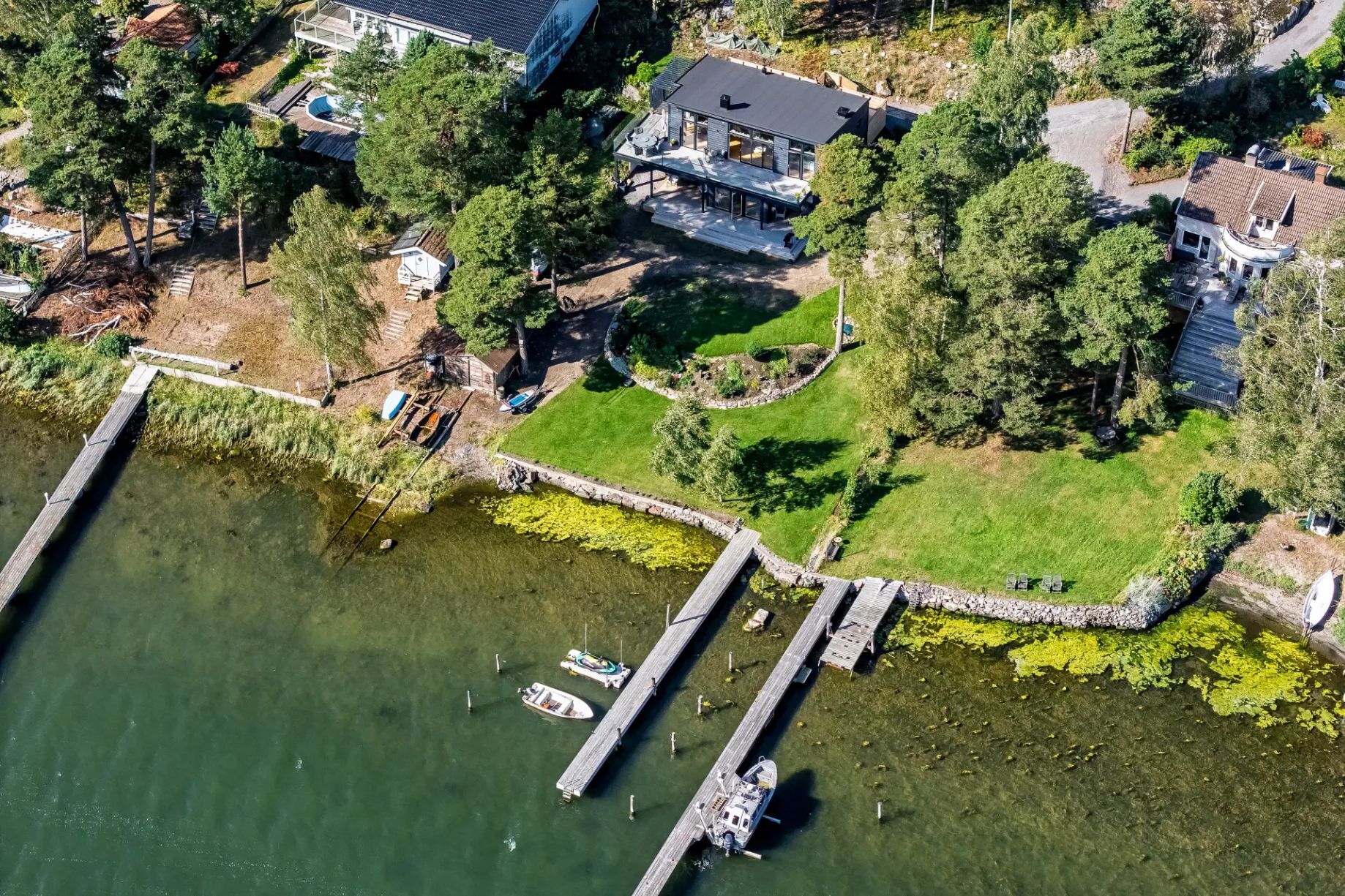
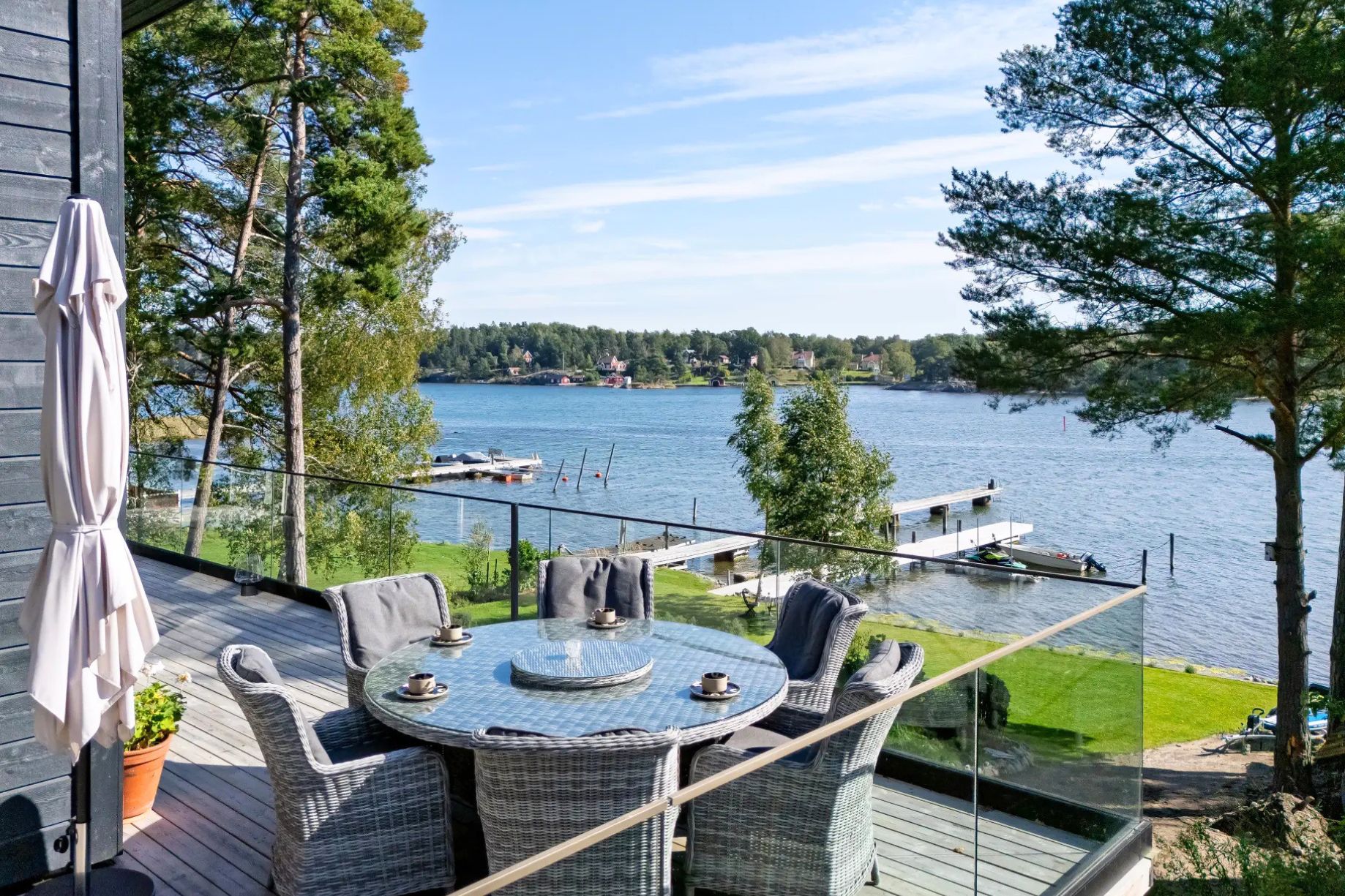
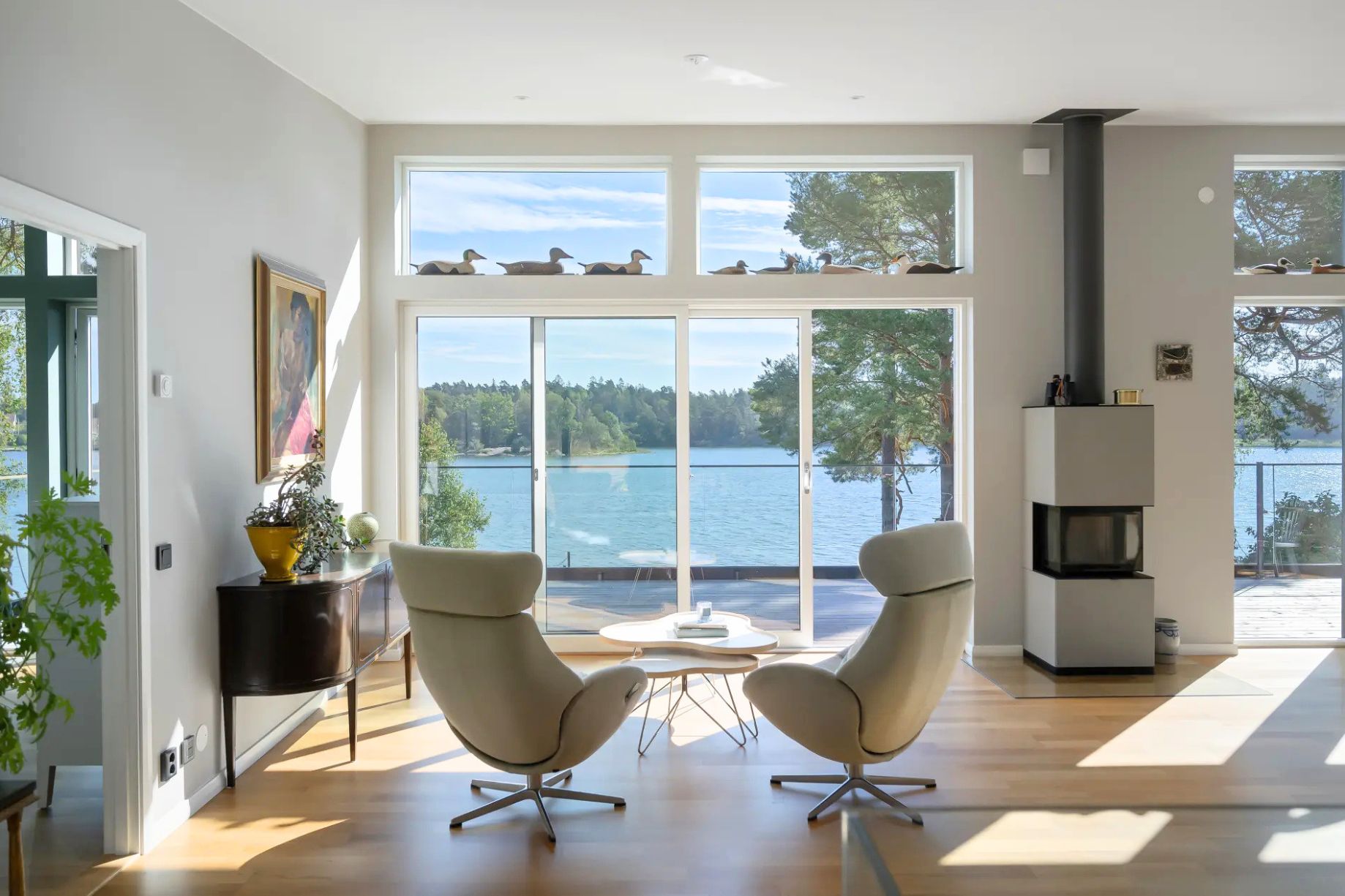
Nynäshamn, Stockholm Archipelago, Sweden — 3-Bed Waterfront House With Private Jetty
€309,000
Scandinavia's most coveted addresses, accessible through co-ownership.
Fully managed archipelago villas, lakeside retreats and mountain chalets across Stockholm, Gothenburg and Åre. Your 1/8 share of the home comes with 6–7 weeks of personal use, a professional management team on call, and the long-term equity of one of Europe's most legally transparent second-home markets.
What is fractional ownership in Sweden?
Fractional ownership in Sweden means buying a real 1/8 share of a luxury Swedish second home — an archipelago villa, a lakeside timber house or a mountain ski chalet — shared with up to seven other co-owners. Each owner receives personal use set by the partner that manages the home — a minimum of 44 or 45 nights a year with most of our partners, and no set cap with some others — through a fair-rotation calendar, with all property management, maintenance, taxes and operations handled by a professional management team. You can sell it, pass it on to your heirs, and it rises and falls in value with the house — it is not a timeshare, not a holiday club. The legal set-up is arranged by our partner for each home and walked through with you before you buy.
Why Sweden?
Sweden combines three things that make it one of the most structurally compelling second-home markets in Europe: exceptionally strong legal protections for property owners, a structural supply constraint on the most desirable waterfronts that is written into national law, and a four-season lifestyle breadth that no purely summer destination can match. The legal framework is the Swedish Land Registry (Lantmäteriet), one of the most complete and most digitised property registers in the world, which gives any buyer the same documentary clarity about their ownership fifteen years after purchase that they had on the day they completed. The supply story is the strandskyddslagen — Sweden's shoreline protection law, which prohibits new construction within a general protective zone of 100 metres from any coastline or waterway, extendable to 300 metres in ecologically sensitive areas. This statutory protection has applied in its current form since 1975 and covers the entirety of Sweden's extensive coastline, its archipelago islands, and the banks of thousands of inland lakes and rivers. The consequence for the most desirable category of Swedish second home — the waterfront property with private jetty, sauna access, and unobstructed views across open water — is a structurally fixed inventory: these properties cannot be built anew in any meaningful quantity, and the pressure of sustained domestic demand on a legally protected finite supply creates a floor under values that depends on statute, not sentiment.
Your Swedish share is owned alongside up to seven other co-owners. You own a real share of the home — an eighth, a quarter — not a right to use it. You can sell it, pass it on to your heirs, and it rises and falls in value with the house. The legal set-up is arranged by our partner for each home and walked through with you before you buy. Resale is handled through our partner's resale process, without you having to sell the whole house.
Sweden's supply constraints deserve close examination because they operate across three distinct tiers — geographic, statutory, and cultural — and each reinforces the others. Geographically, Sweden has more than 270,000 islands, skerries and rocks in its coastal and lake archipelagos; but the habitable, road-accessible islands with reliable ferry or bridge connections — the ones that actually serve as practical second homes — represent a small and largely non-expandable subset of that total. Statutorily, the strandskyddslagen ensures that the waterfront positions already held cannot be replicated by new construction on adjacent land; permissions are granted only in exceptional circumstances and only for structures that meet demanding criteria, typically requiring that the site has previously been developed. Culturally, the Swedish relationship with the second home — the sommarstuga or summer cottage — is one of the deepest in Europe: approximately one in five Swedish households owns a second home, a rate that is among the highest on the continent, and this intense domestic ownership culture means that the most desirable properties almost never reach the open market. When they do, they attract competition from a buyer pool that is both well-informed and financially committed.
For international buyers, the structural argument for Sweden fractional ownership is reinforced by two further factors that distinguish it from its Scandinavian neighbours. First, Sweden imposes no nationality restrictions on property ownership: British, American, German, French, and other international buyers can purchase Swedish property on exactly the same terms as Swedish nationals, with the same access to the Land Registry, the same protections under Swedish property law, and the same rights on resale and inheritance. This is a meaningful distinction from some European markets where foreign ownership remains administratively complex. Second, the Swedish legal system is among the most transparent and least corrupt in the world — consistently ranked in the top tier of the Transparency International Corruption Perceptions Index — which means the title clarity, the contractual predictability, and the rule-of-law environment that underpin the ownership experience are as reliable as any in Europe.
The transport infrastructure that makes Swedish second homes practically usable is also stronger than many international buyers expect. Stockholm Arlanda Airport (ARN) is one of Northern Europe's major hubs, with direct services from London Heathrow, Gatwick, Amsterdam, Frankfurt, Paris CDG, New York JFK and many other international gateways. The flight from London to Stockholm is under 2 hours 30 minutes; from Amsterdam, just over 2 hours; from Frankfurt, under 2 hours. The Stockholm Arlanda Express connects the airport to Stockholm Central in 18 minutes, and from there the city's archipelago is accessible within the hour. For buyers considering the Gothenburg coast, Gothenburg Landvetter Airport (GOT) serves similar international markets. Åre, Sweden's premier mountain resort, is accessible from Stockholm by the direct SJ rail service in approximately 6 hours, or by a 90-minute flight to Östersund Airport (OSD) followed by a 60-minute transfer — a total journey of under 3 hours door-to-door from Stockholm.
The post-Brexit landscape is worth addressing directly for UK buyers, because it is precisely where the fractional model aligns most naturally with practical reality. As citizens of a non-EU country, UK nationals are subject to the Schengen Area 90-day rule, which limits stays to 90 days in any 180-day period across the Schengen Area as a whole. A standard 1/8 fractional share carrying a minimum of 44 to 45 nights of personal use a year sits comfortably within that 90-day window. This alignment is not accidental: the fractional model was designed for exactly the pattern of frequent, structured, relatively brief second-home use that a 90-day visa regime naturally produces. For UK buyers who want a permanent Swedish base — one that is ready when they arrive, professionally managed in their absence, and structured to match the actual legal ceiling on their stay — fractional ownership is the most rational structure available.
One under-discussed advantage of Swedish second-home ownership is the depth of professional infrastructure for non-resident owners. Licensed Swedish estate agents (mäklare), regulated under the Swedish Financial Supervisory Authority, have professional obligations that run to the buyer as well as the seller — making them meaningfully different from the purely seller-representing agents common in some European markets. Swedish property lawyers, management companies experienced in remote and seasonal properties, and accountants familiar with Swedish property taxation and international tax treaties for non-resident owners are all readily available in the major markets. The infrastructure that makes second-home ownership practical, rather than merely possible, is as developed in Sweden's key second-home regions as anywhere in Europe.
Where to own in Sweden
Sweden's second-home geography is best understood through four distinct buyer clusters, each with its own architecture, season, social character and buyer profile. The country stretches more than 1,500 kilometres from Skåne in the south to Lappland above the Arctic Circle — a range that encompasses granite coastal archipelagos, glacial lake districts, deep pine forests, and proper alpine ski terrain in the mountains of Jämtland. The four clusters where co-ownership at quality level concentrates are: Stockholm and the Archipelago, combining Europe's most beautiful capital with immediate island access; Gothenburg and the West Coast, the wave-smoothed granite and seafood culture of the Bohuslän coast; Åre and the Swedish Mountains, Scandinavia's most established ski resort and year-round mountain destination; and Dalarna and the Lake Districts, Sweden's heartland of folk tradition, mirror-still lakes and the classic timber summer house.
Stockholm and the Archipelago
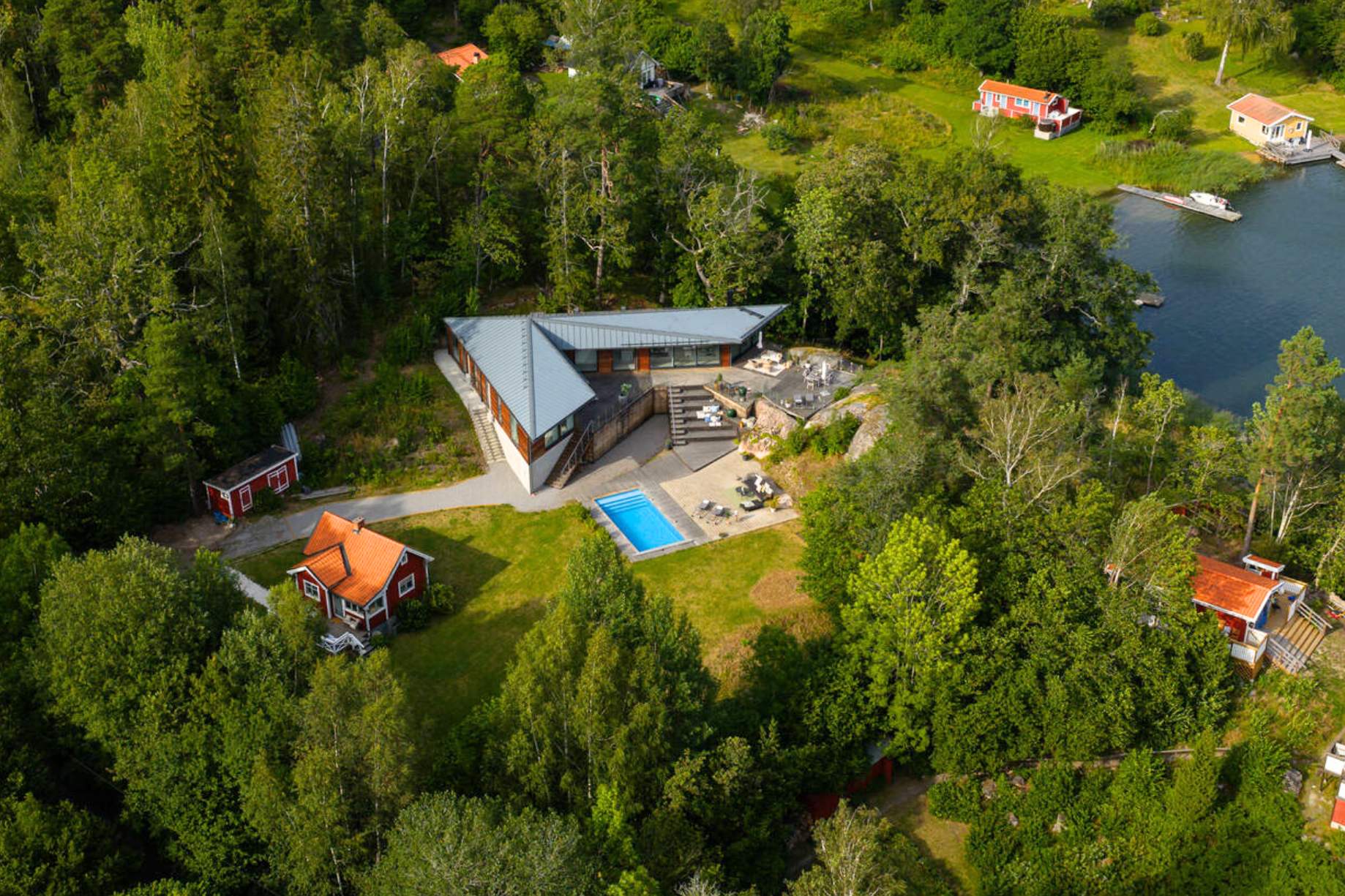
Stockholm is one of the most architecturally beautiful capitals in Europe — a city built across fourteen islands where Lake Mälaren meets the Baltic, with a historic old town, world-class museums, a restaurant scene of genuine international standing, and an urban landscape defined by the quality of its Scandinavian light. But the truly distinctive feature of Stockholm as a second-home destination is the immediate adjacency of the city to one of the largest archipelagos on earth: more than 30,000 islands, skerries and rocks stretching 80 kilometres east into the Baltic, many of them inhabited, most accessible by Waxholmsbolaget ferry from the city's quays, and collectively forming a landscape of extraordinary natural beauty that is unique in Europe for its combination of scale, accessibility from a major capital, and the density of high-quality second-home properties it contains.
The archipelago islands most valued for second-home ownership are those with reliable ferry connections and established communities: Värmdö (reachable by road and bridge, the fastest-growing second-home zone close to the city), Ljusterö (car-free, accessible by ferry, one of the outermost inhabited islands), Vaxholm (the historic fortress town at the gateway to the outer archipelago), Sandhamn (the classic sailing destination at the eastern edge of the outer archipelago, with the famous Sandhamns Seglarhotell), and Grinda (one of the most natural of the larger islands, with extensive walking paths and direct Stockholm ferry service). Properties across these islands range from traditional red-painted sommarstugor to contemporary architect-designed villas with floor-to-ceiling glazing, heated pools, private jetties, and panoramic water views.
For buyers who visit Stockholm for business as well as pleasure — it is one of Northern Europe's leading tech and design capitals, home to corporate headquarters including Spotify, H&M, IKEA and many others — the archipelago co-ownership model is particularly compelling. Your 1/8 share delivers summer weeks of sailing, wild swimming, kayaking and island foraging, alongside winter stays that combine the city's extraordinary Fotografiska photography museum, the Nobel Prize Museum, the Vasa Museum, the city's Michelin-starred restaurant culture, and one of the most distinctive winter design and cultural programmes in Europe. The Arlanda Express to Stockholm Central takes 18 minutes from the airport, and from there the archipelago ferries leave from Strandvägen quay in the heart of the city — so the total journey from London to your island villa is realistically under four hours door-to-door. Best for: international buyers who want both urban capital access and immediate wilderness; tech and design professionals with Stockholm business connections; sailing families; buyers seeking the year-round versatility of a city-plus-archipelago co-ownership position.
Gothenburg and the West Coast
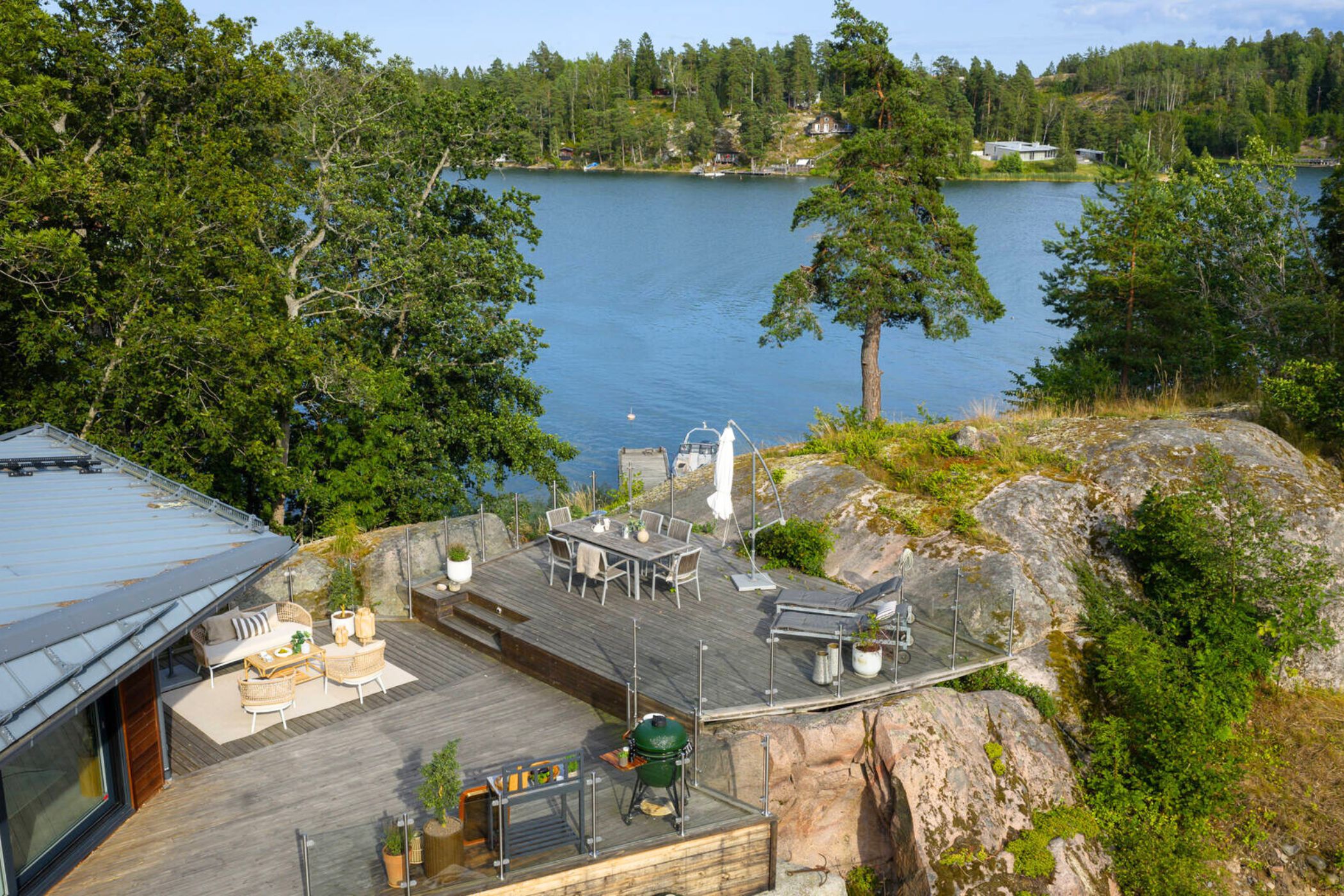
The Bohuslän coast north of Gothenburg is Sweden's most celebrated coastal landscape — a rugged, wave-smoothed granite archipelago of skerries, sea stacks, fishing harbours and pink-rock beaches that stretches from Gothenburg to the Norwegian border at Strömstad. This is the coast that Swedish painters have depicted for a century and a half; the coastal towns of Fjällbacka, Smögen, Hamburgsund, Grebbestad and Lysekil are beloved by Swedes for their authentic working-harbour character, their extraordinary seafood restaurants, and their position among rocks and water that functions as one of the finest natural landscapes in northern Europe. Gothenburg itself — Sweden's second city and its largest port — provides a cultural and practical base of considerable depth, with the Gothenburg Museum of Art, the Gothenburg Opera House, and one of the most active restaurant and design scenes in Scandinavia outside Stockholm.
Co-ownership on the Bohuslän coast most commonly takes the form of archipelago houses and contemporary coastal villas — properties set among the rocks with private access to the sea, views across the skerries and the open Skagerrak, and proximity to kayaking, sailing, and the lobster fishing culture for which this coast is particularly celebrated. The Swedish west coast lobster season (running from late September through November) is one of the most socially anchored traditions in Swedish second-home life, drawing owners back to the coast at exactly the time that most purely summer destinations become quiet. Seafood restaurants along the Bohuslän coast — including the celebrated Gastro in Lysekil and the outstanding fish-and-shellfish operations on the Smögen harbour front — attract diners from across Sweden and internationally. Best for: buyers whose primary motivation is the classic Scandinavian summer and autumn coastal experience; sailing and kayaking families; food and nature-led buyers who value authentic Swedish seafood culture; owners seeking an alternative to the Stockholm Archipelago's higher land prices.
Åre and the Swedish Mountains
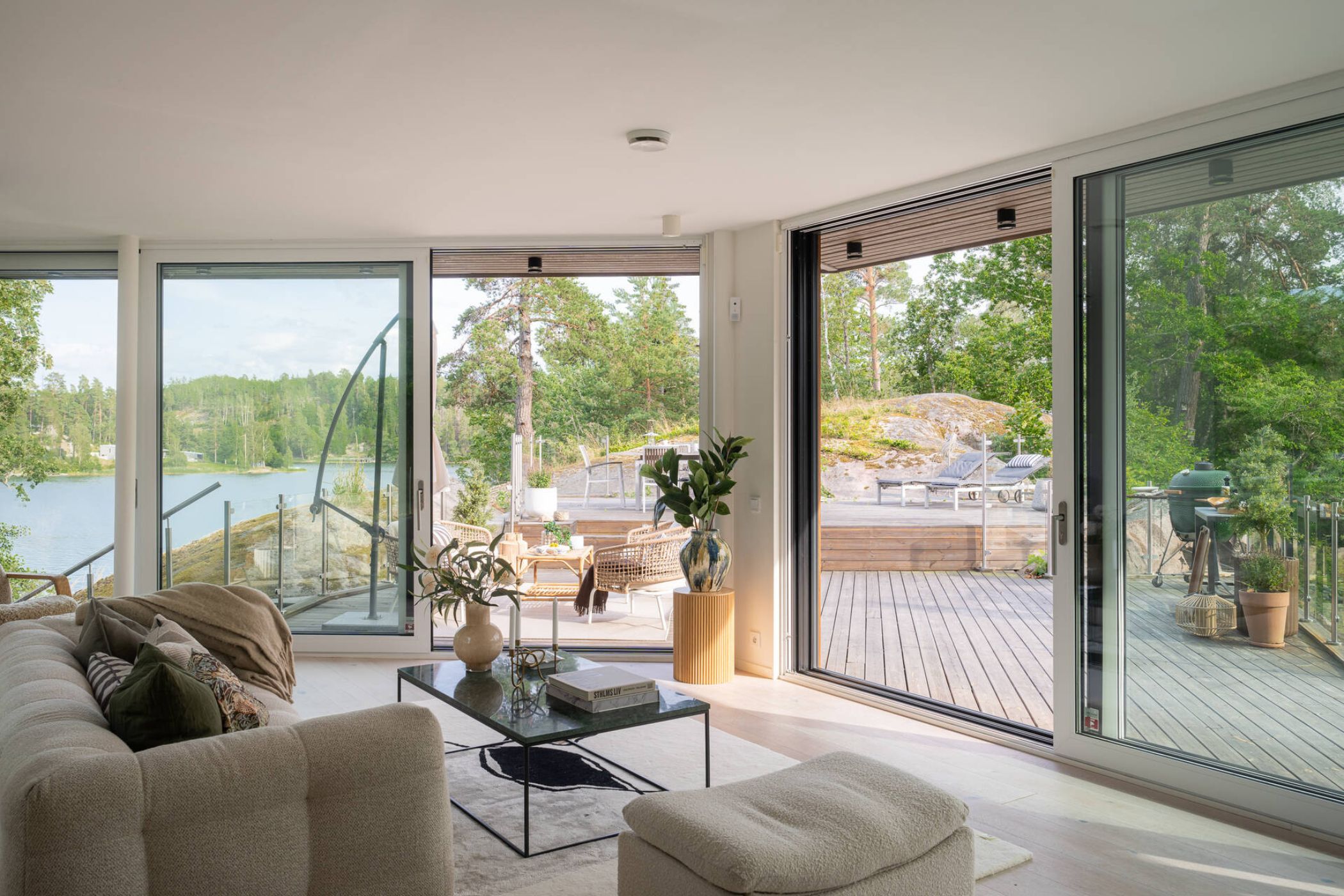
Åre is Sweden's premier ski resort and one of Scandinavia's most established mountain destinations — a purpose-built mountain town in the Jämtland region of central Sweden, with reliable snow from November through April, an impressive vertical drop of 890 metres, 89 pistes covering more than 100 kilometres of marked runs, and a well-developed après-ski and restaurant culture that draws buyers from across Sweden, Norway, Denmark and an expanding international audience. Unlike many Alpine resorts that have been almost entirely transformed into tourist infrastructure, Åre has retained a genuine community character: local businesses, cultural events through the year, and a programme of summer activities (mountain biking on world-class trail networks, hiking, kayaking, white-water rafting on the Indalsälven river) that make it a true four-season destination rather than a ski village that closes in May.
The SkiStar Åre ski area is one of the few Scandinavian resorts that can accommodate advanced skiers for a full week without repetition — the vertical drop of 890 metres and the variety of terrain from groomed beginner runs to the steep off-piste couloirs of Draken and the longer free-ride zones compare creditably with mid-sized Alpine resorts at a fraction of the cost. The mountain biking infrastructure in summer is now world-class: Åre hosts regular UCI Mountain Bike World Cup events, and the network of trails from beginner singletrack to expert enduro runs is maintained to a standard that attracts dedicated riders from across Europe. The property stock for co-ownership at Åre spans well-insulated timber ski chalets, contemporary mountain lodges with open fires and underfloor heating, and the occasional large-format property with ski-in/ski-out access where the terrain allows. The Scandinavian design aesthetic — raw timber, natural stone, carefully considered light and warmth against a dramatic mountain landscape — reaches a particular expression in the Åre chalet, which sits at the intersection of Nordic functional design and the genuine demands of a mountain winter climate. Best for: skiing families seeking a Scandinavian alternative to the French Alps or Austrian mountains; mountain-biking enthusiasts; buyers who want genuine four-season mountain living at lower entry cost than equivalent Alpine properties; year-round nature lovers who value both snow sport and summer highland access.
Dalarna and the Lake Districts
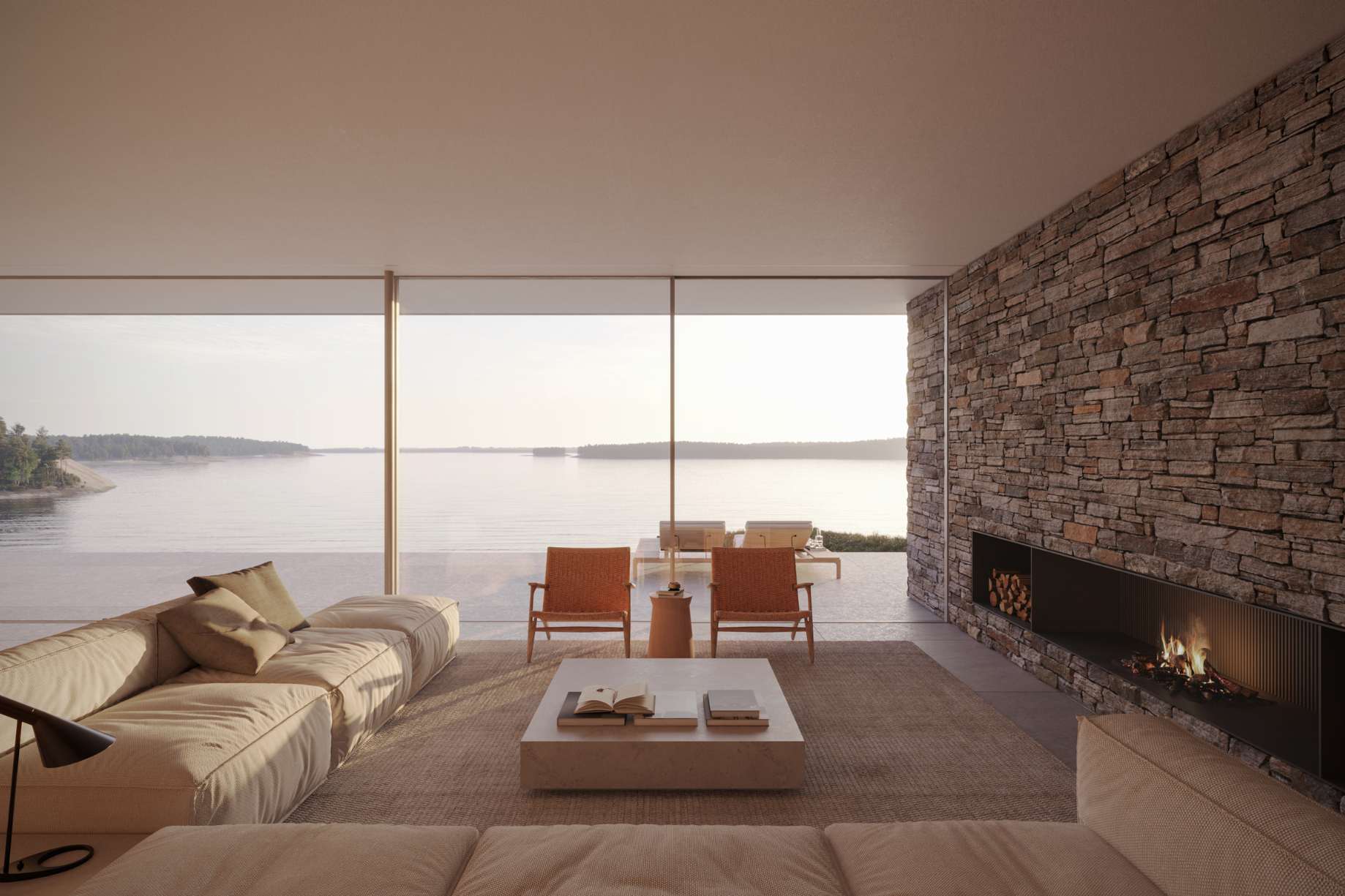
Dalarna is Sweden's heartland — a region of deep pine forests, mirror-still lakes, and the traditional red-painted timber farmhouses (falurött) that have become among the most recognisable symbols of Swedish rural identity. This is where Sweden's folk traditions are most vividly preserved, where the midsummer celebrations around Lake Siljan draw participants from across the country, and where the landscape reaches a quality of stillness — long summer evenings reflected perfectly in glassy lake surfaces, the calls of divers and ospreys across the water — that is among the most restorative environments in Europe. The iconic Falun red paint used on traditional Swedish timber buildings is made from the copper slag of the Falun Mine (UNESCO World Heritage Site) which operated here for centuries, making the landscape itself an expression of cultural and industrial history.
Dalarna second homes most commonly take the form of traditional lakeside sommarstugor — wooden properties set directly on the water's edge, with private jetties, wood-fired sauna houses, and unobstructed views across forested lakes. The lakes of Dalarna — Siljan, Orsa, Åmänningen and dozens of smaller glacial water bodies — provide summer swimming that is genuinely warm in July and August (surface temperatures reaching 22–24°C (low 70s°F)), kayaking routes of extraordinary scenic quality, and the kind of wild fishing (pike, perch, trout, grayling) that has drawn Swedish anglers for generations. The region is also home to Sälen and Idre Fjäll, two of Sweden's most family-oriented ski resorts, making Dalarna a genuinely four-season co-ownership destination: summer swimming and kayaking, autumn mushroom and berry foraging in the pine forests, winter skiing on well-maintained piste networks, and spring cross-country skiing on the Vasaloppet trail network that links Sälen to Mora across 90 kilometres of classic Nordic terrain. Best for: buyers who want the authentic, classic Swedish countryside experience; families drawn to the combination of lake swimming and ski terrain; those who value folk culture and deep Scandinavian heritage; buyers seeking lower entry prices than the Stockholm Archipelago at equivalent landscape quality.
A year in your Swedish co-ownership home
Spreading a minimum of 44 to 45 nights of use across a Swedish calendar year is one of the genuinely rewarding aspects of fractional ownership in this country, because Sweden offers four seasons that are distinctly different from each other in character, activity, light and mood. No other European second-home destination provides this breadth — a single Swedish property delivers summer experiences fundamentally unlike its winter ones, which are fundamentally unlike the spring and autumn transitions, each of which has its own specific character and its own specific activities. The 1/8 share model, with its fair-rotation calendar, ensures that co-owners experience the full range of Swedish seasons across a multi-year cycle rather than returning repeatedly to the same high-summer window. Below is a walk through the Swedish year.
Spring (March–May)
Swedish spring is the most dramatically experienced of the four seasons, because the contrast with the preceding winter is so pronounced. The transition from frozen lake to open water — islossning, the ice break — is one of the most celebrated events in the Swedish countryside calendar: in Dalarna and on the archipelago, the moment the ice leaves the lakes and the water opens again marks a genuine seasonal watershed, signalling the beginning of outdoor life after months of frozen winter. March and April in the archipelago bring the first ferry services back to the outer islands, the reopening of seasonal harbour restaurants, and the extraordinary spectacle of migratory birds arriving on their northern routes — ospreys, white-tailed eagles, and the haunting calls of whooper swans and common cranes passing overhead in long skeins.
In Åre, March and April are the finest months of the ski season: snow depth at its maximum after the winter's accumulation, temperatures warming to –5°C to 5°C (mid-20s°F to low 40s°F) during the day, sunlight hours dramatically extended, and the mountain at its most enjoyable with the flat midwinter light replaced by brilliant spring sunshine across the snow. The Scandinavian spring skiing experience — long sunny days, soft afternoon snow, outdoor terraces open for lunch — is at its best in March and April, and the resorts are quieter and more affordable than the Christmas and February half-term peaks. May is the month that most clearly belongs to the countryside: the birch trees come into leaf across Dalarna and the archipelago in the space of about a week, the wildflowers emerge from the forest floor (including the lady's slipper orchid, which is native to the Dalarna forest edges), and the long days — 16–18 hours of daylight by late May — begin to assert the extraordinary quality of Nordic light that defines the Swedish summer experience.
Summer (June–August)
Swedish summer is the most internationally celebrated of the four seasons for good reason: the combination of extraordinary daylight hours (Stockholm receives nearly 18 hours of daylight around the solstice), warm lake and coastal temperatures, and the particular social quality of the Swedish summer — unhurried, outdoor-focused, deeply communal — creates an experience that buyers consistently describe as unlike anything else in Europe. Midsommar (Midsummer, celebrated on the Friday and Saturday closest to the solstice in late June) is the most important social event in the Swedish countryside calendar, marked by maypole dancing, traditional food and flower garlands, and the universal migration of Swedish families from cities to their sommarstugor. Being in your own Swedish property for Midsommar is an experience that belongs to the co-owner in a way no rented holiday accommodation can match.
July is peak summer across all four clusters. On the Stockholm Archipelago, the islands are at their most animated — sailing regattas in the outer archipelago, the Round Gotland Race (one of Northern Europe's premier offshore races) departing from Sandhamn, the harbours and outdoor restaurants operating at full summer capacity. Lake temperatures in Dalarna reach 20–24°C (high 60s°F to low 70s°F) in July — genuinely warm for open-water swimming, with lake conditions often still and glassy in the long summer evenings. On the Bohuslän coast, the harbours at Smögen and Fjällbacka are at their most social, the outdoor fish restaurants and seafood shacks running at full capacity through the long Nordic evenings. August extends the summer heat while beginning to moderate the peak crowds — for archipelago property owners, late August combines full summer conditions with a slight easing of the July pressure, the sunsets lengthening and the light shifting toward the golden quality that Scandinavian photographers specifically target. Temperatures across the main second-home regions in July and August reach 22–28°C (low 70s°F to low 80s°F) in good summers.
Autumn (September–November)
For many experienced Swedish second-home owners, autumn is the season they least want to miss. September brings the Swedish forest into its most dramatically beautiful condition: the birches turn gold, the rowans and aspens follow in orange and red, and the pine forest floor is dense with chanterelles, porcini, and the wild blueberries that Swedes gather in quantities measured by the bucketload. The Swedish tradition of allemansrätten — the right of public access to the countryside, including the right to forage — means that the autumn forest is an open larder available to anyone who knows what to look for. In Dalarna, September and October bring the harvest season, traditional food markets in the lake-district towns, and the absolute quiet of the countryside that settles as the summer visitors return to their cities.
On the west coast, September and October are the months of the lobster fishing season — one of the most socially embedded traditions in Swedish coastal culture. The Swedish west coast rock lobster (hummer) season, which runs from late September through November, is the annual occasion when the Bohuslän fishing villages operate at their most authentic: working boats going out in the early morning, the catch served directly to the harbourside restaurants that await it. In Åre, October and November bring the first snowfall to the high terrain and the reopening of the lifts for early-season skiing — typically from November onwards, with Åre's reliable northern climate ensuring base snow depth well before its Alpine equivalents. Temperatures drop toward 5–10°C (40–50°F) on the coast and archipelago through October, while the mountain areas begin their transition toward winter conditions in earnest.
Winter (December–February)
The Swedish winter second-home experience is one of the most distinctive in Europe and one of the least well understood by buyers who have not experienced it. December in the archipelago and on the Bohuslän coast is a revelation of quietness: the summer crowds have been absent for months, the islands and harbour towns return to their year-round communities, and the quality of the light — low, golden, slanting across the snow-covered rocks — is extraordinary. The Swedish pre-Christmas tradition of julmarknad (Christmas markets) brings life to the coastal towns and Dalarna villages in early December, with craft markets, glögg, and the full range of Swedish traditional foods making the period one of the most enjoyable in the Swedish countryside calendar. The archipelago in deep winter — particularly the outer islands accessible only by snowmobile or ice-boat across the frozen sea — is an extraordinary experience that bears no relationship to the summer version of the same landscape.
In Åre, December through February is the heart of the ski season: temperatures dropping to –15°C to –5°C (5°F to 23°F) in the mountain zone, snowfall reliable and often deep, the ski area operating at full capacity with the full lift system open. The Åre ski scene is at its most animated over Christmas and the Swedish school holidays in February (sportlov), with the village restaurants, bars and the après-ski venues operating at full energy. January and February on the archipelago offer the extreme experience of the frozen Baltic — the sea ice extending from the inner islands in severe winters, enabling skiing, snowmobile travel and ice fishing directly on the frozen water. Cross-country skiing on the Vasaloppet trail network from Sälen to Mora (available to the public outside race periods) gives Dalarna winter visitors one of the finest long-distance nordic skiing experiences in the world. The Vasaloppet race itself, held in the first weekend of March, attracts 15,000 competitors from over 60 countries and is the single largest cross-country skiing event on earth — making the final weeks of the ski season in Dalarna one of the most anticipated in Nordic sport.
Who buys in Sweden, and why
The international buyer mix in Swedish fractional co-ownership draws from a broad but specific geographic base. British buyers represent one of the most consistent non-Nordic cohorts — attracted by the combination of a shared Northern European cultural sensibility, the direct and frequent flight connections, and the increasingly compelling case for a Nordic second home that operates as a genuinely different lifestyle register from the Mediterranean properties that still dominate the British second-home market. The post-Brexit fit makes Sweden particularly compelling for UK buyers: a 44-to-45-night entitlement sits well inside the Schengen travel window, removing the visa-management complexity that direct property ownership in a Schengen country now involves for British nationals. German, Dutch, and Swiss buyers are the largest continental European cohort — drawn by the proximity (Stockholm is closer to Berlin than to Nice), the cultural affinity with Nordic values and design, and the consistently strong quality of Swedish second-home real estate compared with its price relative to equivalent properties in France, Spain or Italy. American buyers, while smaller in volume, are a growing presence — drawn by the quality of the Nordic outdoor lifestyle experience, the ease of the direct transatlantic flights, and the positioning of a Swedish property as something genuinely distinctive within an international second-home portfolio.
The Scandinavian buyer — Norwegian, Danish, Finnish — is an important and often overlooked segment. For buyers based in Oslo, Copenhagen or Helsinki, a Swedish second home in the archipelago, on the west coast, or in the Dalarna lake district is an established and culturally natural choice: the distance is short, the language is close, and the lifestyle alignment is direct. For these buyers, the fractional model resolves the management burden of a remote Swedish property without surrendering the ownership experience — particularly relevant for Norwegian and Danish buyers who may have existing properties in their home countries and want a Swedish complement without the overhead of a second fully managed asset.
The age-and-life-stage profile of the Swedish fractional buyer broadly follows the wider COP pattern with some Sweden-specific characteristics. The largest cohort is in the 40–65 age band — buyers whose professional lives are established, whose thinking on second-home ownership has matured from aspiration to concrete planning, and for whom Sweden's combination of outstanding natural environment and high legal and social standards aligns with values they hold about how they want to spend their discretionary time. Within this cohort, a distinct subgroup of health-and-wellness-oriented buyers is notable and growing: buyers motivated specifically by the Swedish outdoor lifestyle — sauna culture, wild swimming, forest foraging, sailing, skiing — as a form of intentional restoration from the pressures of urban professional life. Sweden consistently ranks among the world's top countries for health outcomes, work-life balance and wellbeing, and buyers who have experienced the Swedish summer — a week of morning swims in a lake, evening saunas overlooking the forest, long meals on a jetty under Nordic light — describe it as transformatively restorative in terms that Mediterranean beach holidays rarely produce.
Fractional co-ownership in Sweden typically suits:
- Nordic lifestyle enthusiasts — buyers motivated by the sauna culture, the open-water swimming, the foraging, the sailing, and the distinctive quality of Scandinavian outdoor life that only ownership — not hotel stays or short rentals — actually delivers in full.
- UK buyers post-Brexit — professionals and families for whom a 44-to-45-night fractional entitlement sits comfortably inside the Schengen 90-day rule, making Sweden one of the most practically structured second-home options available within the new travel framework.
- Ski and mountain buyers seeking alternatives — buyers who love skiing but want an alternative to the French Alps or Austrian mountains — lower cost, quieter resorts, genuine mountain-town community character, and a Scandinavian aesthetic that is distinctly its own.
- International portfolio builders — buyers pairing a Swedish share (Stockholm Archipelago or Dalarna) with a Mediterranean share for warm-weather coverage, or with a city share (London, Paris, Vienna) for urban cultural balance.
- Sustainability-led buyers — Sweden is one of the world leaders in environmental policy and sustainable land management; buyers for whom the environmental values of the destination matter alongside the lifestyle one find Sweden a particularly aligned choice within the European second-home market.
Practicalities: getting there, what it costs, what you own
Getting there
Sweden's international transport connections are stronger than many buyers outside Northern Europe expect. Stockholm Arlanda Airport (ARN) is the primary gateway and one of the most efficiently run airports in Northern Europe, handling direct services from London Heathrow (2 hours 20 minutes), Gatwick, Amsterdam Schiphol (2 hours 10 minutes), Frankfurt (1 hour 55 minutes), Paris CDG (2 hours 30 minutes), New York JFK (8 hours 30 minutes), Dubai (7 hours 30 minutes) and across Scandinavia and Europe. The Arlanda Express rail link connects the airport to Stockholm Central Station in 18 minutes — a world-class airport-to-city connection. Gothenburg Landvetter Airport (GOT) serves the Bohuslän coast region with direct connections from London Heathrow, Amsterdam, Frankfurt and other major European hubs. Östersund Airport (OSD) serves the Åre mountain region, with direct domestic connections from Stockholm Arlanda in 90 minutes, and the drive from Östersund to Åre village taking approximately 60 minutes along the E14 highway.
From Stockholm, onward travel to the archipelago is by Waxholmsbolaget ferry from Strandvägen quay — services run year-round to the inner islands and seasonally to the outer. Värmdö, the most accessible mainland-connected archipelago zone, is reachable by road or bus from central Stockholm in under an hour. For Dalarna, SJ rail services from Stockholm Central reach Falun in 2 hours 30 minutes and Mora (the heart of the lake district) in 3 hours 15 minutes. The drive from Stockholm to Dalarna via the E4 and Route 70 takes approximately 3–3.5 hours depending on destination. For Åre, the direct overnight SJ sleeper train from Stockholm Central arrives at Åre station in the morning — one of the more civilised ways to begin a ski weekend. The Arlanda Express to Stockholm, then Arlanda to Östersund flight, then transfer to Åre, totals approximately 3.5 hours door-to-door from central Stockholm for those who prefer flying.
Whole-property vs 1/8 share: the comparison
The case for fractional ownership in Sweden is most clearly articulated in the direct comparison against whole ownership and long-term rental — the three main ways international buyers consider holding a Swedish second-home position. The comparison is deliberately in relative terms rather than specific amounts: the price range across Swedish second-home property is wide, from Dalarna lake cottages to Stockholm Archipelago contemporary villas, and the ratios that matter are consistent across the range regardless of the specific price points involved.
| Whole second home | COP 1/8 fractional share | Long-term rental | |
|---|---|---|---|
| Upfront commitment | Full property value | ~1/8 of the property value | First/last/deposit only |
| Equity in the asset | Full appreciation | ~1/8 of appreciation | None |
| Annual carry | Full fastighetsavgift, insurance, management, maintenance | ~1/8 of carry, fully managed | Full rent every year, indefinitely |
| Personal use | Up to 52 weeks (most use 5–8) | Set by the operator, professionally scheduled | Defined by lease |
| Operations burden | Owner-managed (winterisation, maintenance, access) | Fully included | Landlord-managed |
| Time to exit | 6–18 months on the open market | ~1 month on average | End of lease term |
The comparison most buyers find most clarifying is the annual-carry line. Owning a whole Swedish second home outright means carrying the full fastighetsavgift (Sweden's annual property fee), full buildings and contents insurance, full property management — every year, regardless of how many weeks you actually spend there. A 1/8 fractional share carries proportionally less, fully managed, with the operational burden lifted entirely from the owner. The operations burden line is particularly relevant for Swedish properties: maintaining a waterfront or rural Swedish property through the winter months requires specialist knowledge (winterisation, pipe lagging, boat and jetty removal and replacement, snow-load monitoring on roofs, access to remote locations) that is genuinely demanding for a non-resident owner to manage from a distance. Professional management removes this burden entirely. Compared to renting a similar property long-term, the co-owner builds real equity rather than spending rent indefinitely — and the share is theirs to sell, transfer or pass on. The time-to-exit line is also notable: whole-property resale on a desirable Swedish waterfront or archipelago address, in a market where most properties are held for generations and rarely reach the open market, can take 12–18 months or more. A fractional share, by contrast, is sold through our partner's resale process, without you having to sell the whole house.
What's included in the annual service charge
The annual carry on a 1/8 share is, by definition, roughly 1/8 of the carry on the equivalent whole property — a fraction of what an outright second-home owner pays in property fees, insurance, management and maintenance, and a fraction of what year-round long-term rental of an equivalent home would cost. The service charge is best understood as a single all-in number covering everything required to keep the property operating at full standard regardless of occupancy: the Swedish fastighetsavgift (property fee), full buildings and contents insurance, the property management retainer, linen and cleaning between every stay, all routine maintenance and repairs, garden and grounds maintenance (including seasonal jetty installation and removal where applicable), utility bills, and a contribution to the reserve fund for major capital works. Swedish properties specifically benefit from professional winterisation management — the process of properly closing a waterfront or lake property for the frozen season and reopening it correctly in spring is specialist work that the management company handles as a matter of routine, without the owner needing to be present or to coordinate tradespeople across time zones.
What you actually own
You own a real share of the home — an eighth, a quarter — not a right to use it. You can sell it, pass it on to your heirs, and it rises and falls in value with the house. The legal set-up is arranged by our partner for each home and walked through with you before you buy. The practical effect is that you hold real ownership — not a timeshare use-right that depreciates to zero when the contract expires. You participate proportionally in any appreciation in the underlying property's market value, and you can sell, transfer or leave the share to your heirs.
How fractional ownership works in Sweden
The mechanics of fractional ownership in Sweden are framed by two things that work together: the legal set-up our partner arranges for each home and walks through with you before you buy, and the Swedish property tax regime that applies to all residential property regardless of owner nationality. Understanding how these fit together gives a fractional buyer in Sweden real clarity about their ownership.
How co-ownership works for Swedish property
Big decisions — selling the home, major works — are decided together by the co-owners, and the calendar, the annual service charge and the management arrangement are set out in the home's agreements.
Swedish property taxes and your service charge
Sweden operates a straightforward property-tax regime that applies to all residential property regardless of owner nationality. The principal annual property levy is the fastighetsavgift — Sweden's residential property fee, capped under Swedish law at a defined maximum per property rather than calculated as an open-ended percentage of property value, which makes it notably more predictable than the property-tax systems of many other European countries. The fastighetsavgift is folded into the annual service charge distributed across co-owners. For buyers considering resale, Sweden's kapitalvinstskatt (capital gains tax) may apply; the treatment depends on the home's legal set-up, which our partner explains before you buy, on the seller's tax residency and any applicable bilateral treaty between Sweden and the seller's country of residence. Sweden has comprehensive tax treaties with the UK, Germany, France, the Netherlands, the USA and most other countries from which co-owners typically come, generally preventing double taxation on the same gain. Independent tax advice from advisers experienced in Swedish property and international co-ownership is recommended before completing any purchase.
The management model and usage calendar
Once the purchase completes, a professional management team takes over all operational responsibility for the Swedish property. Your personal weeks — a minimum of 44 to 45 nights for a 1/8 share — are allocated through a fair-rotation calendar that distributes the peak weeks (Midsommar, the July summer peak, the February sportlov skiing school holiday for mountain properties, the autumn lobster-season weeks on the west coast) fairly across the co-owner group across a multi-year cycle. Owners pre-book several months ahead; unused weeks are either held for the owner pool or, where the specific property's structure allows, made available to the broader COP audience. Pre-arrival preparation, linen and cleaning between every stay, year-round maintenance, seasonal winterisation and spring opening, fastighetsavgift payment, building insurance and the on-call management contact — all sit with the management team. You arrive, the property is ready.
Resale: how to exit, typical timelines
When you decide to exit your Swedish share, a professional resale process is in place. Resale is handled through our partner's resale process, without you having to sell the whole house. Whole-property resales can take 6–18 months on the Swedish open market, particularly for remote or island properties that attract a specialised buyer pool, with property fees, insurance and management accumulating throughout. The full mechanics of fractional ownership across all COP jurisdictions — usage calendars, exit procedures, the transfer on death, the relationship with the management company — are covered in our co-ownership explained guide. For specific Swedish property availability, browse the listings above, or join our list for new-property alerts as they come to market.
Your ownership at a glance
- Real ownership — you own a real 1/8 share of the home, not a right to use it: you can sell it, pass it on to your heirs, and it rises and falls in value with the house. Not a timeshare, not a points membership.
- Fully managed throughout — the management team handles the fastighetsavgift, insurance, seasonal winterisation and spring opening, maintenance, scheduling, linen and cleaning between stays, and the on-call management contact. You arrive, the property is ready — whether it is June on the archipelago or February in Åre.
- Clear, supported resale — when you decide to exit, our partner's resale process lets you sell your share without having to sell the whole house — rather than facing the timelines typical for whole-property resales in the Swedish second-home market.
Still deciding which Swedish region?
Many buyers arrive on this page already drawn to Sweden but not yet certain which Sweden. The choice between the Stockholm Archipelago, the Bohuslän coast, Åre and Dalarna is rarely about budget alone; the four regions can, at the quality level where fractional ownership concentrates, sit in overlapping price bands. The decisive question is season weighting: which seasons matter most to you, and what will you actually do during your weeks? Most buyers who think carefully about this question find that the answer resolves the regional choice directly — because the four clusters are genuinely differentiated across the Swedish calendar in ways that match different lifestyle priorities. Below is the framework most useful for resolving the same fork, alongside the deeper cluster resources for each region.
Choose Stockholm and the Archipelago if you want the combination of a world-class European capital and immediate island-wilderness access — if your stays are likely to include city dinners and museum visits alongside mornings on the water, if you travel to Stockholm for professional reasons as well as leisure, or if you want the breadth of a city-plus-countryside ownership position in a single property. Stockholm is the right answer for buyers who value year-round usability — the archipelago is accessible and beautiful across all four seasons, the city is one of the finest in Europe in any month — and who want the best-connected base in the Scandinavian second-home market. Unlike a traditional timeshare — which would give you a fixed week in the same hotel room with no ownership — a Stockholm Archipelago co-ownership share gives you a real waterfront property at one of Europe's most distinctive second-home addresses, fully managed, with a calendar that distributes all seasons fairly across the ownership group.
Choose Gothenburg and the West Coast if your primary brief is the Atlantic coastal experience at its most authentic and most Swedish — the granite rocks, the seafood culture, the sailing, the lobster season, the harbour-front communities of Bohuslän. The west coast is the right choice for buyers who want to be genuinely in the Swedish outdoor coastal world rather than in proximity to an urban centre; for sailing and kayaking families; for buyers whose taste runs to the wild and rugged rather than the sculpted and manicured; and for those who want access to the Gothenburg restaurant and cultural scene as a complement to rather than the primary purpose of ownership. The Bohuslän coast typically offers slightly lower entry prices than equivalent properties on the Stockholm Archipelago, making it the more accessible route into Swedish waterfront fractional ownership for buyers working to a defined budget.
Choose Åre and the Swedish Mountains if skiing and mountain living are the primary brief — if you want a four-season mountain destination at lower cost than equivalent Alpine properties, a resort with genuine community character rather than a solely tourist infrastructure, and a mountain aesthetic that is distinctively Scandinavian rather than Central European. Åre is the right answer for buyers who love skiing and want an alternative to the well-established French and Austrian markets; for mountain-biking families who want summer access to world-class trail networks; for buyers who appreciate the combination of high-quality ski terrain and a year-round mountain-town community; and for those who want the Scandinavian design experience extended into a mountain setting. The cost comparison with equivalent Alpine resorts typically shows Åre at a meaningful discount on both purchase price and annual carry, for terrain and infrastructure of genuinely comparable quality.
Choose Dalarna and the Lake Districts if the classic Swedish countryside experience is the primary driver — the lakeside timber house, the morning swim, the evening sauna, the midsummer celebrations, the autumn foraging, the winter skiing on the Vasaloppet network. Dalarna is the right choice for buyers who want the most deeply rooted version of Swedish second-home life; for families whose priority is a genuinely peaceful natural environment rather than proximity to urban infrastructure; for buyers who value cultural heritage alongside landscape; and for those seeking the most affordable route into Swedish waterfront ownership at the quality level where professional management is included and the property is maintained to a consistently high standard throughout the year.
The multi-region approach is increasingly common among experienced co-owners. The most natural Swedish combination is Stockholm Archipelago plus Åre: the archipelago for the summer sailing and city-access calendar, Åre for the ski and winter season. Some owners add an international third share — a Mediterranean property for warm-weather coverage, or a city share in Germany or Austria for cultural city stays. The corollary is that owning across two or three COP destinations delivers a richer and more varied ownership experience than any single property can provide. For a broader view of Scandinavian and Nordic travel contexts, the Visit Sweden official tourism site provides region-by-region planning resources; the Visit Stockholm guide is the most comprehensive English-language resource for the capital and its archipelago; and the Visit Jämtland resource covers the Åre mountain region in full, including the summer activity programme that makes it a year-round destination.
Whichever way the decision goes, the next step is to explore the cluster listings and talk to our team about which specific properties are currently available. For buyers who want the right Sweden property for their specific use pattern — rather than the first one that appears — a 30-minute conversation with an adviser who knows the Swedish second-home market is worth considerably more than an hour of unsupported browsing.
If you would like to talk through which Swedish region best fits your family's actual use pattern — rather than the brochure version of it — join our list and we will be in touch with relevant new-property alerts and an introduction to the team. Alternatively, use the form below to start the conversation directly.
Questions & Answers
Sweden Fractional Ownership — Frequently Asked Questions
Fractional co-ownership gives you real ownership of a share — typically 1/8 — of a luxury Swedish property. The legal set-up is arranged by our partner for each home and walked through with you before you buy. Your 1/8 share entitles you to around six weeks of use per year, proportional rental income from weeks you rent out, and 1/8 of the property value when it eventually sells. Sweden offers unique luxury property experiences: lakeside summer cottages (stugor), archipelago villas, and ski chalets in Åre or Vemdalen — properties that combine Scandinavian design excellence with extraordinary natural settings.
COP's Sweden portfolio focuses on luxury lakeside properties, archipelago villas, and ski chalets in Sweden's most desirable leisure destinations. These properties combine premium Scandinavian design with exceptional natural settings — often in locations with private waterfront access, stunning forest landscapes, or ski-in/ski-out convenience.
Your 1/8 share gives you around six weeks per year. Swedish properties typically have two distinct peak seasons: summer (June–August for lake and archipelago properties) and winter (December–March for ski chalets). COP's structured calendar manages peak-period allocations through a fair rotating priority system. Autumn, with Sweden's famous höst (autumn leaf season), is increasingly popular for shoulder-season visits. Unused weeks can be rented through COP's rental programme.
Many of our Sweden properties support short-term rental of unused weeks — and where permitted, it is an excellent way to offset your annual costs. COP's rental programme can list your unused allocated weeks on short-term rental platforms, with income paid directly to you after the platform fee. Many co-owners cover a meaningful portion of their annual service charge through rental income, particularly in high-demand locations.
That said, rental availability varies by location — some areas have local restrictions on short-term lets, and not all properties in our portfolio permit it. Always check the individual Sweden property listing to confirm whether short-term rental is available for that specific home before factoring rental income into your plans.
Sweden's property market, particularly in Stockholm and premium leisure destinations, has been one of Scandinavia's strongest over the long term. Prime Swedish leisure locations — Dalarna, Jämtland, the Stockholm Archipelago — have planning protections that permanently limit new development. Sweden's strong economy and high living standards support consistent domestic demand for quality second homes.
When you decide to exit, a professional resale process is in place. The supported resale process runs through the COP owner network — your Sweden fractional share is marketed to an existing audience of qualified prospects already familiar with fractional co-ownership, and you keep full control over price and timing.
Resale is handled through our partner's resale process, so you can sell your share without the whole house having to be sold. Note that some properties have a minimum holding period during the first year — check your specific property details before purchase.
Browse COP's Sweden listings, review the 1/8 share price and annual service charge, and submit an enquiry. A COP specialist will contact you within 24 hours to walk you through the full documentation and buying process.
Also Explore
Get in Touch
Speak to an expert
Tell us what you're looking for and one of our co-ownership specialists will be in touch within 24 hours.