Lifestyle & Ownership Experience
The Côte d'Azur Arrière-Pays: A Week Above Cannes
The Riviera that gets photographed sits on the coast; the Riviera that gets lived in sits three valleys behind it. A week in Valbonne, Mougins and the perfumed hills above Cannes — through the eyes of an owner, not a tourist.
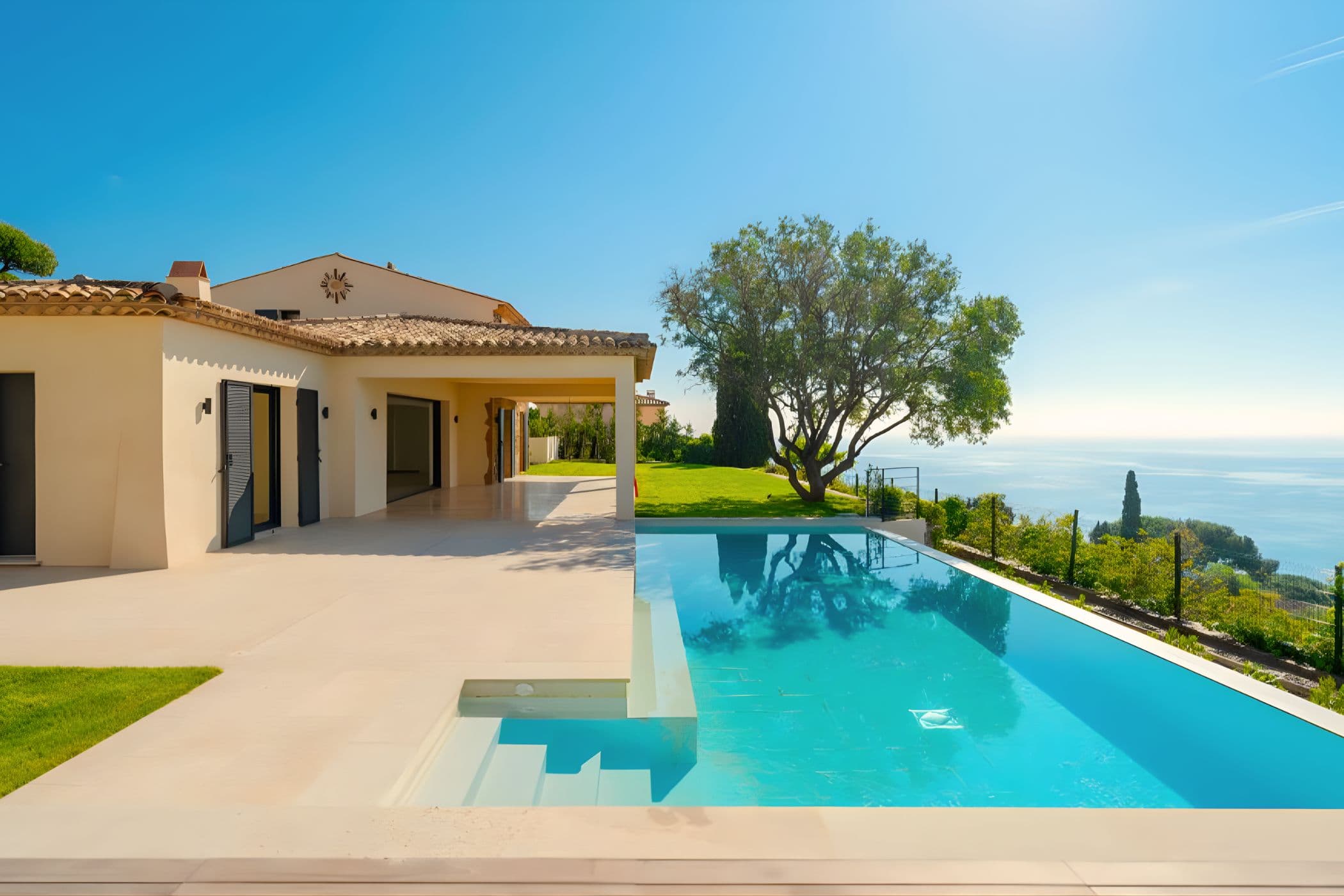
The most exclusive stretch of the Côte d'Azur is not on the coast. It is roughly seven kilometres inland, in the band of stone villages that runs from Mougins through Valbonne to Tourrettes-sur-Loup and Saint-Paul-de-Vence — the so-called arrière-pays, the back country, where the helicopters from Cannes land on private pads behind cypress hedges and the people who actually live on the Riviera have spent the last thirty years quietly moving. Knight Frank, Savills and Sotheby's all reach roughly the same conclusion in their 2026 reports on the region: the arrière-pays now combines the three things prime Côte d'Azur buyers most want — security, accessibility, heritage — in a form the coast can no longer deliver. The coast still owns the postcards. The hills increasingly own the dinners.
For most second-home owners on this stretch of France, that distinction is expensive to maintain and rarely experienced. The average British, American or Northern European owner of a Riviera property spends fewer than thirty days a year in it — and on the arrière-pays side, where the houses tend to come with a tennis court, a pool and an olive grove, the management overhead between visits is considerable. The gardener is on a near-permanent retainer through the growing season. The pool man comes weekly from April to October. The taxe foncière and the taxe d'habitation sur les résidences secondaires arrive in November with figures that climbed again under the most recent municipal revaluations. Co-ownership of an arrière-pays property — specifically, owning one-eighth of a quality villa or restored bastide, alongside seven other vetted co-owners — rewires the arithmetic without rewiring the experience. You arrive. The house is ready. Someone else has dealt with the off-season. You leave. The calendar resets. Our how it works page walks through the structure end-to-end; what follows is what the resulting 44 to 45 days per share, per year actually looks like in the hills above Cannes.
The Arrière-Pays in Shoulder Season: Why May, June and September Are the Real Prize
The brochures sell July and August on the Croisette. The people who actually own here use May, June and September. In late May the rose de mai — the Centifolia rose, cultivated in the fields above Grasse since the sixteenth century — comes into its narrow window of bloom. The flower lasts only a few days on the bush and has to be hand-picked at dawn, before the sun warms the petals and volatilises the aromatic compounds the perfume houses pay for by the gram. Drive twenty minutes inland from a property in Valbonne in the last week of May and you will pass fields of pickers working in the half-light, with the smell of roses laid out under canvas in the cooperative sheds afterwards. In June the jasmin grandiflorum — the Spanish jasmine that Grasse has cultivated since the seventeenth century — opens its small white flowers only at night and is picked in the early morning before the heat releases the scent. This is not perfume tourism. It is the working agricultural year of the hills, and it sits, conveniently, in the same shoulder weeks that the Riviera's restaurants take reservations again and the roads above Cannes are driveable without convoy anxiety.
With 44 to 45 days of annual usage per one-eighth share, the scheduling question for most co-owners is not whether to take shoulder-season time — it is which weeks to claim. A family with school-age children weights its share toward late June and the first half of July, when the Mediterranean is warm enough to be swimmable and the inland villages are still calmer than the coast. A retired couple takes the last week of May for the rose, the first ten days of September when the cicadas thin out, and a long Easter visit when the mimosa is finishing. A buyer interested specifically in the cultural calendar — the Cannes Film Festival sidebars in May, the Nuits Carrées contemporary art weekend at Antibes in June, the Saint-Paul-de-Vence Jazz Festival in mid-August, the Cannes Yachting Festival in September — can build a year of visits around those moments. The calendar is genuinely flexible, agreed among co-owners through the management company, and in practice most groups discover that they naturally want different weeks. The detail is covered in our staying in your co-ownership property FAQs.
What a Typical Week Looks Like
The arrival experience for a co-owner is categorically different from a rental. You are not hunting for a key-safe combination on a doorframe. You are not reading a laminated sheet about the irrigation timer, the WiFi password or the bin-collection days. The property management company has prepared the house before you arrive — fresh linens, the pool at temperature for the season, the fridge stocked with the basics you requested in advance, a bottle of the local Côtes de Provence rosé from one of the domaines whose vineyards are visible from the terrace. The property is yours for the week. Not yours in the hedged sense of a hotel suite, or the provisional sense of an Airbnb. Yours in the sense of real ownership. That distinction is not abstract. It changes how you use the space from the first afternoon.
A Friday morning, say, in a co-ownership property a few minutes outside Valbonne. The village itself is a sixteenth-century monastic foundation laid out on a rare and almost-Roman grid, with the Place des Arcades at its centre — a square ringed by stone arcades added in the seventeenth century, twenty-six restaurants within a short walk and a Friday market that sets up around eight and clears by half past twelve. A couple who own a one-eighth share in a restored bastide above the village might spend the morning at the property — coffee on the terrace, the slow circuit of the garden, the swim that takes about as long as the espresso — and the late morning on the square, returning with the week's vegetables and a wedge of tomme from the cheese stand that comes down from a farm in the Alpes-Maritimes. Afternoon at the pool. A dinner reservation under the arcades at seven. This is not an unusual or aspirational description of how people use the arrière-pays. It is the ordinary rhythm of ownership in a part of France that has been quietly working out the same routine since the village was built.
A week based further along the ridge in Mougins reads slightly differently. Mougins sits high on a perched site above Cannes with views that, on a clear morning, reach to the Lérins Islands and on a clear evening to the dark shape of Corsica's Cap Corse on the horizon. The village's vieux village is small and entirely pedestrianised, the international schools and the Mougins Country Club draw a stable expatriate community, and the half-hour drive down to the Croisette is short enough to make a Cannes dinner workable but long enough to keep the village itself out of the rental traffic. A morning's drive from a property near Mougins can take in the perfumeries of Grasse — Fragonard, Galimard, Molinard, with the new Fragonard Mas du Parfumeur estate opening to visitors in 2026 — a long lunch in a hill village like Cabris, and a return through the Gorges du Loup to the property in time for a swim before sunset. Properties of this calibre in the arrière-pays — restored bastides, perched villas with mature gardens, modern villas in gated domaines — currently trade between €6,000 and €17,000 per square metre on the Sotheby's and Knight Frank Côte d'Azur indices, with the upper end concentrated in Mougins and the comparable parts of Valbonne and Saint-Paul-de-Vence.
The Management Reality: What You Don't Have to Think About
The lifestyle argument for co-ownership in the arrière-pays is compelling on its own terms. The practical argument may be more so. Full ownership of a quality villa above Cannes brings with it a management overhead that most buyers underestimate at the point of purchase and find exhausting within two years. The pool contractor, the gardener — who on any property with land of substance is a near-full-time post during the growing season — the cleaner, the property manager, the alarm and remote-monitoring contract, the annual taxe foncière, the taxe d'habitation sur les résidences secondaires at the surcharged rate that several Alpes-Maritimes communes now apply to second homes, and the maintenance backlog that only really makes itself felt the second time the heating fails in February when nobody is in the country. Co-owners deal with none of this directly. The management company handles all of it. Owners receive a single annual account, pay their proportional share of costs, and use the property.
How the home is looked after is one of the most frequently misunderstood aspects of co-ownership. Because you own one-eighth of the property, the upkeep of the house, its pool and its garden is shared with the other owners and handled by our partner, so the home is ready when you arrive.
The Côte d'Azur Market in 2026: Context for Buyers
Understanding the Riviera market in 2026 matters because it shapes the entry price for co-ownership and the long-term capital position of co-owners. France as a whole has been one of the more reliable mid-decade performers in Western Europe: Notaires de France recorded an 11 per cent rise in completed transactions in the twelve months to February 2026 against the prior period, with the Alpes-Maritimes prime segment running structurally ahead of the national curve and trading on its own logic of foreign demand. Riviera prices were up around 2 per cent overall between January 2025 and January 2026, with prime seafront and view properties advancing 3 to 6 per cent and standard houses and villas effectively flat. The entry ticket for the top one per cent of Alpes-Maritimes transactions sits at €7.45 million; trophy assets on the Croisette in Cannes reach €45,000 per square metre.
The arrière-pays — the mid-market that matters most for co-ownership — sits structurally below those numbers and above the national average. Quality bastides and perched villas in Valbonne, Mougins and Saint-Paul-de-Vence currently trade between €6,000 and €17,000 per square metre, with full-property asking prices for a three-to-five-bedroom villa with a pool and mature grounds typically running between €1.6 million and €4.5 million depending on village, view and condition. A one-eighth share in a property at the mid-point of that range — say, a €2.4 million restored bastide in the hills above Valbonne — would currently be priced at around €300,000 to €340,000 per share, depending on our partner's structure. That entry point gives a co-owner real ownership in a market that Sotheby's, Knight Frank and Savills all describe as supply-constrained by geography, planning rules and ecological standards — a structural floor under values that the coast itself increasingly cannot replicate. The four-bed Valbonne villa we listed this week, profiled in our newest-listings note, sits in exactly this band.
One regulatory note matters for any Côte d'Azur buyer evaluating short-let economics. The Loi Le Meur, in force since 2025, requires every furnished tourist let in France to be registered against a national identifier — the Numéro National via Declaloc — and gives municipalities meaningful new powers to cap or restrict the issuance of such registrations. The tax allowance on income from classified furnished tourist accommodation has fallen from 71 per cent to 50 per cent, with the turnover ceiling now €83,600; unclassified short-lets are now allowed only a 30 per cent deduction up to a turnover of €15,000. Several Alpes-Maritimes communes are using these powers to cap new licences. This has no effect on co-owners who intend to use their share personally — and the majority of co-ownership buyers do — but it constrains supply of new short-let inventory and tends to support capital values for properties already inside the framework.
The Co-Ownership Case for the Arrière-Pays
The case for co-ownership in the arrière-pays is not primarily a financial argument, though the financial argument is sound. It is fundamentally a usage argument. This part of France rewards the kind of unhurried, returning presence — the Friday market in Valbonne, the rose harvest in late May, the long September lunch under the plane trees, the November olive press in the village mill — that a few weeks of real ownership enable and that a holiday rental, with its check-in anxiety and its always-slightly-different keys, rarely delivers. Co-owners arrive as owners. They know the property, have their routines in it, know the gardener's name and the baker's hours, and engage with the surrounding landscape from a different starting point than a tourist. Over five or six visits a year, across different seasons, that builds into something that feels less like a holiday and more like a second life. That is, ultimately, what people are buying when they buy a share in an arrière-pays villa — not the building, but the Friday in the square.
If the Côte d'Azur version of this argument resonates, the Mallorca version and the Tuscan version read identically with different casts and the same one-eighth arithmetic. For buyers currently evaluating the Riviera back-country, COP carries live inventory across our homes in the destinations described above. Browse the current listings or speak with our team directly to understand which properties are available and what a specific share would cost in today's market.
See the homes behind this guide. Explore a current Côte d'Azur co-ownership share, browse the wider French collection, or speak with our team about what is available now.
More from Co-Ownership Property
Get in Touch
Speak to an expert
Tell us what you're looking for and we'll be in touch.