Lifestyle & Ownership Experience
The Riviera di Ponente: A Week on the Italian Riviera
West of Portofino''s crowds, the Riviera di Ponente keeps its palm-lined seafronts and pesto-scented hill villages mostly for itself — here is what a week of owning a share of it, from the sands of Alassio to the stone villages of the entroterra, actually feels like.
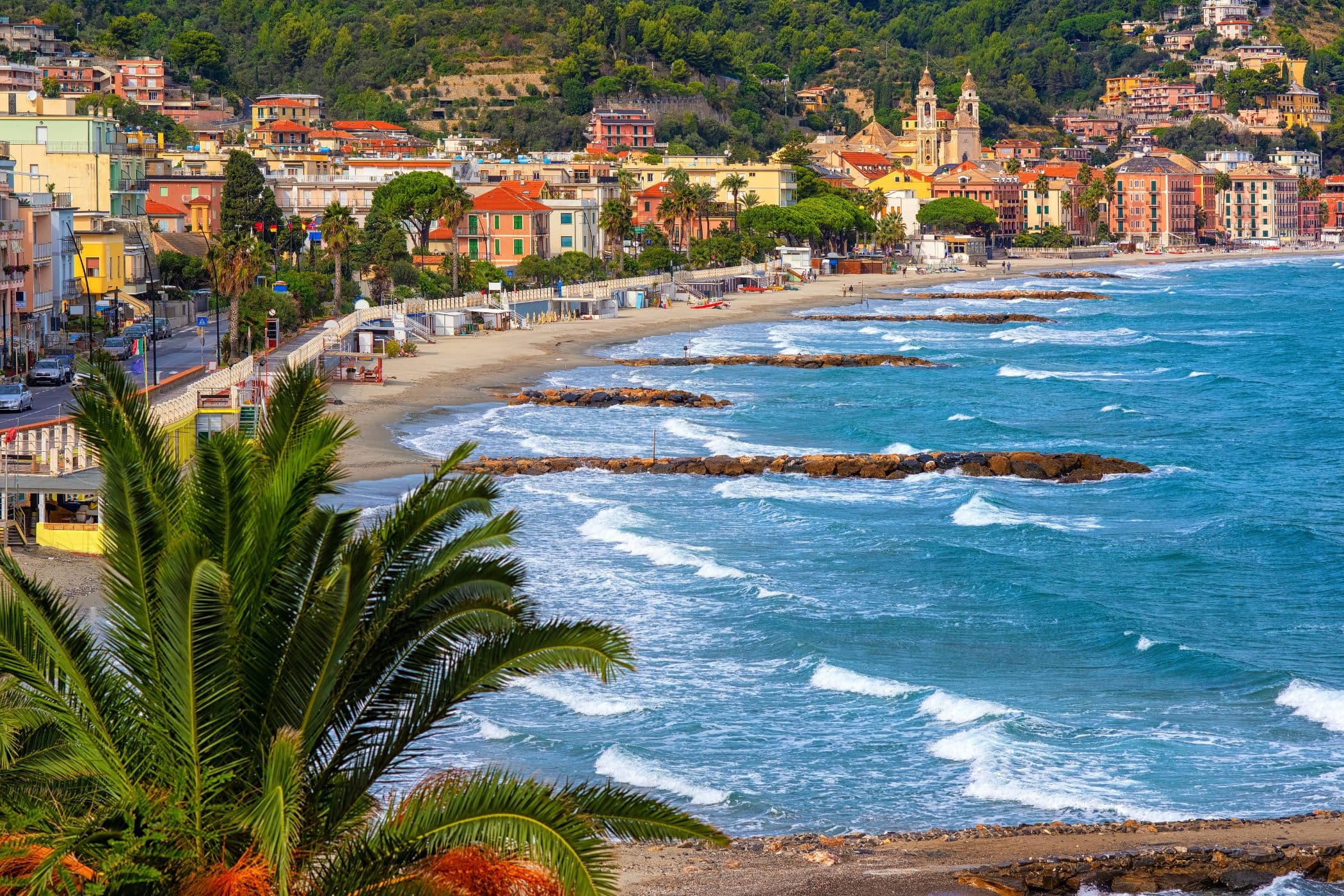
Ask most foreign visitors to picture the Italian Riviera and they will describe the eastern half: Portofino''s yacht-clogged harbour, the painted houses of the Cinque Terre stacked above the surf, the day-trip queue for the train at Monterosso. That coast is genuinely beautiful and, in July, almost unusable. Ligurians themselves go the other way. West of Genoa, past Savona, the coast unspools into the Riviera di Ponente — the coast of the setting sun — where the seafronts are lined with palms rather than tour buses, the beaches run wide and sandy instead of vertiginous, and the hill villages behind them have never appeared on a cruise itinerary. This is the Riviera the people who live here kept for themselves, and it is where owning a share of a home makes the most sense — not the postcard of Portofino, but the ordinary extraordinary rhythm of a coast you return to.
For most second-home owners, that rhythm is expensive to maintain and rarely experienced. The villa in the hills above Alassio or the apartment a street back from the Loano seafront sits, for the great majority of foreign owners, empty for most of the year — the pool serviced, the garden cut, the shutters closed against the salt, the bills paid against weeks that somehow never quite happen. Co-ownership of an Italian Riviera property — specifically, owning one-eighth of a quality home, alongside seven other vetted co-owners — changes the arithmetic entirely without changing the experience. You arrive. The house is ready. Someone else has managed the off-season. You leave, and the calendar resets for the next owner. This is what that month-and-a-half a year actually looks like on the Riviera di Ponente. Our how it works guide walks through the structure end to end.
A Mild Coast in the Shoulder Seasons: Why May, September and October Are the Real Prize
The travel posters sell July and August, when the Ligurian beaches fill and the Via Aurelia along the coast slows to a crawl. The people who own property here use the shoulder seasons, and the Riviera di Ponente is unusually generous with them. The stretch of coast west of Savona is sheltered by the Ligurian Alps, which hold back the cold northern air; the average January temperature exceeds 10°C, hard frost is rare, and the coast records around 2,500 hours of sunshine a year — a microclimate closer to the deep south than to the rest of northern Italy. The sea stays swimmable from June into October, holding 20 to 23°C through September, which is why the locals treat the autumn, not the height of summer, as the season that belongs to them. A co-ownership calendar is particularly well-designed to capture exactly these weeks.
With 44 to 45 days of annual usage per one-eighth share, the question for most co-owners is not whether to take shoulder-season time — it is which weeks to claim. A family with school-age children naturally weights its share toward late June and July, when the beach clubs are at full tilt. A retired couple takes the last fortnight of September, a long week in the hills during the October olive harvest, and a mild Easter when the mimosa is out along the coast road. A buyer drawn to the food-and-festival year — the summer evenings of music in Alassio, the sagre in the hill villages, the new oil coming off the presses in November — can build an annual pattern that tracks those moments specifically. The calendar is genuinely flexible, agreed among co-owners through the management company, and in practice most groups find they naturally want different weeks.
What a Typical Week Looks Like
The arrival experience for a co-owner is categorically different from a rental. You are not hunting for a key-safe combination on a doorframe or reading a laminated sheet about the WiFi and the bin days. The management company has prepared the home before you arrive — fresh linens, the pool at temperature for the season, the fridge stocked with the basics you asked for in advance, perhaps a bottle of the local Pigato, the mineral Ligurian white that grows on the terraces just inland. The property is yours for the week. Not yours in the hedged sense of a hotel suite, or the provisional sense of an Airbnb. Yours in the real-ownership sense: a genuine share of the house, not a right to use it. That distinction is not abstract; it changes how you use the space from the first afternoon.
A morning, say, in a co-ownership apartment a few streets back from the front in Alassio. The town has the longest sand beach on this coast — close to four kilometres of it — and a pedestrian spine, the budello, a narrow lane of shops and bakeries running parallel to the sea that has been the town''s living room for a century. Halfway along is the Muretto, the little wall set since the 1950s with ceramic tiles signed by the writers, actors and racing drivers who passed through. You buy focaccia still warm and farinata — the chickpea pancake that is Liguria''s great street food — and eat the morning on the beach, the afternoon on the terrace, the evening on the passeggiata as the whole town walks the seafront before dinner. This is not an aspirational description of how people use the coast. It is the ordinary rhythm of ownership on one of the gentlest shores in the Mediterranean. The current Alassio listing — a two-bed terrace apartment with sea views and a pool — sits exactly in this part of town.
A week based a little along the coast in Laigueglia reads differently again. It is the old fishing village next door — a tight grid of pastel houses behind the baroque church of San Matteo, the painted boats still drawn up where the sand meets the lanes, a quieter and more local register than Alassio''s. Inland, the entroterra changes the holiday entirely. Thirty to forty minutes up into the hills behind the coast, villages such as Apricale — one of I Borghi più Belli d''Italia, the official roll of Italy''s most beautiful villages — stack their stone houses up a hillside above terraced olive groves, the home country of true Ligurian pesto. A morning that begins on the beach can end with lunch in a hill village where the only sound is a church bell and a dog, and where COP carries a three-bed villa with a pool within reach of both worlds.
The Management Reality: What You Don''t Have to Think About
The lifestyle argument for co-ownership on this coast is compelling on its own terms. The practical argument may be more so. Full ownership of a Riviera property above a certain value carries a management overhead that most buyers underestimate at purchase and find exhausting within two years. The pool contractor, the gardener, the cleaner, the property manager, the insurance renewal, the IMU — Italy''s municipal tax on second homes — and the TARI waste charge, the spese condominiali if the home is in a building, and above all the relentless salt-air maintenance on shutters, railings and external paint that a coast like this demands. Co-owners deal with none of this directly. The management company handles all of it. Owners receive a single annual account, pay their proportional share of costs, and use the home.
How the home is looked after is one of the most frequently misunderstood aspects of co-ownership. Because you own one-eighth of the property, the upkeep of the house, its pool and its garden is shared with the other owners and handled by our partner, so the home is ready when you arrive.
Liguria''s Property Market in 2026: Context for Buyers
Understanding the Ligurian market in 2026 matters because it shapes both the entry price for co-ownership and the long-term capital position of co-owners. Residential property in Liguria asked an average of around €2,720 per square metre in late 2025, up roughly 1.9 per cent year-on-year, with the province of Savona — which takes in Alassio, Laigueglia and Loano — the most expensive in the region at about €3,480 per square metre. Those averages conceal a steep gradient between the water and the hills: prime sea-view stock on this coast routinely trades above €4,500 per square metre, and the most sought-after addresses in Alassio have reached as high as €10,400 per square metre, while comparable homes in the entroterra, twenty to forty minutes inland, can be found from €1,200 to €2,500 per square metre. Nationally, Italian house prices have been rising at roughly 4 per cent a year into early 2026, with the strongest demand concentrated in energy-efficient and well-located stock — precisely the kind of restored, ready property that co-ownership is built around.
Against that backdrop, the co-ownership entry point is what makes the coast accessible. A one-eighth share in the kind of sea-view apartment COP carries in Alassio currently opens at around €179,000, and a share in a Laigueglia villa with a pool at around €239,000 — real ownership in a market that has appreciated steadily, in a home that has already been brought up to standard, with none of the renovation exposure that derails so many full-ownership budgets on an old coastal property. You can see live pricing across the Italian collection, which spans the Riviera, the lakes and the hill country.
One regulatory note affects all Italian property buyers. Since 1 January 2025, every property let on a short-term basis must carry a national identifier — the CIN, or Codice Identificativo Nazionale — displayed on every listing, with fines running from €800 to €8,000 for non-compliance, and regions and municipalities now hold the power to cap short-let licences in pressured tourist areas. This has no effect on co-owners who intend to use their share personally — and the great majority do — but it constrains the supply of new short-let inventory and tends to support capital values for properties already inside the framework. It is worth confirming which structure applies to any specific home before signing.
The Co-Ownership Case for the Italian Riviera
The case for co-ownership on the Riviera di Ponente is not primarily a financial argument, though the financial argument is sound. It is fundamentally a usage argument. This coast rewards the kind of unhurried, returning presence — the September sea when the crowds have gone, the new oil pressed in a hill village in November, the bright winter weekend when the seafront is fifteen degrees and almost empty and you have it more or less to yourself — that a few real weeks of ownership enable and that a holiday rental, with its check-in anxiety and its always-slightly-different keys, rarely delivers. Co-owners arrive as owners. They know the apartment, have their routines in it, know the baker''s hours and the gardener''s name, and engage with the coast from a different starting point than a tourist. Over five or six visits a year, across different seasons, that builds into something that feels less like a holiday and more like a second life. That is, ultimately, what people are buying when they buy a share on this coast — not the building, but the autumn on the seafront.
If the Riviera version of this argument resonates, the Lake Garda version reads in a similar key with a different cast — a different shoreline, the same one-eighth arithmetic. For buyers weighing the Italian Riviera now, COP carries live inventory from the Alassio seafront to the stone villages behind it. Browse our homes or speak with our team directly to understand which properties are available and what a specific share would cost in today''s market.
See the homes behind this guide. Explore the current Alassio co-ownership share, browse the wider Italian collection, or speak with our team about what is available now.
More from Co-Ownership Property
Get in Touch
Speak to an expert
Tell us what you're looking for and we'll be in touch.