Lifestyle & Ownership Experience
Lake Garda's Veronese Riviera: A Week as an Owner
On Garda's olive-grown eastern shore — Torri del Benaco, Lazise, the foot of Monte Baldo — Italy's largest lake rewards the unhurried owner across four seasons, long after the July crowds have gone. This is what a one-eighth share there actually feels like.
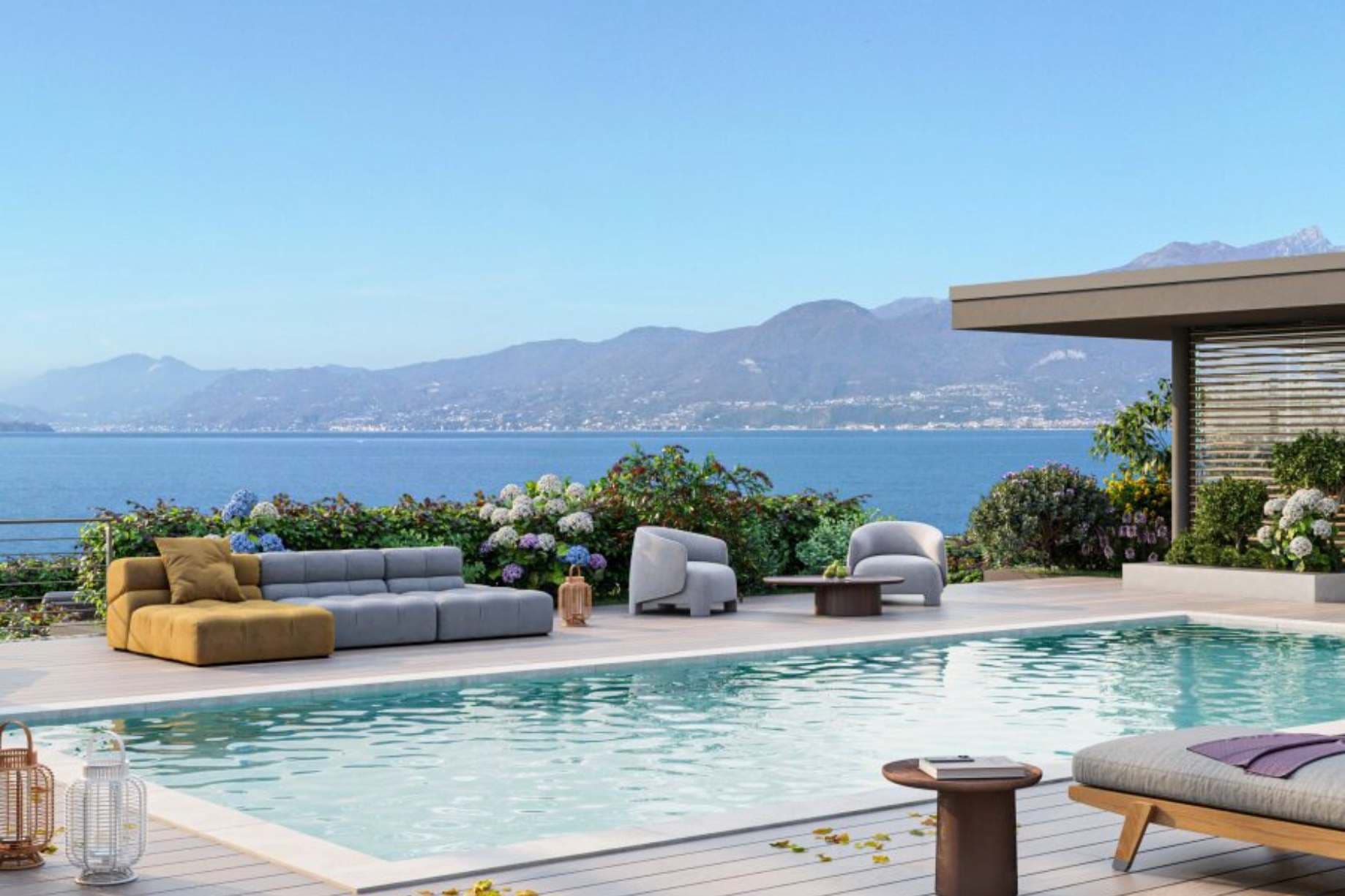
Lake Garda is the largest lake in Italy, and one of the very few places in Europe where olive groves, vineyards and lemon terraces share a single hillside. The microclimate that allows it — Alpine meltwater below, a near-Mediterranean sky above, and the long wall of Monte Baldo holding back the northern weather — also made the eastern shore, the strip the Veronese have always called the Riviera degli Olivi, one of the oldest cultivated coastlines on the continent. Most visitors meet none of this. They meet Garda in the third week of July, in a slow queue of camper vans on the lakeside road, and file the place away as crowded and a little kitsch. The people who own a share of a house on the Veronese shore meet a different lake entirely — slower, quieter, and open for far more of the year than the postcard admits. This is what that kind of ownership actually feels like, week by week, across the seasons the day-trippers never see.
For most second-home owners, that wider lake is expensive to hold and rarely used. The foreign owner of a Garda apartment — and the buyers here are overwhelmingly German, Austrian and Dutch, increasingly British and American — typically spends only a handful of weeks a year on the water while the costs accrue every month regardless. The pool is serviced whether anyone swims or not. The amministratore di condominio emails about a façade repair in dense legal Italian. The IMU, Italy's municipal tax on second homes, falls due in June and December and is paid without much scrutiny of what it covers. Co-ownership rearranges that arithmetic without altering the experience: owning one-eighth of a quality apartment, alongside seven other vetted co-owners, buys roughly 44 to 45 days of use a year, a home that is ready the moment you arrive, and an off-season that is somebody else's job. Our how it works guide sets out the structure end to end. This is what those six weeks look like on Garda's olive coast.
Garda Across Four Seasons: Why the Shoulder Months Are the Real Prize
The package brochures sell July and August, when the lakeside promenades are shoulder-to-shoulder and the road between Garda and Torri del Benaco moves at walking pace. The people who own here use the rest of the year. Spring, when the peach and cherry orchards behind Bardolino turn the lower slopes pink and the first sailing crews are back on the water. Late September and October, when the Festa dell'Uva e del Vino fills Bardolino's waterfront and the frantoi — the village olive presses — begin their short autumn run, turning the year's fruit into the pale, delicate Garda DOP oil that is among the most northerly produced anywhere in the world. Even winter has its argument: Monte Baldo, the mountain that rises straight off the eastern shore, holds snow into spring, and the cable car from neighbouring Malcesine climbs from lemon-house latitude to ski runs in under ten minutes.
With 44 to 45 days a year per one-eighth share, the question is rarely whether to take shoulder-season time — it is which weeks to claim. A family with school-age children weights its share toward the July sailing season, when the lake's celebrated thermal winds — the northerly Pèler at dawn, the southerly Ora through the afternoon — make Garda one of the finest dinghy and windsurfing waters in Europe. A retired couple takes the harvest weeks in October, a week of walking on Monte Baldo in June, and the quiet fortnight after Easter when the lakeside gardens reopen. The calendar is agreed among co-owners through the management company and, in practice, most groups discover they naturally want different weeks. The mechanics are set out in our staying in your co-ownership property FAQs.
What a Typical Week Looks Like
The arrival is categorically different from a rental. You are not hunting for a key-safe on a doorframe or reading a laminated sheet about the boiler and the bin days. The management company has prepared the apartment before you arrive — fresh linen, the pool at temperature for the season, the fridge stocked with the basics you asked for, perhaps a bottle of Bardolino Chiaretto from a producer in the hills behind the town. The home is yours for the week. Not yours in the hedged sense of a hotel room, or the provisional sense of an Airbnb, but in the real-ownership sense — a genuine share of the house, not a right to use it. That distinction is not abstract; it changes how you use the space from the first afternoon.
A Wednesday, say, in a two-bedroom apartment with a pool in Torri del Benaco, the medieval harbour town set midway along the eastern shore at the foot of Monte Baldo. The fourteenth-century Castello Scaligero still guards the little port, its battlements doubled in water that the ferries cross to Toscolano-Maderno on the Brescian side. The morning is coffee on the terrace and a slow swim; the late morning, the cable car up Monte Baldo for the long view down the whole lake to the spit of Sirmione; the afternoon back at the harbour, where the boats still land lake whitefish for the evening's restaurants. This is not an aspirational set-piece. It is the ordinary rhythm of owning on the Riviera degli Olivi, the olive coast that gives the Veronese shore its name. COP's two-bedroom share in Torri del Benaco sits within a short walk of exactly this.
A week based a little south, around Lazise and Bardolino, reads differently. Lazise was the first free comune in Italy, granted self-government in the tenth century, and its arcaded lanes and intact ring of walls still enclose a working town rather than a museum. Bardolino, ten minutes north, gives its name both to the light red and to the spring rosé celebrated each year at the Palio del Chiaretto; the wine route behind it climbs through vineyards into the morainic hills. A one-bedroom penthouse with a pool here — COP lists a Lazise share on the lake's most accessible stretch — puts the Verona–Garda railway, the airport and the autostrada within easy reach, which is part of why this shore suits owners who use their weeks in short, frequent visits rather than one long annual stay.
The Management Reality: What You Don't Have to Think About
The lifestyle argument for co-ownership on Garda is compelling on its own; the practical argument may be more so. Sole ownership of a lakeside property carries a management overhead most buyers underestimate at purchase and find wearing within two years. The pool contractor, the gardener, the cleaner, the amministratore, the insurance renewal, the IMU and TARI (the waste tax), the spese condominiali if the apartment sits in a residence, the mooring fee if there is a boat, and the quiet maintenance backlog that only announces itself when the heating fails in February and nobody is in the country. Co-owners deal with none of this directly. The management company handles all of it; owners receive a single annual statement, pay their proportional share, and use the property.
The cost structure is one of the most frequently misunderstood aspects of the model. Because you own one-eighth of the property, you pay one-eighth of everything it costs to run — taxes, insurance, maintenance, the management fee, pool and garden upkeep, and any improvements the owners agree. The figures arrive as one reconciled annual account in plain terms, not as a drawer of Italian utility bills in a language you half-follow, and the total is a fraction of what the same standard of upkeep costs a sole owner who is present only a few weeks a year. Our buying FAQs walk through how costs are apportioned and billed.
Lake Garda's Property Market in 2026: Context for Buyers
Garda's eastern shore is the most expensive stretch of Italy's most sought-after lake market, and the numbers explain why co-ownership has taken hold here. As of early 2026, average asking values reach roughly €6,036 per square metre in Torri del Benaco — the highest of any town on the lake — with Bardolino near €4,830, Garda around €4,010 and Lazise about €4,062, on Immobiliare market data. Prime, lake-view stock in these towns has been recording annual gains of 3 to 5 per cent, sustained by northern-European retirees and remote-working buyers leaving Milan; across the wider Veneto, homes are currently closing some 5 to 8 per cent below asking, although well-kept lakefront property near Garda can attract foreign competition that pushes the other way.
Those per-square-metre figures are why sole ownership of a turnkey lakeside apartment runs comfortably past a million euros, and why a one-eighth share is the more rational way in for a buyer who wants weeks rather than a second mortgage. COP's one-eighth shares on Lake Garda currently begin around €139,000 for a two-bedroom apartment with a pool, rising to the high-€300,000s for a larger three-bedroom residence with an infinity pool at Cavaion Veronese, in the hills just back from the shore. Each share is real ownership of a piece of the home, in a market with a long record of steady appreciation. The full Italian collection shows live pricing across Garda and beyond.
One regulatory note touches every Garda buyer. Since 2024 Italy has required a national identifier — the CIN, or Codice Identificativo Nazionale — for any property let to tourists for up to thirty days, to be shown on the listing and at the building, with fines reaching €8,000 for non-compliance and regional codes still running alongside it through the transition. This has no bearing on co-owners who use their weeks personally, as the majority do, but it constrains the supply of new short-let inventory and tends to support values for homes already inside the framework. It is always worth confirming whether a specific property is structured for personal use or for rental before you sign.
The Co-Ownership Case for Lake Garda
The case for co-ownership on Garda is not, in the end, a financial argument, though the financial argument is sound. It is a usage argument. The lake rewards the kind of unhurried, returning presence — the October harvest in Bardolino, the dawn Pèler filling a sail, the cable car to a June ridge on Monte Baldo, the long lunch under the pergola in a harbour town the day-trippers have already left — that a few weeks of real ownership enable and that a rental, with its check-in anxiety and its always-slightly-different keys, rarely delivers. Co-owners arrive as owners. They know the apartment, have their routines in it, know the baker's hours and the ferry timetable, and engage with the lake from a different starting point than a tourist. Over five or six visits a year, across the seasons, that builds into something that feels less like a holiday and more like a second life. That is what people are buying when they buy a share on the Veronese shore — not the apartment, but the lake in the weeks the queue never sees.
If the Garda version of this argument resonates, the lake has two quieter siblings worth setting beside it: our Lake Como ownership experience on the Tremezzina shore, and the case for Lake Maggiore, Italy's understated great lake. Each reads with the same one-eighth arithmetic and a different cast of villages.
See the homes behind this guide. Explore a current Lake Garda co-ownership share in Torri del Benaco, browse the wider Italian collection, or speak with our team about what is available now.
More from Co-Ownership Property
Get in Touch
Speak to an expert
Tell us what you're looking for and we'll be in touch.