Lifestyle & Ownership Experience
Palamós, One Cove at a Time
A live €184,000 penthouse share places the Camí de Ronda, Cala s’Alguer and a working fishing town within the rhythm of repeat stays.
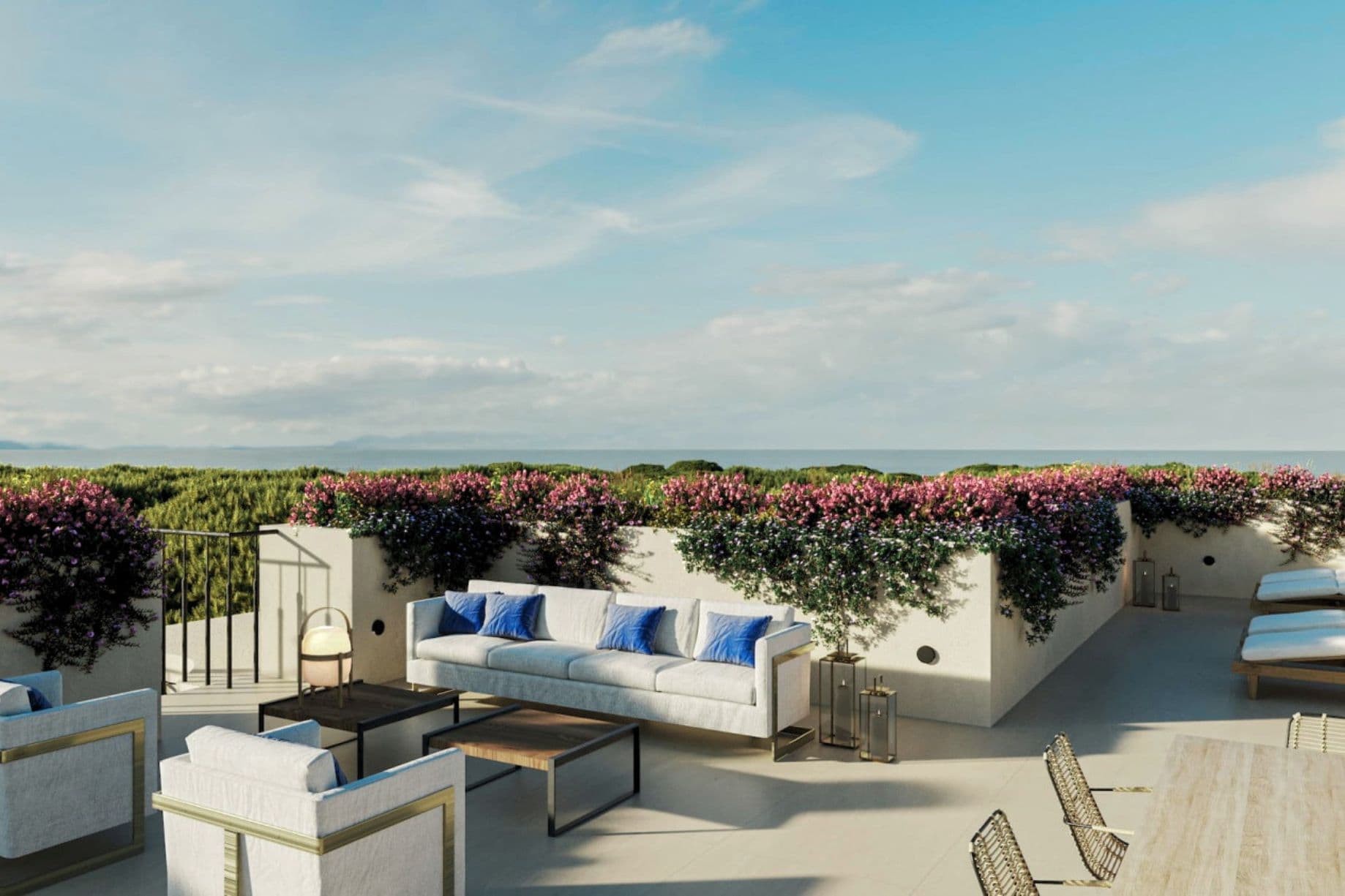
The most useful measure of a Costa Brava home may not be the distance to Barcelona or the number of restaurants within driving range. It may be the number of good days that can begin at the front door: a walk beneath the pines, a swim from a small cove, lunch on the roof terrace, then an afternoon watching the fishing boats return to Palamós.
That pattern suits co-ownership because it improves with repetition. On a first visit, the Camí de Ronda is a celebrated coastal path. On later visits, it becomes a collection of decisions made almost without thinking: which section has shade, which beach suits the wind, where to pause and whether today calls for the town or the quieter coast beyond La Fosca.
A newly listed Palamós penthouse turns this into a concrete ownership proposition. The asking price is €184,000 for a 1/8 share, with a stated minimum of 44 nights a year. The home sits at La Pineda d’en Gori, beside the route towards Cala s’Alguer and Platja de Castell, with a private roof terrace looking across pines to the Mediterranean. The appeal is not simply a sea view. It is a coast that can be lived at walking pace.
A coastline made for returning
The official Palamós visitor guide follows the Camí de Ronda east from the town, past the marina and small coves to La Fosca, then onward towards Castell and Cap Roig. It is a route in sections, not an attraction with a single entrance. That makes it unusually compatible with a second home: owners can walk as far as the day, weather and company suggest, then leave the next stretch for another stay.
The path links different versions of the coast. La Fosca is a shallow, south-east-facing beach. Cala s’Alguer is smaller and more elemental, with rock underfoot and fishermen’s buildings at the water’s edge. Castell opens into a wider sandy bay. A repeated base removes the urge to rank them. Each can be right for a different morning.
This is also why spring and autumn matter. Outside the most intense summer weeks, walking can become the main event rather than the route to a sunbed. A co-owner able to use several shorter stays can choose the coast for light, food and landscape as well as swimming. Exact sea and weather conditions still decide the day; ownership does not turn the Mediterranean into a private pool.
Cala s’Alguer: beauty without services
Cala s’Alguer rewards a slower kind of attention. Palamós tourism describes it as a small cove of traditional fishermen’s houses, accessible on foot from La Fosca or Castell. The buildings date back to a fishing settlement whose origins reach to the 15th century, and the group has been protected as a cultural asset of national interest since 2004.
Its limitations are part of its character. The official cove page notes that there are no services and that access involves stairs and is not adapted. Owners should arrive with water, suitable footwear and realistic expectations about mobility. The reward is not convenience engineered into the landscape; it is the landscape being allowed to remain itself.
Beyond it lies the protected Castell-Cap Roig coastal space. The Catalan Government describes a mosaic of woodland, cliffs, coves and the Formigues islets in a stretch of the Costa Brava that has avoided the heaviest urban pressure. That context matters to the featured home. A roof terrace facing the pines is not merely a decorative view; it looks towards a landscape whose relative continuity is the reason this part of the coast feels different.
A working port gives the week a pulse
The other half of the Palamós proposition is not secluded at all. This is a functioning fishing town, and that keeps a stay connected to ordinary life. According to the official port and fishing guide, boats return and unload in the afternoon, while the fish market sells the fleet’s catch from Monday to Friday, normally between 16:00 and 20:00. Weather, fishing bans and the boats themselves can change that routine.
The Fishing Museum occupies a former port warehouse and extends into the Espai del Peix, where workshops and tastings explore local species and maritime cooking. Guided visits can explain the auction rather than treating the harbour as scenery. Palamós has also protected the traceability and handling of its best-known local product through the Palamós prawn guarantee mark, promoted by the town council and fishermen’s association since 2007.
For a homeowner, this creates repeatable rituals. One visit might include the museum; the next may simply involve buying fish for dinner. The roof terrace then earns its place not through staging but through use: shopping in town, bringing lunch home and letting the sea remain in view while the table becomes the centre of the day.
The live penthouse: three kinds of outdoor room
The current Palamós listing is offered at €184,000 for a 1/8 share. That is the share asking price, not the stated value of the whole property and not evidence of a completed sale. The new-build home has two bedrooms, two bathrooms and an additional room intended for flexible use by guests or children. Buyers should inspect the plan before treating that extra room as a full third bedroom.
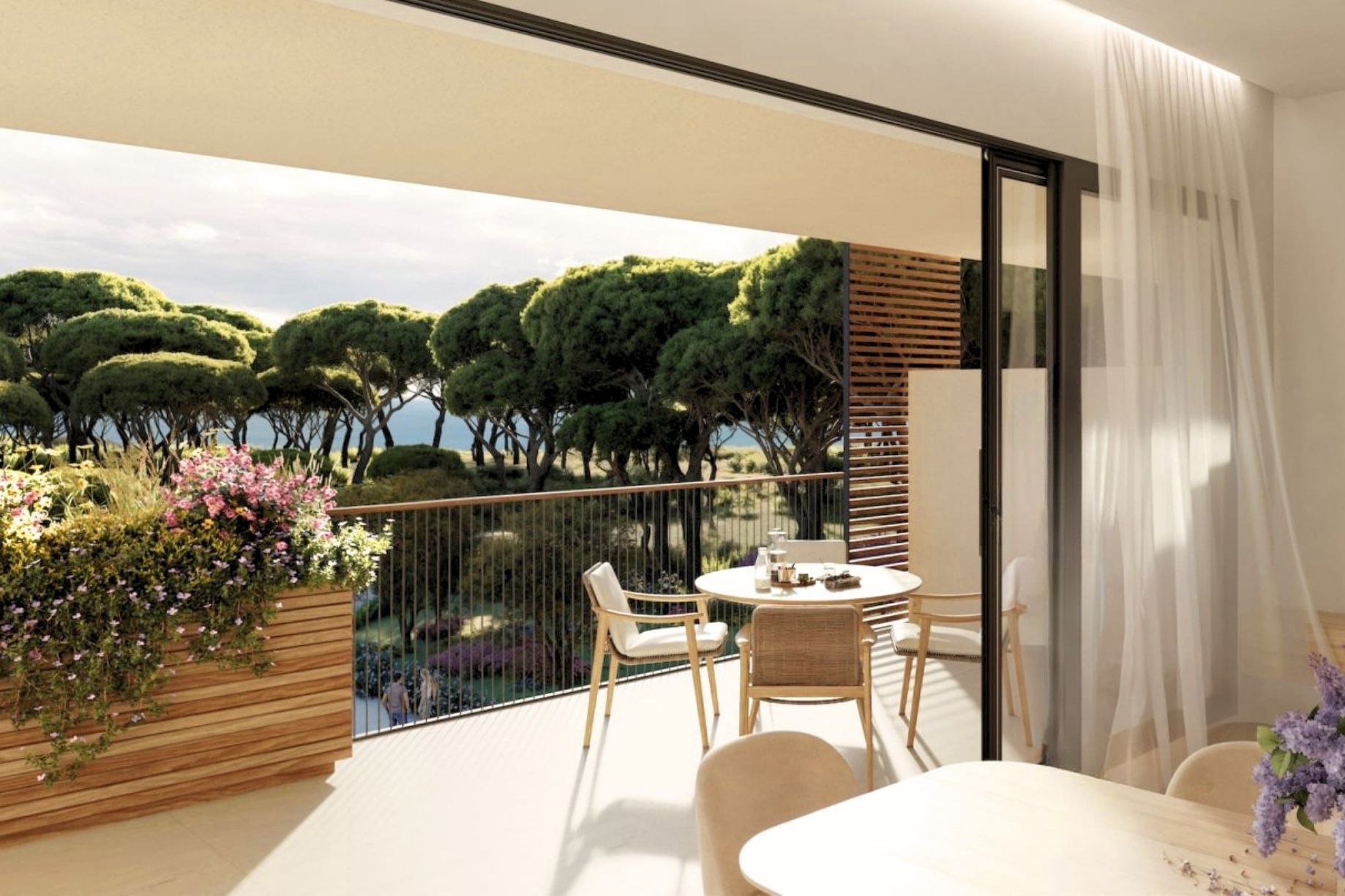
Outdoor space is spread across a private roof terrace and two covered balconies. The distinction is useful. The roof is the open-air living room: sea and forest views, sun and enough space for an unhurried lunch. The covered balconies provide shade and a closer relationship with the pines. A shared pool and landscaped gardens add a third setting when the sea is rough, the group prefers an easy swim or the day is being spent close to home.
The published images are architectural visualisations, so the final home should be judged against the specification, plans, delivery documents and an in-person inspection when possible. Confirm terrace dimensions, privacy, lift access, storage, parking, completion timing, landscaping maturity and exactly which furniture and equipment are included.
What 44 nights can make possible
The public listing states a minimum of 44 nights a year for the 1/8 share. That is slightly more precise than the usual shorthand of “around six weeks”, but it still does not describe the calendar. The value depends on when those nights can be used, how far ahead stays can be booked and how high-demand dates are shared.
Palamós offers a good reason not to concentrate every night in July and August. A realistic year might combine a longer summer stay with several walking, food or family weekends in spring and autumn. That pattern uses the home for more than peak-season swimming and can reduce pressure on the most contested dates. It should still be tested against the actual booking system, school calendars and flight or driving habits.
Ask for worked calendar examples, not only principles. How are August weeks allocated? Is there a rotation? Can owners link consecutive stays, hold weekends or make short-notice bookings? What happens after cancellation? Are guests allowed without the owner? Can unused nights be rented, exchanged or carried forward? Each home sets these out in its own rules, and we'll send you the ones for this share.
Car-light is plausible; car-free is a personal test
The listing places the town’s marinas, restaurants and shops at roughly ten minutes by e-bike, while the coastal path and nearby coves begin much closer. That supports days when the car stays parked. It does not prove that every household can manage without one. Groceries, airport transfers, young children, limited mobility and trips inland may change the equation.
A viewing should therefore test the real routes. Ride or walk to the centre. Carry a bag back. Check lighting after dinner, gradients, secure bicycle storage and charging arrangements. On the Camí de Ronda, expect variety: Costa Brava tourism’s current safety guidance notes that many sections are narrow and uneven, with repeated climbs and descents, while other stretches are flatter promenades or beach paths.
This is not a flaw in the idea. It is the practical difference between a home selected from a map and one chosen for the way its owners actually move. If morning walks and e-bike trips are central to the purchase, they deserve the same due diligence as the kitchen.
Read the home and the ownership together
The property page describes real 1/8 ownership, shared running costs and full management. The precise legal set-up — including how votes are taken and what rights attach to the share — is arranged by our partner for this home and walked through with you before you buy. Co-ownership is ownership of a real share of a home, not a universal legal template.
The annual budget should separate routine expenditure, management, cleaning and reserve contributions. For a new development, ask how defects, warranties and future capital works are handled. Review the rules for personal storage, guests, pets, rentals and resale. The listing says owners may sell at a price they set; that does not guarantee timing or proceeds.
COP introduces the home and our partner runs it. We help you get clear, written answers before you commit. The reward is clarity: a share that matches both the coastline you want and the way you can use it.
Frequently asked questions
What does €184,000 buy?
It is the current asking price for a 1/8 interest in the featured Palamós penthouse. It is not the advertised whole-property value or a completed transaction price. Acquisition costs, the exact legal structure and ongoing contributions should be confirmed before purchase.
How much annual use is included?
The live listing states a minimum of 44 nights a year. Peak-season allocation, booking windows, consecutive stays, guests, cancellations, rentals and exchanges depend on the property-specific rules.
Can owners walk directly to Cala s’Alguer?
The listing describes direct access to the Camí de Ronda and nearby Cala s’Alguer. The official tourism page says the cove is reached on foot, has no services and involves stairs. Buyers should verify the exact route and time from the development.
Is the extra room a third bedroom?
The home is marketed as a two-bedroom property with an additional flexible room. Confirm its dimensions, ventilation, natural light, permitted use and furniture on the final plan rather than assuming it is equivalent to a bedroom.
Do the images show the finished property?
The current listing uses architectural visualisations. They communicate the intended design, views and outdoor spaces, but final finishes, furnishings, planting and outlook should be checked against the contract, specification and completed home.
Could Palamós become your Costa Brava base?
Explore the live penthouse share, browse co-ownership homes in Spain, or read how co-ownership works. COP can introduce the opportunity and help you frame the right questions for the seller and our partner.
More from Co-Ownership Property
Get in Touch
Speak to an expert
Tell us what you're looking for and we'll be in touch.