Properties & Destinations
Rincón de la Victoria or Estepona? Málaga's Two Coasts
One is fifteen kilometres east of Málaga, local in character and recently offered at €119,000 for a one-eighth share before selling. The other lies beyond Marbella in the west, where a live 135-square-metre sea-view apartment has opened at €135,000. Both sit on a coast where owners can avoid the summer crush and still find bright, mild days from November through February. The reference prices are close. The ownership experiences are not.
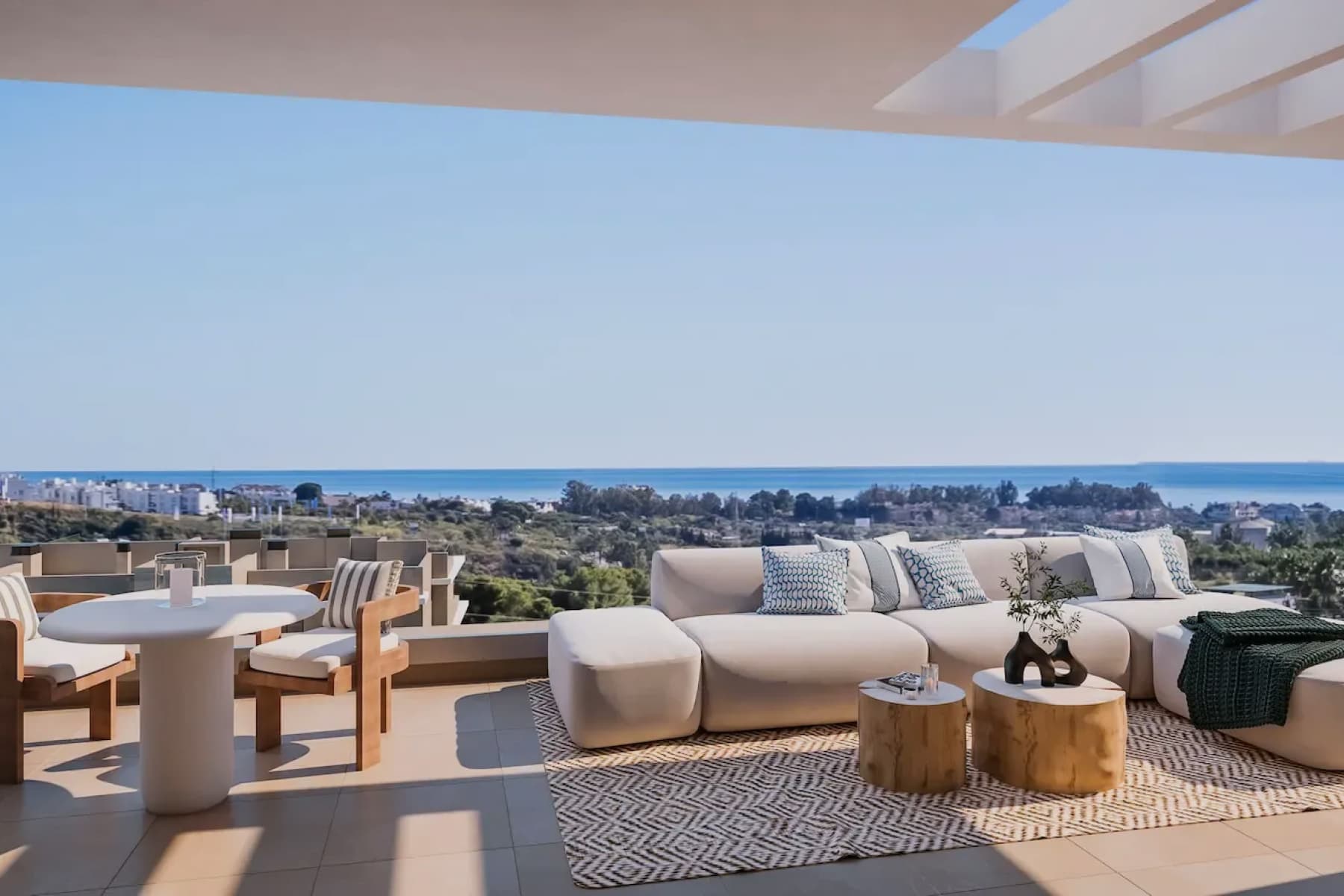
A city splits the Costa del Sol into two different propositions.
Drive east from Málaga and the coast becomes more Spanish almost immediately. The towers thin, the hills of the Axarquía move closer to the sea and Rincón de la Victoria appears as an extension of the city’s own life: a long beach, a working promenade, railway tunnels cut through limestone and chiringuitos whose customers are more likely to have driven from Málaga than flown from Manchester.
Drive west and the international market gathers momentum. Torremolinos, Fuengirola and Marbella arrive in sequence; beyond Puerto Banús the road enters the New Golden Mile, the broad residential corridor running toward Estepona. Here the apartment developments are newer, the gardens larger, the golf map denser and the idea of a Northern European second home has been part of the local economy for generations.
The old assumption was simple. East meant value; west meant infrastructure and prestige. In 2026, the numbers make the choice more interesting. Asking prices in Rincón de la Victoria were up 14.5% in a year. Estepona was up 17%. Both now sit at record levels, and two recent sea-view co-ownership offers—Rincón now sold, Estepona newly live—were separated by only €16,000.
That does not make them substitutes. It makes them a useful test of what a second-home buyer is really trying to own.
The Map, Stated Correctly
Rincón de la Victoria is east of Málaga, on the first stretch of the Costa del Sol Oriental. Estepona is west of Málaga and west of Marbella, on the province’s approach to Casares, Sotogrande and Gibraltar.
That geography shapes almost every practical difference between them.
Rincón belongs to Málaga’s orbit. The city centre is roughly twenty-five minutes away by road and the airport about thirty in ordinary traffic. Dinner in Málaga, a morning at the Atarazanas market or an evening arrival from northern Europe can all fit inside the rhythm of the same day.
Estepona belongs to the western Costa del Sol. Málaga airport is about fifty minutes away on the AP-7 when traffic behaves; Gibraltar airport is roughly thirty. Marbella, Puerto Banús, Benahavís and the golf courses of the New Golden Mile form its immediate network. Málaga remains available, but it is no longer the place casually visited for dinner.
For a whole-home buyer who visits twice a year, the difference may be marginal. For a co-owner with approximately 45 days to distribute across six or eight trips, it is fundamental. Rincón makes the short Málaga weekend easy. Estepona makes the wider western coast easy.
The Runway Behind Both Markets
Whichever direction an owner turns after collecting the keys, the market begins at Málaga–Costa del Sol airport.
Aena recorded 26,760,549 passengers in 2025, the largest annual total in the airport’s history and 7.4% more than in 2024. Aircraft movements rose 6.9% to 186,990. International services carried 22.25 million passengers, or 83% of the total.
The international mix is the underwriting fact of the Costa del Sol. The United Kingdom alone accounted for 6.15 million passengers, followed by Germany at just over two million, the Netherlands at 1.63 million, Italy at 1.40 million and France at 1.39 million. Aena counted 276 routes in 2025, compared with 253 in 2019.
Cheap, frequent and year-round access is what allows co-ownership to work as a pattern of returns rather than a single summer migration. Forty-five days have limited value if every journey consumes two of them. They become much more valuable when a Friday evening flight can produce Saturday breakfast on the terrace.
Rincón extracts more convenience from Málaga airport. Estepona extracts more destination depth from the coast the airport serves. The buyer is choosing which side of that equation matters more.
The Price Gap Has Two Layers
The first layer is the underlying housing market.
Idealista’s July 2026 asking-price series placed Rincón de la Victoria at €3,523 per square metre, up 14.5% in twelve months. The Playa del Rincón submarket stood at €3,842, while La Cala del Moral reached €3,627 after a 23.5% annual rise.
Estepona stood at €4,902 per square metre, up 17% year on year. Estepona Pueblo was €4,376; the municipality-wide figure was lifted by the premium developments running east toward Marbella and by the continued expansion of the New Golden Mile.
Estepona therefore carries a 39% asking-price premium over Rincón. Yet it remains about 18% below Marbella’s €5,950 per square metre. This is Estepona’s position in one line: much dearer than Málaga’s local eastern coast, but still a meaningful discount to the international address beside it.
Rincón’s comparison is different. Málaga city reached €3,937 per square metre in July. Rincón remained around 11% cheaper despite being within daily commuting distance and despite its faster annual growth. Its value case is tied to the city moving outward.
These are advertised prices rather than completed-sale evidence. Portal data can move with the mix of homes listed in any month, especially where new developments enter in phases. They show direction, not a guaranteed valuation. The direction is nevertheless clear: the “cheap east” and “discount west” are both being repriced quickly.
The second layer is the fractional offering.
A two-bedroom terrace apartment in Rincón was offered at €119,000 for a one-eighth share and is now marked sold. The new two-bedroom apartment in Estepona’s Capri enclave is live at €135,000. Using the Rincón sale as a recent reference, the premium at share level is just under 14%—far narrower than the 39% gap between the two municipal asking-price averages.
Homes for sale now
9 homes in Costa del Sol, shares from €125,000
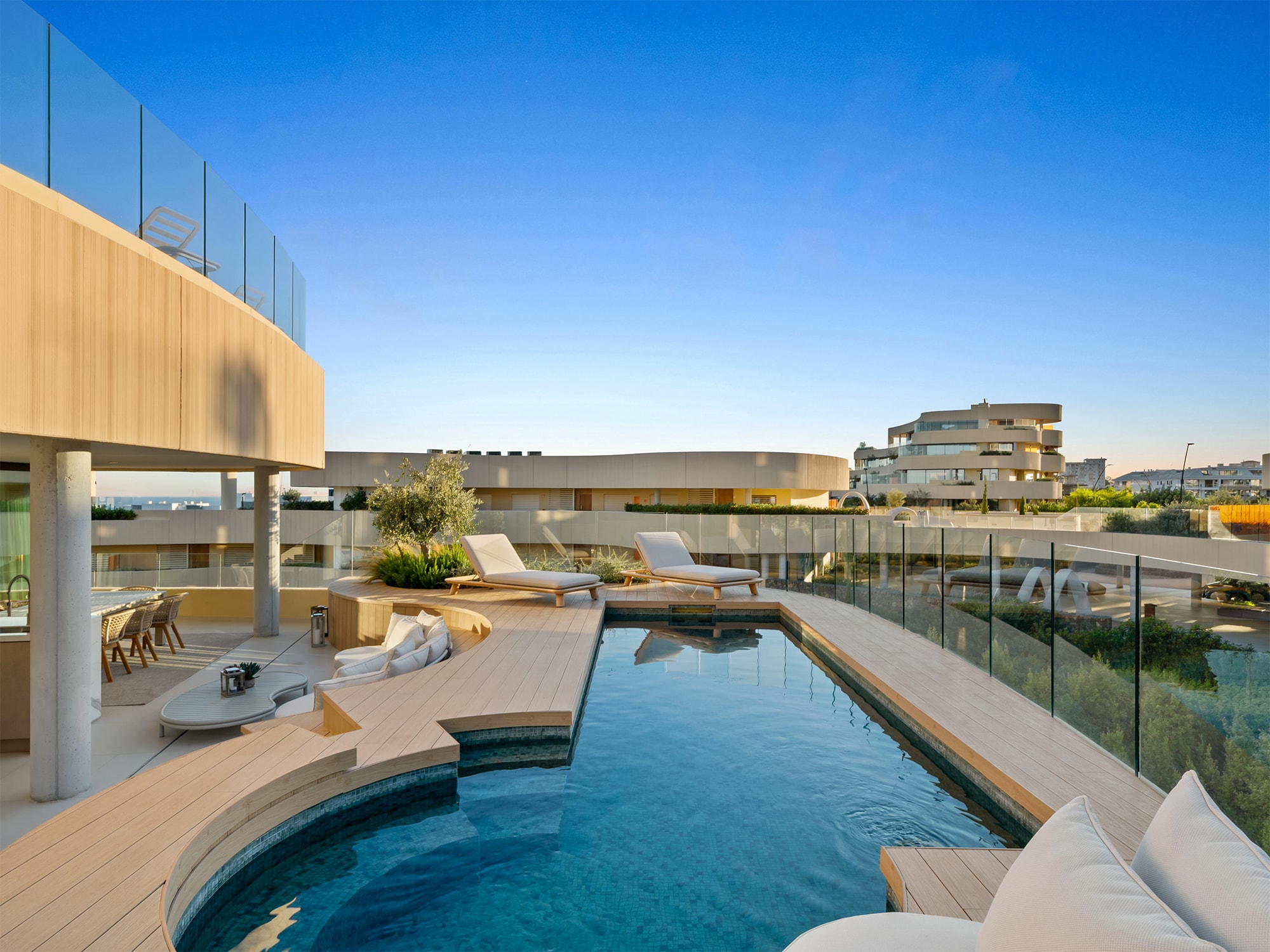
Higuerón, Costa del Sol, Spain — 3-Bed Villa Apartment With Private Pool & Sea Views
€315,000
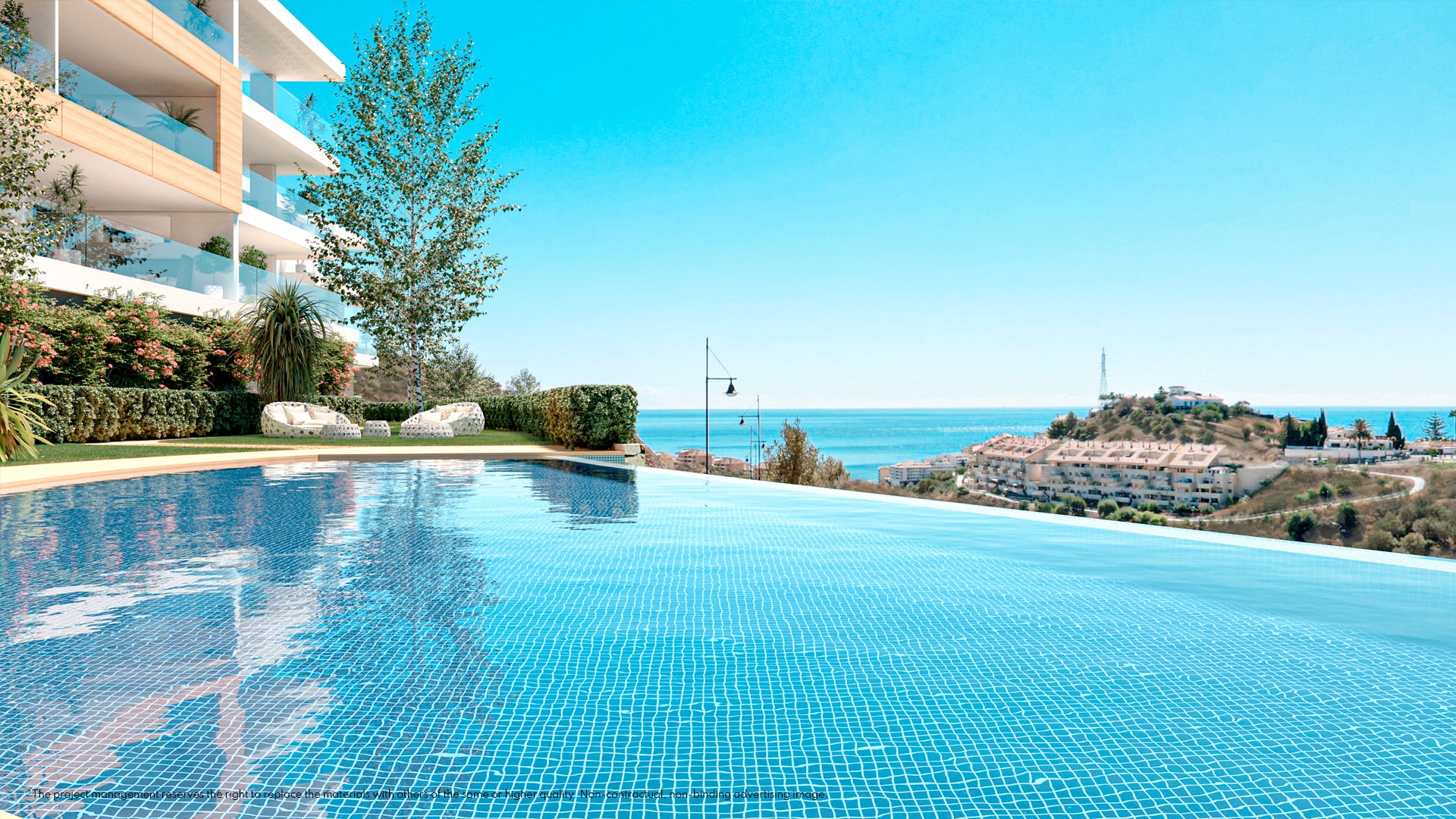
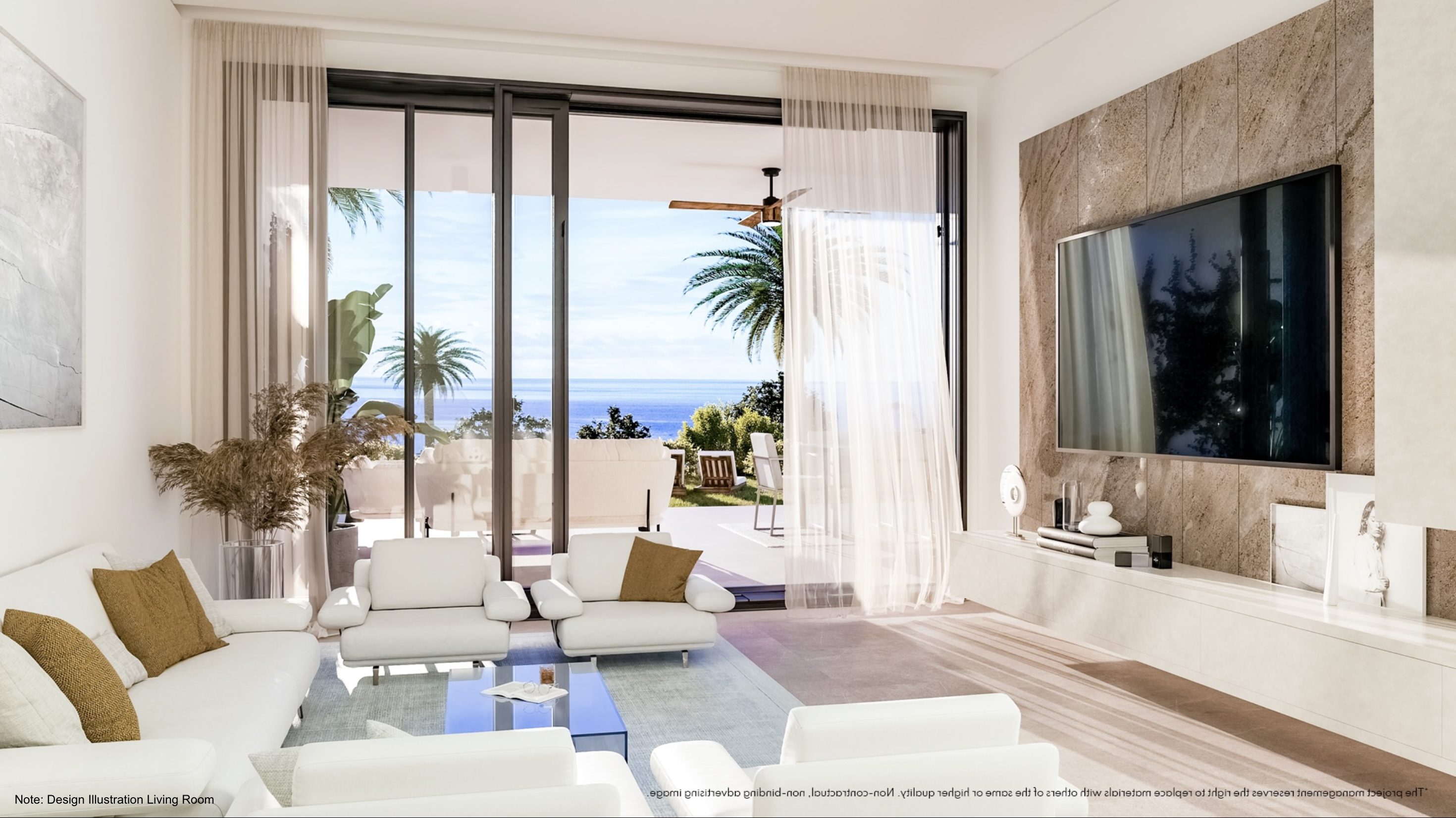
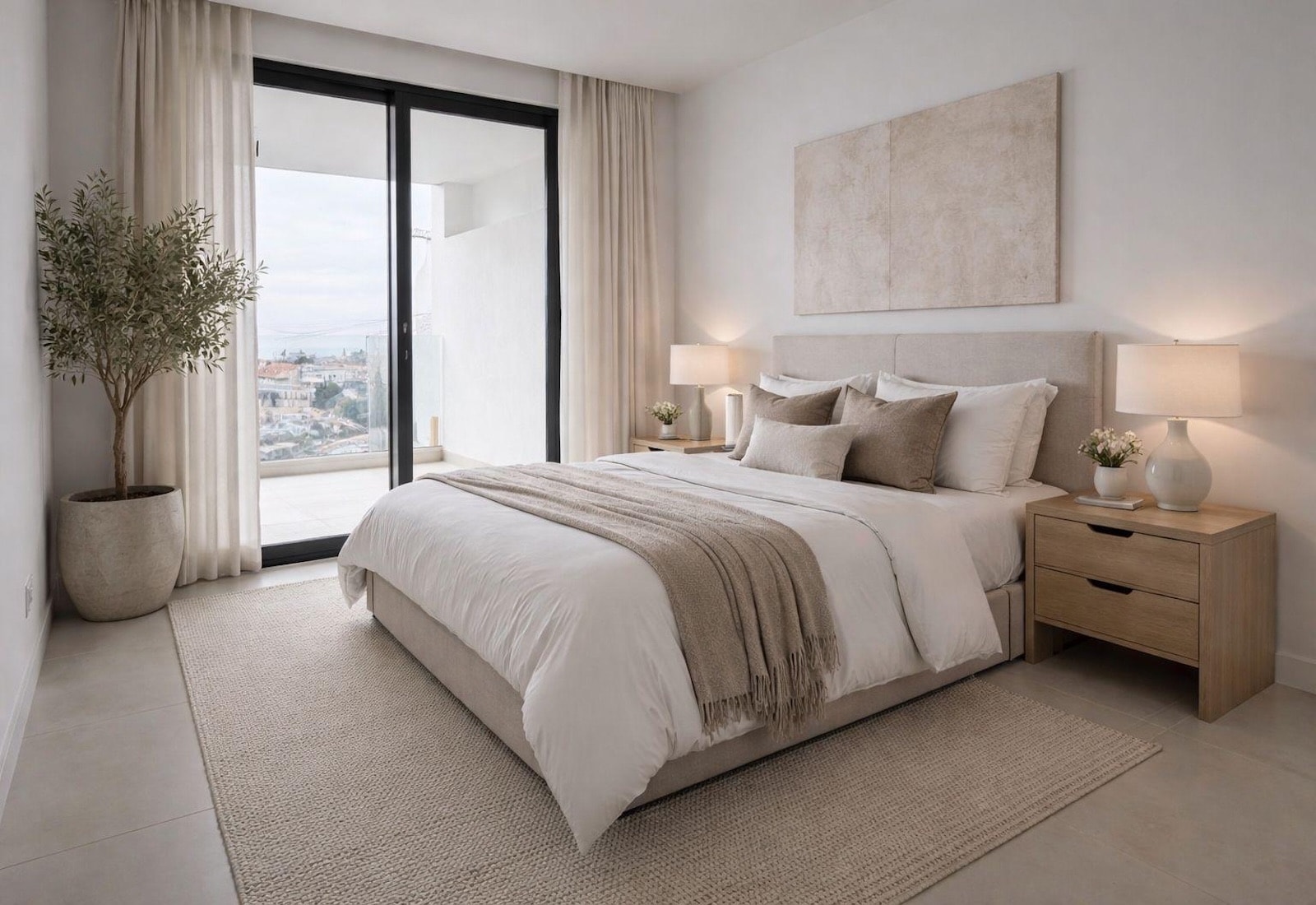
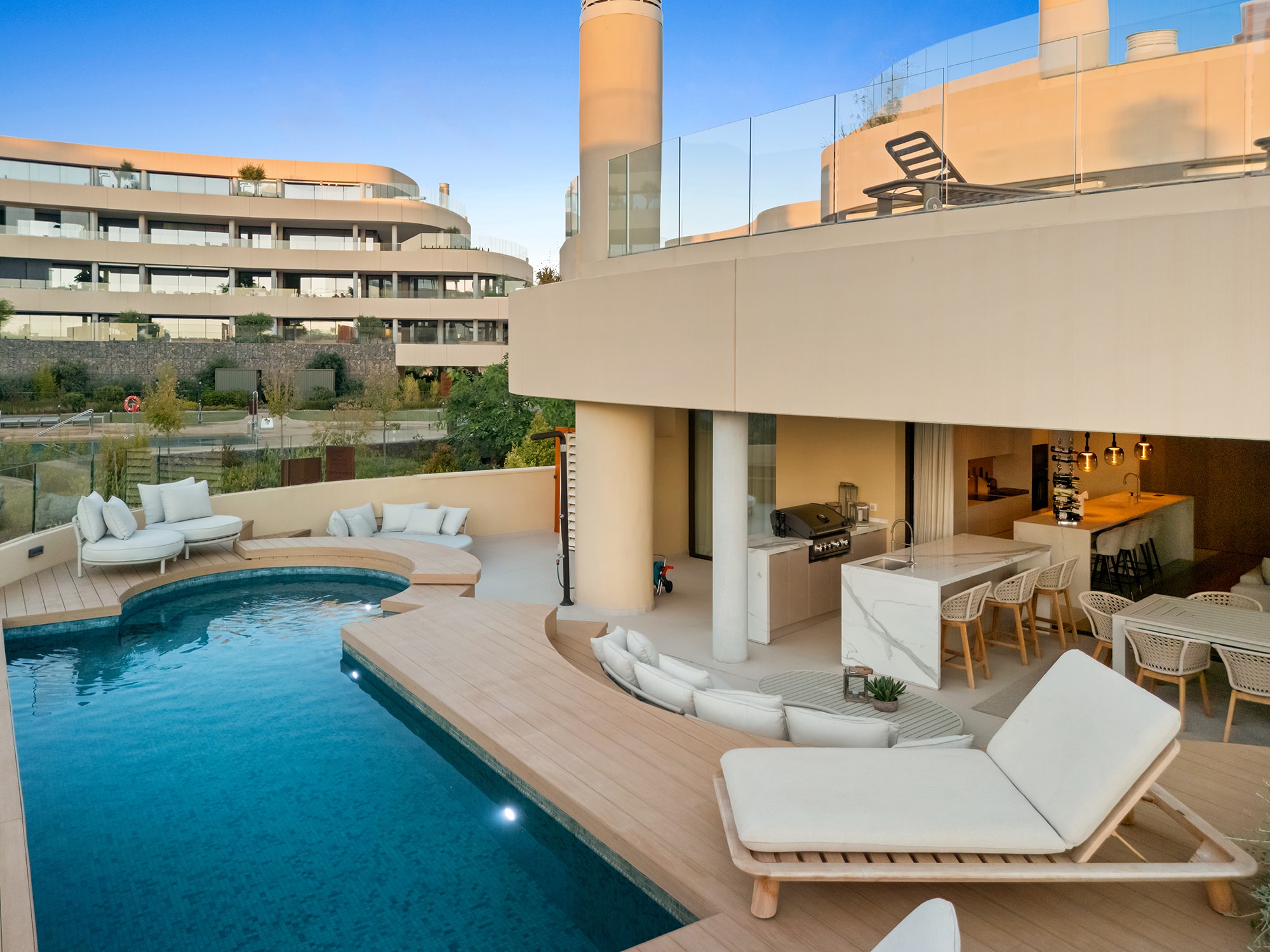
Higueron, Costa del Sol, Spain — 3-Bed Apartment With Sea Views
€125,000
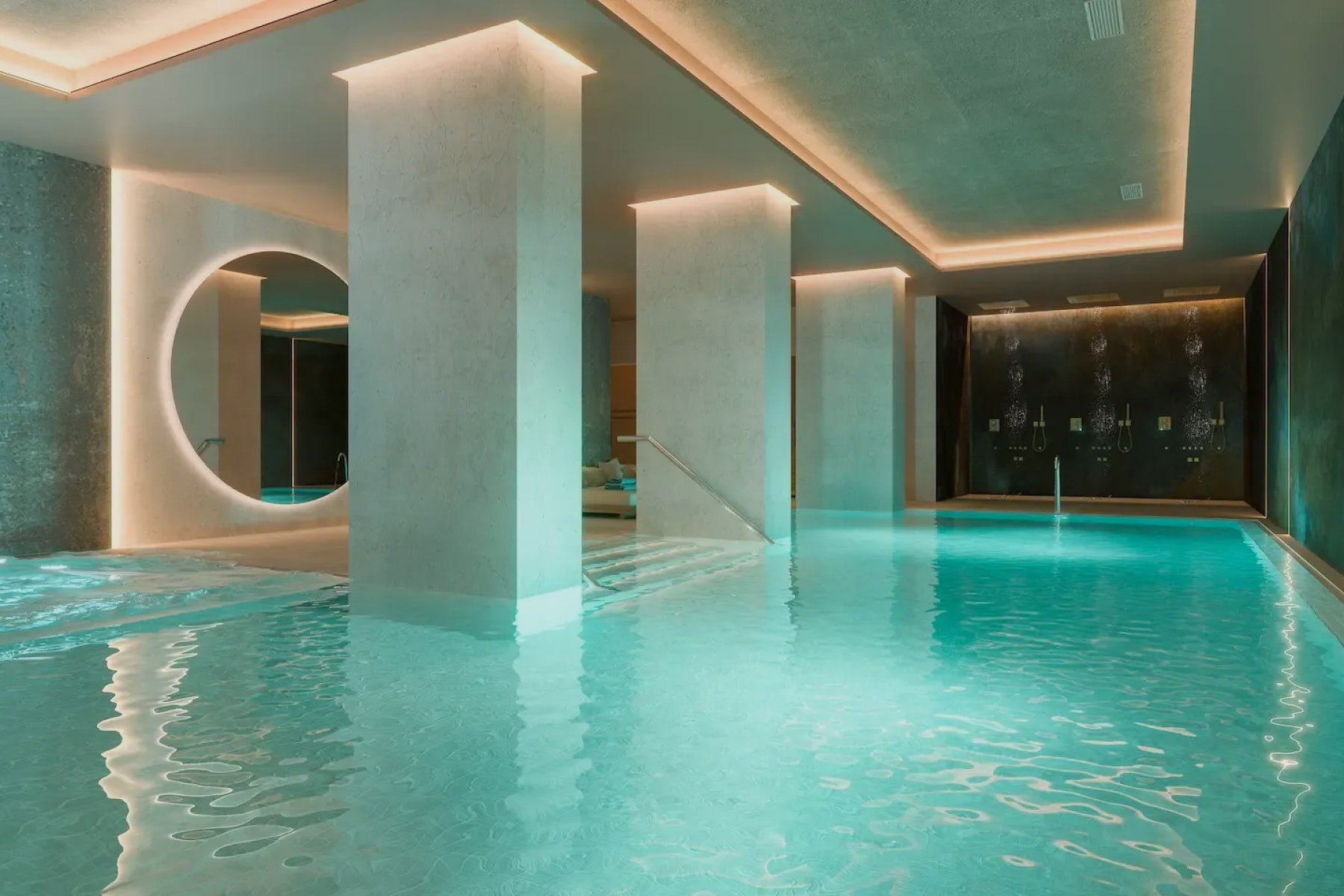
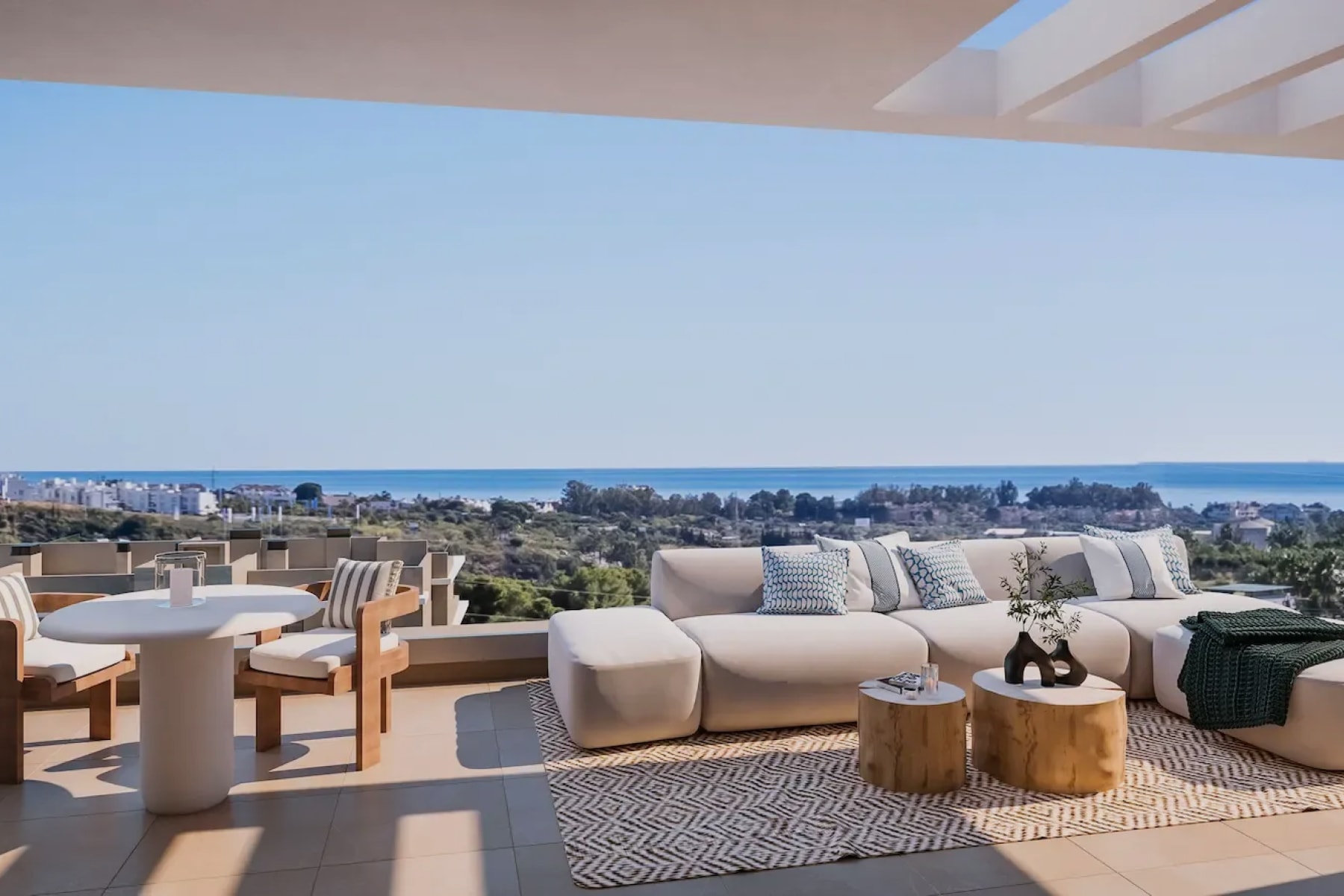
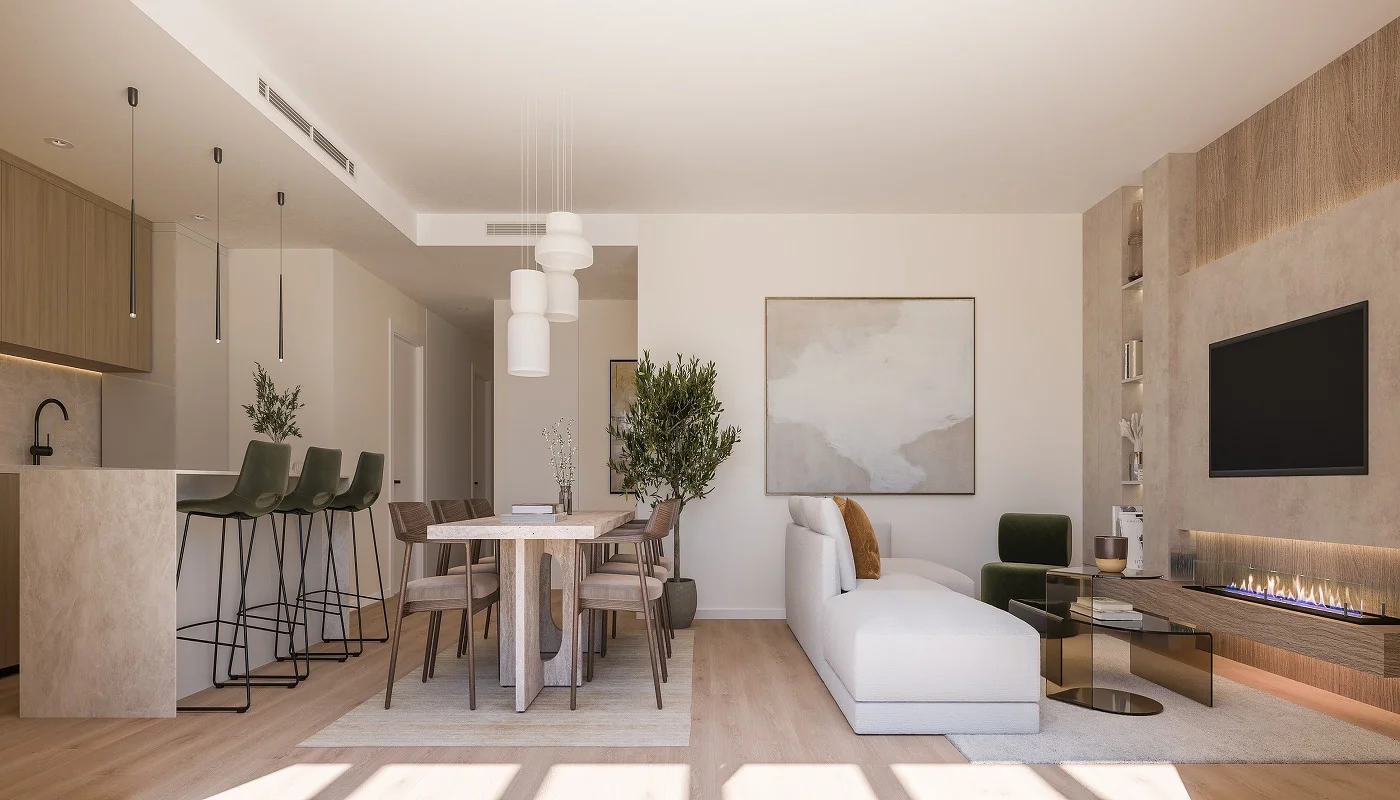
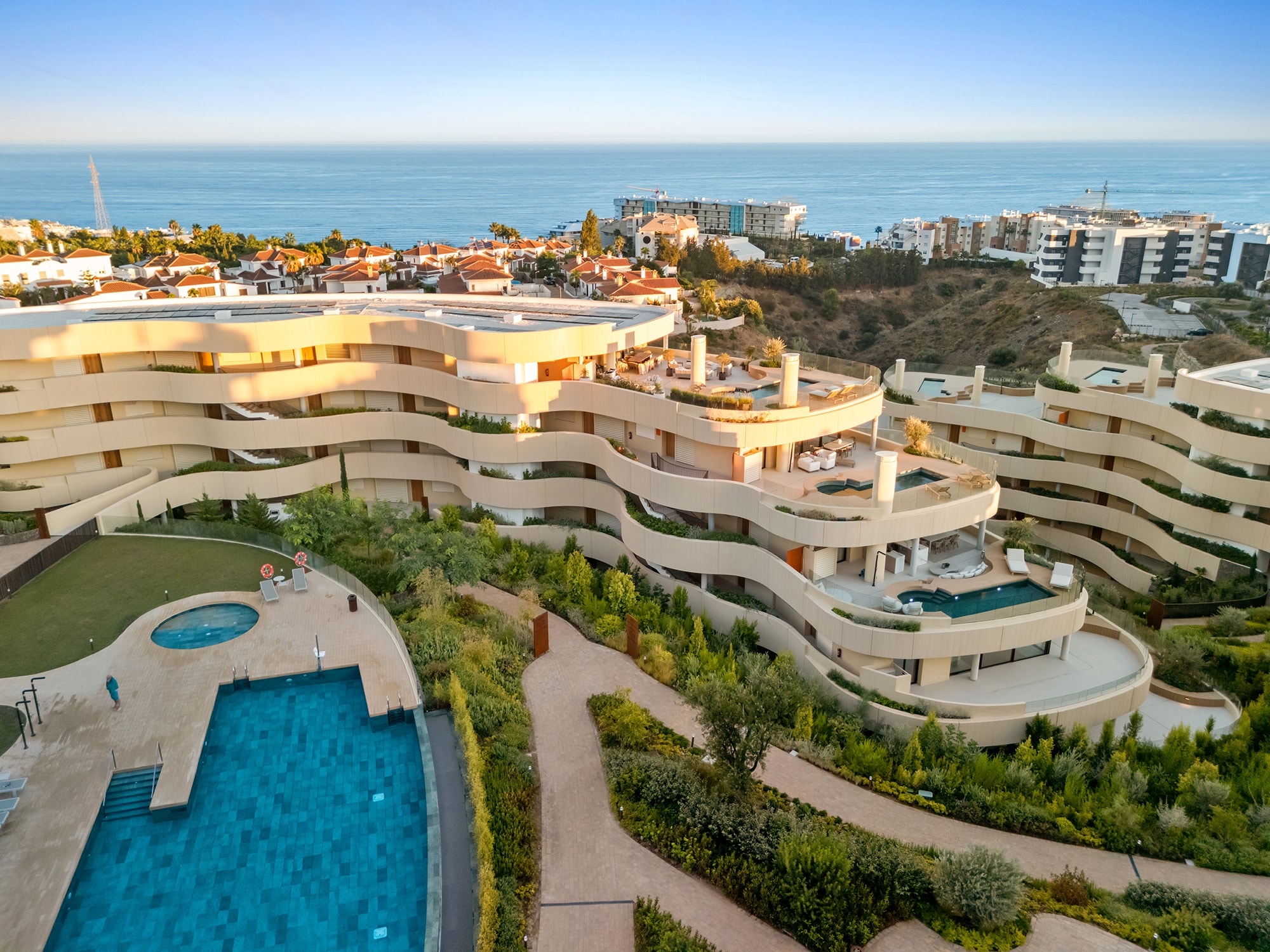
Estepona, Costa del Sol, Spain — 2-Bed Apartment With Sea Views
€135,000
That is why the property itself, not just the postcode, has to decide the comparison.
Rincón: The Coast Málaga Kept for Itself
Rincón de la Victoria has a quality that cannot be manufactured by a resort masterplan: it was already a functioning town before international buyers began treating it as a second-home alternative.
The municipality had 52,230 official residents at the start of 2024, and its own register had reached 53,059 by March 2025. The population keeps supermarkets, cafés, schools, medical services and the promenade alive in February. A co-owner arriving for a winter week is not asking a summer resort to pretend it is open.
The place reads through its coast. Early-twentieth-century railway tunnels cut through the cliffs at El Cantal and now carry walkers and cyclists between La Cala del Moral and Rincón. Above them sits the Cueva del Tesoro, the only visitable sea-formed cave in Europe and one of only three known in the world. The cave drew 146,581 visitors in 2025, up 8.06% in a year, while the nearby Roman Villa Antiopa received 11,858.
International attention is growing, but from a low and local base. EU visitors rose 60.3% in 2025 to 74,206. German visits to the cave increased 68.8%, French visits 76.8% and Dutch visits 222.4%. The town is being discovered without yet being reorganised entirely around the people discovering it.
The case for Rincón is therefore not simply cheaper property. It is proximity to Málaga combined with an ordinary Spanish coastal life that survives outside the holiday calendar.
Estepona: The Western Town That Rebuilt Itself
Estepona’s transformation is more deliberate.
For decades it sat in Marbella’s shadow: larger than a village, less glamorous than its neighbour and known mainly to drivers continuing west. Since 2012, the municipal “Estepona, Garden of the Costa del Sol” programme has treated public space as economic infrastructure. More than 130 streets have been renovated across over 18 kilometres of the urban centre. Traffic has been restricted or removed, utilities renewed, façades restored and the old town organised around flowers, shade and walking.
The result is not cosmetic. A pedestrian boulevard of more than a kilometre now joins the old centre to the Mediterranean and ends at the Mirador del Carmen, with a vertical library, music conservatory, auditorium, exhibition space and viewing tower. More than 60 large murals turn apartment façades into an open-air collection. The orchidarium holds over 3,000 plant species, including more than 1,500 orchids, and passed half a million cumulative visits in 2025.
Population followed the investment. INE counted 79,621 residents in 2025, up from 67,012 in 2018—an increase of almost 19% in seven years. Estepona is not simply accommodating visitors; it is absorbing new permanent life.
The town’s second-home zone is broader than its centre. East of the old town, the New Golden Mile runs toward San Pedro de Alcántara through a sequence of contemporary apartments, gated gardens, resort pools and golf communities. This is where Estepona begins to behave like the international west: Puerto Banús within reach, English widely spoken and the year arranged as much around golf and school holidays as around the town’s own feria.
Yet the old centre, La Rada beach and the market keep the Spanish town visible. Estepona’s achievement has been to add international infrastructure without becoming only infrastructure.
Inside the Capri Development at €135,000
The new Estepona listing sits in the Capri enclave, between the Mediterranean and the hills on the western Costa del Sol.
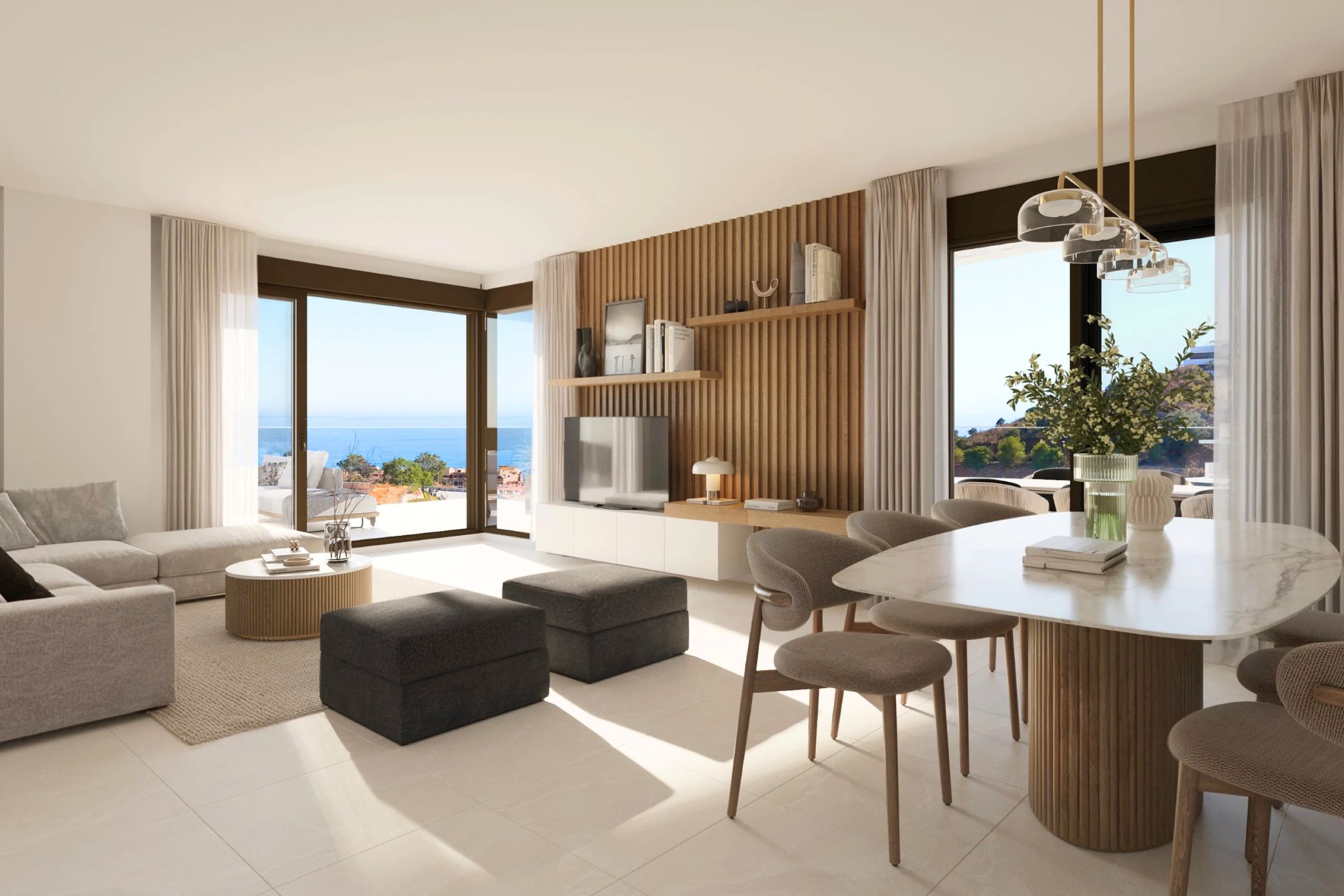
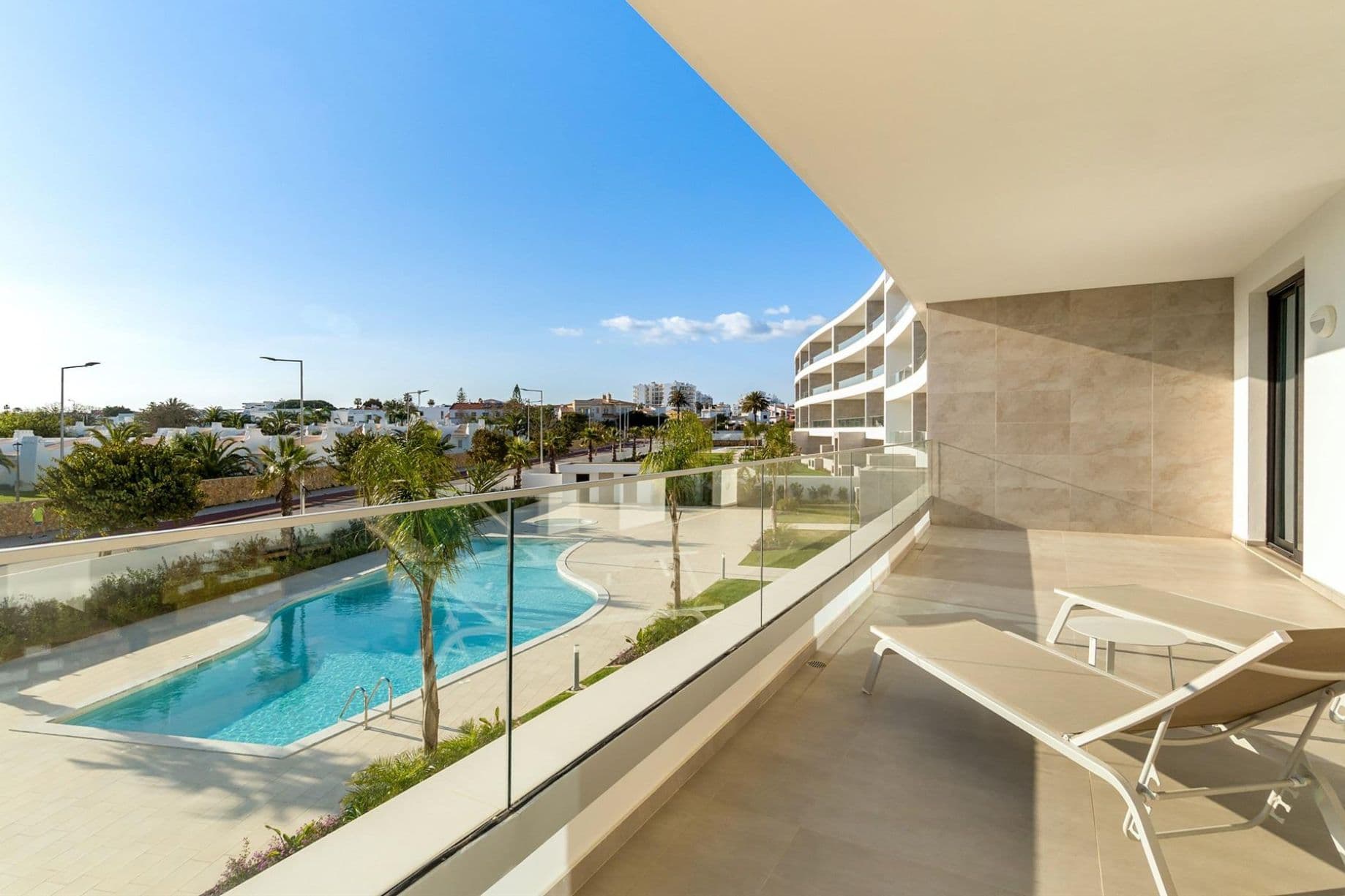
It is a 135-square-metre apartment with two bedrooms and two bathrooms, sea views, a terrace, garden, parking, access to a pool and a gym. A one-eighth share costs €135,000 and carries approximately 45 days of annual use.
The size deserves attention. One hundred and thirty-five square metres is generous for a two-bedroom apartment, particularly in a market where developers increasingly compress internal space to protect the terrace and amenity budget. It creates room for the home to work beyond a couple’s weekend: adult children, guests, remote-working days and the slower winter stays for which the Costa del Sol is unusually well suited.
The amenities are shared in the useful sense of the word. A communal pool and landscaped garden provide the resort experience without leaving eight owners collectively responsible for a private pool contractor and a private garden. Parking matters on the western coast, where the most rewarding days often involve moving between the beach, the old town, golf and Marbella. A gym makes the development more complete in January, when swimming becomes optional.
Eight shares at €135,000 total €1.08 million. That figure should not be mistaken for a clean valuation of the apartment’s bricks. It bundles the acquisition, legal structure, furnishing and equipping, reserve, setup, professional management and partner margin required to turn a whole property into an eight-owner, ready-to-use home. The right due-diligence question is not “why is €135,000 more than one-eighth of an ordinary flat?” It is “what precisely is included in the €135,000 and in the annual fee?”
The answers should arrive line by line: acquisition costs, furniture, legal formation, reserve policy, community charges, IBI, insurance, utilities, cleaning, maintenance, calendar administration and resale process. A fractional share is a packaged ownership product and should be judged with packaged transparency.
The Rincón Share at €119,000
The Rincón proposition was smaller in price and different in purpose. A one-eighth share was offered at €119,000 for a two-bedroom sea-view terrace apartment, with roughly 45 days a year and a fully managed structure. The listing is now marked sold, which makes it a useful recent benchmark rather than a currently available alternative.
Eight shares total €952,000, again reflecting more than the underlying open-market apartment price. The same questions about furnishing, reserve, management and exit apply.
Its strongest feature is not a longer amenity list. It is the map. Málaga is close enough to become part of the week rather than a day trip, and the airport is close enough for owners to divide their time into more frequent stays. For a buyer who values museums, city restaurants and the ability to arrive late without sacrificing the following morning, that access has a real economic value even though it never appears in a price-per-square-metre table.
The €16,000 difference between the shares buys different things. In Estepona it buys more confirmed internal space, western-coast amenities and position inside the Marbella–Estepona corridor. In Rincón it is money not spent for better Málaga access and a more local setting. Neither advantage can be reduced to square metres alone.
The Great Costa del Sol Advantage: Winter Is Not the Off-Season
The most valuable feature shared by both apartments may be the one missing from their specification sheets: neither needs July or August to justify the journey.
For many northern European owners, November through February is when the Costa del Sol earns its name. The beaches are quieter, restaurant reservations become easier, golf and walking replace the contest for a sunbed, and the midday terrace remains part of daily life. There will be rain and cool evenings—this is a Mediterranean winter, not a tropical one—but a winter allocation here is not the consolation prize it would be in most European holiday markets.
The long-term figures explain why. At AEMET’s Málaga Airport climate station, the average daily maximum is 20.1°C in November, 17.5°C in December, 16.8°C in January and 17.7°C in February. Those four months average 692 hours of sunshine in total—roughly five to six hours a day—and only about 23 days with at least 1mm of rain across the entire 120-day period. These are 1981–2010 climate normals measured at the airport rather than guarantees for an individual stay, and Estepona and Rincón have their own microclimates. They nevertheless describe the ownership opportunity better than an annual “300 days of sunshine” slogan.
That changes the fractional arithmetic. An owner who does not need the school-holiday peak can spend two weeks in November, return for Christmas or New Year, take a long January weekend and still have February days left for golf, lunch outside or walking the coast. The 45-day allocation can be used when flights, roads and restaurants are calmer—and when a bright terrace at 17°C may be worth more than another crowded week at 31°C.
Summer remains available through the fair-rotation calendar. The Costa del Sol’s larger advantage is that an owner can choose not to chase it.
Forty-Five Days Spend Differently on Each Coast
The same allocation creates two calendars.
In Rincón, 45 days lend themselves to frequency: several long weekends built around Málaga, a June beach week, ten days in summer, a late-October return while the sea remains warm and a winter week of walking the tunnels and eating outside. The airport distance reduces the penalty for shorter visits.
In Estepona, the journey encourages longer stays. Two weeks in early summer, another fortnight across September and October, a golf week in February and a spring break begin to make sense. The apartment’s 135 square metres and fuller amenities reward settling in. Gibraltar creates a second arrival option for some UK routes, while Málaga remains the larger network.
High summer is busy on both coasts, but differently. Rincón fills with Spanish families and residents from Málaga. Estepona fills with a more international mixture moving between beach clubs, golf resorts, Marbella and the town itself. A buyer tied to school holidays should visit each in August; a buyer with calendar freedom should visit in February or November. The version that matters is the one the owner will actually use.
The Case Against Each
Rincón’s accessibility does not mean frictionless transport. The commuter railway stops west of Málaga; there is no Cercanías line continuing east to the town. The A-7 carries local and through traffic, and congestion can turn the apparently short distance into a longer one. The international service infrastructure is thinner than in Estepona, and buyers seeking a polished resort environment may find the town too ordinary.
Estepona’s maturity comes with more distance and more capital. It sits farther from Málaga airport, its asking-price average is 39% above Rincón’s and the New Golden Mile is a developed residential landscape rather than an undiscovered coast. The A-7 and AP-7 divide parts of the municipality, and a sea view on a plan should always be tested against future plots, road noise and the precise orientation of the unit.
Both markets have risen quickly enough to require caution. A 14.5% or 17% annual increase in asking prices is not a promise of future appreciation. Share resale is a younger and thinner market than whole-property resale. Buyers should obtain the annual cost schedule, owners’ agreement, calendar rules, reserve policy and resale terms before treating either headline price as complete.
For new construction, the development itself needs checking: developer, title to the land, planning permission, protection of staged payments, completion and occupancy documentation, community statutes and construction guarantees. Professional management begins after the purchase decision. It does not replace independent legal work before it.
East or West? The Answer Is a Use Pattern
Choose Rincón de la Victoria if the centre of the second life is Málaga: frequent flights, shorter stays, a working Spanish seafront and the lowest entry price of the two. Its value case rests on the city’s growth moving east and on the fact that the town remains roughly 11% cheaper than Málaga itself.
Choose Estepona if the centre is the western Costa del Sol: a larger apartment, landscaped amenities, Marbella and Puerto Banús within the weekly orbit, golf, Gibraltar access and a town whose public realm has been rebuilt with unusual conviction. Its value case rests on offering much of the western-coast infrastructure at an asking-price average still about 18% below Marbella.
The market data refuse to declare an easy winner. The sold Rincón reference cost less, but Estepona’s share premium is narrower than its wider property premium. Rincón is closer to the airport, but Estepona’s 135 square metres make longer stays more comfortable. Both are functioning towns, both are growing fast and both remain distinct enough to deepen with repetition.
That is the point of co-ownership when it works. The question is not which apartment could be rented for a week. It is which coast a family wants to return to for 45 days every year until the waiter stops asking, the route from the airport becomes automatic and the view from the terrace acquires a history.
Explore the live Estepona two-bedroom sea-view apartment at €135,000 and the wider Costa del Sol collection. Before choosing east or west, ask for the annual cost schedule, calendar mechanics and current share availability. The right side of Málaga is the side you will actually use.
More from Co-Ownership Property
Get in Touch
Speak to an expert
Tell us what you're looking for and we'll be in touch.