Co-Ownership Basics
The True Cost of Owning a Luxury Second Home in 2026
Discover the true cost of luxury second home ownership in 2026 — from hidden expenses to vacancy waste — and why co-ownership is the smarter financial move.
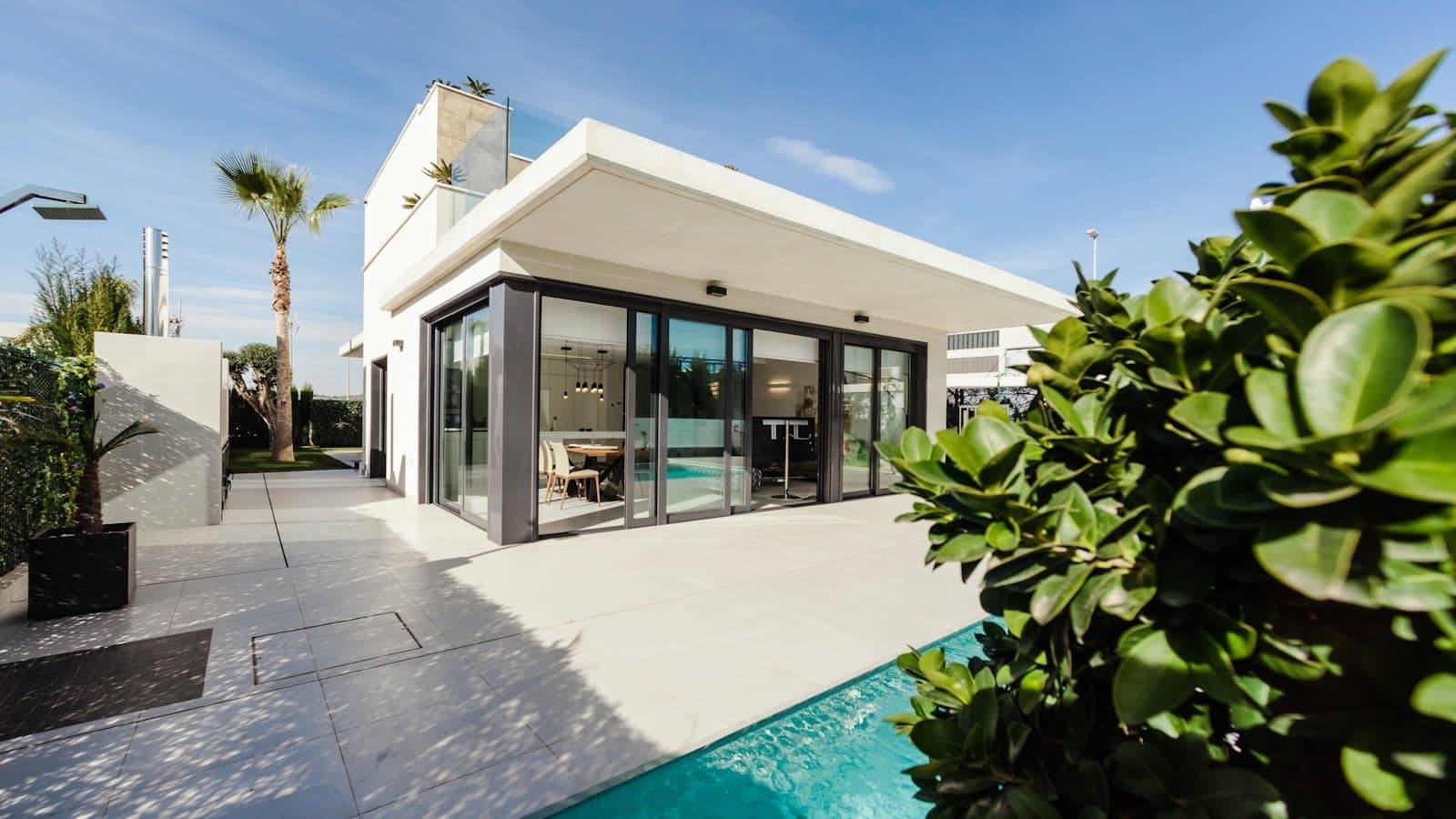
Owning a luxury second home has long been considered the ultimate marker of financial success. A sun-drenched villa on the Mediterranean coast, a timber-framed chalet in the Alps, a beachfront estate in Florida — these properties represent the dream of a life lived on your own terms. But behind the glossy real estate brochures and aspirational Instagram feeds lies an uncomfortable truth: full second-home ownership is one of the most financially inefficient investments a high-net-worth individual can make in 2026.
According to Bankrate’s 2025 study, hidden homeownership costs in the United States now average $21,400 per year for a standard single-family home — with maintenance alone exceeding $8,800 annually. For luxury properties, those figures can easily triple or quadruple. Meanwhile, most second homes sit empty for over 300 days per year, burning through cash while generating no income and no memories. The question serious investors are now asking isn’t whether they can afford a second home — it’s whether they can afford the waste.
This article breaks down the real numbers behind luxury second-home ownership, exposes the costs that estate agents never mention, and reveals why a growing wave of affluent buyers are choosing co-ownership as the financially superior path to the lifestyle they want.
The Numbers
What a Luxury Second Home Actually Costs Per Year
Let’s start with the figure that catches most buyers off guard. A luxury property valued at €1.5 million — a mid-range villa on the Costa del Sol or a ski apartment in Courchevel — doesn’t just cost its purchase price. It comes with an annual carrying cost that can reach €50,000 to €80,000 before you even step through the front door. Property taxes, insurance premiums (which have surged nearly 70% since 2021 according to Bankrate), utilities for a property that must be heated or cooled year-round, garden and pool maintenance, security systems, local management fees, and the inevitable repairs that luxury finishes demand — it all adds up relentlessly.
In the United States, HomeGuide estimates that homeowners should budget 1% to 4% of a property’s value annually for maintenance alone. On a $2 million Colorado ski home, that’s $20,000 to $80,000 per year just keeping the property in good condition — not improving it, not furnishing it, just preventing it from deteriorating. Add property taxes, HOA fees, insurance, and management, and you’re looking at a six-figure annual commitment for a home you visit a handful of weeks per year.
For European properties, the picture is similarly sobering. Spain’s IBI property tax, community fees, non-resident income tax (even when the property generates no rental income), mandatory insurance, and maintenance can easily consume €15,000 to €30,000 annually on a luxury villa. In France, taxe foncière combined with taxe d’habitation (for second homes), wealth tax implications, and maintenance of older properties pushes costs even higher.
$21,400
Average annual hidden costs of homeownership in the US in 2025 — before mortgage payments (Bankrate)
85%
Percentage of the year a typical luxury second home sits completely empty and unused
70%
Surge in US homeowners insurance premiums since 2021, hitting luxury coastal and mountain properties hardest
9x
Cost-per-night advantage of co-ownership vs full ownership over a 10-year period on equivalent properties
The Vacancy Problem
Your €1.5 Million Property Sits Empty 85% of the Year
Here is the statistic that should make every second-home owner pause: the average luxury second home is used for just 4 to 6 weeks per year. That means a property purchased for €1.5 million, costing €60,000 annually to maintain, delivers roughly 30 to 44 nights of actual use. The cost per night? Between €1,360 and €2,000 — more expensive than a five-star hotel suite, without the concierge, room service, or flexibility.
The U.S. Census Bureau classifies millions of housing units as ‘held for occasional use’ — properties that sit vacant the vast majority of the year while their owners shoulder the full burden of ownership. The emotional attachment to a specific property often blinds buyers to the mathematical absurdity of paying 365 days of costs for 30 days of enjoyment. Every empty day is money evaporating — and unlike a primary residence, a second home in a resort location doesn’t always appreciate enough to compensate for the running costs.
The opportunity cost compounds the problem. That €1.5 million locked into bricks and mortar could generate €60,000 to €90,000 annually if invested in a diversified portfolio yielding 4-6%. Instead, it generates maintenance bills. For the financially literate, this equation simply doesn’t work anymore.
10-Year Total Cost of Ownership: Full vs Co-Ownership
Full Ownership — Purchase Price
Full Ownership — Running Costs (10yr)
Co-Ownership — Share Purchase
Co-Ownership — Running Costs (10yr)
Capital Freed for Investment
Hidden Expenses
The Costs Nobody Warns You About
Beyond the predictable expenses, luxury second homes harbour a catalogue of hidden costs that only reveal themselves after purchase. Currency fluctuation risk is a major one for international buyers — a British buyer who purchased a Spanish villa when the pound was strong may find their running costs have increased by 15-20% purely through exchange rate movements. Renovation cycles are another: luxury properties require refurbishment every 8 to 12 years to maintain their standard, and a full renovation of a four-bedroom villa can cost €80,000 to €200,000.
Then there’s the management headache. Finding reliable local property managers, cleaners, and maintenance staff in resort destinations is notoriously difficult. Staff turnover is high, quality is inconsistent, and the owner is ultimately responsible for solving every problem — often from thousands of miles away, in a different time zone, in a language they may not speak fluently. A burst pipe in January, a break-in during the off-season, or a neighbour dispute over noise can turn a dream property into a source of constant stress.
Insurance premiums for luxury second homes have become particularly painful. Bankrate reports that homeowners insurance costs have surged dramatically since 2021, with premiums now averaging $2,800 to $3,500 per year for standard homes — and significantly more for high-value properties in coastal or mountain locations where climate-related risk premiums are climbing fast.
“The most expensive property you’ll ever own isn’t the one that costs the most to buy — it’s the one that sits empty 300 days a year while you pay for every single one of them.”
The Smarter Model
Why Co-Ownership Is Replacing Full Ownership for Smart Buyers
Against this backdrop of escalating costs and diminishing returns, a fundamentally different ownership model has emerged — and it’s attracting exactly the kind of buyer who used to purchase outright. Co-ownership — where buyers own a real 1/8 share of a luxury home — delivers the same lifestyle at a fraction of the cost, with none of the management burden.
The mathematics are compelling. A 1/8th share in a €1.6 million property costs around €200,000. The owner receives approximately 45 days of use per year — which, remarkably, is more than most full owners actually use their second homes. All running costs are split eight ways, so annual expenses drop from €60,000 to roughly €7,500. The property is fully managed — cleaning, maintenance, repairs, admin, even rental coordination — so the owner never lifts a finger. And because the share is a real share of the home, it appreciates with the property and can be sold on the open market.
This isn’t a timeshare. Booking windows depend on the home and our partner. When they arrive, their personal belongings are taken out of storage and the home is prepared exactly as they left it. It’s full luxury homeownership — just without the financial waste.
| Cost Category | Full Ownership (Annual) | Co-Ownership 1/8 Share (Annual) |
|---|---|---|
| Property taxes | €8,000 – €15,000 | €1,000 – €1,875 |
| Insurance | €3,000 – €6,000 | €375 – €750 |
| Maintenance & repairs | €15,000 – €60,000 | €1,875 – €7,500 |
| Property management | €5,000 – €12,000 | Included |
| Utilities (year-round) | €4,000 – €8,000 | €500 – €1,000 |
| Total annual carrying cost | €35,000 – €101,000 | €3,750 – €11,125 |
Financial Comparison
Full Ownership vs Co-Ownership: A 10-Year Cost Analysis
To truly understand the financial advantage, let’s compare a decade of ownership. Consider a luxury four-bedroom villa on the Costa del Sol valued at €1.5 million. A full owner pays the purchase price plus approximately €600,000 in running costs over ten years (taxes, insurance, maintenance, management, utilities, and one renovation cycle). Total outlay: €2.1 million for roughly 400 nights of use — a cost per night of €5,250.
A co-owner purchasing a 1/8th share at around €190,000 pays approximately €75,000 in running costs over the same decade. Total outlay: €265,000 for roughly 450 nights of use — a cost per night of €589. That’s nearly nine times more cost-effective, with more actual usage days and zero management responsibility. The remaining €1.2 million in capital? It stays invested, compounding, and working for the buyer rather than sitting in concrete.
According to Mordor Intelligence, the US luxury residential market is projected to grow from $291 billion in 2025 to $349 billion by 2031, reflecting a CAGR of 3.19%. Co-owners benefit from this appreciation proportionally through their share — while having deployed a fraction of the capital. It’s the definition of working smarter, not harder.
2015–2018
The Second Home Boom
Low interest rates and rising wealth fuel record luxury second-home purchases across Europe and the US. Buyers stretch budgets to own outright.
2019–2020
The Pandemic Pivot
Remote work triggers a second wave of purchases as buyers seek escape properties. Many buy impulsively, underestimating long-term costs.
2021–2023
The Cost Reality Hits
Insurance premiums surge 70%. Inflation pushes maintenance costs up 30%+. Energy bills double. Many second-home owners face unexpected five-figure annual bills.
2023–2024
The Co-Ownership Awakening
Financially sophisticated buyers begin exploring shared ownership models. Demand for fractional shares accelerates, particularly among 40-55 year olds.
2025–2026
The Smart Ownership Era
Co-ownership goes mainstream. The global luxury market reaches $280 billion as collective ownership models reshape how affluent buyers access premium property.
Market Momentum
The Rise of Collective Luxury: A Global Trend
This shift isn’t a niche phenomenon. VML’s Future 100 report identifies the emergence of ‘collective connoisseurs’ — a new cohort of affluent buyers who reject individual ownership in favour of fractional access to jets, vacation homes, and high-end goods, prioritising connection and experience over accumulation. This cultural shift is being driven by buyers aged 40 to 55 who have the wealth to buy outright but choose not to because they recognise the inefficiency.
The global luxury real estate market, valued at approximately $280 billion in 2026 according to Business Research Insights, is increasingly shaped by this trend. Developers across Europe and the Americas are designing properties specifically for co-ownership from the ground up — with separate storage rooms for each owner’s belongings, flexible booking technology, and professional management infrastructure built into the development from day one.
At Co-Ownership Property, this trend is visible in the diversity of the portfolio. From Alpine ski chalets to Balearic island villas, from Colorado mountain lodges to South of France retreats, demand for intelligently structured shared ownership continues to accelerate. Properties typically sell their shares to new co-owners — a testament to the model’s appeal among financially sophisticated buyers.
Lifestyle Quality
More Holidays, Less Hassle: The Day-to-Day Reality
The financial argument for co-ownership is powerful, but the lifestyle argument may be even more persuasive. Full second-home owners routinely report that their property becomes a source of obligation rather than relaxation. Every visit begins with a checklist: is the heating working, has the garden been maintained, are there any repair issues, has anything been damaged? The first day of a holiday is often spent fixing problems rather than enjoying them.
Co-ownership eliminates this entirely. Professional management teams handle everything between visits — from deep cleaning to seasonal maintenance to emergency repairs. Owners arrive to a home that is perfectly prepared, fully stocked, and ready to enjoy. Their personal items are unpacked from dedicated storage. There is no ‘settling in’ period, no maintenance surprises, and no awkward conversations with local tradespeople.
Many co-owners also find that the model actually increases their travel frequency. Without the psychological pressure to ‘get value’ from a property they fully own, and with more capital available for experiences rather than being locked in real estate, co-owners tend to take more frequent, shorter breaks throughout the year rather than one obligatory annual visit. The result is a richer, more varied lifestyle — the very thing a second home was supposed to provide in the first place. Explore the full buying process to see how straightforward it is to get started.
Portfolio Strategy
Diversification: Why One Share in Three Locations Beats One Whole Property
Perhaps the most sophisticated argument for co-ownership comes from portfolio theory. Instead of concentrating €1.5 million in a single property in a single location — exposed to local market risk, political risk, currency risk, and climate risk — a buyer can acquire three co-ownership shares across different countries for less than half that amount. A ski chalet in the French Alps, a beach villa in Spain, and a lakeside retreat in Italy — each offering 45 days per year — creates a diversified property portfolio with 135 days of luxury access across three distinct lifestyles, all for under €700,000 in total.
This approach mirrors what institutional investors have known for decades: diversification reduces risk while maintaining returns. If one local market underperforms, the others compensate. If travel preferences change — children grow up, ski knees give out, summer heat becomes less appealing — shares can be sold individually and replaced with properties better suited to the owner’s evolving lifestyle. Try doing that with a single €1.5 million villa.
For American buyers looking at European property, co-ownership also provides natural currency diversification — euro-denominated assets balancing a dollar-heavy portfolio. And with the running costs split eight ways, the carrying cost of a three-property portfolio is still less than a single fully-owned home.
Common Questions
Frequently Asked Questions
How much does it really cost to maintain a luxury second home per year?
For a luxury property valued between €1 million and €2 million, annual carrying costs typically range from €35,000 to over €100,000. This includes property taxes, insurance (which has surged 70% since 2021), maintenance, utilities, property management, and periodic renovation. Most buyers significantly underestimate these costs at the point of purchase.
How many days per year does the average second-home owner actually use their property?
Research consistently shows that the average luxury second home is used for just 4 to 6 weeks per year — roughly 30 to 44 days. This means the property sits empty for over 300 days annually while the owner continues to pay all running costs, making the effective cost per night extraordinarily high.
What is co-ownership and how is it different from a timeshare?
Co-ownership means owning a real share (typically 1/8) of a home, not a right to use it. Unlike timeshares, you own actual real estate that appreciates in value, can sell your share on the open market at market price, have no points systems or fixed weeks, and hold a legal stake in a specific luxury property. It is genuine real estate investment, not a usage contract.
How many days per year does a co-owner get to use the property?
Each 1/8th share provides approximately 45 days of use per year. Booking windows depend on the home and our partner. This is actually more usage than most full second-home owners achieve.
Can I sell my co-ownership share if I want to exit?
Yes. Because co-ownership shares are real shares of the home, they can be sold. The share is first offered to existing co-owners in the property, then listed publicly. There is no need to sell the whole property.
What happens to management and maintenance with co-ownership?
Everything is handled for you. Professional management teams coordinate cleaning, maintenance, repairs, insurance, tax obligations, and even rental management between all co-owners. You never need to contact or coordinate with other co-owners — it is a completely hassle-free ownership experience.
Is co-ownership a good investment compared to full ownership?
Co-ownership allows you to access luxury property appreciation with a fraction of the capital deployed. A 1/8th share appreciates proportionally with the whole property, while the remaining capital stays invested elsewhere. Over a 10-year period, the total cost of co-ownership can be up to nine times more cost-effective per night of use than full ownership.
Explore Properties With Co-Ownership Property
Ready to enjoy luxury property ownership without the six-figure annual costs? Browse our curated portfolio of co-ownership shares across Europe and the USA.
Browse PropertiesMore from Co-Ownership Property


Get in Touch
Speak to an expert
Tell us what you're looking for and we'll be in touch.