Co-Ownership Homes in Baqueira
11 luxury holiday homes in Baqueira available as co-ownership shares, from €120,000 per share. Genuine ownership, fully managed, a fraction of the whole-home price.
The Baqueira Collection
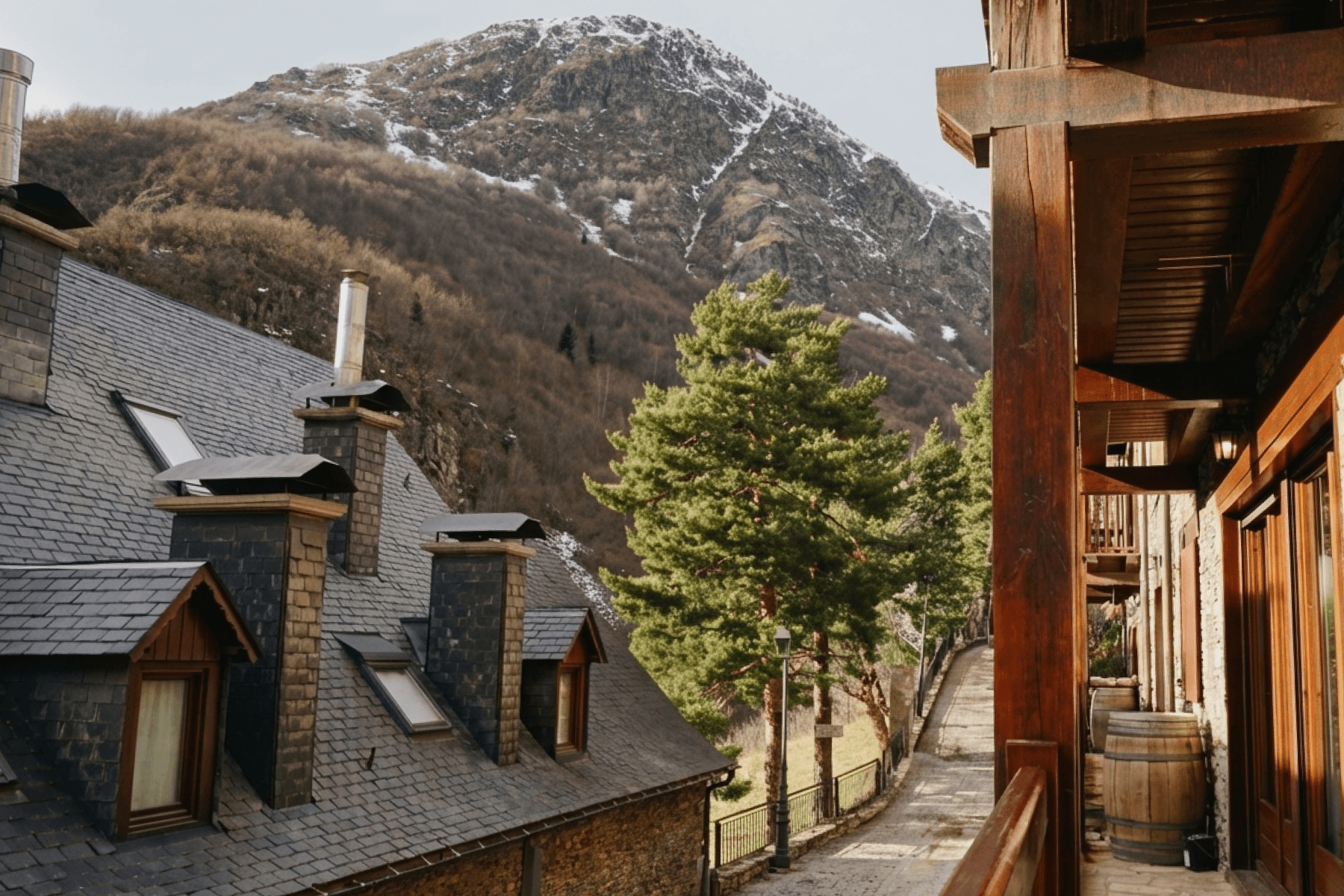
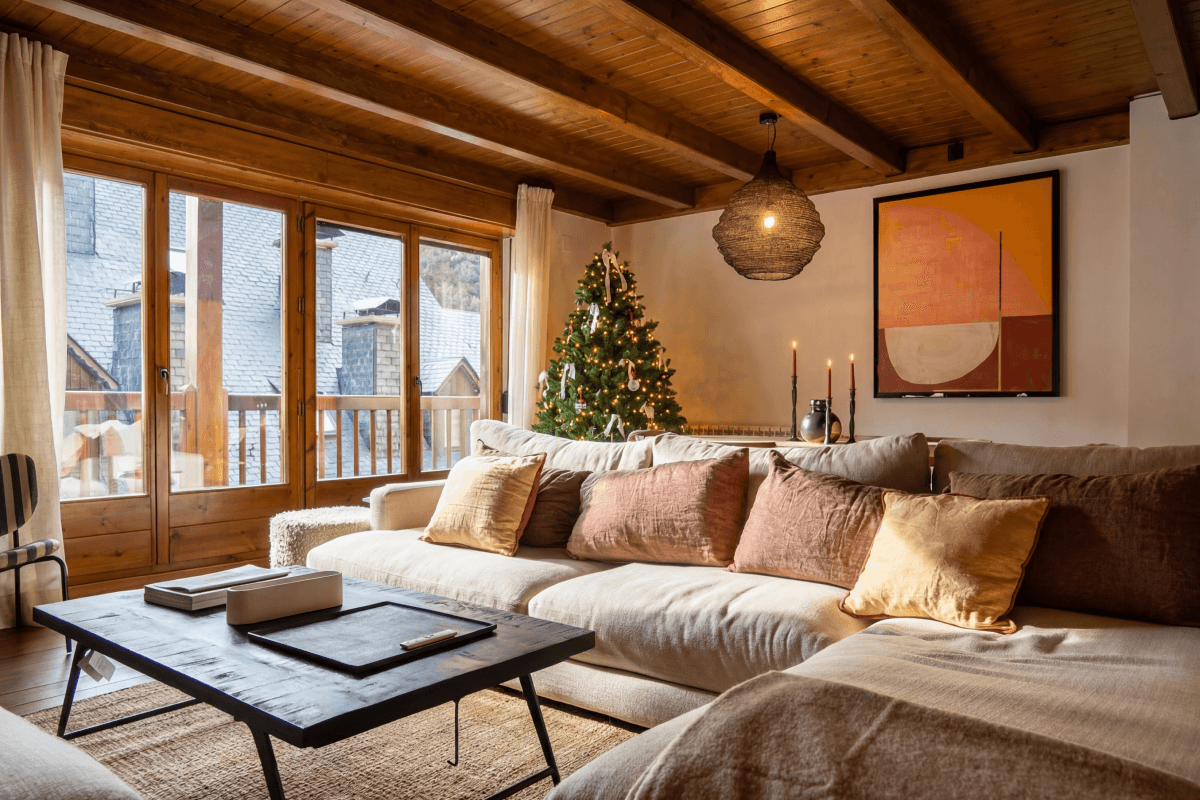
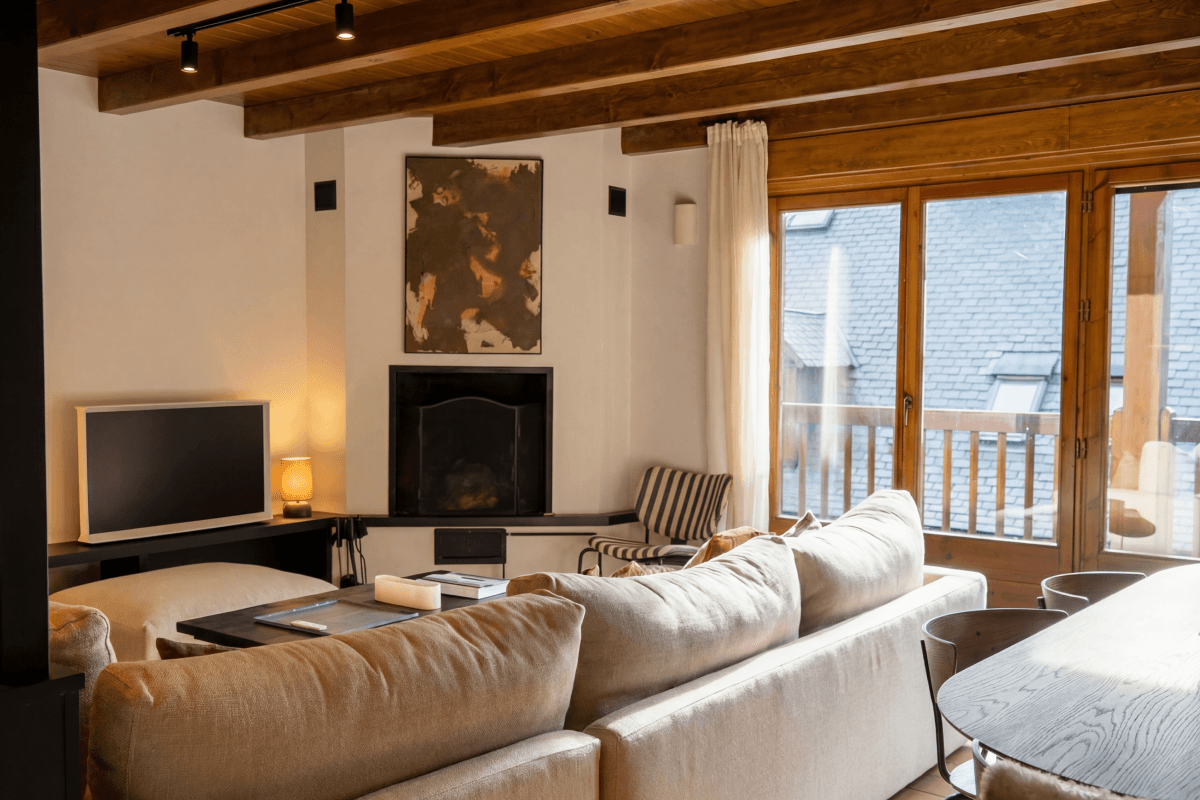
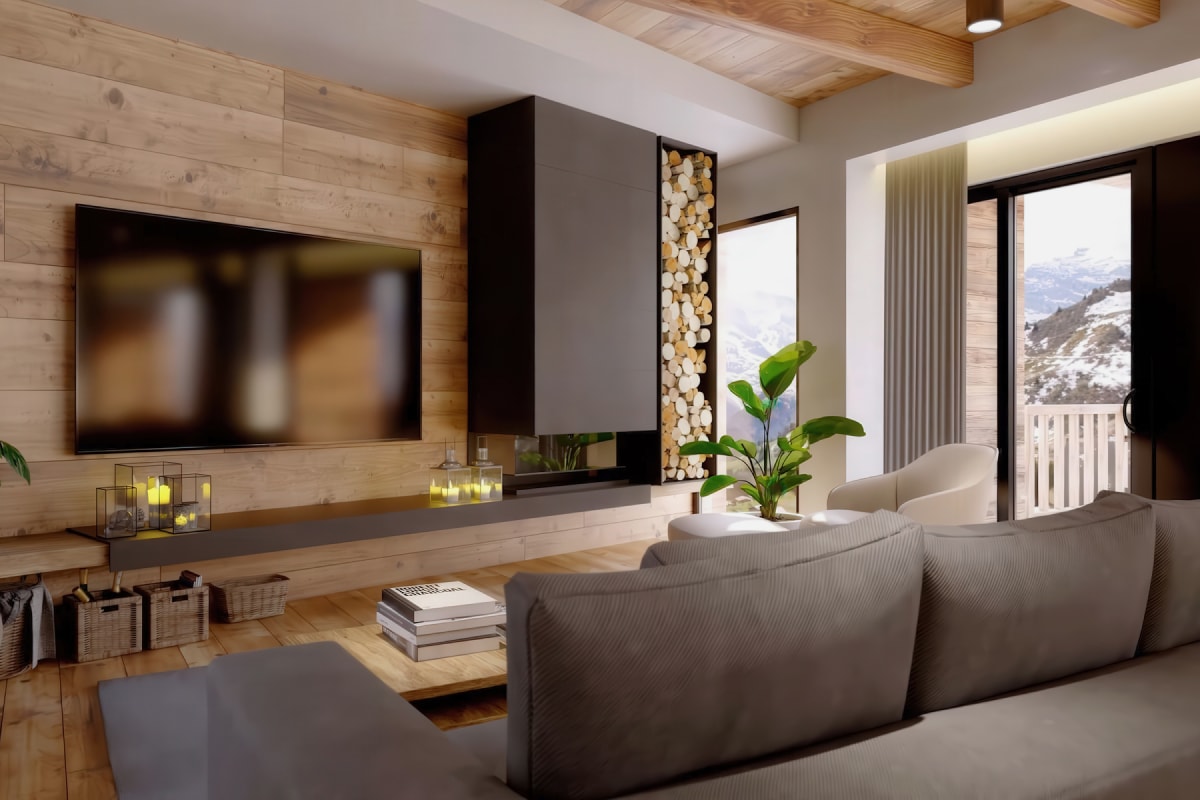
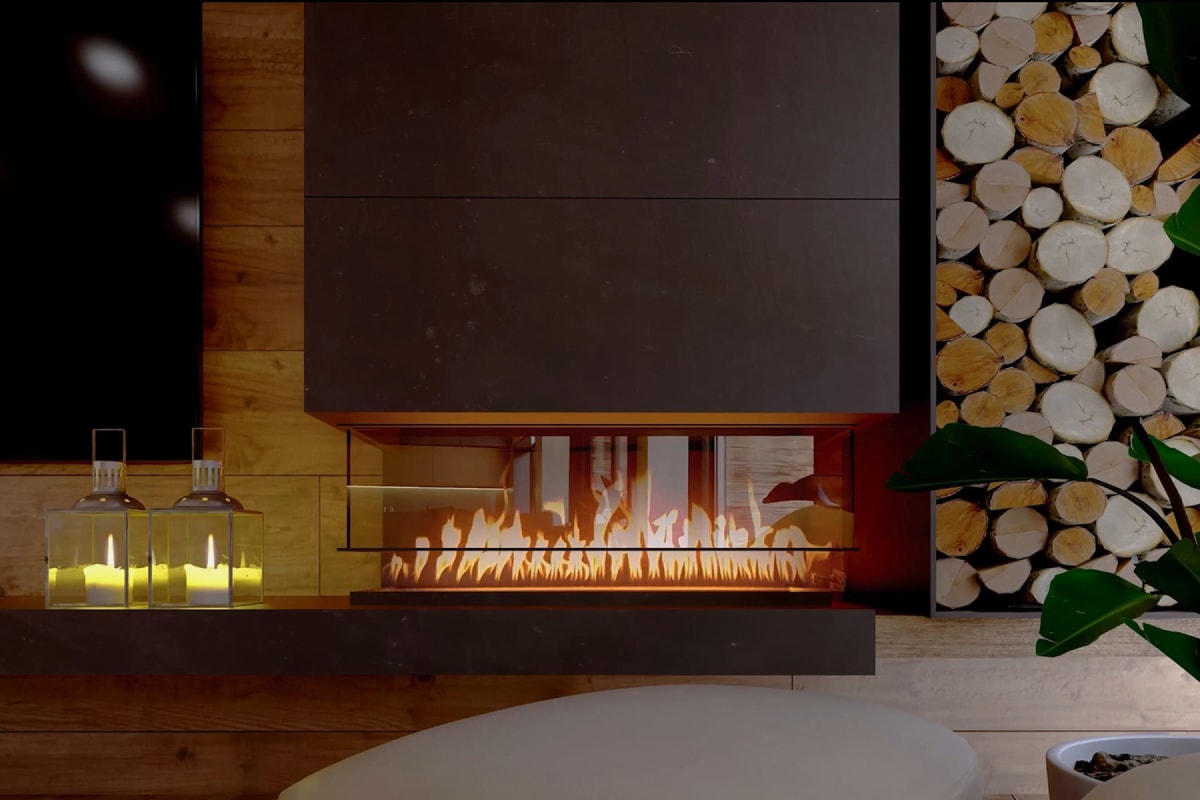
Baqueira, Spain — 3-Bed Chalet With Terrace
€120,000
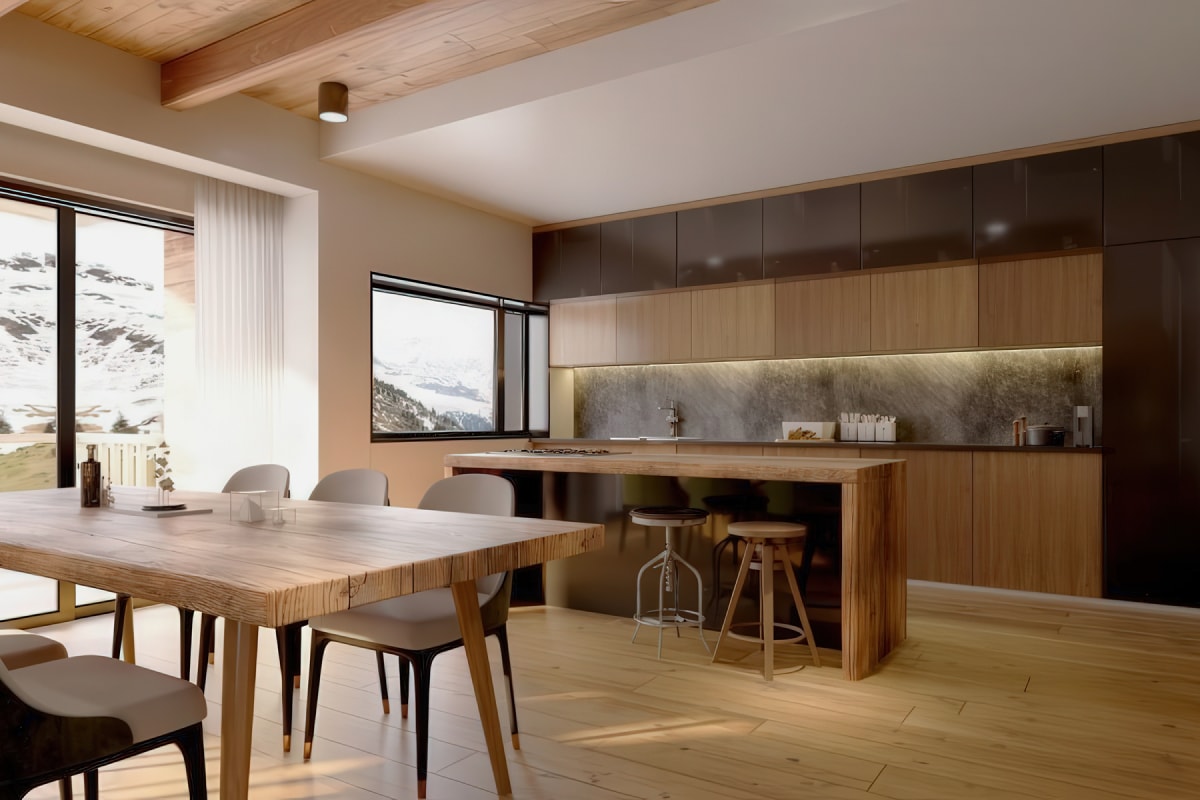
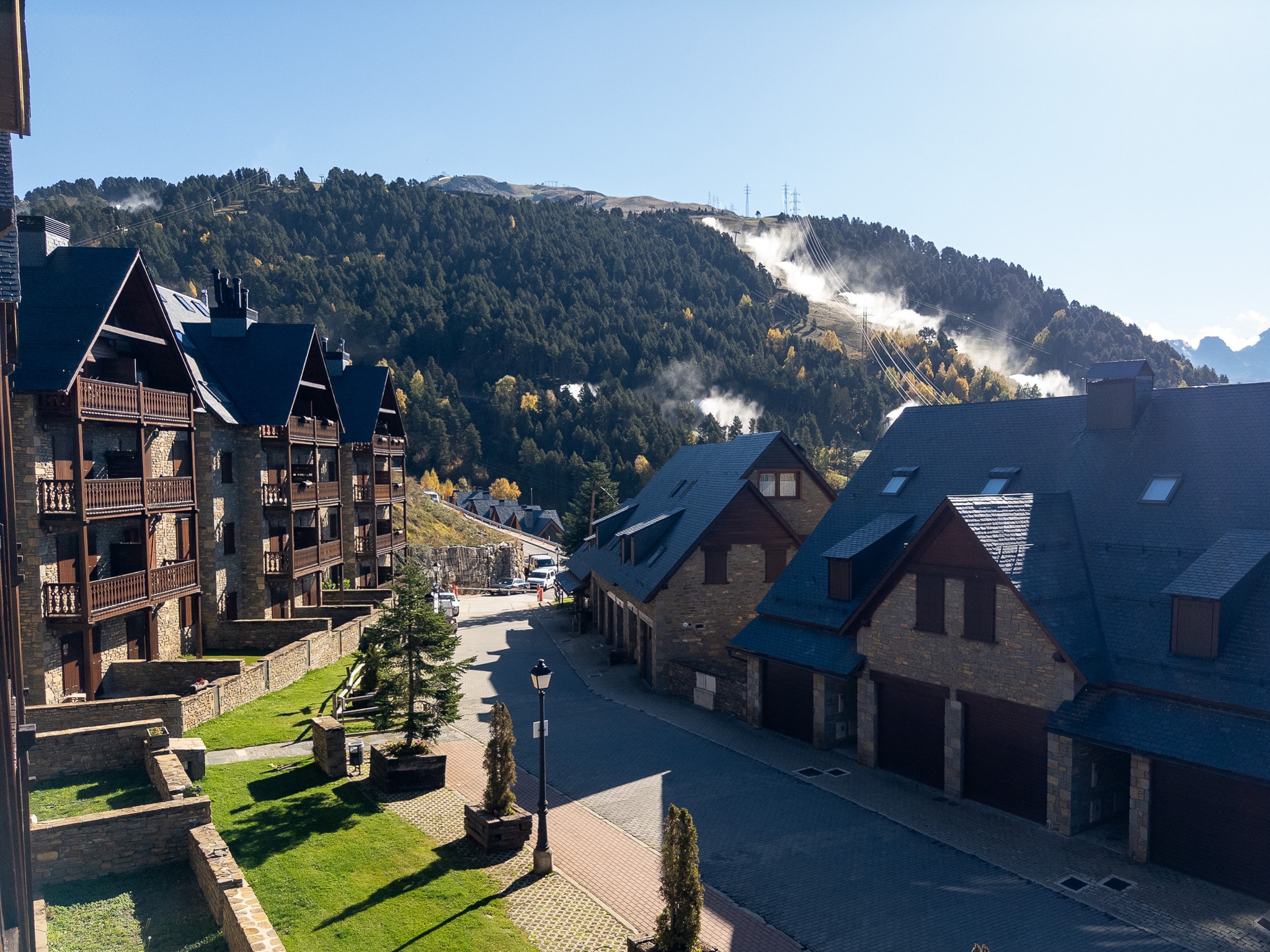
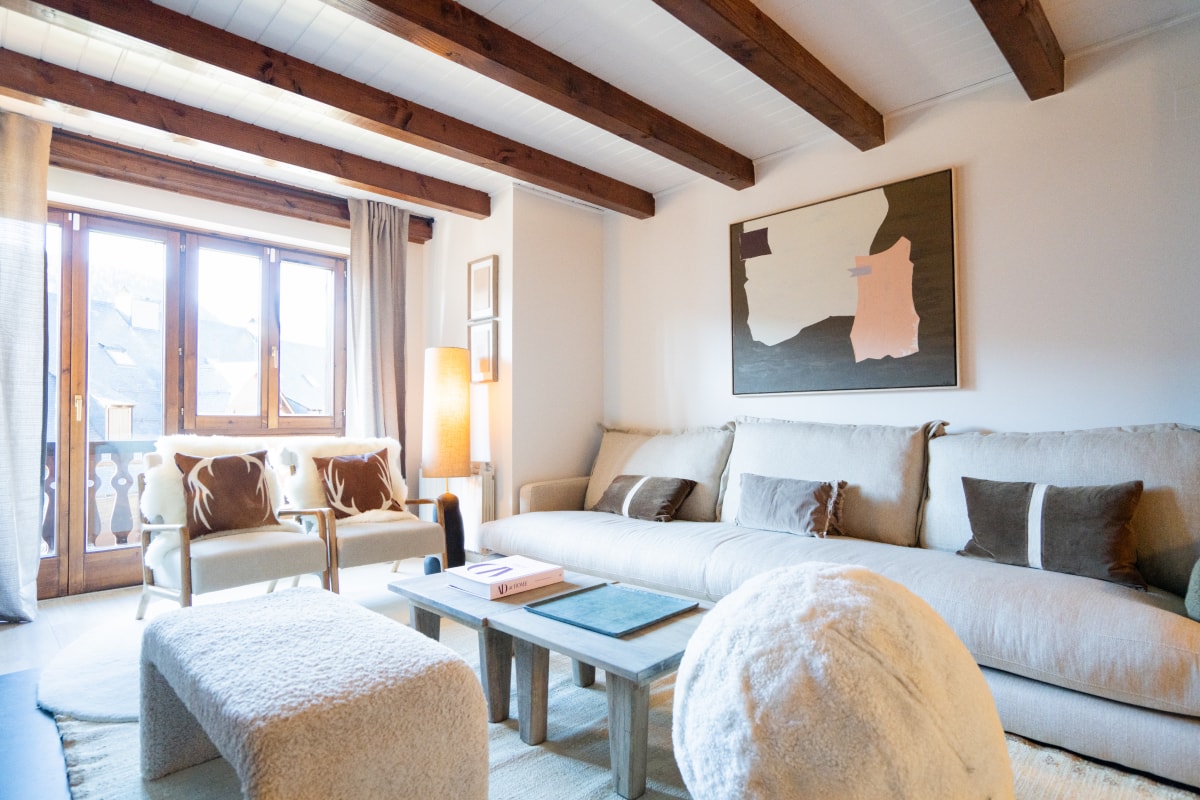
Baqueira, Spain — 3-Bed Chalet With Pool
€125,000
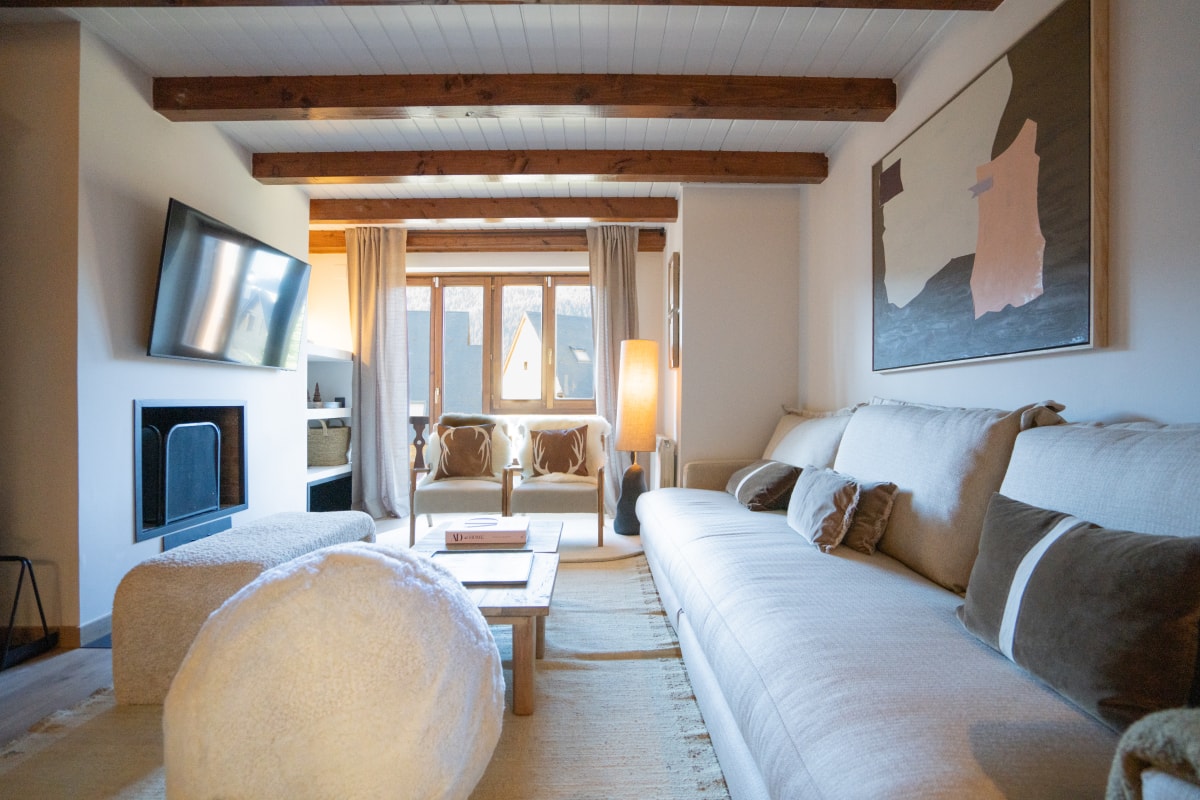
Baqueira, Spain — 3-Bed Apartment With Terrace
€145,000
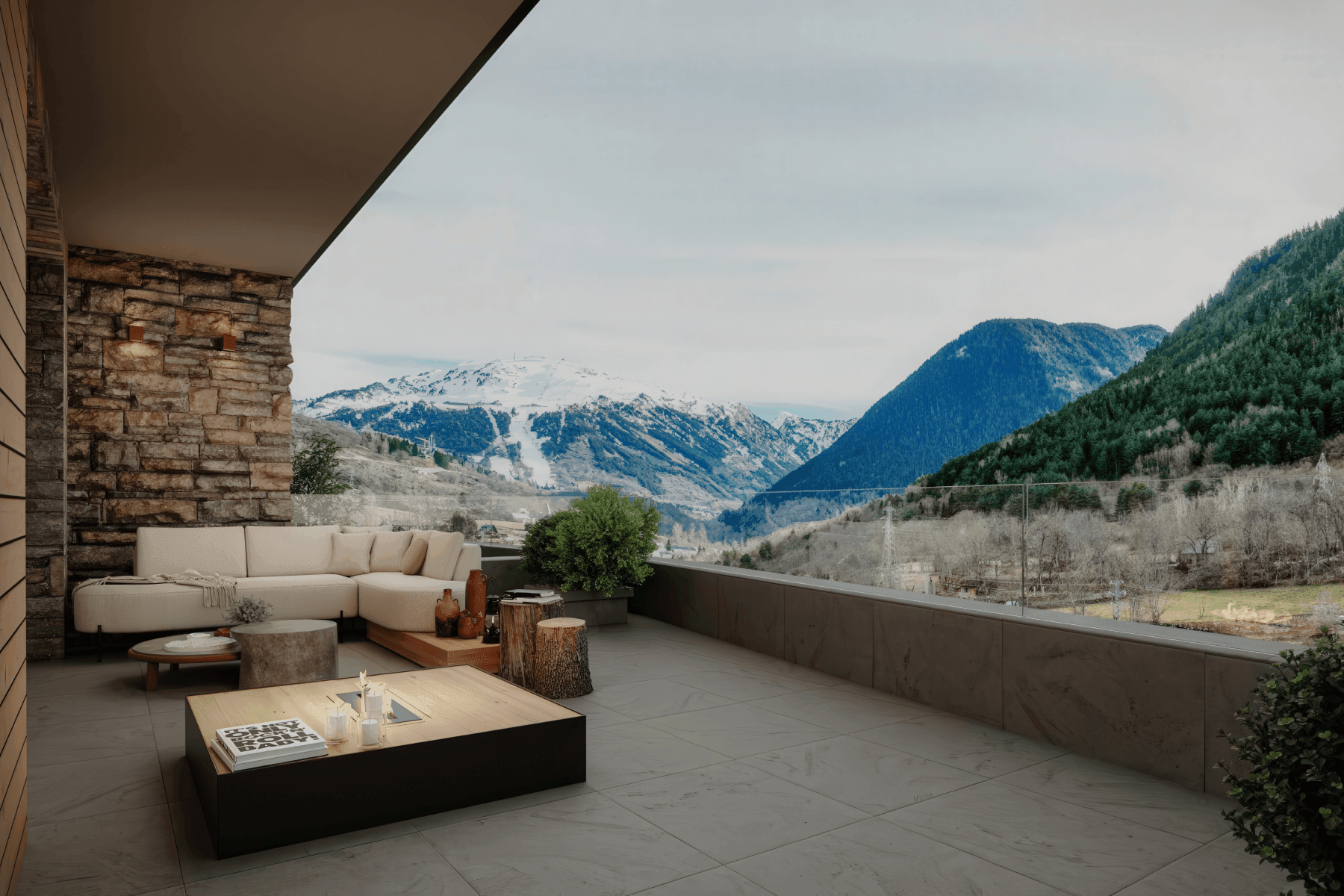
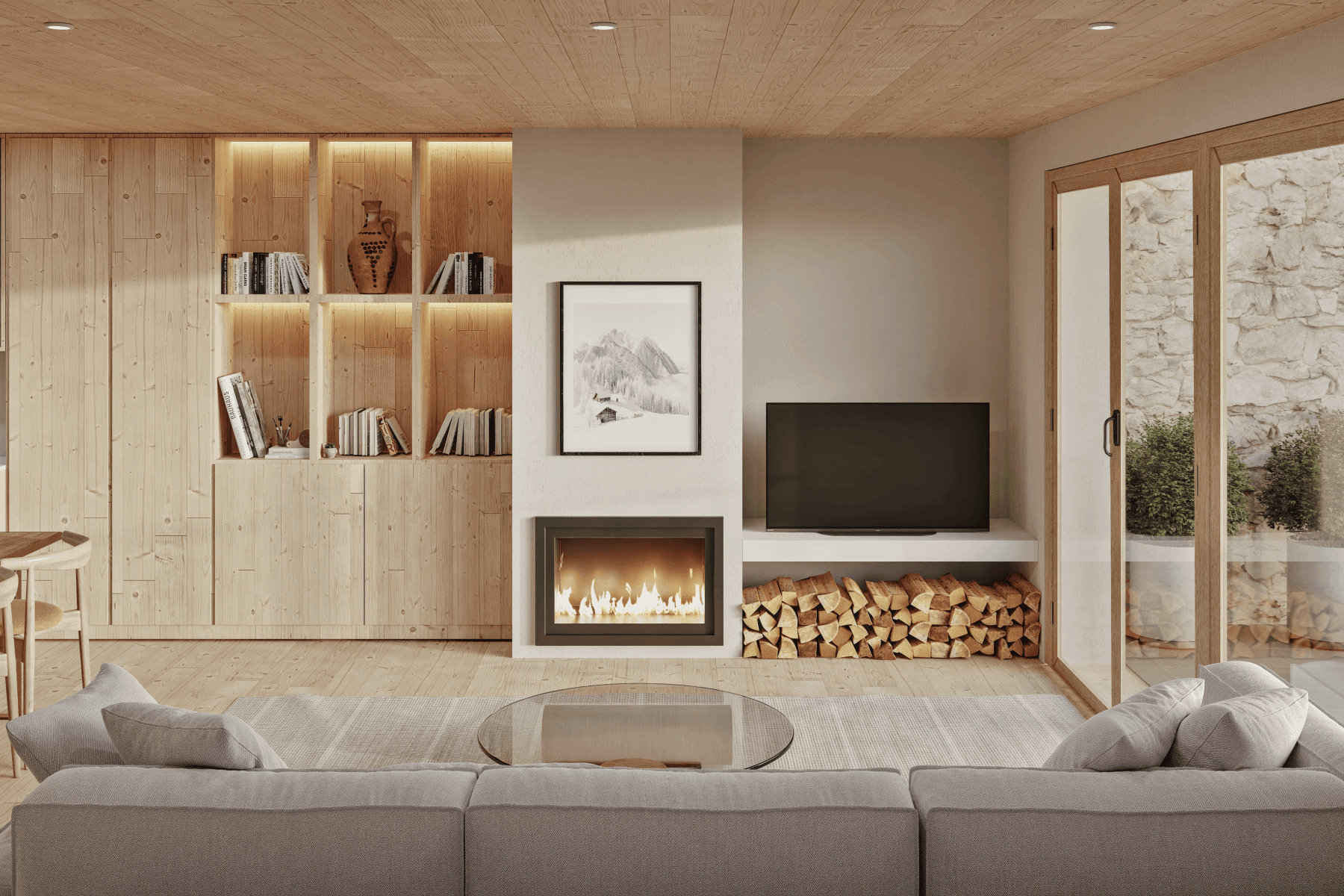
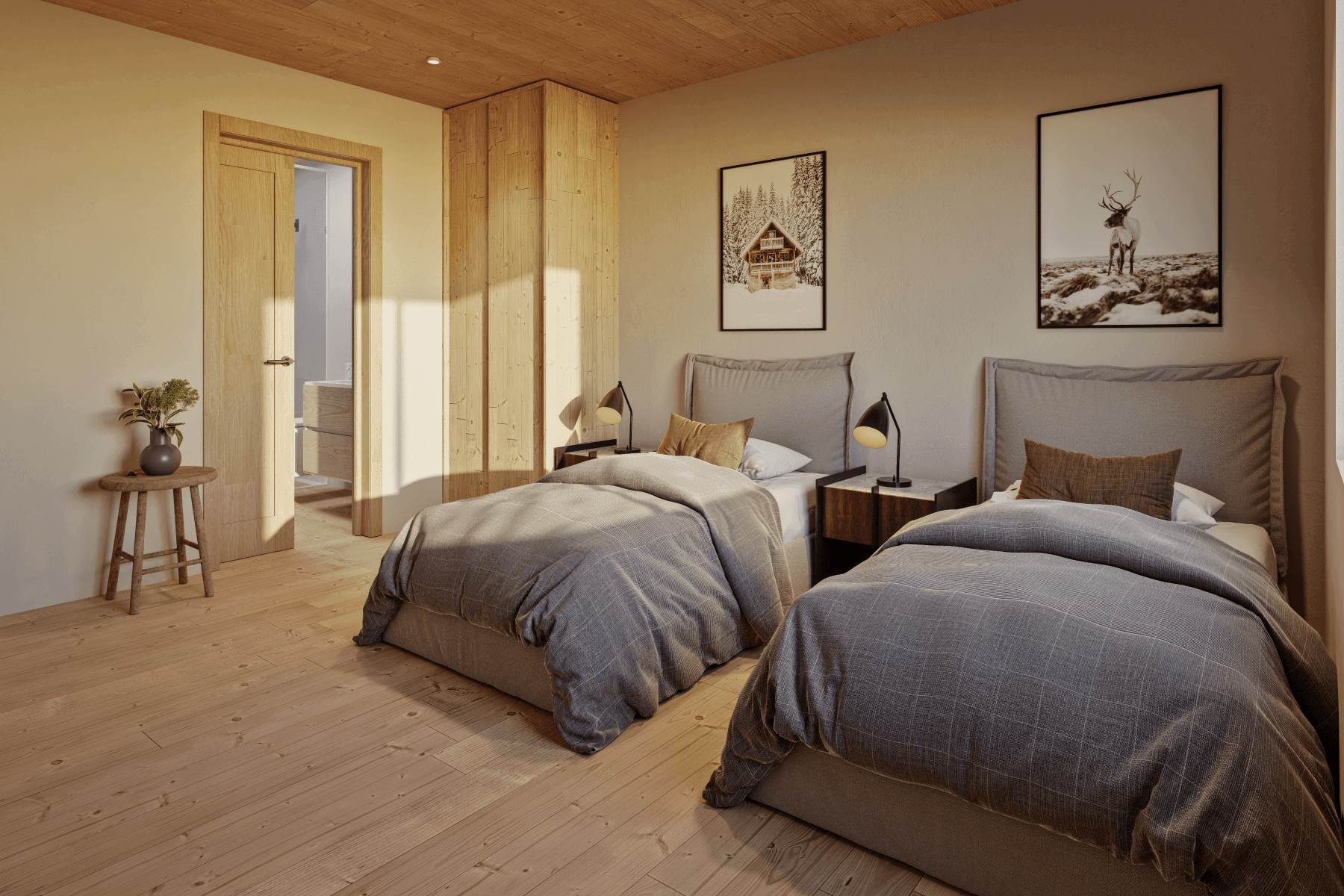
Baqueira, Spain — 3-Bed Chalet With Fireplace
€150,000
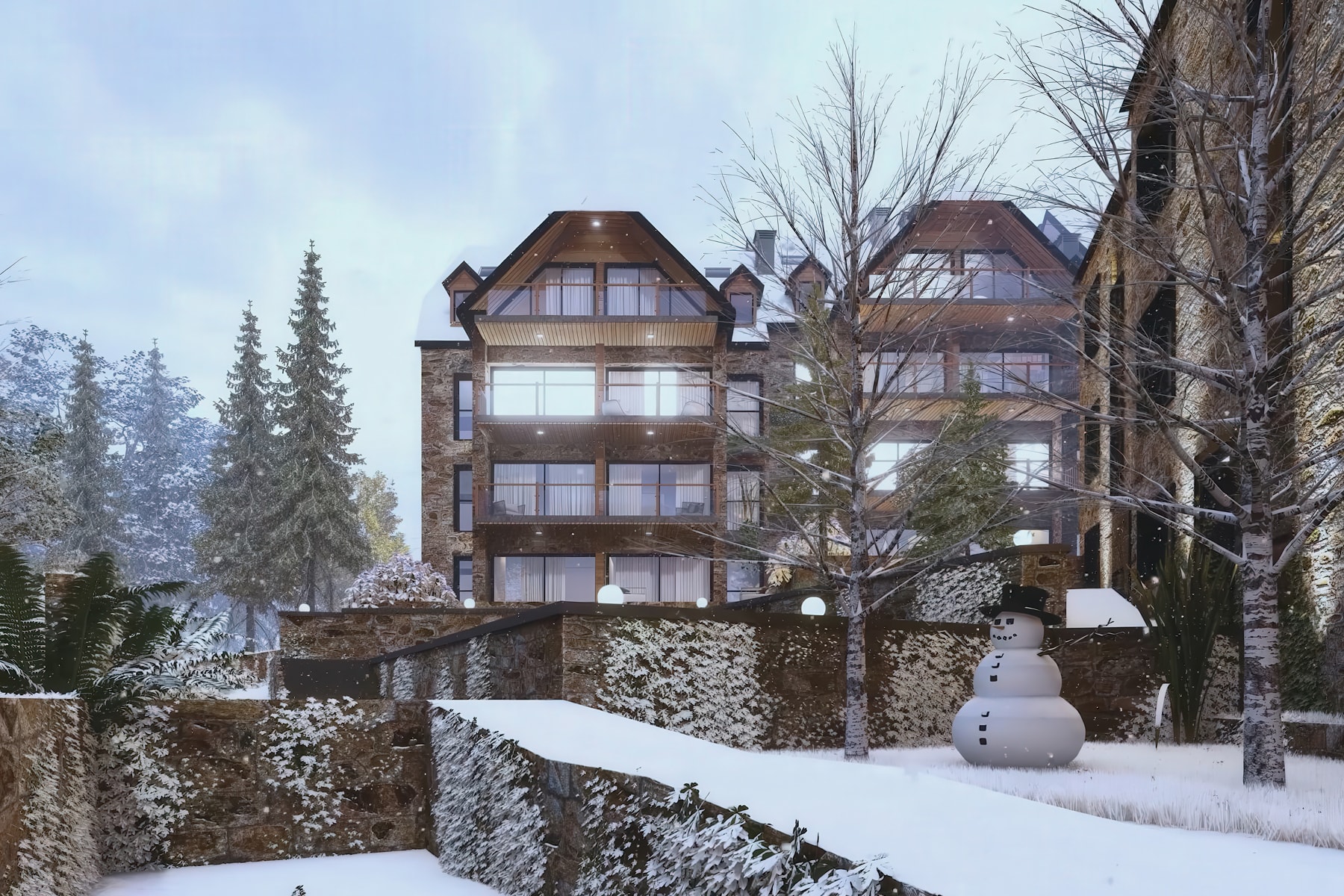
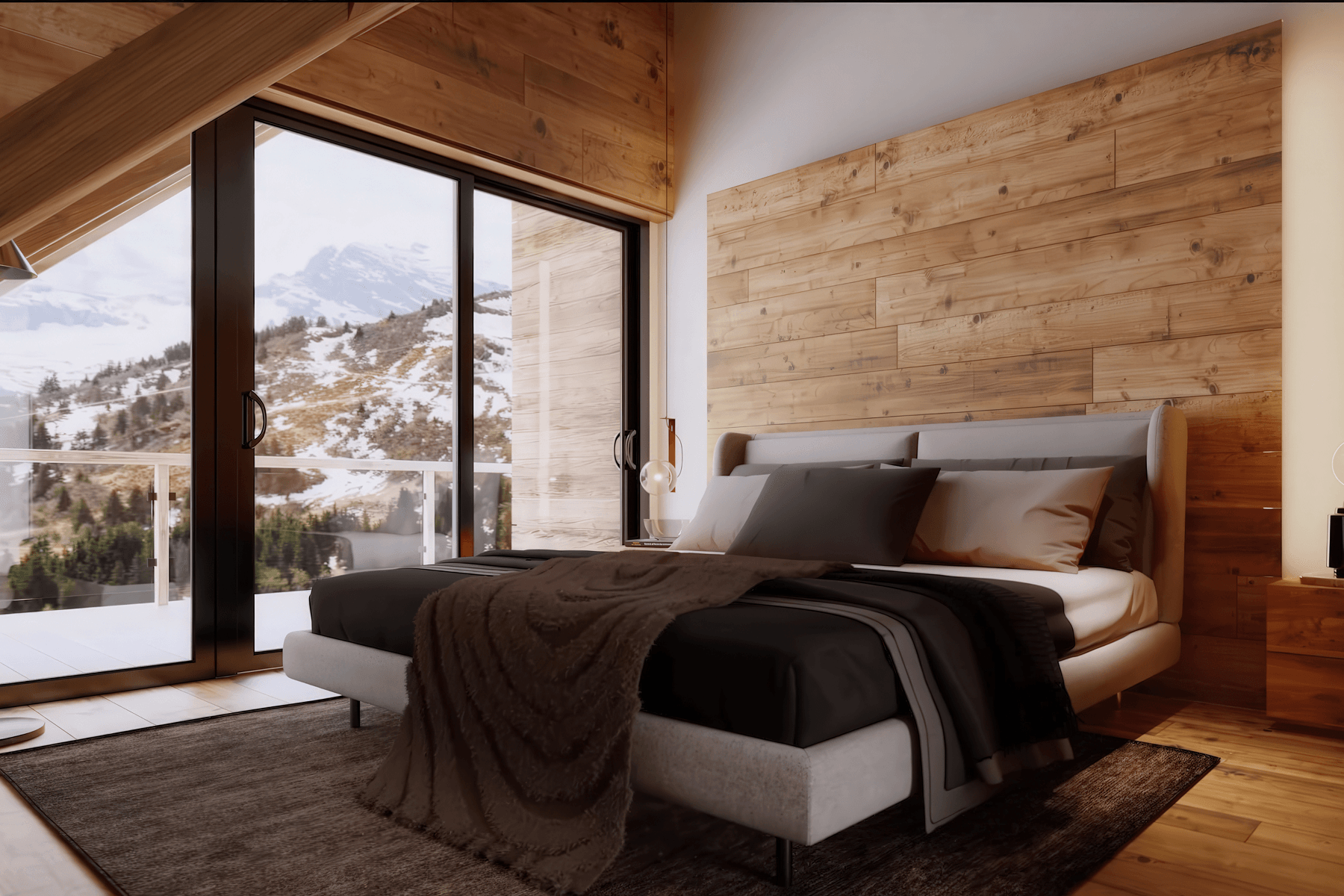
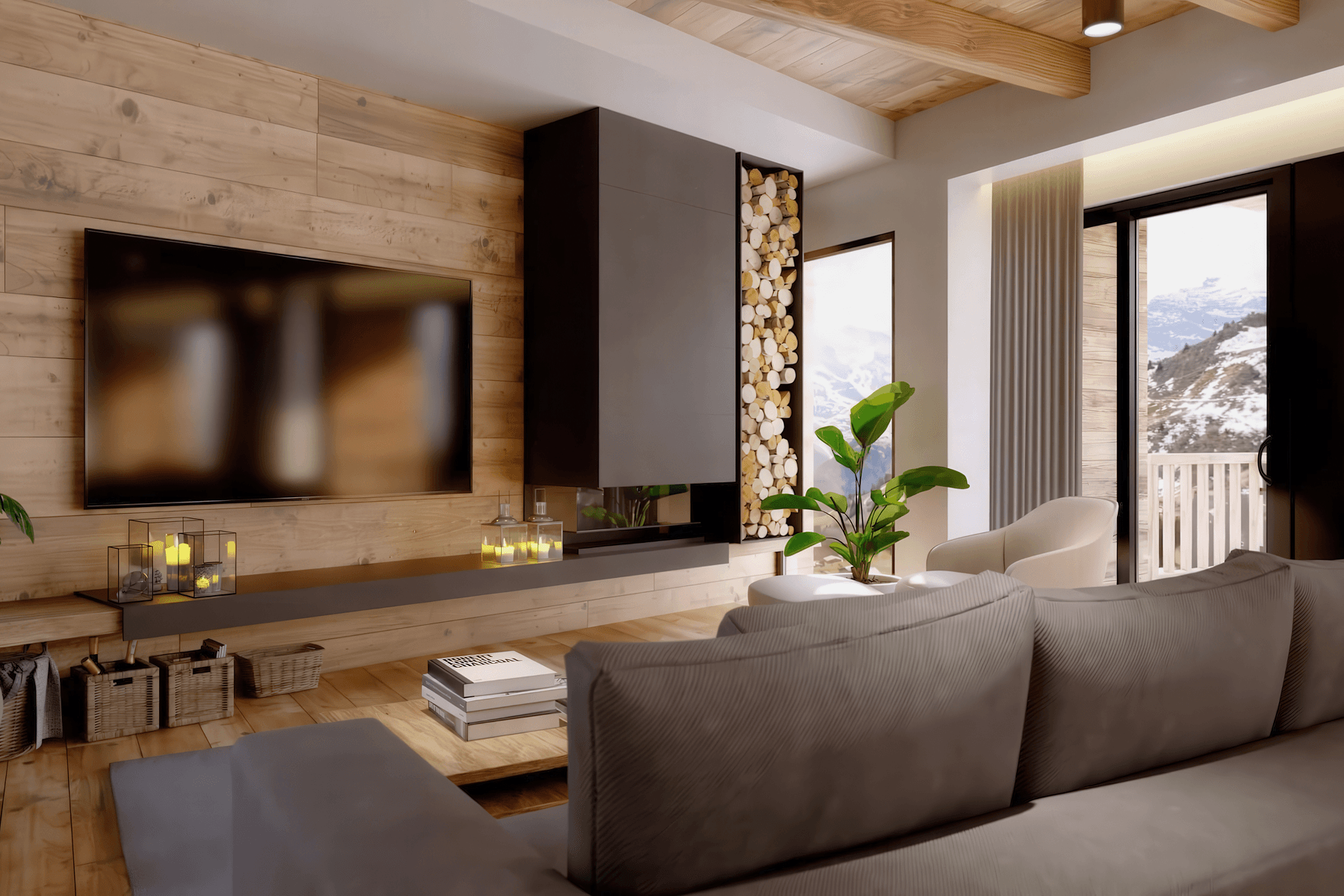
Baqueira, Spain — 5-Bed Chalet With Pool
€170,000
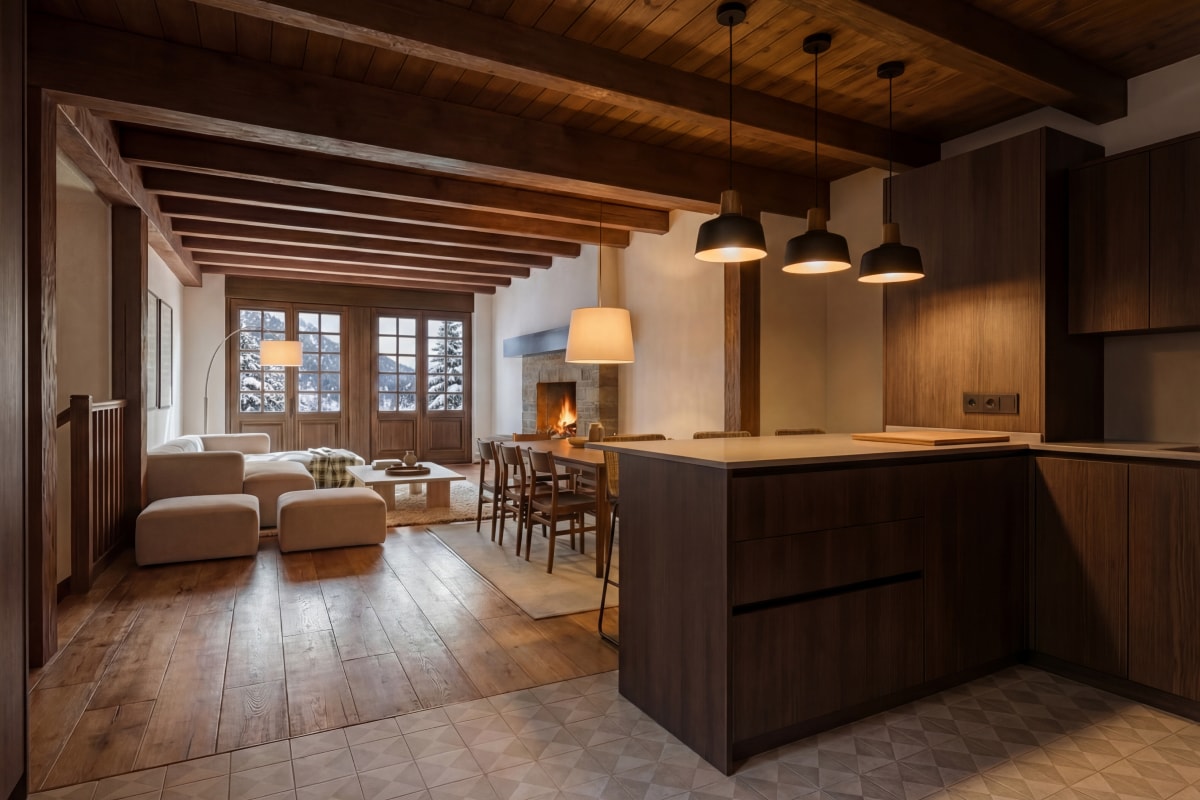
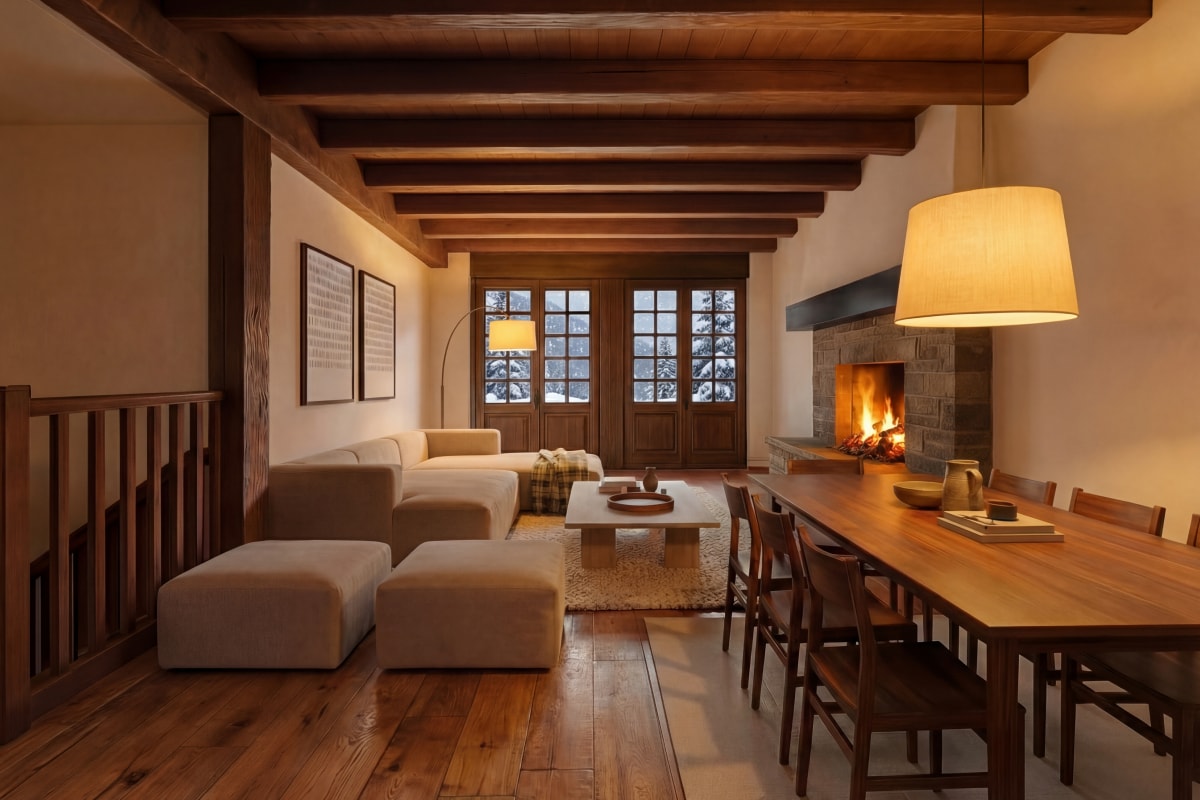
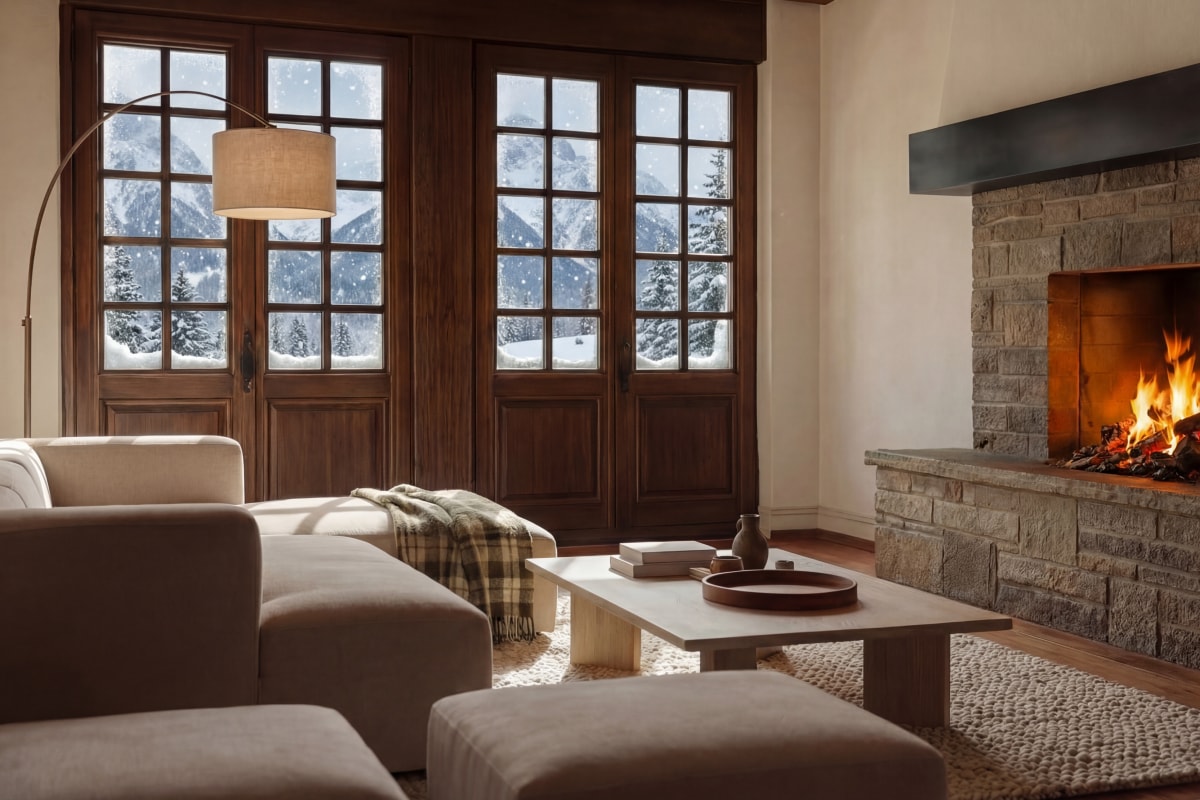
Baqueira, Spain — 4-Bed Chalet With Fireplace
€180,000
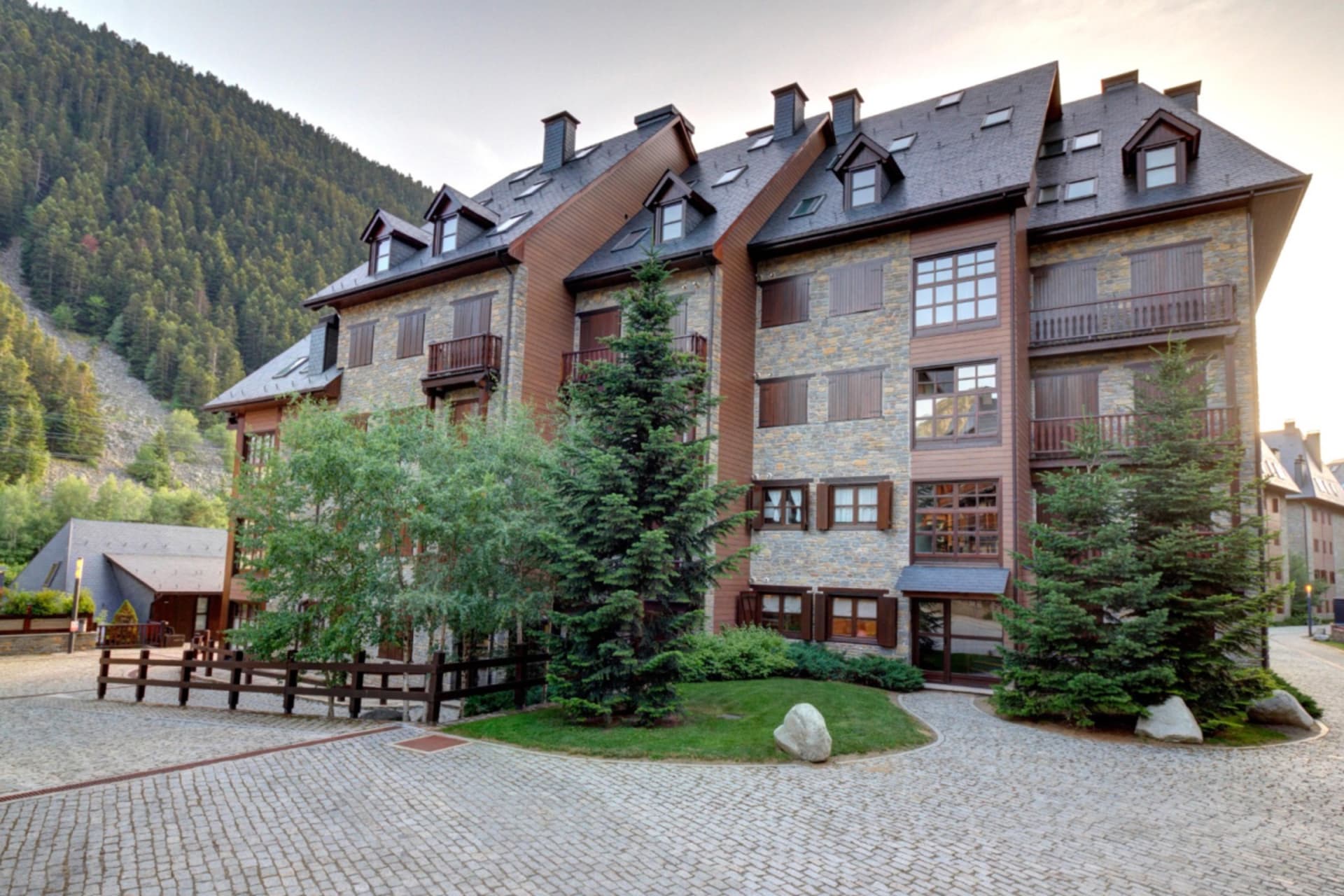
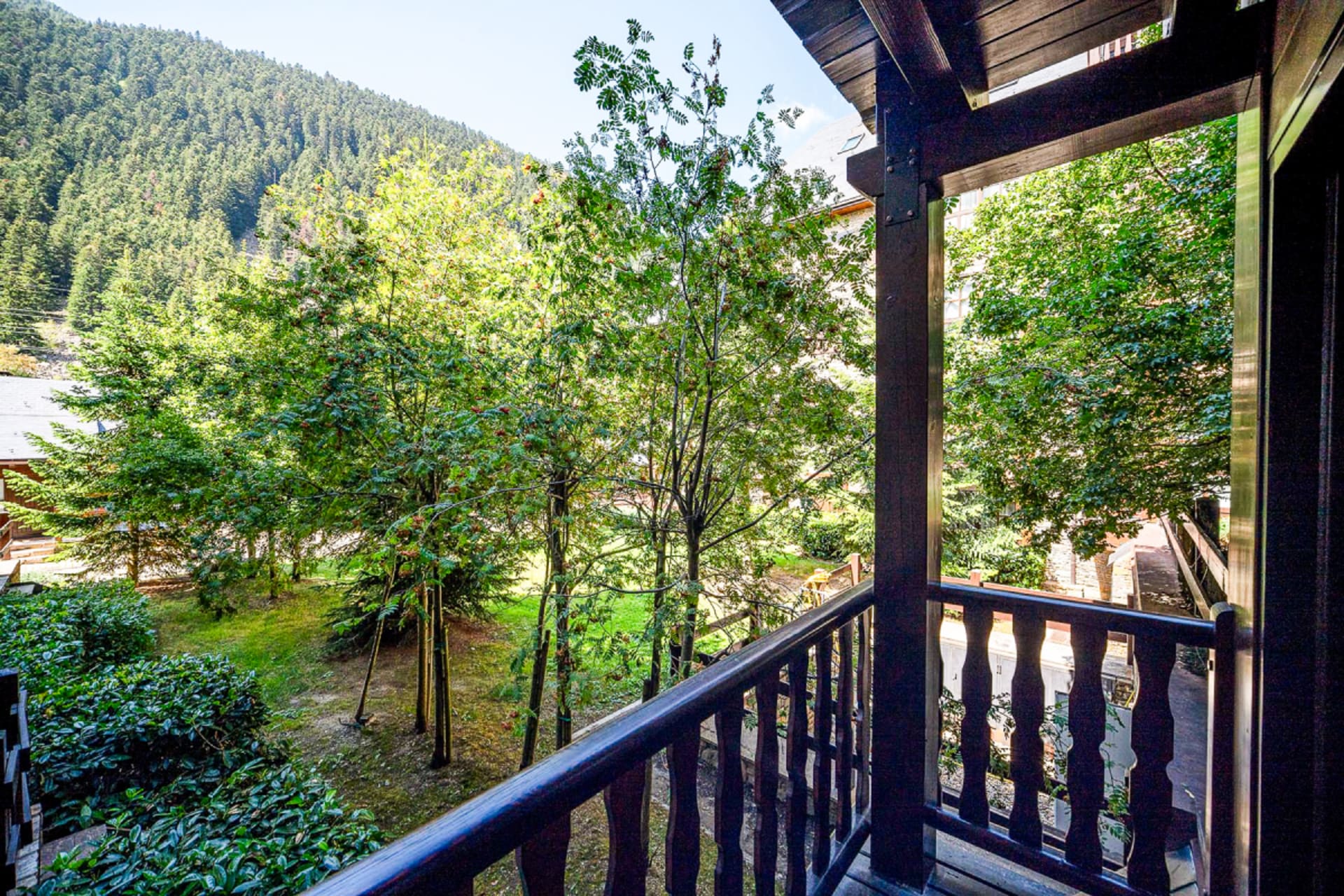
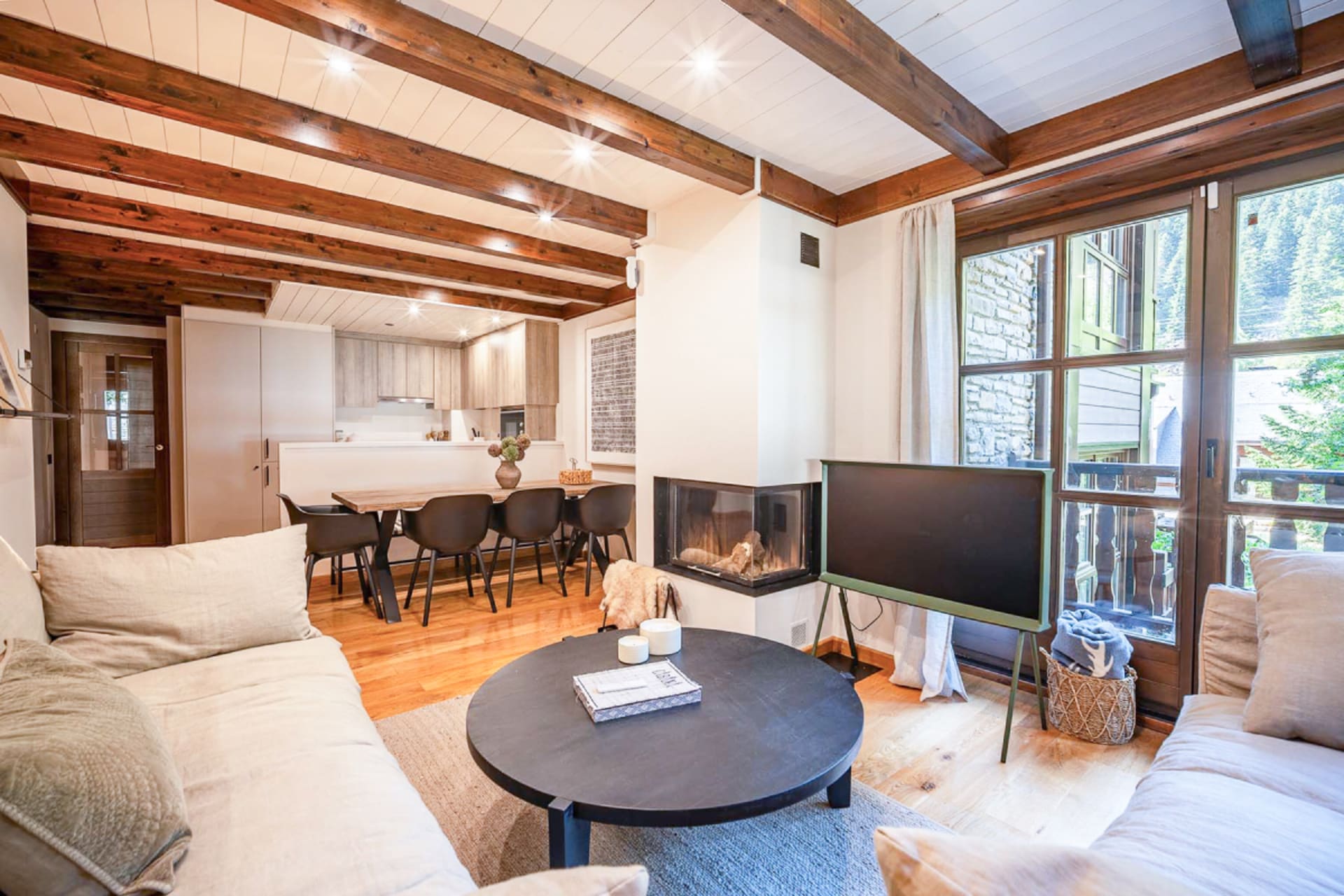
Baqueira, Val d'Aran, Spain — 3-Bed Apartment Steps From Baqueira-Beret With Covered Parking
€185,000
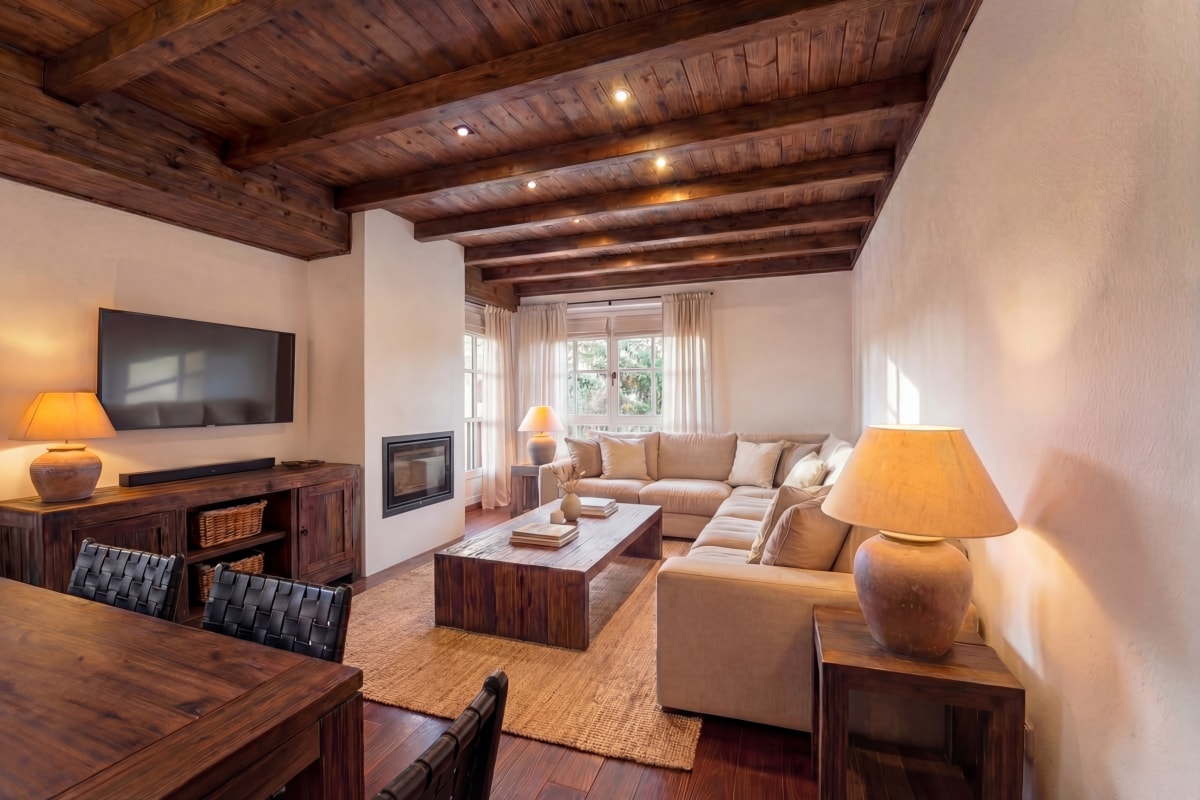
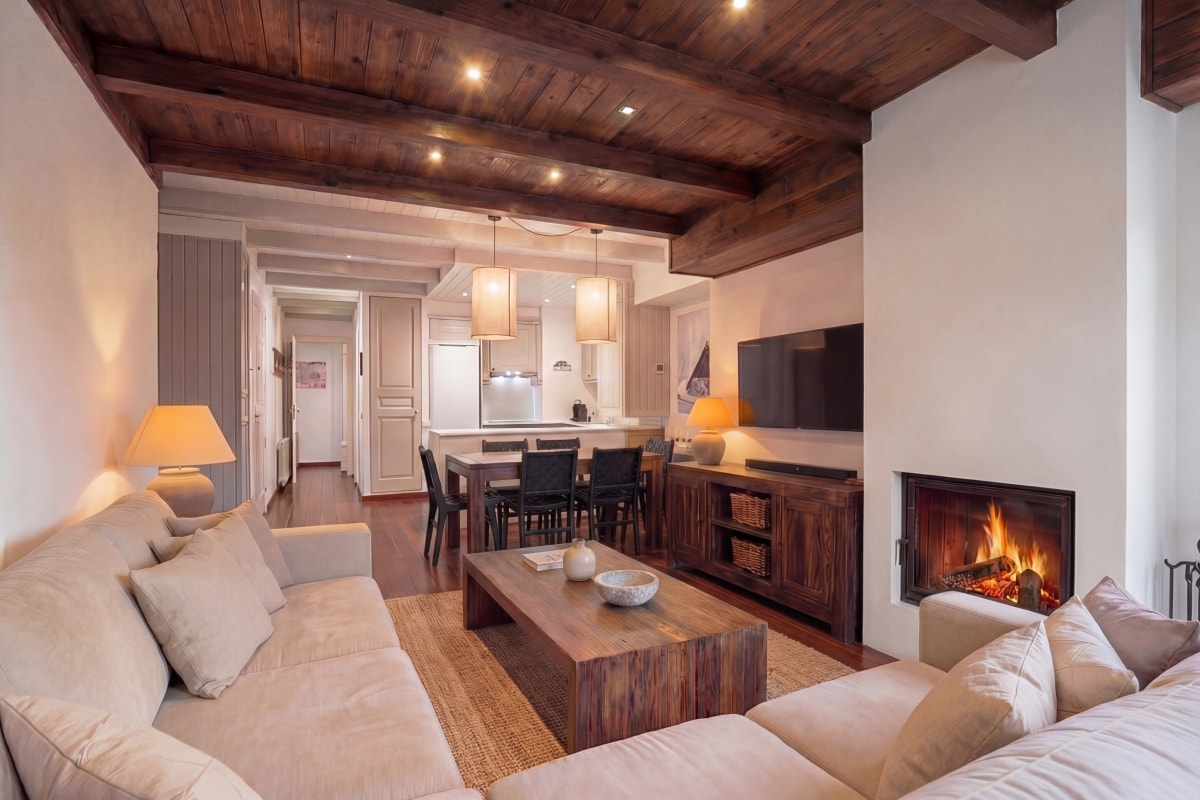
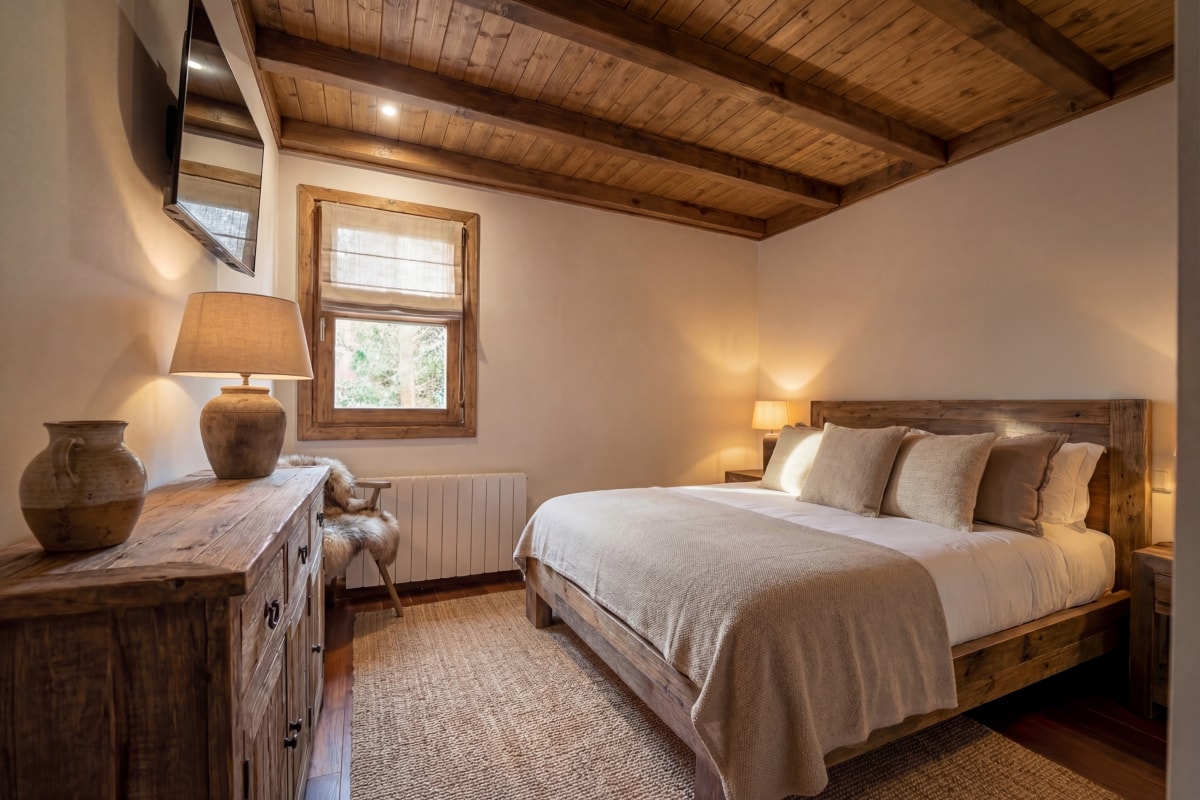
Baqueira, Spain — 3-Bed Apartment Ski-in/Ski-out
€185,000
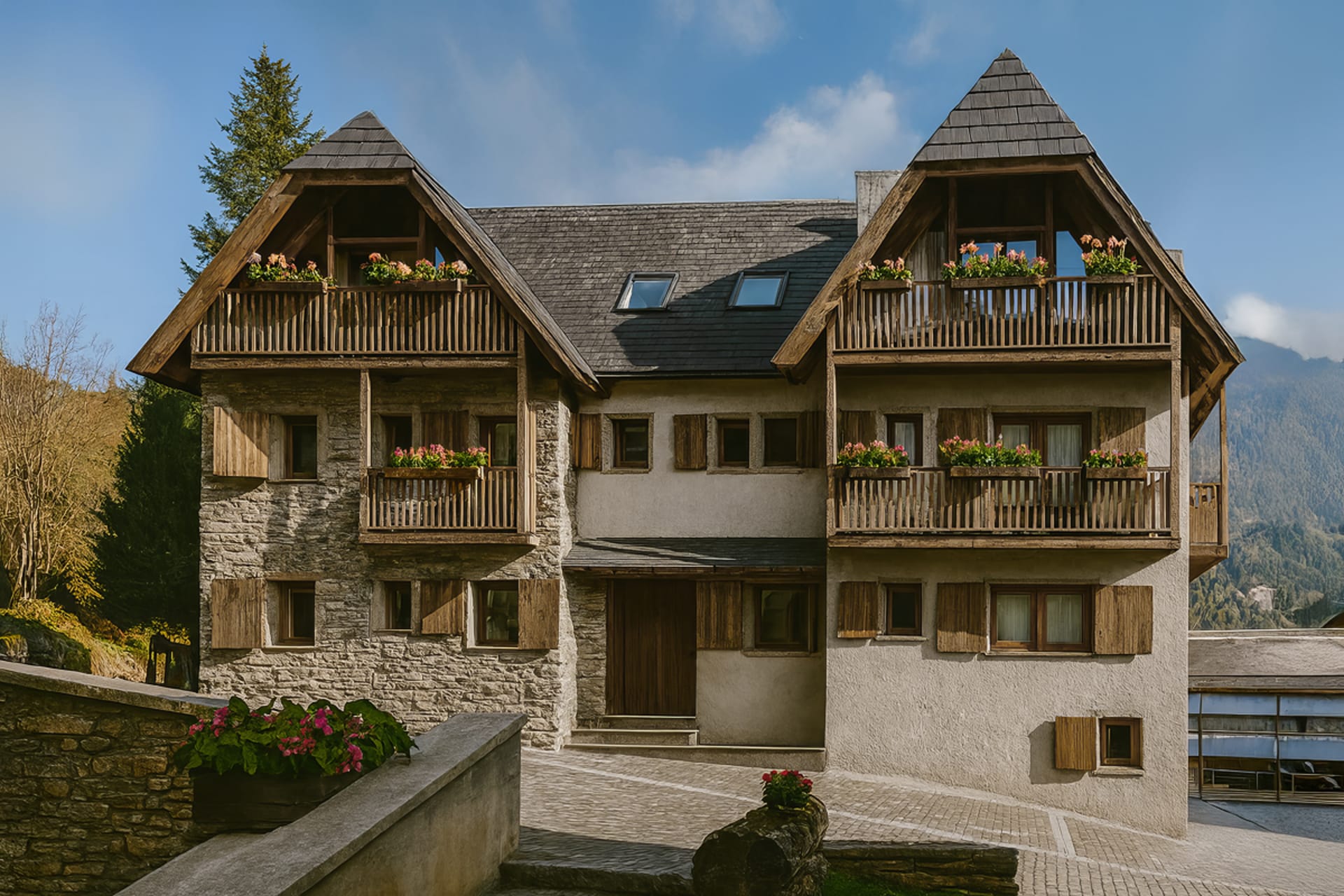
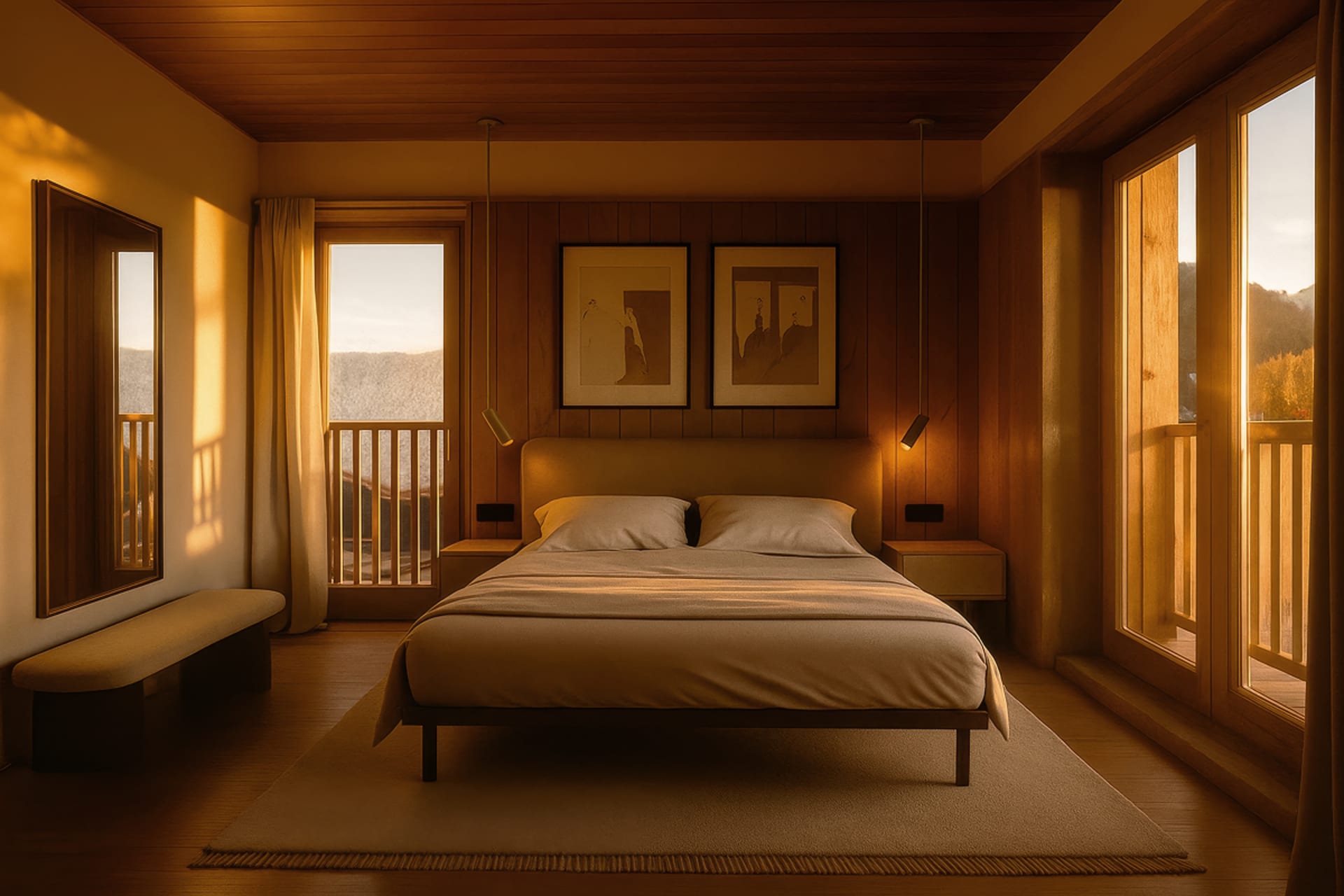
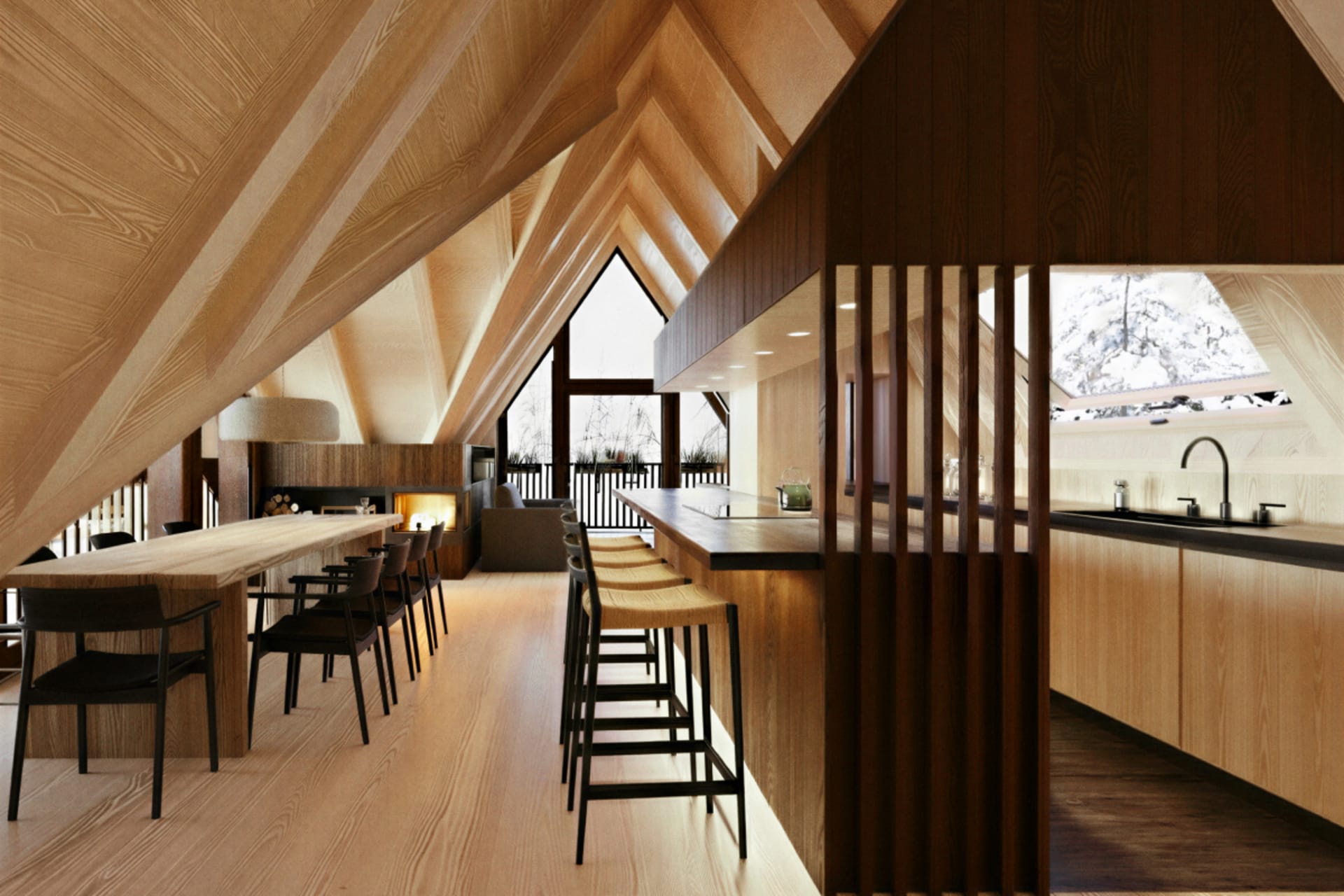
Baqueira, Val d'Aran, Spain — 4-Bed Chalet With Fireplace, Steps From Baqueira-Beret
€195,000
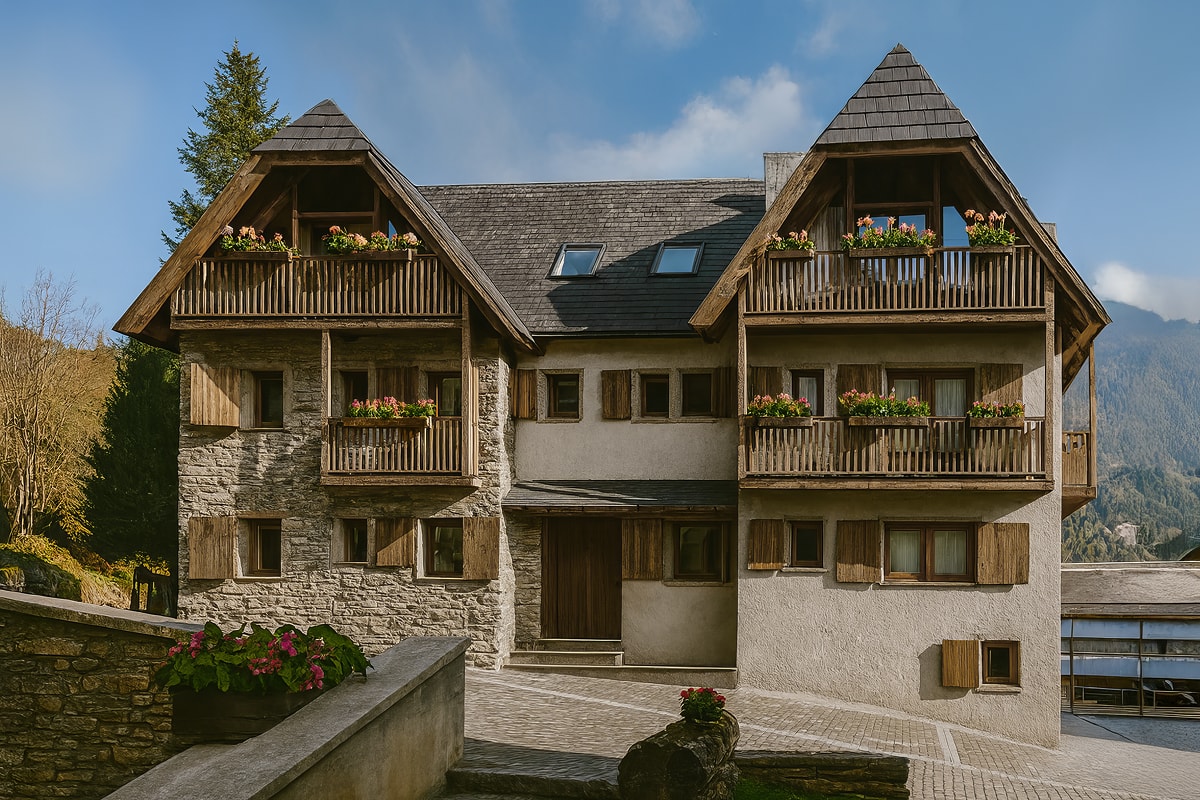
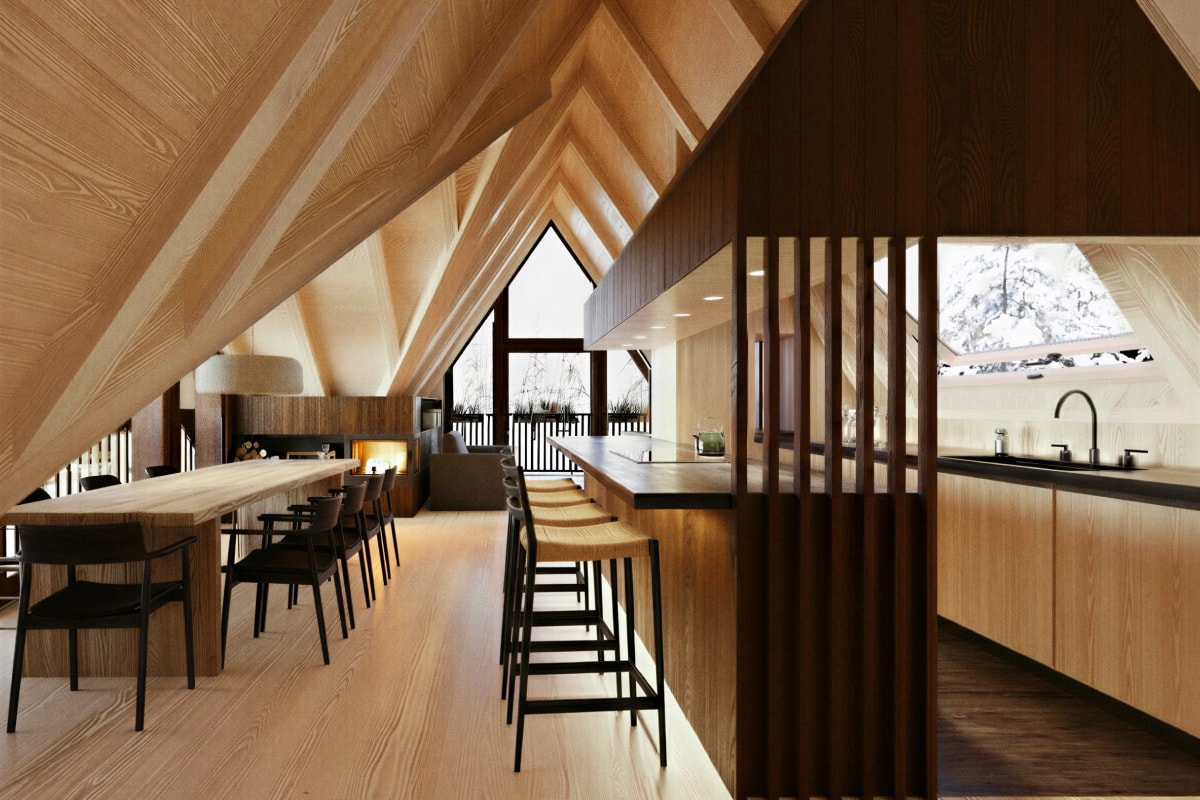
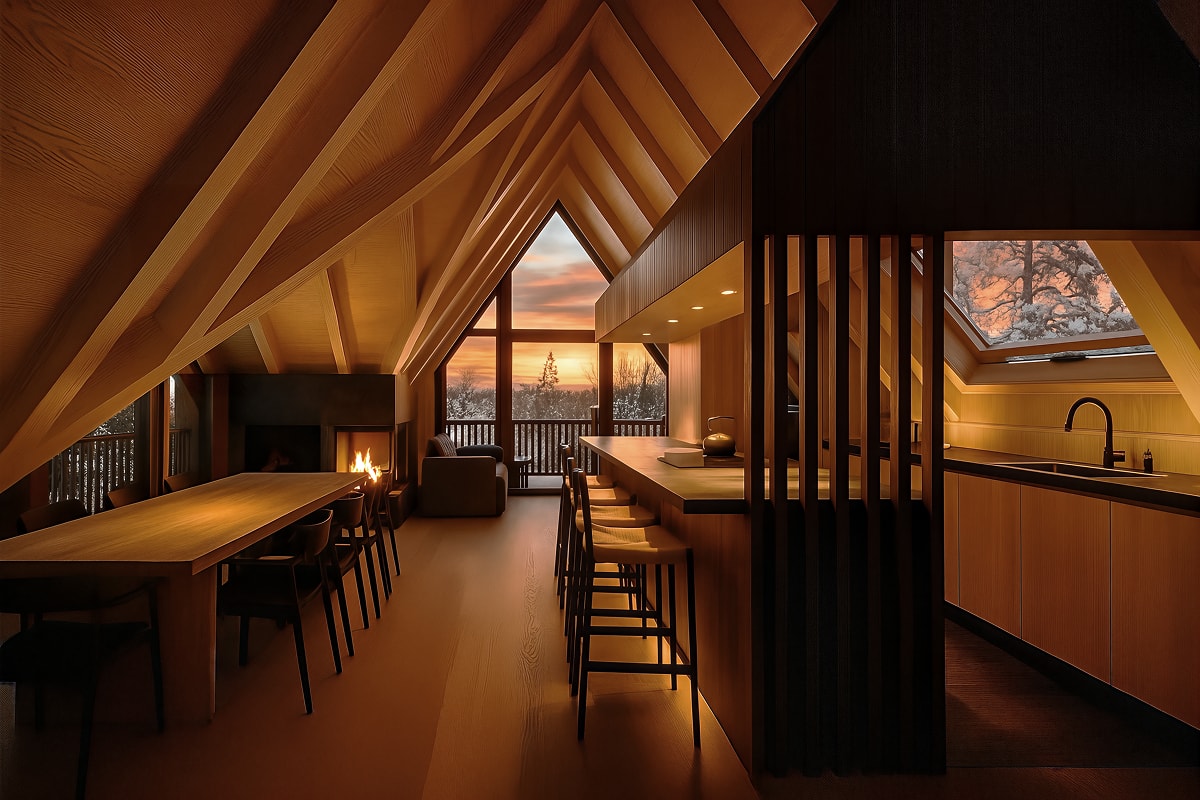
Baqueira, Spain — 4-Bed Chalet With Fireplace
€195,000
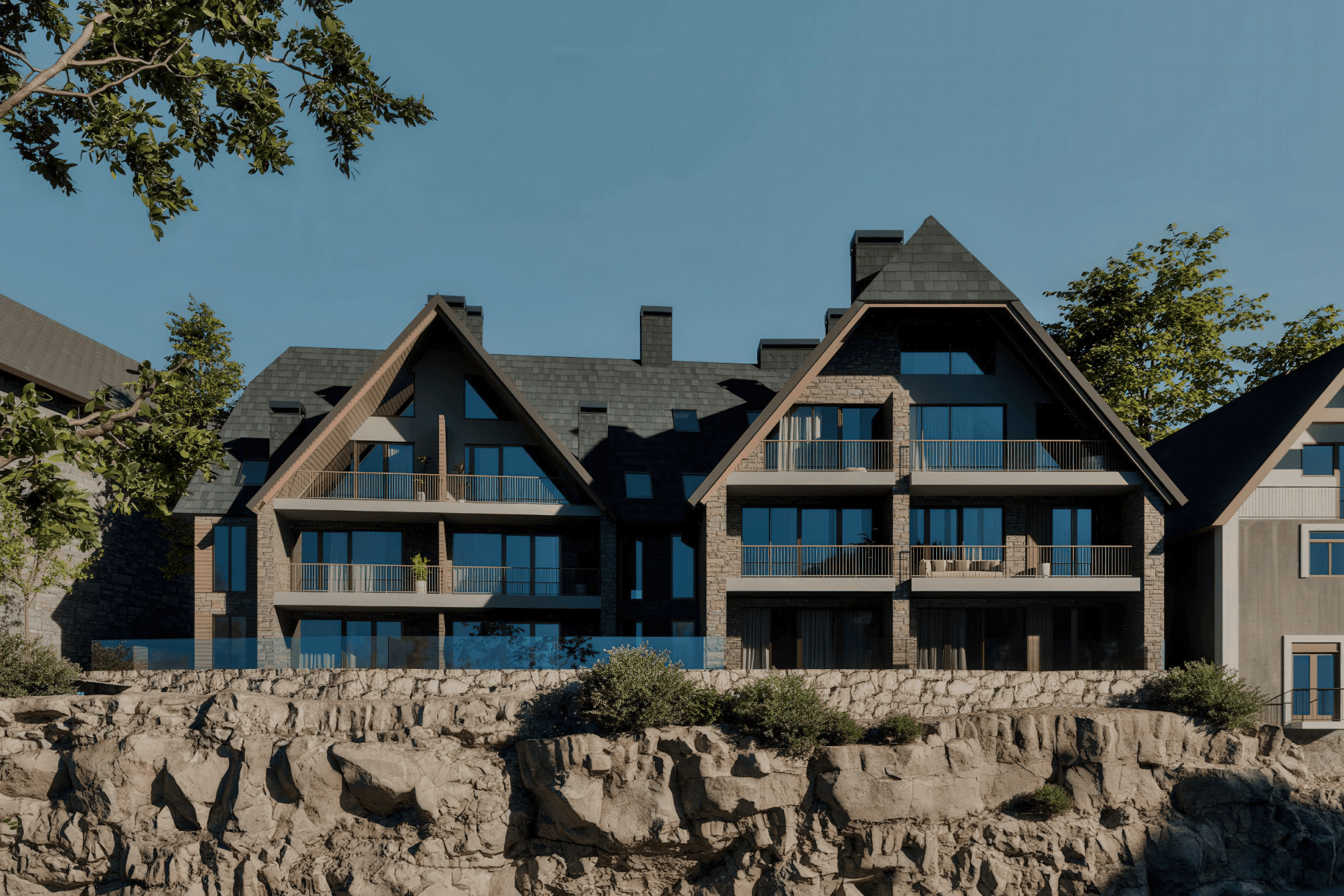
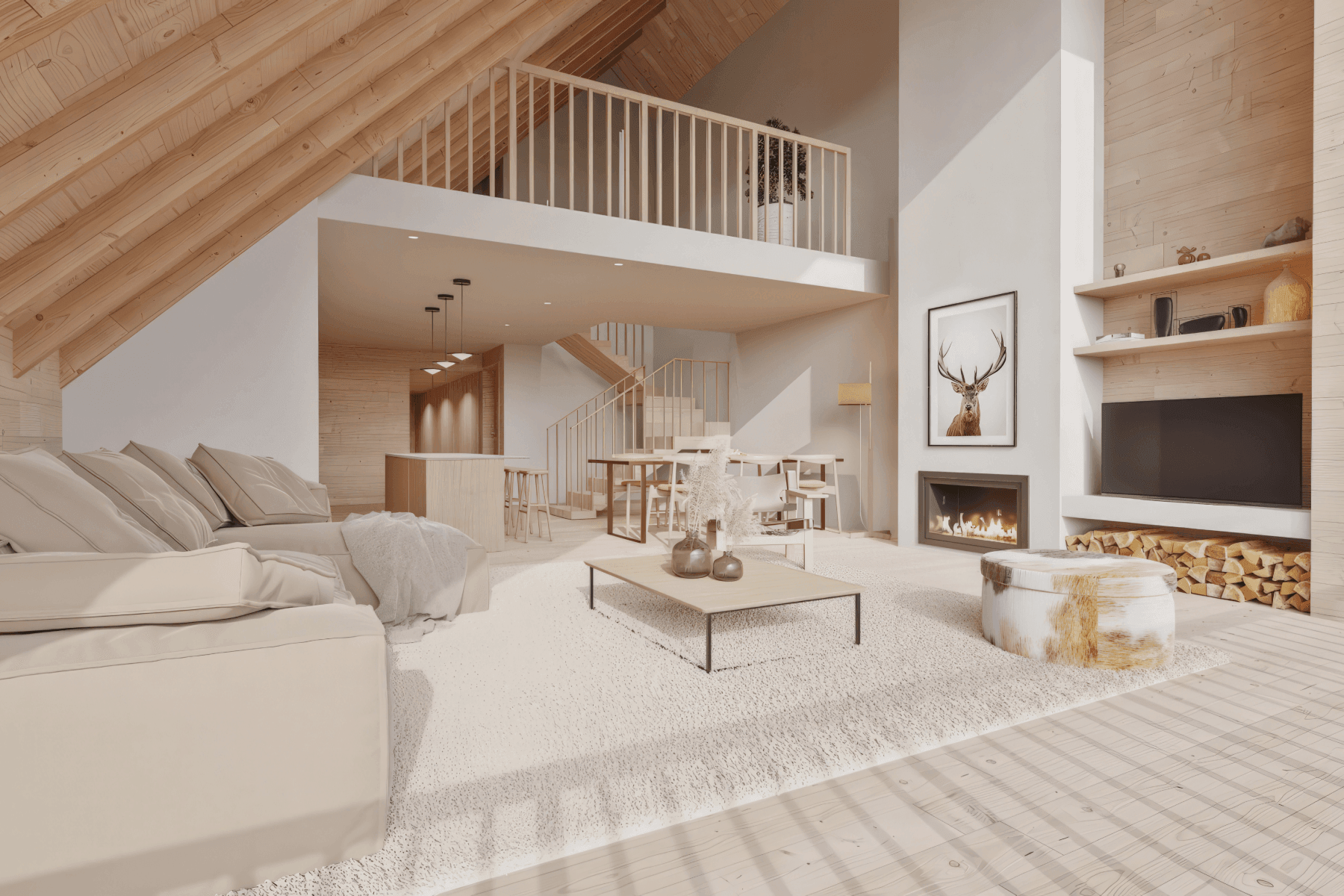
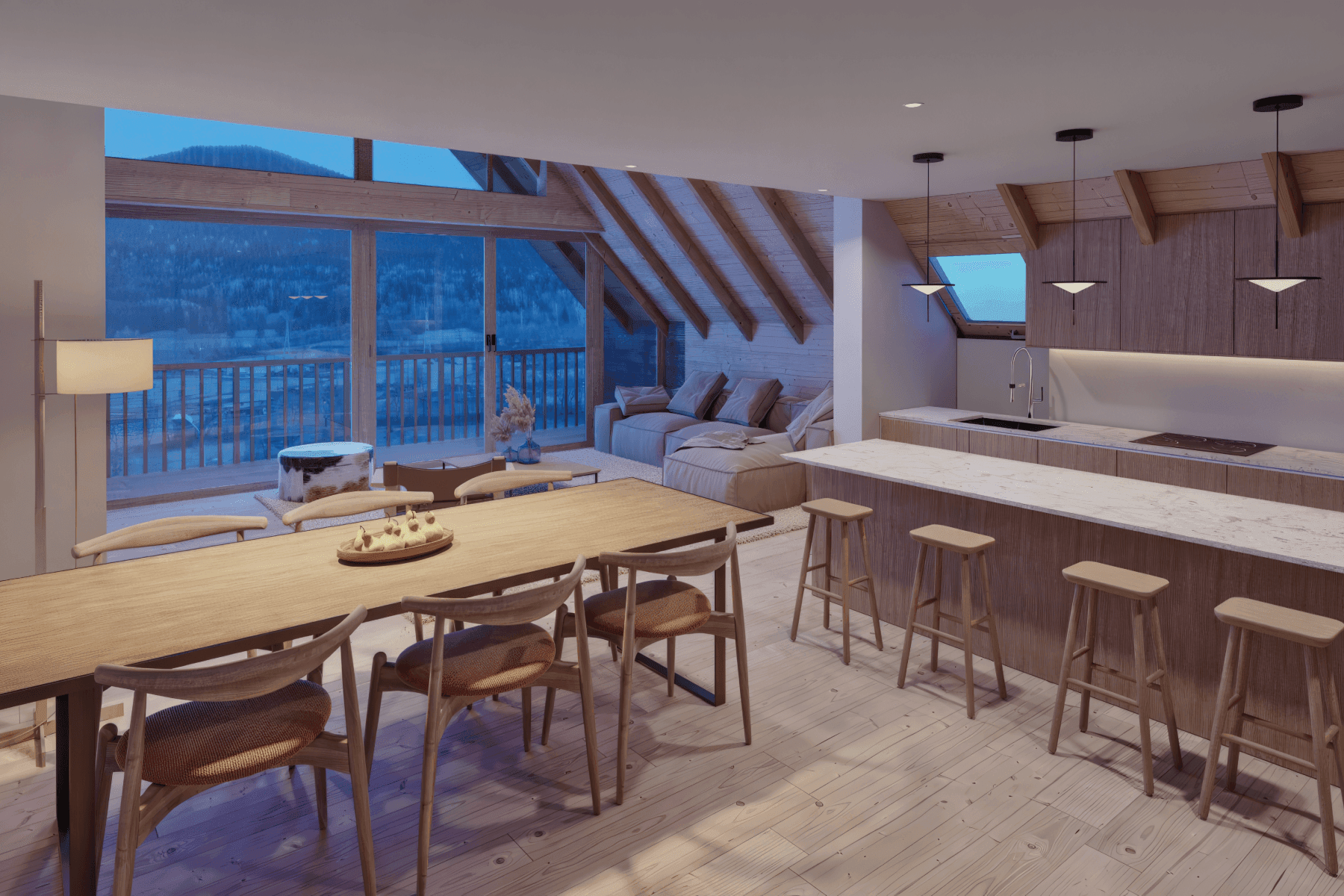
Baqueira, Spain — 3-Bed Penthouse With Fireplace
€195,000
Why buy a co-ownership home in Baqueira?
Buying a whole holiday home in Baqueira means paying full price for a house that stands empty most of the year. Co-ownership takes the same home — professionally managed, beautifully furnished — and divides it into shares, usually eighths. You own a real share of the home — not a right to use it — with roughly six weeks of use a year, a share you can sell or pass on, and running costs shared between owners rather than shouldered alone. In Baqueira, that ownership starts from €120,000.
Baqueira properly understood
Most people meet Baqueira as a line in a ski brochure: Spain's biggest resort, the one the Spanish royal family goes to. Both things are true, and both undersell it badly. What you are actually buying into is not a resort but a valley — the Val d'Aran, a self-contained world at the top of Catalonia with its own language, its own government, its own architecture and its own weather system, which happens to have one of the finest ski areas in southern Europe hanging above it. The distinction matters, because valleys with real life in them behave completely differently from purpose-built resorts when the lifts stop turning.
The geography is genuinely unusual. The Val d'Aran sits on the northern side of the Pyrenean watershed — the only valley in Catalonia that drains towards the Atlantic rather than the Mediterranean, sending its water down the Garonne into France. That single fact explains almost everything else: the Atlantic weather that gives Aran the most reliable snowfall in the Spanish Pyrenees, the green, wet, alpine landscape that looks nothing like the rest of Spain, the historic isolation that preserved a distinct language, and the orientation of the whole valley towards Toulouse rather than Barcelona.
Above the villages, the ski domain spreads across three linked sectors — Baqueira, Beret and Bonaigua — for well over a hundred and fifty kilometres of piste, the largest in Spain by a comfortable margin. Below them, thirty-odd stone villages run down the valley floor, each with a Romanesque church, most with a restaurant serving food that would embarrass a good deal of what is served in the Alps at three times the price. Owning here means owning in a working valley with a world-class mountain attached — which is a rarer combination than the brochures let on, and the reason the calendar in our Baqueira homes fills the way it does.
A valley that faces the wrong way
Stand at the top of the Bonaigua pass, at just over two thousand metres, and you are standing on the line that decides everything. South and east of you, the water runs to the Mediterranean through the Pallars valleys. North and west — down into Aran — it runs into the Garonne, through Toulouse and Bordeaux, and out into the Atlantic. Aran is the only Catalan valley on the Atlantic side of the range, and for most of its history that made it easier to reach from France than from Spain. Until the first Vielha road tunnel opened in the middle of the twentieth century, the valley was cut off from the rest of Catalonia for months at a time each winter.
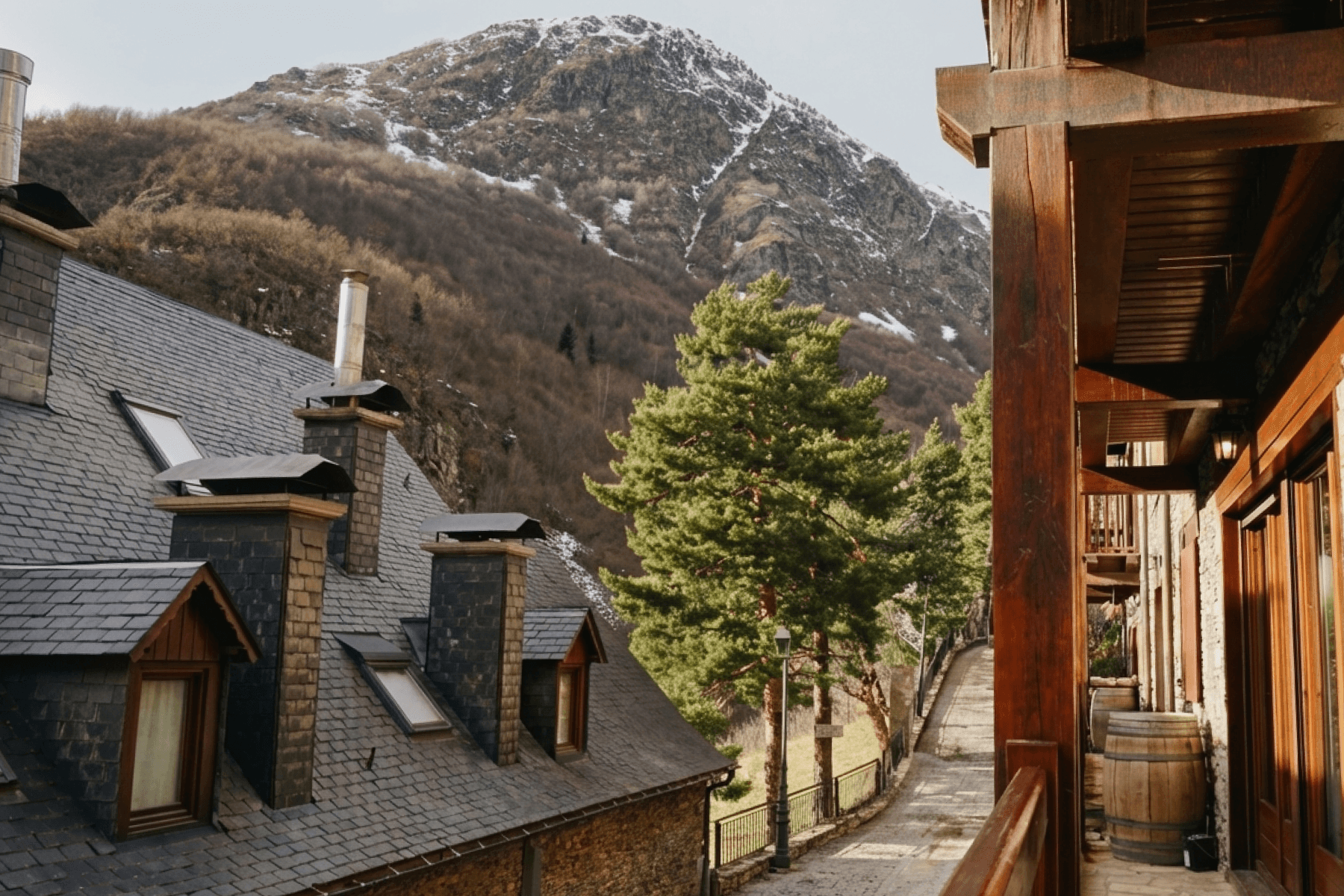
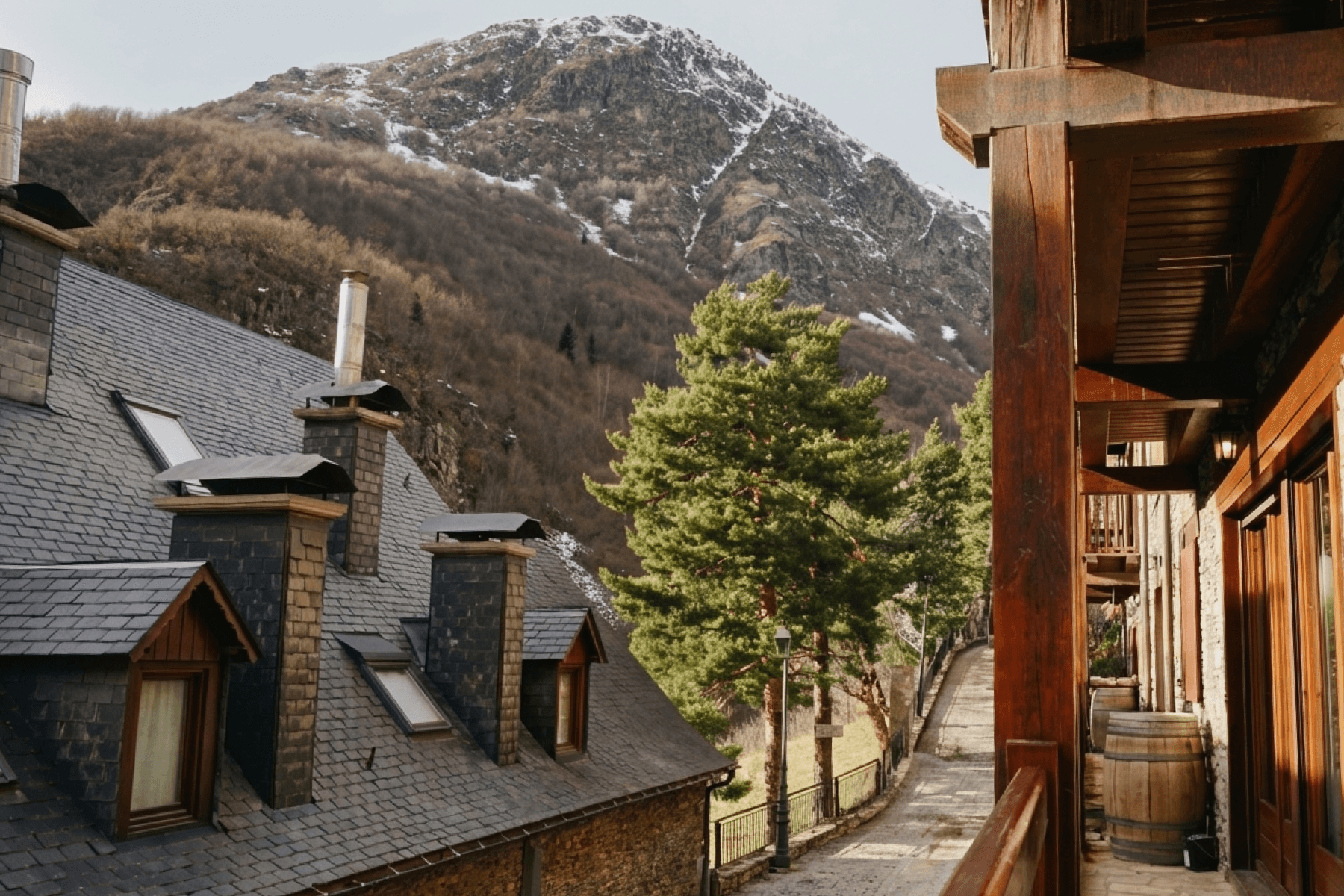
The consequences are still visible everywhere. The architecture is Pyrenean-Atlantic rather than Mediterranean: steep slate roofs built to shed several metres of snow, thick stone walls, wooden balconies, small windows, houses grouped tight around a church tower. The landscape is green, forested and wet, with beech and fir rather than pine and scrub. The place names are neither Spanish nor Catalan but Aranese — Salardú, Bagergue, Tredòs, Naut Aran — and the language on the road signs is a variety of Occitan, spoken here continuously for a thousand years and today one of the official languages of Catalonia.
For a buyer, the weather consequence is the important one. Atlantic fronts arriving from the north-west hit Aran first and hardest, which is why this valley reliably has snow when the resorts on the Mediterranean side of the Pyrenees are looking anxious, and why the season here typically runs from around the start of December into April. It is also why the summer is green rather than parched, and why the walking season is genuinely alpine. Aran does not feel like Spain. It feels like the Pyrenees at their most northern and most serious — which is exactly what people who come back every year are buying.
A short history of the valley
Aran's history is the history of a place that was too high and too awkward to conquer conveniently, and which turned that into a bargain. The valley was a distinct political entity for centuries, and in the thirteenth century it secured a charter of privileges — the Querimònia — that recognised its own institutions, customs and exemptions in exchange for loyalty to the Crown of Aragon. That habit of governing itself never went away: today Aran has its own body of government, the Conselh Generau d'Aran, with real competences over its own affairs, and Aranese has legal status alongside Catalan and Spanish.
The valley's economy for most of that time was cattle, hay, timber and transhumance — moving herds up to the high summer pastures and back down for the winter — with a sideline in wool and, later, iron. The Romanesque churches that stand in almost every village, several of them with astonishing twelfth-century interiors, are the surviving evidence of a medieval valley considerably richer and better connected than its isolation would suggest. Emigration thinned the population through the nineteenth and early twentieth centuries; hydroelectric works brought some of it back.
Skiing arrived in the 1960s, when Baqueira Beret opened above the village of Salardú, and it changed the valley the way it changed Morzine or Zermatt — gradually, and without erasing what was there. The Spanish royal family began holidaying here early on and has continued for decades, which fixed Baqueira's social reputation permanently. The Vielha tunnel and its modern replacement made the valley reachable from Lleida and Barcelona all year. Yet the villages survived as villages: the planning rules require the local vernacular — stone, slate, wood — and there is no high-rise anything. What you get today is a valley with two economies, farming and skiing, and enough of both to remain itself.
The villages, one by one
Vielha is the capital and the only real town: hospital, supermarkets, banks, sports centre, a proper high street, the twelfth-century church of Sant Miquèu with its octagonal tower, and a population that keeps it alive twelve months a year. It sits at the valley's centre where the tunnel road arrives, about fifteen kilometres and twenty minutes from the ski lifts. If you want services and year-round life more than ski-in convenience, this is the address. Around it, Betrén, Escunhau and Casarilh run east as a string of small stone villages, each with a Romanesque doorway worth stopping for.
Arties, eight kilometres further up, is the valley's most charming village and, for many owners, the sweet spot: two rivers meeting, a Romanesque church, a handful of the best restaurants in the valley, a thermal spring, a bar that has been a bar for a very long time, and ten minutes to the lifts. Garòs sits opposite across the valley floor, quieter and cheaper. Salardú, the historic capital of the upper valley, has the Sant Andreu church and its celebrated twelfth-century Christ figure, a compact centre and the shortest run to Baqueira 1500.
Above Salardú the villages get smaller and higher. Unha and Bagergue climb the north slope with the best views in the valley — Bagergue, at over fourteen hundred metres, is usually described as the highest inhabited village in Catalonia, and its restaurant and cheese dairy are worth the drive on their own. Tredòs, on the Bonaigua road, has the beautiful Santa Maria de Cap d'Aran and the road up to the high thermal baths. Baqueira 1500 itself is the ski-in, ski-out station at the foot of the lifts — apartments and hotels rather than village life, and unbeatable if the skiing is the entire point.
Down-valley from Vielha, the character changes again. Bossòst and Les run towards the French border with a more Gascon feel, lower prices, thermal water, and a shopping culture fed by French day-trippers. Vilamòs, above them, has one of the great valley viewpoints. This lower arm is where the valley is greenest, the summers softest and the value best — a genuine consideration for owners who use the house in July as much as February.
Where exactly to own: micro-locations, rated
Baqueira 1500 and the lift base. Pure skiing convenience: boots on at the door, first lift before the road traffic arrives, and the lift system as your front garden. The trade is that this is a station rather than a village — its life is the season's life, and in October it is quiet. Best for owners whose winters are the point and whose summers are elsewhere.
Salardú and Tredòs. The upper-valley compromise, and the one we are asked for most. Five to ten minutes from the lifts by road or shuttle, a real village around you with a church, a shop and restaurants, and enough altitude that the snow reaches the door in a good winter. Salardú has more services; Tredòs is quieter and closer to the Bonaigua side.
Arties. The connoisseur's choice. Genuinely beautiful, genuinely lived-in, the best concentration of restaurants in the valley, thermal water, and about ten minutes to the lifts. Summers here are excellent because the village works without snow. If a home in Arties comes up in a shared-ownership structure, it tends to be spoken for quickly.
Vielha and the central villages. Town amenities, the hospital, year-round shops, the widest choice of property, and the best prices per square metre in the upper half of the valley. Twenty minutes to the lifts, which sounds like a lot until you have driven it a few times and realised the road is straightforward and the parking at the base is organised. This is the sensible family answer, especially for groups with non-skiers.
Unha, Bagergue and the balcony villages. Views, silence, stone, and the best summer position in the valley. You are committing to a short drive for everything, and to winter mornings where the car needs clearing. In exchange you get the version of Aran that people photograph.
Bossòst, Les and the lower valley. The best value and the greenest summers, with thermal baths, the French border ten minutes away and a distinctly different, more Gascon atmosphere. Thirty to forty minutes from the lifts — too far for a ski-first buyer, close to ideal for a two-season one.
The skiing: Baqueira Beret in detail
Start with the honest shape of the domain. Baqueira Beret spreads across three connected sectors on the north side of the valley, with well over a hundred and fifty kilometres of marked piste — comfortably the largest ski area in Spain and, by most measures, in the whole of the Pyrenees. Crucially, it is a single connected domain rather than a set of separate hills: you can ski from one end to the other and back within a day, and the lift system has been steadily modernised, with high-capacity gondolas and detachable chairs replacing the older infrastructure over the last two decades.
The Baqueira sector rises directly from the station at 1,500 metres and is the domain's front door: tree-lined blues and reds through the lower slopes, a bowl of open runs higher up, and the main lift arteries carrying the morning crowds. It is the busiest sector and the easiest to reach, and it holds the best beginner and intermediate terrain within reach of the base. Above and behind it, the terrain opens out and the character changes completely.
Beret, reached by lift or by the road up from Salardú, is the domain's high plateau: gentle, wide, sun-filled, north-facing at the top and famous for holding snow. It is the family sector, the ski-school sector and the cross-country sector, with the Nordic tracks laid out across the plateau. It is also, in a storm, the place with the best visibility. And the third sector, Bonaigua, hangs off the pass road on the south-eastern edge — steeper, quieter, more serious, and the part of the domain the locals ski when the crowds arrive.
The overall standard of the terrain is high and, importantly, well balanced. There is enough easy skiing for a nervous group, enough long red-run mileage to occupy a competent one all week, and enough genuine steepness — plus the off-piste described below — to hold an expert's interest. The lift-served vertical is substantial, the pistes are wide by Pyrenean standards, and the grooming is taken seriously. It is not an Alpine mega-domain and does not pretend to be. It is the best in its range, by a distance.
Beret and Bonaigua, in depth
Beret deserves its own account because it is the reason so many families choose Baqueira over the alternatives. The plateau sits at around eighteen hundred metres and rolls rather than plunges: broad, sunny, forgiving pistes that let a beginner cover real distance on day three, with the ski schools operating on ground that does not frighten anyone. It also has the domain's best snow retention outside the highest north faces, which means that in a warm spring, Beret is where the season quietly continues. Around the edges the terrain steepens into more interesting country, so the sector is not merely a nursery.
The plateau's other life is Nordic. Aran's cross-country network is laid across Beret and is one of the better ones in the Pyrenees — genuinely worth learning on, and a superb answer to a day when the alpine skiing is windbound. Snowshoe routes leave from the same points. For an ownership group with mixed abilities and mixed enthusiasm, having a plateau like this in the domain is a practical advantage that shows up in how many people actually come.
Bonaigua is the counterweight. The sector hangs above the pass road on the way over towards the Pallars valleys, and it is the domain's quiet quarter: steeper pitches, less traffic, superb views back across the range, and access to some of the best lift-adjacent off-piste in the resort. It closes more often than the other sectors when the weather turns — the pass road itself shuts in storms — but on a clear midweek day in February it is the reason experienced skiers keep coming back to Baqueira. Owners learn its rhythm within a season: crowded elsewhere means empty here.
Snow, weather and altitude: the honest data
The numbers worth knowing. The valley floor runs from around nine hundred metres at the lower villages to about fifteen hundred at the Baqueira base; the ski domain rises from there to roughly two and a half thousand metres at its highest lift-served points, with the Beret plateau sitting at about eighteen hundred. The Bonaigua pass tops out just over two thousand. Those are respectable Pyrenean altitudes, but the more important number is the one nobody prints: Aran's exposure. Facing north-west into Atlantic weather, this valley catches fronts that die before they reach the Mediterranean-side resorts, and it is consistently the snowiest corner of the Spanish Pyrenees as a result.
The practical season runs from roughly the start of December to some point in April, with the reliable heart from mid-January to mid-March. December can be thin at village level in a slow year and is usually fine on the upper mountain, which has substantial snowmaking on the main arteries. February is the deepest and busiest month, with the Spanish and Catalan school holidays and carnival week driving the peak. March is the connoisseur's month — long light, settled snow, sunshine on the Beret plateau. April skiing on the north faces can be excellent and is often almost private.
Weather to plan around: this is a mountain valley on the Atlantic side, so it rains and snows more than the Spanish stereotype allows, and storms can close the Bonaigua pass and occasionally slow the tunnel road. The compensation is that the same weather is why the snow is there at all. Summer is warm rather than hot, with afternoon storm risk in July and August and cool nights — the valley rarely gets the oppressive heat of lowland Spain, which is precisely why Catalans have summered here for generations.
Off-piste, touring and the high mountain
Baqueira's reputation among serious skiers rests on what lies beside and beyond the pistes. The domain sits in a big, open, north-facing mountain landscape with a great deal of accessible off-piste terrain — bowls, gullies and treed slopes reachable from the lifts, particularly on the Bonaigua side and in the high sectors. It holds powder well because of the aspect, and because the resort is large enough that tracks spread out rather than being skied out by ten in the morning. Guides operate throughout the valley and are worth every euro: this is avalanche country, and the good days are the days that demand judgement.
Ski touring is a genuine culture here rather than a novelty. The valley's position on the range gives access to a huge amount of high country, with refuges scattered across the peaks and classic multi-day routes crossing into France and into the neighbouring Catalan valleys. Day tours leave from the Bonaigua road and from the upper villages; the Aigüestortes national park is over the ridge. For an owner with touring ambitions, having a house in this valley is a season ticket to a lifetime of routes.
The valley is also one of the very few places in the Pyrenees where lift-free access to the high mountain has been organised commercially — heli-served skiing has operated in Aran for years and gives access to terrain well beyond the resort boundary. It is expensive and weather-dependent, and it is not why most people buy here; but it is a useful signal of what the surrounding mountains actually offer. The plain version is this: Baqueira is a resort where good skiers do not get bored, which is not something one can say about every large domain.
The Aranese language and what it tells you
You will notice it before you have been in the valley an hour: the road signs, the shop names, the village names on the church noticeboards are in neither Spanish nor Catalan. Aranese is a variety of Occitan — the language of the medieval troubadours, spoken across southern France — and it has survived here continuously because the mountains made this valley face north. Since the restoration of Catalan self-government it has held official status in the valley alongside Catalan and Spanish, and it is taught in the schools; it is a working language of local administration, not a museum piece.
For a visitor or an owner, this is not a practical obstacle in any way — Spanish is universal, Catalan is widespread, French is common and English is spoken throughout the ski economy. What it is, is the clearest possible signal about the place. A valley that kept its own language kept its own everything else: its own festivals, its own building style, its own food, its own government. That is the reason Aran does not feel like a ski resort with a village attached; it feels like a place with a very good ski resort in it.
There is a practical dividend too. Because the valley's identity is protected and its planning conservative, the built environment is stable in a way that matters over a twenty-year holding period. New development happens within the vernacular; the villages are not going to be rebuilt around you. The Aranese street sign is, in that sense, a piece of due diligence.
Romanesque Aran: the churches
Almost every village in Aran has a twelfth- or thirteenth-century church, and taken together they constitute one of the finest concentrations of rural Romanesque architecture anywhere in the Pyrenees. This is not a specialist interest to be politely skipped: it is the single best way to understand what the valley was before skiing, and it fills a snow-day or a wet August afternoon better than anything else on offer.
The essentials, in a rough order of merit. Sant Andreu de Salardú, with its wooden Christ of Salardú — a twelfth-century carved figure of real power — and remarkable painted interiors. Santa Maria de Cap d'Aran at Tredòs, austere and beautifully sited, historically the valley's mother church. Sant Miquèu in Vielha, with its octagonal tower and its own celebrated Christ figure. The doorway at Escunhau. The churches at Arties, Betrén, Bossòst, Unha and Vilamòs, each with something — a tympanum, a bell tower, a fresco fragment — worth the ten-minute stop.
There is a wider context immediately to the south: the Romanesque churches of the Vall de Boí, over the pass and about an hour and a half away, are inscribed on the UNESCO World Heritage list and are among the most important Romanesque monuments in Europe. A day trip from the valley takes them in comfortably. Owners who arrive as skiers usually end up making this circuit at some point, and usually end up recommending it.
Summer: the second season
The single biggest misconception about Baqueira is that it is a winter address. Spend a week in the valley in July and the misconception dies. Aran in summer is green to the ridgelines, cool enough to sleep under a blanket, and full of Catalan and French families who have been coming for generations precisely because it is not lowland Spain in August. The temperature difference against Barcelona or Zaragoza in high summer is not marginal; it is the entire reason a summer economy exists here at all.
The activity list is genuinely alpine. Hiking from the door on a network that runs from riverside strolls to serious peak days. High-mountain lakes in numbers — the Colomèrs cirque alone holds dozens. Whitewater on the rivers, with rafting, canyoning and kayaking operating from spring meltwater into the summer. Mountain biking on the lift-served trails and on the valley's fire roads. Trail running, which the valley has embraced with a calendar of races. Fishing for trout in the Garonne and its tributaries. Horse riding, climbing, via ferrata, and a wildlife park down the valley for smaller children.
And then the part visitors never anticipate: the villages are more pleasant in summer than in winter. The stone warms up, the balconies fill with geraniums, the restaurant terraces open, the hay meadows are cut, and the valley's festivals — most of them summer ones — take over. For an ownership group, this changes the arithmetic completely. A ski flat is a five-month asset with a fought-over calendar. A house in Aran is a twelve-month one, and the July weeks are as contested inside our owner groups as the February ones.
A small library of routes
Walkers' shortlist. The Circ de Colomèrs is the classic: a lift or shuttle to the trailhead above Salardú, then a loop through a cirque scattered with mountain lakes, with a refuge for lunch — a full but manageable day and one of the finest lake walks in the Pyrenees. The Restanca circuit does something similar from the other side, with the option of climbing Montardo, a straightforward high peak with a summit view over half the range. Closer to home, the Artiga de Lin valley beneath the Maladeta massif is a gentle, beautiful approach walk with a waterfall at the head, and the riverside paths along the Garonne between villages are the flat, shaded, pram-friendly default.
For a bigger day, the GR-11 — the long-distance route that crosses the Pyrenees from sea to sea — passes through the mountains south of the valley, and sections of it can be walked as day trips with a car shuttle. The Aigüestortes i Estany de Sant Maurici national park, Catalonia's only national park, is immediately over the southern ridge, with its own network of refuges and its own lake country; the classic Carros de Foc circuit links its refuges over several days and is a genuine ambition for a fit owner.
Riders' shortlist. The lift-served descents from Beret and Baqueira in summer, the long fire-road climbs up the side valleys for the road-adjacent gravel crowd, and — for road cyclists — the Bonaigua pass, a serious Pyrenean climb that has featured in the Vuelta, plus the passes on the French side over the border. The valley's cycling season runs from late spring into October, and the roads are quiet by Alpine standards. Every one of these starts within minutes of the homes listed below.
Water: rivers, lakes and thermal springs
Aran is a wet valley in the best sense and water is one of the things it does better than anywhere else in Spain. The Garonne rises in these mountains and runs the length of the valley; its tributaries come off the high cirques cold and fast. From roughly April into the summer, meltwater turns the rivers into a whitewater playground: rafting on the bigger flows, canyoning in the tighter gorges, kayaking for those who bring their own skills. Companies run from Vielha and the lower valley and are used to families and first-timers.
The lakes are the other half. The high country above the valley is scattered with them, some reached in an hour, some requiring a full day, most of them cold, clear and improbably beautiful. Several are dammed for hydroelectric use, which is part of the valley's twentieth-century economic history and, unusually, has produced access roads and refuges that make the high country reachable. Fishing is a serious local pursuit and licences are straightforward.
And then the thermal water. Aran has hot springs and a long spa tradition: baths at the head of the valley above Tredòs, at Arties, and down at Les towards the French border, ranging from a simple soak to full spa facilities. Sitting in hot water outdoors at fifteen hundred metres after a day on the mountain, in snow or in summer dusk, is one of the valley's genuine pleasures and one that visitors consistently rank higher than they expected to. For a house used by owners of different ages and different energy levels, having this within a few minutes is worth more than it sounds.
Baqueira with children
Aran handles children unusually well, for reasons that are mostly structural. The Beret plateau is the gentlest large learning area in the Spanish Pyrenees, so first weeks on skis happen on ground that does not terrify anyone. The ski schools are large, long-established and used to teaching in several languages. The base areas have the full apparatus of sledging, snow gardens and childcare. And crucially, the valley below has enough going on — the sports centre and pool in Vielha, the ice rink, the thermal baths, the wildlife park, the villages themselves — that a bad-weather day does not collapse into screens.
Summer is arguably even better. Rivers to paddle in, lakes to walk to with a picnic as the reward, easy bike trails, horse riding, the adventure parks, and a valley small enough that older children get a taste of independence safely. Aran's summer temperature — warm days, cool nights — is far kinder to small children than the Mediterranean coast in August, and the parents who have tried both know it.
For ownership groups, the practical point is that Aran's peak weeks are the Spanish and Catalan school holidays and carnival, which do not necessarily coincide with the British, French, Dutch or German ones. A group of mixed nationality often finds the calendar sorts itself out with far less friction than in an Alpine resort where everyone wants the same fortnight in February. And the rotation handles the genuine clashes exactly as it is written to.
The non-skier's Aran
Every ownership group has one, and Aran looks after them better than most ski valleys because it has a life independent of the lifts. The non-skier's winter day here has real structure: coffee in Vielha and the shops on the high street, the Romanesque church circuit by car, lunch in Arties or Bagergue at a restaurant that would be booked out for a month if it were in the Alps, the thermal baths in the afternoon, and a snowshoe outing with a guide on any day the sun is out. The valley's museums — the Aran museum in Vielha, the various village collections — fill an hour or two properly.
There is also the simple pleasure of a valley with thirty stone villages in it. Driving or walking between them, stopping at a church, a cheese dairy, a bar with a wood stove, is a legitimate way to spend a day and one that skiers frequently take a day off to do. The French border is twenty minutes from the lower valley, with the spa town of Bagnères-de-Luchon a short drive beyond it — a proper nineteenth-century thermal town with a different atmosphere entirely.
In summer the category dissolves. The non-skier becomes a walker, a swimmer, a market-goer, a passenger on the road over the Bonaigua with the whole range spread out below. What matters for a shared home is that the people who do not ski still want to come — because a co-owned house whose weeks only work for half the household is a house that quietly stops being used.
A year in the valley, month by month
December opens the season, with the lifts running from around the start of the month in a normal year, the villages lit for Christmas, and a busy fortnight over the holidays. January is the local's month: cold, quiet after the first week, often the best snow of the winter and the emptiest pistes. February is the peak — Spanish and Catalan school holidays, carnival, the valley at its busiest and most sociable. March brings the best skiing of the year for many: long days, settled snow, sun on the Beret plateau, and terraces at altitude.
April closes the winter, usually somewhere in the middle of the month, with spring snow high up and the valley floor turning green below. May and early June are the quiet interval — many restaurants take their break, the high routes are still under snow, and the rivers are at their fullest with meltwater. It is a lovely time to have the valley almost to yourself if you do not mind a limited choice of dinner.
Late June through September is the summer season proper: the walking is at its best from July, the festivals cluster around the solstice and through August, the rivers run all summer, and September is arguably the finest month of the entire year — warm, stable, empty, with the light going gold and the high lakes at their most beautiful. October is autumn colour in the beech woods and the last good walking. November is the valley's other pause, waiting for winter. Two seasons, two shoulders — and owners who learn to use the shoulders get the valley at its most private.
The year's fixtures
Aran's calendar is more traditional than a resort's, which is part of the appeal. The winter fixtures are the ski ones — the season's opening weekend, the carnival week in February with village celebrations along the valley, the freeride and touring events, and the closing party in April. Around them run the ordinary rhythms of a Catalan winter: Reis on the sixth of January, when the Three Kings arrive and the children get their presents, and the long lunches that follow.
Summer belongs to fire. The Pyrenean solstice fire festivals — the burning of great trunks carried down from the mountains on the night of Sant Joan, celebrated in Les, Arties and several other Aranese villages — are inscribed on UNESCO's list of intangible cultural heritage, and they are exactly as extraordinary as that sounds: a valley of villages lighting fires on the shortest night of the year, a tradition that predates every other thing in this guide. If you can arrange one summer week to fall over the twenty-third of June, do it once.
The rest of the summer fills with village festivals — each has its own patron saint and its own weekend — plus the Hèsta d'Aran celebrating the valley's identity, mountain races and trail-running events, open-air concerts, and the transhumance moments when the herds move up and back down. Autumn brings the harvest and mushroom seasons, taken very seriously in Catalonia. None of it requires tickets booked a year ahead. All of it rewards being an owner rather than a guest.
The Aranese larder
Aran eats like a mountain valley in the best tradition, and it eats better than almost any comparable ski destination. The valley's own dish is the olla aranesa, a substantial soup-stew of meats, vegetables and pasta that is exactly what a February evening requires. Around it: civet of wild boar or venison in the game season, trout from the valley's rivers, beef from the local cattle that graze the high pastures in summer, cured meats, and mountain cheeses — the dairy at Bagergue is the one to visit, and its cheeses appear on tables all over Catalonia.
The restaurant scene is the valley's quiet boast. Because Baqueira has drawn a well-heeled Spanish clientele for sixty years, the food economy here is deeper than a valley of this size would otherwise support: serious cooking in Arties, Salardú, Bagergue, Vielha and at the ski-station restaurants, alongside a full complement of village bars where the menu of the day is a fraction of the price and frequently just as good. Wine is the other benefit of being in Spain: Catalan and Rioja lists at prices that would cause a double-take in an Alpine resort.
Provisioning a house is easy. Vielha has full-size supermarkets; the villages have bakeries and small shops; the cheese dairy, the butchers and the wine shops handle the rest. The practical version, for owners, is a week where you cook three or four nights on excellent local ingredients and eat out on the others without needing to book weeks ahead — a combination that is increasingly rare in the fashionable Alps and remains entirely normal here.
Beyond the valley: days out
The valley's position is better for excursions than its remoteness suggests. Over the southern ridge lies the Aigüestortes i Estany de Sant Maurici national park, Catalonia's only national park, with lake country, refuges and some of the finest walking in Spain. In the same direction, the Vall de Boí holds the UNESCO-listed Romanesque churches with their extraordinary bell towers — about an hour and a half by road, and one of the great cultural day trips in the Pyrenees.
North, over the border, France starts twenty minutes from the lower valley. Bagnères-de-Luchon is a full thermal spa town with a small ski area of its own; Saint-Bertrand-de-Comminges has a cathedral on a hill that is worth the detour on its own; and Toulouse — a proper city, with the Capitole, the Airbus works, a serious restaurant culture and an airport — is about two and a half hours' drive. A weekend in Toulouse from a house in Aran is an entirely realistic thing to do, and one very few ski-valley owners can say.
East, Andorra is within reach for a long day over the passes, with the duty-free shopping and the linked ski areas that implies. South, Lleida is the nearest Spanish city and the road to Barcelona; the Catalan capital is roughly four hours away, which makes it an overnight rather than a day trip but keeps a major international airport in range. And in every direction there are passes: the Bonaigua, the Portilhon into France, the Vielha tunnel road. Drives here are the point, not the price.
Getting there and getting around
A word on access: Aran is a high valley and it takes some getting to, which is precisely why it has stayed as it is. The most convenient international airport for most European owners is Toulouse, roughly two and a half hours away by road, with the drive running up through Gascony and over the border — straightforward, scenic, and much easier than the map suggests. Barcelona is about four hours and offers far more flights; Zaragoza, Lleida and Pau are alternatives depending on the season and the airline.
By road from Spain, the Vielha tunnel is the key piece of infrastructure. The modern tunnel keeps the valley connected to Lleida and the south year-round, and its opening was the single event that made Baqueira a national resort rather than a regional one. The Bonaigua pass over to the Pallars valleys is beautiful and quicker in summer but closes in winter storms; plan on the tunnel between December and April.
Inside the valley, a car is genuinely useful — the villages are strung along fifteen or twenty kilometres of valley floor and the lifts are at one end. There are ski shuttles between the villages and the base in season, and they work well, but a group with a house in Arties or Vielha will want at least one vehicle. Winter tyres or chains are a legal requirement at times and a practical one more often. The compensation is that traffic, by Alpine standards, is almost nonexistent.
The property market, honestly described
Aran's property market has a shape that rewards understanding. Supply is genuinely constrained — the valley floor is narrow, the villages are protected, the planning rules require the local vernacular, and there is no possibility of the sprawl that has disfigured other ski destinations. Demand is overwhelmingly domestic: this is the ski valley of the Spanish and Catalan upper middle class, with a long-established second-home culture and, at the top end, a genuinely prestigious clientele. That combination — fixed supply, deep national demand — has kept values here at the top of the Spanish mountain market for decades.
Within the valley, the price gradient is legible. The ski-in station at Baqueira 1500 and the upper villages closest to the lifts command the premium. Arties, with its restaurants and charm, holds its own. Vielha and the central villages offer more space and more year-round life for less. The lower valley towards the French border is the value end, at the cost of a longer drive to the lifts. Across all of them, quality varies enormously: a well-renovated stone house with real proportions is a different asset from a 1980s apartment, and the gap is wider here than the price difference sometimes implies.
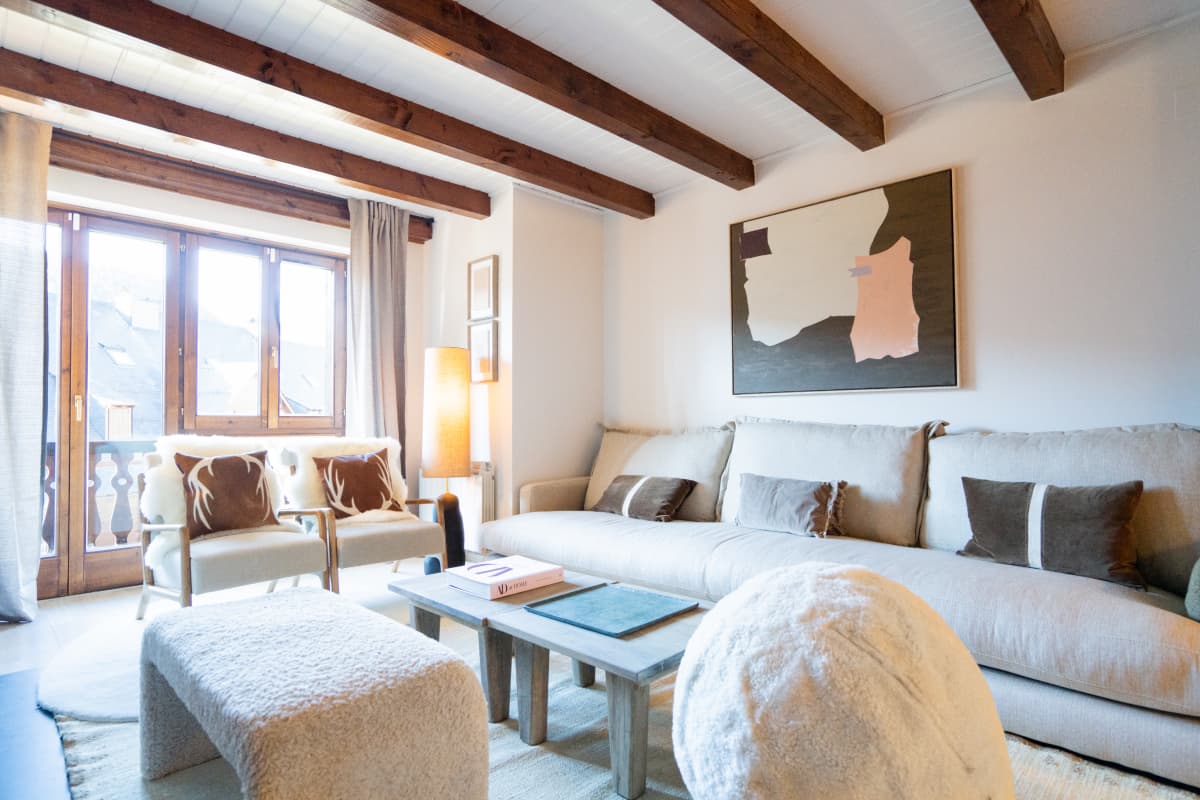
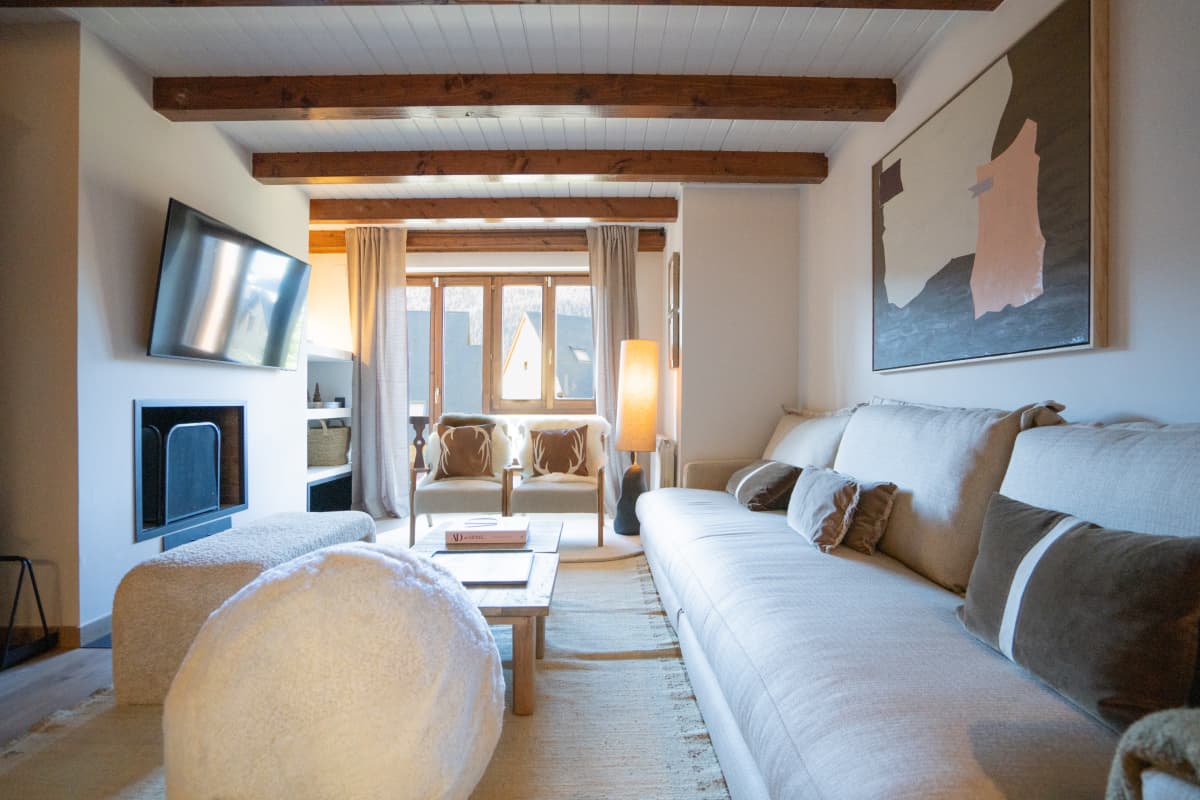
For a share buyer the translation is straightforward. A good house in the upper valley — the kind with the beams and the slate roof and the mountain view, big enough for a family and its guests — is a substantial purchase and sits empty most of the year in single ownership. That is exactly the profile of asset that shared ownership was invented for. Aran has the additional advantage that its second season is real, so a shared calendar here is spread across twelve months rather than crammed into five.
What underpins value here
Five things hold this valley up. The first is that it has the best snow record in the Spanish Pyrenees, for the structural geographic reason described earlier — Atlantic exposure, north-facing aspect — rather than because of a run of lucky winters. Snow reliability is the single most important long-term determinant of ski-property value, and Aran's is as good as it gets on this side of the border.
The second is scale and connection: the largest ski domain in Spain, in a single linked system, with sustained investment in lifts and snowmaking. The third is that this is a valley, not a station — thirty villages, a hospital, schools, a year-round population and a summer economy — which means the place does not switch off when the lifts stop, and its property is not hostage to a single season. The fourth is scarcity: a narrow valley, strict planning, a protected vernacular, and no realistic prospect of large-scale new supply.
And the fifth is the depth of the domestic market. Aran is not a place that depends on international fashion. It is where Catalonia and much of Spain has skied for two generations, with a client base that is loyal, local and largely insulated from the currency and travel shocks that move demand in more internationally dependent resorts. A property market with that kind of base does not swing on sentiment. Add the summer season, and the case is about as solid as mountain property gets.
Who owns here
The ownership of the valley is layered. At the base are the Aranese themselves — farming families, hotel families, the people who run the lifts and the restaurants and whose names are on the village houses. Above that sits the great mass of Catalan and Spanish second-home ownership, much of it multi-generational: families from Barcelona, Zaragoza, Madrid and Bilbao who have come to the same villages every February since the 1970s. Baqueira's association with the Spanish royal family gave the valley a social cachet that has never faded and that anchors the top of the market.
The international layer is thinner than in the Alps but growing, and it is mostly French, British, Dutch and Belgian — people who discovered the valley through the Toulouse route or through summer walking rather than through the ski press. That thinness is, for a buyer, mostly an advantage: prices here have not been driven by the international speculation that reshaped parts of the French Alps, and the valley's character has stayed local.
For a co-owner the practical consequence is a valley where you will be a slight minority as a foreign owner and an entirely welcome one. The service economy — property management, cleaning, maintenance, ski hire, restaurants — is used to absentee second-home owners because that is the majority of the housing stock at the top of the valley. And the neighbours, most of whom are also here for six or eight weeks a year, will find nothing remarkable about a house with a rotating set of families in it.
Baqueira against the alternatives
Buyers comparing mountain destinations shortlist the same handful, so here is the honest reckoning. Against Andorra: Andorra has lower taxes, cheaper shopping and decent skiing across two large domains, but its development has been heavier, its valleys busier with traffic, and its character more commercial; Aran is the more beautiful and more authentic valley by a distance. Against Sierra Nevada: Andalusia's resort is higher and sunnier with a spectacular position above Granada, but its snow is less reliable in the way that southern latitudes are, and its summer economy is different in kind.
Against the French Pyrenees — Saint-Lary, Peyragudes, Luchon, Cauterets: these are lovely, cheaper and closer to Toulouse, but none of them has a domain of Baqueira's scale, and none has the same depth of second-home market underpinning values. Against the Alps: a French or Swiss resort of comparable domain size will generally offer more vertical, higher altitude and a bigger international scene — at a materially higher price, with more crowding and, in many cases, less village authenticity. Aran costs less per square metre than the equivalent Alpine address and delivers a valley that has kept its own language.
Baqueira's own case, stated plainly: the best snow in Spain, the largest domain in the Pyrenees, a working valley of stone villages with genuine restaurants and a real year-round population, a summer season that stands on its own, thermal water, a national park over the ridge, two and a half hours from a French international airport, and prices below the Alpine equivalents. It is not the easiest place in Europe to reach, and that is precisely why it is still worth reaching.
Co-ownership in Aran, in practice
Here is how a share of a house in this valley actually works. You own a real share of a specific, fully furnished, professionally managed home — an eighth, a quarter — not a right to use it. You can sell it, pass it on to your heirs, and you benefit when the home rises in value. A timeshare sells you a week. Co-ownership sells you the house. Your share is part of the house itself, shared with a small group of owners rather than hundreds, and you sell it on the open market at the price you set. The legal set-up is arranged by our partner for each home and walked through with you before you buy. The calendar allocates usage fairly across the owners, rotating the most contested dates — the February half-terms, Christmas, New Year, the August weeks — from year to year so that no owner is permanently advantaged, with flexible booking for everything else. And a professional manager runs the house: cleaning between stays, linen, maintenance, snow clearing, the relationship with local trades, and the practical business of a mountain property that nobody wants to conduct by telephone from another country.
Aran suits the structure unusually well for one specific reason: two seasons. In a single-season resort, six or so weeks a year means fighting over a five-month window, and the summer weeks are consolation. Here, the July and September weeks are genuinely wanted, the high-summer festival dates are competitive within owner groups, and the rotation therefore has twice as much good material to distribute. Owners end up with a calendar that includes both a ski week and a mountain-summer week, which is a different proposition entirely from a flat that is used in February and shuttered in July.
Costs are shared in the same proportion as ownership: each owner carries their share of the home's running costs, billed transparently, covering the things a mountain house needs — utilities, insurance, community charges where they apply, cleaning, maintenance, snow clearing and the reserve that keeps the furnishings good. Your owner's storage holds skis, boots and boards between visits, so you travel light. The point of the structure is a house that is properly used and properly looked after, rather than one that is neither.
Buying in Spain: how the process actually runs
Spanish property purchase is a well-trodden path for foreign buyers and follows a predictable sequence. You will need a Spanish tax identification number for foreigners — the NIE — which is a straightforward administrative step and the first thing to organise. How the purchase of your share is completed, including what is signed and where it is recorded, depends on the home's legal set-up, which our partner arranges and explains before you buy.
Independent legal representation is standard and strongly advisable: a Spanish lawyer acting for you, not for the seller or the agent, who checks the registry entry, the community of owners' status, any charges on the property, the licences and the planning position. Purchase taxes and costs are published and predictable, and they differ between regions — Catalonia has its own rates and its own rules, and Aran, with its distinct administrative status, has some local specifics that a valley lawyer will know cold. Non-resident buyers face no restriction on owning Spanish property.
For a co-ownership share, the legal set-up is arranged by our partner for each home: you own a real share of the home, and the management contract handles the practical life of the house. We walk every buyer through the specimen documents in plain language before any commitment, and we will always encourage you to take your own independent legal and tax advice — nothing in this guide is legal or tax advice. It is simply the honest shape of a process that international buyers complete in Spain, without drama, every week of the year.
Three owners' years: specimen calendars
Three honest specimen years. The ski-first family: the February school-holiday week when the rotation grants it and a March week when it does not, a few days over New Year in alternate years, an Easter week of spring snow on the north faces, and a fortnight in August for the lakes, the rivers and the village festivals. Six-plus weeks, every one of them expensive to rent and impossible to book late — and all of them in a house that already holds your equipment.
The two-season couple: mid-January for empty pistes and the cheapest flights of the year, a long weekend in March for the sun on Beret, late June for the solstice fires and the first walking, a week in September when the valley is at its most beautiful and entirely empty, and a few days in November for the beech woods and the food. A calendar built almost entirely from the weeks that nobody competes for, which is exactly why it clears every year without negotiation.
The friends' syndicate: one marquee ski week together each winter — the annual trip that started the whole thing — plus a spring split where two couples take walking weekends, a shared August week that rotates through the group, and unclaimed weeks placed into managed rental where the home provides for it, so the calendar never simply evaporates. Three different shapes, one common property: in a valley with two real seasons and a serious mountain in every direction, six weeks a year is not a constraint to be managed. It is a budget to be spent well.
An owner's practical almanac
The small knowledge that makes ownership frictionless. Winter driving: carry chains or fit winter tyres — the requirement is enforced at times and the Bonaigua pass closes in storms, so plan on the tunnel road from December to April. Saturday changeover in February is the valley's one traffic ritual; arrive Sunday or midweek and the road is yours. The Toulouse drive is the easy one for northern-European owners and the airport is far less congested than Barcelona; check whether your dates fall in a French school holiday, which affects the border traffic more than the Spanish calendar does.
Seasonal closures: May and November are the valley's breathing months, when a good number of restaurants close and the high routes are out of condition. The ones that stay open are the locals' addresses and are a pleasure in themselves. Book the marquee dinners in February and August; book nothing else and let the valley set the pace. In summer, start walks early — the afternoon storm risk is real from July, and the high cirques are best in the morning light anyway.
In the house: your owner's storage holds skis, boots, poles, boards and the summer kit, so travel with hand luggage. The management team's number answers what remains — which lift pass suits a three-day stay, when the thermal baths take their maintenance week, where the spare chains live, and who clears the drive after a heavy fall. And the golden rule of a two-season valley: whatever week you cannot use, release it early. Someone in your ownership group is watching the calendar with hope.
Baqueira: questions owners actually ask
Is the skiing really good enough to justify coming from northern Europe? For a week, comfortably. Over a hundred and fifty kilometres of connected piste, wide runs, good grooming, serious off-piste on the Bonaigua side and a high plateau for the family — plus the best snow record in Spain. It is a large, well-run, genuinely varied mountain with far shorter queues than an Alpine resort of the same size.
How reliable is the snow, honestly? Better than anywhere else in Spain, for structural reasons: the valley faces north-west into Atlantic weather and catches fronts before they weaken. Village level can be thin early and late; the upper mountain and the Beret plateau carry the season, with substantial snowmaking on the main arteries. Owners ski high in the shoulder weeks — that is simply how the valley works.
Do we need Spanish or Catalan? No. Spanish is universal, Catalan is everywhere, Aranese is the valley's own language and appears on every sign, French is widely understood and English is spoken throughout the ski and hospitality economy. A little Spanish makes life warmer, as it does anywhere.
Is it a long way? Roughly two and a half hours from Toulouse or four from Barcelona — and that distance is exactly what has kept the valley as it is. Most owners fly to Toulouse and drive up through Gascony, and after the second time the journey feels like the start of the holiday.
What is there to do in summer? More than in winter, arguably: high-lake walks, the Colomèrs cirque, peaks, rafting and canyoning on the meltwater rivers, lift-served mountain biking, road cycling over the passes, thermal baths, the solstice fire festivals, and village life at its warmest. Aran's July and August weeks are contested inside owner groups, which tells you everything.
More questions, answered plainly
Which village should we choose? If skiing is the whole point: Baqueira 1500 or Salardú. If you want a real village with restaurants and ten minutes to the lifts: Arties. If you want services, space and year-round life: Vielha. If you want views, silence and the best summers: Unha, Bagergue or the lower valley. Tell us how your year actually looks and we will tell you which of the homes below fits it.
How busy does it get? Genuinely busy for the February holidays and carnival, and over Christmas and New Year — this is Spain's main ski valley and the whole country knows it. Outside those weeks, and particularly in January and March, the pistes are quiet by Alpine standards and the villages are calm. Summer is busy in August and beautifully empty in June and September.
Can we let our weeks? On many homes, yes. Where managed letting of unused weeks is allowed, the management team handles it for you, and we confirm exactly what applies to each home before you commit.
What are the running costs like? Each owner carries their share of the home's costs, billed transparently through the management arrangement — utilities, insurance, community charges where they apply, cleaning, maintenance, snow clearing and the furnishing reserve. You see the full breakdown before you commit, not after. A mountain house has real costs; the point of the structure is that they are shared and handled.
What should we do on a viewing trip? Come twice if you can — once with snow and once without. Walk your shortlisted village at eight in the morning and again at nine at night. Drive the road to the lifts and time it. Eat once in Arties and once in a village bar. Then let us open the doors of the houses themselves. Two days in the valley answers more than two months of brochures, and we will build the itinerary around the homes listed below.
Taxes, resale and how ownership works for your 1/8 share of the home are covered in depth in our complete country guide. Read the full Spain ownership guide →
Each listing shows the full price of its share — typically one-eighth of the home. It is a purchase price, not a deposit or membership fee: you become a co-owner of the home.
No. A timeshare sells you a week; co-ownership sells you the house. You own a real share of the Baqueira home with a small group of owners, not a week at a resort shared with thousands. It moves with the value of the house, you sell it on the open market at your price, and you can leave it to your children.
A one-eighth share corresponds to about six weeks a year, scheduled fairly across seasons so every owner enjoys peak weeks over time. The home is professionally managed — you simply arrive.
Questions about a home in this collection? Our team typically replies within minutes.
Get in Touch
Speak to an expert
Tell us what you're looking for and we'll be in touch.