Co-Ownership Homes in Estepona
3 luxury holiday homes in Estepona available as co-ownership shares, from €135,000 per share. Genuine ownership, fully managed, a fraction of the whole-home price.
The Estepona Collection
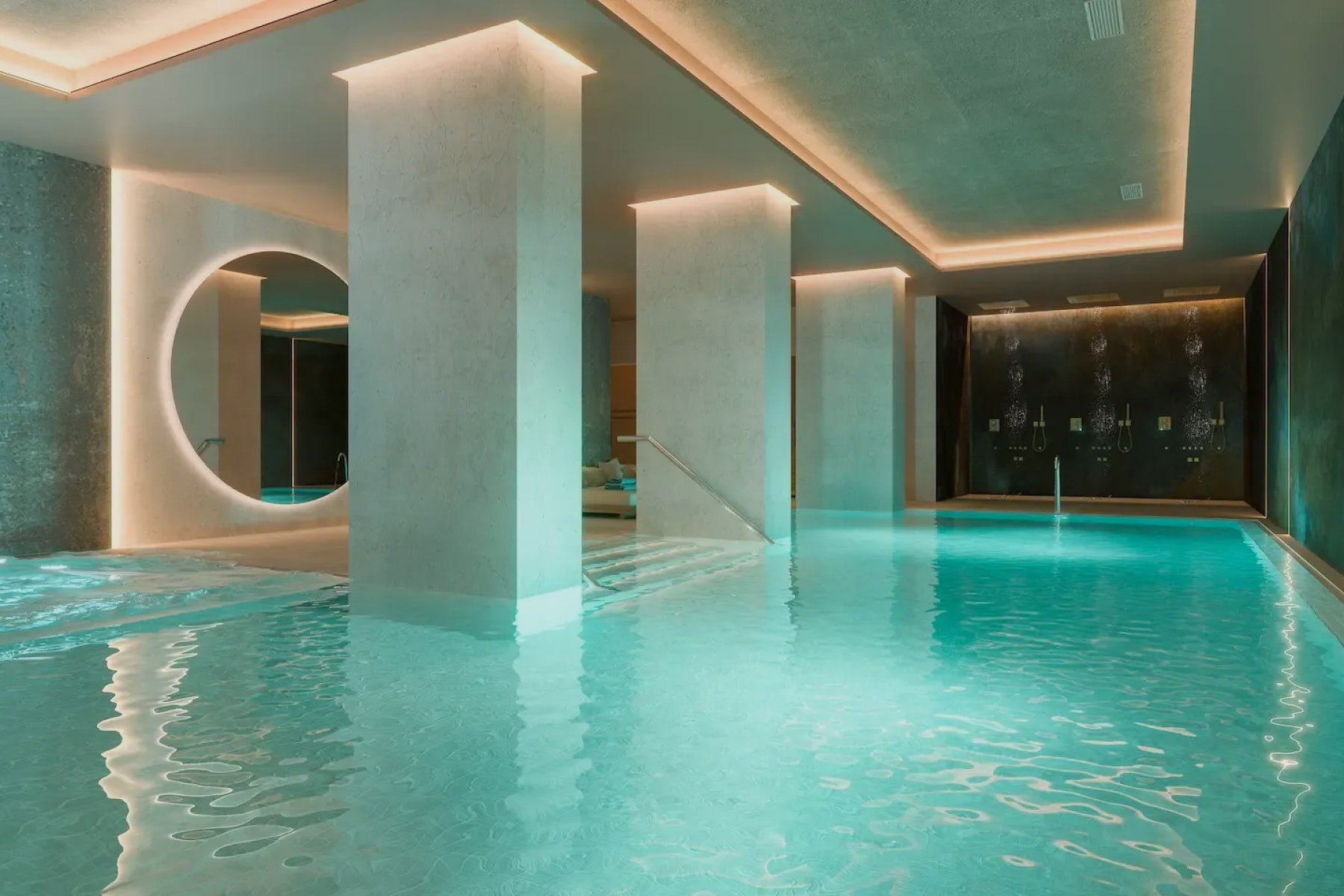
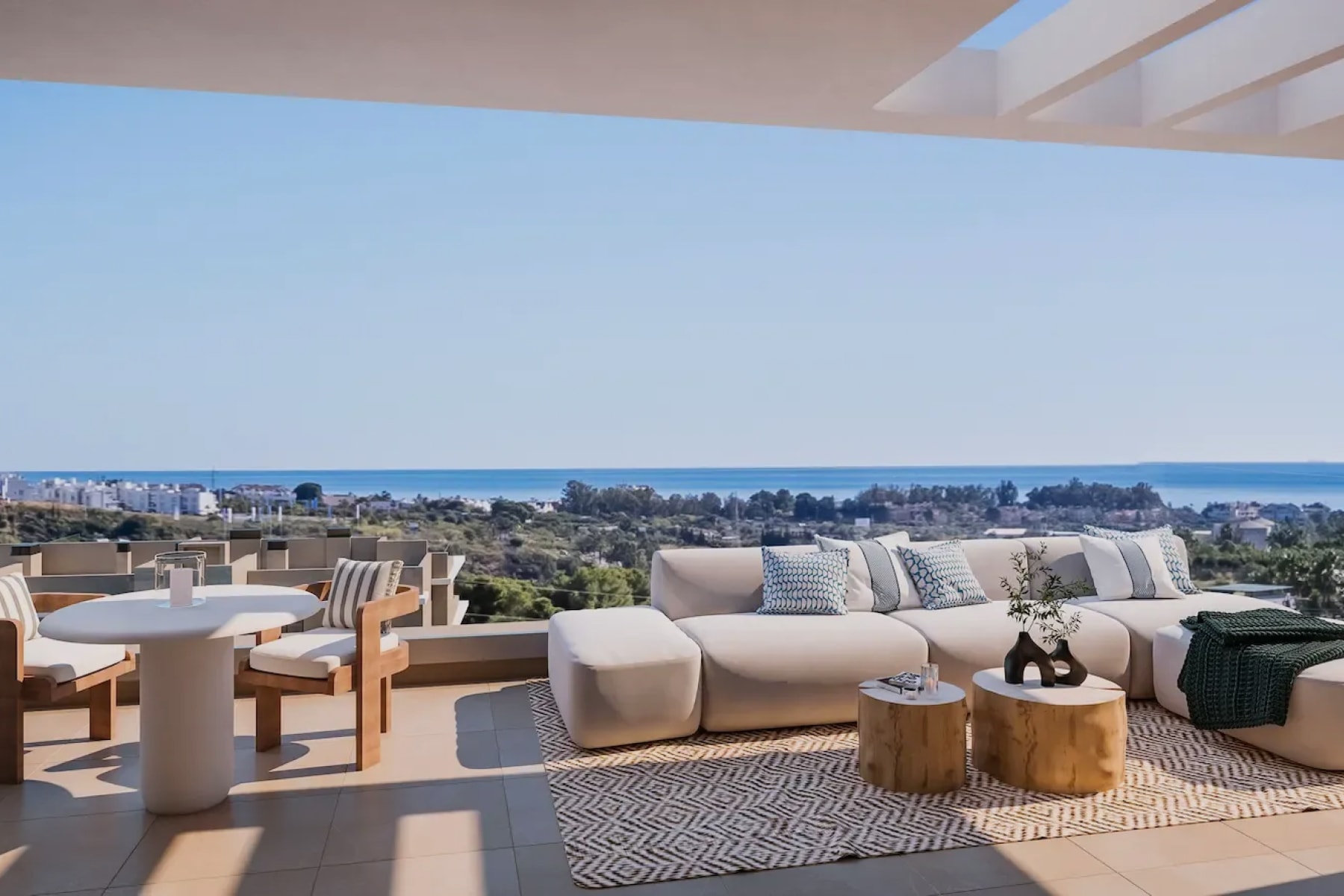
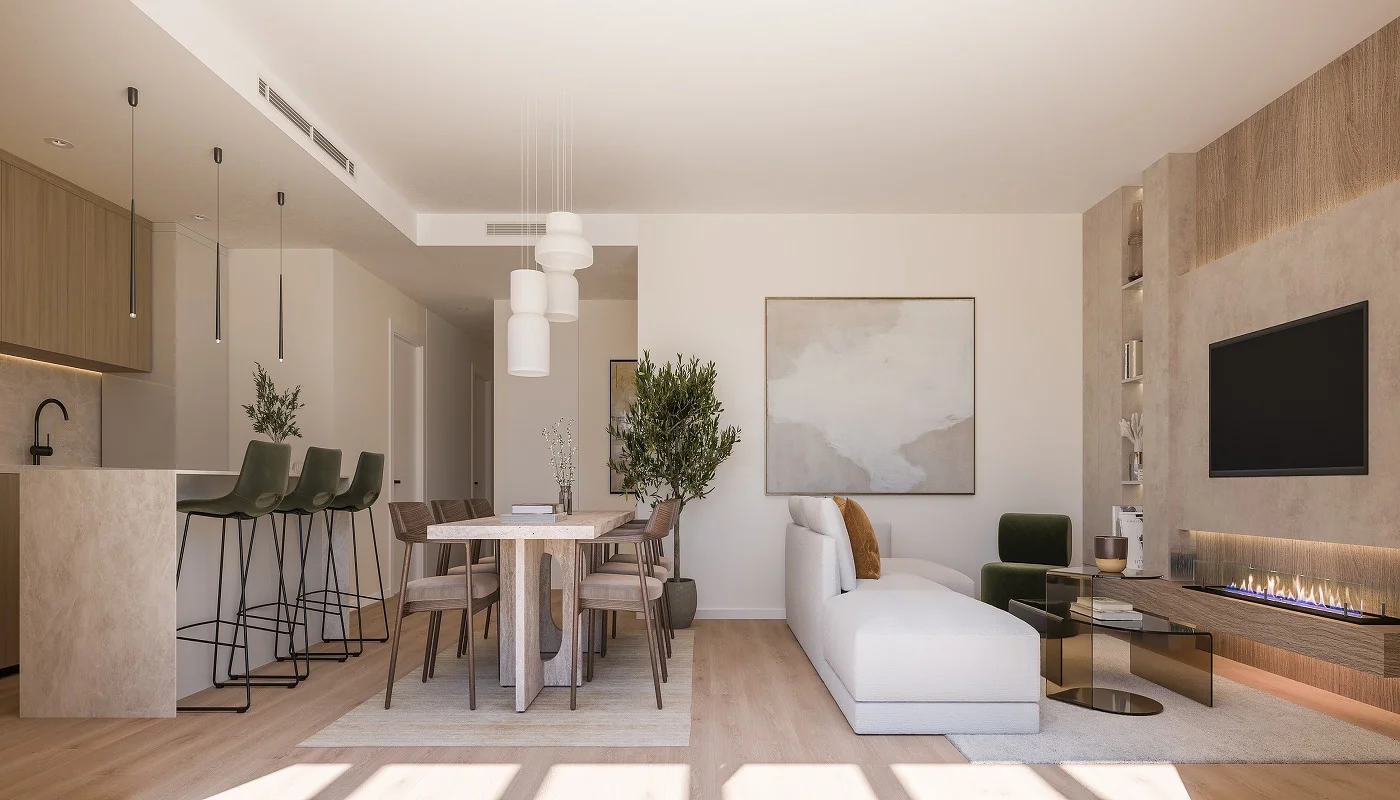
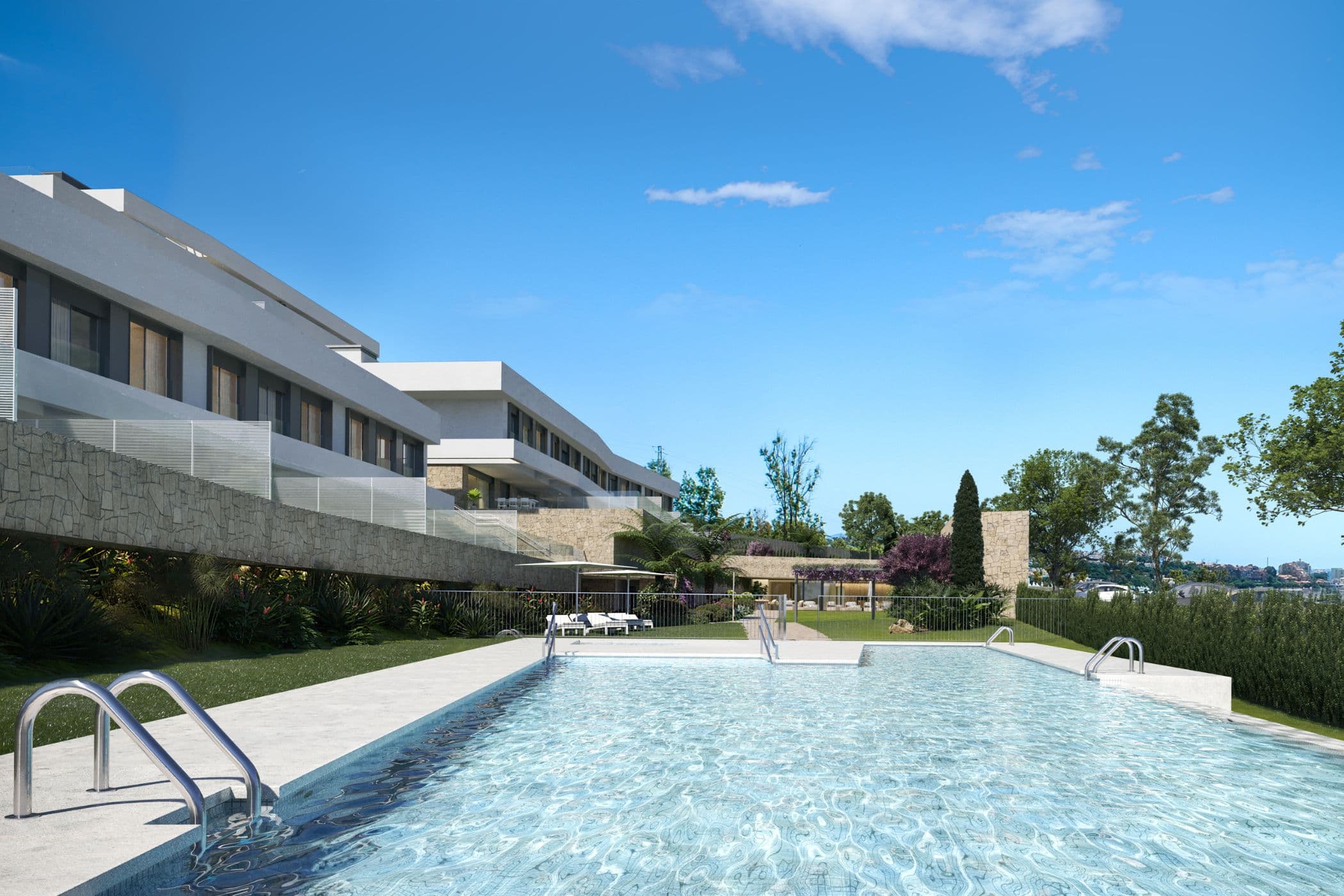
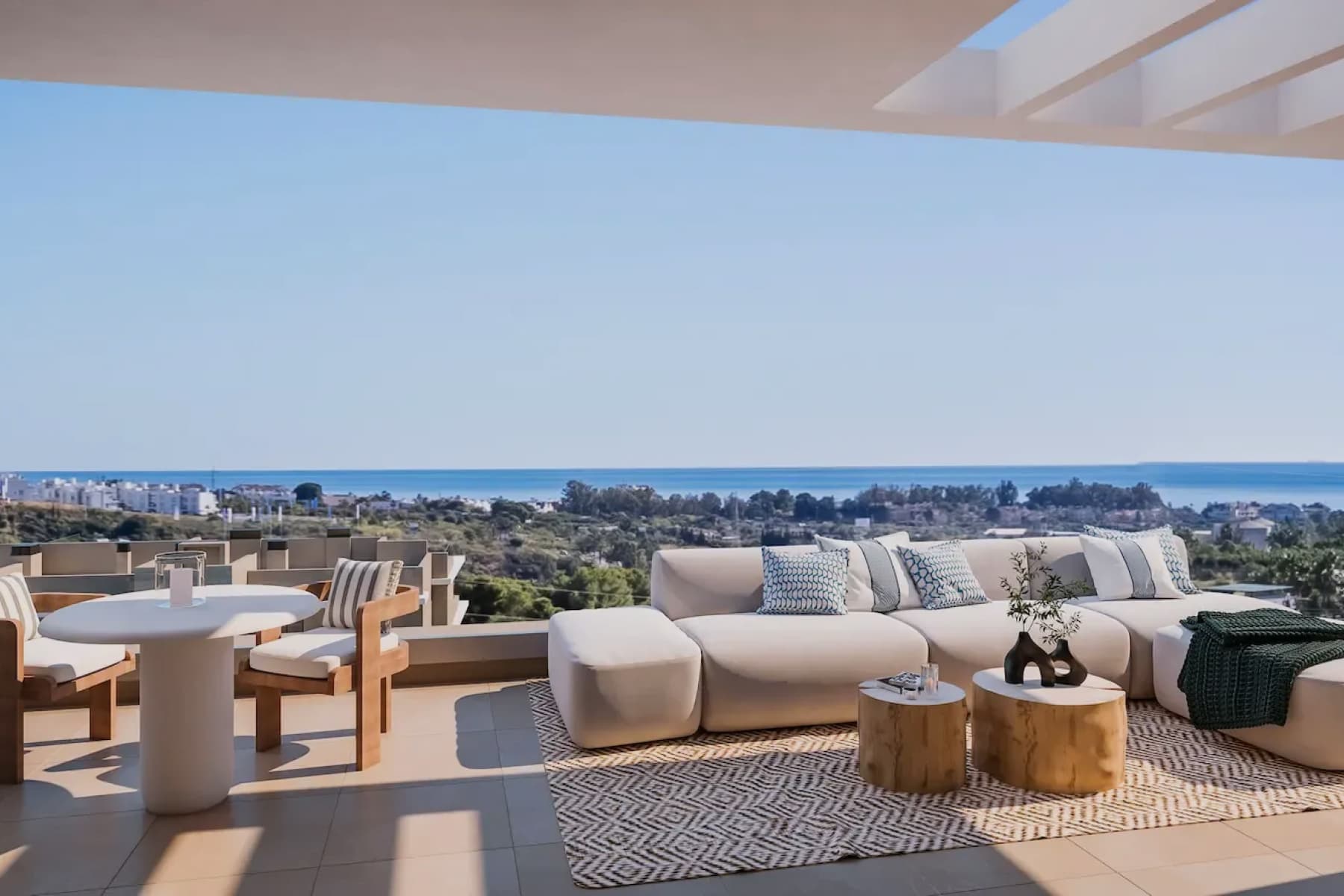
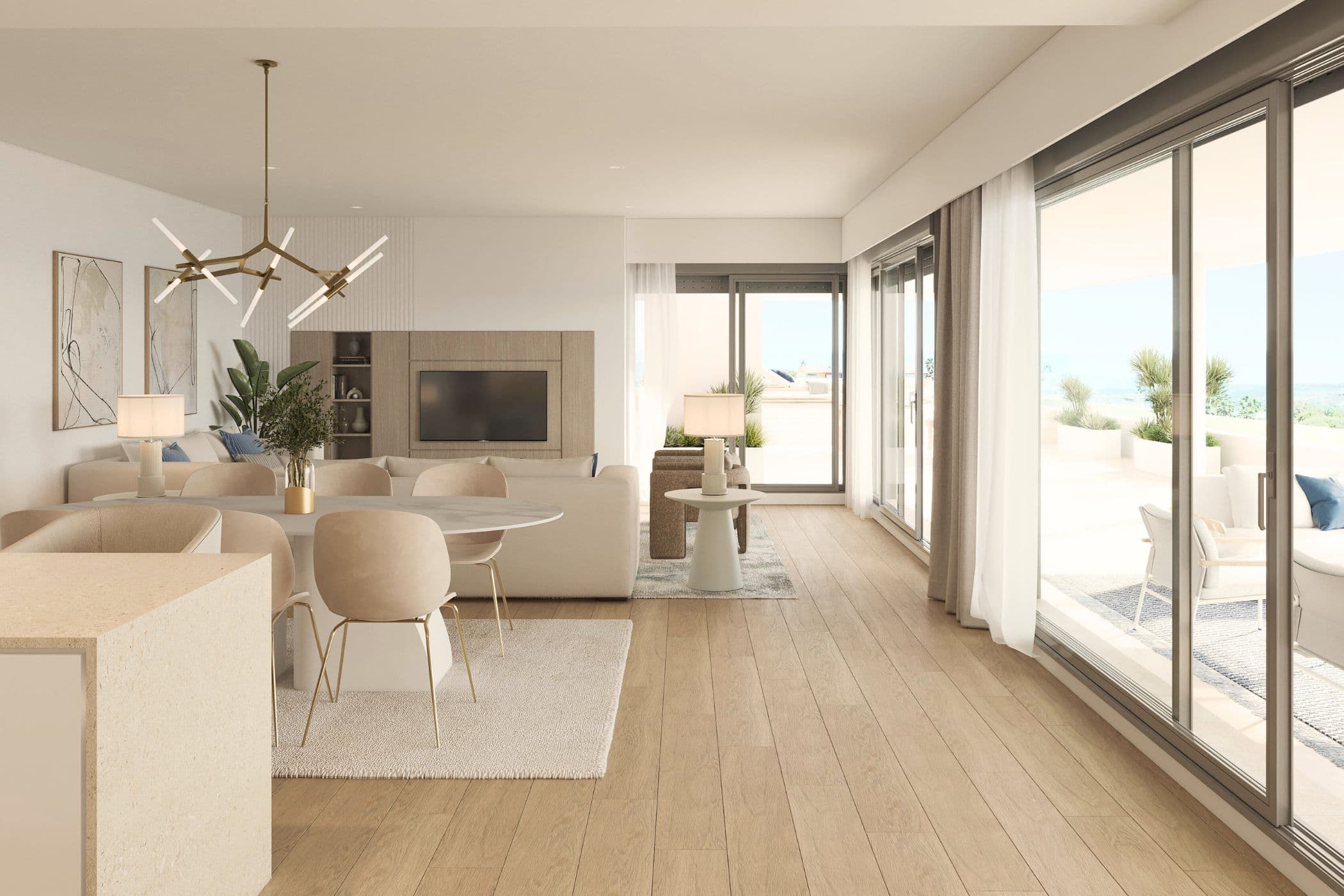
Estepona, Costa del Sol, Spain — 2-Bed Apartment With Sea Views
€135,000
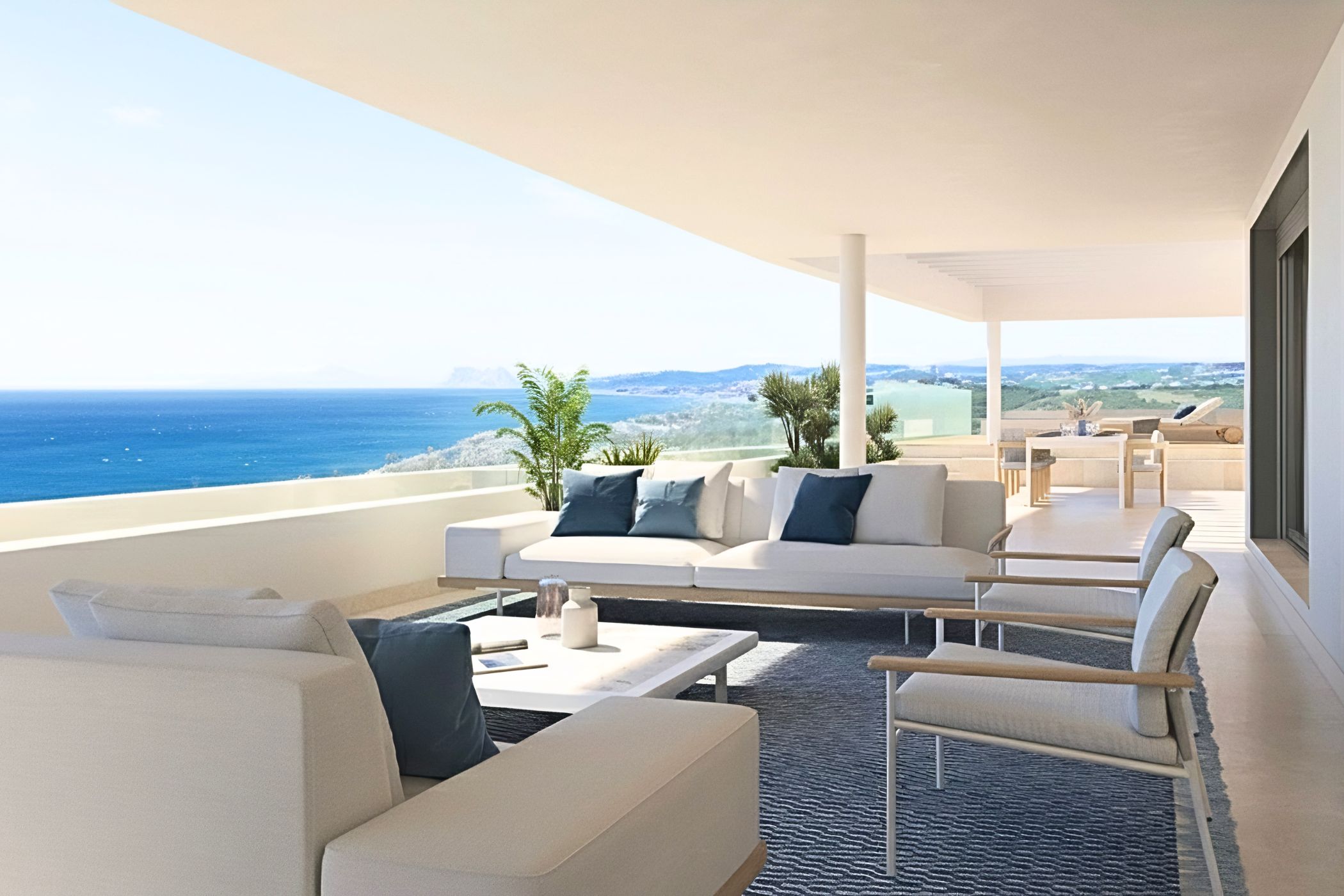
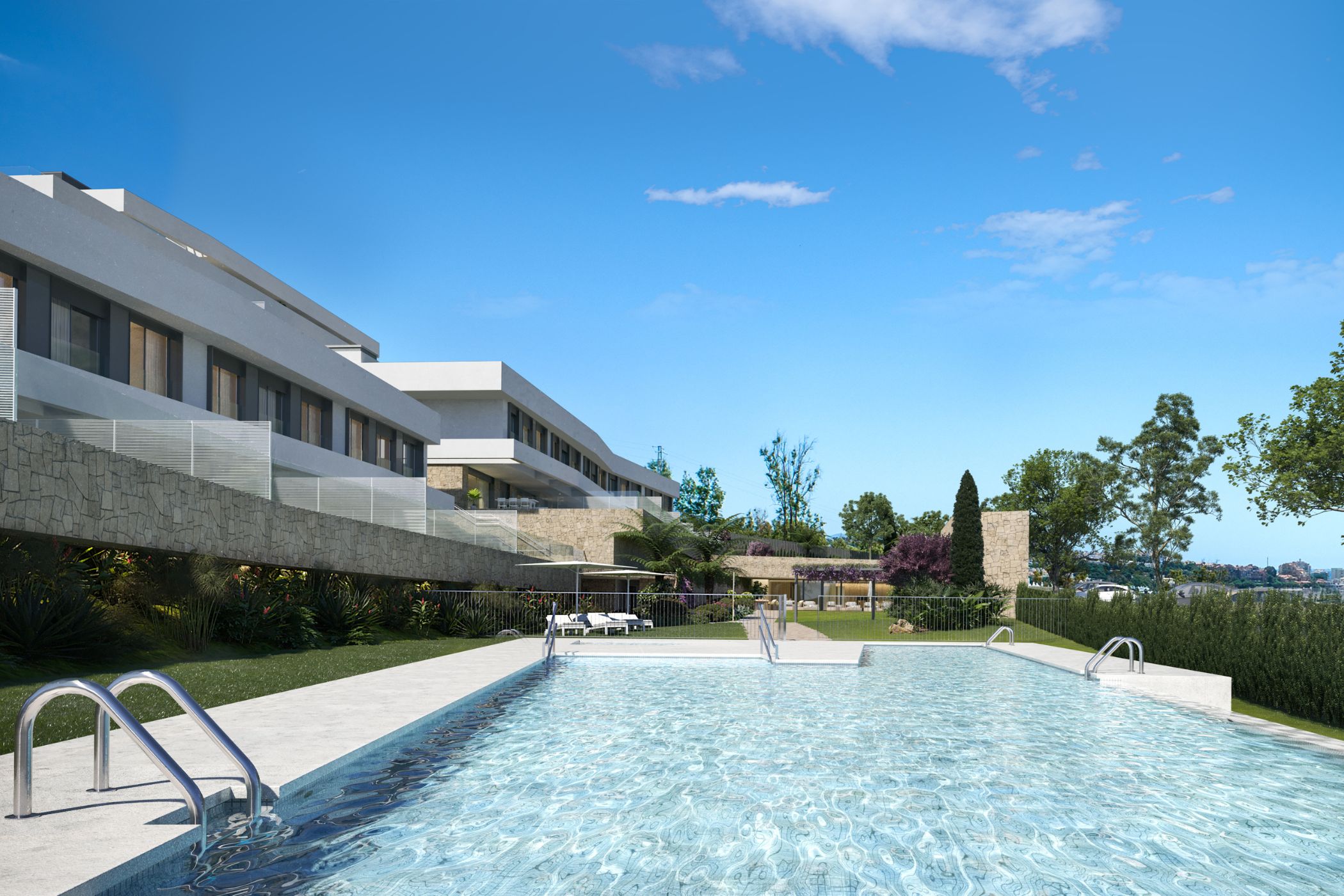
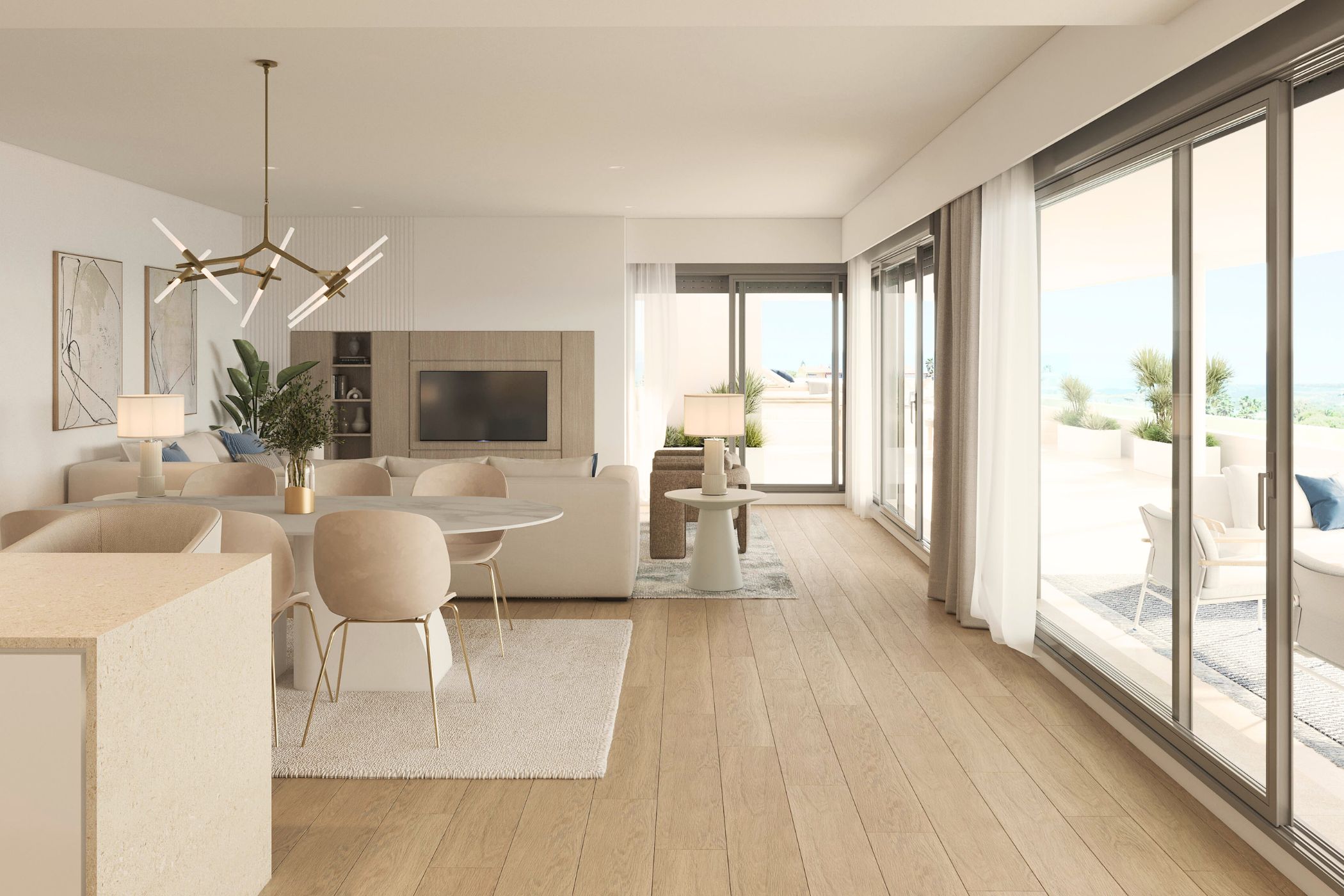
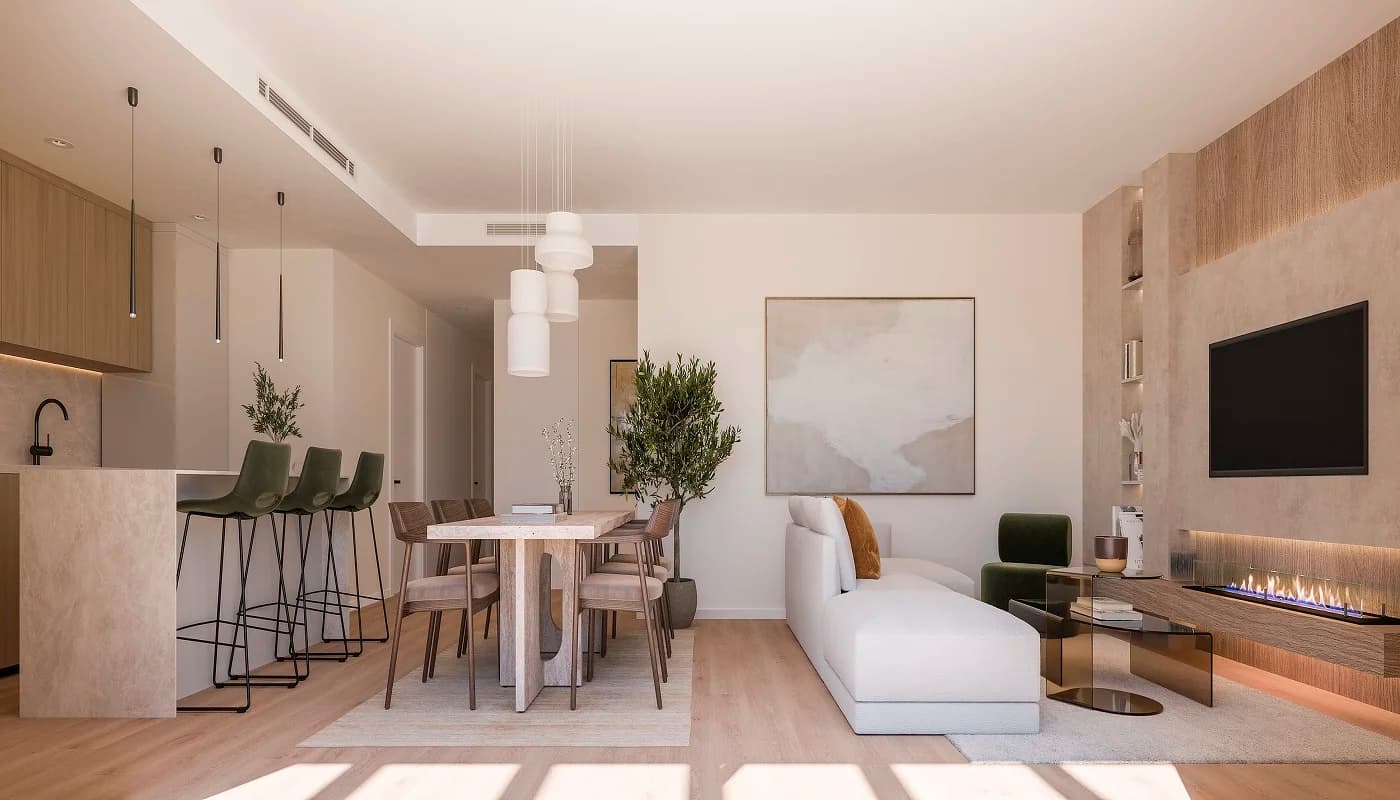
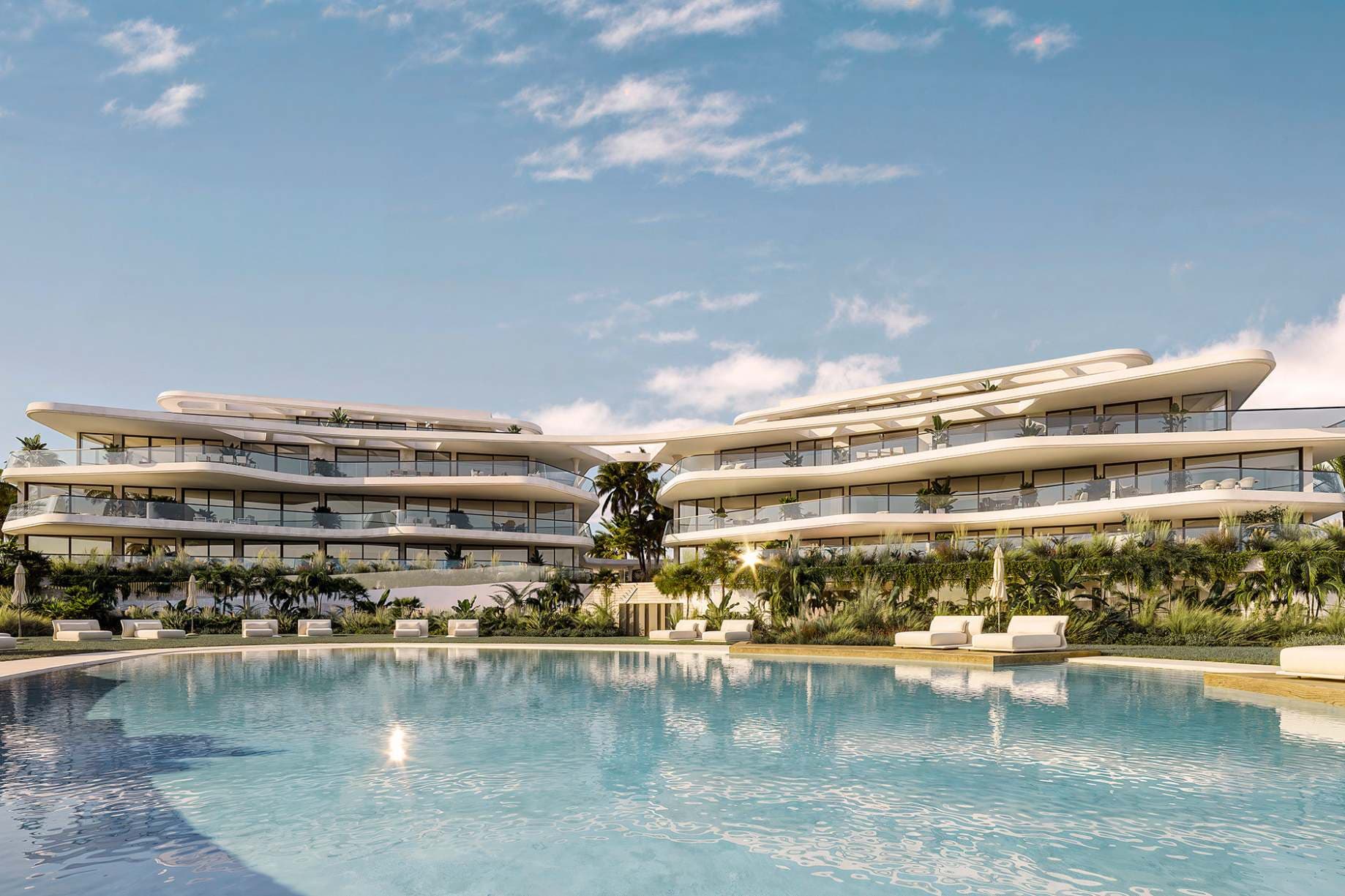
Estepona, Costa del Sol, Spain — 3-Bed Terrace Apartment With Panoramic Sea Views & Pool
€159,000
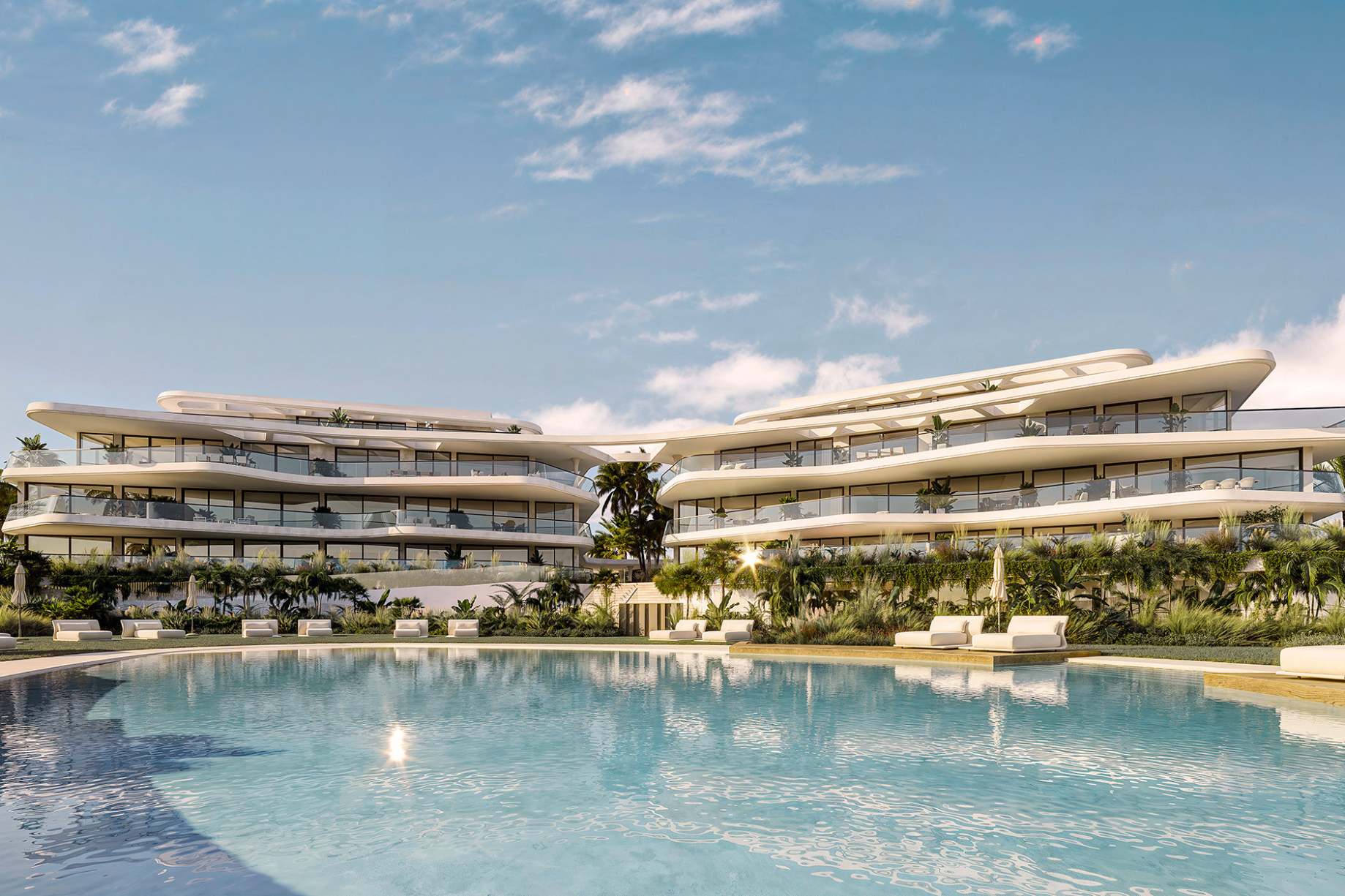
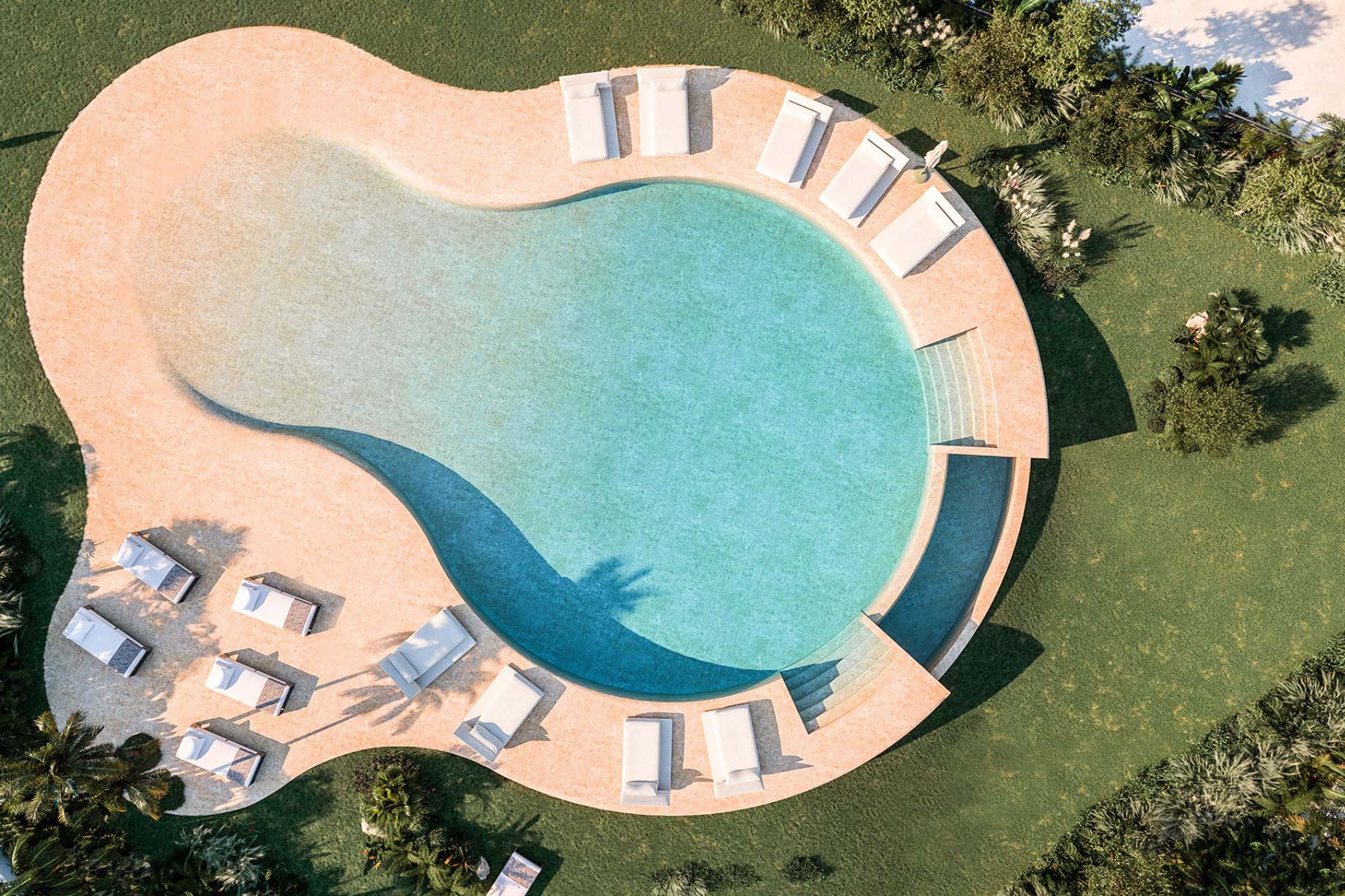
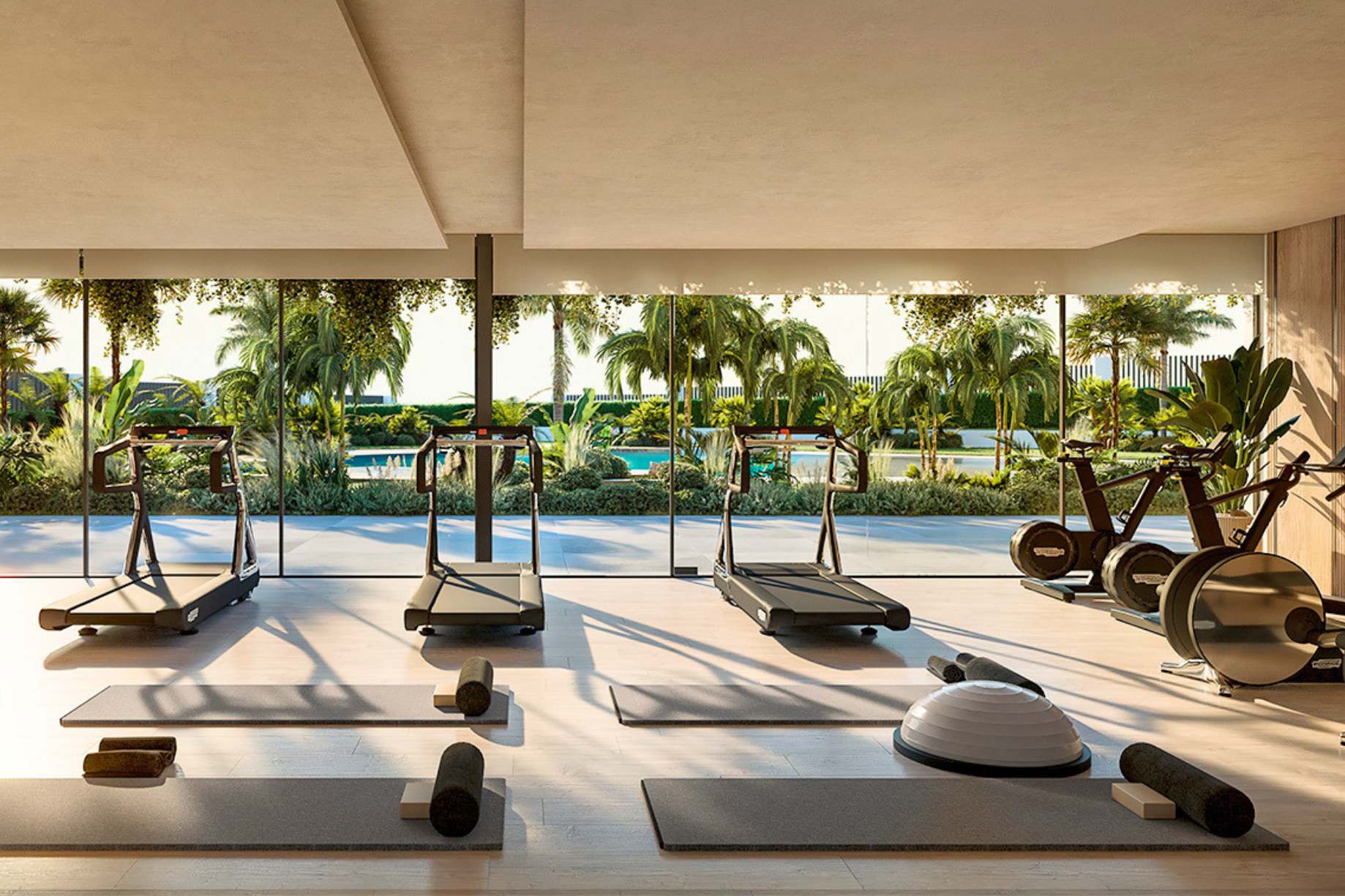
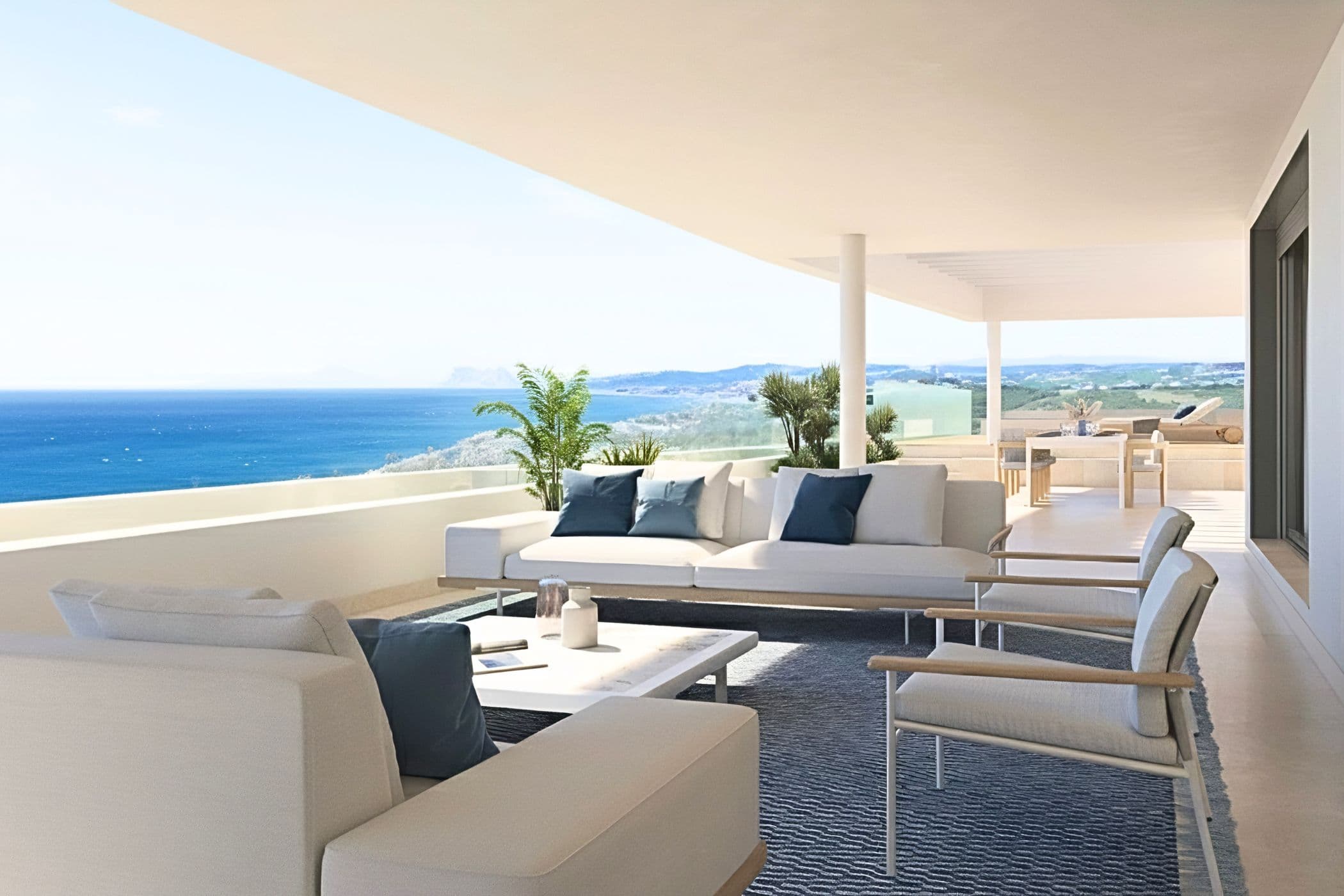
Estepona, Costa del Sol, Spain — 3-Bed Terrace Apartment With Sea Views
€199,000
Why buy a co-ownership home in Estepona?
Buying a whole holiday home in Estepona means paying full price for a house that stands empty most of the year. Co-ownership takes the same home — professionally managed, beautifully furnished — and divides it into shares, usually eighths. You own a real share of the home — not a right to use it — with roughly six weeks of use a year, a share you can sell or pass on, and running costs shared between owners rather than shouldered alone. In Estepona, that ownership starts from €135,000.
Estepona, properly understood
Estepona spent forty years as the place people drove through on the way to Marbella, and then it did something almost no Spanish coastal town has managed: it rebuilt its own centre and became the reason to stop. Over the last decade and a half the old town has been comprehensively restored — lanes repaved in patterned stone, thousands of flower pots hung on whitewashed walls, more than sixty large murals painted on the gable ends of ordinary apartment blocks, and a botanical orchid house dropped into the middle of it. The result is, by common consent, the prettiest town centre on the Costa del Sol.
What makes it work rather than merely look nice is that the town underneath is still real. Estepona has around seventy thousand residents, a working fishing fleet that lands and auctions its catch, a Wednesday street market, a normal Spanish high street and a population that is there in February. It has not been hollowed out into a resort, which is precisely what happened to several of its neighbours, and it is the difference you feel walking through it on a winter evening.
For a buyer the case is Marbella's climate and coastline at a materially lower price, with a nicer town centre and a quieter August. It sits thirty minutes west of Marbella and about an hour from Málaga airport, under the same mountain shelter that gives this coast the mildest winter on mainland Spain. What you give up is some of Marbella's restaurant depth and its density of services. What you get back is a place that feels like somewhere rather than like an address.
A short history: watchtowers, fishing and the rebuild
The bones here are older than the coast's tourist history by a long way. Phoenicians and Romans both used the shoreline — there are fish-salting remains in the municipality — and the Moorish period left the town's name and the castle of San Luis, whose remnants sit in the middle of the old town. The line of sixteenth-century watchtowers along this coast is unusually complete around Estepona: the Torre del Padrón, Torre de Guadalmansa and others were built within sight of one another as a chain against Barbary raiding, and several stand on the beach today.
For most of the modern period Estepona was a fishing and farming town, and the fishing part never stopped. The port still runs a working fleet alongside its marina, the daily auction still happens, and the fish restaurants along the quay are supplied from thirty metres away. That continuity is the reason the town retained a real centre through the coastal building boom, when a great deal of the Costa del Sol was developed outward from nothing.
The transformation is recent and deliberate. From around 2010 the town pursued a sustained programme of pedestrianisation and restoration in the old quarter, planting the flower displays that now define it and commissioning the mural route on the blank walls of 1960s and 1970s blocks — turning the coast's least loved architecture into an open-air gallery. The Orchidarium opened in 2015, the seafront promenade was extended and rebuilt, and a new cultural centre and theatre followed. It is one of the few genuinely successful pieces of town-centre regeneration on this coast, and it is why Estepona's stock has risen so sharply relative to its neighbours.
The town, quarter by quarter
The old town — the casco antiguo — is the heart and the reason to be here. A grid of narrow whitewashed lanes climbing gently from the seafront, with Plaza de las Flores at its centre, the church of Nuestra Señora de los Remedios, the castle remains, and streets like Calle Caridad and Calle Terraza where the flower pots are stacked in their hundreds. It is compact enough to cross in ten minutes and dense enough with bars, restaurants and small shops to keep you occupied for a week.
The seafront runs east–west along a rebuilt promenade with the Paseo Marítimo, the beaches either side of it, and a line of chiringuitos. West of the centre sits the port: the working fishing harbour, the marina, and a strip of fish restaurants that is the best value eating in town. The bulk of Estepona's apartment stock sits behind and along this front, and the walkable radius from the old town is the address to want.
East of the town, towards Marbella, runs the New Golden Mile — a fifteen-kilometre stretch of newer development, golf courses and beach clubs that fills the gap between the two towns. It is convenient, well built and short on character, and it is where much of the coast's recent building has gone. West of Estepona the coast quietens quickly towards Casares and the Sotogrande estate, with some of the emptiest good beaches on the whole Costa del Sol.
Behind everything rises the Sierra Bermeja, and it is worth understanding because it is unusual. The rock is peridotite, which weathers to a deep rust red and supports the rare Spanish fir, the pinsapo — a relict conifer that survives in only a handful of places on earth. Los Reales, the peak above the town at around fourteen hundred metres, gives a view over the Strait to the Rif on a clear day and is under an hour from the seafront.
Where exactly to own: micro-locations, rated
The old town and its immediate edges. The best address in Estepona and, for many buyers, the point of coming here at all: you walk out of the door into the flower lanes, the square, the market and eighty restaurants, and it is alive in January. Apartments rather than villas, older buildings, and the strongest position by a wide margin for winter and short-break use.
The seafront and the promenade. A short walk from the old town with the sea in front of you, the rebuilt paseo for running and cycling, and the beach on the doorstep. Slightly newer stock, generally with pools and communal gardens, and the obvious answer for a family who want the beach without giving up the town.
The port and its western side. Closest to the fishing harbour, the marina and the best-value fish restaurants on the coast, and a few minutes further from the old town. Less polished, more local, and correspondingly better priced.
The New Golden Mile, east towards Marbella. Newer developments, golf, beach clubs and easy access to both towns, in a strip that is convenient rather than charming. Best for owners whose week is built around golf and the beach rather than around walking into town for dinner, and it puts Marbella's restaurants fifteen minutes away.
West towards Casares and Sotogrande. Quieter, emptier and greener, with the best undeveloped beaches on this part of the coast and a serious golf cluster inland. Further from everything, which is the entire attraction for some buyers.
Where to think carefully. As everywhere on this coast, the N-340 runs the length of the municipality and carries real traffic — a property's distance from it and the aspect of its terraces matter more than almost any other single factor. Some of the New Golden Mile developments sit close to it. We check position and aspect on every home we list, and it is the first question to ask about any Costa del Sol property, from us or anyone else.
The beaches and the promenade
Estepona has around twenty kilometres of coastline and rather more beach per resident than Marbella, which you notice most in August. The sand is the grey-gold of this coast rather than white — it comes off the Sierras, not off a reef — and once you stop expecting the Caribbean the beaches here are excellent: wide, long, clean, and backed by a promenade that has been rebuilt end to end.
The central beaches, La Rada and El Cristo, flank the town: La Rada is the long main strand running east from the port with the promenade behind it, and El Cristo is the small sheltered cove on the western side, which is the calmest water in town and the one families with small children use. East towards Marbella the beaches run wide and continuous past the developments; west towards Casares they empty out quickly and there are stretches where you will share a kilometre of sand with a dozen people in September.
The promenade is the piece of infrastructure that makes daily life here work. It runs for kilometres along the front, flat and traffic-free, and it forms part of the Senda Litoral — the coastal path being built along the whole province — with long finished sections in both directions. It is where the town walks in the evening, and a morning run or cycle along it in February, in shirtsleeves, is the single most persuasive argument for owning on this coast.
Gardens, murals and the town's own attractions
Estepona has spent a decade building reasons to be in the town itself rather than only on the beach, and the results are better than they have any right to be. The Orchidarium is the headline: a botanical glasshouse in the middle of the old town with a large collection under a set of glass domes, and a waterfall inside. It is a genuinely unusual thing to find in a Spanish coastal town and takes an hour.
The Ruta de los Murales is the other. More than sixty large-scale murals have been commissioned on the blank gable walls of ordinary residential blocks across the town, several of them the full height of the building, and there is a marked route between them. It works because the canvases were the coast's least attractive buildings, and the effect is to make an ordinary residential grid genuinely worth walking through.
Around those sit the Selwo Aventura safari park just outside town, the botanical park and the coastal gardens along the promenade, the Wednesday street market, the Sunday market at the port, and a modern theatre and cultural centre that programmes properly through the winter. It is not a large cultural offer by city standards, but for a coastal town of this size it is unusual, and it is a large part of why the place holds up in the off-season.
Eating and drinking
The port is the place to start and the reason a lot of owners end up here rather than in Marbella. The fishing fleet lands daily, the auction is real, and the strip of restaurants along the quay serves what came off the boats at prices that are a fraction of the Golden Mile's. Order the fritura — mixed fried fish, done properly — and whatever is on the board that day.
Along the coast, the chiringuito tradition is at its best here in summer, and its emblem is the espeto: sardines threaded on a cane and grilled over a driftwood fire in a sand-filled boat, served from May to September. Málaga province eats better than the Costa del Sol's reputation suggests, and the local repertoire — ajoblanco, the cold almond soup that predates gazpacho; porra antequerana; the province's sweet wines — is worth learning before the international restaurants.
In the old town, the tapas bars around Plaza de las Flores and the surrounding lanes carry the everyday eating, and a handful of more ambitious kitchens have opened as the town has risen. For a serious dinner, Marbella and Benahavís are thirty and forty minutes away respectively, and Casares up the hill has a couple of excellent places with a view. Provisioning is easy: the municipal market, the Wednesday street market, supermarkets in the newer parts, and the fish straight off the quay.
A year in Estepona, month by month
January and February are the coast's quiet advantage: daytime temperatures in the high teens under the shelter of the Sierra Bermeja, the golf at its best, the promenade busy with residents, and the old town restaurants open. March and April warm steadily, the hillsides go green and the Semana Santa processions fill the lanes. May is close to perfect — everything open, the town at its prettiest with the flowers at full stretch, and no crowds at all.
June is warm and building, with San Juan bonfires on the beaches on the twenty-third and the town's own feria in the first week of July. July and August are the peak: hot, busy, and full of Spanish families as well as international visitors, though noticeably less frantic than Marbella and Puerto Banús thirty minutes east. The beaches are wide enough to absorb it, which is one of Estepona's quiet advantages over its neighbour.
September is the month regulars choose — the sea at its warmest, the crowds gone after the first week, the light turning. October holds it and the golf season opens properly. November and December are mild and green, the town returns to itself, and the Christmas lights and the Three Kings procession on the fifth of January carry it through the winter. There is no month here that does not work, which is the whole point of this coast.
The year's fixtures
Estepona's calendar is more Spanish and less international than Marbella's, which is one of the reasons people prefer it. Semana Santa is the serious fixture: the brotherhoods carry their thrones through the narrow lanes of the old town across Holy Week, and because the streets are so tight the processions pass within arm's reach — a very different experience from the broad avenues of the bigger cities. The same week is observed with far greater scale in Málaga an hour east, where the processions are among the most famous in Spain, and the two are worth seeing in the same year for the contrast.
The Feria y Fiestas Mayores in the first week of July is the town's own week, and it runs on the Andalucían pattern: a daytime feria in the old town with sherry, sevillanas and horses in the streets from noon, and a night fair at the recinto ferial with casetas running until dawn. It is a local event rather than a tourist one — the visitor economy largely ignores it, which is exactly what makes it worth being there for. Earlier, on the sixteenth of July, the Virgen del Carmen procession takes the patron saint of fishermen out of the church and onto a boat, and the whole fleet follows her along the coast.
The rest of the year fills in around them. San Juan on the twenty-third of June puts bonfires the length of the beach and is the best free night of the Spanish summer. The Wednesday street market and the Sunday market at the port run all year. The theatre and cultural centre programme properly through the winter, the Christmas lights go up along the pedestrianised streets in December, and the Three Kings parade on the fifth of January is the last fixture before the town settles into its quiet, mild, extremely pleasant off-season.
Golf on the western coast
The Costa del Sol calls itself the Costa del Golf, and the western end around Estepona holds a disproportionate share of the good courses. Within twenty minutes of the town: Estepona Golf, Valle Romano, Azata, El Campanario and the Atalaya and El Paraíso courses on the New Golden Mile towards Marbella. Push a little further west into Casares and you reach Doña Julia and Finca Cortesín, the latter one of the best-regarded courses in continental Europe and the host of the 2023 Solheim Cup. Twenty minutes beyond that lies Sotogrande and Valderrama, which staged the 1997 Ryder Cup.
What matters for an owner is not the count but the season. These courses are at their best from October to May, when the fairways are green, the temperature sits in the high teens or low twenties, and northern European golf is either frozen or waterlogged. That inversion is the single reason this coast has a genuine winter economy, and it is why a share here distributes desirable weeks across the months that a Mediterranean island simply cannot offer. In July and August the golf is playable but early-morning only, and most residents give it up until September.
The practical texture is worth knowing. Green fees on the western coast are meaningfully lower than around Marbella and Puerto Banús for courses of comparable quality, tee times in the shoulder months want booking a few days ahead rather than weeks, and most clubs will take visitors without a member introduction. Buggy hire is standard and, on the hillier layouts behind the coast, close to necessary in summer. Several clubs run winter leagues that are the fastest way for a new owner to meet people — a fact worth more than it sounds when you are arriving somewhere four or five times a year.
The Sierra Bermeja and the mountain behind
The mountain behind Estepona is geologically unusual and it explains a good deal about the town. The Sierra Bermeja — the red sierra — is peridotite, a rock from the earth's mantle that is rare at the surface anywhere in the world and which weathers to the deep rust colour that gives the range its name. The Ronda peridotite massif that includes it is among the largest exposures of its kind on the planet, and the soil chemistry it produces supports plants that grow nowhere else nearby.
The most celebrated of those is the pinsapo, the Spanish fir — a relict conifer left over from the last ice age that survives in only a handful of Andalucían sierras and nowhere else on earth. There is a signed forest of them on the flanks of Los Reales, the peak above the town at around fourteen hundred and fifty metres, reached by a road that climbs from the coast in about forty minutes. The mirador at the top looks across the Strait of Gibraltar to the Rif mountains of Morocco on a clear day, which is a genuinely startling thing to see from a place you drove to after breakfast.
The range's recent history belongs in an honest account. A major wildfire burned through a large area of Sierra Bermeja in September 2021, and the scars are still visible on the eastern flanks; regeneration work has been under way since, and the pinsapo stands on Los Reales itself came through. It is a reminder that this is a working mountain landscape rather than a park, and that the summer fire risk is real and locally managed — which is one more reason the pool and garden maintenance on a property here is a year-round job rather than a seasonal one.
Estepona with children
Estepona is an easy town to bring children to, and the reasons are practical. El Cristo, the small cove on the western side of the port, is the calmest and shallowest water in the municipality and the beach local families with toddlers actually use. The main promenade runs flat and traffic-free for kilometres and is the best scooter and bicycle ground on this stretch of coast. And the old town is small enough and pedestrianised enough that children can run ahead of you without anyone worrying.
The specific attractions are better than a town this size warrants. Selwo Aventura, on the eastern edge, is a large drive-and-walk safari park with a genuine conservation programme. The Orchidarium takes an hour and children find the glass domes and the waterfall more interesting than adults expect. The mural route works as a treasure hunt. And within thirty minutes there is the Bioparc at Fuengirola, the cable car at Benalmádena and the water parks along the eastern coast — all of them close enough for a day and far enough that you go once rather than every day.
The everyday logistics are simple: chiringuitos expect children at lunch and most have a play area behind the tables, the sea shelves gently, and Spanish evenings mean children are still out in the square at ten at night, which is either delightful or exhausting depending on your household. For ownership groups the calendar arithmetic is unusually kind — families want July, August and the Easter fortnight, while the golfers and the couples want October to May, so the two barely compete for the same weeks.
Walking, cycling and the outdoor coast
Estepona's outdoor life divides cleanly between the flat and the vertical, and both are good. The flat is the Senda Litoral, the coastal path being built along the entire province: long finished stretches run in both directions from the town, boardwalked over the dunes and river mouths, and you can walk or cycle for hours beside the water without meeting a road. In February, in shirtsleeves, at eight in the morning, it is the most persuasive thing about owning on this coast.
The vertical is the Sierra Bermeja. The road up to Los Reales is a serious cycling climb and a well-known one, and the walking at the top runs through the pinsapo forest with the Strait below. Closer in there are the river walks: the Río Padrón and the Guadalmansa cut down from the sierra to the sea, and the gorges and pools inland at Casares and Benahavís are cold, clear and empty on a hot day. Horse riding is genuinely traditional here rather than a tourist product, with stables in the hills behind the town.
On the water, the calm Mediterranean along this stretch makes for reliable sea kayaking and paddleboarding, and the marina runs diving and boat charters. Dolphin and whale watching out of Tarifa and Gibraltar, forty-five minutes west, is among the best in Europe — the Strait is a migration corridor and sightings are close to routine. And padel, which is Spain's national obsession and which most residential developments here have courts for, is the quickest way into local life for anyone who plays.
Days out: white villages, Gibraltar and Africa
Estepona's position at the western end of the coast gives it a better set of day trips than Marbella, and this is one of the underrated arguments for the town. Casares is the closest and the most photographed white village in the province — twenty minutes inland, stacked up a hillside under a Moorish castle, and best seen from the road that approaches it from the east. Gaucín, further into the sierra, is quieter, higher and has a view over the Strait that people move there for.
Ronda is about an hour and a quarter inland and is the one unmissable trip: a town split by a gorge a hundred metres deep, spanned by an eighteenth-century bridge, with one of the oldest bullrings in Spain and a wine region around it that is now producing seriously. Beyond it lie the rest of the pueblos blancos — Grazalema, Zahara, Setenil de las Bodegas with its houses built under an overhanging rock shelf.
West, the coast runs quickly out of Spain. Sotogrande with its polo and marina is twenty-five minutes; Gibraltar, with its own airport, its rock, its apes and its incongruously British high street, is about forty-five. From Tarifa, a little over an hour away, the fast ferry reaches Tangier in under an hour — which means Africa is a comfortable day trip from your front door, something almost no other European address can claim. Málaga, in the other direction, is an hour and holds the Picasso Museum, a Pompidou outpost, a Thyssen and one of the best-regenerated port fronts in Spain.
Getting there and getting around
Málaga airport is the decisive practical advantage of this whole coast, and it is worth being precise about why. It is one of the best-connected airports in southern Europe, with direct flights from essentially every major northern European city — and, critically, a winter schedule that stays substantial rather than collapsing to a handful of routes in November. That is unusual around the Mediterranean, it is a direct consequence of the coast's large resident foreign population, and it is the single biggest structural difference between owning here and owning on an island.
From the airport to Estepona is about an hour on the AP-7 toll road, or rather longer on the free N-340 coast road in summer. Gibraltar airport is around forty-five minutes in the other direction and is a genuine alternative for British owners, with a short and useful route list. Málaga is also on the Spanish high-speed rail network, putting Madrid at around two and a half hours, though the suburban coastal train line stops at Fuengirola and does not reach this end of the coast.
On the ground, a car is the honest answer for most addresses, because the municipality runs for twenty kilometres and the good things are spread along it. The important exception is the old town and the seafront: an apartment there genuinely works on foot, with everything from the market to eighty restaurants within a ten-minute walk, buses along the coast and taxis in abundance. In August the coast road slows from late morning to early evening; the local habit is simply to move early or late. Parking in the centre is underground and paid, and worth assuming rather than circling for.
The property market, honestly described
The Costa del Sol is the largest and most liquid international residential market in Spain, and Estepona sits in an interesting position within it: close enough to Marbella to share its climate, its airport and its golf, far enough west to price at a meaningful discount, and — since the town-centre regeneration — increasingly bought for itself rather than as a cheaper alternative to somewhere else. That shift is the most important thing happening in this market, and it has been under way for about a decade.
The market's defining structural feature is one that buyers coming from the Balearics consistently misread. Unlike an island, supply here can and does grow: development continues along the New Golden Mile, west towards Casares and inland behind the coast road, and it will continue. What is scarce is not property but position. Frontline old town, the walkable seafront strip, the streets immediately behind the promenade — these are effectively fixed and they behave accordingly. A generic new-build block on the inland side of the N-340 is not scarce at all and competes directly with whatever is built next year.
That distinction matters more here than the headline price-per-square-metre figures suggest, and it is the single most useful idea a buyer on this coast can carry. Two apartments with identical specifications, one a five-minute walk from Plaza de las Flores and one a fifteen-minute drive inland, are not the same asset and will not behave the same way over a decade. The premium for a walkable position looks expensive on the day and looks obvious in ten years.
Two local specifics are worth knowing. First, holiday letting: in Andalucía a home let to tourists is registered with the Junta de Andalucía and holds a licence number, and each community of owners sets its own rules. Where letting unused weeks matters to you, we confirm the position for the specific home before you buy. Second, water: efficient irrigation and careful pool management are standard good practice on this coast, and every well-run property here works that way.
For a share buyer the logic here is strong. A property on this coast runs all year — pool, garden, air conditioning, salt air, security — and a share means those costs are carried by several households rather than by one family using the home six weeks a year. Estepona also has an unusually long good season, which means a shared calendar is distributing genuinely desirable weeks across nine or ten months rather than rationing a single contested fortnight in August. A whole home used six weeks a year is an expensive way to maintain an empty terrace; a share is not.
What underpins value here
Five supports, and on this coast they are unusually concrete. First, the microclimate: the Sierra Bermeja and the ranges behind it shelter this strip from the northerly weather that reaches the rest of Andalucía, producing the mildest winter on mainland Spain. That is a permanent geographical fact rather than a marketing claim, and it is why the coast has a twelve-month economy while most Mediterranean resorts have a five-month one.
Second, Málaga airport, which is what converts that climate into actual visits. A dense winter schedule is the thing that lets an owner plan a February week as easily as a July one, and it is sustained by the resident foreign population rather than by holiday charter demand — which makes it far more stable than the seasonal schedules that thin out to nothing on the islands each November. Third, the golf infrastructure: around seventy courses in the province, capital-intensive, impossible to replicate quickly, and playable exactly when northern Europe's are not.
Fourth, and specific to Estepona, the town-centre regeneration itself. A decade of sustained investment in pedestrianisation, planting, the mural programme, the Orchidarium, the rebuilt promenade and the cultural centre has moved the town from bypass to destination. That is a durable change in the underlying product — the sort of thing that shifts a market's baseline rather than its cycle — and it is still being extended.
Fifth, the fact that a real town survives underneath. Estepona has around seventy thousand residents, a working fishing fleet, schools, a hospital and a normal high street, which means it retains a functioning economy in the months the resort developments empty out. Property in and around a living town centre behaves quite differently from property in a development that shuts in October. What to know: the coast keeps building, the coast road is busy, water is managed carefully and letting is licensed. All of it is known and checkable, and every point is a reason to buy a great position rather than a square-metre count.
Who owns here
The Costa del Sol has the largest foreign residential community in Spain and one of the largest in Europe, and Estepona's slice of it is broader and more residential than Marbella's. The long-established layers are British, Scandinavian, Dutch, Belgian and German — in the Nordic case going back to the 1960s, with Norwegian and Swedish churches, schools and clubs along the coast that are still running. Alongside them: Irish, French, Italian, a substantial Moroccan and Latin American population, and Spanish owners from Madrid and Seville for whom this has always been the summer coast.
What has changed over the last decade is the shift from holiday ownership to residence. Remote work, Spain's residence routes for non-EU nationals, and the coast's international schools have converted a meaningful share of second homes into first ones, and Estepona has taken more of that than most because it is cheaper and more liveable than the towns to the east. That is why the winter economy holds up here, and it is why professional services — property management, maintenance, medical, legal, all multilingual — are of a standard you simply would not find in a purely seasonal resort.
The Nordic presence deserves a specific mention because it is larger than most buyers expect and because it changes the practical texture of ownership. There are Scandinavian bakeries, Norwegian-language services, Danish clubs and Swedish estate agents along this coast, and the winter months are when that community is most visible. For a Scandinavian owner it removes almost all of the friction that usually comes with owning abroad; for everyone else it is simply a sign of how established the year-round foreign population here has become.
For a co-owner the practical consequence is a coast entirely built around part-time and international ownership. Key-holding, pool and garden contracts, seasonal opening and closing, and multilingual professional management are mature industries here because most of the good housing stock needs them. A home used by several households in rotation is, from the Costa del Sol's point of view, completely unremarkable — and the depth of that local service economy makes the practical side of ownership easier here than in almost any market in the Mediterranean.
Estepona against the alternatives
Against Marbella, thirty minutes east: Marbella has more restaurant depth, more services, a bigger international profile and the Golden Mile's prestige, and it prices accordingly. Estepona has the nicer old town — this is not really disputed locally — a quieter August, more beach per person, and a materially lower entry price for a comparable property. Buyers who want the address choose Marbella; buyers who want the town choose Estepona, and the second group has been growing.
Against the Balearics: Mallorca and Ibiza have clearer water, more dramatic coastline and a stronger sense of place, and they price well above this coast. What they do not have is the winter. Flight schedules to both islands thin sharply from November, a good deal closes for the season, and the practical usable year is shorter. If your use is concentrated in July and August, the islands are lovely. If you want to use the home in February, Estepona wins on the facts rather than on taste.
Against the Algarve: the closest and fairest comparison. Similar winter climate, comparable golf economy, similar established foreign community, better beaches in places. The Algarve is quieter and often cheaper; the Costa del Sol has the bigger and better-connected airport, far more inland depth behind it — Ronda, Granada, Seville, Gibraltar and Morocco are all reachable — and a much larger year-round town economy. Many buyers look at both, and the decision usually turns on whether they want a resort or a town.
Estepona's own case, stated plainly: the mildest winter on mainland Spain, under a mountain range that is not going anywhere; an international airport an hour away that keeps flying all winter; the prettiest town centre on the coast, and a real one; a working fishing port that supplies the restaurants it sits next to; twenty kilometres of beach and a coastal path along all of it; a dozen golf courses within twenty minutes; and Ronda, Gibraltar and Africa all within a day. The trades are development pressure, a busy coast road, a regional water constraint and less restaurant depth than Marbella — none of them secret, all of them manageable by choosing the right position.
Co-ownership in Estepona, in practice
Here is how a share of a home here actually works. You own a real share of a specific, fully furnished, professionally managed home — an eighth, a quarter — not a right to use it. You can sell it, pass it on to your heirs, and you benefit when the home rises in value. A timeshare sells you a week. Co-ownership sells you the house. Your share is part of the house itself, shared with a small group of owners rather than hundreds, and you sell it on the open market at the price you set. The legal set-up is arranged by our partner for each home and walked through with you before you buy. The calendar allocates usage fairly across the owners and rotates the most contested dates — the August weeks, Easter, the July feria — from year to year, with flexible booking for everything else.
Estepona suits the structure for a reason particular to this coast: the good weeks are spread across most of the year rather than concentrated into a single peak. October to May is the golf and walking season and the best weather for anything except swimming; June and September are close to ideal; July and August are the busy months. A shared calendar here is therefore distributing desirable weeks across nine or ten months rather than rationing one contested fortnight, and an ownership group whose members want different things can each get what they want without much negotiation at all.
The management case is stronger on this coast than in most places, and it is worth being concrete rather than general about why. A property here runs all year whether or not anybody is in it: the pool needs weekly attention through a long hot season, the garden needs irrigation under real water constraints, salt air corrodes metalwork and outdoor kitchens, air conditioning needs servicing before rather than during the first heatwave, and an empty apartment needs someone watching it. That is exactly the work a single owner visiting six weeks a year either pays for and never sees, or skips and pays for later at several times the price.
Costs are shared in the same proportion as ownership: each owner carries their share of the home's running costs, billed transparently, covering local property taxes and community charges where they apply, insurance, utilities and water, pool and garden, cleaning, maintenance and the reserve that keeps the furnishings good. You see the full breakdown before you buy, not after — and on this coast, where the annual running of a property is a genuine and often underestimated number, that breakdown is the part of the dossier worth the most attention.
Buying in Spain: how the process actually runs
Spanish property purchase is a well-trodden path for foreign buyers and follows a predictable sequence. You will need a Spanish tax identification number for foreigners — the NIE — which is a straightforward administrative step and the first thing to organise. How the purchase of your share is completed, including what is signed and where it is recorded, depends on the home's legal set-up, which our partner arranges and explains before you buy. Non-resident buyers face no restriction on owning Spanish property.
Independent legal representation is standard and strongly advisable: a Spanish lawyer acting for you, not for the seller or the agent, who checks the registry entry, any charges on the property, the community of owners' statutes and accounts, the building and occupancy licences, and the planning position of anything that has been built or extended. Purchase taxes and costs are published, Andalucía sets its own transfer tax treatment, and your lawyer will confirm the current position before you commit rather than after.
Two Costa del Sol specifics are worth knowing. First, planning history: on this coast the licence file, not the sales brochure, is the source of truth, and checking it is a standard step, particularly for rural land and inland municipalities. Second, the community of owners: its statutes govern what you may do with the property, including whether tourist letting is permitted, and its accounts tell you what works are planned and how well the building is run. Both documents are provided as part of a Spanish sale, and we go through them with you.
For a co-ownership share the legal set-up is arranged by our partner for each home — the legal work, the community relationship and the management contract are already in place rather than being assembled by each owner separately. We walk every buyer through the specimen documents in plain language before any commitment, and we will always encourage independent legal and tax advice from advisers of your own choosing. Nothing in this guide is legal or tax advice.
Three owners' years: specimen calendars
Three honest specimen years, because abstractions convince nobody. The family: a fortnight in August in the years the rotation grants it, with the children in the sea by nine and the beach at El Cristo shallow enough not to watch every second; a week at Easter for the processions through the old town and the first properly warm days; a long weekend in late June for the San Juan bonfires; and a week in September when the sea is at its warmest and the crowds have gone home. Six-plus weeks in a home that already holds the beach kit, the paddleboards and the padel rackets, and an August fortnight that would be close to impossible to rent at short notice.
The golfing couple: ten days in late October when the courses come properly into their own and the green fees on this side of the coast are a fraction of Marbella's; a week in February with snow visible on the sierras inland and daytime temperatures in the high teens on the first tee; a long weekend in April; and a fortnight in May before the heat arrives, with the town at its prettiest and the flower displays at full stretch. A calendar assembled almost entirely from weeks that nobody else in the ownership group is competing for — and, most residents here would argue, the better weeks of the year.
The friends' syndicate: two couples who bought together and alternate long weekends across the winter and spring for golf, padel, walks on the Senda Litoral and very long lunches at the port, plus one shared week in high summer when both households and all the children combine, and any unclaimed weeks placed into managed letting where the property is registered for it. Their usage spreads across a dozen or more separate visits rather than two big blocks, which is a pattern that only works when the destination has no dead season. Three shapes, one common property: on a coast whose good months run from October to June and whose peak runs from July to September, six weeks a year is not a constraint to be managed. It is a budget to be spent well.
An owner's practical almanac
The small knowledge that makes ownership frictionless, collected. The coast road is slow from late morning to early evening through July and August — move early, move late, or use the AP-7 toll road, which is almost always worth the few euros and which most residents use without thinking about it. Parking in the old town is underground and paid; assume it rather than circling. Restaurants at the port do not need booking in winter and absolutely do in August. Dinner starts at nine, and a restaurant that is full at seven-thirty is a restaurant full of visitors.
Seasons and timing: October to May is the best of the year for everything except swimming, and it is the period to ask for in the rotation if your group has any flexibility at all. Málaga's winter flight schedule stays dense, so a February week here is planned as easily as a July one — which is emphatically not true of most Mediterranean addresses and is the practical reason this coast justifies a share. Semana Santa and the July feria both fill the town; plan around them or plan for them, but do not arrive unaware.
The house: pools, gardens and irrigation need attention through a long hot season, salt air is hard on metalwork, outdoor kitchens and window furniture, and air conditioning wants servicing in spring rather than in the middle of the first heatwave. Water is a real regional resource question, so efficient irrigation and sensible pool management are permanent good practice here rather than drought-year measures. Mosquitoes appear in the humid weeks of late summer; screens and a plug-in are ordinary equipment. The management team handles all of it, which is one of the concrete reasons an unmanaged Costa del Sol property ages badly and visibly.
And the golden rule of a shared calendar: whatever week you cannot use, release it early. On a coast where a February golf week is as sought-after as an August beach week, someone in your ownership group will take it — and will remember that you were the one who freed it up.
Heat, water and living well here
Three practical points shape how a property here is run, and each is easy to live with once you know it. The first is summer heat. July and August on this coast are hot, with daytime temperatures often in the mid-thirties inland of the seafront and warm nights that cool near the water. Air conditioning is standard in a Costa del Sol home, orientation and shade matter, and the local rhythm — early mornings, a long indoor middle of the day, late evenings outside — is one of the pleasures of the place.
The second is water. Andalucía manages its water actively after a recent multi-year drought, and well-run properties here work accordingly: drip irrigation rather than sprinklers, pool covers, planting chosen for the climate. None of it is a hardship; it is simply how a good home here operates, and it is one of the things we check on any home with a garden and a pool.
The third is the coast road. The N-340 runs the length of the municipality, and a home's position relative to it shapes how quiet it is. A property three streets back from the road, or above and behind it, is wonderfully peaceful, and position is the first thing we look at on any home we list.
Estepona: questions owners actually ask
How does it compare with Marbella? Estepona is quieter, cheaper and has the nicer town centre; Marbella has more restaurants, more services and the international profile. They are thirty minutes apart and share a climate, an airport and a golf economy, so most buyers end up choosing on temperament rather than on facts. If you want to walk out of your door into a Spanish town, Estepona. If you want the Golden Mile address and the density of choice, Marbella.
How good is the winter, really? It is the reason to buy on this coast rather than an island. Daytime temperatures in January and February sit in the high teens, the golf courses are at their best, the old town restaurants stay open, and Málaga's flight schedule stays dense enough to plan a week at short notice. There is rain — the winter is when it falls, sometimes heavily for a few days — and evenings want a jumper. But this is the mildest winter on mainland Spain and nothing shuts down.
Will we hear the coast road? Not from the right home. The N-340 runs the length of the municipality; homes a few streets back or above it are quiet, and we check the position and aspect of every home we list and tell you exactly what we find.
Can we let our weeks? On many homes, yes. Where a property is registered for tourist letting with the Junta de Andalucía and the community of owners allows it, the management team handles letting for you. We confirm the position for each home before you commit.
Is it good for children? Very. El Cristo cove is the shallowest, calmest water in the municipality, the promenade is flat and traffic-free for kilometres, the old town is pedestrianised, and Selwo, the Orchidarium and the mural route fill the days that are not beach days. Add the Bioparc and the cable car within thirty minutes and there is more for a family here than in most coastal towns of this size.
What is the fishing port actually like? A working one, which is the point. The fleet lands daily, the auction is real, and the restaurants along the quay are supplied from a few metres away and priced for local families rather than for the Golden Mile. It is the best-value eating in the town and one of the things that keeps Estepona feeling like a place with a job rather than only a view.
More questions, answered plainly
Where exactly should we buy? The old town or the streets immediately behind the promenade if you want to walk everywhere and use the home in winter — that is the position we would steer most buyers towards. The port side if you want the fish restaurants and better value. The New Golden Mile east of town if your week is built around golf and you want Marbella fifteen minutes away. West towards Casares if you want space and empty beaches. Tell us how your year actually looks and we will point you at the right homes below.
Do we need a car? For most addresses yes, because the municipality runs for twenty kilometres. But an apartment in the old town or on the seafront genuinely works on foot — market, restaurants, beach and promenade all within ten minutes — with buses along the coast and taxis for the rest. That is worth real weight if your ownership group is not made up of enthusiastic drivers, or if some of your weeks will be taken by older family members.
How is it as a base for seeing Andalucía? Better than anywhere else on the coast, because Estepona sits at the western end. Casares is twenty minutes, Ronda and its gorge an hour and a quarter, Gibraltar forty-five minutes, Sotogrande twenty-five, Málaga and its museums an hour, Granada and Seville comfortable long days. And the fast ferry from Tarifa reaches Tangier in under an hour, which puts Africa within a day trip of your front door.
What are the running costs like? Each owner carries their share of the home's costs, billed transparently — local property taxes and community charges where they apply, insurance, utilities and water, pool and garden, cleaning, maintenance and the furnishing reserve. A property with a pool on a hot coast has real annual costs and they are the number most whole-home buyers underestimate; the point of the structure is that they are shared and professionally handled rather than carried alone for a home you visit six times a year.
What happens if we want to sell? You sell, at the price you set. A share is real property and sells like it, and far more people can buy a share of a well-placed Estepona apartment than can buy the whole of it. Typically you hold for the first twelve months. Hundreds of shares in homes like these have already been resold — in just over three months on average, and nearly three in four for more than the owner paid.
What should we do on a viewing trip? Come for three days, ideally outside August. Walk the promenade at eight in the morning and again at ten at night. Have lunch at the port and dinner in Plaza de las Flores. Walk the mural route so you understand what the town has done to itself. Drive up towards Los Reales to see the mountain and the Strait. Drive from the property to the airport so you know the real time. And spend an evening on the terrace. Then let us open the doors. Three days answers more than three months of listings, and we will build the itinerary around the homes listed below.
Taxes, resale and how ownership works for your 1/8 share of the home are covered in depth in our complete country guide. Read the full Spain ownership guide →
Each listing shows the full price of its share — typically one-eighth of the home. It is a purchase price, not a deposit or membership fee: you become a co-owner of the home.
No. A timeshare sells you a week; co-ownership sells you the house. You own a real share of the Estepona home with a small group of owners, not a week at a resort shared with thousands. It moves with the value of the house, you sell it on the open market at your price, and you can leave it to your children.
A one-eighth share corresponds to about six weeks a year, scheduled fairly across seasons so every owner enjoys peak weeks over time. The home is professionally managed — you simply arrive.
Questions about a home in this collection? Our team typically replies within minutes.
Get in Touch
Speak to an expert
Tell us what you're looking for and we'll be in touch.