Co-Ownership Homes in Morzine
2 luxury holiday homes in Morzine available as co-ownership shares, from €144,000 per share. Genuine ownership, fully managed, a fraction of the whole-home price.
The Morzine Collection
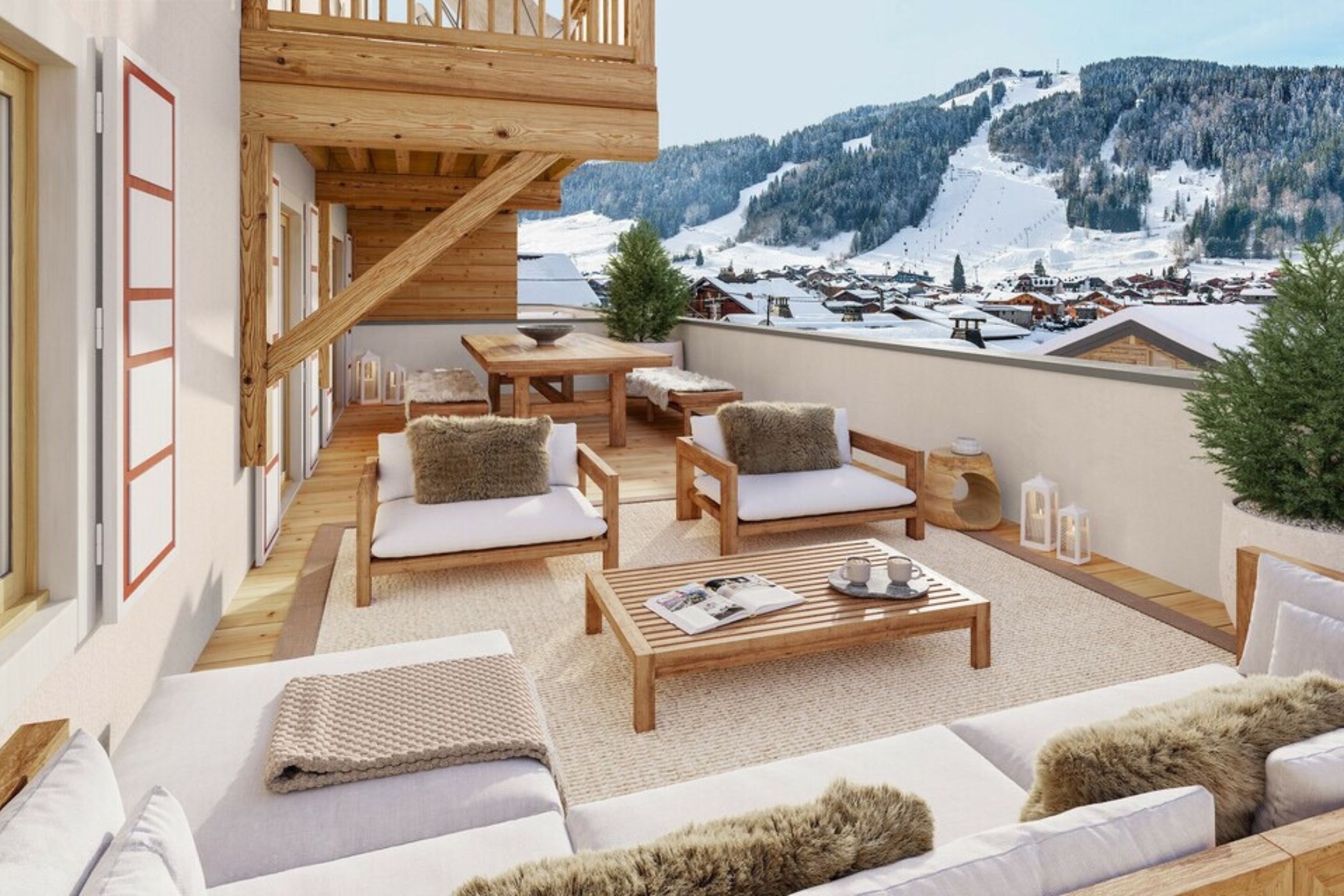
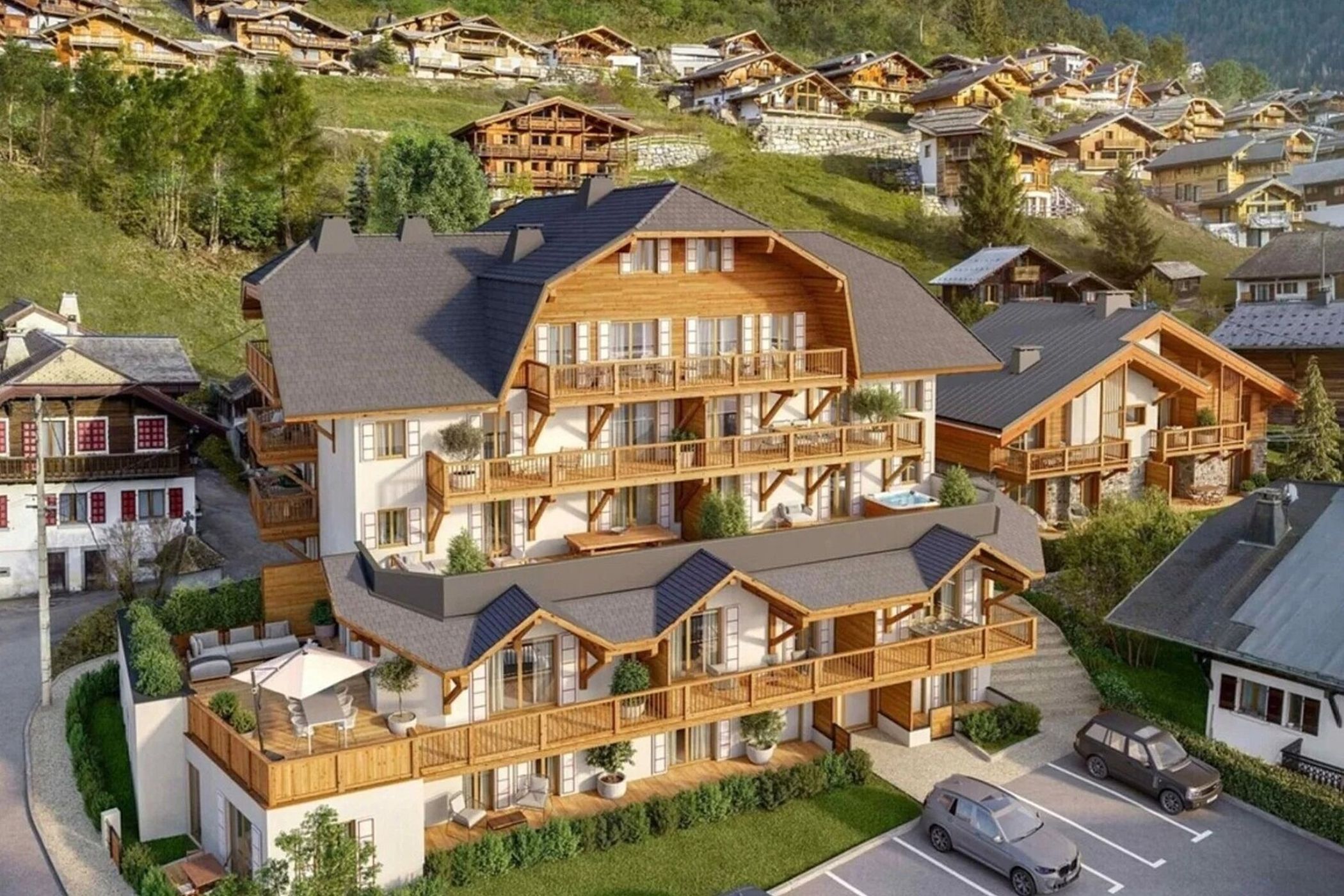
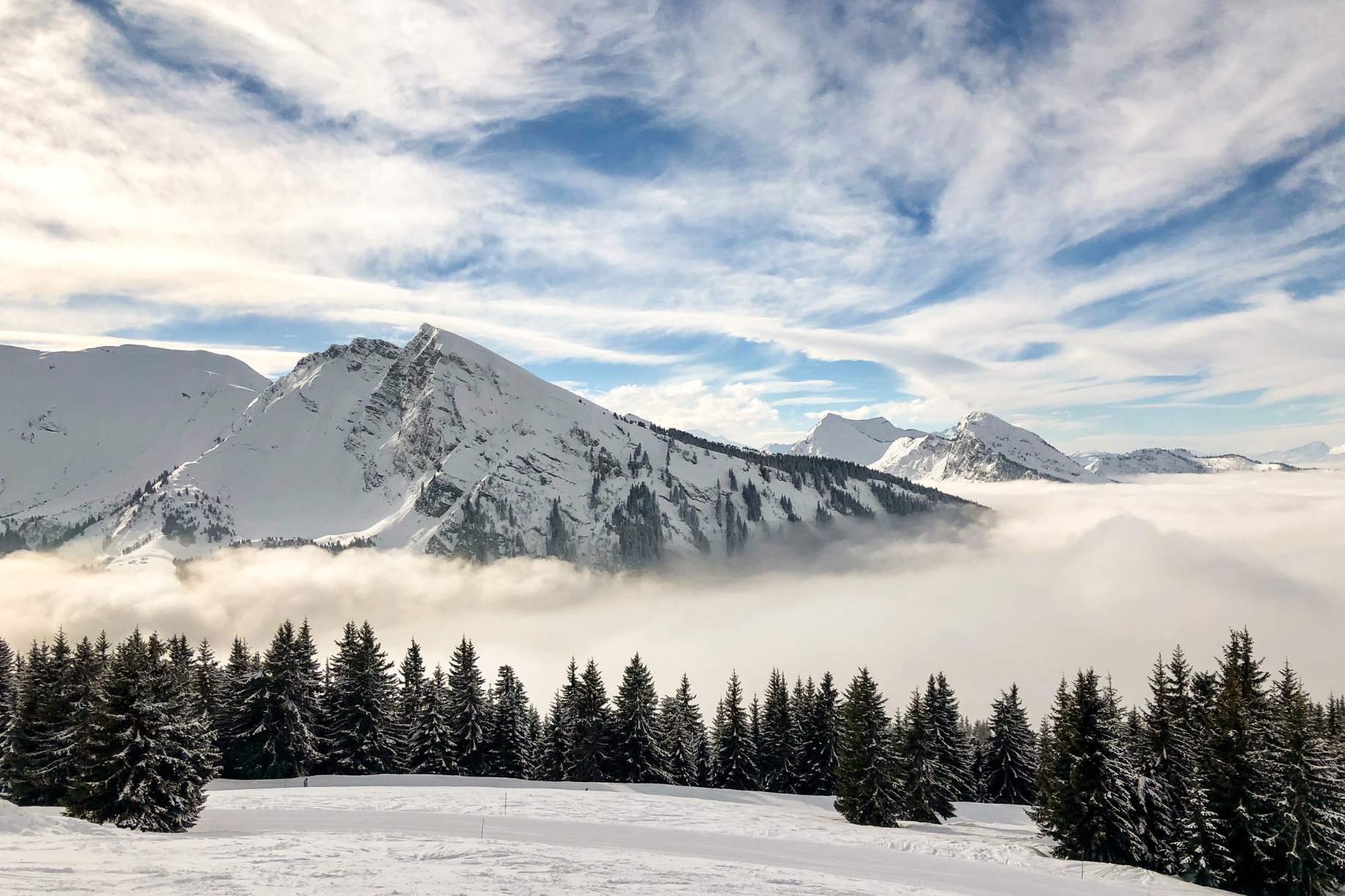
Morzine, Portes du Soleil, France — 2-Bed Apartment With Mountain Views
€144,000
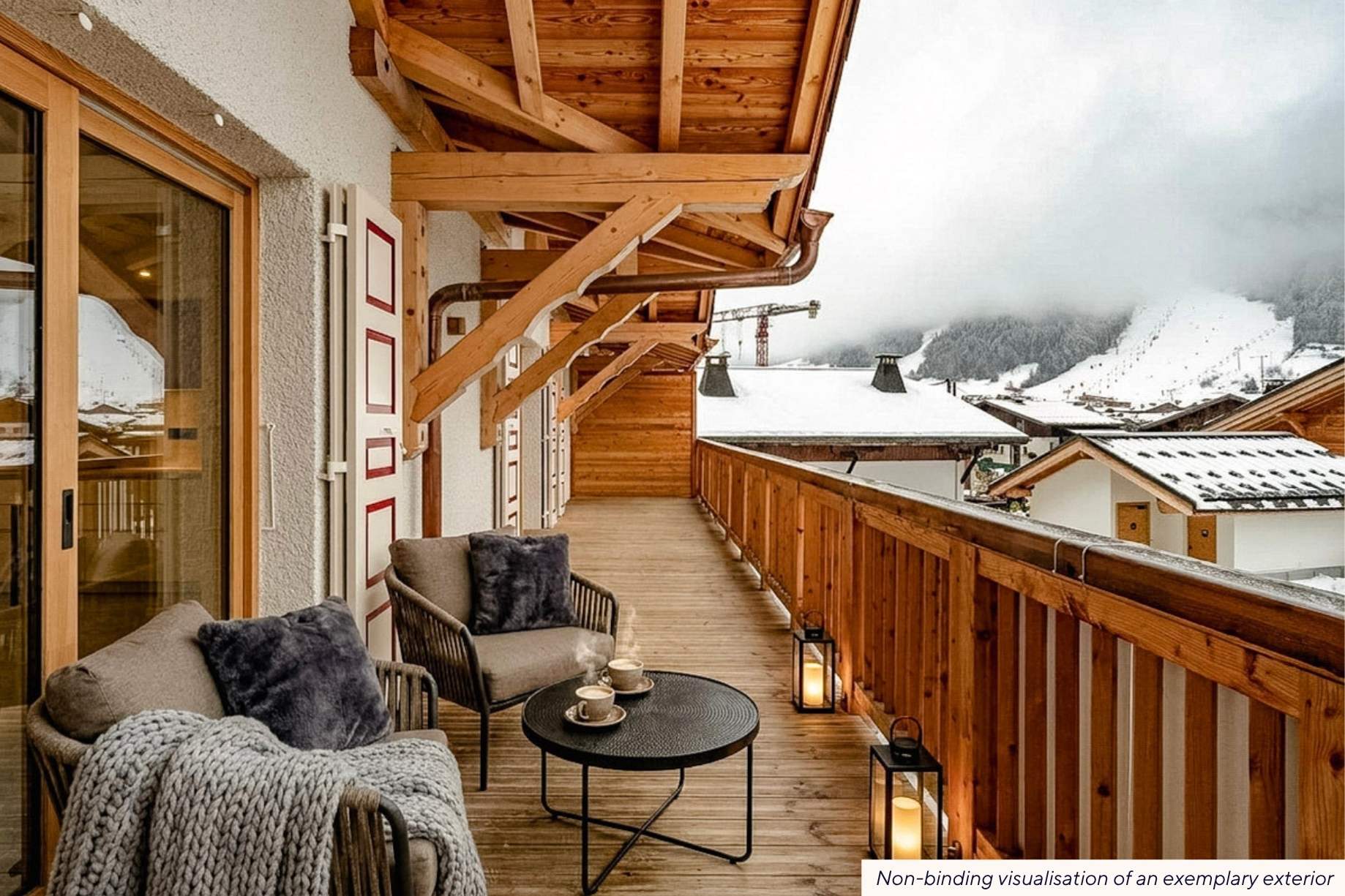
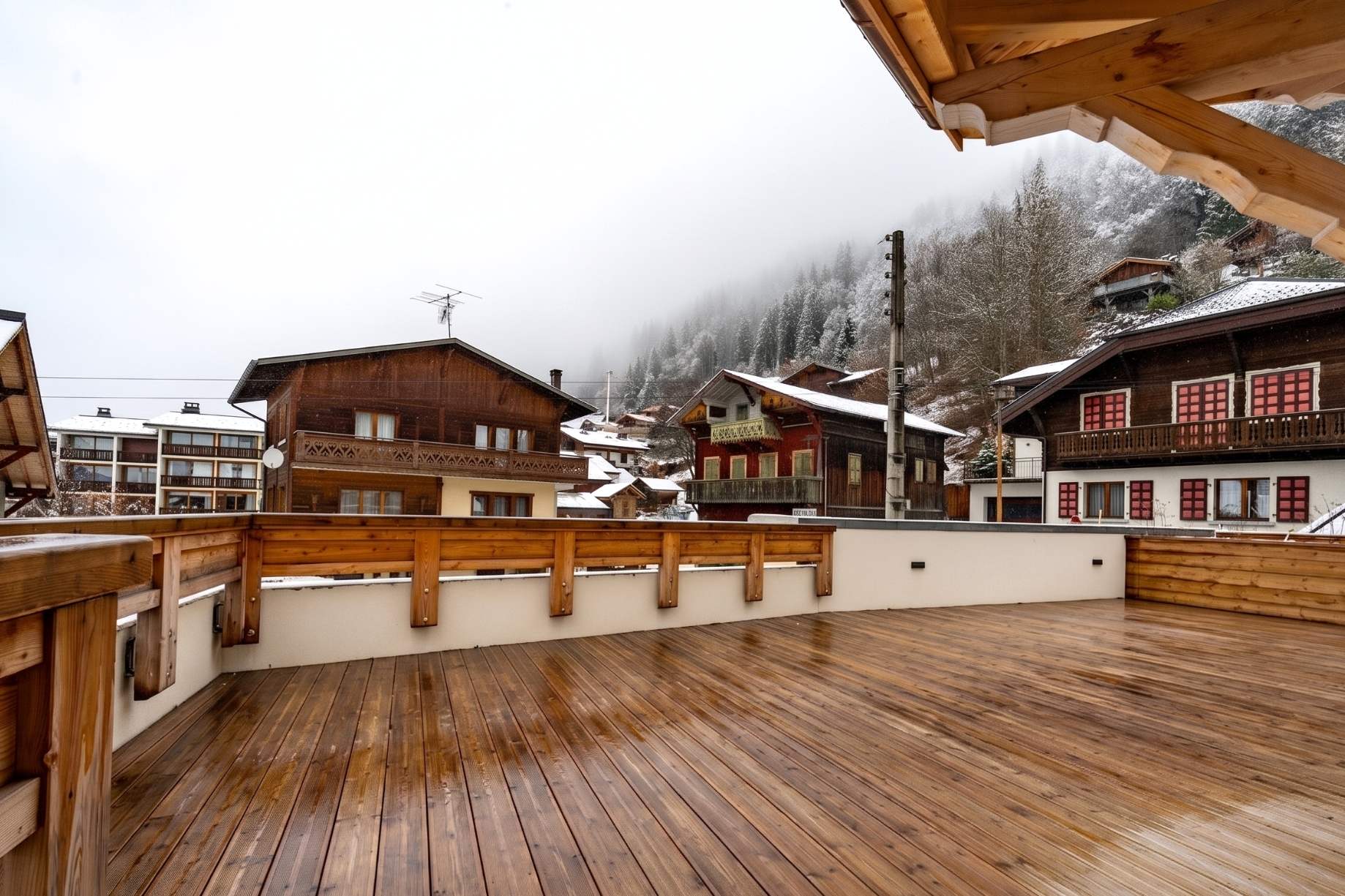
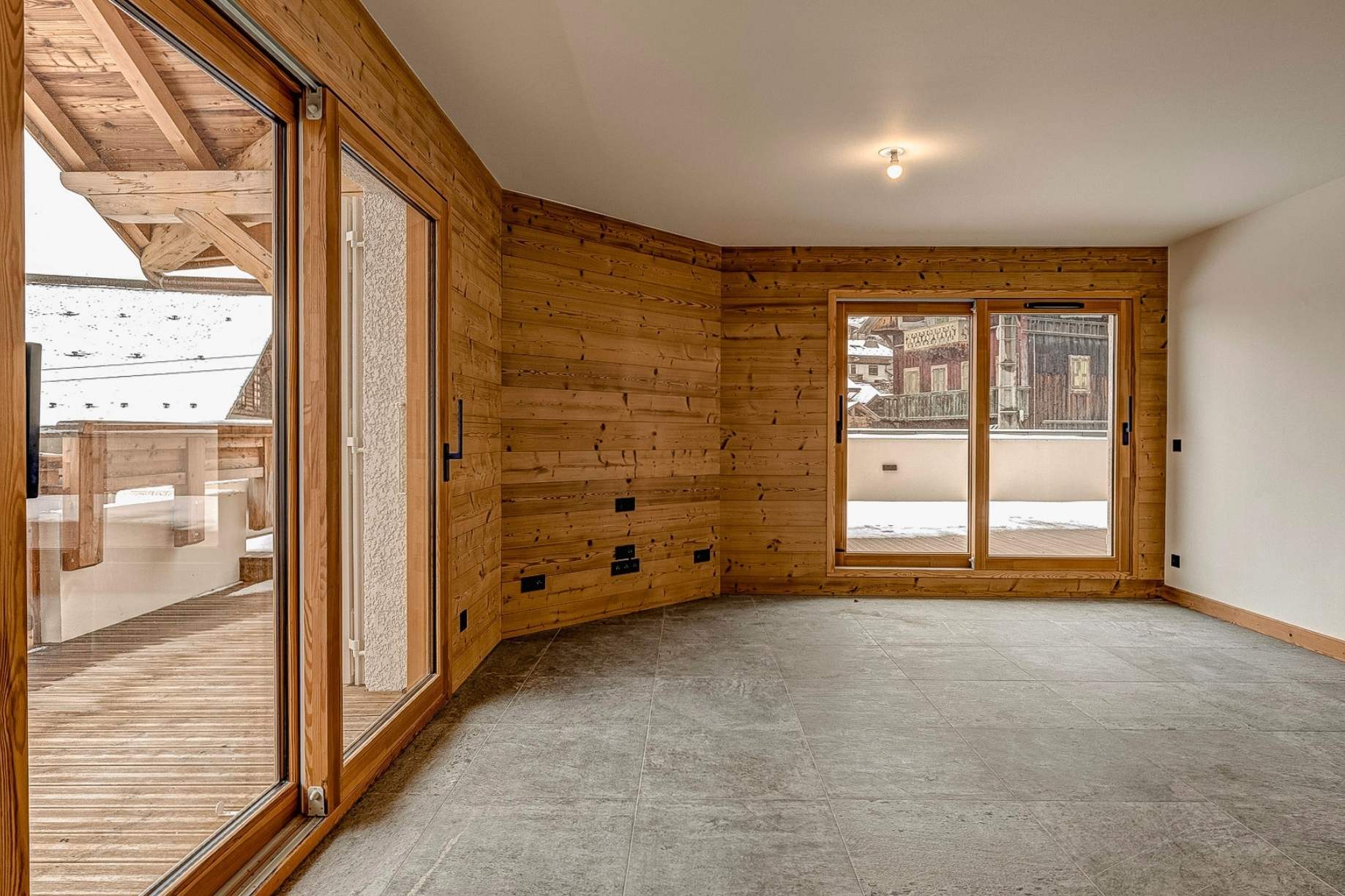
Morzine, Portes du Soleil, France — 3-Bed Terrace Apartment With Mountain Views
€249,000
Why buy a co-ownership home in Morzine?
Buying a whole holiday home in Morzine means paying full price for a house that stands empty most of the year. Co-ownership takes the same home — professionally managed, beautifully furnished — and divides it into shares, usually eighths. You own a real share of the home — not a right to use it — with roughly six weeks of use a year, a share you can sell or pass on, and running costs shared between owners rather than shouldered alone. In Morzine, that ownership starts from €144,000.
Morzine, properly understood
Every Alpine resort has a sales pitch. Morzine's is unusual in that it survives contact with reality. The town sits at just over a thousand metres in the Vallée d'Aulps, a fold of the Haute-Savoie that has been farmed, logged and slate-mined since long before anyone thought of sliding down mountains for pleasure — and that history is the whole point. Morzine was a working town first and a resort second, which is why it has a real high street rather than a mall, a Wednesday market that locals actually shop at, stone-and-timber chalets with slate roofs from the town's old quarries, and a civic life that keeps ticking in May and November when the lifts are still. Purpose-built resorts empty out; Morzine merely changes gear.
It also happens to sit at the centre of the Portes du Soleil, the vast linked ski domain strung across the French-Swiss border — a dozen resorts, roughly six hundred kilometres of marked pistes, and a lift system that lets a competent skier have lunch in Switzerland and be back for tea in France. Avoriaz, the snow-sure high station at 1,800 metres, hangs on the cliffs directly above town, reachable by cable car. Les Gets, Morzine's gentler sister, is one ridge away. Champéry, Châtel, Morgins and the rest unfold beyond. Few places in the Alps offer this much mountain from a base this civilised.
And then — this is the part the ski brochures undersell — the snow melts, and Morzine does it all again. The same lifts reopen for what has become one of Europe's most celebrated mountain-biking arenas, the valley fills with hikers, road cyclists, trail runners and families, and the town runs a summer season that many owners come to prefer to the winter one. A Morzine address is not a ski asset with an off-season. It is a twelve-month mountain town with two high seasons, and everything about ownership here — including the arithmetic of sharing one — flows from that fact.
A short history of the valley
The Vallée d'Aulps was monastic country long before it was sporting country: the Cistercian abbey of Sainte-Marie d'Aulps, whose evocative ruins still stand a few kilometres down-valley, ran this landscape from the twelfth century, and the villages that grew in its orbit lived on cattle, cheese and timber. Morzine added slate — the grey-green stone that still roofs the town came out of its own mines, worked into the twentieth century, and the old slate workers' paths now serve as some of the prettiest walking in the valley. Until the 1930s the town's winter economy was essentially hibernation.
Skiing changed that with unusual gentleness. The Pléney cable car arrived in 1934 — among the first in France — and Morzine grew into winter sport gradually, family hotel by family hotel, rather than being invented for it. The great leap came in the 1960s, when a local visionary and a young ski champion conjured Avoriaz out of the cliffs above town: a car-free, architecturally radical resort at 1,800 metres that promptly became the linchpin of the crossborder lift network named the Portes du Soleil — the 'doors of the sun'. Morzine thereby acquired the rarest of combinations: a historic town at its own altitude, and a high-altitude snow fortress twenty minutes above it. The bike boom of the 1990s and 2000s gave the lifts a second season, and the town you visit today — bilingual, busy in both July and January, still recognisably Savoyard — is the compound interest of ninety years of never demolishing what it already had.
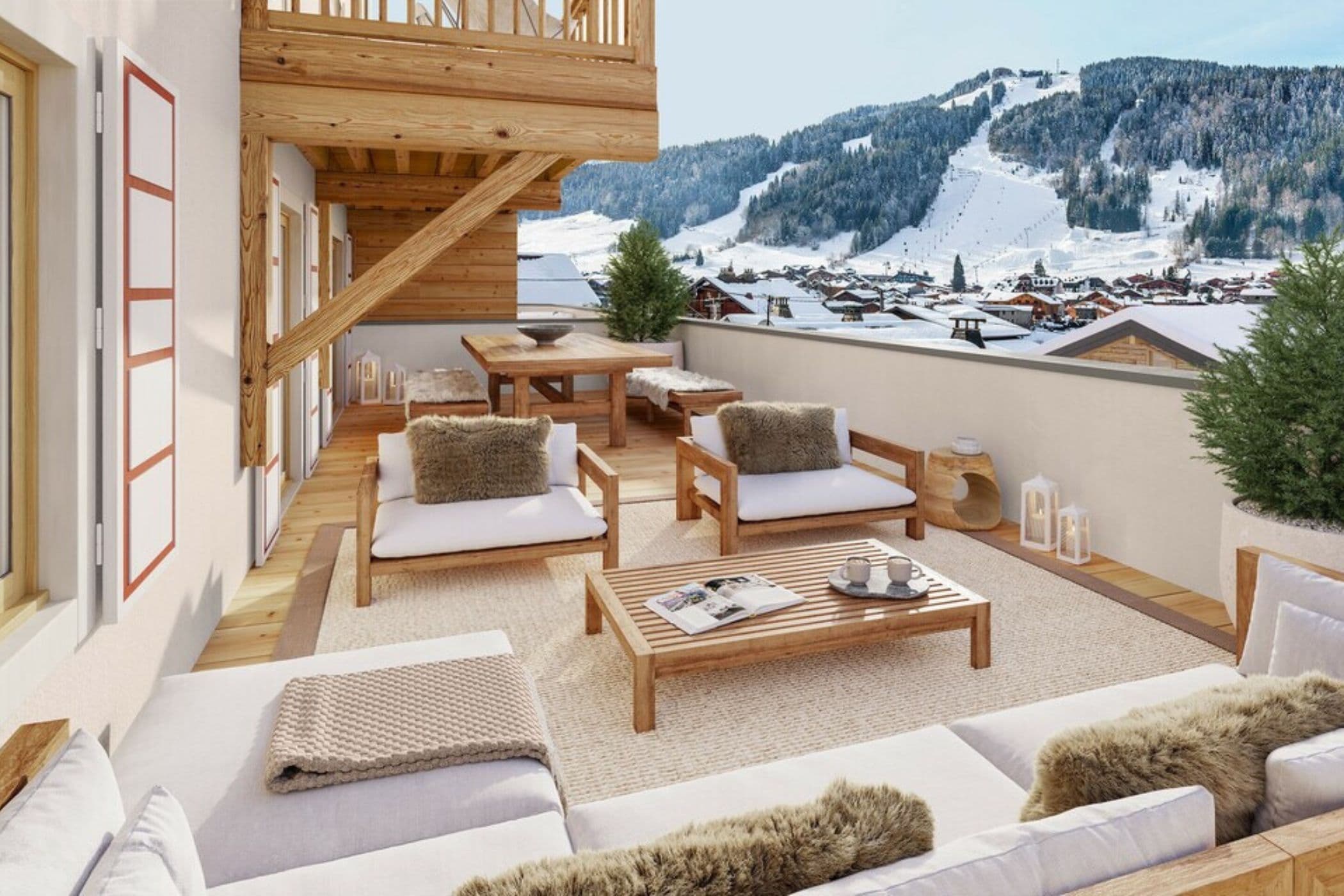
The town and its quarters
Morzine's core gathers around the church, the town hall and the Rue du Bourg, where the bars, restaurants and outdoor shops concentrate and the evening passeggiata happens in ski boots. From there the town spreads in recognisable quarters, each with its own ownership logic. The Pléney side, west of the Dranse river that splits the town, puts you walking distance from the main telecabine and the nursery slopes — the classic family position, ski boots on at the front door, children delivered to ski school on foot. Across the river, the Super-Morzine side serves the eastbound lift toward Avoriaz and the Swiss sectors, and tends to be marginally quieter at night.
Uphill toward Les Gets, the hamlet of La Muraille and the slopes around the Nyon cable car offer bigger plots, bigger views and a five-minute drive or free shuttle into the centre — this is where many of the valley's handsomest private chalets hide behind old larch barns. North, down-valley, Montriond is technically its own commune with its own lift into the Ardent sector and a glacial lake that is one of the region's summer glories; it offers Morzine access at a slight discount and with a village hush. The free ski-bus network stitches all of it together in winter, which means the practical difference between quarters is smaller than a map suggests — but the character difference is real, and it is worth knowing which Morzine you are buying into.
What you will not find anywhere in town is a high-rise. Planning here has stayed stubbornly Savoyard: chalet forms, timber and slate, four storeys or so at most. It keeps supply tight — of which more later — and it keeps the place looking like itself. Evening light on wood and snow, woodsmoke, church bells: the postcard is accurate.
Where exactly to own: micro-locations, rated
Centre / Rue du Bourg. The full-town experience: restaurants, bars and the market on foot, the Pléney telecabine a few minutes' walk, atmosphere included at no extra charge. The trade is liveliness on peak-season evenings and tighter, older buildings — apartments and townhouse chalets rather than lawns. Suits owners who want to step out of the door into the town's current, and non-drivers most of all.
Pléney side / Vieux Village. West of the Dranse, climbing gently toward the nursery slopes: the family sweet spot. Ski-school mornings on foot, sledging after lunch, yet two minutes from the shops. Properties here are the most contested in the valley for exactly these reasons; when one of our homes sits in this quarter, its calendar tends to be the busiest.
Super-Morzine / Avoriaz side. East of the river, beneath the gondola that starts the Avoriaz link: quieter nights, morning-sun terraces, and first crack at the high snow. Marginally further from the bar scene — for many owners a feature, not a bug. The walk to centre is a pleasant five to ten minutes; the shuttle does it in two.
Nyon, La Muraille and the west balconies. Up the road toward the Nyon cable car: bigger chalets, bigger plots, the classic postcard views back over town to Avoriaz's cliffs. You trade walkability for space and outlook, with the free shuttle or a three-minute drive bridging the gap. This is prime whole-chalet country, which is precisely why shares here punch hardest on value.
Montriond and the down-valley villages. Ten minutes north, its own lift into the domain at Ardent, the lake on its doorstep and a hush Morzine centre cannot offer. Down-valley further, St-Jean-d'Aulps and Essert-Romand give farmhouse country and local prices with the domain still in reach. For owners who want the valley more than the town, this arc is the connoisseur's pick — and summer here is arguably the best of all.
The skiing: Portes du Soleil in detail
Start with the honest version of the statistics. The Portes du Soleil claims around six hundred kilometres of pistes across twelve linked resorts in France and Switzerland — on any measure one of the largest ski areas on earth. More useful than the number is the shape of it: this is a domain of long, rolling, tree-lined and bowl-strewn terrain that suits real-world groups — the family whose members ski at four different speeds, the friends who want motorway cruising in the morning and a project in the afternoon — better than almost anywhere in France.
From Morzine itself, the Pléney telecabine rises straight off the town to a friendly, wooded sector shared with Les Gets: confidence-building blues, cruisy reds, and the Nyon and Chamossière sectors behind for steeper pitches and some of the area's best lift-served off-piste when the snow comes. This side is a genuine delight in fresh snow and mercifully sheltered on stormy days. On the other side of town, the Super-Morzine gondola begins the link toward Avoriaz — purpose-built, car-free, perched at 1,800 metres and holding its snow late into spring — and beyond it the Swiss wall of terrain: Champéry, Les Crosets, Morgins. The famous Pas de Chavanette — the 'Swiss Wall', a mogul face of genuine ferocity — waits there for anyone who claims to be bored.
Snow reliability deserves a straight answer, because Morzine's base altitude is modest. The town sits low; its skiing does not. The upper mountain — Avoriaz above all, but also Chamossière and the Swiss sectors — carries reliable winter cover through the season, snowmaking has been invested in heavily on the home runs, and the practical pattern for owners is simple: in a lean spell you ride up and ski high, and in a proper winter you ski home to the door. The season generally runs from mid-December to mid-April, with January the connoisseur's month — cold, quiet, and often deep — and March delivering that unbeatable combination of long light and consolidated snow.
Off the pistes, the valley's mountain-guiding tradition runs deep: ski touring up the quiet side valleys, heli-free freeride guiding, and a nordic and snowshoe network for the non-downhill days. Children are exceptionally well served — Morzine's ski schools are used to anglophone and international families, and the Pléney front de neige functions as one big open-air crèche on peak weeks.
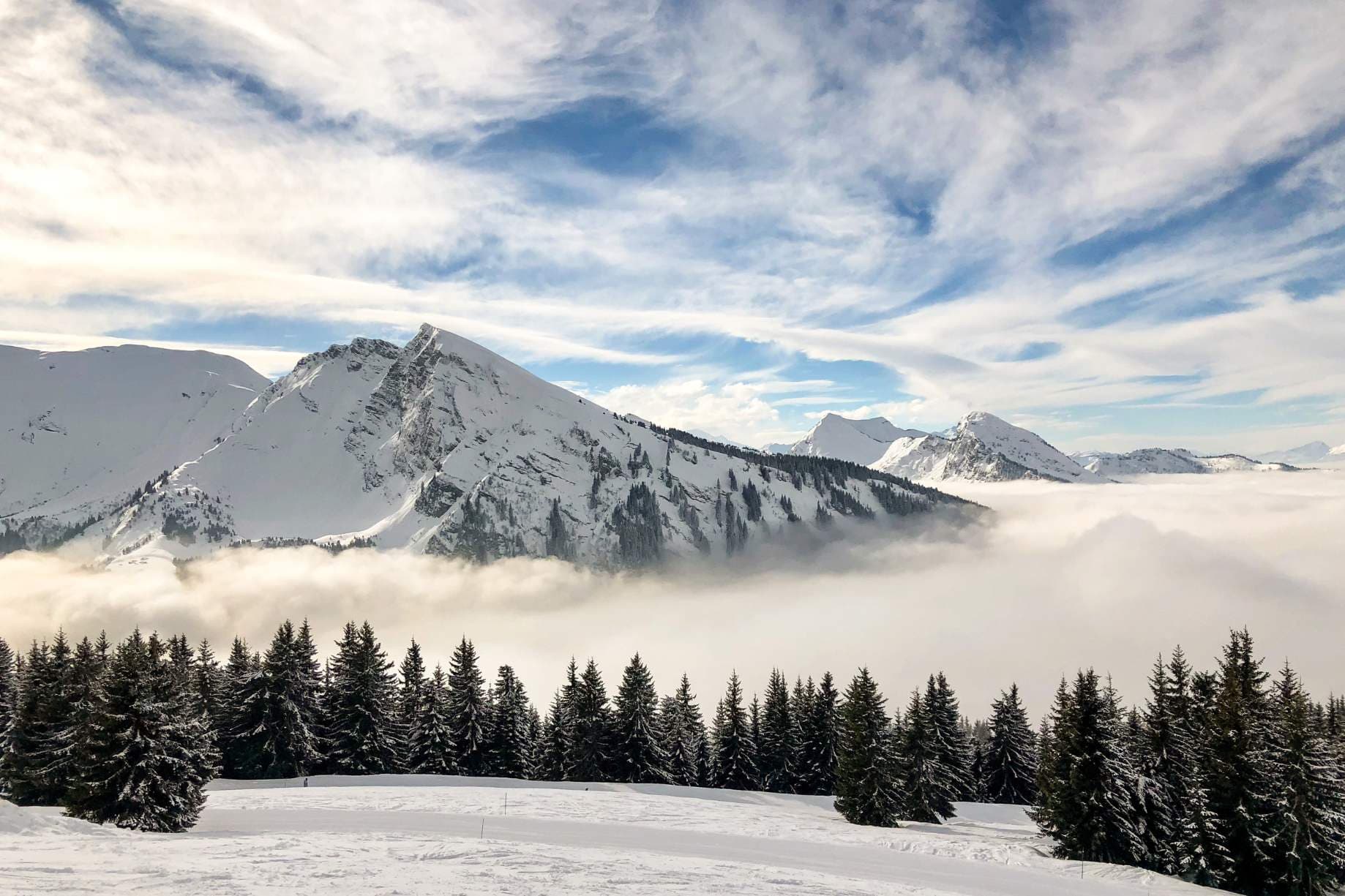
The Portes du Soleil, resort by resort
Morzine is the domain's natural capital — the biggest real town, the most complete base — but part of the pleasure of ownership here is that eleven other resorts hang off the same lift pass, each with a distinct personality. Avoriaz, directly above town, is the snow bank: high, car-free, its cliff-top architecture either loved or forgiven, home to the Stash freestyle forest, the Aquariaz waterpark and the most reliable pistes in the network. Les Gets, over the Pléney ridge, is Morzine's gentler mirror — village-pretty, family-calibrated, with the standalone Mont Chéry sector that stays quiet even in peak weeks and some of the domain's best restaurants.
Eastward into Switzerland, Champéry is a genuine old village under the spectacular teeth of the Dents du Midi, its cable car rising to the freeride playgrounds of Les Crosets and Champoussin — treeless, wide, usually emptier than anything on the French side. Morgins is soft-spoken and wooded, a lovely storm-day choice; Torgon hangs on the balcony above the Rhône valley with views to Lake Geneva. Back in France, Châtel anchors the northern loop — a proper farming village still, with the excellent Linga sector — while Abondance and La Chapelle-d'Abondance keep the pace rural and give their name to the valley's great cheese. St-Jean-d'Aulps, down-valley from Morzine, hides the Roc d'Enfer sector: small, steep and beloved of locals precisely because visitors skip it.
For an owner, the practical meaning is variety without transfers: a dozen distinct mountain days from one front door, Swiss lunches on Tuesday, empty Roc d'Enfer laps on Thursday, and a domain large enough that even a February week never repeats itself.
Avoriaz: the crown asset, in depth
Because so much of Morzine's winter logic rests on the resort above it, Avoriaz deserves its own page in the dossier. Built from 1966 on a cliff plateau at 1,800 metres, it remains one of the most singular places in the Alps: entirely car-free — arrivals park at the edge and move by sleigh, snowcat-taxi or on skis — and clad in the shingled, angular architecture that won its designers a place in every history of mountain building. You reach it from Morzine in minutes via the Prodains Express cable car, and that link is the valley's quiet masterstroke: the town keeps its low-altitude civilisation, and borrows high-altitude snow on demand.
On the hill, Avoriaz anchors the domain's most reliable skiing — north-facing bowls, the freestyle Stash and Lil'Stash forests that children treat as religion, the link points to the Swiss Wall and Châtel loops — and its plateau holds the Aquariaz tropical waterpark, high-altitude toboggan runs and a festival calendar of its own. For owners based in Morzine the relationship is happily parasitic: ski Avoriaz's snow on the thin weeks, lunch on its terraces, then descend to a town with streets, markets and Tuesday-night restaurants that a purpose-built resort cannot offer. Owning in Morzine is, in effect, owning access to both.
Snow, weather and altitude: the numbers
The numbers worth knowing. Morzine town sits at roughly 1,000 metres; its local skiing runs from there up to around 2,000 at Chamossière, and the linked domain tops out near 2,450 at Les Hauts Forts above Avoriaz, with Avoriaz's plateau itself at 1,800. The Portes du Soleil's position in the pre-Alps, first in line for the fronts that roll off Lake Geneva, gives it a snowfall record that routinely surprises people fixated on altitude: Avoriaz regularly ranks among the snowiest resorts in the Alps by accumulated depth, precisely because it catches the northwest flow that skims past drier, higher domains further in.
The season's shape follows from geography. Early winter can be lean at town level until the base builds — early-season owners ski high and ride down. Mid-January to mid-March is the reliable heart. Spring skiing lives up top while the valley greens; the contrast of biking weather in town and winter above is a March speciality. Summer brings Alpine-classic weather: warm valley days, afternoon-storm risk in high summer, cool nights that keep the air washed. Autumn is stable and golden; November is the wildcard month it is everywhere in the Alps. None of this is a sales pitch — it is the operating manual, and six flexible owner weeks a year is precisely the instrument that plays it well.
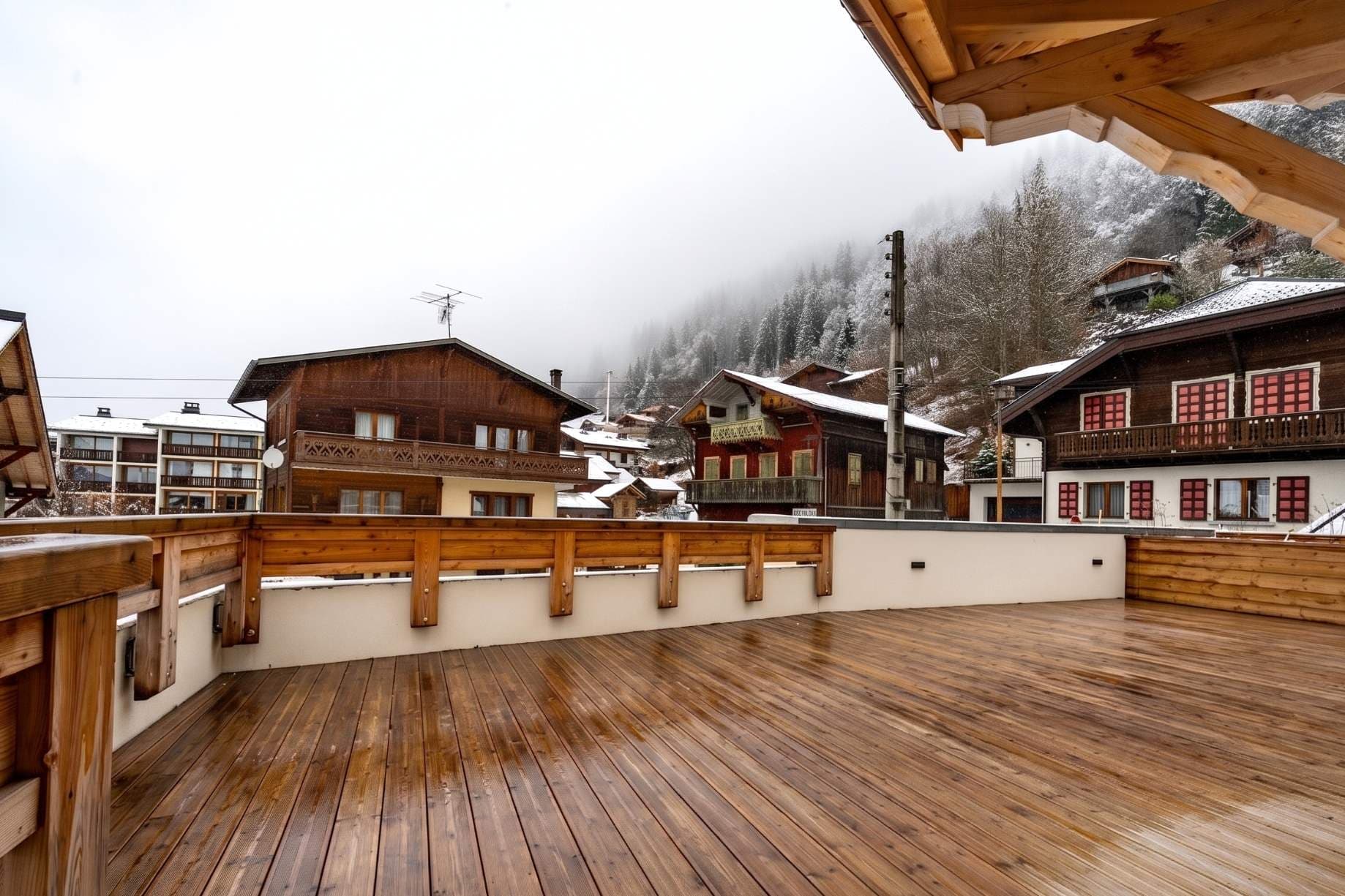
Summer: the second high season
If you have only seen Morzine in February, the July version takes a moment to process. The lift queues are mountain bikes; the streets smell of sun cream and coffee rather than wax and vin chaud; and the valley is green to the ridgelines. Morzine and Les Gets together form one of the world's great lift-served mountain-biking arenas — downhill tracks from world-cup heritage to beginner flow trails, and the Pass'Portes du Soleil festival in early summer sending thousands of riders around the whole domain's crossborder circuit. If there are teenagers in your ownership group, understand: this may outrank the skiing.
For everyone else, summer here is the classic Haute-Savoie repertoire performed at its best. Hiking from the door — up to the Nyon plateau, around the balcony trails with Mont Blanc on the horizon, or along the Dranse gorges. The Lac de Montriond, a ten-minute drive, glacial green under cliffs, with swimming areas and lakeside grills in high summer. Road cycling that needs no introduction to anyone who watches July television: the Col de Joux Plane, one of the Tour de France's storied climbs, starts from town, and the great cols of the Grandes Alpes route spread out beyond. White-water on the Dranse, canyoning, paragliding off Super-Morzine, golf at nearby courses, and the Parc des Dérêches along the river — pools, ponies, playgrounds — absorbing small children by the hour.
The summer season proper runs from late June, when the lifts reopen, to early September, with July and August the full-tilt months. June and September are the insiders' choice: warm, open, and nearly private. For owners, the meaningful point is this — summer weeks here are not consolation-prize weeks. They are, for many families, the ones fought over.
Morzine with children
Few Alpine towns are as thoroughly child-proofed by accident of geography. The Pléney nursery slopes sit directly on the town, so small children reach ski school on foot rather than via a resort commute; the ESF and the valley's several international schools teach in English as a matter of course; and the front de neige in February functions as a vast, self-supervising playground. Off the snow, the Parc des Dérêches — the riverside park threading through town — stacks swimming pools (indoor and out), an ice rink, pony rides, playgrounds and mini-golf into one pushchair-friendly kilometre. Sledging hills, the Aquariaz waterpark up the cable car, and husky and horse-drawn experiences round out the winter register.
Summer may be even easier: the lake at Montriond for swimming, gentle balcony walks with buvette targets, beginner bike trails that turn ten-year-olds into evangelists, high-rope forests, and a town centre compact and calm enough for first tastes of independence. For ownership groups, this is the quiet argument for Morzine over higher, harder resorts: the years when children are small are exactly the years a holiday home earns its keep, and this town is built for them. A share's rotating calendar means the school-holiday weeks distribute fairly — and the shoulder weeks, gloriously, are yours when the children are still too young for term-time to matter.
The non-skier's Morzine
Every ownership group has one — the partner or parent for whom the mountains are scenery rather than sport — and Morzine treats them better than nearly any resort in France, because it never stopped being a town. The non-skier's day here has structure: the Wednesday market and the épiceries in the morning, a proper lunch (up the mountain by cable car and on a sun terrace, no skis required), then the spa circuit — several hotels open their pools, steam and treatment rooms to visitors — or winter walking on the groomed piéton paths of Pléney and Super-Morzine, which serve non-skiers with the same lifts and better views. Snowshoe outings with guides go deeper, up the silent side valleys where the only tracks are hares'.
Between times there is a cinema, a library, yoga and pilates studios run for the international community, galleries and the workshops of a surprising number of resident artisans, and a café culture entirely capable of absorbing a novel-length afternoon. In summer the question inverts — the non-cyclist simply becomes a hiker, a swimmer, a market-goer — and stops being a category at all. The measure of the town is that non-skiing owners here do not merely tolerate their weeks; they book extra ones.
A year in Morzine, month by month
December opens with the lifts, the markets and the reassuring ritual of first tracks before Christmas; the town is at its most storybook in the week before New Year. January is the quiet connoisseur's month — cold, uncrowded, and statistically the snowiest stretch, when owners who can travel without school calendars get the domain almost to themselves. February belongs to the school holidays of half of Europe: the town is full, the atmosphere is high, and this is precisely the week a fair usage rotation is designed to share out over the years. March might be the best all-round month on the calendar — consolidated snowpack, long afternoons, sun-terrace lunches at altitude. April winds the winter down: slushy home runs, spring skiing up high in Avoriaz, closing parties, and by the third week, quiet.
May is the valley's deep breath — many businesses shutter, waterfalls run loud with meltwater, and the town belongs to residents; owners rarely schedule it, which is exactly why the odd May week is such a private pleasure. June greens the valley and reopens the lifts for bikes toward its end; the mountain days are long and empty. July and August are the second high season in full voice — biking, lake, cols, festivals, market mornings — and now rival February for family demand. September may be the valley's most beautiful month: warm days, cold nights, forests turning, trails empty; the lifts close early in the month but the walking and cycling do not. October is larch-gold and low-season quiet — a reading-and-restaurants week for owners who like their mountains still. November belongs to snow-watching and anticipation, the town stringing its lights, everyone refreshing the forecast until December brings the wheel around again.
The year's fixtures
Winter's calendar keeps a reliable rhythm: the lighting of the town and Christmas markets in mid-December; torchlit descents and fireworks over the holidays; the Rock the Pistes festival in March, when live stages appear on the snow across the Portes du Soleil and skiers commute between concerts; and the spring closing weekends when Avoriaz sends winter off in fancy dress. Through the season the ESF's evening displays, ice-hockey fixtures at the Skoda Arena and full-moon snowshoe outings fill the gaps between dinners.
Summer answers with the Pass'Portes du Soleil in late June — the great crossborder bike festival that books the valley solid — the Harley Days rumble in July, outdoor cinema and street-music evenings through the school holidays, the Fête du 15 Août with its fireworks over the town, and the autumn désalpe, when the herds come down from the alpages garlanded in flowers and the town remembers exactly what it was built on. None of it requires tickets bought a year out; all of it rewards an owner's calendar that can simply be there.
Eating, drinking and the social calendar
Morzine eats better than a town of three thousand has any right to. The base layer is Savoyard, done properly: fondue and raclette in wood-panelled rooms, tartiflette after a cold day, local charcuterie and Abondance cheese from the next valley — the Wednesday market is the place to assemble a chalet supper of some seriousness. Above that sits a genuinely varied restaurant scene for a town this size: modern Alpine kitchens, good pizza, steakhouses, and the mountain restaurants of the domain itself, where a long lunch on a sun terrace at two thousand metres remains one of skiing's fundamental arguments.
The bar scene runs the full register, from quiet wine bars to the après institutions on the Rue du Bourg that thump until the small hours in peak season — easy to find when wanted, easy to avoid when not. The town's calendar keeps its own rhythm: torchlit descents and fireworks in the holiday weeks, ski-cross and freeride events through winter, the Pass'Portes bike festival and Alpine music evenings in summer, and the agricultural traditions — the désalpe, the cheese fairs — that remind you the valley farmed long before it skied.
It is, in short, a town you can eat, drink and idle in for a fortnight without repeating yourself — one more reason six owner weeks a year here get used rather than forfeited.
The Savoyard larder
Half the point of owning in Savoie is eating in Savoie, so know your larder. The valley's own cheese is Abondance, an AOP mountain cheese with a hazelnut depth that outclasses its fondue-filler reputation — buy it from the fruitières in the Abondance valley or at Morzine's Wednesday market, where the seasonal alpage versions are worth the queue. Around it cluster raclette du Valais from over the border, tomme and reblochon from neighbouring valleys, and a charcuterie tradition — dried sausages, mountain ham, diots for the pot — that turns a chalet lunch into an event of substance.
Savoie's wines remain one of France's better-kept secrets and belong in any owner's cellar-under-the-stairs: crisp Apremont and Chignin with the cheese, the peppery red Mondeuse with the diots, and Crépy and Marin from the Léman shore for summer terraces. Add génépi — the Alpine herb liqueur every valley family makes a private claim to — honey from the high meadows, and bread from the town's boulangeries that sells out by ten in peak season, and you have the supply chain for the fondue evenings that ownership groups end up scheduling their winters around. The market, the fromageries and the caves of the Rue du Bourg will provision all of it within three hundred metres.
Beyond the valley: days out
Part of Morzine's quiet advantage is what sits within an hour of it. Lake Geneva — Lac Léman — is barely thirty minutes down the valley: the belle-époque waterfronts of Thonon and Évian (yes, that Évian, with its thermal spa and lakefront golf), boat trips to Lausanne, and the absurdly pretty medieval village of Yvoire on its headland. Geneva itself, with its old town, museums and watchmakers, makes an easy day. In the other direction, Chamonix and the Mont Blanc massif are around an hour and a quarter — the Aiguille du Midi cable car being one of the continent's great set pieces — and Annecy, with its canals and lake the colour of cut glass, sits a similar distance southwest.
Cross-border days write themselves: lunch in Switzerland via the lifts in winter, or by road through the Pas de Morgins any time, with Montreux and the Lavaux wine terraces along the Swiss shore beyond. For families there are the Aquariaz waterpark up in Avoriaz, summer luge tracks, and the accrobranche high-rope forests of the valley. None of this requires planning genius; it is simply what living at the hinge of Savoie and Switzerland provides.
A small library of routes
Walkers' shortlist. The Pointe de Nyon balcony circuit, up by cable car and around the plateau, is the classic first-day leg-stretcher with the whole domain laid out below. The Lac des Mines d'Or, at the head of the valley beyond the Joux Plane road, is the postcard walk — a mirror lake under cliffs with a farm-auberge for lunch — and gentle enough for grandparents. For a proper day, the Col de Coux crossing into Switzerland follows old smugglers' ground through country that has not changed in a century; and the Dérêches riverside path, flat and shaded, is the default pram-and-recovery stroll that every owner walks a hundred times without tiring of it.
Riders' shortlist. Road: the Col de Joux Plane from Morzine is the celebrated side — eleven-odd kilometres of Tour de France gradient with Mont Blanc waiting at the top — while the Col de l'Encrenaz and the Gets–Chamossière loops give harder and easier variations; the descent to the Léman shore and back makes a heroic century for the strong. Mountain: Pléney's flow trails for warming up, Les Gets' world-cup heritage lines for showing off, the Portes du Soleil crossborder circuit for the epic — lift-served, waymarked, and genuinely one of the sport's great days anywhere. Every one of these starts within minutes of every home we list below; that, more than any statistic, is the argument.
Getting there and getting around
Geneva is the fact that changes everything. The airport — one of Europe's best connected, with dense year-round service to the UK, Germany, Scandinavia, the Netherlands and beyond — sits roughly an hour and a quarter from Morzine's church square by motorway and valley road in normal conditions; even peak-Saturday winter traffic rarely stretches it beyond two. That is close enough to leave a desk in London or Frankfurt at lunchtime and be at the chalet for dinner, and it is why Morzine, alone among a handful of French resorts, supports a genuine weekend-ownership culture. A deep market of shared and private transfer companies runs the route continuously through winter; self-drivers will find the road journey from the Channel ports long but famously straightforward.
By rail, high-speed services reach Geneva and Cluses–Thonon; the last leg is a transfer or taxi up the valley. On the ground, Morzine in winter operates one of the better free shuttle networks in the Alps, looping the quarters and lift bases from early morning until late; in practice many owners never move their car all week. Summer runs a lighter bus service, and the town itself is compact enough that legs and bikes cover most of it. A car adds freedom for the lake and Chamonix days but is genuinely optional for a ski week — worth knowing when you weigh what kind of stay each of your weeks will be.
The property market, clearly explained
Morzine's property market is what happens when strict Savoyard planning meets four decades of northern-European demand and a dual-season economy. Supply is structurally tight: the commune has held its chalet-town form, large buildable plots are scarce, and new development arrives in small, controlled increments. Demand, meanwhile, draws on two seasons and three buyer pools — French, British and a growing continental mix — which is why the valley's pricing has proved stubbornly resilient across cycles that have humbled flashier resorts. Whole chalets of the kind everyone actually wants — old bones, modern interiors, view, walkable or shuttled to a lift — trade at prices that put them among the more serious purchases in the French Alps outside the ultra-prime names.
Running such a house is its own line item: Alpine freeze-thaw is hard on buildings, gardens and terraces need their seasons, pools and spas want maintenance, and an empty chalet in snow country needs watching. That is exactly why the shape of ownership matters — because the classic pattern, a whole chalet used five weeks a year and worried about for the other forty-seven, is the inefficiency that sharing was invented to solve.
It is also worth saying plainly: this is a market people exit well. Morzine resells to the next wave of buyers drawn by the same fundamentals — Geneva, two seasons, the Portes du Soleil, the town's character — and a share of the home sells into that same demand.
What underpins value here
Setting aside crystal balls, the structural supports under Vallée d'Aulps property are unusually easy to list. Supply is constrained by policy and geology alike: chalet-scale planning rules, little flat land, and a commune that has watched other resorts concrete themselves and declined. Demand is diversified three ways — by season (two genuine high seasons rather than one), by nationality (French, British, Benelux, German, Scandinavian buyers in depth), and by use (families, sporting groups, retirees on the lake-and-mountain axis) — so no single economy's weather sets the valley's temperature. Access underwrites everything: Geneva's flight map is the widest of any gateway in the French Alps, and infrastructure investment continues to flow into the Léman arc around it.
Climate questions are asked here too, and the answer favours this valley's structure: its skiing lives high while its town lives low, its second season grows stronger as summers lengthen, and its lift company has invested accordingly. That is why Vallée d'Aulps property has historically held its nerve through cycles, and why the buyers who exit tend to exit upward. A share of the home stands on exactly these foundations, at an eighth of the outlay.
Who owns here
Three portraits cover most of the owners we meet. The first is the ski family building a tradition: children in ski school every February and July biking by twelve, the same weeks anchoring the year, the chalet becoming the place the family actually accumulates its memories. Geneva's proximity is what makes the tradition sustainable — these are owners who come six or seven times a year because they can. The second is the group of friends formalising what they already do: the ski trip that has run for a decade, upgraded from chalet rental roulette into a real share of a place of their own, with their gear in the owner's locker. The third is the two-season couple — often keen cyclists or walkers as much as skiers — who quietly prefer June and September, take a powder week in January because they may, and use the calendar's edges the way renters never manage.
What unites them is arithmetic and honesty: they counted the weeks they would truly use, priced what those weeks cost to rent at Morzine's level, looked at whole-chalet prices, and concluded that owning an eighth of something excellent beat owning all of nothing — or all of something they'd visit twice a year.
Morzine against the alternatives
Buyers here almost always shortlist the same rivals, so let us do the comparison honestly. Chamonix has the bigger mountain myth and a stronger year-round town, but its skiing is fragmented across separate valley sectors, its traffic is famous, and its prices at the quality end run well beyond Morzine's — you pay Mont Blanc rates for a less connected ski experience. Megève out-charms almost everywhere and out-dines everywhere, at prices to match, with lower and sunnier skiing that suits the lunch-first skier; it is a taste, and a costly one. The Trois Vallées giants — Méribel, Courchevel — beat the Portes du Soleil for high-altitude piste mileage and are priced accordingly, from a base of purpose-built villages that go quiet in summer; their second season simply is not this one's.
Les Gets, the nearest comparison of all, shares Morzine's domain and family virtues in a smaller, quieter package — many buyers genuinely toss a coin, and the honest tiebreaker is that Morzine is a town and Les Gets a village: more life, more restaurants, more shoulder-season pulse on this side of the ridge. Against the Swiss side — Champéry and its neighbours — France wins on access, running costs and market depth. Morzine's cards, dealt plainly: Geneva at an hour and a quarter, a genuine two-season economy, the largest linked domain in the region, a real town that never shutters, and property prices that, while serious, still undercut the prestige names it skis circles around. That hand is why demand here is structural, not fashionable — and why a share of it holds its worth.
Co-ownership in Morzine, in practice
Here is how the model actually works in this valley. You own a real share of a specific chalet or apartment — most commonly one-eighth — not a right to use it. You can sell it pass it on to your heirs, and it moves with the value of the property. The legal set-up is arranged by our partner for each home and walked through with you before you buy. Your share corresponds to roughly six weeks of use a year, scheduled through a fair rotation that shares the plum weeks — February half-terms, New Year, the heart of August — across owners over time, alongside a mechanism for shorter stays and swaps. Because Morzine has two high seasons, the calendar here is unusually rich: a typical owner's year might hold a January powder week, a February or Easter family week in rotation, a summer fortnight, and September or December long weekends.
Between your stays, professional management does what absent owners cannot: the heating and water managed through freeze and thaw, snow cleared, terraces and gardens turned out for summer, linen, cleaning, maintenance, and the accumulated small repairs of an Alpine building handled on schedule. You arrive to a warm chalet with your belongings in the owner's cupboard; you leave without a list. Costs of running the home are shared among the owners rather than shouldered alone — one-eighth of the home's costs, for the avoidance of doubt, not some resort fee invented on top — and many of our homes allow unused weeks to be placed into managed rental, with the income returned to you.
A timeshare sells you a week. Co-ownership sells you the house. A timeshare buys you a resort week or a bundle of points, shared with thousands of others, and is typically worth a fraction of what you paid once you try to sell it. Here you are buying real estate — a real share of one specific chalet in a real Savoyard town, shared with a small group of owners — which moves with the value of the home, sells on the open market at your price, and passes to your children as a home rather than a bill for fees. Every Morzine home below shows the full price of its share.
Buying in France: how the process actually runs
French property transactions are formal, notarised and, once understood, reassuringly predictable. Every sale passes through a notaire — the state-appointed legal officer who verifies title, searches, and the contract — and proceeds in two stages: a preliminary agreement that fixes the deal, a cooling-off period for the buyer, then the acte authentique that transfers title at the notaire's office some weeks later. Purchase costs and taxes are transparent and published; there are no mystery fees waiting in the walls. Foreign buyers face no restrictions on owning French property, and the system's paperwork, while thorough, is exactly that — thorough, not hostile.
For a co-ownership share, the legal set-up is arranged by our partner for each home: your share is yours to sell, pass on to your heirs or hold, with the home's management contract handling the practical life of the building. We walk every buyer through the specimen documents in plain language before any commitment, alongside independent advice — the notarial system exists to protect exactly this kind of considered purchase, and it shows. Nothing here is legal advice, and we always encourage you to take your own; it is simply the shape of a process that thousands of northern-European buyers complete in this valley without drama every year.
Three owners' years: specimen calendars
Abstractions convince nobody, so here are three specimen years. The ski-first family: a New Year's week in rotation years, February half-term when the rotation grants it and an early-March week when it does not, an Easter spring-snow week up high, then a July fortnight for bikes and the lake — six-plus weeks, every one of them fought for at rental prices, none wasted. The two-season couple: mid-January for empty pistes, a long March weekend on a whim because Geneva makes whims possible, late June as the valley opens, the first golden week of September, and a December weekend for the markets and the lights — a calendar built almost entirely from the weeks renters never take, which is exactly why it always clears.
The friends' syndicate: one marquee ski week together each winter — the annual trip that started the whole thing — plus a spring split where two couples take biking weekends, an August week passed around the group year by year, and any unclaimed weeks placed into managed rental so the calendar never simply evaporates. Three different shapes, one common property: in a two-season town an hour from a major hub, six weeks a year is not a constraint you manage. It is a budget you spend well.
An owner's practical almanac
The small knowledge that makes ownership frictionless, collected. Saturdays in February are the valley's one traffic ritual — travel Sunday or fly midweek and the roads are yours. The last cable cars down from lunch run earlier than visitors expect in January; check the boards or embrace the blue-run descent. May and early June, and again from mid-October, a portion of the town's restaurants take their annual breath — the ones that stay open are the locals' addresses, and eating at them is a pleasure in itself. Book the marquee dinners and the February ski school in advance; book nothing else and let the valley set the pace.
In the chalet: your owner's locker holds boots, bikes and the paraphernalia of both seasons, so travel with hand luggage and let the house hold the rest. The management team's number answers the questions that remain — they will tell you which pass suits a three-day stay, when the pool cover comes off, and where the spare snow chains live. Léman's microclimate sends weather up the valley with about a day's notice; the locals' forecast of choice reads the lake, not the peaks. And the golden rule of the two-season valley: whatever week you cannot use, release it early — someone in your ownership group is watching the calendar with hope.
Morzine: questions owners actually ask
Is Morzine snow-sure enough? The town is low; the skiing is not. Avoriaz at 1,800 metres above the town is among the more reliable snow pockets in the northern French Alps, the upper sectors hold their cover, and snowmaking protects the home runs. In a lean spell you ride up and ski high; in a normal winter you ski to the door. Owners with six weeks spread across the season are, in any case, structurally insulated against any single week's luck.
Is it worth owning here if we don't ski hard — or at all? Genuinely yes, and Morzine is one of the few Alpine towns where that answer is honest. The summer season is a first-class holiday in its own right, the town lives year-round, the lake is half an hour away, and winter offers walking, spas, sledding and the best long lunches in the Alps. Plenty of owner groups contain one devoted skier and three people who come for everything else.
How do the six weeks get decided? By a structured rotation designed for fairness: the marquee weeks rotate among owners year to year, the rest are chosen in ordered rounds, and shorter stays and swaps fill the gaps. Nobody buys the permanent rights to February half-term; everybody gets it in turn. We will happily walk you through a specimen calendar for any home below.
Can we get there for a weekend, really? Yes — this is Morzine's superpower. With Geneva an hour and a quarter away and dense flight schedules from most of northern Europe, Friday-night arrival and Sunday-evening departure is a routine owner pattern, not a stunt. It is the difference between six weeks on paper and six weeks lived.
What happens when we're not there? Professional management runs the house: winterisation, snow, gardens, cleaning, maintenance, security. You share the home's costs with your fellow owners — an eighth of the home's costs for an eighth share — and arrive each time to a house that has been looked after, not merely locked.
Can we rent out weeks we can't use? In many of our homes, yes: unused weeks can be placed into a managed rental programme, with guest handling done professionally and the income returned to you. In a two-season market like Morzine, that option has real teeth, and we confirm the arrangement for each home before you commit.
How does selling work later? Your share is a real share of the home: after an initial period of ownership, typically the first year, you can sell it at the price you set, and you are selling into the same deep, two-season demand that brought you here. Shares sell. Hundreds of shares in homes like these have already been resold — in just over three months on average, and nearly three in four for more than the owner paid. We assist owners with resales as a matter of course.
Whole chalet or share — how should we decide? Count your realistic weeks. If you will truly use a place ten-plus weeks a year and want to carry the whole cost and care of an Alpine house, whole ownership is a fine thing. If your honest number is four to seven weeks, a share buys the same chalet, the same town and the same tradition at a fraction of the capital — with the empty-house problem handed to professionals. The full share prices on the homes below make the comparison concrete.
More questions, answered plainly
Do we need a car? For a ski week, no — transfers from Geneva are an industry here, the free shuttle network covers the town and lift bases, and everything else is walkable. For summer, or if lake and Chamonix days appeal, a car earns its keep; parking at the chalets makes it painless either way.
What is the owner community actually like? International in the best sense: French families who have come for generations, a deep British contingent, Dutch, Belgian, German and Scandinavian owners, and a resident expatriate community large enough to sustain schools, clubs and a social calendar. English is spoken everywhere; French is appreciated everywhere. Co-owners typically meet as strangers and end up coordinating calendars over dinner.
How does the crossborder element work day to day? Seamlessly. The lift pass covers both countries; you ski into Switzerland and back without noticing more than the francs on the lunch menu. By road, the Swiss border posts wave you through with Alpine indifference. Keep a passport in the glovebox and francs on a card, and Switzerland functions simply as the domain's quieter wing.
Is summer really worth scheduling ahead of winter? Increasingly, yes — ask any owner with teenagers. July and August weeks in the valley now rival February for demand within ownership groups, and the Pass'Portes weekend books the town out. The rotation shares those weeks exactly as it shares the ski marquees, which is precisely why a calendar with two high seasons is worth more than one with a single crest.
What should we look at on a viewing trip? Come twice if you can — once with snow, once without. Walk the quarter your shortlisted chalet sits in at nine in the morning and nine at night; ride the nearest lift; time the walk to the Rue du Bourg. Then let us open the doors. Two days in the valley answers more than two months of brochures, and we will build the itinerary around the homes below.
Taxes, resale and how ownership works for your 1/8 share of the home are covered in depth in our complete country guide. Read the full France ownership guide →
Each listing shows the full price of its share — typically one-eighth of the home. It is a purchase price, not a deposit or membership fee: you become a co-owner of the home.
No. A timeshare sells you a week; co-ownership sells you the house. You own a real share of the Morzine home with a small group of owners, not a week at a resort shared with thousands. It moves with the value of the house, you sell it on the open market at your price, and you can leave it to your children.
A one-eighth share corresponds to about six weeks a year, scheduled fairly across seasons so every owner enjoys peak weeks over time. The home is professionally managed — you simply arrive.
Questions about a home in this collection? Our team typically replies within minutes.
Get in Touch
Speak to an expert
Tell us what you're looking for and we'll be in touch.