Co-Ownership Homes in Palau
3 luxury holiday homes in Palau available as co-ownership shares, from €119,000 per share. Genuine ownership, fully managed, a fraction of the whole-home price.
The Palau Collection
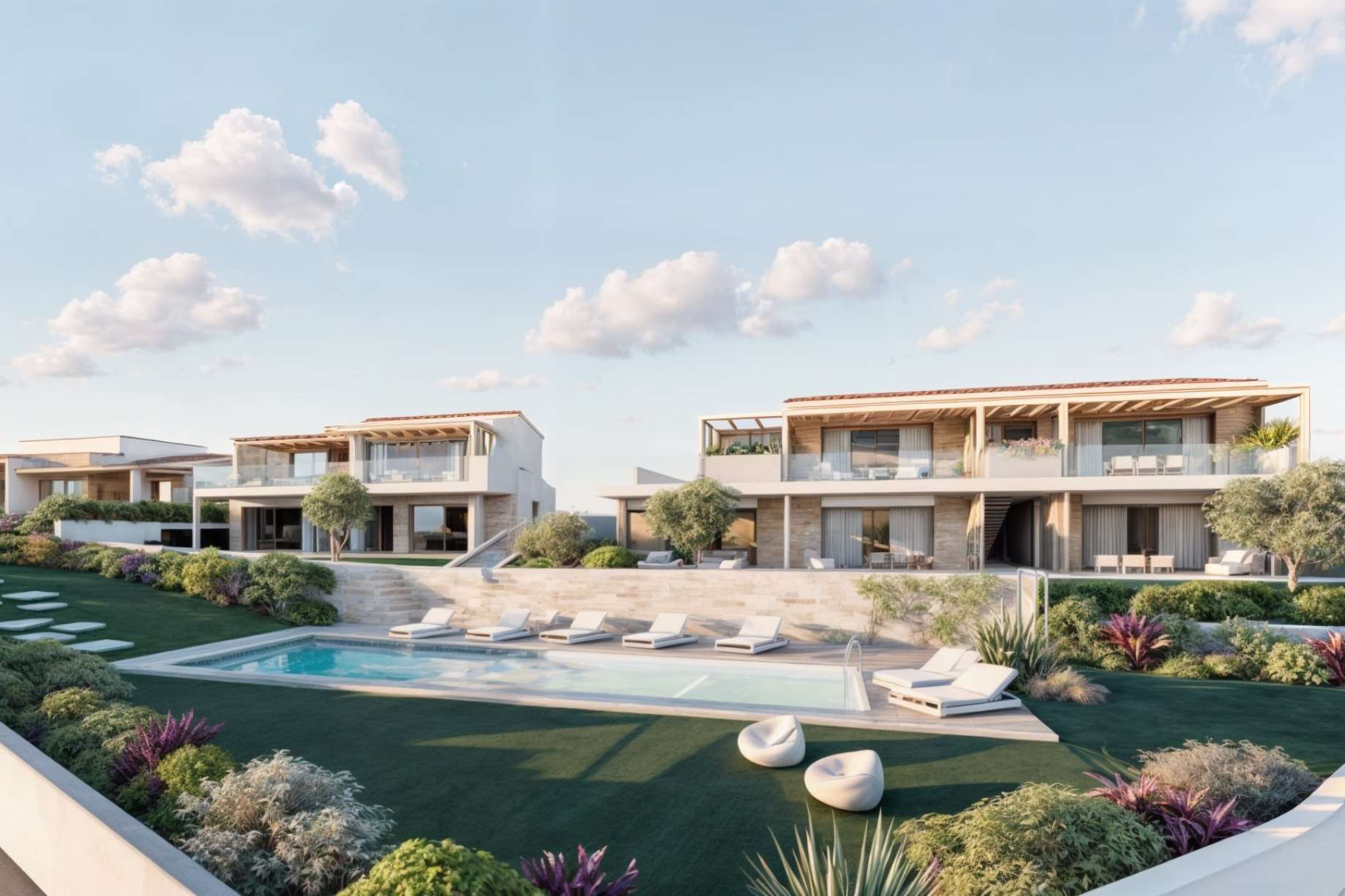
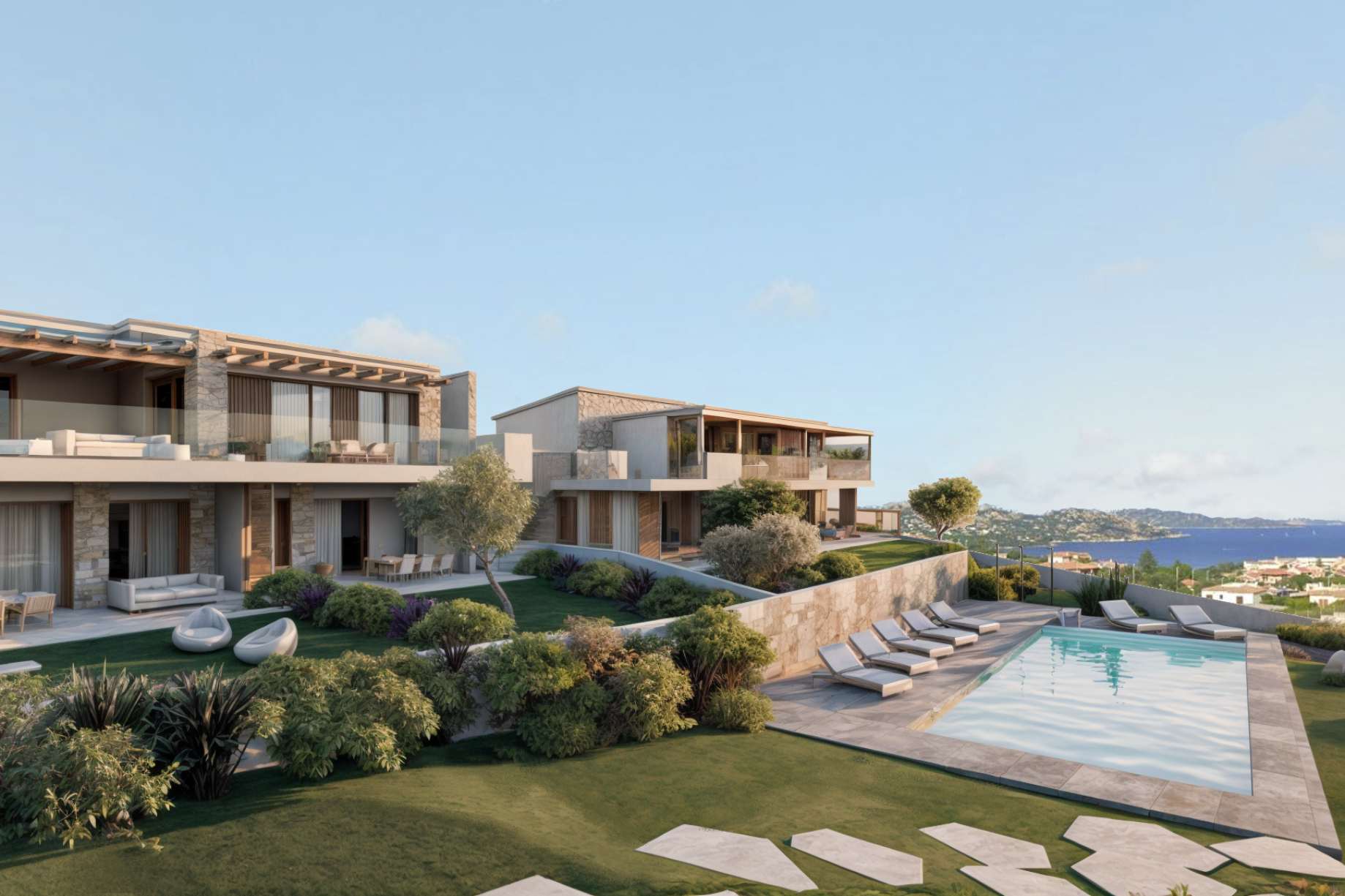
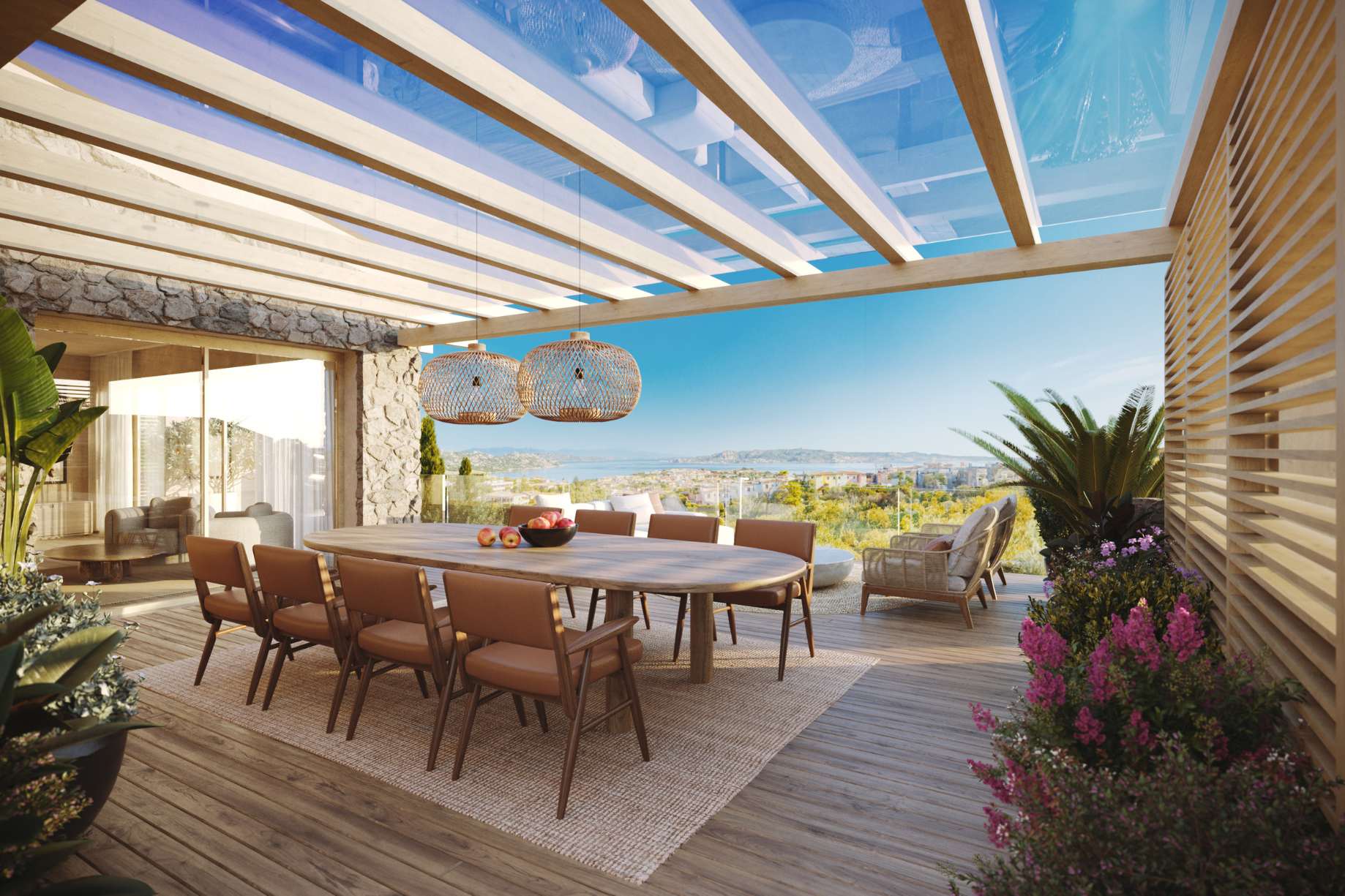
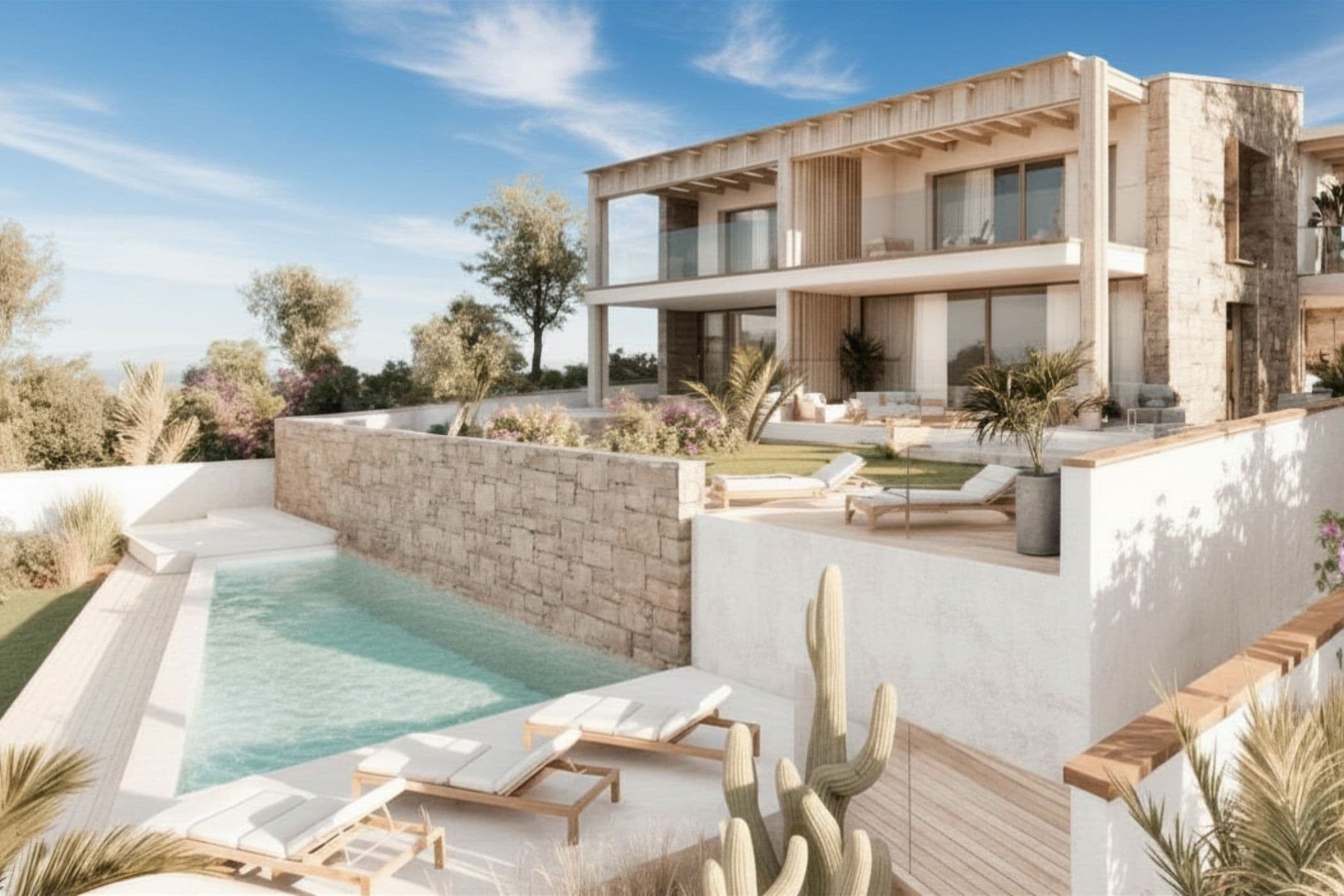
Palau, Sardinia, Italy — 2-Bed Apartment With Pool
€119,000
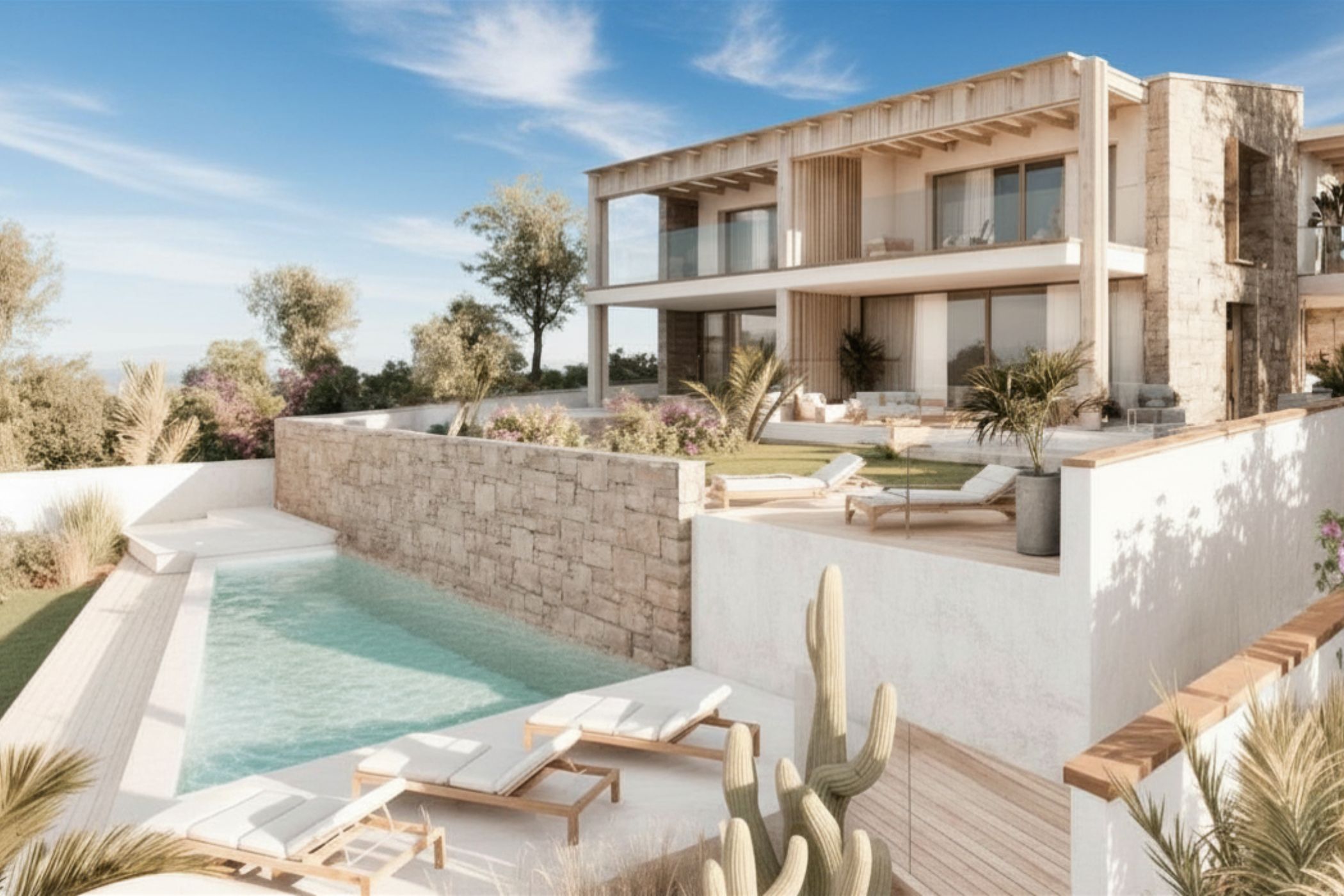
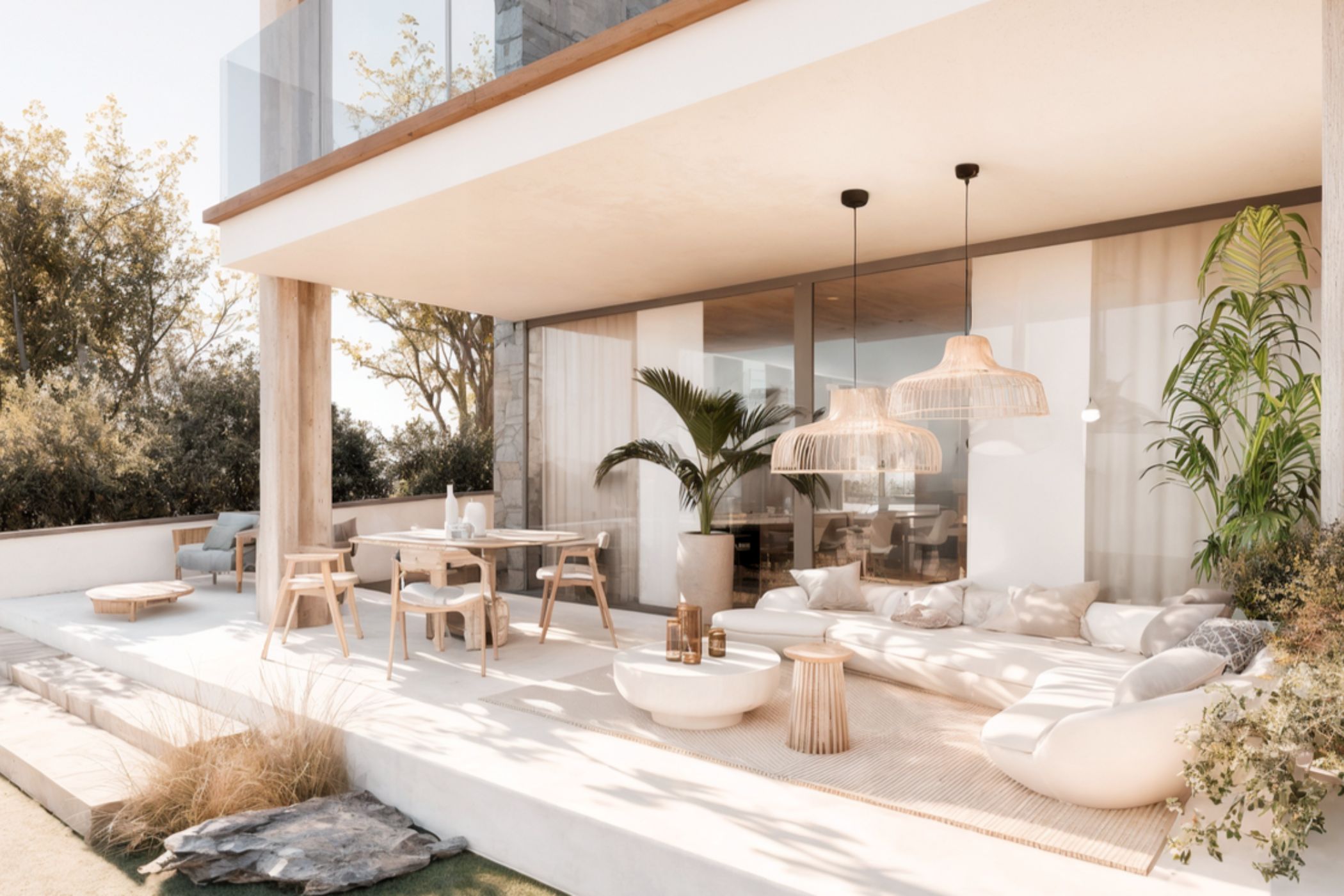
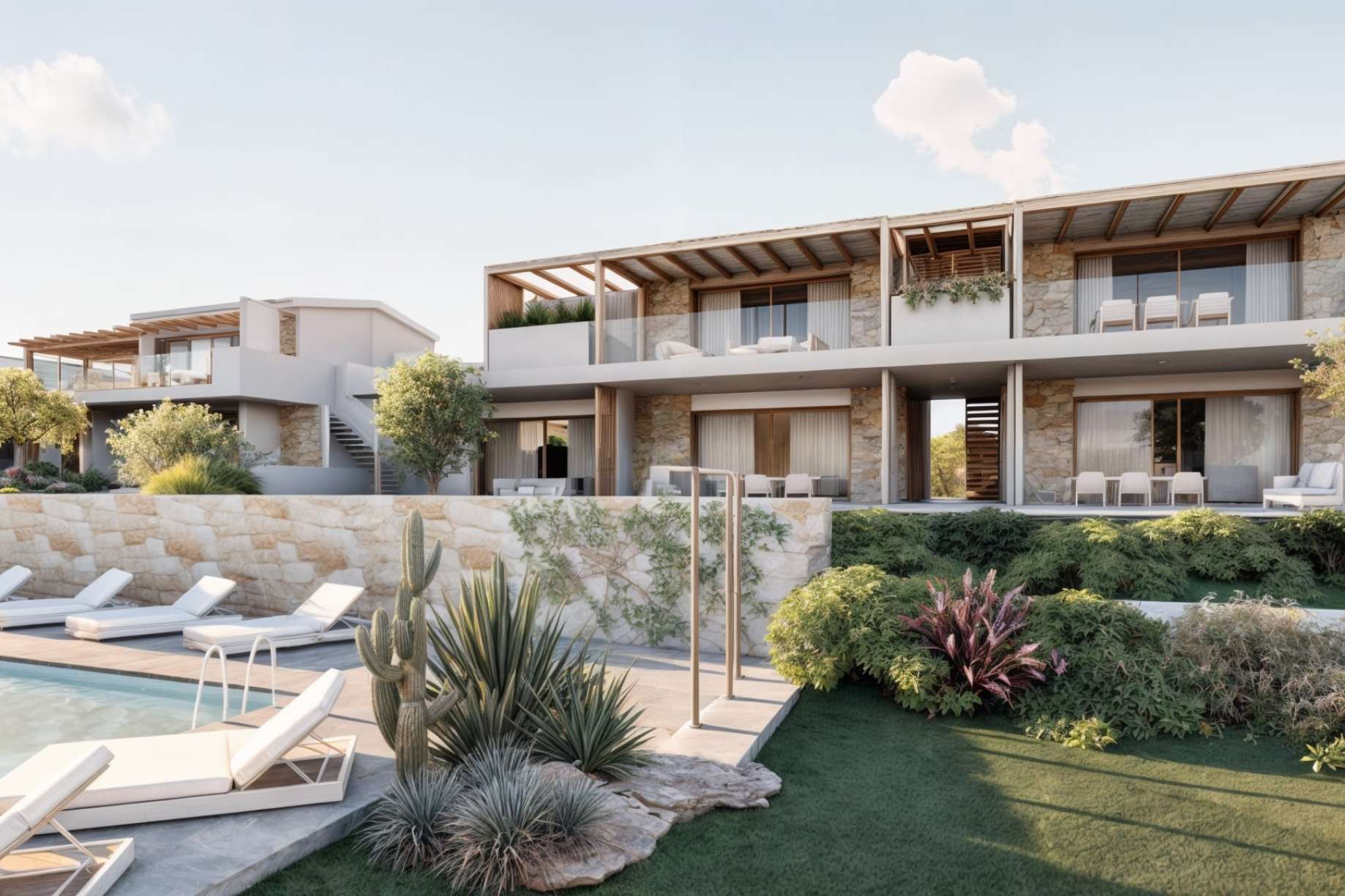
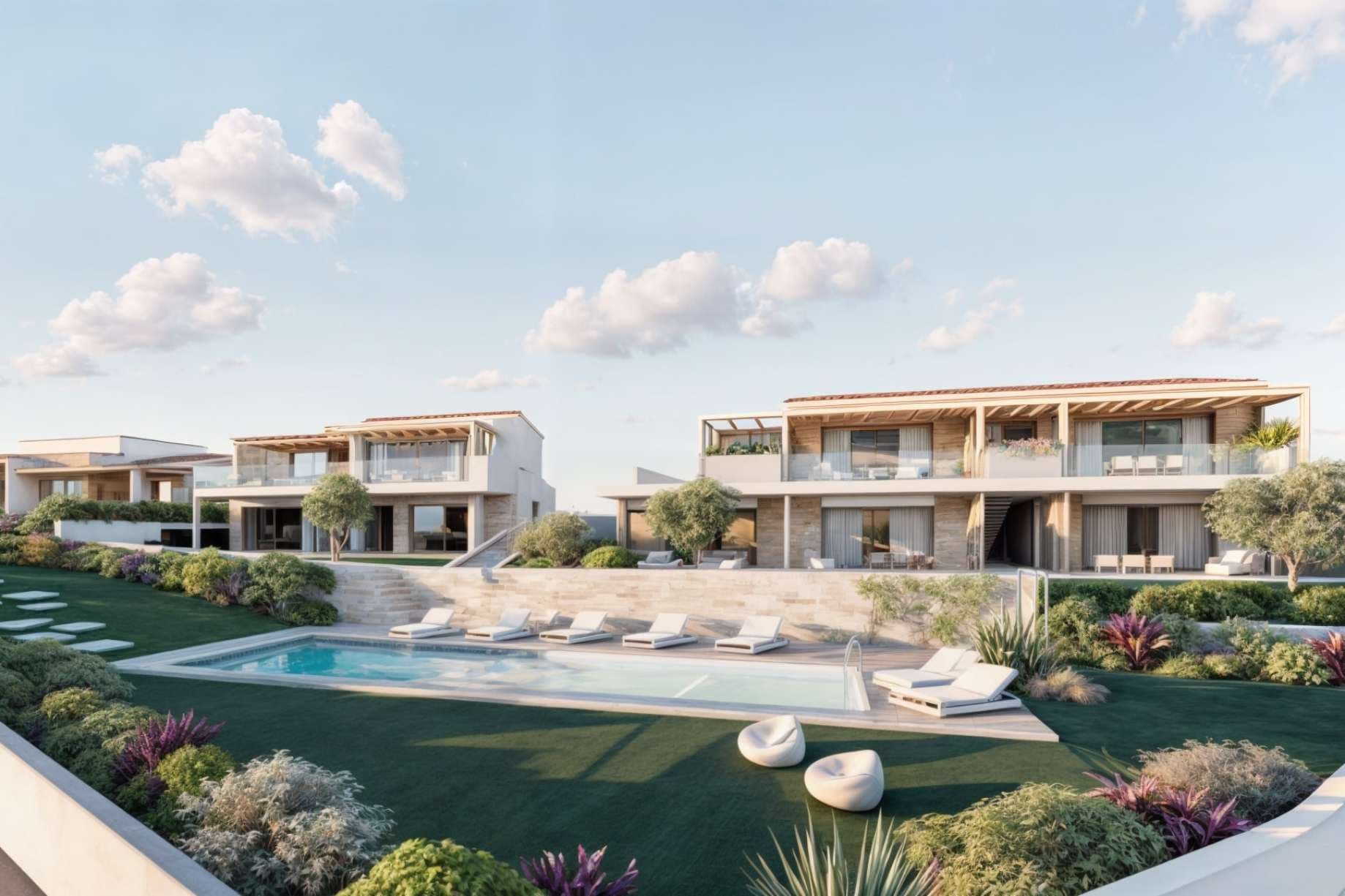
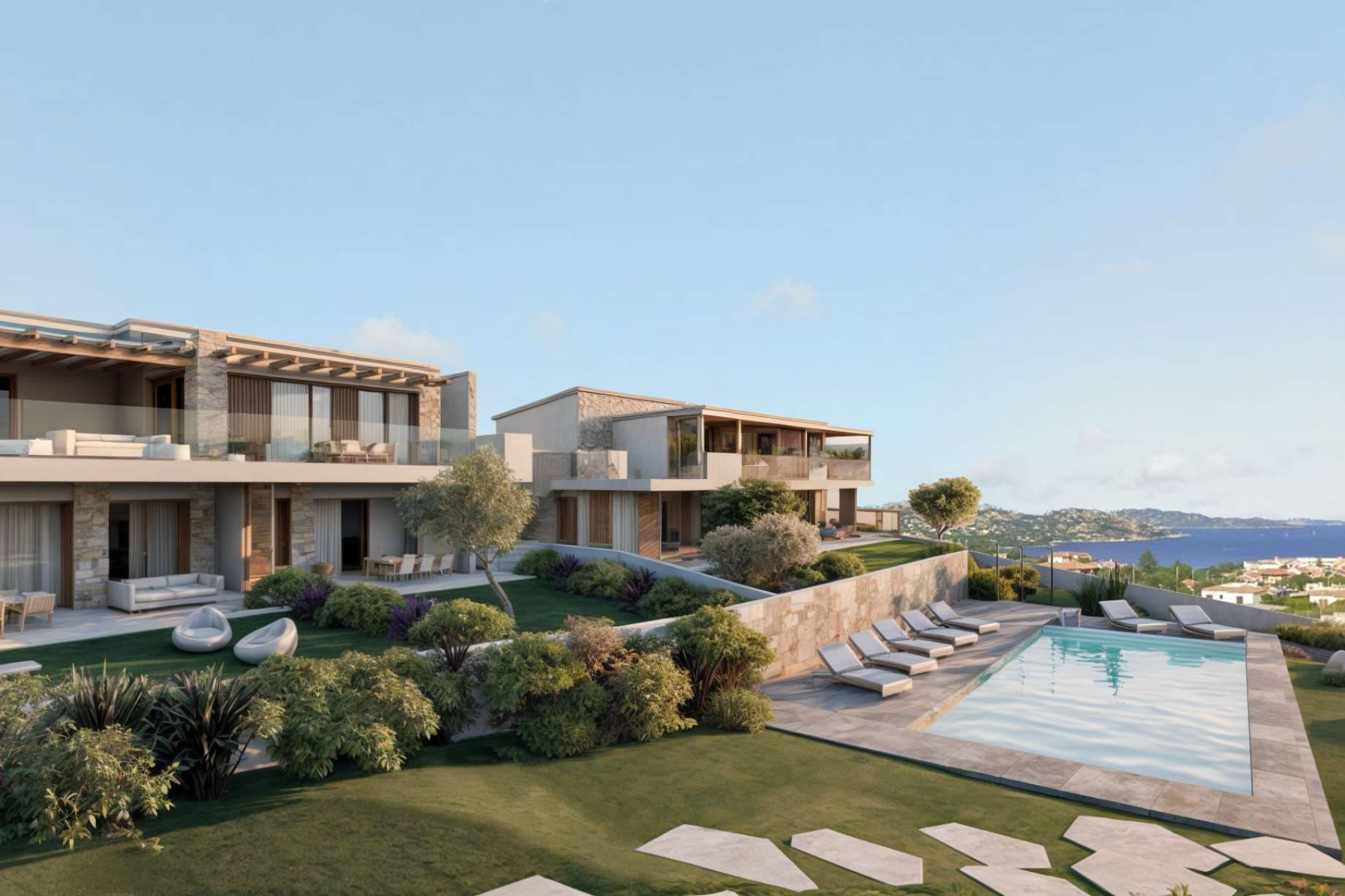
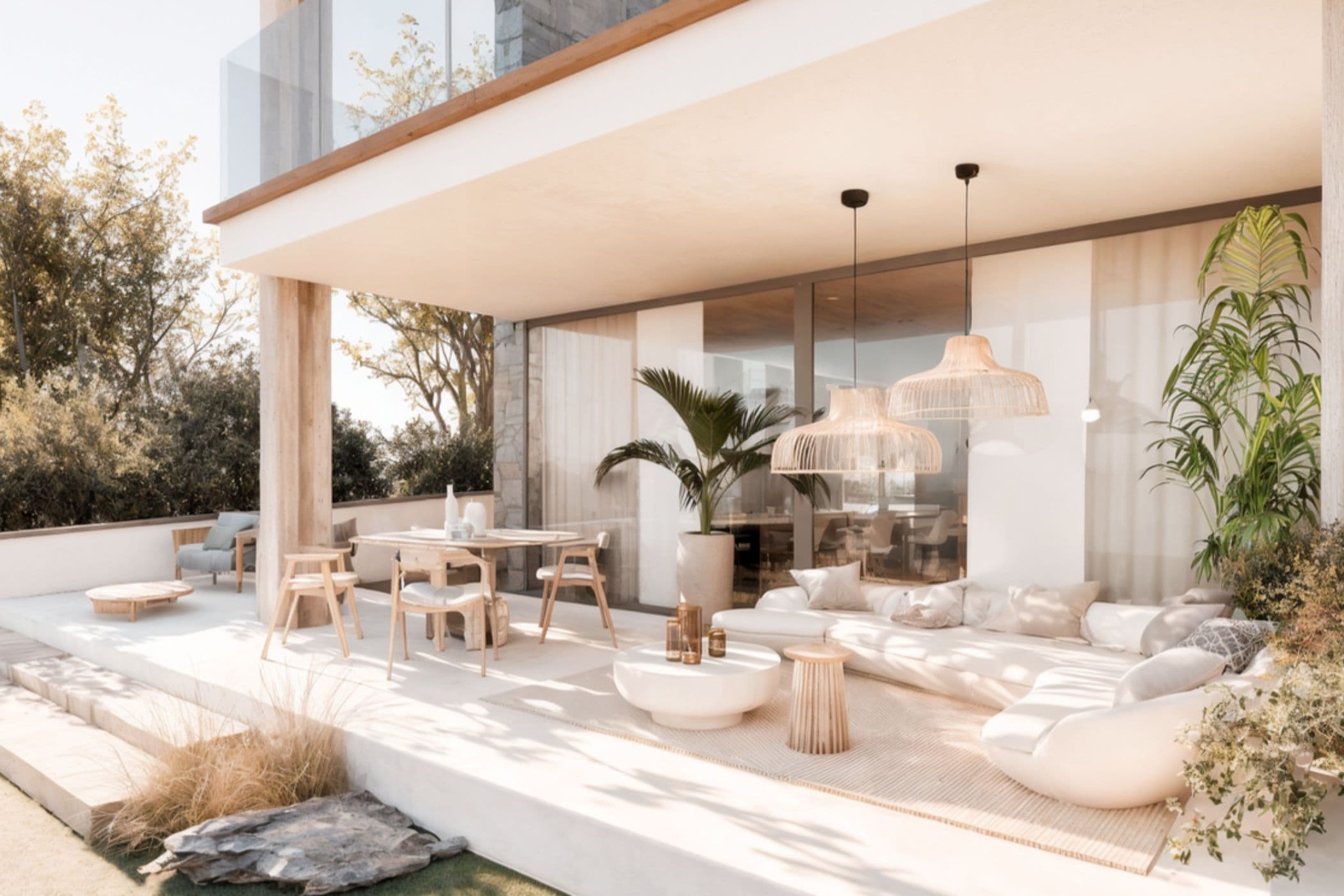
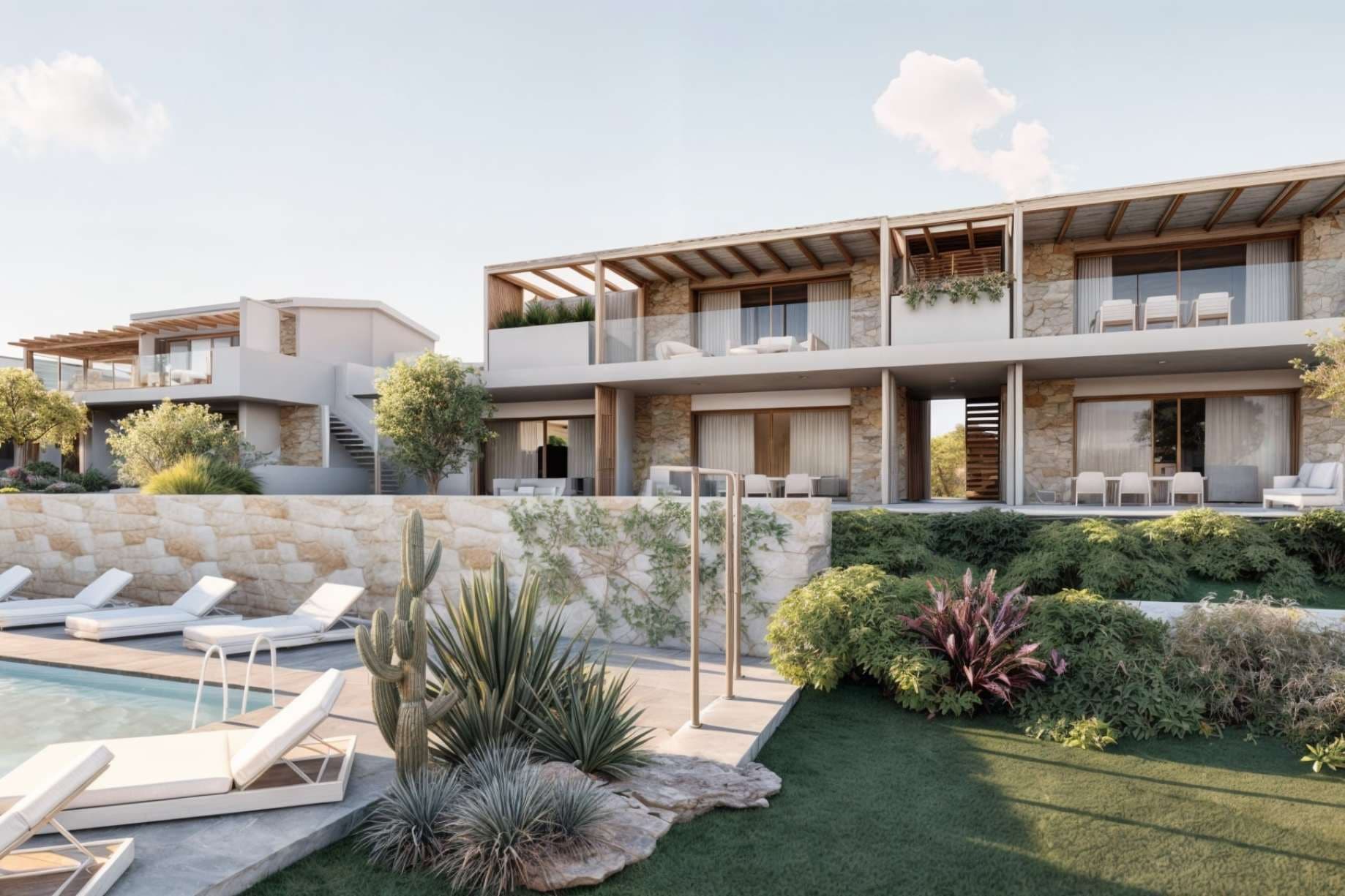
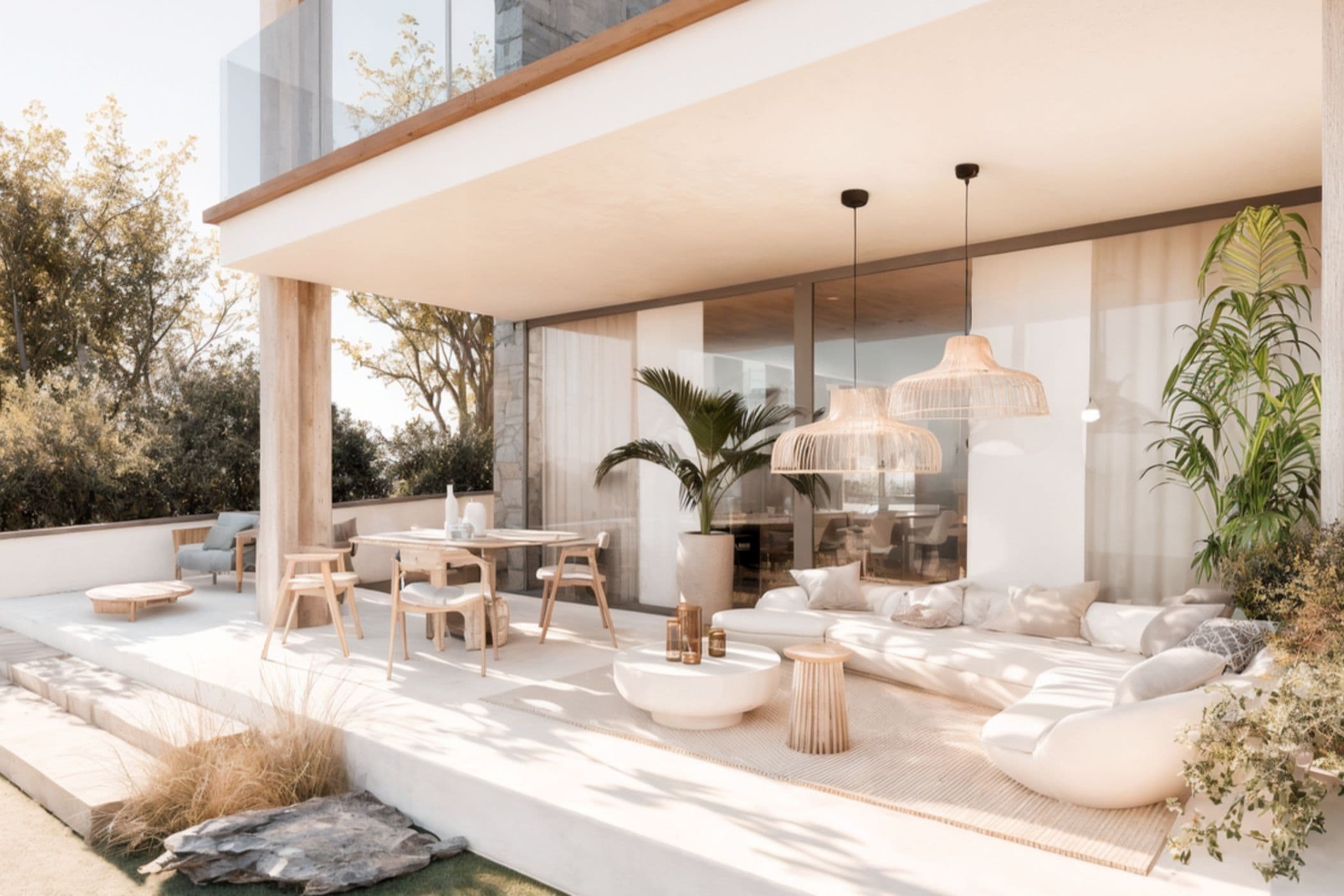
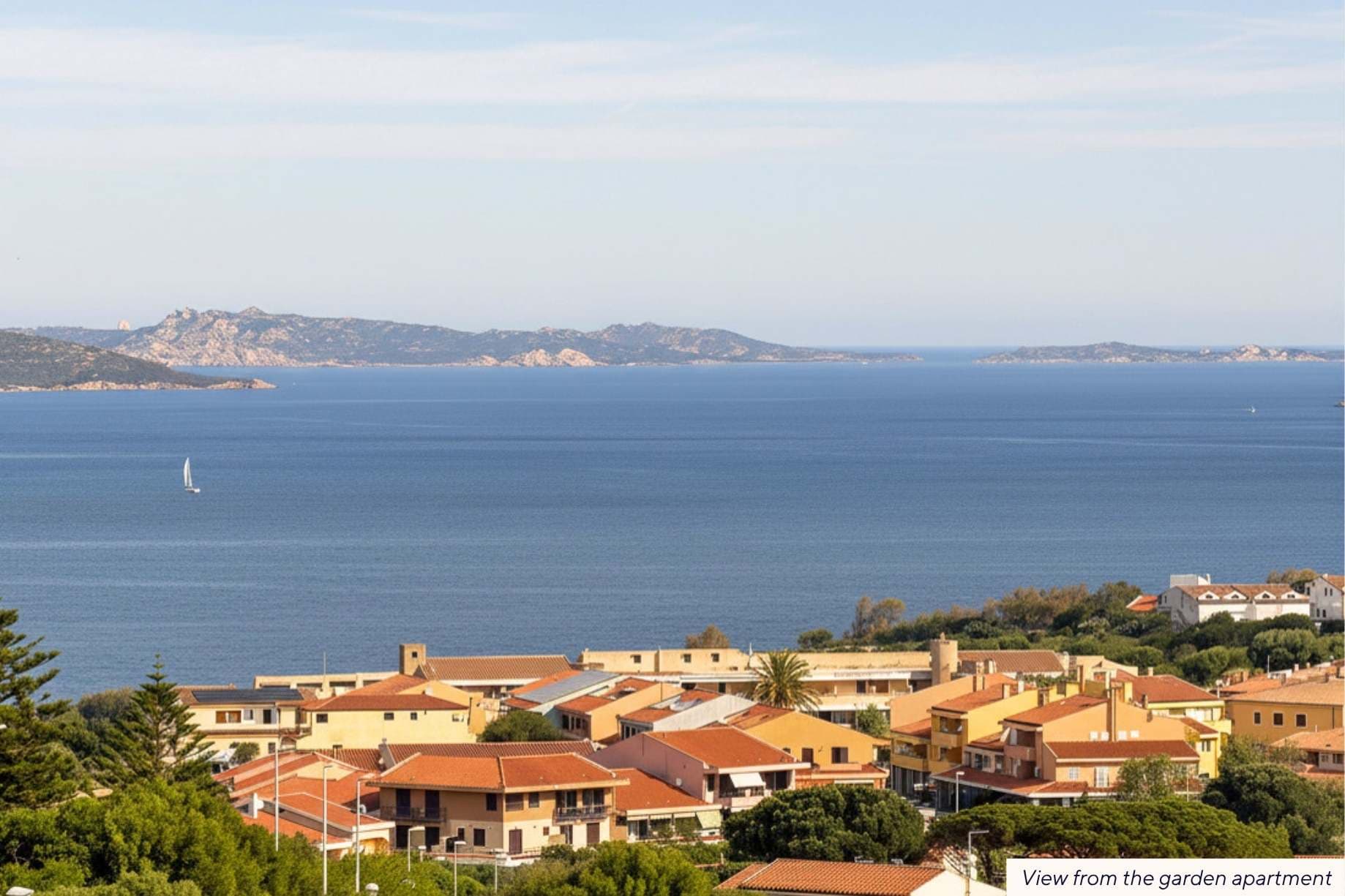
Palau, Sardinia, Italy — 2-Bed Garden Apartment With Sea View & Pool
€219,000
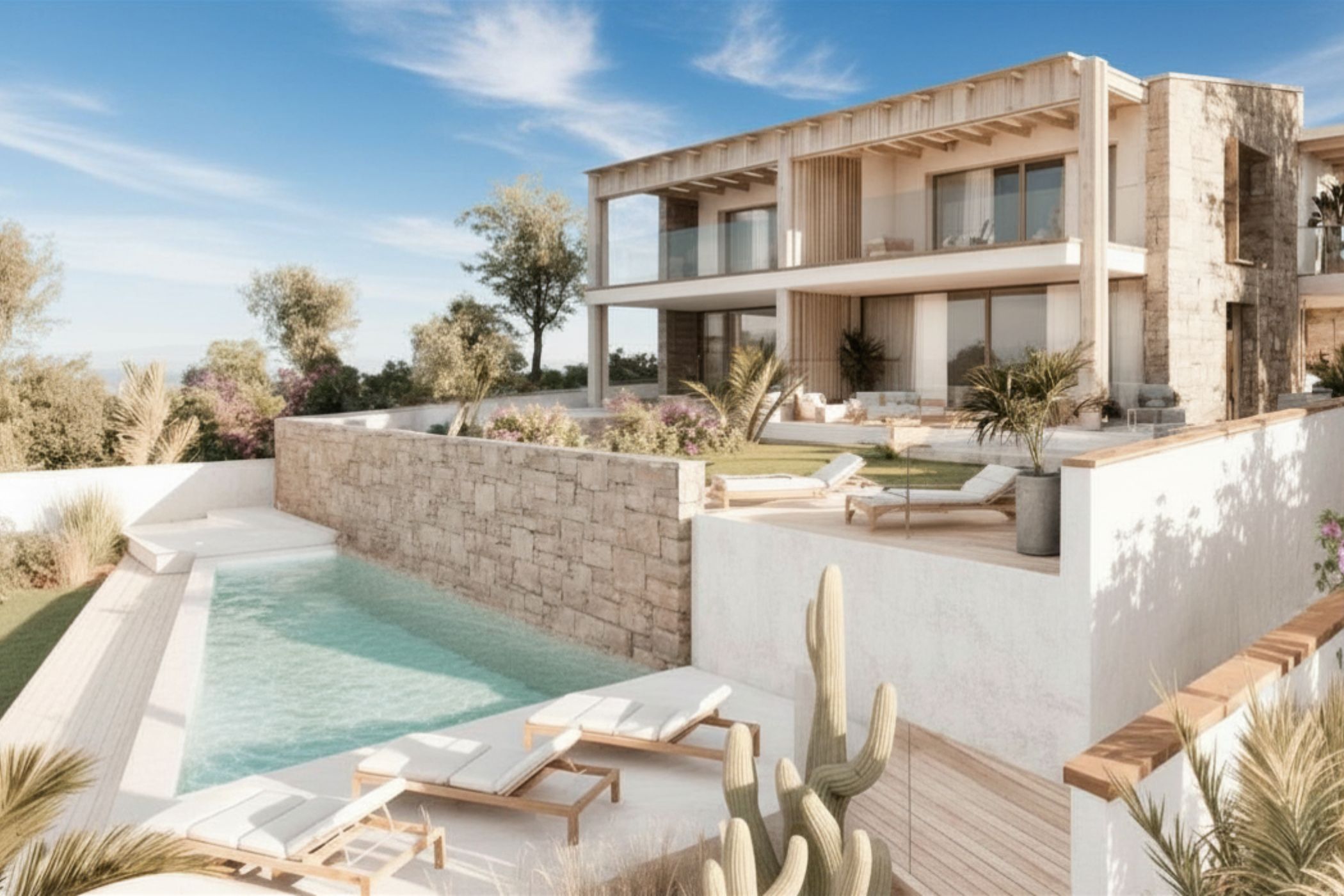
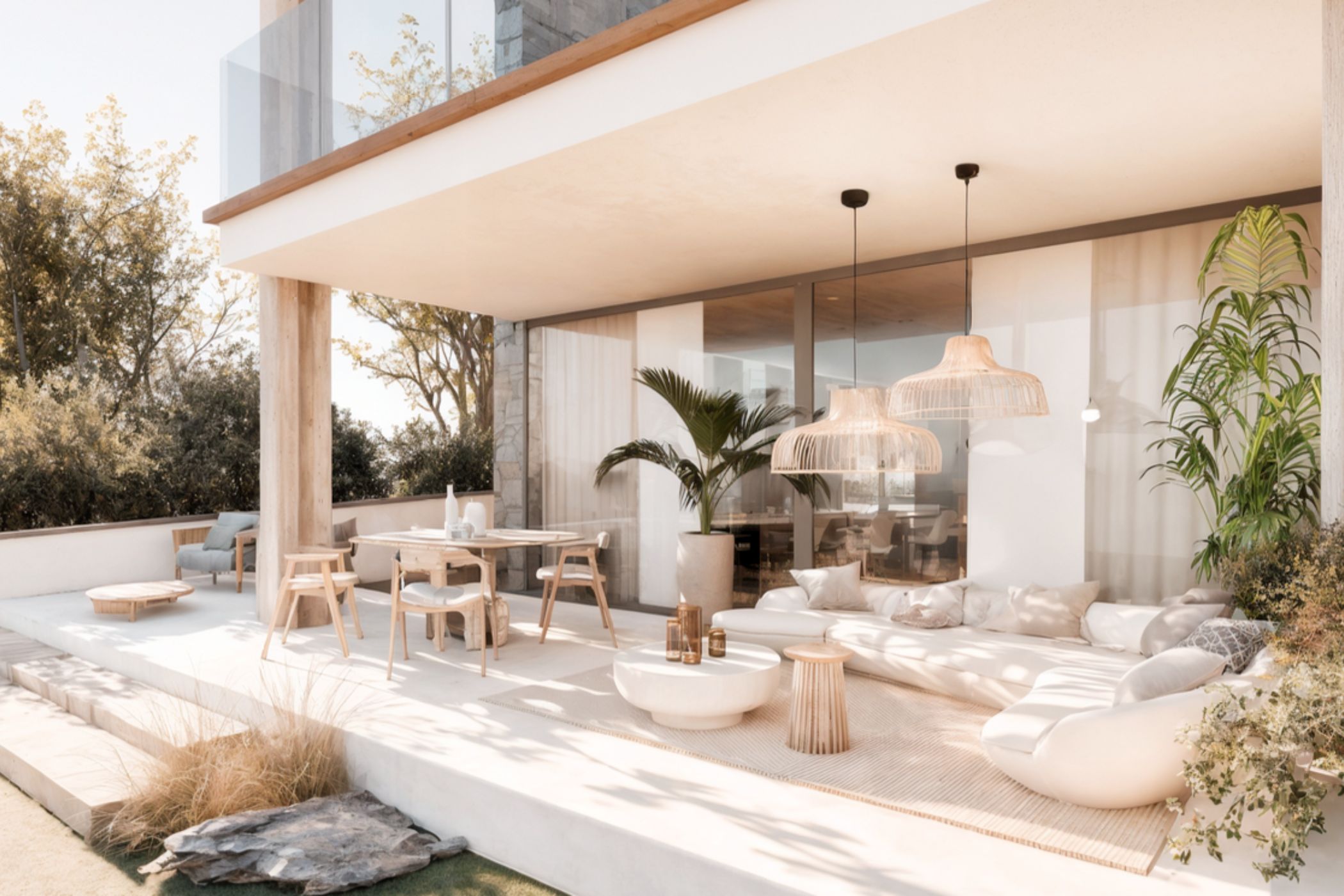
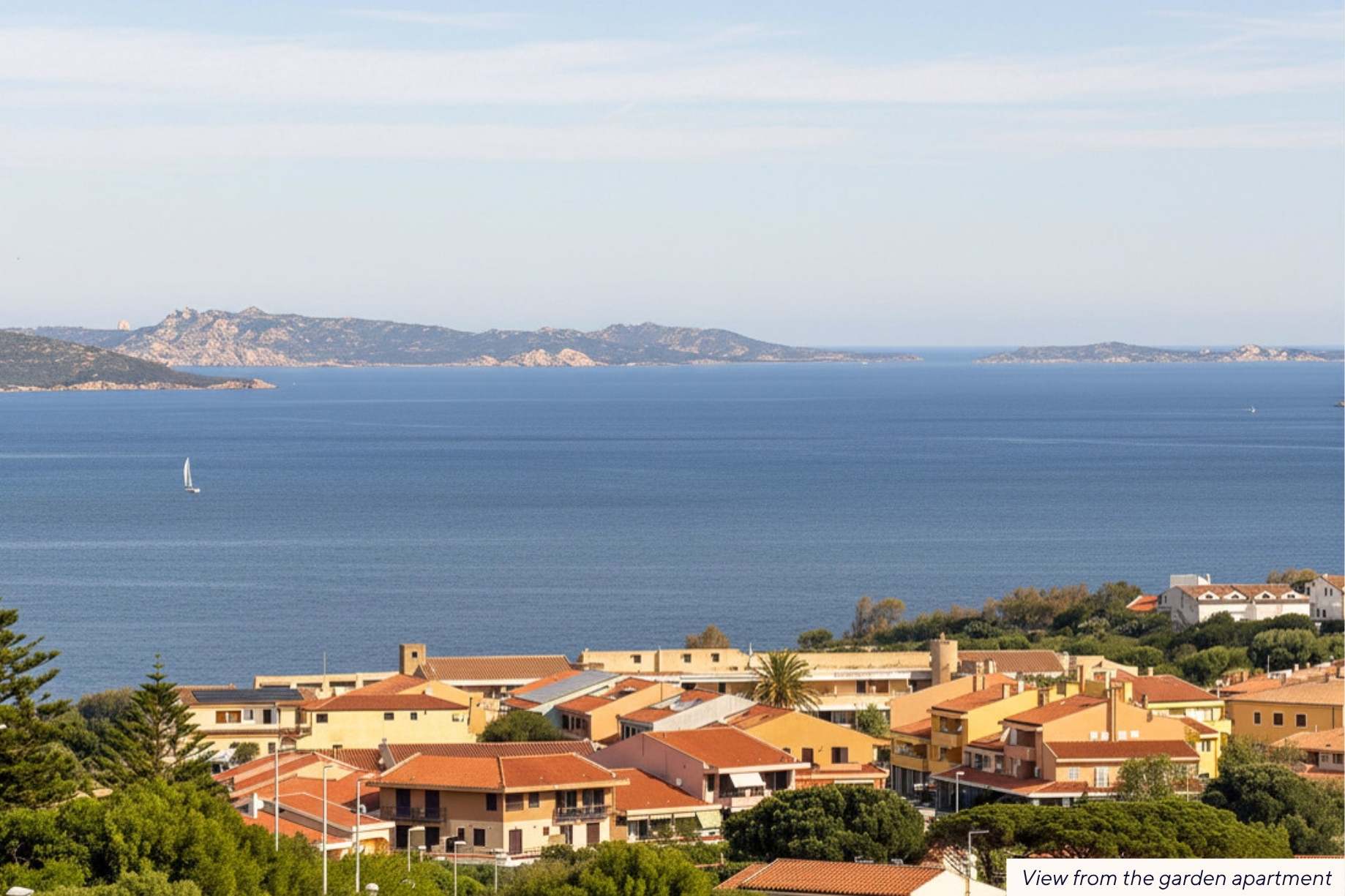
Palau, Sardinia, Italy — 3-Bed Garden Apartment With Sea View & Pool
€219,000
Why buy a co-ownership home in Palau?
Buying a whole holiday home in Palau means paying full price for a house that stands empty most of the year. Co-ownership takes the same home — professionally managed, beautifully furnished — and divides it into shares, usually eighths. You own a real share of the home — not a right to use it — with roughly six weeks of use a year, the freedom to sell whenever you choose, and running costs shared between owners rather than shouldered alone. In Palau, that ownership starts from €119,000.
Palau, properly understood
Palau is a small town on the northern tip of Sardinia, facing a strait scattered with granite islands, and its position is the whole story. Directly offshore lies the La Maddalena archipelago — sixty-odd islands and islets, almost all of them inside a national park, with water that ranks among the clearest in the Mediterranean. Twenty minutes south is the Costa Smeralda, one of the most expensive stretches of coast in Europe. Ten miles north, across the strait, you can see Corsica. Palau sits in the middle of all of it and costs a fraction of what its neighbours do.
That is the practical case for this town and it is a strong one. The Costa Smeralda's beaches, restaurants and marinas are a short drive away; the archipelago's beaches — which are better — are a fifteen-minute ferry ride; and the town itself is a working Sardinian port with a supermarket, a Saturday market, a fishing fleet, restaurants that are open because locals eat in them, and prices that reflect none of the glamour next door. The homes we list here are apartments with sea views, gardens and pools at a level that would be unattainable twenty minutes down the coast.
One thing shapes everything else here, so it is worth saying up front: this is a summer coast. Northern Sardinia's season runs from roughly May to early October, and outside it the flight schedule contracts sharply, a significant share of restaurants and hotels close, and the coast goes quiet in a way that is beautiful if you want solitude and inconvenient if you want a restaurant. A share here should be planned around that reality rather than in spite of it — and as the sections below explain, that reality is also why the calendar works well when it is shared.
A short history: granite, cork and the archipelago
Northern Sardinia's human history runs deeper than almost anywhere in the Mediterranean. The nuragic civilisation built thousands of stone towers across the island between roughly 1800 and 700 BC, and the Gallura region around Palau holds some of the most impressive surviving monuments of that culture — the so-called giants' tombs at Coddu Vecchiu and Li Lolghi near Arzachena, twenty minutes away, are extraordinary and almost always empty. The Romans came, the Vandals came, and for centuries afterwards the coast was largely abandoned to malaria and to raiders, with the population living inland.
The islands offshore have their own history. The La Maddalena archipelago was strategically vital — it commands the strait between Sardinia and Corsica — and was fortified and garrisoned for two centuries, most recently as a naval base. Caprera, the second island, is where Giuseppe Garibaldi, the central figure of Italian unification, bought land, farmed, lived out his last decades and is buried; his house is preserved as a museum and is one of the most visited sites in Sardinia.
Palau itself is young: it was founded as a settlement in the nineteenth century and grew as the ferry port for La Maddalena. The Gallura's economy was granite quarrying — the pink-grey stone of this coast was shipped across Italy — and cork, harvested from the oak forests inland, an industry that still makes Sardinia the source of most Italian cork. The transformation came in 1962, when a consortium led by the Aga Khan began developing the coast twenty minutes south into the Costa Smeralda, with strict architectural rules and a deliberately exclusive positioning. That development pulled an international market to this corner of the island and made everything within reach of it more valuable — Palau included, at one remove.
The coast, stretch by stretch
Palau town sits around its port, with the ferry terminal, the marina, a promenade, the shops and restaurants, and the residential streets climbing the slope behind. Above it stands the Bear Rock — a granite outcrop wind-carved into the unmistakable shape of a bear, recorded as a navigational landmark in antiquity and now a viewpoint with the whole archipelago spread below. It is the town's emblem and worth the drive up on the first evening.
West of the town the coast runs out towards Punta Sardegna and then to Porto Pollo, a shallow bay split by an isthmus that funnels the wind coming through the strait. That wind has made it one of the best windsurfing and kitesurfing spots in the Mediterranean, with schools, rentals and an international summer crowd. Beyond it, Barrabisa and the road west towards Santa Teresa Gallura, from which ferries cross to Corsica in under an hour.
East of the town, the coast curls around towards Cannigione and the Gulf of Arzachena — calmer water, more sheltered beaches, and the beginning of the Costa Smeralda proper. Baja Sardinia, Porto Cervo and Porto Rotondo lie beyond, twenty to forty minutes away, with the marinas, the designer shops and the summer scene that made this coast famous.
And offshore, the archipelago. La Maddalena, the main island and town, is a fifteen-to-twenty-minute ferry from Palau's port, and it is connected by a causeway to Caprera. Beyond them, the smaller islands — Spargi, Budelli, Santa Maria, Razzoli — are reachable only by boat, and their beaches are the reason people come to this part of Sardinia at all. The pink-sand beach on Budelli is protected to the point that landing on it is prohibited; you see it from the water, which is somehow the right way to see it.
Where exactly to own: micro-locations, rated
Palau town and the slope above the port. The practical choice, and where most of the homes we list sit: walk to the ferry, the supermarket, the market and the restaurants, with sea views over the strait to the islands from the upper streets. Best for owners who want to be able to leave the car parked and take a boat instead.
Punta Sardegna and the western headland. Quieter, greener, with the best sunsets on this coast and small coves below. Five to ten minutes from town by car. A good compromise between the town's convenience and genuine seclusion.
Porto Pollo and the western bay. The watersports address: shallow warm water, constant wind, schools and a young international crowd in summer. If your household sails, windsurfs or kitesurfs, this is where to be; if it does not, the wind is a consideration rather than an attraction.
Cannigione and the Gulf of Arzachena. East of Palau, on the sheltered side: calmer water, family beaches, a marina, and the Costa Smeralda ten to twenty minutes further. Slightly more expensive than Palau, and the most family-suited stretch of this coast.
Baja Sardinia and the Costa Smeralda edge. Twenty to thirty minutes south: the beaches and the scene, at prices that step up sharply as you go. Worth knowing as the neighbour you visit rather than the address you buy — which is exactly the arbitrage Palau offers.
Inland Gallura. Ten to twenty minutes up into the hills: cork oak, granite, vineyards, small towns, and stone houses at a fraction of coastal prices. Cooler in August, beautiful in spring, and a genuine alternative for owners who want the region rather than the shoreline.
The archipelago and the water
The La Maddalena archipelago is the single best reason to own on this stretch of coast. Sixty-odd granite islands lie between Sardinia and Corsica, almost all within a national park, and the combination of white granite sand, granite seabed and very little river sediment produces water of a clarity that surprises people who thought they had seen clear Mediterranean water before. The beaches on Spargi, Santa Maria and Budelli are, by common consent, among the finest in Europe.
Access is straightforward. Car and passenger ferries run frequently from Palau's port to La Maddalena town in fifteen to twenty minutes — a genuinely useful piece of public transport rather than an excursion — and from there a causeway crosses to Caprera, with its beaches, its pine forest and Garibaldi's house. The outer islands are reached by boat: day trips from Palau's harbour run all summer, and skippered or bareboat charters are widely available. Landing rules vary island by island under the park's protection regime, and the pink beach on Budelli may only be viewed from the water.
Closer to home, the mainland beaches are excellent and much less known: the coves around Punta Sardegna, La Sciumara and Isolotto near the town, Cala Trana on the way to Porto Pollo, and the long shallow bays west towards Barrabisa. Water temperatures are comfortable from June into October, and the granite scenery means snorkelling here is worth the mask. Diving in the park is good and properly regulated.
The wind deserves its own note. The strait between Sardinia and Corsica funnels the mistral, and this corner of the island is consistently windier than the rest of it. For sailors, windsurfers and kitesurfers that is the attraction. For everyone else it means some genuinely blustery days in spring and autumn, cooler evenings than the latitude suggests, and — occasionally — a cancelled boat trip. It is a real feature of the place rather than an inconvenience to be discovered later.
Winter, and how owners use it
Northern Sardinia has a long, generous summer and a completely different winter, and it pays to know which you are planning for. The season proper runs from roughly May to early October. Within it, June and September are the best weeks of the year — warm sea, everything open, and none of the August crush. July and especially August are the peak, when much of Italy takes its holiday at once and prices and beaches reflect it.
From November the coast changes character. A number of the seasonal restaurants and hotels close for the winter and the resort developments go quiet, while Palau itself keeps going: it is a working town with a year-round population and a ferry service, so the supermarket, the market and a handful of restaurants are open whatever the month. Winters here are mild — the sea keeps the frost off — and the hills turn green.
What the winter is genuinely good for: walking the coastal paths and the granite hills with nobody on them, the archipelago from the water on a clear cold day, the interior's cork forests and wine towns, and the sort of long empty beach you cannot buy in July. Flights thin out — Olbia's dense European summer schedule reduces to mainly Italian connections from November to March, with ferries running all year — so a winter week is planned a little further ahead rather than booked on a whim.
The practical conclusion for a buyer is simple and worth acting on: buy in the town rather than an isolated coastal development if you want the house to work in every month, and aim at May, June, September and October, which are the finest weeks on this coast and, in a shared calendar, also the easiest to get.
The Costa Smeralda, next door
Twenty to forty minutes south of Palau lies one of the most deliberately created stretches of coastline in Europe. From 1962, a consortium led by the Aga Khan bought a long section of the Gallura coast and developed it under an architectural code that mandated a particular vernacular — low buildings, curved walls, juniper beams, roofs that disappear into the maquis — and prohibited almost everything else. Whatever one thinks of the result, it worked: the Costa Smeralda has looked coherent for sixty years, and it has been one of the most expensive property markets in the Mediterranean for most of them.
Porto Cervo is its capital: a marina full of very large boats, a piazzetta of designer shops, hotels at the top of the international scale, and a July-and-August social season that is genuinely spectacular to observe. Porto Rotondo does a smaller version. Baja Sardinia, closest to Palau, is the most approachable of them, with excellent beaches and restaurants at prices that are high but not absurd.
For an owner based in Palau, all of this is available without any of it being your problem. You drive down for a beach, a dinner or a look at the boats, and you drive home to a town where a coffee costs what a coffee costs. That relationship — proximity without the premium — is the single most persuasive argument for buying on this part of the coast rather than on the famous part of it, and it is the argument our Palau listings are built on.
Inland Gallura: granite, cork and wine
Drive twenty minutes inland from Palau and the coast disappears into a landscape almost nobody visits: granite hills, cork oak forest, vineyards, and small towns of grey stone. This is the Gallura, and it has an identity distinct from the rest of Sardinia — its own dialect, its own architecture of stone huts and dry-stone walls, and an economy that until recently was cork, stone and livestock rather than tourism.
The cork is worth understanding because it is everywhere: Sardinia produces the large majority of Italy's cork, harvested from oak forests on a nine-year cycle that leaves the trees standing and the trunks a startling rust colour for a season afterwards. Calangianus, inland, is the industry's centre and has a museum devoted to it.
The wine is the other reason to go inland. Vermentino di Gallura is Sardinia's only wine at the top Italian appellation tier — a white grown on these granite hills that is crisp, saline and very good with the local seafood. Cannonau, the island's principal red, is grown more widely. Several producers around Arzachena and Tempio Pausania receive visitors. Add the prehistoric sites — the giants' tombs and nuraghi scattered across the countryside — the Saturday markets, the roast suckling pig that is the island's ceremonial dish, and the mirto liqueur made from myrtle berries that ends every Sardinian meal, and the interior becomes a proper counterweight to the beach rather than an afterthought.
A year in Palau, month by month
January and February are the quiet months: cool, often windy, with the hills green and the beaches entirely empty. A handful of restaurants stay open, the market runs, and the light on the granite is extraordinary. March and April bring the spring — wildflowers across the maquis, the first warm days, the walking at its best, and Easter, which is when the season starts to stir.
May is the beginning of the good part: warm, everything reopening, the sea just about swimmable by the end of the month, and the coast still empty. June is close to perfect — warm water, long days, everything open, and none of the August crush. July is hot and busy. August is the peak in every sense: the whole of Italy is on holiday, the beaches are full, the roads are slow, the prices are at their highest, and the atmosphere is either exhilarating or exhausting depending on temperament.
September is the month regulars choose: the sea is at its warmest, the crowds thin sharply after the first week, everything is still open and the light turns gold. Early October holds it. From late October the season winds down, and by November the coast has gone quiet again. The honest summary: five or six months of full life, one of them busy, and a quieter winter that suits walking, the interior and an empty coast — which is precisely why a shared calendar works so well here.
The year's fixtures
Palau's calendar is small-town Sardinian rather than international, and better for it. The summer brings the town's patron saint festivals, open-air concerts on the waterfront, sailing regattas in the strait, and the windsurfing and kitesurfing events at Porto Pollo that draw international competitors. La Maddalena has its own summer programme across the water.
The regional fixtures are worth planning around. Sardinia's spring festivals are among the most spectacular in Italy — the Cavalcata Sarda in Sassari in May, with costume and horsemanship from across the island, and the Redentore in Nuoro in August. Closer to home, the Gallura's village feast days run through the summer with processions, food and music, and the autumn brings the grape harvest and the cork season.
Beyond the calendar, the archipelago has its own rhythm: the boat trips run from spring to autumn, the diving season likewise, and the national park's rules shift the possibilities a little from year to year. None of it needs booking a year ahead, with the exception of August, which needs booking a long way ahead for absolutely everything.
Eating and provisioning
Sardinian food is its own cuisine and only partly Italian, which is one of the pleasures of owning here. The coast gives you seafood — sea urchins in season, bottarga, which is cured grey mullet roe grated over pasta and is the island's great delicacy, spiny lobster, and fish grilled very simply. The interior gives you the rest: roast suckling pig, which is the ceremonial dish and worth ordering once properly; pecorino sardo and the aged cheeses; culurgiones, the pleated potato-and-mint ravioli; pane carasau, the crisp flatbread; and seadas, the honey-drenched cheese pastry that ends everything.
Palau has a good number of restaurants for its size, and the important point is that they are open because local people eat in them — which means the quality holds up outside high summer and the prices are Sardinian rather than Costa Smeralda. The town has a supermarket, bakeries, a fishmonger and a Saturday market. La Maddalena across the water has more restaurants and a lively evening passeggiata.
Wine: Vermentino di Gallura with the fish, Cannonau with the meat, mirto after. All three are local, all three are cheap here and expensive elsewhere, and buying them at source is one of the small pleasures of ownership. The practical shape of a week is a market run, most lunches at home on a terrace, a boat day with a picnic, and dinners split between Palau's own restaurants and one or two evenings down the coast.
Palau with children
This is a strong family coast, and the reasons are the water and the boats. The beaches near Palau are shallow, sheltered and sandy, with the bays west towards Porto Pollo particularly gentle. The ferry to La Maddalena is a fifteen-minute adventure that small children will happily repeat daily. Boat trips through the archipelago with swimming stops are the single best day out here and work for almost every age.
Beyond the water: the Bear Rock above the town, which is a short walk with a big reward; Garibaldi's house on Caprera, which is more interesting to older children than it sounds; the giants' tombs and nuraghi inland, which are genuinely mysterious and free; and the windsurfing and sailing schools at Porto Pollo, which take children from a young age and are among the best in the Mediterranean for it.
Two honest notes. August is very busy and very hot, and beach parking fills early — the local habit of going before ten or after five applies to families most of all. And the wind, which is the region's signature, means some days are simply not beach days; a house with a pool or a sheltered terrace matters more here than on a calmer coast. For ownership groups, the calendar is straightforward: families take July and August, everyone else takes May, June, September and October, and there is very little to arbitrate.
Beyond Palau: days out
Corsica is the most striking one. Ferries from Santa Teresa Gallura, twenty-five minutes west of Palau, cross the strait to Bonifacio in under an hour — and Bonifacio, a walled town on white limestone cliffs above a fjord-like harbour, is one of the most dramatic places in the Mediterranean. It is entirely feasible as a long day and considerably better as an overnight.
Inland and south: Arzachena for the prehistoric sites and the market; Tempio Pausania and Calangianus for the cork country and the granite towns; the Costa Smeralda for the beaches and the spectacle; Olbia for the airport, the shops and a genuinely good archaeological museum. Further afield, Castelsardo on its rock to the west, the Bay of Orosei's cliffs and coves to the south-east, and the interior mountains of the Barbagia for a completely different Sardinia.
And the archipelago itself, which counts as a day out however many times you do it: La Maddalena town for its passeggiata and restaurants, Caprera for its beaches and pine forest, and the outer islands by boat for water that does not look real in photographs and looks less real in person.
Getting there and getting around
Olbia Costa Smeralda airport is about forty to forty-five minutes from Palau and is the main way in. In summer it carries a dense network of direct flights from across Europe — Britain, Germany, Switzerland, France, the Netherlands, Scandinavia and the Italian mainland — and in winter that schedule contracts substantially, with most connections routing through Rome or Milan. Alghero and Cagliari are alternatives on the other side of the island, two and three hours away respectively.
Ferries are the other route and are how a good number of owners bring a car and the things a house needs: services run to Olbia and Golfo Aranci from Livorno, Civitavecchia, Genoa and Piombino, taking anywhere from five to eleven hours depending on the route and the vessel. Overnight crossings with a cabin are a civilised way to arrive.
On the ground, a car is necessary for most things — the beaches, the interior, the Costa Smeralda — though a house in Palau town itself puts the port, the shops, the market and the restaurants within walking distance, which matters more than it sounds when the alternative is driving to dinner. The ferry to La Maddalena takes cars and foot passengers and runs frequently. Roads are good; August traffic on the coast road is the only real congestion, and it is predictable.
The property market, honestly described
Northern Sardinia's market is defined by the gradient running out from the Costa Smeralda. At its centre, Porto Cervo and the surrounding developments are among the most expensive property in the Mediterranean. Move ten minutes out and prices fall; twenty minutes out, to Palau, and they fall a great deal further, for a coast that is arguably more beautiful and certainly more usable. That gradient is the whole opportunity here, and it has been narrowing slowly for two decades as buyers work it out.
Demand is international and long-established: Italian buyers from Milan, Rome and the north above all, plus German, Swiss, British, French, Dutch and Scandinavian owners, most of whom use their properties in summer. Supply is constrained by planning — Sardinia has strict coastal building limits, with a general prohibition on new construction within a defined strip of the shoreline, and the region has periodically tightened its landscape rules further. New coastal supply is genuinely limited.
Three specifics belong in an honest account. First, the season, described above: this is a summer coast and a property here is used accordingly, which is a fact to plan around rather than a defect. Second, Italian second-home taxation: purchase taxes differ significantly between a primary residence and a second home, and the annual municipal property tax applies to second homes in a way it generally does not to a main home — both are real and both should be confirmed by your own adviser for the specific property. Third, the paperwork: Italian property purchases require careful checking of planning compliance, cadastral records and any building amnesties, because irregularities in older coastal properties are not rare.
For a share buyer the logic is clean. A Sardinian coastal apartment or house is used intensively for a summer and left closed for eight months, during which it still costs money and still needs someone to look after it. A share matches the way the coast is actually used, spreads the closed months across several households, and — because the best weeks here are June and September rather than a single fought-over fortnight — produces a calendar that clears more easily than most.
What underpins value here
Five supports. First, the archipelago: a national park of sixty islands with some of the clearest water in the Mediterranean, permanently protected from development, fifteen minutes from Palau's port. That asset cannot be built on, degraded or replicated. Second, the Costa Smeralda next door — an internationally recognised luxury destination whose price level pulls the whole surrounding coast up while Palau retains its own, much lower base.
Third, constrained supply: Sardinia's coastal planning regime places real limits on new building near the shore, and the region has tightened rather than loosened those rules over time. Fourth, the breadth of the buyer base — Italian, German, Swiss, British, French, Dutch and Scandinavian — which has historically made this market less dependent on any single national economy.
Fifth, and specific to Palau rather than the coast generally: it is a real town. It has a year-round population, a ferry service, a supermarket, a market and restaurants that stay open — which means it holds value better than the seasonal developments around it and remains usable in months when they are shuttered. The things to weigh against them: a short season with a quieter winter and a contracted flight schedule; an August that is crowded and expensive; the wind; and Italian purchase paperwork that requires proper legal care. All are known and all are manageable.
Who owns here
The ownership on this coast is layered by distance from Porto Cervo. At the centre, an international wealth that arrives in July and leaves in September. Around it, and including Palau, a much broader and more ordinary mix: Italian families from Lombardy, Piedmont, Lazio and Emilia who have been coming for decades, often to the same apartment; German and Swiss owners in significant numbers; British, French, Dutch and Scandinavian buyers; and a steady flow of northern Italians who have retired here.
Beneath all of that sits the Gallura itself — Sardinian families whose connection to this land is measured in centuries, a working fishing and ferry economy, granite and cork inland, and a strong local identity that is Sardinian first and Italian second. Palau is a town where those two worlds overlap comfortably, which is part of its appeal.
For a co-owner the practical consequence is a coast entirely accustomed to properties that are occupied for part of the year. Property management, caretaking, pool and garden maintenance and the seasonal opening and closing of houses are established local services, because the majority of the coastal housing stock needs them. A home used by several households in rotation is completely ordinary here — and the multilingual, long-internationalised character of this coast makes the practical side of ownership easier than in more parochial parts of Italy.
Palau against the alternatives
Buyers looking at the western Mediterranean compare the same islands. Against the Costa Smeralda itself, twenty minutes away: the same sea, the same light, the same beaches within reach — at several times the price and with a season that is even shorter and even more concentrated in August. Palau's whole proposition is that you can use the Costa Smeralda without paying to live in it.
Against Sardinia's other coasts: the south around Chia and Villasimius has superb beaches and a slightly longer season with better winter flights via Cagliari; the west around Alghero is cheaper, greener and has a genuinely beautiful Catalan-Sardinian town; the Bay of Orosei on the east has the most dramatic cliffs on the island. The north's advantage over all of them is the archipelago and the proximity to Corsica.
Against the Balearics: Mallorca and Ibiza have far better winter connectivity, longer seasons and much larger year-round communities — and correspondingly higher prices and more crowding. Sardinia's water is clearer than either, its interior is wilder, and its coast is emptier. Against Corsica, visible across the strait: comparably beautiful, French rather than Italian, with its own strong identity and a similarly seasonal rhythm.
Palau's own case, stated plainly: a working Sardinian port town with a year-round life; a national park of sixty granite islands and the clearest water in the Mediterranean fifteen minutes away by ferry; the Costa Smeralda's beaches and restaurants twenty minutes down the coast; Corsica an hour across the strait; prehistoric sites, cork forests and a serious wine appellation inland; and prices a fraction of the famous coast next door. The trades are a short season, a quiet winter with thinner flights, and the wind.
Co-ownership in Palau, in practice
Here is how a share of a home here actually works. You own a real share of a specific, fully furnished, professionally managed home — an eighth, a quarter — not a right to use it. You can sell it, pass it on to your heirs, and it rises and falls in value with the house. It is not a timeshare and not a club membership. The legal set-up is arranged by our partner for each home and walked through with you before you buy. The calendar allocates usage fairly across the owners, rotating the most contested dates — the August weeks above all, plus Easter and the September shoulder — from year to year so no owner is permanently advantaged, with flexible booking for everything else.
The structure suits this coast unusually well, and the reason is the season. A Sardinian coastal home is used hard for a few summer months and closed for the rest, during which one household pays all the costs, the pool needs attention anyway, and the salt air keeps working on the building. Sharing spreads exactly the burden that makes a seasonal Mediterranean property inefficient — and because the best weeks here are June and September rather than only August, the rotation has genuinely desirable dates to distribute rather than one contested fortnight.
Management matters more on a seasonal coast than on a year-round one, precisely because of the closed months. Opening and closing the property, pool and garden through the summer, salt-air maintenance, humidity and pest control during the shut period, cleaning and linen between owners' stays, and the local relationships that make anything happen on an island in August — all handled professionally rather than by an owner in another country.
Costs are shared in the same proportion as ownership: each owner carries their share of the home's running costs, billed transparently, covering local property taxes and condominium charges where they apply, insurance, utilities, pool and garden, cleaning, maintenance and the reserve that keeps the furnishings good. You see the full breakdown before you buy, not after.
Buying in Italy: how the process actually runs
Italian property purchase is formal, notarised and, once understood, predictable. Every sale passes through a notaio — a public official who verifies title, checks the land registry and cadastral position, and draws and registers the deed. The sequence usually runs: a written offer, then a preliminary contract that fixes the deal and takes a deposit, then the final deed signed before the notary some weeks later, with registration following. Foreign buyers face no restriction on owning Italian property, and you will need an Italian tax code, the codice fiscale, which is a straightforward administrative step.
Independent legal representation is strongly advisable and is not automatic in the Italian system: the notary is neutral rather than acting for you. A lawyer or surveyor working on your behalf should check the planning and building compliance of the property, its cadastral records and whether they match what is actually built, the existence of any building amnesty applications, the condominium's accounts and rules where applicable, and any easements or rights of way. Irregularities in older coastal properties are not uncommon, and they are much easier to deal with before purchase than after.
Two tax points to raise with your own adviser rather than to take from a guide: purchase taxes differ between a primary residence and a second home, and the annual municipal property tax applies to second homes in a way it generally does not to a main residence. Both are entirely foreseeable and both belong in your numbers from the start. For a co-ownership share, the legal set-up is arranged by our partner for each home; we walk every buyer through the specimen documents in plain language before any commitment, and we will always encourage independent legal and tax advice. Nothing in this guide is legal or tax advice.
Three owners' years: specimen calendars
Three honest specimen years. The family: two weeks in August in the years the rotation grants them, a week at Easter when the maquis is in flower and the archipelago is empty, and a week in late June before the crowds. Six-plus weeks of genuine summer, in a home that already holds the snorkels, the paddleboards and the beach kit — and an August fortnight that is close to impossible to rent at any sensible price.
The couple who know the coast: ten days in the first half of June when the sea has warmed and nothing is busy, a fortnight in September which is the best fortnight of the Sardinian year, and a few days in October for the last of it. A calendar built entirely from the weeks nobody fights over, and better than the peak ones by most regulars' reckoning.
The sailing syndicate: a week in May at the start of the season, a shared week in July when the households combine and a boat is chartered out of the harbour, alternating long weekends through September, and the winter months left closed and shared. Three shapes, one common property: on a coast whose best months run from May to October, six weeks a year is not a constraint to be managed. It is a budget to be spent well.
An owner's practical almanac
The small knowledge that makes ownership frictionless. August: book everything — flights, ferries, restaurants, boat trips, beach parking strategies — a long way ahead, and expect prices at their annual peak. Or, better, do not come in August at all and take June and September instead.
Beaches: go before ten or after five in high summer; parking is the limiting factor at every popular cove. Check the wind before planning a beach day, because the mistral turns a sheltered bay into a sandblaster and a windward one into a windsurfing paradise on the same afternoon. The archipelago boat trips are weather-dependent for the same reason.
Out of season: check the flight schedule before planning a winter week, because the Olbia timetable contracts substantially and connections route through the mainland. Confirm which restaurants are open rather than assuming. And enjoy it — an empty archipelago in February, with green hills and clear light, is one of the best-kept secrets in the Mediterranean.
The house: salt air, summer sun and eight closed months are hard on a coastal property. Pool, garden, shutters, humidity and pest control all need attention during the shut period, and the management team handles it — which is one of the concrete reasons an unmanaged Sardinian house ages badly. And the golden rule: whatever week you cannot use, release it early, especially in summer.
Palau: questions owners actually ask
Is the water really that clear? Yes, and there is a reason: granite islands, granite sand and almost no river sediment. The archipelago's beaches are genuinely among the finest in the Mediterranean and the national park protects them. It is the single thing every first-time visitor remarks on.
How quiet is the winter, honestly? Genuinely quiet. From November to March a significant share of the coast's restaurants and hotels close and the flight schedule contracts to mainly Italian connections. Palau itself, being a working town with a ferry, stays more alive than the resort developments around it — supermarket, market, a few restaurants — but nobody should buy here expecting a winter social life.
Is August worth it? For families tied to school holidays, it is what it is, and it is genuinely enjoyable if you accept the crowds and plan around them. For anyone with flexibility, June and September are better in every measurable way — warmer sea in September, open restaurants, half the people and a fraction of the prices.
What about the wind? This corner of Sardinia is the windiest, because the strait funnels the mistral. That makes Porto Pollo one of Europe's best windsurfing spots and makes some days unsuitable for a beach or a boat. It also keeps the summer evenings pleasant. Factor it in rather than being surprised by it.
Why Palau rather than the Costa Smeralda? Because you can reach the Costa Smeralda's beaches and restaurants in twenty minutes, and pay Palau prices for a home in a town that has a market, a ferry and a year-round life. That gap is the entire argument, and it is the reason the homes we list here offer what they do.
More questions, answered plainly
Which position should we choose? Palau town for walkability, the ferry and year-round life. Punta Sardegna for quiet and sunsets. Porto Pollo if your household is on the water. Cannigione for calm family beaches and Costa Smeralda proximity. Inland Gallura for space, cool August evenings and value. Tell us how your year actually looks and we will point you at the right homes below.
Do we need a car? For the beaches, the interior and the Costa Smeralda, yes. A home in Palau town itself puts the port, the market and the restaurants on foot, which is worth a great deal on an evening when nobody wants to drive.
Can we let our weeks? Where managed letting of unused weeks is provided for, it is handled by the management team rather than by you, and Italian regional and municipal rules on short-term tourist letting — including registration requirements and the tourist tax — apply. We will tell you exactly what applies to the property you are considering, set out in the documents we go through together before any commitment.
What are the running costs like? Each owner carries their share of the home's costs, billed transparently — local property taxes and condominium charges where they apply, insurance, utilities, pool and garden, cleaning, maintenance and the furnishing reserve. Italy's second-home property tax treatment is a real line item and belongs in your numbers from the start, confirmed by your own adviser. You see the full breakdown before you commit, not after.
What should we do on a viewing trip? Come for three days in June or September, not August. Take the ferry to La Maddalena and walk the town in the evening. Get on a boat into the archipelago for a day — it is the thing that decides most buyers. Drive up to the Bear Rock at sunset. Have one dinner in Palau and one in Baja Sardinia so you understand the price difference. Then let us open the doors of the homes themselves. Three days answers more than three months of listings, and we will build the itinerary around the homes listed below.
Taxes, resale and how ownership works for your 1/8 share of the home are covered in depth in our complete country guide. Read the full Italy ownership guide →
Each listing shows the full price of its share — typically one-eighth of the home. It is a purchase price, not a deposit or membership fee: you become a co-owner of the home.
No. A timeshare sells you time; co-ownership sells you property. You own a real share of the Palau home, not a right to use it — it rises and falls in value with the house, can be sold, and can be passed on to your heirs.
A one-eighth share corresponds to about six weeks a year, scheduled fairly across seasons so every owner enjoys peak weeks over time. The home is professionally managed — you simply arrive.
Questions about a home in this collection? Our team typically replies within minutes.
Get in Touch
Speak to an expert
Tell us what you're looking for and one of our co-ownership specialists will be in touch within 24 hours.