Co-Ownership Homes in Palm Springs
4 luxury holiday homes in Palm Springs available as co-ownership shares, from $157,500 per share. Genuine ownership, fully managed, a fraction of the whole-home price.
The Palm Springs Collection
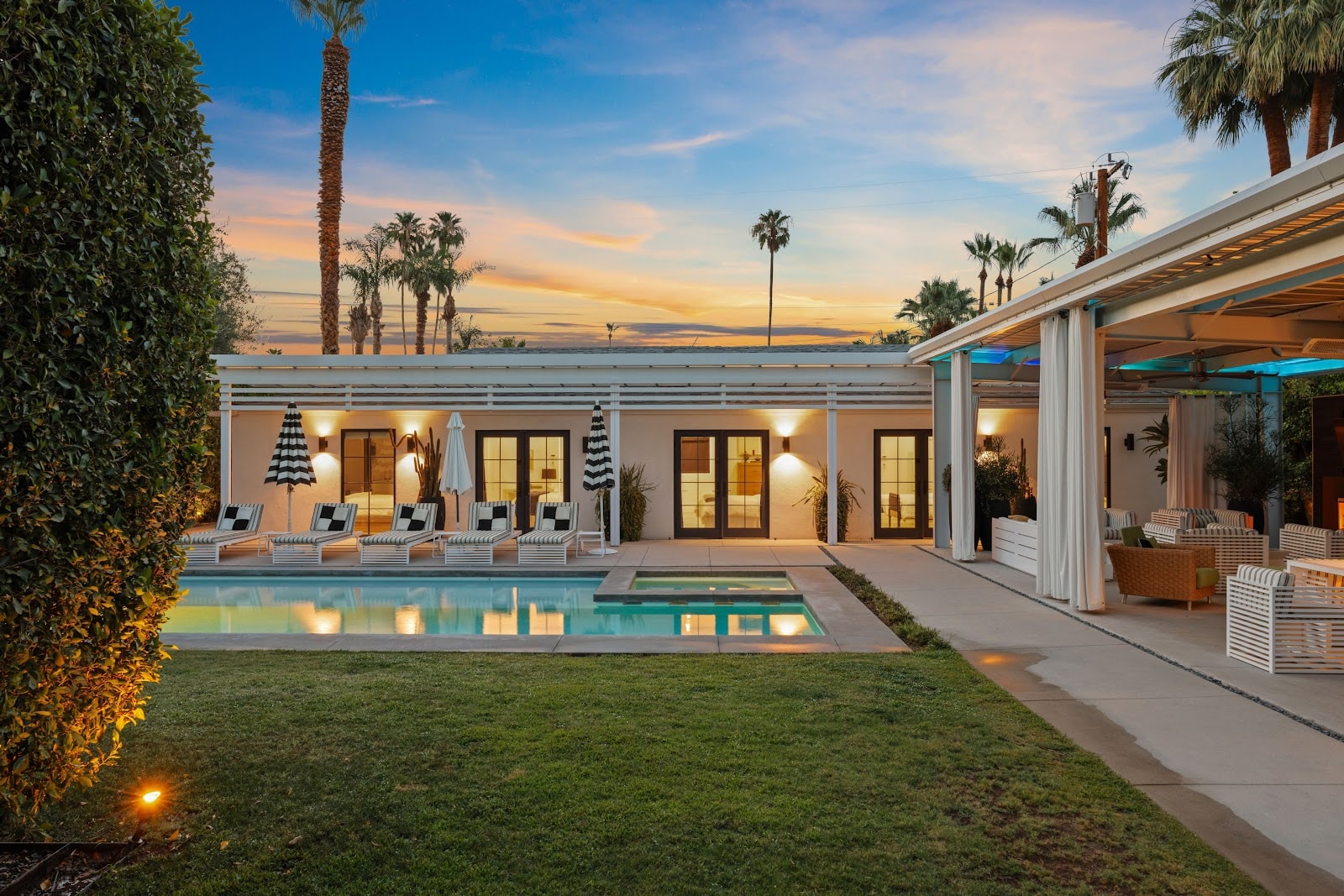
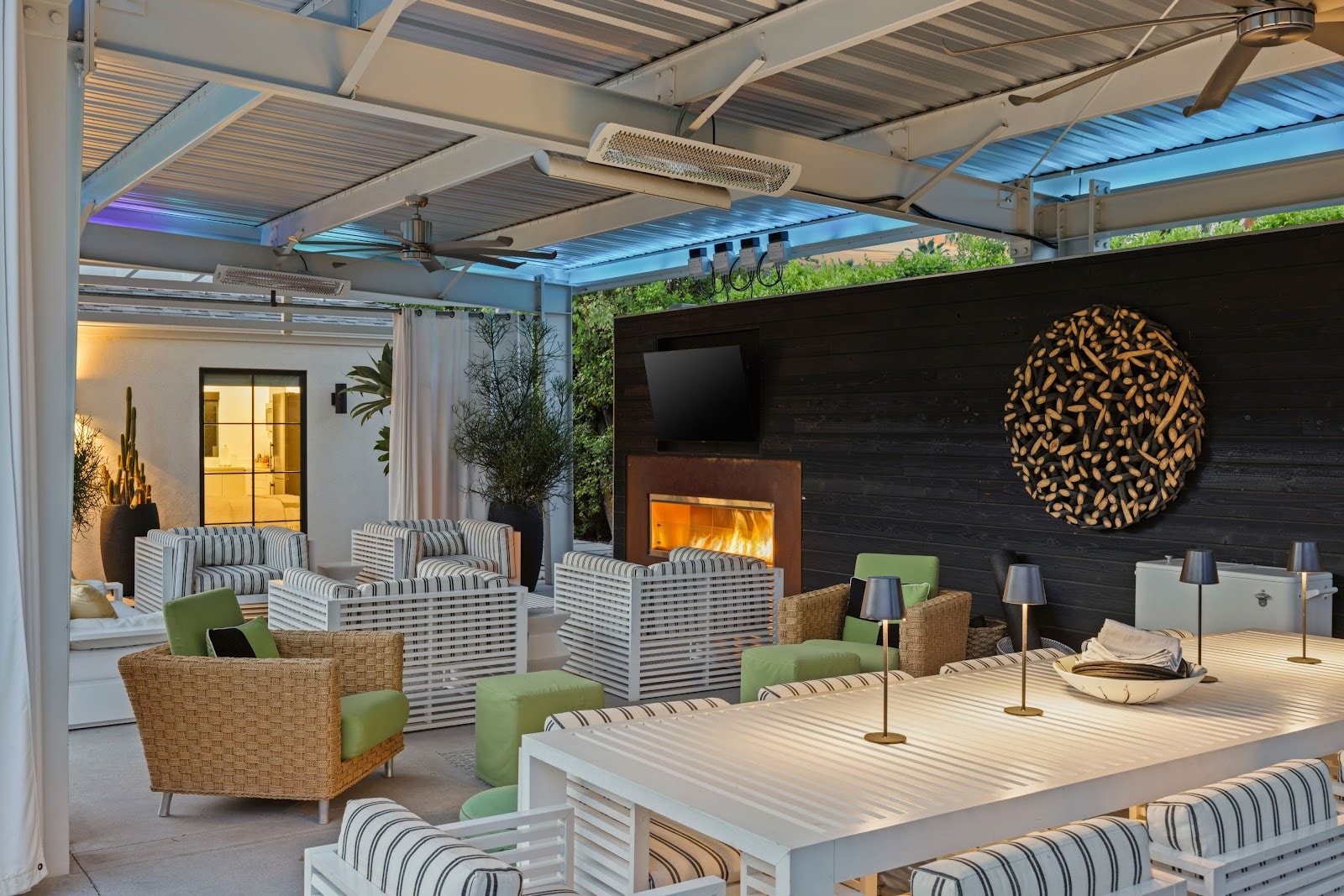
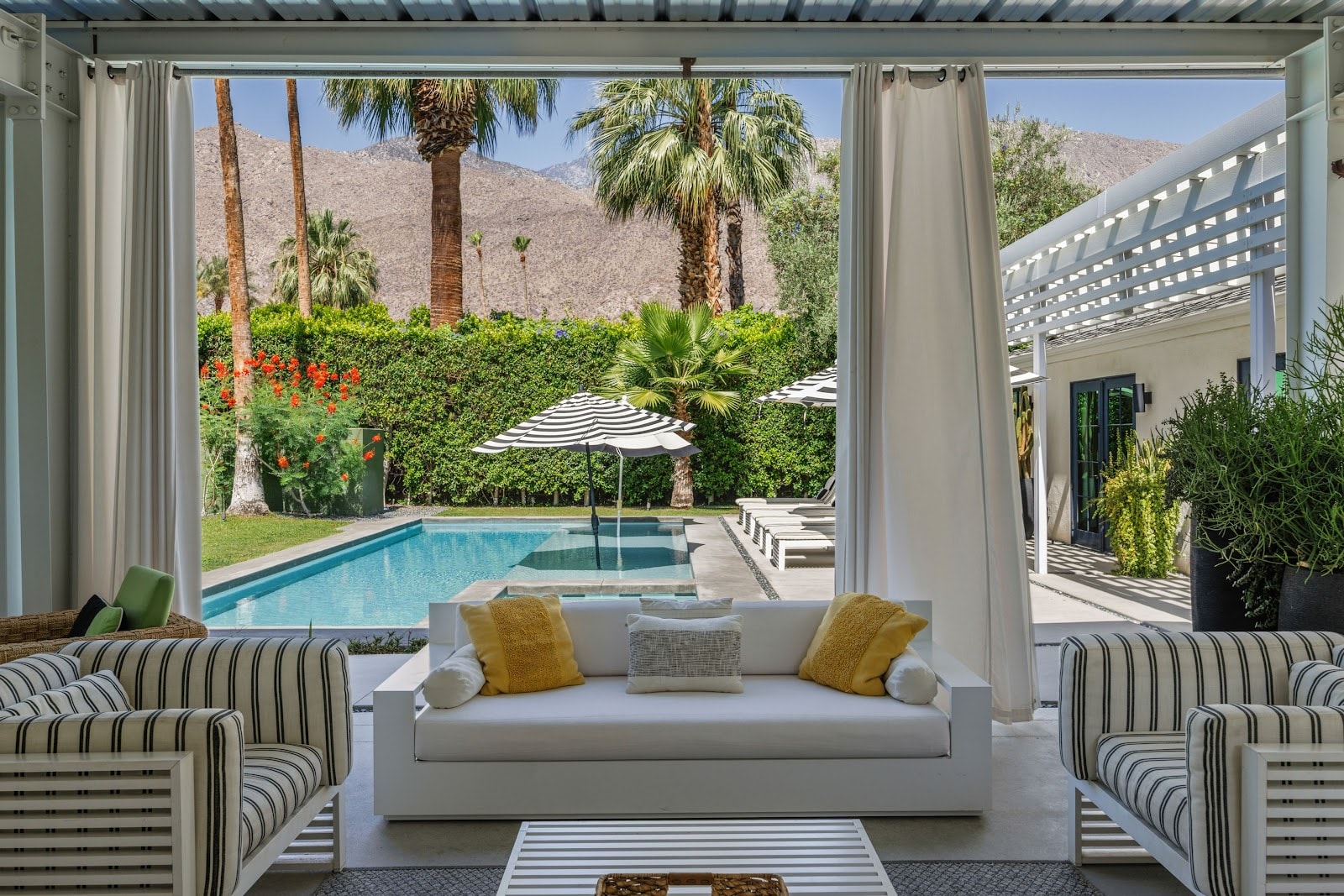
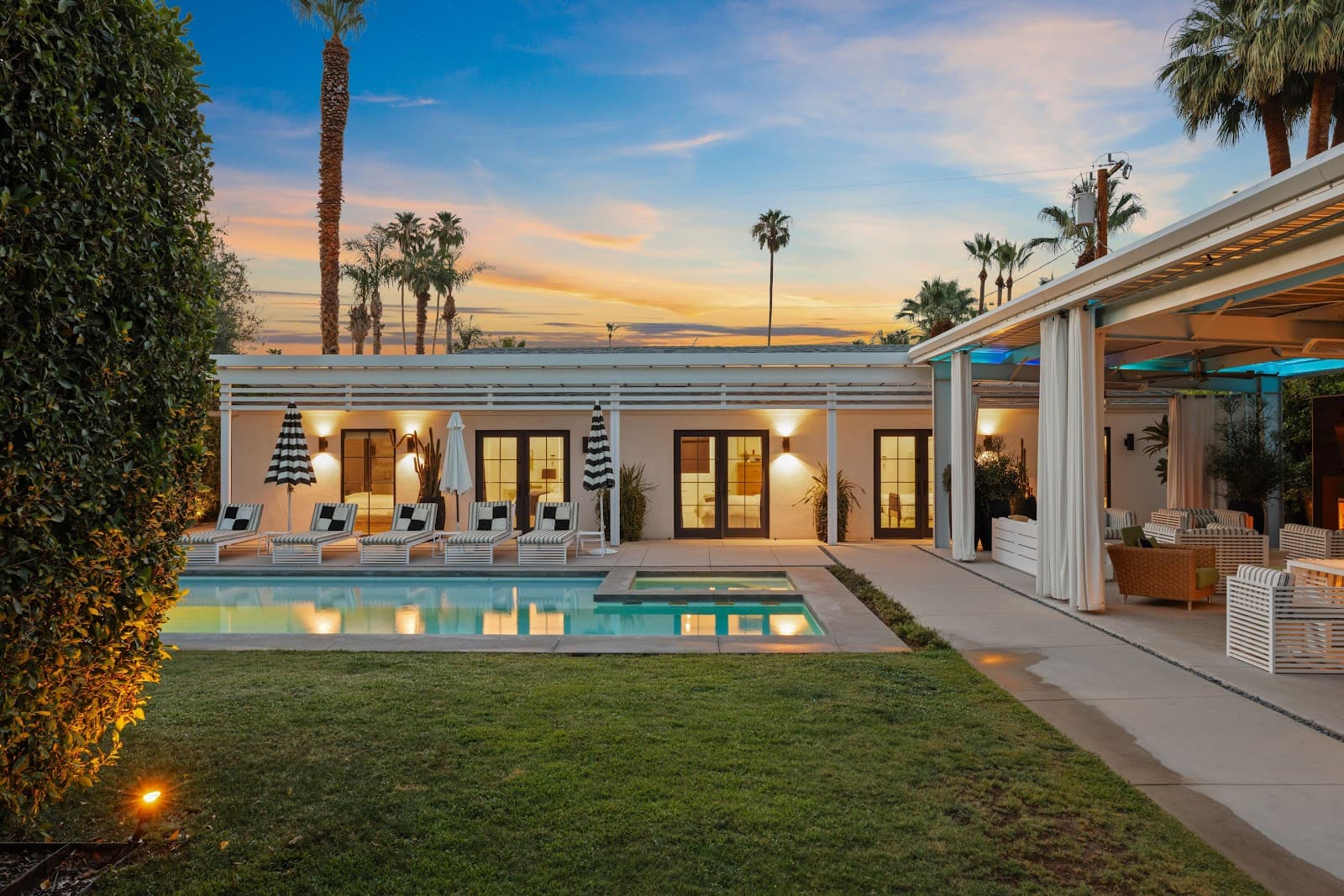
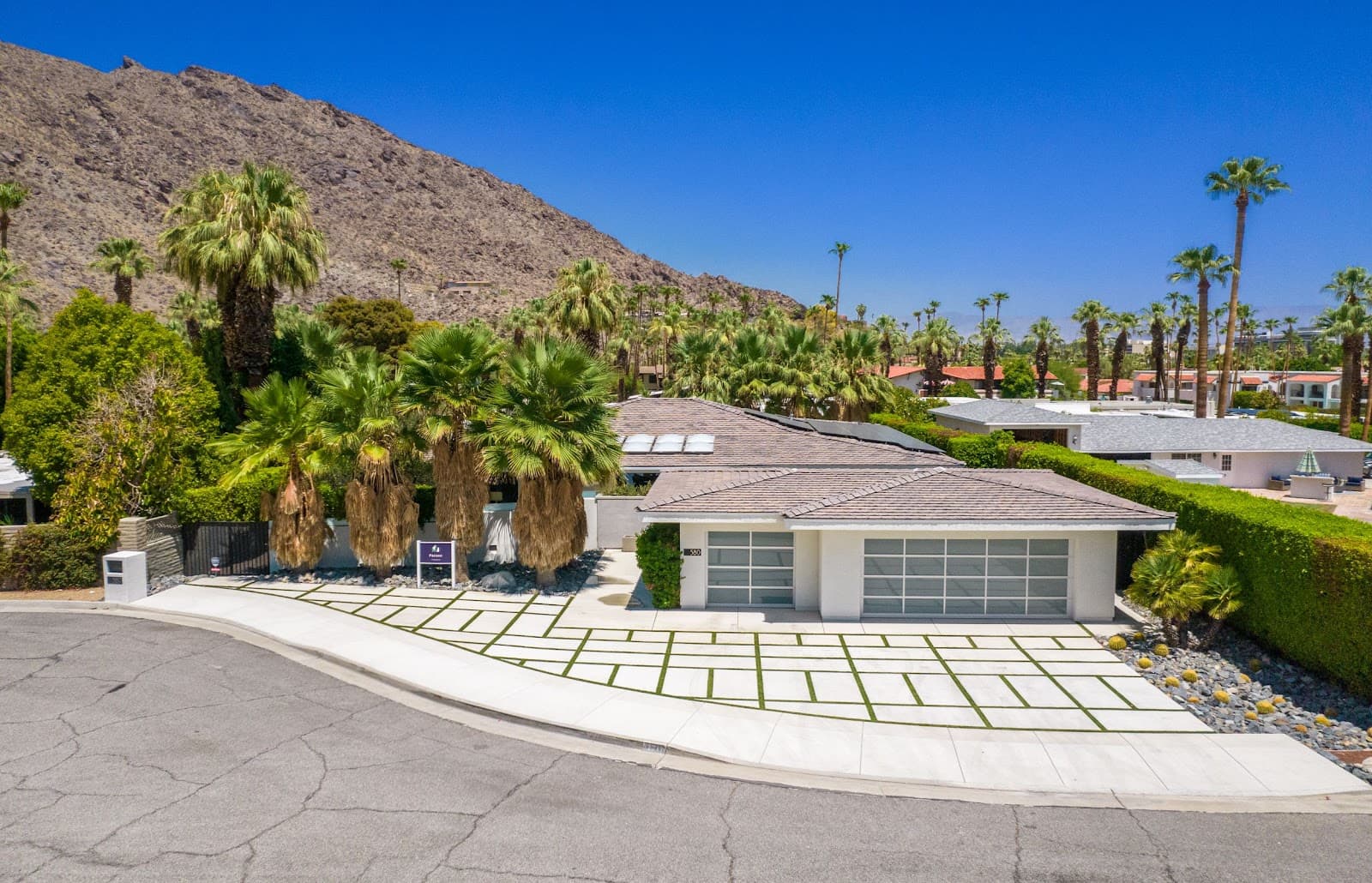
Palm Springs, California, USA — 5-Bed House With Fireplace
$158,000
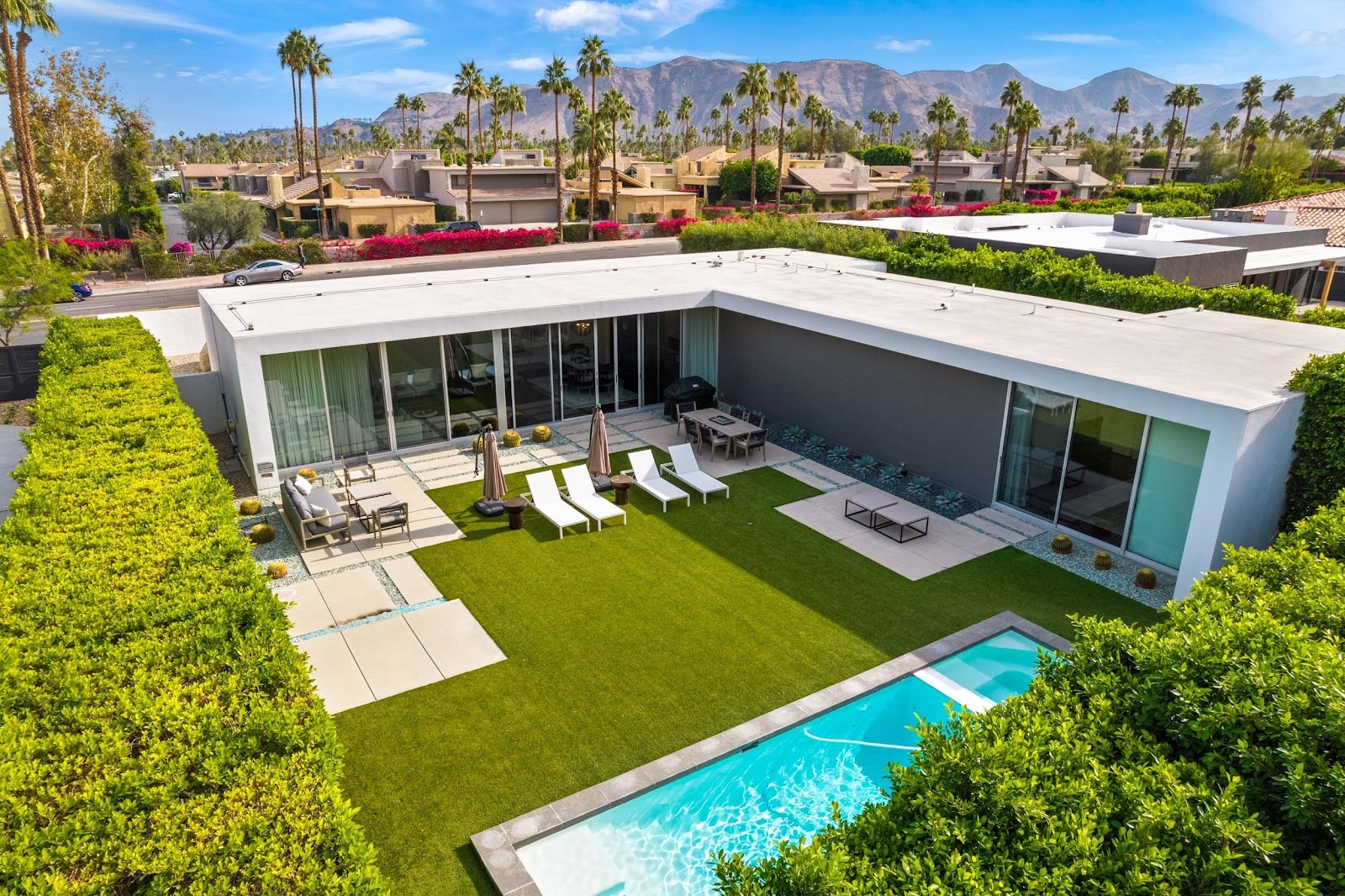
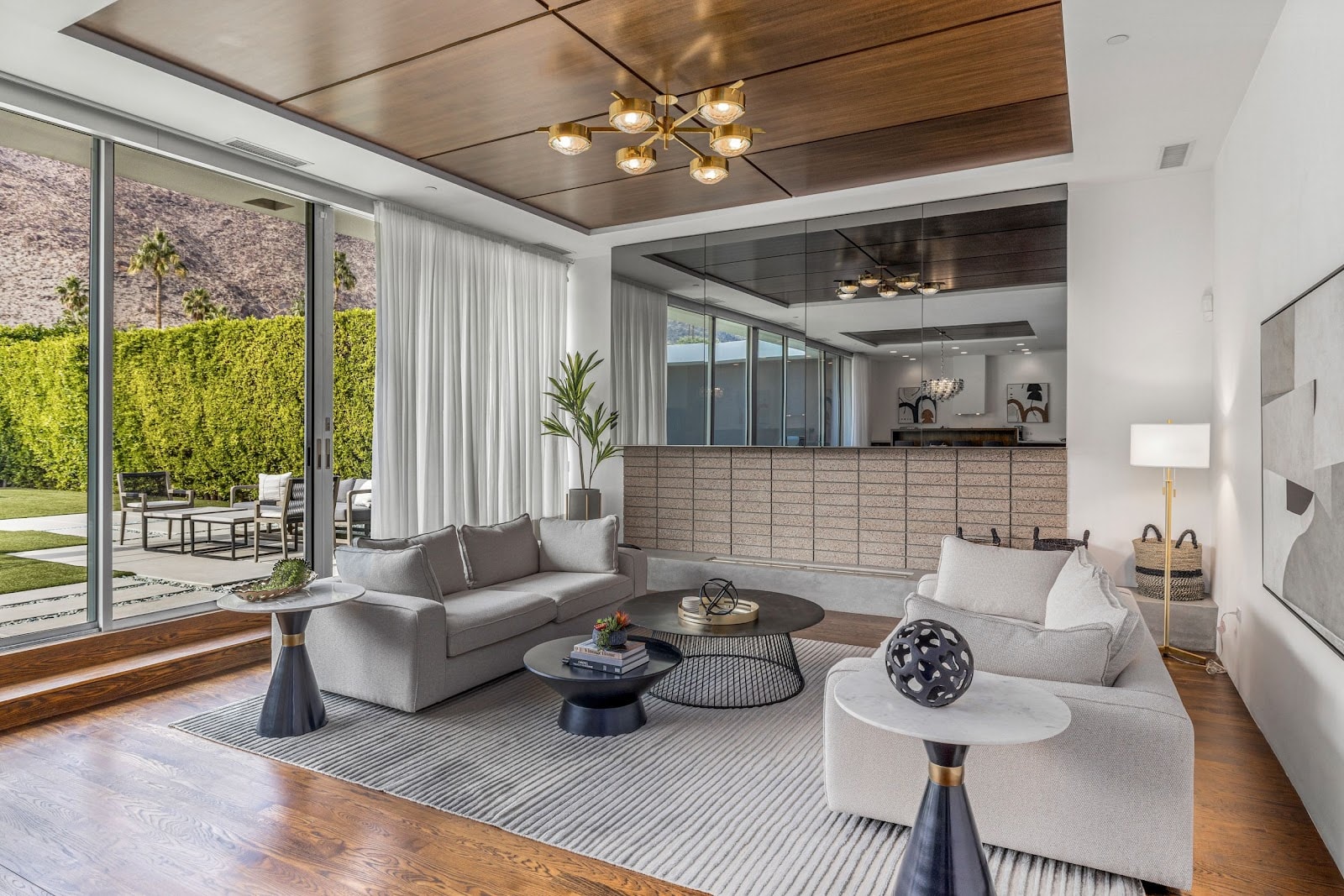
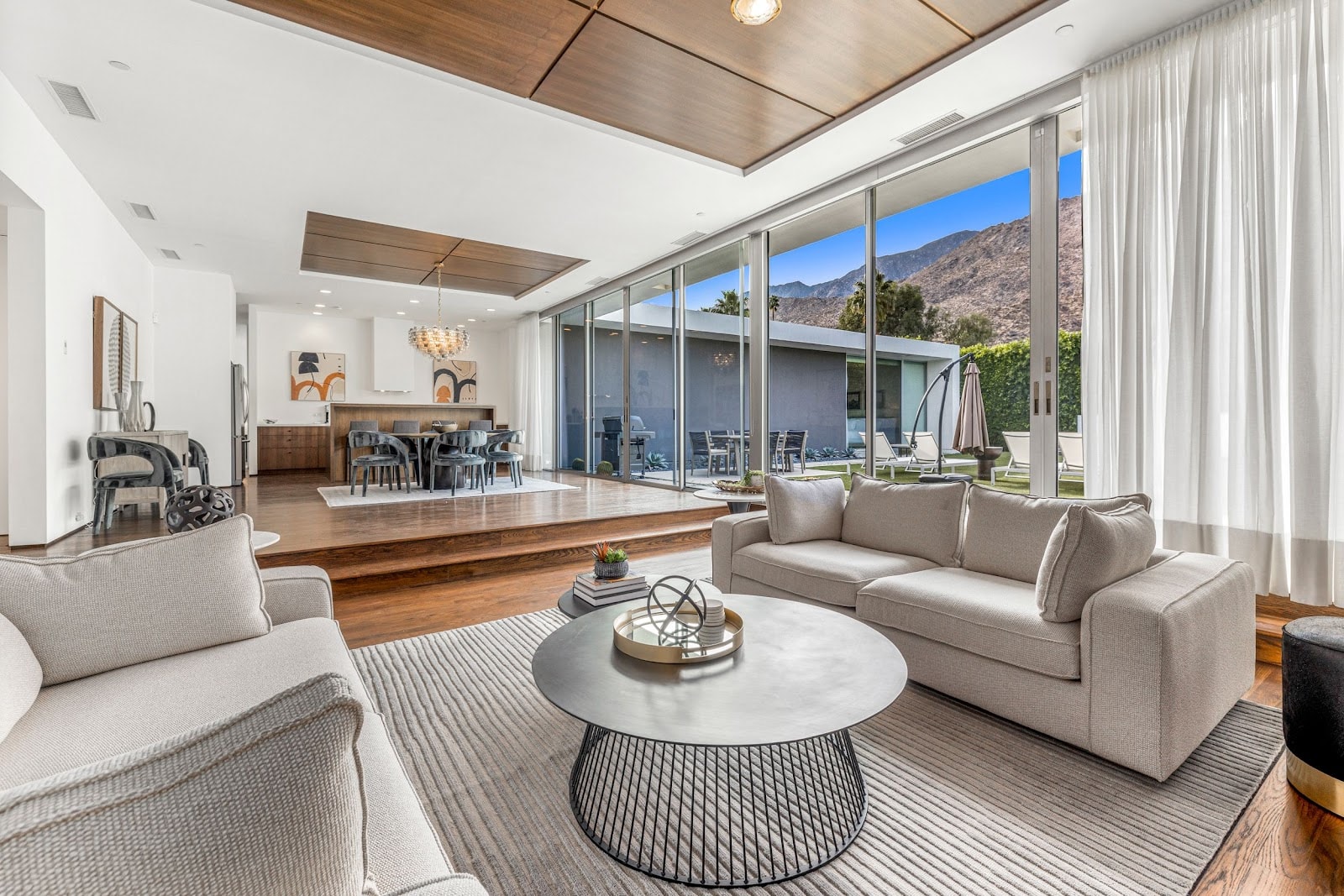
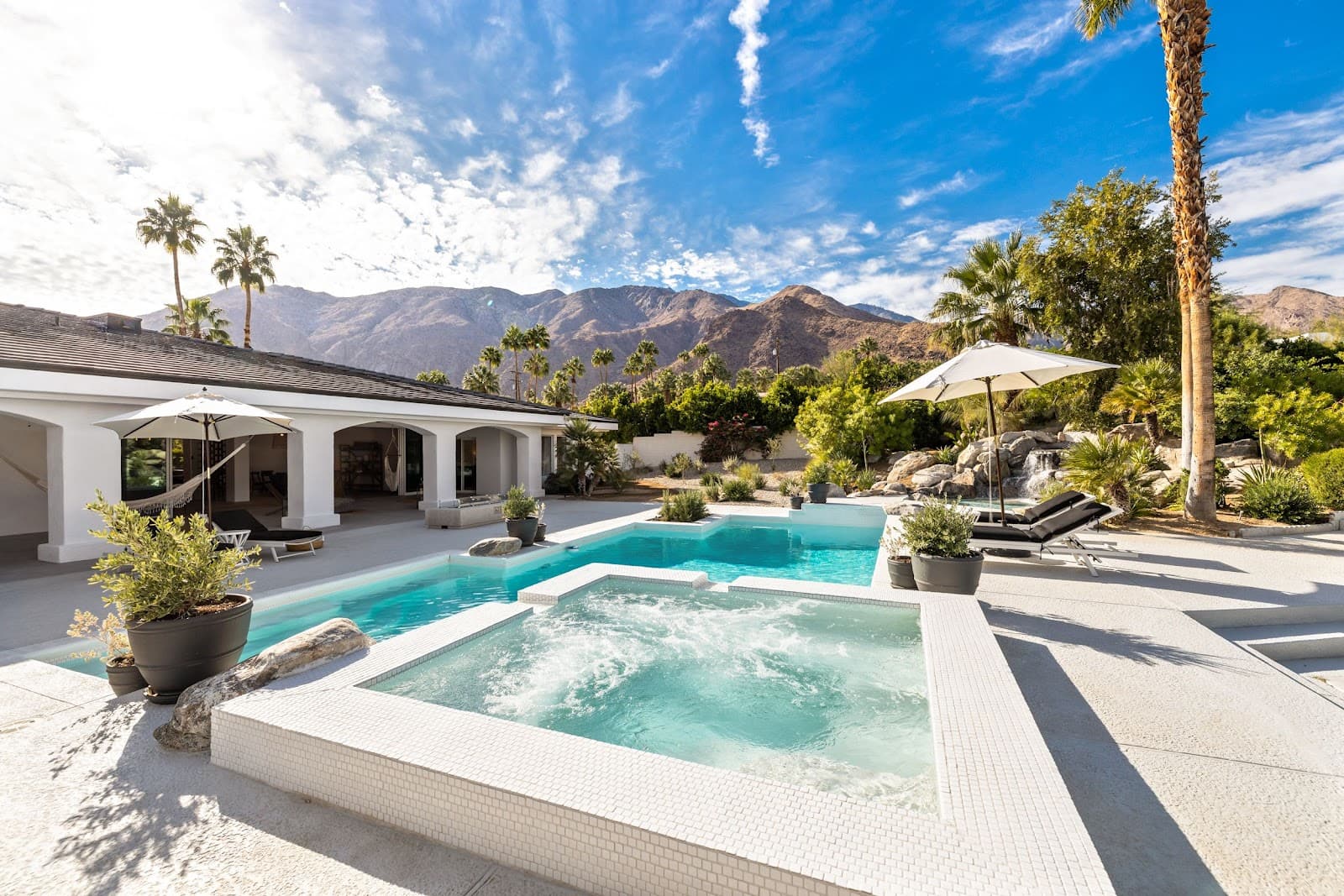
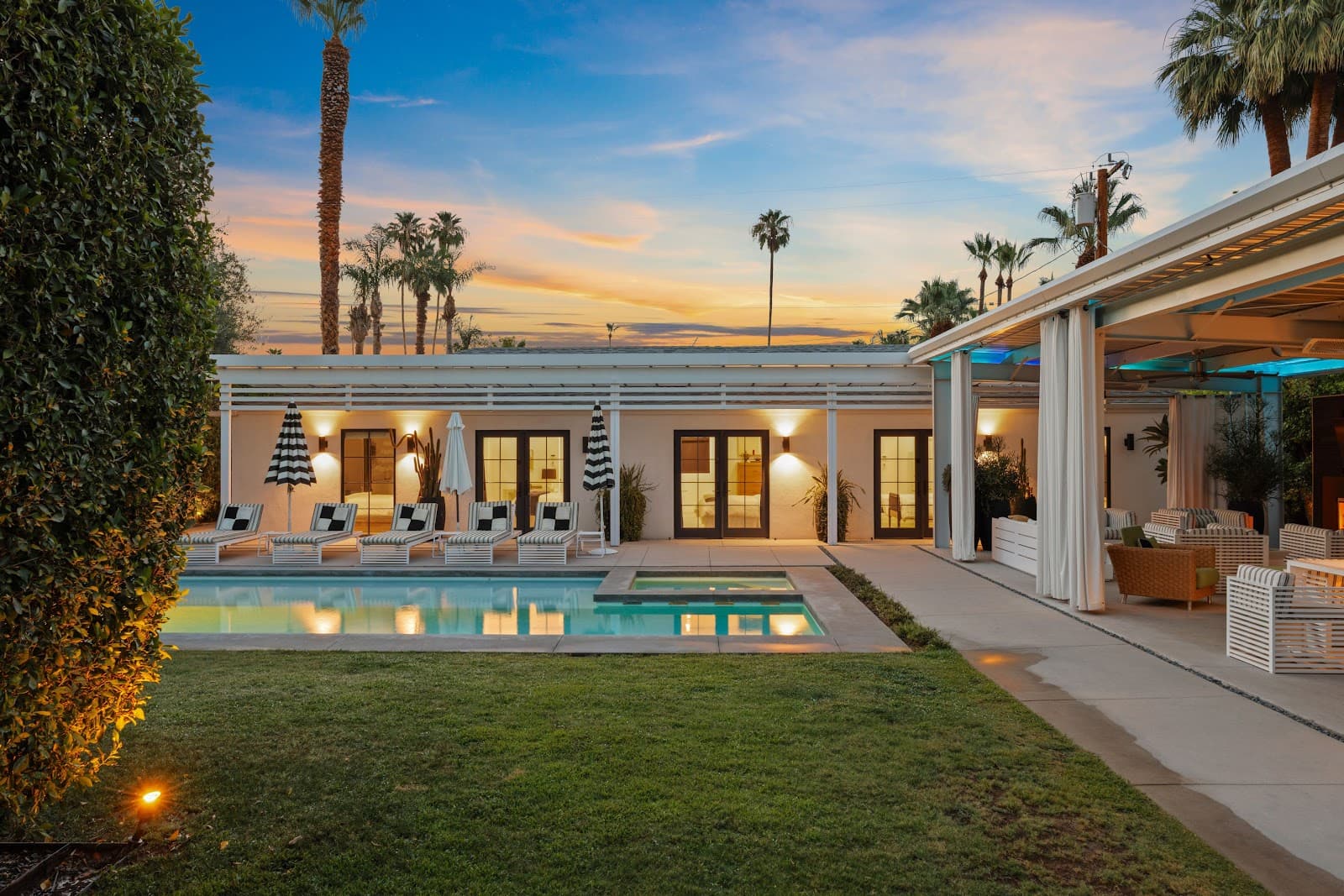
Palm Springs, California, USA — 3-Bed House With Pool
$239,000
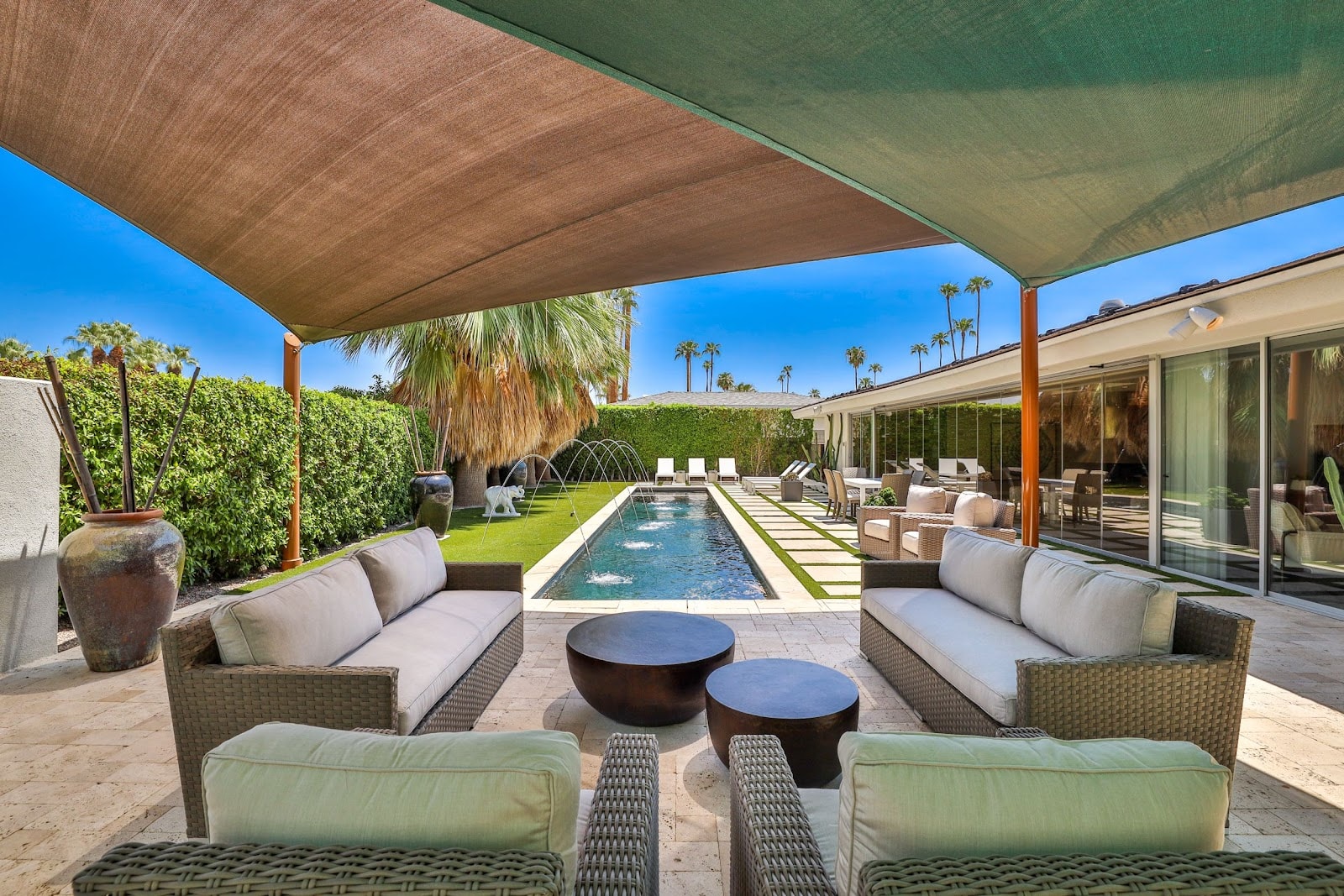
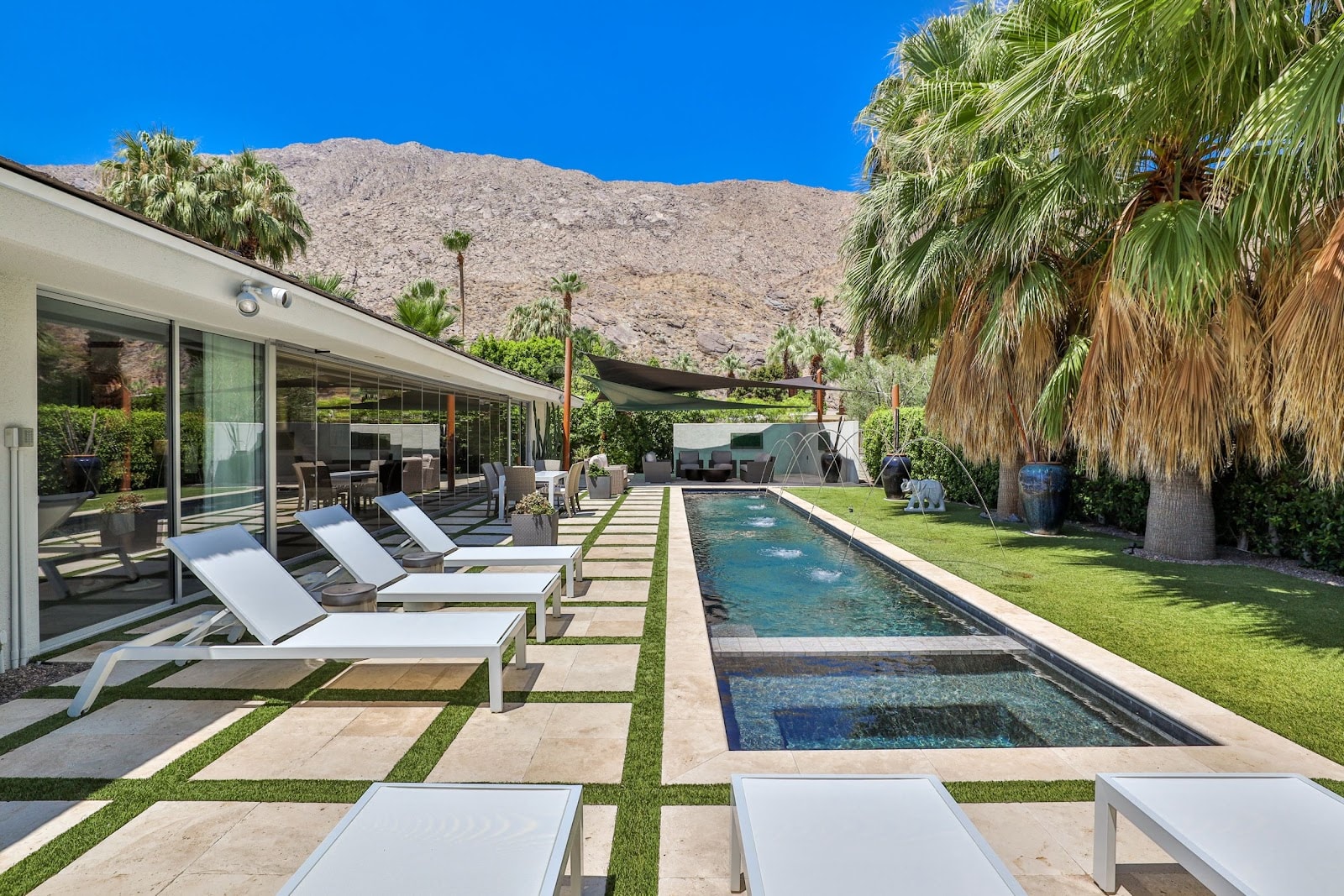
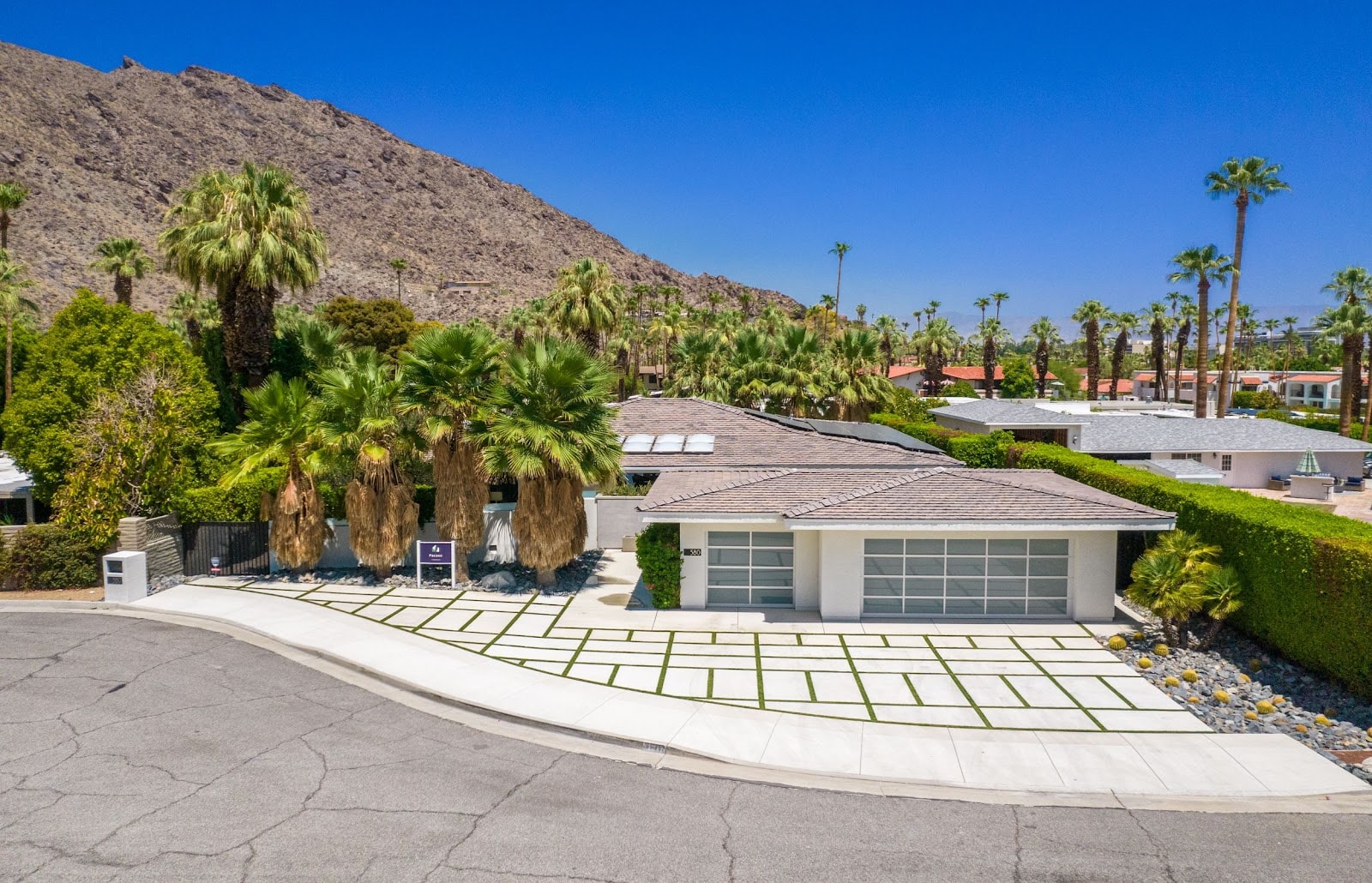
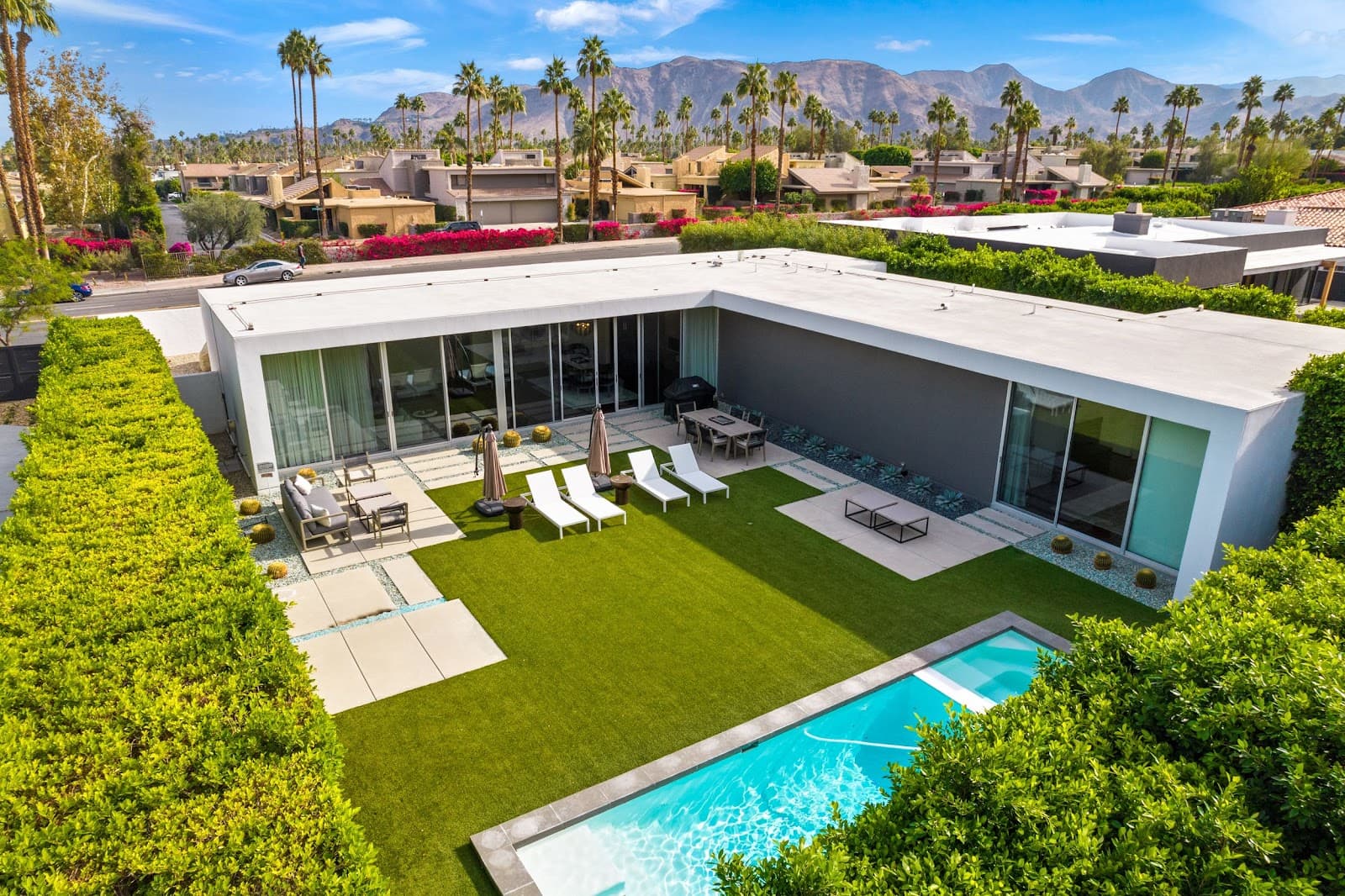
Palm Springs, California, USA — 4-Bed House With Pool
$565,000
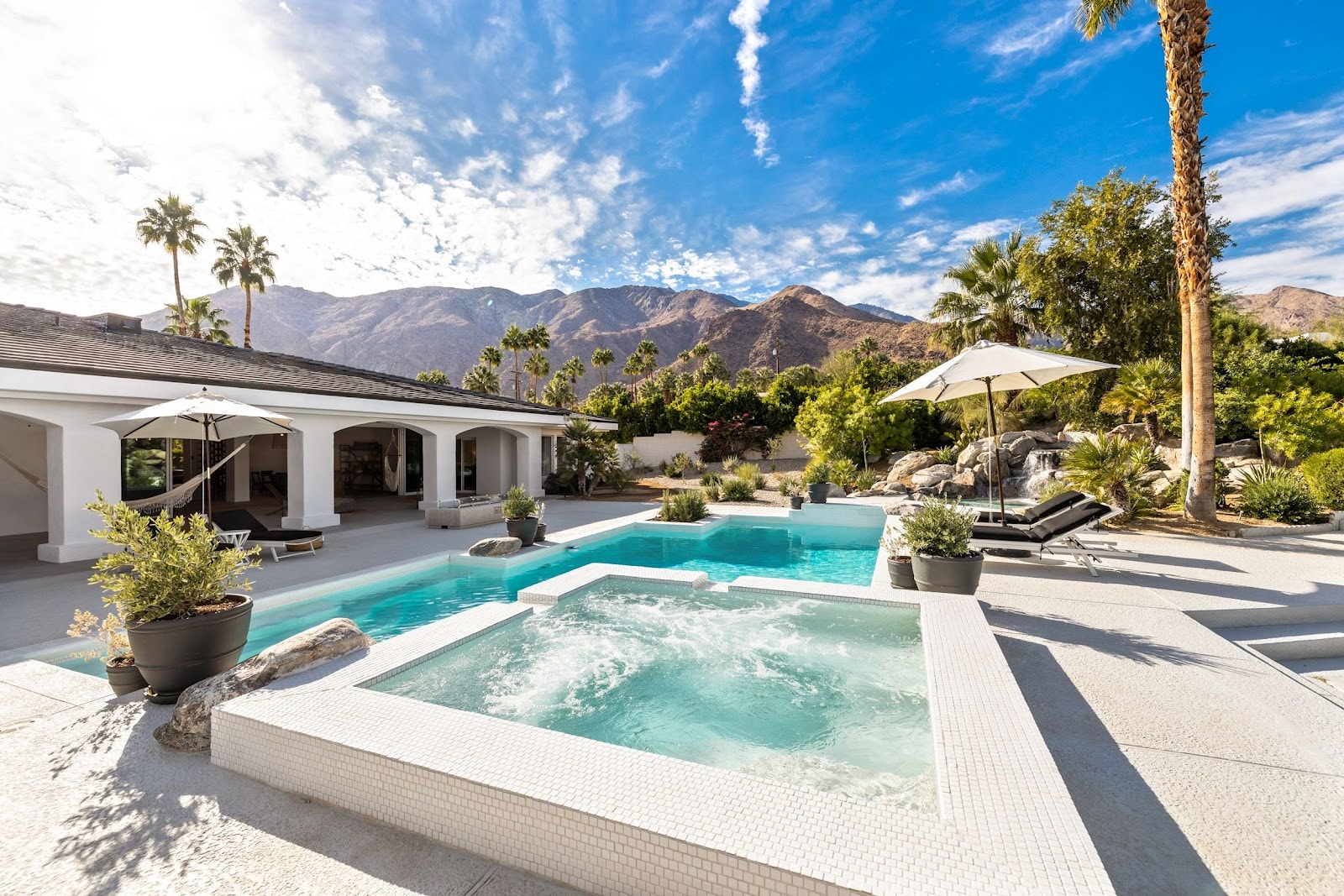
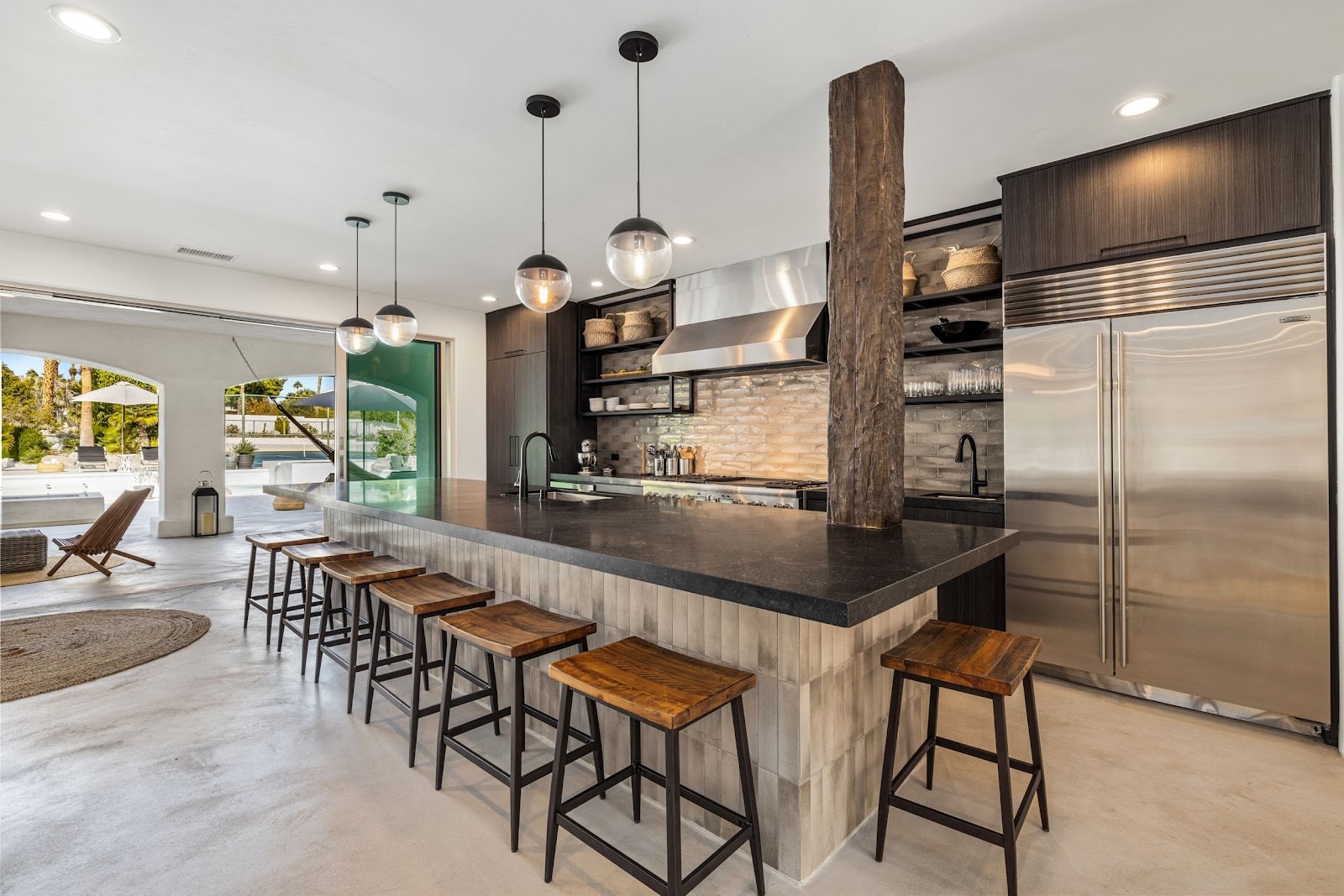
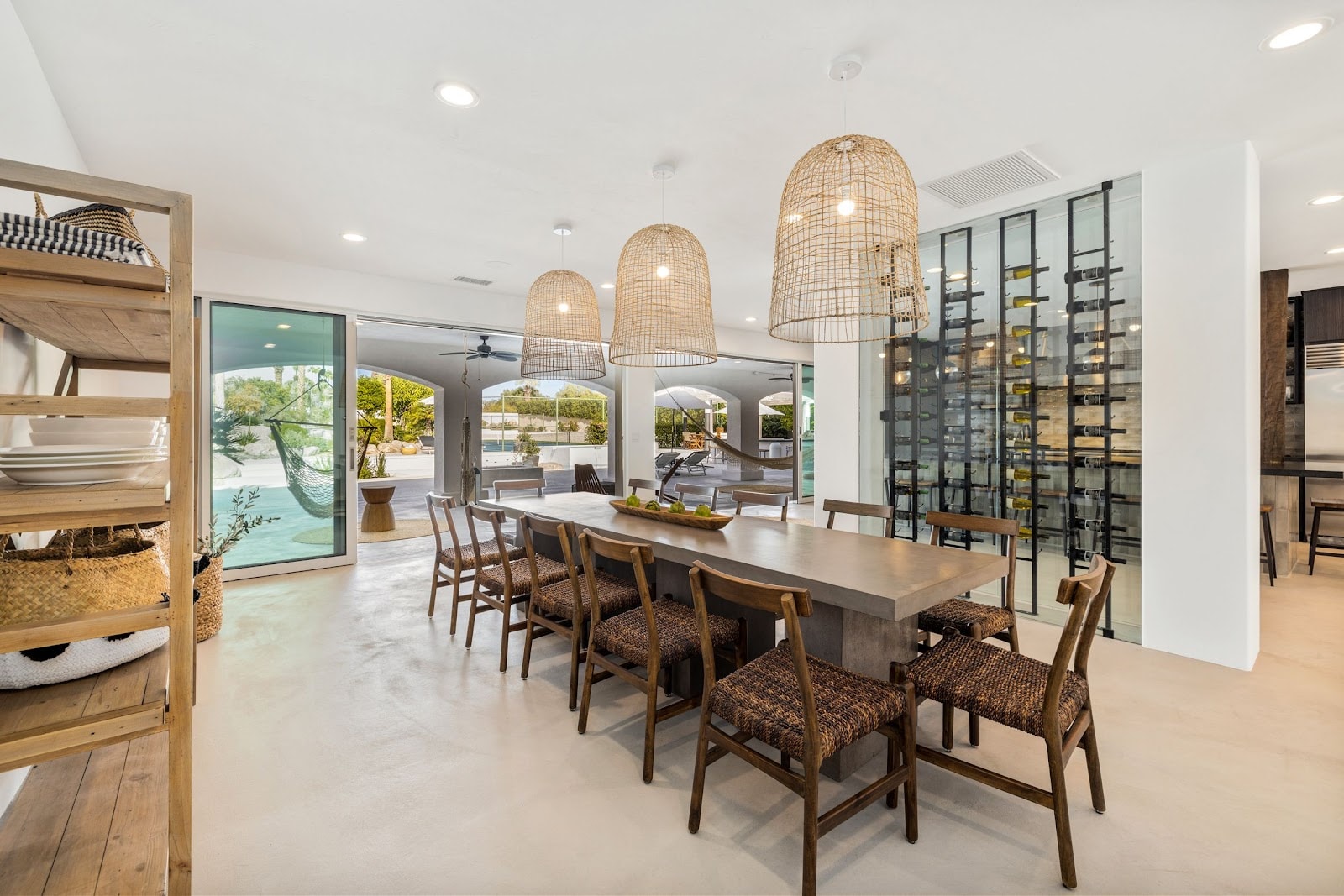
Palm Springs, California, USA — 6-Bed Estate With Pool
$695,000
Why buy a co-ownership home in Palm Springs?
Buying a whole holiday home in Palm Springs means paying full price for a house that stands empty most of the year. Co-ownership takes the same home — professionally managed, beautifully furnished — and divides it into shares, usually eighths. You own a real share of the home — not a right to use it — with roughly six weeks of use a year, a share you can sell or pass on, and running costs shared between owners rather than shouldered alone. In Palm Springs, that ownership starts from $157,500.
What is fractional ownership in Palm Springs?
Fractional ownership in Palm Springs means owning a real share of a fully managed home, usually an eighth, with around six weeks a year to use it, depending on the home. We currently list 4 Palm Springs homes, with shares from $157,500.
You own a real share of the home (an eighth, a quarter), not a right to use it. You can sell it, pass it on, and it rises and falls in value with the house. The legal set-up is arranged by our partner for each home and explained before you buy.
Palm Springs is a winter town. The desert season runs roughly from October to May, when the days are warm and dry and the mountains behind the town can hold snow; the summer is very hot. That makes a share here a natural partner to a summer home elsewhere, and it means the weeks the owners want are spread across a long season.
Palm Springs, properly understood
Palm Springs is a desert town of about forty-five thousand people at the foot of a mountain that rises more than ten thousand feet directly behind it — one of the most abrupt escarpments in North America. That geography produces the two things the town is actually built on: a winter climate that is close to perfect for seven or eight months, and a wall of rock that turns the light gold at the end of every afternoon. Everything else — the swimming pools, the architecture, the golf, the film stars — followed from those two facts.
The season here runs backwards from most of the places on this list. Palm Springs is at its best from October to May: warm dry days, cool nights, blue sky more or less continuously, and an events calendar that fills the winter. July and August are the desert's fierce summer — daytime temperatures well above forty degrees Celsius — and the town takes its quiet season. Owners treat this as an enormous advantage, because it means the good weeks here fall in exactly the months when Europe and the American north-east are cold, and it makes a Palm Springs share complementary to almost anything else you might own.
The other distinguishing asset is architectural. Between the 1940s and the 1960s Palm Springs became the laboratory for a particular kind of modernism — flat roofs, glass walls, breeze blocks, butterfly rooflines, houses built to meet the desert rather than shut it out — and a remarkable concentration of it survives, from the celebrated one-off houses by the era's best architects to whole neighbourhoods of well-designed tract homes. There is an annual festival devoted to it that fills the town every February. Nowhere else in America offers this combination: a winter climate, a mountain, an airport ten minutes from the centre, and a townscape that is itself the attraction.
A short history: springs, stars and modernism
The Agua Caliente Band of Cahuilla Indians have lived in this valley for many centuries, and their relationship with it is not historical background but a live and present fact: the tribe holds a substantial checkerboard of land within and around the city, including the spectacular Indian Canyons and Tahquitz Canyon, and the hot springs that gave the place its name are theirs. The canyons are open to visitors under tribal management and are the best walking in the valley.
The modern town began as a health resort in the late nineteenth century — dry desert air was prescribed for respiratory illness — and became something else entirely in the 1920s and 1930s, when Hollywood discovered it. The studios' contracts reportedly required actors to remain within a couple of hours of the studio, and Palm Springs sat almost exactly on that line, which made it the place stars could go without breaking the rule. The result was a small desert town with an improbable concentration of famous residents and the hotels, restaurants and clubs to serve them.
The architectural era followed. From the 1940s to the 1960s, architects working here developed a desert modernism suited to the climate and the light: deep overhangs, sliding glass, breeze-block screens, pools placed for the mountain view. Some of the best-known houses in twentieth-century American architecture are here, alongside thousands of well-designed mass-produced homes that made the style ordinary rather than exclusive. The town declined for a period from the 1970s, was rediscovered in the 1990s and 2000s as mid-century design came back into fashion, and has since become one of the most design-conscious small towns in the United States — with a February festival that celebrates exactly that.
The town and the valley
Palm Springs itself sits at the western, mountain end of the Coachella Valley and is the most walkable and most urban of the valley's communities: a downtown with restaurants, galleries and a Thursday street market, an uptown design district full of mid-century furniture dealers, an art museum, and residential neighbourhoods laid out in a grid beneath the mountain. It is the town you choose if you want to walk to dinner.
East of it the valley opens into a chain of separate cities, each with its own character. Cathedral City is the practical, unglamorous neighbour. Rancho Mirage is quieter and more residential, with country clubs and the Annenberg estate whose gardens are open to visitors. Palm Desert has the valley's main shopping street and its cultural venues. Indian Wells is small, wealthy and hosts a major tennis tournament each March. La Quinta sits against the mountains at the valley's south-east corner with the most dramatic setting of the lot. Indio, further east, is the largest city in the valley and hosts the enormous music festivals each April.
Beyond the valley floor the desert takes over: the Coachella Valley Preserve with its palm oases on the San Andreas fault, Joshua Tree National Park about forty-five minutes north-east, and the mountains behind the town, which are reached in ten minutes by an aerial tramway that climbs from desert to alpine forest and where there can be snow while it is twenty-five degrees below.
For an owner, the practical point is that the valley's cities are ten to forty minutes apart along one main road, so almost everything — golf, tennis, the festivals, the shopping, the trailheads — is within reach of any of them. The choice is about the character of the neighbourhood rather than about access.
Where exactly to own: the neighbourhoods, rated
Old Las Palmas and Vista Las Palmas. The historic star neighbourhoods immediately north-west of downtown: large lots, mature landscaping, celebrated mid-century houses, and the most expensive addresses in the city. Walk to the uptown design district; drive two minutes to downtown.
The Movie Colony and Ruth Hardy Park. East of downtown, flat, quiet, walkable, with a mix of Spanish-revival and modernist houses and a genuinely lovely park at its centre. One of the best all-round positions in the city.
Twin Palms, Deepwell and the south end. Classic tract modernism from the 1950s — the well-designed mass-produced houses that made the style famous — with mountain views, pools in every garden and prices below the star neighbourhoods. Excellent value for architectural quality.
Racquet Club Estates and the north end. More modernist tract housing, further from downtown, with the best value in the city and the most dramatic mountain-and-desert views. Ten minutes to everything by car.
The Indian Canyons and Araby. Against the mountain on the south side: dramatic settings, hiking from the door, golf, and a quieter, more secluded feel. Southridge, above it, holds a handful of the most spectacular houses in the desert.
Down valley: Rancho Mirage, Palm Desert, Indian Wells, La Quinta. Larger houses, more golf, more country-club life, generally newer construction, and — in La Quinta particularly — a spectacular mountain setting. Less walkable than Palm Springs proper, better value per square metre, and ten to forty minutes from the airport.
One feature unique to this valley. A portion of the land within Palm Springs is tribal land held in trust, and homes on it are typically sold with a long-term land lease rather than outright freehold ownership of the land. It is a long-established, entirely legitimate arrangement under which thousands of homes are held, and the remaining lease term shapes value and financing. We verify the position for every home we list and tell you plainly.
The climate, season by season
Palm Springs' climate is its greatest asset. From October to May the weather is close to ideal: daytime temperatures typically between the low twenties and low thirties Celsius, cool evenings, very little rain, and sunshine on the overwhelming majority of days. January and February are shirtsleeves in the day and a jumper after dark. March and April are warm and perfect. This is the season, and it is long.
June through September is the desert's summer, and it is a season of its own. Daytime temperatures routinely exceed forty degrees Celsius, nights stay warm, and the town slows down — many restaurants shorten their hours and rates fall to a fraction of the winter's. Days are built around the pool, the air conditioning and the early morning. Some owners love it precisely because it is empty and great value; most simply enjoy the house in the other eight months.
Two smaller notes. The San Gorgonio Pass immediately west of town is one of the windiest places in the United States — hence the wind farms — and Palm Springs itself gets breezy spring afternoons as a result. And this is earthquake country: the San Andreas fault runs up the valley's eastern side, which is geologically fascinating and worth understanding rather than worrying about; modern construction is engineered for it and earthquake cover is a separate insurance decision worth advice.
The architecture: what to look at and why
Palm Springs' modernist inheritance is the reason a design-minded owner will find this town more interesting than a beach. The one-off houses are the famous part: a celebrated 1946 desert house of glass and stone by one of the century's great architects; a hillside house of astonishing lightness built by another for himself; the singer's low-slung house with the piano-shaped pool; a hilltop house of concrete and glass that has appeared in more films than most actors. Several are open at least occasionally, and the annual festival opens more.
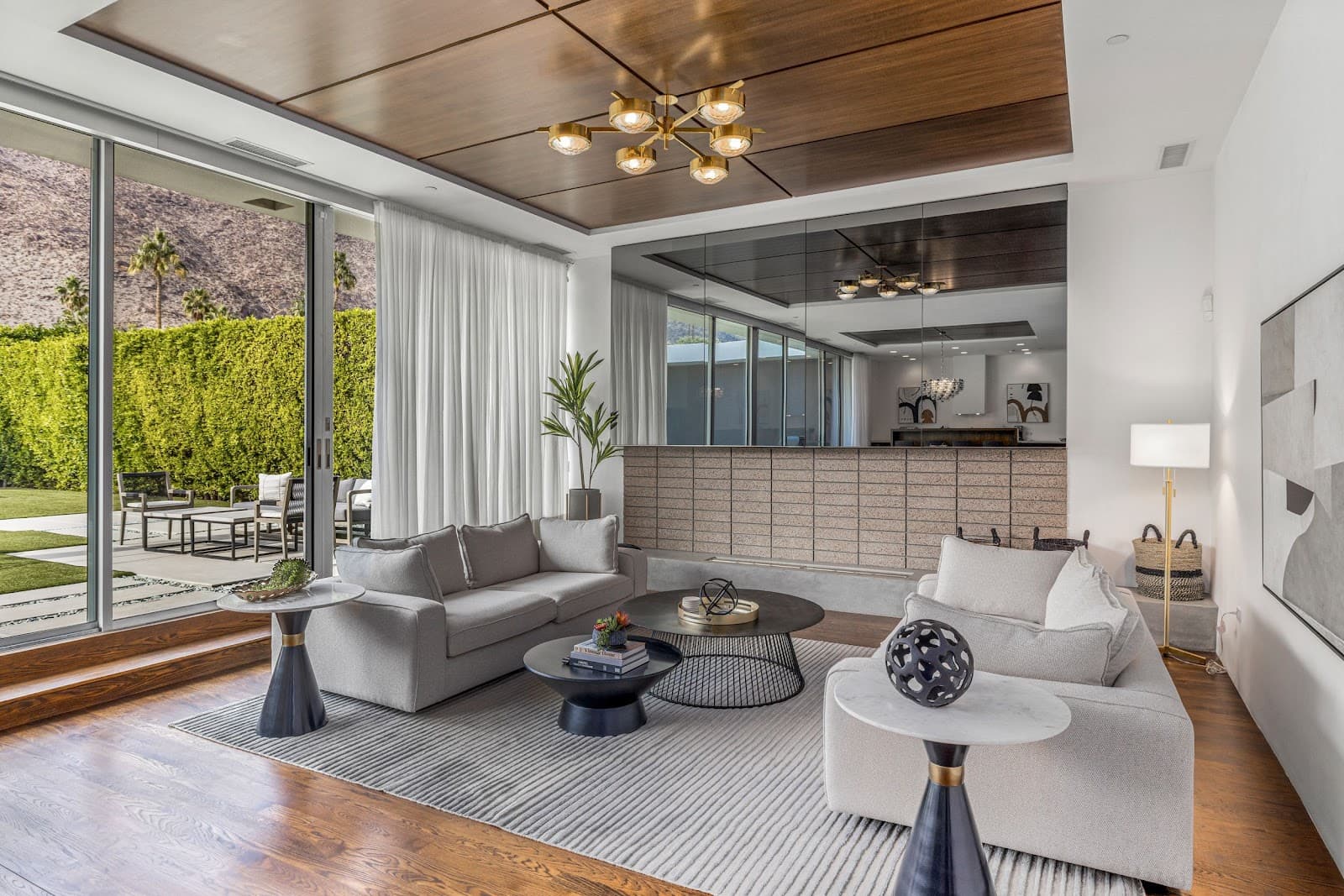
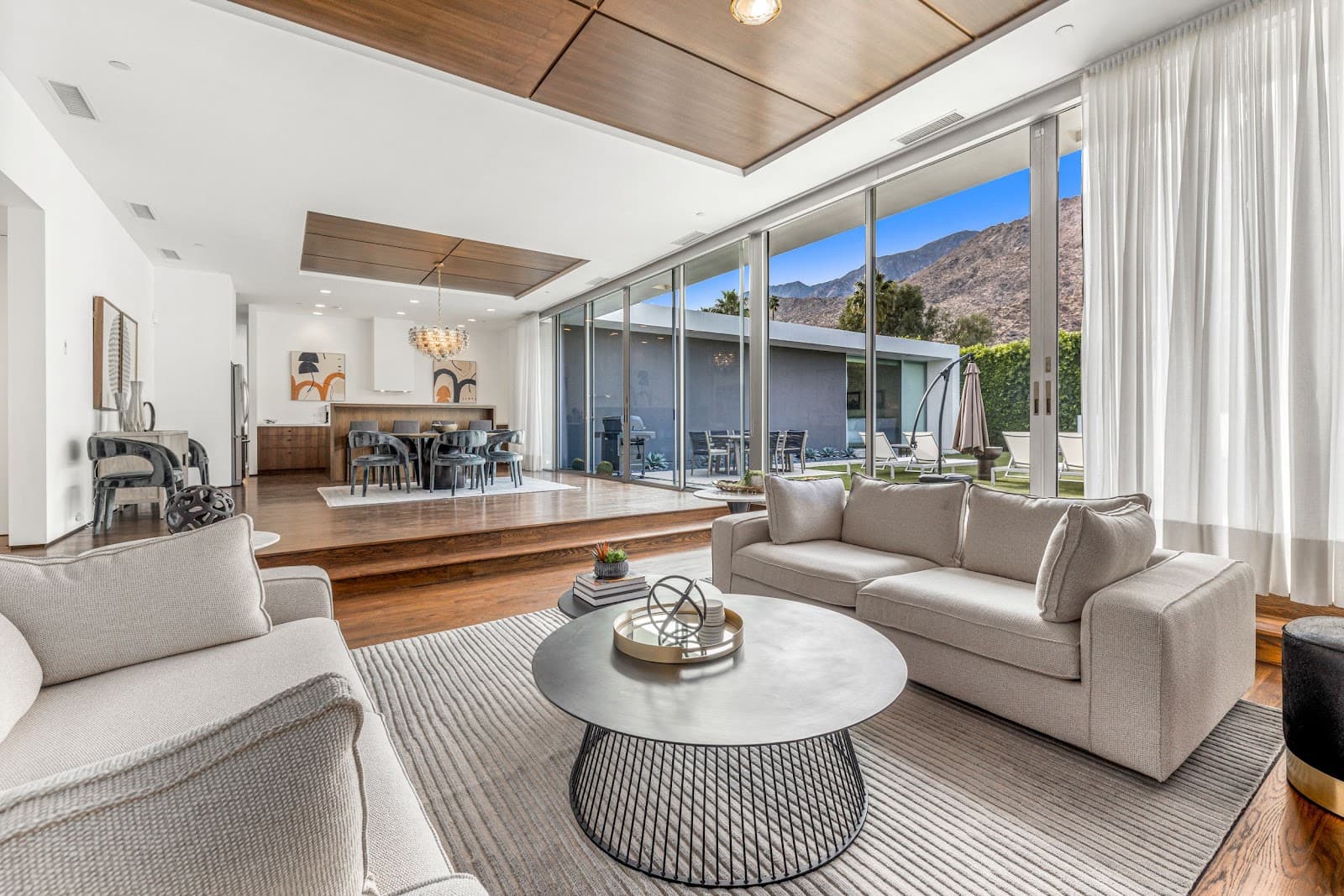
The more important part, though, is the ordinary. In the 1950s and 1960s, developers here built thousands of well-designed modern tract houses — post-and-beam construction, clerestory windows, breeze-block screens, butterfly and folded-plate rooflines — and whole neighbourhoods of them survive largely intact. That is what makes Palm Springs unique: not a handful of monuments, but a town where the everyday housing stock is itself the architecture. Racquet Club Estates, Twin Palms and Vista Las Palmas are the neighbourhoods to drive through slowly.
Then the public buildings: a gas station with a soaring canopy that is now a visitor centre, a bank, a city hall, a beautifully proportioned art museum, and the tramway station up the mountain. Modernism Week each February — with a smaller preview in October — fills the town with tours, lectures, open houses and a design show, and books out well ahead. For owners, it is one of the best weeks of the year to be here and one of the most rewarding to bring guests to.
Outdoors: canyons, mountains and the tram
The single most extraordinary thing to do here takes ten minutes. The aerial tramway climbs from the desert floor to nearly eight and a half thousand feet on the flank of the mountain, in rotating cars, through five distinct ecological zones — from creosote scrub to alpine pine forest. At the top there is a wilderness of hiking trails, and in winter there is snow and cross-country skiing while it is twenty-five degrees on the valley floor below. It is genuinely one of the great short journeys in America.
At ground level, the Indian Canyons — Palm, Andreas and Murray — are managed by the tribe and hold the largest natural California fan palm oases in the world, with clear streams, shade and trails ranging from a gentle hour to a serious day. Tahquitz Canyon, closer to town, has a waterfall at the end of a two-mile loop. Both are the best walking in the valley and are open in the cool months.
Beyond that: hundreds of miles of desert trail, including the punishing route that climbs from the town to the tramway station and is a local rite of passage; road cycling on the valley's flat, quiet roads in winter; over a hundred golf courses within the valley, which is one of the highest concentrations anywhere in the world; tennis and pickleball everywhere; and Joshua Tree National Park about forty-five minutes away, which is one of the strangest and most beautiful landscapes in the United States and worth several visits rather than one.
A year in the desert, month by month
October opens the season: the heat breaks, the town refills, the design festival's preview runs, and the golf becomes pleasant again. November is warm, clear and lovely, with Thanksgiving as the first busy weekend. December brings a mild, sunny Christmas — swimming pools in December is the reason a lot of northern owners bought here — and the town at its most festive.
January is the peak of winter: perfect weather, the international film festival, the snowbird population at full strength, and hotel rates to match. February is the busiest and best month of the year — Modernism Week fills the town, the weather is faultless, and everything is open. March continues it, with the major tennis tournament at Indian Wells drawing an international crowd. April is warm, spectacular in the desert bloom years, and brings the enormous music festivals to Indio at the eastern end of the valley.
May is the last of the good weather and, for many, the sweetest: warm, empty, great value, with everything still open. June to September is the summer — fierce heat, a town that slows, rates at their lowest, and a small dedicated population who love it that way and structure their days around dawn and the pool. In short: eight excellent months and a quiet summer, and an owner calendar that consequently looks nothing like a Mediterranean one.
The year's fixtures
Palm Springs has a denser events calendar than a town of forty-five thousand has any right to. January brings the international film festival, which is a genuine awards-season fixture and fills the downtown cinemas and hotels for a fortnight. February is Modernism Week: eleven days of architecture tours, open houses, lectures, a design show and parties, which is the town's signature event and the one to plan around — it sells out well in advance and it is worth being here for.
March brings the tennis: a two-week tournament at Indian Wells, twenty-five minutes down valley, that is one of the largest events in the sport outside the four majors, with a purpose-built stadium complex and a genuinely international crowd. April brings the music festivals at Indio — a very large contemporary music weekend and a country weekend the following one — which transform the eastern valley and fill accommodation across the whole area.
Around these: the Thursday night street festival in downtown Palm Springs, which closes the main street weekly through the season; a busy programme at the art museum and the performing arts venues; golf tournaments through the winter; the smaller autumn modernism preview in October; and the desert's own spectacle in the years when the winter rains produce a wildflower bloom. Very little of it needs booking a year ahead, with the exception of Modernism Week and the tennis.
Eating, drinking and the everyday town
Palm Springs' food scene has improved sharply over the last fifteen years and now runs from serious to genuinely excellent, with a strong Mexican and Californian foundation, a good number of restaurants in restored mid-century buildings, poolside dining that is one of the great pleasures of a winter evening here, and a cocktail culture that leans, appropriately, retro. Downtown and the uptown design district hold most of it; the down-valley cities add their own, particularly Palm Desert.
The everyday layer is good and cheap: taquerias serving the valley's large Mexican-American community, date shakes — the Coachella Valley grows most of America's dates and the shake is a local institution worth trying once — farmers' markets through the season, and a strong coffee and bakery culture. The Thursday street festival is the weekly social fixture.
Provisioning is easy: full supermarkets throughout the valley, date and citrus farms, and produce that benefits from the valley's agricultural output. The practical shape of a good week here is breakfast outside, the morning for a canyon walk or a round of golf, the middle of the day by the pool, and dinner out or a barbecue as the mountain goes red — which is, in a phrase, why people buy here.
Palm Springs with children
Palm Springs is above all a grown-ups' town, and a house with a pool in a warm, dry climate is still one of the most reliable ways to delight children — the surroundings supply the rest. The aerial tramway is a guaranteed hit, with snow at the top in winter and a forest to walk in. The Living Desert zoo and gardens in Palm Desert is genuinely good. The canyons are walkable at child scale, with water and shade. Joshua Tree, forty-five minutes away, is a natural adventure playground of enormous boulders.
In town there is a children's discovery museum, the air museum with its restored warbirds, mini golf, and the simple business of a bicycle in a flat grid of quiet streets. The valley's swimming, tennis and golf programmes are extensive. And the winter climate means outdoor activity is possible all day in the months when children elsewhere are indoors.
Families simply plan around the summer: July and August are for the pool and the early morning rather than long days outdoors, and the desert's peak season is the northern winter anyway. So families take Christmas, February half-term and Easter, and the group's flexible members take the shoulder weeks. Almost nobody wants August, which makes this a low-friction calendar.
Beyond the valley: days out
Joshua Tree National Park is the first and best: forty-five minutes north-east, where two desert ecosystems meet and produce a landscape of piled granite boulders and the strange branching trees that give the park its name. It is superb for walking, climbing, stargazing — the night skies are exceptional — and simply driving through. Yucca Valley and the small desert towns on the way have become an artistic outpost worth a stop.
The other directions offer contrast. Idyllwild, an hour up into the San Jacinto mountains, is a pine-forest village at five thousand feet with an entirely different climate. The Salton Sea, an hour south-east, is one of the strangest places in California — a vast accidental inland sea, shrinking and troubled, with birdlife, abandoned resorts and the outsider-art hill at Salvation Mountain beyond it. Anza-Borrego, the state's largest desert park, lies south with its slot canyons and spring blooms.
And the cities: Los Angeles is about two hours west outside peak traffic, San Diego about two and a half south, and the Pacific coast beaches roughly the same. A Palm Springs house is within a comfortable drive of the mountains, the ocean, two major cities and three national or state desert parks — which for a group that likes to move around is one of the strongest positions in the western United States.
Getting there and getting around
Palm Springs International Airport is about ten minutes from downtown and is one of the pleasantest small airports in America — largely open-air, with passengers walking out onto the tarmac and the mountain in the background. It has direct service from a substantial list of American and Canadian cities during the winter season, thinning considerably in summer. For visiting owners it means a flight and a ten-minute drive.
Los Angeles International is about two hours west and offers the full international network; Ontario, an hour away, is a useful smaller alternative; San Diego is about two and a half hours. The drive from Los Angeles is straightforward outside peak hours and can be slow inside them, particularly on Friday afternoons and Sunday evenings when the whole of Southern California is moving in the same direction.
Locally, a car is necessary. Palm Springs itself has walkable neighbourhoods and a walkable downtown, and cycling in the flat grid is genuinely pleasant in the cool months, but the valley's cities are strung along ten to forty minutes of road and the trailheads, golf courses and events are spread across them. Most groups keep one vehicle. In summer, the practical advice is that the car's air conditioning is not optional and a covered parking space is worth real money.
The property market, clearly explained
Palm Springs is one of the more accessible resort markets in California, which is a large part of its appeal — entry prices here are a fraction of the coastal markets, and the housing stock includes a great many well-designed single-storey houses with pools on generous lots. The market is driven by second-home demand from Los Angeles, Orange County, San Diego, the Pacific Northwest and Canada, plus a substantial retirement and part-year population, and it has been sustained by the design-led rediscovery of the town over the last two decades.
The price gradient runs by neighbourhood and by architectural pedigree: the historic star neighbourhoods at the top, the classic modernist tract neighbourhoods in the middle and offering the best design value, and the north end and down-valley cities cheaper again. A documented architect-designed house commands a premium here that it would not in most markets, which is unusual and worth knowing.
Three local specifics are worth knowing. First, some Palm Springs homes sit on tribal trust land and are sold with a long-term land lease rather than freehold land ownership; the remaining term and the rent mechanism shape value and financing, and we verify the position for every home we list. Second, short-term rental: the city runs a permit system, and if letting matters to you we check the position for the specific property. Third, a desert house has its own running rhythm — pool service, landscape and irrigation, and summer air conditioning — all handled by the management team.
For a share buyer the logic here is clean and slightly different from elsewhere. Palm Springs is a short-stay, high-frequency destination: people come for long weekends and weeks, repeatedly, through a season that runs from October to May. A whole house bought for that pattern is empty most of the year and hot for four months of it. A share matches how the town is actually used, and — because the good season is the northern winter — it complements almost any other property a household might own.
What underpins value here
Five supports. First, the climate — eight months of near-perfect weather in a country where most of the population spends those months cold. That is a durable and structural draw, and it is why the valley's population swells every winter. Second, the architecture: a nationally significant concentration of mid-century modernism, protected by local preservation interest and celebrated by an annual festival that has become a genuine design-world fixture. It gives the town an identity that outlives fashion cycles.
Third, access: an airport ten minutes from downtown with direct winter service from across North America, and Los Angeles and San Diego within a comfortable drive of a market of more than twenty million people. Fourth, the mountain and the parks — the escarpment, the tramway, the canyons and Joshua Tree — which are protected landscapes that cannot be developed and that give the valley its setting.
Fifth, relative affordability. Palm Springs remains materially cheaper than California's coastal resort markets, which broadens the buyer pool at every level and supports liquidity at resale.
Who owns here
Palm Springs' ownership is heavily Californian and Canadian. Los Angeles and Orange County supply the weekend market — two hours away, which is exactly the distance at which a Friday-to-Sunday habit forms. San Diego and the Bay Area follow. Canadians are a very large and long-established presence, particularly from the western provinces, many of them staying for months rather than weeks and forming a genuine winter community.
Beyond that: Pacific Northwest, Chicago and Midwest owners escaping the winter; a substantial retirement and semi-retirement population across the valley; and a design-led international layer drawn by the architecture. The town also has one of the largest and longest-established LGBT communities of any small city in America, which has been central to its revival since the 1990s and remains a defining part of its character and its year-round social life.
For a co-owner the practical consequence is a valley entirely built around part-time and seasonal occupancy. Property management, pool and landscape service, maintenance and rental administration are large, mature, competitive industries here, because most of the housing stock is empty for part of the year and someone has to look after it. A house occupied by several households in rotation is completely unremarkable — and in a town whose season is the northern winter, it is a particularly efficient way to own.
Palm Springs against the alternatives
Buyers looking for a winter-sun second home in the American West compare the same places. Against Scottsdale and Phoenix: a similar desert climate with a longer, hotter summer, a much larger metropolitan area, more golf and better winter flight connections, but far less architectural character and none of Palm Springs' compact walkability. Against Las Vegas: cheaper and better connected, and an entirely different proposition in every other respect.
Against the Californian coast — San Diego, Newport, Santa Barbara: cooler summers, ocean, and prices two or three times higher for equivalent space. The desert's argument is that you can buy a house with a pool and a mountain view for what a coastal apartment costs, and that the winter here is warmer and drier than the coast's. Against Florida: cheaper flights from the eastern United States and Europe, warm water, and a humid summer that is arguably harder than the desert's dry heat, plus hurricane exposure the desert does not have.
Against Mediterranean Europe, for a European buyer: this is the honest comparison, and the answer depends on where you live. Spain and Portugal are closer, cheaper to reach and warm in summer rather than winter. Palm Springs' advantage is a genuinely perfect winter — December here is swimming weather — plus the architecture, the mountain and Joshua Tree. It works best as a complement to a European property rather than a replacement for one, which is exactly how several of our owners use it.
Palm Springs' own case, stated plainly: eight months of near-perfect weather, an airport ten minutes from downtown, a nationally significant modernist townscape, a ten-thousand-foot mountain with a tramway up it, national-park desert forty-five minutes away, over a hundred golf courses in the valley, and entry prices well below California's coast — all in exactly the months a northern household most wants to be somewhere warm.
The Coachella Valley: Palm Desert, La Quinta and Indian Wells
The valley runs south-east from Palm Springs along Highway 111. Palm Desert, about twenty-five minutes away, has the shops and restaurants of El Paseo and most of the valley's everyday services. Indian Wells, a little further on, hosts the BNP Paribas Open tennis tournament every March. La Quinta, at the foot of the Santa Rosa Mountains, is known for its golf, PGA West among it.
These towns are newer and more resort-like than Palm Springs, with larger plots and more golf, and they share its winter season. We list homes across the valley; the towns with their own pages are linked below.
Co-ownership in Palm Springs, in practice
Here is how a share of a house here actually works. You own a real share of a specific, fully furnished, professionally managed home — an eighth, a quarter — not a right to use it. You can sell it, pass it on to your heirs, and it moves with the value of the house. A timeshare sells you a week. Co-ownership sells you the house: part of one specific home, shared with a small group of owners rather than thousands — not time, points or a membership. The legal set-up is arranged by our partner for each home and walked through with you before you buy. The calendar allocates usage fairly across the owners, rotating the contested dates — Christmas and New Year, the February design festival, the March tennis weeks, Easter — from year to year so no owner is permanently advantaged, with flexible booking for everything else.
Palm Springs suits the structure unusually well for a reason specific to the desert: the season is inverted. The best weeks here are October to May, which are precisely the weeks when a European or northern-American property is at its least useful. That makes a Palm Springs share complementary rather than competitive with anything else a household owns — and it means the rotation is distributing a long eight-month season rather than a short peak.
It also means that the summer weeks, which few owners ask for, are simply absorbed by the structure. A whole-house owner in Palm Springs pays for July and August alone; in a share, the costs are divided and the calendar is built around the season that shines.
Costs are shared in the same proportion as ownership: each owner carries their share of the home's running costs, billed transparently, covering property taxes, insurance, utilities including the summer cooling load, pool service, landscape and irrigation, cleaning, maintenance, association dues where they apply, and the reserve that keeps the furnishings good. A professional manager runs the house between stays and keeps it in perfect order for your arrival.
Buying in the United States: how the process actually runs
American property transactions run differently from European ones and are, once understood, fast and well-supported. There is no notary in the civil-law sense. In California the transaction runs through an escrow company and a title insurer: escrow holds the deposit and coordinates the closing, while the title company researches the chain of title, resolves liens and issues title insurance protecting the buyer against defects missed in the search. That insurance is standard and one of the real strengths of the system.
The sequence: an offer on a standard state-approved contract; a contingency period during which the buyer inspects, reviews disclosures and can generally withdraw; title and disclosure review; and closing, typically within thirty to sixty days. California's disclosure regime is thorough, with natural-hazard reports covering fire, flood and seismic zones as standard. In Palm Springs specifically, use the contingency period for the local questions: whether the land is held freehold or under a tribal land lease and, if leased, the remaining term and rent review mechanism; the short-term rental permit position for that exact address; the age and condition of the air-conditioning plant and the pool; and the property tax reassessment that follows a purchase.
There is no restriction on foreign ownership of American residential property. Non-US buyers will need a taxpayer identification number for filing purposes, should expect withholding rules to apply on a future sale, and should take advice on how their home country treats US-situs assets — including estate and inheritance treatment, the point most often overlooked. For a co-ownership share, the legal set-up is arranged by our partner for each home. We walk every buyer through the specimen documents in plain language before any commitment, and we will always encourage independent legal and tax advice. Nothing in this guide is legal or tax advice.
Three owners' years: specimen calendars
Three specimen years. The winter-escape couple: ten days over Christmas and New Year swimming outdoors while home is dark, a week in February for the design festival, a long weekend in March for the tennis, and a week in late April or May when the desert is warm and empty. A calendar that puts every one of its weeks in the months a northern-hemisphere household most wants to leave.
The family: a week at Christmas, the February half-term with the pool, the tramway and Joshua Tree, a week at Easter, and a long weekend in November. Six-plus weeks, none of them competing with a European summer, in a house that already holds the bikes and the pool toys.
The friends' syndicate: alternating long weekends through the season — golf, a canyon walk, an architecture tour, dinner by a pool — plus one shared week in February when everyone comes for the design festival, and the summer weeks left to managed letting where the property is permitted and the home provides for it. Three shapes, one common property: in a town whose season runs eight months and peaks in the northern winter, six weeks a year is not a constraint to be managed. It is a budget to be spent at exactly the right time of year.
An owner's practical almanac
The small knowledge that makes ownership frictionless. Seasons first: October to May is the season, and February is the best and busiest month. Book Modernism Week accommodation and events, and the March tennis, well ahead. Everything else can be arranged on arrival. Summer visits, if you make them, are structured around dawn and dusk: walk before eight, swim in the afternoon, eat outside after nine.
Desert living has its own easy habits. Drink more water than feels necessary. In the warm months, start canyon and mountain walks early in the day and be back by late morning. Covered parking is a pleasure. The air-conditioning plant is the most important piece of equipment in the house, and the management team keeps its service history.
The house: pool service and irrigation are weekly, and paint, timber and rubber all get regular care in the desert sun. All of it is handled by the management team, so the house is always ready for you. Sun protection is worth packing even in January — the desert light is strong year-round.
And the golden rule: whatever week you cannot use, release it early. Between October and May, someone in your ownership group will take it immediately.
Palm Springs: questions owners actually ask
What is the summer like? Fiercely hot — daytime temperatures well above forty degrees Celsius, with warm nights. The town takes its quiet season, rates are at their lowest, and a small, dedicated population stays and builds the day around the pool and the early morning. Most owners enjoy the house between October and May, which is why the rotation here is easy: almost nobody is competing for the summer weeks.
Is it just a retirement town? No, and it has not been for two decades. The design-led revival, the film festival, the music festivals down valley, the tennis and a substantial creative and LGBT community have made the town markedly younger and more varied than its reputation. It is quiet by big-city standards and lively by small-town ones.
What is this about land leases? Part of the land within Palm Springs is tribal trust land, and homes built on it are sold with a long-term land lease rather than freehold ownership of the land beneath. It is a long-established, entirely legitimate arrangement under which thousands of homes are held, and the remaining term and rent mechanism shape value and financing. We verify it for every home we list and tell you plainly what applies.
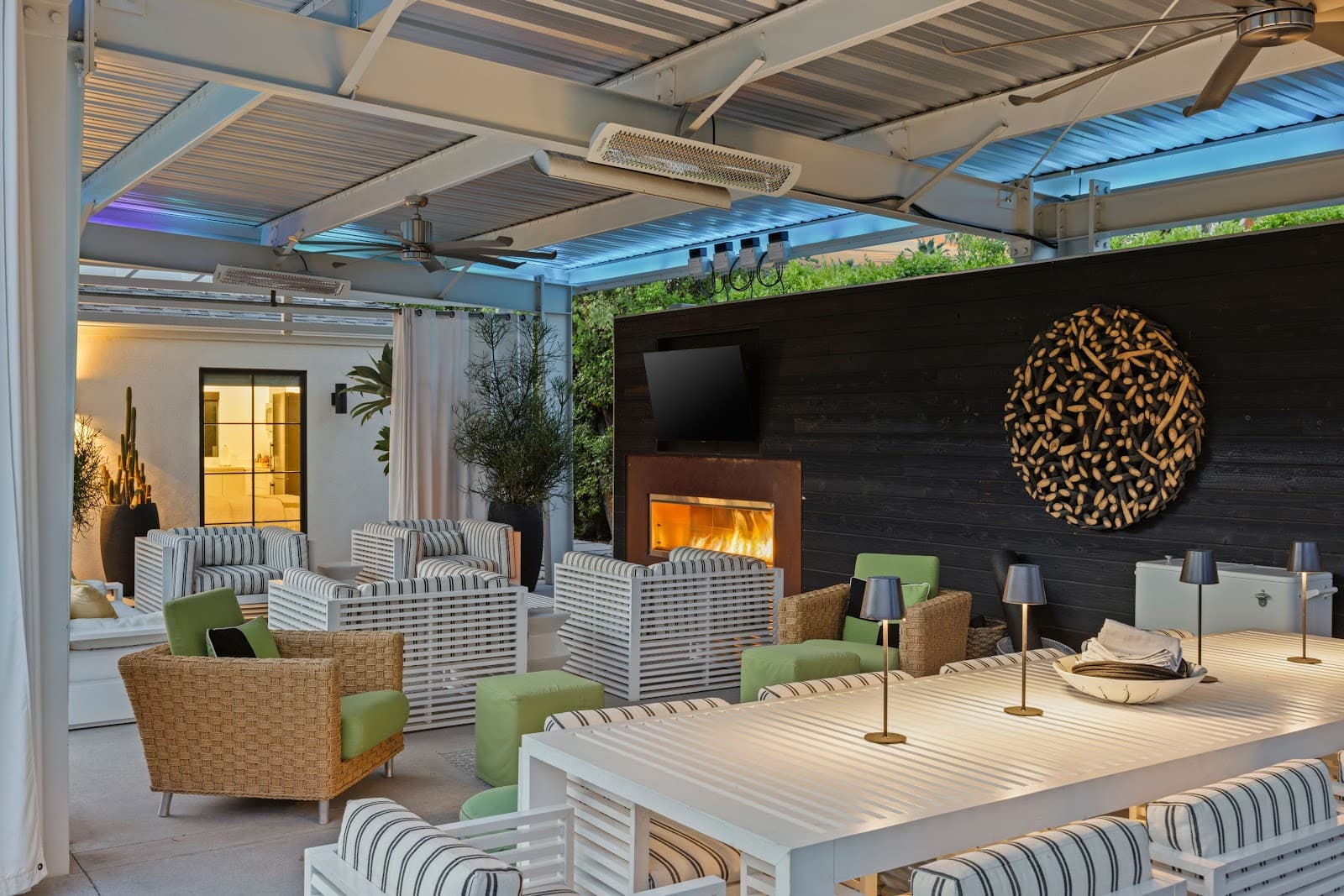
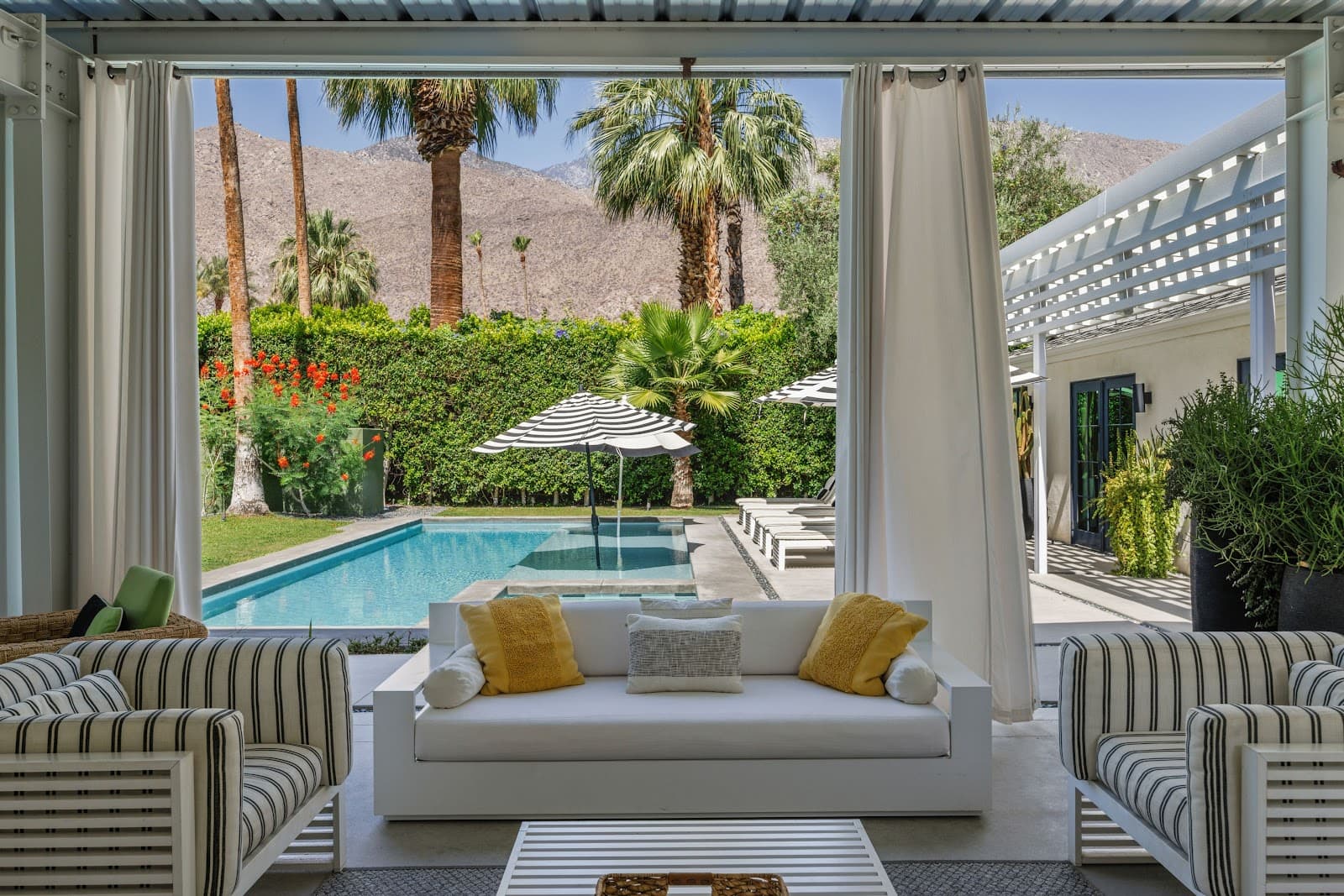
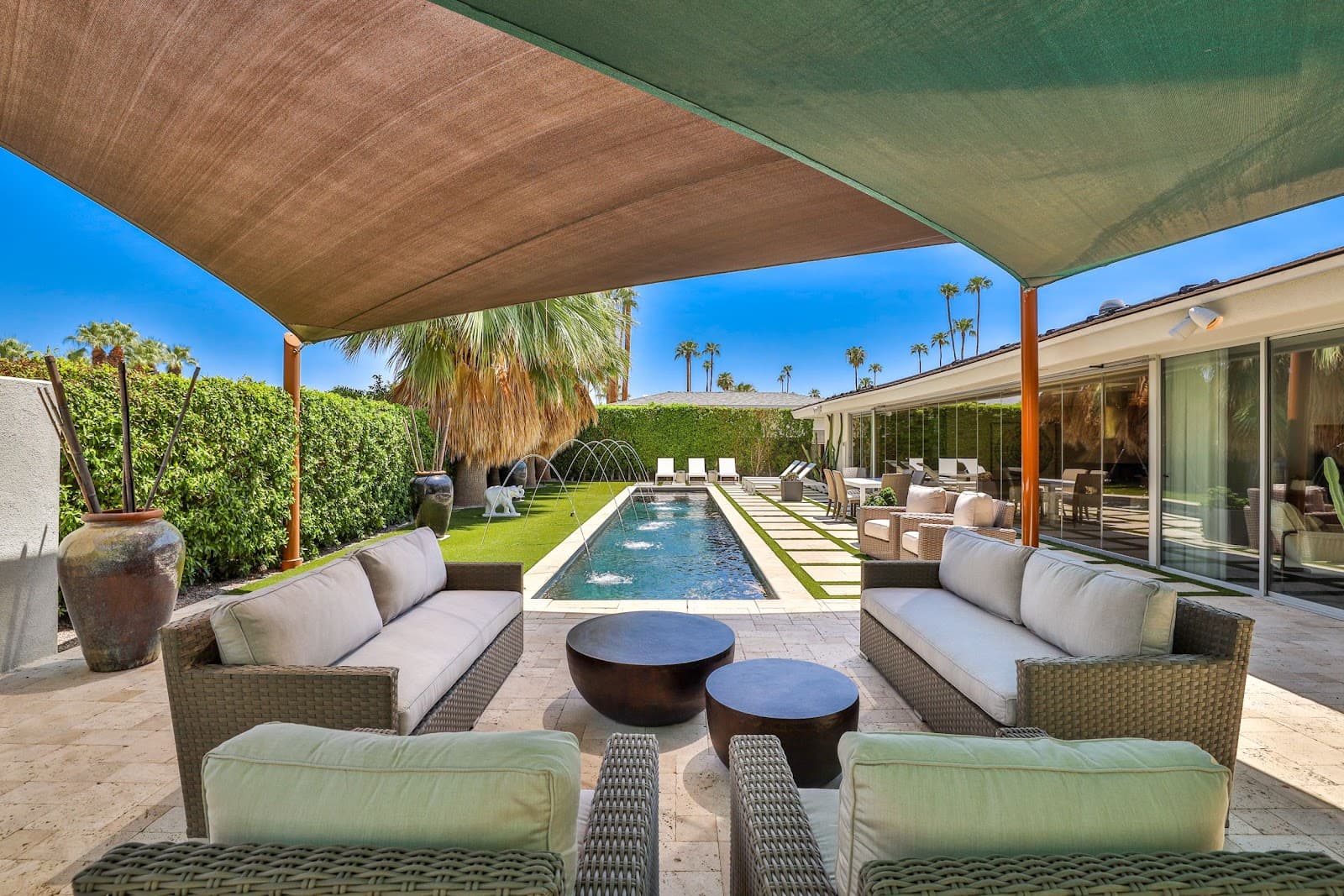
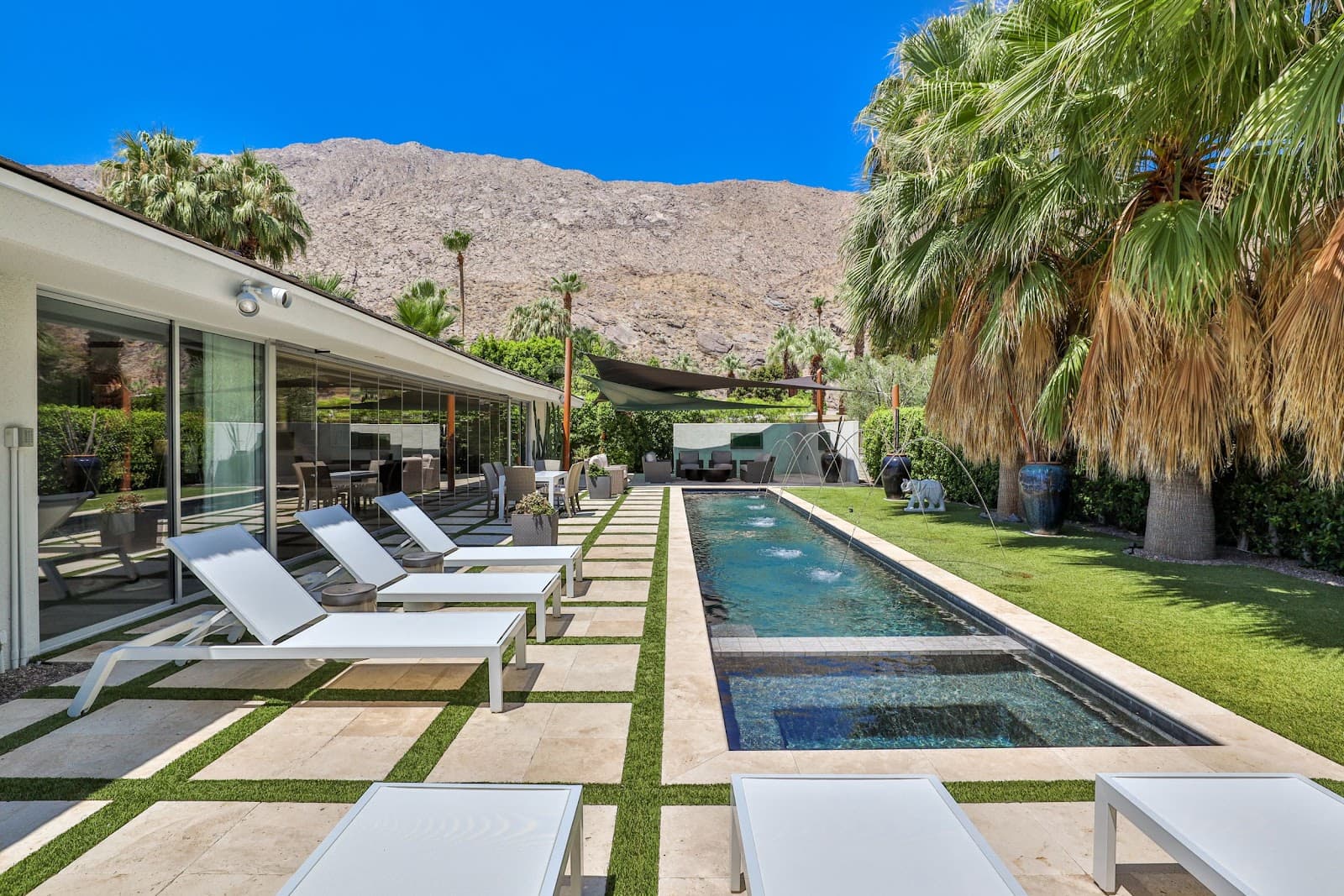
Do we need a pool? In practice, yes. A desert house without one is a different and much lesser proposition, and it is the single feature that most affects how a house is actually used from March to November. Every home we list here has one or has access to one, and we will say which.
Can we let our weeks? On many homes, yes. Where managed letting of unused weeks is provided for, the management team handles it rather than you, within the city's short-term rental permit regime. We check the position for each property and tell you before you commit, rather than after.
More questions, answered plainly
Which neighbourhood should we choose? Old Las Palmas or the Movie Colony for the historic star addresses and walkability. Twin Palms or Deepwell for classic modernism with mountain views. Racquet Club Estates for the best design value. The Indian Canyons or Araby for seclusion and hiking from the door. Down valley — Rancho Mirage, Palm Desert, La Quinta — for more house, more golf and a country-club rhythm. Tell us how your year looks and we will point you at the right homes below.
Do we need a car? Yes, though less than you might think if you buy in central Palm Springs — downtown, the design district and several neighbourhoods are walkable, and the flat grid is excellent for cycling in the cool months. For the canyons, the golf, Joshua Tree and the down-valley cities, a car is necessary.
What are the running costs like? Each owner carries their share of the home's costs, billed transparently — property taxes, insurance, utilities including the summer cooling load, pool service, landscape and irrigation, cleaning, maintenance, association or lease payments where they apply, and the furnishing reserve. The property tax set at purchase is included in the full breakdown you see before you commit.
What about water? The Coachella Valley's water agencies manage supply actively for a desert of agriculture, golf and a growing population. Day to day it simply means desert landscaping rather than lawns, efficient irrigation and thoughtful use — none of which affects the pleasure of owning here.
What should we do on a viewing trip? Come for three days between November and April. Take the tram to the top and walk in the forest. Do a canyon in the morning. Drive slowly through Racquet Club Estates and Twin Palms and see whether the architecture moves you — for many buyers here, that is the deciding moment. Have dinner outside. Then let us open the doors of the houses themselves. Three days answers more than three months of listings, and we will build the itinerary around the homes listed below.
Nearby: Palm Desert (2, from $289,000) · La Quinta (3, from $125,000)
Taxes, resale and how ownership works for your 1/8 share of the home are covered in depth in our complete country guide. Read the full USA ownership guide →
Each listing shows the full price of its share — typically one-eighth of the home. It is a purchase price, not a deposit or membership fee: you become a co-owner of the home.
No. A timeshare sells you a week; co-ownership sells you the house. You own a real share of the Palm Springs home with a small group of owners, not a week at a resort shared with thousands. It moves with the value of the house, you sell it on the open market at your price, and you can leave it to your children.
A one-eighth share corresponds to about six weeks a year, scheduled fairly across seasons so every owner enjoys peak weeks over time. The home is professionally managed — you simply arrive.
Questions about a home in this collection? Our team typically replies within minutes.
Get in Touch
Speak to an expert
Tell us what you're looking for and we'll be in touch.