Co-Ownership Basics
Who Pays When Something Breaks?
A managed co-owned home still needs a written route for reporting faults, approving work, funding repairs and protecting the next owner’s stay.
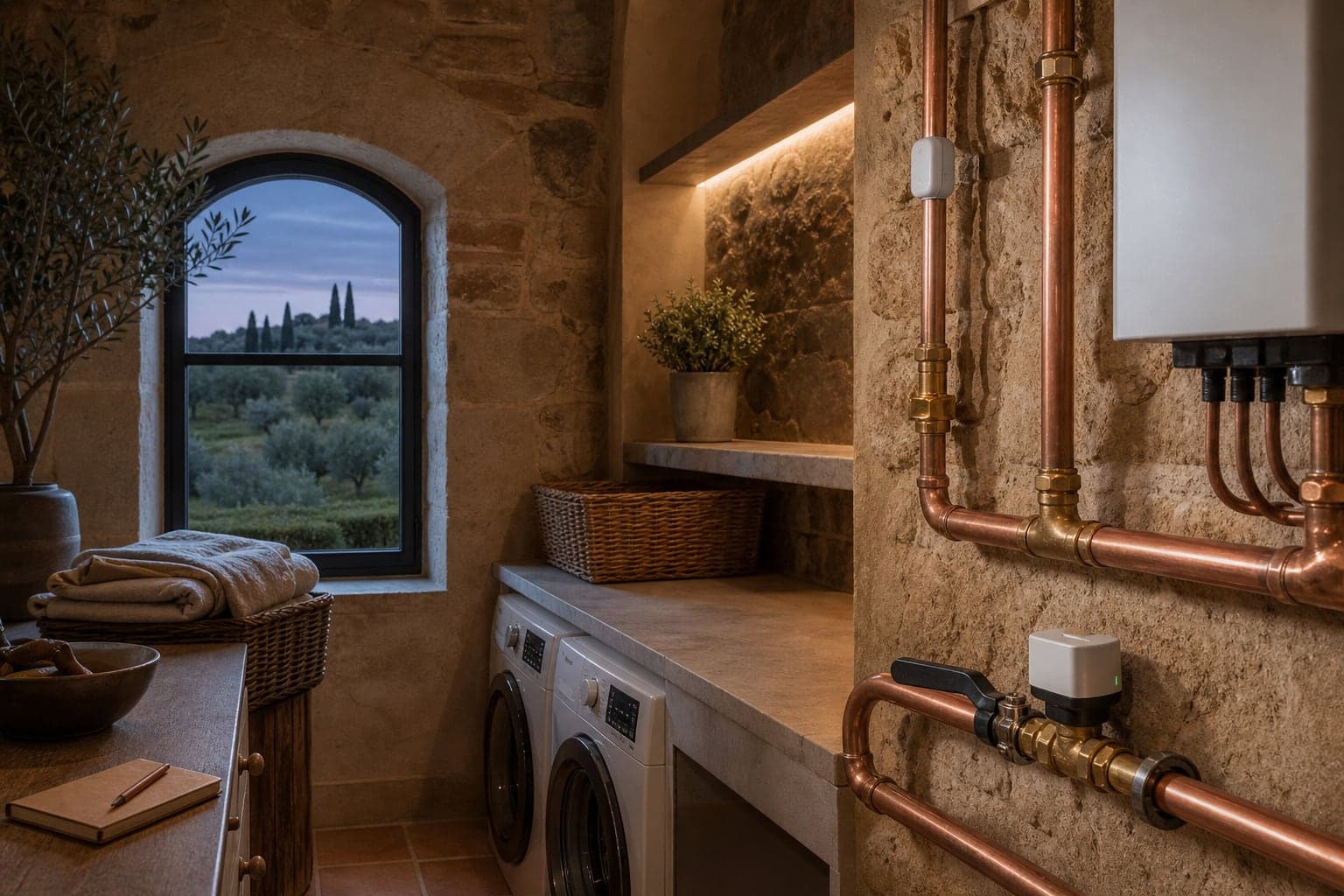
The revealing moment in a managed co-owned home is rarely the first arrival. It is 9.40pm on a Friday, when water appears beneath the dishwasher and the next owner is due on Monday. A reassuring brochure may promise maintenance; a useful ownership structure explains who answers, who can authorise the plumber, which pot pays and how every owner is told.
That distinction matters because “management included” is not the same as “every repair included”. A co-owned home can have professional cleaning, a local property manager and a reserve fund, yet still leave important questions unanswered. Routine servicing, an urgent leak, an insurance claim, damage caused during a stay and the replacement of an ageing boiler are five different events. They may follow five different payment and approval routes.
The practical test: before buying, you should be able to name the reporting channel, emergency contact, authorisation threshold, funding source and closing record for a repair. If one of those is vague, the maintenance promise is incomplete.
One fault can create five different bills
The fair answer to “who pays?” begins by classifying the work. Exact definitions depend on the property, ownership vehicle, management agreement and insurance policy, but the following framework helps expose what the documents need to say.
| Type of event | Typical route to check | The document question |
|---|---|---|
| Routine maintenance Servicing, filters, minor wear | Annual operating budget or management charge | Which tasks and call-outs are included? |
| Urgent repair Leak, heating failure, electrical fault | Manager acts within emergency authority, then allocates the cost | What can be approved without an owner vote? |
| Insured event Escape of water, storm or fire | Insurance, with an excess and possible exclusions | Who pays the excess and uninsured portion? |
| Owner or guest damage Broken furniture, lost keys | Responsible user, deposit or insurance—if the contract provides it | What evidence is needed and who decides? |
| Capital replacement Roof, boiler, pool equipment | Reserve fund, special contribution or agreed financing | How is the decision made if the reserve is short? |
This is a diagnostic framework, not a universal allocation. A 1/8 share may be marketed as roughly six weeks of annual use, but the number of nights, booking rules and cost-sharing arrangements belong to the specific offering. Likewise, one operator may include appliance servicing in the annual charge while another passes through parts, labour or both.
Management is a process, not a promise
Current provider descriptions show why buyers need both the headline and the mechanism. Pacaso says its monthly operating costs can cover property management, preventative and routine maintenance, utilities, taxes and a reserve fund; it also describes a dedicated Home Manager for home-related issues. MYNE says it handles management, servicing and maintenance while coordinating owners, service providers and authorities.
Those are useful examples of managed models, not rules for the whole co-ownership market. They do not mean every provider uses the same budget, reserve policy, damage procedure or emergency threshold. Co-Ownership Property is an introducing platform, not the operator of every home it presents. The binding answer comes from the ownership, management and insurance documents for the particular property.
A good process is visible. An owner reports a fault through a defined channel. Someone triages whether it is urgent. The manager either acts within delegated authority or seeks approval. A contractor gains access without disrupting another owner’s stay. The invoice is assigned to the correct budget, reserve, insurer or responsible user. Finally, the work is recorded and the relevant owners receive an update.
The six-line repair protocol
- Report: one phone number, app or portal, with photographs and a time stamp.
- Triage: a clear distinction between an emergency, a same-day job and work that can wait.
- Authorise: a stated spending threshold and named decision-maker.
- Access: local keys, contractor supervision and respect for the booking calendar.
- Allocate: operating budget, reserve, insurance or responsible owner.
- Close: invoice, photographs, warranty information and an owner update.
The protocol can be short. What matters is that it exists before the sink leaks, not after eight owners start a message thread.
The handover is the first maintenance inspection
Many problems are cheapest when found between stays. Cleaning and maintenance are different jobs, but a well-designed handover connects them. The person preparing the home is often the first to notice a slow-draining shower, a freezer running warm, a loose chair or a damp mark after rain.
A useful changeover checklist goes beyond linen and surfaces. It confirms that plumbing is dry, heating or cooling responds, major appliances run, doors and windows lock, safety equipment is present and outdoor areas show no fresh damage. It should also record consumables and distinguish shared items from possessions kept in an owner’s cupboard. That reduces the risk of personal belongings being mistaken for abandoned items or shared inventory.
The best result is not a home that never needs work; no real property can promise that. It is a home where small faults are noticed early, scheduled around occupancy and prevented from becoming the next owner’s unpleasant surprise.
Repair or improvement? The line affects the vote
Restoring a failed appliance to an equivalent standard is usually easier to classify than upgrading it. If a refrigerator stops cooling, replacement may be maintenance. Choosing a larger integrated model that requires new cabinetry is an improvement. A broken lock may require an immediate like-for-like repair; converting every entrance to a smart-access system is a design and security decision.
The agreement should say which choices a manager can make, which require a simple owner approval and which demand a higher threshold. Emergency authority should be wide enough to protect the property and people, but not so vague that it becomes a route to discretionary spending. COP’s guide to co-owner decisions and voting explains why delegated authority, reserved matters and deadlock procedures belong together.
Specification matters too. An equivalent replacement should reflect the home’s quality and intended use, not merely the cheapest item available that day. Written standards for finishes, appliances and furniture help a manager move quickly without gradually changing the character of the home.
Operating budget, reserve and insurance are not synonyms
A convincing maintenance plan normally has three financial layers. The operating budget deals with predictable annual work: servicing, routine call-outs and minor replacements. The reserve builds capacity for longer-life assets and larger, less frequent expenditure. Insurance responds only to covered events, subject to terms, limits and excesses. It is not a general home-improvement fund.
Ask for the current annual budget, the reserve policy and evidence of insurance separately. A monthly fee may look comprehensive while the reserve is still young. A healthy reserve may exist but be earmarked for a building-level obligation rather than the interior. Insurance may cover the structure but not every content item or loss of use. COP’s management-fee guide sets out the distinction between bundled operations and costs that remain outside the headline charge.
The most useful numbers are not generic percentages. They are the actual annual contribution, current reserve balance, planned major works, insurance excesses and the process for a special contribution if available funds are insufficient. Buyers should also ask what happens when an owner pays late. A maintenance system can be well designed on paper but weakened if arrears leave the operating account short.
A Friday-evening leak, from report to handover
Imagine an owner notices water beneath the dishwasher. In a well-run arrangement, they stop the appliance, close the relevant valve if safe and report the issue with photographs. The local manager checks whether water is affecting cabinetry, flooring or the home below. Emergency authority allows a plumber to attend without waiting for a full vote.
The diagnosis then determines the bill. A failed hose might be a routine repair. Sudden resulting water damage might trigger an insurance notification. Evidence of misuse could activate an owner-damage clause. If the appliance has reached the end of its service life, replacement may come from the operating budget or reserve, depending on the documents. An upgrade beyond the agreed specification may require approval and a different funding decision.
Before the next stay, the manager should test the appliance, photograph the dry area, record the invoice and explain any temporary limitation. If the home cannot be used, the contract—not an assumption—should determine whether another date, alternative accommodation or any other remedy is available.
This example is illustrative, not a statement of any provider’s policy. Its value is the sequence: contain, assess, authorise, repair, allocate and close.
Eight questions to ask before buying
- What exactly is included in the annual management or operating charge?
- Who answers outside normal hours, and how quickly are urgent faults triaged?
- How much can the manager spend without an owner vote?
- How are owner- or guest-caused damage and disputed responsibility handled?
- What is the reserve balance, contribution policy and next expected major replacement?
- Which insurance policies apply, and who pays each excess?
- How are repairs documented and visible to all owners?
- What happens to bookings if work makes the home partly or wholly unavailable?
These questions complement the wider provisions in a co-ownership agreement: use rights, budgets, decisions, transfers, default and exit. They also help distinguish ownership of an interest in a property or its owning entity from a contractual timeshare. Legal title, voting power and responsibility depend on the actual structure.
Frequently asked questions
Does the management fee cover every repair?
Usually not automatically. It may include routine maintenance and administration, while parts, major replacements, insurance excesses or owner-caused damage follow separate rules. Read the inclusions, exclusions and annual budget for the specific home.
Can a manager authorise work without a vote?
That depends on delegated authority in the management and ownership documents. A sensible arrangement usually allows urgent protective work and lower-value routine jobs within stated limits, while reserving major or discretionary spending for owner approval.
Who pays when an owner’s guest causes damage?
The agreement may place responsibility on the hosting owner, rely on a deposit or insurance, or allocate the loss another way. The evidence standard, decision-maker and appeal process should be written down; no single rule applies to all co-owned homes.
What happens if repairs overlap my stay?
Booking priority, alternative dates, accommodation and compensation are contractual matters. Do not assume a hotel-style remedy. Ask how partial and complete loss of use are treated before purchasing.
Is a reserve fund always mandatory?
No universal rule applies across structures and jurisdictions. Even where a reserve is not legally required, buyers can ask whether one exists, what it may fund, how contributions are calculated and what happens when it is insufficient.
Sources and data notes
Provider descriptions were checked on 10 October 2026: Pacaso FAQ, Pacaso buying information and MYNE. They illustrate provider-specific managed models and should not be read as universal co-ownership terms. Internal context: COP’s guides to how co-ownership works, management fees, agreements and voting. The repair scenario and classifications are editorial examples, not legal, insurance or financial advice.
Look for a home with a clear operating plan
Browse current co-ownership opportunities, then ask COP to introduce you to the relevant provider and the property-specific documents behind the maintenance promise.
Plus de Co-Ownership Property



Nous contacter
Parlez à un expert
Dites-nous ce que vous recherchez et un de nos spécialistes en copropriété vous contactera sous 24 heures.