Co-Ownership Basics
From Niche to Normal: Co-Ownership and the Second Home
Co-ownership property has gone mainstream. Discover why the $29 billion fractional market is reshaping how smart buyers own luxury second homes in 2026.
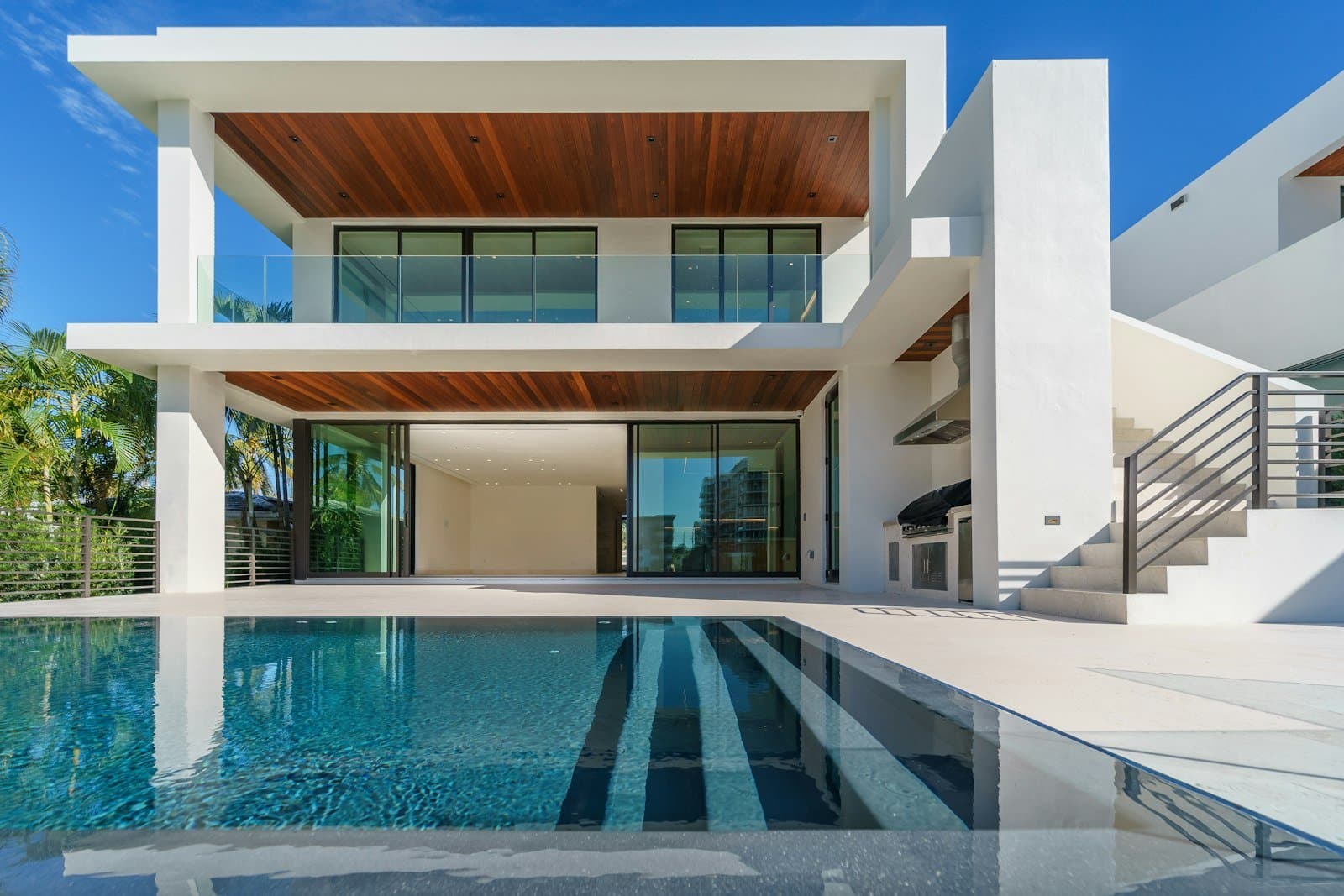
A decade ago, the idea of sharing ownership of a luxury holiday home raised eyebrows. Today, it raises investment portfolios. The global fractional ownership market reached $9.4 billion in 2024 and is expanding at a compound annual growth rate of 13.7 per cent, on track to surpass $29 billion by 2033 according to Growth Market Reports. What was once dismissed as an alternative experiment has become a pillar of modern property strategy — and the numbers leave little room for debate.
For anyone who has ever watched a beautiful second home sit empty for ten months of the year, or winced at a five-figure maintenance bill for a property visited twice, the appeal is obvious. Co-ownership lets you own a real share — typically one-eighth — of a fully managed luxury property. You get around 45 days of personal use per year, a fraction of the running costs, and zero hassle with cleaning, repairs, or rental logistics. It is not a timeshare and it is not a compromise. It is, increasingly, the default choice for informed buyers. Here is why.
The Shift
How a $29 Billion Market Moved From Fringe to Mainstream
The tipping point arrived quietly. Between 2020 and 2024, a combination of remote-work flexibility, rising property prices, and a generational shift in attitudes towards ownership created the perfect conditions for co-ownership to flourish. Knight Frank’s 2025 Wealth Report noted that demand for luxury second homes continues to outstrip supply in virtually every prime market — a dynamic that makes shared ownership models not just attractive but, for many buyers, essential.
Meanwhile, the buyer profile has evolved dramatically. Where fractional ownership once attracted retirees looking for sun, it now draws affluent professionals aged 40 to 55 who want access to premium destinations without the capital lock-up of full ownership. Many are experienced property owners who have done the maths and concluded that paying one hundred per cent of the costs for a home they use ten per cent of the time is, simply, a poor allocation of wealth.
The institutional world has noticed too. Transaction volumes from institutional investors in fractional real estate rose 43 per cent in Q1 2025 alone. When pension funds and family offices start deploying capital into a sector, it has moved well beyond niche.
$29.3B
Projected global fractional ownership market value by 2033 — up from $9.4B in 2024 (Growth Market Reports)
13.7%
Compound annual growth rate of the fractional ownership sector from 2025 to 2033
85%
Proportion of the year a typical luxury second home sits completely empty and unused
43%
Rise in institutional investor transaction volumes in fractional real estate in Q1 2025
The Numbers
The True Cost of a Second Home vs Co-Ownership: A Side-by-Side Comparison
The financial case for co-ownership crystallises when you look at the real numbers. According to Zillow research, the hidden costs of homeownership — maintenance, insurance, taxes, utilities — now average $15,979 per year in the United States alone. For second homes in luxury destinations, that figure climbs significantly. Coastal properties in Florida or wildfire-prone areas of California can see insurance premiums of $3,000 to $8,000 annually, two to three times the rate of a primary residence.
With co-ownership properties, every cost is split proportionate to your share. A one-eighth owner pays one-eighth of maintenance, one-eighth of insurance, one-eighth of property taxes, and one-eighth of management fees. On a property whose running costs reach €40,000 a year, you share them equally with the other co-owners. That is the price of a long weekend in a five-star hotel — except you own actual real estate that appreciates in value.
Then there is the opportunity cost of capital. A luxury villa on the Costa del Sol might cost €2 million outright. A one-eighth share starts at a fraction of the whole-home price. The €1.75 million you did not spend remains in your portfolio, compounding. Over a decade, that difference in capital allocation can be worth more than the property itself.
Annual Running Costs: Full Ownership vs Co-Ownership (1/8 Share)
Insurance (Luxury Coastal)
Maintenance & Repairs
Property Taxes
Management Fees
Utilities & Upkeep
The Utilisation Problem
Why Full Ownership Is the Most Expensive Way to Use a Holiday Home
Here is the uncomfortable truth that second-home owners rarely discuss at dinner parties: most luxury holiday properties are occupied for fewer than 50 days per year. That means the home sits empty for more than 85 per cent of its life, quietly accumulating costs, requiring maintenance, and tying up capital that could be working elsewhere.
Co-ownership solves this structural inefficiency with elegant precision. Each one-eighth share provides approximately 45 days of use per year — closely matching the actual usage pattern of most second-home owners. You are not paying for 365 days when you only need 45. You are not heating an empty house in winter or worrying about a burst pipe while you are thousands of miles away. Everything is fully managed, from cleaning between stays to long-term maintenance scheduling.
When you arrive at your co-ownership property, your personal belongings are taken out of storage and the home is prepared specifically for you. When you leave, the management team takes over. It is ownership without the operational burden — which, for most people, is the part of second-home ownership they liked least anyway.
“The question is no longer whether co-ownership works — it is whether full ownership of a second home can still be justified for most buyers.”
Legal Structure
Real Ownership: Why This Is Not a Timeshare
The single most important distinction between co-ownership and timeshare is the legal structure — and it changes everything. When you purchase a share through Co-Ownership Property, you own a real share of a specific home — an eighth, a quarter — not a right to use it. This is real ownership. You have a legal stake in a tangible asset, and the legal set-up is arranged by our partner for each home and walked through with you before you buy.
Timeshares, by contrast, typically sell you the right to use a property during a specific period — you own a slot on a calendar, not a piece of real estate. There are no points systems in co-ownership, no mandatory exchanges, and no resort fees that escalate unpredictably. Your share can be sold on the open market at market price through our partner’s resale process — without you having to sell the whole house.
Co-ownership provides clear legal protections, transparent governance, and — crucially — the ability to pass your share to family members as part of your estate. For buyers who value transparency in the buying process, this model offers exactly that.
| Factor | Full Second Home | Co-Ownership (1/8 Share) |
|---|---|---|
| Purchase Price (Luxury Villa) | €1,000,000 – €3,000,000 | €100,000 – €375,000 |
| Annual Running Costs | €25,000 – €50,000+ | €3,000 – €6,000 |
| Typical Usage Per Year | 30 – 50 days | ~45 days |
| Management Hassle | Owner-managed or outsourced | Fully managed, zero hassle |
| Time to Resell | 6 – 18 months average | Through our partner’s resale process |
| Capital Locked Up | 100% of property value | 12.5% of property value |
Flexibility
45 Days, Your Way: How Booking Actually Works
One of the most persistent myths about shared ownership is that you lose control over when you can use your property. The reality is precisely the opposite. Booking windows depend on the home and our partner.
Want a fortnight in August and a long weekend in December? Done. Prefer to spread your 45 days across six or seven shorter trips throughout the year? That works too. The system is designed around how people actually holiday — spontaneously, flexibly, and according to the rhythms of their own lives rather than an arbitrary corporate calendar.
For properties that permit holiday rentals, your share can also generate rental income during the periods you are not using it. Rental management is handled entirely by the management company — owners do not need to list properties, manage guests, or handle cleaning. Income is distributed proportionate to ownership stake. It is genuinely passive income from a genuinely passive investment.
2018–2019
Early Adopters Pioneer the Model
Fractional platforms launch in the US and Europe, attracting tech-savvy early adopters willing to try a new approach to second-home ownership.
2020–2021
Remote Work Accelerates Demand
The pandemic reshapes where and how people work, triggering a surge in second-home demand — and revealing the inefficiencies of full ownership.
2022–2023
Market Validation and Scale
Major transactions and institutional interest validate fractional ownership as a legitimate asset class. The market crosses the $5 billion threshold.
2024–2025
Institutional Capital Flows In
Institutional transaction volumes surge 43%. The market reaches $9.4 billion. Co-ownership moves firmly into the mainstream.
2026 and Beyond
The New Default for Smart Buyers
With 13.7% annual growth projected through 2033, co-ownership is set to become the standard approach to luxury second-home ownership globally.
Destinations
Where the Smart Money Is Buying: Co-Ownership Hotspots in 2026
The beauty of co-ownership is that it unlocks markets that would otherwise be inaccessible. A one-eighth share in a ski chalet in the French Alps might start at a fraction of the whole-home price — a price point that opens the door to destinations like Courchevel, Méribel, and La Plagne without the seven-figure commitment of full ownership.
In Spain, the Balearic Islands and Costa del Sol remain the strongest co-ownership markets, with Savills reporting continued price growth across Mallorca and Ibiza driven by constrained supply and international demand. Italy’s lake district — particularly Lake Como — has seen a surge of interest from American and British buyers drawn by lifestyle appeal and favourable exchange rates.
Across the Atlantic, Colorado ski properties in Aspen, Vail, and Breckenridge continue to command premium interest, while emerging markets like Napa Valley and 30A Florida are attracting buyers who want year-round lifestyle properties rather than purely seasonal escapes. Co-Ownership Property curates shares across all of these destinations, with options ranging from under €100,000 to around €2 million for ultra-luxury.
Buyer Psychology
The Mindset Shift: From ‘Owning More’ to ‘Owning Smarter’
Something fundamental has changed in how affluent buyers think about property. The post-2020 generation of second-home purchasers are not motivated by accumulation — they are motivated by optimisation. They have seen friends and family burdened by properties that consume time, money, and mental energy. They want the lifestyle benefits of a luxury holiday home without the lifestyle costs.
This is the same psychological shift that drove the rise of business-class flights over private jet ownership, or boutique hotel memberships over country-club lock-ins. It is about access, quality, and efficiency — not about owning less, but about owning better. Knight Frank data shows that prime property demand continues to outstrip supply globally, which means the co-ownership model is not just a preference — it is increasingly a practical necessity for accessing the best locations.
Case studies from real co-owners consistently highlight the same themes: reduced stress, better financial allocation, and more frequent use of their property than when they owned a full second home. When the hassle disappears, people actually use their holiday homes more — which, after all, was the entire point of buying one.
Looking Ahead
The Future of Second-Home Ownership Is Already Here
The trajectory is clear. With the fractional ownership market growing at 13.7 per cent annually, institutional capital flowing in, and buyer demographics skewing younger and more financially sophisticated, co-ownership is not a trend waiting to arrive — it has arrived. The question is no longer whether shared ownership works, but whether full ownership of a second home can still be justified for most buyers.
Regulatory frameworks are maturing to support the model. Technology platforms are making booking, management, and communication seamless. And the properties themselves — designer villas, alpine chalets, waterfront apartments — are indistinguishable from the finest fully-owned homes. The only difference is the price tag, the hassle, and the intelligence of the investment.
For buyers sitting on the fence, the data offers a straightforward conclusion: co-ownership delivers the same lifestyle at a fraction of the cost, with better utilisation, professional management, and the liquidity to exit. In a market where the average second home sits empty for ten months a year, that is not just smart — it is obvious.
Common Questions
Frequently Asked Questions
Is co-ownership the same as a timeshare?
No — they are fundamentally different. Co-ownership gives you a real share of the home itself, not a right to use it. You own actual real estate that appreciates in value and can be sold on the open market. Timeshares typically sell usage rights with no real asset ownership, restricted resale options, and escalating fees.
How much does a co-ownership share typically cost?
Shares range up to around €2 million for ultra-luxury chalets and villas in prime locations like Aspen or Courchevel. Most properties fall in the €100,000 to €1 million range, making luxury destinations accessible at a fraction of full ownership costs.
How many days per year can I use the property?
Each one-eighth share provides approximately 45 days of personal use per year. Booking windows depend on the home and our partner.
What happens when I want to sell my share?
You set the price. Your co-owners get the first chance to buy at that price; if they pass, it goes on the open market. Resale is handled through our partner’s resale process, without you having to sell the whole house.
Who handles maintenance, cleaning, and management?
Everything is fully managed by the property management company — cleaning between stays, ongoing maintenance, insurance, tax administration, and rental coordination. Co-owners never need to arrange or coordinate anything themselves. This is one of the key advantages over full ownership.
Can I earn rental income from my share?
Yes, depending on the property location and local rental permits. Rental management is handled entirely by the management company, and income is distributed proportionate to each owner’s share. You do not need to manage guests or listings yourself.
Explore Properties With Co-Ownership Property
Whether you are seeking a co-ownership share in the Alps, the Mediterranean, or the Rockies, browse our curated portfolio of luxury properties — all fully managed, legally structured, and ready for you to make your own.
Browse PropertiesMore from Co-Ownership Property

Get in Touch
Speak to an expert
Tell us what you're looking for and we'll be in touch.