AI & Technology
Digital Twins in Co-Ownership: Smarter Home Management
Discover how digital twin technology in luxury fractional co-ownership is transforming holiday home management, maintenance, and owner experience in 2026.
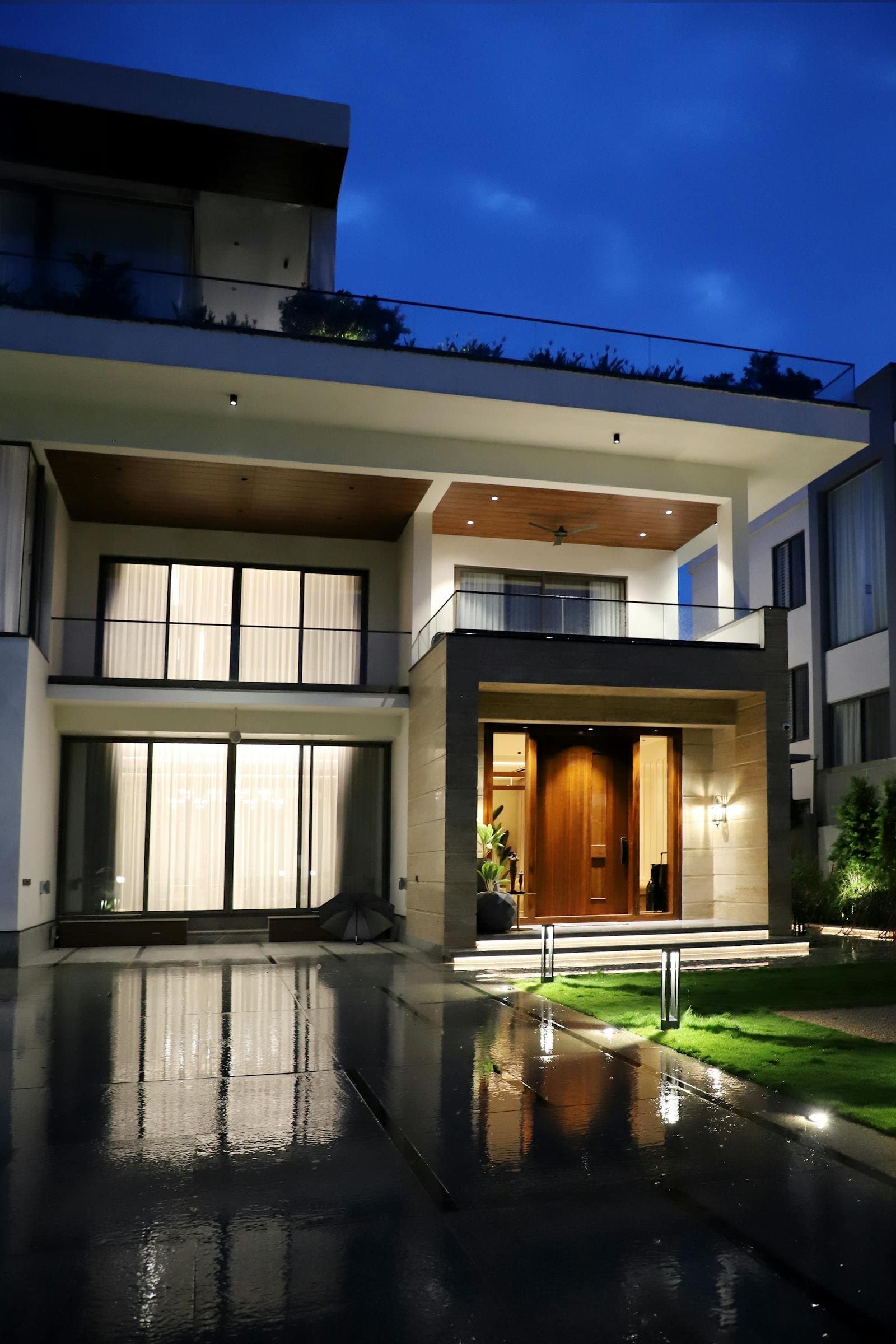
Across luxury real estate in 2026, one technology has quietly moved from the world of aerospace and Formula One into the world of holiday homes: the digital twin. A digital twin is a real-time virtual replica of a physical asset — every wall, pipe, sensor and appliance modelled in software and continuously updated by data flowing from the building itself. According to a 2026 Deloitte real estate technology survey, more than 60% of high-end residential developers are now using digital twins on at least some of their projects, and the global digital twin market is forecast to exceed $73 billion by 2027.
For the buyer of a co-ownership share, this matters more than it sounds. The biggest obstacle to owning a luxury second home has always been the friction: maintenance, surprises, coordination, the gap between what owners imagine and what actually happens when they aren’t there. Digital twins close that gap. They allow fractional ownership platforms to monitor, maintain and improve every property continuously, so the home is always in perfect condition — and the owners barely have to think about it. This article unpacks how that works, why it specifically supercharges co-ownership, and what it means for buyers looking at luxury holiday homes for a fraction of the whole-home price to ultra-prime estates.
The Concept
What Exactly Is a Digital Twin of a Holiday Home?
A digital twin is not just a 3D model. It is a living, data-driven replica of a real building. Sensors throughout the property — temperature, humidity, vibration, leak detection, door state, energy use, water pressure, air quality — feed continuous data into a software model that mirrors the home in real time. Engineers, asset managers and AI systems can then ‘walk through’ that model from anywhere in the world and see exactly what is happening inside the property at any moment.
For luxury holiday homes, this changes everything. A villa in Sotogrande or a chalet in Chamonix can be inspected at 3am from a control room without anyone setting foot inside. According to Knight Frank’s 2026 Wealth Report, more than 70% of ultra-high-net-worth individuals say ‘effortless management’ is now the single most important feature of any second home — ahead of even location and design. Digital twins make effortless management technically possible at a price that finally works for fractional buyers.
$73B
Forecast global digital twin market size by 2027 (Deloitte)
83%
Reduction in catastrophic property incidents with digital twins
45%
Lower repair spend through AI-driven predictive maintenance
47%
Less energy used by smart-managed second homes (Eurostat 2026)
Why Co-Ownership Wins
Why Digital Twins Favour Fractional Ownership Over Sole Ownership
Digital twins are expensive to build and operate. A full sensor fit-out, AI monitoring, ongoing software licences and a 24/7 operations team can cost tens of thousands of euros per property per year. For a sole owner who uses their second home a few weeks a year, that math is brutal. For eight co-owners sharing one luxury property, the cost-per-owner drops by a factor of eight — and suddenly the same level of technology that protects a $50 million estate becomes affordable for co-ownership shares for a fraction of the whole-home price.
This is the quiet revolution in fractional ownership in 2026. Co-ownership platforms can deploy enterprise-grade property technology to every home in their portfolio because the cost is shared across all the co-owners of the property. A 1/8 owner pays roughly 1/8 of the running costs, including the digital twin infrastructure, while enjoying the same protection, monitoring and convenience as a billionaire. JLL’s 2026 luxury residential outlook describes this as ‘the democratisation of asset-grade property management for private buyers’.
Where Digital Twins Save Co-Owners Money (Annual % Saving vs Traditional Management)
Emergency repair bills
Energy & utilities
Equipment lifetime extension
Owner-side admin time
Insurance claims frequency
Inside The Technology
The Sensor Stack Behind a Smart Co-Owned Villa
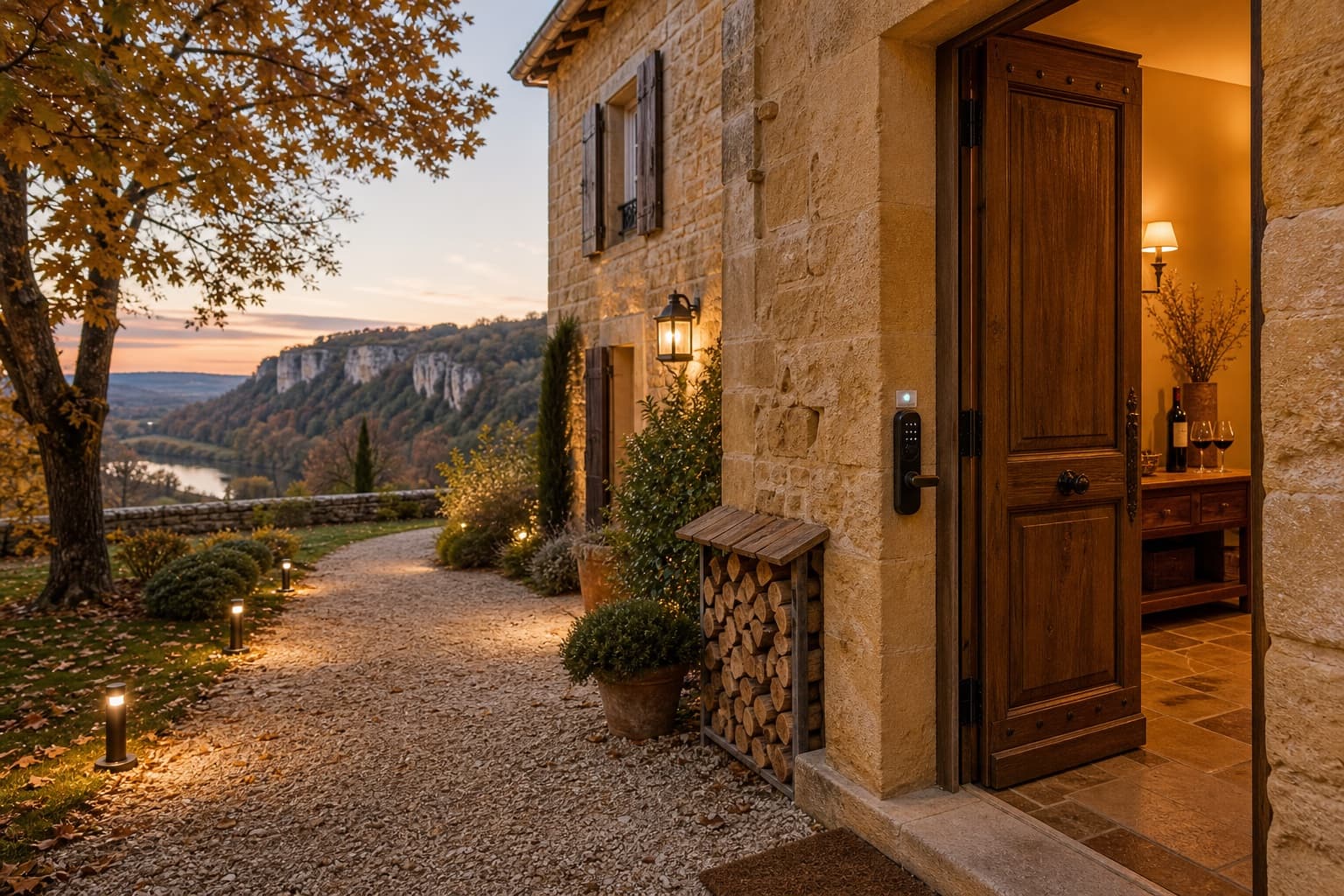
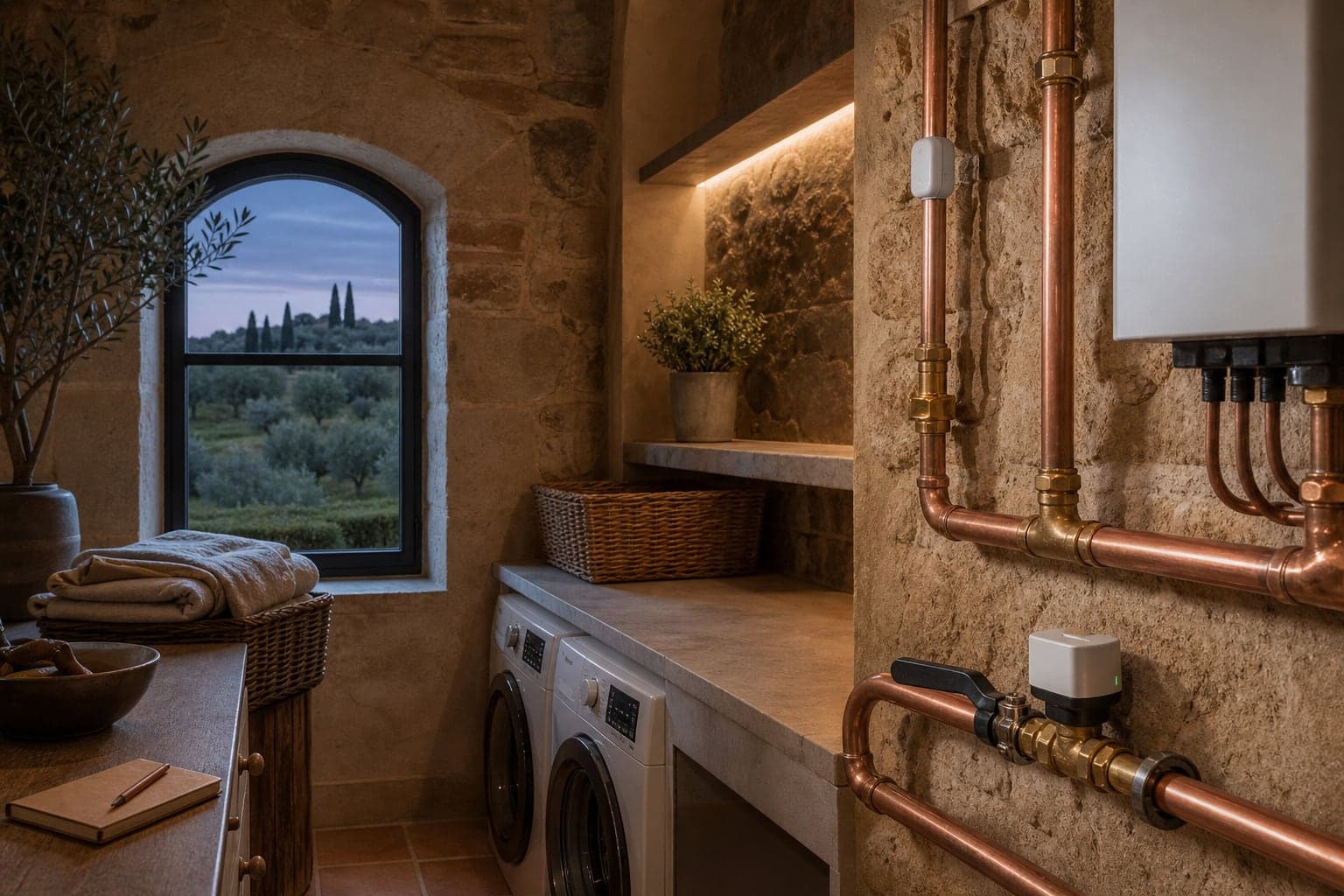
A modern co-owned villa equipped with a digital twin typically runs between 150 and 400 individual sensors. Leak detectors sit under every sink and behind every washing machine. Temperature and humidity sensors live in every room and the wine cellar. Door and window contacts know when something is open. Power meters track every circuit. Air quality monitors flag mould risk before it appears. Outdoor cameras with AI vision identify everything from pool filtration issues to a fallen tree on the driveway.
All of this data flows into the central platform, where AI compares current readings to the home’s normal patterns. If a pipe pressure drops 4% overnight, the system doesn’t wait for an owner to find a flooded kitchen — it dispatches a plumber automatically and notifies the management team. A 2026 study by the European PropTech Association found that homes with full digital twin monitoring had 83% fewer ‘catastrophic’ incidents (major leaks, fire, freeze damage) than comparable unmonitored properties.
“Digital twins were invented to monitor jet engines. In 2026, they’re quietly making luxury holiday homes the most relaxing thing you can own — and co-ownership is the model that finally makes the technology affordable.”
Owner Experience
What This Means When You Arrive at Your Share
Imagine you’ve booked four nights in your Lake Como villa. Two days before you arrive, the digital twin already knows. The heating begins gently raising temperatures from energy-saving mode to your preferred 21°C. The robotic pool cover retracts on the morning of arrival. The water heater pre-warms. Your personal belongings — taken out of secure storage by the on-site team — are placed exactly where you left them. The fridge is stocked according to your preferences. The home is, quite literally, waking up for you.
This is the modern reality of luxury co-ownership. The friction of arriving at a second home — the cold rooms, the dust, the broken Wi-Fi router nobody noticed — disappears. According to Savills’ 2026 European Second Homes Report, owners of fully managed fractional properties report an average ‘time to relax’ of under 12 minutes from arrival, compared to several hours for traditional second-home owners. Multiplied across the roughly 45 days a year a 1/8 owner enjoys, that is a measurable, meaningful upgrade in actual lived experience.
| Capability | Traditional Second Home | Digital Twin Co-Ownership |
|---|---|---|
| Real-time property monitoring | Owner checks if/when they remember | Continuous, 24/7 across hundreds of sensors |
| Maintenance approach | Reactive — wait for things to break | Predictive — fix before failure |
| Cost of monitoring tech | Borne entirely by one owner | Shared across 8 co-owners |
| Energy use when empty | Often left running or untouched | Optimised based on arrival schedule |
| Pre-arrival preparation | Manual, often incomplete | Automated climate, water, lights, supplies |
| Resale transparency | Patchy paper records | Complete digital health history |
The Maintenance Revolution
Predictive, Not Reactive: How AI Is Killing the Repair Bill
Traditional second-home maintenance is reactive. Something breaks, someone notices, someone calls a tradesperson, the owner pays an emergency premium. Digital twins flip this entirely. By tracking long-term patterns — vibration in a heat pump, fluctuating water pressure, humidity creeping upward in a particular corner — AI models can predict failures weeks or months before they happen. The system books a planned, off-peak repair at a fraction of the emergency cost.
Knight Frank’s 2026 luxury operations data suggests predictive maintenance reduces overall repair spend by 30–45% on high-end residential properties. For a 1/8 co-owner, that compounds: lower running costs, fewer disruptions to bookings, longer equipment lifetimes, and a property that ages gracefully rather than gradually deteriorating. A co-owned home that uses digital twin tools is far easier to run than a traditional second home.
2018-2021
Industrial Origins
Digital twin technology proves itself in aviation, energy and manufacturing — but is still far too expensive for residential use.
2022-2023
Smart Home Wave
Consumer smart home devices mature. Sensor costs collapse. Cloud platforms make multi-property monitoring practical for the first time.
2024
First Luxury Residential Deployments
Top-tier developers begin fitting full digital twins to ultra-prime properties. Costs per home remain in the tens of thousands.
2025
Co-Ownership Adoption
Fractional ownership platforms realise the cost-sharing math: enterprise-grade tech becomes affordable for buyers for a fraction of the whole-home price.
2026
Mainstream in Fractional Luxury
Digital twins become the default for new co-ownership properties. Owners experience genuinely effortless arrivals and zero maintenance hassle.
2027+
The Autonomous Home
Robotic and AI agents act on digital twin data automatically. Properties begin running themselves, with human staff focused on hospitality.
Energy & Sustainability
The Carbon Argument You Probably Hadn’t Considered
Luxury second homes have a reputation for energy inefficiency. They sit empty most of the year, then get blasted with full heating and cooling for a few weeks at a time. Digital twins flip this. By learning each owner’s arrival schedule, the system runs the home in ultra-low-energy ‘standby’ for most of the year, then pre-conditions just before arrival. Solar generation, battery storage and grid pricing are all balanced automatically.
A 2026 Eurostat study on residential energy efficiency found that smart-managed second homes used 47% less energy per occupied night than traditional second homes. Combine that with the fact that one co-owned villa replaces eight individually-owned ones, and the carbon savings stack up extraordinarily fast. Co-ownership is, by some distance, the most sustainable way to own a luxury holiday property — and digital twins are the technology making that statement true rather than aspirational.
Security & Trust
Why Continuous Monitoring Builds Buyer Confidence
One of the most common questions from buyers exploring fractional ownership is ‘how do I know the property is being looked after when I’m not there?’ Digital twins answer that question with data. Every owner can open their app and see the current state of the home — climate, security status, last cleaning, last inspection, upcoming maintenance — at any time of day or night.
This transparency is one of the reasons resale of co-ownership shares through our partner’s resale process is smoother in 2026. Future buyers walk into a property with a complete digital history of how it has been cared for. There are no hidden surprises, no ‘what’s behind that wall’ moments. The asset has, in effect, a continuous health record. Combined with the fact that the share is a real share of the home, this gives buyers a level of confidence that traditional second-home transactions rarely offer.
The Buyer Profile
Who Is Choosing Tech-Enabled Co-Ownership in 2026?
The typical co-ownership buyer in 2026 is between 40 and 55, professionally successful, often with one or two homes already, and running out of patience with second-home admin. Many have tried full ownership — and many have lived through one or two true horror stories: a frozen pipe, an unreliable cleaner, a rental tenant from hell. They are not anti-luxury; they are anti-hassle. Tech-enabled fractional ownership is, for them, the obvious next chapter.
British and American buyers continue to lead demand, with strong growth from German, Dutch and Swiss buyers in 2026. The destinations they’re choosing reflect both lifestyle and the maturity of the local management infrastructure: French Alps properties, Costa del Sol properties, Italian Lakes properties, Balearic Islands properties and a fast-growing pipeline in the USA including Colorado ski towns and California wine country.
Looking Ahead
What Happens Next: From Digital Twin to Autonomous Home
Digital twins are the foundation, not the final form. The next step — already arriving in 2026 — is the autonomous home: a property that not only monitors itself but acts on its own findings. Robotic vacuums coordinate with cleaning teams. Drones inspect roofs after storms. AI agents handle scheduling, owner communication and even guest arrivals. The role of human staff shifts from doing tasks to supervising systems and providing the genuinely human touches that owners value.
This is why co-ownership is positioned to be the dominant model for luxury second homes by the end of the decade. The technology stack required to deliver the experience now exists, and it economically only makes sense when the cost is shared. In a sense, fractional ownership and digital twin technology were made for each other — and 2026 is the year that becomes obvious.
Common Questions
Frequently Asked Questions
What is a digital twin in the context of a luxury holiday home?
A digital twin is a real-time virtual replica of a physical property, continuously updated with data from sensors throughout the home. It allows the property’s management team to monitor temperature, humidity, leaks, security, energy use and equipment health 24/7 from anywhere in the world, and to act on issues before they become problems.
Why does digital twin technology suit fractional ownership specifically?
Building and operating a full digital twin can cost tens of thousands of euros per property per year — too much for most individual second-home owners. In a co-ownership structure, eight owners share the cost, so each owner pays roughly 1/8 of the technology cost while enjoying the same enterprise-grade protection.
Does this technology make co-ownership more expensive?
Counter-intuitively, no. The savings on emergency repairs, energy bills, equipment replacements and insurance claims typically outweigh the cost of the technology. Most co-ownership platforms in 2026 absorb digital twin infrastructure into the standard management fee.
Can I see the data myself as an owner?
Yes. Owners typically have access to a mobile app that shows the current state of their property, recent maintenance history, upcoming scheduled work, energy usage and security status. This transparency is one of the things buyers tell us they value most about modern co-ownership.
Is this a timeshare?
No. Co-ownership is fundamentally different from a timeshare. Owners purchase a real share of a specific property. The share is real estate that can appreciate in value, can be sold on the open market, and gives the owner a legal stake in a real asset. Digital twins are simply a technology layer on top of that ownership structure.
Do all co-owned luxury properties have digital twin technology?
An increasing share do, particularly in 2026. New properties are typically fitted from day one, while existing properties are often retrofitted as part of standard upgrades. The pace of rollout is accelerating because the savings make the business case obvious.
Explore Tech-Enabled Co-Ownership Properties
Browse our curated selection of luxury fractional homes equipped with the latest property technology — or speak to our specialists about which properties best match your lifestyle and budget.
Browse PropertiesMore from Co-Ownership Property
Get in Touch
Speak to an expert
Tell us what you're looking for and we'll be in touch.