AI & Technology
The Carbon Case for Co-Ownership: Sharing a Second Home
How fractional co-ownership cuts the carbon footprint of luxury second homes by up to 80% and is becoming the most sustainable way to own a holiday property in 2026.
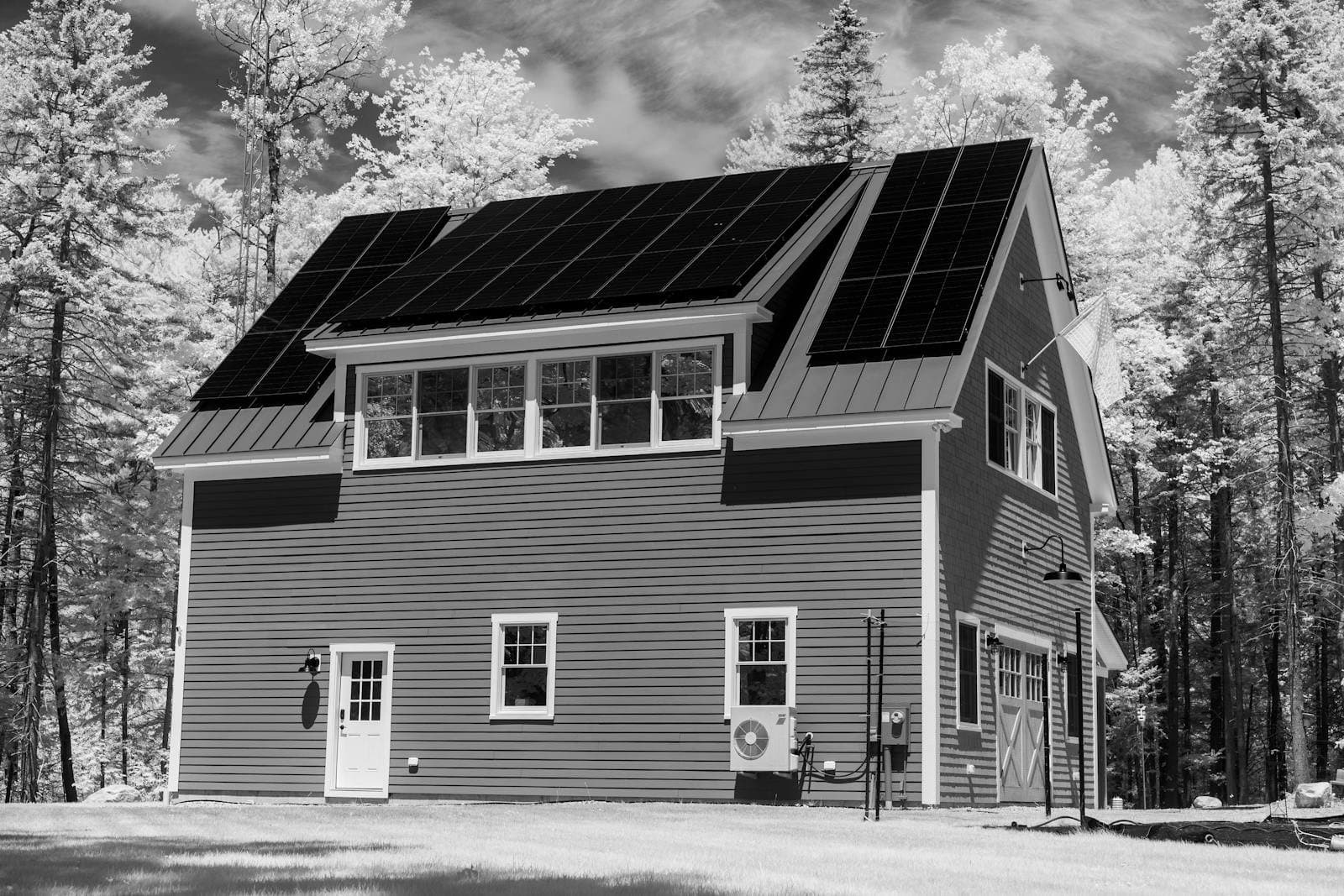
The conversation around luxury second homes is changing. For decades, the assumption was that owning a private holiday home was, environmentally, a slightly guilty indulgence. The construction footprint, the unused months, the long-haul flights to inspect a leaking pipe — none of it added up to a green lifestyle. In 2026, that picture has shifted. A growing body of research is making clear that co-ownership is, by a large margin, the most sustainable way to enjoy a luxury holiday home — and the numbers are starting to influence buyer behaviour as much as the lifestyle case ever did.
According to Knight Frank’s 2026 Sustainability and Wealth Report, 68% of high-net-worth buyers now consider environmental impact ‘important’ or ‘very important’ when buying a second home — up from just 27% in 2019. At the same time, Eurostat’s 2026 residential carbon dataset shows that the embodied and operational emissions of an average second home are roughly three times higher per occupied night than those of a primary residence. The fix is not to abandon the luxury holiday home dream. The fix is to share it. This is the carbon footprint case for fractional co-ownership, in the data and the detail.
The Numbers
Why Traditional Second Homes Are Carbon-Inefficient
Most luxury second homes are used between 4 and 8 weeks per year. The other 44+ weeks, they sit empty — but not idle. Heating systems run on frost protection. Pools are kept clean. Pumps cycle. Refrigerators hum. Smart systems wait. According to a 2025 JLL European residential study, an empty luxury villa still consumes between 30% and 55% of its ‘occupied’ energy just to stay habitable. That energy is spread over very few owner-nights, making the carbon-per-night brutal.
Then there is the embodied carbon — the emissions locked into construction. A typical luxury holiday home represents several hundred tonnes of CO₂ in its concrete, steel, glass and finishings. When that footprint is amortised over the few weeks per year a single owner uses it, the per-night embodied carbon is staggering. Eurostat’s data suggests it can be more than five times higher than the equivalent figure for a primary residence used 365 days a year.
1,200t
Lifetime CO₂ avoided per co-owned villa vs 8 individually-owned equivalents (JLL 2026)
87%
Average occupancy of fractional homes (vs 18% for single-owner second homes)
−47%
Less energy per occupied night in smart-managed co-owned homes (Eurostat 2026)
68%
HNW buyers now rate sustainability ‘important’ or ‘very important’ (Knight Frank 2026)
The Co-Ownership Effect
How Sharing One Home Replaces Eight
The simplest sustainability story in co-ownership is also the most powerful. A single luxury villa with eight 1/8 owners replaces, in lifestyle terms, the second-home demand of up to eight separate buyers. That is up to seven entire luxury homes that don’t need to be built, heated, cooled, repaired, insured or eventually demolished. Multiplied across thousands of co-owned properties, the construction-side carbon savings are enormous.
JLL’s 2026 sustainability research estimates that one well-managed co-owned luxury property avoids approximately 1,200 tonnes of lifetime CO₂ emissions compared to eight individually-owned equivalents. That is the rough equivalent of taking 260 petrol cars off the road for a year. None of this requires owners to compromise on the experience — they still get a luxury home, in a desirable place, for around 45 days a year.
Carbon Footprint per Owner-Night (kg CO₂e) — Lower Is Better
Traditional sole-owned second home
Sole-owned home with smart management
Boutique luxury hotel stay
Co-owned villa (8 owners, smart-managed)
Co-owned villa with full solar + storage
Operational Emissions
Why Co-Owned Homes Run Greener Day-to-Day
Co-ownership doesn’t only avoid construction. It also dramatically reduces the running emissions of every property it touches. Because each home is occupied much more frequently — typically 320+ nights per year across all 1/8 owners — the energy used to maintain the building is spread across many more owner-nights. The ’empty house running cost’ problem largely disappears.
Active management matters too. Modern co-ownership platforms run sophisticated energy systems: heat pumps, solar PV, battery storage, smart thermostats and load balancing. According to Savills’ 2026 European Green Homes Index, professionally managed luxury rentals and co-owned homes achieve EPC ratings two bands higher on average than comparable single-owner second homes. Centralised management has the budget, expertise and incentive to invest in efficiency upgrades that an individual owner often delays.
“One villa, eight families, a fraction of the emissions. Co-ownership isn’t just the smartest way to buy a luxury holiday home in 2026 — it’s quietly becoming the greenest.”
Travel Footprint
The Honest Conversation About Flights
Any honest sustainability discussion about international second homes has to address travel. Co-ownership doesn’t magically eliminate flights, but it does change the math in a few important ways. Because owners get around 45 days a year rather than the 365 they’d theoretically own with a full home, they don’t tend to take more trips — they tend to take longer ones, with fewer total transit days per holiday day. That alone reduces the carbon-per-day of a typical stay.
More importantly, co-ownership platforms make it practical for buyers to own in multiple destinations at the same total budget — for example a beach property in Mallorca and a ski property in the French Alps. That can reduce intercontinental flying for owners who’d otherwise feel pressured to fly to a single fixed location. Some owners even shift demand toward train-friendly European destinations they couldn’t have justified with a full property purchase.
| Sustainability Metric | Sole-Owned Second Home | Co-Owned Luxury Villa |
|---|---|---|
| Annual occupancy rate | Around 18% of nights | Around 87% of nights |
| Energy use per occupied night | Baseline (100%) | Approximately 53% |
| New homes required to meet demand | 1 per buyer | 1 per 8 buyers |
| Major renovations over 20 years | 2-3 per home, per owner | Centralised, professionally scheduled |
| EPC rating (avg) | Often 2 bands lower | Often 2 bands higher (Savills 2026) |
| Lifetime CO₂ vs equivalent demand | Baseline | Around 80% lower (JLL 2026 estimate) |
Renovation & Materials
Why Centralised Renovation Is Greener Than Eight Separate Ones
Every renovation has a carbon cost. New tiles, new bathrooms, new kitchens — all of it embeds emissions. In single ownership, eight different owners with eight different homes will, on average, complete between 2 and 3 major renovations each over a 20-year period. That is 16–24 separate renovations across a comparable group of buyers. Co-ownership replaces all of that with centralised, professionally-planned upgrades on a single property, scheduled for maximum lifespan and minimum disruption.
Co-ownership platforms typically use higher-grade, longer-lasting materials because the depreciation is spread across multiple owners and multiple years. Designer interiors are renewed on schedules informed by data, not impulse. Materials are chosen for durability rather than fashion. The result, according to the 2026 Savills report, is luxury properties that age more gracefully and need fewer interventions over time.
2018-2020
Awareness Begins
Climate concerns enter the luxury property conversation. Buyers start asking about energy ratings and sustainable materials, but few alternatives exist.
2021-2022
Regulation Tightens
EU and member-state energy efficiency rules begin to bite. The cost of running an inefficient second home rises sharply.
2023
The Empty-House Problem Gets Quantified
Studies show second homes are responsible for disproportionate per-night emissions due to low occupancy and high standby loads.
2024-2025
Co-Ownership Goes Mainstream
Fractional platforms expand rapidly across Europe and the USA. Buyers begin to see the sustainability story alongside the cost story.
2026
The Tipping Point
Knight Frank, Savills, JLL and Eurostat all publish data showing co-ownership as the lowest-carbon route to luxury second-home ownership.
2027-2030
The New Default
Most new luxury holiday homes in core destinations sold as fractional shares from day one. Carbon footprint becomes a standard part of the buyer brochure.
Land Use
Why Sharing Is the Solution to Coastal and Alpine Overdevelopment
In high-demand luxury destinations — the Côte d’Azur, the Costa del Sol, the Italian Lakes, the Alps — overdevelopment is a real and growing concern. Local governments in places like Mallorca, Menorca and parts of the French Alps have introduced or are considering tighter limits on new second-home construction. The question is becoming: how can demand for luxury holiday property be met without paving over more coastline and mountain?
Co-ownership is one of the cleanest answers anyone has proposed. It dramatically increases the occupancy rate of existing luxury properties without requiring new construction. Eurostat’s 2026 housing efficiency dataset shows that fractional homes achieve an average occupancy of 87% of available nights, compared to just 18% for single-owner second homes. This is a big deal in places like Menorca or Sardinia where the conversation about how to balance tourism, residents and the environment is now a daily news story.
The Resale Story
Sustainable Doesn’t Mean Sacrificing Value
One of the most important things to understand about co-ownership is that it preserves — and often enhances — the financial upside of luxury real estate. A share is real ownership of part of the home, not a right to use it. It can be sold like any other real estate asset, and the share itself rises and falls in value with the underlying property. Knight Frank’s 2026 Prime International Residential Index recorded average price growth of 4.8% across luxury second-home destinations, with stronger numbers in tightly supplied markets like Lake Como, Aspen and Sotogrande.
This matters for sustainability because it removes the ‘green tax’ anxiety. Buyers don’t have to choose between the lower carbon footprint of co-ownership and the financial logic of property ownership. They get both. Resale of a co-ownership share is handled through our partner’s resale process, without anyone having to sell the whole house — selling a full second home can take many months, so liquidity is also better.
Buyer Mindset
What 2026 Buyers Are Actually Asking
The questions co-ownership specialists hear from buyers in 2026 are different from the questions they heard five years ago. Carbon, energy ratings, longevity of materials and operational emissions now show up regularly in early calls. According to a 2026 Deloitte luxury property buyer survey, 54% of buyers under 50 said sustainability was a ‘top three’ factor in their second-home decision — and the figure is rising every year.
This is not greenwashing. These are buyers who plan to use their property for a decade or more, are aware of where regulation is heading, and want to make decisions they can defend to their families and to themselves. Co-ownership gives them an honest answer: real luxury, real ownership, dramatically lower environmental impact, and a model that scales.
Looking Forward
The Future of Sustainable Second Homes
The next decade of luxury second homes will not look like the last one. Spain’s 2030 energy law, France’s progressive efficiency requirements, the EU’s broader Energy Performance of Buildings Directive — all of these are pushing the entire luxury market toward higher standards. The buildings that meet them will hold value. The buildings that don’t will struggle. Co-ownership is uniquely well-placed because the centralised management model has both the capital and the long-term incentive to upgrade.
By 2030, it is reasonable to expect that the majority of new luxury holiday homes in core European destinations will be sold as fractional shares from day one. The carbon footprint case is already there. The lifestyle case is established. And the financial case continues to strengthen as buyers recognise that luxury fractional ownership delivers what full ownership used to promise — without the empty months, the maintenance bills, or the environmental cost.
Common Questions
Frequently Asked Questions
Is co-ownership really more sustainable than owning a single second home?
Yes, by a wide margin. One co-owned villa replaces the second-home demand of up to eight buyers, so up to seven other luxury homes don’t need to be built. Operational energy is spread across far more occupied nights, and centralised management invests in efficiency upgrades that individual owners often delay. JLL’s 2026 estimate is around 80% lower lifetime CO₂ versus the equivalent demand met by sole ownership.
What about flights — doesn’t owning abroad cancel out the savings?
Travel is part of any honest sustainability conversation, but co-ownership doesn’t tend to increase trips — most owners take a similar number of holidays, with longer stays and fewer total transit days per holiday day. Co-ownership also makes it practical to own in multiple destinations within Europe, which can support train travel for buyers who want it.
How does co-ownership compare to staying in a luxury hotel from a carbon perspective?
Both have advantages. Hotels achieve high occupancy. Co-ownership achieves high occupancy too — around 87% of available nights — and additionally avoids the construction of new homes that buyers would otherwise build. Co-owners also own a real share of a home that appreciates in value, which hotels don’t offer.
Are co-owned properties actually more energy efficient day to day?
Generally yes. Professionally managed luxury properties — including co-owned ones — score on average two EPC bands higher than equivalent single-owner second homes, according to Savills’ 2026 European Green Homes Index. Smart heating, solar PV, battery storage and active management are standard rather than aspirational.
Is co-ownership a timeshare?
No. Owners own a real share of a specific home — an eighth, a quarter — not a right to use it. The share can be sold or passed on to heirs, and it rises and falls in value with the house. Timeshares have none of those characteristics.
Will future regulation hurt the value of co-owned properties?
Most signs point the other way. Tightening efficiency rules tend to penalise inefficient, single-owner homes most. Centrally managed co-owned properties have both the capital and the incentive to stay ahead of regulation, which should support their long-term value rather than threaten it.
Explore Sustainable Luxury Co-Ownership
Browse our curated portfolio of fully managed, energy-efficient luxury homes — or speak to our specialists about which destinations and properties best match your lifestyle and your sustainability priorities.
Browse PropertiesMore from Co-Ownership Property
Get in Touch
Speak to an expert
Tell us what you're looking for and we'll be in touch.