AI & Technology
Humanoid Robots and Luxury Second-Home Management
Discover how humanoid robots and AI assistants are transforming luxury second home management — from smart butlers to predictive maintenance in 2026.

The era of the intelligent luxury home is no longer a futuristic vision — it is 2026’s lived reality. From AI-driven climate systems that prepare a chalet in the French Alps before you arrive, to full humanoid robot assistants capable of welcoming guests, managing household tasks, and flagging maintenance needs in real time, luxury second home management has undergone a revolution. For owners of high-end vacation properties, the question is no longer if robotics and artificial intelligence will transform their experience, but how quickly.
The intersection of advanced robotics, smart property management, and co-ownership second homes creates a particularly compelling opportunity. When you own a fraction of a luxury villa or chalet, the management infrastructure around that property becomes your greatest asset — or your greatest headache. Increasingly, the most sophisticated companies in the fractional ownership market are harnessing AI and robotic systems to make shared luxury properties run with the precision of a five-star hotel. This article explores the state of play in 2026, what these technologies actually deliver, and why they make co-owned luxury properties more valuable than ever.
Market Context
The Robot Economy Reaches the Luxury Home
According to research from Morgan Stanley, the humanoid robot market is projected to reach $5 trillion by 2050, with the residential and property management sector among the fastest-growing application areas. In 2026, the global household robots market is valued at approximately $11.73 billion, expanding at a CAGR of nearly 15% annually — and the luxury residential segment is driving a disproportionate share of that growth, as affluent homeowners seek technology that eliminates the friction of property management.
This isn’t merely about novelty. Data from luxury real estate analysts confirms that properties equipped with certified AI and smart management systems are selling for 7–9% more than comparable unmonitored properties. For co-ownership investors, this premium matters directly — your share in a technologically enhanced luxury property carries measurably greater resale value and rental appeal. The shift is structural: intelligent property management is transitioning from a premium feature to a baseline expectation among serious buyers and co-owners in the upper market.
$11.7B
Global household robots market value in 2026 (Mordor Intelligence), growing at 14.87% CAGR
$5T
Projected humanoid robot market size by 2050, according to Morgan Stanley research
7–9%
Premium achieved by luxury homes with certified AI property management systems at resale (2026 data)
39.2%
Annual growth rate of the global humanoid robot market through 2030 (MarketsandMarkets)
Technology Deep-Dive
What Humanoid Robots and AI Actually Do in a Luxury Second Home
The term ‘humanoid robot assistant’ covers a wide spectrum in 2026. At the highest end, physical bipedal robots such as Figure 02 and 1X NEO are capable of navigating domestic environments, carrying objects, performing cleaning tasks, and even greeting guests. These systems currently start from around $30,000 for entry-level residential models, with subscription tiers offering more accessible pricing for property management use cases. While full bipedal robots remain a premium offering, the real transformation happening across the wider luxury property market is driven by AI-powered management systems that integrate seamlessly with existing hardware.
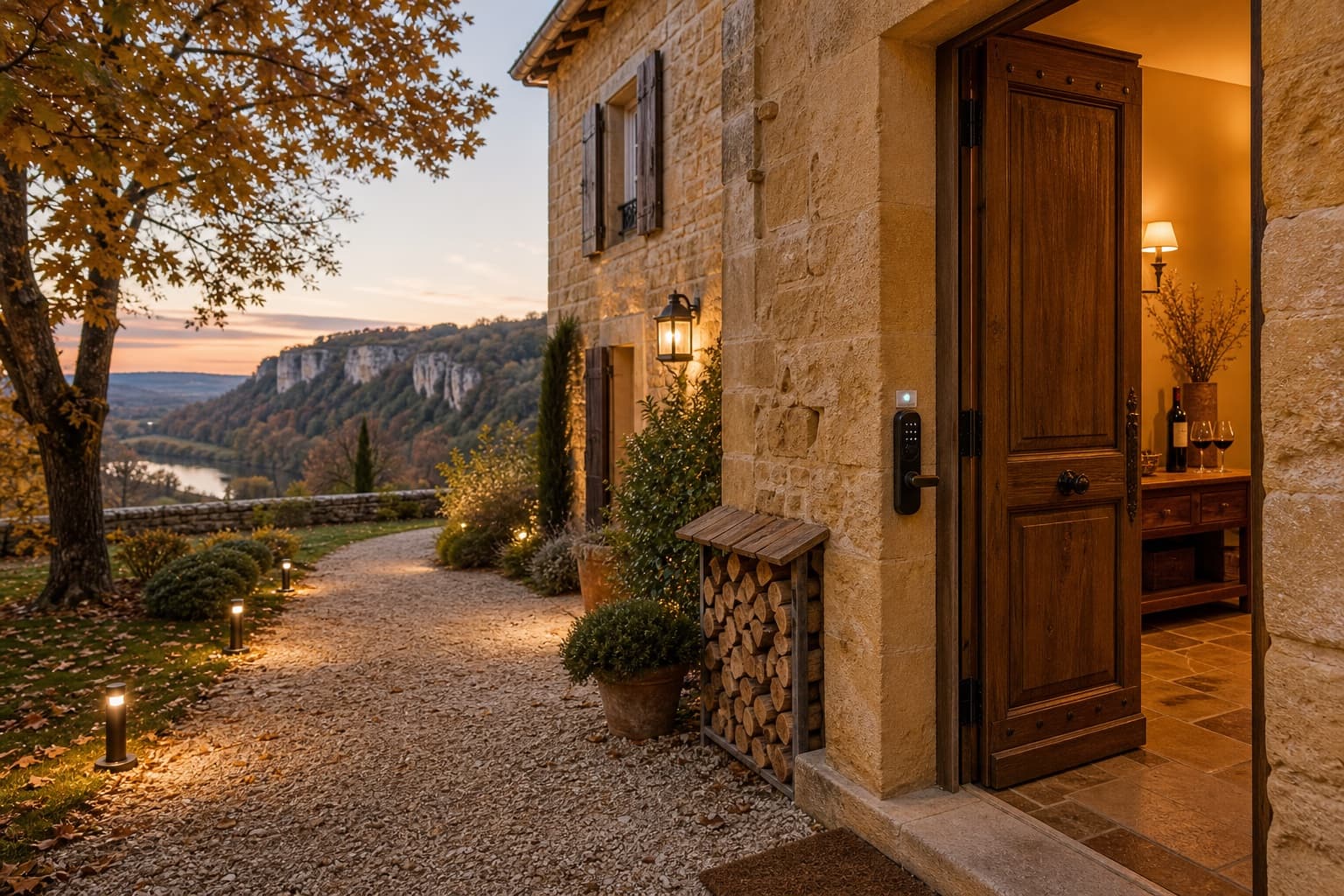
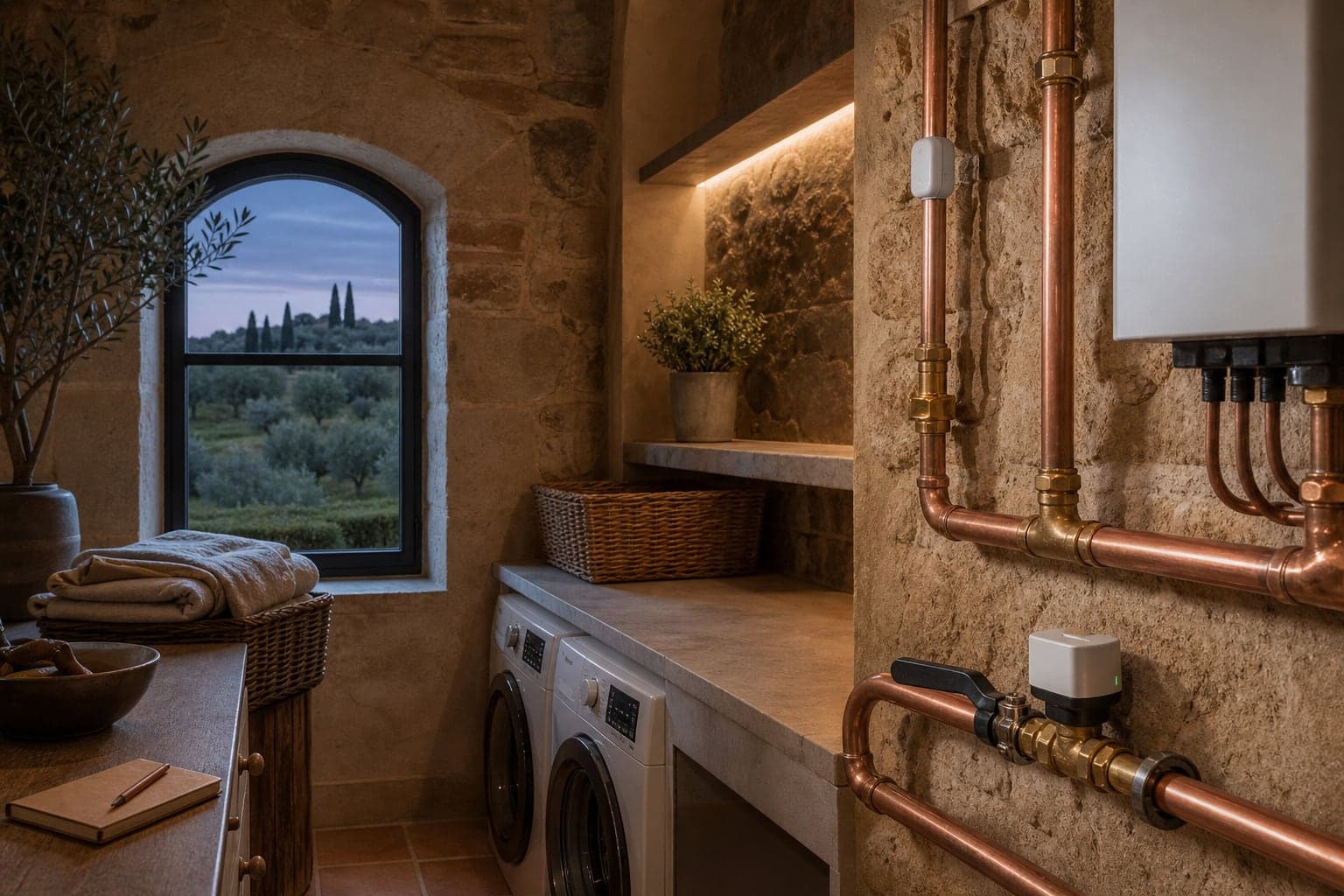
In practical terms, AI property management platforms for luxury second homes now handle: predictive maintenance (detecting a failing boiler or micro-leak before it becomes a crisis), adaptive climate control that pre-conditions a property 24 hours before an owner’s arrival, intelligent security networks with facial recognition and anomaly detection, and coordinated housekeeping scheduling that adjusts to occupancy patterns. For fractional ownership properties where multiple owners share a single home throughout the year, these systems are particularly transformative — eliminating friction around property handovers, coordinating professional clean-and-prepare routines between stays, and providing every co-owner with real-time visibility into the property’s status via a smartphone app.
Humanoid Robot Market Growth Trajectory ($B)
2024 (Baseline)
2025
2026 (Current)
2028 (Forecast)
2030 (Forecast)
The Co-Ownership Advantage
Why Shared Luxury Properties Benefit Most From Robotics
The economic case for deploying advanced property technology is fundamentally stronger in a co-ownership model than in a single-owner second home. In a co-owned property, management costs — including any technology investment — are split proportionate to ownership stakes. A 1/8th owner contributes one eighth of the cost of a comprehensive smart management system, while benefiting from the full capability of that system during their approximately 45 days of use per year. The per-use cost of premium technology becomes a fraction of what an individual full owner would pay.
Beyond cost-efficiency, the operational case is equally compelling. When a luxury villa or chalet is occupied by different owners throughout the year, consistency of standards is paramount. AI-powered management platforms guarantee that every owner arrives to a property that has been prepared to identical standards — the same temperature profile, the same fresh linens, the same pre-loaded entertainment preferences — regardless of who used it previously. Robot-assisted housekeeping systems eliminate the variability inherent in human-only staffing, particularly relevant for remote or seasonal properties where local hospitality labour can be scarce or unreliable.
“The best-managed luxury co-ownership properties in 2026 feel as if they anticipated your arrival — because, increasingly, they actually did.”
Real-World Applications
From Smart Chalet to AI-Managed Villa: Case Studies in 2026
Across the French Alps, a growing number of luxury chalet co-ownership properties have deployed AI-driven ‘Digital Twin’ management systems — virtual models of the physical property that live in the cloud, fed by sensors embedded in the property’s structure, HVAC systems, and utilities. When an owner books a stay via the co-ownership app, the Digital Twin immediately begins preparing the property: pre-heating to the owner’s preferred temperature profile, scheduling a deep clean for the day before arrival, and running a rapid diagnostic of all systems. By the time the owner arrives, the chalet has been functioning as if it anticipated them.
In luxury Spanish villa ownership markets on the Costa del Sol and Balearic Islands, AI management platforms are solving a different problem: rental optimisation. When co-owned properties are listed for short-term rental during unoccupied periods, AI systems manage the entire process — adjusting pricing dynamically based on demand signals, coordinating check-in and checkout logistics, and maintaining property condition between guest stays. This transforms periods when the property would otherwise sit empty into a managed revenue stream that flows proportionately back to co-owners, without requiring any active involvement from the owners themselves.
| Technology | Application in Luxury Properties | Owner Benefit | Status in 2026 |
|---|---|---|---|
| AI Climate Control | Pre-conditions property 24h before arrival | Arrive to perfect temperature every time | Widely deployed |
| Predictive Maintenance | Detects faults before they become failures | Zero surprise repair costs | Industry standard |
| Smart Security | Facial recognition, anomaly detection, remote access | Full visibility when away | Widely deployed |
| Robot Housekeeping | Consistent clean-and-prepare between owner stays | Identical standards for all co-owners | Premium properties |
| Digital Twin Management | Live virtual model of property fed by embedded sensors | Real-time property health dashboard | High-end segment |
| AI Rental Optimisation | Dynamic pricing and booking management | Passive income during unoccupied periods | Growing adoption |
Investment Perspective
How Technology Premium Affects Co-Ownership Property Values
For buyers considering a co-ownership property investment, the technology infrastructure of a property is now a material due diligence consideration. Properties under professional management that have invested in smart systems demonstrably outperform on rental yield, maintenance cost predictability, and resale velocity. According to Knight Frank’s 2026 Wealth Report, technology amenities rank among the top five priorities for affluent buyers of second homes globally — ahead of proximity to golf courses and ski lifts, which had historically dominated such rankings.
The resale dimension is particularly relevant for co-ownership investors. When you come to sell your share in a co-owned property, buyers in 2026 increasingly scrutinise the property’s technology credentials alongside its location and condition. A co-owned chalet or villa running a comprehensive AI management platform commands a measurable premium at resale, providing a direct return on the fractional technology investment made across the ownership group. Learn more about the sell your share process and how technology enhances exit value.
2020–2022
Smart Home Foundation
WiFi-connected thermostats, smart locks, and basic security cameras become standard in new luxury builds.
2023–2024
AI Management Platforms
Cloud-based AI management platforms emerge for luxury property companies, integrating all smart systems into unified dashboards.
2025
Predictive Intelligence
Digital Twin technology and predictive maintenance AI roll out across the premium property management sector.
2026
Physical Robot Integration
Entry-level humanoid robots and advanced robot cleaners begin deployment in high-end residential and co-ownership properties.
2027–2029
Mass-Market Robot Pricing
Robot assistant prices fall below $10,000 as manufacturing scale increases, making deployment standard across managed luxury property portfolios.
2030+
Fully Autonomous Properties
AI and robotics handle end-to-end property management autonomously, with human oversight reserved for exceptional situations only.
The Human Element
Robots Assist, Humans Direct: The Management Philosophy That Works
It is worth being clear about what advanced property technology is — and is not — replacing in the luxury sector. The most effective management frameworks in 2026 follow what companies call the ‘augmented hospitality’ model: AI and robotic systems handle the repetitive, data-intensive, and physically demanding aspects of property management, while human professionals focus on the high-judgement tasks that technology cannot yet replicate — guest relations, complex maintenance decisions, and quality assurance. This model consistently outperforms both purely human-staffed operations (which suffer from inconsistency and availability constraints) and fully automated approaches (which can feel impersonal in a luxury context).
For co-owners of luxury properties managed on this model, the experience is transformative. You never need to coordinate with other owners, chase maintenance contractors, or worry about the property between your stays. The management platform handles everything, providing you with a real-time dashboard and the confidence that your luxury asset is being maintained to the highest standard year-round. This is the co-ownership villas and chalets experience at its best: maximum lifestyle benefit, minimum operational involvement, and technology that works silently in the background to protect and enhance your investment.
Looking Forward
The Next Five Years: Robotics and Luxury Property
The trajectory is clear. According to MarketsandMarkets, the humanoid robot market will reach $15.26 billion by 2030, growing at 39.2% annually — driven in large part by residential and hospitality applications. Prices are falling rapidly: what costs $30,000–$50,000 today for a full robot assistant system will likely be accessible at a fraction of that within five years, following the classic technology adoption curve. Luxury property management will increasingly incorporate physical robot assistants alongside the AI software platforms already in widespread deployment.
For co-ownership investors, the window to benefit from this technology premium is now. Properties that integrate advanced management technology in 2026 are building a significant competitive advantage — in rental performance, owner satisfaction scores, and resale value — that will compound over the coming years. The best fractional ownership properties on the market today are those where sophisticated management infrastructure turns a luxury asset into a genuinely passive, high-performing investment. Robotics and AI are the engine making that possible. Explore the fractional ownership benefits of professionally managed co-ownership, and browse properties to find your ideal share.
Common Questions
Frequently Asked Questions
Do humanoid robots actually operate in luxury second homes today?
Yes — in 2026, a range of robotic systems are deployed in luxury residential settings. Full bipedal humanoid robots are available from companies like Figure and 1X, starting from around $30,000. More widely deployed are robotic cleaning and maintenance systems alongside AI management platforms that coordinate all property operations. High-end co-ownership properties managed by professional companies are at the forefront of this adoption.
How does smart property technology affect the co-ownership experience?
For co-owners, smart technology transforms the experience entirely. AI systems handle pre-arrival preparation, consistent housekeeping standards between owner stays, predictive maintenance, and rental management when the property is unoccupied. Owners access real-time property status via a smartphone app and never need to coordinate directly with other co-owners or chase contractors — the platform handles everything automatically.
Does technology investment in a property affect my share’s resale value?
Yes — materially. Properties with comprehensive smart management systems command a 7–9% premium at sale in 2026. For a co-ownership share in a high-value property, that premium translates directly into enhanced underlying asset value. Buyers in 2026 increasingly prioritise technology credentials when evaluating co-ownership shares.
What is a ‘Digital Twin’ and how does it apply to luxury second homes?
A Digital Twin is a virtual model of the physical property, created and maintained in the cloud by sensors embedded throughout the building — in HVAC systems, plumbing, structural elements, and appliances. The Digital Twin gives property managers and co-owners real-time visibility into every system’s status, enabling predictive maintenance, automated fault detection, and optimised energy management. It is increasingly standard in professionally managed luxury co-ownership properties.
How does AI rental management work for co-owned properties?
When a co-owned property is available for short-term rental during unoccupied periods, AI management platforms handle all aspects: dynamic pricing based on demand signals and comparable properties, booking coordination, guest communication, access management, and housekeeping scheduling. Rental income flows back to co-owners proportionate to their stake. Co-owners never need to actively manage the rental process — the AI platform operates it entirely autonomously.
Are there co-ownership properties available now with advanced smart management?
Yes — the co-ownership properties available through Co-Ownership Property are managed to professional hospitality standards, with smart management infrastructure that includes pre-arrival preparation, coordinated housekeeping, maintenance management, and rental coordination. Prices for a 1/8th share in a luxury co-ownership property start at a fraction of the whole-home price, giving you access to fully managed luxury at a fraction of the cost of sole ownership.
Explore Fully Managed Luxury Co-Ownership
Browse our portfolio of luxury villas, chalets, and apartments managed to the highest professional standards — with smart technology, zero owner hassle, and shares for a fraction of the whole-home price.
Browse PropertiesMore from Co-Ownership Property
Get in Touch
Speak to an expert
Tell us what you're looking for and we'll be in touch.