AI & Technology
Prime Real Estate Is Running Out: How Buyers Get In
Prime real estate inventory is shrinking as demand surges. Discover how co-ownership gives affluent buyers access to luxury properties before they're out of reach.
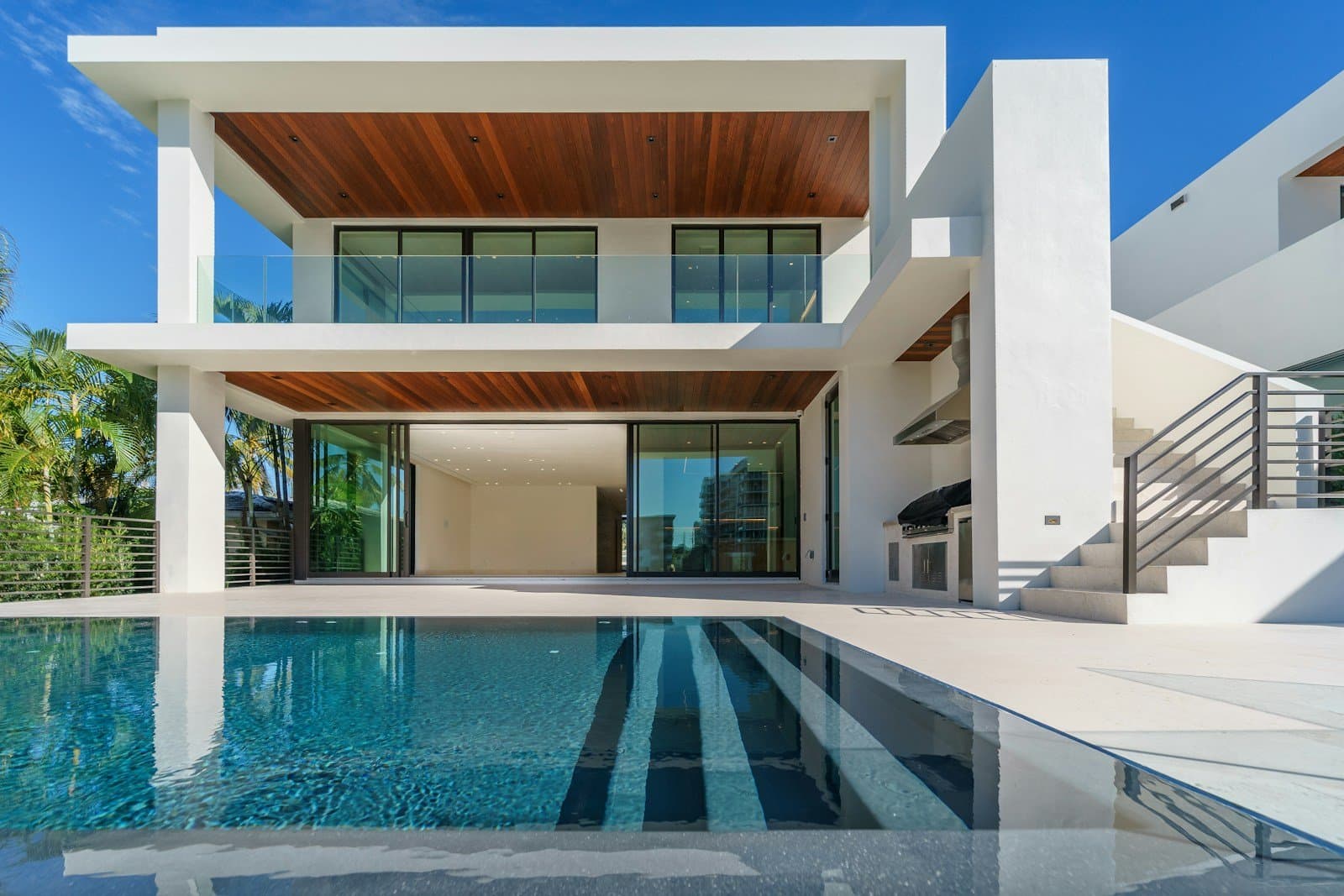
Something structural is happening in the global luxury property market, and most buyers are only noticing it when they’re already too late. The inventory of genuinely prime real estate — the villas, chalets, and apartments in the world’s most coveted locations — is not just tight. It is shrinking in any meaningful sense, as a combination of constrained new supply, rising ultra-high-net-worth demand, and increasingly restrictive planning environments conspire to make co-ownership of luxury property a less attainable aspiration for even affluent buyers. The question is no longer whether prime locations are becoming more exclusive. The question is what smart buyers are doing about it.
The answer, increasingly, is fractional ownership. Not as a compromise or a stepping stone, but as a deliberate, financially rational strategy that allows buyers to access prime real estate on their own terms — without the capital concentration, the vacancy problem, or the management burden that outright second-home ownership demands. This article examines the market forces driving the squeeze on prime property, what the data says about where this is heading, and why a growing cohort of affluent buyers is choosing co-ownership not because they can’t afford more, but because it simply makes better sense.
Market Reality
The Inventory Squeeze Is Real — And It’s Structural
Knight Frank’s Prime Global Cities Index tracks prime residential prices across the world’s most sought-after urban and resort markets, and the pattern it reveals is consistent: in locations where supply is genuinely constrained — whether by geography, planning policy, or heritage restrictions — prices grow faster, recover more quickly from downturns, and retain value through economic cycles. What differentiates these markets from broader residential real estate is not just price; it is scarcity by design.
In the French Alps, for example, the most desirable ski villages have had near-zero new residential development for decades. Conservation rules and the finite geography of the mountains mean that the total number of ski-in, ski-out chalets in premier resorts like Méribel, Courchevel, or Val d’Isère is essentially fixed. The same applies to Ibiza and Mallorca properties: strict construction moratoriums, introduced to protect UNESCO Biosphere Reserve designations, mean that the supply of authentic fincas and luxury villas is declining as properties are consolidated or absorbed into private family estates rather than entering the open market. On Spain’s prime costas, the story is similar — while lower-end development continues, genuinely premium sea-view properties in established resort areas like Marbella’s Golden Mile or Sotogrande simply do not come onto the market very often.
This is not a temporary post-pandemic tightening. Savills’ Prime Residential Price Forecasts identified supply constraints as the primary driver of price resilience in markets like Sydney, Geneva, and prime London. Knight Frank’s Wealth Report 2025 noted that global ultra-high-net-worth individuals — those with assets exceeding $30 million — increased their real estate holdings through 2025 even as broader market volumes softened. When the wealthiest buyers keep buying, and new supply is restricted, the pool of available prime properties available to the next tier of affluent buyers contracts.
USD 9.4B
Global fractional ownership market size in 2024, growing at 13.7% CAGR through 2033 (Growth Market Reports)
13.7%
Projected annual growth rate of the global fractional ownership market from 2025 to 2033
18.5%
Projected rise in luxury home spending by ultra-high-net-worth individuals (Coldwell Banker Global Luxury 2026)
~45 days
Booking windows depend on the home and our partner.
Demand Dynamics
The Demand Side: More Buyers, Fewer Opportunities
If supply is structurally constrained, demand is doing the opposite. The Coldwell Banker Global Luxury 2026 Trend Report projects that Gen X and Millennials will inherit approximately $2.4 trillion in US real estate wealth over the next decade, creating a wave of newly capitalised buyers entering the luxury market. Globally, the great wealth transfer — estimated by Knight Frank at $6 trillion transferred in 2025 alone — is producing a generation of buyers with both the assets and the ambition to acquire prime international property.
Meanwhile, existing ultra-high-net-worth buyers are not stepping back. Spending on luxury homes among this cohort is projected to rise 18.5% in the near term, outpacing growth in every other luxury category. In practical terms, this means that the competition for the best properties — the ones in genuinely irreplaceable locations, with authentic character, and proper luxury amenity — is intensifying, not easing. Data from Redfin confirms that US luxury home prices outpaced the broader market throughout 2025, with median luxury sale prices reaching record highs in several key markets.
For buyers in the €500,000 to €2 million range — the classic profile of a serious second-home purchaser — this creates a real dilemma. The properties they actually want, in the locations they actually want, are competing against an expanding pool of significantly wealthier buyers operating in cash, often through family offices or private banks with preferred access. The gap between aspiration and attainability is widening faster than income growth alone can bridge.
Prime Resort Market Demand Growth (Selected Markets, Relative to 2020 Baseline)
French Alps (Ski Resorts)
Ibiza & Balearic Islands
Aspen / Colorado Ski
Costa del Sol (Prime)
Italian Lakes
South of France
The Numbers
What the Data Shows About Prime Property Performance
The performance data on prime real estate makes a compelling case for access at virtually any price point. According to the JamesEdition Global Prime Market Index 2025, prime residential properties in the top 20 global resort and city markets have delivered strong annualised price appreciation over the past decade — significantly outperforming broader residential indices in the same periods. Supply-constrained resort markets showed the strongest long-run appreciation, with Alpine ski resort properties and Mediterranean island villas consistently in the upper performance quartile.
The growth of fractional and co-ownership models as a market segment reflects this dynamic directly. The global fractional ownership market reached USD 9.4 billion in 2024, according to Growth Market Reports, with a projected CAGR of 13.7% through to 2033, when the sector is forecast to reach USD 29.3 billion. This is not a niche curiosity. It is a structural shift in how affluent buyers are approaching luxury second home ownership, driven by the very same forces — capital efficiency, access to constrained markets, and a preference for managed, hassle-free experiences — that are reshaping attitudes to premium assets across every category.
“The buyers choosing co-ownership in 2026 are not doing so reluctantly. Many previously owned full second homes and made a deliberate decision to switch — because it simply makes better financial and practical sense.”
The Ownership Problem
Why Outright Ownership Has Become a Poorer Proposition
Even setting aside the access problem, the economics of outright second-home ownership have deteriorated meaningfully. A buyer who purchases a prime villa in Mallorca or a ski chalet in the French Alps for full ownership faces a reality that rarely matches the aspiration: most luxury second homes sit empty for between 200 and 280 days per year, accruing running costs — maintenance, insurance, property management, taxes — proportionate to the entire asset, not just the portion being used. For a €1.5 million property, annual carrying costs can easily reach €30,000–€60,000, regardless of how many days the owner actually spends there.
This fundamental inefficiency has been tolerated for decades because the alternative — selling and losing access entirely — felt worse than the waste. But the calculus is changing. Buyers with genuine financial sophistication are beginning to ask the obvious question: why tie up €1 million or more in an asset you use for 6 weeks a year when co-ownership shares can deliver the same access, in the same property, with a fraction of the capital deployed and none of the management burden?
The running costs of fractional ownership answer this directly. Under a properly structured co-ownership arrangement, costs are shared proportionately between all co-owners — so a 1/8th owner pays 1/8th of maintenance, taxes, insurance, and management fees. The management itself is fully handled by professional teams; there is no need to source cleaners, coordinate between owners, manage rental schedules, or deal with property maintenance. Owners simply arrive and the home is prepared for them. When they leave, their belongings go into storage and the property is returned to pristine condition for the next owner.
| Market | Supply Constraint Level | Avg Annual Price Growth (10yr) | Co-Ownership Entry Point |
|---|---|---|---|
| French Alps (Top Resorts) | Extreme — geographic + planning limits | 7–10% | From ~€150,000 |
| Ibiza (Prime Zones) | Extreme — building moratorium | 8–12% | From ~€200,000 |
| Marbella / Golden Mile | High — limited prime land | 5–8% | From ~€120,000 |
| Aspen, Colorado | Extreme — land scarcity + altitude | 9–14% | From ~€200,000 equiv. |
| Italian Lakes (Como) | High — heritage + geography | 6–9% | From ~€150,000 |
| Mallorca (Southwest) | High — moratorium zones | 5–9% | From ~€180,000 |
Strategic Access
How Co-Ownership Solves the Prime Property Access Problem
The core advantage of well-structured co-ownership is that it decouples access from capital concentration. A buyer who wants a genuine luxury villa on the Costa del Sol luxury homes, a chalet above Méribel, or a contemporary apartment overlooking Lake Como does not necessarily need to own the whole thing. They need access: reliable, premium, flexible access, at the times they want to use it, in a property that is maintained to the standard they expect.
Co-Ownership Property offers exactly this structure. Buyers purchase a real share — typically 1/8th — of a specific home. This is not a points system or a holiday club membership. It is genuine ownership: you own a real share of the home, not a right to use it; it can be sold at market value and benefits from the same appreciation dynamics as outright ownership. The share can be resold, with the management company first offering it to existing co-owners in the property and then listing it openly through our partner’s resale process.
Booking windows depend on the home and our partner. Each 1/8th owner gets approximately 45 days per year. In practice, most owners find this more than sufficient — the constraint has never been the number of days available, but the ability to get there with a property properly prepared and ready to deliver a genuine luxury experience without the pre-arrival logistics that personal ownership demands.
Shares across the COP portfolio start at a fraction of the whole-home price, with most properties falling in the €150,000–€600,000 range — a fraction of the capital that outright ownership would require, with equivalent access to prime assets in markets where that capital would not begin to acquire a full ownership position.
Pre-2020
Traditional Second-Home Ownership Dominates
Affluent buyers purchase outright, accepting high carrying costs and vacancy as the price of access to prime markets.
2020–2022
Pandemic Demand Surge Tightens Prime Markets
Remote work drives an unprecedented surge in prime resort property demand. Supply in constrained markets cannot keep pace; prices spike across Alpine, Mediterranean, and US ski markets.
2022–2024
Capital Efficiency Moves Centre Stage
Rising interest rates and record-high property prices prompt affluent buyers to reassess the economics of full second-home ownership. Co-ownership models gain significant traction.
2024–2025
Fractional Market Crosses $9 Billion Globally
Mainstream recognition of co-ownership as a legitimate, financially sophisticated property strategy. Global market reaches USD 9.4 billion. COP expands portfolio across Europe and the USA.
2026 Onwards
Supply Constraints Deepen; Co-Ownership Becomes the Smart Default
With prime inventory shrinking further and ultra-HNWI demand accelerating, co-ownership is increasingly seen not as a compromise but as the optimal access strategy for most affluent buyers.
Location Intelligence
The Markets Where Scarcity Is Most Pronounced
Not all prime real estate is equally supply-constrained. Understanding where the inventory squeeze is most structural — and therefore where access via co-ownership delivers the greatest long-term strategic value — is essential for buyers thinking beyond the next few years.
The French Alps represent perhaps the most extreme case of geographic scarcity in European luxury real estate. The combination of altitude restrictions on development, decades of conservation planning, and a fixed number of genuinely ski-in, ski-out positions in the top resorts means that prime Alpine property supply is not just constrained — it is declining as owners hold for generational transfer. Demand continues to grow as European skiing’s profile rises and as the longest-season resorts — those above 2,000 metres with glacier access — become increasingly valuable relative to lower-altitude alternatives.
The Balearic Islands sit at the intersection of supply restriction and demand acceleration in the Mediterranean. Both Ibiza and Mallorca have strict building moratoriums on new residential development in protected zones, which cover the most desirable interior and coastal areas. These islands attract annual influxes of ultra-high-net-worth buyers from Northern Europe, the US, and the Middle East — and because there is virtually no new supply of authentic luxury villas in the most coveted areas, competition for existing stock is intense. Costa del Sol luxury homes, particularly in Marbella’s Golden Mile, Benahavís, and Sotogrande, show similar dynamics: established luxury areas with very limited new prime supply and a growing global buyer pool.
In USA fractional ownership markets, Colorado ski resorts — particularly Aspen and Vail — rank among the most constrained luxury real estate markets in the world. Land costs alone in central Aspen have made new development economically viable only at the ultra-luxury price tier, effectively removing these markets from reach for all but the very wealthiest buyers. Access via co-ownership in these markets is not a compromise. It is the only entry point that makes practical financial sense.
Buyer Psychology
The Shift in How Affluent Buyers Think About Property
Something deeper is happening alongside the market dynamics. The buyers who are most actively choosing co-ownership in 2026 are not doing so reluctantly. Many previously owned full second homes and made a deliberate decision to switch. The reasons they give are consistent: too much capital tied up in a single asset, too many responsibilities, too much time spent managing rather than enjoying, and a nagging awareness that the property sat empty for most of the year while the bills kept coming.
This shift in buyer psychology mirrors a broader trend toward access-over-ownership in premium consumption. The same high-net-worth individuals who no longer buy private jets outright — preferring fractional jet programmes or charter on demand — are applying the same logic to residential real estate. Why hold the whole asset when you only use a fraction of it, and when the management overhead of full ownership actively detracts from the enjoyment it was purchased to provide?
For co-ownership case studies that illustrate this journey, the pattern is remarkably consistent: more freedom, less hassle, better properties than full ownership at the equivalent capital level, and access to destinations that would otherwise be beyond reach.
Getting Started
How to Enter the Market Before the Window Closes Further
The combination of structurally constrained supply, rising ultra-high-net-worth demand, and improving performance data suggests that the window for accessing prime real estate at current price points — whether through full ownership or co-ownership shares — is finite. Markets that appear expensive today may look inexpensive in retrospect, as they consistently have across previous cycles in genuinely supply-limited locations.
For buyers considering co-ownership as their entry strategy, the buying process for co-ownership is straightforward. Initial consultations establish the buyer’s preferred destinations, budget, and usage profile. From there, available properties from the all properties catalogue are presented with full financial transparency — share price, estimated running costs, rental income potential where applicable, and resale data. The legal set-up is arranged by our partner for each home and walked through with you before you buy; how tax works depends on the country and that set-up, and we recommend independent advice.
The benefits of fractional ownership extend beyond headline access and cost efficiency. Because you own a real share of the home, co-ownership shares benefit from the same long-run appreciation that makes prime property one of the most reliable stores of value over multi-decade time horizons. Owners can hold, rent (where applicable), or sell — on their own timeline, at market prices, without the complex process that selling a full luxury property demands.
Common Questions
Frequently Asked Questions
Is co-ownership the same as a timeshare?
No — and the distinction matters enormously. A timeshare is a holiday product: you buy the right to use a property for a fixed period, but you do not own any real estate. Co-ownership through COP involves purchasing a real share of the physical property. You own actual real estate, which can be sold at market value and benefits from property appreciation. There are no points systems, no club memberships, and no restrictions on resale.
How does usage work if I only own 1/8th of the property?
Each 1/8th share includes approximately 45 days of personal use per year. Booking windows depend on the home and our partner. When you arrive, the property is prepared and your personal belongings (stored between visits) are arranged. When you leave, everything is returned to pristine condition for the next owner.
What happens to my share if I want to sell?
You set the price. Your co-owners get the first chance to buy at that price; if they pass, it goes on the open market. Resale is handled through our partner’s resale process, without you having to sell the whole house — whereas full luxury real estate sales can take six months to two years.
Do I pay running costs proportionate to my share?
Yes. All running costs — maintenance, insurance, property taxes, management fees — are divided proportionately between co-owners. A 1/8th owner pays 1/8th of everything. This is one of the core financial advantages of co-ownership: you gain access to a luxury property at a fraction of the capital outlay, and carry only a proportionate share of the annual costs, rather than bearing the full burden for a property you use for a fraction of the year.
Which destinations have the most constrained prime real estate supply?
The most supply-constrained prime markets include the French Alps (planning restrictions and geographic limits), Ibiza and Mallorca (building moratoriums in protected zones), Marbella’s Golden Mile (established luxury area with little available prime land), and Colorado ski resorts such as Aspen (extreme land scarcity). These are precisely the markets where co-ownership delivers the most compelling access value.
Can the property be rented out when I’m not using it?
This depends on the specific property and local regulations. Where rental is permitted, the process is fully managed — co-owners do not need to arrange listings, guests, cleaning, or payments. Rental income is distributed proportionate to ownership stake. COP handles all logistics and compliance, so the experience is entirely passive for owners who choose to activate the rental option.
Is co-ownership suitable if I want the property to appreciate in value?
Yes. Because you own a real share of the home, co-ownership shares benefit from the same appreciation dynamics as outright ownership. If the property increases in value, your share increases in value proportionately. In supply-constrained prime markets — which COP specifically targets — the long-run appreciation track record is strong.
Explore Co-Ownership Shares in Prime Markets
Browse available shares in luxury properties across the French Alps, Spanish Costas, Balearic Islands, Italian Lakes, and USA — for a fraction of the whole-home price, for a 1/8th share in a fully managed luxury home.
Browse PropertiesMore from Co-Ownership Property

Get in Touch
Speak to an expert
Tell us what you're looking for and we'll be in touch.