AI & Technology
Cybercabs and Co-Ownership: A New Riviera Freedom
From Nice airport to the perfume houses of Grasse: how shared autonomous transport could become part of a co-owned holiday home.

Imagine landing at Nice airport with a small suitcase and no car-hire queue ahead of you. Your transport is already arranged through your co-owned apartment. You find the pickup point, settle into an electric car and head towards Antibes. The first decision of the holiday is where to have lunch.
A few days later, you decide to visit a perfume house in Grasse. In the future we are imagining, you simply say, “Take us to Fragonard, and let’s stop at a supermarket on the way home.” There is no discussion about who will drive, where to park or whether the return taxi will cost more than the outing.
Could autonomous transport become a shared service attached to a holiday home? It is a compelling next step for co-ownership: sharing the cost of getting around, as well as the cost of the home itself. Tesla’s Cybercab makes the idea easy to picture. The eventual service could come from Tesla or another operator.
This is a future lifestyle scenario, researched on 20 September 2026. The Riviera journeys and subscription prices below are proposals to explore, not services currently included with COP homes.
What has actually arrived—and what comes next?
Tesla’s current Cybercab information describes a two-seat vehicle without a steering wheel, with rides available in limited parts of Austin, Texas. Its public enquiry form also accepts interest in individual vehicles or fleets for commercial use. That is tangible progress, although it is not a French private-car offer.
Waymo already offers autonomous rides in several US cities and lists London among its forthcoming locations. Tesla is therefore one important contender, rather than the only route to this future. For a holiday-home owner, the winning brand will be the one that serves the right places reliably.
The European picture is moving too. On 17 September 2026, Reuters reported a Lucid–Bolt partnership targeting 25,000 robotaxis across Europe. That is an announced deployment ambition, not confirmation of a Nice airport service or an Antibes launch date.
The opportunity over the coming years is to turn these separate developments into something wonderfully ordinary: transport that is ready when your holiday begins. The useful milestone will be an actual service map covering your home, the airport and the places you enjoy visiting.
A day out: Antibes, Grasse and home for supper
Start on the terrace with coffee. Instead of collecting a rental car for one excursion, you request transport through the home’s mobility package. Perhaps your destination is already saved in a shared local guide. Perhaps, eventually, a voice assistant handles the request. Either way, the outing starts at your front door.
Grasse offers several excellent anchors for this imagined day. Fragonard advertises free guided factory visits and perfume-making activities. Galimard offers tours and fragrance workshops, while Molinard has its Bastide, museum and creation workshops. Choose the specific location and book any workshop before setting off.
After perfume comes lunch, a wander and a supermarket stop for tomatoes, bread, fruit and something for the evening. The pleasure is the freedom to change the shape of the day. You are exploring the backcountry, not managing a vehicle.
There are two ways the transport might work. A fleet car could drop you off, serve other passengers and return when requested. A car dedicated to the property could remain available for your group, with any parking or waiting costs covered by the agreed budget. Both could begin with the same effortless departure.
Today, Tesla’s Robotaxi support page says destinations can be changed, but additional stops cannot yet be added. Our supermarket detour therefore describes a future booking experience; with a point-to-point service, it may instead require separate rides. That small distinction matters when designing a useful holiday package.
Option one: a transport subscription linked to the home
The simplest arrangement could be a mobility agreement negotiated by the property manager. Each approved owner would use their own passenger profile, while the home’s account provides an agreed allowance during their stay. Eight or ten owners would take turns using it across the year, following the property calendar.
This would not need to mean the same car parked outside all week. What owners would be buying is access: airport transfers, restaurant evenings, shopping and excursions, with a service standard that makes planning easy. A fleet could also provide a larger vehicle when friends or family join the trip.
There is no single inevitable pricing model. A provider might sell a bundle of journeys, a distance allowance, a credit balance, or a monthly fee combined with charges for distance and time. An unlimited plan is conceivable too, although the meaning of “unlimited” would depend on its area, booking rules and fair-use terms.
| Model | How owners could use it |
|---|---|
| Journey bundle | A set number of trips, with distance limits or separate airport allowances. |
| Distance allowance | Included miles or kilometres, then an agreed charge for extra travel. |
| Distance plus time | Charges reflect both travel distance and time, potentially including waiting. |
| Monthly credit | A shared budget deducted against the actual price of each booking. |
| Unlimited or capped plan | Frequent use within a defined area and clearly stated conditions. |
A property package would need explicit permission for multiple named owners. It should not rely on passing one personal login around. The attractive product is a properly designed household or property service, with each owner’s allowance and booking rights clear from the start.
A real Antibes home that makes the idea easy to picture
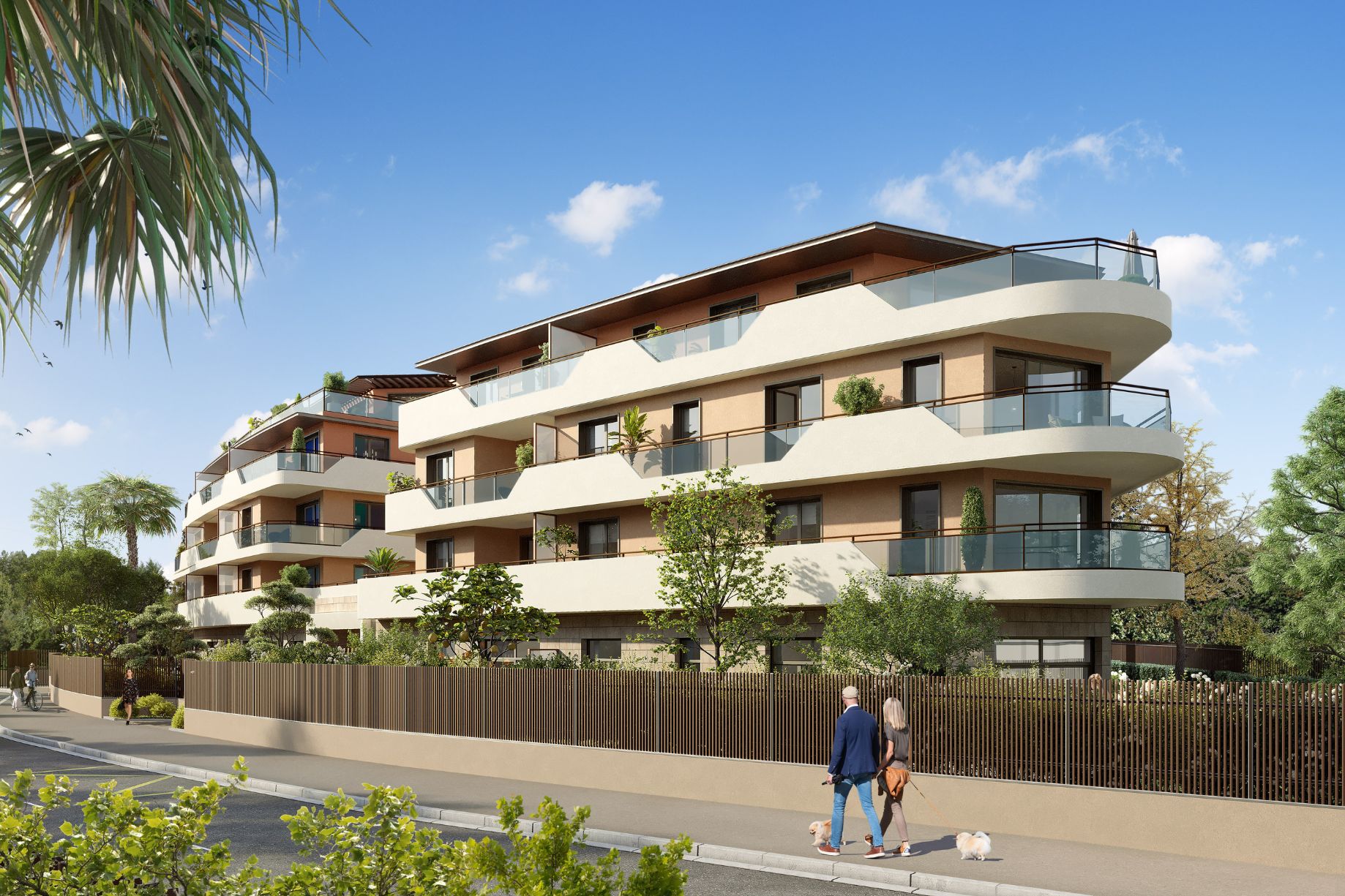
Consider COP’s two-bedroom terrace apartment in Les Bréguières, Antibes. The listing describes a wraparound south-east-facing terrace and a shared swimming pool. On 20 September 2026, its asking price is €139,000 for a 1/8 share.
It is an example of the kind of base that could benefit from a future transport package: somewhere to return to after Grasse, an evening out or a day by the coast. The home provides the familiar address; shared mobility could make the wider region feel easier to use. No autonomous car or transport subscription is being advertised as part of this listing.
What could a €300–€400 monthly package mean?
For a simple thought experiment, suppose the whole property’s subscription costs €300–€400 a month, maintained throughout the year and divided equally. These are illustrative figures, not a Tesla quotation or a forecast of what a complete service will cost.
| Owners sharing | At €300/month total | At €400/month total |
|---|---|---|
| 8 owners | €37.50 per owner/month €450 per owner/year | €50 per owner/month €600 per owner/year |
| 10 owners | €30 per owner/month €360 per owner/year | €40 per owner/month €480 per owner/year |
The arithmetic explains the appeal. A relatively modest recurring contribution could help provide a service that each household would otherwise arrange separately. But the base price is only meaningful alongside the included journeys, distance or time. Extra mileage, airport charges, waiting and peak-period pricing could sit outside it.
One sensible arrangement would split the fixed access fee between owners and charge any excess usage to the household taking the trip. Alternatively, each ownership share could receive a defined annual allowance. Owners could then choose between quiet beach weeks and more adventurous itineraries without subsidising every extra excursion.
There is another distinction worth making: €300–€400 for the entire home is very different from €300–€400 per owner. Here we are deliberately testing the first idea. Whether a provider can offer it commercially remains open.
And what about 30 cents a mile?
A figure such as US$0.30 per mile is useful for exploring the potential, provided we label it correctly. Let us use it as a hypothetical distance charge, not a verified Riviera fare. At that rate, 100 chargeable miles would produce a US$30 distance component. It says nothing by itself about time charges, tax, pickup fees or a subscription.
Vehicle operating cost, the price charged to a passenger and the total cost of a holiday’s transport are three different numbers. A low operating-cost projection cannot simply be copied onto a customer bill. Nor should a US-dollar figure become a euro price without saying so.
Tesla currently directs passengers to the fare estimate shown before booking and says pricing can change. The right question for a future co-owner package is therefore: what is included, what is metered, and what will a typical stay actually cost? The answer could involve distance, time, or both.
Option two: lease a car for the property
The second model is more personal. If suitable privately operated driverless vehicles become available and authorised locally, the co-owners could lease or own a car attached to the home. The household in residence would have its use during the booked stay.
Imagine arriving at the airport in the property’s car, finding your preferred cabin settings ready and using it throughout the week. On departure day, it takes you back to the terminal and then returns to its charging space or service base, if those unoccupied journeys are permitted. The next owners inherit the same convenience.
A dedicated car offers continuity: the right luggage capacity, familiar controls and a vehicle selected for the owners’ needs. A fleet subscription offers flexibility and replacement vehicles without the property having to manage its own car. Neither model is automatically better; the balance depends on annual use and the actual contracts.
For a lease, compare the complete annual budget: lease payments, insurance for the intended users and operation, charging, maintenance, cleaning, parking, software and replacement transport. A manager would also need to organise changeover days, when one household may be leaving while another arrives.
Buying a Tesla with Full Self-Driving (Supervised) does not currently deliver this scenario. Tesla explicitly says the system requires an attentive driver and does not make the vehicle autonomous. A driver-assistance subscription is therefore a different purchase from driverless transport.
When could the Riviera version become possible?
There is no confirmed date in the sources reviewed for the complete Nice–Antibes–Grasse service imagined here. Rather than attach the idea to a speculative year, watch for three practical milestones: authorised local operation, a useful service area, and a contract that supports the owners who will use it.
Europe already has type-approval rules for automated driving systems, including defined operating conditions and assessment of local traffic rules. Approval is not the same as a ready-to-book service everywhere. For this scenario, the operator would need to cover the airport pickup, the journey inland and the return to the property.
Our expectation is that useful services could arrive in stages: a defined urban area or transfer route first, then broader coverage and more flexible packages. That is an editorial scenario, not a published rollout timetable. A single dependable airport connection would already remove one recurring piece of holiday administration.
Vehicle choice matters too. Cybercab has two seats, so a family or larger visiting group would need another vehicle format or more than one car. Accessible transport, child seating and luggage requirements should shape the service chosen, just as they do today.
Keep the e-bikes, the walks and the train journeys
Autonomous cars would add another choice. They would not take away the pleasure of cycling to the beach, walking into the old town or choosing rail for a day along the coast. Sometimes the journey is part of the holiday; sometimes it is simply how you get the groceries home.
Where a partner home already provides e-bikes, they could remain a valuable part of the mix. Where it does not, local rental could fill the gap. Bike provision is property-specific and should be checked rather than assumed from an attractive photograph or an e-bike journey time in a listing.
The most appealing arrangement would let owners choose: bicycles for an easy local outing, a suitable car for Grasse, and a prearranged transfer when it is time to fly home. More freedom, less coordination.
The bigger idea: share the convenience as well as the home
Co-ownership already asks a practical question: why carry the full cost of a holiday home you use for part of the year? Transport invites a similar question. Could the same group of owners share access to the services that make each stay enjoyable?
For the Riviera, the answer could change the rhythm of a visit. A peaceful address becomes a base for spontaneous days inland. Dinner out no longer requires a designated driver. The airport transfer becomes part of arriving home.
That future is worth following without pretending it is already bundled into today’s listings. For now, explore the Antibes apartment or COP’s co-ownership homes, and choose a place you would enjoy with the transport available today. The next generation of mobility could make returning even easier.
Frequently asked questions
Can I book a Tesla Cybercab from Nice airport today?
The official Tesla information reviewed for this article lists Cybercab availability in limited areas of Austin, not Nice. The airport transfer described above is a future scenario.
Could eight owners share one transport subscription?
Potentially, if an operator offers a suitable multi-user agreement. The owners would usually use it at different times, following the home’s booking calendar. A personal account should not be treated as a shared commercial package.
Would the subscription include unlimited journeys?
That is one possible model, alongside trip bundles, distance allowances and time-based charges. No unlimited Riviera co-owner package has been verified for this article.
Is the €300–€400 monthly figure per owner?
No. Our example assumes that amount is the total monthly base subscription for the whole property. Eight equal contributors would each pay €37.50–€50 a month before any extras. It is illustrative arithmetic, not a supplier offer.
Would a leased autonomous car be better than a fleet service?
It could suit owners who value a dedicated vehicle, provided driverless operation and the lease permit their intended use. A fleet service may offer easier maintenance cover and more vehicle sizes. Compare the complete annual cost and actual availability.
Research date: 20 September 2026. Operator capabilities and availability are attributed to the linked official pages; the European fleet announcement is attributed to Reuters. Prices for the Antibes share are asking terms from COP’s listing on that date. Subscription designs, the US$0.30-per-mile example and the proposed Riviera itinerary are editorial scenarios. The hero image is an AI-generated illustration. The architectural visualisation comes from the existing COP listing image collection.
More from Co-Ownership Property



Kontakt aufnehmen
Sprechen Sie mit einem Experten
Sagen Sie uns, wonach Sie suchen, und einer unserer Miteigentums-Spezialisten meldet sich innerhalb von 24 Stunden bei Ihnen.