Co-Ownership Basics
The Owner’s Cupboard: What Stays Between Visits
Personal storage can turn a managed co-owned property from somewhere you book into somewhere that remembers you.

The most revealing feature in a second home may be the one that never appears in the photographs. It is not the hot tub, the stone fireplace or the mountain view. It is the cupboard that is still yours when you are somewhere else.
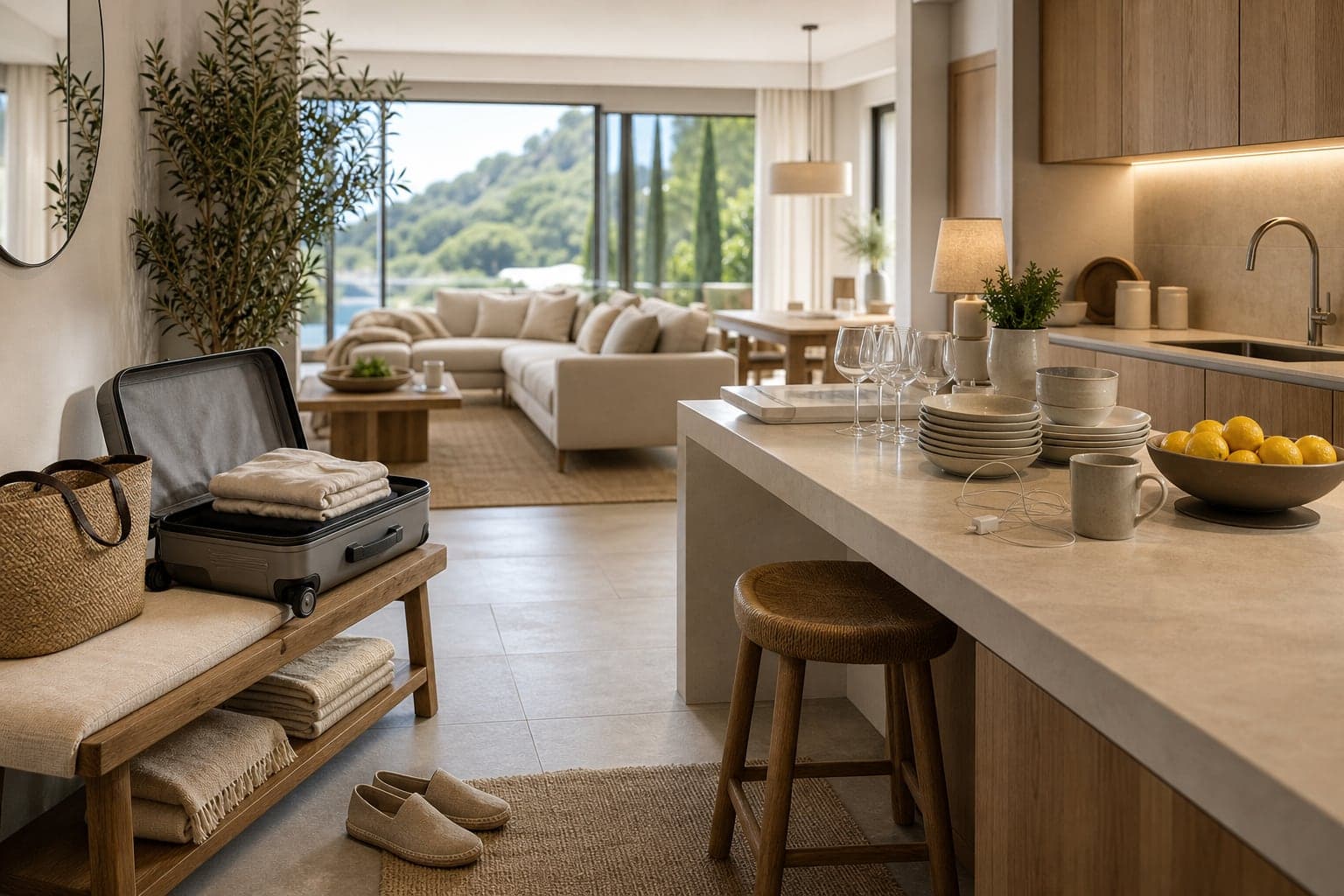
Personal storage changes the rhythm of arrival. Walking boots are already by the door. The children’s helmets fit. There is a familiar jumper for the evening and a paperback waiting beside the bed. Instead of rebuilding a holiday from the contents of a suitcase, you resume a life that was paused.
That small shift matters in co-ownership. A professionally managed home must work cleanly for several owners, yet each owner wants some continuity. Good storage is where those two needs meet: private enough to feel personal, organised enough not to intrude on anyone else’s stay.
A small feature with an outsized effect
Co-ownership works best when the home is easy to use repeatedly. Furniture, kitchen equipment, maintenance and cleaning may already be managed, so the practical burden is lower than keeping an independently run holiday property ready between visits. Personal storage can remove another layer of friction: the need to transport the same bulky or forgettable items each time.
The benefit is not simply lighter luggage. It is a different attitude to the stay. If the useful basics are waiting, a four-night break can feel worthwhile; if every visit requires a major packing exercise, owners may save the home for longer, less frequent trips. Convenience therefore has a quiet influence on how often the property becomes part of ordinary life.
But “owner storage” is not a universal specification. It could mean a lockable cabinet, a wardrobe section, labelled boxes in a store room or enough space for substantial sports equipment. Access, dimensions, insurance, climate control and prohibited items depend on the particular home, company and ownership agreement. Treat the phrase as the beginning of a question, not the end of one.
What earns a place in the cupboard?
The things that make the destination easier
Start with items that are useful in one place and inconvenient to carry: waterproofs for the lake, ski layers for the mountains, sun hats for the coast or cycling shoes for a favourite route. A duplicate charging cable, travel adaptor and compact wash bag can rescue an arrival after a delayed flight or a hastily packed weekend.
The test is not whether an object fits. Ask whether it saves effort without creating work for the management team. Clean, dry, robust kit usually makes more sense than anything damp, fragile or difficult to identify. Where larger equipment is allowed, agree how bicycles, skis, golf clubs or paddleboards are secured and whether they sit in private or shared space.
A few personal details, not a parallel household
A favourite coffee mug, a small collection of books or a child’s familiar bedtime toy can make the home feel recognisable without altering its shared design. Restraint is useful. The purpose of an owner’s cupboard is continuity, not to store everything that no longer fits at the primary residence.
Avoid treating the shared kitchen, bathroom or utility room as an extension of private storage unless the rules expressly allow it. Unlabelled possessions create uncertainty for cleaners and other owners. A simple inventory—kept in the management app or as a photograph—makes it easier to notice when something needs replacing or taking home.
What should still travel with you?
Passports, medicines, jewellery, irreplaceable objects and anything containing sensitive information belong in your travelling bag. Even a locked cupboard is part of a managed property to which staff may need access in an emergency. Ask how access is controlled, but do not use holiday-home storage as a safe-deposit box.
Perishable food should not be left unless the management rules specifically provide for it. The same caution applies to liquids, aerosols, batteries and items affected by heat, humidity or freezing conditions. A seaside apartment closed during a humid spell and an alpine home between winter visits present different storage conditions. our partner’s written policy should decide what is acceptable.
Insurance deserves its own question. The building and contents policy arranged for the home may not cover every owner’s personal possessions, or may apply limits and exclusions. Check the relevant documents and consider whether valuable sports equipment needs separate cover. Convenience should not depend on assumptions.
A live example: storage for the Park City seasons
A current COP listing makes the idea tangible. The five-bedroom townhouse in Park City, Utah is offered at an asking price of US$724,000 for a 1/8 share, checked on 22 September 2026. The figure is the price of the share, not the whole property.
The listing describes six bathrooms, 352 square metres of living area, a mud room and dedicated ski storage, alongside owner storage. It presents approximately 45 nights of annual use for the 1/8 share. The exact scheduling rights, peak-period access, running costs, storage allocation, guest rules and resale arrangements must be confirmed in our partner’s current documents before purchase.

This is the sort of destination where storage can alter the economics of effort. Helmets, boots and layers occupy far more luggage space than dinner clothes. In summer, the contents may change to hiking packs and cycling kit. A well-planned private allocation supports both seasons without allowing the house to become a warehouse.
It also shows why photographs alone are not enough. A buyer should ask to see the actual owner-storage location, measurements and access arrangement. “There is storage” is less useful than knowing that your household’s four helmets, boots and outerwear will fit—and that wet kit has somewhere appropriate to dry before it is put away.
Seven questions to ask before buying
- Where is each owner’s space? Ask for photographs, measurements and whether the area is inside the home, garage or a separate room.
- Is it individually secured? Establish who holds keys or access codes and when management can open it.
- What may not be stored? Request the written rules on food, liquids, batteries, equipment, valuables and hazardous items.
- Is the space dry and temperature-stable? This matters for clothing, electronics and sports equipment.
- Who is responsible for damage or loss? Read the property policy and check your own insurance position.
- Can bulky items remain? Do not assume “owner storage” includes bicycles, skis, boards or golf clubs.
- What happens when the share is sold? Know the deadline and process for removing personal possessions, including any collection or disposal charges.
These questions are not a sign that the arrangement is awkward. They are how a shared home remains easy. Clear boundaries protect the owner’s belongings, help the management team prepare the property and stop private possessions migrating into communal space.
Storage is also a question of fairness
In a sole-owned second home, one family decides how every cupboard is used. In a co-owned home, good systems replace improvisation. Equal-sized lockers, numbered wardrobe sections or clearly assigned shelves can prevent one owner’s convenience becoming another owner’s clutter.
The same principle applies to shared equipment. A board game, picnic basket or set of beach toys may be there for everyone, while personal clothes and sports kit remain private. The distinction should be obvious. If a shared item breaks, the management process should say how it is reported and replaced; if a personal item wears out, that is normally the individual owner’s concern, subject to the contract.
A periodic clear-out is healthy. At the end of a season, take home anything unused, clean what will remain and update the inventory. Storage earns its value by holding the things that make the next arrival better, not by preserving forgotten purchases indefinitely.
A cupboard does not define the ownership
Personal storage can make a home feel more personal, but it does not determine the legal structure. Co-ownership may involve ownership of an interest in the property itself or in an entity that owns it; the documents for the particular opportunity control. A contractual timeshare, by contrast, typically provides rights of use rather than an ownership interest in a specific home.
Review the legal set-up our partner explains, the co-ownership agreement, the booking system, annual budget and exit terms as carefully as the physical home. COP is an independent agent; our partner's ownership documents set the detailed rules. The COP guide to how co-ownership works is a useful starting point, followed by property-specific legal and financial advice.
Frequently asked questions
Does every co-owned home include private storage?
No. The provision and size vary by property. Ask for the storage specification and written rules for the exact home you are considering.
Can I leave skis or a bicycle?
Only if the allocated space and house rules permit it. Confirm security, drying arrangements and insurance before leaving valuable equipment.
Can management enter my locked cupboard?
The contract or storage policy should explain access. Management may require emergency or maintenance access, so do not leave passports, medicines or irreplaceable valuables.
Is personal property insured?
It depends on the home’s contents policy. We can send it to you so you can decide whether you'd like your own cover too.
What happens to stored belongings if I sell my share?
The resale or management terms should set a removal deadline and explain what happens to uncollected items. Confirm the procedure before buying and again before selling.
Look beyond the view
If personal storage would make your second home easier to use, ask COP to identify live opportunities where the arrangement is clearly documented.
More from Co-Ownership Property


Kontakt aufnehmen
Sprechen Sie mit einem Experten
Sagen Sie uns, wonach Sie suchen, und wir melden uns bei Ihnen.