Lifestyle & Ownership Experience
Paris, One Week at a Time: The Co-Ownership Appeal
Art after lunch, familiar streets and a home to return to: why the right Paris share is as much about the calendar as the apartment.
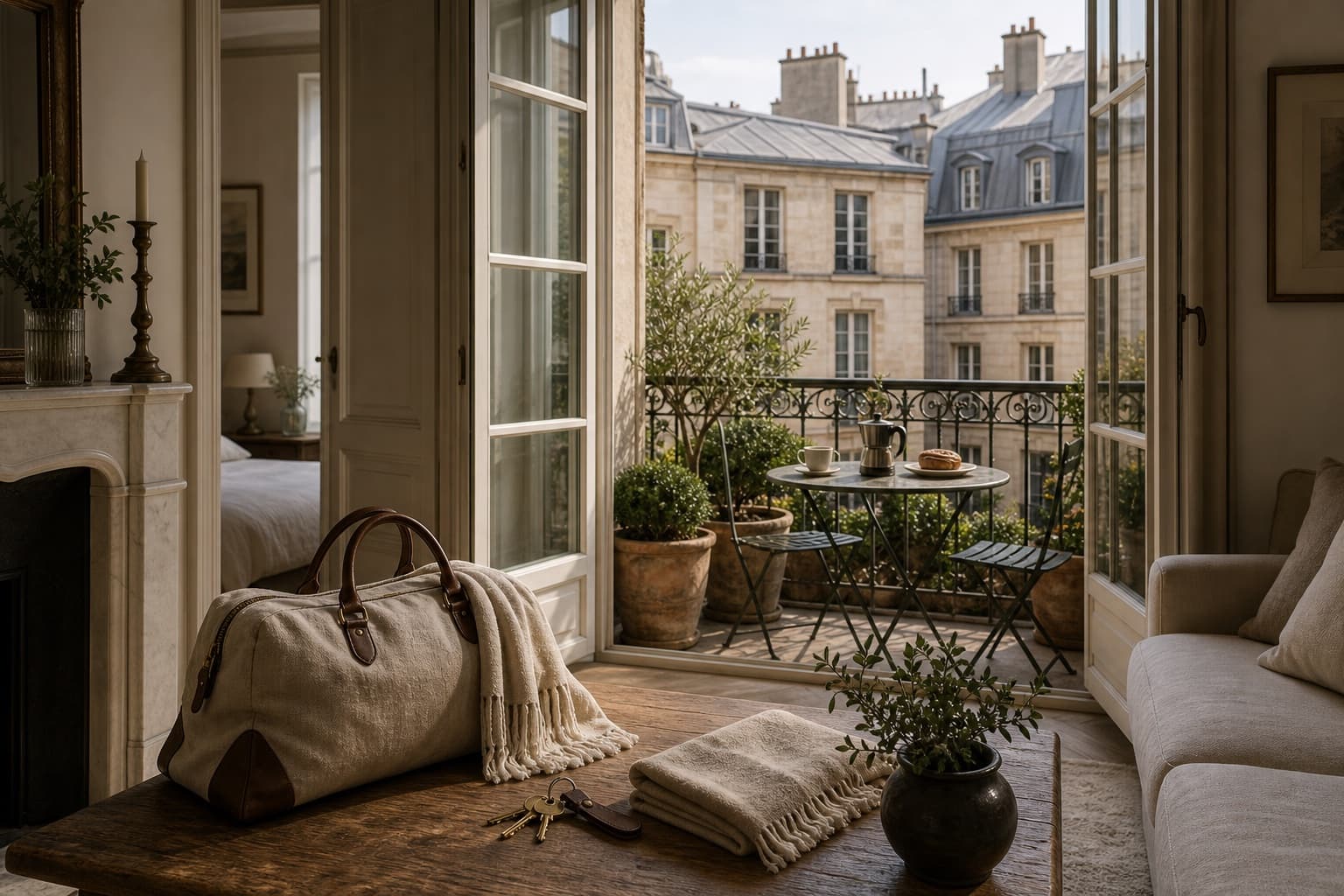
The most revealing moment in a Paris stay may be the morning you decide not to cross the city. There is bread to buy, a book half-finished and a café around the corner whose appeal no longer requires a recommendation. The Louvre will survive without you for another afternoon.
That is a different ambition from a city break. A first visit collects landmarks; repeated visits create a small, personal geography. You learn which walk you enjoy after dinner, where you prefer to sit and how much sightseeing is quite enough. An apartment becomes useful not simply because it supplies somewhere to sleep, but because it lets the day remain unfinished.
For the right buyer, this is the strongest case for Paris co-ownership: a recurring place in city life, without buying an entire apartment for occasional use. The crucial choice is not just the share price. It is whether the home and its calendar allow the kind of stays you actually want.
A city that rewards the second, third and fourth visit
A beach home often begins with a particular view. A Paris home can begin with a radius: the streets you can comfortably explore before lunch, the shops you use without planning and the green space that turns an ordinary morning into a good one.
Saint-Germain-des-Prés is an attractive starting point for this way of living. Rather than treating the Left Bank as a list of famous cafés, consider its everyday usefulness. Would you enjoy taking the same streets towards the river several times in a week? Would you use a dining table at home? Does browsing a bookshop count as a successful afternoon? Those questions tell you more about a likely ownership habit than another photograph of the Eiffel Tower.
The Luxembourg Garden offers a particularly good example of somewhere worth revisiting. The Senate, which manages it, describes roughly 25 hectares of gardens, alongside an orchard, an apiary school and exhibitions in several garden spaces. It is somewhere to return with a different amount of time, not a monument that needs to be completed.
For a co-owner, that repeatability matters. A destination earns its place in your life when the fourth visit feels richer than the first. Paris can do that without requiring four increasingly elaborate itineraries.
The pleasure of not finishing the museum
Ownership does not confer cultural stamina, and there is no reason it should. One of the pleasures of returning is permission to spend less time doing any single thing. Choose a few galleries, stop while you are still interested and leave something for another stay.
Musée d’Orsay’s current visiting information lists Thursday opening until 9.45pm, with last admission at 9pm and galleries closing at 9.15pm. It creates a different shape of day: a slow morning, lunch at home and art later on. Check the museum’s access notices and book as required; a familiar address does not remove the need for a ticket.
Across the river, Musée Carnavalet offers another useful rhythm. Individual visitors can enter its permanent collections free of charge without booking. Its normal opening is Tuesday to Sunday, 10am–6pm; temporary exhibitions have separate charges and booking arrangements. A short visit can therefore stand on its own, rather than needing to justify a full museum day.
These are modest practical details, but they change how a city home gets used. A wet afternoon need not derail the holiday. Nor must every sunny one be spent outside. The ownership benefit is the freedom to assemble a week around your interests, within the dates you have secured.
Four weeks can be a better fit than six
The familiar one-eighth model is not the only way to co-own a home. Share sizes and use arrangements differ, and a smaller annual allocation may suit a city buyer particularly well.
A live example is COP’s Rue du Four apartment in Saint-Germain-des-Prés, advertised on 20 September 2026 at €299,000 for a 1/13 share. The three-bedroom, 2.5-bathroom home is marketed with four weeks each year: two fixed and two floating. The current property description says the renovation is finished and the first owners are in residence.
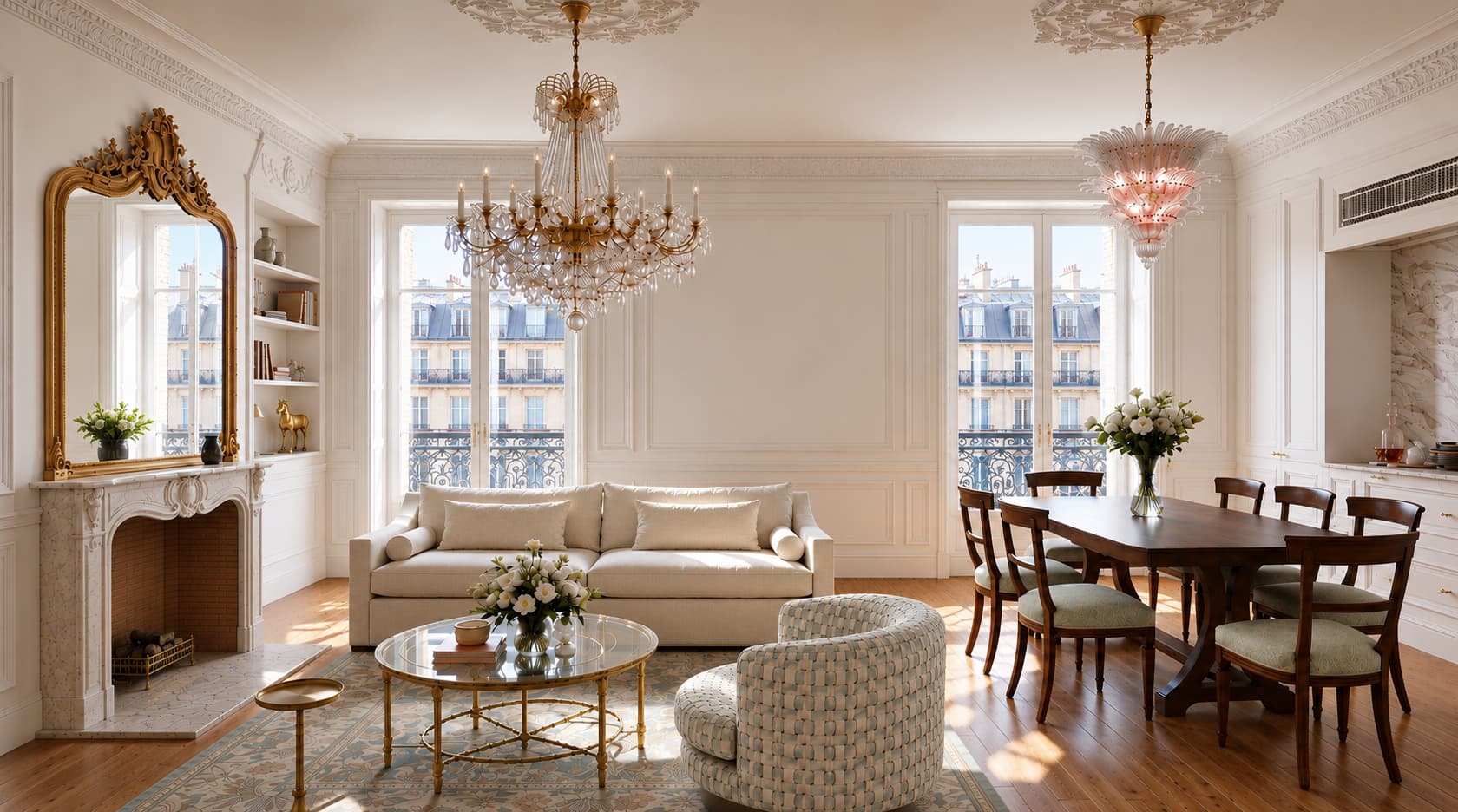
The interesting number here is four. A household wanting several proper stays may find that allocation closer to its real diary than either a larger share or outright ownership. Someone seeking frequent impromptu weekends may need a different arrangement. The fractional interest alone does not tell you how freely the calendar can be divided.
Fixed weeks can become annual anchors, provided the dates suit you. Floating weeks can add variety, but they still operate under booking rules. Ask which fixed weeks accompany the available share, how floating selections are prioritised and whether unused time can be moved or exchanged. Do not assume that four weeks can be broken into fourteen weekends.
Build the year around visits you would genuinely make
Before buying, try a simple exercise: write down four reasons you would return to Paris. Not four ideal holidays in a life with unlimited annual leave, but four visits that fit the life you already have.
One might centre on art, another on food and cooking, a third on time with adult children, and a fourth on doing rather little. The home should support all four. A proper table matters if friends will join you. A comfortable sitting room matters if your perfect evening sometimes involves staying in. A separate bedroom matters if different members of the household keep different hours.
This is a planning exercise, not a promise of four chosen seasons. Match those intended visits to the actual fixed dates and floating-week process before reserving. If the available share gives you dates you would regularly struggle to use, the apartment’s appeal does not solve the mismatch.
It also helps to leave one stay deliberately unthemed. Co-ownership should not create an obligation to stage an exceptional holiday every time. The chance to read, shop for dinner and take a familiar walk is part of what distinguishes a second home from a succession of travel projects.
The journey matters as much as the postcode
For London-based buyers, rail access is a meaningful part of the proposition. Eurostar currently advertises London–Paris journeys from 2 hours 16 minutes, arriving at Gare du Nord. That is the train journey, not the time from your front door to the apartment: add travel to St Pancras, the recommended arrival allowance, border and security procedures, and your onward transfer.
The honest comparison is door to door. A home that you can reach comfortably is more likely to become a habit than one whose journey feels like an expedition. For someone living well outside London, a direct flight may be more practical; for another household, the train is precisely what makes Paris attractive.
Test the route on a viewing trip. Carry the luggage you would normally bring, arrive at a realistic hour and notice the final stage. The last stretch with a suitcase can be more instructive than the headline journey time. Check the building entrance and lift too: an advertised lift does not, on its own, establish step-free access.
Choose the apartment for the hours between outings
A city address is only half a second home. The other half is where you recover from the city.
During a viewing, imagine a day with no restaurant booking. Is the kitchen genuinely useful? Can everyone sit comfortably at the table? Is there a quiet place to read while somebody else watches television? These are ordinary domestic questions, which is precisely why they matter more with repeated use.
Then consider the things a hotel normally absorbs. Where do coats and bags go? Is there a washing machine? What happens if you arrive late? Can personal belongings stay between visits, and in what allocated storage? Treat these as property-specific questions, not benefits automatically attached to the word co-ownership.
Good management should make the return feel straightforward. Ask what arrival preparation, cleaning and maintenance coordination actually include, and which services carry an extra charge. The best arrangement is one whose practical details recede into the background once you understand them.
Keep the ownership arithmetic separate from the romance
A share purchase is not simply a prepaid stack of hotel nights. You commit capital, acquire an ownership interest and accept continuing obligations. In return, you gain a stake in a particular home and use governed by its documents. That is a different decision from booking accommodation.
For a useful comparison, separate three figures: the total acquisition outlay, the annual ownership budget and the likely travel-and-stay costs. Establish whether taxes, legal fees, furnishings and any initial reserve are included in the quoted purchase price. In the annual budget, identify management, insurance, building charges, maintenance, utilities, cleaning and reserve contributions rather than relying on an unexplained monthly total.
Then divide the recurring annual costs by the nights you realistically expect to use. This is a personal budgeting measure, not an investment yield. Twenty-eight allocated nights and fourteen nights actually used produce very different results; the purchase capital remains a separate commitment in either case.
There is no need to assume letting income or price growth to make the lifestyle argument. Rental rights depend on the home’s rules and applicable local requirements. Resale depends on the agreement and on finding a buyer: timing and value are not guaranteed. A purchase should still feel worthwhile when assessed primarily as a place you intend to enjoy.
What you own—and what COP helps you compare
Co-ownership means acquiring an interest in the property or in the entity that owns it, rather than simply purchasing a contractual holiday entitlement. The precise structure varies. COP’s introduction to co-ownership is a starting point; the legal documents for the particular home must show what you acquire, how it is recorded and how owners make decisions.
Ask to see the ownership structure, use agreement, current budget and resale provisions together. They describe different parts of the same purchase. The calendar explains your stays; the financial documents explain your obligations; the legal structure explains your rights.
COP is an independent agent, not the company that runs the homes it presents. That distinction lets buyers compare opportunities, but it also makes it important to identify the actual manager and contractual counterparty for each one.
Frequently asked questions
Does a Paris co-ownership share always provide six weeks?
No. Share sizes and calendar entitlements vary. The Rue du Four example is advertised as a 1/13 share with four weeks’ use. A one-eighth share elsewhere is commonly marketed around six weeks, but the specific agreement governs the allocation.
Can I use floating weeks for spontaneous weekends?
Not necessarily. Floating means dates are selected under an agreed system, not that every unoccupied night is available to any owner. Check minimum stays, selection windows, priority rules and whether an allocation can be split.
Is co-ownership more suitable than renting for occasional Paris visits?
It depends on your likely use and desire to return to the same home. Renting or hotels may suit infrequent visits or changing neighbourhoods. Co-ownership becomes more relevant when recurring stays, familiarity and a real ownership interest are central to the decision.
Can I leave belongings or let friends use the apartment?
Both depend on the particular home’s rules. Ask about private storage, guest occupancy, unaccompanied guests, arrival procedures and any extra cleaning charges. Do not infer permission from the fact that you own a share.
What should I request before reserving?
Request the available share’s exact dates and booking rules, ownership documents, full acquisition costs, annual budget and reserve policy. Add management responsibilities and resale terms. Have an independent adviser review the proposed structure before committing.
Source and data notes
Checked on 20 September 2026. Property price, share size and advertised use come from the live COP Rue du Four listing; they are asking terms, not a completed transaction or an independent valuation. Availability and contractual details require confirmation. Travel and visitor details come from Eurostar, Musée d’Orsay, Musée Carnavalet and the French Senate’s Luxembourg Garden website. Opening arrangements can change. The suggested ownership routines are editorial analysis, not promised booking allocations. The hero is an editorial illustration, not a photograph of the featured apartment.
Explore COP’s Paris co-ownership homes, revisit our earlier Rue du Four introduction for background, or ask COP to match a Paris share to the weeks you would actually use. The best city home is not the one that makes you plan the most. It is the one you look forward to coming back to.
Plus de Co-Ownership Property



Nous contacter
Parlez à un expert
Dites-nous ce que vous recherchez et un de nos spécialistes en copropriété vous contactera sous 24 heures.