Tuscany · Florence & the Val d’Orcia · Italy
Fractional Ownership & Co-Ownership in Tuscany
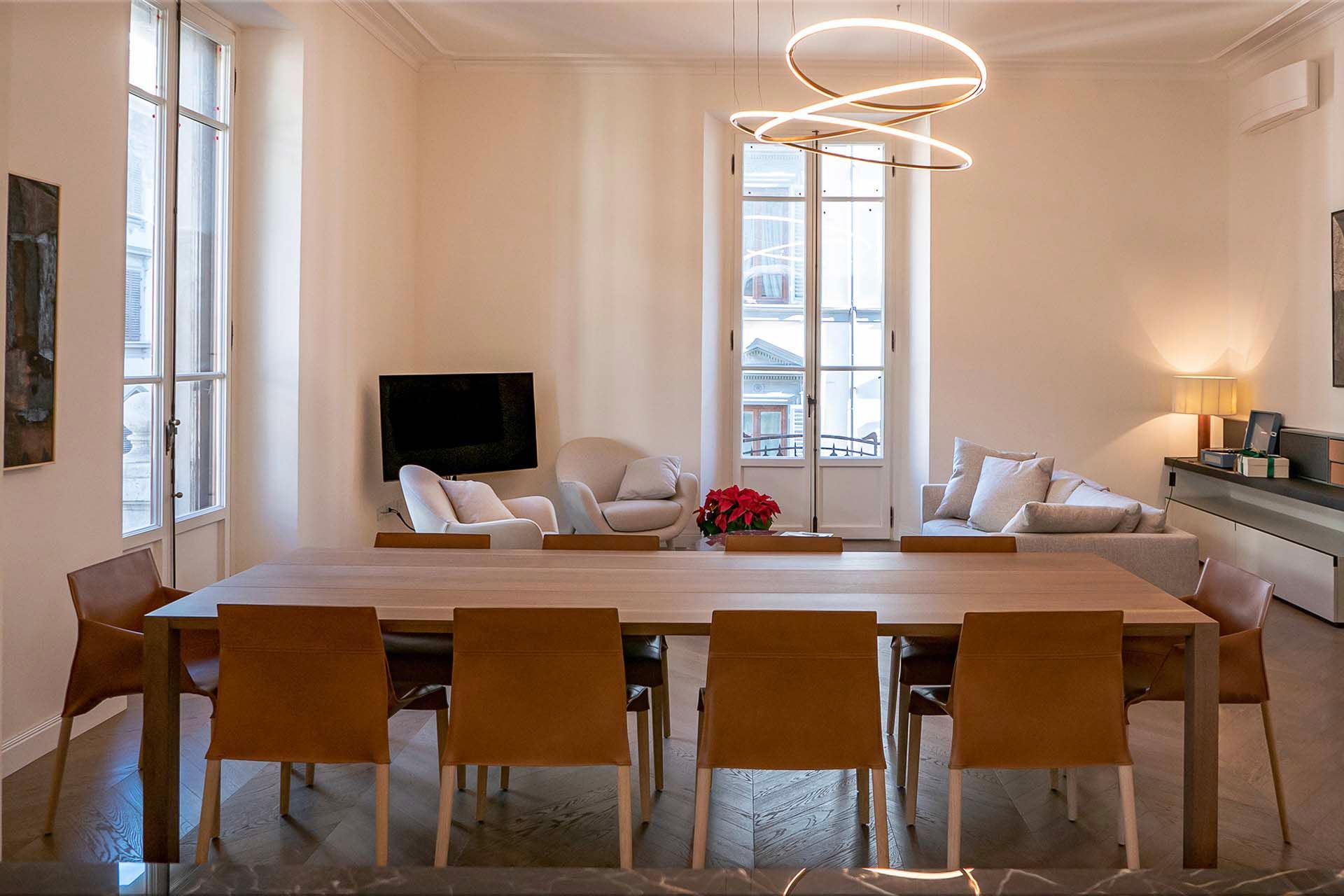
From a piano nobile apartment in the Florence centro storico to a four-bedroom stone house in a medieval hill village above the Val d’Orcia — co-ownership in Tuscany means a share of a fully managed home and around six weeks a year in the most photographed countryside in Europe.
2 properties · from $549,000
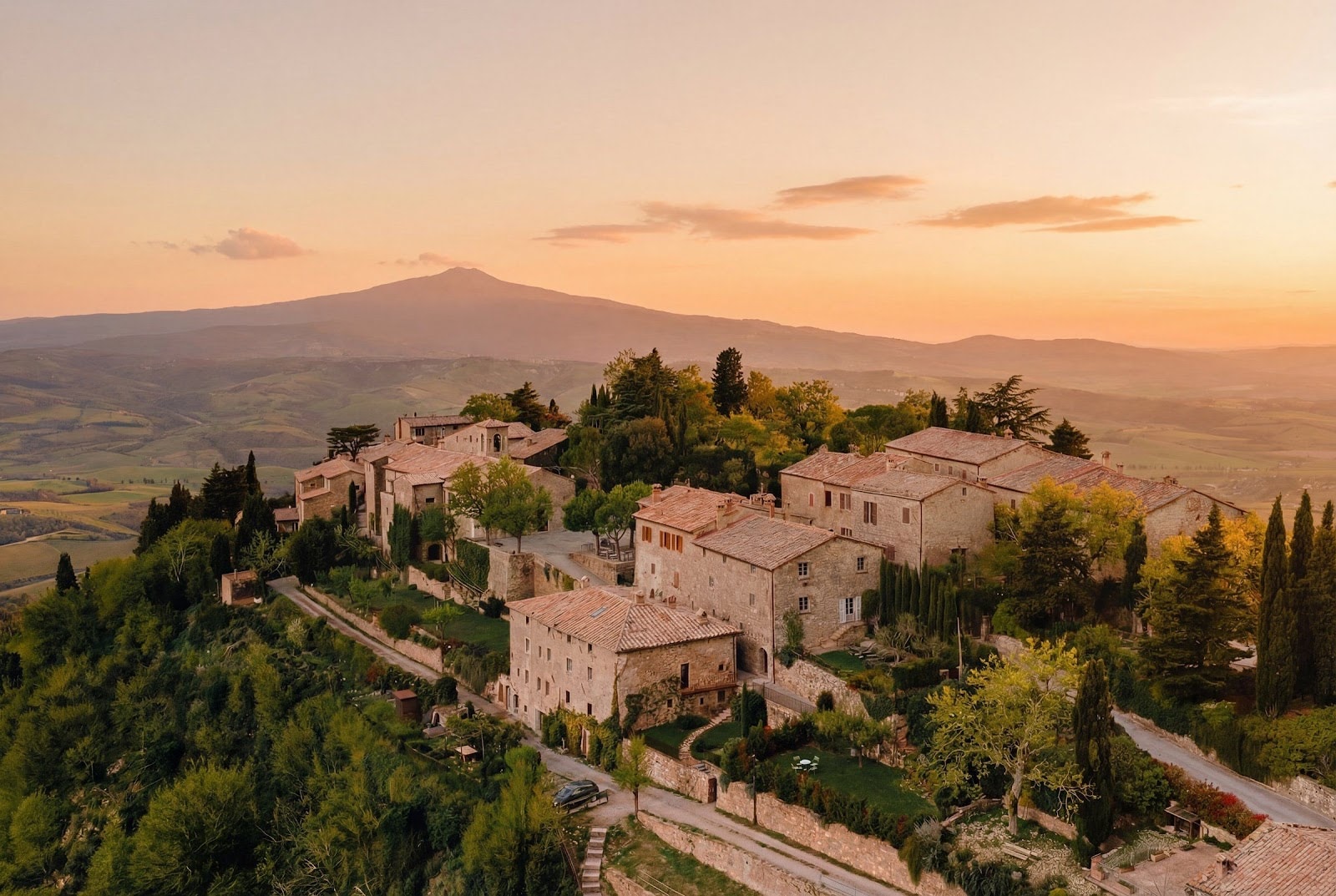
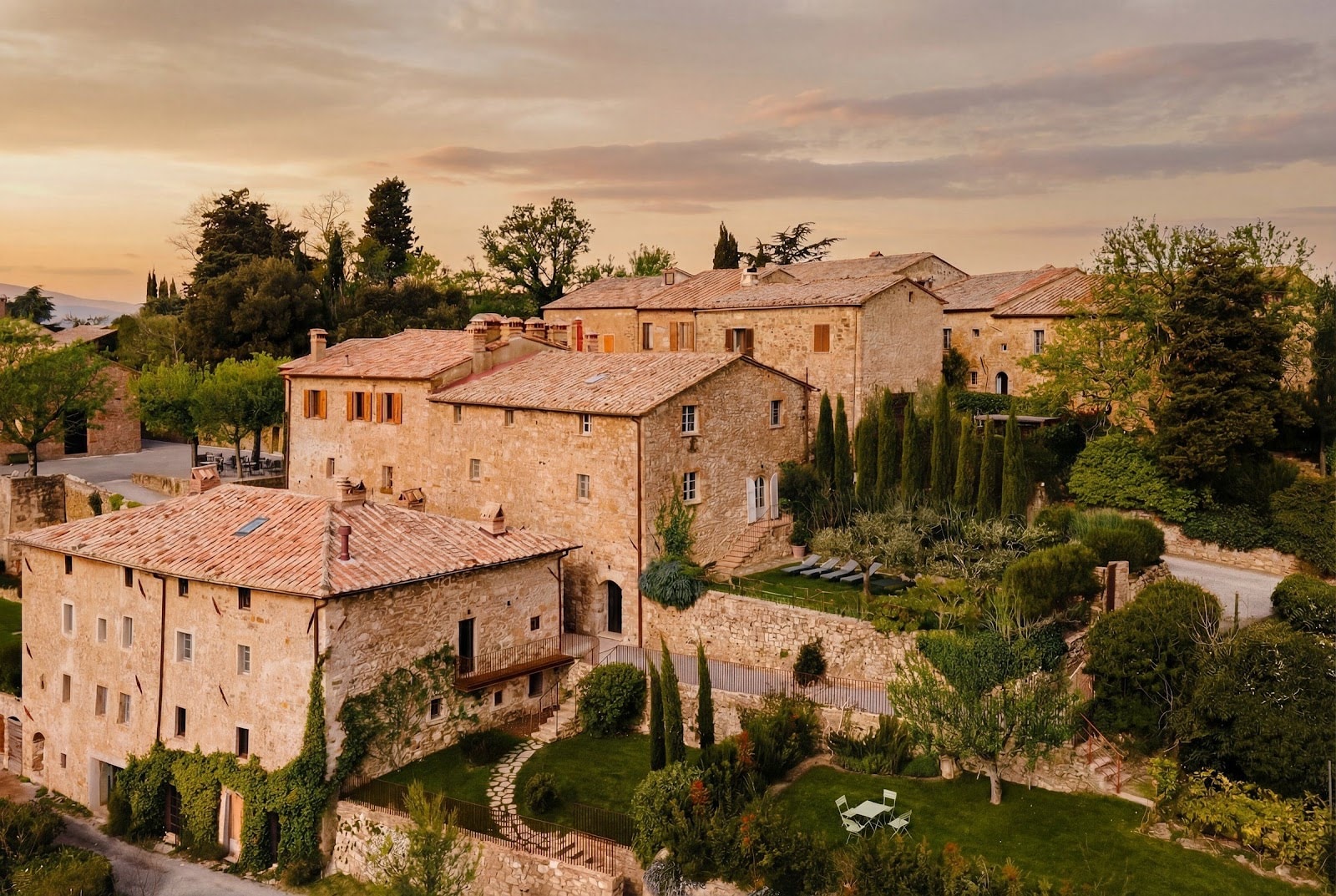
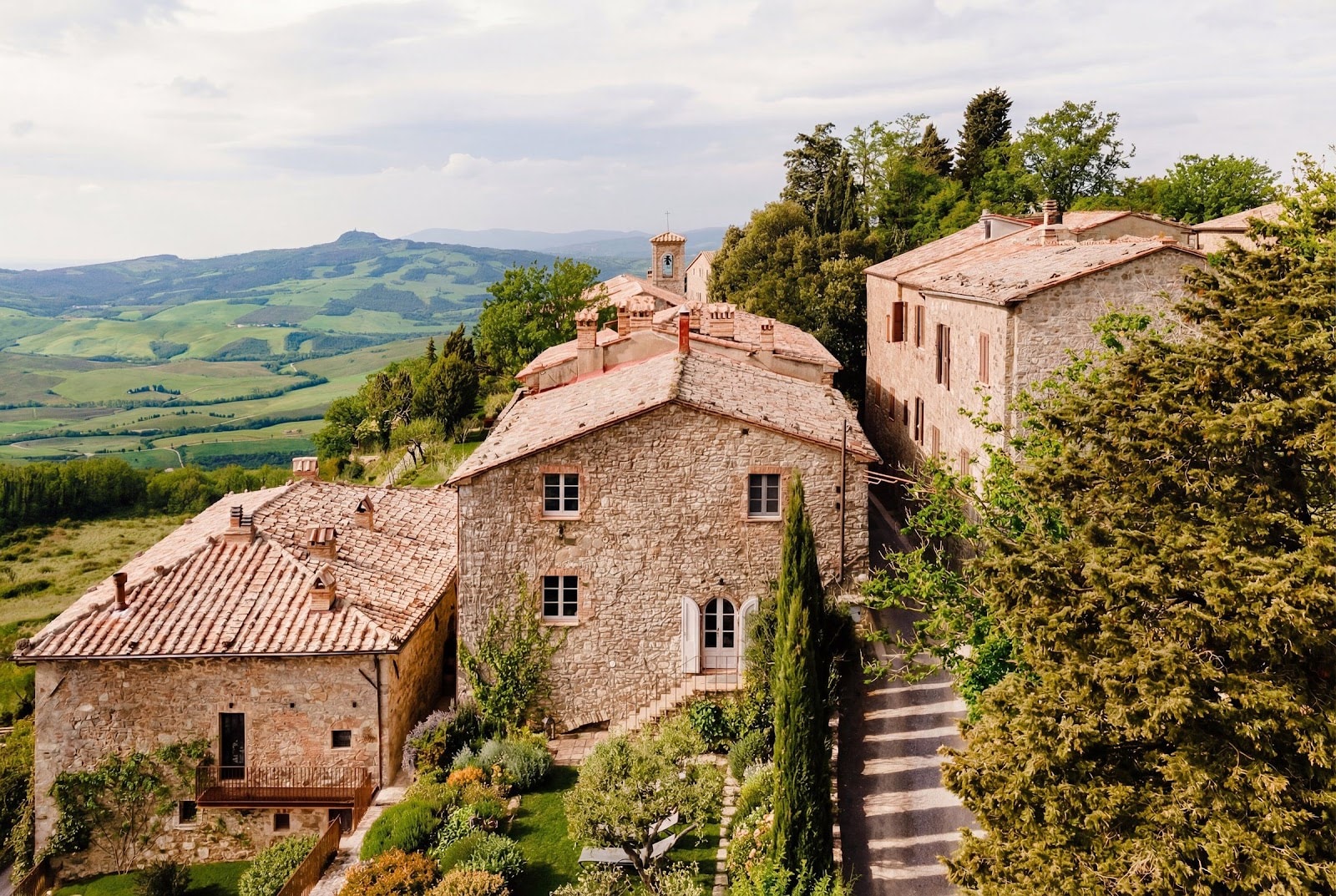
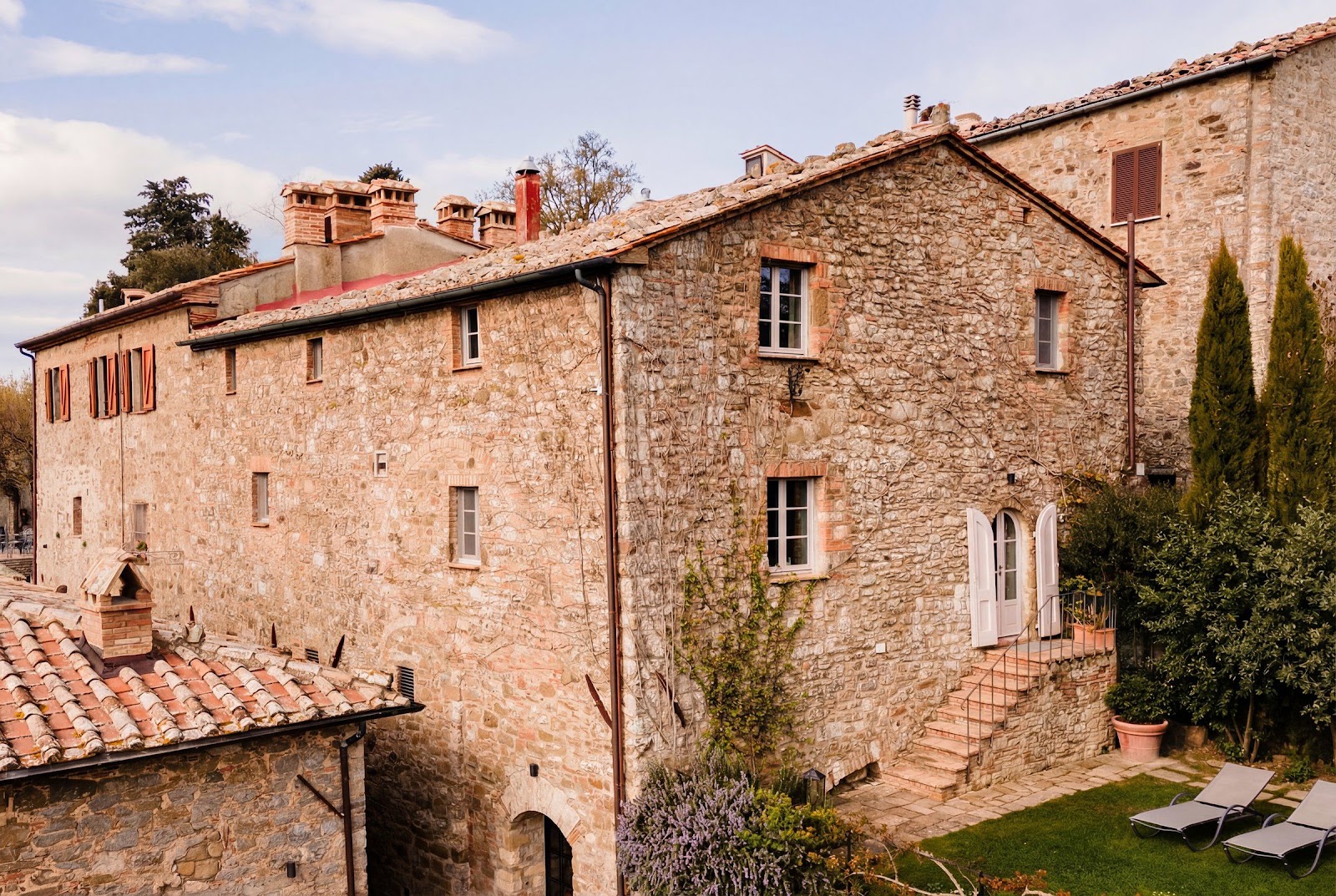
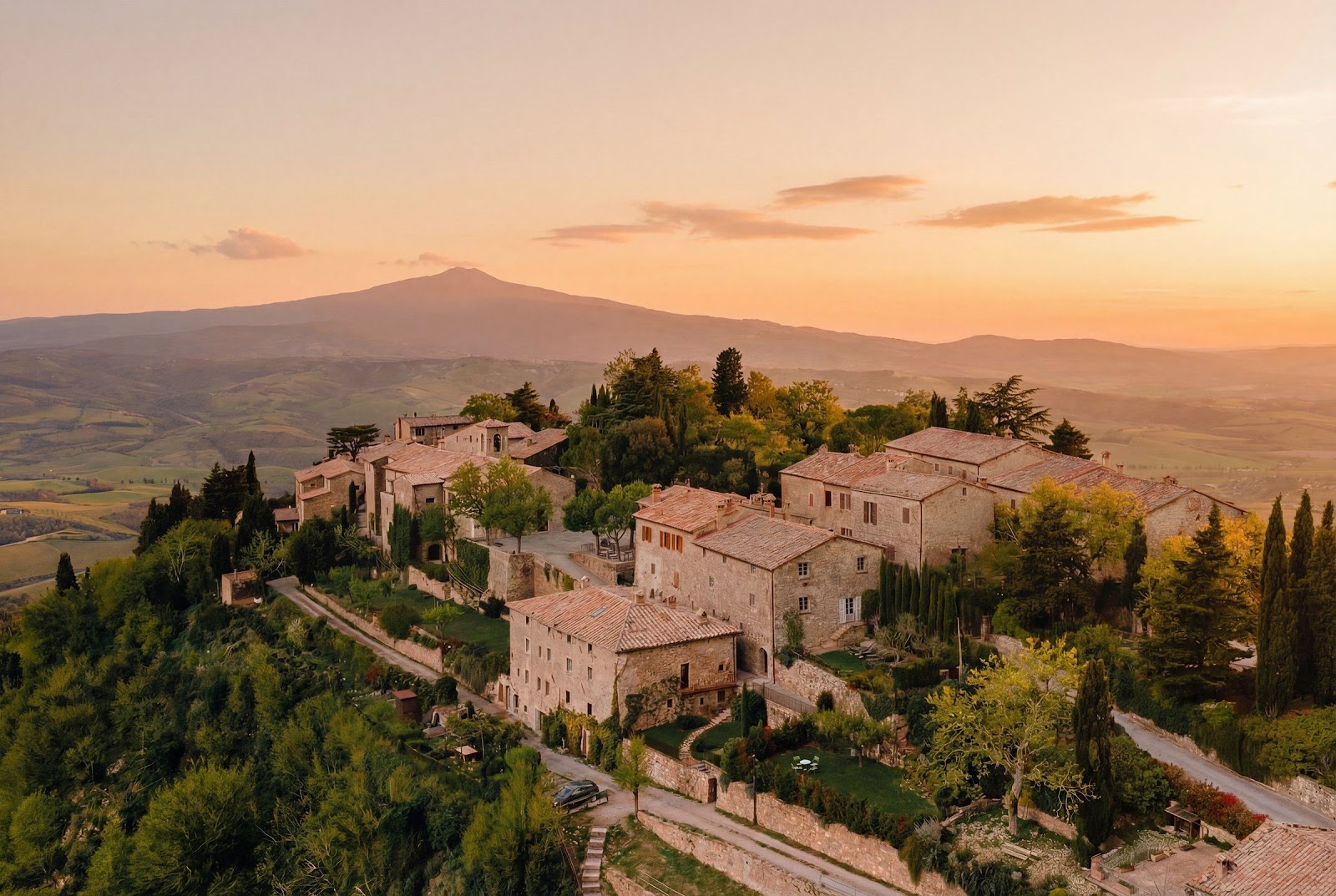
Castiglioncello del Trinoro, Tuscany, Italy — 4-Bed House
$549,000
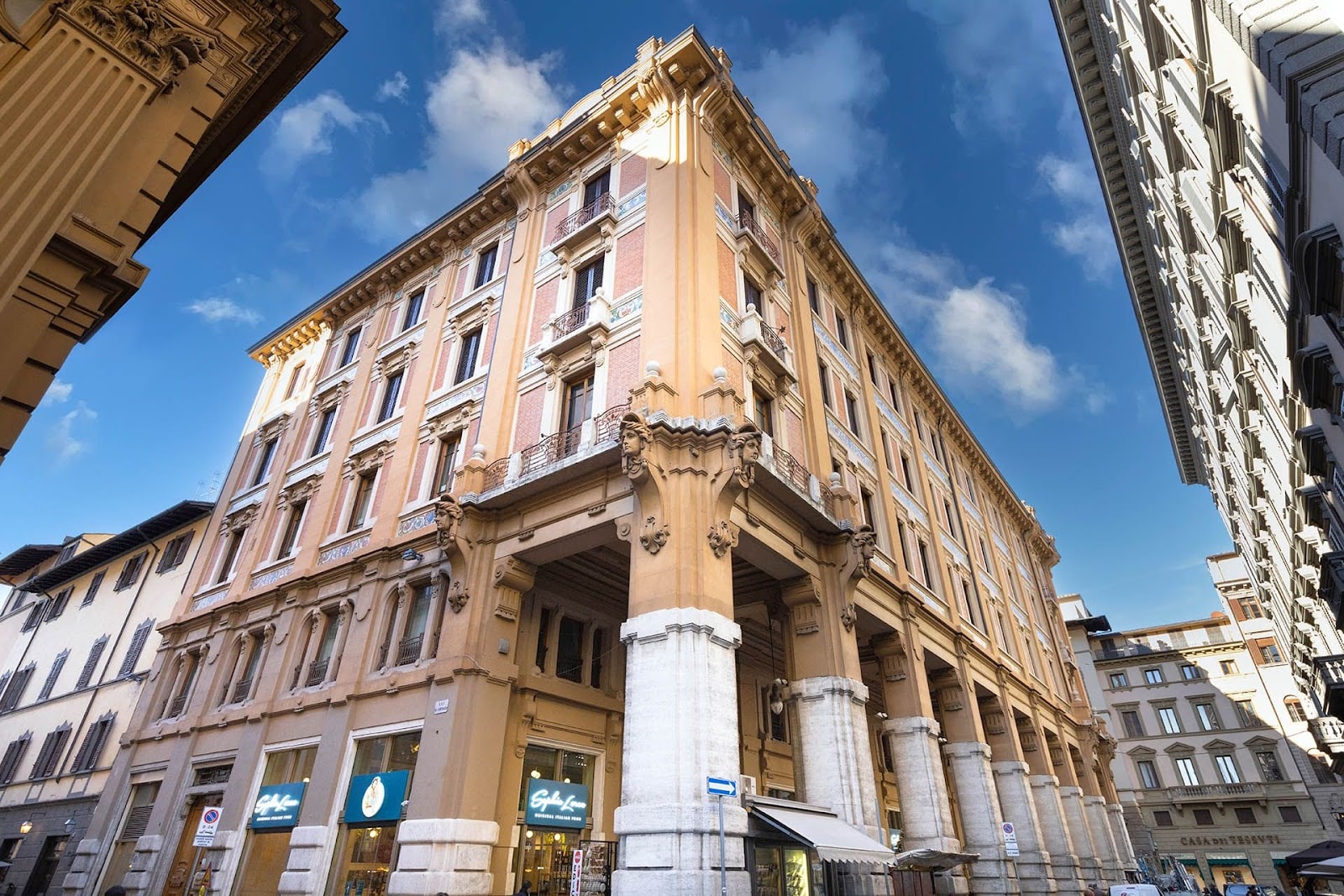
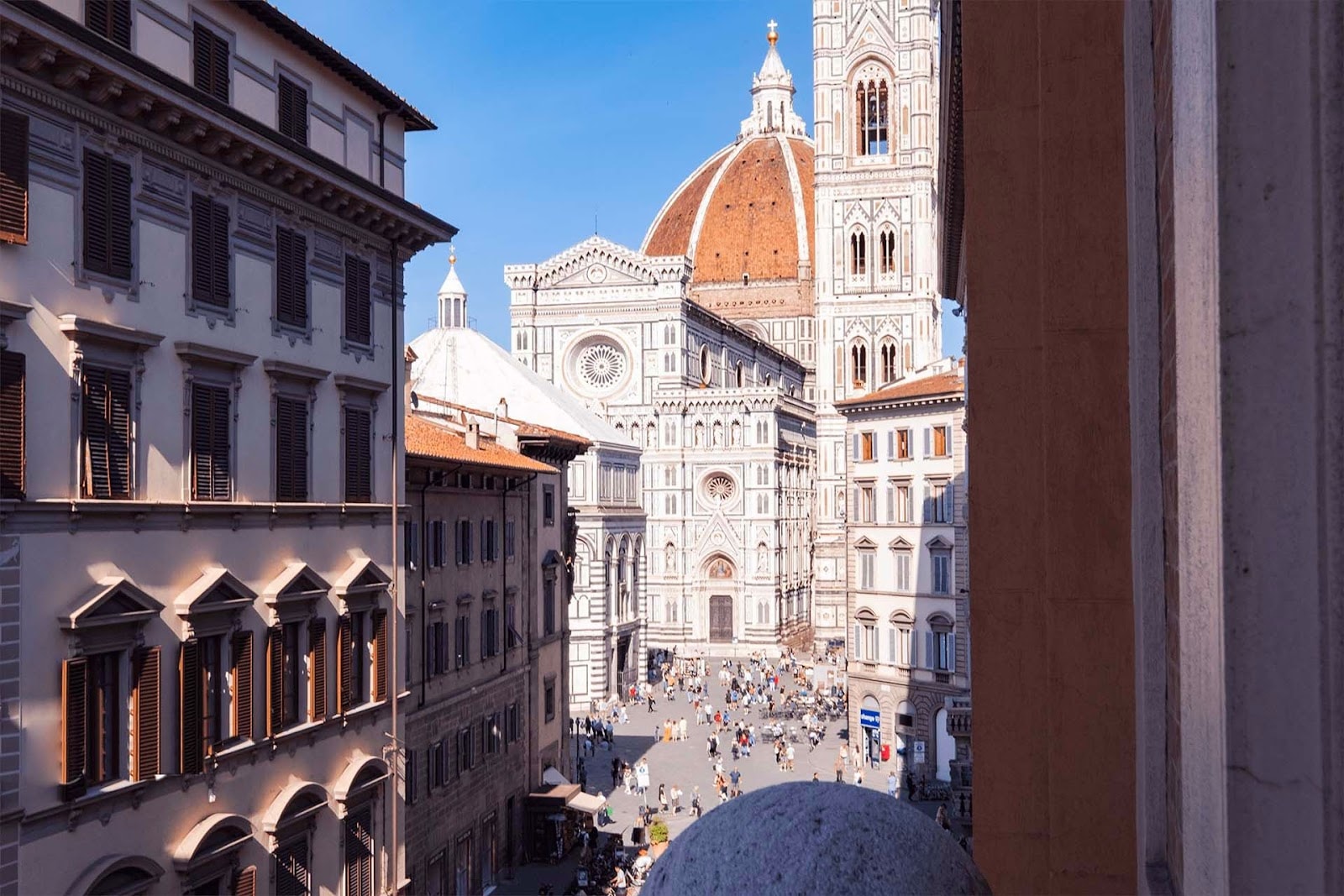
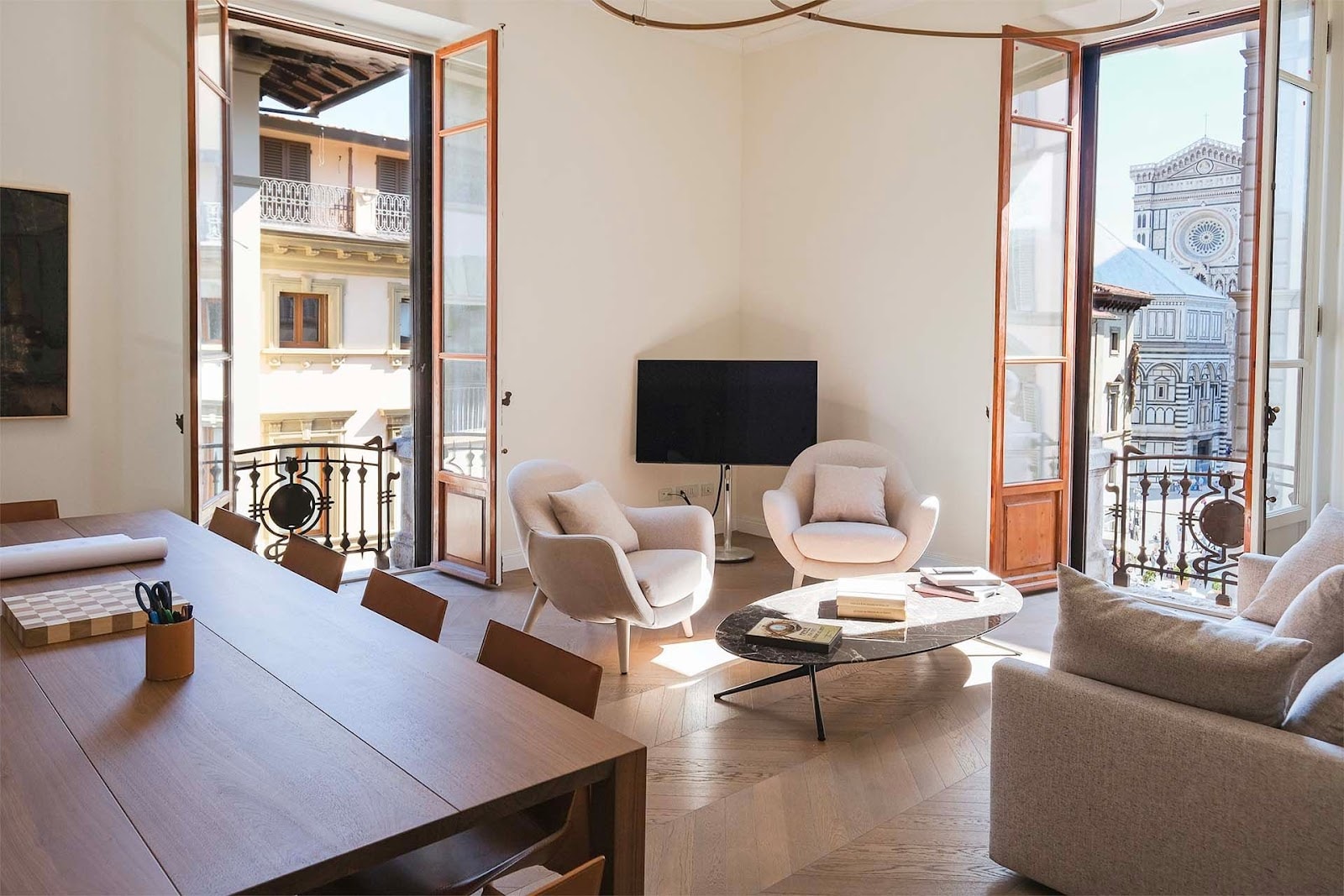
The Tuscany people actually want, sized to the weeks they actually use.
A small, deliberately selective portfolio: an apartment in the historic heart of Florence and a four-bedroom house at Castiglioncello del Trinoro, in the southern Val d’Orcia. Part of the wider Italy portfolio, alongside the Italian Lakes and Liguria.
Can you buy a share of a house in Tuscany?
Yes — and in Tuscany the arithmetic is unusually persuasive. One-eighth shares of fully managed Tuscan homes carry roughly six weeks of use a year, in a region where a restored farmhouse or a Florence apartment costs a great deal to own whole and is realistically used for a fortnight. Two homes are listed at the time of writing: an apartment in the Florence centro storico and a four-bedroom house in the Val d’Orcia, both at share prices between roughly half and six hundred thousand dollars.
That is the argument compressed. What follows is the long version: what co-ownership in Tuscany actually is and how it works, why the region rewards six weeks spread across a year more than almost anywhere else in Europe, where in Tuscany you would sensibly want to own, what a share costs against buying whole or renting, and what the whole thing looks like from the inside three years in. It is written for people who have rented the same villa near Siena for a decade and have started doing sums on the drive to the airport.
What is fractional ownership in Tuscany?
Start with what you are actually buying, because the word “fractional” does a great deal of unhelpful work. You are buying a real, transferable ownership interest in one specific, named house. Not a points balance. Not membership of a club with a rotating portfolio. Not a right to stay somewhere in Tuscany. It is that apartment, on that street in Florence; that stone house, in that village in the province of Siena. You buy it alongside a small number of other households — on the two homes we currently list, seven others — and each of you holds an equal, defined slice of the same asset. If the home is sold in ten years, you take your slice of the proceeds.
The arithmetic is deliberately simple. A one-eighth share converts to roughly six weeks of use a year — around forty-four nights — which matches how most families really use a second home. Costs work the same way: as a one-eighth owner you are responsible for one-eighth of the home’s costs. Management, utilities, insurance, Italian property tax, routine maintenance and a reserve fund for the things that eventually need replacing sit in a single budget, and you carry your proportionate share of it. Between stays the house is professionally managed — cleaned, aired, gardened, checked, repaired — so that the version of the home you walk into in October is the version you left in June.
The comparison everybody reaches for is the timeshare, so here it is plainly. A timeshare is the right to use a resort for a fixed week, or a bundle of points, shared with thousands of others, with no interest in the underlying building. You cannot sell the bricks, because you never owned any, and once you try to sell, a timeshare is typically worth a fraction of what was paid. Fractional ownership sells you the asset and lets the use follow from it. You own a real share of one specific home with up to seven other owners, not thousands; your share moves with the value of the home, sells on the open market at the price you set, and is a home you can leave to your children.
A timeshare sells you a week. Co-ownership sells you the house, and the time follows from it.
Now the part that matters most. You own a real share of the home — an eighth — not a right to use it. You can sell it, pass it on to your heirs, and it grows in value with the home. The legal set-up is arranged by our partner for each home and walked through with you before you buy. When you come to sell, resale is handled through our partner’s resale process, without you having to sell the whole house.
Tax follows Italian rules and those of your own country of residence, so we recommend independent tax advice for your own circumstances.
Use is booked through an app. On these homes the window runs from two days ahead to twenty-four months ahead, so you can hold a Christmas two years out or take a Thursday-to-Sunday in ten days’ time. Access is equal: owners are not ranked by how early they bought or how large the cheque was, and there is no seniority that quietly hands the good weeks to the first buyer. Each share also carries one reserved high-demand date a year — the birthday, the anniversary, the week in Florence you actually care about. Beyond your allocation you can take additional short-notice stays on dates nobody has claimed, which in practice is where a lot of the spontaneous use comes from. It is a system built for households who plan part of the year and improvise the rest.
These two homes are kept for their owners: personal use by the owners and their registered guests, and never let. The house you arrive at is always yours and your co-owners’, never a stranger’s holiday rental.
The rest of this page works through what you would otherwise have to assemble yourself: why Tuscany in particular rewards this kind of ownership, where in the region to own, what the two homes we list are actually like, how the purchase and the eventual resale work. If you want the mechanics in the abstract first, our how it works page covers them; for the wider national picture, start with Italy.
Why Tuscany, and why now?
The case for Tuscany as a place to own an eighth of a house is not the case for Tuscany as a place to spend a fortnight. Everyone agrees on the second, which is precisely why it proves nothing. The first rests on a mismatch. What foreign buyers want here — a restored stone podere inside a protected landscape, or a piano nobile floor in the Florence centro storico — exists in a supply that is structurally capped. What those same buyers do with such a house is occupy it a few weeks a year. Scarcity on one side; low utilisation on the other. The rest is detail.
A buyer’s market that has been international for sixty years
Tuscany did not become a foreign buyer’s market recently, and it did not become one because of a film. It became one because its agriculture collapsed. The mezzadria — the sharecropping system under which a family worked a podere and split the produce with the landowner — had organised the Tuscan countryside for centuries, and it unwound within a single generation. New sharecropping contracts were prohibited by law in 1964; the families left for factory work in Florence, Prato and the north; the hills were left full of stone farmhouses nobody farmed from and nobody wanted. Northern Europeans bought them, at first for very little, and spent decades putting roofs back on. “Chiantishire” is a late twentieth-century coinage, and by the late 1990s a serving British prime minister was spending his summers in it. Sixty years on, the phase in which you could buy a ruin cheaply is finished, and the market that restored the stock is a mature international one.
Scarcity written into the planning law
What caps supply is statute rather than fashion. Almost anything worth owning in Tuscany sits inside some landscape or heritage constraint, and work on it requires an autorizzazione paesaggistica under the Italian cultural heritage and landscape code of 2004. The comune grants it, but only after the Soprintendenza — the state heritage authority — has ruled on whether the proposal suits the landscape. In practice that governs rooflines, window openings, render and stonework, shutter colour, the siting of a pool, the removal of a wall you find ugly. Above it sit the UNESCO inscriptions: the Historic Centre of Florence, listed in 1982, a core of 532 hectares inside a buffer zone of more than ten thousand; and the Val d’Orcia, listed in 2004 as a cultural landscape of some 61,000 hectares in the province of Siena, protected explicitly as a living agricultural landscape rather than as a museum. Nobody can manufacture more of either. That, and not anyone’s marketing, is the argument.
The gap between owning a Tuscan house and using one
Now the other half of the mismatch, which is where whole-home purchases in this region quietly go wrong. A Tuscan house of the kind people picture is almost never bought finished. It is bought and then restored, under the constraints above, by an Italian builder working to an Italian geometra’s drawings on an Italian timetable, while you are a thousand miles away supervising by photograph. The stories converge: the roof that concealed a second roof, the year that became three, the budget that stopped behaving like a budget. Then suppose it goes well. You own a house that needs a caretaker, a gardener, a pool contract, an annual Italian tax return and somebody local who answers the telephone in February when a pipe fails. And you will use it — be honest — four weeks, six weeks, perhaps eight in a generous year. The rest of the time you pay, from abroad, to keep an empty building in good order. That is the real engine of the co-ownership case here: not that shares are clever, but that whole ownership in Tuscany is expensive to do badly and difficult to do well.
Getting there in 2026
Access has improved, though not in the way that gets announced. Pisa’s Galileo Galilei handled close to six million passengers in 2025, up around eight per cent, and remains the region’s workhorse for low-cost routes. Florence’s Amerigo Vespucci handled roughly 3.8 million, up more than nine per cent, overwhelmingly international, its densest links to Paris, London, Amsterdam, Barcelona and Munich. Together the two passed 9.8 million for the first time. Florence’s masterplan — a new runway and terminal — has been contested for over a decade and remains so: appeals brought by municipalities of the Piana, Sesto Fiorentino and Campi Bisenzio among them, are listed before the Tuscan administrative court in late October 2026, and no construction has begun. Today’s two airports already serve the region well.
The rail spine matters more, and visitors underrate it. Firenze Santa Maria Novella sits on the Milan–Rome high-speed line, fastest direct services reaching Rome in about an hour and a half and Milan a little under an hour and three-quarters, dozens of times a day. That changes the shape of a trip rather than merely shortening it: fly into Fiumicino or Malpensa, where the long-haul and the cheap seats are, and be having dinner in Florence the same evening.
Why the shoulder seasons matter to an owner
This is where the quieter months stop being an extra and become the product. Tuscany has an agricultural year, and it is legible to a visitor.
- Late August to mid-October: the vendemmia. Chianti Classico generally picks from mid-September into early October; Montalcino runs later.
- Late October into November: the olive harvest, with the first olio nuovo pressed in early November.
- Mid-October to late November: white truffle, with San Miniato’s national exhibition occupying the last three weekends of November.
- April to early June: wisteria, artichokes, empty hill roads and the countryside at its greenest, before the heat arrives.
The weather cooperates in a way it does not further south. October in Siena averages daytime highs near twenty degrees — a month for walking, eating and driving rather than lying down. That is why an eighth of a Tuscan house is a different proposition from an eighth of a house on a coast: the six weeks genuinely distribute. An owner taking a week in April, ten days in June, ten days in late September and a week in November is not making the best of a poor calendar; they use the region as its residents do.
Things to know
Florence is one of the world’s great cities, and its centre is busy, above all in summer: over four million arrivals in the first ten months of 2025. The city has been protecting its residential character by restricting new short-let authorisations, first in the UNESCO A1 zone from 2025 and then, in June 2026, across a much wider band of residential districts. For space and silence, the Val d’Orcia and the Crete Senesi are a world away from the Uffizi queue.
Summer is warm: Siena averages daytime highs around thirty degrees in July and August, which is why owners love spreading their weeks across May, June, September and October.
Tuscany is a steady, deeply international market rather than a fast-moving one: asking prices across the region were in the region of €2,674 per square metre in mid-2026, up something under four per cent on the year. People buy here because they want to be here, and your share moves with the value of the home.
Which brings it down from the region to the map. Tuscany is not one place: an eighth of an apartment in the Florence centro storico is a different life from an eighth of a house on a ridge in the southern Val d’Orcia. Where in Tuscany it makes sense to own, and where it does not, is the next section; what we list today is on our homes.
Where should you own in Tuscany?
The word “Tuscany” does a great deal of work in property marketing and almost none of it useful. The region holds at least seven distinct markets, each with its own building stock, its own price behaviour and its own idea of what a holiday is. Choosing between them is not really a choice about scenery. It is a choice about how you will actually spend the six weeks a year that a one-eighth share gives you. Do you want to walk out of a front door into a city and be at a table in four minutes, or drive twenty minutes for bread and count that a fair price for silence? Do you keep a car or refuse to? Does the sea matter, or only the light? Answer those three and the shortlist writes itself.
A note on the figures below. Where we quote a price per square metre it is a comune-wide average of asking prices across all residential stock — village flats, post-war blocks, farmhouses — taken from Italian portal data for mid-2026. It is a calibration tool, not a valuation. A restored podere with a pool and an olive grove trades at a large multiple of its comune average, and the internationally marketed end of any Tuscan market behaves as a separate market. Treat every number here as a rough bearing, correct at the time of writing and no more.
Florence and the centro storico
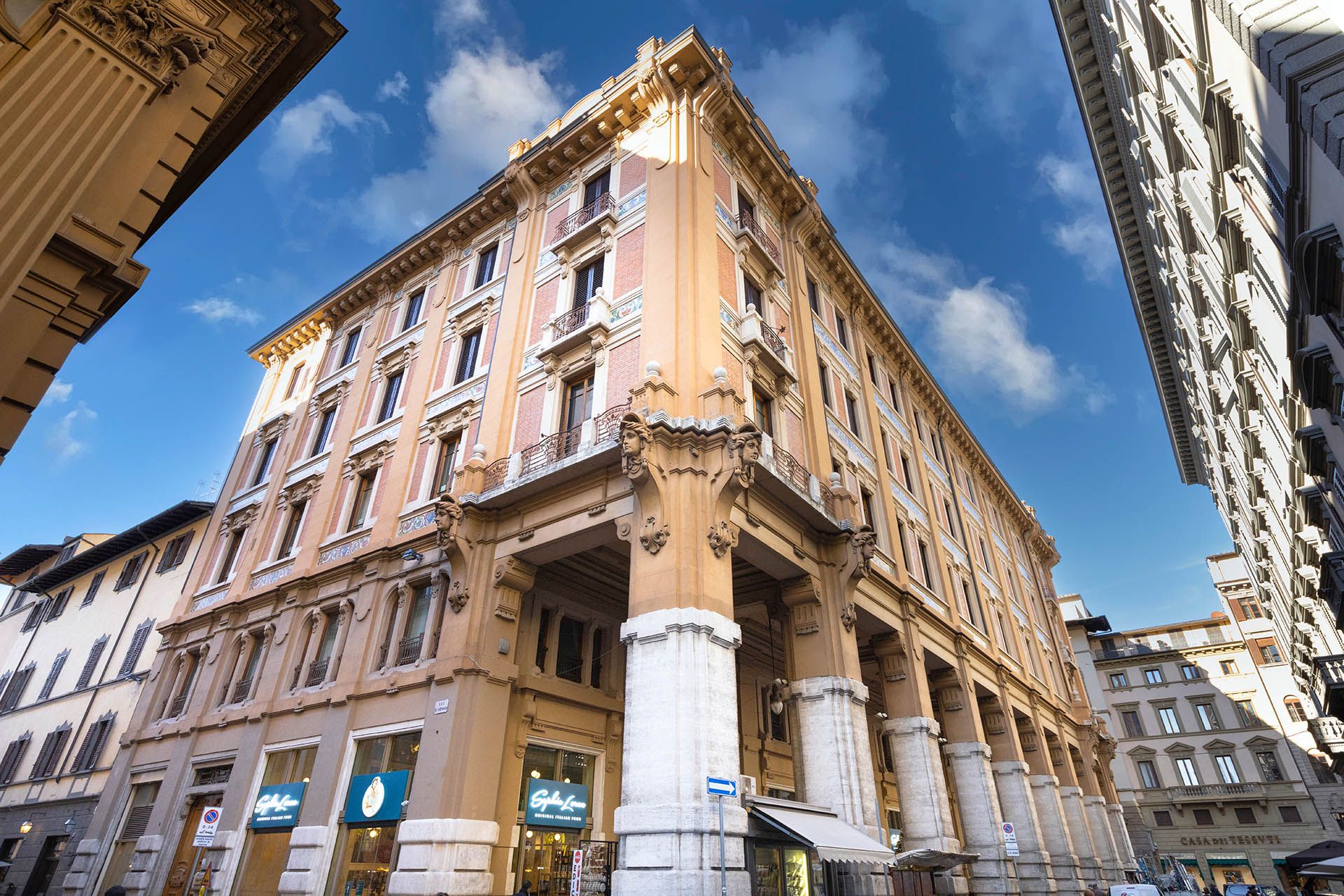
The Florentine proposition is architectural before it is anything else. The stock people want in the historic centre is the piano nobile — the first floor of a Renaissance or later palazzo, built with the high ceilings and tall windows the family kept for itself, above the street noise and below the attics. These are large, formal rooms, often with pietra serena door surrounds, terracotta or old parquet floors and, in the better cases, a painted ceiling nobody is permitted to touch. North of the Arno you are in the museum city: the Duomo, the Uffizi, Santa Croce, and the heaviest visitor pressure in Italy. Cross to the Oltrarno — Santo Spirito, San Frediano, San Niccolò — and the pace changes into workshops, gilders, restorers and a quarter that still buys its own vegetables. The Oltrarno now often prices level with or above the north bank.
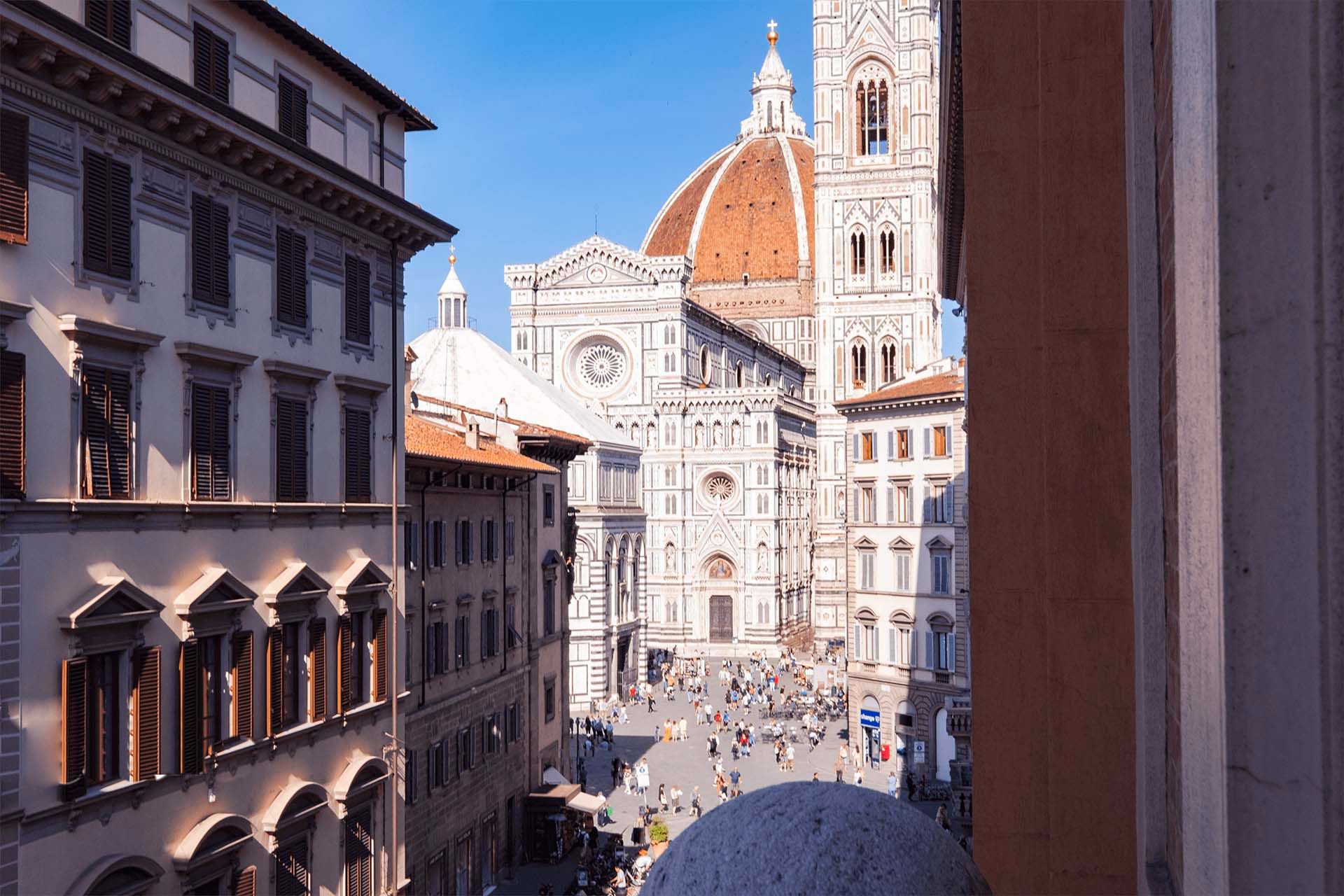
Life in the centro storico is life on foot: you walk to the Uffizi in ten minutes and need no car at all (the centre is a restricted-traffic zone, and historic palazzi rarely have lifts or parking), and Florence airport sits about five kilometres north-west of the historic centre, with the T2 tram reaching Piazza dell’Unità in roughly twenty minutes. Asking prices across the province of Firenze averaged in the region of €3,400 per square metre in July 2026, and the historic centre trades well above that. One of the two homes we currently list in Tuscany is here, a two-bedroom, two-and-a-half-bathroom apartment in the centre. The comune has also blocked new short-term tourist-let permits in the UNESCO core since 2025 and widened that block in June 2026, a clear sign of the city protecting its residential heart.
Chianti Classico, between Florence and Siena
Chianti Classico is the strip of hills bounded by Greve, Panzano, Castellina, Radda and Gaiole, threaded by the SR222 — the strada chiantigiana — which runs from the edge of Florence to Siena along the ridge rather than through the valley. Greve in Chianti is about thirty kilometres from Florence, half an hour if the road is clear and rather more behind a tractor. The building stock is the one everybody pictures: stone poderi and casali, some of them former sharecroppers’ farmhouses with the vaulted ground floor that used to be a byre, restored between the 1970s and the 2010s to a fairly standard vocabulary of beams, cotto and a rectangular pool set below the house. Land usually comes with it, which is the point and also the liability. Vines here are governed by the Chianti Classico consortium, and a hectare of registered vineyard is a different asset from a hectare of scrub.
On paper Chianti looks unremarkable: asking prices in the comune of Greve in Chianti averaged around €2,800 per square metre in July 2026, and Radda in Chianti around €3,000 in July, on samples small enough to swing sharply from month to month. Those averages mislead, because they fold in village flats. The restored-farmhouse market sitting above them is the most competed-for countryside in Italy, priced by German, British, Dutch and American demand rather than by local incomes. Florence airport is the natural arrival, Pisa a further hour west. The premium reflects how widely loved this landscape is: the strada chiantigiana is the most celebrated scenic road in Tuscany.
Val d’Orcia and southern Siena
South of Siena the hills lose their vines and gain scale. The Val d’Orcia proper was inscribed by UNESCO in 2004 as a cultural landscape of some 61,000 hectares across five comuni — Montalcino, Pienza, San Quirico d’Orcia, Castiglione d’Orcia and Radicofani — recognised specifically because the countryside was deliberately composed in the Renaissance. Pienza has its own separate listing from 1996. Montepulciano, just east, sits in the Valdichiana rather than inside the park. For a buyer, the inscription is not decoration: it means the landscape itself is the protected object, so external alterations, new volumes, pool siting, solar panels and even paint colours attract a level of scrutiny you would not meet in an ordinary comune. That protection is exactly why the valley stays so beautiful.
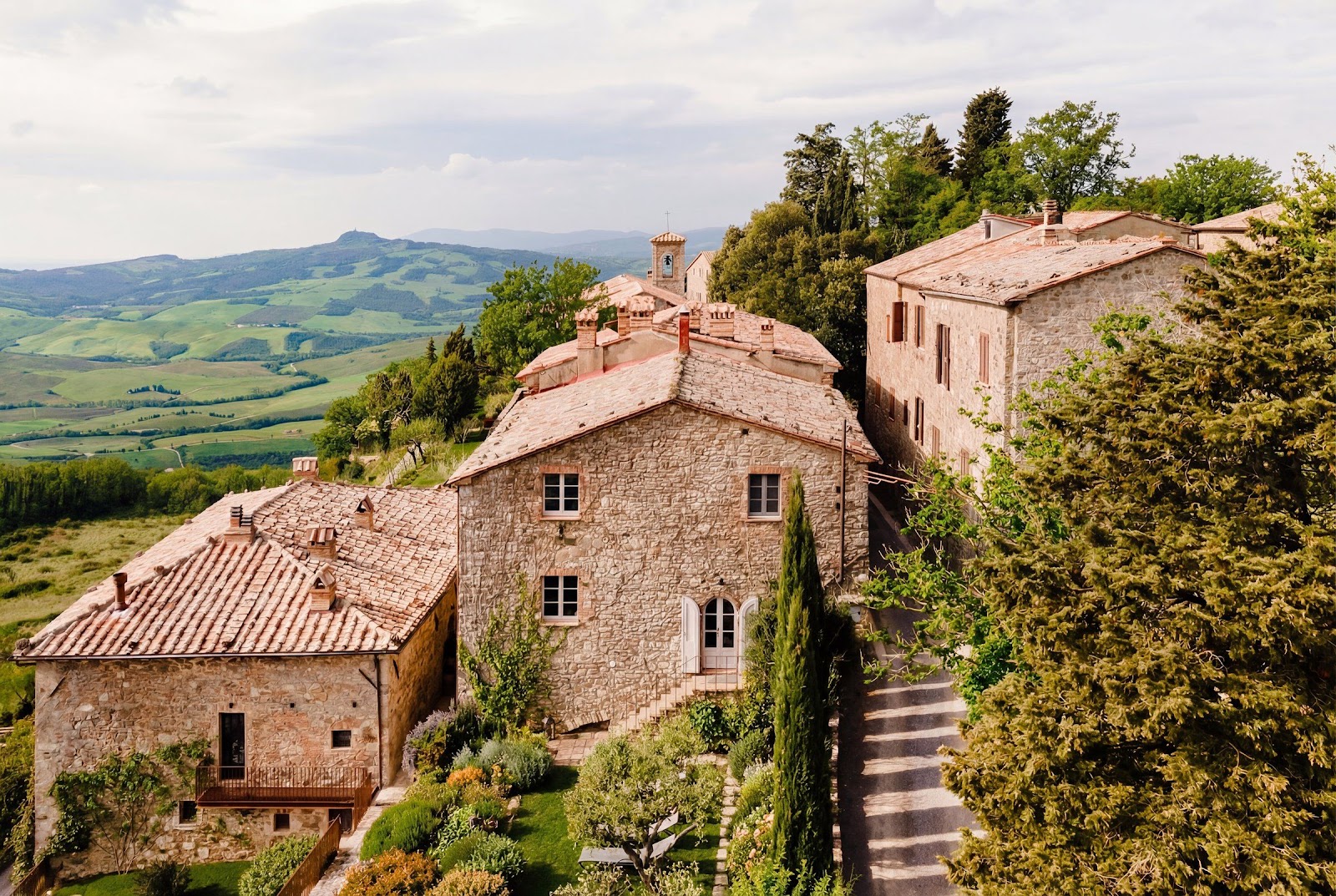
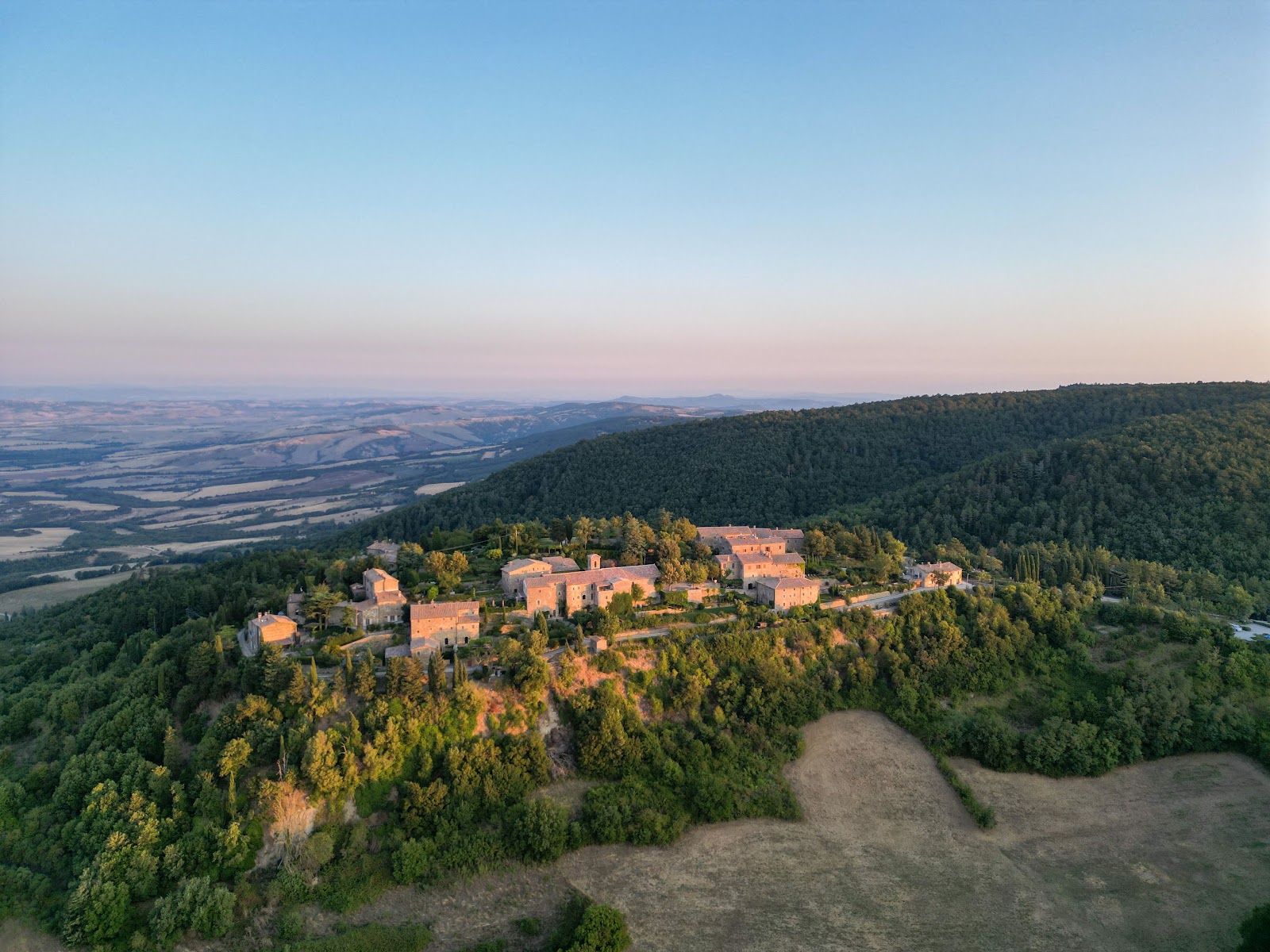
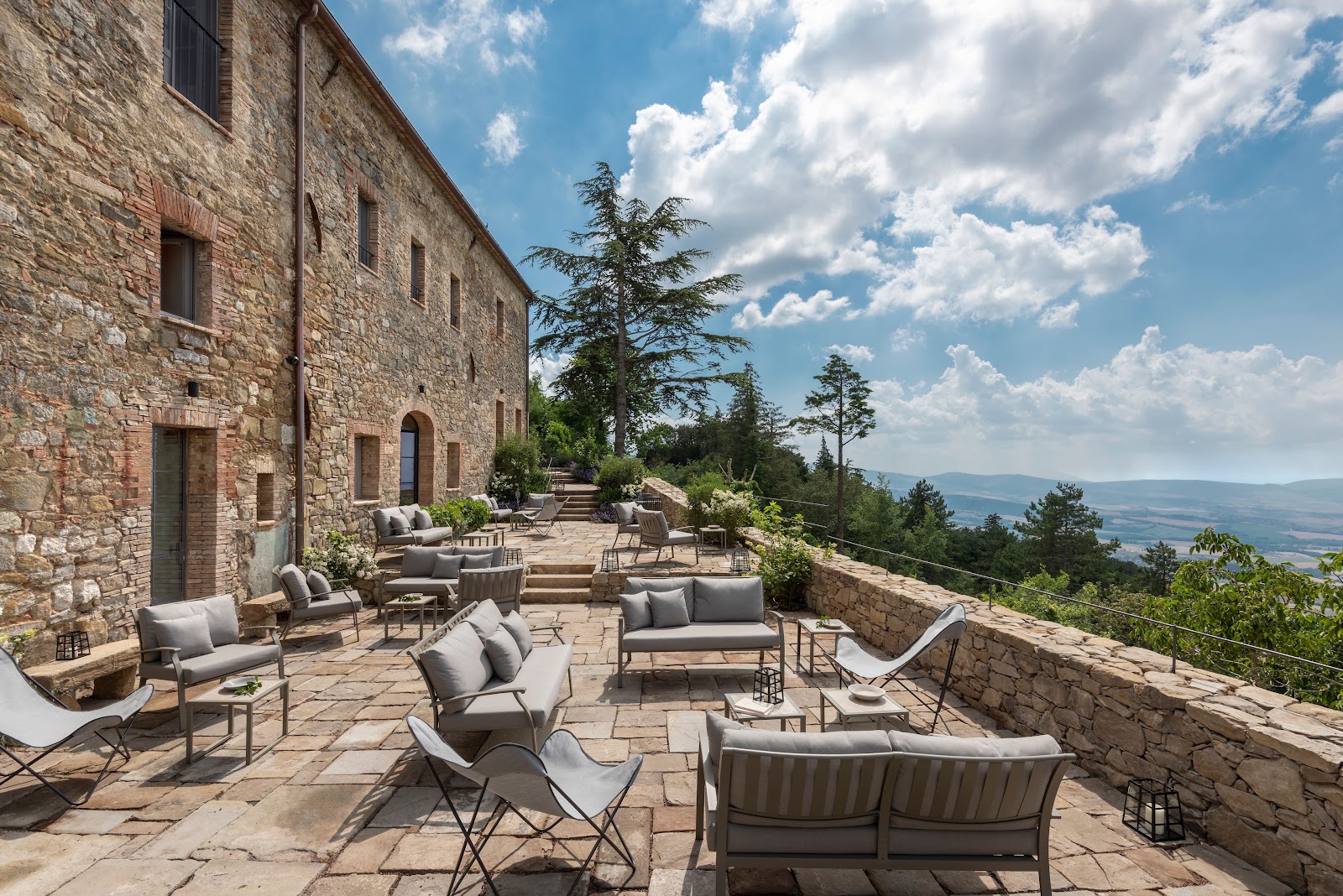
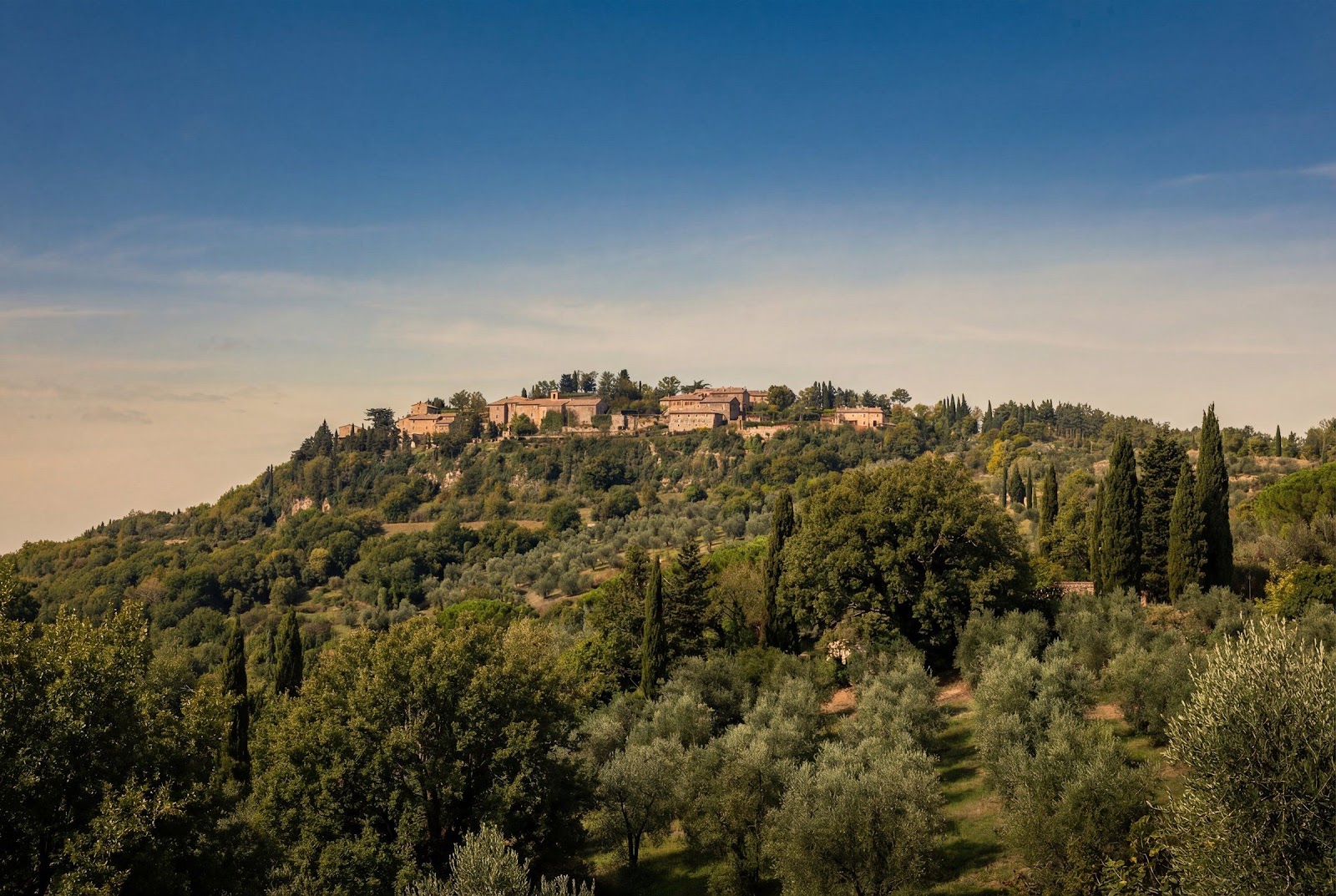
What you get in exchange is emptiness and light. The wheat and clay run for miles with almost nothing on them, the towns are compact and walled, and in November and February the valley is essentially yours. Montalcino averaged in the region of €2,300 per square metre in July 2026, Pienza around €2,900, both slightly down on the year; Brunello land is a separate and far dearer conversation. Our second Tuscan home sits on the eastern edge of this country at Castiglioncello del Trinoro, a medieval hill village in the province of Siena and a frazione of Sarteano some six kilometres away, with a resident population counted in double figures and a view west towards Monte Amiata. Sarteano is roughly an hour and twenty minutes’ drive from Florence and under two hours from Rome Fiumicino, with Chiusi–Chianciano Terme station close by for those who would rather not drive to the airport. Out of season it is wonderfully quiet, and a car is part of the life here.
Siena, the Crete Senesi and the Arezzo hills
This is the value case, and it is a real one. The Crete Senesi — Asciano, Buonconvento, Monteroni d’Arbia, Rapolano Terme and the country around San Giovanni d’Asso — is made of a grey Pliocene clay called mattaione, laid down when a sea covered the area between roughly 2.5 and 4.5 million years ago. It produces the biancane and calanchi, the pale domes and eroded gullies that make the landscape look scoured and slightly lunar. East of Montepulciano the ground rises again towards Cortona, which looks down over the Valdichiana from a hillside of Etruscan wall, and further north the Casentino, the upper Arno valley behind Arezzo, is beech forest, monasteries and weather — more Apennine than postcard Tuscan.
The arithmetic is the argument. In July 2026 average asking prices ran at roughly €2,100 per square metre across the province of Siena and about €1,550 across Arezzo, against something near €3,400 in Firenze and €3,700 in Lucca. Cortona’s own asking range that spring sat well below the Chianti comuni. Perugia’s San Francesco d’Assisi airport is under an hour from Cortona by road, which is closer than Florence, and the Rome–Florence main line stops at Arezzo. If you want the same hills, the same food and the same drive to Siena for a materially lower entry price, this is where it is.
Fewer international buyers compete here, which is why it is such good value. This is a market for people who want the landscape for its own sake.
Lucca, Pisa and the Versilia coast
North-west Tuscany is the corner Italians themselves holiday in, and it feels different for it. Lucca is a small, prosperous, flat walled city whose Renaissance ramparts carry a tree-lined promenade of about 4.2 kilometres that the town uses as a park; inside the walls the stock is townhouses and apartments rather than palazzi, and the hills immediately north hold the villas of the old merchant families. Twenty minutes west is Pisa, and Pisa’s Galileo Galilei airport is about a kilometre from the central station with a shuttle running every few minutes, which makes this the easiest arrival in the region by some distance. Half an hour up the coast lies Versilia: Forte dei Marmi, Pietrasanta, Viareggio, with the Apuan Alps and the Carrara marble quarries rising white behind the beach.
Prices here are the region’s highest. Lucca was the most expensive Tuscan province by average asking price in July 2026, in the region of €3,700 per square metre, and Forte dei Marmi on its own averaged somewhere around €11,000 — a figure without parallel elsewhere in this section, and one driven by a specific, largely Italian and Northern European clientele buying villas behind hedges. Pisa airport to Forte dei Marmi is roughly forty kilometres, half an hour outside high summer. Beach life here runs Italian style, through the licensed bathing concessions: you book your umbrella and lounger for the week or the season. Forte is at its liveliest in summer and peaceful in winter.
The Maremma and Monte Argentario
The Maremma is the wilder, emptier south: cattle country reclaimed from marsh, umbrella pines, long dark beaches and a coastline that faces the sunset. It is culturally Rome’s weekend rather than Florence’s. Capalbio sits inland near the Lazio border and has been the Roman intelligentsia’s summer address for decades; Castiglione della Pescaia is the family resort, with Punta Ala and the pinewoods north of it at the expensive end; and Monte Argentario, the wooded promontory tied to the mainland by two sandy tomboli and a causeway through Orbetello, holds Porto Ercole on the south side and Porto Santo Stefano on the north. Inland at Saturnia, in the comune of Manciano, the Cascate del Mulino run at a constant 37.5°C over travertine terraces and are free to use, which is a genuinely unusual thing to have twenty minutes from your house.
As of July 2026 Monte Argentario averaged in the region of €4,700 per square metre, with Porto Ercole nearer €5,300 and softening year on year, and Porto Santo Stefano around €4,500; Castiglione della Pescaia sat close to €4,700 and rising, with its Punta Ala and Roccamare zones considerably higher. The province of Grosseto as a whole averaged about €2,700. Rome Fiumicino is the gateway, about an hour and forty minutes’ drive from Porto Ercole (Grosseto’s airport has had no scheduled passenger flights since 2018). This is Rome’s coast rather than Florence’s, two and a half hours from the Uffizi.
The islands and the far coast: Elba and the Etruscan Coast
Between Livorno and Piombino runs the Etruscan Coast, and inland of it Bolgheri — a frazione of Castagneto Carducci reached along the Viale dei Cipressi, five kilometres of some 2,540 cypresses that Carducci put into Davanti San Guido, with an obelisk to him at the entrance since 1908. This is the Super Tuscan wine country, flatter and more maritime than Chianti, with a plainer building stock and, in July 2026, comune-average asking prices around €2,800 per square metre, up modestly on the year.
Elba lies about ten kilometres off the mainland. Ferries run from Piombino to Portoferraio in forty minutes to an hour, with a great many sailings a day in season, and Portoferraio averaged in the region of €3,500 per square metre in June 2026, down sharply on the year. Marina di Campo’s airstrip takes small aircraft seasonally, roughly May to October. Every visit begins with the ferry crossing, part of the island’s charm, and Elba is at its best from late spring to early autumn.
Choosing between them
In short: if you want to use the six weeks without a car, own in Florence or inside Lucca’s walls, and enjoy a life on foot. If you want silence, long views and a courtyard to eat in, own in the Val d’Orcia or on its eastern edge, and enjoy the drives and the deep winter quiet. If you want vines, dinner in a village and the shortest hop from Florence airport, own in Chianti Classico where the premium buys the classic Chianti life. If you want the same landscape for materially less, look at the Crete Senesi, Cortona and the Arezzo hills. If you want a real beach summer among Italians, Versilia, at the region’s highest prices. If you want wildness, thermal water and Rome rather than Florence as your city, the Maremma. If you want an island, Elba, ferry and all.
The Tuscan collection is small and select: we currently list two homes here, one in Florence and one at Castiglioncello del Trinoro. Decide which Tuscany you want, and if your share is not listed yet, register what you are looking for or widen the search across Italy. You can see what is available on our homes page, and how it works sets out how co-ownership works in full.
What is a year in Tuscany really like?
Most people meet Tuscany through one narrow window — a week in late June, or whatever fortnight the school calendar allows — and form a view of the region from that single sample. Ownership widens the sample. Six weeks a year, taken as three or four visits, lets you see the same olive terrace in March and in November, the same street in Siena half empty on a wet Tuesday in February and impassable on the sixteenth of August. What follows is the Tuscan year as an owner experiences it rather than as a brochure presents it.
March to May: the vineyards wake up
Spring arrives unevenly, and late in the hills. Florence averages a daily high of about 16°C (61°F) in March, 19°C (66°F) in April and 24 °C (75°F) in May; the hill villages of the southern Val d’Orcia run cooler and windier, and an April evening in a stone house up there still wants a fire lit. Pruning is finished by March and the vines break bud in April, the moment the landscape stops being brown. April is also the wettest of the three months in Florence, around 85 mm, so pack for the odd soft day.
This is the season of wild asparagus — thin, dark, bitter, gathered from field margins through late March and April and turned into frittata and tagliolini by kitchens that would not dream of printing it on a menu. If you want the Uffizi without a scrum this is close to the last chance before autumn; it opens Tuesday to Sunday and closes on Mondays, which catches people out. Late May is arguably the finest fortnight of the Tuscan year: warm enough to eat outside, cool enough to walk at midday, and the coaches have not properly arrived.
June and July: the lull, and then the heat
June is the month the region uses in its own photographs. Florence averages a high near 28°C (82°F), rainfall drops to around 55 mm, and the countryside is still green rather than bleached. Then it turns. July averages 32°C (90°F) by day in Florence, with a run of days at 36 to 38°C (97 to 100°F) most summers; it is also the driest month, roughly 35 mm. Inland Tuscany is stone and terracotta, and it gives back at night what it stored all day: by mid-July the walls are still warm at eleven.
The coast behaves differently. Livorno averages about 28°C (83°F) in July and August against Florence’s 32 or 33, with the sea reaching around 25°C (77°F) in August and an afternoon breeze inland simply does not get. Both homes we currently list are inland, which makes the Tyrrhenian coast the release valve for high summer rather than a separate holiday. The first of Siena’s two Palii runs on 2 July, in honour of Our Lady of Provenzano; if you want to be there for it, build the year around the date.
August: Italy on holiday
August is Italy’s holiday month. Florence averages a daily high of about 33°C (91°F), the historic centre is at its busiest, and Florentines themselves head for the coast. Ferragosto on 15 August is a national holiday, and the fortnight around it is when Italy takes its break and many independent shops close. The countryside comes into its own — courtyard, thick walls, shutters closed until six — and Siena runs its second Palio on 16 August, for the Assumption: worth seeing at least once.
September and October: the vendemmia
September is the month most owners end up defending as the best of the year. Florence still averages 27°C (81°F) and Siena around 25°C (77°F), while the vendemmia gets under way: whites and early parcels from late August, Sangiovese through September, the higher Chianti Classico and Montalcino vineyards often into the first days of October. Every cantina between Greve and the Val d’Orcia is working and the back roads smell of fermentation. October cools to about 21°C (70°F) in Florence and the rain returns, roughly 105 mm, but the low light across the Crete Senesi late in the month is what the photographers actually come for.
November: new oil and white truffle
The olive harvest runs from the second half of October into November, and it is the most communal thing in the Tuscan year: nets under the trees, hand rakes, everybody’s cousin, and a run to the frantoio the same afternoon. Olio nuovo comes off the press cloudy, green and aggressively peppery, and is worth arranging a stay around. This is also white truffle season: San Miniato holds its national white truffle fair over the last three weekends of November, and San Giovanni d’Asso in the Crete Senesi runs its own over the second and third. November is also the wettest month, around 115 mm in Florence and 125 mm in Siena: the season for long lunches by the fire, with some rural restaurants closing for the winter from mid-month.
December to February: the empty, luminous months
Winter is mild by northern European standards and quiet in the best sense. Florence averages a daily high of 11°C (52°F) in January with lows near 2°C (36°F); Siena, which sits considerably higher, runs about 10°C (50°F) by day and takes a modest snowfall most winters. January and February are the driest, clearest stretch after high summer, around 60 to 65 mm of rain a month in Florence, and on a cold bright morning the view south from the Val d’Orcia beats anything August produces. The museums are usable, and the thermal water at Bagni San Filippo and Bagno Vignoni is best when the air is cold. Many rural agriturismi rest from January until Easter, and the villages belong to their residents. Mimosa flowers ahead of 8 March, almond a little before it, and the year has turned.
What this means for six weeks
Lay the calendar out and the argument makes itself. The two best periods in Tuscany are late April to mid-June and September to early November, and neither aligns with a British, German or Dutch school holiday. A family with a whole house and a fortnight of leave keeps taking it in July or August, precisely when the region is hottest, fullest and least itself. A one-eighth share of roughly six weeks — about 44 nights, with no obligation to take them in one lump — can actually reach the shoulder seasons: ten days for the vendemmia, a week for the new oil, a fortnight in May, four nights in February because the flights were cheap. The case is not that a share gives you more Tuscany, but a different Tuscany from the one two weeks in August will ever show you.
What does a Tuscany fraction actually cost?
Here is what the two homes we currently list are priced at, what that price contains, how it compares with buying whole or renting, and how the exit works.
As of August 2026, a one-eighth share of the Florence apartment is priced in the region of $599,000, and a one-eighth share of the Val d’Orcia house in the region of $549,000. Both are quoted in US dollars rather than euros, a function of the company’s origin rather than anything about the asset. At the European Central Bank reference rate of about $1.16 to the euro on 19 August 2026, those shares work out at roughly €516,000 and €473,000 respectively, and your bank can fix the rate for you if you prefer certainty.
The share price is not simply one-eighth of a house. Embedded in it are the furnishing and interior design of the whole home to a consistent standard, the legal set-up of the home, the closing costs on the underlying purchase, and a one-off service element that covers the company’s work in sourcing, structuring and bringing the home to market. That bundle is the product: the price of turnkey, and of never having to buy a sofa in a language you do not speak.
Set that against the whole-home route. In Florence, idealista’s asking-price data put the city average at around €4,790 per square metre in July 2026 and the historic centre at around €5,660, up a little under two per cent on the year. The prime, fully restored, move-in-ready end of the centro storico is a different market again: specialist agencies were quoting €8,500 to €14,000 per square metre for that stock in 2026. A two-bedroom, two-and-a-half-bathroom apartment in the centre typically runs to between 100 and 150 square metres. At centro storico averages that is perhaps €570,000 to €860,000 whole; at genuine prime levels, perhaps €850,000 to €2.1 million.
The countryside comparison runs the same way. A restored podere or period house in the Val d’Orcia was being asked at between roughly €1 million and €1.5 million for restored houses of 175 to 400 square metres by specialist agencies in mid-2026, with comune-wide averages far lower — Montalcino in the region of €2,300 per square metre and Pienza around €2,900 in July 2026. A restored 222-square-metre house in a hill village, at the good end of that range, might realistically be a €800,000 to €1.8 million proposition whole, on our reading of agency listings rather than of any published index.
What you are buying is six usable weeks a year in a finished, furnished, managed house, at an outlay that puts a Florentine piano nobile or a Val d’Orcia stone house within reach without writing a seven-figure cheque. That is a real proposition.
What you are really buying. Roughly six weeks a year of a finished, staffed, insured, furnished home you did not have to create, with a legal set-up you did not have to arrange and a proportionate share of the running costs.
Then there is renting. Six weeks a year in a comparable Val d’Orcia house, or a two-bedroom apartment inside the Florence walls, taken in high summer and the good end of the shoulder seasons, is a substantial annual sum that leaves permanently. Over a decade it compounds, and you own nothing at the end. Ownership puts that money into an asset you can sell, in a house that is always yours to return to. Our how it works page walks through the same arithmetic in general terms.
Then the ongoing costs. Each owner is responsible for one-eighth of the home’s costs, and those costs cover professional management, utilities, insurance, Italian property taxes, routine and preventative maintenance, a reserve fund for life-limited items such as boilers, roofs and appliances, a per-stay housekeeping and turnover charge, and a technology and booking-platform element. The budget is set annually and shared with every owner, and you see the current year’s figures in full before you reserve.
Financing is available on some purchases at up to around 70% loan-to-value through the company’s banking partners, with a minimum deposit correspondingly around 30%; terms are quoted deal by deal. You may of course use cash, or your own lender.
Finally, the exit. You sell at the price you set, typically after an initial twelve months of ownership, with a sale commission on completion. Hundreds of shares in homes like these have already been resold — in just over three months on average, and nearly three in four for more than the owner paid. Buy for the use, and enjoy any rise in the home’s value along the way.
How fractional ownership works in Italy
Fractional ownership in Italy is not a legal novelty, and none of what follows is exotic. It works a little differently from buying a house in your own name, and what follows explains how it applies to the two Tuscan homes we list.
What you own
On each of the two homes you own a real share of the home — an eighth — not a right to use it. You can sell it, pass it on to your heirs, and it grows in value with the home.
Say it plainly: it is not a right to use, not a club membership, and emphatically not a timeshare.
The arrangement is manager-managed. A professional manager runs the home, the budget, the maintenance schedule and the booking platform, under the home’s agreements, which set out what the manager may decide alone and what requires the owners. On material matters the owners vote, one vote per share. The reserve fund for major and life-limited items sits with the home rather than in any individual owner’s hands, which is what allows a roof to be replaced without eight separate conversations. Owners can in principle vote to change the manager, and the mechanism for doing so should be one of the first clauses you read.
The notaio, and what actually happens at completion
The Italian notaio is not the equivalent of an English solicitor or an American attorney. He or she is a public official, impartial between the parties, whose job is to verify title, check for mortgages and encumbrances, confirm the cadastral and planning position, collect the transfer taxes on behalf of the state and register the deed. The notary acts for the transaction rather than for you, which is why buyers who want someone acting for them engage an independent Italian lawyer as well. The deed is drawn in Italian and read aloud; if you do not speak it, a translation and an interpreter are required.
Before any of that, you need a codice fiscale, the Italian tax identification number, issued free by the Agenzia delle Entrate or through an Italian consulate and a precondition for essentially every formal step. A conventional Italian purchase then runs through a compromesso, the binding preliminary contract, accompanied by a caparra confirmatoria deposit of commonly ten to thirty per cent — forfeited if the buyer walks, repayable at double if the seller does — and can be transcribed at the registry under article 2645-bis of the civil code for protection. Completion is the rogito, the final notarial deed of sale.
How the purchase of a share is completed, and taxed, follows the legal set-up of each home, arranged by our partner.
Italian property taxes you should understand anyway
Even though these taxes reach you inside a shared budget rather than as a personal bill, you should know what they are. On a conventional purchase of a second home from a private individual, imposta di registro is charged at 9% with a minimum of €1,000, plus fixed imposta ipotecaria and imposta catastale of €50 each, as of 2026. Where the buyer is a private individual and the sale is not subject to VAT — whoever the seller is — the tax is calculated on the cadastral value rather than the price under the prezzo-valore mechanism, which usually reduces it considerably; that mechanism is not available to corporate buyers. Where the seller is a company charging VAT, the route changes entirely: 10% IVA on a non-luxury second home, 22% on properties in the luxury cadastral categories A/1, A/8 and A/9, with registration, mortgage and cadastral taxes then fixed at €200 each. Full detail sits with the Agenzia delle Entrate.
The recurring municipal property tax is IMU. First homes are largely exempt — the exception being the same luxury categories A/1, A/8 and A/9 — but second homes are not, and a holiday house is a second home whether it is occupied, empty or seasonal. Under Legge 160/2019 the standard rate for property other than a main residence is 0.86% of the cadastral base, and each comune may raise that as far as 1.06% or reduce it all the way to zero, with a maximum of 1.14% available to municipalities that previously applied the old TASI surcharge. Most provincial capitals sit at or near the ceiling. IMU is paid in two instalments, by 16 June and 16 December. Rates and bands are as published for 2026 and can change with each budget law.
TARI, the waste collection tax, is separate. It is set by each comune, calculated by reference to floor area and the number of occupants, and falls on whoever holds the premises. Both IMU and TARI on these homes sit inside the home’s shared operating costs alongside insurance, utilities and management. You will not receive an Italian tax demand through your own letterbox. You will, however, be paying your proportionate share of them, and you should be able to see the line in the budget.
Inheritance, succession and forced heirship
Italian succession law reserves fixed portions of an estate for close family — the legittima — and you cannot simply write those people out. The reserved shares are set by the civil code: a sole child takes one half, two or more children take two thirds between them, a surviving spouse alone takes one half, a spouse with one child takes a third each, and a spouse with two or more children takes a quarter while the children take a half between them. A will that trespasses on those shares is not void, but the disappointed heirs can bring an azione di riduzione to claw the shortfall back. Anglo-American testamentary freedom does not exist here.
Since 17 August 2015, cross-border estates in Italy are governed by EU Regulation 650/2012, which Italy applies. Its default connecting factor is the deceased’s habitual residence at death, and it applies to the whole estate rather than asset by asset. Crucially, it permits a professio iuris: you may elect the law of your nationality to govern your succession, provided the choice is express and unequivocal, which in practice means stating it in a will. For a British, German or Nordic buyer with no intention of moving to Italy, that election is often the single most valuable half-hour of the whole exercise. The United Kingdom did not opt into the Regulation, which does not prevent a UK national from making the election, but does add a layer your adviser needs to handle.
Your share passes to your heirs, and Italian inheritance tax is comparatively light by European standards: as of 2026 the rate is 4% for a spouse and direct-line relatives above a €1,000,000 allowance per beneficiary, 6% for siblings above a €100,000 allowance, 6% for other relatives to the fourth degree and in-laws to the third with no allowance, and 8% for everyone else, with a €1,500,000 allowance for beneficiaries with a severe disability. Directly held real estate also attracts mortgage and cadastral taxes of 2% and 1%; how those apply to a share follows the home’s legal set-up. The rules were reworked by D.Lgs. 139/2024, which moved the tax itself to self-assessment for successions opened from 1 January 2025.
Non-resident tax exposure
If you are not resident in Italy, the Italian picture is simple: no Italian income tax arises where there is no rental income, and there is none on these homes, because letting is not permitted. There is nothing to declare because nothing is earned. For a directly held, non-let second home the recurring municipal tax substitutes income tax on the deemed rental value under article 8 of D.Lgs. 23/2011; here the property taxes reach you inside the shared budget instead.
At home, depending on where you are resident, a share of a home abroad may need declaring on foreign-asset forms, as it would for UK, German, Nordic and US owners alike; your own accountant can confirm it in minutes.
Selling your share
You may sell after a minimum holding period, typically twelve months, or sooner once every share in the home has been sold. You set the asking price yourself — there is no forced valuation and no obligation to accept an offer. Your co-owners get the first chance to buy at your price; if they pass, it goes on the open market. A sale commission applies. Resale is handled through our partner’s resale process, without you having to sell the whole house. Hundreds of shares in homes like these have already been resold — in just over three months on average, and nearly three in four for more than the owner paid.
None of this is exotic. The notarial system is one of the more rigorous in Europe, and the succession and tax rules described above are published, stable and knowable. Our wider Italy pages cover the same ground for other regions.
What a year of ownership actually looks like
Strip out the photography and ownership of a one-eighth share resolves into a small number of repeated, fairly dull events. It is worth walking through a year of them, because the dullness is the product: what you are buying is the removal of tasks you would otherwise perform from a thousand miles away, in a language you probably do not read, through contractors you have never met.
January: laying out the year
The year starts on your phone. You open the booking app in the first week of January, look at a calendar running as far as twenty-four months ahead, and begin placing stays. Around six weeks, about 44 nights, is what a one-eighth share carries, and there is no requirement to take it in tidy blocks. Each share also carries one reserved special date: a single high-demand period you claim outright rather than compete for. Spend it on the week you genuinely care about — the vendemmia, the days between Christmas and New Year, the fortnight your children are off school in late May. Spend it where it counts.
Everything outside that date is open access, which surprises people who have looked at older fractional structures. There is no ranking by purchase order — the owner who bought the first share does not outrank the owner who bought the last — and nobody works through a fixed rotating calendar of assigned weeks. Bookings can also be made from as little as two days ahead on open dates, and that changes the character of the thing. A whole-home owner takes two or three planned trips a year, because opening and closing a house permits no more. A share owner checks the app on a Thursday, sees the house free the following week, and goes. Those opportunistic four-night stays are often where the share earns its keep.
Arriving
The comparison most buyers find most telling is what you actually get for your capital. Owning a whole home outright ties up the full purchase price in a property most owners use for a few weeks a year, and leaves you to organise everything yourself. A 1/8 share gives you the same calibre of home, around six weeks a year, real equity and a professional team that takes care of everything in between.
There is a manager on the ground, and the role is worth stating precisely. They hold the keys, run the turnovers, meet the plumber, deal with the comune, know which restaurant is shut this month, and will arrange a cot or a transfer if you ask in advance. They are not a butler and they are not present while you are.
Between stays
The work that makes a second home tolerable happens when you are not in it. The managing company handles routine and reactive maintenance, appoints contractors, runs the utility accounts, holds the insurance, and files and pays the Italian municipal property tax — IMU, which every second home in Italy attracts, due in two instalments each year in mid-June and mid-December — along with the waste charge and the home’s annual filings. A reserve fund builds up over time, so that when the boiler fails in year six nobody is emailing eight households for a contribution.
What still lands on you is short: your own travel and insurance, your own tax position at home, responsibility for guests you register, and turning up to vote when something material goes to the owners.
The money, once a year
The financial rhythm is straightforward. An operating budget is set for the year covering management, utilities, insurance, property tax, maintenance and the reserve. It is billed proportionately — you carry one-eighth of the home’s costs, no more and no less — and reconciled against what was actually spent, so a mild winter shows up in the numbers. Separately there is a per-stay housekeeping and turnover charge, which is the right way round: the owner who visits nine times pays for nine changeovers rather than being quietly subsidised by the owner who visits twice. Figures are set per home and shared with you in full before you commit.
Shared ownership, day to day
A shared house has a few house rules. Storage is generous for a shared home, though not for a boat or a second car. The two homes are kept for owners and their registered guests, never let. Material changes, such as moving the kitchen, go to an owners’ vote. And popular weeks like Easter are booked first come, first served among equals, with your reserved date protecting the one period that matters most.
Set against it is the thing whole-home owners in Italy rarely say aloud: a house four countries away is a small business, and most people who buy one discover they have hired themselves as its unpaid manager. How the two homes are set up is on our homes; the mechanics are on how it works.
The trade, stated plainly: you give up total control of a house and get a house that works without you. Whether that is a good bargain depends on how much you were ever going to enjoy managing a Tuscan roof from another country.
Tuscany, Umbria, the Italian Lakes or Provence: how they compare
By the time a buyer reaches a page like this one, the choice is rarely Chianti against the Val d’Orcia. It is Tuscany against Umbria, against a lake, against the Luberon — four or five destinations that all promise the same thing: a house in good country, dinner within walking distance, a flight home on Sunday. What follows sets Tuscany beside the destinations it genuinely competes with.
What follows compares Tuscany with the destinations it genuinely competes against, on the terms that matter once you own rather than visit: what the landscape actually is, what a whole house costs, how hard the place is to reach in February, how much of the year is worth being there. The figures are asking-price averages from public market data at the dates given, not transaction prices, and they move. Treat them as orders of magnitude.
| Destination | Landscape and character | Typical whole-home price (approx., 2026) | Nearest airports and access | Season length | Best for |
|---|---|---|---|---|---|
| Tuscany | Vines, olives, cypress ridges, walled hill towns — and a world-class city in the middle. | Around €2,674/m² regionally, July 2026 (Florence province €3,387; Lucca €3,722). Restored country houses listed internationally from roughly €630,000 to €3.9m. | Florence Peretola (about 3.5m passengers in 2024; short runway, narrow-body only) and Pisa — some 9.8m between them in 2025. | Long: Easter to early November outdoors; Florence usable all winter. | Landscape plus a great city in one week, and resale depth. |
| Umbria | Nearly the same country, higher and emptier. Assisi, Todi, Orvieto, Trasimeno. No coast. | Around €1,190/m² regionally, July 2026 — under half Tuscany. Comparable farmhouses listed from roughly €550,000. | Perugia handled about 534,000 passengers in 2024. In practice, Rome or Florence plus a drive. | As Tuscany, with colder, wetter winters inland. | The same landscape, for a lower price and quieter roads. |
| Italian Lakes | Water, mountains and villa gardens, not farmland. Ferries, lakefront apartments, Milan behind. | Como province around €2,444/m² (July 2026), the good villages far more: Menaggio €5,123, Bellagio €4,014. On Garda, Limone €5,271; on Maggiore, Stresa €3,201 (April 2026). | Malpensa passed 30m passengers in 2025, with Linate, Bergamo and Verona behind it. Malpensa to Como is about an hour. | Roughly April to October; quieter November to March. | Short trips, easy flights, and an apartment rather than land. |
| Liguria and the Riviera | Sea and terraced cliff, tight painted towns, no flat ground. Portofino, the Cinque Terre. | Around €2,788/m² regionally (July 2026); Savona €3,616, Imperia €3,000, La Spezia €2,361. Homes are small, so totals run lower than the rate suggests. | Genoa passed 1.5m passengers in 2025; Nice and Pisa within reach; the coastal railway is good. | Best from late spring to early autumn. | Sea, short stays and terrace living. |
| Provence and the Luberon | The closest true rival to Chianti: limestone hills, vines, olives, markets, perched villages. | Prime villages cost more than prime Tuscany: houses in Gordes around €5,855/m² and Ménerbes around €6,622/m², August 2026. | Marseille Provence, at roughly ten million passengers a year; Nice; Nîmes and Avignon seasonally; TGV to Avignon. | Roughly April to October. Crisp, clear mistral days. | Northern European buyers wanting the landscape with better connections. |
| Puglia | Flat to gently rolling. Olives, trulli, whitewash, long coasts, baroque Lecce. Not hill country. | Around €1,449/m² regionally (July 2026); within it Ostuni around €2,619 and Cisternino €1,527 (June 2026). | Bari carried just under 8m passengers in 2025, with Brindisi alongside — far better served than Umbria. | Roughly May to October; inland summers are hot. | Space, sea and sun for the least money. |
| Mallorca and the Costa del Sol | Coast and pool, with the Serra de Tramuntana the one Tuscan-feeling landscape here. | Mallorcan houses around €4,711/m² (August 2026); Málaga city around €3,667/m² (February 2026). | Palma handled about 33.8m passengers in 2025; Málaga is comparable. Flights almost daily year-round. | Longest here — effectively March to November, with usable winters. | Sun, a pool and frequent short trips. |
Start with Umbria, because it is the comparison that costs the most to get wrong. The landscape does not stop at the regional boundary. Drive south-east from Montepulciano and the oaks, olive terraces and stone villages continue into the province of Perugia without a break; parts of southern Umbria look more like the Val d’Orcia than parts of northern Tuscany do. The price gap is not subtle — roughly €1,190 per square metre against roughly €2,674 in July 2026, with the whole distribution of farmhouse asking prices shifted down behind it. For a buyer who never intends to sell, that is close to the entire argument.
What you give up is three things, and only one of them is aesthetic. The first is air access. Perugia handled a little over half a million passengers in 2024 — a few year-round Ryanair routes and a seasonal British Airways link to Heathrow — against roughly 9.8 million through Florence and Pisa combined in 2025. In July that is an inconvenience; in February, wanting five days at short notice, it is the difference between a direct flight and a two-hour drive from Fiumicino. The second is what Florence does to a week. Umbria’s art is distributed — Assisi, Orvieto, Spoleto, each a half-day — where Tuscany’s is concentrated, and a guest who arrives with no plan can be handed a city that fills them.
The third is resale depth. Tuscany drew around 14.8% of all international enquiries on one of the larger cross-border Italian portals in 2025, more than any other region; Umbria did not appear in the leading group. That does not make Tuscany the better investment — the premium is already in the price, which is rather the point. What it buys is a wider set of possible buyers when you sell. If the house will simply pass to your children, Umbria is arguably the better purchase. If there is any prospect of an exit, you are paying the Tuscan premium for optionality, and should decide consciously whether you want it.
The Italian Lakes are not a cheaper Tuscany or a dearer one; they are a different product. The unit is usually an apartment, or a villa apartment with a share of a garden, rather than a farmhouse with three hectares — and that changes the economics of ownership more than the price does. There is no olive grove to prune, no drive to regravel, no acre that grows fastest while you are away. Milan does the work Florence does, with better connections behind it — Malpensa alone passed thirty million passengers in 2025 and sits about an hour from the southern basin of Como. The trade is season: from November to March much of the lakefront simply shuts.
The Italian Lakes is where our Italian collection runs deepest, with more homes and, because lake apartments cost less than restored Tuscan houses, a lower entry price per share. If you want choice today, start there.
Liguria is the sea option: a beautiful coast, very good food, painted towns and terraced cliffs, at its best for short stays and long weekends, with Genoa, Nice and Pisa all within reach.
Provence is the serious competitor. The Luberon offers what Chianti offers — limestone hills, vines and olives, a market in a different village each morning, food taken every bit as seriously — with better connections from northern Europe. Marseille Provence handles roughly ten million passengers a year, Nice adds more, and the TGV reaches Avignon. It is not cheaper. Houses in Gordes averaged around €5,855 per square metre and in Ménerbes around €6,622 in August 2026; those are village figures against a regional average, so not like for like, but even against Lucca province at around €3,722 the prime Luberon is dearer.
The legal and tax frameworks differ too: French acquisition costs run to around 8% of the price on an existing property, and second homes pay taxe d’habitation, while the Italian equivalents are generally lighter.
Puglia is a different proposition rather than a rival. It is not hill country: the Valle d’Itria rolls gently and the Salento is flat, so the specific pleasure of Tuscany — a ridge road, a view that changes every kilometre — is largely absent. The vernacular is trulli and masserie, not the Renaissance villa, and there is no Florence and no Siena. Where Puglia genuinely wins is the coastline, the food, the air access — Bari carried just under eight million passengers in 2025 — and the price, at roughly €1,449 per square metre regionally. Though Ostuni, at around €2,619, already sits at Tuscany’s regional average.
In short: Umbria wins on price, Provence on flights, the Lakes on convenience, Puglia on cost per square metre, Mallorca on season. Tuscany wins on the combination, and on resale depth.
Which leaves the question a certain buyer should ask aloud: why buy inland at all? If what you want is sun, a pool and a beach forty minutes away, Mallorca and the Costa del Sol beat everything above on the measures you care about — a season running effectively from March to November, Palma handling around 33.8 million passengers in 2025, and a deeper resale market than the whole Italian countryside. They are no longer cheap — Mallorcan houses averaged around €4,711 per square metre in August 2026 — but they are liquid and easy. Tuscany is a poor way to buy a swimming pool.
So: is Tuscany a region to buy a share in rather than a whole house? The case is unusually strong, because Tuscan whole ownership from abroad carries costs that scale with the property rather than with your visits. A restored farmhouse is a restoration that never quite ends. The garden grows fastest in the months you are away, the pool has a season and a technician, the olives must be pruned and picked whether or not you come, and the caretaker is somebody you cannot supervise from four hundred miles away. Against six or eight weeks of real use, that ratio is poor, and it is exactly the gap co-ownership closes: a proportionate share of the home’s running costs, roughly six weeks a year on a one-eighth share, and a management company whose job is to be there when you are not.
As of August 2026 we list two Tuscan homes — a Florence apartment and a house in the southern Val d’Orcia — both kept for their owners’ own use. If your heart is set on Chianti or one particular valley near Siena, register what you are looking for, or explore the Lakes, where there is more to choose from today. See the homes we currently list.
Who buys fractional property in Tuscany?
Enquiries about the two Tuscan homes come from a narrower range of people than you might expect, and the shapes repeat. What follows is not a set of marketing personas but a description of the conversations that actually happen. The most common is the returner: someone who has rented the same house outside Greve or Montalcino for eight or ten summers, knows which road into the village floods, and has watched the weekly rate climb every year. At some point they worked out what a decade of the same fortnight has cost, and what the next decade will. The conversation is rarely about whether they want Tuscany, but whether to stop renting and own the house they love.
Then there is the buyer for whom Florence is the point and the countryside a bonus. Usually two adults with no school calendar to work around, travelling in April, October and January. They want the Uffizi on a Tuesday morning, the same table in San Frediano, the Sant’Ambrogio market, and a front door that opens onto a street rather than a gravel drive with a gate and a gardener. For them the Florence apartment works and a hill village forty minutes from a supermarket does not, however handsome the courtyard.
The third is the family on a fixed budget of usable holiday: two working parents with a defined leave allowance, children still in school, perhaps six or seven weeks a year they could realistically spend anywhere. They see quickly that a whole house needs ten or twelve weeks of use before it stops feeling absurd, and that they will never take them. They are alert, too, to the second cost — a house you visit three times a year is a house you think about for twelve months a year.
The fourth already owns whole somewhere else — a place in the Var, a village house in Puglia, a flat on the Costa Brava — and has learnt what remote maintenance costs in time rather than money. The message thread with the gardener. The February call about a roof tile. Three days of a week’s holiday spent waiting for a plumber who agreed to come on Tuesday. They need no pitch; they know precisely which part of ownership they are buying their way out of.
The fifth is the couple in their late fifties testing a region before committing to it. They think they may want three months a year in Italy once work stops, but thinking is not knowing, and a share is the easiest way to find out; six weeks a year across three years and several seasons will tell you whether the Val d’Orcia in February is as luminous as they hope. Some go on to buy outright and sell the share. The sixth is a family buying one share between three households: grandparents in May and September, one sibling’s family in August, the other’s at half term. About 44 nights split three ways works beautifully where the households talk to each other.
Is a Tuscan share right for you?
A Tuscan share suits people who want to live in a beautiful home rather than earn from it: these two homes are kept for owners and their registered guests, with no letting. It suits people who want around six weeks a year in one place (a second share covers more), and who will enjoy a home finished and furnished to a high standard, where material changes go to an owners’ vote.
How does buying through Co-Ownership Property work?
It is worth being plain about what we are, because roles in this market are often blurred. Co-Ownership Property is an independent agency and advisory. We do not build, own, furnish or manage any of these homes, run the booking app, hold the keys or set the annual budget. What we do is list shares from a range of companies across Europe, ask all of them the same awkward questions, and help buyers work out which home — if any — fits. The company remains your counterparty throughout. We are the party who has read their documents, and the documents of the alternatives.
We cost the buyer nothing. There is no fee, no retainer and no commission payable by you at any stage. We are paid by the company on completion, at a rate agreed in advance, and that is our entire revenue. Our income depends on you buying the right home, which is why we take the time to find it.
How we are paid, in one sentence: the company pays us on completion, and you pay us nothing.
The first conversation is shorter than people expect, and is mostly about time rather than money. How many weeks would you genuinely use in a year — not aspire to, use? Which months, given school terms and the people you travel with? Do you want to step out of a front door into a city, or wake up to twenty kilometres of empty hills? Looking at a real calendar together sharpens the answer, and that shapes which home makes sense.
From there we build a shortlist, drawn across regions and across companies rather than out of one brand’s inventory. That is the part a direct approach structurally cannot give you: every company’s salesperson has an excellent case for the homes they happen to have. A Tuscan enquiry quite often ends up comparing our Florence apartment against a lakeside home in Lombardy, on usage rules and cost structures as much as on photographs.
Once a specific home is in play you get the full documentation pack, not a brochure: the legal documents for the home, the house policy governing guests, pets, cancellations, booking windows and the reserved special date, the operating budget with its cost heads itemised, and the inspection and disclosure material — condition report, schedule of works completed during the refurbishment, title and searches on the underlying property. Read the house policy before the price. The price determines whether you can buy; the policy determines whether you will enjoy having bought.
Then a visit, or a virtual tour if Italy is not immediately practical. If you are seriously considering the Val d’Orcia house, go in person and go outside the summer: an hour and a quarter on the road from Siena on a wet January afternoon is more informative than any photograph. When you are ready, the share is reserved with a deposit, which takes it off the market while you finish your diligence. The deposit terms are set out in writing.
Your own Italian lawyer, and your accountant at home, then review the documents alongside you. Financing, if you use it, is arranged around this stage — on some purchases up to around 70% loan-to-value through the company’s banking partners, with terms quoted per deal.
Completion itself is undramatic: documents signed, funds transferred, your share issued, onboarding within days. The app, an introduction to the manager on the ground, and a sitting-down to lay out the first year’s stays — including where to spend the special date. We stay in the conversation afterwards, and are glad to help when you are ready for a second share.
If you would like to see what is currently available, the homes are set out on our homes, and the mechanics in more detail on how it works. There is no urgency implied and nobody will chase you.
Where to go from here
Two homes in Tuscany at the time of writing: the two-bedroom apartment in the historic centre of Florence, and the four-bedroom house at Castiglioncello del Trinoro in the southern Val d’Orcia, both held in eighths at roughly six weeks a year. If neither is quite right, the wider picture is on our Italy page, and the region where our Italian inventory runs deepest is covered on the Italian Lakes page — worth a look even if your heart is set on Tuscany, because the lakes offer a comparable landscape with more choice and different economics. New Tuscan homes appear a few times a year. If nothing listed today suits, it is still worth registering what you are looking for. Most of the Tuscan shares we place go to people who told us what they wanted several months before it existed.
Questions & Answers
Tuscany Fractional Ownership: Frequently Asked Questions
Yes. There is no bar on foreign nationals owning property in Italy, and Tuscany has been an international market for sixty years.
EU and EEA citizens are treated exactly as Italians are. Non-EU nationals, British and American buyers among them, buy under the condizione di reciprocità: Italy grants property rights to citizens of countries that grant the same rights to Italians, and both the United Kingdom and the United States qualify. You do not need residency, a visa or an Italian address, and you can complete by power of attorney without leaving home. You do need an Italian tax code. Your six weeks a year sit comfortably within the Schengen ninety-day rule for non-EU visitors.
On the two Tuscan homes we currently list, a one-eighth share was priced in the region of $599,000 for the Florence apartment and $549,000 for the Val d’Orcia house at the time of writing, in August 2026.
The share price includes far more than an eighth of the house: furnishing, interior design, the legal set-up of the home and the closing costs of the original purchase are all built in, so you arrive to a finished, fully equipped home with nothing to commission yourself. After purchase you carry a proportionate share of the home’s running costs, plus a housekeeping and turnover charge each time you stay; both are set per home and disclosed in full before you commit.
Approximately six weeks a year — around forty-four nights — for each one-eighth share.
There is no requirement to take them in one block, and most owners do not. Use is booked through an app, with a window running from two days ahead to twenty-four months ahead, so you can hold a Christmas two years out or take a Thursday-to-Sunday next week. Access is equal. Owners are not ranked by purchase date or by how early they signed, and there is no fixed rotating calendar of assigned weeks on these homes. Each share also carries one guaranteed high-demand date a year, which you claim outright rather than compete for. Beyond your allocation you can take additional short-notice stays on dates nobody has claimed, and in practice that is where a good deal of the spontaneous use comes from. The mechanics are set out on how it works.
No. A timeshare sells you a week. Fractional ownership sells you the house: a real share of the home itself, and the time follows from it.
The distinction is legal, not cosmetic. A timeshare is a right to occupy for a defined period with no interest in the underlying property — which is why timeshares are notoriously hard to resell. In Italy those contracts sit under their own consumer regime, the Tourism Code (Legislative Decree 79/2011), which implemented European Directive 2008/122/EC. Fractional ownership is different in kind: you hold a defined, transferable share of one specific house with a small group of co-owners rather than thousands of others, its value moves with the home, you sell it on the open market at the price you set, and you can leave it to your children.
Yes. Nothing about fractional co-ownership is exotic under Italian law, and it is not a timeshare.
You own a real share of the home — an eighth — not a right to use it. You can sell it, pass it on to your heirs, and it moves with the value of the house. That is a different legal animal from multiproprietà, the timeshare regime. Your own adviser can confirm how a share fits your tax residence. See also our Italy page.
The cheapest way to own a Tuscan property outright is to buy something small and unmodernised in a quiet corner of the region; the smartest way to own the kind of Tuscan home most people actually picture is to buy a share of one.
Asking prices across Tuscany as a whole sat in the region of €2,500 to €2,700 per square metre in mid-2026, up something under four per cent on the year, while the Florence historic centre and the restored stone houses of the Val d’Orcia — the homes foreign buyers want — trade at multiples of that. Whole ownership also brings restoration under heritage rules, a caretaker, an Italian tax return and a house standing empty for most of the year. A one-eighth share takes all of that off your hands and limits your outlay to a proportionate share of the home’s costs: far less capital for the same beautiful house.
We currently list two Tuscan homes: an apartment in the historic centre of Florence, and a house in Castiglioncello del Trinoro, a medieval hill village in the province of Siena.
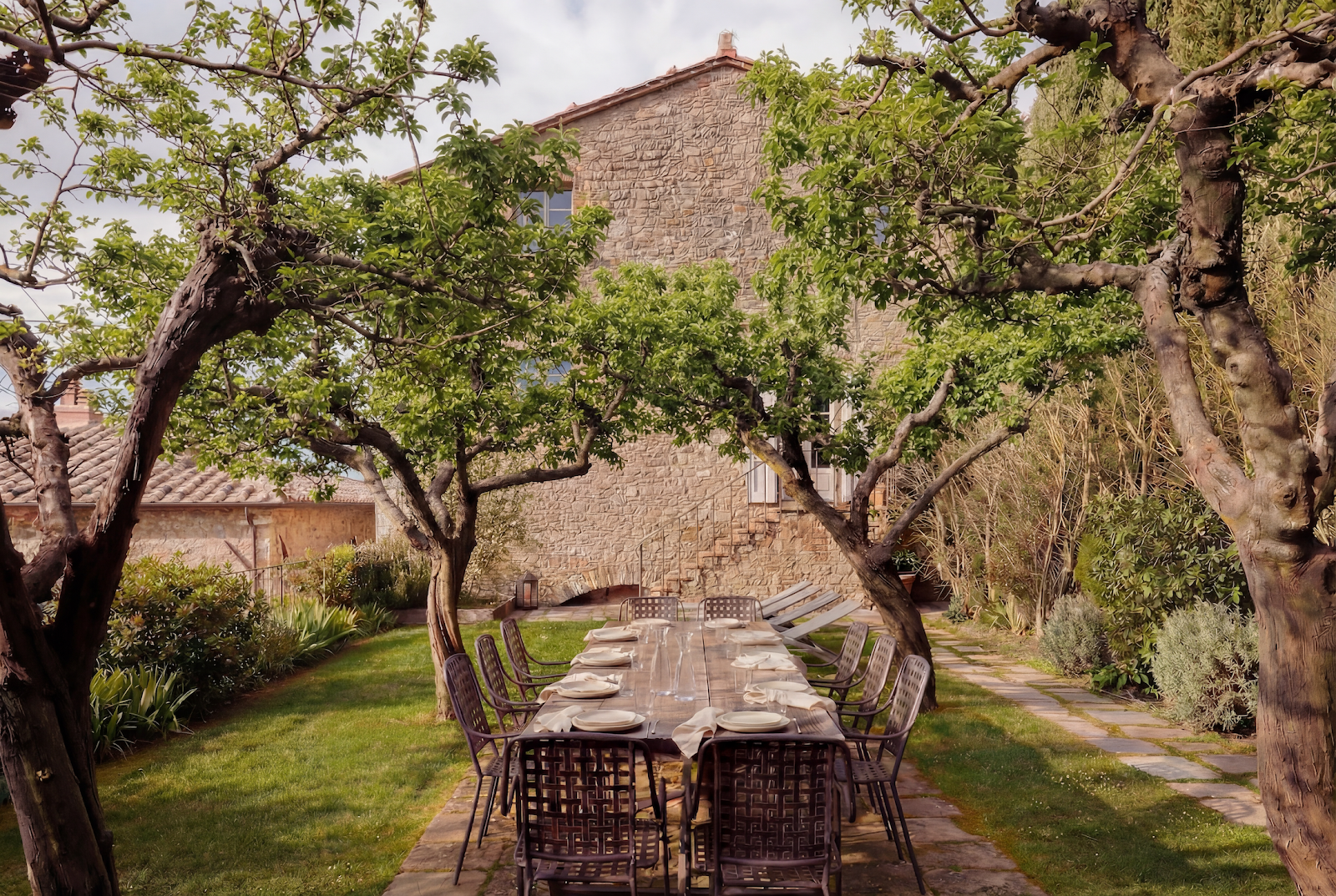
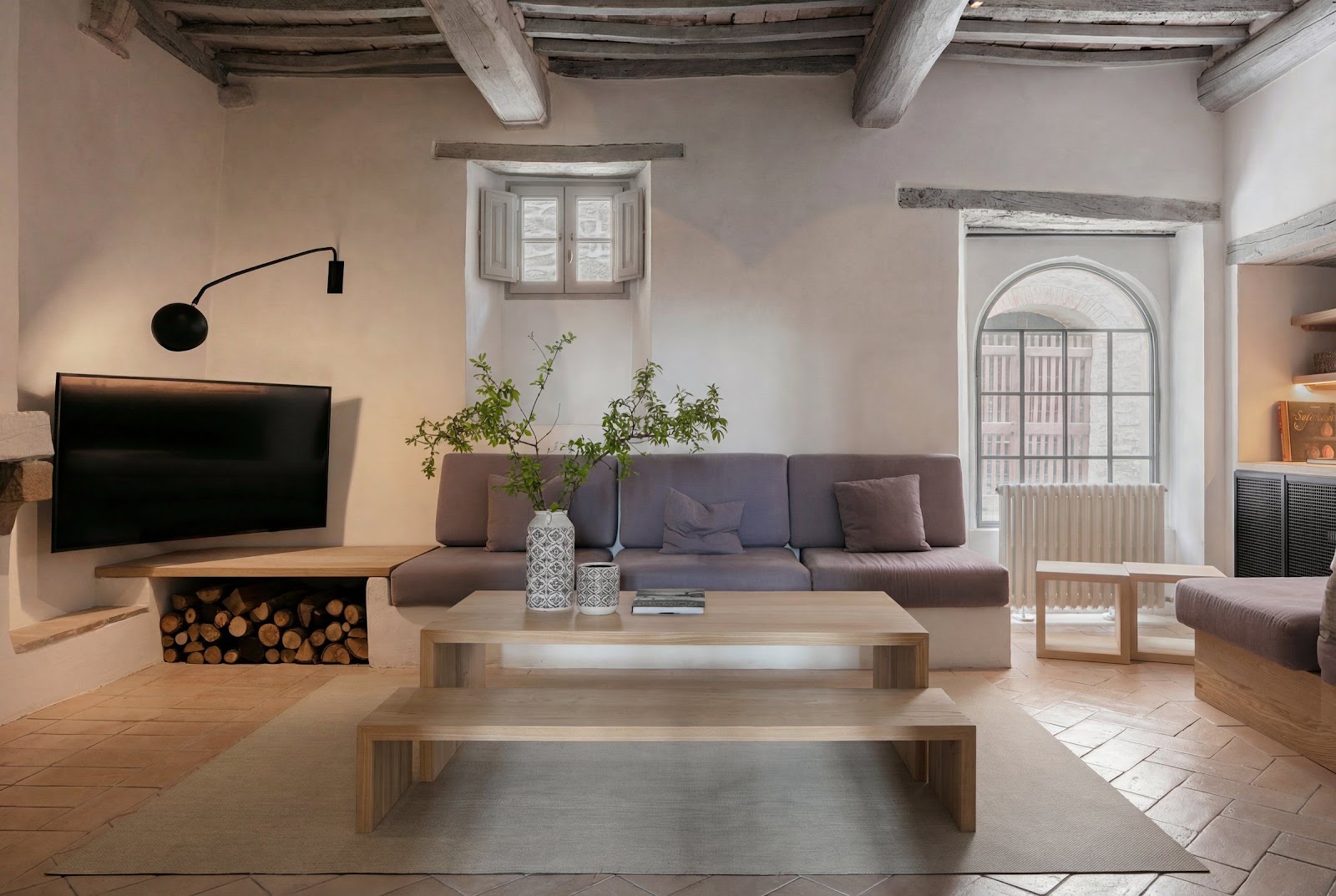
The Florence apartment has two bedrooms and two and a half bathrooms, is professionally decorated and fully furnished, and includes lockable owner storage, high-speed internet, a kitchen island and smart televisions. It is pet-friendly and set up for children. The second home sits in the southern Val d’Orcia near Sarteano, in the country below Monte Amiata: roughly 222 square metres over four king bedrooms, each ensuite, with a private courtyard, a wine cellar and long views across the countryside. Montalcino, Siena and Montepulciano are close; Florence and Rome are both within driving distance. The village itself is known for its restaurants and a small spa. The Tuscan portfolio is deliberately small and selective, and we expect it to grow. What is available today is on our homes.
Not on these two homes: both are kept for the owners and their registered guests, so the house is always ready for you and is never a rental.
That suits buyers who want a Tuscan home of their own rather than an income property. If letting matters to you, some of our partners elsewhere allow owners to let unused nights, and we are happy to point you to those homes. Florence has also been steadily restricting new short-let authorisations, so owner-use homes like these are the natural fit here.
You own a real share of the home — an eighth — not a right to use it.
You can sell it, pass it on to your heirs, and it moves with the value of the house; if the house is sold you take your slice of the proceeds. The legal set-up is arranged by our partner for each home and walked through with you before you buy.
Our partner handles it, and day-to-day administration is managed for the co-owners.
That matters more than it sounds. Insurance, utility accounts and local taxes are handled centrally, without collecting eight signatures for every decision. And when you sell, our partner’s resale process handles that too, so you can sell your share without the whole house having to be sold.
Yes, on some purchases: financing is available at up to around seventy per cent loan-to-value through the company’s banking partners, arranged through the home’s legal set-up rather than as a personal Italian mortgage.
Terms are quoted deal by deal. You can also use your own capital or arrange finance with your own lender against other assets. Italian high-street banks lend against whole properties rather than shares, so the company’s route is the one to use — raise it early and we will connect you.
The share passes under your estate like any other asset you own, and which country’s succession law governs it is determined by Regulation (EU) 650/2012, which Italy applies.
The regulation, in force for deaths on or after 17 August 2015, sets the default connecting factor as the deceased’s habitual residence at death, and allows you to elect in your will for the law of your nationality to apply instead — the professio juris. It applies universally, so the law it designates governs even where that is the law of a non-EU state. Denmark and Ireland are not bound by it and the United Kingdom never opted in, but Italian authorities apply it to estates containing Italian assets regardless of where the deceased was from. It settles which succession law applies, not who pays what tax. Italian inheritance tax runs at four per cent for a spouse or child above a €1 million allowance per beneficiary, with higher bands for others. A will that works in both countries keeps it simple for your heirs.
Your home stays yours. The house is not owned by the company — it belongs to you and the other seven owners — so a company failure is a management matter, not a loss of the asset.
A management contract can be terminated and a replacement appointed; the home itself never belonged to the manager. Before you buy, you can see in the documents how the owners would replace the manager, where the operating funds and reserve are held, and how the booking record is kept.
Not usually as standard security — and for the purchase itself you don’t need to, because financing is available on some deals through the company’s banking partners.
Mainstream banks are set up to lend against directly held real estate, listed securities or cash, so a share of a co-owned home is not standard collateral. Some private banks will consider it as part of a wider relationship, case by case. If a share is meant to sit within a wider borrowing plan, raise it with your bank early.
Yes. An Italian tax code — the codice fiscale — is required before you can complete any Italian transaction, including acquiring a share of an Italian home.
It is a simple document and it is free. You can apply at an Italian consulate in your own country, which is what most overseas buyers do, or in person at an office of the Italian revenue agency, and it is usually issued the same day on production of a valid passport. The number itself is generated from your name, date and place of birth and sex, so it is stable for life and does not need renewing. Book your consular appointment early in summer. Details and the application form are on the Agenzia delle Entrate website. Your adviser or the company will usually help arrange it.
IMU is the Italian municipal property tax. It falls on owners rather than occupiers, it applies to second homes, and it is levied by the comune in which the house sits, which is why the burden varies from one Tuscan municipality to the next. It is paid in two instalments each year, an advance due by 16 June and the balance by 16 December. TARI, the waste collection charge, works differently: it normally falls on whoever occupies a property, but where there is no tenant it lands on the owner, which is the position here. Both are handled by our partner. That is one of the quieter benefits of the arrangement — no owner is personally filing Italian municipal tax returns from abroad.
The taxes due on buying your share are set out in writing for the specific home before you commit.
For context, a direct second-home purchase in Italy attracts registration tax at nine per cent — charged on the cadastral value where the prezzo-valore mechanism applies — or VAT at ten per cent when buying from a developer, plus fixed cadastral and mortgage taxes and notary fees, commonly reaching ten to fifteen per cent of the price all in. Your own country may also ask you to report the holding, which your adviser can confirm.
It is simply the company’s pricing convention — the house, its costs and its eventual sale proceeds are all euro-denominated Italian real estate.
For a euro-based buyer, the one practical step is managing the exchange rate: you convert euros to dollars to buy, so a currency specialist can fix the rate forward once the price is agreed rather than converting on the day. The euro was trading at roughly $1.16 in mid-August 2026. Your ongoing costs are incurred in euro, so the dollar figure is only the entry point.
You can sell after a minimum holding period — typically twelve months, or sooner once every share in the home has been sold — at the asking price you set. Your co-owners get the first chance to buy at your price; if they pass, it goes on the open market. A sale commission applies.
Our partner’s resale process handles the sale, so you sell your share without the whole house having to be sold. Hundreds of shares in homes like these have already been resold — in just over three months on average, and nearly three in four for more than the owner paid. As with any home, a well-priced share moves fastest.
Your share moves with the value of the house. Tuscan asking prices sat at around €2,500 to €2,700 per square metre across the region in mid-2026, up something under four per cent on the year, with the Florence historic centre and the Val d’Orcia trading at multiples of that average.
Above all, a share gives you around six weeks a year in a beautiful, fully managed Tuscan home for a fraction of the cost of buying it outright — and you benefit when the home rises in value.
A sale commission applies when a share changes hands: it is calculated on the sale price and deducted from your proceeds at completion.
The rate is set per home and included in the documents you receive before you buy, alongside the minimum holding period and how your co-owners get the first chance to buy. A commission on sale is standard for this kind of home, just as an agent’s fee is when you sell a whole house.
These two Tuscan homes are kept for the owners’ own use and that of their registered guests, so they are not let and do not produce income.
That is the point of them: a home that is always yours when you arrive. If rental income matters to you, some of our partners elsewhere allow owners to let unused nights, and we are happy to show you those homes. The case for these two rests on wonderful use and on the value of the home itself.
Late April to mid-June and September to early November are the two best stretches of the Tuscan year, and a share is one of the few forms of ownership that can actually reach them.
Spring gives you the countryside at its greenest, empty hill roads and museums you can walk into. Autumn gives you the vendemmia from late August through September, the olive harvest and the first peppery olio nuovo from late October, and white truffle from mid-October into November. July and August bring long, hot days and the festive Ferragosto fortnight around 15 August, when Italy itself goes on holiday. Winter is mild, luminous and wonderfully quiet; many rural restaurants take a break between January and Easter, which makes it a lovely season for Florence and the thermal pools. Because roughly six weeks need not be taken in one block, you can distribute them across the shoulder seasons rather than defaulting to August. Spend your guaranteed date on whichever period you actually care about. Visit Tuscany lists seasonal events.
Florence Peretola and Pisa Galileo Galilei are the region’s two airports; for long-haul passengers the practical route is a European hub, or a high-speed train up from Rome or across from Milan.
- United Kingdom: British Airways serves Florence from Heathrow and London City, with Vueling from Gatwick on a seasonal basis; easyJet and Ryanair fly to Pisa from London, Bristol, Manchester and Edinburgh.
- Germany: Florence has direct links from Munich and Frankfurt with Lufthansa and Air Dolomiti, plus seasonal services to Düsseldorf with Eurowings and to Berlin and Hamburg with Volotea; Pisa is served from several German cities by Eurowings and Ryanair.
- United States: you connect through a European hub, or land at Rome Fiumicino or Milan Malpensa and take the train. Fastest services reach Florence from Rome in about an hour and a half and from Milan in about an hour and three-quarters, many times a day.
Routes change seasonally. Check current schedules before building a trip around one.
For the Florence apartment, no — you are better off without one. For the Val d’Orcia house, yes, effectively essential.
Florence’s historic centre is a restricted traffic zone: the ZTL operates roughly from 07:30 to 20:00 on weekdays and until mid-afternoon on Saturdays, is open on Sundays, and extends into the small hours from Thursday to Saturday between April and early October. Cameras read every plate, and the fines reach you at home months later. Arrive instead on the T2 tram, which runs from the airport to Santa Maria Novella in about twenty minutes. The Val d’Orcia is the opposite case: the nearest station, Chiusi-Chianciano Terme, is some eighteen kilometres away, and everything worth seeing — Pienza, Montalcino, Montepulciano, the thermal pools — needs a car. On licences: EU and UK photocard licences are accepted, while a US licence should be accompanied by an International Driving Permit obtained before you travel.
The Florence apartment is pet-friendly; check the house rules for each specific home before you book, as policies are set per property.
The paperwork matters more than the policy. Pets travelling within the EU need a microchip, an EU pet passport and a rabies vaccination administered at least twenty-one days before the first journey. For owners resident in Great Britain the position changed on 22 April 2026: an EU pet passport held by a GB resident is no longer valid for journeys from Great Britain into the EU, and you now need an Animal Health Certificate issued by an authorised vet for each trip. It is valid for ten days for entry to the EU, then for six months of onward travel within the EU and for re-entry to Great Britain, and dogs need tapeworm treatment one to five days before re-entering the UK. Your vet can confirm the current position a month before you travel.
Yes — both Tuscan homes we currently list include lockable owner storage reserved for each share.
It is a small detail that does more than it sounds to separate ownership from renting. The walking boots, the children’s bike helmets, the beach kit, the good corkscrew, a case of wine and the chargers you always forget can stay in Tuscany between visits, which is the difference between arriving with a suitcase and arriving with a car full of equipment. It is generous by the standards of a shared house. If you have a specific and bulky requirement — skis, golf clubs, a cot you would rather not hire — mention it and we will check for you.
Through an app, at any point from two days ahead to twenty-four months ahead, on equal terms with the other seven owners.
There is no ranking by purchase date, no seniority that quietly hands the good weeks to whoever bought first, and no fixed rotating calendar of assigned weeks on these homes. Each share carries one guaranteed high-demand date a year, claimed outright rather than competed for. Beyond your allocation you can take additional short-notice stays on dates nobody has claimed, which is where much of the spontaneous use comes from. In practice most owners work to a simple rhythm: place the guaranteed date first, on the period you genuinely care about; book the two or three big trips early in the year; and leave a fortnight’s worth of nights unbooked for the Thursday when the house is free next week and the flights are cheap. Easter is popular with everybody, so it is worth planning early.
Also Explore
Get in Touch
Speak to an expert
Tell us what you're looking for and we'll be in touch.