Owning a Paris apartment as an American
Own a piece of a managed Paris apartment from $210,000: your own home in the Marais, Saint-Germain or the 7th for four to six weeks a year, ready when you land. 3 apartments are listed today.
The Paris apartments listed today
| Neighborhood | Size | Bedrooms | Share | Price |
|---|---|---|---|---|
| Le Marais (4th) | 58 m² (624 sq ft) | 2 | 1/13, about 4 weeks a year | $210,000 |
| Saint-Germain-des-Prés (6th) | — | 3 | 1/13, about 4 weeks a year | $334,000 (€299,000) |
| 7th arrondissement | 130 m² (1,399 sq ft) | 2 | 1/8, about 6 weeks a year | $699,000 |
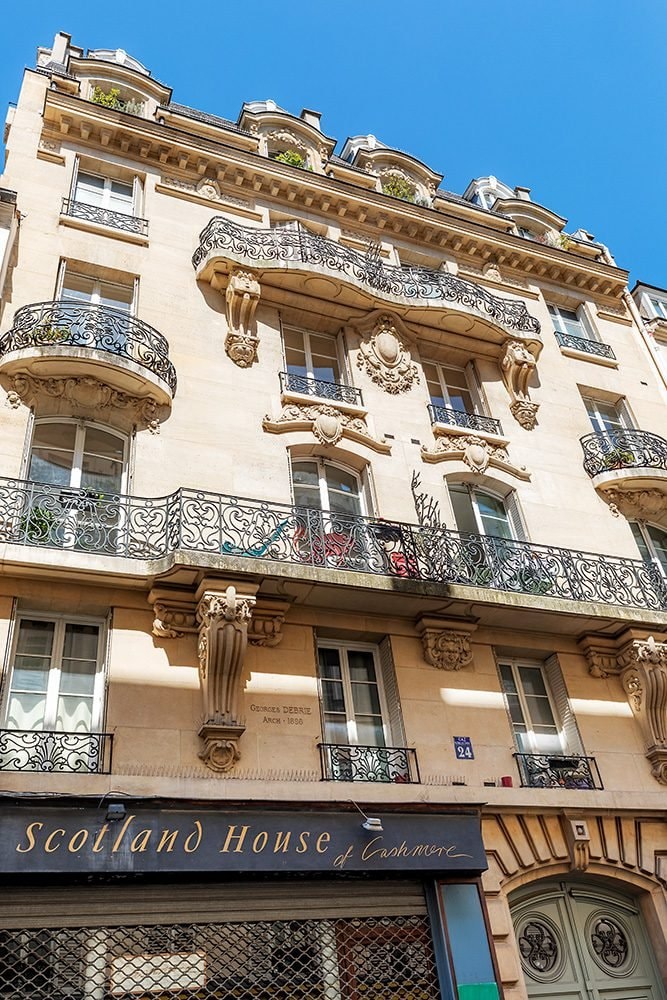

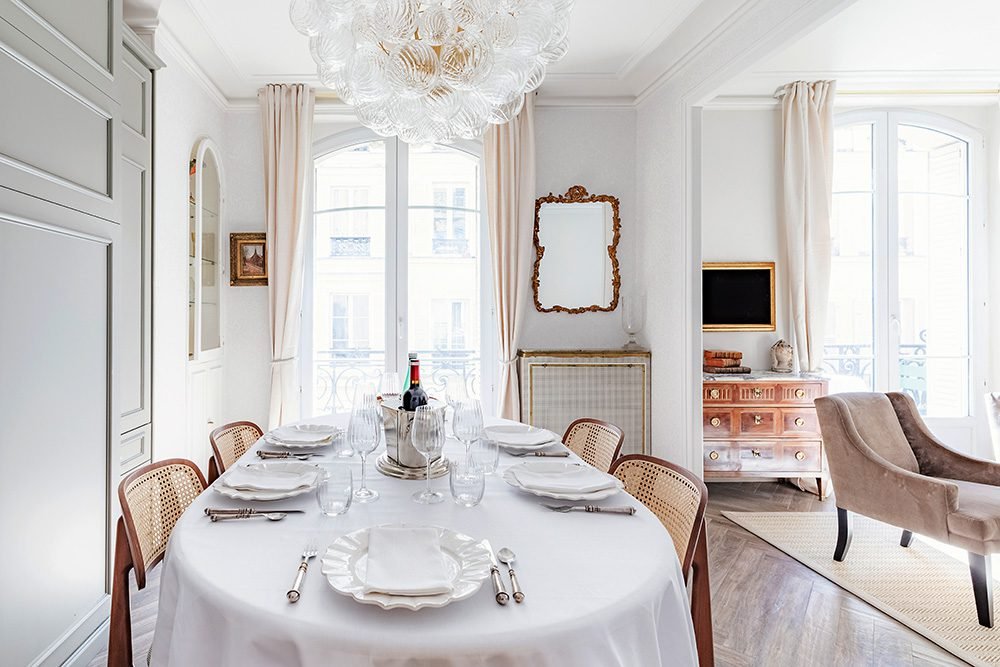
Paris 4th, France — Apartment Sleeping 4, With Balcony in the Marais
$210,000
$210,000 · 1/13, about 4 weeks a year

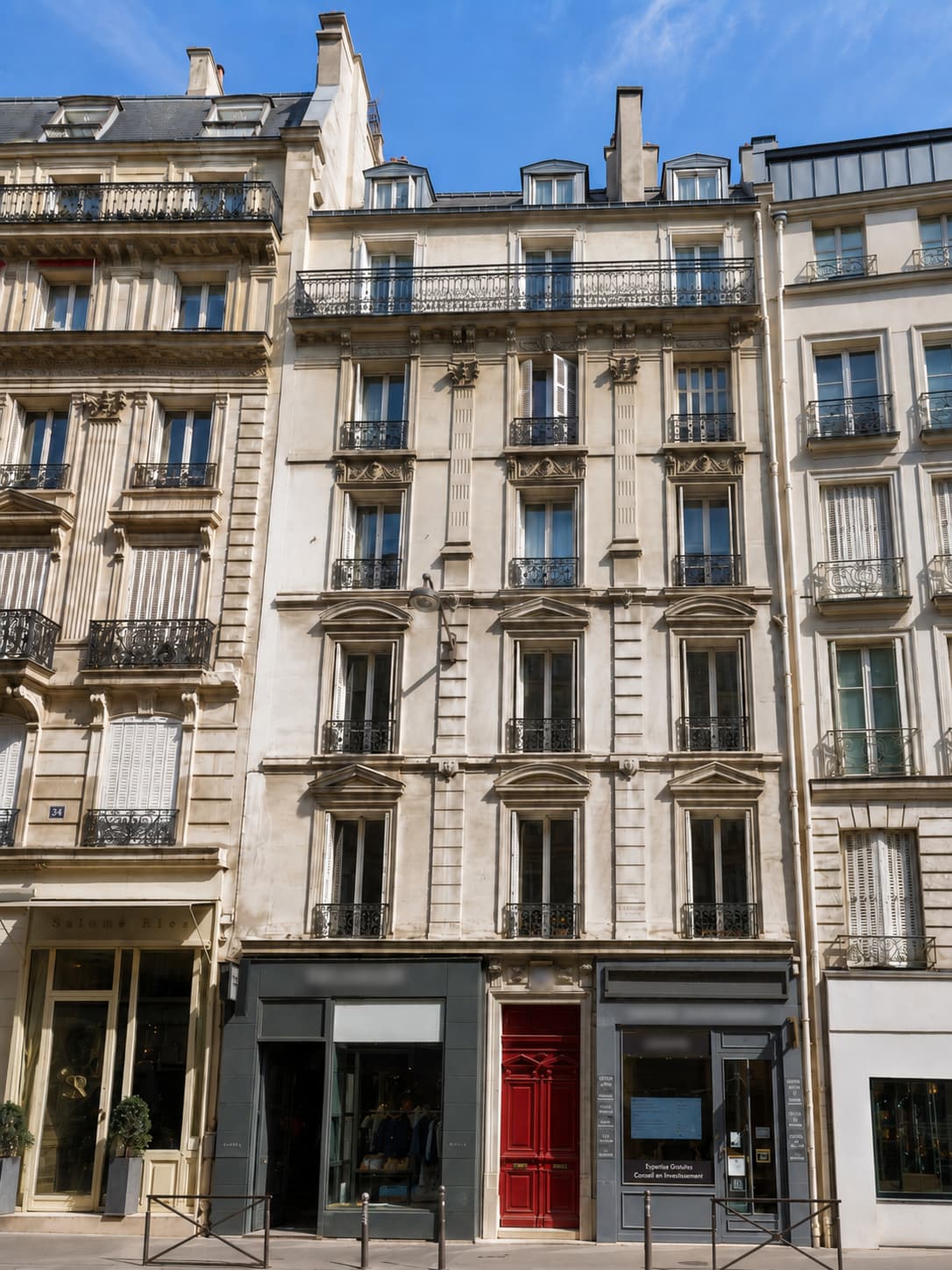

Paris 6th, France — 3-Bed Apartment in Saint-Germain-des-Prés
€299,000
$334,000 (€299,000) · 1/13, about 4 weeks a year


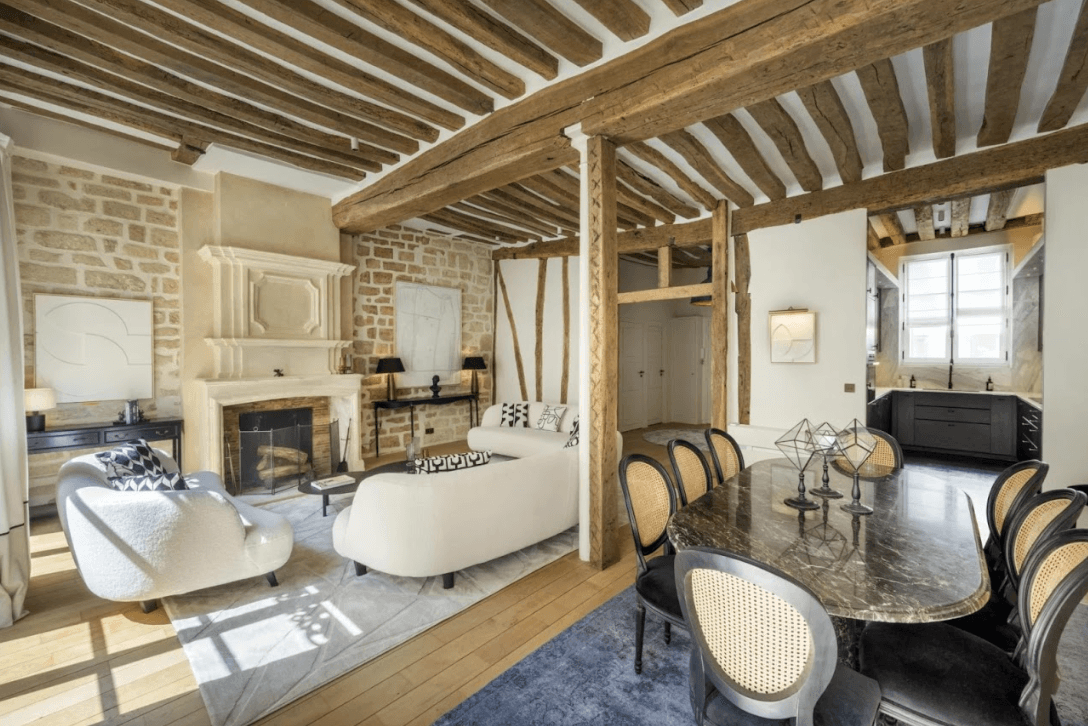
7th Arrondissement, Paris, France — 2-Bed Apartment With Fireplace
$699,000
$699,000 · 1/8, about 6 weeks a year
Why Americans co-own in Paris
Most Americans who love Paris go back every year, and every year they start again: a hotel room, a rental that never quite feels like home, a suitcase that never gets unpacked. Owning a piece of an apartment changes that. It is furnished, cared for by a local team, and waiting for you each visit, with your coffee, your books and your favorite corner café two doors down.
Nonstop flights from New York take about seven hours, and more than a dozen US cities fly nonstop to Paris. Spring in the Tuileries, long summer evenings on the Seine, fall in the Luxembourg Gardens, the lights of the Champs-Élysées at Christmas: every season has something to give, and owners use their weeks across the year.
The neighborhoods owners choose
The Marais (3rd and 4th) is the Paris of medieval lanes, the Place des Vosges, galleries, falafel on the Rue des Rosiers and some of the city's best small museums. It is lively, walkable and right in the center.
Saint-Germain-des-Prés (6th) is literary Paris: Café de Flore and Les Deux Magots, the Luxembourg Gardens, antique dealers, bookshops and the best pastry in the city. It is also where Paris apartments tend to hold their value best.
The 7th is elegant and residential, between the Eiffel Tower, Les Invalides and the Musée d'Orsay, with the Rue Cler market street and Le Bon Marché close by.
How your weeks work
A Paris apartment is usually shared by eight to thirteen owners. A 1/13 share gives you about four weeks a year and a 1/8 share about six. Weeks are set through a fair calendar, typically a mix of fixed and rotating weeks so every owner gets their turn at spring and the holidays, and owners can swap weeks with each other.
Between your stays the team that manages the apartment cleans, maintains and looks after everything, so you arrive to a ready home and leave without closing it up.
Buying from the US
Some Paris apartments are priced in dollars and others in euros; this page shows both. You own a piece of the apartment itself, alongside a small group of other owners, and the team that manages each home walks you through how ownership is set up and the closing, much of which can be done from home.
US passport holders can spend up to 90 days in any 180 in Europe's Schengen area, so four to six weeks a year in Paris fits comfortably, with room for other European trips.
As a US taxpayer you report income from property abroad and may need to list foreign holdings, as you would for any home overseas. Many owners ask a cross-border adviser to confirm what applies to them.
Can Americans buy property in France?
Yes. French law places no restrictions on foreigners buying property in France, whether they buy a home directly or through a company that holds it. An American buys a Paris apartment, or a share of one, on the same footing as anyone else.
What the French side does look at is who you are and where the money comes from. For a buyer from abroad the notaire examines nationality, place of residence and marital status, because they can affect how the purchase is set up, and checks the source of the funds, as every notaire must for every sale.
Owning a home in France does not change how long you can stay there. The visit rules further down this page apply to owners and visitors alike, and four to six weeks a year sits well inside them.
How the purchase works
The notaire. In France the sale of a property is signed before a notaire, a public official who checks the title, holds the deposit in escrow and has the sale registered. The notaire is responsible for the security of the transaction to both the buyer and the seller.
Your share. Each co-owned Paris apartment is bought once, in full, and then held for its owners under an ownership agreement written for that home. You buy your share of the apartment under that agreement, and it is yours to sell or to leave to your family. Depending on how a particular home is held, your own purchase may or may not need a separate signing before a notaire; the team that manages the apartment tells you which, and sends you the documents in writing before you commit.
Signing from the US. You do not have to fly to Paris to close. Where a document has to be signed before a French notaire, you can give someone a notarised power of attorney (a procuration) to sign it on your behalf. French notaires can take that power of attorney remotely, over a secure video link with an electronic signature, a procedure made permanent in France in November 2020; it is offered at the notaire's discretion and is designed for people who cannot be there in person, including those living abroad.
Your own adviser. Ask a lawyer or notaire of your own to read the ownership agreement before you sign, as you would for any home.
Staying in France: the 90/180 rule, EES and ETIAS
As an American you can visit France, and the rest of the Schengen area, without a visa for short stays of up to 90 days in any 180-day period. The allowance covers the Schengen area as a whole, so a spring week in Paris and a summer trip to Italy draw on the same 90 days. Four to six weeks a year in your apartment fits comfortably inside it, whether you come once or several times.
EES. The EU's Entry/Exit System has been fully operational across the Schengen countries since 10 April 2026. At the border your passport details are recorded, your facial image and fingerprints are collected, and your entry and exit dates and locations are logged. It applies to every non-EU visitor on a short stay, Americans included.
ETIAS. ETIAS is a travel authorization that visa-free visitors, Americans included, will need before travelling to the Schengen area. When we checked on 23 October 2026, the European Commission's published timeline said ETIAS is "scheduled to start in the last quarter of 2026", with the exact date to be announced in advance. Once it starts, one application covers you for three years or until your passport expires, whichever comes first, for a one-time fee. Until then there is nothing to apply for; check the EU's official ETIAS site, travel-europe.europa.eu/etias, before you book.
Can you rent out your weeks?
The City of Paris sets clear rules for short-term lets. Since 1 January 2025 a Parisian can rent out their main home to visitors for at most 90 days a year, down from 120, with a registration number shown on every listing. A home that is not someone's main residence can be let to visitors only after the City authorizes a change of use, which comes with a "compensation" requirement: turning other premises into housing.
The co-owned apartments on this page are not rented out. Their ownership agreements keep each home for its owners and their guests, so you cannot let your weeks to paying visitors, but you can lend them to family and friends. That is a large part of their charm: the only people who ever stay in your Paris apartment are its owners and the people they invite.
US tax touchpoints
This is a map of where US tax rules touch a home in France, not tax advice.
The tax treaty. The United States and France have an income tax treaty, most recently amended by a protocol that entered into force on 23 December 2009. It is the starting point for how the two countries treat income and gains that cross the Atlantic.
FBAR. The FBAR is a report of foreign financial accounts, such as bank and brokerage accounts abroad, which US persons file when those accounts together pass the IRS threshold. Real estate is not a financial account for FBAR purposes; a French bank account you open alongside the home can be.
FATCA (Form 8938). Form 8938 covers specified foreign financial assets. The IRS says foreign real estate is not one of them when you hold it directly, while an interest in a foreign entity that holds property can be reportable. How a particular home is held therefore matters.
Because the answer turns on how each home is held and on your own situation, speak to a cross-border tax adviser.
Questions buyers ask
How much does it cost to own a piece of a Paris apartment?
Shares in the Paris apartments listed today start from $210,000. On top of the price you pay the closing costs, and while you own you pay your share of the apartment's running costs, split between the owners. We send each home's figures on request.
Can an American buy property in Paris?
Yes. French law places no restrictions on foreigners buying property in France, so an American buys a Paris apartment, or a share of one, on the same footing as anyone else.
Do I have to be in France to sign?
Not necessarily. Where a document must be signed before a French notaire, you can give someone a notarised power of attorney to sign for you, and French notaires can take that power of attorney remotely over a secure video link, at their discretion.
How long can I stay in my Paris apartment?
Americans can spend up to 90 days in any 180-day period in the Schengen area without a visa, and that applies to owners too. Four to six weeks a year in Paris fits comfortably, with room for other European trips.
Do I need ETIAS?
Not yet. ETIAS is a travel authorization that visa-free visitors, including Americans, will need once it starts. The European Commission's published timeline says it is scheduled to start in the last quarter of 2026, with the exact date announced in advance; check travel-europe.europa.eu/etias before you travel.
Can I rent out my weeks?
No. The Paris apartments listed here are kept for their owners and their guests, and Paris strictly limits short-term rentals of homes that are not someone's main residence. You can lend your weeks to family and friends.
Do FBAR and FATCA apply to my Paris apartment?
They apply to foreign financial accounts and assets rather than to a home you hold directly: the IRS says real estate is not a financial account for FBAR, and directly held foreign real estate is not reported on Form 8938. How a home is held can change that, so speak to a cross-border tax adviser.
Is this a timeshare?
No. You own a piece of the apartment itself with a small group of owners. Your share can appreciate in value with Paris property, and you can sell it or leave it to your family.
How do I get my weeks?
Through a shared calendar set well ahead, with fixed and rotating weeks so everyone gets their turn at the best seasons. Owners can swap weeks with each other.
All Paris homes →Buying from the UK? Read the London edition →
Sources
Facts about France and the United States on this page come from these official and professional sources, checked on 23 October 2026. Rules change, so confirm anything that matters to you with the source or your adviser.
- DLA Piper REALWORLD, Real estate investment in France (2025): foreign buyers, the notaire, share deals
- Notaires de France, Purchase in France by a non-resident
- Notaires de France, La procuration notariée à distance (remote notarised power of attorney)
- European Commission, Migration and Home Affairs: Main differences between the EES and ETIAS (28 April 2026)
- European External Action Service, Information on ETIAS
- Ville de Paris, La location meublée touristique : les règles à suivre
- Ville de Paris, Location limitée à 90 jours
- US Department of the Treasury, protocol amending the income tax treaty with France enters into force (23 December 2009)
- IRS, Report of Foreign Bank and Financial Accounts (FBAR)
- IRS International Practice Unit, FinCEN Form 114 (FBAR): what is not a financial account
- IRS, Basic questions and answers on Form 8938