Market Insights
The Holiday Home Boom and Fractional Ownership
The global holiday home market is surging toward $317 billion. Discover why fractional ownership is the smartest property investment strategy for luxury buyers in 2026.
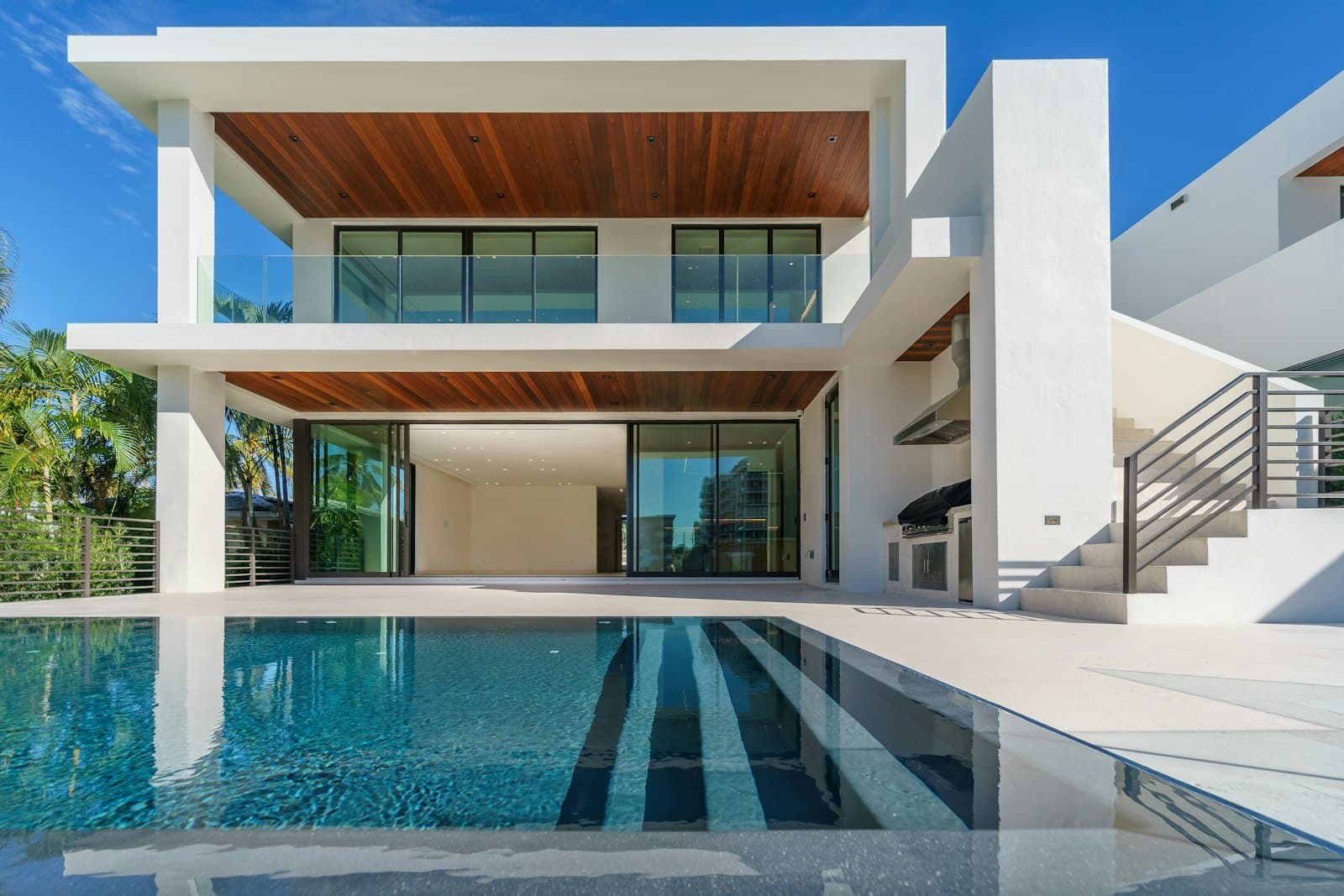
The global holiday home market was valued at $87.5 billion in 2024 and is on track to reach $317.76 billion by 2033, growing at a compound annual rate of nearly 14%. Behind these eye-catching numbers is a profound shift in how affluent buyers think about second-home ownership. The old model — sinking seven figures into a single property that sits empty for most of the year — is rapidly giving way to something far more strategic. Welcome to the era of fractional ownership explained, where investors access luxury real estate across multiple markets for a fraction of the traditional cost.
In 2026, the most sophisticated property buyers are no longer measuring success by how many homes they own outright. Instead, they are measuring it by the quality, breadth, and flexibility of the lifestyle those properties enable. Fractional ownership — owning a real share of a fully managed luxury property — is at the heart of this transformation. It is not a compromise; it is an upgrade. And the data is increasingly clear: for the vast majority of second-home buyers, it is also the smartest financial move they can make.
Whether you are considering a co-ownership villa in the French Alps, a beachfront property on the Costa del Sol, or a mountain retreat in Colorado, this guide explains why fractional property investment has become the defining strategy of the 2026 luxury market — and how you can take advantage of it.
Market Context
The Holiday Home Market Is Booming — But the Rules Have Changed
The numbers tell a compelling story. According to Verified Market Reports, the global holiday home sector is growing at 13.97% CAGR through 2033, fuelled by remote work flexibility, rising affluence in emerging markets, and a generational shift toward experiential living. In the United States alone, homes sold for over $1 million increased by 5.2% in the first half of 2024, while the median price for high-end properties surged by 14.2%. Luxury real estate is not slowing down — it is accelerating.
But here is the crucial nuance: while demand is surging, the economics of full second-home ownership are becoming increasingly punishing. A luxury villa on Lake Como or a ski chalet in the French Alps might appreciate beautifully on paper, but the reality of maintaining, managing, and financing a property you use for just a few weeks a year is hard to justify. Insurance, property taxes, maintenance, cleaning, garden upkeep, local compliance — these costs compound relentlessly whether you are there or not.
This is precisely why the Knight Frank Wealth Report 2025 found that high-net-worth individuals are increasingly looking to broaden their real estate exposure through more capital-efficient structures. Family offices surveyed by Knight Frank are actively seeking real estate models that offer both growth potential and wealth preservation without the operational burden of direct full ownership. Fractional ownership fits this brief perfectly.
$87.5B
Global holiday home market value in 2024, growing at 14% CAGR
16%
Annual growth rate of Europe’s fractional property market
45 days
Approximate annual usage per 1/8th co-ownership share
Resale
Handled through our partner’s resale process — no need to sell the whole house
The Fractional Advantage
Why Fractional Ownership Outperforms Full Second-Home Buying
The maths behind fractional ownership is remarkably persuasive. When you purchase a co-ownership property, you own a real share of the home — typically one-eighth — not a right to use it. This is genuine property ownership: your share appreciates with the market, you can sell it, and you hold a legal stake in a real, tangible asset. It is fundamentally different from a timeshare, which offers usage rights but no real equity.
Consider the economics. A luxury holiday home in a prime European destination might cost from around €800,000 to well over €2 million. A one-eighth share in the same calibre of property typically starts at a fraction of the whole-home price and rarely exceeds €250,000. That means the capital you would have locked into a single property can instead give you access to shares in multiple luxury homes across different markets — the Alps for winter skiing, the Mediterranean coast for summer, and perhaps a city apartment for cultural weekends.
The running costs tell an equally compelling story. All maintenance, taxes, insurance, and management fees are split proportionately among co-owners. A one-eighth owner pays one-eighth of everything. There is no scrambling to find reliable cleaners, no surprise repair bills eating into your holiday budget, and no property sitting empty and costing money for eleven months of the year. Every aspect of the property is fully managed — from booking your stay to preparing your personal belongings before you arrive.
And then there is the lifestyle return. Each one-eighth owner receives approximately 45 days of usage per year — which, for most second-home buyers, is significantly more than they would actually use a fully owned property. Booking windows depend on the home and our partner. Just seamless, luxury living on your terms.
Luxury Holiday Home Price Growth by Region (2024–2026)
US Mountain Resorts
French Alps
Spanish Costas
Italian Lakes
Balearic Islands
Portugal (Algarve)
Market Growth
Europe’s Fractional Property Market Reaches Critical Mass
Europe’s fractional property investing market reached $650 million in 2024 and is growing at an average of 16% per year, according to industry data. This is no longer a niche concept — it is a mainstream investment category that is reshaping how luxury real estate is bought and sold across the continent.
The growth is being driven by several converging forces. First, rising property prices in prime locations have pushed full ownership beyond the comfortable reach of even affluent buyers. Second, the remote work revolution has created a new class of location-flexible professionals who want access to multiple destinations rather than being tied to one. And third, a generational mindset shift — particularly visible among buyers aged 40 to 55 — favours access and experience over pure accumulation.
The most popular European destinations for fractional ownership in Europe reflect this perfectly. The French Alps offer world-class skiing and summer hiking. The Costa del Sol and Balearic Islands deliver Mediterranean lifestyle at its finest. Italian Lakes properties combine cultural richness with breathtaking scenery. And emerging markets like Portugal and Croatia are attracting forward-thinking buyers who see both lifestyle value and strong appreciation potential.
In the United States, Colorado ski properties remain perennially popular, while California wine country, Florida beachfront, and Park City, Utah attract buyers seeking diverse lifestyle experiences through fractional shares.
“The most sophisticated buyers in 2026 are no longer asking how much property they can own — they are asking how much life their property capital can unlock.”
Financial Analysis
The Investment Case: Returns, Rental Income, and Resale Liquidity
Beyond lifestyle benefits, fractional property ownership presents a strong investment case. Luxury properties in prime markets have historically appreciated at 5–8% annually, and as a real owner, your share benefits directly from this appreciation. Over a 10- to 20-year holding period, the equity compounding can be substantial — particularly when you factor in the relatively modest initial outlay.
Many co-ownership properties also generate rental income. Depending on location and local regulations, properties can be rented out as holiday homes during periods when no co-owner is using them. This rental operation is fully managed — owners do not need to lift a finger. Income is distributed proportionate to each owner’s share, providing a passive revenue stream that helps offset running costs.
Perhaps most importantly for investors, fractional shares offer a simpler exit than full properties. When you want to exit, the management company first offers your share to existing co-owners in the property — who often jump at the chance to increase their stake — and then lists it for sale to new buyers. Resale is handled through our partner’s resale process, without you having to sell the whole house. For investors who value flexibility, this is a real advantage.
The Savills Branded Residences Report 2025/2026 notes that professionally managed luxury residences are outperforming unmanaged stock, with buyers willing to pay a premium for turnkey quality and hassle-free ownership. Co-ownership properties, which are invariably fully renovated, designer-furnished, and professionally managed, sit squarely in this high-demand segment.
| Investment Factor | Full Second Home | Fractional Co-Ownership |
|---|---|---|
| Typical Entry Cost | From around €500,000–€2M+ | A fraction of the whole price |
| Annual Usage | Unlimited (but avg. 3–5 weeks used) | ~45 days per 1/8th share |
| Management | Owner-arranged, often unreliable | Fully professional, hands-free |
| Running Costs | 100% borne by single owner | Split proportionately (1/8th each) |
| Resale Liquidity | 6–12+ months typical sale time | Through our partner’s resale process |
| Portfolio Diversification | Capital locked in one asset | Multiple shares across markets |
| Rental Income | Self-managed or agency fees | Fully managed, income shared |
Strategy
Building a Multi-Market Fractional Portfolio: A Practical Framework
One of the most exciting developments in fractional ownership is the emergence of the multi-market portfolio strategy. Rather than concentrating capital in a single property, savvy investors are building diversified portfolios of fractional shares across different geographies, climates, and property types. This approach delivers three key advantages: risk diversification, lifestyle diversification, and capital efficiency.
Here is how a practical multi-market portfolio might look. An investor allocates from around €300,000 to €500,000 — roughly the cost of a modest full second home in a secondary European market — across three or four co-ownership shares. A ski chalet in the Alps provides winter access and strong rental demand during peak season. A beachfront villa in Spain delivers summer lifestyle and year-round Mediterranean appeal. A city apartment in Paris or a Lake Como retreat adds cultural depth and shoulder-season usage. Each share comes with approximately 45 days of annual usage, meaning the investor has access to over 130 days across three luxury destinations — with full management, zero hassle, and genuine property equity in each.
This diversification also provides a natural hedge against localised market downturns. If one property market cools temporarily, gains in another market may offset the impact. And because each share is independently owned and independently sellable, the investor can rebalance their portfolio over time — exiting one market and entering another as opportunities arise.
2019–2020
The Pre-Pandemic Baseline
Second-home ownership concentrated among ultra-wealthy buyers. Full ownership was the default model, with fractional structures largely unknown outside niche US ski markets.
2020–2021
The Remote Work Catalyst
The pandemic triggered a surge in second-home demand as remote work untethered buyers from city offices. US luxury home sales rose sharply, and European holiday markets saw record interest.
2022–2023
Rising Costs Force a Rethink
Interest rate hikes and inflation made full ownership significantly more expensive. Buyers began actively seeking capital-efficient alternatives, and fractional platforms saw a dramatic increase in enquiries.
2024–2025
Fractional Goes Mainstream
Europe’s fractional market hit $650 million. Established legal frameworks, professional management models, and growing brand awareness brought co-ownership into the mainstream investment conversation.
2026 Onwards
The Multi-Market Portfolio Era
Affluent buyers now routinely build portfolios of fractional shares across multiple markets, treating co-ownership as a core wealth preservation and lifestyle strategy rather than an alternative to full ownership.
Buyer Profile
Who Is Buying — and What They Left Behind
The typical co-ownership buyer is an affluent professional aged 40 to 55, often with significant assets and a clear-eyed view of what they want from a second home. Many have previously owned full second properties and switched to co-ownership after experiencing the frustrations firsthand: the property sitting empty for 90% of the year, the relentless maintenance costs, the difficulty finding reliable local managers, and the enormous capital locked up in a single depreciating-on-a-net-basis asset.
British and American buyers represent a significant portion of the co-ownership buyer community, drawn by the combination of luxury lifestyle access and financial pragmatism. These are not buyers who cannot afford full ownership — they are buyers who have done the calculations and concluded that full ownership simply does not make sense for how they actually live. As one buyer recently put it, the moment they realised they were spending €40,000 a year to maintain a villa they visited for three weeks was the moment they started exploring co-ownership.
Increasingly, first-time luxury property buyers are also entering the market directly through fractional ownership, bypassing full ownership entirely. For a younger generation of affluent professionals, the idea of tying up a million euros in a single holiday property — when the same capital could fund shares in multiple dream destinations — simply does not compute. The fractional model aligns perfectly with a lifestyle-first, capital-smart investment philosophy.
Technology & Management
The Role of Professional Management in Protecting Your Investment
A crucial — and often underappreciated — factor in fractional property investment is the quality of professional management. Every co-ownership property is fully managed: cleaning, maintenance, repairs, local compliance, rental coordination, booking systems, and communication between owners are all handled seamlessly. When you arrive at your property, your personal belongings are taken out of storage and the home is prepared specifically for you. When you leave, everything is taken care of until your next visit.
This management layer does more than provide convenience — it actively protects and enhances your investment. Professionally managed properties maintain higher standards of upkeep, which preserves property values and supports stronger resale prices. They also achieve better rental yields when rented, because guests receive a consistent, high-quality experience that generates positive reviews and repeat bookings.
In 2026, technology is further enhancing the management experience. AI-powered dynamic pricing tools are optimising rental rates based on demand trends, local events, and seasonality, delivering higher net returns for owners. Smart home systems monitor energy usage and maintenance needs in real time. And dedicated booking apps give co-owners complete flexibility to plan their stays with just a few taps. The result is a truly hands-off ownership experience that delivers both lifestyle enjoyment and investment performance.
Looking Ahead
Why 2026 Is the Ideal Year to Start Building Your Fractional Portfolio
Several factors make 2026 a particularly compelling entry point for fractional property investment. European interest rate cuts are improving borrowing conditions and supporting property values. The holiday home market’s 14% annual growth trajectory suggests sustained demand. And the maturation of the fractional ownership sector — with established legal frameworks, proven management models, and growing secondary market liquidity — means buyers today benefit from a far more transparent and secure investment environment than was available even two or three years ago.
At the same time, the best properties in the most desirable locations are not unlimited. Prime luxury villas and chalets in top-tier Alpine resorts, Mediterranean coastal towns, and US ski destinations are subject to the same supply constraints affecting the broader luxury market. Buying a fractional share today locks in current pricing in markets where values have been trending consistently upward.
Whether you are a seasoned property investor looking to optimise your portfolio or a first-time buyer ready to experience luxury co-ownership, the opportunity has never been more accessible — or more financially compelling. With shares starting at a fraction of the whole-home price and a clear buying process that guides you from initial consultation to key handover, the path to smart property investment is remarkably straightforward.
Common Questions
Frequently Asked Questions
Is fractional ownership the same as a timeshare?
No — they are fundamentally different. With fractional co-ownership, you own a real share of the home itself, not a right to use it. Your share appreciates with the market, you can sell it at market price, and you have a genuine legal stake in the asset. Timeshares typically offer only usage rights with no real equity or appreciation.
How much does a fractional property share cost?
Shares on Co-Ownership Property range up to around €2 million for ultra-luxury properties. Most properties fall in the €100,000 to €1 million range, making luxury destinations accessible at a fraction of full ownership cost.
How many days per year can I use my co-ownership property?
Each one-eighth share provides approximately 45 days of usage per year. Booking windows depend on the home and our partner.
What happens when I want to sell my share?
You set the price. Your co-owners get the first chance to buy at that price; if they pass, it goes on the open market. Resale is handled through our partner’s resale process, without you having to sell the whole house.
Who handles maintenance and management?
Everything is fully managed — cleaning, maintenance, repairs, insurance, tax compliance, rental coordination, and booking. When you arrive, your personal belongings are prepared and the home is ready. You never need to coordinate with other co-owners or arrange any services yourself.
Can I earn rental income from my share?
Yes, depending on location and local regulations. Rental is fully managed — you do not need to do anything. Income is shared proportionate to your ownership stake, providing a passive revenue stream that helps offset running costs.
Is fractional ownership a good investment in 2026?
The data is compelling. Luxury properties in prime markets have historically appreciated at 5–8% annually, and the global holiday home market is growing at nearly 14% CAGR. Combined with lower entry costs, professional management, and strong resale liquidity, fractional ownership offers an attractive risk-adjusted return profile for second-home investors.
Start Building Your Fractional Property Portfolio
Whether you are exploring your first co-ownership share or building a multi-market portfolio, our specialists can match you with luxury properties across Europe and the US that fit your lifestyle and investment goals.
Ask David or DylanMore from Co-Ownership Property

Get in Touch
Speak to an expert
Tell us what you're looking for and we'll be in touch.