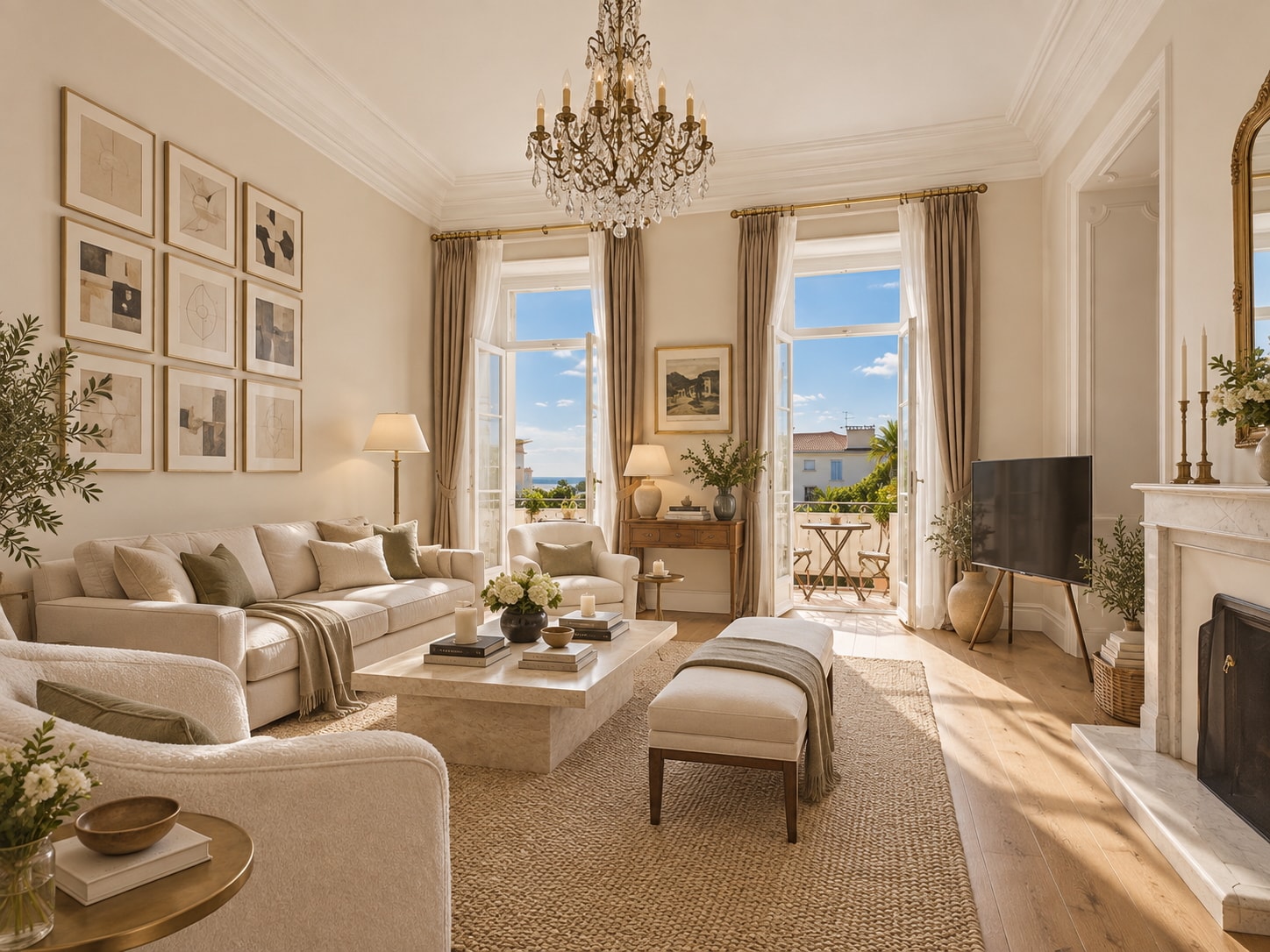
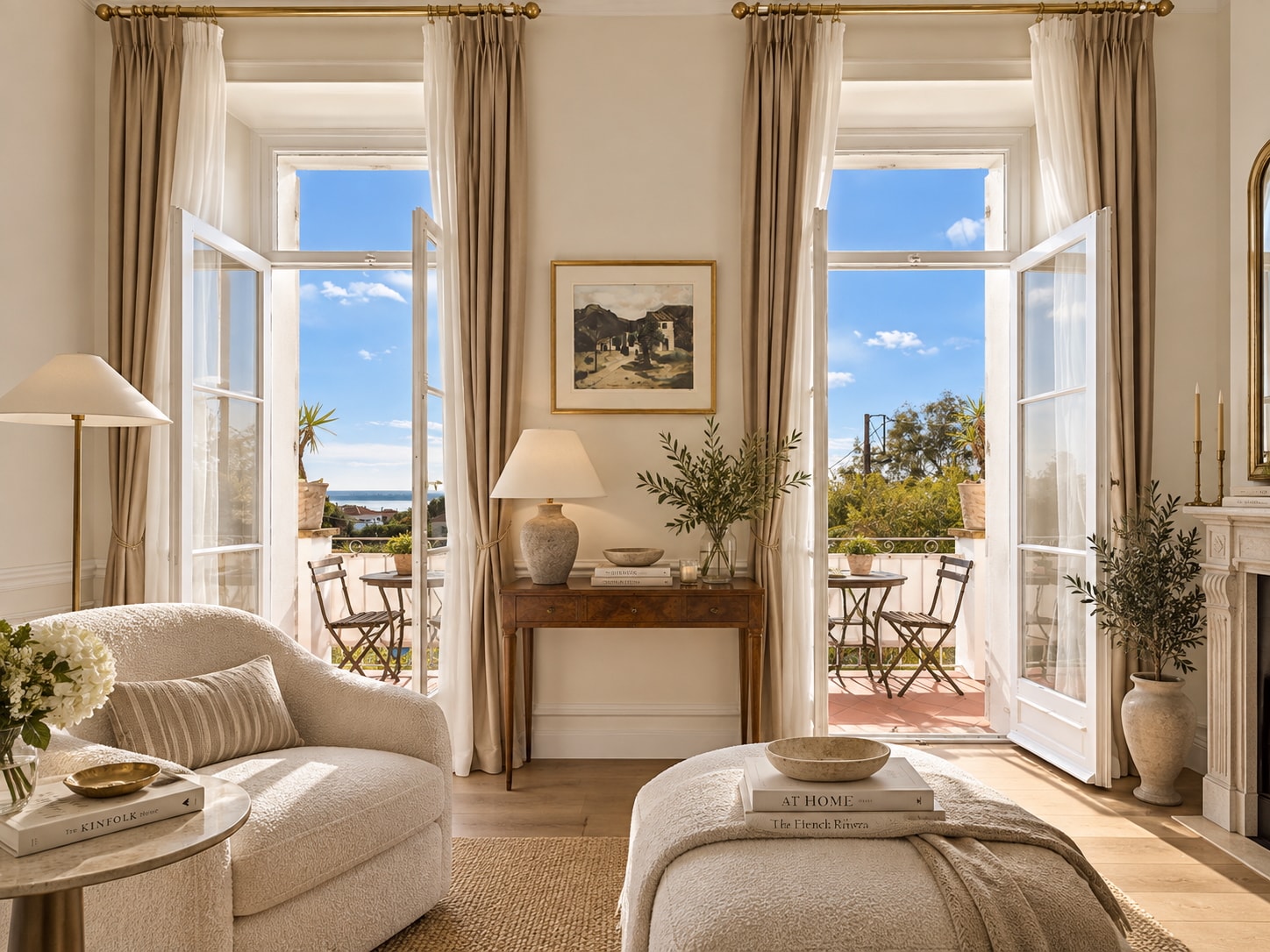
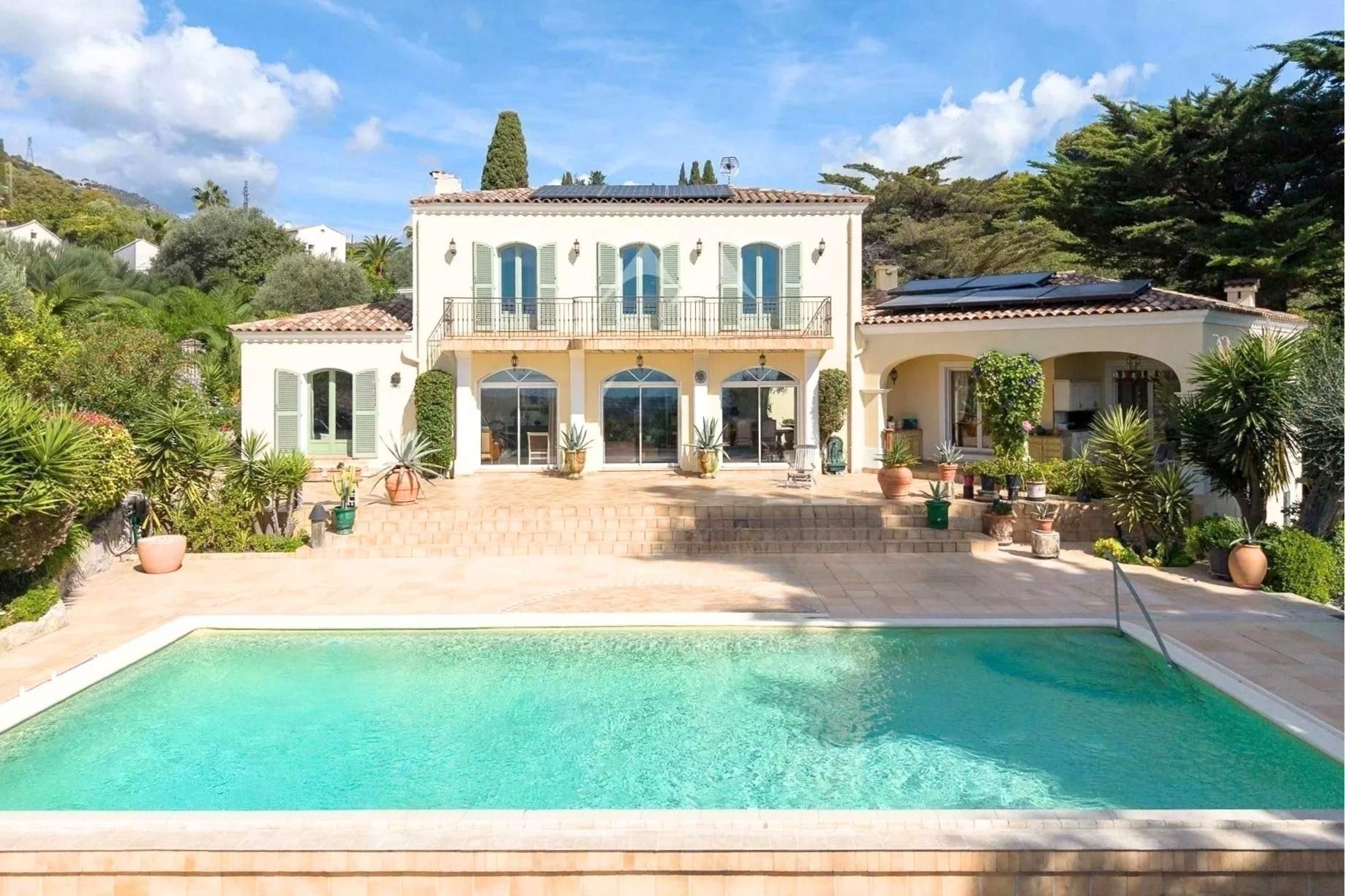
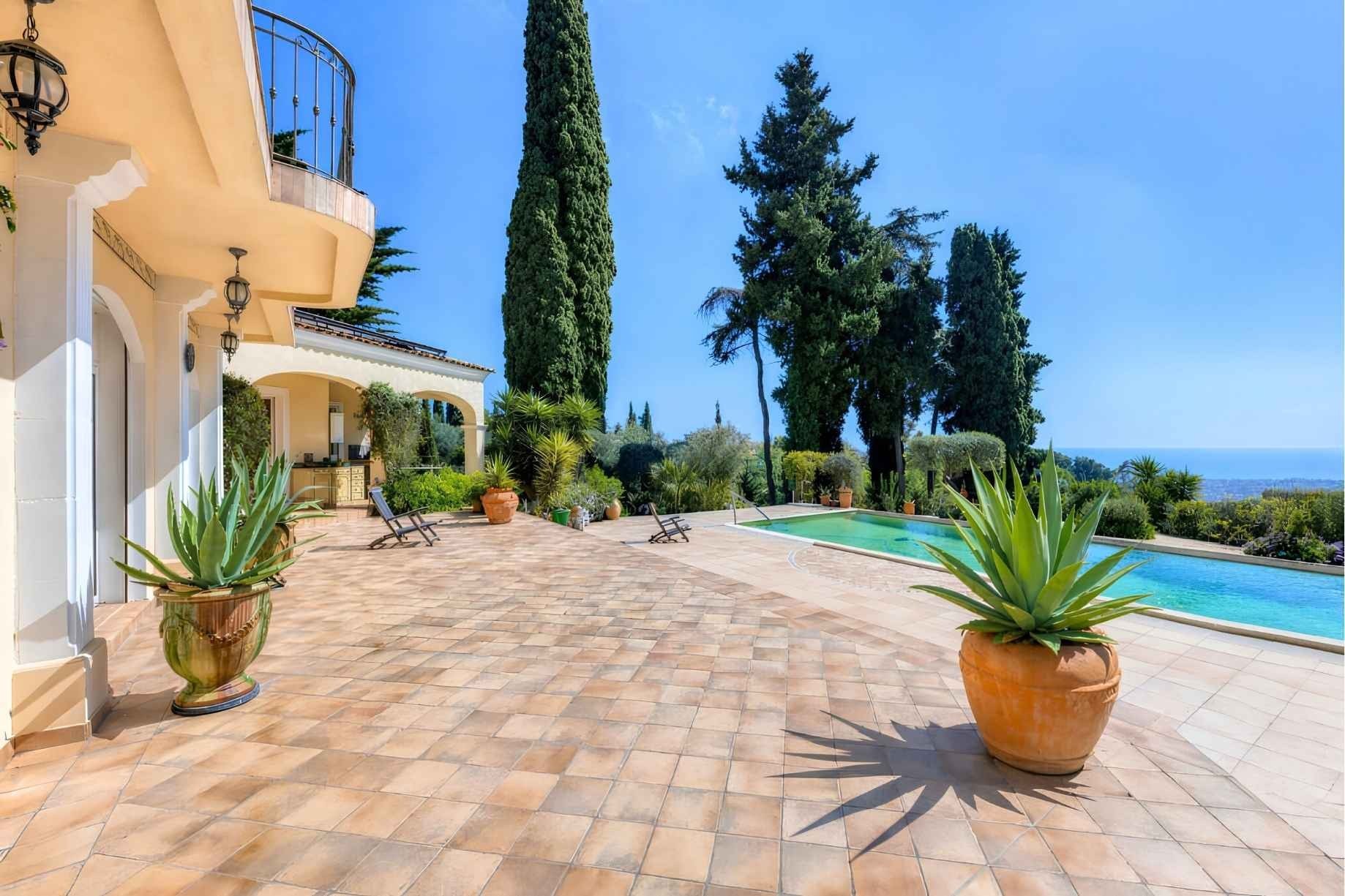
Côte d'Azur · French Riviera · France
Fractional Ownership on the Côte d'Azur
From a villa with an infinity pool above the Golfe de Saint-Tropez to a garden apartment minutes from the ramparts of Antibes — fractional ownership on the Côte d'Azur means a deeded share of a fully managed Riviera home, six-plus weeks a year, on a coast where whole houses routinely cost €1–3 million.
Is the Côte d'Azur good for fractional ownership? Yes — it is arguably Europe's strongest market for it. One-eighth shares of fully managed holiday homes start from around €100,000, giving co-owners six-plus weeks a year on a coast where whole homes routinely cost €1–3 million and Nice airport offers direct flights from the United States.
That single paragraph is the argument in miniature. What follows is the long version: what fractional ownership actually is on this coast, why the Riviera rewards it more generously than almost anywhere else in France, exactly where our current listings sit — from the Golfe de Saint-Tropez to the hill villages behind Cannes — what the numbers look like against full ownership as of 2026, and how a purchase proceeds from first enquiry to notarised share. It is written for people who have stood on the Croisette or the port at Saint-Tropez, done the mental arithmetic on a whole villa, and concluded — correctly — that there has to be a better way to own four to eight weeks of this coast than paying for fifty-two.
13 properties · from €109,000
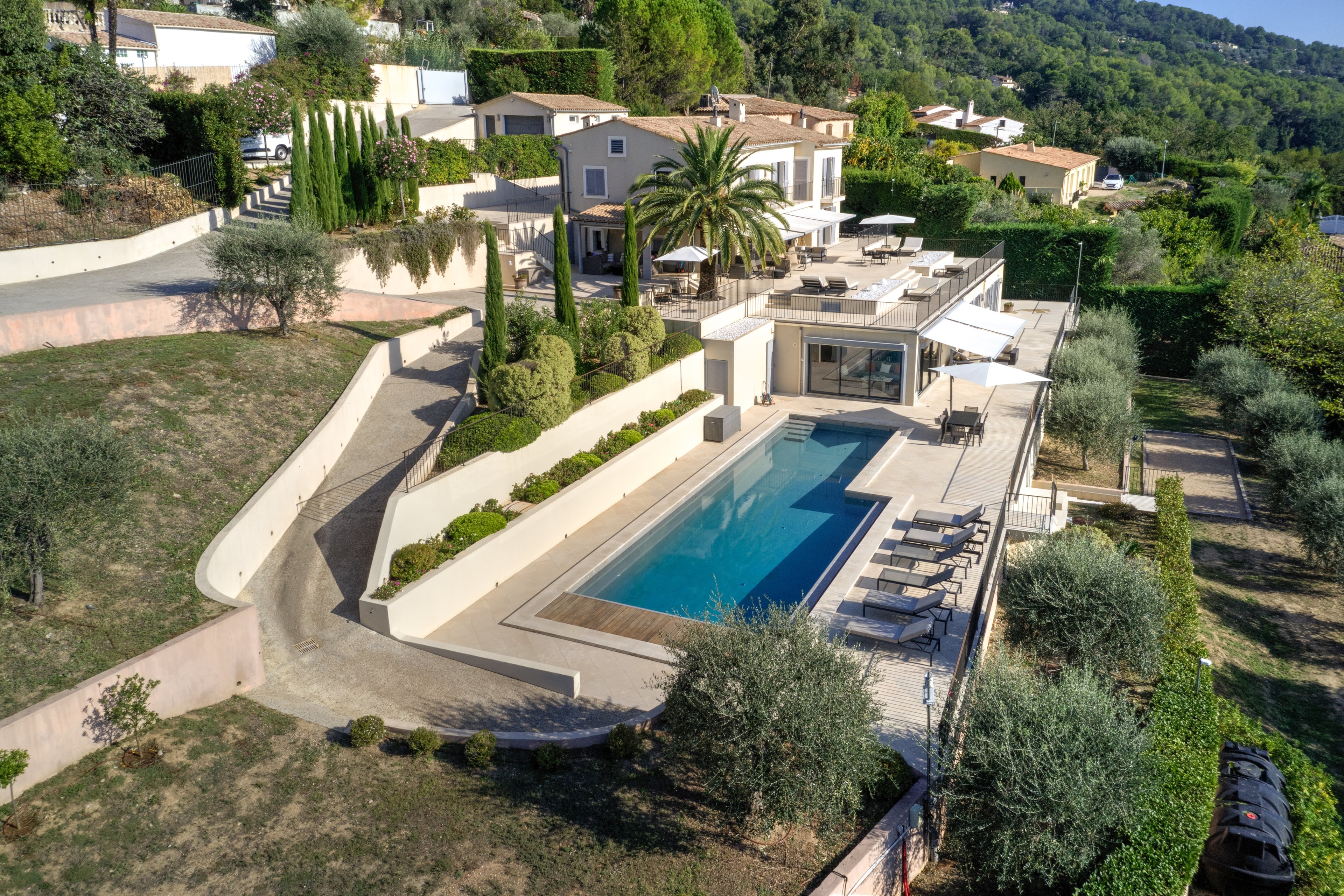
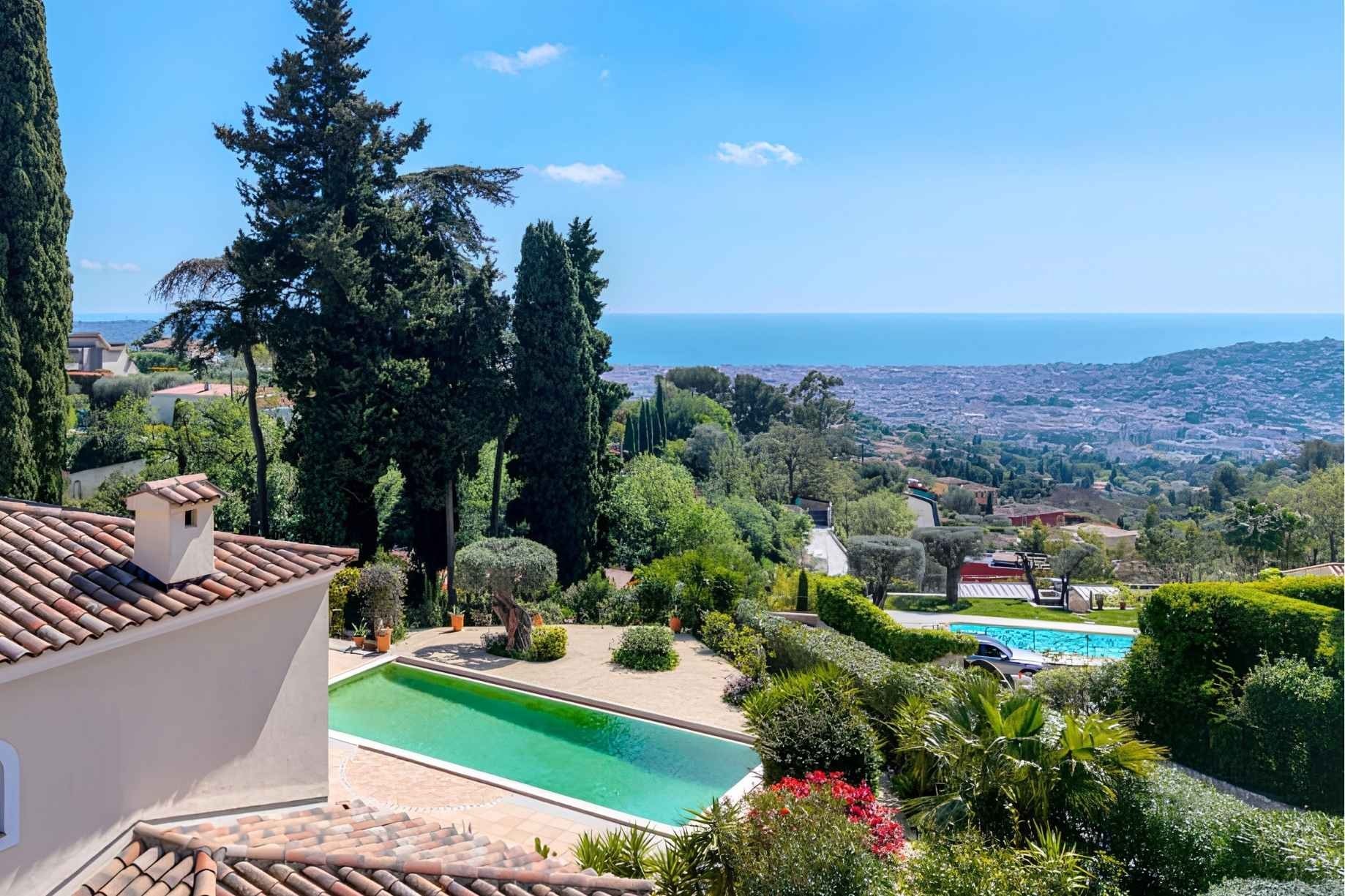
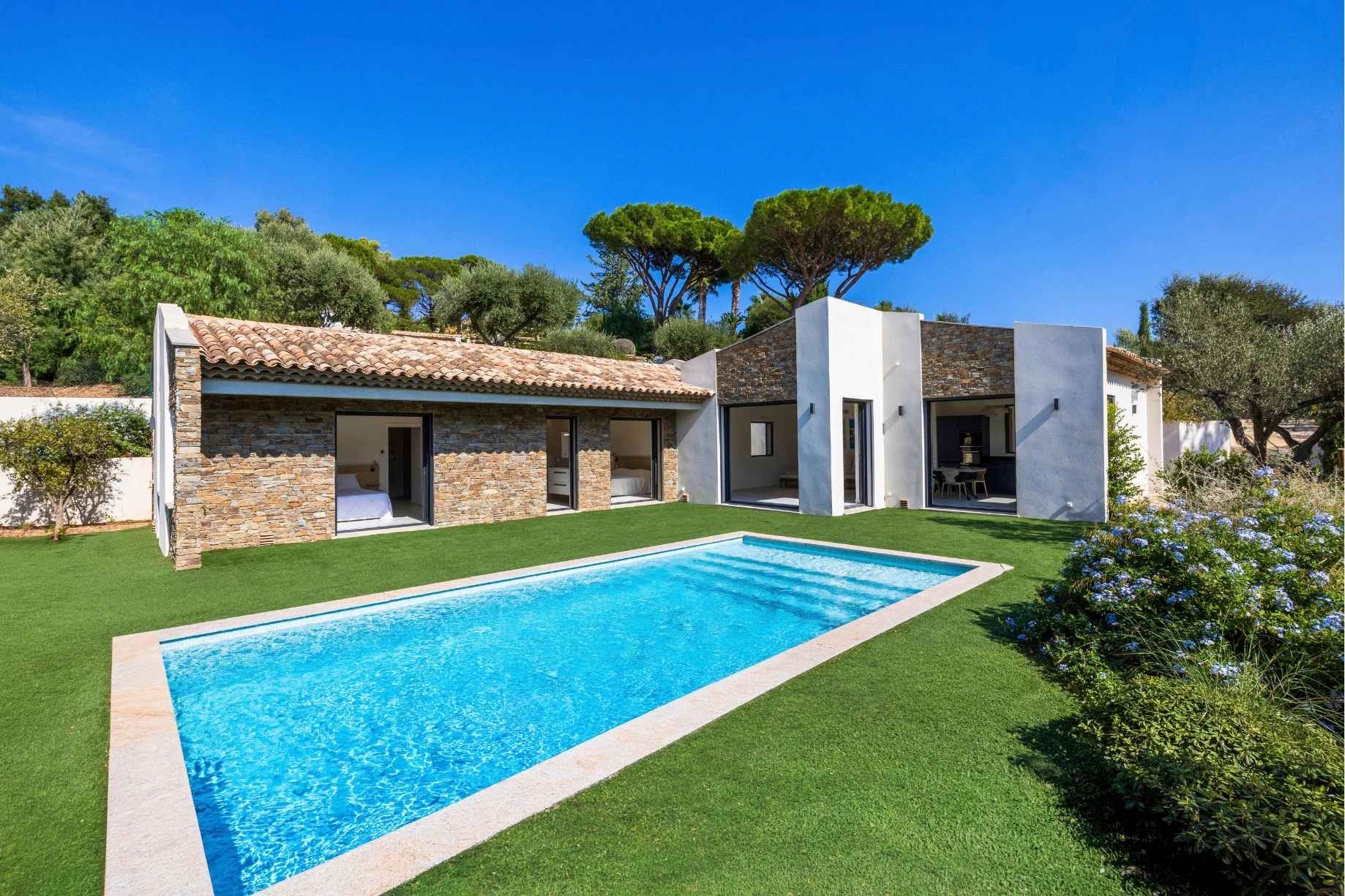
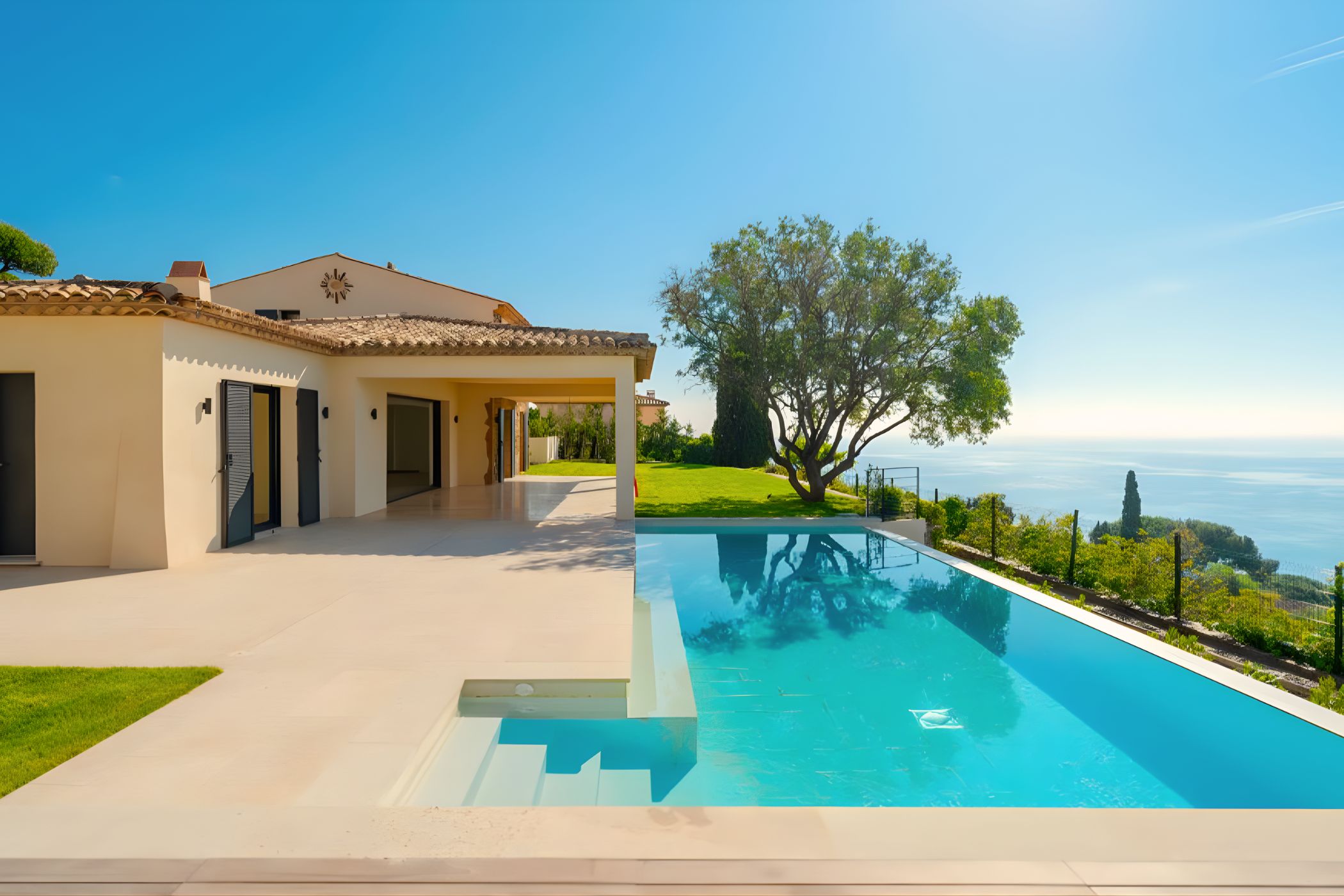
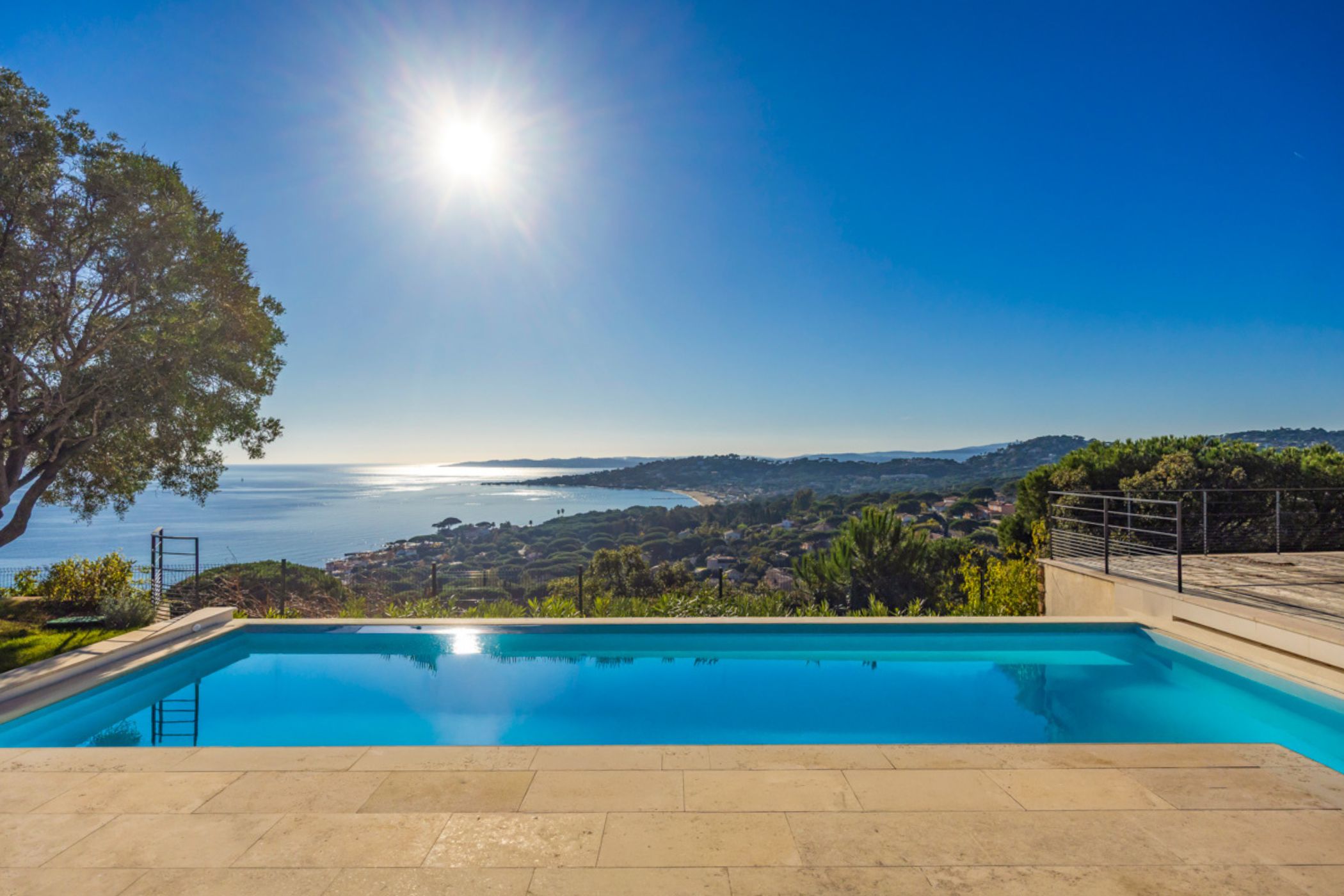
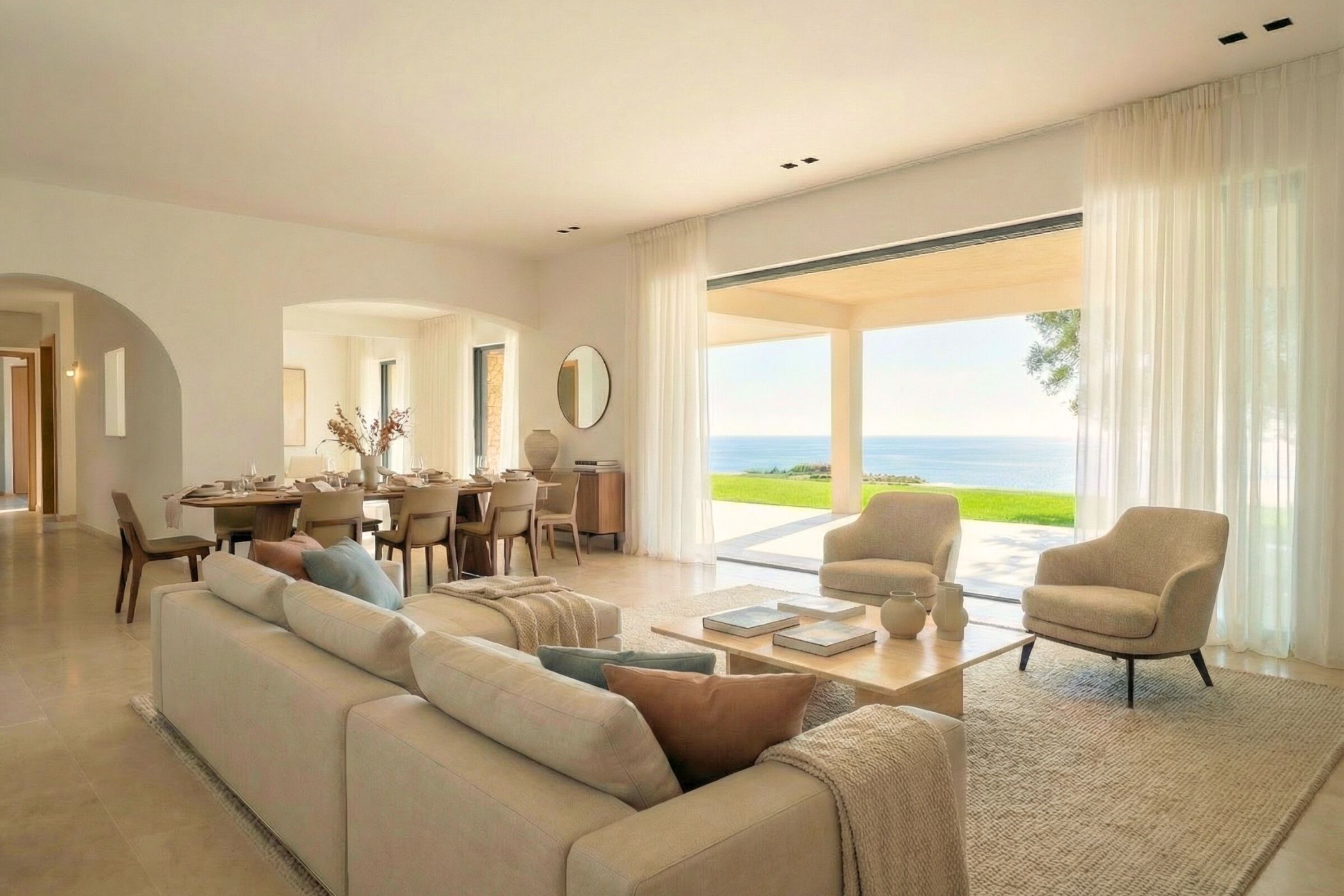
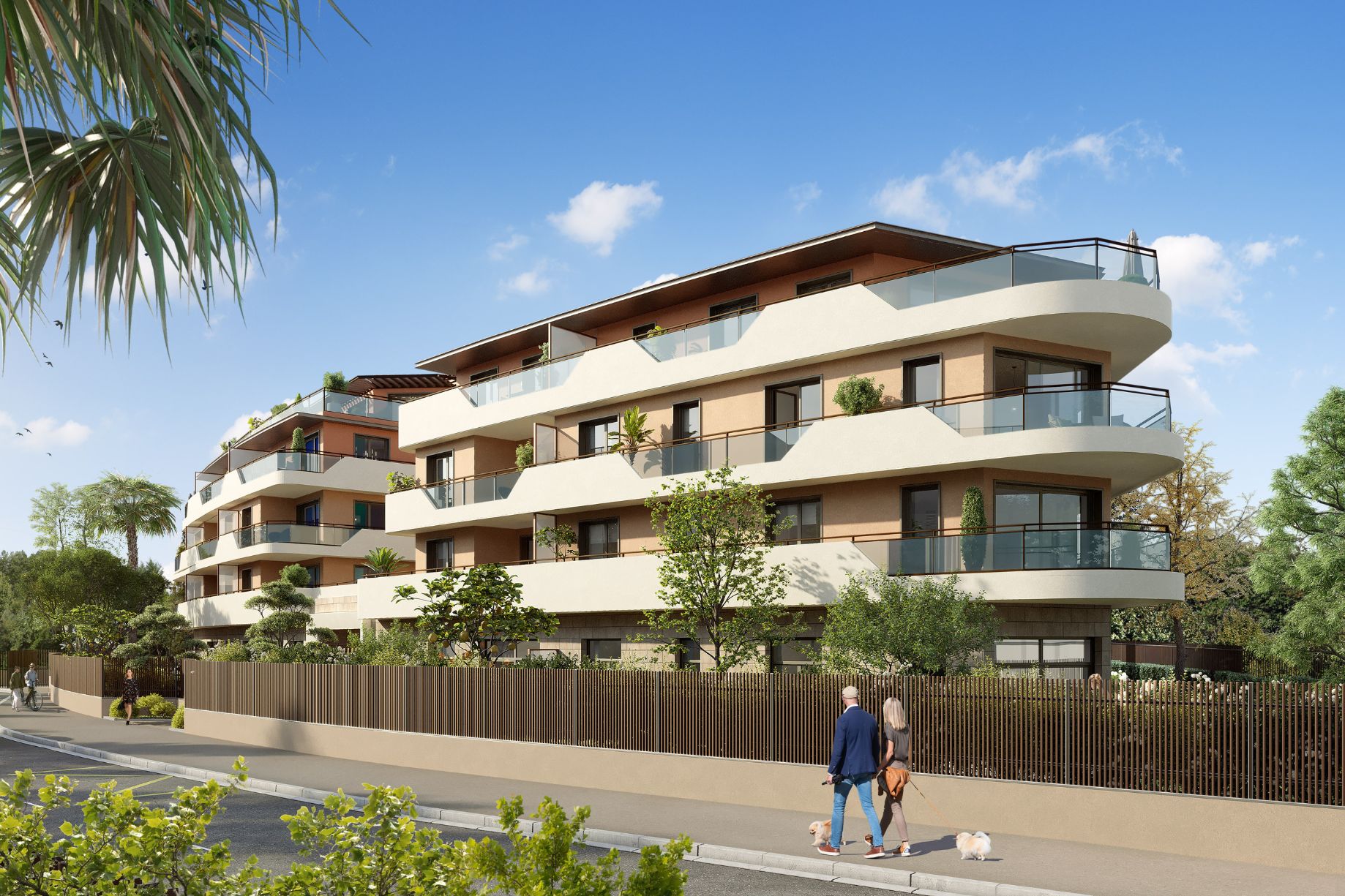
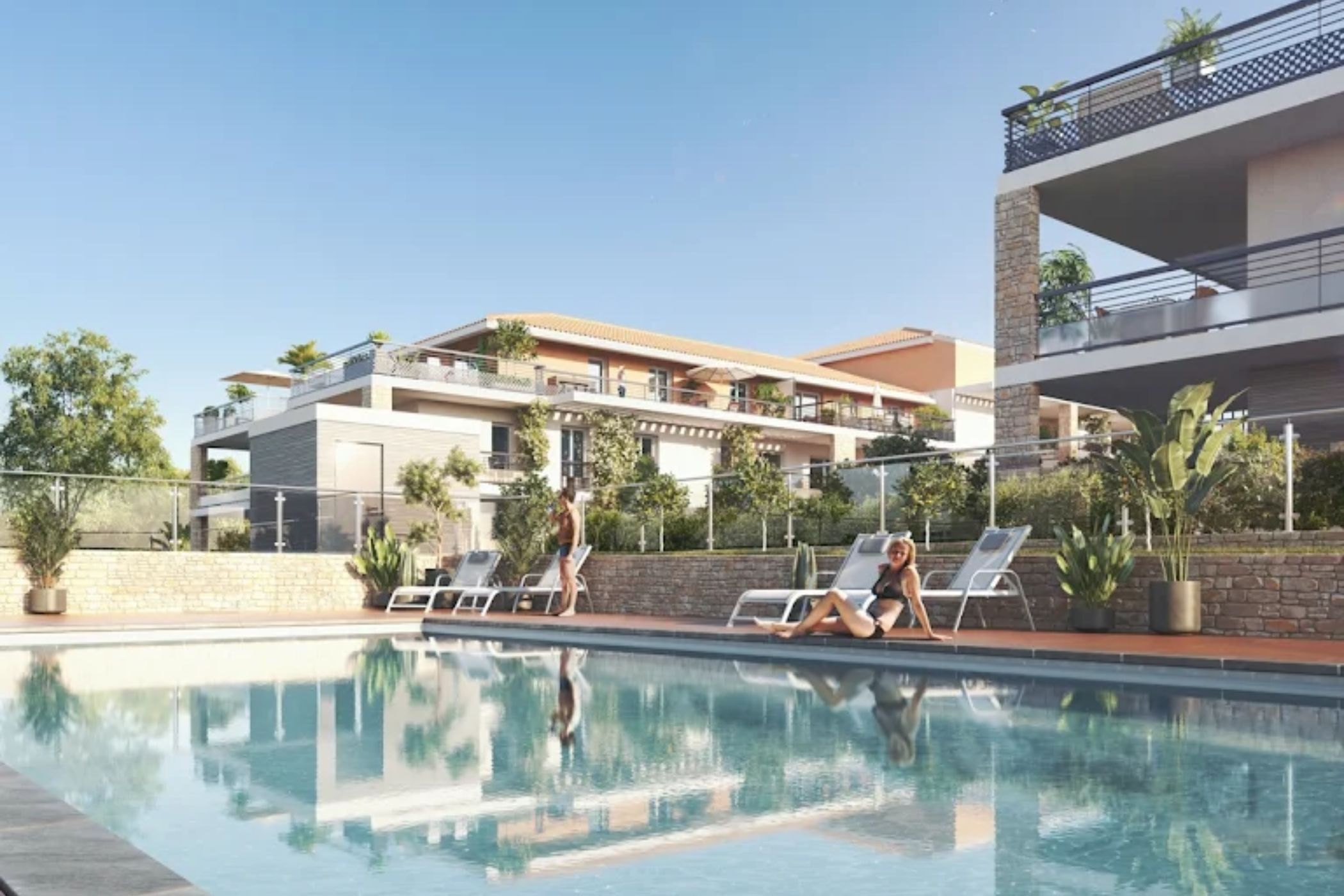
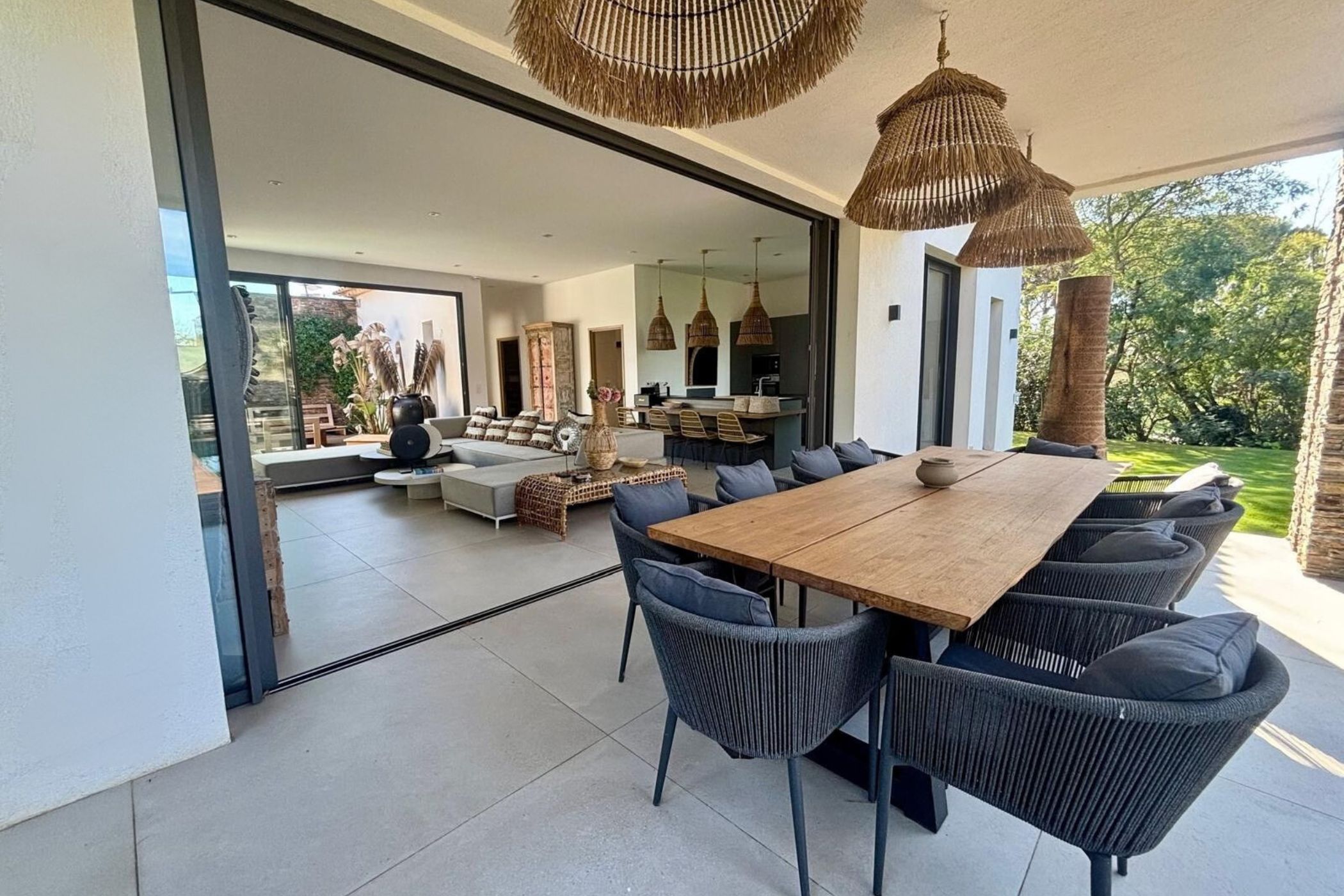
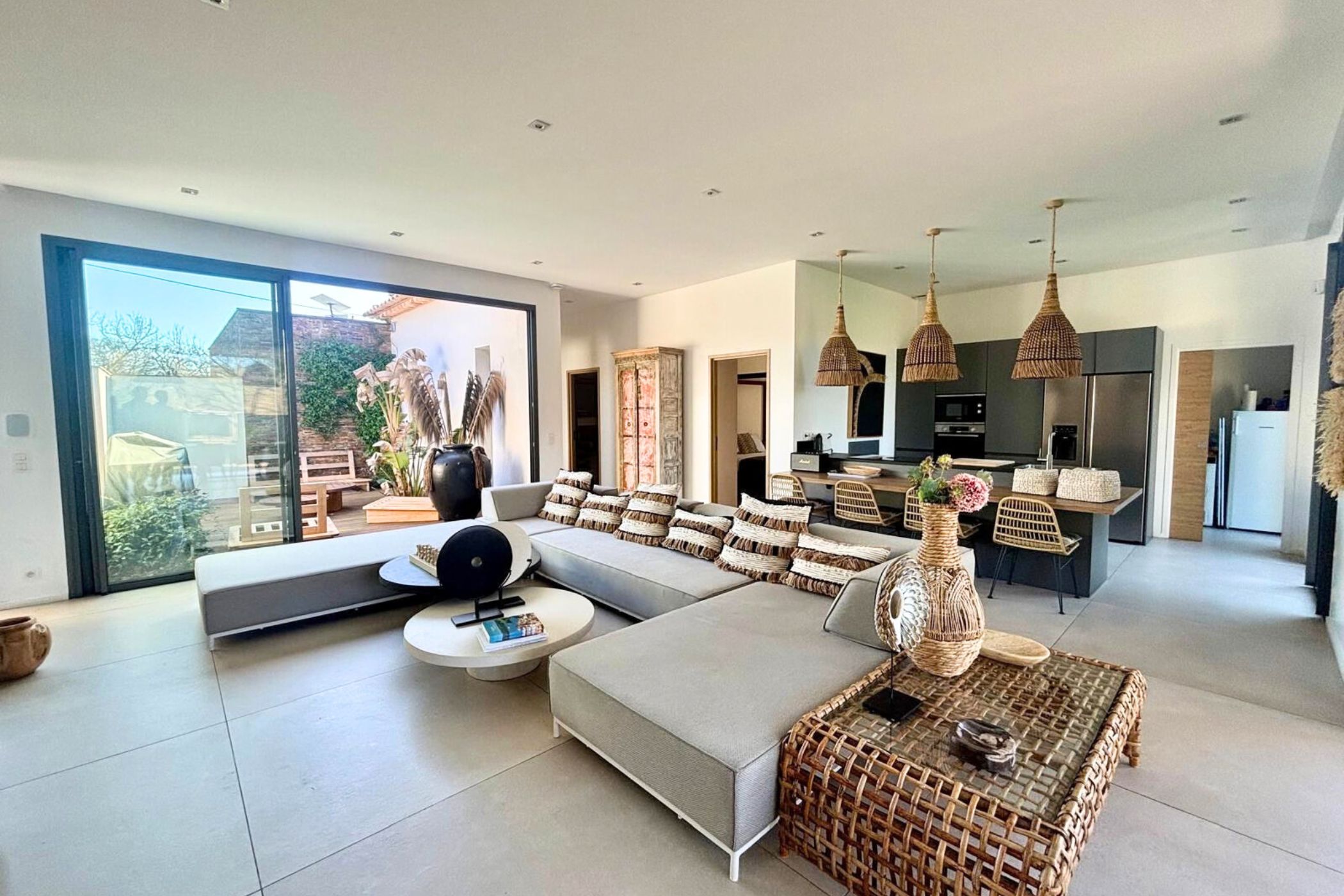
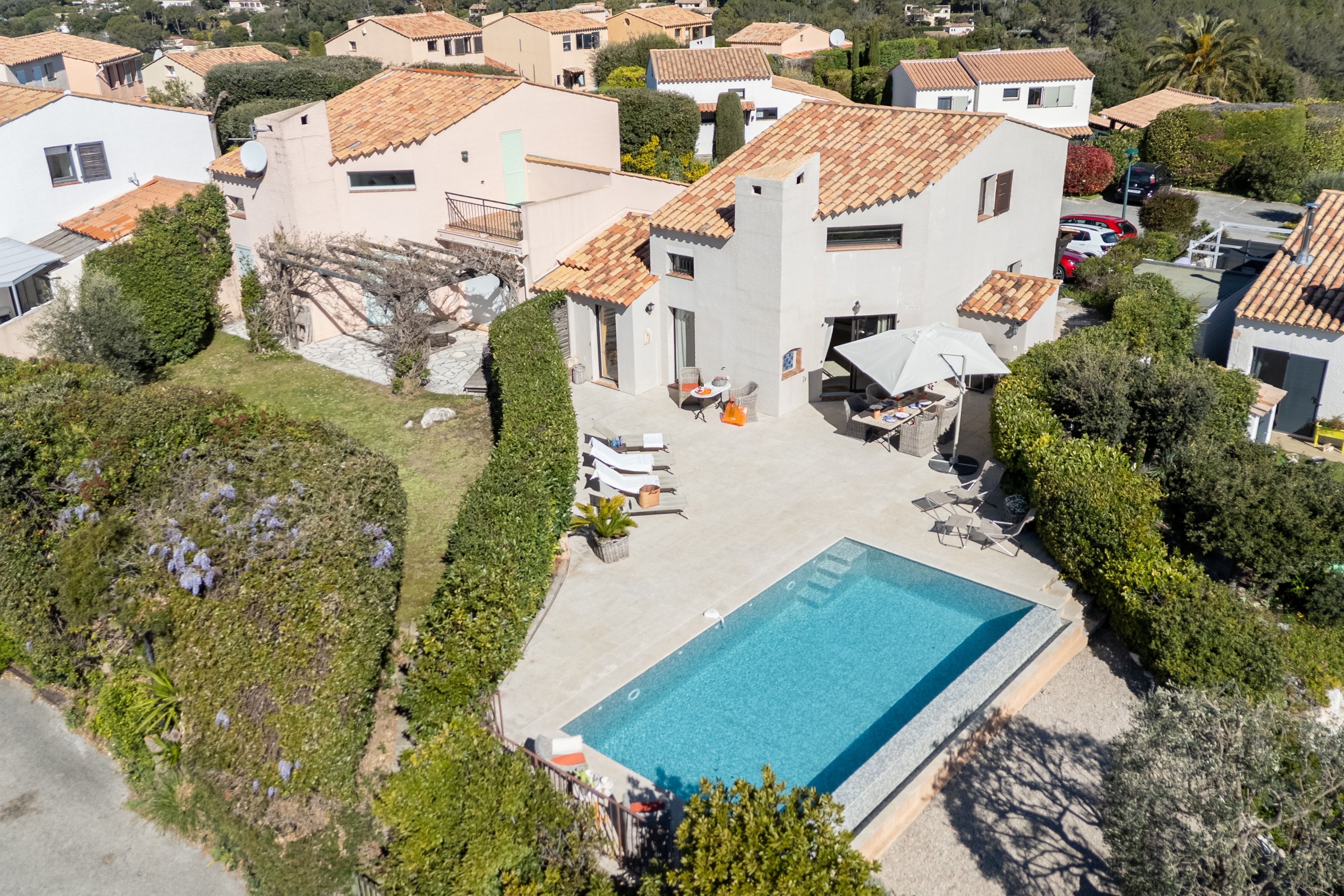
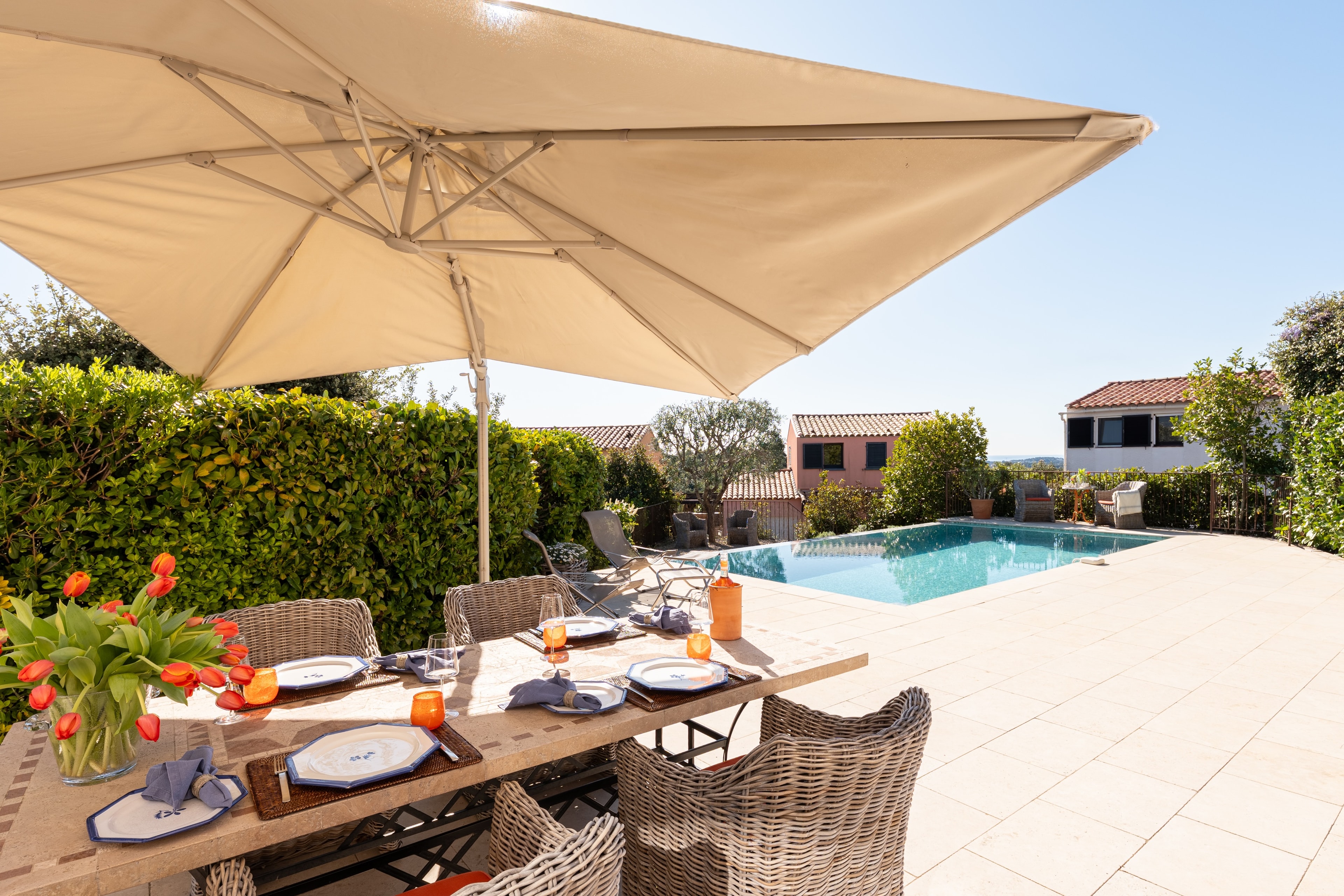
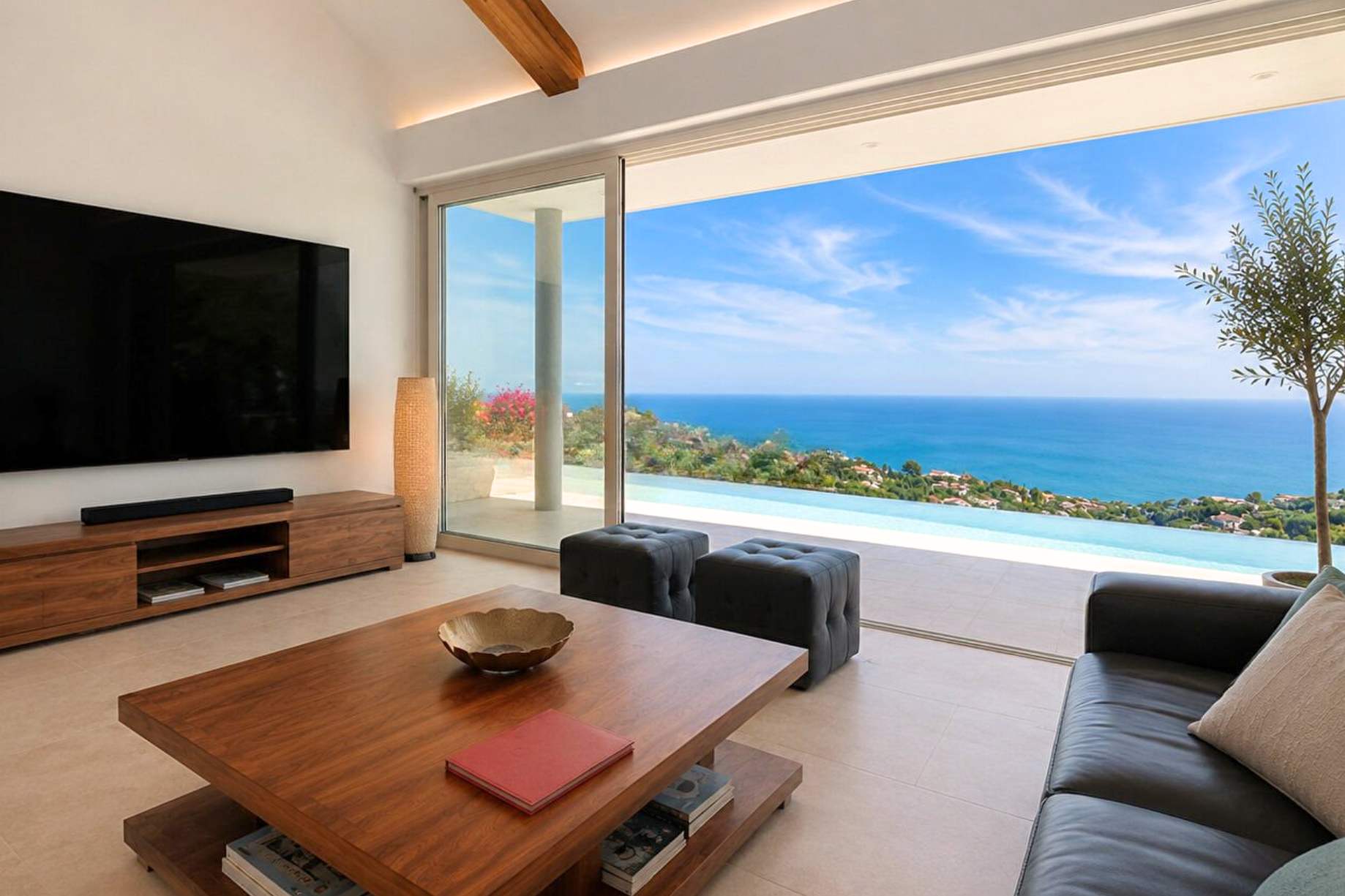
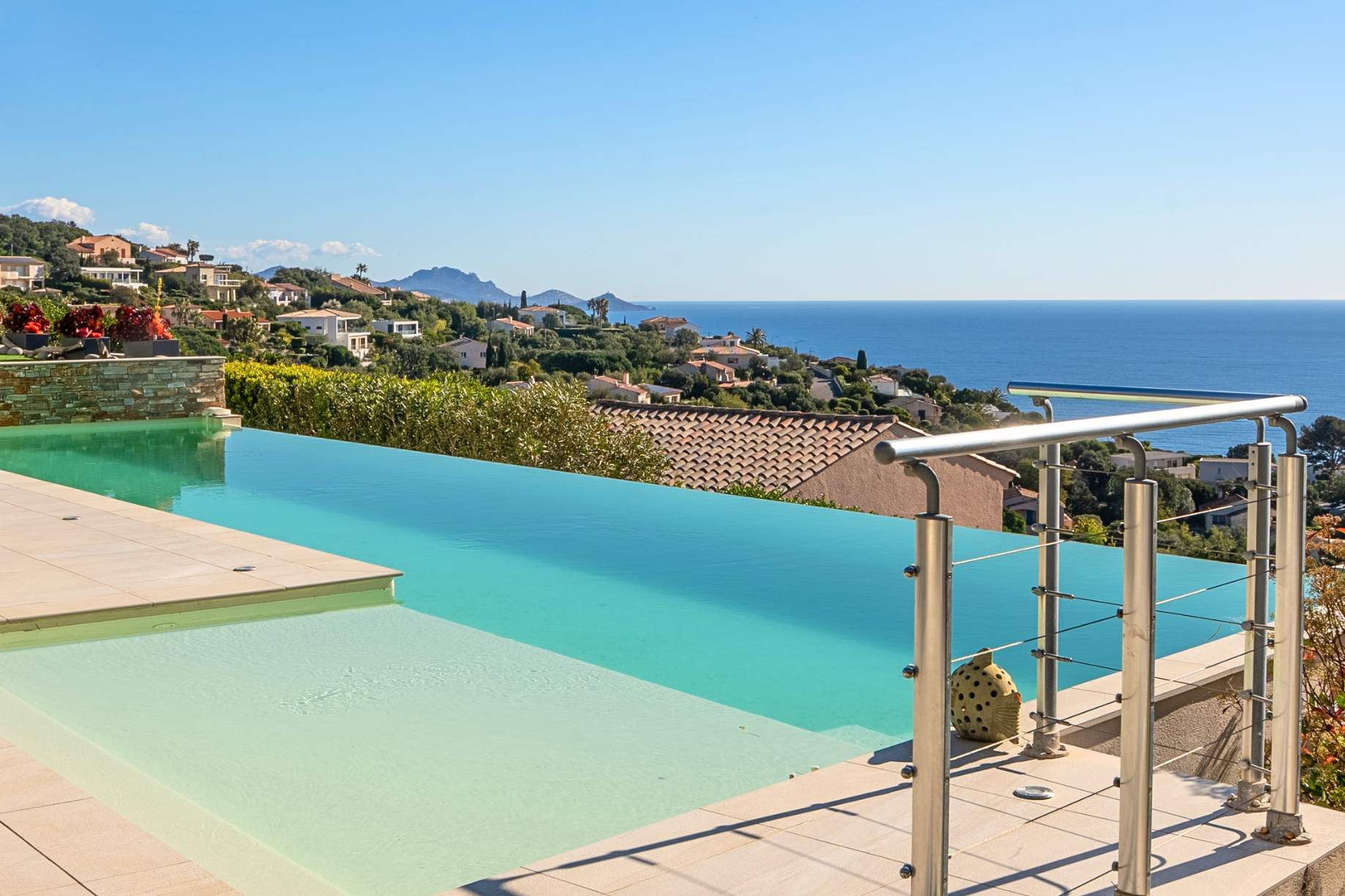
Les Issambres, Côte d'Azur, France — 3-Bed Villa With Panoramic Sea View & Infinity Pool
€359,000
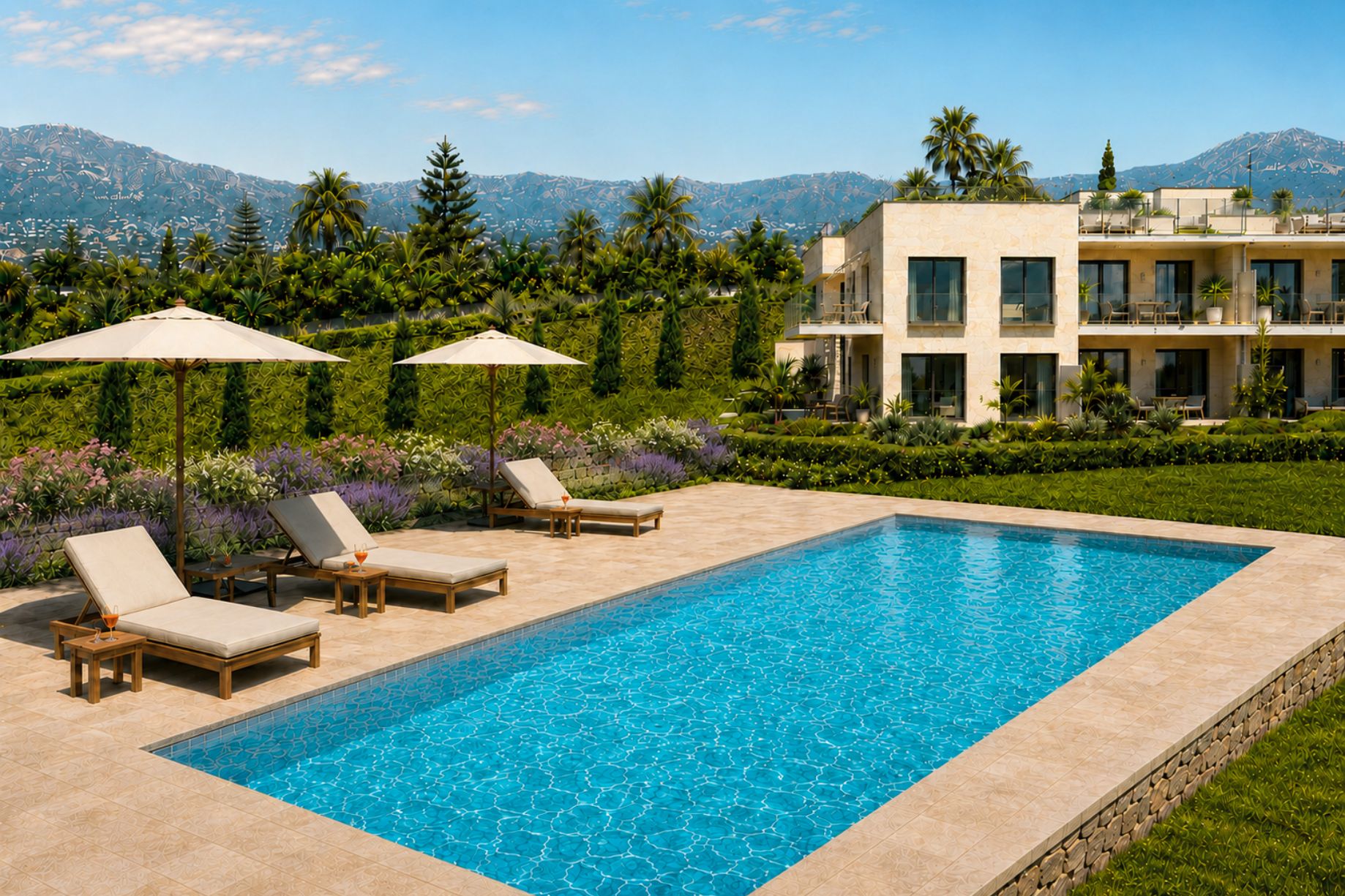
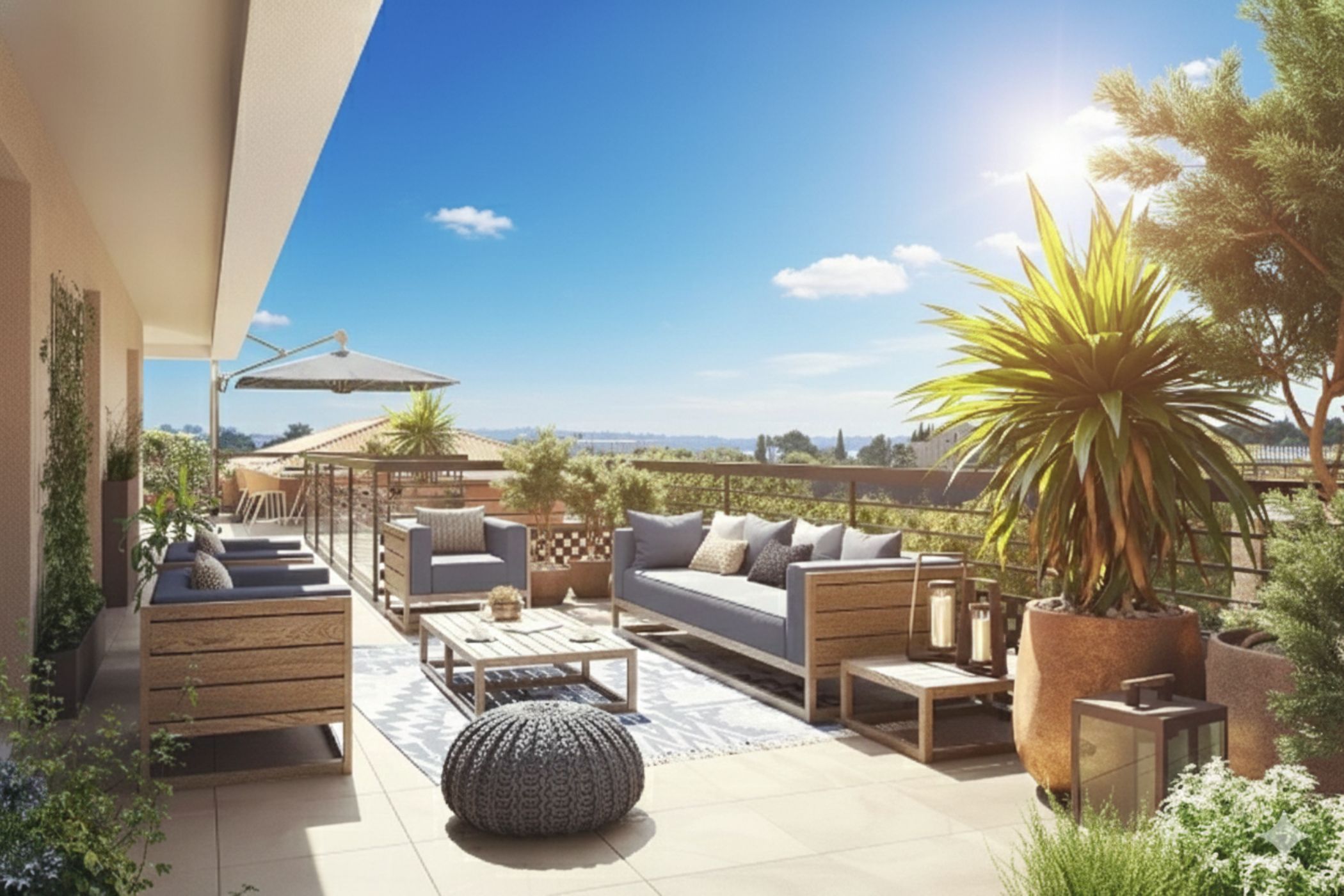
Les Issambres, Côte d'Azur, France — 2-Bed Terrace Apartment With Sunny Terrace & Pool
€164,000
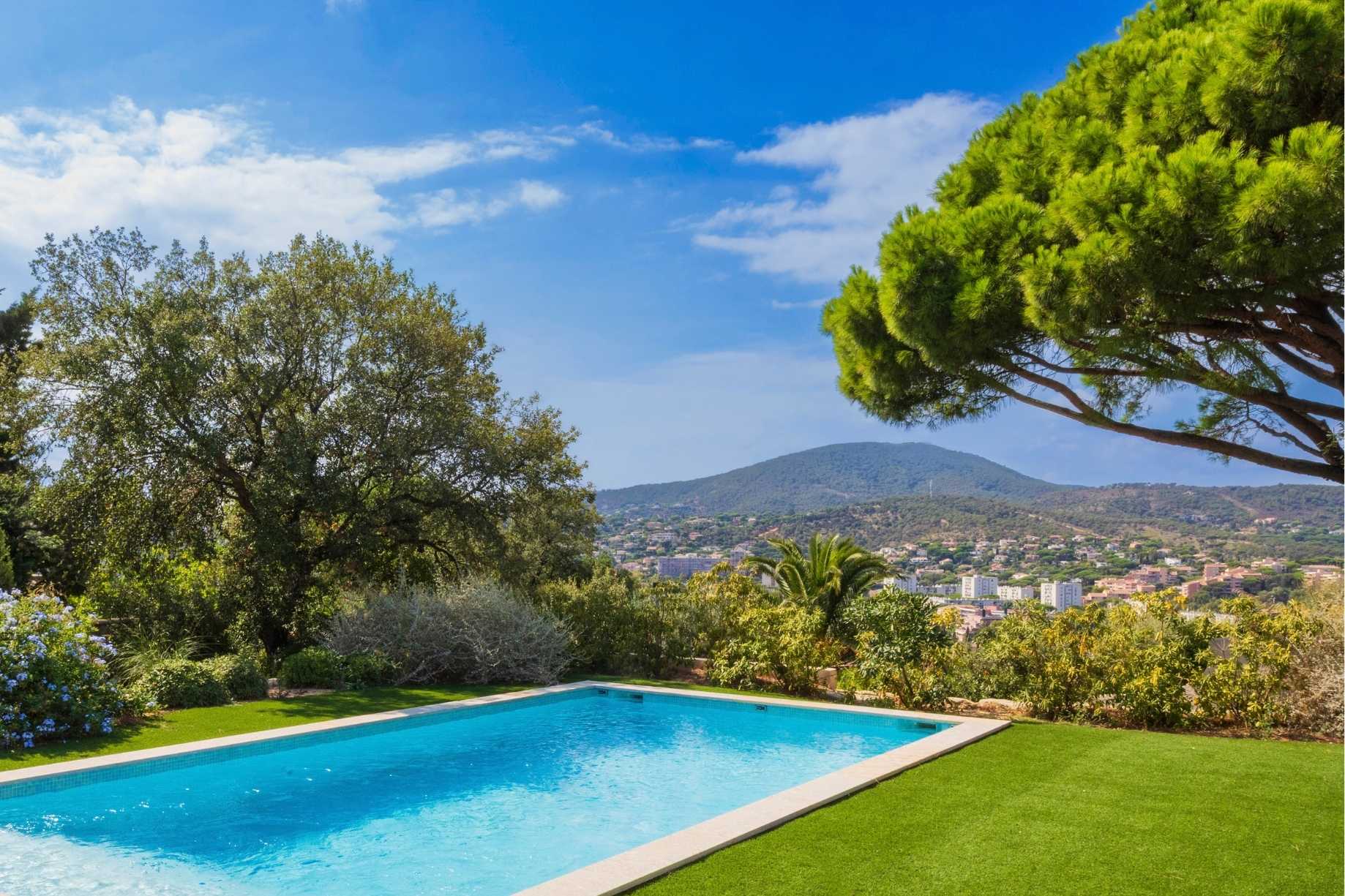
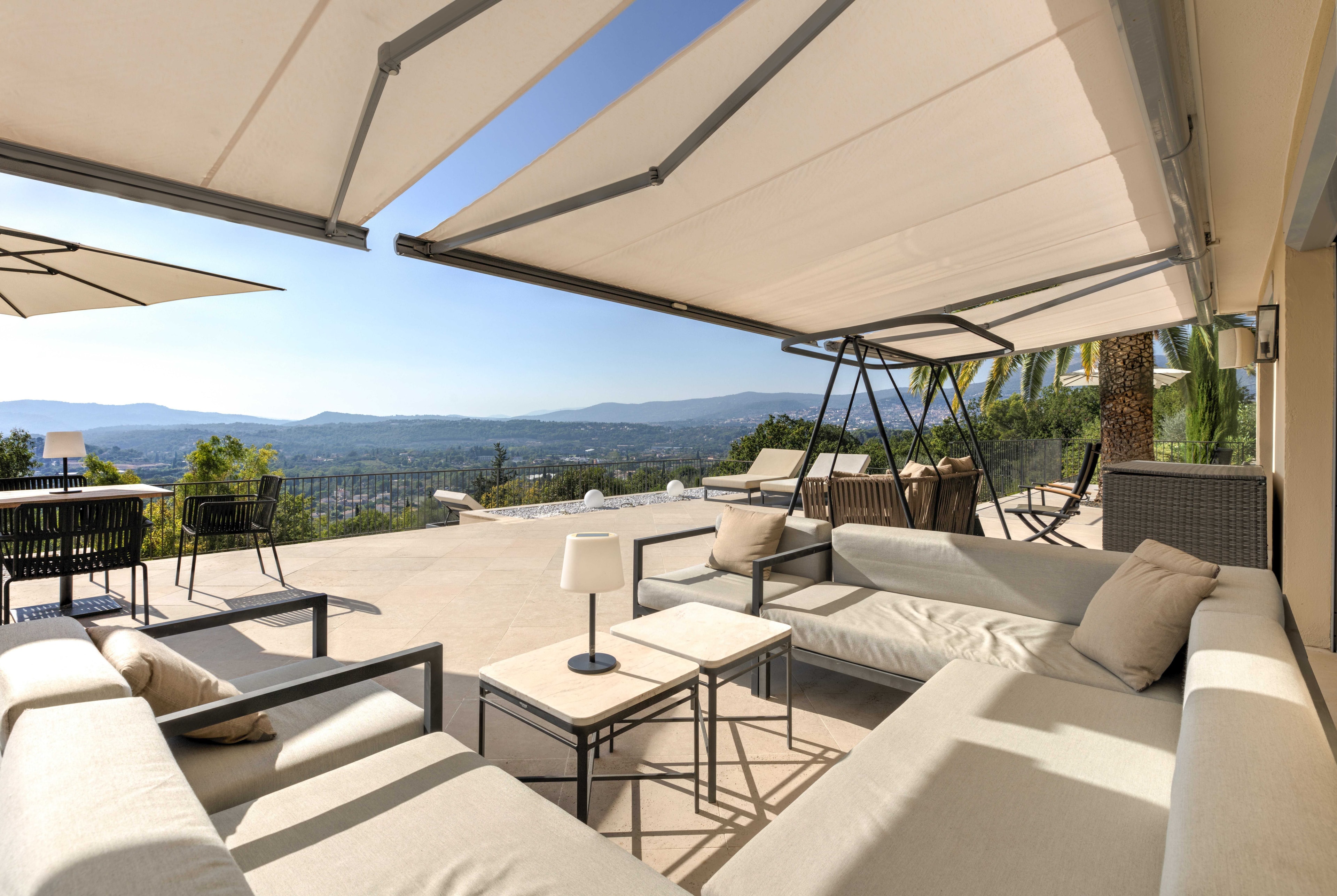
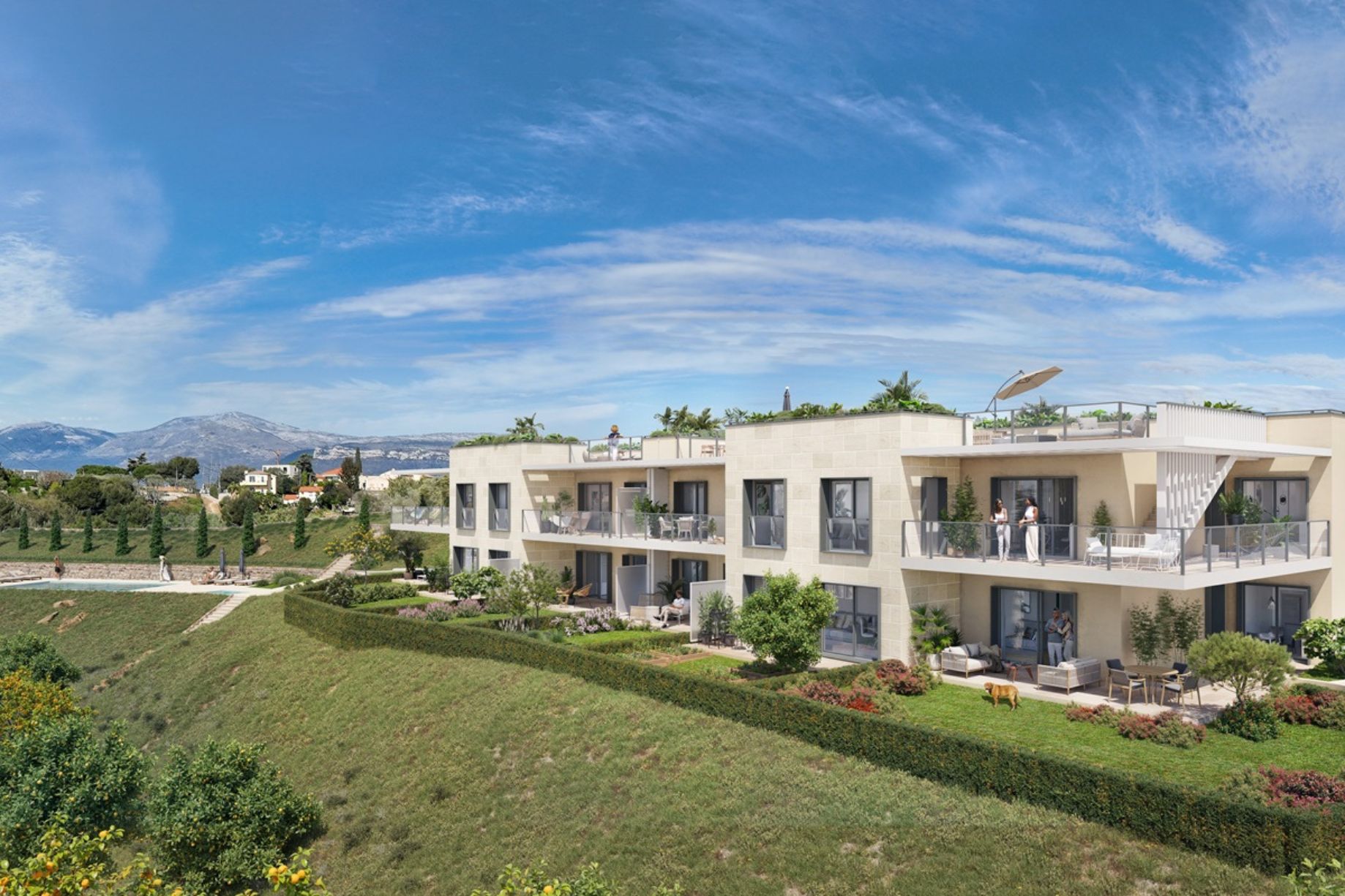
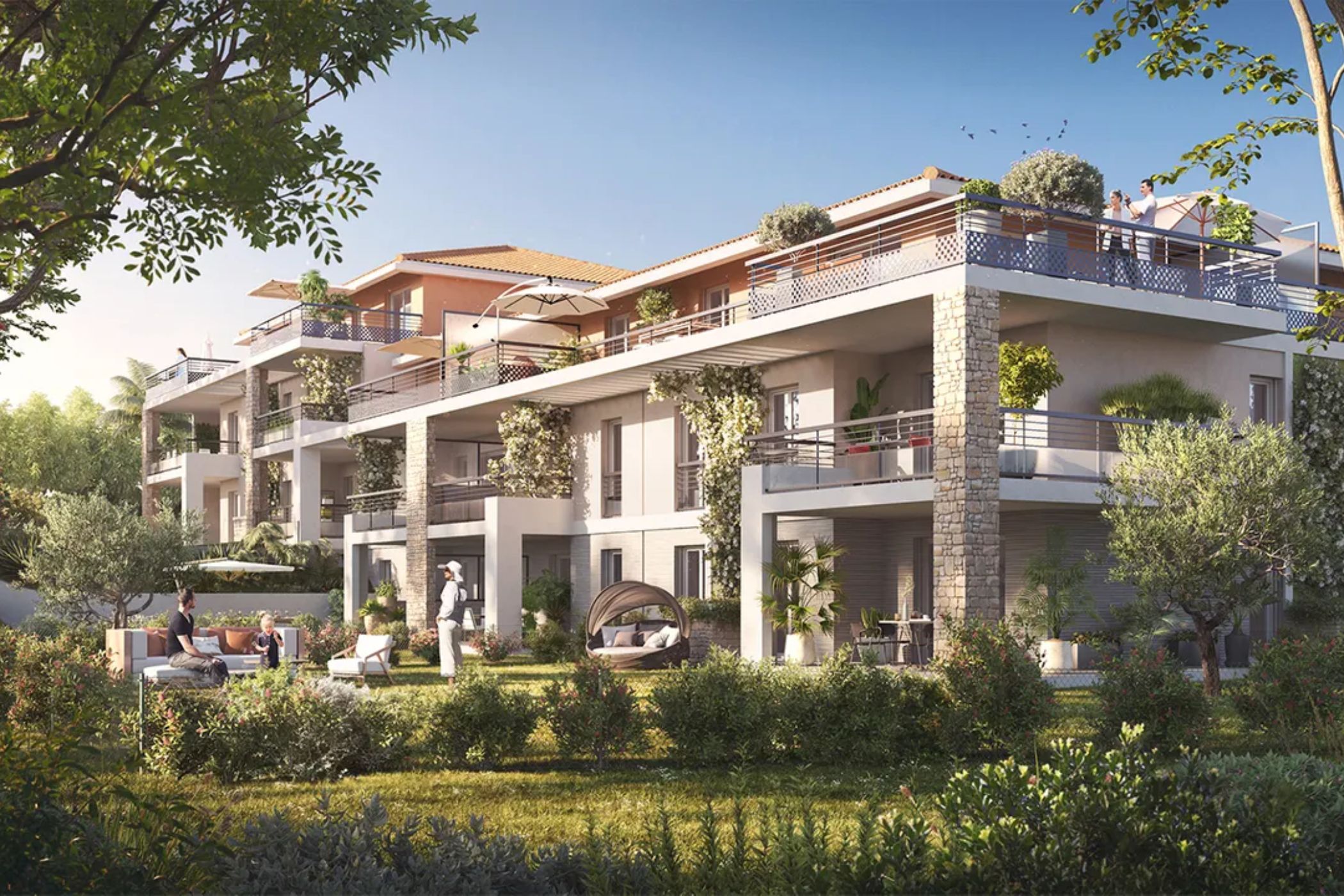
Sainte-Maxime, Côte d'Azur, France — 3-Bed Penthouse With Gulf Of Saint-Tropez Views
€169,000
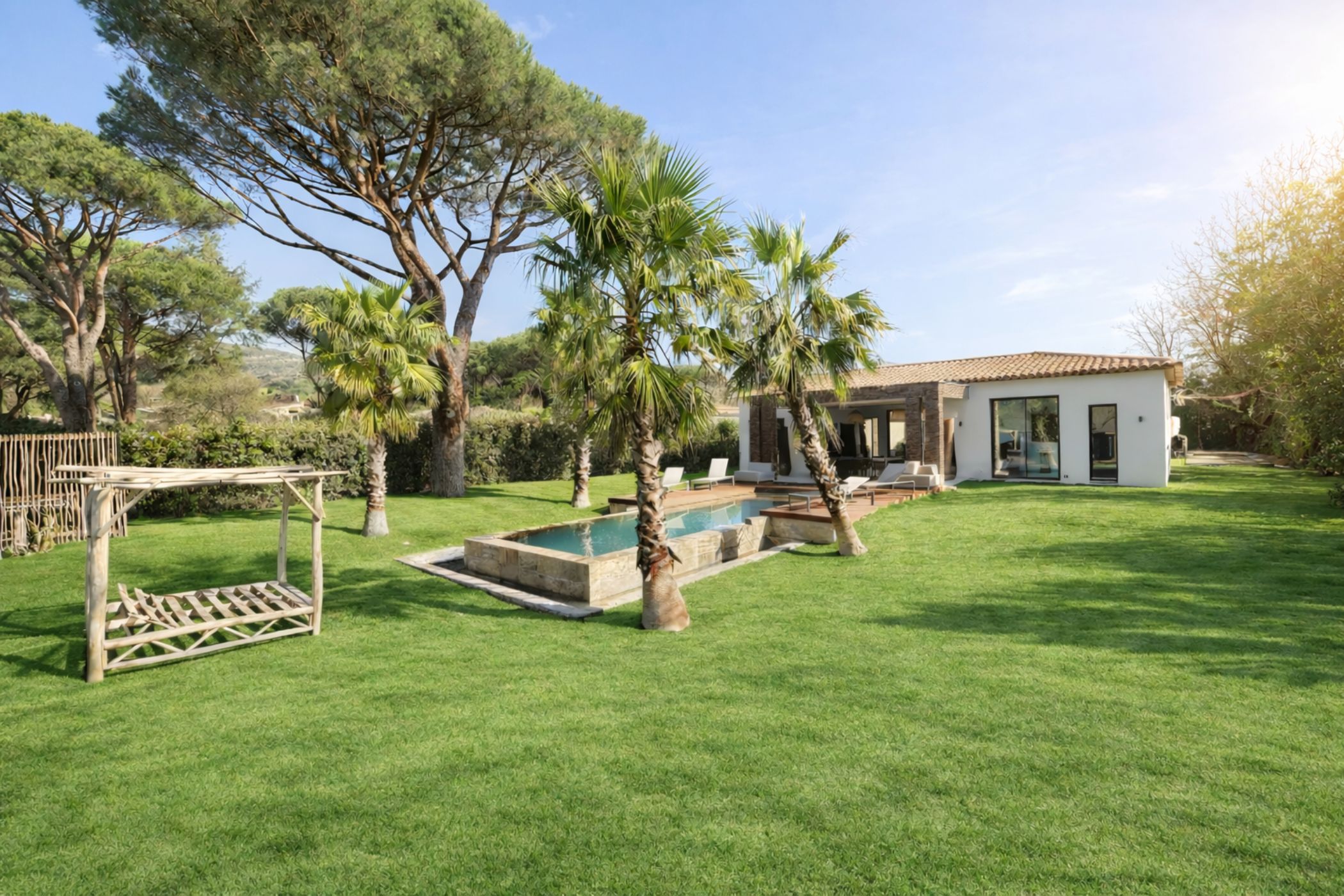
Sainte-Maxime, Côte d'Azur, France — 3-Bed Villa With Panoramic Sea Views & Heated Pool
€409,000
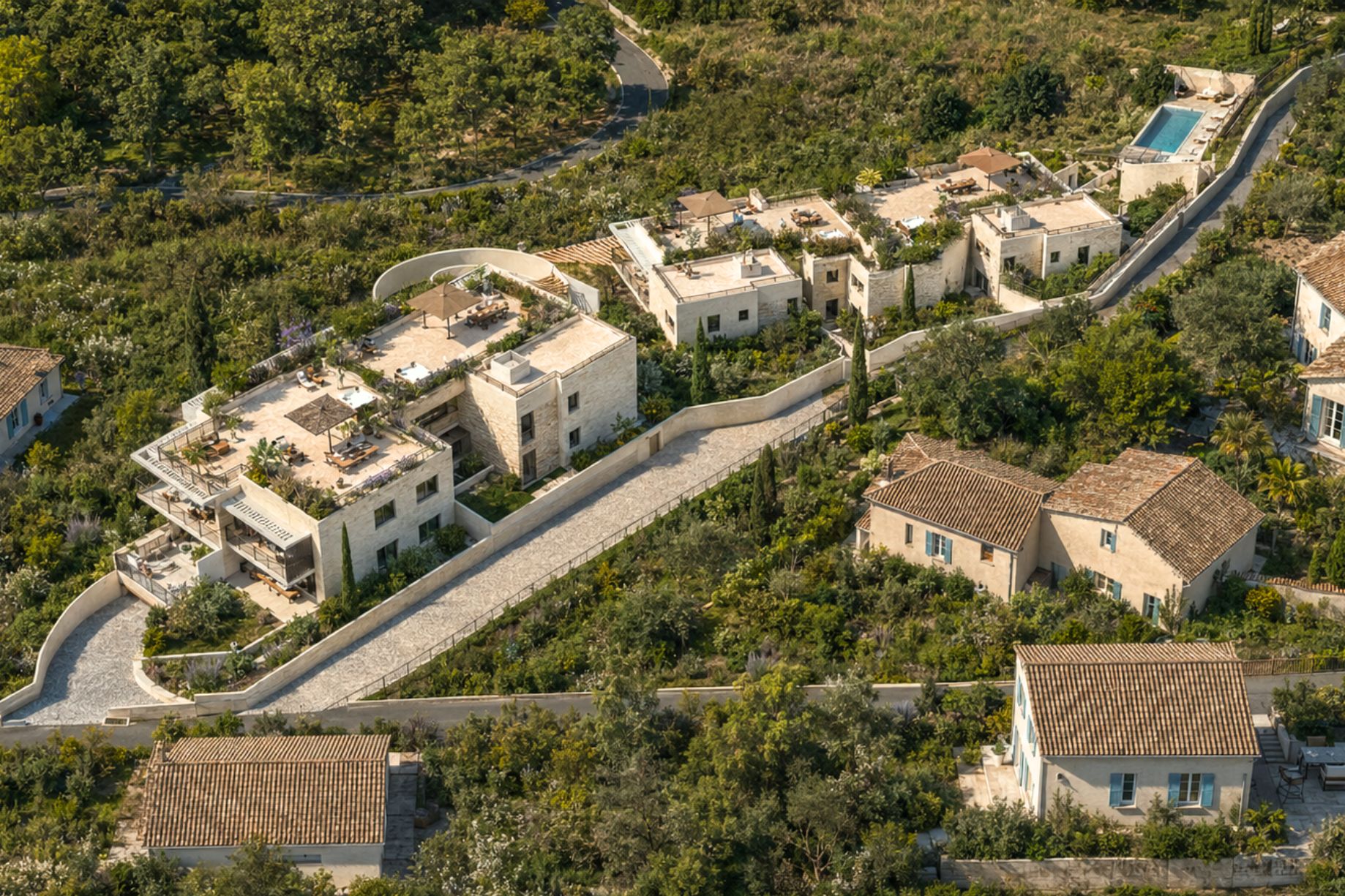
Grimaud, Côte d'Azur, France — 2-Bed Maisonette With Sunny Terrace & Heated Pool
€164,000
The world's original resort coastline, owned the intelligent way: a deeded share of a fully managed Riviera home, six-plus weeks a year, from around €100,000.
Fully managed villas, apartments and penthouses across the Golfe de Saint-Tropez — Sainte-Maxime, La Nartelle, Grimaud and Les Issambres, Antibes and the Cap, and the hill villages behind Cannes — Valbonne, Mouans-Sartoux, Vallauris and Fayence. Part of the wider South of France and France portfolios.
What is fractional ownership on the Côte d'Azur?
Fractional ownership — co-ownership, in plainer English — means buying a genuine share of a specific home, usually one-eighth, together with a small group of other owners. On the Côte d'Azur that typically translates into roughly six weeks or more of use per year, scheduled fairly across the seasons through a booking system, in a house or apartment that is bought, furnished, maintained and managed by a professional operator. You own an asset; the operator does the work; you turn up.
The share is real property wealth, not a membership. Your one-eighth is a recorded ownership interest in the home itself — typically held through a dedicated property company whose shares the co-owners hold, a structure long familiar in France through the SCI, or in some cases as a direct co-ownership interest formalised before a notaire. Either way, the interest is yours: it can be sold on the open market, gifted, or left to your heirs, and its value tracks the value of the underlying Riviera property. When the home appreciates, your share appreciates with it.
This is the point at which fractional ownership parts company, completely, with the timeshare industry — and the distinction matters enough to spell out:
- You own bricks, not time. A timeshare sells you a right to occupy weeks in a resort; a fractional share is a deeded stake in one specific, addressable home — a villa above Grimaud, an apartment in Antibes — with your name on the ownership structure.
- It can appreciate. Timeshare weeks are notorious for being worth less the day after purchase. A fractional share is priced off the home's market value, and Côte d'Azur residential property was broadly stable to modestly rising as of mid-2026 — portal trend data show most tracked communes between roughly flat and +4% year-on-year — one of Europe's most consistently resilient coastal markets over the long run.
- You can exit. Shares are resold on the open market, generally after a short initial holding period set by the operator. You sell at the market price a buyer will pay — which, on this coast, benefits from the deepest pool of international second-home demand in Europe.
- The costs are transparent. Co-owners share the home's actual running costs — each one-eighth owner pays one-eighth — rather than paying a resort's invented maintenance fee.
The model exists because the traditional alternatives serve most people badly. The average second-home owner uses their property a handful of weeks a year, yet carries the full purchase price, the full French acquisition costs of roughly 7–8% on a resale home, the full taxe foncière, and every maintenance headache, all year round. Renting, meanwhile, builds nothing. Fractional ownership prices the property at what you actually use — and on a coast as expensive as this one, that repricing is dramatic. Homes that trade at €1.5–4 million whole become accessible from around €100,000 to €600,000 per share at the time of writing.
How do the weeks work in practice?
The question every prospective co-owner asks first is the scheduling one: with eight owners and one August, who gets what? The honest answer is that this problem was solved years ago, and solved well. Partner operators run booking systems built on rotating priority: each ownership share carries an equitable draw on peak, shoulder and off-season weeks, with the order of first choice rotating annually so that the owner who had first pick of the summer this year moves down the queue next year. Most systems split the calendar into advance bookings — your guaranteed, planned weeks, typically bookable a year or more out — and shorter-notice stays, which can be taken spontaneously when the home is free. In practice, because eight families' diaries never perfectly collide, and because the Riviera's season is genuinely twelve months long, owners report getting most of what they want most of the time — including, over any two-to-three-year span, their fair share of the school-holiday gold.
Three practical features matter more than the algorithm. First, stays are usually flexible in length — long weekends as well as full weeks — which suits a coast two hours from London and one overnight flight from New York. Second, most operators allow you to send family or friends in your place, within house rules, so your weeks need not be wasted in a busy year. Third, everything is administered through the operator's app or portal: you book the way you would book a flight, and arrive to a home that has been cleaned, aired, and stocked to your preferences. The point of the model is that the only decision you make repeatedly is when to come.
What does the operator actually do?
Fully managed is an easy phrase to write and an expensive service to deliver, so it is worth itemising what sits behind it on a typical Côte d'Azur fractional home:
- Acquisition and structuring: sourcing the home, negotiating the purchase, carrying it through the French conveyancing process with the notaire, and establishing the co-ownership structure into which buyers step.
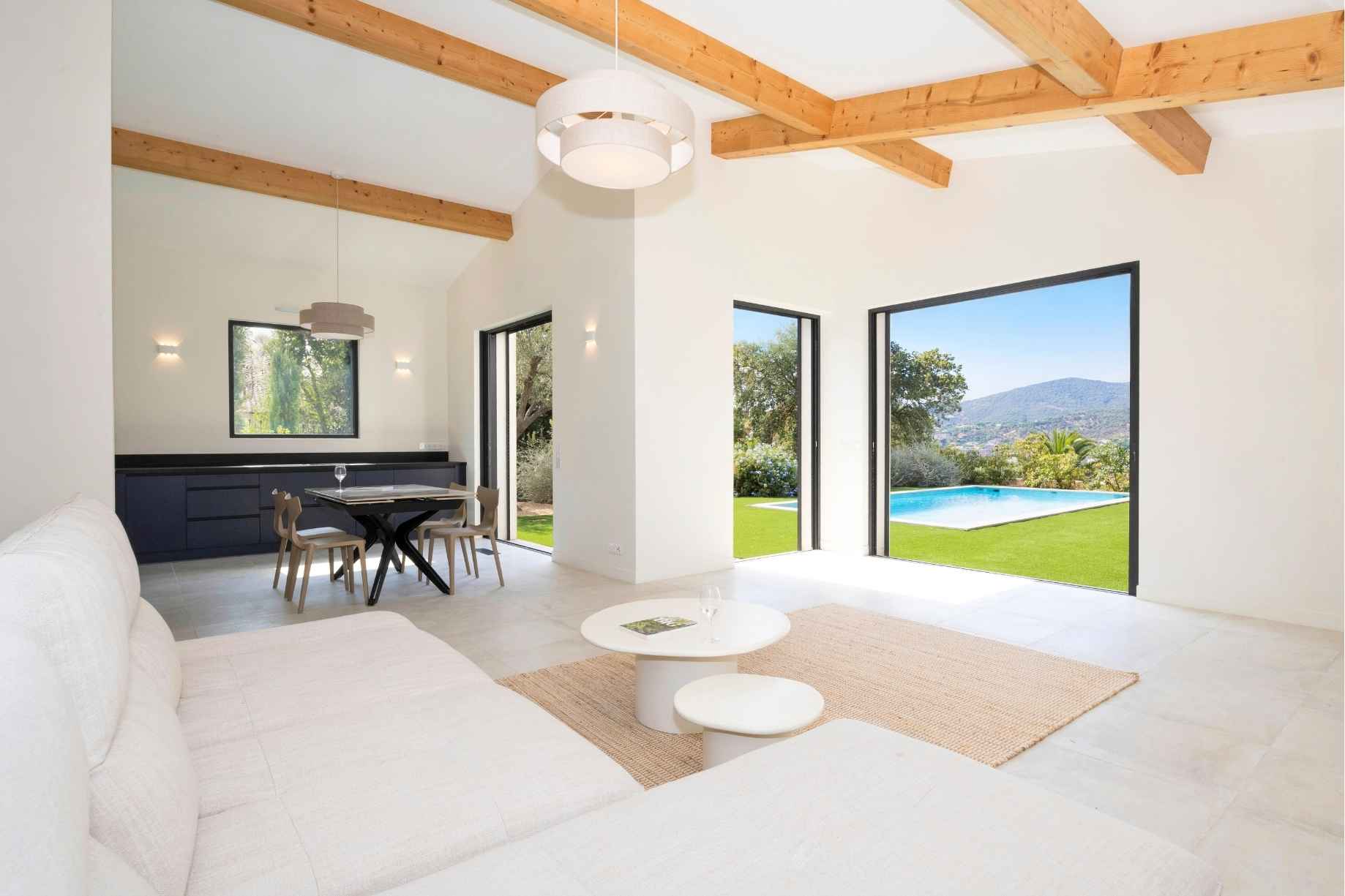
- Design and furnishing: homes are renovated where needed and furnished to a hotel-adjacent standard before the first owner arrives — the pool heater, the linen, the sixth wine glass all exist already.
- Ongoing management: cleaning and changeovers between stays, gardens and pools, maintenance and repairs, utilities, insurance, tax filings for the property, and local staff who hold the keys and solve the problems.
- Owner services: the scheduling platform, an annual budget and accounts presented transparently to owners, and a point of contact who answers in your language.
- Resale support: when you eventually sell, the operator typically assists with documentation and often with finding the buyer.
The economic logic is straightforward: professionalising these tasks across a portfolio of homes costs each owner a fraction of what solo owners pay in money — and infinitely less in Provençal telephone hold music. For a buyer 5,000 miles away, the management is not a nice-to-have; it is the product.
Co-Ownership Property is an independent international marketplace for exactly these homes. We list fractional properties from vetted partner operators across Europe and beyond, and on the Côte d'Azur we list a dozen-plus homes at any given time, spread across towns and villages between the Golfe de Saint-Tropez and the Italian border. We are not the operator; we are the place you compare the coast's fractional inventory in one view, ask blunt questions, and get introduced to the right team when a home fits.
Why the Côte d'Azur — and why now?
Every fractional market needs three things to work: a destination people return to year after year rather than once; property values high enough that sharing makes obvious financial sense; and access easy enough that six or more separate visits a year is a pleasure rather than a logistics project. The Côte d'Azur is the rare place that scores maximum marks on all three — which is why it has become one of the densest concentrations of fractional inventory in Europe, and why we treat it as the flagship of our South of France portfolio.
The repeat-visit case: a coast with no off switch
The Riviera's founding industry was, quite literally, the repeat visit: the English and Russian aristocracies who built Nice's Promenade des Anglais came back every winter, not once in a lifetime. The modern coast has kept that character. The famous claim of around 300 days of sunshine a year is the regional tourist board's, but the underlying climate data supports the spirit of it — Nice records some of the highest sunshine totals of any major French city, mild winters included. The consequence for a co-owner is that there is no dead season to burn allocated weeks in: May brings the film festival and the Monaco Grand Prix build-up, June to September is the swimming sea, October is warm hiking and harvest in the Var vineyards, and even January means lunch outside and an empty Cap d'Antibes coastal path. Fractional schedules that rotate weeks across the calendar — as our partner operators' systems do — work beautifully here, because on this coast there are no bad weeks to draw.
The value case: Europe's most proven expensive coastline
The Côte d'Azur is expensive because it has been the continent's most desired address for 150 years, and it stays expensive because supply is fixed: a narrow shelf of buildable land between the Alps and the Mediterranean, wrapped in some of France's strictest coastal planning law. As of 2026, French portal and market-tracker data put prime Saint-Tropez at roughly €11,000 per square metre for apartments and upwards of €21,000 for houses, Cannes' Croisette district at ≈€8,500–16,000, Cap d'Antibes at anywhere from ≈€9,000 to €25,000-plus depending on position, and even the hill village of Grimaud behind the Saint-Tropez gulf at around €8,900 per square metre. Whole-home entry to a good address, once French acquisition costs of roughly 7–8% are added, starts around a million euros and climbs vertiginously. That is precisely the environment where paying for only the eighth you use is not a compromise but the rational structure — and where the eighth you own sits on one of Europe's most defensible property markets. Our analysis of why the Riviera became co-ownership's hottest market in 2026 goes deeper into the numbers.
The access case: direct from New York, breakfast on the coast
This is the argument that has changed most in the last three years, and it matters enormously to our roughly half-American readership. Nice Côte d'Azur is France's busiest airport outside Paris, handling 15.2 million passengers in 2025 — up 3.2% on the year — with long-haul traffic growing faster still, up 5.8%. Crucially, as of 2026 the transatlantic bridge is direct: Delta flies non-stop between New York JFK and Nice daily through the season, United flies daily from Newark, and from May 2026 United adds Washington Dulles four times a week — with the airline planning roughly a third more seats between Nice and the United States in 2026 than in 2024, on the back of transatlantic traffic that surged more than 44% in summer 2024. An owner in Manhattan can leave the office on Thursday evening and be swimming at La Garoupe before Friday lunch. For Northern Europeans the case is even easier: Nice is under two hours' flying from London, Amsterdam, Copenhagen and Oslo, with dense year-round schedules, and the airport sits on the coast itself — most of our listed towns are 15 to 90 minutes from the arrivals kerb.
The ladder: this coast has an entry price
The Riviera's reputation is billionaire bays, but its reality is a long price ladder, and fractional ownership lets you step on at almost any rung. At the top, shares in large villas above the Golfe de Saint-Tropez reach towards €600,000. In the middle, family villas around the gulf and the hill villages typically sit in the €150,000–€400,000 band. And at the entry, shares in the Antibes–Vallauris corridor currently start from around €100,000 — genuine deeded ownership on the most famous coast in the world, for the price of a parking space in Knightsbridge. Few destinations anywhere offer fractional inventory across so wide a span; it is one reason the Riviera anchors our entire European portfolio.
And the reason not to buy whole: France prices full ownership steeply
It is worth being direct about the other side of the ledger, because it is half the case for sharing. France loads costs onto whole-home ownership at every stage. Acquisition costs on a resale property — transfer duties, notaire's fees and registration — total roughly 7–8% of the price, and since April 2025 departments have been permitted to raise the main transfer duty from 4.5% to 5%, nudging the total higher in much of the country. Annual taxe foncière has risen sharply in many Riviera communes, and second-home owners in zones of housing pressure can face a taxe d'habitation surcharge on top. Above €1.3 million of net French property wealth, non-residents fall into the IFI wealth tax, at progressive rates that reach 1.5% — a threshold a single good Riviera villa clears on its own, but which an eighth-share of the same villa does not approach. Add the tightening regulation of short-term letting under France's Le Meur law of November 2024 — national registration, energy-performance requirements, and municipal power to cut primary-residence letting caps from 120 to 90 days — and the old fallback of "buy the villa, Airbnb it when we're away" is materially harder than it was. A fully managed fractional share simply sidesteps most of this: the entry price sits below the pain thresholds, the costs are split eight ways, and the usage model was never dependent on letting income in the first place. Buyers weighing the two routes in detail should start with our guide to French tax for UK fractional buyers.
The squeeze: a coast managing its own popularity
One more 2026 trend favours the owner over the visitor. The Riviera is actively managing tourist pressure: Nice's city government has led a national push to restrain short-term holiday lets — the Le Meur framework now lets communes cap primary-residence letting at 90 days and zone entire districts against rental conversion — and coastal municipalities across the Alpes-Maritimes and Var are using those powers. The predictable consequence is that good holiday accommodation on this coast is getting scarcer and dearer, while quality hotel supply, hemmed in by the same planning constraints as everything else, cannot expand to meet 15-million-passenger airport demand. For anyone committed to returning every year, the strategic response is to own your nights rather than rent them — and to own them in a structure whose usage model complies by design, because a co-owned home occupied by its own eight owner-families is precisely the kind of presence the regulations are trying to encourage over churn tourism. Fractional buyers are, in the regulator's terms, the good guys — and they hold the asset as the door narrows behind them.
Where should you own on the Côte d'Azur?
The Riviera is not one market but a string of very different ones, and choosing your stretch of coast is the single most consequential decision you will make — more than the house itself. Our current Côte d'Azur listings cluster in two zones that we believe represent the coast's best fractional value as of 2026: the Golfe de Saint-Tropez belt in the Var, and the Antibes–Valbonne–Cannes hinterland in the Alpes-Maritimes, with outposts at Èze on the corniches and Villeneuve-Loubet on the Baie des Anges. What follows is an honest portrait of each — who it suits, who it does not, and what our shares there cost.
The Golfe de Saint-Tropez belt: Sainte-Maxime, La Nartelle, Grimaud and Les Issambres
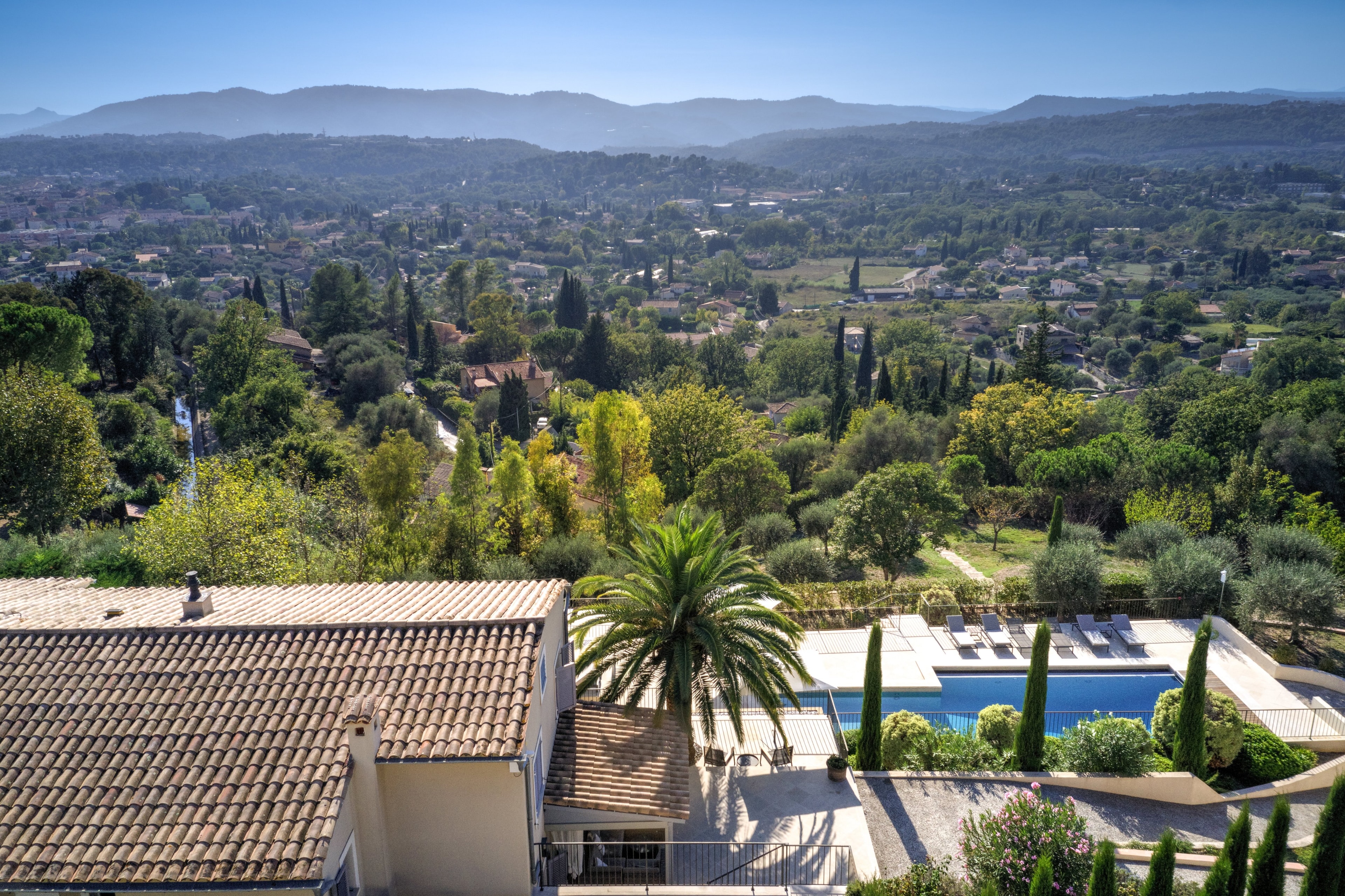
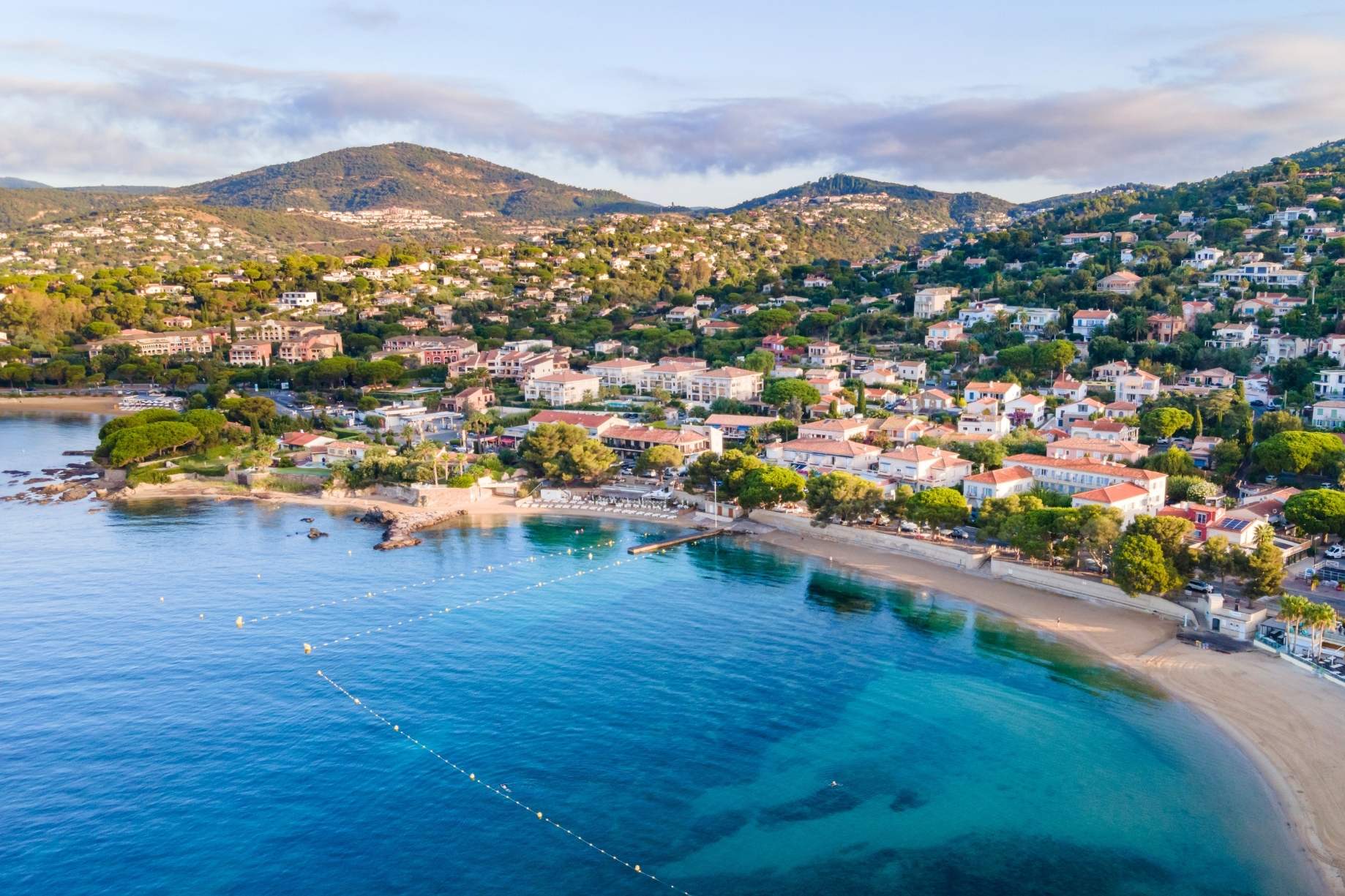
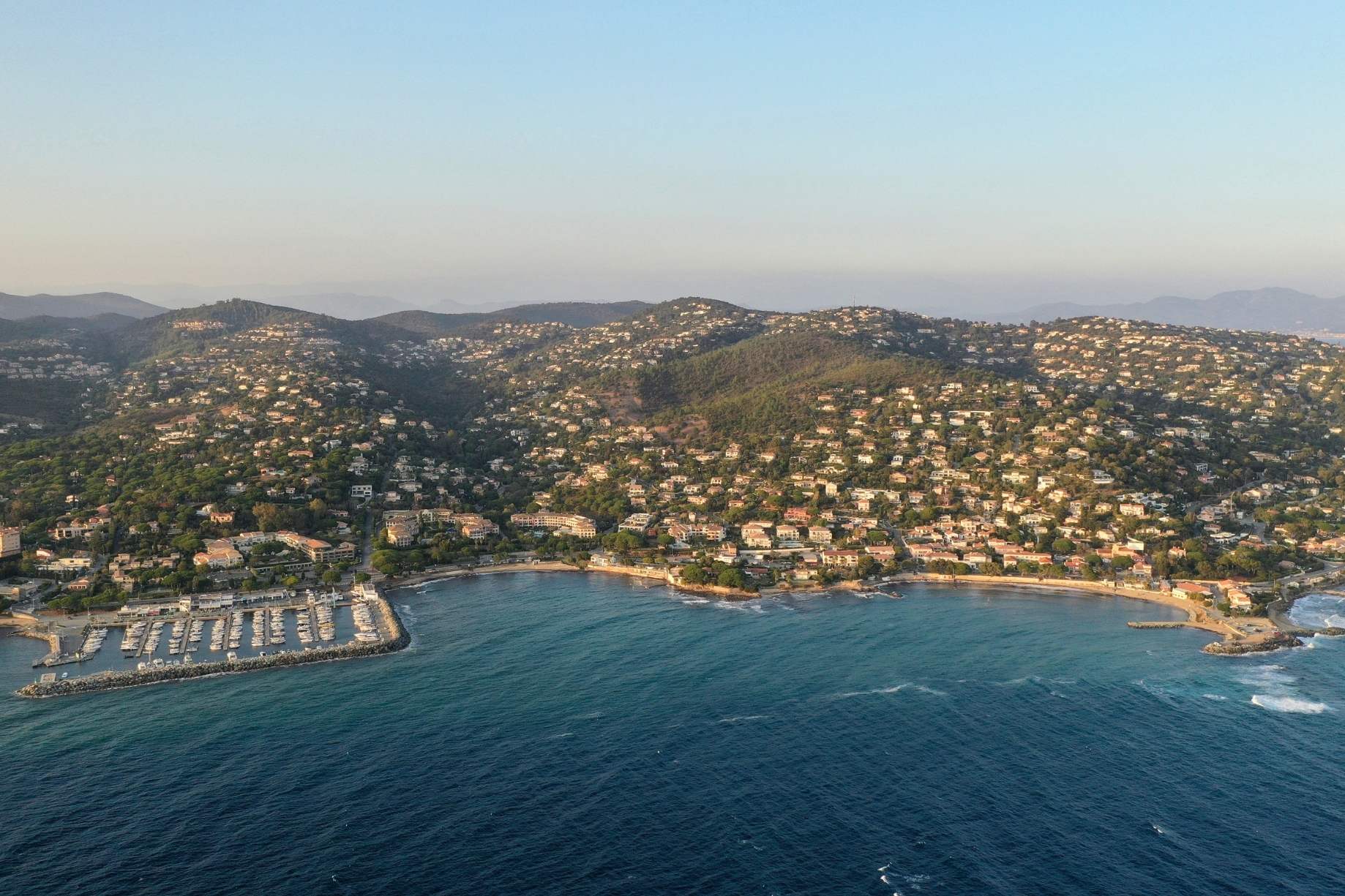
The gulf that curls around Saint-Tropez is where the Riviera goes on holiday from itself. The peninsula's celebrity port sits on the south shore; the north and west shores — Sainte-Maxime, the beach quarter of La Nartelle just east of it, the corniche hamlets of Les Issambres, and Grimaud rising behind the marina-city of Port Grimaud — deliver the same water, the same light and the same restaurants at a fraction of the fuss. This is villa country: pines, private pools, sandy beaches you can walk to, and a genuinely long season. It is also the heart of our Côte d'Azur inventory, with shares across the belt typically running from around €150,000 for entry-level villas to around €400,000 for substantial family homes, and reaching towards €600,000 at the flagship end.
Sainte-Maxime and La Nartelle suit families above all. The town faces Saint-Tropez across the water — the ferry shuttle takes twenty minutes and spares you the infamous summer road queue — and its beaches shelve gently, its seafront is walkable, and its market runs year-round. Full-ownership prices average around €5,600 per square metre for apartments and €7,800 for houses, per French portal averages as of mid-2026, with front-line villas far above that; our shares here span the widest range on the coast — typically from under €200,000 at entry level to around €600,000 at the flagship end, large villas with pools within reach of the sand.
Grimaud is the connoisseur's pick: a genuinely beautiful medieval hill village crowned by a ruined castle, ten minutes above its own coastline at Port Grimaud, the 1960s "Venice of Provence" whose canals and bridges make it one of France's most visited private developments. Village-and-sea is the daily rhythm — market and boulangerie up top, boat and beach below. The commune's property averages around €8,900 per square metre, with houses above €10,000 — figures on which the major French portals agree as of 2026 — which tells you what the whole-villa route costs here; our Grimaud shares typically sit in the mid-€100,000s to mid-€300,000s.
Les Issambres, strung along the corniche on the gulf's western approach, is the quiet one — a residential coast of coves, small sandy beaches and sentier du littoral walking, with Saint-Tropez twenty-five minutes away when you want it and blissfully absent when you don't. Whole homes average around €6,300 per square metre, per French portal averages as of 2026. Shares here typically run from the mid-€100,000s to the mid-€300,000s, and for buyers who want the Saint-Tropez gulf without the Saint-Tropez circus, this is the address we point to first. Our FAQ on the best fractional ownership around Saint-Tropez compares the gulf's towns in more detail.
The one honest caveat for the whole belt: it is the far end of our coast from the airport — 75 to 95 minutes' drive from Nice, or roughly an hour from the smaller Toulon–Hyères airport. Owners who fly in six times a year feel that transfer; owners who come four times for longer stays barely notice it, and are rewarded with the Riviera's best beaches.
Antibes and the Cap: the entry point to the legend
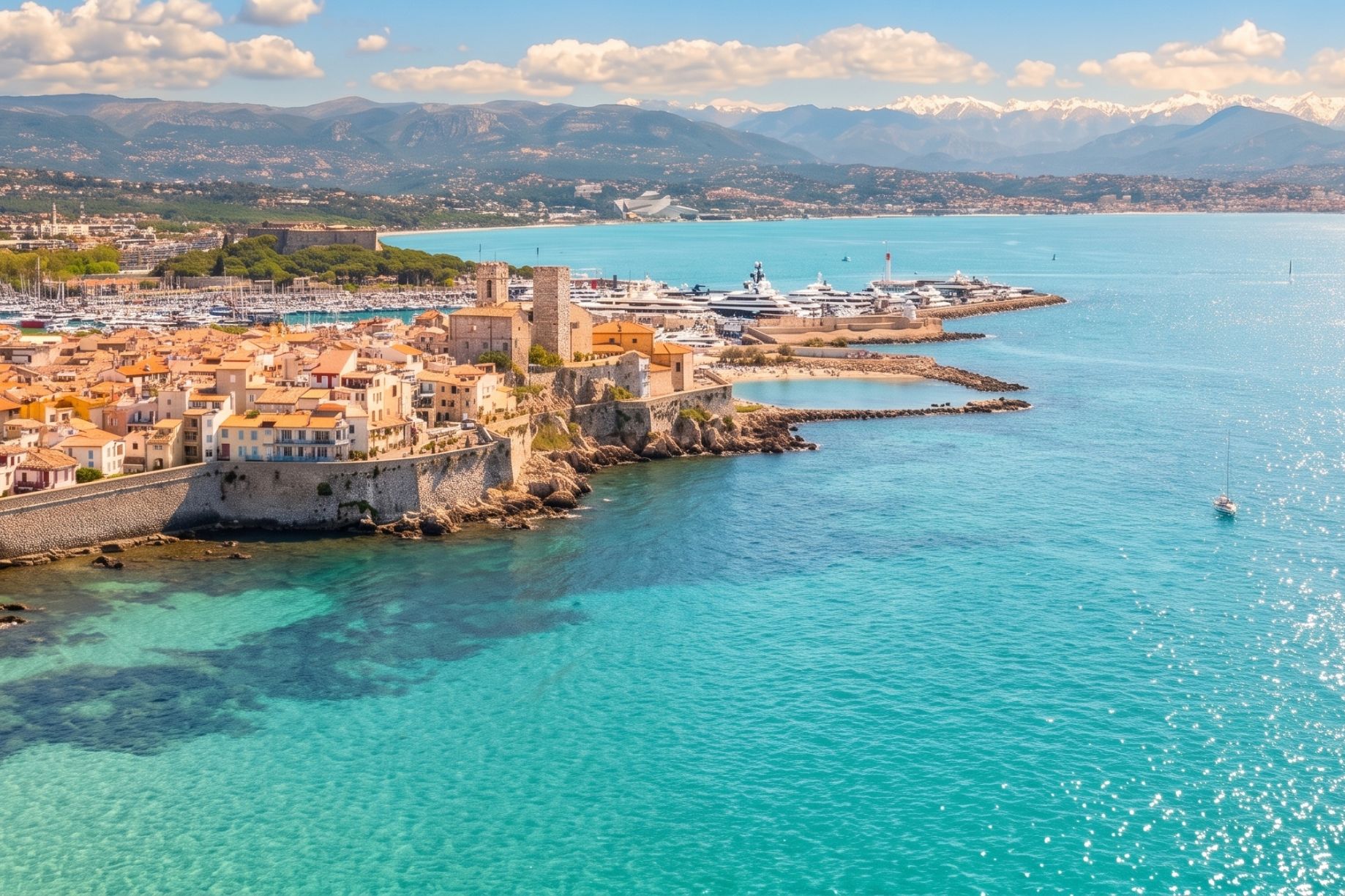
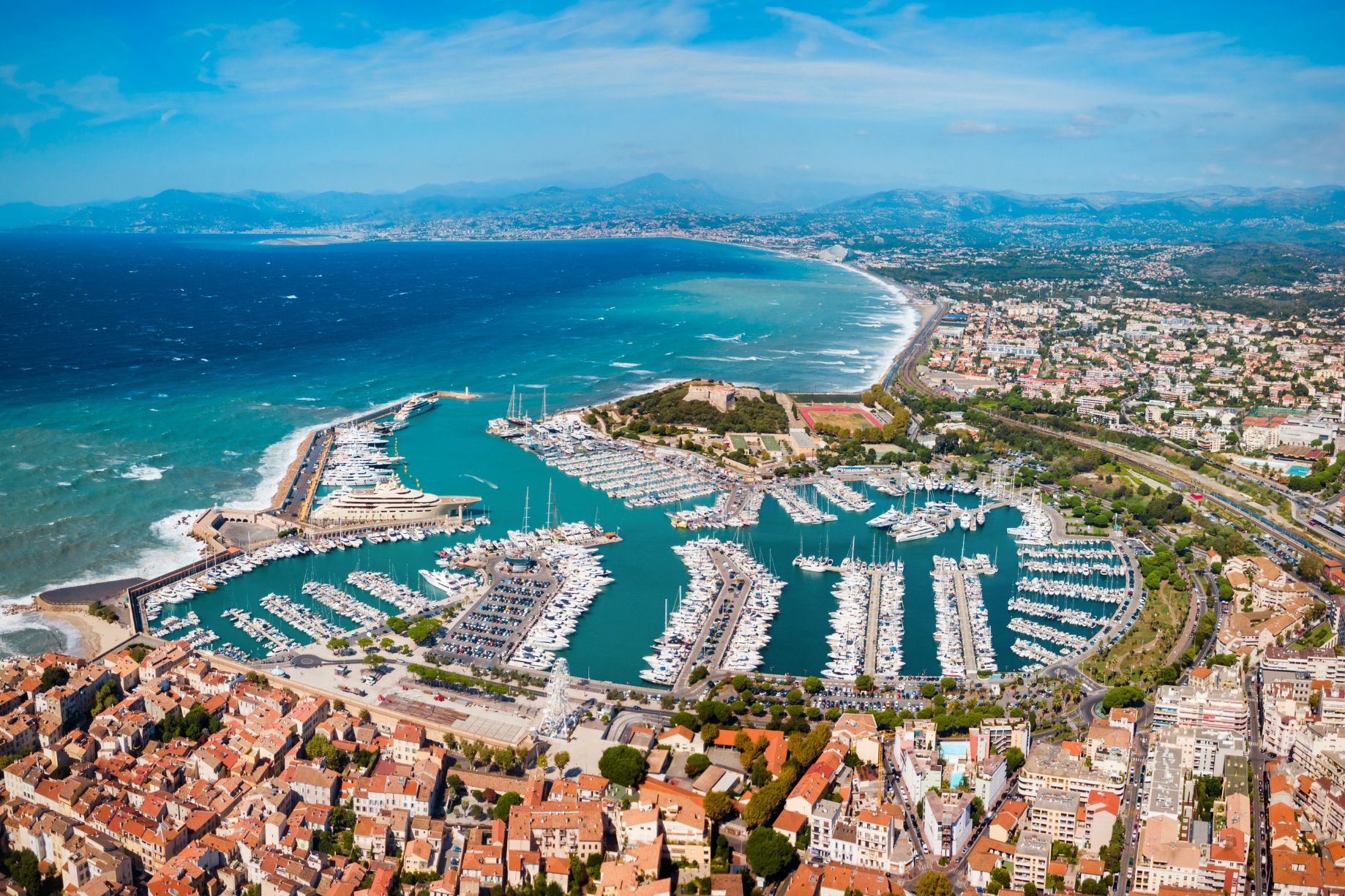
Antibes is where our Côte d'Azur pricing typically starts — shares currently from around €100,000 — and it may be the most complete town on the entire coast. Within its Vauban ramparts is a real, working Provençal old town: the Marché Provençal under its 19th-century canopy, the Picasso museum in the Grimaldi castle where the painter worked in 1946, and Europe's largest yacht marina at Port Vauban. Beyond the walls, the Cap d'Antibes runs out into the sea in a procession of pine-shaded lanes, the Garoupe beaches and the coastal path — some of the most expensive residential land in Europe, at anywhere from ≈€9,000 to €25,000-plus per square metre on 2026 estimates, while the town itself averages a far more approachable ≈€5,000–6,500 per square metre for apartments and around €7,500 for houses, per French portal averages as of 2026.
That spread is exactly why Antibes works so well for fractional entry: you buy into the town's life at the accessible end of its market, with the Cap as your daily walking route rather than your mortgage. Antibes suits first-time Riviera owners, couples, and anyone who wants to live carless — the town is 20 minutes from Nice airport by car and sits on the coastal rail line, with trains along the shore to Nice, Cannes and Monaco every half hour. Americans take note: this is the one address on our list where you can genuinely fly JFK–Nice, take a 25-minute train, and never touch a steering wheel all week.
The hill villages: Valbonne, Mouans-Sartoux, Fayence and Vallauris
Twenty to sixty minutes behind the coast rises the Riviera's other half — the arrière-pays of planned Renaissance villages, perfume towns and olive terraces where the light is the same but the pace is not. This is where the coast's full-time foreign community actually lives, and it is quietly excellent fractional territory: better houses for the money, easy parking, real winters-are-lovely liveability, and the sea still 20–30 minutes away.
Valbonne is the polished one — a rare grid-planned 16th-century village whose arcaded central square is ringed with restaurants, and whose international schools and proximity to the Sophia Antipolis technology park have given it one of the most Anglophone populations in France. It is 30 minutes from the airport and 20 from the beaches at Antibes. Full ownership here averages around €5,200 per square metre — houses nearer €6,300 — per French portal averages as of 2026, with the sought-after gated domaines around the village well above those figures. Our Valbonne shares typically sit in the €150,000–€300,000 band, and they are the listings we recommend most often to families planning school-holiday use.
Mouans-Sartoux, between Cannes and Grasse, is the insider's village: a compact medieval centre with a château, a serious bookshop-and-festival culture, and France's best small-town food credentials — the commune pioneered organic municipal food-growing. It is unglamorous in the best way, 35 minutes from the airport, with whole homes around €4,900 per square metre, per French portal averages as of 2026. Our inventory here sits at the premium end of our hill-country range — typically upwards of €500,000 a share — a substantial villa proposition for owners who want privacy and space over promenade.
Fayence, an hour from the airport in the Var hills behind the Estérel, is the value play of our entire Côte d'Azur portfolio. It is the archetypal perched village — a cascade of ochre houses under a clock tower, looking south across a plain of vineyards towards the Massif des Maures — in a district of eight villages perchés that the French themselves favour for summer houses. Property averages around €3,600 per square metre, per French portal averages as of 2026 — roughly half the coastal figure — and a Fayence share — typically in the high €200,000s — buys the kind of pool-and-view villa that would be seven figures whole. The trade: the beach is 35–40 minutes away at Fréjus. The reward: silence, stars, and Provence as it looked before the Riviera was invented.
Vallauris is the sleeper. Sandwiched between Cannes and Antibes, 25 minutes from the airport, it is the pottery town where Picasso spent his ceramics years — his War and Peace chapel remains — and its Golfe-Juan shoreline has sandy beaches and a marina without a single velvet rope. At around €5,000 per square metre — a figure on which the major French portals agree as of 2026 — it is one of the last honestly priced communes on this stretch of coast, and our shares here — typically under €200,000 — are among the strongest pure value propositions we list between Cannes and Nice.
Èze and the corniches: the balcony over the Mediterranean
East of Nice the Alps fall straight into the sea, and the three corniche roads stacked above the water carry some of the most photographed views in Europe. Èze is their crown: a medieval eagle's-nest village 400 metres above the Mediterranean, its lanes given over to galleries and its clifftop exotic garden to the best panorama on the coast. Monaco is ten minutes east; Nice fifteen west; the airport half an hour. This is trophy territory — houses in the commune average around €13,000–13,500 per square metre on 2026 portal data, the highest figure in our portfolio — and our Èze listing is priced accordingly on enquiry. It suits owners for whom the view is the point, who want Monaco's restaurants and season without Monaco's prices, and who will use shoulder-season weeks when the village exhales its day-trippers and becomes, once again, one of the most romantic addresses in France.
Villeneuve-Loubet and the Baie des Anges: the practical Riviera
Fifteen minutes from the airport where the Loup river meets the sea, Villeneuve-Loubet is the coast at its most usable: four kilometres of beach and seafront promenade, the sail-shaped Marina Baie des Anges — a listed landmark of 1970s architecture — a large marina, and a genuine old village with a medieval castle a couple of kilometres inland. It was the birthplace of Escoffier, the codifier of French cuisine, and his museum anchors the old town. Whole homes average around €6,100 per square metre, per French portal averages as of 2026. For owners, its argument is frictionless access: it is the shortest airport transfer in our portfolio, with Nice and Antibes each a few minutes away and neighbouring Cagnes-sur-Mer — whose racecourse-and-Renoir seafront we profiled in our Cagnes-sur-Mer co-ownership guide — completing one of the Riviera's most underrated stretches of everyday coast.
What about Nice, Cannes and Saint-Tropez themselves?
Readers reasonably ask why our inventory rings the marquee names rather than sitting on them, and the answer is arithmetic, not aesthetics. The three most famous addresses on the coast carry fame premiums that fractional buyers mostly do better to borrow than to buy. Saint-Tropez trades at roughly €11,000 per square metre for apartments and upwards of €21,000 for houses on mid-2026 portal data — trophy pricing for a village whose pleasures our Grimaud, Les Issambres and Sainte-Maxime owners enjoy from across the water at a third of the entry cost, twenty minutes by boat. Cannes' Croisette commands ≈€8,500–16,000 per square metre — Boulevard de la Croisette itself averages ≈€11,600 — against a city-wide apartment average of ≈€6,000, a spread that says plainly you are paying for the postcode, not the coastline; our Vallauris and Mouans-Sartoux homes sit ten minutes from the Palais des Festivals on the right side of that spread. Nice, the coast's true metropolis — its Promenade quarter now UNESCO-listed — averages ≈€5,200 per square metre for apartments city-wide, rising to around €8,600 on Mont Boron's sea-view slopes (prime addresses towards €12,500), with Villefranche-sur-Mer beyond at ≈€8,900 for apartments and ≈€12,100 for houses. These are magnificent urban markets, and when the right fractional homes appear in them we list them — our Cannes co-ownership analysis tracks exactly this space. But the enduring Riviera wisdom, which fractional pricing only sharpens, is that the best address is the one ten minutes from the famous one: you inherit the entire coast's infrastructure, restaurants and glamour, and decline to fund its brand.
How should you choose between the two coasts?
After hundreds of Côte d'Azur enquiries, we can compress the decision to three questions. First, beach or airport? If your ideal day starts barefoot on sand, weight the Golfe de Saint-Tropez and accept the 75–95-minute transfer; if you will fly in six or eight times a year, often for short stays, the Antibes–Vallauris–Villeneuve-Loubet corridor's 15–25 minutes from the runway is worth more than any view. Second, town or terrace? Antibes and Èze give you café-and-culture living where a car is optional; Valbonne, Fayence, Mouans-Sartoux and the gulf villas give you pools, gardens and dinner outdoors for ten. Third, season shape? School-holiday-bound families should favour the family-calibrated beaches of Sainte-Maxime and the international-school orbit of Valbonne; freer diaries can chase value and quiet in Fayence or shoulder-season romance in Èze. Buyers still torn should read our short answer on the best Côte d'Azur fractional options — or simply ask us, with your actual calendar in hand.
The coast at a glance
Indicative figures as of mid-2026. Full-ownership prices are commune-level averages cross-checked across at least two major French property portals and vary widely by street and sea view. Share ranges are broad, durable bands for our inventory in each area — homes rotate as they sell out, so the live listings on this page always show current pricing. Airport times assume a car in normal traffic from Nice Côte d'Azur.
| Town | Vibe | Typical share range | Full ownership (avg €/m², 2026) | Time from Nice airport |
|---|---|---|---|---|
| Antibes | Ramparts, market, yachts — the complete Riviera town | From ≈€100,000 | ≈€5,000–6,500 (apartments) to ≈€7,500 (houses); Cap ≈€9,000–25,000+ | 20 min (or 25 min by train) |
| Valbonne | Arcaded village square, international families | ≈€150,000–€300,000 | ≈€5,200 (houses ≈€6,300) | 30 min |
| Grimaud | Medieval hill village with its own canal-side coast | ≈€150,000–€400,000 | ≈€8,900 (houses ≈€10,000+) | 90 min |
| Les Issambres | Quiet corniche coves on the Saint-Tropez gulf | ≈€150,000–€400,000 | ≈€6,300 | 75 min |
| Sainte-Maxime / La Nartelle | Family beaches facing Saint-Tropez | ≈€150,000–€600,000 | ≈€5,600 (apartments) to ≈€7,800 (houses) | 85 min |
| Vallauris (Golfe-Juan) | Picasso's pottery town, unpolished beach value | Typically under ≈€200,000 | ≈€5,000 | 25 min |
| Fayence | Perched-village Provence above the Estérel | ≈€250,000–€300,000 | ≈€3,600 | 60 min |
| Mouans-Sartoux | Bookish, gastronomic village between Cannes and Grasse | ≈€500,000+ | ≈€4,900 | 35 min |
| Èze | Clifftop eagle's nest beside Monaco | See current listings | Houses ≈€13,000–13,500 | 30 min |
| Villeneuve-Loubet | Beaches, marina and the shortest transfer on our list | See current listings | ≈€6,100 | 15 min |
What does a Côte d'Azur fractional home actually cost?
Start with the number that frames everything: on this coast, the home you would actually want — a three-or-four-bedroom villa with a pool near the water, or a handsome apartment inside a historic centre — is a €1 million to €5 million purchase whole. French acquisition costs add roughly 7–8% on a resale property before you have bought a single deckchair. A fractional share divides both numbers by the number of owners, and because the operator executes one purchase for eight households, those one-off French costs are effectively spread eight ways too.
Here is what that arithmetic looks like across the bands our Côte d'Azur inventory typically occupies. The figures are illustrative — share pricing also reflects the operator's furnishing, set-up and reserves, and our listings rotate as homes sell — so treat the comparison as an order-of-magnitude guide, not a valuation:
| Illustrative example | Typical 1/8 share band | Indicative whole-home equivalent (×8) | Whole-home cost incl. ~7.5% French purchase costs |
|---|---|---|---|
| Entry share — apartment or smaller home in a coastal town | ≈€100,000–€150,000 | ≈€800,000–€1,200,000 | ≈€860,000–€1,290,000 |
| Mid-range share — family villa on the gulf or in the hill villages | ≈€150,000–€350,000 | ≈€1,200,000–€2,800,000 | ≈€1,290,000–€3,000,000 |
| Premium share — large villa with pool near the beaches | ≈€350,000–€600,000 | ≈€2,800,000–€4,800,000 | ≈€3,000,000–€5,150,000 |
Note, too, what the share price contains that a whole-home price does not. When you buy a villa privately at €2.8 million, the figure on the compromis is the beginning: acquisition costs, renovation, furnishing to a standard you would actually holiday in, pool compliance, and the first year's unbudgeted surprises follow. A fractional share price is closer to an all-in figure — the home arrives purchased, structured, renovated, furnished and insured, with reserves established and management running. Comparing a share price with a raw asking price therefore understates the model's advantage; the fair comparison is with a whole home made genuinely holiday-ready, which on this coast routinely adds a five-to-ten-percent layer before the first swim.
On financing: many buyers pay cash at these share sizes, but part-financing is not unusual, and routes exist — from arrangements some partner operators can introduce to security taken on assets at home. French mortgage lending against fractional structures is more specialised than against whole homes, so if leverage matters to your plan, raise it at first enquiry and we will point you to homes and operators where it is realistic. As ever on this page: structure-dependent, and a matter for advice, not assumption.
Three further cost principles matter more than any table:
- Running costs are shared in proportion to ownership. As a co-owner you pay one-eighth of the home's total running costs — property tax, insurance, utilities, pool and garden care, maintenance reserves and the operator's management — shared between all owners. Each home has its own annual budget, prepared by the operator and disclosed before you buy; we deliberately do not quote generic figures, because a Fayence village house and a La Nartelle pool villa are different animals. What we will say is structural: eight owners funding one roof is categorically cheaper per household than one owner funding it alone, with none of the surprise-invoice risk of solo ownership, since reserves are budgeted in advance.
- The purchase process costs are in the share price, once. France's 7–8% acquisition drag — the transfer duties that departments have been permitted to raise since April 2025, the notaire, the registrations — is incurred on the whole home at purchase and reflected in share pricing. You do not personally engage a notaire for a second round of duties each time a share later changes hands within the ownership structure, which is one of the quiet efficiencies of the model. (Structures vary by operator and home; the tax treatment of share transactions is a matter for professional advice, as we set out in our French SCI structure guide.)
- The thresholds that sting whole-home owners sit far above a share. France's IFI wealth tax applies to non-residents once net French property wealth passes €1.3 million as of 2026 — a level a single Riviera villa exceeds effortlessly, and which even our most expensive share does not approach. The second-home tax surcharges that pressured communes may levy fall on the property and are handled within the home's shared budget, not as a personal ambush. The financial pain France reserves for trophy ownership is, for the most part, simply not your problem at one-eighth scale.
Set against the alternative buyers most often weigh — five-star hotel holidays — the arithmetic tilts further. Six weeks a year in a good Riviera hotel for a family is a recurring high-five-figure outgoing that builds nothing. The same weeks in an owned share come with an asset on Europe's most proven coast, at running costs divided by eight. It is not that hotels are wrong; it is that at six-plus weeks a year, ownership economics take over — and fractional is the form of ownership priced to your actual usage.
What is a year on the Riviera really like?
The strongest argument for owning here — rather than in a destination with a twelve-week season — is what the calendar gives back. A Côte d'Azur share's six-plus weeks can be spent in four different coasts that happen to share an address.
Spring (April–May) is the insider's Riviera. The mimosa and orange blossom are out, the sea is warming, restaurant terraces reopen, and then the coast puts on the most concentrated run of glamour in Europe: the Cannes Film Festival — its 79th edition runs 12–23 May 2026 — floods the Croisette with the industry, and the Monaco Grand Prix follows, from 2026 in its new early-June slot (race day 7 June 2026). Owners in Vallauris, Valbonne and Mouans-Sartoux can dip into festival-season electricity for an evening and retreat to village quiet by midnight; owners on the Saint-Tropez gulf watch the superyachts migrate past their beaches. May weeks are the ones seasoned co-owners book first.
Summer (June–September) is the sea itself: four months when the Mediterranean holds above comfortable swimming temperature, rosé lunches run to four o'clock, and every port from Antibes to Sainte-Maxime is in full sail. The cultural calendar keeps pace with the beaches: Jazz à Juan, the venerable festival that has brought jazz royalty to the pine grove at Juan-les-Pins since 1960, lights up the Antibes shore each July, and every town from Vallauris to Sainte-Maxime runs its own cycle of night markets, fireworks and fêtes votives. It is also when the sharing model shows its fairness — partner operators' scheduling systems rotate the peak weeks equitably year to year, so no owner monopolises August and no owner misses it forever. The gulf beaches, the Garoupe, the coves at Les Issambres: this is the postcard, and you own a piece of it.
Autumn (October–November) may be the connoisseur's season. The crowds leave, the water stays swimmable well into October, and the hinterland comes into its own: the vendange in the Var vineyards around Grimaud and Fayence — the Côtes de Provence heartland — walking on the Estérel's red porphyry ridges and the sentier du littoral, truffle menus beginning in the village restaurants. The sea gets one last festival season too: September brings the Cannes Yachting Festival, Europe's largest in-water boat show, and as September turns to October Les Voiles de Saint-Tropez fills the gulf with classic racing yachts — arguably the most beautiful week of the entire year to own on the Saint-Tropez shore, and a spectacle our Grimaud and Les Issambres owners watch from their own coast. Èze and the corniches, mobbed in July, return to themselves. Owners with flexible diaries increasingly tell us autumn weeks are the ones they would fight for.
Winter (December–March) is the Riviera's original season — it was built as a winter resort, and the habit still fits. Days are commonly mild enough for lunch outside; Nice's carnival and Menton's lemon festival brighten February; the markets and museums are gloriously unqueued. And there is snow: the Southern Alps ski stations of Auron and Isola 2000 sit roughly an hour and a half's drive from the coast, close enough that a genuine ski-morning, swim-adjacent day is a realistic — and much-repeated — owner's boast. Few fractional destinations anywhere can put you on a piste and a promenade in the same afternoon.
Who buys fractional property on the Côte d'Azur?
Around half of the buyers who enquire through our marketplace are American, with most of the remainder from the UK, Canada, Scandinavia, the Netherlands and Germany. The personas below are drawn from the enquiries we actually qualify, not from marketing imagination.
The American transatlantic family. Typically coastal-city professionals who fell for the Riviera on a honeymoon or a Cannes work trip, and for whom the direct flights decided it: JFK and Newark to Nice non-stop, Washington Dulles joining in 2026, and a coast where — uniquely in the European villa market — a car is optional. Antibes is their natural first look (train from the airport, walkable town, entry pricing from around €100,000), Valbonne their family upgrade. They value the fully managed model most of all: nobody is flying eight hours to argue with a pool contractor. Two practical notes we give every US buyer: France imposes no residency or citizenship requirement on property buyers, and time in France counts against the Schengen area's 90-days-in-180 visa-free allowance — comfortably more than a share's annual usage, but worth knowing if you plan long European summers.
The British second-home realist. Post-Brexit, UK buyers know the 90/180 rule intimately and have concluded that a whole French house they may visit ten weeks a year is a mismatch of capital and calendar. A share matches the calendar exactly. They gravitate to the Saint-Tropez gulf — Grimaud, Les Issambres, Sainte-Maxime, typically from around €150,000 — where the villa culture feels familiar and the flying (Nice, or Toulon in season) is trivial. The tax questions they ask most — income, capital gains, inheritance across two systems — are addressed in our UK buyer's guide to French fractional tax; the short version is that a modest deeded share keeps most of them below the thresholds that complicate whole-home ownership, though personal advice is essential.
The Northern European sun-seeker. Scandinavian, Dutch and German buyers treat the Riviera as their southern balcony — two hours' flight, reliably 10–15 degrees warmer — and are the most seasonally strategic owners we see: May and September sea weeks, a February escape, school holidays in the hills. They favour Valbonne and Mouans-Sartoux for liveability, and they are the buyers most likely to actually take the January ski-and-swim double.
The remote-work couple. A persona the direct flights and fibre broadband created: professionals in their thirties and forties who can work anywhere for two or three weeks at a stretch and have concluded that "anywhere" should occasionally have a sea view. They use their share differently — fewer, longer stays, often in the shoulder months when the coast is cheapest to reach and loveliest to live in — and they prize towns over villas: Antibes for its café-office culture and rail line, Villeneuve-Loubet for the airport sprint, Valbonne for the Sophia Antipolis tech ecosystem on its doorstep. For them the Schengen 90/180 arithmetic matters most, and a six-to-eight-week annual entitlement fits neatly inside it with room for the rest of Europe.
The downsizing (or right-sizing) owner. A persona growing every year: couples who owned a whole Riviera or Provence home, tired of its administration and its taxes, sold it — and re-entered as co-owners at an eighth of the capital, keeping the coast and shedding the burden. They are our most decisive buyers, because they have lived the alternative. Several also diversify: two shares in different towns — sea and hill village, say — for less than a third of what their old single house tied up.
How does buying through Co-Ownership Property work?
We have kept the process deliberately simple, and deliberately human. There is no obligation, no fee to buyers, and no pressure mechanics at any stage — the model sells itself to the right buyer or it should not sell at all.
- 1. Browse and shortlist. Our Côte d'Azur listings — and the wider France portfolio — carry photography, share pricing, usage entitlements and the home's specification. Compare freely; request galleries and details on anything that intrigues you.
- 2. Enquire. Tell us what you are weighing — towns, budget, school-holiday constraints, how you would actually use six-plus weeks. This is a conversation, not a form-filling exercise; our team answers specific questions with specific answers, usually the same day.
- 3. We qualify and introduce. When a home fits, we introduce you directly to the partner operator that owns and manages it. Because we work with multiple operators across the coast, our interest is the right match, not any particular sale.
- 4. The operator handles the purchase. From there the professionals take over: reservation of your share, full documentation of the home's ownership structure, budget and usage rules, and completion through the appropriate French legal channel. Structures vary — many homes are held through a dedicated property company on the SCI model whose shares the co-owners hold, others through comparable vehicles or direct co-ownership before a notaire — and each has tax and inheritance implications that depend on your nationality and circumstances, which is why we always advise independent legal and tax advice, and why we publish a plain-English guide to the French SCI structure for foreign buyers.
- 5. You own. Your one-eighth deeded share is yours: use your weeks, swap and gift stays within the operator's rules, sell on the open market when you choose (typically after a short initial holding period), pass the share to your heirs. The home is professionally managed throughout; your involvement is limited to booking weeks and, once a year, reviewing a budget.
Because we sit between buyers and multiple operators, we also see which questions separate satisfied owners from disappointed ones. Ask any operator — ours included — these, and insist on documented answers:
- Exactly what do I own? The legal form of the share, the entity that holds the property, and where your interest is recorded.
- How are weeks allocated, and can I see two years of real booking data for a comparable home — not the brochure explanation, the actual pattern?
- What is this home's annual budget, line by line, and what has the operator's history of budget accuracy been across its portfolio?
- What are the resale rules? Holding period, transfer process, any fees, and — pointedly — how many shares has the operator's ecosystem actually resold, at what outcomes?
- What happens if the operator itself fails? The answer you want is that the property-holding structure is separate from the management company, so the owners' asset survives a manager's troubles and management can be replaced.
- What are the house rules on pets, guests, smoking, and letting — before you assume, not after?
Good operators answer all six fluently, in writing. Part of our qualification role is asking them so that you compare homes on facts rather than photography.
From first enquiry to keys, buyers who know what they want commonly complete within a few weeks — French conveyancing formalities included — because the home itself was purchased and structured long before you arrived. That, in the end, is what you are paying the operator for: the Riviera without the two-year purchase saga.
Côte d'Azur fractional ownership FAQs
These are the questions buyers actually put to our team, grouped in the order they tend to arise — from the purchase itself, through the legal and tax mechanics, to what ownership feels like week to week. Where a question turns on law or tax, our answers are general orientation, not advice: structures vary by operator and home, and we always recommend independent legal and tax counsel before you commit.
How does buying a fractional share on the Côte d'Azur actually work, step by step?
You browse and shortlist homes, enquire with our team, get introduced to the partner operator that owns the home, reserve your share, complete the legal formalities, and receive your deeded one-eighth — commonly within a few weeks of deciding. The reason it is so much faster than a conventional French purchase is that the hard part already happened: the home was bought, renovated, furnished and legally structured before you arrived, so your completion is a documented entry into an existing ownership structure rather than a fresh conveyance. Along the way you review the home's full documentation — ownership structure, annual budget, usage rules — and there is no fee to buyers and no obligation at any stage. The full process is described in the how-buying-works section above, and the same model applies across our France portfolio.
Can Americans buy a Côte d'Azur fractional share?
Yes, without restriction. France imposes no residency, citizenship or visa requirement on foreign property buyers, and Americans purchase French fractional shares routinely — they are roughly half of our enquiries. You will complete the operator's standard checks and the usual French formalities, all manageable remotely. For visits, US citizens enter visa-free under the Schengen 90-days-in-any-180 rule, which comfortably covers a share's six-plus annual weeks; owners planning extended European stays should track their days or consider a long-stay visa. Ownership itself confers no immigration status. With daily non-stop flights from New York to Nice as of 2026 — and Washington DC joining seasonally — the Riviera is, practically speaking, the easiest European coast for American co-owners to reach.
Can I complete a Côte d'Azur fractional purchase remotely from the US or UK?
Yes — remote completion is routine, and a good number of our American and British buyers never set foot in France between enquiry and their first owner's stay. Viewings can be done by live video walk-through, documentation is exchanged digitally, and identity and anti-money-laundering checks are handled at distance. Where a step requires a notarised signature in France, buyers commonly grant a power of attorney so a representative signs on their behalf — a long-standard mechanism in French conveyancing. The operator manages the sequence and will tell you exactly which documents need certification in your home country. English-language support is the norm throughout: the Riviera's operators, and this coast generally, work in English every day.
Can I visit the home before buying a share?
Yes — viewings can usually be arranged through the operator, and we actively encourage serious buyers to see both the home and, just as importantly, the town. A share commits you to returning to one place for years, so spend a day walking it: the market, the beach, the drive from the airport. If you can, visit in the season you would use most — a Golfe de Saint-Tropez villa in October tells you more about your future ownership than the same villa in the August glow. Our team can help plan an itinerary that covers two or three shortlisted homes and towns in a single trip; plenty of buyers turn the viewing trip into the holiday that decides them.
What does the French notaire do in a fractional purchase?
The notaire is the state-appointed legal officer who authenticates French property transactions — and in a fractional purchase, most of the notaire's heavy lifting was done when the operator originally bought the home: verifying title, conducting searches, collecting transfer duties and registering the deed. Whether your own completion passes through a notaire depends on the structure: a directly held co-ownership interest is formalised before a notaire, while entry into a property company on the SCI model is generally documented as a share transaction at company level. Either way you receive formal, documented evidence of your ownership. The distinction matters mainly for costs and tax treatment, which is why we advise professional guidance and publish a plain-English guide to the French SCI structure.
Can I buy a fractional share jointly with my spouse or family?
Yes — couples routinely buy a share together, and families sometimes hold one jointly or through a family entity. The share's usage entitlement attaches to the share itself, so a jointly held eighth still carries the same six-plus weeks, booked under one owner account that the household shares. How you title the purchase — joint names, one name, or an entity — affects inheritance and tax treatment differently in France, the US and the UK, so it is worth deciding deliberately rather than by default; the operator's documentation will accommodate the common configurations. As ever with cross-border ownership, take professional advice on the titling before completion rather than after.
Which Côte d'Azur area is best for a fractional share under €200,000?
Our under-€200,000 shares typically cluster in two zones. On the Golfe de Saint-Tropez, entry-level villas around Grimaud, Les Issambres and Sainte-Maxime regularly appear in the €150,000–€200,000 band — the pick for beach-first villa living. Between Cannes and Nice, Antibes currently opens the coast from around €100,000, with Valbonne and Vallauris typically joining below the €200,000 line — the pick for airport proximity, town life and year-round use. In blunt terms: choose the gulf for the best beaches, choose the Antibes–Valbonne corridor for the best logistics; there is no wrong answer, only a wrong match to your habits. The live listings on this page show exactly what is available under €200,000 today.
What legal structure holds a Côte d'Azur fractional home?
Typically a dedicated property company holds the home — on the model of the French SCI, long familiar to families sharing property in France — and the eight co-owners hold that company's shares; some homes instead use a direct co-ownership interest formalised before a notaire. The structure is specific to each home and operator, and it is disclosed in full in the purchase documentation, along with the co-ownership agreement that governs budgets, bookings and resale. The choice of structure carries tax and inheritance consequences that differ by your country of residence, which is why we keep this answer general, point you to our SCI guide for foreign buyers, and recommend independent advice before signing.
Is a fractional share a real property deed or just a membership?
It is real, recorded ownership — either registered shares in the company that owns the home or a notarised co-ownership interest in the property itself — not a club membership. Nothing about it resembles a timeshare: there is a specific, addressable house or apartment underneath your ownership, your interest can be sold on the open market, left to your heirs, and it rises and falls with the value of Riviera property rather than depreciating like a consumed product. When you evaluate any fractional offer, this is the first thing to verify in the documentation: exactly what you own, and where that ownership is recorded.
What happens if another co-owner stops paying their share of the costs?
Well-designed fractional structures ring-fence you from a defaulting co-owner: the home's budget carries reserves, the co-ownership agreement gives the operator enforcement tools, and persistent default typically ends in the compulsory sale of the defaulter's share — not in liability landing on the other seven owners. The mechanics vary by operator and structure, which is exactly why our list of questions to ask any operator includes the default provisions: ask to see them in writing before you buy. In practice defaults are rare — co-owners are vetted at purchase and the sums involved in a shared budget are modest relative to the owners' means — but the protections should exist on paper regardless.
What happens if the operator goes out of business?
The home does not belong to the operator — it sits in a separate ownership structure held for the co-owners, so an operator failure should mean replacing the manager, not losing the asset. This separation between the property-holding structure and the management company is the single most important piece of due diligence in any fractional purchase, and reputable operators document it clearly: the owners collectively could appoint a new manager and the house, the title and your share would carry on. Verify it in writing for the specific home before you commit — it is one of the six questions we tell every buyer to insist on, and part of what our qualification process checks before an introduction.
Can I leave my Côte d'Azur fractional share to my children?
Yes — a fractional share is an inheritable asset that passes with your estate like any other property interest. The details deserve planning: French succession law includes forced-heirship rules whose reach depends on how the share is structured and where you are resident, and France maintains double-tax arrangements with countries including the United States and the United Kingdom that govern how estates are treated across borders. A share held through a property company is generally dealt with differently from a directly held interest. None of this is a reason for alarm — shares pass to heirs routinely — but it is a reason to take cross-border estate advice at purchase, when structuring choices are still open, rather than leaving the question to your executors.
What taxes and fees do I pay when buying a fractional share in France?
The heavy French acquisition costs — roughly 7–8% of the price on a resale home, 2–3% on a new build, as of 2026 — were incurred once, when the operator bought the property, and sit inside the share price rather than being billed to you again. Your own completion may carry transaction or registration costs that depend on the structure — modest by comparison, and itemised by the operator before you commit. This is one of the model's quiet efficiencies: France's purchase-cost drag, sharpened since departments were permitted to raise the main transfer duty from April 2025, is spread across eight owners instead of falling on one. For the fuller tax picture by nationality, start with our UK buyer's guide to French fractional tax and take personal advice.
What running costs will I pay on a Côte d'Azur fractional home?
As a co-owner you pay one-eighth of the home's total running costs, shared between all owners — covering property taxes, insurance, utilities, cleaning, pool and garden care, maintenance reserves and professional management. Every home has its own transparent annual budget, prepared by the operator and disclosed in full before you commit, so you evaluate real numbers for the actual house rather than an estimate. We deliberately publish no generic figure, because homes range from village apartments to large pool villas; the reliable principle is that eight households funding one home is far cheaper per household than sole ownership of the same home, with costs smoothed and budgeted rather than arriving as surprises.
Do I pay French property taxes such as taxe foncière as a co-owner?
Yes, but not as a separate personal bill: French property taxes such as the annual taxe foncière are levied on the home itself and are paid through the home's shared budget, of which you fund your one-eighth. The same applies to the second-home surcharges that some pressured communes levy — they attach to the property and are handled within the budget the operator prepares and discloses each year. This is one of the practical comforts of the managed model: French property taxation, which whole-home owners administer personally in a foreign system, reaches you as a single transparent line in an annual budget rather than as correspondence from a French tax office.
Will I owe French wealth tax (IFI) on a fractional share?
Almost certainly not on the strength of one share: France's IFI wealth tax applies only once your net taxable French property wealth exceeds €1.3 million as of 2026 — far above any share in our current Côte d'Azur range. For non-residents, only French property counts towards the threshold, but multiple French assets aggregate: a share plus other French property could, in combination, approach the line for substantial portfolios. The contrast with whole-home ownership is stark — a single good Riviera villa clears the threshold on its own — and it is one of the quieter financial arguments for owning an eighth. If your French holdings are significant, take professional advice; for most share owners, IFI is simply not in the picture.
Do I pay capital gains tax when I sell my fractional share?
In general, yes — France taxes gains on French property interests, with taper relief that reduces the bill the longer you hold, and your home country may also tax the gain, normally with credit for French tax under the applicable double-tax treaty. The precise treatment depends on how the home is structured, how long you have owned, and where you are tax-resident, so we keep this deliberately high-level: budget for tax on a gain, expect long holding periods to be treated more gently, and get personal advice at the point of sale. UK owners will find the cross-border basics in our UK buyer's tax guide; American owners should work with a cross-border accountant familiar with both systems.
Do American owners have extra tax filing obligations?
Possibly — the United States taxes its citizens on worldwide income and requires reporting of certain foreign assets and foreign-entity interests, so a French share, particularly one held through a French property company, can create US filing obligations even in years when little or no tax is actually due. A usage-only share generates no income, which keeps the substance simple; the complexity, where it exists, is in the reporting. This is well-trodden ground — American ownership of French property through SCI-style structures is decades old and cross-border accountants handle it routinely — but it belongs on your adviser's desk before purchase, not after. Treat this answer as orientation, not tax advice.
Can I get a mortgage on a Côte d'Azur fractional share?
Most buyers pay cash — French banks rarely lend against fractional shares — but part-financing is not unusual, through arrangements some partner operators can introduce or through borrowing secured on assets in your home country. French mortgage lending is built around whole properties, so the conventional route of a French bank loan against your share is generally not available; buyers who want leverage usually arrange it on their side of the border instead. If financing matters to your plan, say so at first enquiry: we will point you towards the homes and operators where it is realistic, and you can weigh the structure with your own adviser before committing.
Can I rent out my unused weeks on the Côte d'Azur?
It depends on the operator, and most Côte d'Azur fractional homes are usage-only: shares are designed for owners' enjoyment, not rental yield, and many operators prohibit subletting outright while others permit limited arrangements. If rental income is a priority, tell us at enquiry and we will steer you to operators whose rules allow it. Bear in mind that France has been tightening short-term letting generally — the Le Meur law of November 2024 brought national registration, energy-performance conditions and lower municipal letting caps — which strengthens the case for treating a Riviera share as a lifestyle asset with appreciation potential rather than an income vehicle. Full detail in our FAQ: can I rent out my unused weeks?
Can family and friends use my weeks without me?
Generally yes — most operators let you send family or friends in your place within the house rules, so your weeks need not go unused in a busy year. Guest stays are registered through the same booking platform you use yourself, the changeover and cleaning service runs exactly as it would for you, and you remain responsible for your guests as the owner. House rules set sensible limits — occupancy numbers, minimum ages for unaccompanied stays and the like — and they differ from home to home, so check the specifics in the documentation. Note the distinction from letting: lending weeks to people you know is normal owner behaviour; charging strangers for them is renting, which most usage-only homes prohibit, as covered in the rental question above.
Can I bring my dog or cat to a fractional home?
It depends on the individual home: many Côte d'Azur fractional homes welcome pets, others do not, and the policy is fixed in the house rules agreed by the owner group, so it will not change under you after purchase. If travelling with a dog matters to you, say so in your first enquiry and we will simply filter the shortlist to pet-friendly homes. The coast itself is famously dog-tolerant — café terraces, village squares and, outside the summer season, many beaches — and several of our owners' most-repeated routines involve a dog, a morning market and the sentier du littoral. As with every house rule, get the pet policy in writing rather than by assurance.
Can I swap weeks with other owners or stay in other homes?
Within your own home, swapping is usually straightforward — co-owners trade weeks through the booking calendar all the time, and the scheduling systems are built to accommodate it. Access to other homes is a different matter: some operators offer owners stays across their wider portfolio, which can be a delightful perk, but it varies by operator and is typically a discretionary benefit rather than a contractual right. Our advice is to buy the home you actually want to return to, treat any cross-portfolio access as a bonus, and confirm in the documentation which entitlements are guaranteed and which are goodwill. If variety is your priority, tell us — it may point to a different home, or a different structure, than you first shortlisted.
Are the homes furnished, and can I store personal belongings there?
Yes — every home is professionally furnished and equipped by the operator before the first owner stay, and most homes give each owner private storage for personal effects between visits. The interiors are specified by the operator's design teams to a standard built for years of shared use; owners do not each choose the sofas, which is precisely why the homes stay coherent and hotel-crisp. Owner storage typically means a lockable cupboard or wardrobe space for the things repeat visitors accumulate — beach kit, a wetsuit, walking boots, the good olive oil — though capacity varies by home. Arriving to a house that is cleaned, aired and already holding your own belongings is, owners tell us, the moment fractional ownership stops feeling like a holiday and starts feeling like a second home.
How does resale work for a Côte d'Azur fractional share?
You sell your share on the open market at a price the market sets, exactly as with any property interest. Most operators apply a short initial holding period (commonly the first year or so), after which you may list the share whenever you wish; the operator typically assists with the transfer paperwork, existing co-owners or the operator's waiting list often provide the first buyers, and marketplaces like ours give shares international visibility. Because the share's value tracks the underlying home, resale pricing reflects the Riviera market — broadly stable to modestly rising as of mid-2026, with portal trend data showing most tracked communes between roughly flat and +4% year-on-year — rather than a depreciating membership. This open, deeded resale is the definitive difference between fractional ownership and timeshare.
Do Côte d'Azur fractional shares appreciate in value?
A share's value tracks the underlying home, and the Côte d'Azur market was broadly stable to modestly rising as of mid-2026 — portal trend data show most tracked communes between roughly flat and +4% year-on-year — on a coastline whose long-run resilience is among the best documented in Europe. The structural case is supply: a fixed shelf of buildable land, strict coastal planning law, and permanent international demand, the combination explored in our analysis of the Riviera's 2026 market. None of that is a promise — property values move in both directions, and any given year can be flat or down — so our standing advice is to buy a share for the use first and treat appreciation as the probable, not guaranteed, second act.
Is fractional ownership better value than renting a villa every summer?
For families who return six or more weeks a year, the ownership arithmetic generally wins: renting builds nothing, while a share converts a similar recurring outlay into a deeded asset whose running costs are split eight ways. A quality Riviera villa rents for a substantial five-figure sum per summer month in season; a decade of that expenditure leaves you with photographs, where the same decade as a co-owner leaves you with an appreciable property interest and ten years of use at shared cost. The honest caveats: if you holiday somewhere different every year, rent; if you will realistically visit once a year for a week, rent; fractional ownership is a lifestyle asset with strong cost logic for repeat visitors, not a yield product for investors. Which one you are is the first thing our team will help you work out.
Do I need a car for a Côte d'Azur fractional home?
Only in some towns: Antibes and Villeneuve-Loubet work genuinely car-free — the coastal rail line runs trains along the shore every half hour or so, linking Cannes, Antibes, Nice and Monaco, and both towns are walkable end to end — while the Golfe de Saint-Tropez and the hill villages are car territory. Owners in Grimaud, Les Issambres, Sainte-Maxime, Valbonne, Mouans-Sartoux and Fayence generally hire a car per stay at Nice airport, and some homes offer owners storage for personal or shared equipment. If a car-free European base is specifically what you want — it is a common wish among our American buyers — say so, and we will keep the shortlist to the rail-served coast.
Do the Cannes Film Festival and Monaco Grand Prix affect my weeks?
Only if you want them to — the festival fortnight (12–23 May in 2026) and the Grand Prix weekend (7 June 2026) bring real congestion to central Cannes and the eastern corniches, but owners elsewhere on the coast barely register it, and having a Riviera base during the season's most glamorous weeks is one of ownership's genuine perks rather than a nuisance. Hotel prices in those weeks are at their most punishing, which makes an owned bed nearby feel particularly intelligent; our hill-village and gulf owners dip into the spectacle by choice and retreat by dinner. The scheduling systems treat high-demand spring weeks like any other premium period, rotating first choice fairly between owners year to year — so over a few years, the festival weeks come round to everyone who wants them.
Can I combine skiing and the sea from a Côte d'Azur base?
Yes — it is one of the coast's genuine party tricks. The Southern Alps resorts of Auron and Isola 2000 lie roughly 90 minutes' drive from Nice, close enough for a day trip from a base in Antibes, Vallauris, Villeneuve-Loubet or Èze: first lifts in the morning, back for dinner by the sea. Owners using January or February weeks do this routinely, and it is a large part of why we call the Riviera a twelve-month destination rather than a summer one. From the Saint-Tropez gulf the run is longer (allow 2.5 hours), so dedicated ski-and-swim enthusiasts should weight their shortlist towards the Alpes-Maritimes end of our inventory.
Where to go from here
The Côte d'Azur invented the European holiday coast, and fractional ownership is simply the most intelligent way yet devised to own a piece of it — a deeded share of a fully managed home, six-plus weeks a year, from around €100,000, on the one shoreline whose desirability has never needed explaining. Browse our live Côte d'Azur listings above, explore the wider South of France portfolio, or simply tell our team how you would use your weeks — from Sainte-Maxime's beaches to Èze's clifftop — and we will tell you, candidly, which of our current Riviera homes fits and which do not. The coast has waited 150 years; it will wait while you ask good questions. But the best shares, like the best weeks in May, do go first.
Questions & Answers
Côte d'Azur Fractional Ownership — Frequently Asked Questions
How does buying a fractional share on the Côte d'Azur actually work, step by step?
You browse and shortlist homes, enquire, get introduced to the partner operator that owns the home, reserve your share, complete the legal formalities and receive your deeded one-eighth — commonly within a few weeks. It is fast because the home was already bought, furnished and legally structured before you arrived; there is no fee to buyers and no obligation at any stage.
Can Americans buy a Côte d'Azur fractional share?
Yes, without restriction. France imposes no residency or citizenship requirement on property buyers, and Americans are roughly half of our enquiries. US citizens visit visa-free under the Schengen 90-days-in-180 rule, which comfortably covers a share's six-plus annual weeks, and as of 2026 New York and Washington DC have direct flights to Nice. Ownership confers no immigration status.
Can I complete a Côte d'Azur fractional purchase remotely from the US or UK?
Yes — remote completion is routine. Viewings can be done by live video, documents are exchanged digitally, and where a notarised signature is needed in France buyers commonly grant a power of attorney so a representative signs on their behalf. The operator manages the sequence, and English-language support is standard throughout.
Can I visit the home before buying a share?
Yes — viewings can usually be arranged through the operator, and we encourage serious buyers to see both the home and the town, ideally in the season they would use most. Our team can plan a trip covering several shortlisted homes and towns; many buyers turn the viewing trip into the holiday that decides them.
What does the French notaire do in a fractional purchase?
The notaire is the state-appointed officer who authenticates French property transactions; most of that work was done when the operator originally bought the home. Whether your own completion passes through a notaire depends on the structure: direct co-ownership interests do, while entry into an SCI-style property company is generally a share transaction. Either way you receive formal, documented evidence of ownership. Take professional advice on the details.
Can I buy a fractional share jointly with my spouse or family?
Yes — couples routinely buy a share together, and families sometimes hold one jointly or through a family entity. The usage entitlement attaches to the share, so a jointly held eighth carries the same six-plus weeks. Titling affects inheritance and tax treatment across countries, so decide it deliberately with professional advice before completion.
Which Côte d'Azur area is best for a fractional share under €200,000?
Two zones: on the Golfe de Saint-Tropez, entry-level villas around Grimaud, Les Issambres and Sainte-Maxime regularly appear in the €150,000–€200,000 band — best for beaches. Between Cannes and Nice, Antibes currently opens the coast from around €100,000, with Valbonne and Vallauris typically below €200,000 — best for airport proximity and year-round town life.
What legal structure holds a Côte d'Azur fractional home?
Typically a dedicated property company on the model of the French SCI holds the home, with the eight co-owners holding its shares; some homes use a direct co-ownership interest formalised before a notaire. The structure is specific to each home and operator and is disclosed in full in the purchase documentation. Tax and inheritance consequences vary by residence, so take independent advice.
Is a fractional share a real property deed or just a membership?
It is real, recorded ownership — registered shares in the company that owns the home, or a notarised co-ownership interest — not a club membership. Unlike a timeshare, a specific home underlies your interest: it can be sold on the open market, left to your heirs, and its value tracks Riviera property rather than depreciating.
What happens if another co-owner stops paying their share of the costs?
Well-designed structures ring-fence you: budgets carry reserves, the co-ownership agreement gives the operator enforcement tools, and persistent default typically ends in the compulsory sale of the defaulter's share — not liability for the other owners. Mechanics vary by operator, so ask to see the default provisions in writing before buying.
What happens if the operator goes out of business?
The home sits in a separate ownership structure held for the co-owners, so an operator failure should mean replacing the manager, not losing the asset. This separation between the property-holding structure and the management company is the most important piece of due diligence in any fractional purchase — verify it in writing for the specific home.
Can I leave my Côte d'Azur fractional share to my children?
Yes — a share is an inheritable asset that passes with your estate. French succession law, including forced-heirship rules, can be relevant depending on structure and residence, and France has double-tax arrangements with countries including the US and UK covering estates. Take cross-border estate advice at purchase, when structuring choices are still open.
What taxes and fees do I pay when buying a fractional share in France?
France's heavy acquisition costs — roughly 7–8% on a resale home, 2–3% on a new build as of 2026 — were incurred once when the operator bought the property and sit inside the share price. Your own completion may carry modest structure-dependent transaction costs, itemised by the operator before you commit. Take personal tax advice.
What running costs will I pay on a Côte d'Azur fractional home?
You pay one-eighth of the home's total running costs, shared between all owners — property taxes, insurance, utilities, cleaning, pool and garden care, maintenance reserves and management. Every home has a transparent annual budget disclosed before you commit, so you evaluate real numbers for the actual house; eight households funding one home is far cheaper per household than sole ownership.
Do I pay French property taxes such as taxe foncière as a co-owner?
Yes, but not as a separate personal bill: taxes like the annual taxe foncière are levied on the home and paid through its shared budget, of which you fund one-eighth. Second-home surcharges, where levied, are handled the same way. French property taxation reaches you as a single transparent line in the annual budget.
Will I owe French wealth tax (IFI) on a fractional share?
Almost certainly not from one share: IFI applies only once net taxable French property wealth exceeds €1.3 million as of 2026, far above any share in our current range. Non-residents are assessed on French property only, but multiple French assets aggregate — if your French holdings are significant, take professional advice.
Do I pay capital gains tax when I sell my fractional share?
Generally yes — France taxes gains on French property interests, with taper relief that reduces the bill over long holding periods, and your home country may also tax the gain with credit for French tax under the applicable treaty. Exact treatment depends on structure, holding period and residence; take personal advice at the point of sale.
Do American owners have extra tax filing obligations?
Possibly — the US taxes citizens on worldwide income and requires reporting of certain foreign assets and foreign-entity interests, so a French share, particularly one held through a French company, can create filing obligations even when little or no tax is due. A usage-only share generates no income; engage a cross-border accountant before purchase.
Can I get a mortgage on a Côte d'Azur fractional share?
Most buyers pay cash — French banks rarely lend against fractional shares — but part-financing exists through arrangements some partner operators can introduce or borrowing secured on assets in your home country. If financing matters, raise it at first enquiry and we will point you to homes and operators where it is realistic.
Can I rent out my unused weeks on the Côte d'Azur?
It depends on the operator: most Côte d'Azur fractional homes are usage-only, with subletting prohibited or limited. If rental income is a priority, tell us at enquiry and we will steer you to operators whose rules allow it. France has also been tightening short-term letting since the Le Meur law of November 2024, strengthening the case for treating a share as a lifestyle asset rather than an income vehicle.
Can family and friends use my weeks without me?
Generally yes — most operators let you send family or friends in your place within the house rules, registered through the same booking platform, with you responsible as the owner. Lending weeks to people you know is normal owner behaviour; charging strangers is renting, which most usage-only homes prohibit.
Can I bring my dog or cat to a fractional home?
It depends on the individual home: many are pet-friendly, others are not, and the policy is fixed in the house rules, so it will not change after purchase. Tell us pets matter in your first enquiry and we will filter the shortlist accordingly. The coast itself is famously dog-tolerant, especially outside high season.
Can I swap weeks with other owners or stay in other homes?
Swaps with your own co-owners are usually easy through the booking calendar. Access to other homes varies: some operators offer stays across their wider portfolio, but it is typically a discretionary benefit rather than a contractual right. Buy the home you want to return to and treat cross-portfolio access as a bonus.
Are the homes furnished, and can I store personal belongings there?
Yes — every home is professionally furnished and equipped by the operator before the first stay, and most give each owner private storage for personal effects between visits, typically a lockable cupboard or wardrobe. Interiors are specified by the operator's design teams to a standard built for years of shared use.
How does resale work for a Côte d'Azur fractional share?
You sell on the open market at a price the market sets, usually after a short initial holding period. The operator typically assists with transfer paperwork, existing co-owners and waiting lists often provide first buyers, and marketplaces give shares international visibility. Pricing reflects the underlying Riviera market — this open, deeded resale is the definitive difference from timeshare.
Do Côte d'Azur fractional shares appreciate in value?
A share's value tracks the underlying home. The Côte d'Azur market was broadly stable to modestly rising as of mid-2026 — most tracked communes roughly flat to +4% year-on-year — on one of Europe's most resilient coastlines, underpinned by fixed supply and permanent international demand. That is a probability, not a promise: buy for the use first.
Is fractional ownership better value than renting a villa every summer?
For families returning six or more weeks a year, ownership arithmetic generally wins: renting builds nothing, while a share converts a similar recurring outlay into a deeded asset with costs split eight ways. If you holiday somewhere different every year, or visit only a week annually, rent instead — fractional is a lifestyle asset for repeat visitors, not a yield product.
Do I need a car for a Côte d'Azur fractional home?
Only in some towns: Antibes and Villeneuve-Loubet work genuinely car-free, served by the coastal rail line linking Cannes, Nice and Monaco. The Golfe de Saint-Tropez and the hill villages are car territory — owners generally hire per stay at Nice airport. If a car-free base matters, say so and we will shortlist accordingly.
Do the Cannes Film Festival and Monaco Grand Prix affect my weeks?
Only if you want them to: the festival (12–23 May in 2026) and Grand Prix weekend (7 June 2026) congest central Cannes and the corniches, but owners elsewhere barely notice — and an owned base during the season's most glamorous weeks is a perk, especially against punishing hotel prices. Scheduling systems rotate high-demand weeks fairly between owners.
Can I combine skiing and the sea from a Côte d'Azur base?
Yes — the Southern Alps resorts of Auron and Isola 2000 are roughly 90 minutes' drive from Nice, close enough for a day trip from Antibes, Vallauris, Villeneuve-Loubet or Èze: first lifts in the morning, dinner by the sea. From the Saint-Tropez gulf allow around 2.5 hours, so ski-minded buyers should favour the Alpes-Maritimes end of the coast.
Also Explore
Get in Touch
Speak to an expert
Tell us what you're looking for and one of our co-ownership specialists will be in touch within 24 hours.