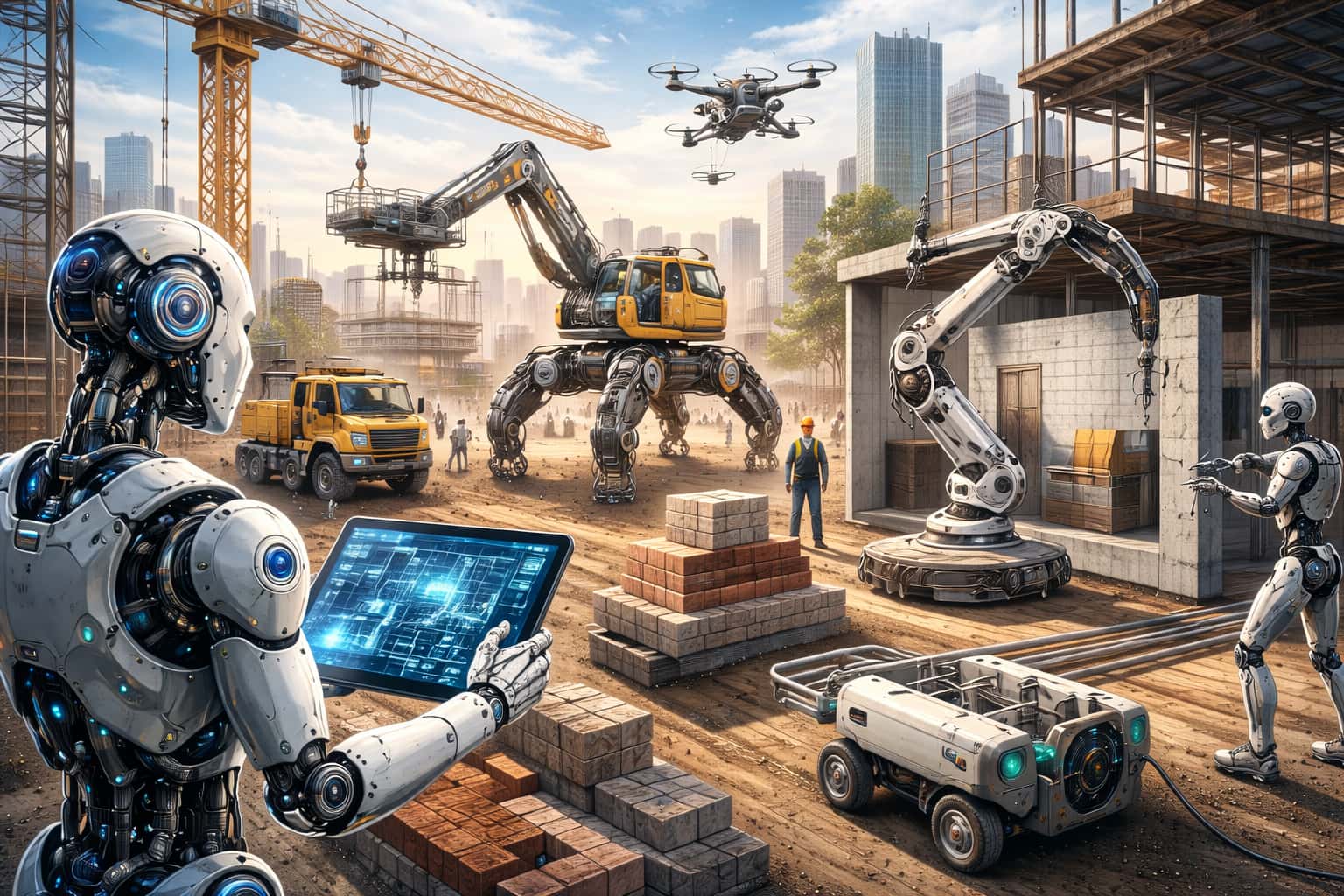
How AI and Robots Will Revolutionise Construction
AI and robotics are fundamentally transforming the construction sector across design, construction processes, safety protocols, and project timelines, with experts predicting that 1.3 billion AI-powered robots will be at work worldwide by 2035. These technologies are moving beyond pilot projects into mainstream adoption, with more than 7,000 robots expected in the construction workforce by the end of 2025.
Concept and Architecture Design
Generative AI is revolutionising the conceptual design phase by interpreting architects’ parameters—such as budget, site dimensions, materials, and regulatory requirements—and automatically producing numerous optimised design alternatives. This predictive design approach goes beyond simply generating options; AI systems now forecast how designs will perform structurally, financially, environmentally, and from a regulatory perspective before detailed drawings are issued.
AI-assisted design tools can evaluate façade alternatives for their impact on embodied carbon, structural loading, and energy behavior long before construction begins. By analyzing patterns across thousands of past projects, AI systems can predict where clashes, constructability conflicts, or late-stage redesigns are most likely to emerge during early massing or façade studies. This capability enables architects to optimise material efficiency and space utilisation from the outset while significantly reducing carbon footprints—studies indicate AI could help reduce building CO₂ emissions by approximately 40% by 2050 with proper policy implementation, or up to 93-95% when combined with low-emission power generation.
Building and Construction Execution
Robotic Construction Systems
Physical AI is now executing real-world construction tasks through specialised robotic systems. Current applications include:
Bricklaying robots: The WLTR masonry robot delivers the productivity of a 5-person team, placing bricks with pinpoint accuracy using a 125mm modular system that eliminates cuts and reduces material waste. The SAM bricklaying system makes masonry safer and less physically demanding by assisting human workers
Drywall finishing: Canvas robots slash drywall finishing schedules by up to 60% and reduce labor requirements by approximately 40%, completing in two days what traditionally takes five to seven days
Concrete finishing: AI-enabled robotic systems are installing drywall, laying bricks, and finishing concrete with precision
Autonomous heavy equipment: AI-driven excavators, bulldozers, and cranes operate autonomously or with human direction for digging, levelling, and placing materials
These robotic systems work tirelessly without fatigue, completing repetitive tasks with greater speed and precision than human crews.
Safety Improvements
Construction robotics dramatically enhances job site safety by reducing human exposure to hazardous conditions. Autonomous equipment operators are removed from potentially dangerous situations, leading to research-backed reductions of up to 40% in occupational hazards.
Specific safety benefits include:
Elimination of high-risk tasks: Robotic cranes lift and position heavy materials, reducing accidents caused by human error or fatigue. Robots handle high or awkward areas that often lead to injuries
Hazardous environment operations: Automated demolition systems safely dismantle structures, reducing accident and injury risks. Drones equipped with cameras and sensors conduct site inspections, sparing workers from accessing dangerous or hard-to-reach areas
Real-time safety monitoring: Computer vision systems automatically detect safety violations in real time. AI-powered navigation and obstacle detection systems help autonomous guided vehicles (AGVs) prevent collisions by adapting to real-time traffic patterns
Reduced material handling injuries: AGVs transport materials safely, creating environments where employees are less exposed to dangerous tasks
Speed and Productivity
Autonomous construction equipment dramatically accelerates project timelines and increases productivity. Self-driving construction equipment can operate 24/7 around the clock, working in severe weather conditions where human labour would struggle, resulting in an estimated 25% increase in overall production.
AI-driven scheduling and advanced analytics significantly enhance project outcomes by optimising time, cost, and risk management. AI systems that learn from thousands of previous projects can alert project managers if selected operations are likely to lead to delays or if specific suppliers have tardiness histories, allowing for proactive adjustments.
The precision of robotic systems minimizes rework needs, with machines programmed to operate with exacting precision ensuring structures are built to precise specifications. For example, drywall robots reduce the repetitive wall visits required in manual approaches—20,000 ft² of wall space traditionally requires about 100,000 ft² of work, but Canvas robots only need to return to the same wall three times.
Workflow Integration and Efficiency
By 2026, AI will be deeply integrated into core construction workflows rather than used as standalone tools. AI now automates model-based coordination, generates takeoffs, optimises schedules, and analyses progress through image recognition and sensor-based data. AI assistants act as virtual project engineers that answer technical questions, track daily tasks, detect safety risks, and automatically produce reports.
Reality capture tools compare as-planned versus as-built conditions, while collaborative robots take on repetitive and high-risk tasks alongside human crews. The shift toward data-centric engineering creates high-quality structured data that enables reliable AI-supported decision-making across the entire project lifecycle.
Cost Reduction and Sustainability
Robotic systems lower construction costs through multiple mechanisms. Labour costs decrease as workforce requirements are reduced—manual power deployment is reduced by approximately 20% with self-driving tools. Automated systems minimise rework by ensuring precision, which lowers costs per unit and increases housing affordability.
Self-driving construction equipment can reduce operational costs by approximately 20% through optimised maintenance schedules and reduced fuel usage enabled by telematics solutions that monitor real-time equipment performance. AI optimisation of concrete mixtures achieves lower carbon footprints, while emerging software applications reduce emissions from cement and steel production by optimising fuel combustion and reducing clinker proportions.
Workforce Transformation
Rather than replacing workers, robotics and AI are creating opportunities to upskill construction professionals and enhance human capacity. Training timelines are compressed—workers can achieve proficiency with robotic drywall finishing in four months compared to the four years of muscle memory required for traditional troweling. Human crews increasingly focus on supervision and complex problem-solving, while AI-enabled systems handle site monitoring, layout marking, and material transport.
Human workers remain essential for tasks requiring judgment, with robots communicating needs to supporting workers who handle adjustments like cutting bricks and fitting wall anchoring clips. This collaborative model between humans and machines represents the emerging standard for construction productivity and safety.
Quick search



Provence Near Cannes | 5-Bed Country House With Pool & Views


Antibes, Côte d’Azur | 2-Bed Terrace Apartment With Pool Near Beach



Maioris-Puig de Ros, Mallorca | 4-Bed New-Build With Private Pool & Sea Views
Ready to own that dream property?
Get in touch with our team to secure your share today.