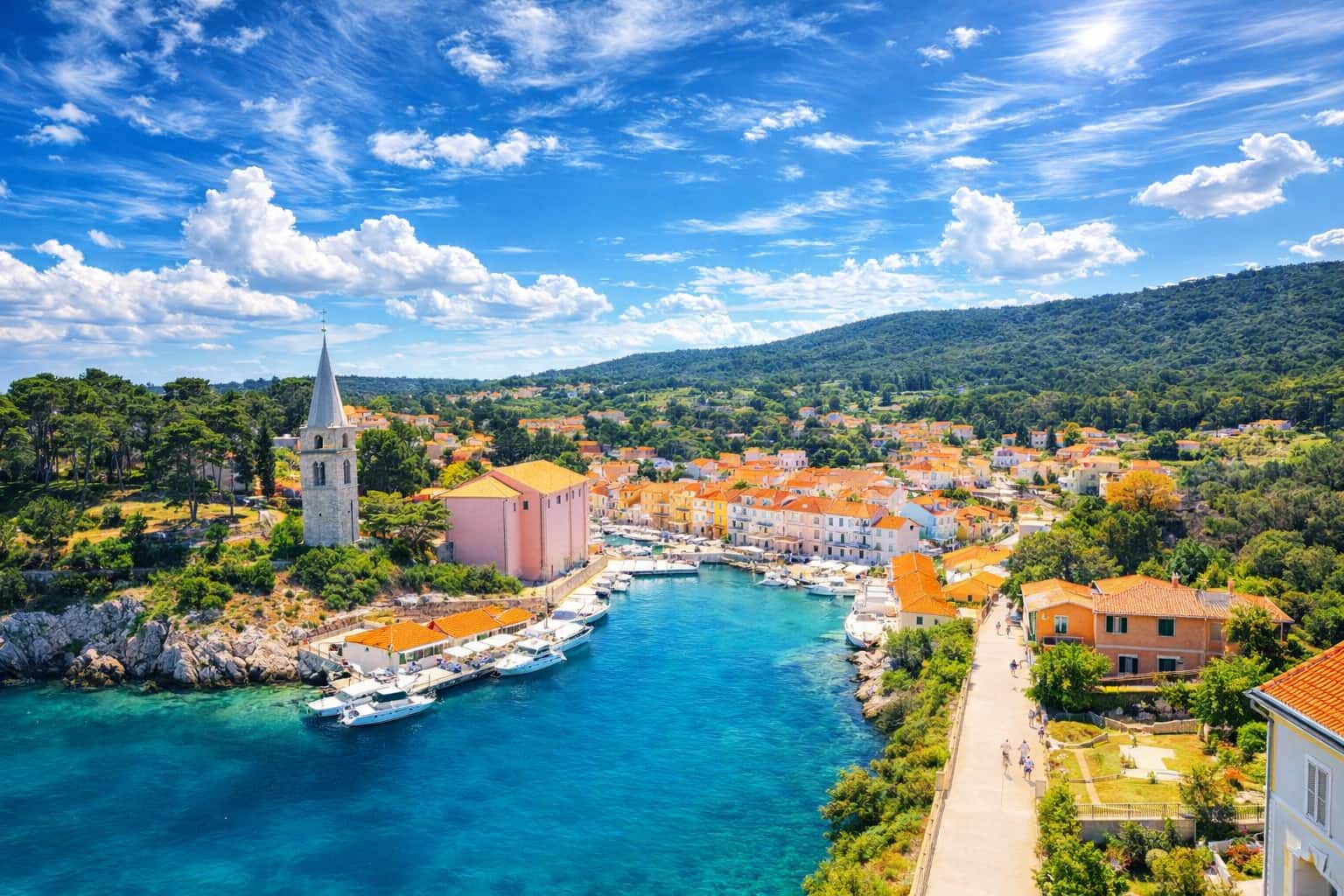
Croatia Fractional Ownership properties
Fractional Ownership · Croatia
Croatia Fractional Ownership — Own the Adriatic, the Right Way
Croatia fractional ownership gives buyers across the UK and Europe a legally deeded route into one of the Mediterranean's most spectacular coastlines — not a timeshare, not a holiday club, but a genuine 1/8 share held through a legally structured property company
For UK buyers managing their 90-day EU allowance post-Brexit, Croatia fractional ownership aligns precisely with that limit — making genuine co-ownership one of the most practical ways to hold a real second home on the Adriatic. Whether you are drawn to a stone villa on the Dalmatian islands, a waterfront apartment in Split or Dubrovnik, or a secluded retreat in the Istrian peninsula, fractional property ownership opens the door to the Croatian coast at a fraction of the cost of sole ownership. Browse our Croatia properties below and find the co-ownership home that matches your vision of the Adriatic.
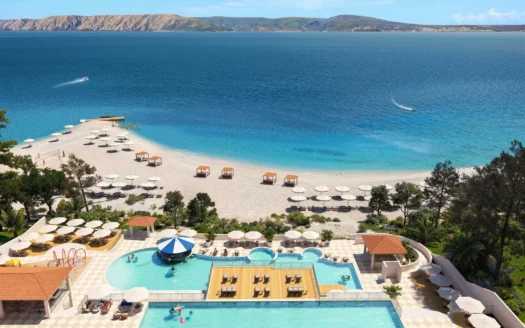
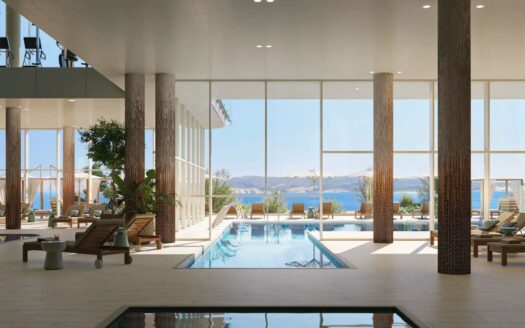
Novi Vinodolski, Adriatic Coast | 1.5-Bed First-Line Sea Apartment With Direct Beach Acces...
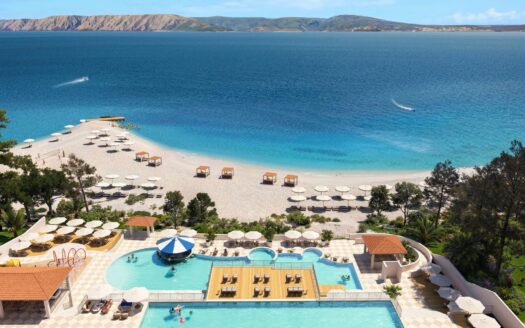
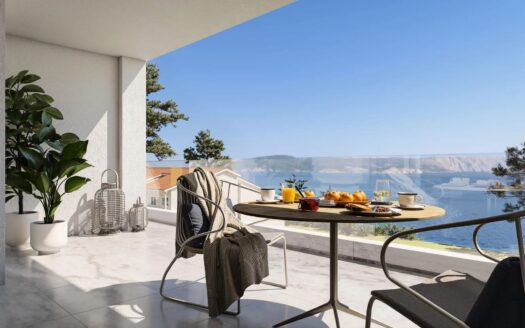
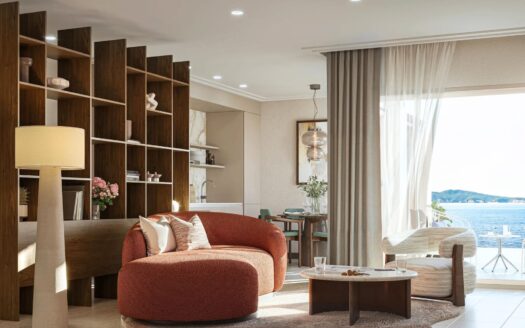
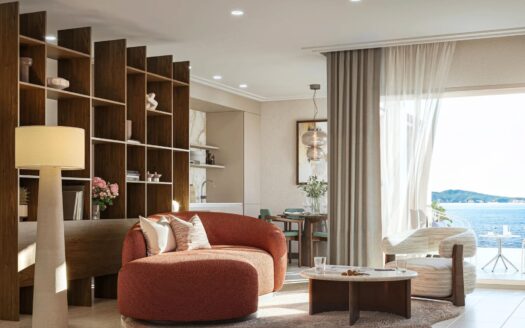
Novi Vinodolski, Croatia | 2-Bed Apartment First Sea Line
Why Croatia
Why Choose Croatia Fractional Ownership?
Croatia fractional ownership offers access to one of the most visually arresting coastlines in the world — a 1,800-kilometre shoreline of limestone karst, pine-forested islands, medieval walled cities, and waters so translucent that the seabed is visible at depths of fifteen metres or more. The Dalmatian Coast has attracted the attention of international buyers for well over two decades, and Croatia's accession to the European Union in 2013 and subsequent adoption of the Euro created a property market that is simultaneously integrated with European legal standards and still meaningfully undervalued relative to comparable coastal destinations in France, Italy, or Spain. Croatia fractional ownership allows the international buyer to access this market through a legally genuine co-ownership structure, without the full capital commitment and administrative complexity of sole property ownership on a foreign coast.
The legal basis of Croatia fractional ownership is clear and well-established within the Croatian property law framework. All property ownership is recorded in the property ownership documentation. When you purchase a fractional share of a Croatian property, your ownership is formally registered at the property ownership documentation. You are not purchasing a club membership, a points scheme, or usage rights — you are a co-ownership interest holder with enforceable rights under Croatian civil law. Croatia fractional ownership is not a timeshare in any sense, and the legal protections available to deeded co-owners under Croatian law are substantial and clearly defined.
For UK buyers in the post-Brexit landscape, Croatia fractional ownership has become one of the most strategically sensible options in the Mediterranean. As non-EU citizens, UK nationals are subject to the Schengen Area 90-day rule — but Croatia is in the Schengen Area, meaning UK passport holders are limited to 90 days across all Schengen countries in any 180-day period. A standard 1/8 Croatia fractional ownership share delivering approximately 45 days per share per year sits almost exactly within that limit, making co-ownership one of the most practically aligned property structures for UK buyers who want a genuine, permanent presence on the Croatian coast without complex visa management. Professional management handles the property during all periods of absence — there is no expectation that co-owners will be present year-round, and the Croatian Adriatic's summer-peaked season means that the most desirable weeks are precisely those that fall within the 45-day window.
Croatia's property market also benefits from supply constraints that underpin long-term value. Croatia's coastal development laws (the Maritime Domain and Coastal Land Act and related regulations) impose strict restrictions on construction within the coastal zone — meaning that the stock of high-quality waterfront and near-waterfront properties is genuinely limited and cannot be replicated at scale. This structural supply constraint, combined with sustained and growing international demand (Croatia now regularly features among Europe's top five travel destinations), creates favourable dynamics for property values in the segments where Croatia fractional ownership is most active. Rental income from unused weeks is possible on a case-by-case basis, but Croatia has implemented short-term rental licensing requirements that vary by municipality and property type — we are always transparent that rental income is not guaranteed and should not be the primary motivation for purchasing. For a full overview of how co-ownership buying works from search to completion,
Croatia offers something that many Mediterranean competitors cannot: genuinely uncrowded natural beauty alongside world-class cultural heritage. The walled city of Dubrovnik is one of the best-preserved medieval fortifications in the world — a UNESCO World Heritage Site of remarkable completeness. The Roman Emperor Diocletian's Palace in Split remains a living urban quarter, not a museum — thousands of people live and work within its walls. The island of Hvar combines a 13th-century Venetian fortress, lavender fields, and some of the best restaurants in the Adriatic. Vis, Korčula, Brač, and the Pelješac peninsula offer a quality of natural seclusion that is becoming increasingly rare across the wider Mediterranean. Croatia fractional ownership allows buyers to hold a permanent stake in this extraordinary landscape — returning year after year to a home that is genuinely theirs, on a coast that rewards depth of familiarity. Buyers who are also considering Italy, Portugal, or the Spain coast will find that Croatia's combination of natural quality and relative value makes a compelling case in any direct comparison.
Areas & Regions
Croatia Fractional Ownership — Areas & Regions
Croatia fractional ownership properties span the Dalmatian Coast from Istria in the north to the Pelješac peninsula in the south, taking in some of the Adriatic's most celebrated islands and coastal towns. Here is a guide to the key regions and what each offers the co-ownership buyer looking for a Croatian holiday home or second property.
Dalmatian Islands — Croatia Fractional Ownership
The Dalmatian islands — Hvar, Brač, Korčula, Vis, Šolta, and the Elaphiti chain south of Dubrovnik — represent the most intensely sought-after segment of the Croatia fractional ownership market, and with good reason. These are genuinely extraordinary places: islands of white limestone, dark cypress, lavender and rosemary, with harbours that feel unchanged from the centuries when Venetian merchants built their palaces along the Adriatic's eastern shore. The light on the Dalmatian islands in June, July, and September has a clarity and warmth that has drawn painters, writers, and travellers for generations — and that still, despite growing international interest, retains its quality because the islands' rugged terrain and planning constraints limit the kind of mass development that has diminished comparable destinations elsewhere in the Mediterranean.
Croatia fractional ownership on the Dalmatian islands most commonly takes the form of traditional stone houses — Dalmatian kamene kuće — set within the historic cores of island towns or on terraced hillsides above the sea. These properties combine genuine architectural heritage with high-quality contemporary interiors: exposed stone walls, terracotta floors, shaded terraces, and the particular peace of an island where the ambient noise is cicadas and the clinking of mooring lines rather than traffic. For buyers seeking the most authentic and most visually compelling Croatia co-ownership experience, the Dalmatian islands are the definitive choice.
Split & Central Dalmatia — Croatia Fractional Ownership
Split is the urban heartland of Croatia fractional ownership — a city of 200,000 people built around and within the walls of the late Roman palace that the Emperor Diocletian constructed as his retirement residence in the early 4th century AD. The palace, a UNESCO World Heritage Site, is not an archaeological site but a living quarter: restaurants, bars, boutiques, and apartments occupy the peristyle, the vestibule, and the ancient corridors. Split is simultaneously one of Europe's most historically extraordinary cities and one of its most authentically energetic — this is not a preserved ruin but a city that has absorbed its history and carried on living.
Croatia fractional ownership in Split and central Dalmatia suits buyers who want urban sophistication alongside immediate coastal access. The Riva promenade, the Varoš neighbourhood's Ottoman-era alleyways, and the modern Meje district combine to give Split a genuine urban variety. The city is also the main ferry hub for the central Dalmatian islands — Hvar, Brač, Šolta, and Vis are all within a one-to-two hour ferry ride — making a Split base the most practical choice for buyers who want to island-hop during their personal weeks. For buyers comparing urban Croatia fractional ownership with cities like London or Lisbon, Split offers a level of urban-coastal integration that is genuinely unmatched in Europe.
Dubrovnik & South Dalmatia — Croatia Fractional Ownership
Dubrovnik is Croatia's most internationally recognised city — the "Pearl of the Adriatic," as Byron called it — and Croatia fractional ownership in the Dubrovnik area commands a premium that reflects the city's extraordinary cultural and architectural status. The Old City, entirely enclosed by 14th-century limestone walls that can be walked in their entirety, is one of the world's great urban experiences: a sequence of baroque churches, Renaissance palaces, the Stradun limestone promenade, and a harbour where the Adriatic glitters in every direction. The surrounding Riviera — Cavtat, Mlini, Srebreno, and the Elaphiti Islands (Koločep, Lopud, Šipan) — extends the Dubrovnik experience into a chain of smaller, quieter destinations within easy reach by boat.
Croatia fractional ownership in the Dubrovnik area suits the buyer who wants the most internationally prestigious address on the Croatian coast. The area's profile has been further raised in recent years by its role as a filming location for major international productions, bringing a level of global awareness that continues to drive both visitor numbers and property interest. Properties here tend to be premium villas and apartments in historic buildings, with sea views and proximity to the Old City walls as the defining value drivers. For buyers considering Croatia fractional ownership at the luxury end of the market, Dubrovnik remains the benchmark destination on the Adriatic.
Istria — Croatia Fractional Ownership
Istria, the northernmost region of Croatia's coast and the country's triangular peninsula jutting into the northern Adriatic, offers a distinctly different Croatia fractional ownership experience from the Dalmatian south. Istria's character is shaped by its long Venetian and later Habsburg history, producing a landscape of hilltop medieval towns (Motovun, Grožnjan, Rovinj, Poreč) surrounded by truffle forests, olive groves, and vineyards producing some of Croatia's finest wines. The region is consistently described by food writers as one of Europe's great undiscovered gastronomic destinations — truffles, Istrian prosciutto, fresh Adriatic seafood, and exceptional local olive oil combine in a culinary culture that rivals anything in northern Italy or southern France.
Croatia fractional ownership in Istria tends to take the form of converted stone farmhouses in the interior hills or coastal apartments and villas in towns like Rovinj, Pula, and Poreč. Rovinj in particular — a Venetian-walled coastal town on a former island, now connected to the mainland by a causeway — is one of the most beautiful small towns on the Adriatic, and Istria fractional ownership in or near Rovinj represents a genuinely compelling proposition for buyers who want the combination of authentic Croatian character, proximity to Italy (Trieste is a two-hour drive), and a coast that is significantly less crowded than Dalmatia in the peak summer months.
Makarska Riviera & the Pelješac Peninsula — Croatia Fractional Ownership
The Makarska Riviera — the stretch of coast between Split and Dubrovnik backed by the dramatic limestone massif of the Biokovo mountains — is one of Croatia's most scenically intense coastal landscapes. The contrast between the crystalline Adriatic and the sheer vertical walls of Biokovo (which rises to over 1,700 metres just a few kilometres from the shore) creates a landscape that is unique on the European Mediterranean. Towns like Makarska, Brela, Baška Voda, and Tučepi offer excellent beaches, a well-developed resort infrastructure, and easy access to both Split and Dubrovnik airports. Croatia fractional ownership on the Makarska Riviera is particularly popular with buyers who prioritise beach access, outdoor activity (Biokovo National Park offers extraordinary hiking), and value for money relative to the more internationally profiled Dubrovnik area.
The Pelješac peninsula, extending into the Adriatic south of Makarska, combines Croatia's best wine country (the Plavac Mali and Dingač vineyards are among the finest in the Adriatic region) with a peninsula landscape of extraordinary natural beauty. The town of Orebić faces Korčula island across a narrow channel — a setting of exceptional charm. Croatia fractional ownership on the Pelješac suits buyers who want seclusion, wine culture, and the particular pleasure of a Croatian landscape that still feels genuinely off the main tourist circuit.
How It Works
How Croatia Fractional Ownership Works
Croatia fractional ownership is structured as a genuine property purchase — not a timeshare, not a holiday club, and not a points-based scheme. You purchase a legally registered fraction of a real Croatian property, with your ownership recorded at the property ownership documentation. Croatian property law, aligned with EU standards since Croatia's accession in 2013, provides clear protections for all property owners regardless of nationality, and the purchase process is conducted through licensed Croatian real estate agents and notaries. Here is how the co-ownership buying process works in practice in Croatia.
Browse Croatia Fractional Ownership Properties
Start by exploring the available Croatia fractional ownership listings on this page. Each property includes detailed descriptions, professional photography, regional context, and co-ownership share pricing. Filter by area, property type, and lifestyle preference to identify the properties that best fit your requirements. Our team at Co-Ownership Property acts as a buyer's agency — working on your behalf, not the seller's — to ensure you find the right Croatia co-ownership property at the right price.
Legal Due Diligence & Croatia Fractional Ownership Review
Once you identify a property, an independent Croatian property lawyer conducts comprehensive due diligence. This includes verifying the title at the property ownership documentation. The complete legal picture is documented before any commitment is made, giving every buyer full certainty under Croatian law.
Purchase & the ownership structureRegistration of Your Croatia Fractional Ownership Share
Completion of a Croatia fractional ownership purchase follows the standard Croatian notarial conveyancing process. The purchase contract (Ugovor o kupoprodaji) is drafted, notarially authenticated (solemniziran), and submitted to the property law professionals for registration. Your fractional ownership share is formally recorded in your name at the property ownership documentation. Applicable taxes — Porez na promet nekretnina (real estate transfer tax) — and registration fees are calculated by your lawyer before completion, with full transparency at every stage of the process.
Enjoy & Manage Your Croatia Fractional Ownership Property
Once the purchase completes, a professional management company takes over all operational responsibility for the property. Your personal weeks — approximately 45 days per share for a 1/8 Croatia fractional ownership share — are allocated through a fair rotation system set out at the start of each calendar year. The management company handles seasonal maintenance, cleaning and preparation before each occupancy, insurance renewals, payment of communal fees and utility bills, and all regulatory compliance. You arrive to a property that is fully prepared and professionally maintained, ready for you to enjoy the Croatian coast from the first moment.
Investment & Lifestyle
Croatia Fractional Ownership — Investment & Lifestyle
Croatia fractional ownership sits at the intersection of lifestyle quality, legal security, and long-term property market participation — and it does so with a distinctly favourable value proposition relative to comparable coastal destinations in southern Europe. Croatia's accession to the European Union in 2013 aligned the country's legal and regulatory framework with EU standards, and its subsequent adoption of the Euro resolved the currency uncertainty that had historically complicated cross-border property purchases. The result is a property market that combines the legal solidity of the European framework with price points that remain meaningfully lower than equivalent coastal properties in the south of France, the Amalfi Coast, or the Spanish Balearics — making Croatia fractional ownership one of the most cost-effective routes into a genuinely premium Mediterranean coastal lifestyle.
The lifestyle case for Croatia fractional ownership is compelling and multi-layered. The Dalmatian Coast delivers a quality of natural environment — clarity of water, warmth of climate, abundance of unspoilt coastline — that has become increasingly rare across the wider Mediterranean as development has reshaped former fishing villages into resort infrastructure. Croatia has managed this transition more carefully than some of its competitors, and the islands in particular retain a character and authenticity that buyers from more heavily touristed destinations find genuinely striking. Owning a fraction of a stone house on Hvar, an apartment within the walls of Korčula's Old Town, or a villa overlooking the Makarska Riviera is not simply a property investment — it is access to a pace and quality of life that rewards annual return and builds a depth of relationship with place that no hotel stay can replicate.
From an investment and legal perspective, documented co-ownership — registered at the property ownership documentation. Croatian property law recognises co-ownership (suvlasništvo) as a clearly defined legal concept, with rights and obligations of co-owners governed by the Law on Ownership and Other Property Rights (Zakon o vlasništvu i drugim stvarnim pravima). This legislation provides each co-owner with the right to use, sell, and inherit their fractional share, subject to any pre-emption rights held by fellow co-owners under the co-ownership agreement. The exit mechanism for Croatia fractional ownership is clear: you can sell your share to a third party through a standard Croatian property sale process, with notarial authentication and the ownership structureregistration, at a price reflecting current market values.
Croatia fractional ownership also benefits from the country's growing profile as a global tourism and lifestyle destination. Croatia regularly features in international travel media as one of Europe's most desirable coastal destinations, and the sustained growth in visitor numbers — from under 10 million annually in the early 2000s to over 20 million in recent years — has driven demand for quality accommodation and second home properties at a pace that the constrained coastal supply cannot fully absorb. This supply-demand dynamic, combined with the structural limitations on coastal development imposed by Croatian planning law, creates a favourable environment for the long-term capital participation that Croatia fractional ownership offers to international buyers who hold their shares over a meaningful time horizon.
For buyers building a portfolio of European co-ownership properties, Croatia fractional ownership offers a genuinely distinct experience that complements rather than duplicates other Mediterranean holdings. Buyers who hold a 1/8 share in an Ibiza villa or a Sardinia property will find that Croatia's Dalmatian character — its stone architecture, its Venetian heritage, its particular combination of island seclusion and urban sophistication — is genuinely different from the western Mediterranean, adding a new dimension to the overall lifestyle portfolio. Co-ownership buyers comparing Portugal or Spain will note that Croatia's Adriatic east coast faces a different sea, enjoys a different climate, and offers a different cultural experience — making Croatia fractional ownership the natural choice for buyers who want their second home to broaden rather than duplicate their existing travel repertoire.
Explore More
Explore More Croatia Fractional Ownership & Related Destinations
Croatia fractional ownership is part of a wider world of Mediterranean and European co-ownership. Explore related destinations and guides below — whether you are comparing Adriatic options, considering broader Mediterranean alternatives, or looking for guidance on how co-ownership works.
All Destinations
All Co-Ownership Destinations
Browse the full range of fractional ownership destinations across Europe and the USA — compare Croatia with all available co-ownership locations worldwide.
Destination
Italy Fractional Ownership
Compare Croatia's Dalmatian Coast with Italy across the Adriatic — lakes, Liguria, Sardinia, and the Italian coast through genuine co-ownership.
Destination
Sardinia Fractional Ownership
Compare the Dalmatian Coast with Sardinia's Costa Smeralda — two of the Mediterranean's most spectacular island co-ownership destinations.
Lifestyle
Beach Lifestyle
Explore co-ownership across Europe's best beach destinations — from the Dalmatian Coast to the Balearics, Algarve, and beyond.
Guide
What is Fractional Ownership?
The complete guide to fractional ownership — what it is, how it works legally, and why it is fundamentally different from a timeshare.
Destination
Portugal Fractional Ownership
Compare Croatia's Adriatic coast with Portugal's Atlantic destinations — Algarve, Lisbon, and the Silver Coast through genuine co-ownership.
FAQ
Croatia Fractional Ownership — Frequently Asked Questions
What is Croatia fractional ownership and how is it different from a timeshare?
Croatia fractional ownership is the purchase of a legally defined share — typically a 1/8 share — in a real Croatian property, with your ownership registered at the property ownership documentation. You are a co-ownership interest holder with full legal rights under Croatian civil law, including the right to sell your share, pass it to your heirs, and exercise all the rights of a property owner. the property ownership documentation.
A timeshare is the structural opposite of Croatia fractional ownership in every meaningful respect. A timeshare conveys usage rights rather than property ownership: you hold no transferable property asset, you have no equity stake in the real property, and your ability to exit the arrangement is typically contractually restricted and practically very difficult. The timeshare industry's well-documented history of mis-selling, opaque fee structures, and poor exit options makes it a fundamentally different proposition from deeded Croatia fractional ownership. Buyers of Croatia co-ownership hold a real property interest — not a consumer contract — and should be entirely clear about this distinction when evaluating their options.
Can non-EU citizens (including UK buyers) own property in Croatia?
Yes — since Croatia's accession to the European Union in 2013, EU citizens have been able to purchase property in Croatia on the same terms as Croatian nationals, without restriction. For non-EU citizens — including UK nationals following Brexit — the position requires a brief additional step: UK buyers typically need to obtain a Confirmation of Reciprocity from the Croatian Ministry of Justice, confirming that the UK grants equivalent property rights to Croatian nationals. This is a procedural requirement rather than a substantive barrier, and it is routinely handled by Croatian property lawyers as part of the standard conveyancing process for international buyers.
Once this requirement is satisfied, UK buyers can purchase Croatia fractional ownership property through the same notarial process as any other buyer, with the same the ownership structureregistration and the same legal protections. There are no restrictions specific to fractional ownership for UK buyers — the purchase of a 1/8 share in a Croatian property is treated identically to the purchase of a whole property in terms of the legal and administrative process. Our team regularly assists UK buyers through the Croatia fractional ownership purchase process and can connect you with lawyers experienced in cross-border Croatian transactions.
How many days can I use my Croatia fractional ownership property each year?
A standard 1/8 Croatia fractional ownership share entitles each co-owner to approximately 45 days of personal use per year — equivalent to six to seven weeks. This is calculated by dividing the usable year across eight co-owners, with a standard allowance for maintenance days and changeovers. The specific weeks allocated to each co-owner are determined by a rotation system established in the co-ownership agreement (Ugovor o suvlasništvu), ensuring that over time all co-owners experience different seasons and different times of year on the Croatian coast.
Allocations are typically confirmed at the start of each calendar year, giving you the certainty to plan your travel to Croatia well in advance. Some Croatia fractional ownership agreements also permit co-owners to swap weeks with each other or bank unused days by mutual agreement, subject to the specific terms of the agreement. For UK buyers in particular, the approximately 45 days of personal use aligns closely with the Schengen Area 90-day allowance for non-EU citizens — making Croatia fractional ownership one of the most practically suited property structures for British buyers who want to maximise their annual time on the Adriatic.
How is my Croatia fractional ownership formally documented?
When you purchase a Croatia fractional ownership share through Co-Ownership Property, your interest is formally documented through a legally structured Croatian property company. The purchase contract is authenticated by a Croatian notary and the company structure is registered with the appropriate Croatian authorities, creating a legally binding record of your co-ownership rights enforceable under Croatian law. You receive formal documentation confirming your share, and the process is managed by licensed local legal professionals who ensure full transparency at every stage.
Can I sell my Croatia fractional ownership share?
Yes. Resale rights are a fundamental feature of deeded Croatia fractional ownership. Because your share is registered at the property ownership documentation. You do not require the permission of a commercial operator to sell, you are not subject to a lock-in period, and there is no operator buyback programme that you need to rely on for exit. Your exit from Croatia fractional ownership is, in principle, clear and professionally managed — a notarially authenticated purchase contract, a formal ownership transfer, and the payment of applicable taxes.
In practice, most Croatia fractional ownership agreements include a right of first refusal (pravo prvokupa) for existing co-owners — meaning you must first offer your share to the other owners before listing on the open market. This is standard practice in co-ownership structures and ensures that the group of owners retains some say over who joins. If no co-owner exercises the right of first refusal, you are free to sell to any third party. Croatian capital gains tax (porez na dohodak od kapitala) may apply on any gain from the sale, and specialist tax advice is recommended before any resale transaction.
What are the ongoing costs of Croatia fractional ownership?
The ongoing costs of Croatia fractional ownership are proportional to your ownership share and typically include your share of the annual management fee, buildings insurance (osiguranje nekretnine), Croatian property utility costs (water, electricity, maintenance of communal areas), and any repair or maintenance costs that arise during the year. For coastal and island properties, additional costs may include boat or marina fees, external maintenance of stone terraces, and seasonal infrastructure management. All of these costs are shared equally across co-owners, making them a fraction of the equivalent costs for a sole owner.
Co-owners should also note Croatian tax obligations: Croatian income tax may apply to rental income received from unused weeks, and Capital Gains Tax obligations arise on disposal. Croatia has double taxation treaties with the UK and most EU member states, which typically prevent double taxation on the same income or gain. We strongly recommend taking independent tax advice in both Croatia and your country of residence before purchasing Croatia fractional ownership. Co-Ownership Property does not provide tax advice but can refer you to specialists with experience in Croatian property taxation and international co-ownership.
Who manages the Croatia fractional ownership property when I'm not there?
Each Croatia fractional ownership property is managed by a professional property management company on behalf of all co-owners. The management company is responsible for the property year-round: coordinating maintenance and repairs, cleaning and preparing the property before each occupancy, managing insurance, administering utility bills and communal fees, handling any licensing or regulatory requirements, and managing the usage scheduling system. For Dalmatian island and coastal properties, seasonal management — including managing the summer peak season and off-season maintenance — is particularly important, and a well-chosen management company makes the difference between a co-ownership investment that delivers genuine peace of mind and one that creates administrative friction.
Management costs are shared equally across all co-owners and are clearly set out in the co-ownership agreement. The co-owners collectively have governance rights over the management company — a majority can vote to replace the management provider if performance is unsatisfactory — giving you a meaningful accountability mechanism. When evaluating any Croatia fractional ownership property, reviewing the management company's track record, its fee structure, and the governance provisions in the Ugovor o suvlasništvu is an important part of the due diligence process.
Can I earn rental income from my Croatia fractional ownership weeks?
In some cases, yes — but we are always transparent that rental income from Croatia fractional ownership is not guaranteed and should not be treated as a primary financial rationale for purchasing. Whether rental of unused weeks is permitted depends on the specific terms of the co-ownership agreement and the applicable Croatian licensing requirements for short-term residential rental. Croatia introduced a comprehensive short-term rental licensing system (kategorizacija) that requires properties used for tourist letting to obtain a formal licence from the relevant tourist authority — a process that varies by municipality and property type.
Croatia's Adriatic coast is one of Europe's most active short-term rental markets, and licensed properties in good locations can generate meaningful rental income during the summer season. However, we never market Croatia fractional ownership on the basis of projected rental yields — the primary value proposition is co-ownership interest holdership, personal use of an exceptional coastal property, and long-term participation in the Croatian market. We discuss the rental position for each specific property transparently during our consultation process, and any rental income should be treated as a potential bonus rather than a guaranteed financial return.
What happens to my Croatia fractional ownership share when I die?
Because Croatia fractional ownership is a deeded property right registered at the property ownership documentation. Your beneficiaries inherit a real property interest — not a contractual right — and can choose to hold the share as a co-owner in their own name, sell it through a notarial process, or offer it to the existing co-owners. Croatian succession law (Zakon o nasljeđivanju) applies to real property located in Croatia regardless of the deceased's nationality.
For EU citizens, EU Succession Regulation 650/2012 allows you to elect for your home country's succession law to apply to your entire estate, including your Croatian property. For UK nationals post-Brexit, this regulation no longer applies, and specialist legal advice on the interaction of Croatian and UK succession law — including inheritance tax in both jurisdictions — is strongly recommended before purchasing. Keeping an updated will that explicitly addresses your Croatia fractional ownership share is also strongly advised.
What types of properties are available for Croatia fractional ownership?
Croatia fractional ownership spans a wide and genuinely distinctive range of property types, reflecting the country's varied coastline and its unique architectural heritage. The most characteristic format is the traditional Dalmatian stone house (kamena kuća) — a building of local limestone construction, often with centuries of history, located within the historic cores of Dalmatian island towns or on terraced hillsides above the Adriatic. These properties combine exceptional architectural character with contemporary interiors — exposed stone walls, terracotta or limestone floors, shaded terraces with sea views, and the particular coolness of thick stone walls in the summer heat.
Beyond the traditional stone house, Croatia fractional ownership also encompasses contemporary villas with infinity pools and sea views on the Dalmatian Coast, apartments within the historic fortified cities of Split, Dubrovnik, and Hvar, Istrian hilltop farmhouses converted to high-specification holiday properties, and coastal houses on the Makarska Riviera and Pelješac peninsula. The range of Croatia co-ownership property types is as varied as the coastline itself, and the listings on this page reflect current available stock across multiple regions and formats. Our team is happy to discuss specific requirements and identify properties that match your vision of the ideal Croatian second home.
How does Croatia fractional ownership compare to renting a holiday villa in Croatia?
The comparison between Croatia fractional ownership and holiday rental is one that every prospective buyer should consider honestly. Premium villa rental on the Dalmatian islands and in the Dubrovnik area during July and August — the peak Adriatic season — is genuinely expensive, with high-quality properties commanding thousands of euros per week. The best properties are booked many months or even years in advance, and availability for spontaneous bookings is very limited. Over a decade of regular visits at this level of accommodation, the cumulative cost of rental is very substantial — without any of the residual value of ownership.
Croatia fractional ownership, by contrast, provides the same access — or better — for a capital investment that remains yours as a transferable, inheritable asset, participating in the Croatian property market. The cost of your stays is not a recurring cash outflow but an allocation of your ownership rights in a real asset. Beyond the financial comparison, there is a qualitative dimension that owners consistently describe as decisive: the difference between staying somewhere and having somewhere. A rental villa is always someone else's property; a Croatia fractional ownership share is genuinely and irrevocably yours — a base on the Adriatic that you return to each year with the familiarity and continuity that only ownership provides. Croatia fractional ownership is the smarter, more permanent way to enjoy everything the Croatian coast has to offer.
How do I get started with Croatia fractional ownership?
Getting started with Croatia fractional ownership is straightforward. The first step is to browse the available properties on this page, filtering by region, property type, and lifestyle preference to identify the Croatia co-ownership properties that best match your requirements and your vision of the ideal Adriatic base. Once you have identified one or more properties of interest, arrange a consultation with our team at Co-Ownership Property — we act as a buyer's agency, meaning our role is to help you find and secure the right property, not to sell you a specific one.
Before committing to any Croatia fractional ownership purchase, we strongly recommend instructing an independent Croatian property lawyer to review the Ugovor o suvlasništvu, the property ownership documentation. You should also take independent tax advice in both Croatia and your country of residence to understand the full tax position before completing. Use the contact form below to start your Croatia fractional ownership journey — our team is experienced in guiding buyers from first enquiry through to the ownership structureregistration, with full support at every stage of the process. Croatia fractional ownership, done properly, is one of the most rewarding and legally secure routes into Mediterranean coastal living available to international buyers today.
Ready to Explore Croatia Fractional Ownership?
Speak to our team about available Croatia fractional ownership properties, the property ownership documentation. Croatia fractional ownership — deeded, transparent, and genuinely yours on the Dalmatian Coast.
Enquire About Croatia Properties
A smarter way to own
Buy only the share you need — with genuine documented co-ownership, shared costs, and full resale rights.
Not a timeshare. Not a club. Real property ownership, made accessible.