Fractional Ownership Exit Strategy: Can You Sell Your Share?
Most buyers ask how to get into fractional ownership. Not enough ask how to get out. Here is the honest answer — and it is more reassuring than you might expect.
When people first encounter fractional ownership, the questions tend to follow a predictable sequence. What exactly do I own? How is the time divided? Who manages the property? These are all reasonable questions, and they deserve clear answers — and you can find them in our co-ownership basics guide.
But there is one question that rarely gets asked early enough, and which matters enormously when you are committing six figures to a property purchase: what happens when I want to sell?
The exit strategy is the part of the fractional ownership conversation that the industry has been slow to address directly. That silence has not helped. It feeds the lingering suspicion — inherited from decades of timeshare mis-selling — that buying in is easy and getting out is the problem (as with timeshare).
The reality is almost the opposite. Here is why.
First: What You Actually Own
Before discussing the exit, it is worth being precise about what you are selling when the time comes.
A fractional ownership share is deeded real estate. It is not a membership. It is not a points system. It is not a right-to-use agreement that expires. You own a legally registered share of a real property — typically one-eighth — held through a properly structured company such as an SCI in France or an equivalent vehicle in Spain, Italy, or the US. For a full breakdown of the legal and financial structures involved, see our legal and financial guide.
This matters enormously for the exit, because what you are selling is a real asset with a real market value. It appreciates (or depreciates) in line with the underlying property. It can be inherited or gifted. And it can be sold — to anyone, at any time, at market value.
That last point is the one most buyers do not fully appreciate until they start comparing fractional ownership to the timeshare model they are instinctively wary of. With a timeshare, there is typically no secondary market worth speaking of. With a deeded fractional share, you are selling a piece of real estate. The same forces that drive the broader property market apply directly to your investment. For a direct comparison of co-ownership versus full ownership, see our dedicated comparison page.
Premium Properties Appreciate Differently
Not all property appreciates equally, and it is worth being direct about why premium properties in premium locations have historically performed well.
Across Europe’s most sought-after destinations — Alpine resorts, the Spanish costas, the Italian lakes, the historic centres of Paris and Rome — premium property has averaged 6 to 8 percent annual capital appreciation over the last five to ten years. That is a broad average across multiple markets and property types, and it is not a guarantee of future performance. Co-Ownership Property is not a financial adviser, and anyone making a significant property investment should take independent professional advice. But the pattern is consistent enough to be worth understanding.
Two factors drive it. The first is location scarcity. There is a finite amount of ski-in, ski-out real estate in the Alps. There is a finite amount of beachfront in Ibiza. There is a finite amount of anything in Saint-Germain-des-Prés. Supply constraints in genuinely premium locations create sustained price pressure that more ordinary property markets simply do not experience.
The second factor is construction quality. Premium fractional properties are built or renovated to a standard that the mid-market cannot match — the materials, the insulation, the fit-out, the specification. A property built to last appreciates better than one that needs significant maintenance in year ten. Premium construction is not just a lifestyle feature. It is an investment characteristic.
A typical fractional ownership share purchased today for €100,000 to €150,000 — representing a one-eighth stake in a property valued at €800,000 to €1.2 million — participates fully in that appreciation. Your share goes up in value as the underlying property does. When you sell, you sell at the current market price, not what you paid five years ago.
The People Already Waiting to Buy
Here is where the fractional ownership exit strategy differs most sharply from selling a conventional second home — and where the comparison consistently surprises people.
When you own a whole property and decide to sell, you market it to strangers. You list it, you wait for viewings, you negotiate with buyers who have never seen the kitchen in winter light or know which terrace catches the afternoon sun. The process can take months.
When you own a fractional share, you are almost never selling to strangers.
Think about how fractional ownership actually works in practice. Your co-owners — the other seven families or individuals who share the property — have been coming to the same home, sometimes for years. They know the property intimately. Many of them have brought friends and other members of the family maybe like cousins. Those friends have stayed in the guest rooms, used the pool, walked to the village for breakfast. Some of them have been quietly asking whether a share ever comes up.
The demand is almost always already there before the share reaches the open market.
The pattern repeats itself in another way too. Families grow. The couple who bought a single share ten years ago now have adult children with partners of their own. What was ample time for two people is suddenly not quite enough for a household of four or six. The logical move is to acquire an additional share, and the logical place to look first is the property they already love, where a share is about to become available.
Co-Ownership Property partners facilitate these transfers directly through our dedicated resale service, charging a standard agency fee. In many cases, the transaction is agreed between existing co-owners or their extended networks before the property is ever listed externally. Also, no extortionate stamp duty and legal fees to pay, just a share transfer fee. Stamp duty in France or Spain for example is anything between 7 and 10% of the property price. Already you are saving costs on your new property!
What the Data Shows
The US fractional ownership market is considerably more mature than Europe’s, and the data from that market is instructive.
In the United States, the average fractional ownership share (outside family and friends) resells within 13 days. That is not a figure from a single platform or a particularly buoyant period — it reflects the structural advantage of selling a real asset into a pool of motivated, informed buyers who already understand what they are purchasing.
European markets are earlier in their development, and the same speed cannot be guaranteed across all locations and property types. But the underlying dynamic — motivated buyers, clear pricing, transparent ownership structure — is identical. As the European fractional market matures, the data is expected to converge.
The contrast with conventional second homes is worth stating plainly. The average sale process for a premium second home in France takes between three and six months from instruction to completion. The fractional exit, by comparison, is not a protracted negotiation with heavy stamp duty and transfer fees. It is a straightforward transfer of a well-understood asset. You can read more about the full co-ownership buying process — including how transfers work — on our dedicated page.
How Long Should You Hold?
There is no single right answer, but the fractional model rewards medium-term thinking.
A holding period of five to ten years tends to capture a meaningful appreciation cycle while keeping the property relevant to your life circumstances. Five years is long enough to have enjoyed the property properly — to have established the rhythms of when you go, who you invite, how it fits into your year — and to have benefited from at least one significant appreciation cycle in the underlying asset.
Ten years is the point at which circumstances genuinely start to change for most buyers. Children grow up. Priorities shift. The Alpine chalet that was perfect for a family with teenagers becomes less urgent when those teenagers are living in different cities. Selling at that point — with a property that has appreciated, to a buyer who may already be in your extended network — is a clean, rational decision rather than a distress sale.
The important thing is that the decision is always yours. There is no lock-in, no minimum holding period in the standard fractional ownership structure. If your circumstances change in year three, you can sell in year three. The market will determine the price, and the process will be the same regardless of when you choose to exit. Our running costs guide is useful reading if you want to understand the full picture of what you carry — and what you save — during your holding period.
The Comparison Most Buyers Should Make
The relevant comparison for fractional ownership is not timeshare. The relevant comparison is whole ownership of a second home.
With whole ownership, you pay €800,000 or more for a property you will realistically use six weeks a year. You carry the full cost of taxes, maintenance, management, and insurance for fifty-two weeks. You absorb the full risk if the market moves against you. And when you sell, you go through a months-long process with buyers who do not know the property and will negotiate accordingly.
With fractional ownership, you pay €100,000 to €150,000 for a one-eighth share. You use the property for the same six weeks — statistically more than the average whole-ownership second home buyer manages. Your costs are shared across eight owners. Your appreciation is on the full value of the underlying asset. And your exit is faster, more likely to involve motivated buyers, and transacted through an agent who already knows the property and the ownership structure.
The exit is not the problem. For most fractional owners, it turns out to be one of the easier parts.
The Comparison Most Buyers Should Make
The relevant comparison for fractional ownership is not timeshare. The relevant comparison is whole ownership of a second home — and the numbers are not flattering to the traditional model.
The two most common reasons people sell a second home are running costs they can no longer justify and underuse. Research consistently shows that the average second home owner uses their property just 30 to 35 days a year. They pay twelve months of taxes, maintenance, insurance, and management fees to be there for roughly five weeks. At some point, the arithmetic stops making sense.
With a fractional share, both problems disappear by design. Running costs are divided across eight owners, so your annual outgoings are a fraction of what whole ownership demands. And your personal use is structurally optimised — a single one-eighth share already gives you six weeks, which is more than the average whole-ownership second home buyer actually manages. You are not paying for 330 days you are not there. You are paying for your share of the property, nothing more.
The result is that the frustrations which typically push people towards selling — costs that outrun enjoyment, a property that sits empty, a nagging sense that the money could work harder — simply do not accumulate in the same way. Most fractional owners sell because their circumstances have genuinely changed, not because the model has stopped working for them. That is a meaningful distinction.
Ready to explore what’s currently available? Browse our current co-ownership listings across France, Spain, Italy, and beyond — or visit our destinations page to start by location. If you already own a fractional share and are thinking about selling, our resale page explains exactly how the process works.
Disclaimer: The 6–8% appreciation figure cited represents a historical average across premium properties in prime European locations over the last 5–10 years. Past performance is not a guarantee of future returns. Co-Ownership Property is not a financial adviser or tax adviser. Always seek independent professional advice before making any investment decision.
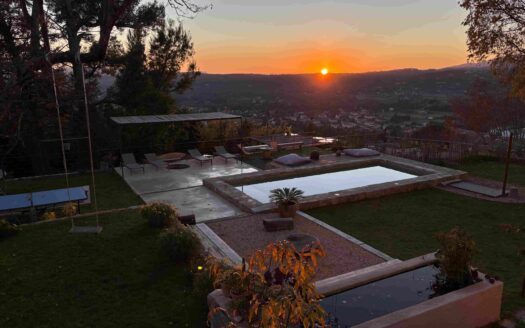
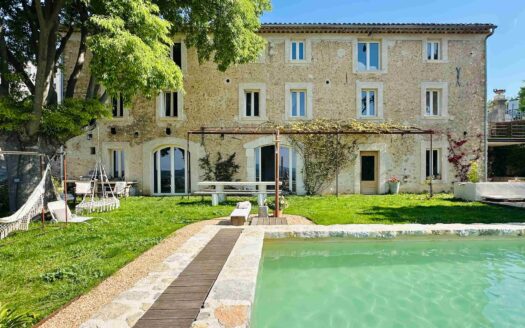
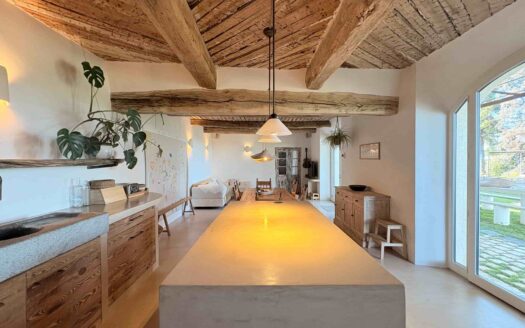
Provence Near Cannes | 5-Bed Country House With Pool & Views
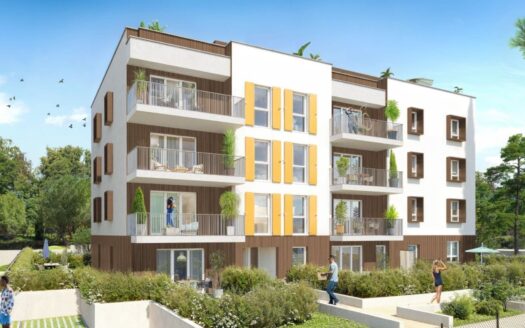

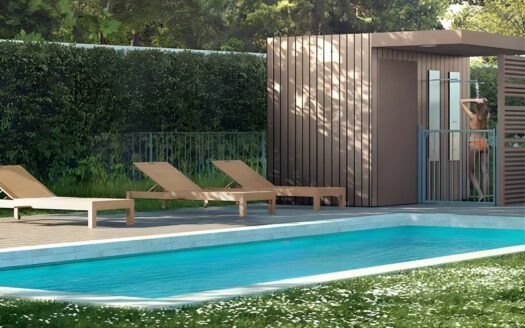
Antibes, Côte d’Azur | 2-Bed Terrace Apartment With Pool Near Beach

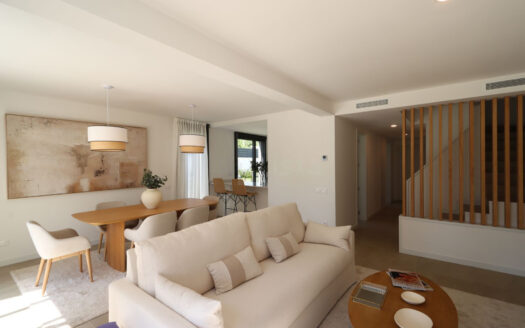
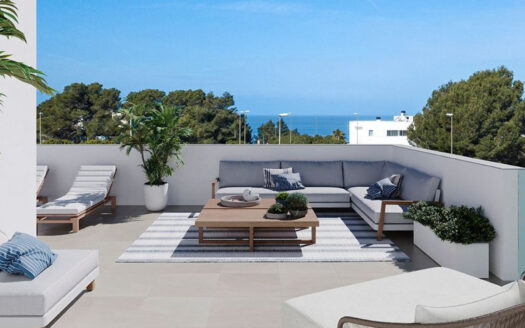
Maioris-Puig de Ros, Mallorca | 4-Bed New-Build With Private Pool & Sea Views
Ready to own that dream property?
Get in touch with our team to secure your share today.