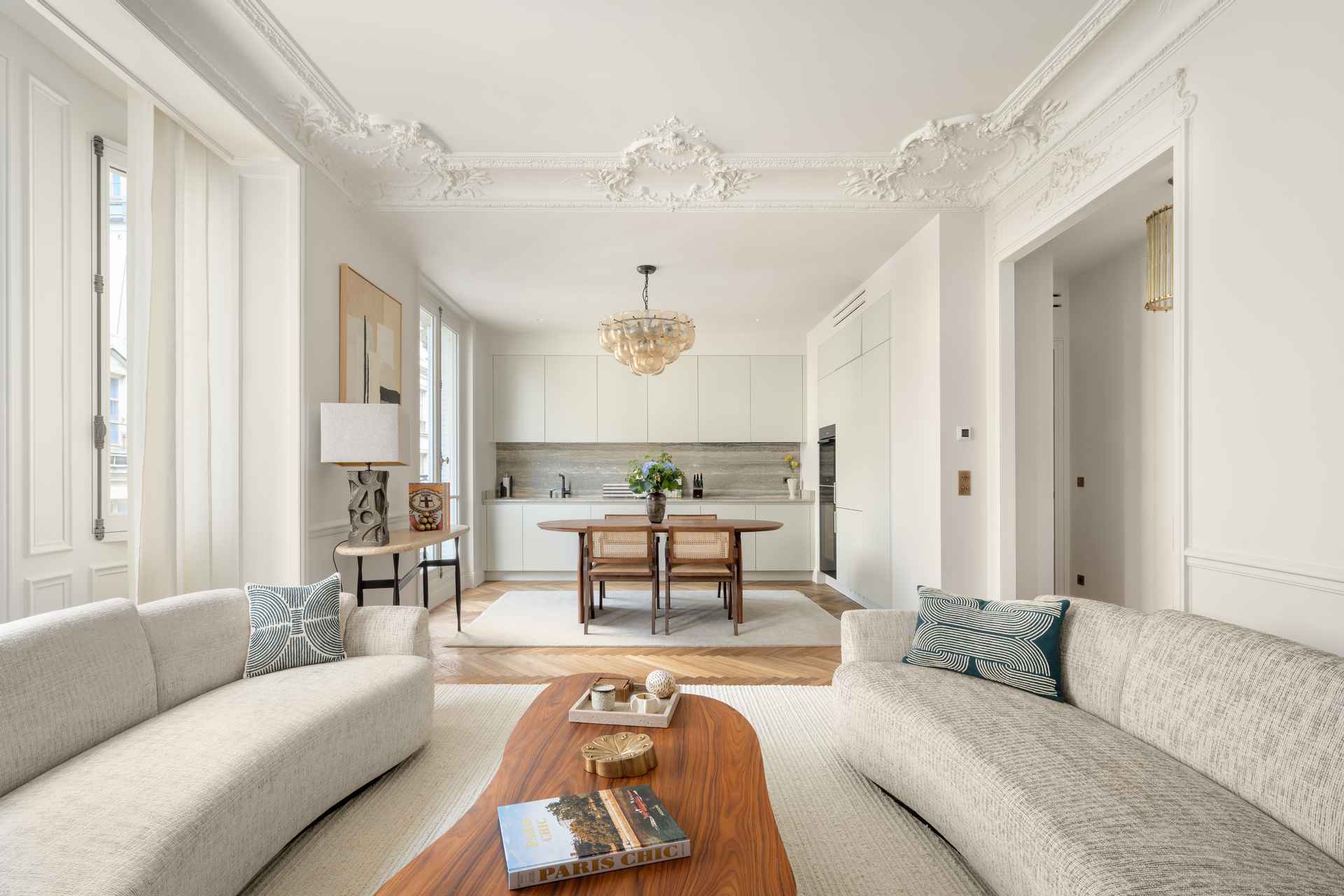
Fractional Ownership in Paris, London, and Miami: Why City Pied-à-Terres Make Perfect Sense for 1/8 Shares
City properties present a particular challenge for second home buyers. Whilst a coastal villa or mountain chalet might justify itself with extended summer or winter seasons, urban apartments are typically used for shorter, more frequent visits—long weekends, cultural events, business trips, or simply escaping to a different city for a few days.
The mathematics become rather stark when you consider that a €2.5 million apartment in central Paris or London sits empty for 335 days of the year, accumulating service charges, taxes, and maintenance costs regardless of usage. Fractional ownership addresses this inefficiency directly, particularly in urban environments where the usage pattern naturally suits shared ownership.
Why Cities Are Ideal for Fractional Ownership
Unlike remote countryside properties that might appeal for month-long summer holidays, city properties are inherently suited to shorter, more varied usage patterns. A week in Paris for fashion week, a long weekend in Miami for Art Basel, four days in London for theatre and exhibitions—this is precisely how fractional owners actually use urban properties.
Whilst one-eighth shares are the most common fractional ownership structure, particularly for resort properties, city developments sometimes offer greater flexibility. Premium urban properties may be divided into tenths, twelfths, or even thirteenths, depending on the property value and target market. This provides even lower entry costs for exceptionally expensive city centre apartments, though with correspondingly fewer usage days.
The 44-45 days of annual usage provided by an eighth share translates naturally into these shorter city breaks: approximately eight to ten visits of four to five days each, or any combination that suits your schedule. Compare this to the 30 days that most full owners manage to use their city properties, and you’re gaining access whilst shouldering one-eighth of the costs.
The Paris Proposition
Central Paris remains one of Europe’s most expensive property markets, with prime arrondissements like the Marais, Saint-Germain, or near the Champs-Élysées commanding prices that have increased substantially over the past decade. Service charges in prestigious buildings with concierge services, period features, and central locations can easily exceed €20,000 annually for a quality apartment.
Fractional ownership in Paris provides access to these exceptional addresses without the full financial burden. Your share of the annual costs—maintenance, insurance, property taxes, utilities—divided by eight becomes manageable, whilst the property itself remains professionally maintained and ready whenever you need it.
For British buyers, post-Brexit considerations around residency and property ownership add another layer of complexity to full ownership. Fractional ownership simplifies this considerably, with established legal structures and professional management handling the administrative requirements.
London: The €18,000 Annual Cost Challenge
London property ownership comes with particularly substantial running costs. Service charges in prime central developments—Mayfair, Knightsbridge, Chelsea, Kensington—frequently exceed €18,000-25,000 annually before you’ve paid property taxes, insurance, or maintenance. For a property used 30 days per year, you’re effectively paying €600-800 per day just in service charges.
With fractional ownership, these costs are divided by eight. The per-day cost calculation becomes far more reasonable when you’re actually using the property for 44-45 days annually and paying one-eighth of the running costs. You’re accessing premium city living in exceptional locations without the financial strain of solo ownership.
London’s rental restrictions have also tightened considerably, with many buildings and boroughs limiting or prohibiting short-term lets entirely. This eliminates what was once a reliable income stream for owners attempting to offset their costs. Fractional ownership removes any reliance on rental income—the shared cost structure works without it.
Miami and the American Market
Miami presents its own unique case for fractional ownership. Property prices in desirable areas—South Beach, Coconut Grove, Coral Gables, Brickell—have surged alongside service charges in luxury developments that often include extensive amenities: pools, gyms, concierge services, private beach access.
For European buyers, fractional ownership in Miami offers particular advantages. The transatlantic distance makes extended stays impractical for most owners, yet the property requires year-round management, hurricane preparation, and maintenance in a challenging climate. Professional management and shared costs make considerably more sense than attempting to coordinate everything remotely for a property you’ll use one month per year.
American property taxes and homeowners’ association fees can be substantial, particularly in premium developments. Dividing these costs by eight whilst gaining more usage than the average full owner transforms the value proposition entirely.
The Inheritance and Transfer Advantage
City properties, given their high values, can create significant inheritance tax challenges. A €2.5 million London apartment pushes estates into higher tax brackets, potentially creating liquidity problems for beneficiaries who need to find substantial sums to pay tax bills.
Inheriting one-eighth of a €2.5 million property—€312,500—presents a far more manageable tax calculation. The same principle applies in France, the USA, or any jurisdiction where you own property. You can transfer your share to children or family members with minimal expense, and the property can remain in the family for generations if desired.
This isn’t a timeshare scheme with restricted transfer rights. Your name is on the property deed, you own genuine real estate, and you can sell, transfer, or bequeath your share with the same rights as any property owner.
The Practical Urban Reality
City properties require more intensive management than countryside retreats. Building regulations, security considerations, neighbour relations, local authority requirements—all of these become more complex in dense urban environments. Professional management handles all of this, removing the administrative burden entirely.
Properties are maintained to high standards year-round, cleaned between visits, and ready when you arrive. Seven other owners with vested interests in the property’s condition ensure standards remain consistently high. You’re never bearing sole responsibility for a property sitting empty for eleven months of the year.
The Exit Strategy
Urban property markets can be volatile, with prices and demand fluctuating based on economic conditions, political changes, and local market dynamics. Fractional ownership provides a clear exit strategy—you can sell your share at any point, just as you would a fully-owned property, without the complications of finding a buyer for a €2.5 million apartment during a market downturn.
The lower price point of an eighth share typically means a larger pool of potential buyers and faster transactions when you do decide to sell. You’re not locked into ownership, you’re not trapped by market conditions, and you’re not reliant on the other co-owners’ decisions about the property’s future.
Making City Ownership Work
For buyers seeking access to exceptional urban properties in Paris, London, Miami, or other premium cities, fractional ownership offers perhaps the only financially rational approach. You’re gaining more usage time than typical full owners, paying one-eighth of the substantial running costs, avoiding rental income pressure, and maintaining complete flexibility for the future.
The property remains professionally managed, your ownership rights are genuine and legally protected, and you can transfer or sell your share when circumstances change. In cities where property prices seem to only move upward and running costs continue to increase, it’s the model that simply makes more sense.
Whether you’re drawn to Parisian elegance, London’s cultural richness, or Miami’s year-round sunshine, fractional ownership provides the access without the financial burden. Contact us to explore how city-based fractional ownership could work for your circumstances.
Frequently Asked Questions About City Fractional Ownership
How much does fractional ownership cost in Paris, London, or Miami?
Fractional ownership costs vary significantly by location and property quality. In central Paris, an eighth share of a premium apartment typically ranges from €250,000-€500,000, whilst London’s prime areas command €250,000-€600,000 for comparable shares. Miami’s desirable neighbourhoods generally offer eighth shares from €150,000-€450,000. Beyond the purchase price, annual service charges, property taxes, and maintenance costs are divided equally amongst all co-owners—typically €2,500-€4,000 per year for an eighth share in a luxury city property.
What’s the difference between fractional ownership and timeshare?
Fractional ownership means your name is on the property deed—you own genuine real estate with full legal rights. You can sell your share at any point, transfer it to family members, or leave it as inheritance. Timeshare, conversely, purchases only the right to use a property for specific weeks each year without actual property ownership. Fractional ownership shares typically appreciate with the property market, whilst timeshares generally hold little resale value. The legal and financial structures are fundamentally different.
How many days per year can I use a fractional ownership property?
An eighth share typically provides 44-45 days of annual usage, which exceeds the 30 days most full second-home owners actually use their properties. Some premium city properties are divided into tenths (36 days), twelfths (30 days), or thirteenths (28 days) to lower the entry price point for exceptionally expensive urban locations. Usage is scheduled through booking systems that ensure fair allocation across peak and off-peak periods, allowing you to plan city breaks, cultural events, and extended stays throughout the year.
Can you rent out your fractional ownership property?
Rental policies vary by property and jurisdiction. Many fractional ownership agreements permit owners to rent their allocated usage days, though increasingly restrictive short-term rental regulations in cities like Paris, London, and Barcelona complicate this option. The financial model of fractional ownership doesn’t rely on rental income—the shared cost structure already provides value without needing to generate rental returns. Some owners prefer to swap their unused days with other co-owners or simply forfeit occasional weeks rather than navigate complex rental regulations.
What happens if I want to sell my fractional ownership share?
You can sell your fractional ownership share at any time, just as you would a fully-owned property. Most fractional ownership agreements include right-of-first-refusal clauses, meaning existing co-owners have the option to purchase your share before it’s offered externally. If they decline, you’re free to market the share on the open market. The lower price point of fractional shares—typically €200,000-€600,000 for premium city properties—generally means a larger pool of potential buyers and faster transactions than selling a €2-3 million property outright. Professional fractional ownership resale platforms exist to facilitate these transactions.
Quick search



Costa De La Luz Zahara De Los Atunes | 4-Bed Duplex with Spectacular Sea Views



Brickell, Miami Florida | Luxury 2-Bed Apartment with pool Flexible Use


Brickell, Miami Florida | Luxury 2-Bed + Den Apartment
Ready to own that dream property?
Get in touch with our team to secure your share today.