Why Fractional Ownership May Be Your Last Chance to Enter Prime Real Estate Before Abundance Makes It Unaffordable
While AI and robotics drive manufacturing costs toward zero, billionaires like Bill Gates are quietly accumulating the one asset robots can't create: land. For young professionals and families saving for their primary residence, fractional ownership offers an urgent opportunity to secure bricks-and-mortar wealth today—before AI-driven abundance makes prime real estate accessible only to the ultra-wealthy.
The Urgency No One Is Discussing
A profound economic transformation is unfolding that most thirty-somethings haven’t fully grasped. Within the next decade, artificial intelligence and robotics will fundamentally alter what we consider valuable. Manufacturing costs are already plummeting, with AI-driven factories reporting productivity gains exceeding 50% and defect reductions above 80%. Solar panels, once prohibitively expensive, have dropped 90% in cost over the past fifteen years—from roughly $76 per watt in the 1970s to approximately $1 per watt today. Your next smartphone might cost €5 instead of €1,000. That luxury car depreciating in your driveway will soon compete with autonomous electric vehicles that cost a fraction to produce and maintain.
But here’s what the abundance economy won’t change: the French Alps aren’t getting any larger. Paris won’t suddenly sprout new arrondissements. Lake Como won’t expand its shoreline. Marbella’s Golden Mile won’t double in length. The Balearic Islands remain fixed in size. Colorado’s prime ski valleys are geologically constrained. And that property you’ve been eyeing—whether it’s a Chamonix chalet, a Miami penthouse, or a Lake Como villa—isn’t going to become more affordable just because robots can build it faster. In fact, quite the opposite will occur, and the world’s wealthiest investors are already positioning themselves accordingly.
Bill Gates now owns approximately 275,000 acres of American farmland across 19 states, making him the largest private farmland owner in the United States. His Louisiana holdings alone encompass 69,071 acres, with another 47,927 acres in Arkansas and 25,750 acres in Arizona. When asked why, Gates frames it as productivity investment—but the timing reveals a more fundamental calculation. U.S. farmland values have risen sixfold from 1940 to 2015 and show no signs of slowing. He’s not alone in this land grab. BlackRock and Goldman Sachs have dramatically increased their farmland acquisitions, with financial institutions now controlling over 12 million acres of American farmland—triple their 2020 holdings.
These aren’t speculative bets placed by naive investors chasing trends. They’re strategic positions taken by sophisticated capital that understands a simple truth: when AI can manufacture infinite digital goods and produce physical products at near-zero marginal cost, the only assets that retain exponential value are those with absolute, unchangeable scarcity. They’re not making more waterfront on Lake Como. They’re not adding beachfront to the French Riviera. They’re not expanding Aspen’s developable valleys. Full stop.
The Young Professional’s Impossible Choice
If you’re twenty-five to thirty-five years old, diligently saving for your first home while watching property listings in Paris, Miami, Mallorca, or the French Alps with a mixture of desire and resignation, you face what appears to be an impossible choice. Traditional financial wisdom, the kind your parents likely dispensed over Sunday dinners, suggests a clear path: save for your primary residence deposit, buy your home, pay down the mortgage over fifteen to twenty years, then—and only then—consider investment properties or vacation homes.
It’s sensible advice. It’s also potentially catastrophic in an economy hurtling toward abundance in everything except location.
Consider the mathematics facing a thirty-year-old professional earning €50,000 annually who has diligently saved €200,000. She needs €150,000 for her primary residence deposit in a decent neighbourhood. That leaves €50,000—nowhere near enough for even a modest property in any premium location. Chamonix now commands an average of €13,965 per square meter, with premium locations reaching €20,858 per square meter. For context, these prices already exceed Paris averages of €9,650 per square meter and approach Monaco’s stratospheric €51,967 per square meter.
The traditional path says: be patient, build equity in your primary residence, save aggressively, and perhaps in fifteen years you’ll have the capital for that mountain retreat or coastal escape. But fifteen years from now, when AI productivity has created unprecedented wealth concentration and institutional investors have further consolidated prime property holdings, that €1.7 million property might cost €6 million—or €15 million—or exist in a market where fractional shares trade like artworks at Sotheby’s, accessible only to the global elite.
Meanwhile, the €40,000 car she bought will be worth perhaps €2,000, rendered obsolete by autonomous electric vehicles with 70% utilization rates compared to 5% for personally-owned cars. The electronics in her home will be worthless, replaced by superior versions costing pennies. Even her stock portfolio faces disruption risk as AI transforms every traditional business model. But that property in Marbella, Lake Como, the Balearics, or Colorado? It will have appreciated exponentially, driven by the same scarcity dynamics that turned Manhattan real estate into generational wealth over the past century.
Fractional Ownership: The Strategic Solution Hidden in Plain Sight
This is where fractional ownership transforms from a clever holiday scheme into a legitimate wealth-building strategy for a generation facing economic conditions unlike anything in modern history. Through platforms like Co-Ownership Property, that same thirty-year-old professional can acquire 1/8th deeded ownership of a premium property for approximately €180,000—whether that’s in the French Alps, on the French Riviera, in Mallorca, at Lake Como, or in Colorado—allowing her to secure both her primary residence deposit and investment property simultaneously, rather than sequentially.
The financial architecture is straightforward but powerful. Instead of choosing between primary residence or investment property, she allocates her €200,000 across both objectives: €150,000 toward her home deposit, €180,000 toward fractional ownership in a prime location (structured over time with financing options), for a total commitment of €330,000 spread across several years. This contrasts sharply with the traditional approach, which would see her buy only the primary residence, spend fifteen years building equity, then discover the vacation property market has moved entirely beyond her reach.
But fractional ownership isn’t merely about accessing property you couldn’t otherwise afford—it’s about securing a position in appreciating scarce assets before abundance economics price out entire generations. When that €180,000 fractional share appreciates at even conservative rates over twenty years, it could represent €1.4 to €2.0 million in wealth, all while providing forty-five-plus days of annual usage immediately—whether that’s skiing in the Alps, lounging by Lake Como, exploring Mallorcan beaches, or enjoying Miami’s cultural scene.
Consider the UK’s recent inheritance tax reforms targeting farmers, which reveal how policy accelerates land consolidation into institutional hands. Starting April 6, 2026, agricultural property relief becomes capped, with only the first £1 million receiving a full inheritance tax exemption and 20% tax applied to amounts above. While the government raised thresholds to £5 million for couples after farmer protests, this still forces many multi-generational family farms into distressed sales—sales that institutional buyers like BlackRock, Gates, and sovereign wealth funds eagerly consummate.
The pattern is unmistakable: policies that appear designed to address inequality or close tax loopholes have the practical effect of transferring land ownership from individuals to institutions. And once land consolidates into institutional portfolios, it rarely returns to retail markets at accessible prices. The same dynamics will eventually pressure properties in Marbella, the Balearics, Miami, and every other premium location where environmental regulations, building restrictions, and climate considerations create ever-tightening supply constraints.
The Twenty-Year Projection That Changes Everything
Projecting property values decades into the future invites scepticism, but certain trends operate with mathematical inevitability rather than speculative optimism. Manhattan real estate appreciated nearly one-thousand-fold over the past century, with prices doubling from the 1950s to 1960s and rising sixfold during the 1980s—and that occurred during an era of relatively limited technological disruption. The coming transformation dwarfs anything in modern economic history.
McKinsey estimates that 30% of U.S. jobs may be automated by decade’s end as AI handles routine cognitive tasks and robotics manages physical labour. This creates productivity gains that generate enormous wealth, but that wealth concentrates among those who control AI systems and own the infrastructure that enables automation. When manufacturing costs approach zero, and consumer goods become commoditised, this concentrated wealth must flow somewhere—and history suggests it flows into assets that cannot be manufactured, replicated, or inflated away through monetary policy.
Monaco provides our clearest real-world precedent. Average property prices reached €51,967 per square meter in 2024, representing 44.3% cumulative growth over ten years despite already-elevated starting values. The Larvotto district saw prices soar 48.14% in a single year to reach €97,563 per square meter. What drives these valuations in a principality offering limited cultural attractions and less natural beauty than Alpine resorts or Mediterranean coastlines? Four factors: land shortage, ultra-rich demand, high prices for new builds, and luxury segment premium. All four apply with equal or greater force to Chamonix, Lake Como, Marbella, the Balearics, Miami Beach, and Aspen.
If we apply even conservative growth assumptions to current premium location pricing—whether that’s €13,965 per square meter in Chamonix, €10,000 per square meter in Mallorca, or €11,500 per square meter in select Colorado ski towns—a ten-year horizon suggests €40,000 to €60,000 per square meter as early AI winners deploy capital into trophy assets. Twenty years projects to €80,000 to €150,000 per square meter as mature AI economies implement universal basic income schemes and most consumer goods approach zero marginal cost. By thirty years, traditional currency pricing may become almost meaningless if economic systems transform through UBI or digital alternatives, at which point ownership itself becomes the wealth metric rather than purchase price.
For fractional owners who secured positions in 2026, these projections translate to extraordinary wealth creation. That €180,000 investment in 1/8th ownership becomes €1.4 million at conservative twenty-year projections, €2.0 million at moderate projections, and potentially far more if scarcity dynamics intensify beyond historical precedent. Meanwhile, traditional asset classes face headwinds: cars depreciate as autonomous vehicles dominate, stocks face AI disruption across sectors, bonds erode through inflation, and cash loses purchasing power steadily.
Why Your Parents’ Investment Advice No Longer Applies
The generation currently advising thirty-somethings on property investment built wealth during an economic era that bears little resemblance to what’s emerging. They bought homes when prices-to-income ratios were manageable, invested in blue-chip stocks that paid steady dividends, and perhaps acquired vacation properties in their fifties after mortgages were paid. This sequential approach worked because asset appreciation followed relatively predictable patterns and technological change occurred gradually enough that career earnings kept pace.
None of these conditions persists. Housing costs have decoupled from wage growth in prime locations across Paris, Miami, Mallorca, and every desirable market. Technology disrupts industries within years rather than decades. And most crucially, we’re entering an abundance economy where the rules of value change fundamentally—not incrementally, but categorically.
The old advice to “buy a reliable car” makes little sense when autonomous electric vehicles will offer transportation-as-a-service at costs below current ownership models, rendering personal vehicles obsolete except as status symbols. The suggestion to “invest in blue-chip stocks” becomes questionable when AI threatens to disrupt every traditional business model, from manufacturing to professional services. Even “save for retirement” assumes currency systems will operate similarly for the next forty years—an increasingly dubious assumption when serious economists discuss universal basic income as necessary response to AI-driven unemployment.
But “buy land in scarce locations” remains as sound in 2026 as it was in 1926 or 1826. The advice itself doesn’t change; what changes is the timeline urgency. Previous generations could afford to wait twenty years before acquiring vacation properties because appreciation, while steady, didn’t accelerate beyond reach. Today’s generation cannot afford that patience. The window isn’t merely closing—it’s slamming shut with historically unprecedented speed.
The Compound Effect of Multiple Fractional Properties
Sophisticated fractional investors don’t view their first acquisition as an isolated transaction but rather as entry into a portfolio-building strategy unavailable through traditional whole-ownership approaches. Consider a young professional who begins with €180,000 invested in 1/8th ownership of a property in the French Alps in 2026. She continues her career, receives promotions, accumulates savings, and five years later invests €210,000 in 1/8th ownership of a Lake Como villa—noting prices have already risen substantially from 2026 levels. Another five years pass, and she commits €280,000 to 1/8th ownership of a Marbella property, where prices are rising even faster due to intensifying scarcity recognition.
By 2046, twenty years from initial investment, her portfolio tells a remarkable story. The Alps property, purchased for €180,000, is now valued at approximately €1.6 million. The Lake Como share, acquired for €210,000, is worth €1.3 million. The Marbella property, bought for €280,000, has appreciated to €1.8 million. Her total portfolio value reaches €4.7 million from €670,000 invested over a decade—beating virtually any traditional investment portfolio over the same period while simultaneously providing 135-plus days of annual vacation usage across three premium European locations.
This compounds not merely financially but experientially. She’s spent two decades creating family memories across three distinct destinations—skiing the Alps in winter, summering at Lake Como, and enjoying Mediterranean springs in Marbella—hosting friends and relatives, establishing routines and favourite restaurants, becoming part of seasonal communities. Her children grew up experiencing diverse cultures and landscapes. When those children reach adulthood and begin their own careers in the 2040s, they inherit not merely financial assets but established connections to places that have become prohibitively expensive for their entire generation to enter.
The contrast with whole-ownership strategies is stark. That same €670,000 might have purchased one small property in a single location in 2026, limiting her family to one destination and providing no portfolio diversification. Or it might have remained in traditional investments, generating modest returns while watching premium property markets accelerate beyond reach. Fractional ownership allowed her to build diversified exposure to the exact asset class experiencing the most dramatic appreciation in the new economic paradigm.
The Psychological Dimension: Living Well While Building Wealth
There’s a hidden cost to traditional wealth-building advice that financial advisors rarely acknowledge: the sacrifice of prime life years in pursuit of deferred enjoyment. The conventional script says your thirties and forties should focus on career advancement and aggressive saving, with luxury and leisure deferred until your fifties when financial security is established. By then, presumably, you’ll have the resources to enjoy that mountain chalet, Mediterranean villa, or beachfront escape you’ve been dreaming about for decades.
But by then, your children have grown. The window for creating formative family memories in extraordinary places has closed. Your own physical capabilities may have diminished—the skiing or hiking that seemed effortless at thirty-five requires more caution at fifty-five. And the friends with whom you might have shared these experiences are scattered across continents, locked into their own careers and family obligations.
Fractional ownership reverses this equation entirely. You enjoy premium location luxury today—forty-five days annually in properties you could never afford to own wholly—while your asset simultaneously appreciates and builds generational wealth. Your family creates those formative memories during the years when children are young enough to thrill at first ski lessons, beach explorations, or cultural discoveries. You host university friends for weekends that become annual traditions. You experience the life you were supposedly meant to defer, except you’re not borrowing against future earnings—you’re investing in appreciating assets that will fund your children’s education or retirement or whatever financial needs emerge decades hence.
This isn’t indulgence masquerading as investment strategy. It’s recognition that in an economy hurtling toward abundance in digital goods and manufactured products, experience scarcity becomes more valuable, not less. When everyone can access perfect VR simulations of skiing Mont Blanc or touring Lake Como, actually being there—owning property in these locations, possessing the social capital that comes with established residence—becomes the ultimate differentiator. Status shifts from what you can buy (luxury goods that become commoditized) to where you can be (locations that remain absolutely scarce).
The Window That’s Closing Faster Than You Think
Several converging factors make 2026 through 2030 the critical window for fractional property acquisition, after which the opportunity may effectively vanish for middle-class professionals regardless of income or savings discipline. First, traditional financing remains available at historical terms. Banks currently offer mortgages and loans using underwriting criteria developed during previous economic eras. In ten years, lending against appreciating scarce assets may require different approaches—higher down payments, shorter terms, and income verification that excludes most salaried professionals. The institutional buyers dominating farmland acquisition today will eventually turn attention to resort properties in the Alps, Balearics, Miami, and Colorado, and when they do, they’ll negotiate financing terms unavailable to individuals.
Second, fractional shares themselves remain affordable relative to earnings. That €180,000 represents roughly 2.25 times the annual salary for a professional earning €80,000. It’s a meaningful commitment but achievable through a combination of savings, modest financing, and disciplined allocation. In 20 years, even 1/8th of a share might require 8 to 10 times an annual salary—effectively unaffordable for anyone outside the top 5% of earners. The denominations don’t matter if the absolute prices exceed what normal financing can support.
Third, supply constraints are tightening yearly. Building permits decline as environmental regulations strengthen across Europe and the U.S. Climate change concerns intensify scrutiny of new development in coastal areas, avalanche zones, and ecologically sensitive regions. Each year, fewer new properties enter fractional markets, while demand accelerates. Fourth, institutional competition is emerging. When BlackRock finishes consolidating farmland, where does rational capital allocation suggest they’ll look next? Premium resort properties in Marbella, the French Riviera, Lake Como, Aspen, and Miami represent identical scarcity dynamics with higher yield potential from both appreciation and rental income.
Finally, AI wealth creation is accelerating faster than most projections anticipated. Early employees at AI companies are already driving demand for trophy assets across all premium markets. As AI productivity gains accelerate through 2030-2035, creating unprecedented wealth concentration, this demand will explode. The young engineer who joined an AI startup in 2024 and received equity worth millions by 2028 isn’t contemplating whether to buy premium property—she’s deciding between Courchevel and Aspen, between Lake Como and Marbella, between whole ownership and a diversified fractional portfolio spanning multiple continents.
The Bottom Line: Your Last Realistic Entry Point
Your grandparents bought property when it was affordable, built wealth through appreciation and equity, and passed those assets down. Your parents did similarly, though already facing steeper price-to-income ratios and longer mortgage terms. Your generation faces an entirely different challenge: buying property before abundance economics make scarce assets completely unattainable to anyone outside the AI-enriched elite.
Fractional ownership isn’t the compromise it superficially appears. It’s the strategic adaptation that allows you to secure prime real estate at accessible prices, build wealth while simultaneously saving for your primary residence, enjoy luxury living across multiple premium locations immediately rather than deferring it for decades, and position yourself for an economy where physical scarcity trumps digital abundance. Bill Gates understands land scarcity—that’s why he owns 275,000 acres. BlackRock is positioning accordingly—that’s why they’ve tripled farmland holdings. Monaco’s €50,000-per-square-meter pricing proves the scarcity premium model. The only question is whether you’ll act before this window closes entirely.
The urgency isn’t manufactured marketing designed to pressure hasty decisions. The mathematics are straightforward and verifiable. The opportunity is real and narrowing with each passing quarter. The only genuine question facing young professionals today is this: will you secure your bricks and mortar now, while €180,000 can still buy meaningful ownership in premium locations across the French Alps, Lake Como, Marbella, the Balearics, Miami, or Colorado—or will you spend the next thirty years explaining to your children why you understood the coming transformation but failed to act when action was still possible?
Explore fractional ownership opportunities at Co-Ownership Property and secure your position in the world’s most desirable locations before abundance economics price out the next generation entirely.
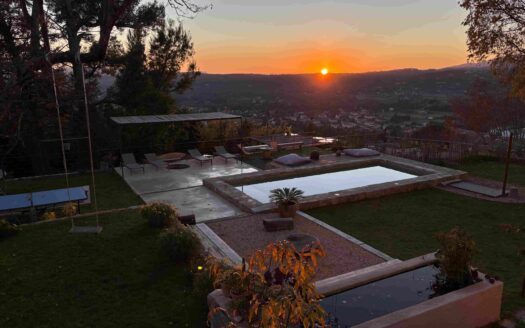
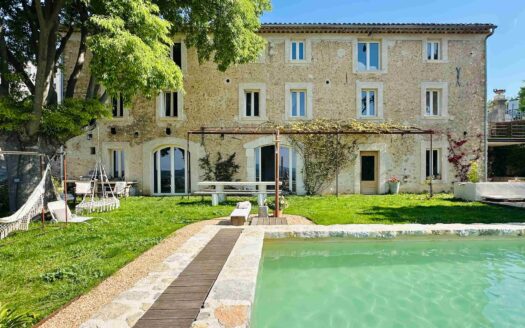

Provence Near Cannes | 5-Bed Country House With Pool & Views
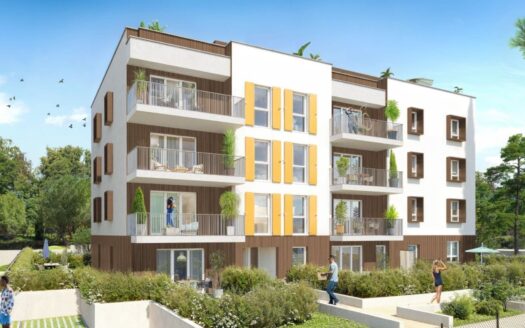
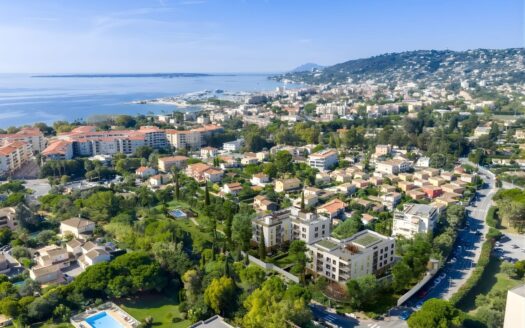
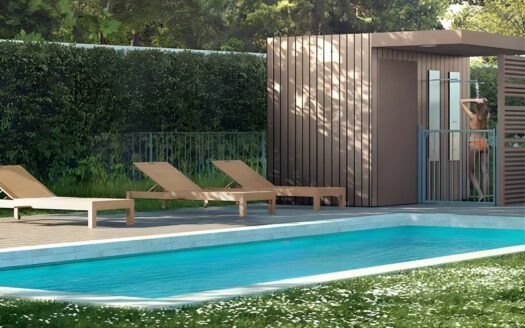
Antibes, Côte d’Azur | 2-Bed Terrace Apartment With Pool Near Beach
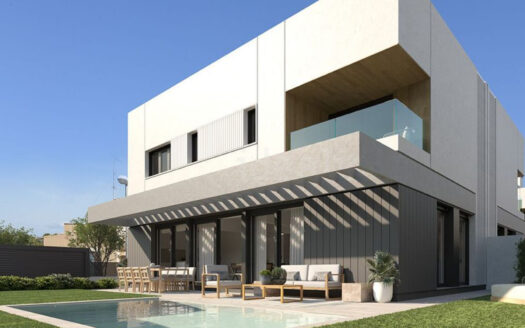
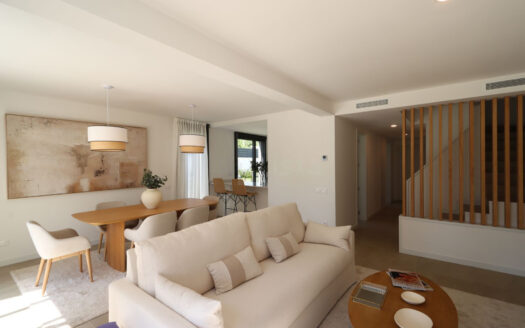
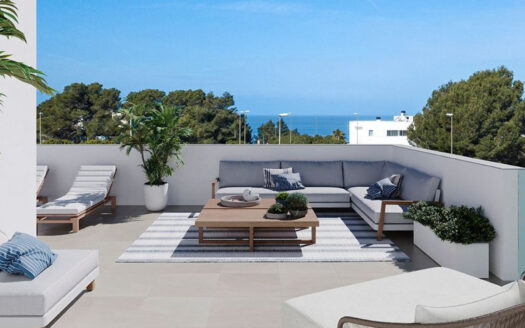
Maioris-Puig de Ros, Mallorca | 4-Bed New-Build With Private Pool & Sea Views
Ready to own that dream property?
Get in touch with our team to secure your share today.